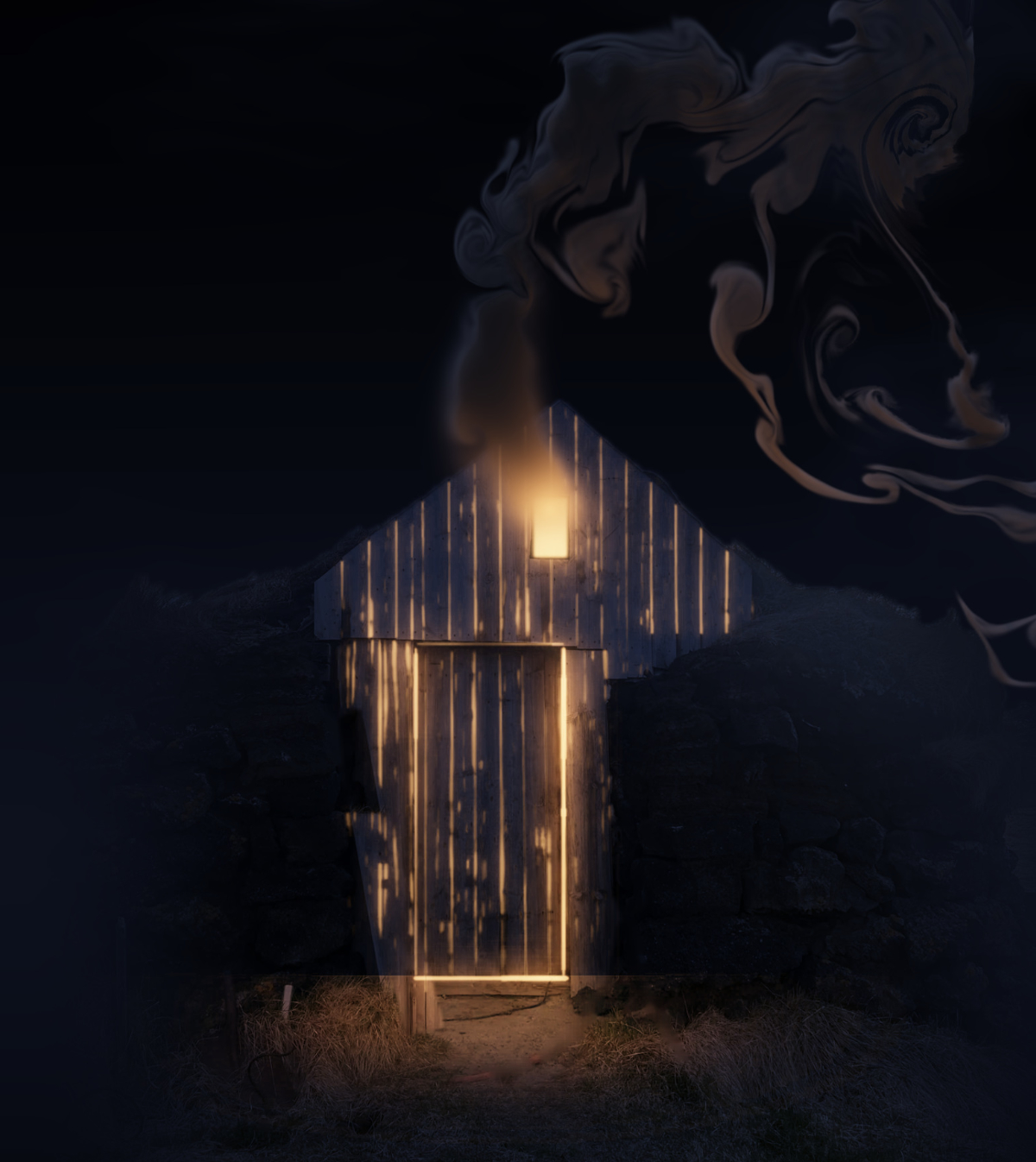
We’d like to take the opportunity to introduce you to the Honorable mention winners of our Underbridge #2 competition - Fang Guo and Changsi Wang from United States!

Fang Guo and Changsi Wang from United States
Please tell us about your company (when it was founded, where it is based, how many employees, etc) Alternatively, if you do not have a company, please give us some insights on your own professional/academia background.
Fang Guo holds a Master of Advanced Architectural Design from the University of California, Berkeley, and works as a Sustainable Design Specialist at HOK in San Francisco, focusing on environmental performance and computational analysis. Changsi Wang holds a Master of Science in Design (Advanced Architectural Design) from the University of Pennsylvania and works as an architectural designer, with interests in ecological architecture, computational design, and digital fabrication. Our collaboration brings these complementary perspectives together to explore architecture as both a social and an environmental practice.
Brief information about the projects that you/your company have been involved with. For instance, what scale have you focused on/preferred, any significant projects where the company/ individuals have been Involved?
Our work focuses on affordable housing, adaptive reuse of infrastructure, and community-oriented spatial systems. A VILLAGE JOINED BY TIMBER explores how Shimen Bridge in Songyang, China, could become more than a crossing. The proposal retains the existing route while introducing compact timber homes beneath the bridge, with a shared market, gathering spaces, and river-facing places for exchange. A repeatable 6 × 6 m (36 m²) dwelling module, shared access galleries, private river balconies, and repairable timber connections seek to make housing, community life, and local construction knowledge part of one architectural system. This is a conceptual proposal rather than a built project
What does architecture mean to you and what is the role of an architect in your society?
To us, architecture is the practice of making relationships visible and inhabitable: between people and their surroundings, between existing structures and new needs, and between local knowledge and environmental limits. An architect's role is not simply to create a compelling form, but to ask what can be reused, who has access, and how a place can be cared for over time. We see design as a negotiation among social equity, material responsibility, ecological performance, and the dignity of everyday life. A VILLAGE JOINED BY TIMBER reflects this view by treating infrastructure as a starting point for new homes and collective life rather than an obstacle to build around.
Why do you participate in architecture competitions?
We participate in competitions because they create space to investigate questions that may be difficult to pursue within a conventional commission. They allow us to test unfamiliar building types, connect architectural ideas to social and ecological issues, and communicate proposals to a wider audience. We value the discipline of developing a coherent argument across scales, from urban relationships and everyday routines to structures and material details. For us, the most meaningful outcome is an idea that remains useful beyond the submission itself.
What advice would you give to individuals who struggle to decide whether it would be beneficial for them to participate in architecture competitions?
We would encourage them to begin with a question they genuinely care about, then choose a brief that gives them room to investigate it. A strong proposal should do more than produce a striking image: it should make a clear case for whom it serves, how people inhabit it, and how it might be assembled and maintained. Set a realistic scope, invite critical feedback, and measure the value of the experience by what you learn and develop, not only by the final result. Competition projects can become a foundation for future research, collaborations, and more grounded design work.
Top 3 Reasons Why You Should Enter Architecture Competitions
Curious about the value of architecture competitions? Discover the transformative power they can have on your career - from igniting creativity and turning designs into reality, to gaining international recognition.
Learn more