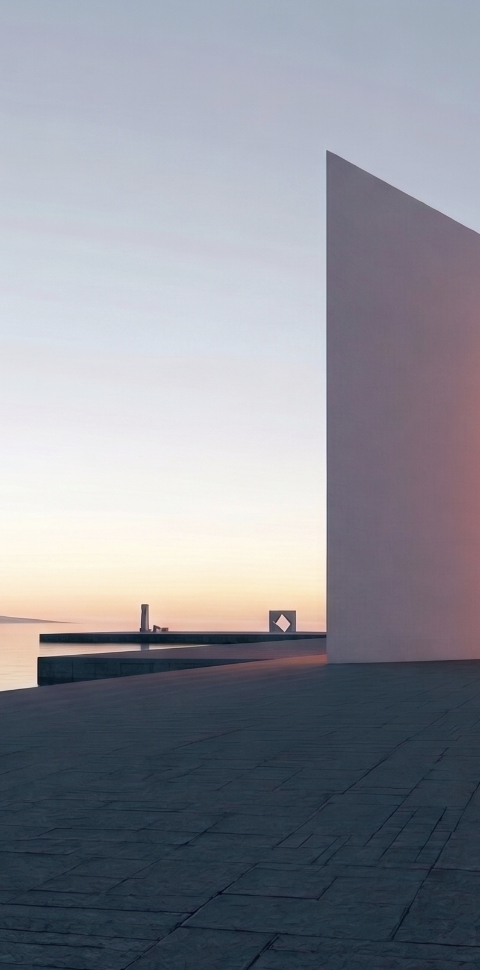


This competition is part of a strategic partnership between Buildner and ArchDaily that aims to explore "The Contemporary Home".
Learn moreThe contemporary home

&

Introduction
COMPETITION ORGANISERS

It may not be your first instinct when entering a building to consider how it makes you feel, but architecture has always had a significant impact on emotions. Different spaces are designed to evoke different feelings in their inhabitants; offices can make you feel energized and productive, art galleries can make you feel thoughtful and curious, and museums can make you feel calm and intrigued. Each of these spaces is completely different from the others and is far more than just a building.
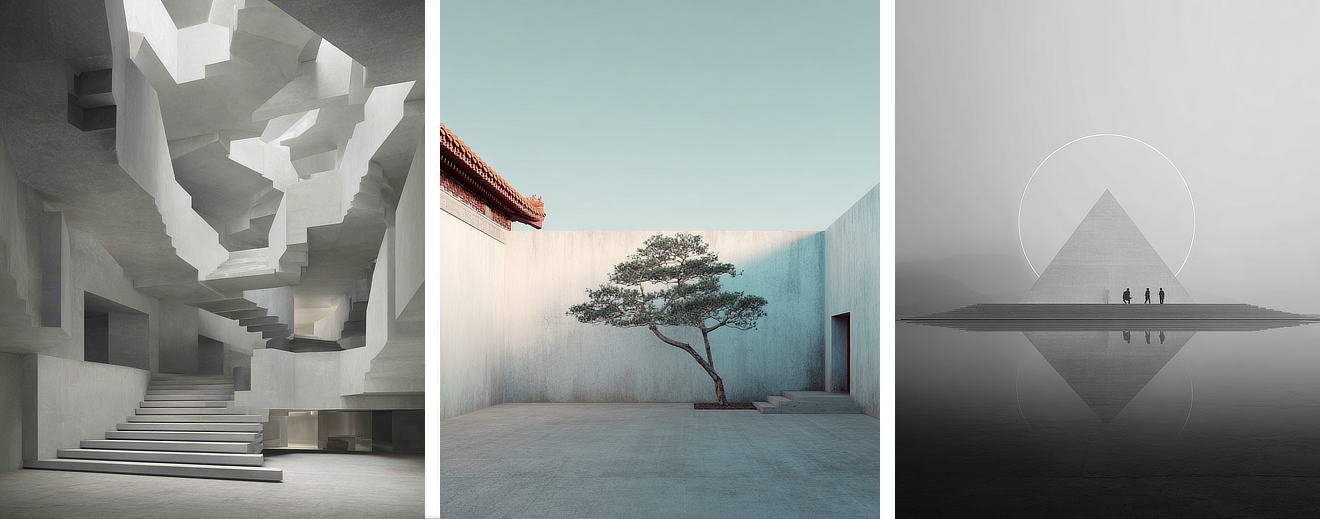
As part of a series of annual architecture competitions, the Museum of Emotions competition tasks participants with using architecture as a tool to evoke different emotions. They are asked to design a museum that includes two separate halls that elicit contrasting emotions—one inducing negative emotions and the other inducing positive emotions.
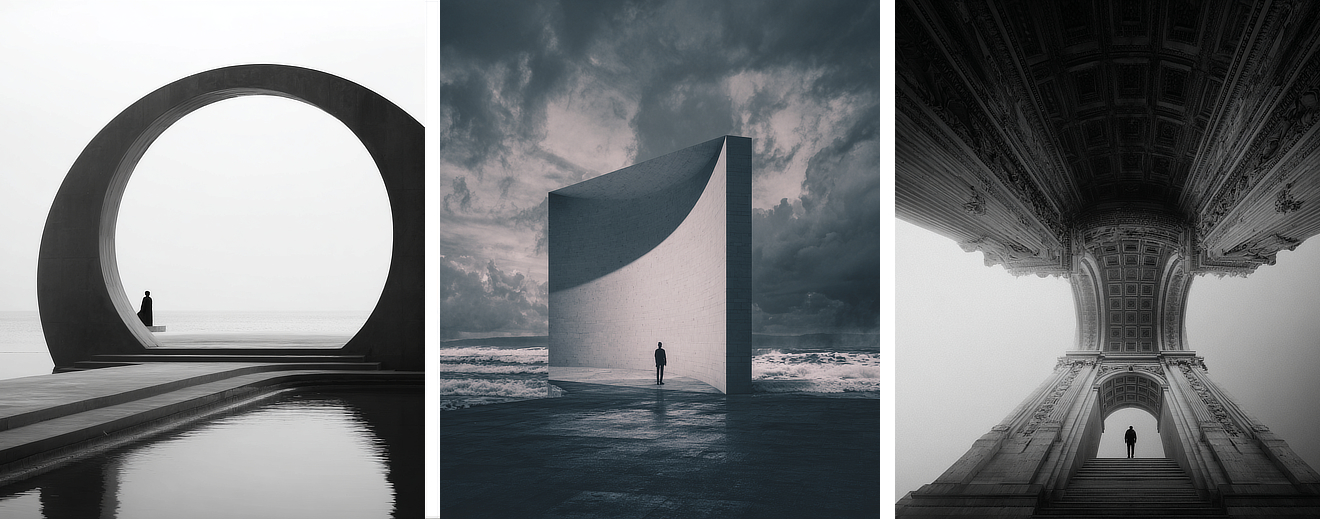
Participants are free to choose the specific emotions they wish to evoke through their designs—fear, anger, anxiety, love, happiness, laughter, and more. The purpose of the Museum of Emotions is to use architecture as the primary medium for creating emotional states through careful consideration of spatial scale, circulation, color, lighting, and material choices. As this is an ideas competition, participants are free to choose any site location, real or imaginary, as well as the size of their structure.

Museum of Emotions #9 is the ninth edition of Buildner's silent competition series, in which participants must communicate their ideas without the use of any text. The design concept and the thinking behind it must be conveyed solely through visuals.
Download full competition brief for more information!
Competition is open to all. No professional qualification is required. Design proposals can be developed individually or by teams (4 team members maximum). Correspondence with organizers must be conducted in English; All information submitted by participants must be in English.
Brief
The competition brief is available for download at any time in the following languages: English, Italian, French and Spanish
FULL COMPETITION BRIEF [ENG] [FR] [IT] [ES]
Prizes
Prize fund
8,000 €
1ST PLACE
4,000 €
2ND PLACE
2,000 €
3RD PLACE
1,000 €
6 Honourable mentions & certificates
Buildner will acknowledge the outstanding performance of all winners and honourable mentions with Certificates of Achievement.
The Buildner Medal
Learn moreWinners of this competition will automatically be included in the annual final, where they will compete for the Buildner Medal Award alongside a limited number of Buildner competition winners.
The Buildner Medal 2027
50,000 €
By invitation only. One life-changing award a year. The invitation is earned here.
1st place25,000 €
2nd place15,000 €
3rd place5,000 €
Student award5,000 €
-
Enter Museum of Emotions competition
Register and submit your project before the deadline.
-
Be among the winners
1st, 2nd or 3rd Prize, or a special award such as the Student or Sustainability Award, depending on the competition.
-
Access invitation-only
Buildner Medal AwardInvitation sent to every winner. Nothing to submit, nothing to pay.
-
Share 50,000 € prize fund
The jury awards the Buildner Medal among invited projects only.
Publicity campaign
Buildner's publicity campaign offers extensive exposure to the architectural community, ensuring that the results of the competition are seen by a vast audience:

Buildner's two million
The results are published on buildner.com, a leading website in the architecture industry, attracting over one million unique visitors annually. Additionally, the campaign extends to Buildner's social networks, which boast over 800,000 followers combined, and through newsletter campaigns reaching over 200,000 subscribers.

Feature in a book
Winners will be featured in the book.

Interview and movie
Winners will have the opportunity to submit a movie and an interview, boosting their recognizability and helping to build their name in the industry.

Extensive media network
Buildner leverages an extensive network of media industry leaders to publish the competition results. This broadens the audience further, ensuring that participants' work is showcased across multiple platforms known for their influence and reach in the architecture and design sectors.
Publicity
ArchDaily feature
As part of the collaboration between Buildner and ArchDaily, the competition winners will be showcased on ArchDaily, a leading architecture news platform.
This feature will greatly boost the winners' visibility to millions of architecture professionals and enthusiasts worldwide, increasing their chances for new opportunities, attracting new clients, and establishing their reputation in the industry.
Read more about Buildner and ArchDaily partnership &
&

Jury
Jury members shall under no circumstances be contacted by competition participants or their representatives. Participants who attempt to contact jury members, shall be disqualified.
All jury members are involved in the evaluation based on their availability at that time. All communication regarding the competition should only be carried out with Buildner staff. For any questions please contact us on [email protected]
Karin Fendt
Kuehn Malvezzi
Germany

Miguel Gentil
Baum Lab
Spain

Bartosz Haduch
NArchitekTURA
Poland

Johana Mendoza
Olson Kundig
United States

Gary Polk
Bjarke Ingels Group
United States

José Luis Pérez Hermo
Coop Himmelb(l)au
Austria

Noa Raviv
artist
USA

Nicholas Reddon
BIG
United States

Eleni Soussoni
Yellow Cloud Studio
United Kingdom

Lei Zheng
Zaha Hadid Architects
UK

Wu Ziye
Co-founder of Mix Architecture
China

Ask questions to the jury panel directly!
This option is available to registered participants only.
If you are registered, please access your upload panel and look for the
Jury Questions & Answers section.

Ask to all.
One collective jury answer

Ask a
specific jury member
Ask questions about

The brief
Interpretation and intent of the competition brief

Your task
Key themes, priorities, or values considered during evaluation

Design help
General design approach or conceptual direction


Personal design assessment
Request an in-depth design assessment of your project after results are announced.
The design assessment highlights each project’s strengths and areas for improvement, giving participants valuable insight into their work. It helps them better understand their submission, compare it to other entries, and identify opportunities for growth in future projects.

Key dates
Send remindersClosing date for registration
21 January 2027
Competition Q&A deadline
26 January 2027
In order to guarantee equal opportunities to all competition participants.
No new questions will be answered after this deadline.
Closing date for project submission
22 February 2027
23:59 (LONDON TIME)
Announcement of the winners
13 April 2027
Competition Q&A deadline
26 January 2027
In order to guarantee equal opportunities to all competition participants.
No new questions will be answered after this deadline.
Registration fees
STUDENT REGISTRATION REQUIREMENTS
Contact us to receive special student rates for group registrations (discount applies for 3+ registrations from one university/school) and to receive further information and support for getting your students involved in architecture competitions. Send us ([email protected]) a request from your university email address and basic information about yourself and your university/school. Only recognized university staff can apply for the reduced student rate.
X
Architecture competitions newsletter
Ask questions to the jury panel directly!
This option is available to registered participants only.
If you are registered, please access your upload panel and look for the
Jury Questions & Answers section.
Ask to all.
One collective jury answer
Ask a
specific jury member
Ask questions about
The brief
Interpretation and intent of the competition brief
Your task
Key themes, priorities, or values considered during evaluation
Design help
General design approach or conceptual direction
Absolutely not! You’ll always keep full ownership and authorship of your project. Submitting to a Buildner competition doesn’t mean giving up your rights — it simply gives us permission to share and promote your work as part of the competition. We may feature your project on our website, social media, newsletters, books, or exhibitions — all to celebrate your creativity and inspire others. This permission helps us give your work the visibility it deserves, without needing to ask you each time we publish it.
You can add/remove/edit team member information as often as you want in the upload panel, up until the submission deadline. Learn more here - https://architecturecompetitions.com/how-to-add-team-members-after-april-2023
To register, simply click on “Register Now,” fill out all necessary fields, select your preferred payment method, and submit your details. You will be redirected to PayPal or a card payment gateway to settle the competition fee. Upon confirmation of your payment, we will send you an email containing your Unique Identification Code (UIC). You must then log in to your Buildner account using your architecture.info credentials and validate your UIC to complete the process. Learn more here - https://architecturecompetitions.com/how-to-enter-a-competition
No. Competition entries are evaluated anonymously. The participant registration type is only revealed upon the announcement of the results.
Please contact us – [email protected] and we will address the problem directly.
Yes. If the jury panel selects a Student award's submission for the top 3, it will automatically be awarded both prizes.
The short answer is yes, you may submit a lpreviously published design concept as long as you are the author. Before re-submitting your project, please carefully read the following clarification points listed here - architecturecompetitions.com/resubmit-your-design
As AI-generated images may be based on pre-existing work or generated using proprietary algorithms, it is best to check the specific terms and conditions of the AI tool used to generate the image to determine its ownership status. It may also be necessary to seek legal advice to fully understand the ownership rights and any restrictions that may apply. In general, it is not recommended to consider AI-generated images as your sole work or intellectual property unless you have obtained explicit permission to do so.
Will you publish the best projects in any international architectural resources/web-sites/blogs, if so which are they?
The world's leading architecture competition organiser

Join our growing list of
Why would you want to enter an architecture competition?
Learn – Gain real world experience
Create – Explore bold architectural ideas
Show – Earn global recognition
Connect – Open doors to new clients
Why Buildner?
The world’s leading architecture competition organiser!
15
years of experience
300k
architects and designers
on our network
Join our growing list of
over 1,319 winners
Celebrate your idea.
Register today!
