We’d like to take the opportunity to introduce you to the 3rd Prize winners of our Iceland Slow Sauna competition – Marty Ilievski and Clément Vignes from France!
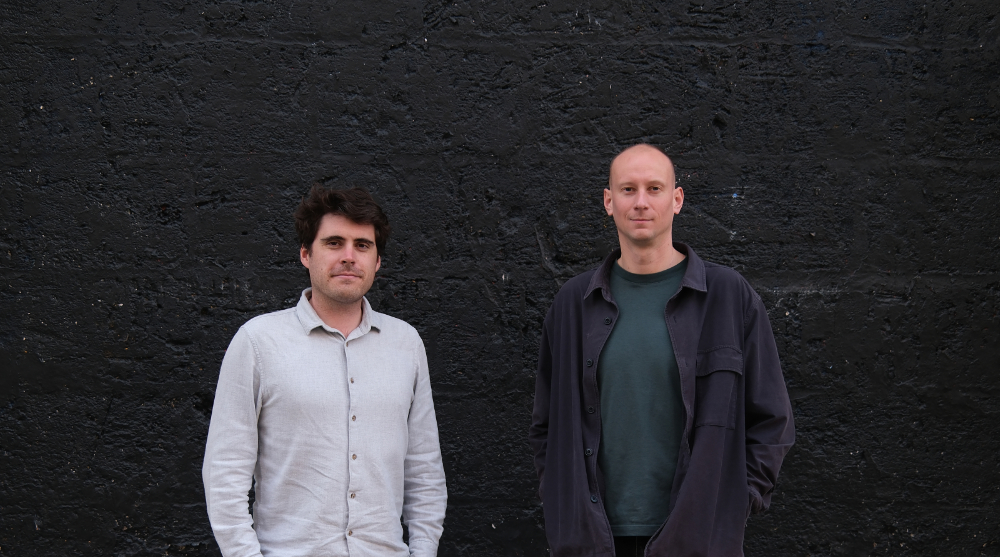
Marty Ilievski and Clément Vignes from France
Please tell us about your company (when it was founded, where it is based, how many employees, etc) Alternatively, if you do not have a company, please give us some insights on your own professional/academia background.
Atelier Fasea is an architecture practice founded in 2022 in Bordeaux, France, by Clément Vignes and Marty Ilievski, both graduates of the École Nationale Supérieure d’Architecture de Versailles. The office is currently composed of its two founding partners, who work together on each project without employees at this stage. This small-scale structure allows us to maintain a direct, careful and engaged approach throughout the entire design process, from the first analysis of a site to the development of architectural proposals. Based in Bordeaux, our practice mainly operates in the South-West of France. Our work focuses on architecture that is closely connected to its context, its history and its environment, with a particular interest in existing buildings, rehabilitation, heritage, and the use of local, bio-based, geo-sourced and low-impact materials.
Brief information about the projects that you/your company have been involved with. For instance, what scale have you focused on/preferred, any significant projects where the company/ individuals have been Involved?
Since its creation, Atelier Fasea has been involved in projects of various scales, ranging from private houses and small residential projects to office spaces and collective housing studies. Our practice has a particular interest in existing buildings and rehabilitation, where the architectural project begins with a careful reading of the site, its structure, its history and its potential for transformation. We are interested in modest and intermediate scales, where the relationship between architecture, materiality, construction methods and everyday uses can be addressed with precision and sensitivity. Alongside our architectural practice, we are also engaged in a research project entitled *Matières Vives*. This research explores local, bio-based, geo-sourced and low-impact materials across France and Europe. Through meetings with manufacturers and producers of compressed earth blocks, rammed earth, straw bales, hemp-based materials, maritime pine, reused materials and recycled plastic, we seek to better understand the production and transformation of matter in order to integrate it more appropriately into our architectural work.
What does architecture mean to you and what is the role of an architect in your society?
For us, architecture is a way of transforming what already exists with attention and responsibility. It is not only the production of buildings, but a way of reading, understanding and acting upon a given situation: a site, a history, a material condition, a social context and an environment. Architecture begins with observation. Before proposing a form, we believe it is necessary to understand what is already there: the qualities of a place, its constraints, its memory, its resources and its possible futures. In that sense, architecture is both a cultural and a material practice. It connects people to places, but also to the ways in which things are built, maintained, reused and transformed. In society, the role of the architect is to act as a mediator. The architect stands between different scales and realities: between inhabitants and institutions, between heritage and contemporary needs, between construction and ecology, between technical constraints and collective imagination. Today, this role is also deeply linked to environmental responsibility. Architects must question the necessity of building, favour transformation over demolition when possible, and develop more sober ways of using materials, energy and land. We believe that architecture should not impose itself on a place, but reveal and extend its existing qualities. The architect’s role is therefore to create spaces that are useful, durable and sensitive, while contributing to a more careful and conscious way of inhabiting the world.
Why do you participate in architecture competitions?
We participate in architecture competitions because they offer a space for experimentation, research and reflection, beyond the constraints of a conventional commission. They allow us to test ideas, question our methods and develop architectural proposals with a strong conceptual and material focus. This competition is particularly meaningful to us because it deals with micro-architecture and the program of the sauna, two subjects that strongly resonate with our practice. We are interested in small-scale architectures where every decision becomes essential: the relationship to the site, the use of materials, the construction process, the atmosphere, and the experience of the body in space. The sauna is a program that we find especially rich, as it connects architecture to ritual, climate, materiality and sensory experience. It is a place where heat, light, texture, intimacy and landscape can come together in a very direct way. For us, this type of project is an opportunity to explore architecture at a concentrated scale, where simplicity, precision and sensitivity are fundamental.
What advice would you give to individuals who struggle to decide whether it would be beneficial for them to participate in architecture competitions?
We would advise them to see architecture competitions not only as a way to win, but as a way to think, test and clarify their own position as architects. A competition can be a valuable moment of freedom, where one can explore ideas, materials, atmospheres and forms of construction that may be more difficult to develop within a conventional commission.
Top 3 Reasons Why You Should Enter Architecture Competitions
Curious about the value of architecture competitions? Discover the transformative power they can have on your career - from igniting creativity and turning designs into reality, to gaining international recognition.
Learn more