We’d like to take the opportunity to introduce you to the Honorable mention winners of our Iceland Slow Sauna competition – Yizhao Li, Rundong Ying and Michelle Wang from United States!
Yizhao Li
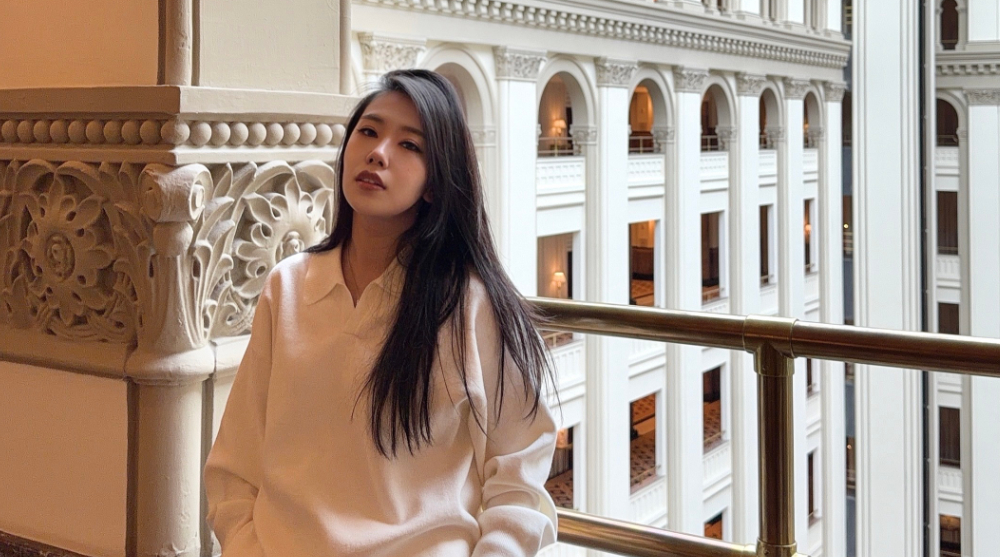
Please tell us about your company (when it was founded, where it is based, how many employees, etc) Alternatively, if you do not have a company, please give us some insights on your own professional/academia background.
I am Yizhao Li, a registered architect based in Washington, D.C. Before beginning my professional practice in the United States, I had the opportunity to study and work in China and Malaysia. Living and working in different cultural contexts has shaped the way I think about place, climate, and everyday life. For The Return, I collaborated with Michelle Wang and Rundong Ying as an independent design team formed specifically for this competition. Although we come from different professional backgrounds, we shared an interest in exploring how architecture can bring people closer to nature.
Brief information about the projects that you/your company have been involved with. For instance, what scale have you focused on/preferred, any significant projects where the company/ individuals have been Involved?
Much of my professional work involves giving existing buildings a new purpose. I have worked mainly on historic preservation, adaptive reuse, and hospitality projects. Many of them involve converting older office buildings into urban hotels while preserving the building's existing character. Working with existing buildings has taught me that architecture does not always begin with a blank page. Often, the most interesting part of the process is understanding what is already there, deciding what should be preserved, and finding ways to make the building work for a new use. I enjoy this process because every existing building already tells a story. Rather than replacing it, I like finding ways for that story to continue in a different form. In hospitality design, I pay close attention to how people move through and experience a building. Arrival, circulation, light, materials, atmosphere, and the transition between public and private spaces all shape a guest's experience.
What does architecture mean to you and what is the role of an architect in your society?
To me, architecture is about shaping the relationship between people and the places they inhabit. A building has to work, of course, but it also affects how people move, feel, gather, rest, and remember a place. Sometimes the most important parts of architecture are very simple: the way daylight enters a room, the texture of a material, or the moment when a narrow space opens toward a view. I think an architect’s role is to pay attention to both the practical needs of a project and the possibilities that may not be immediately obvious. Whether we are working with a historic building, an urban site, or a natural landscape, we have the opportunity to help people see and use a place in a new way.
Why do you participate in architecture competitions?
One of the reasons I enjoy architecture competitions is that they allow me to explore ideas that don't always fit within everyday practice. They allow designers to work with greater freedom, respond to unfamiliar contexts, and place their ideas within an international architectural conversation. The Iceland Slow Sauna competition was especially interesting because the program was small, but it involved many different elements: heat, water, vegetation, weather, privacy, and landscape. Receiving an Honorable Mention was very encouraging, but I also valued the design process itself. It gave us the chance to think carefully about how such a small building could still create a rich spatial experience.
What advice would you give to individuals who struggle to decide whether it would be beneficial for them to participate in architecture competitions?
I would start by choosing a competition that you are genuinely curious about. A good topic can keep you engaged even when the process becomes difficult or the deadline starts to feel overwhelming. It is also helpful to keep the main idea simple. Competition projects can easily become too complicated because there is always another diagram, feature, or concept that could be added. In my experience, the strongest proposals usually have one clear idea, and every drawing helps explain it. Of course, everyone hopes to win, but the result is only one part of the experience. A competition can help you test a new way of working, learn how to communicate an idea more clearly, and discover interests that may continue into future projects. Even an unbuilt proposal can be worthwhile if you come away from it thinking differently.
Top 3 Reasons Why You Should Enter Architecture Competitions
Curious about the value of architecture competitions? Discover the transformative power they can have on your career - from igniting creativity and turning designs into reality, to gaining international recognition.
Learn more