We’d like to take the opportunity to introduce you to the 1st prize winners of our Underbridge #2 competition - Luis Eduardo Ascue Ascencios, Katherine Alexandra Milla Garcia, Ariana Irene Velasquez Lozano and Jhon Carrasco from Peru!
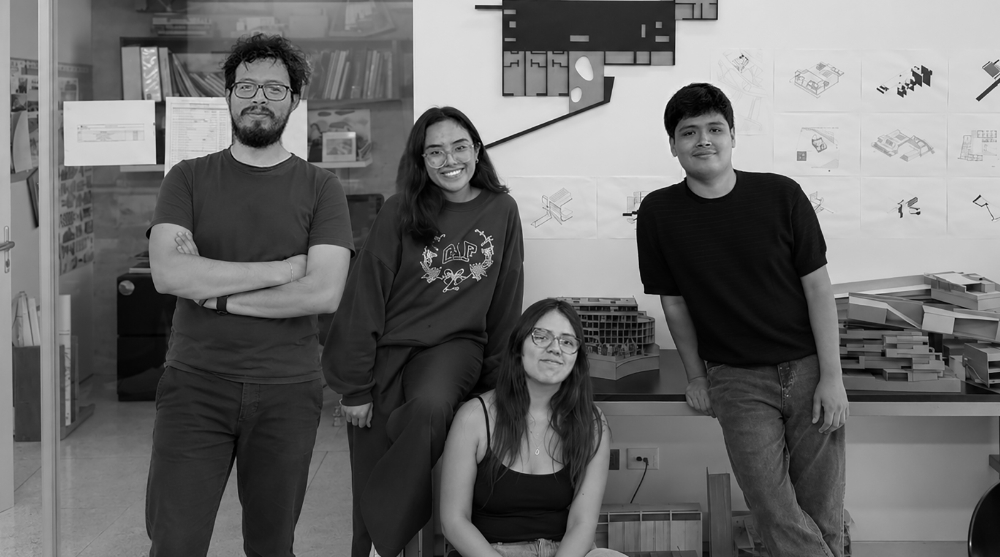
Luis Eduardo Ascue Ascencios, Katherine Alexandra Milla Garcia, Ariana Irene Velasquez Lozano and Jhon Carrasco from Peru
Please tell us about your company (when it was founded, where it is based, how many employees, etc) Alternatively, if you do not have a company, please give us some insights on your own professional/academia background.
Although we are not formally established as a company, we are a group of architects connected by a shared academic and professional journey. We graduated from the Pontifical Catholic University of Peru (PUCP), where we first met while developing our thesis projects. Our collaboration continued later in an architectural studio, where we worked together and developed a shared understanding of design and project-making. Today, we come together through competitions and creative initiatives, bringing together our different experiences while remaining connected by the values, curiosity, and approach to architecture that emerged during our years at university.
Brief information about the projects that you/your company have been involved with. For instance, what scale have you focused on/preferred, any significant projects where the company/ individuals have been Involved?
While this is our first project developed collectively as a team, we share a common academic and professional background that has shaped the way we approach architecture. Throughout our education and professional practice, we have been involved in a variety of projects, including housing, museums, educational facilities, and cultural initiatives. Across these experiences, we have always been interested in architecture as a response to context, people, and place. Our work is guided by a concern for social impact, materiality, and architectural exploration, using design as a way to engage with environmental, cultural, and societal realities.
What does architecture mean to you and what is the role of an architect in your society?
In Peru, architecture has not always been widely recognised as a discipline capable of contributing to broader social change. However, over the last decade, its value has become increasingly visible through projects that have positively transformed communities, particularly in places where quality architecture has often been absent or difficult to access. For us, architecture is both a cultural and social practice. The role of the architect is not only to design buildings, but also to listen, understand local realities, engage with communities, and help shape more meaningful environments. In this context, architecture becomes an opportunity to rethink how things are done and to contribute, in a tangible way, to the well being of society.
Why do you participate in architecture competitions?
Architecture competitions provide an opportunity to constantly challenge and refine our design practice. They encourage us to work together within a limited timeframe, interpret complex briefs, and translate ideas into coherent architectural proposals. For us, competitions are also spaces of freedom and exploration. They allow us to test ideas, question assumptions, and engage with themes that often go beyond the constraints of everyday practice. Equally important is the opportunity to collaborate, exchange perspectives, and learn from one another throughout the process. Ultimately, architecture competitions expand our understanding of the discipline. They expose us to different ways of thinking and show how architects from diverse contexts can arrive at thoughtful and valuable solutions, enriching the broader conversation around architecture.
What advice would you give to individuals who struggle to decide whether it would be beneficial for them to participate in architecture competitions?
We would encourage anyone with an interest in architecture to participate. Competitions are unique spaces where ideas can be explored with a degree of freedom that is rarely available in everyday’s professional practice. They challenge us to think critically, work collaboratively, and continuously improve our design skills. Beyond awards or recognition, the real value lies in the process itself: learning how to ask better questions, test ideas, communicate a vision, and engage with different perspectives. Every competition is an opportunity to grow, not only as architects, but also as individuals.
Top 3 Reasons Why You Should Enter Architecture Competitions
Curious about the value of architecture competitions? Discover the transformative power they can have on your career - from igniting creativity and turning designs into reality, to gaining international recognition.
Learn more