We’d like to take the opportunity to introduce you to the Student Award winners of our The Next House: USA competition – Tanqing Cheng and Wenjia Shen from United States, Cornell University College of Architecture, Art, and Planning!
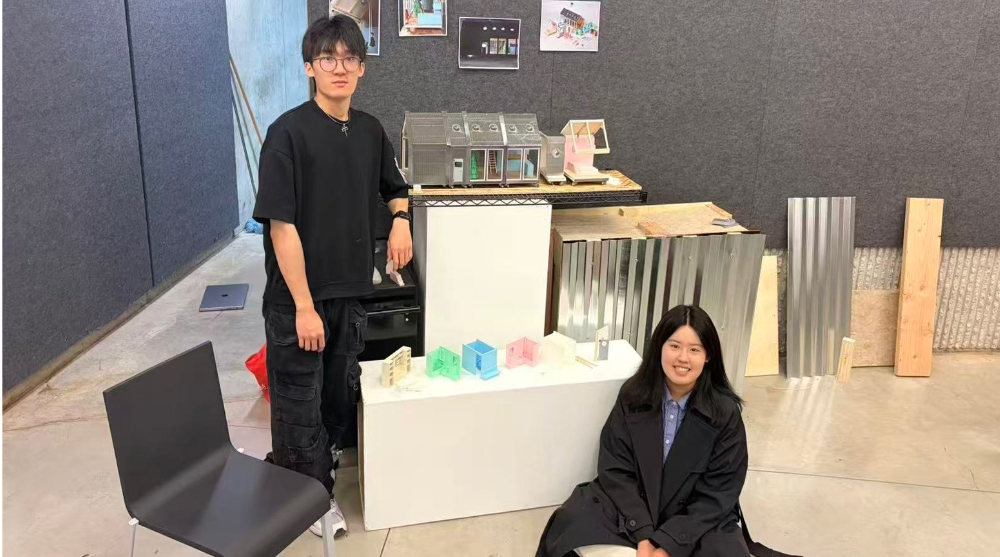
Tanqing Cheng and Wenjia Shen
Please tell us about your company (when it was founded, where it is based, how many employees, etc) Alternatively, if you do not have a company, please give us some insights on your own professional/academia background.
We collaborated on this project in an integrated studio at Cornell AAP, Building Ownership, led by Felix Heisel and Michael Jefferson. In Ithaca and Tompkins County, the national crisis becomes intensely local in a market characterized by high demand and constrained supply shaped by the presence of Cornell University and other large institutions, limited buildable land, and neighborhood-scale political friction around growth. Our aim is to pitch our voice towards this urging issue.
Brief information about the projects that you/your company have been involved with. For instance, what scale have you focused on/preferred, any significant projects where the company/ individuals have been Involved?
Between us we have worked across a wide range of scales, from single-family houses and museums to a train station and towers of fifty storeys and above. Our recent experience has been concentrated at the larger end. For example, Tanqing participated in a high-rise renovation project in Manhattan, as part of the team during an internship at KPF. Working at that scale makes the logic of standardization and repetition very legible, and Closer to the Moon came partly out of wanting to test whether the same industrial logic could deliver dignity at the scale of a single household rather than efficiency at the scale of a tower.
What does architecture mean to you and what is the role of an architect in your society?
Increasingly, the most important thing an architect can do is to think before we build. Architecture carries a responsibility to the people who will inhabit it, to the culture it belongs to, and to the specificity of a place.
Why do you participate in architecture competitions?
We participate in architecture competitions to exchange ideas with the very best talents and front tier emerging architects. Most importantly, to showcase our work to the world.
What advice would you give to individuals who struggle to decide whether it would be beneficial for them to participate in architecture competitions?
Every competition is a demanding challenge and rewarding learning experience. The feedback and experience we earn in each round makes us more equipped with skills and knowledge.
Top 3 Reasons Why You Should Enter Architecture Competitions
Curious about the value of architecture competitions? Discover the transformative power they can have on your career - from igniting creativity and turning designs into reality, to gaining international recognition.
Learn more