We’d like to take the opportunity to introduce you to the Sustainability Award winners of our Re:Form - New Life for Old Spaces #3 competition - Dohyun Lee, Gu Gyutak, Sihyun Park and Minjin Park from South Korea!
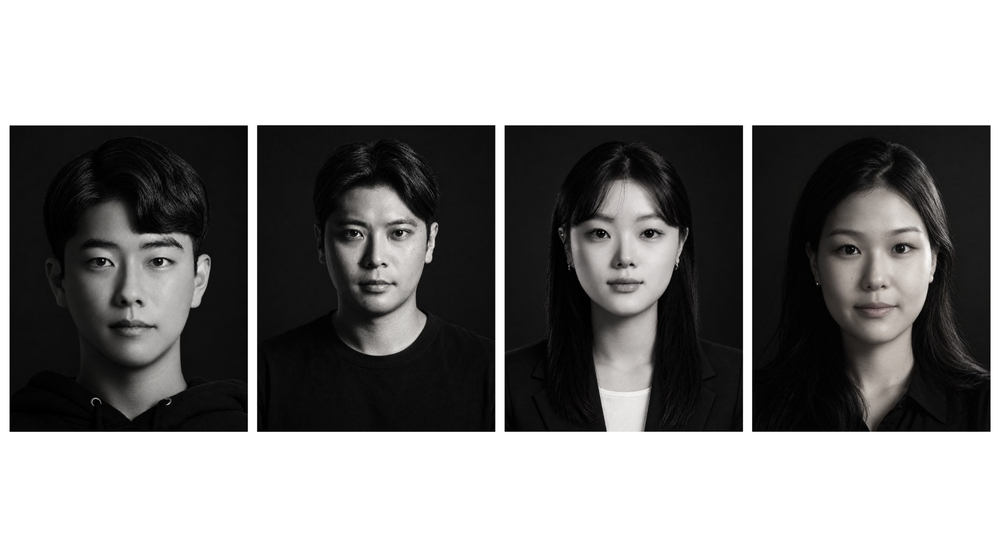
Sustainability Award Winners from South Korea
Please tell us about your company (when it was founded, where it is based, how many employees, etc) Alternatively, if you do not have a company, please give us some insights on your own professional/academia background.
We are a team of four members consisting of current architecture students at Dong-A University in South Korea and graduates who are now working in architectural practice. Although we are at different stages of our architectural journeys, we share a common passion for architecture and a desire to continuously explore its possibilities. We regularly come together to discuss a wide range of topics surrounding contemporary architecture, exchange ideas, and share our experiences. These conversations allow us to learn from different perspectives, bridging academic exploration with practical knowledge while supporting each other's growth. Architectural competitions have become a natural extension of these exchanges, providing opportunities to transform our discussions and ideas into tangible design proposals. Rather than being defined by a particular architectural style or approach, we value the process of questioning, learning, and discovering new possibilities together. We believe that this continuous exchange of ideas is what shapes our identity as a team and drives our architectural exploration.
Brief information about the projects that you/your company have been involved with. For instance, what scale have you focused on/preferred, any significant projects where the company/ individuals have been Involved?
Our architectural work has primarily focused on reinterpreting existing spaces and urban infrastructure in response to changing social needs. Through various architectural competitions, we have explored projects ranging from the adaptive reuse of abandoned or underutilized structures to the transformation of public and cultural spaces. One of our projects, NEXTATION, proposes transforming conventional gas stations into new urban infrastructure that supports delivery riders and emerging forms of mobility. Another project explores the adaptive reuse of a historic winery, connecting architecture with local culture, nature, and the passage of time. Although these projects differ in scale and context, they share a common approach: identifying overlooked possibilities within existing environments and transforming them into meaningful architectural experiences.
What does architecture mean to you and what is the role of an architect in your society?
To us, architecture is not simply the act of designing buildings, but a process of understanding society, questioning existing conditions, and discovering new possibilities. We believe that meaningful architecture begins not with the question of what to build, but with why it needs to exist. As society evolves, the ways people live, work, and interact continuously change. Architecture should respond to these transformations rather than merely reproduce familiar spaces and forms. We believe the role of an architect is to recognize problems that society may have overlooked, reinterpret them from different perspectives, and translate those insights into spatial solutions. Ultimately, architecture should not only accommodate the present but also suggest new possibilities for how people might live together in the future.
Why do you participate in architecture competitions?
We participate in architectural competitions because they provide an opportunity to challenge conventional thinking and explore ideas beyond the limitations of everyday practice. For us, competitions are not simply about creating visually impressive designs or achieving recognition. They are opportunities to question established assumptions, investigate social issues, and experiment with alternative architectural solutions. The most valuable part of the process is discovering that a problem can be understood and approached in entirely different ways. Through discussions, research, and design experiments, we continuously challenge our own perspectives and develop new ways of thinking. We believe the true value of architectural competitions lies not only in the final result, but also in the intellectual growth and new possibilities discovered throughout the design process.
What advice would you give to individuals who struggle to decide whether it would be beneficial for them to participate in architecture competitions?
Architectural competitions are not only opportunities to demonstrate what you already know, but also opportunities to discover what you have yet to learn. Rather than focusing solely on winning, we encourage participants to approach each competition with curiosity and a willingness to challenge their own assumptions. Do not be afraid to question the given brief or explore unconventional ideas. Sometimes, the most meaningful architectural solutions emerge not from answering the original question, but from redefining the question itself. Even if a project does not receive recognition, the experience of researching, questioning, collaborating, and creating will remain valuable. The most important thing is not to have all the answers before beginning, but to have the courage to begin asking better questions.
Top 3 Reasons Why You Should Enter Architecture Competitions
Curious about the value of architecture competitions? Discover the transformative power they can have on your career - from igniting creativity and turning designs into reality, to gaining international recognition.
Learn more