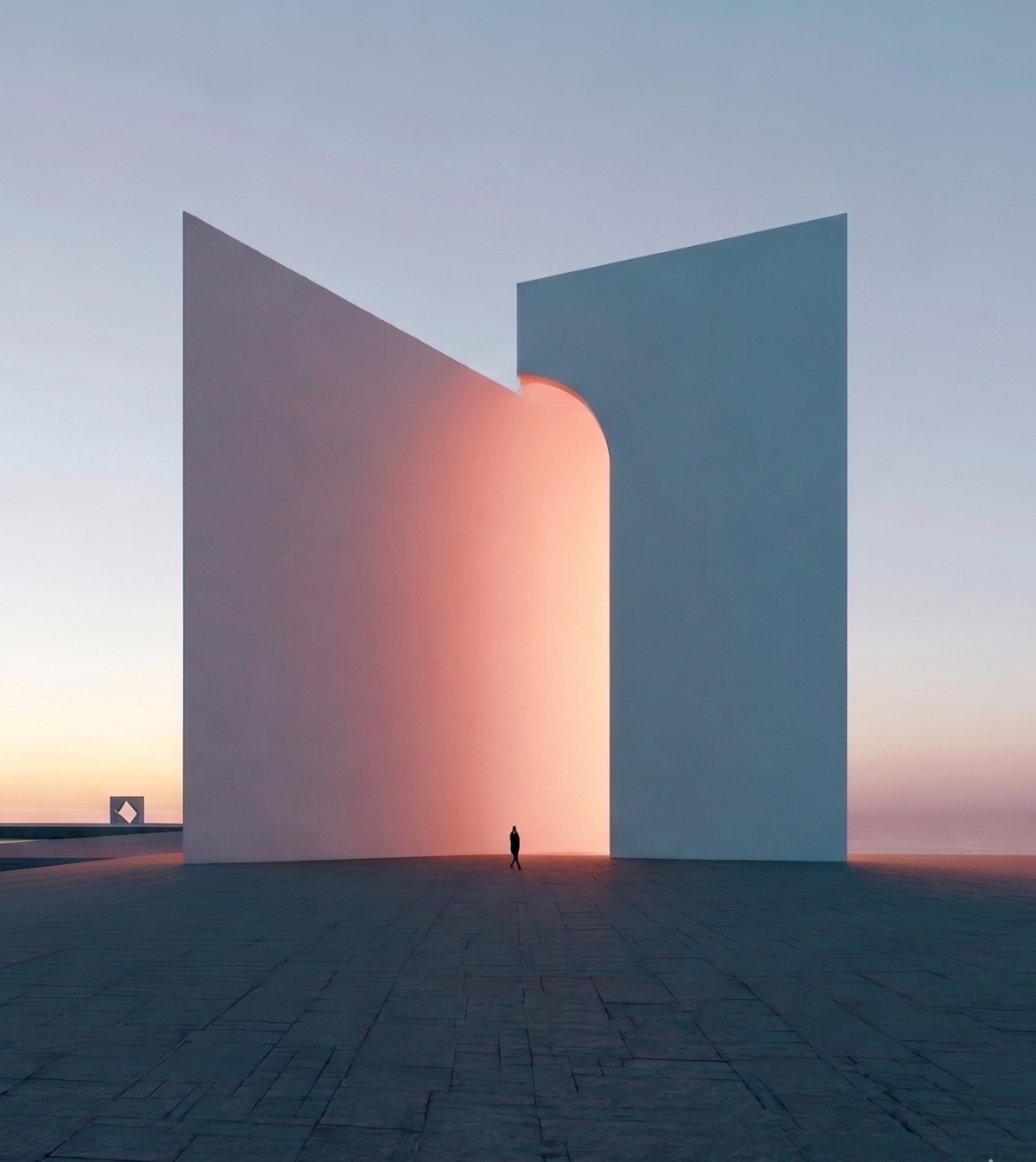
We’d like to take the opportunity to introduce you to the Honorable mention winner of our Mujassam Watan Urban Sculpture Challenge #8 competition - Tharwa Sea Front Site – Shaobo Wu from WUA Studio, United Kingdom!
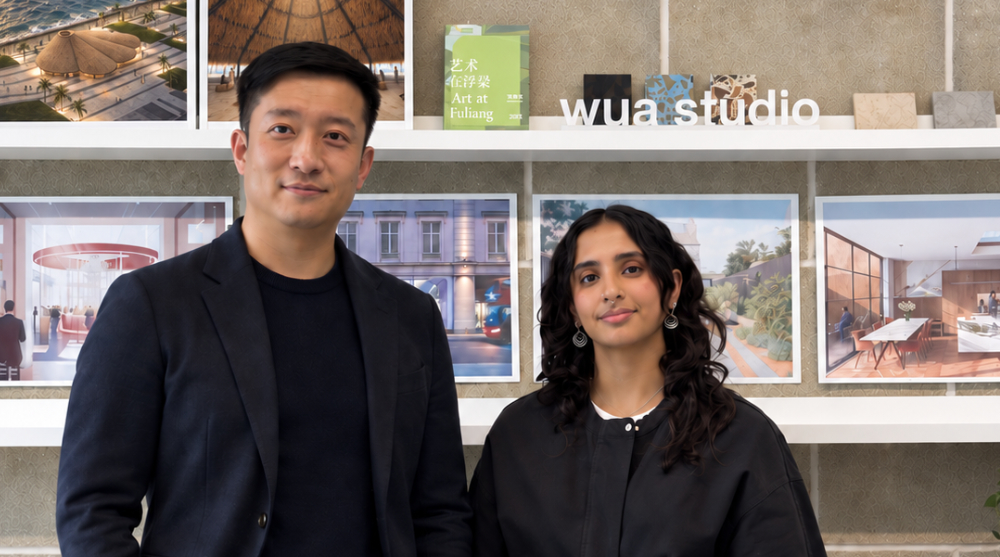
Shaobo Wu from United Kingdom
Please tell us about your company (when it was founded, where it is based, how many employees, etc) Alternatively, if you do not have a company, please give us some insights on your own professional/academia background.
WUA Studio is an architecture and design practice founded in London in 2021. Today our members are distributed across London, Shanghai, Riyadh and Osaka — architects, developers and BIM specialists of different nationalities, backgrounds and languages, connected as one closely-knit network that operates efficiently across time zones and cultures. Alongside our design work, WUA runs its own innovation laboratory, WUA Lab. While delivering architecture and urban projects, we actively pursue technological innovation around space — how it is designed, experienced and communicated. I founded the practice after a decade in large international offices — HOK, Foster + Partners and Sordo Madaleno, where I served as their first Project Director outside Mexico and helped launch their London office. Starting WUA was a way of putting into practice my own reading of what an architect can be today and in the future.
Brief information about the projects that you/your company have been involved with. For instance, what scale have you focused on/preferred, any significant projects where the company/ individuals have been Involved?
Our portfolio deliberately spans scales. At one end are art installations — Floating Boats, our first realised art installation project, created for Art Field Nanhai in Guangdong in 2024, shortly after we moved into our current studio (featured on designboom: www.designboom.com/art/dragon-boat-wua-studio-sordo-madaleno-installation-chinese-art-festival-01-26-2025/). At the other, our shortlisted entry for the 2025 Tulcea Urban Regeneration Competition in Romania took us directly to the scale of the city. For me, architecture has never been limited to buildings alone; the subject is the wider built environment. Exploring the many ways space can exist — and the many roles an architect can play in shaping it — is what I am most passionate about.
What does architecture mean to you and what is the role of an architect in your society?
An architect is first of all a professional — someone in service of others. Only by fully understanding the environment, the client and every other stakeholder can we arrive at an appropriate answer. Our methods change from city to city and from one way of living to another, but the core is constant: a city or a space must never stand apart from its environment, its cultural context and its users. Our designs begin precisely from that understanding.
Why do you participate in architecture competitions?
Competitions are part of our everyday practice. They carry uncertainty, and with it, unknown possibilities. When the site is far away — somewhere you may never have set foot — correctly understanding and interpreting the brief becomes everything. WUA is unusually well placed for this. Our team spans Asia, Europe and the Middle East, and on this project our Saudi summer intern, Lama Sultan, carried out the crucial work of cultural interpretation. Her deep research throughout the design process ensured that our proposal genuinely reflects what this important site means within its local culture. That kind of learning is, to me, a permanent part of the architect's role.
What advice would you give to individuals who struggle to decide whether it would be beneficial for them to participate in architecture competitions?
A competition places you inside a set of concrete requirements and a real scenario — yet it never limits your creativity or your voice. In a very short time you experience a complete project cycle: research, understanding the site, concept generation and proposal preparation. For young professionals especially, that is invaluable. The result is not the main point. The process lets you experience the full complexity of an architectural project — and understand how hard-won a good proposal really is.
Top 3 Reasons Why You Should Enter Architecture Competitions
Curious about the value of architecture competitions? Discover the transformative power they can have on your career - from igniting creativity and turning designs into reality, to gaining international recognition.
Learn more