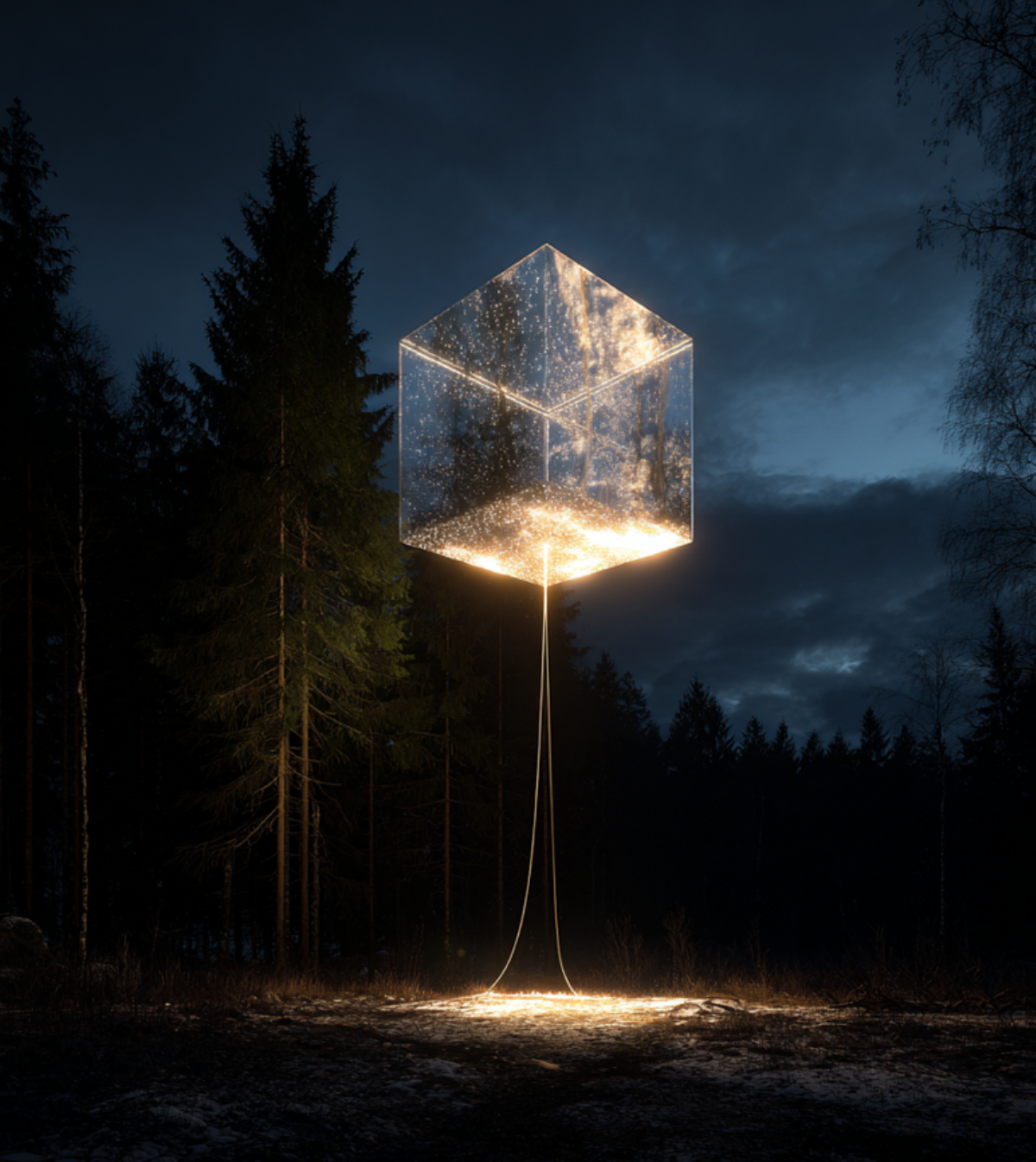
We’d like to take the opportunity to introduce you to the Honorable mention winner of our Mujassam Watan Urban Sculpture Challenge #8 competition - Salwa Road Site – Parisima Davoudi from United Kingdom!
Parisima Davoudi from United Kingdom
Please tell us about your company (when it was founded, where it is based, how many employees, etc) Alternatively, if you do not have a company, please give us some insights on your own professional/academia background.
Raah Studio was established in London in 2024 by architects Parisima Davoudi, Ali Habibianfar and Parisa Davoudi, building on several years of collaboration with independent architects, artists, and researchers. We lead the practice together, working with a network of collaborators according to the needs of each project. The studio brings architecture, art, and research into dialogue, exploring how places are shaped by material, history, and the people who inhabit them. Registered in London and working internationally, Raah provides a framework for developing these collaborations across different contexts.
Brief information about the projects that you/your company have been involved with. For instance, what scale have you focused on/preferred, any significant projects where the company/ individuals have been Involved?
Our work ranges from urban objects to buildings and landscape interventions. Across these scales, we investigate how architecture can engage with existing structures, material conditions, cultural histories, and patterns of collective life. This approach connects the earlier work of the studio’s founders with our current practice. Selected projects include:
• The Edge of Presence — Tehran, Iran: Awarded first prize in Buildner’s Re — New Life for Old Spaces competition, the project reimagines an abandoned brick kiln as a women’s shelter. It brings protection, cultivation, and economic autonomy into a shared spatial framework.
• Baghdad Design Centre — Baghdad, Iraq: Awarded second prize in the Rifat Chadirji Prize, the proposal preserves the collective space that people established among the surviving walls of a damaged building, connecting it with new cultural spaces below ground.
• Common Ruins — France: Awarded third prize in YAC’s competition for Château de la Mothe-Chandeniers, the project explores the coexistence of ruins, vegetation, and contemporary inhabitation through suspended paths, transparent additions, and water reflections.
• Al Umma Park — Baghdad, Iraq: Recognised with an honourable mention in the Dewan Award, the project draws on the Tigris and Baghdad’s historical layers to reconnect public gardens, cultural spaces, and pedestrian life.
• Iron Island — Adriatic Sea, Italy: A finalist in YAC’s competition, the proposal transforms an offshore oil platform into a botanical garden, examining the relationship between industrial heritage, ecological change, and the experience of time.
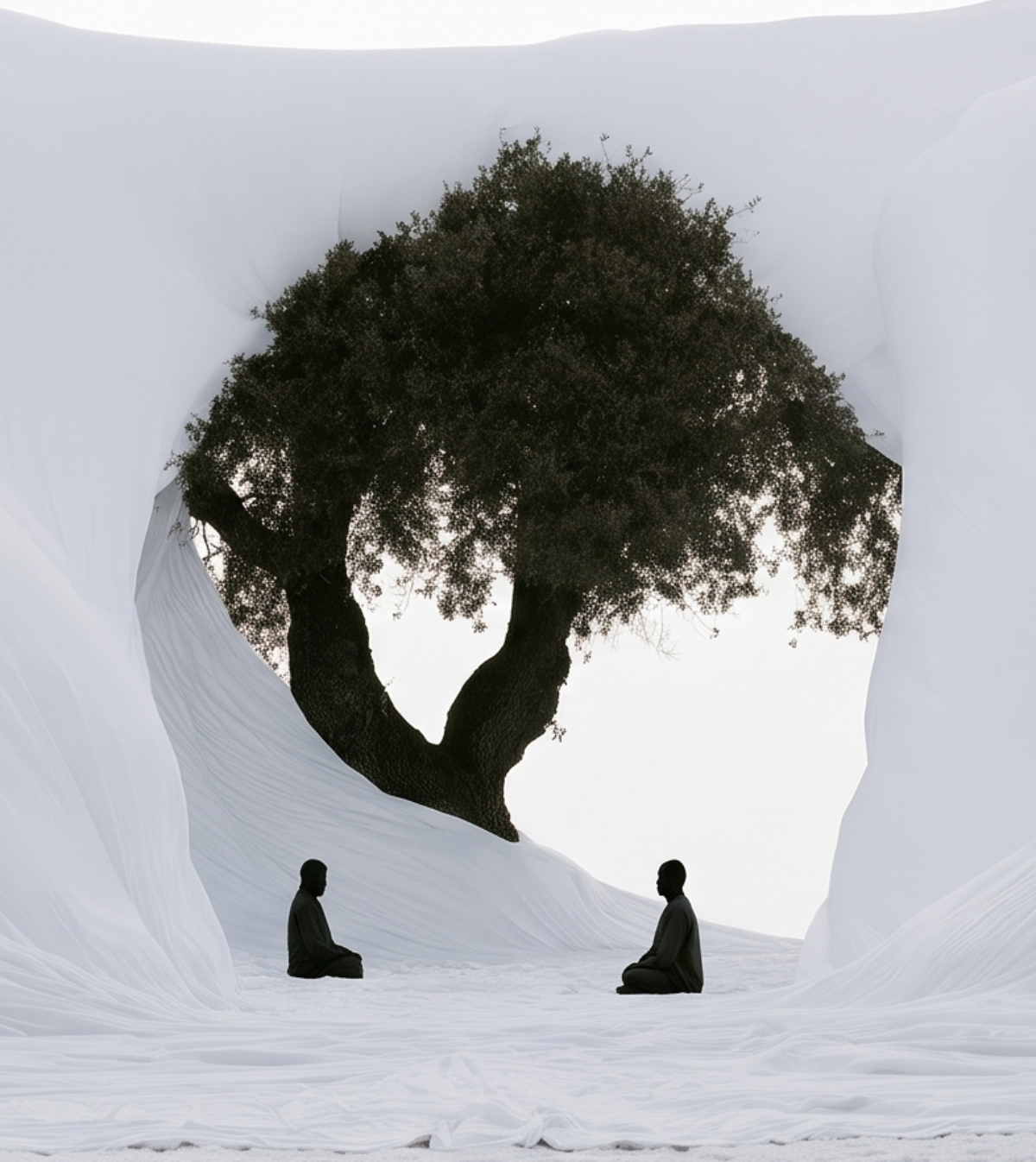
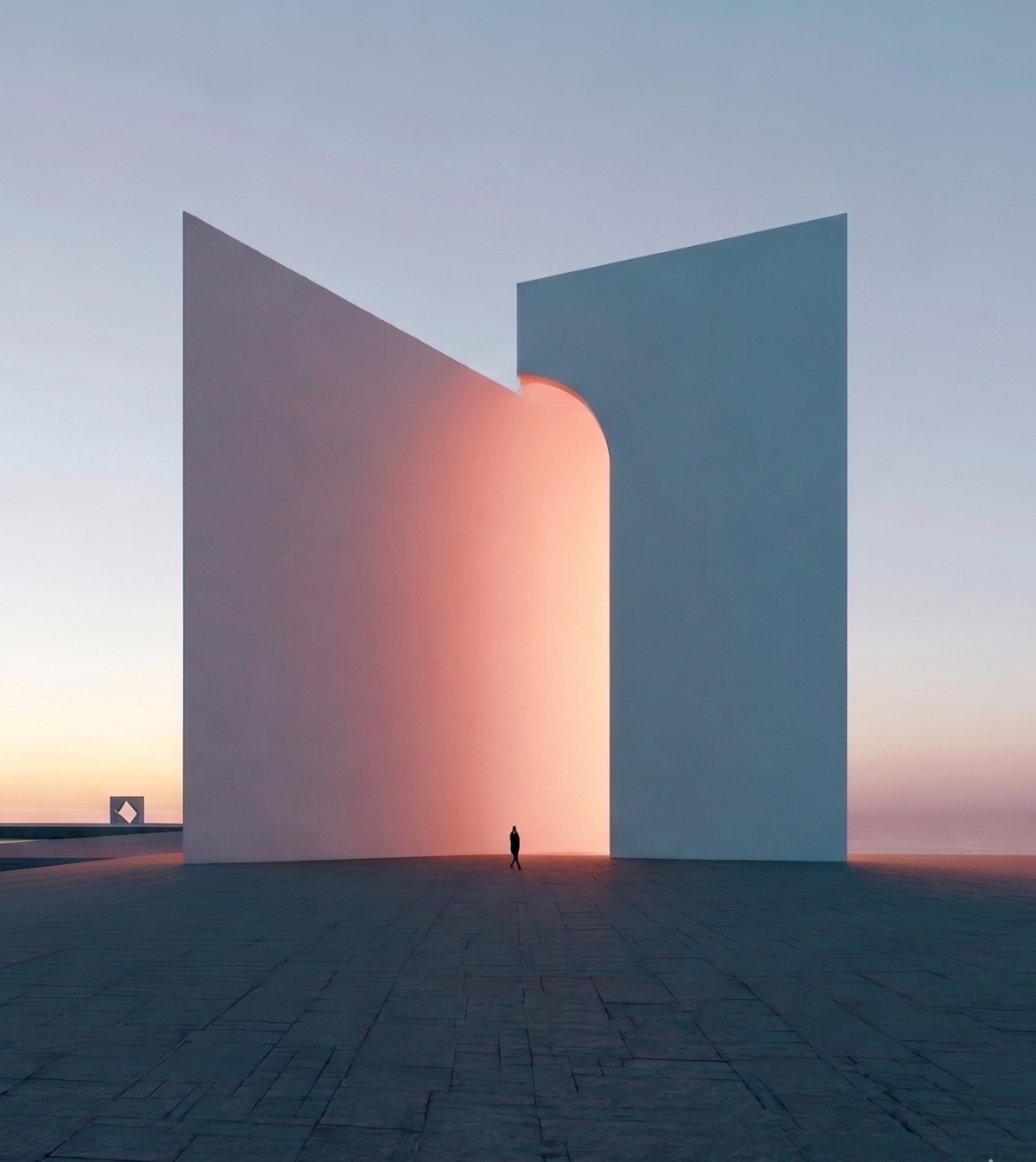
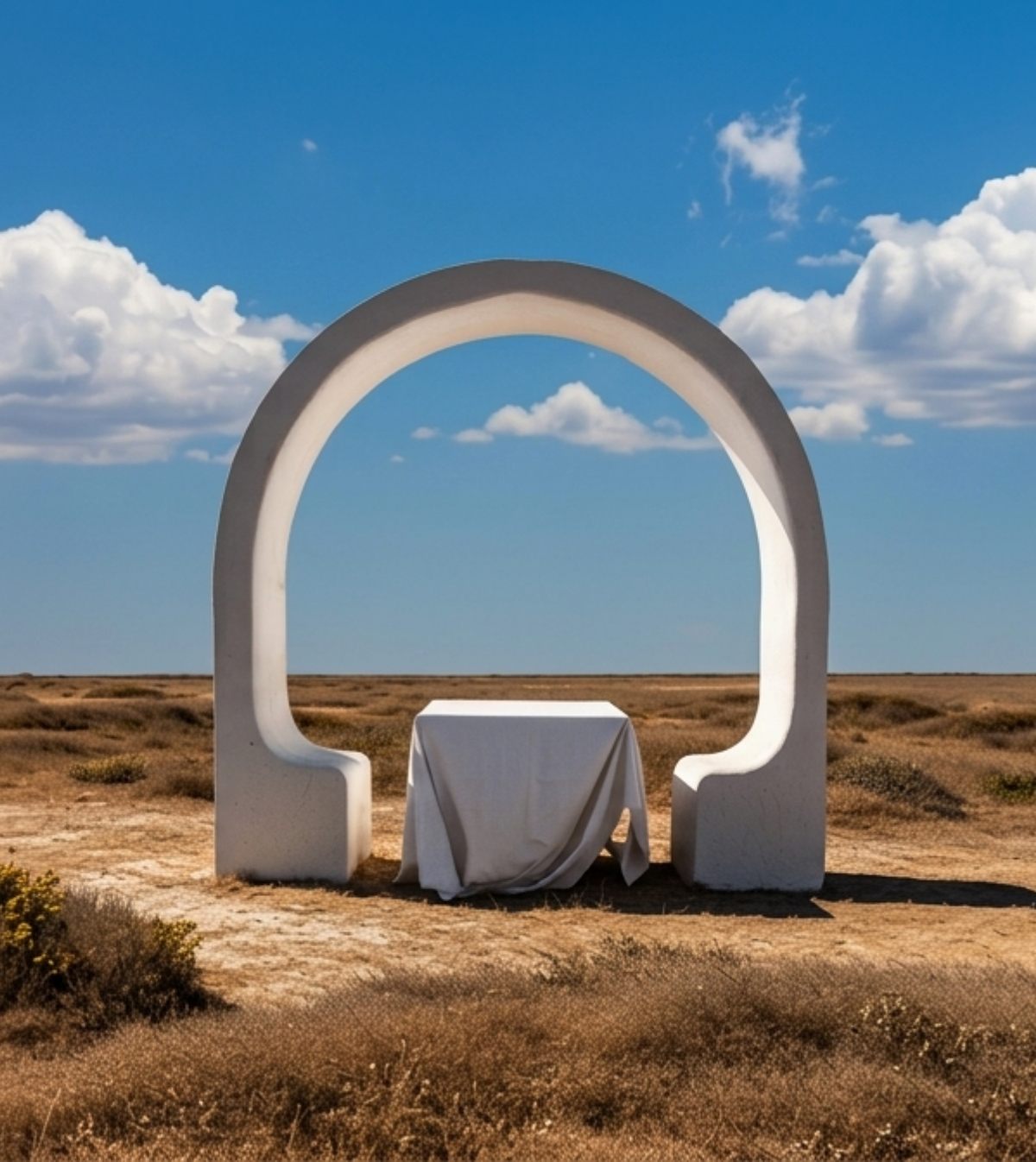
• The Last Nuclear Bomb Memorial — New Mexico, USA: Shortlisted in the Bee Breeders competition, the project uses descent, water, and voids in the ground to confront the memory of nuclear violence. In Stone Waymark, two limestone formations across Salwa Road are conceived as a shared landmark. The project connects the distant perception of a passing driver with the intimate experience of shade, gaps, and places to pause. Across our work, research informs specific spatial and material decisions.
What does architecture mean to you and what is the role of an architect in your society?
For us, architecture begins with attention: to what exists, who is present, and what a place allows or excludes. It gives these observations a spatial form, influencing how people move, meet, rest, and belong. In our society, decisions about space are closely tied to questions of visibility, access, and power. Architects have a responsibility to examine those relationships and make room for lives and histories that are easily overlooked. This responsibility also operates through ordinary design choices. Where we place an opening, how we create shade, or what we preserve can determine whether a place invites occupation. We see the architect as someone who connects critical thought with these tangible conditions of everyday life.
Why do you participate in architecture competitions?
Competitions give us a focused setting in which to pursue questions we care about. A shared brief, a specific site, and a deadline allow us to develop an idea intensively and test how it holds together spatially, materially, and technically. We are particularly drawn to briefs that open a conversation between architecture and other fields. Stone Waymark offered an opportunity to explore how sculpture could also create inhabitable space, and how a roadside landmark could address both speed and stillness. We value competitions when the work produces knowledge that can continue into future projects and collaborations.
What advice would you give to individuals who struggle to decide whether it would be beneficial for them to participate in architecture competitions?
Choose a competition because its question matters to you, and assess the time, cost, and demands before committing. A useful brief should offer something you want to investigate and enough room to develop your own position. Define what you hope to gain beyond an award: a new method, a stronger collaboration, or a project worth developing further. This gives you a way to evaluate the experience even when the result is disappointing. An unsuccessful entry can be valuable, but that value requires reflection. Ask what the process clarified, what remained unresolved, and what you would carry into the next project.
Top 3 Reasons Why You Should Enter Architecture Competitions
Curious about the value of architecture competitions? Discover the transformative power they can have on your career - from igniting creativity and turning designs into reality, to gaining international recognition.
Learn more