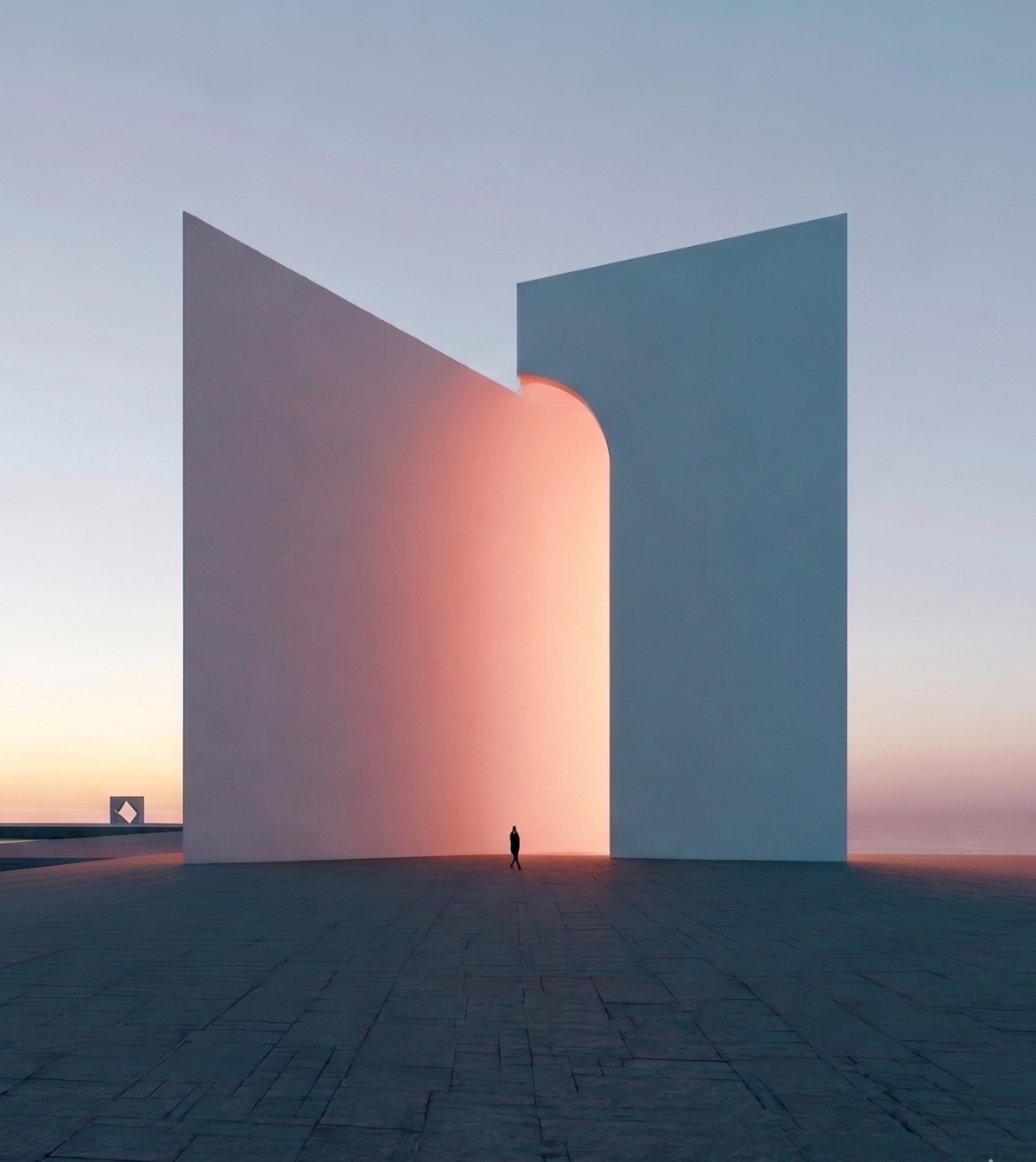
We’d like to take the opportunity to introduce you to the 2nd prize winner of our Mujassam Watan Urban Sculpture Challenge #8 competition - Salwa Road Site – Frederic Gapinski from New Zealand!
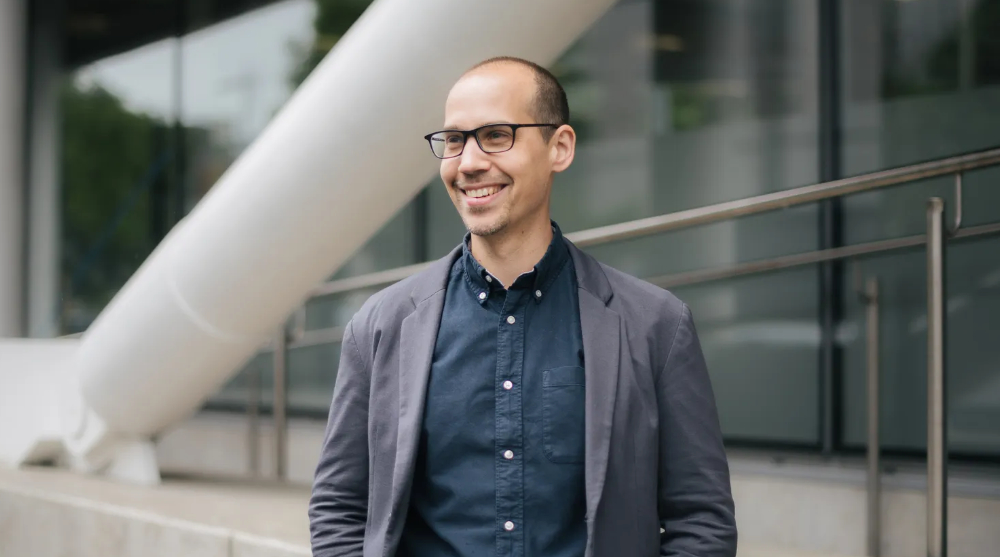
Frederic Gapinski
Please tell us about your company (when it was founded, where it is based, how many employees, etc) Alternatively, if you do not have a company, please give us some insights on your own professional/academia background.
I am a French architect and urban designer based in Christchurch, New Zealand. I have been practising architecture for over a decade and currently work as an Associate at Warren and Mahoney, collaborating across the Christchurch and Auckland studios. My experience sits between architecture, urban design and large-scale masterplanning, with projects ranging from civic and cultural buildings to infrastructure, urban renewal and major institutional developments. I have worked in both France and New Zealand, which has given me the opportunity to work across different cultural, environmental and architectural contexts.
Brief information about the projects that you/your company have been involved with. For instance, what scale have you focused on/preferred, any significant projects where the company/ individuals have been Involved?
My experience covers a broad range of scales, from individual buildings and public spaces to large urban and infrastructure projects. Projects I have been involved with include the Union Eco-district in France, Melbourne's North East Link, the Blenheim Art Gallery + Library – Te Kahu o Waipuna, Novotel Christchurch Airport, and the New Dunedin Hospital, as well as a number of masterplanning and urban design projects. I particularly enjoy working at the intersection between architecture and the larger city or landscape, understanding how individual buildings contribute to wider systems of movement, ecology, culture and community. This has led me to work across civic architecture, healthcare, education, infrastructure, urban renewal and strategic masterplanning.
What does architecture mean to you and what is the role of an architect in your society?
For me, architecture is fundamentally about shaping human experience. It is not simply about creating objects or buildings, but about creating relationships between people, space, light, material, landscape and time. The architect's role is therefore both creative and responsible. We have to listen, to the land, to history, to culture and, most importantly, to the people who will inhabit and experience a place. Our role is to translate these often complex and sometimes conflicting needs into spaces that can enrich people's everyday lives. I believe architecture also has the ability to make visible the values of a society: how we care for one another, how we relate to the environment and what we choose to preserve or transform. Good architecture should therefore not only respond to its immediate brief, but contribute positively to the wider cultural and social landscape.
Why do you participate in architecture competitions?
Competitions give me an opportunity to explore ideas that might not emerge within the constraints of a conventional project. They provide a space for experimentation, to question assumptions, test new approaches and develop a strong architectural idea without being immediately constrained by budget, programme or established processes. I also see competitions as a form of creative research. They allow me to explore subjects that genuinely interest me, develop my design thinking and communicate an idea in a very concentrated way. Winning is obviously rewarding, but I don't see it as the only measure of success. The process itself, researching, designing, questioning and refining an idea, is valuable because it continually pushes me to become a better architect.
What advice would you give to individuals who struggle to decide whether it would be beneficial for them to participate in architecture competitions?
I would say: participate if you have something you genuinely want to explore. A competition should not only be seen as an opportunity to win a commission. It can be an opportunity to experiment, learn, develop your own architectural voice and explore ideas that you may not otherwise have the opportunity to pursue. The most important thing is to choose competitions carefully and give yourself a clear reason for entering. You do not have to enter every competition. Choose one where the subject interests you, where you feel you have something to contribute, and where the process itself will teach you something. Even when you don't win, you can come away with a stronger idea, a better understanding of your own design process and a new piece of architectural thinking. In that sense, competitions can be valuable regardless of the final result.
Top 3 Reasons Why You Should Enter Architecture Competitions
Curious about the value of architecture competitions? Discover the transformative power they can have on your career - from igniting creativity and turning designs into reality, to gaining international recognition.
Learn more