We’d like to take this opportunity to introduce you to the participants of our "Mujassam Watan Urban Sculpture Challenge #8 competition – Chang Say Young and Sujeong Koo from United States !
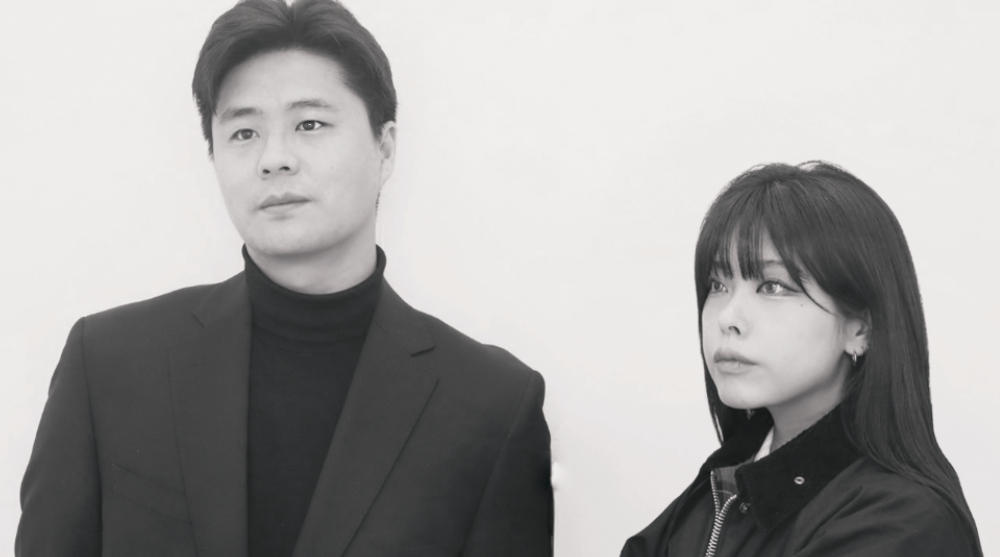
Chang Say Young and Sujeong Koo from United States
Please tell us about your company (when it was founded, where it is based, how many employees, etc) Alternatively, if you do not have a company, please give us some insights on your own professional/academia background.
We are S SQUARE (S²), an architectural design team formed by Sayyoung Chang and Sujeong Koo while studying together at the University of Michigan’s Taubman College of Architecture and Urban Planning. Before coming to Michigan, we both completed our undergraduate architectural education in South Korea. Rather than viewing architecture as an isolated building or a fixed outcome, we understand it as a system in which spatial, social, and environmental elements interact. The name S SQUARE reflects five principles that guide our work: Sustainable, Systemic, Scalable, Spatial, and Situated. Based on these principles, we explore architecture that respects the history, culture, and environmental conditions of each place while remaining adaptable to social and environmental change. We are particularly interested in how architecture can create new relationships between people, materials, and the environment, and how it can continue to adapt and evolve across different contexts and scales.
Brief information about the projects that you/your company have been involved with. For instance, what scale have you focused on/preferred, any significant projects where the company/ individuals have been Involved?
As members of S SQUARE, we have worked on a range of projects, from the adaptive reuse of historic structures to housing and urban spaces that respond to climate change. Our collaborative work includes a renovation project that reinterprets an ancient Roman theater in Florence for contemporary use, as well as the adaptive reuse of a historic defensive tower at Punta della Campanella in Italy. Both projects focused on preserving the memories and layers of time embedded in the existing structures while giving them new roles that respond to contemporary needs and patterns of use. Individually, Sayyoung Chang has worked primarily on cultural and public spaces. His projects include low-energy, environmentally responsive housing in Morocco that draws on the region’s climatic conditions and traditional passive cooling methods, as well as a proposal to revitalize Hancock Park surrounding LACMA in Los Angeles. Sujeong Koo’s work includes a housing project in Bangladesh that responds to recurring flooding while reflecting local environmental conditions and ways of life. She has also developed a proposal for revitalizing the Boston waterfront by reconsidering the relationship between the city and the water in response to climate change and rising sea levels. Although our projects span different regions, scales, and building types, they share a common approach: carefully understanding the existing context, history, and culture of a place and translating them into architectural responses to today’s social and environmental challenges.
What does architecture mean to you and what is the role of an architect in your society?
For us, architecture goes beyond the creation of physical buildings. We see it as a process of shaping relationships between people, the environment, culture, and time. Architecture reflects not only the history, climate, and ways of life of a place, but also the experiences and memories of those who use it. In this sense, we believe architecture is not a fixed outcome at the moment of completion, but something that continues to acquire new meanings as people’s lives and surrounding conditions change. We believe an architect’s role is not to impose an idea on a place, but to carefully understand its existing conditions and the voices of its people, and to translate them into spatial relationships. Architects should also consider future social and environmental changes while responding to present needs. Our goal is to propose architecture that respects the historical and cultural values of each place while remaining open and adaptable to change.
Why do you participate in architecture competitions?
The main reason we participate in architectural competitions is that they allow us to freely experiment with new ideas and develop our different perspectives into a shared architectural proposal. Competitions give us an opportunity to analyze a specific place and its social challenges, and to translate the values we consider important—such as sustainability, historical and cultural context, and adaptability to change—into tangible spatial ideas. We also value the process of researching and learning about unfamiliar cultures, histories, climates, and ways of life through competitions set in different parts of the world. Designing for an unfamiliar place requires us to first understand its unique context and the lives of its people rather than simply imposing our own perspective. This process helps us move beyond familiar architectural assumptions, broaden the way we think, and discover new approaches to design. Competitions are also an important part of how we continue to communicate, collaborate, and develop S SQUARE’s design direction. While receiving recognition is meaningful, we place greater value on the experience of exploring a question together, testing different possibilities, and learning throughout the process.
What advice would you give to individuals who struggle to decide whether it would be beneficial for them to participate in architecture competitions?
If you are considering entering an architectural competition, we would encourage you not to base your decision solely on the possibility of winning. We believe the greatest value of a competition lies in the process of researching a subject in depth and developing your ideas into tangible spaces and images. Choosing a competition that addresses a place or social issue you genuinely care about can help you gain new knowledge and discover new design approaches, regardless of the result. Rather than trying to develop a perfect idea from the beginning, it is more important to respond to the given question from your own perspective and carry the process through to completion. Not every competition will lead to an award, but the experience of exploring and completing a project can become an important foundation for future work. Along the way, you can learn how to collaborate with others and communicate your ideas clearly through a limited number of drawings, images, and words. We would therefore recommend approaching competitions not with pressure about the outcome, but as opportunities to take on new subjects and discover your own architectural interests and perspective.
Top 3 Reasons Why You Should Enter Architecture Competitions
Curious about the value of architecture competitions? Discover the transformative power they can have on your career - from igniting creativity and turning designs into reality, to gaining international recognition.
Learn more