

Buildner is a global leader in organizing architecture competitions of all scales — from furniture, cottages, and guesthouses to full city rebranding. With prize budgets ranging from €5,000 to €500,000, Buildner brings proven global experience to every competition.
Launch a competitionLaunch a competition
Introduction

Buildner is pleased to announce the results of The Architect’s Chair #5 competition, the fifth edition of this annual international design challenge inviting architects, designers, and creative thinkers to rethink one of the most essential objects in our built environment through the lens of architecture, materiality, and human experience. The competition asked participants to design a chair that goes beyond utility, encouraging proposals that balance ergonomics, craftsmanship, innovation, sustainability, and strong conceptual clarity.
This year’s competition attracted an exceptionally diverse range of submissions, reflecting the enduring relevance of the chair as both a functional object and a powerful design statement. Across the entries, participants explored a broad spectrum of approaches, from highly minimal and structurally efficient solutions to more expressive designs rooted in cultural references, material experimentation, and sculptural form. Many projects demonstrated a strong understanding of how furniture can operate at the intersection of architecture and product design, where proportion, joinery, structure, and tactile experience become equally important.
Material exploration emerged as a particularly strong theme throughout this edition. Designers worked with wood, bent veneer, cork, woven fibers, leather, and hybrid material systems, often using material behavior as a central driver of form and construction. Several proposals focused on reducing complexity through simplified assembly systems, visible joinery, and modular construction strategies that emphasized repairability, flat-pack efficiency, and long-term sustainability. Others drew inspiration from vernacular craft traditions, translating historical references and local construction methods into contemporary furniture pieces with strong visual identity and cultural depth.
The jury particularly appreciated projects that successfully balanced conceptual ambition with technical resolution. The most compelling entries demonstrated not only strong visual presence, but also a convincing understanding of ergonomics, manufacturability, structural logic, and long-term usability. Across the submissions, it was clear that the strongest chairs were those in which formal clarity, comfort, material intelligence, and construction logic worked together seamlessly.
The Architect’s Chair #5 once again highlighted the chair as a uniquely challenging design object, requiring precision, restraint, and a deep understanding of both human use and material behavior. This year’s submissions demonstrated an impressive range of ideas and design approaches, reaffirming the chair’s continued importance as a vehicle for innovation, craftsmanship, and architectural thinking.
Buildner is also pleased to announce that registration is now open for The Architect’s Chair #6, organized in partnership with the Stockholm Furniture Fair. The next edition continues this exploration of furniture design at the intersection of architecture, craft, and innovation, offering participants an exciting opportunity to engage with one of the world’s leading platforms for furniture and design. Learn more and register here: https://architecturecompetitions.com/architectschairstockholm/
We sincerely thank our jury panel
for their time and expertise
Extended list of jury biographies
Inma Bermúdez
Studio Inma Bermúdez
Spain

Sebastian Alberdi
industrial designer
Spain

Torbjørn Anderssen
Anderssen & Voll
Norway

Boris Berlin
Founder and Partner at Boris Berlin Design
Denmark

Sarah Hossli
Product designer
Switzerland

Gudmundur Ludvik
Welling / Ludvik
Denmark

Thomas Lykke
OEO Studio
Denmark

Lorenz Noelle
Product designer
Germany

Sofie Østerby
Sofie Østerby
Denmark

Espen Voll
Anderssen & Voll
Norway

Hee Welling
Welling / Ludvik
Denmark

Enter the next competition edition

Take a seat and make a statement!
1st Prize Winner
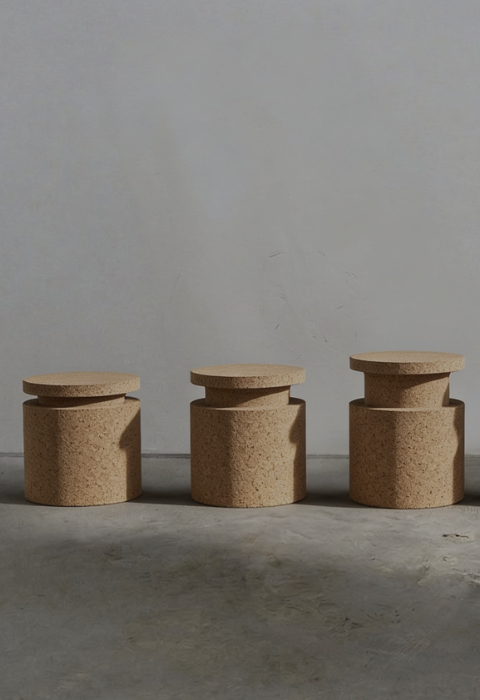
Helical

To develop an idea that exists only as a sketch, with no client and no commercial brief behind it, and to get feedback from people I would not otherwise reach. A competition gives that a deadline and a destination.
Read full interview
 Hong Kong
Jury feedback summary
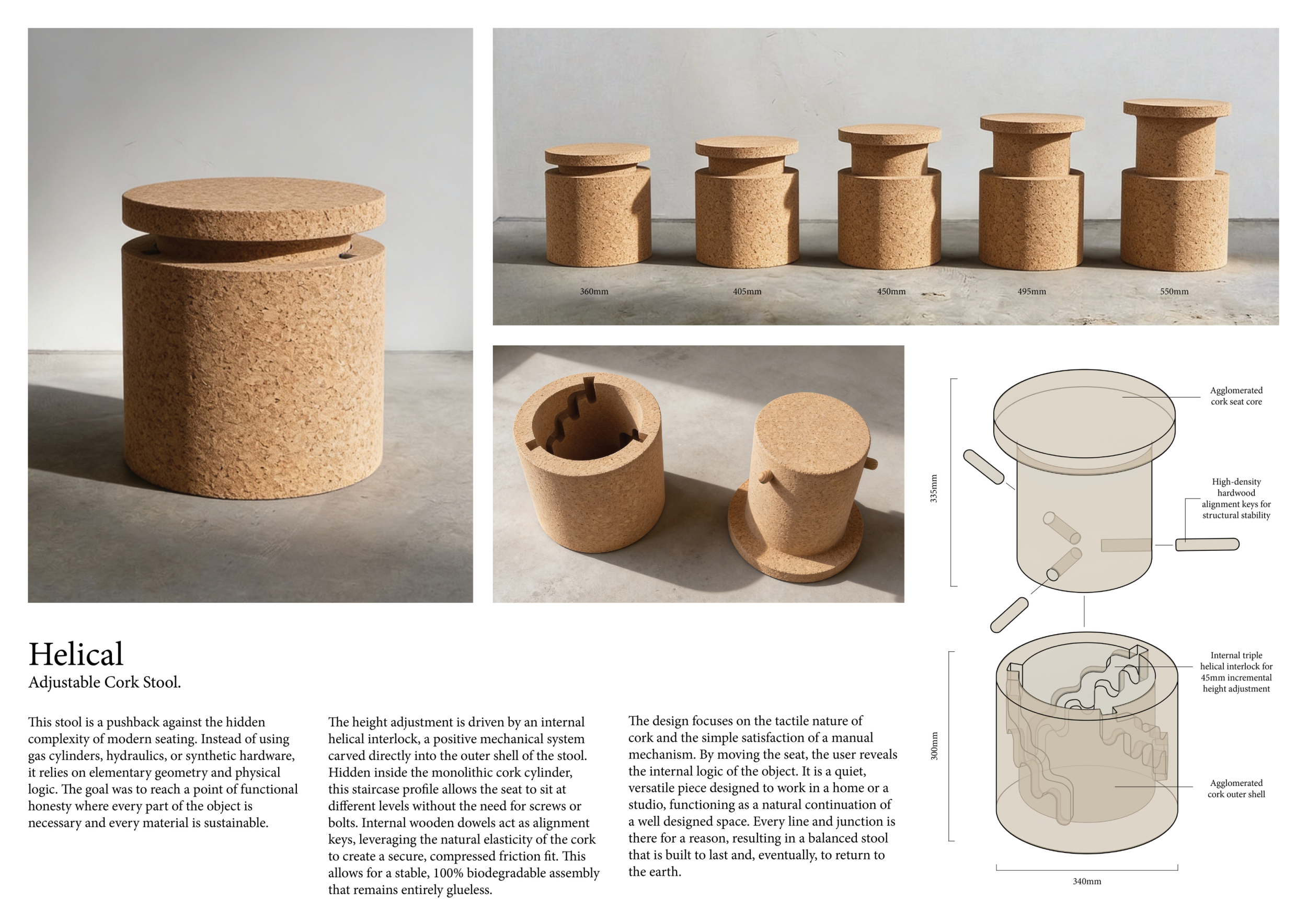
“Helical” proposes an adjustable stool that reduces seating to its most essential components: form, material, and mechanism. Built around a cylindrical monolithic geometry, the project uses an internal helical interlocking system to allow manual height adjustment without relying on conventional hardware, gas lifts, or complex mechanical systems. Instead, the stool operates through a simple rotational movement, revealing a carefully integrated logic of grooves, friction, and alignment.

A nice innovative idea. The concept is strong as is, but could it be used upside down too? A dual-use quality would open up new possibilities for how the piece is experienced and used. However, a key question remains around the fabrication process. The drawings and description do not make it clear how this would actually be made, and as a result we are left uncertain about how the piece could achieve the seamless finish shown in the renderings. The technical resolution needs to be more explicitly addressed in the documentation.
Inma Bermúdez / Buildner guest jury
Studio Inma Bermúdez, Spain

Very clever design. Functional, simple, and straight to the point. The choice of cork, with a small intervention of wooden elements, is also well considered. They give this minimal and sculptural furniture piece a warm touch. I would have liked to know a bit more about the method of cork processing envisioned. As a second note, I believe that softening the cork edges slightly, especially the top edge, could increase the lifespan of the product considerably.
Sebastian Alberdi / Buildner guest jury
industrial designer, Spain

It is a nice little stool with a clever concept, but it is not striking.
Torbjørn Anderssen / Buildner guest jury
Anderssen & Voll , Norway

Helical’s basic, obviously functional cylindrical shape creates a stool with a recess that subtly invites discovery of the concealed manual, simple yet innovative height adjustment. The soft, warm tactility of cork will make both seating and height adjustment an enjoyable, silent exercise. Take the wooden pins out, and the rest is a cork monoblock ready for recycling. The project could have been excellent if the method of producing the groove inside the cork cylinder had been explained.
Boris Berlin / Buildner guest jury
Founder and Partner at Boris Berlin Design, Denmark

Helical convinces through its simplicity and restrained design. Its clear form allows it to fit naturally into a variety of interiors. The project is easy to understand and use. The manual height-adjustment mechanism is well resolved, and the use of cork provides a comfortable seating experience. One aspect that remains unclear is the manufacturing process. Whether the parts are press-formed or CNC-machined has a significant impact on the project’s sustainability. Overall, the chair presents a thoughtful combination of simplicity, usability, and material quality.
Sarah Hossli / Buildner guest jury
Product designer, Switzerland

The project presents a simple and well-defined design language, combined with an interesting and intuitive manual height-adjustment mechanism. The use of cork as the primary material is both sustainable and appropriate for a seating object, contributing warmth, tactility, and a distinct material identity. The proposal demonstrates a thoughtful approach to material efficiency and mechanical simplicity, resulting in a concept with a clear and honest character. While the adjustment system and overall construction would benefit from further refinement and validation, the underlying idea is compelling and shows considerable potential. Overall, this is an engaging project that successfully combines sustainability, functionality, and a strong material narrative.
Gudmundur Ludvik / Buildner guest jury
Welling / Ludvik , Denmark

Simplicity at its best. A conceptually interesting idea.
Thomas Lykke / Buildner guest jury
OEO Studio, Denmark

A simple and functional design with broad appeal, suitable for both private and commercial environments. The project is distinguished by its innovative construction method and thoughtful use of sustainable materials.
Sofie Østerby / Buildner guest jury
Sofie Østerby, Denmark

Strong, bold, and clever. The monolithic and clear sculpture remains in all heights.
Espen Voll / Buildner guest jury
Anderssen & Voll, Norway

The project presents a simple and well-defined design language, combined with an interesting and intuitive manual height-adjustment mechanism. The use of cork as the primary material is both sustainable and appropriate for a seating object, contributing warmth, tactility, and a distinct material identity. The proposal demonstrates a thoughtful approach to material efficiency and mechanical simplicity, resulting in a concept with a clear and honest character. While the adjustment system and overall construction would benefit from further refinement and validation, the underlying idea is compelling and shows considerable potential. Overall, this is an engaging project that successfully combines sustainability, functionality, and a strong material narrative.
Hee Welling / Buildner guest jury
Welling / Ludvik , Denmark
Buildner's commentary, recommendations and techniques review
Order your review here
The presentation communicates the project with clarity and restraint, reflecting the product’s minimal and honest design language. The renders are clean and effective, showing the stool clearly across different height positions while emphasizing the consistency of its cylindrical form. The material palette is particularly successful, with the natural warmth and texture of cork giving the object a strong tactile identity and immediate visual appeal.
-
7/10 Linework

-
8/10 Quality of drawings

-
8/10 Balance of color

-
8/10 Layout

-
7/10 Hierarchy

-
7/10 Annotation

-
8/10 Text

-
8/10 Clarity of story

-
7/10 Clarity of diagrams

-
8/10 Quality of overall presentation

Enter an open architecture competition now






2nd Prize Winner
Cantilever chair
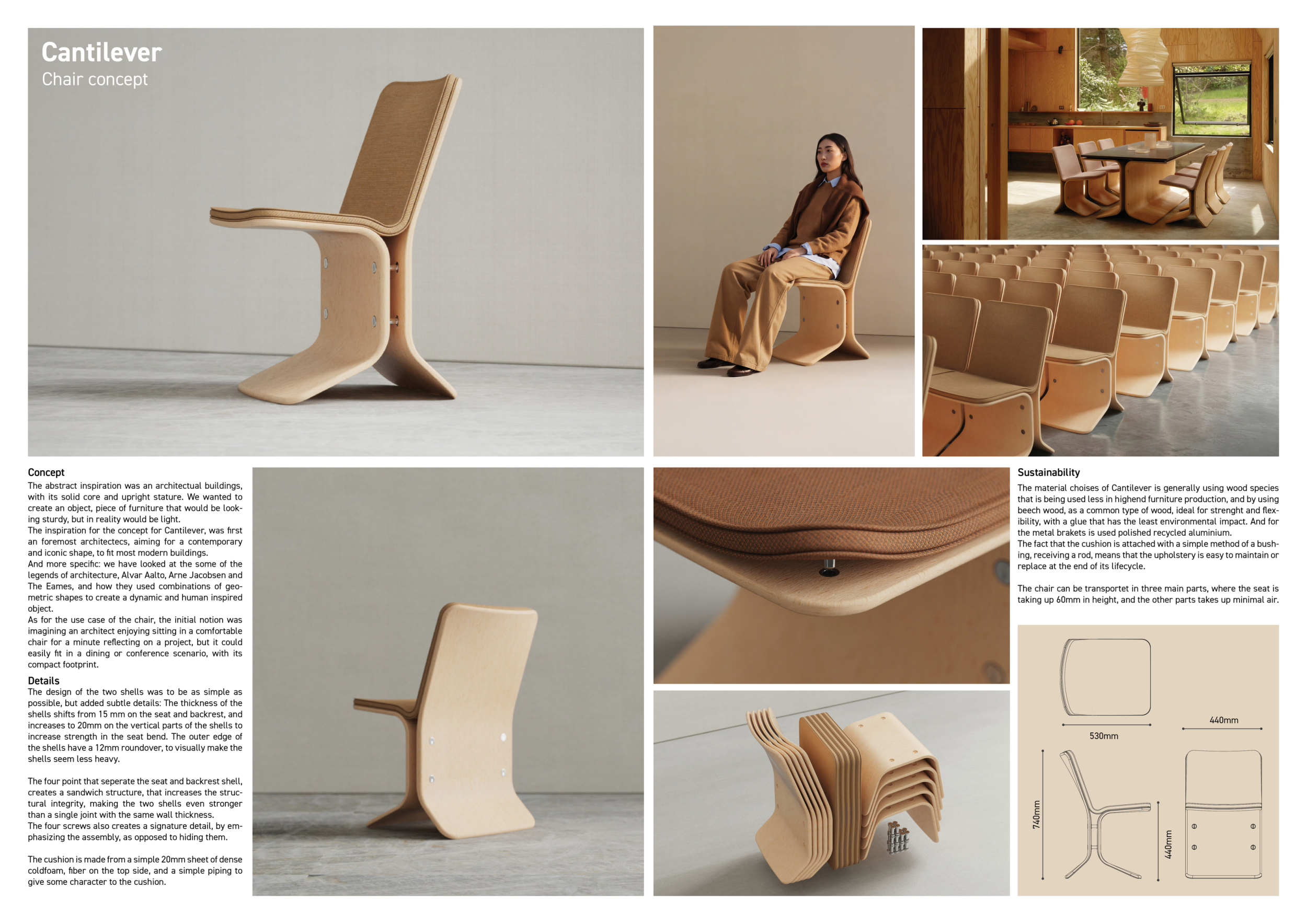
After working in the industry for many years and successfully designing for large international design companies, both in furniture design, fashion and industrial design, we felt that we wanted to challenge ourselves creatively, and not be bound by too many practical constraint, and have to design into a trend that fits in right now. And a competition is the perfect way to work on an idea, present it in a way that is understandable and have it shown to the world.
Read full interview
 United States
Jury feedback summary
“Cantilever” explores the classic cantilever chair typology through a refined and highly reduced formal language. The design is composed of two primary bent veneer shell elements—seat/back and base—connected through a minimal set of structural fasteners and spacers that create both visual lightness and structural stability.
The project presents a chair with a strong and distinctive character, combining a clear architectural expression with significant industrial potential. Its aesthetic qualities are well balanced, allowing it to function convincingly in both contract and residential settings while maintaining a recognizable design identity. The construction appears feasible for production, and the use of bent veneer contributes to a coherent relationship between form and manufacturing. With minor refinements, particularly regarding veneer thicknesses and structural optimization, the proposal could be further strengthened. Overall, the project offers a convincing interpretation of The Architect’s Chair, successfully balancing form, function, and market relevance.
Gudmundur Ludvik / Buildner guest jury
Welling / Ludvik , Denmark
Modern, minimal, and multiple. Simplicity taken to the next level. Minimal use of materials, easy to flat-pack and upcycle. It looks really comfortable too.
Thomas Lykke / Buildner guest jury
OEO Studio, Denmark
The project presents a chair with a strong and distinctive character, combining a clear architectural expression with significant industrial potential. Its aesthetic qualities are well balanced, allowing it to function convincingly in both contract and residential settings while maintaining a recognizable design identity. The construction appears feasible for production, and the use of bent veneer contributes to a coherent relationship between form and manufacturing. With minor refinements, particularly regarding veneer thicknesses and structural optimization, the proposal could be further strengthened. Overall, the project offers a convincing interpretation of The Architect’s Chair, successfully balancing form, function, and market relevance.
Hee Welling / Buildner guest jury
Welling / Ludvik , Denmark
A refreshing and innovative approach to the world of cantilever chairs. Behind its seemingly simple aesthetic, Cantilever carries some very well thought-out and carefully resolved construction details, from the way the upholstered piece is attached to the plywood shell to the spacers connecting the seat and backrest modules. I believe there is no real need for the change of thickness in the plywood shell. A continuous 15 mm thickness would probably be more than enough structurally and would reduce manufacturing costs and material waste considerably.
Sebastian Alberdi / Buildner guest jury
industrial designer, Spain
The back of the chair is really the face of the chair, and this chair is very beautiful when seen from behind. A big plus for providing comfort to the body. This is a chair with proper body support.
Torbjørn Anderssen / Buildner guest jury
Anderssen & Voll , Norway
The construction approach is genuinely interesting and shows a good level of consideration. The details and joinery have been thought through carefully. The piece feels well rounded, nicely finished, well considered in its conception, and genuinely beautiful.
Inma Bermúdez / Buildner guest jury
Studio Inma Bermúdez, Spain

The Cantilever Chair works both as a standalone sculptural object and in repetition as auditorium seating, integrating quietly into a wide range of architectural contexts. Its ergonomically resolved, structurally bent molded wood elements create a comfortable seating position, subtly supported by minimal cushioning. The clear breakdown into a few components gives the design strong practical value for transport and supports sustainable long-term use.
Lorenz Noelle / Buildner guest jury
Product designer, Germany
A very strong and clear solution with contemporary simplicity. With only two pieces, it still holds a desirable complexity and looks intriguing from all angles. The thin refined cushion adds a lot to its versatility and presence.
Espen Voll / Buildner guest jury
Anderssen & Voll, Norway
Buildner's commentary, recommendations and techniques review
Order your review here
This presentation is highly polished and communicates the project with strong visual clarity and confidence. The restrained palette, minimal layout, and carefully composed renderings reinforce the chair’s clean and contemporary identity. The product photography and contextual images are especially effective in showing both the sculptural quality of the chair and its versatility across different environments, from residential interiors to auditorium seating.
-
8/10 Linework
-
9/10 Quality of drawings
-
9/10 Balance of color
-
9/10 Layout
-
8/10 Hierarchy
-
7/10 Annotation
-
8/10 Text
-
9/10 Clarity of story
-
8/10 Clarity of diagrams
-
9/10 Quality of overall presentation
3rd Prize Winner
La Chair
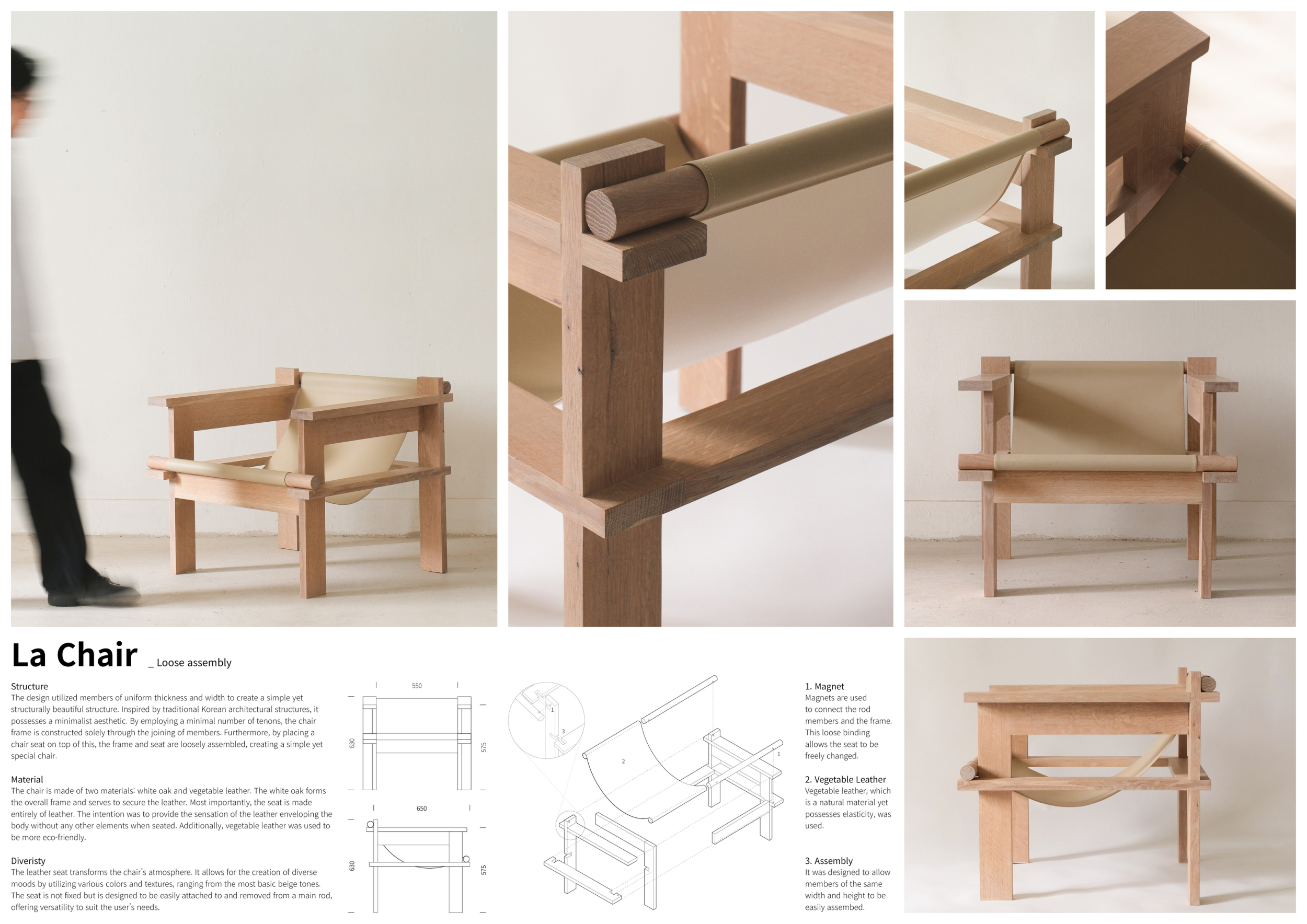

I believe that architectural competitions serve as a platform for exchanging diverse opinions around a single theme. That is why I am participating, striving to broaden the diversity of thought and create a new framework that breaks away from stereotypes.
Read full interview
 South Korea
Jury feedback summary
La Chair explores the relationship between frame, suspension, and material contrast through a deliberately reduced architectural language. Drawing from traditional Korean architectural principles, the design is organized around a rigid timber structure paired with a suspended vegetable leather seat, creating a clear dialogue between solid and flexible elements.
What kind of eco-friendliness and sustainability can we talk about when the other three chairs could be made out of this volume of timber, a precious white oak, consumed for La Chair?
Boris Berlin / Buildner guest jury
Founder and Partner at Boris Berlin Design, Denmark
A well-resolved design that balances simplicity, craftsmanship, and functionality. The innovative assembly system and interchangeable leather seat give the chair a unique and adaptable identity.
Sofie Østerby / Buildner guest jury
Sofie Østerby, Denmark
The overall shape is simple, clean, and confident, which works in its favor. The one question we would raise is whether the magnet is truly necessary. Its presence is not immediately justified by the design logic, and removing it could actually strengthen the piece by making it feel more elemental and pure. Less might be more here.
Inma Bermúdez / Buildner guest jury
Studio Inma Bermúdez, Spain
The project presents an intriguing exploration of how materials, structure, and function can interact to create a distinctive seating experience. The composition of the chair reveals a thoughtful balance between solid and suspended elements, generating a rich dialogue between the wooden frame and the leather seat. The construction has a strong graphic presence, with carefully considered intersections, angles, and details that invite closer inspection. This layered approach gives the chair a unique character while maintaining a clear structural logic. Overall, the proposal demonstrates a creative and engaging interpretation of the brief, combining material sensitivity with a strong architectural expression.
Gudmundur Ludvik / Buildner guest jury
Welling / Ludvik , Denmark
The project presents an intriguing exploration of how materials, structure, and function can interact to create a distinctive seating experience. The composition of the chair reveals a thoughtful balance between solid and suspended elements, generating a rich dialogue between the wooden frame and the leather seat. The construction has a strong graphic presence, with carefully considered intersections, angles, and details that invite closer inspection. This layered approach gives the chair a unique character while maintaining a clear structural logic. Overall, the proposal demonstrates a creative and engaging interpretation of the brief, combining material sensitivity with a strong architectural expression.
Hee Welling / Buildner guest jury
Welling / Ludvik , Denmark
Inspired by traditional Korean architectural forms, this chair captivates with its clean and minimalist design. The project successfully combines simple construction, efficient manufacturing, and a consistent design language. The removable seat attachment is a clever detail that allows for easy repair or replacement of the leather component, thereby increasing the chair’s durability. Based on the images, it is difficult to assess whether the crossbars on the lower legs and back create pressure points or restrict ergonomics.
Sarah Hossli / Buildner guest jury
Product designer, Switzerland
Buildner's commentary, recommendations and techniques review
Order your review here
The presentation communicates the project with clarity and restraint, reflecting the chair’s minimal and architectural character. The renderings are clean and well-composed, successfully highlighting the contrast between the rigid timber frame and the soft suspended leather seat. Materiality is one of the strongest aspects of the proposal, with the warm oak and neutral leather palette creating a calm and refined visual identity.
-
7/10 Linework
-
8/10 Quality of drawings
-
8/10 Balance of color
-
8/10 Layout
-
7/10 Hierarchy
-
7/10 Annotation
-
7/10 Text
-
8/10 Clarity of story
-
7/10 Clarity of diagrams
-
8/10 Quality of overall presentation
Buildner Student Award
Jige Chair

Jury feedback summary
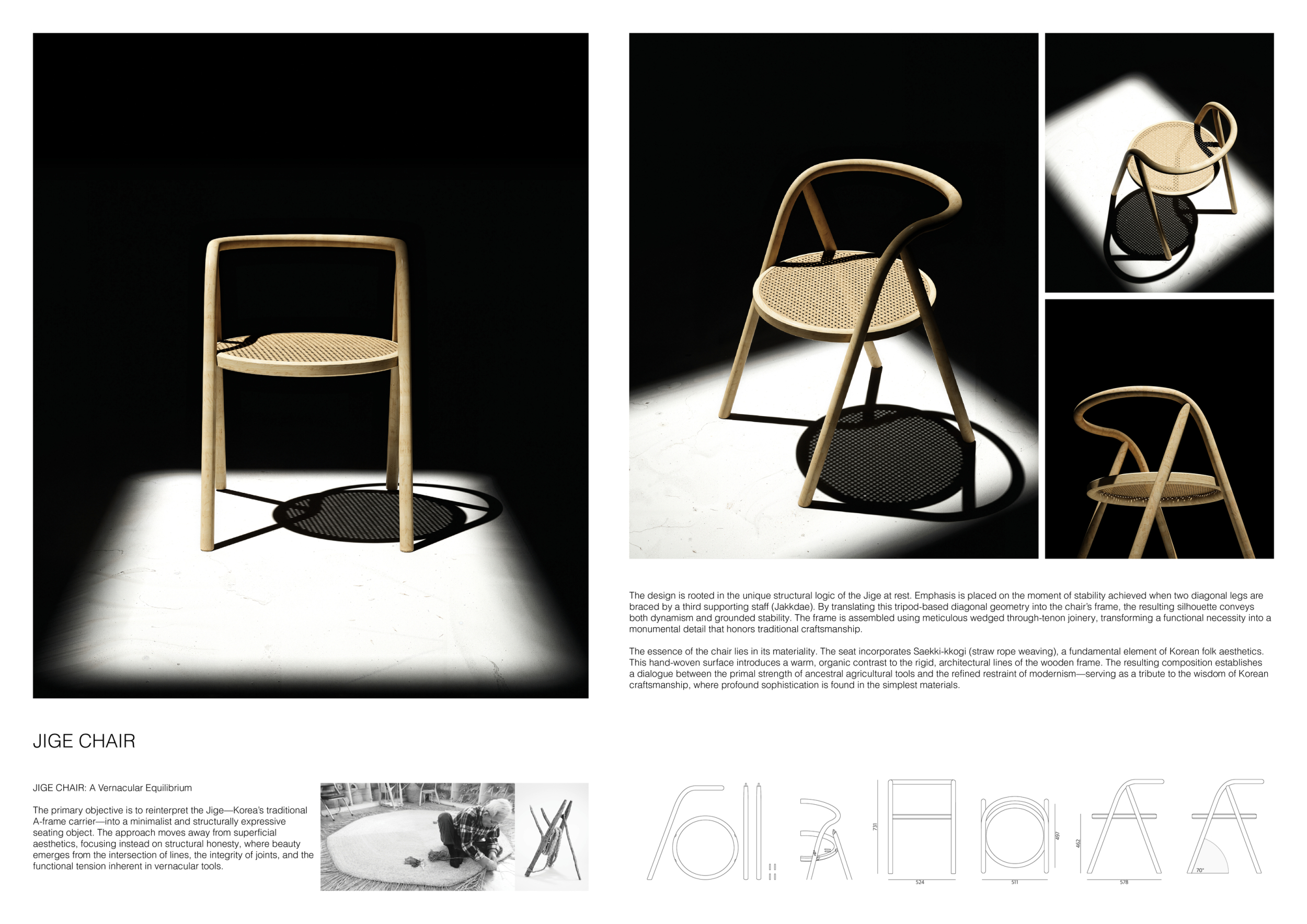
The Jige Chair draws from the structural logic and visual language of the traditional Korean jige, reinterpreting this vernacular carrying tool as a contemporary seating object. The design translates the original object’s distinctive tripod-like stability, diagonal bracing, and structural efficiency into a chair defined by lightness, openness, and material restraint.
The Jige Chair draws from the structural logic and visual language of the traditional Korean jige, reinterpreting this vernacular carrying tool as a contemporary seating object. The design translates the original object’s distinctive tripod-like stability, diagonal bracing, and structural efficiency into a chair defined by lightness, openness, and material restraint. Built from a minimal set of wooden elements with a woven seat surface, the chair balances structural clarity with visual softness, combining curved and linear geometries to create a calm but distinctive presence. Traditional craft techniques, particularly the woven seating surface, introduce warmth and tactile richness while reinforcing the project’s cultural grounding. By merging vernacular references with a refined contemporary aesthetic, the chair develops a strong identity rooted equally in craftsmanship, structural expression, and functional simplicity.
Espen Voll / Buildner guest jury
Anderssen & Voll, Norway
A clear idea makes for a clear design that somehow echoes the classic Vienna chair. The Jige Chair fits well within the category. The slender curved backpiece, as much a handle as a back support, combined with the wide seat, creates an open, transparent, and appealing construction. Perhaps the seat is slightly too generous in terms of seat-depth ergonomics. It successfully combines a historic reference and a specific cultural reference into a piece that feels contemporary.
Torbjørn Anderssen / Buildner guest jury
Anderssen & Voll , Norway
This project offers a successful reinterpretation of the traditional Korean Jige. Traditional craftsmanship has been respectfully adapted and translated into a contemporary design language. The chair is characterized by structural integrity and visual lightness. Overall, the project strikes a successful balance between tradition, construction, and modern form.
Sarah Hossli / Buildner guest jury
Product designer, Switzerland
The round shape, reduced construction, and natural materials give the Jige Chair a friendly and calm character. Its tripod-based frame establishes a clear structural essence, creating openness and visual lightness that is reinforced by the woven seat. Traditional craftsmanship, particularly the Saekki-kkogi straw weaving, introduces a warm, natural material quality, rooted in Korean tradition while transforming the chair into a universal contemporary object.
Lorenz Noelle / Buildner guest jury
Product designer, Germany
Buildner's commentary, recommendations and techniques review
Order your review here
The presentation is visually elegant and highly atmospheric, with dramatic lighting and strong contrast reinforcing the chair’s sculptural qualities and material warmth. The restrained palette works particularly well here, allowing the wood tones and woven seat to stand out while emphasizing the project’s calm and timeless character. The renderings communicate the object clearly and help highlight its distinctive silhouette from multiple angles.
-
7/10 Linework
-
7/10 Quality of drawings
-
9/10 Balance of color
-
8/10 Layout
-
8/10 Hierarchy
-
6/10 Annotation
-
7/10 Text
-
8/10 Clarity of story
-
6/10 Clarity of diagrams
-
8/10 Quality of overall presentation
Buildner Sustainability Award
Anastasia
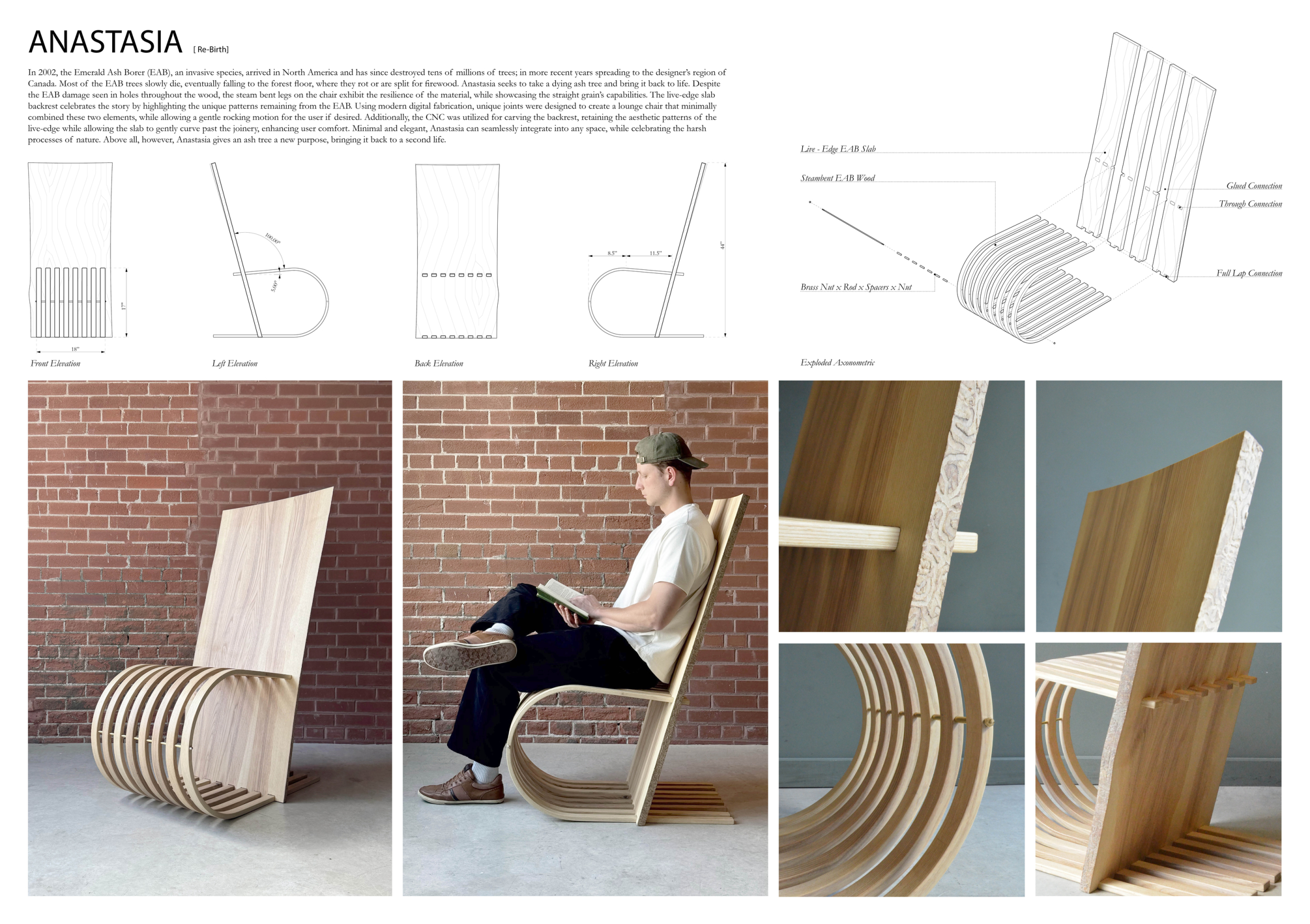

I participate in competitions to give myself an opportunity to creatively explore my ideas, while pushing boundaries of what is possible. I believe that it is important to challenge oneself to truly learn and grow.
Read full interview
Jury feedback summary
“Anastasia” reinterprets a lounge chair through a highly reduced geometric language, combining bent wood elements with a live-edge slab backrest to create a piece that balances structural rhythm and material contrast. The chair is constructed from repeated curved slats that form the seat and base, generating both visual lightness and ergonomic support through their continuous loop geometry.
A simple and geometrical solution that introduces a natural ergonomic quality.
Espen Voll / Buildner guest jury
Anderssen & Voll, Norway
Buildner's commentary, recommendations and techniques review
Order your review here
The project presents a clear and memorable formal concept, with the curved slatted base creating a strong visual identity and an immediately recognizable silhouette. The contrast between the repeated bent elements and the solid vertical backrest is particularly successful, giving the chair both rhythm and sculptural presence. The sustainability narrative around the reuse of Emerald Ash Borer-affected ash adds meaningful depth to the proposal and strengthens its material story.
-
7/10 Linework
-
8/10 Quality of drawings
-
8/10 Balance of color
-
7/10 Layout
-
7/10 Hierarchy
-
6/10 Annotation
-
7/10 Text
-
8/10 Clarity of story
-
7/10 Clarity of diagrams
-
8/10 Quality of overall presentation
Honorable mentions





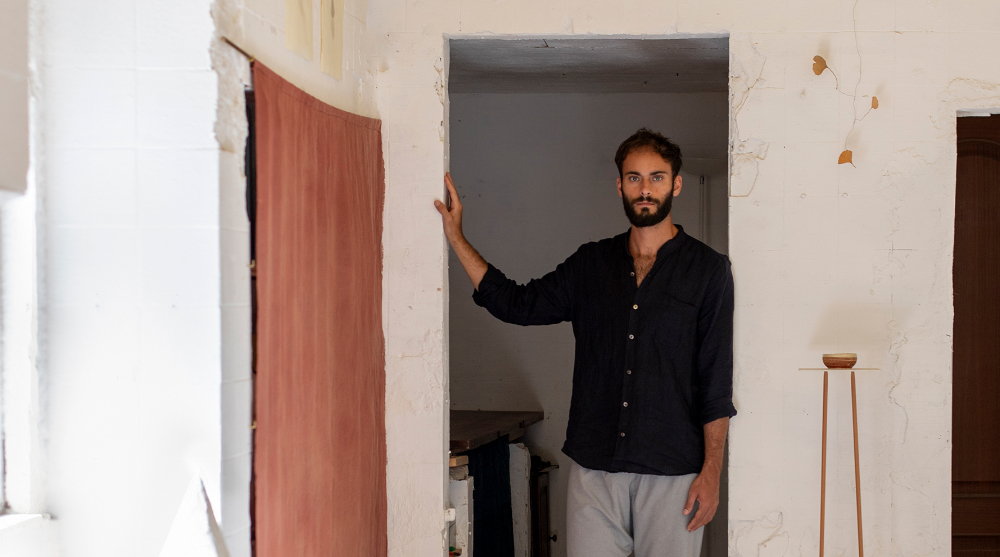




Shortlisted projects
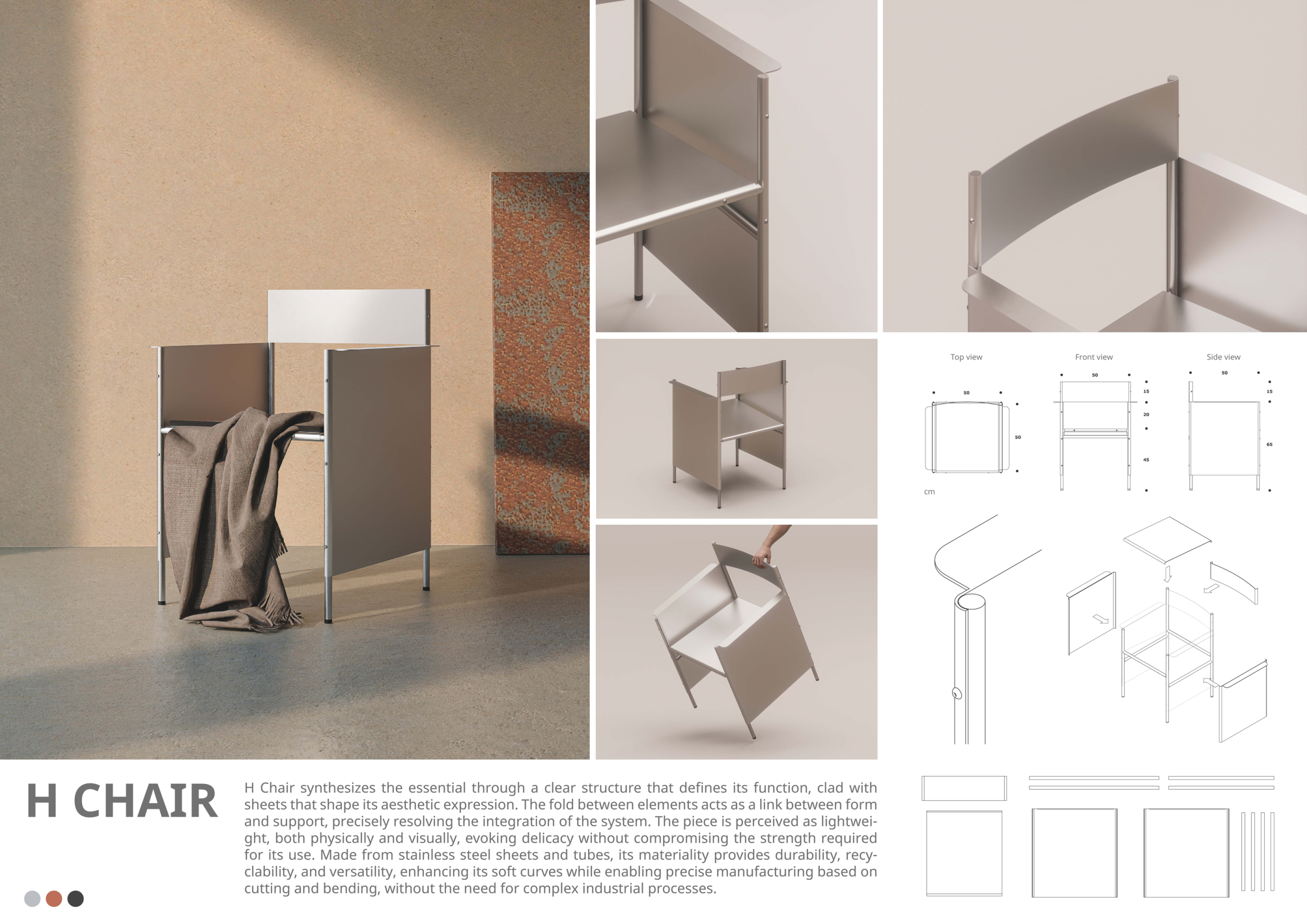
H Chair
 Panama
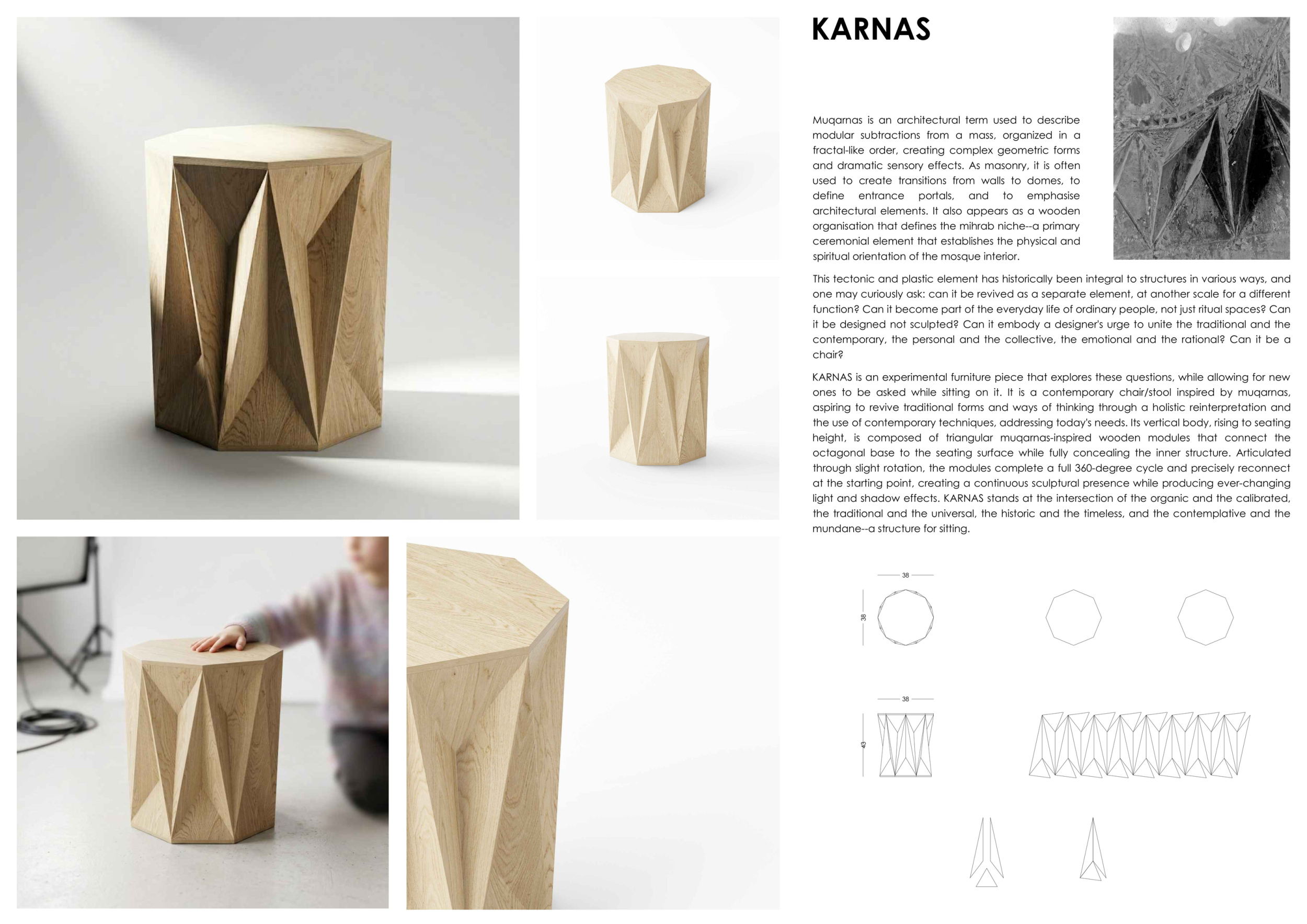
 Karnas
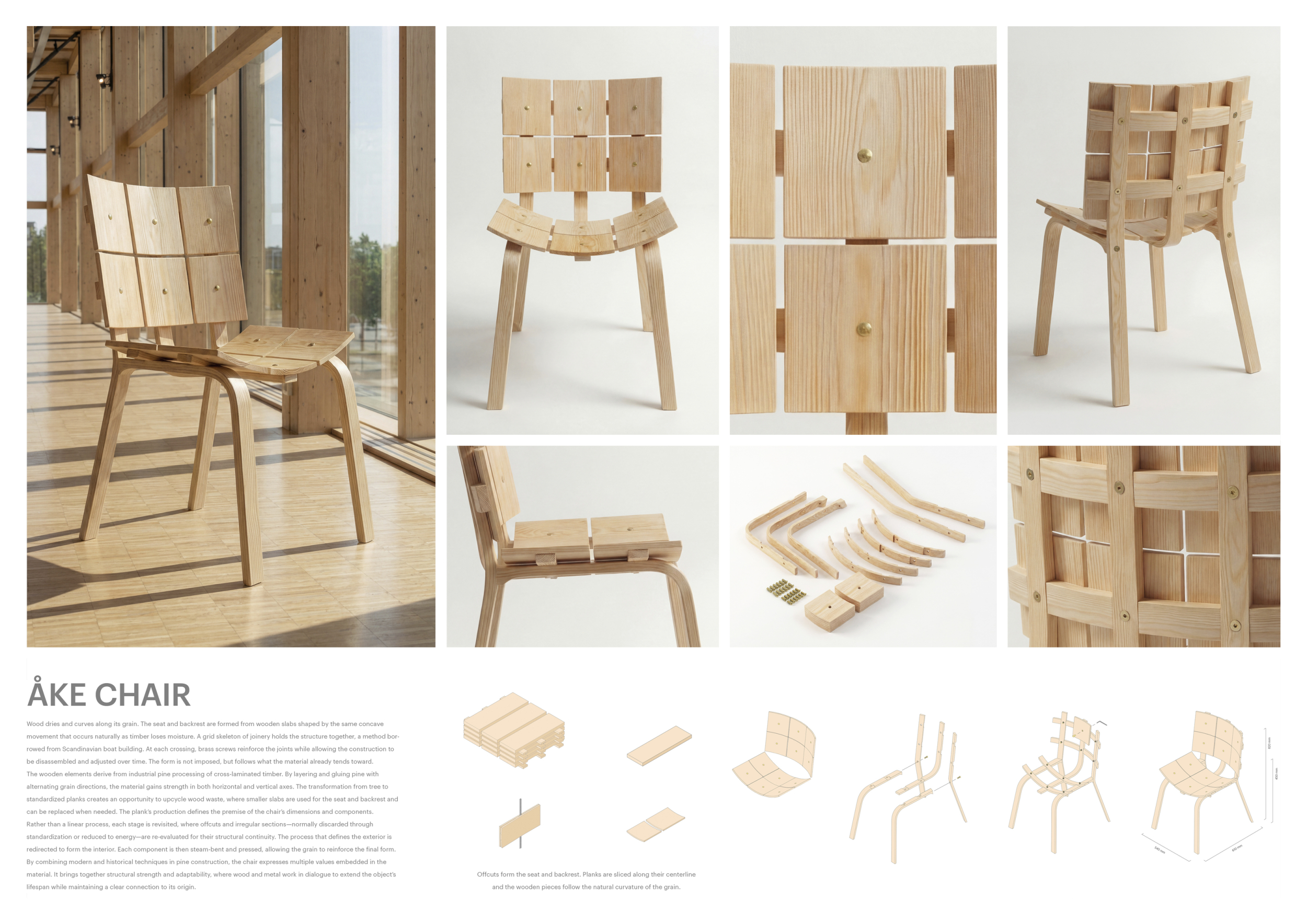
Åke Chair

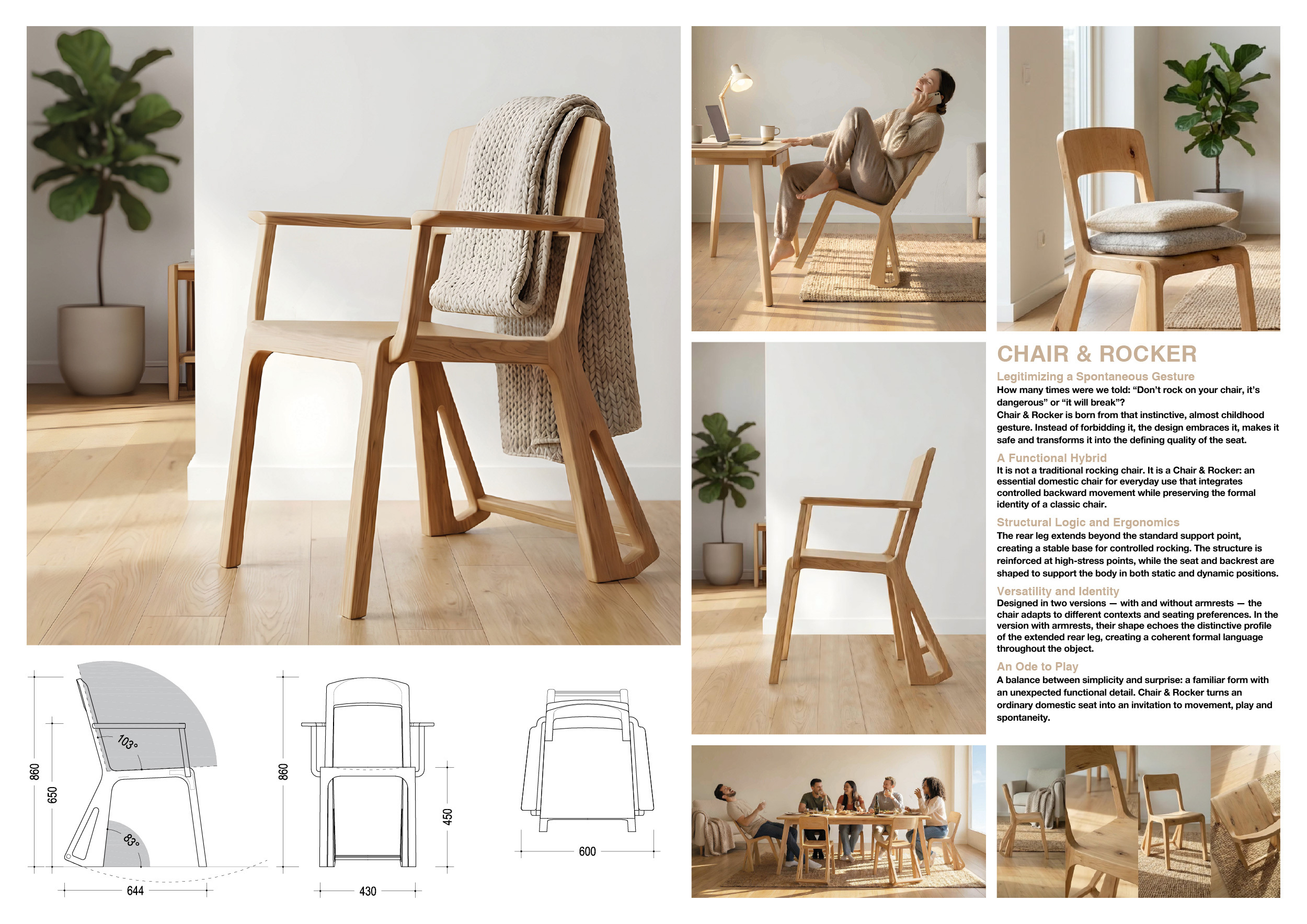
Chair & Rocker
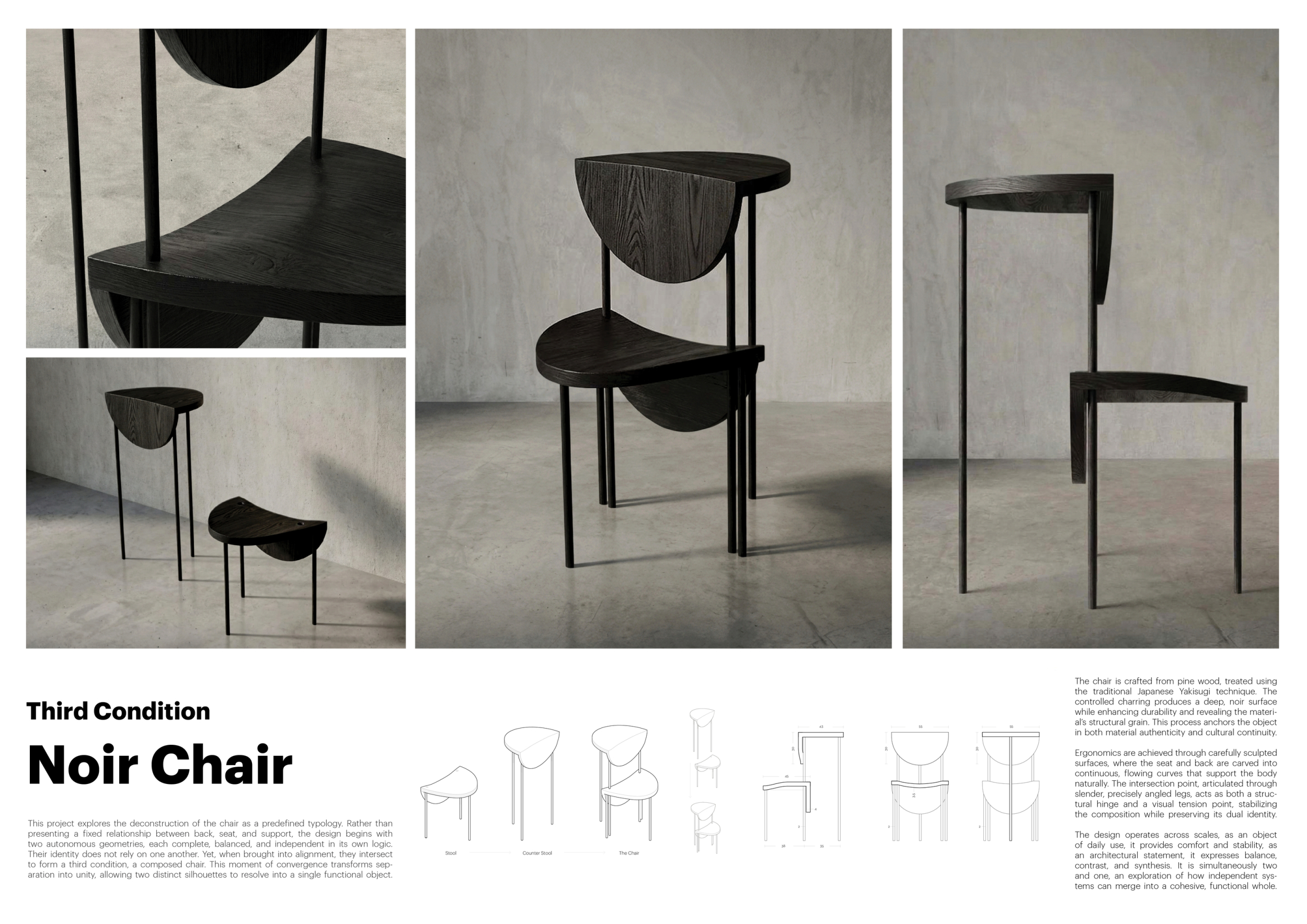
Third Condition - Noir Chair

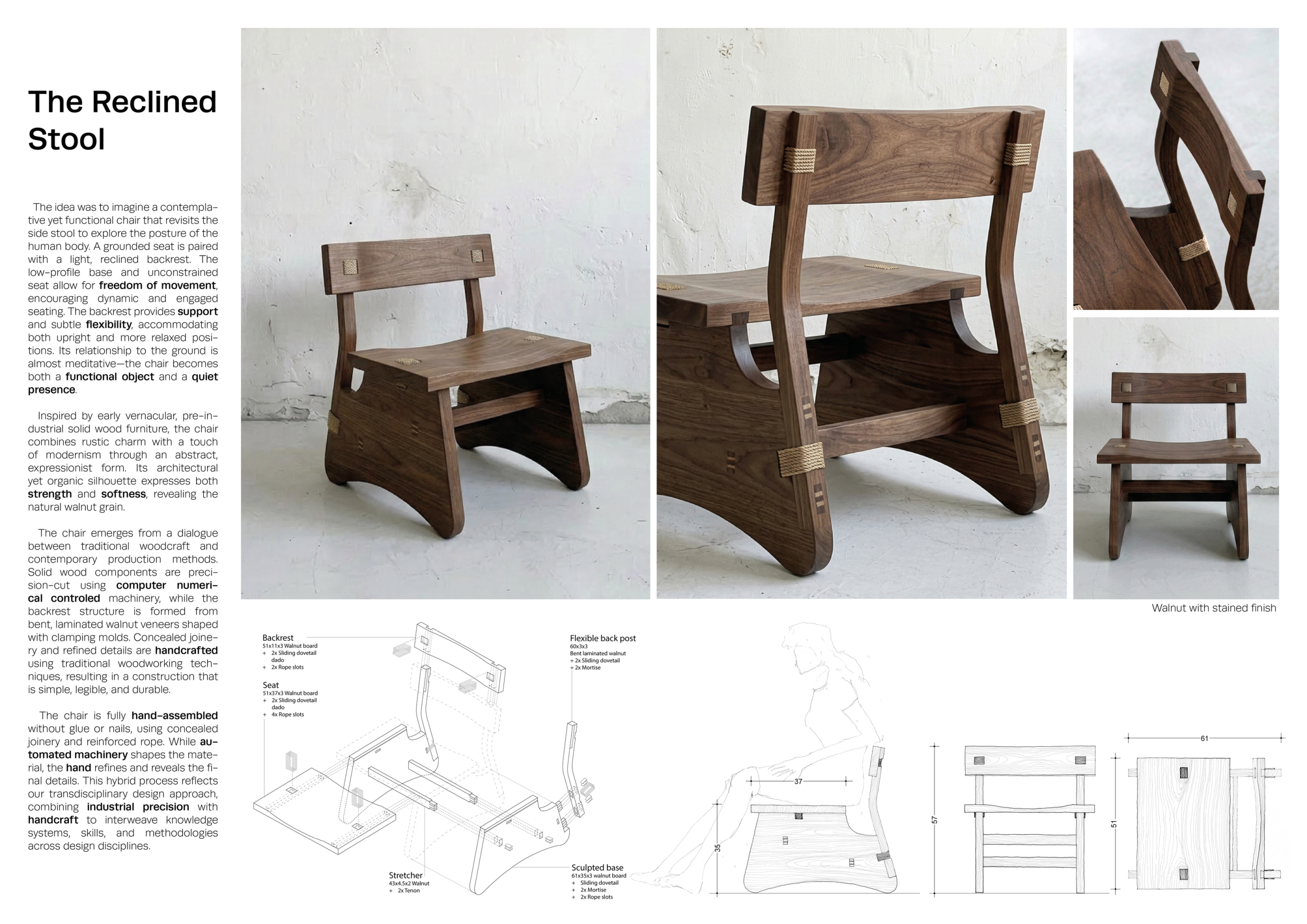
The Reclined Stool

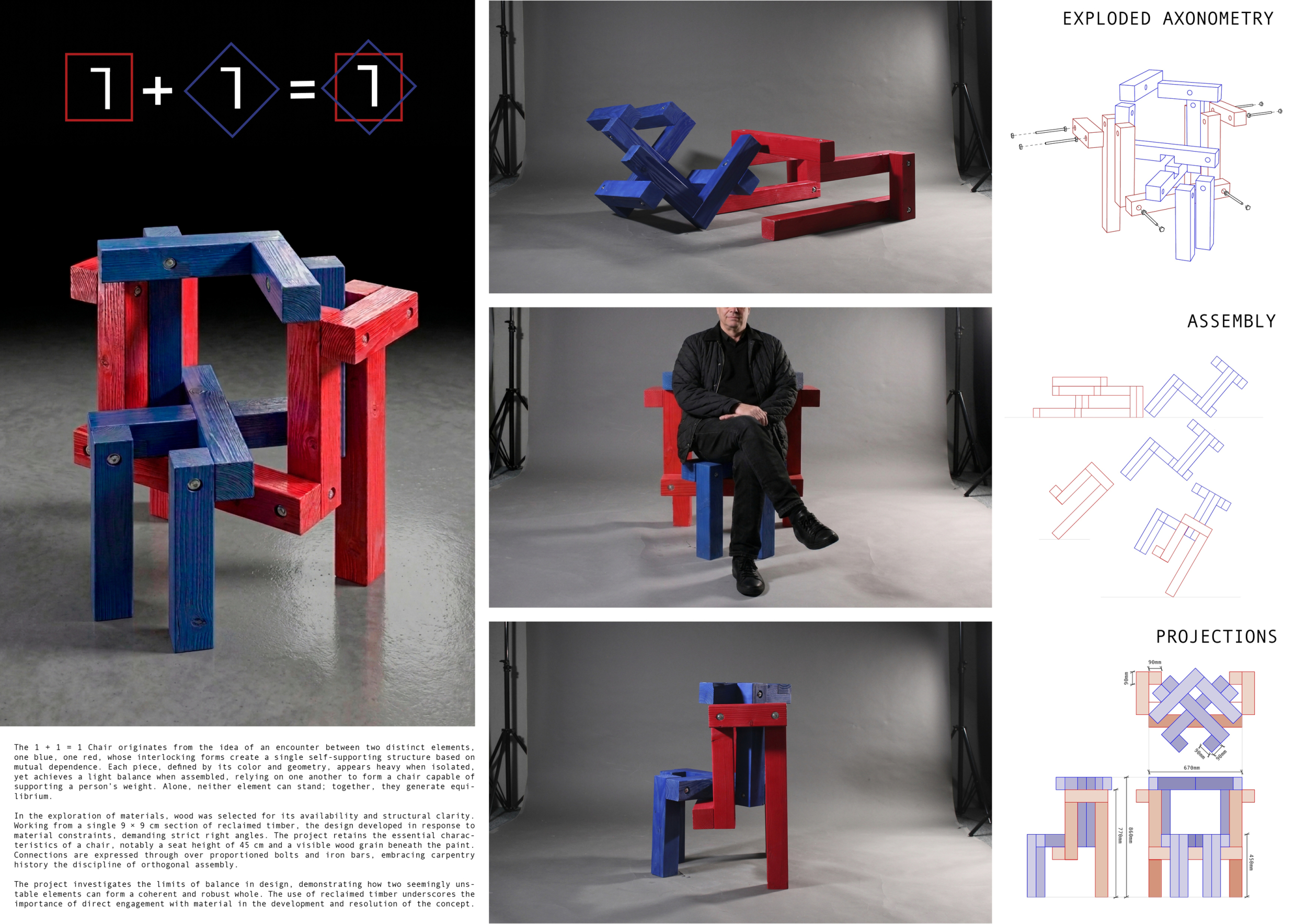
1 + 1 = 1

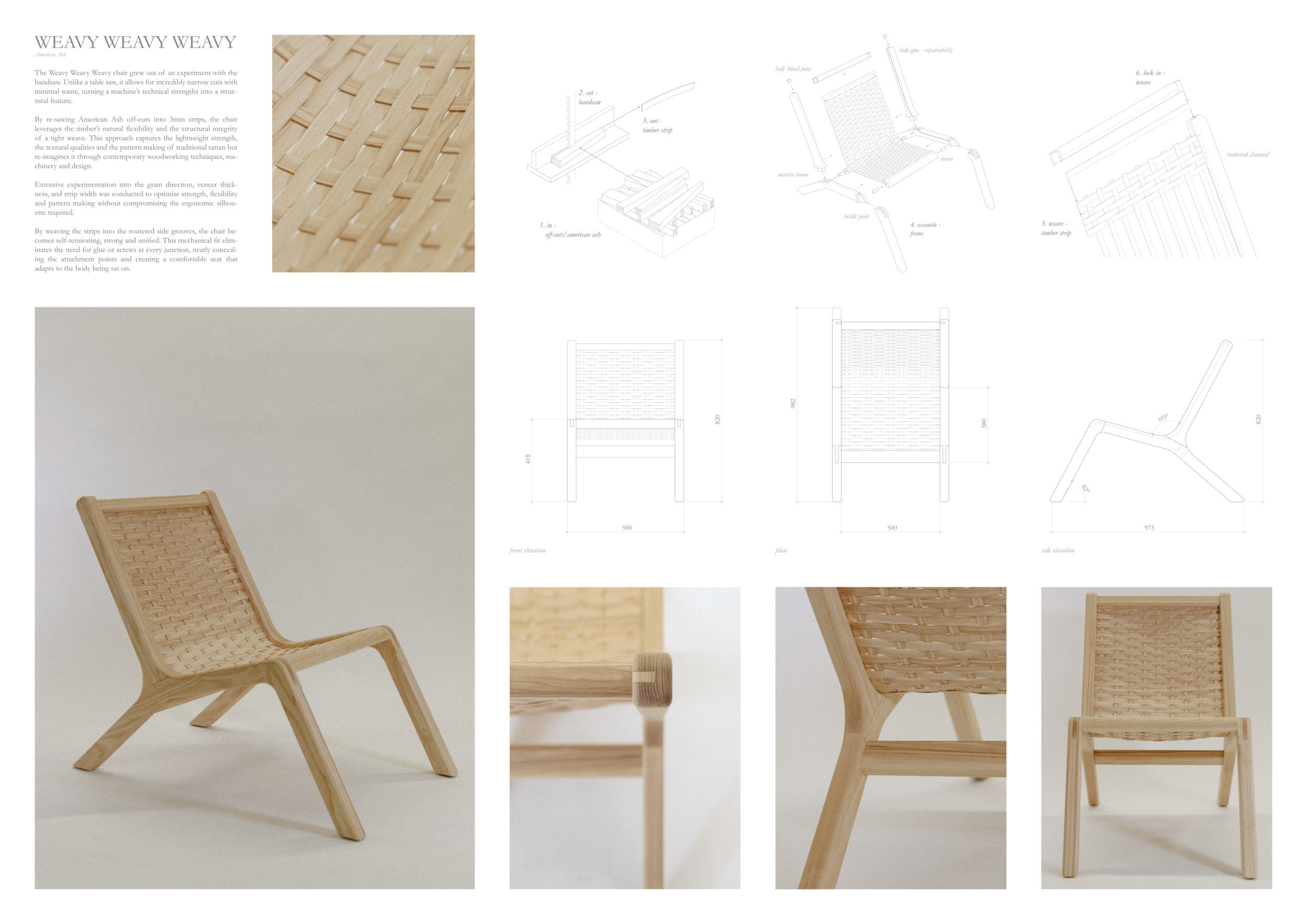
Weavy Weavy Weavy
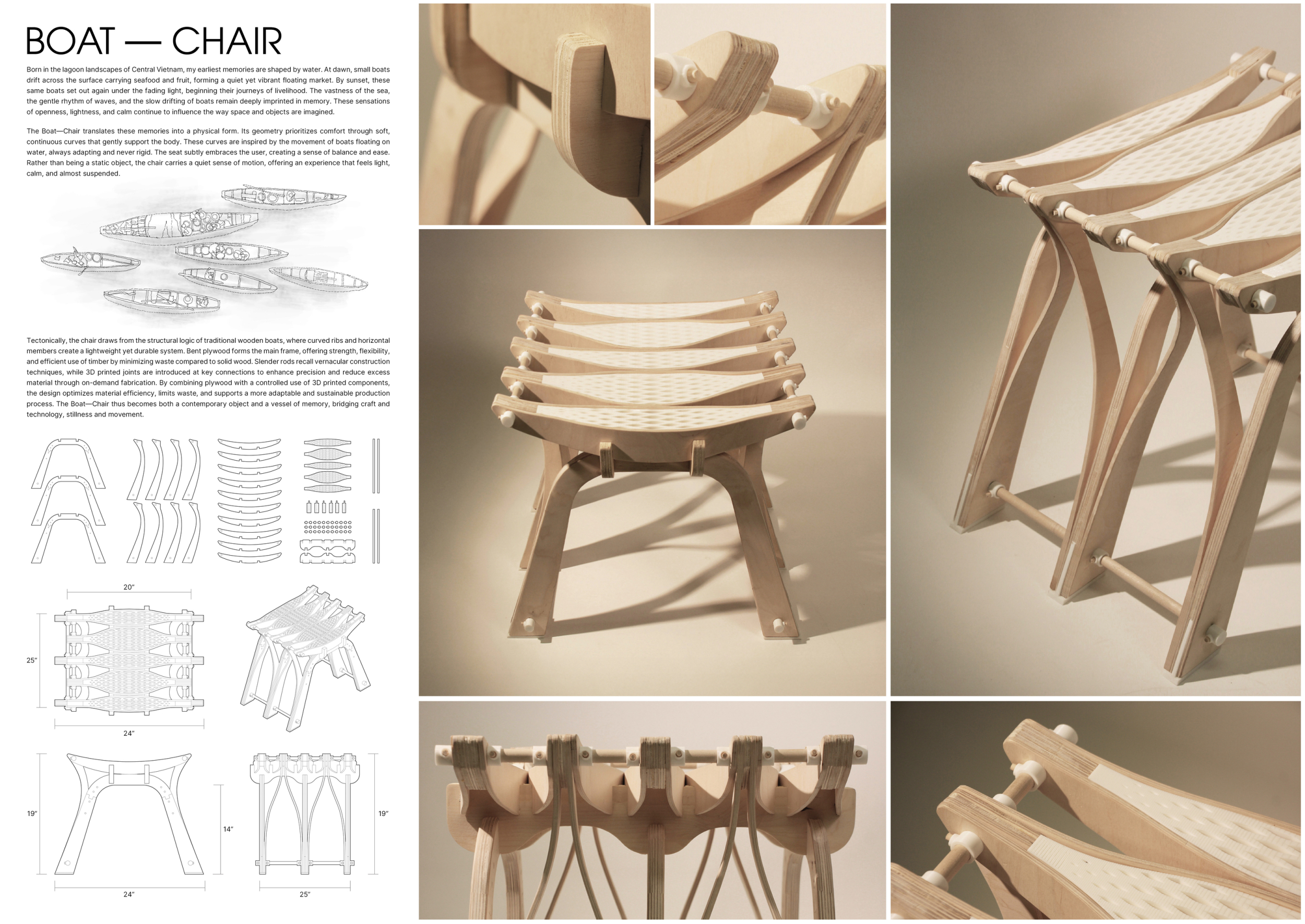
BOAT — CHAIR
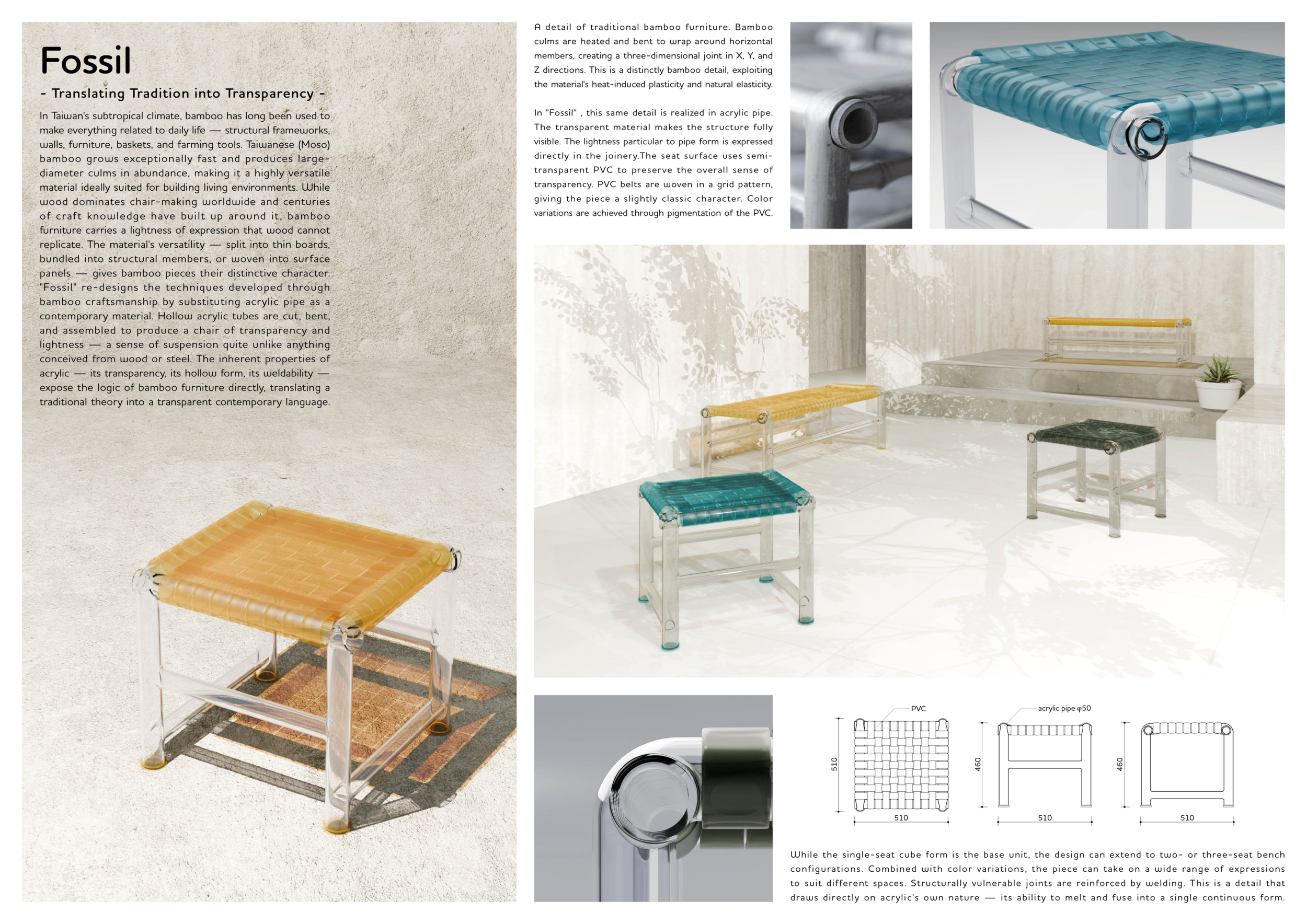
Fossil

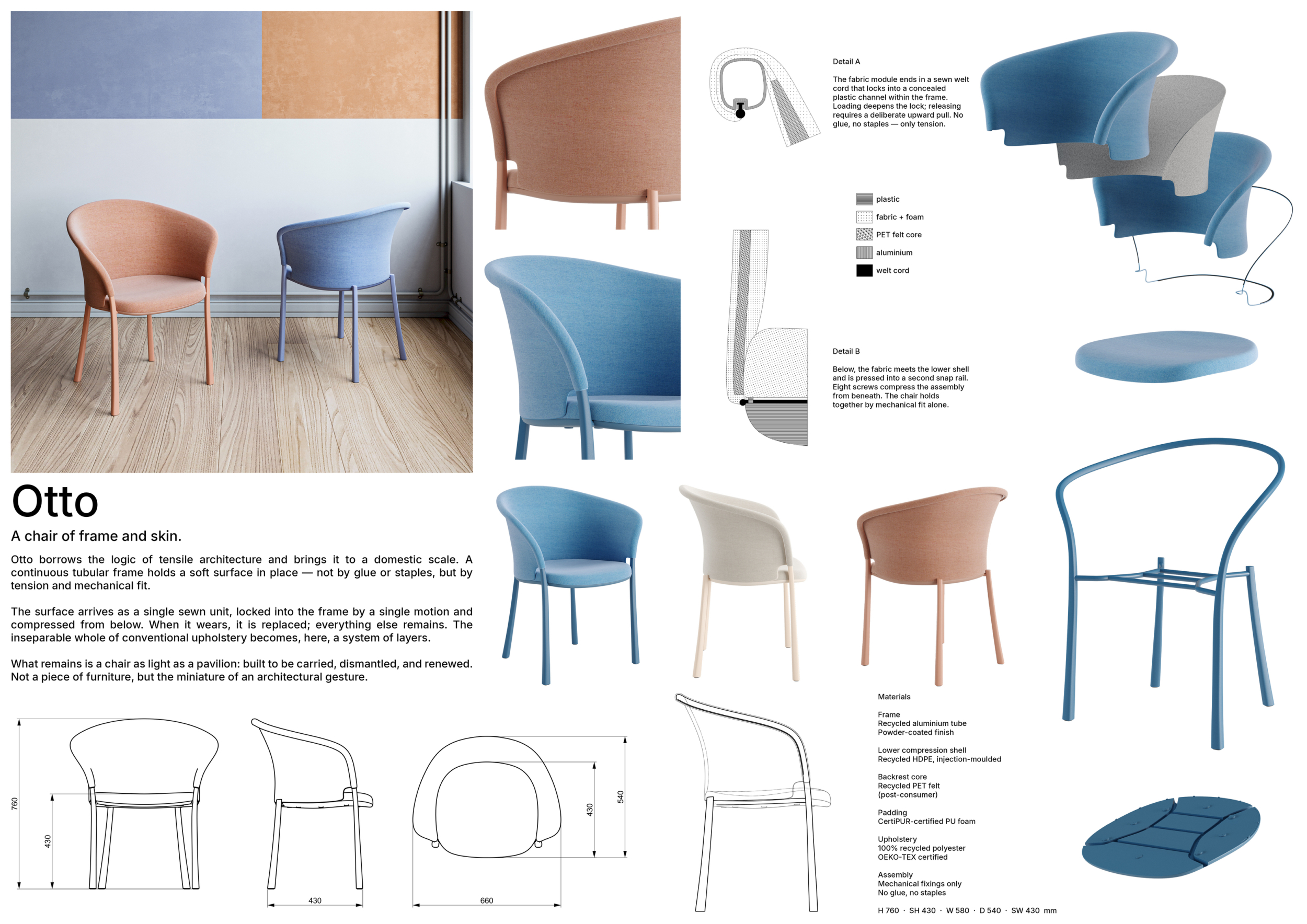
Otto
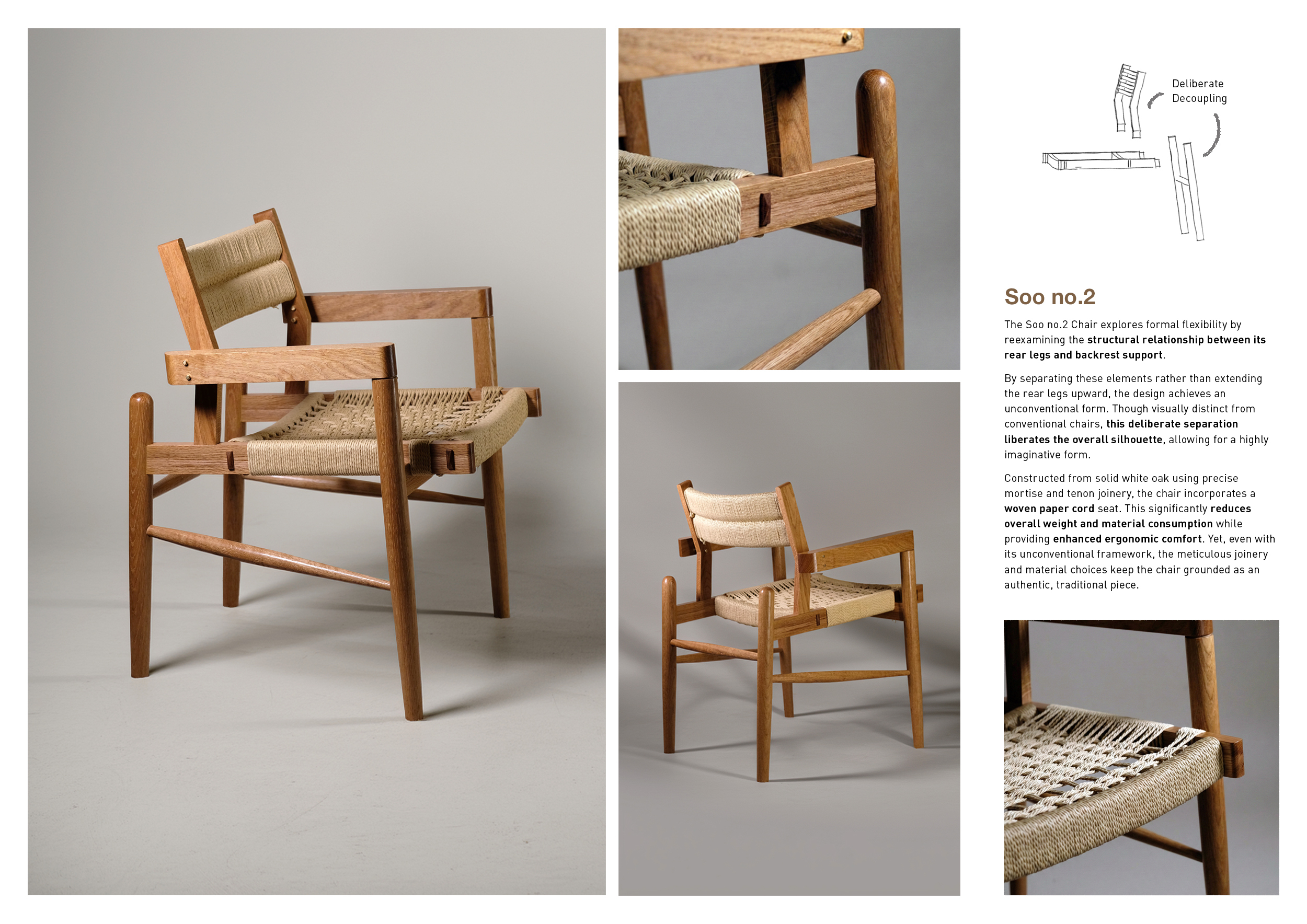
Soo no.2
Anastasia
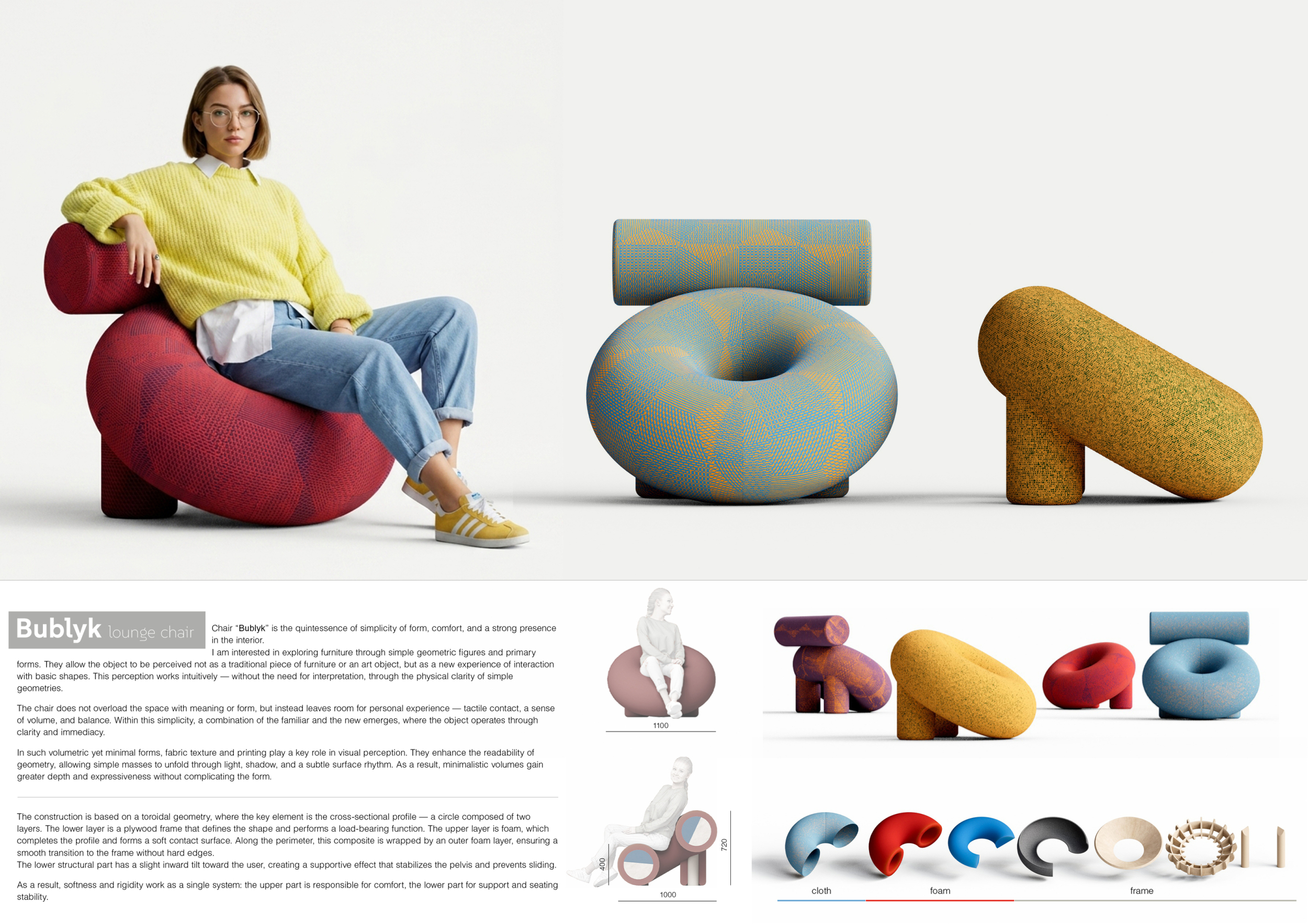
Bublyk soft chair

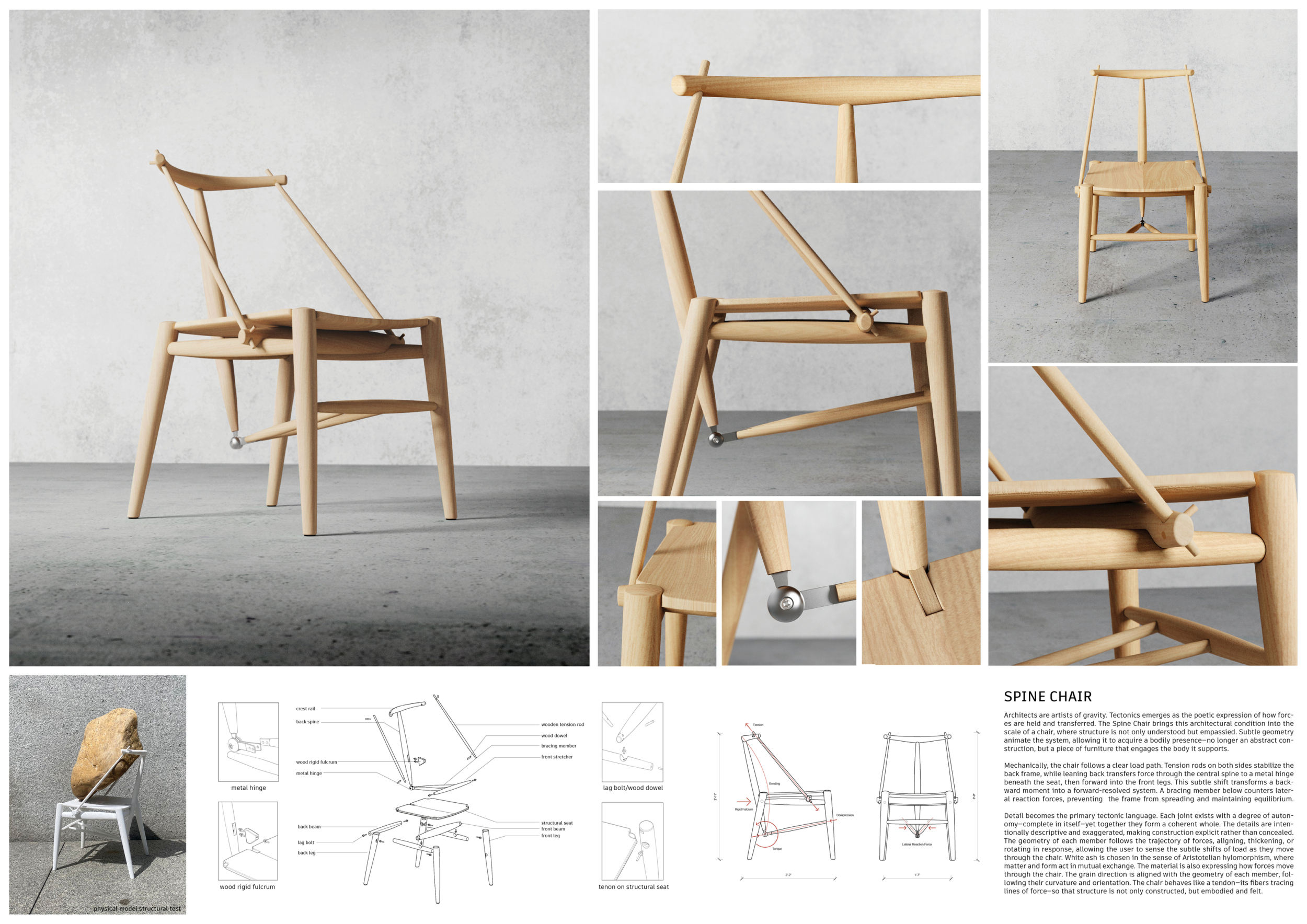
Spine Chair
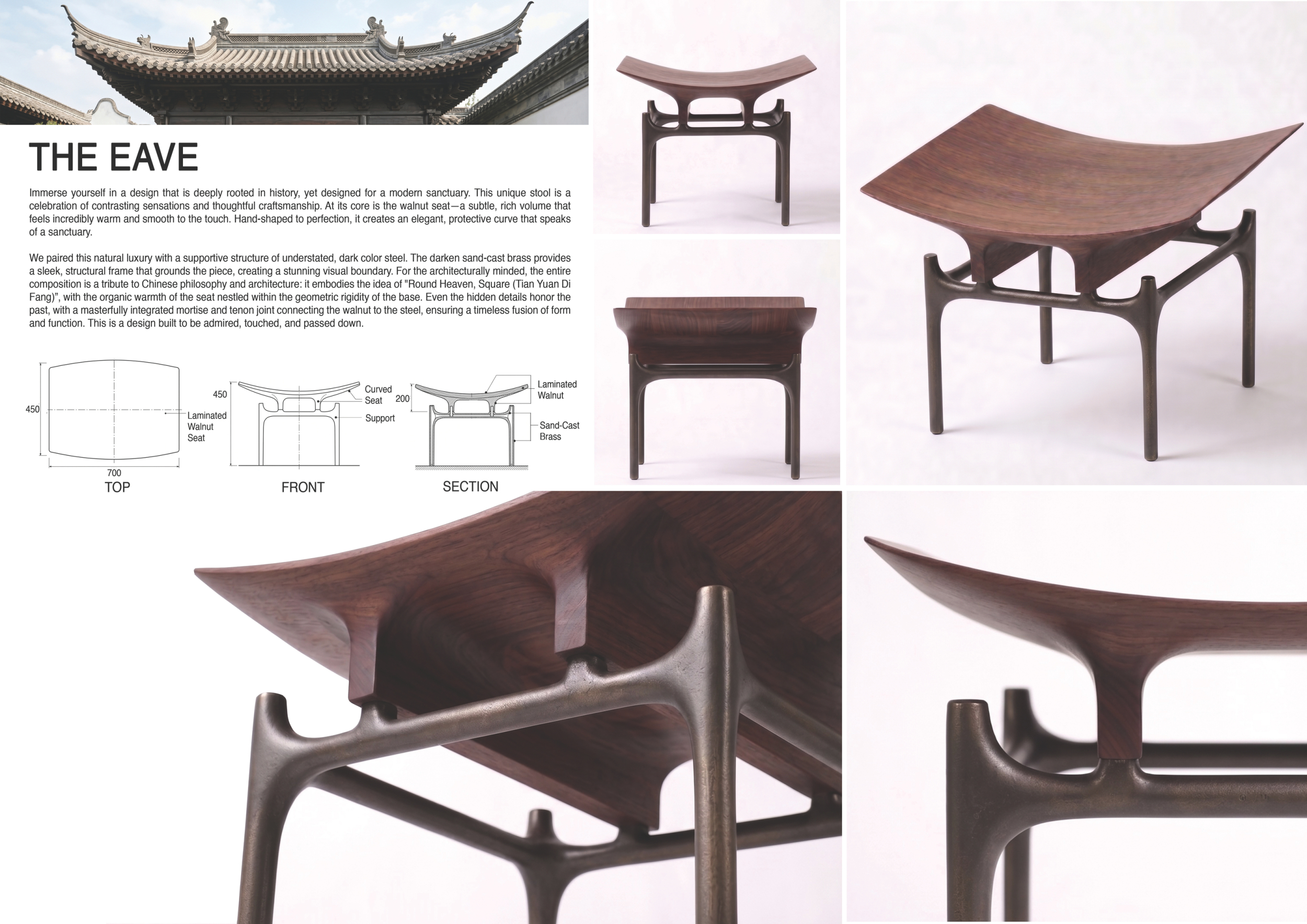
The Eave
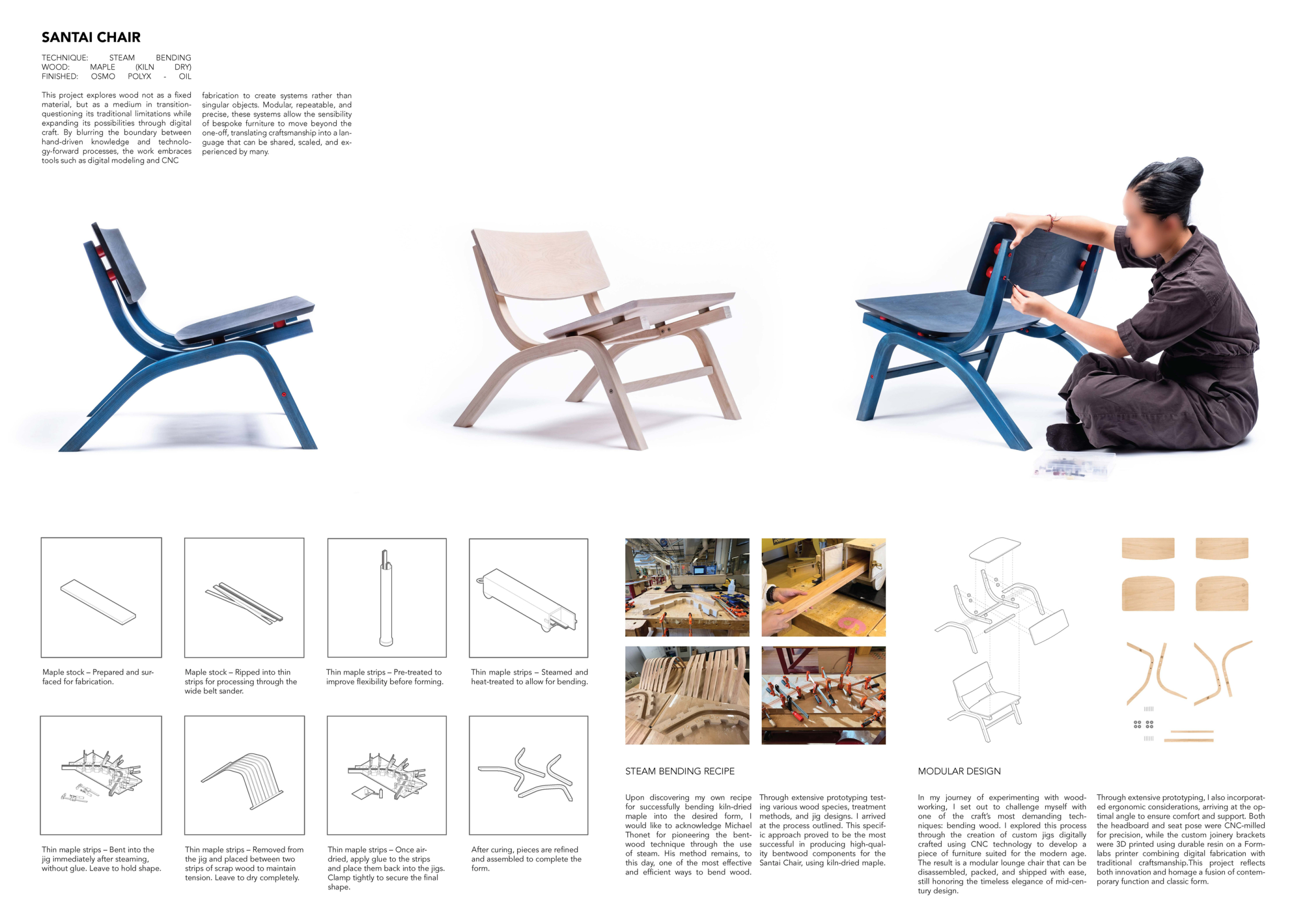
Santai Chair

Cantilever chair
Jige Chair
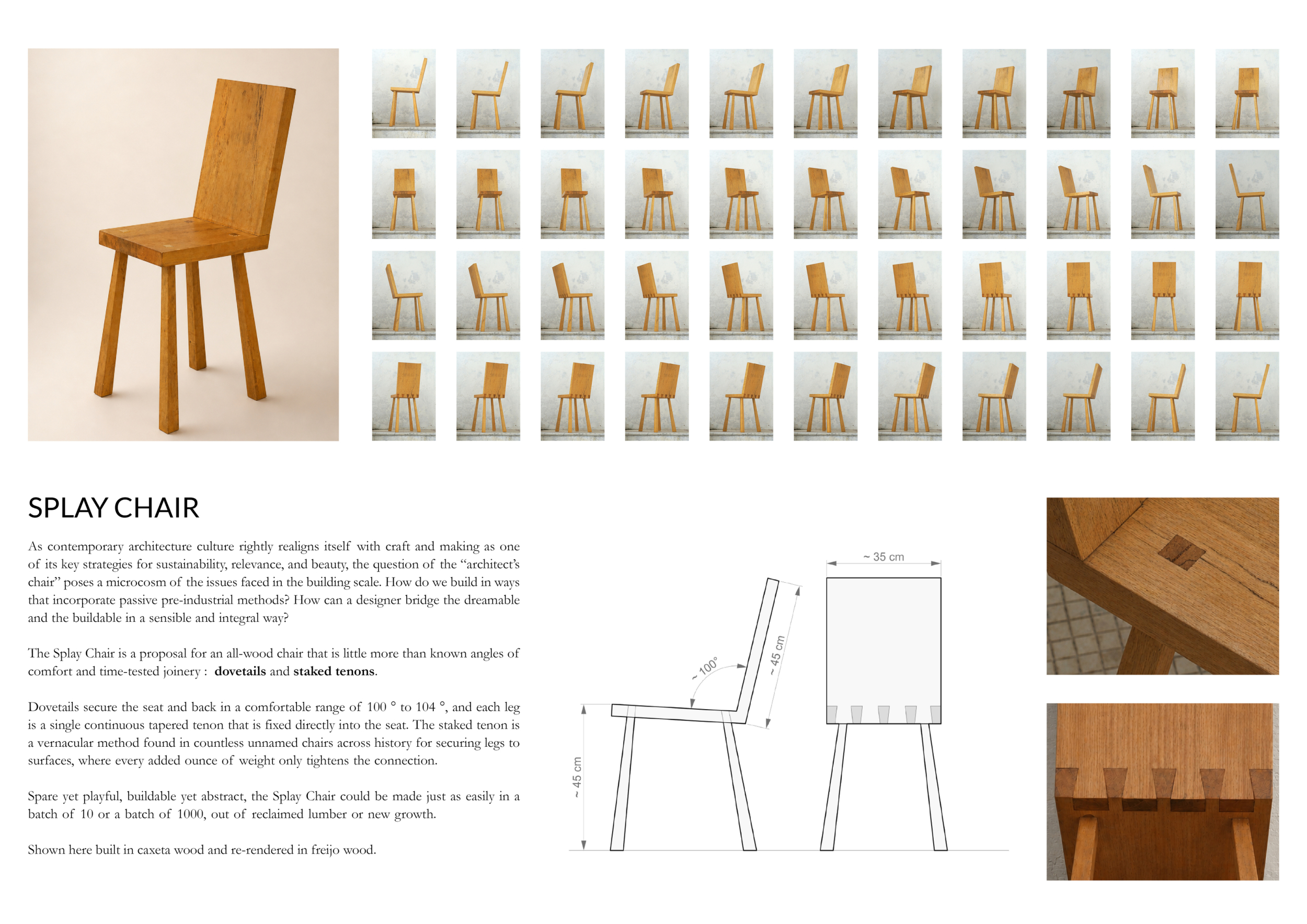
Splay Chair

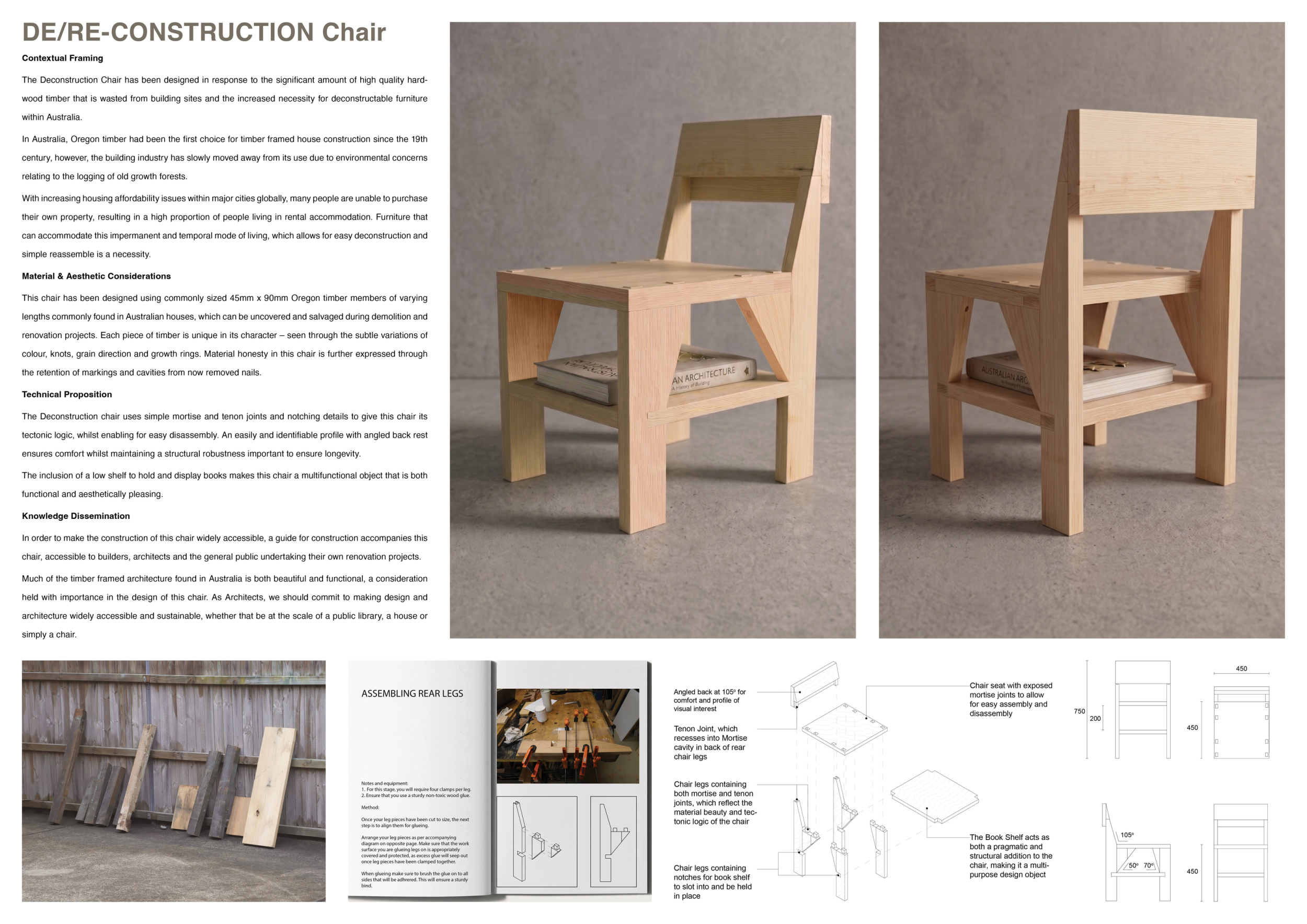
DE/RE-CONSTRUCTION CHAIR
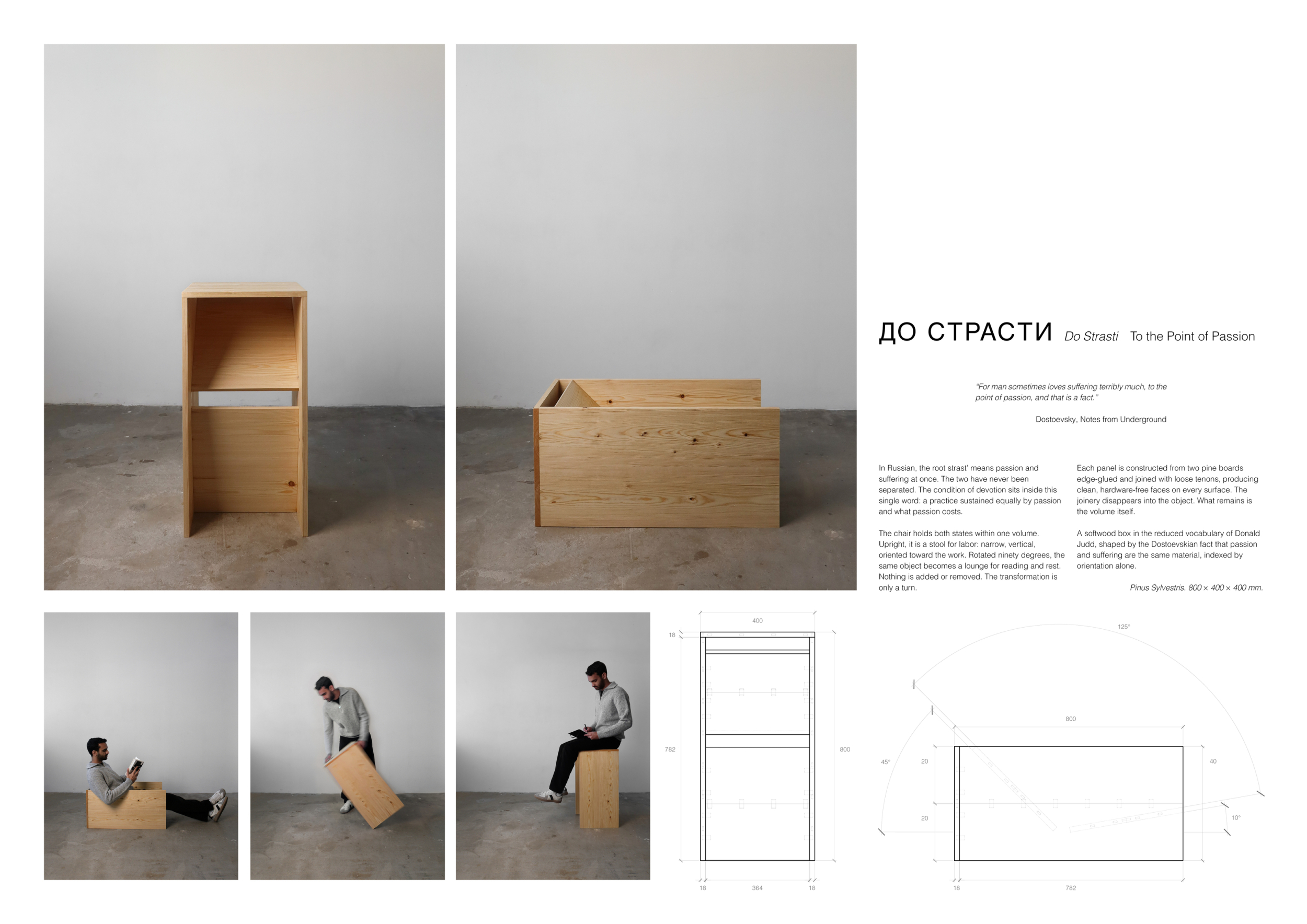
To the Point of Passion

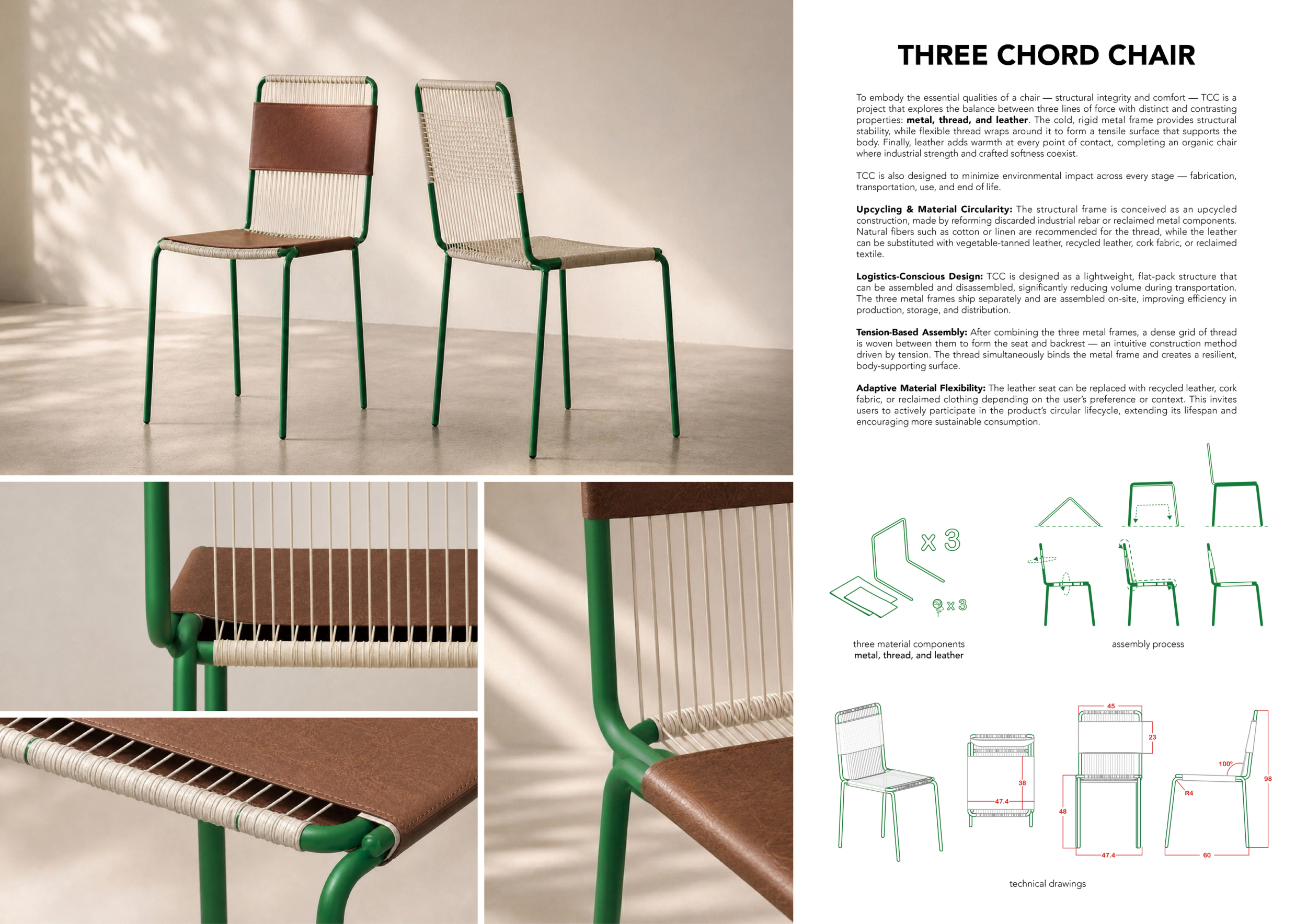
THREE CHORD CHAIR
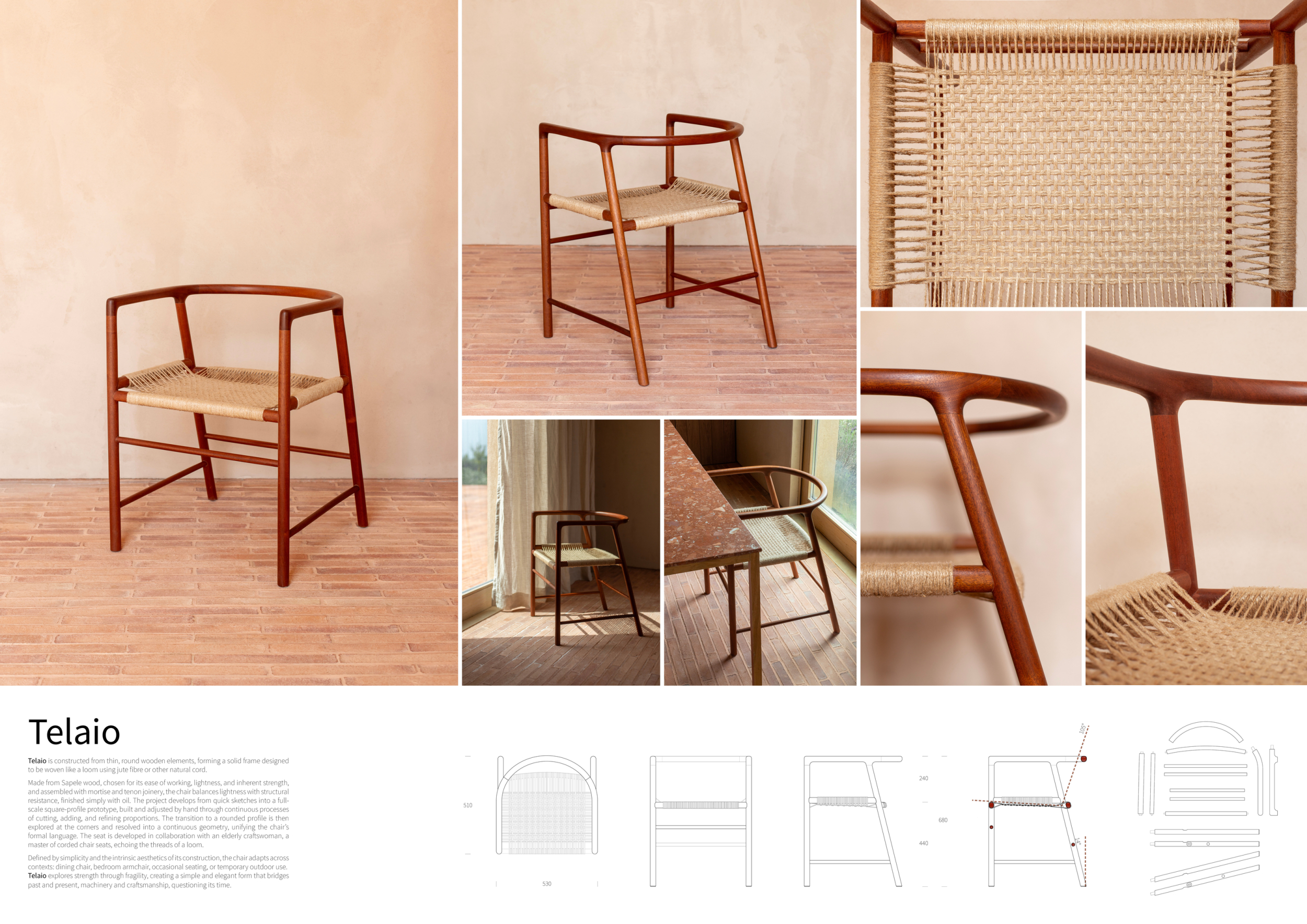
Telaio
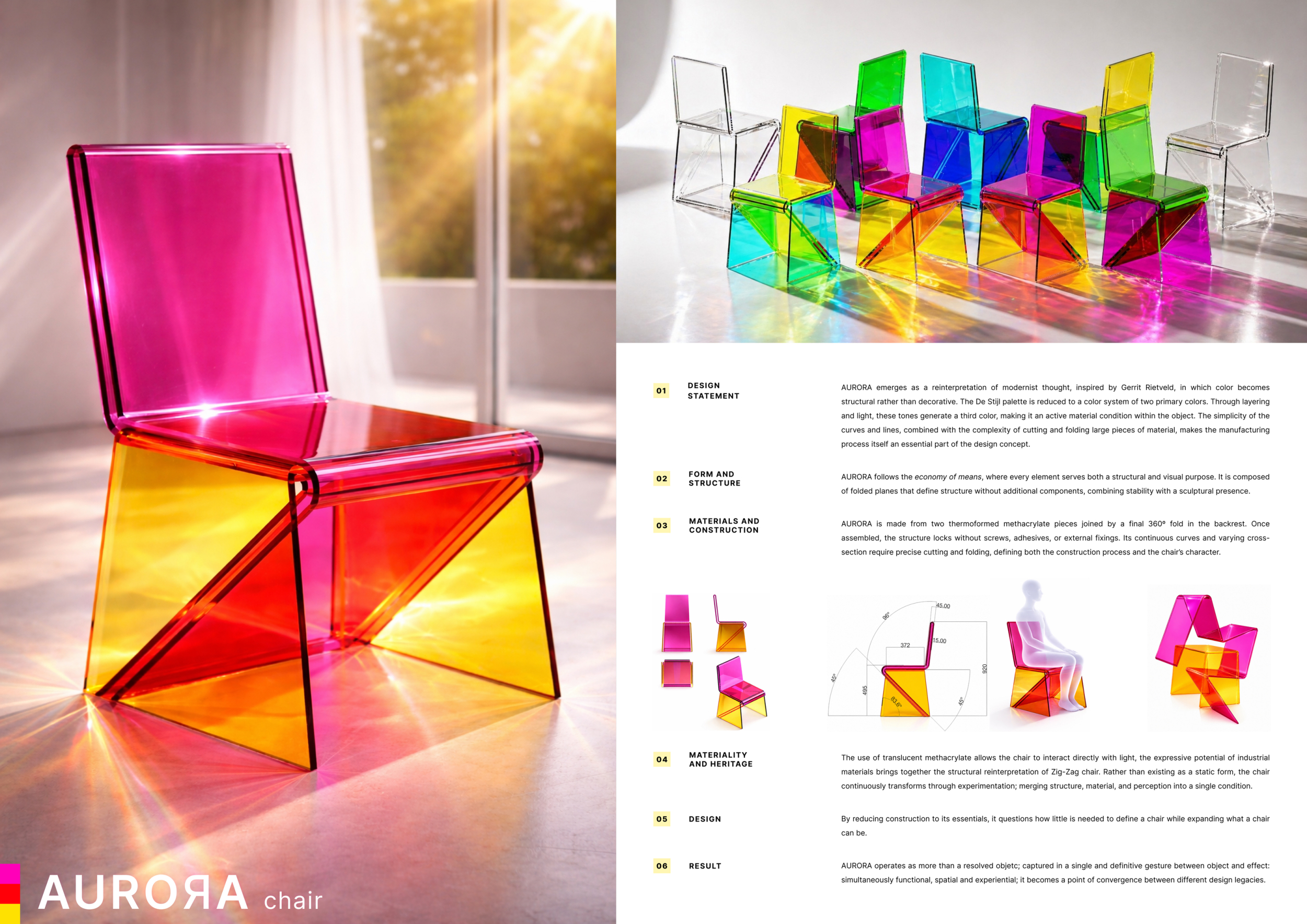
AURORA chair

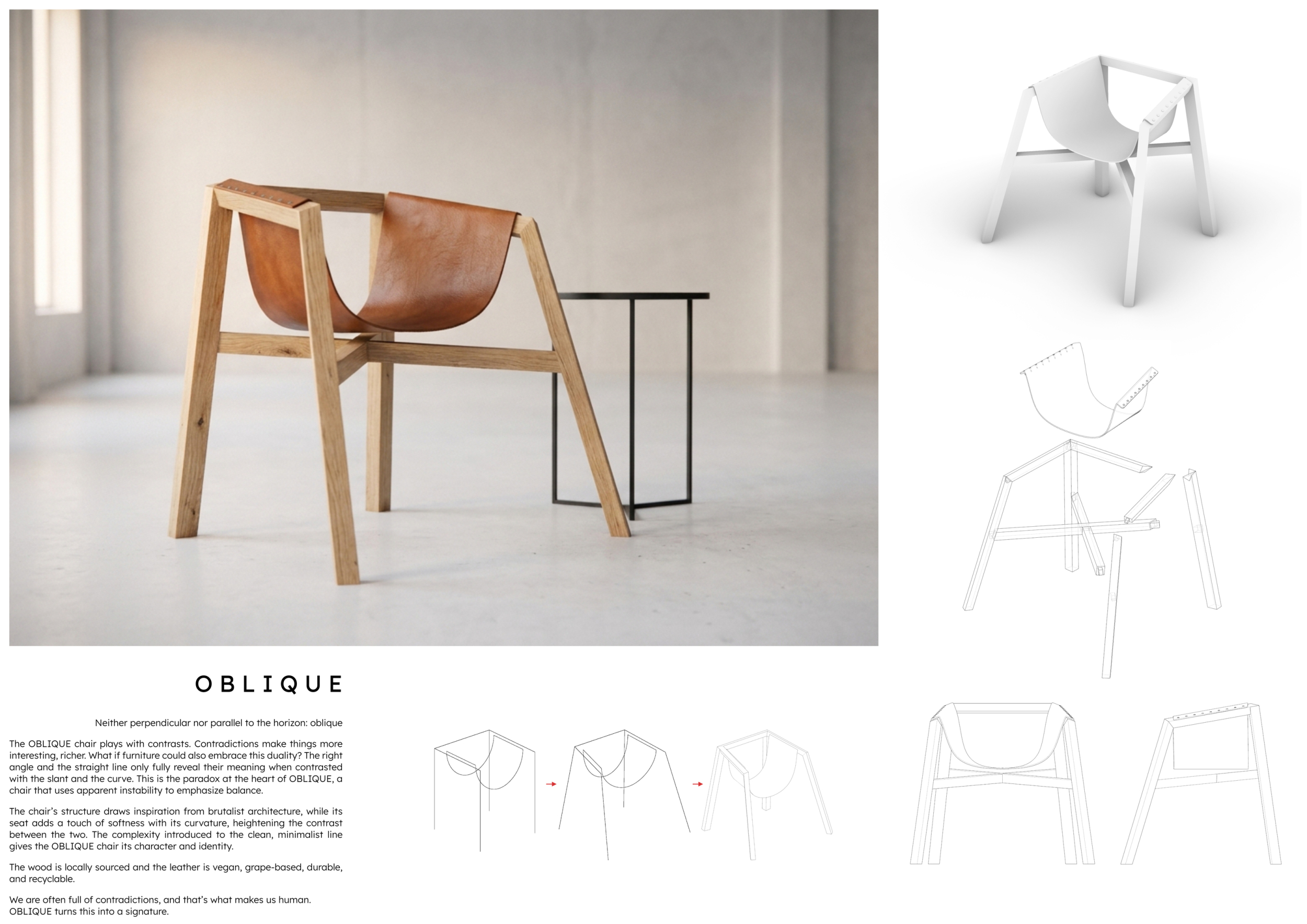
OBLIQUE
Helical
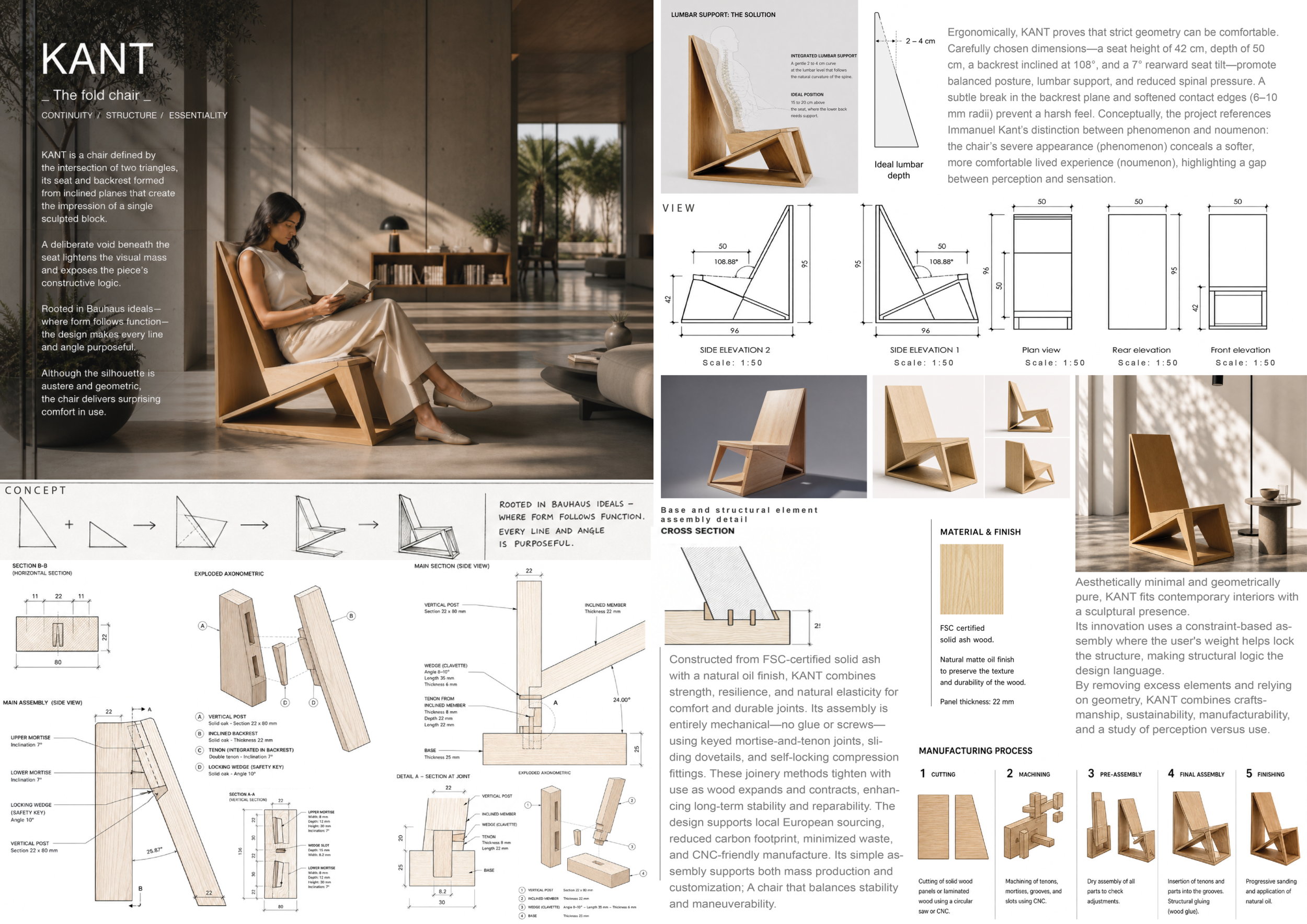
KANT - THE FOLD CHAIR
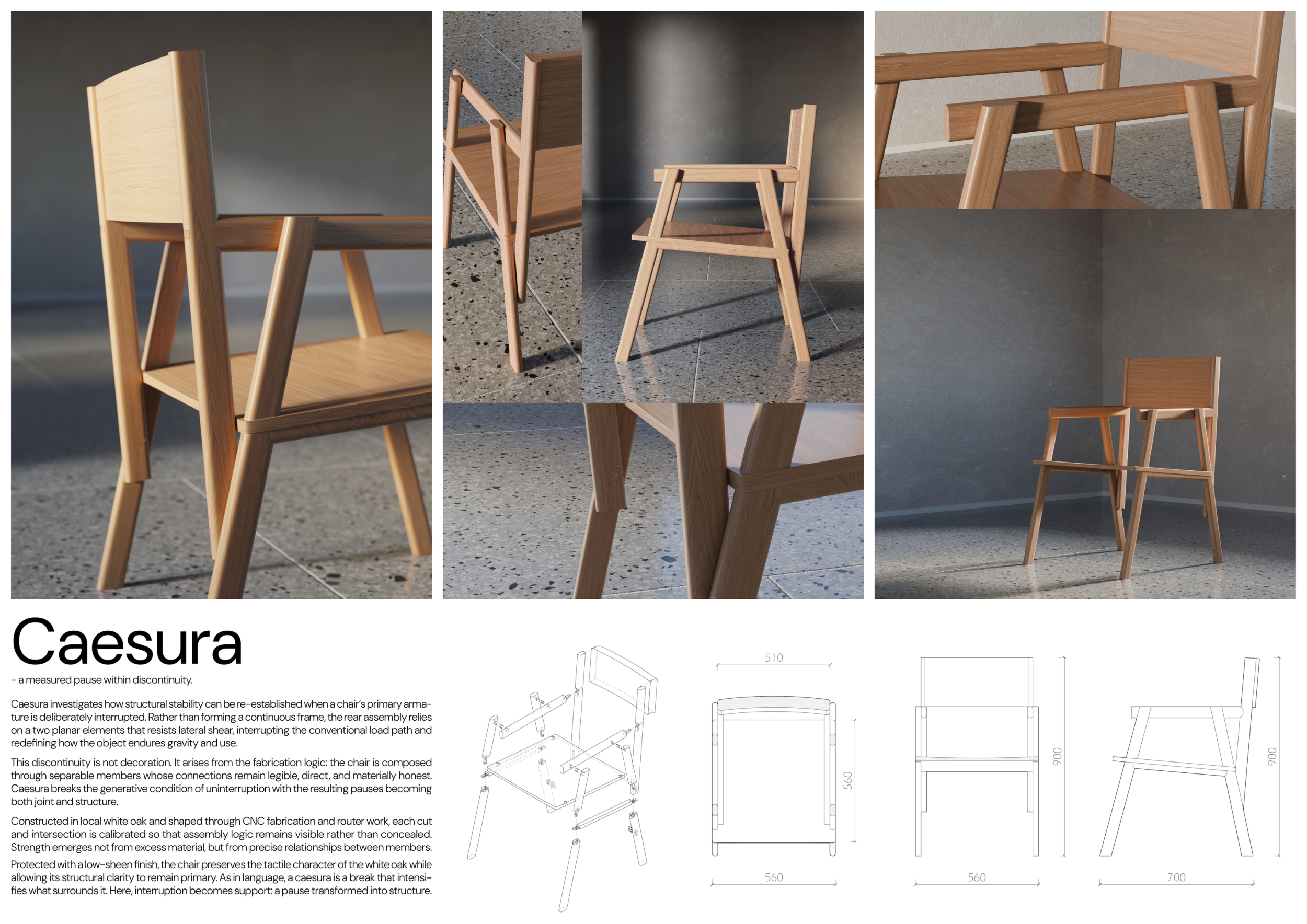
Caesura
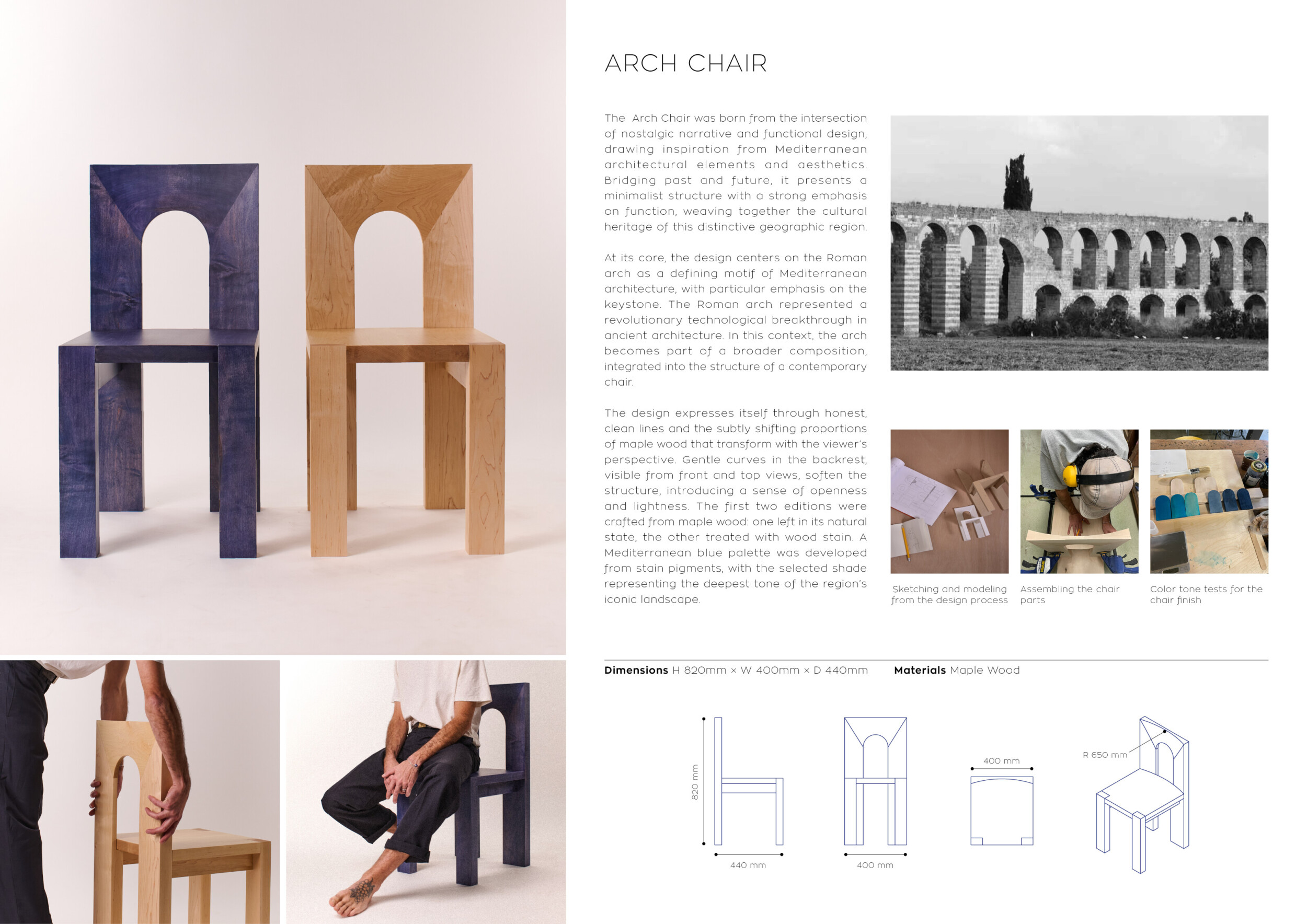
Arch Chair
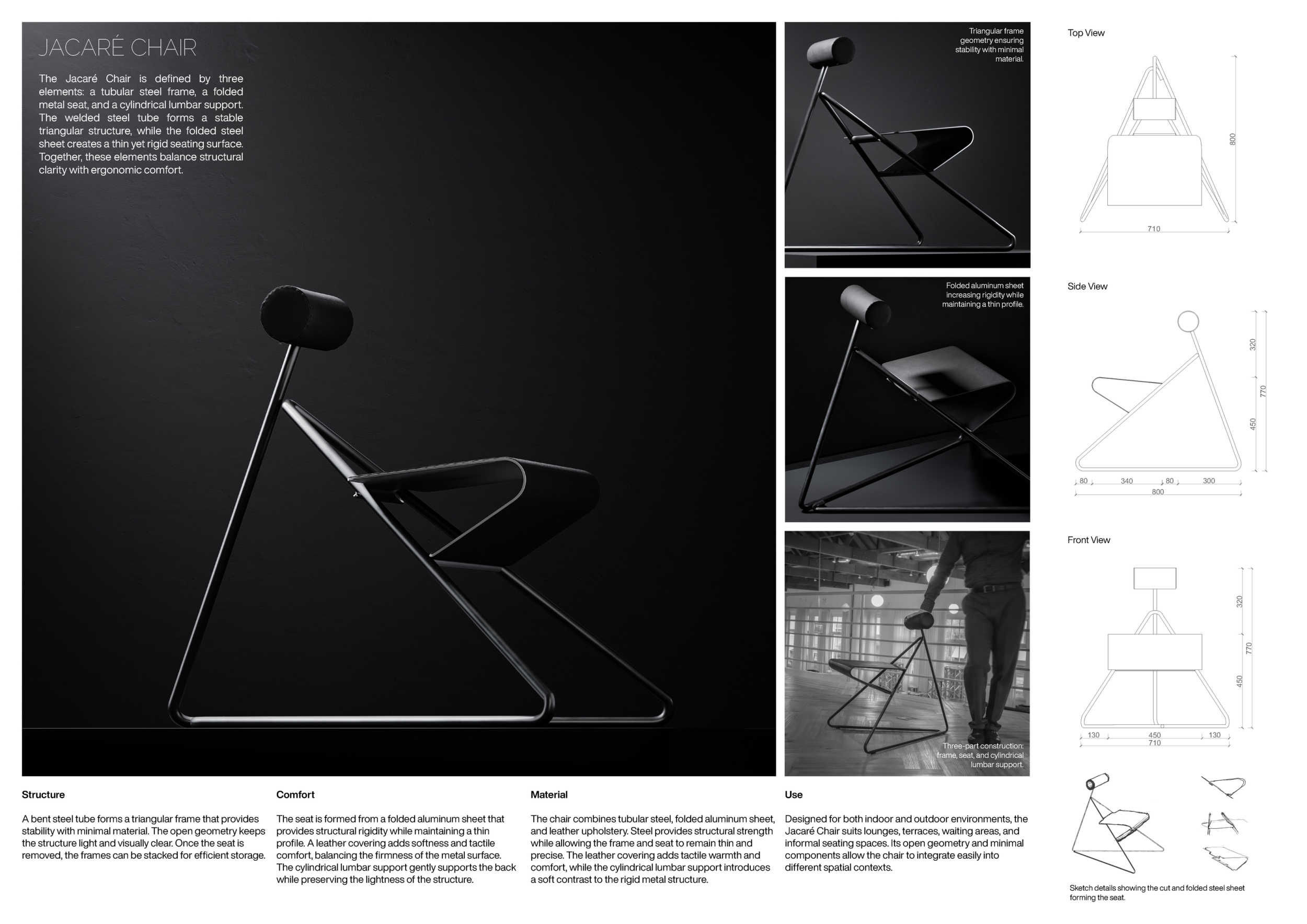
Jacaré Chair
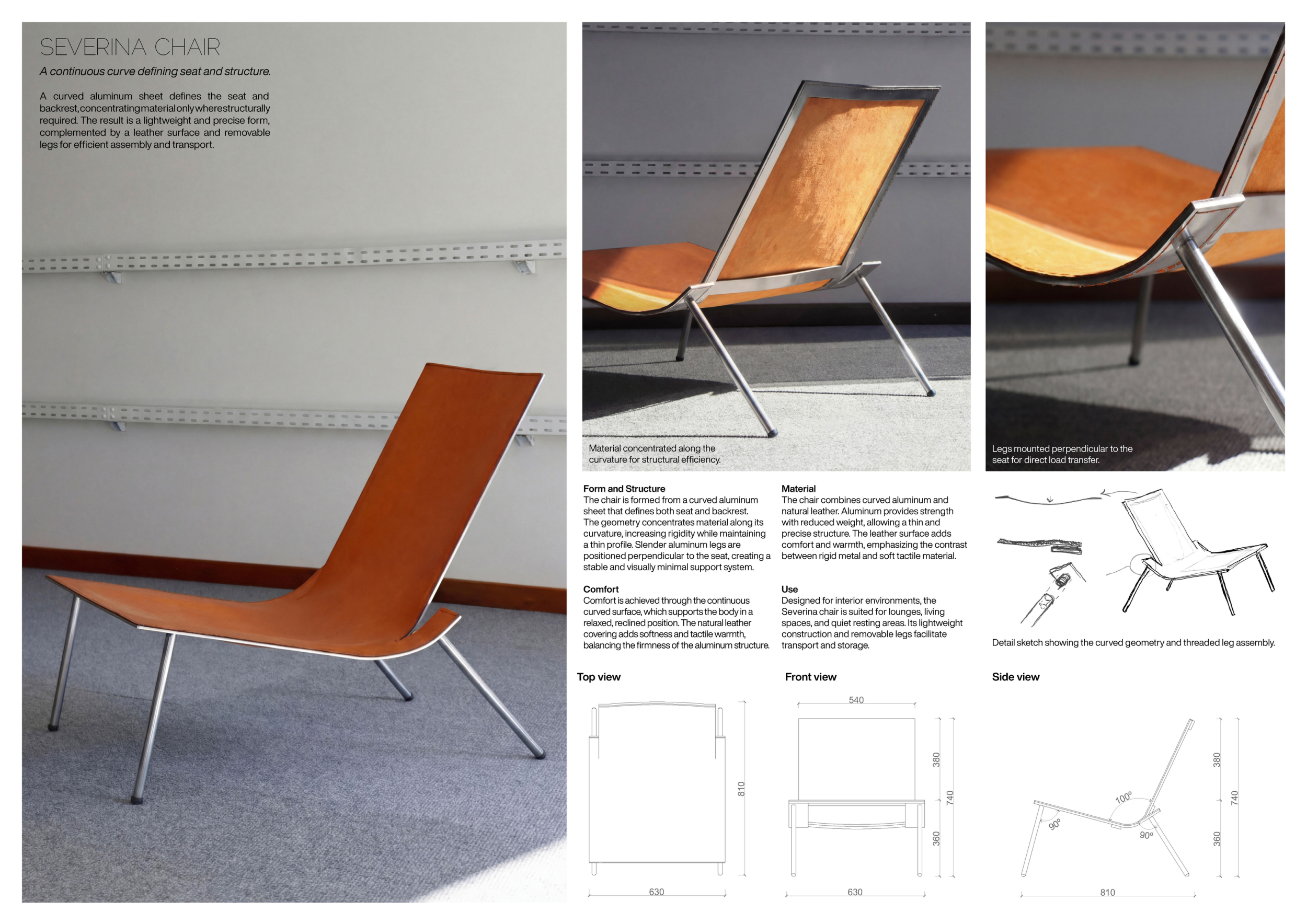
Severina Chair
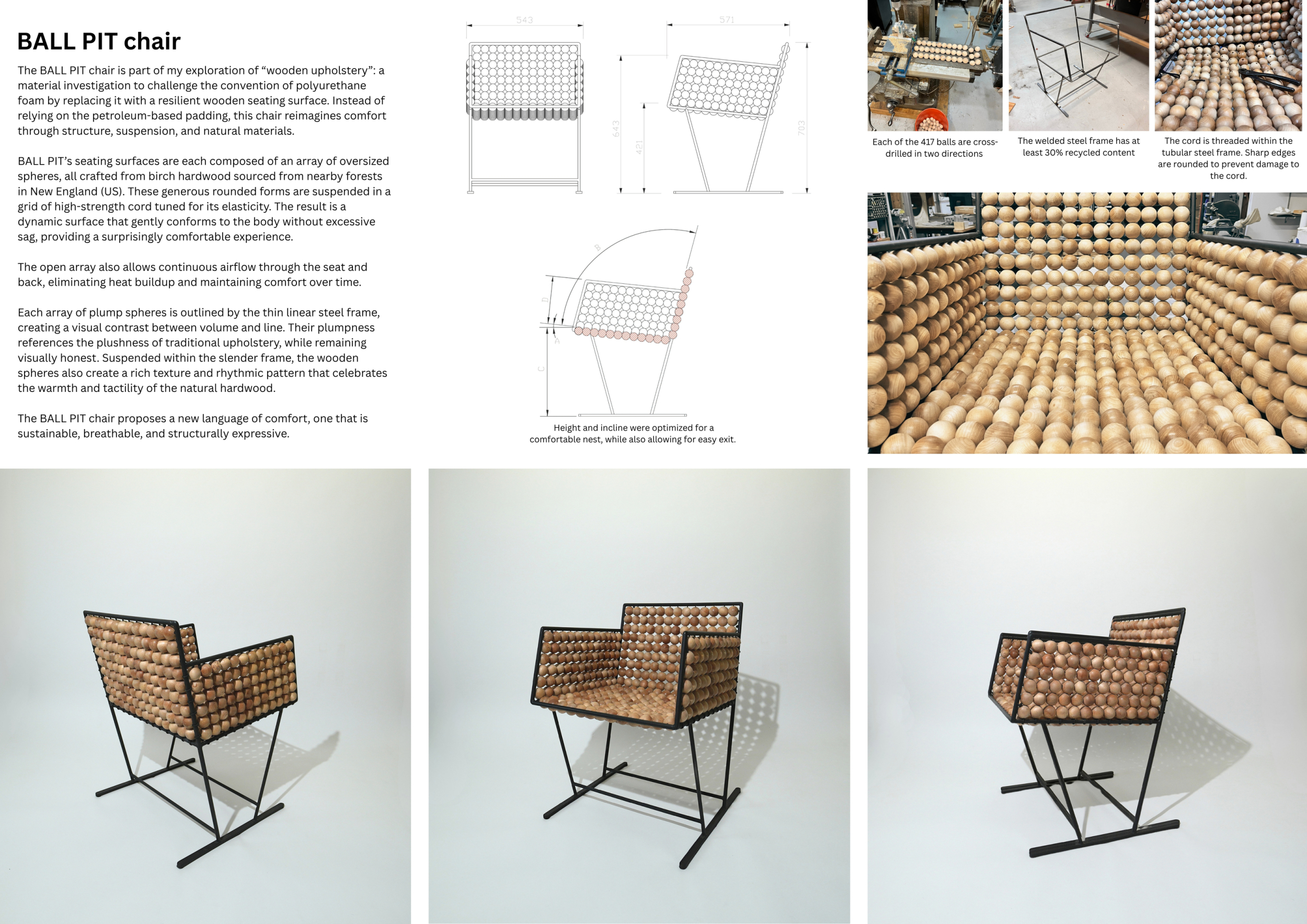
BALL PIT chair
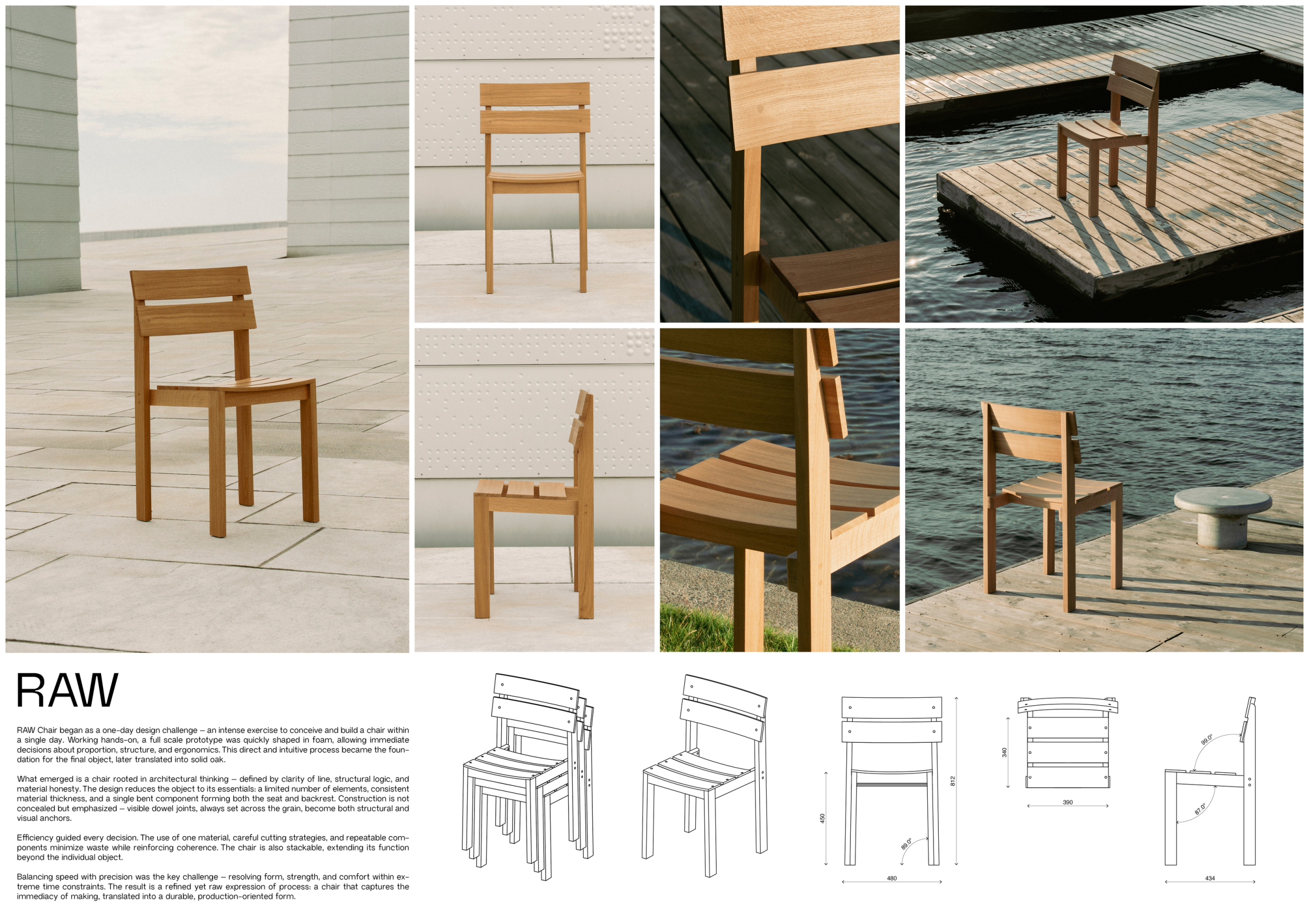
Raw chair

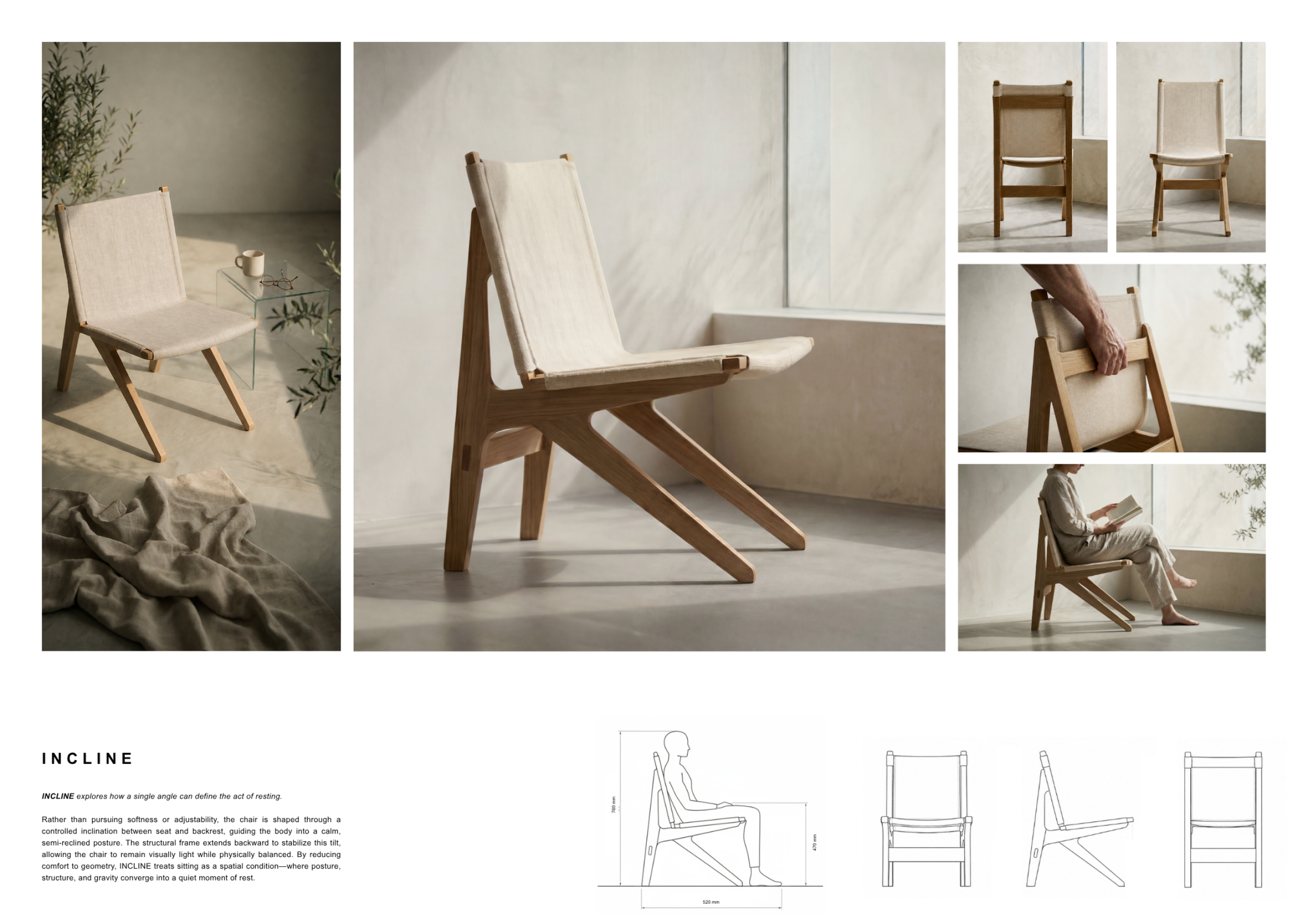
Incline
La Chair
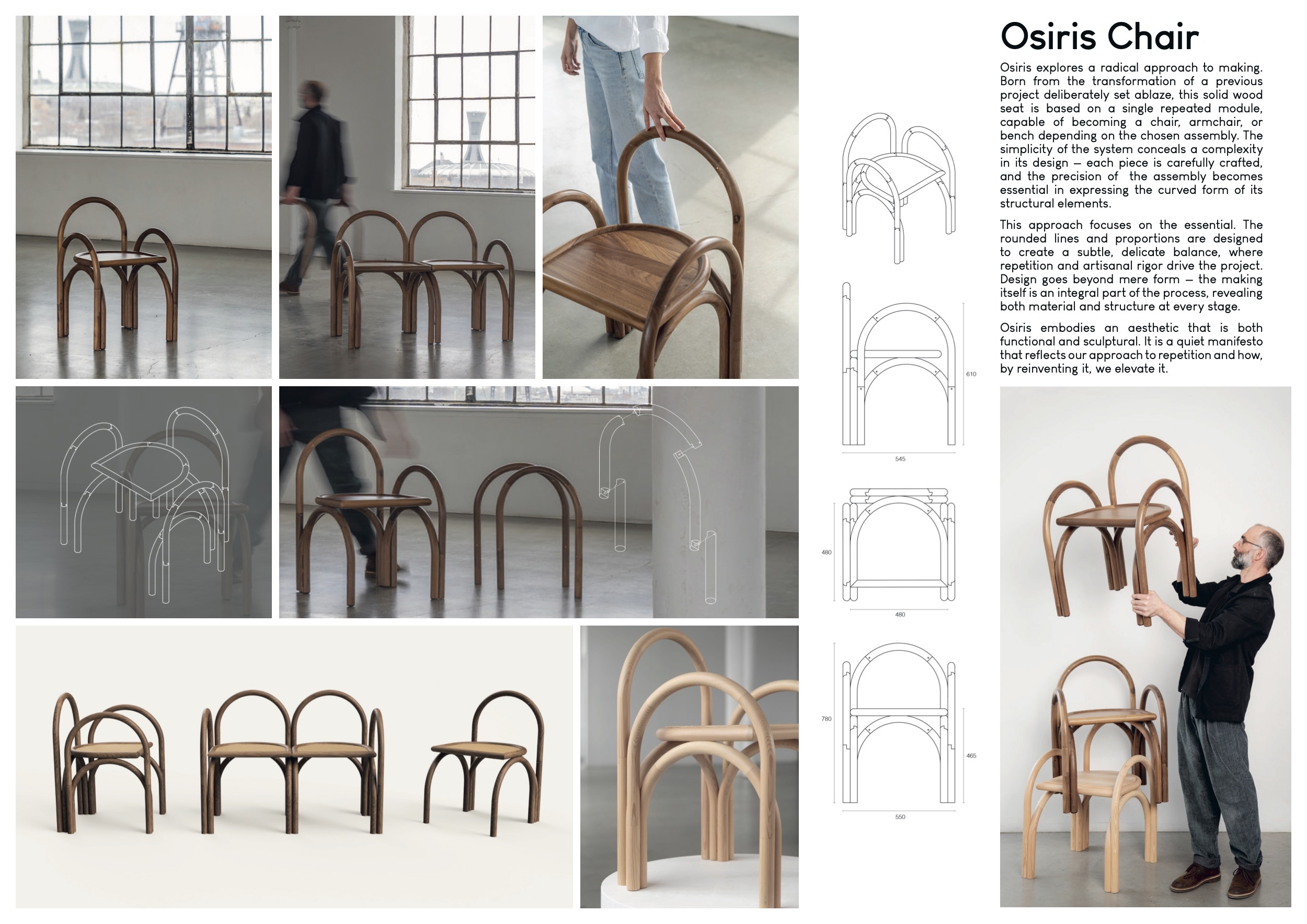
Osiris Chair
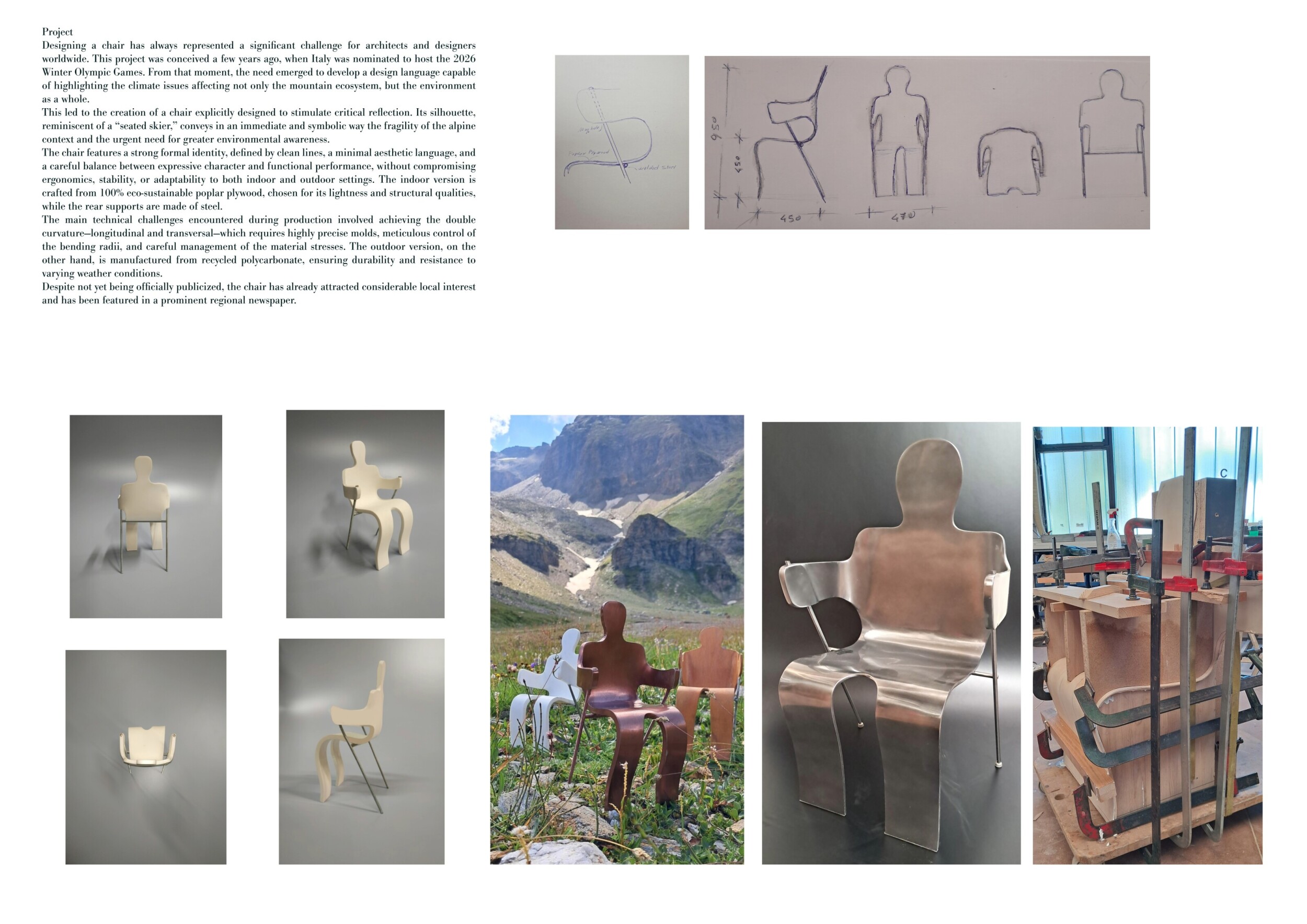
sitting skier
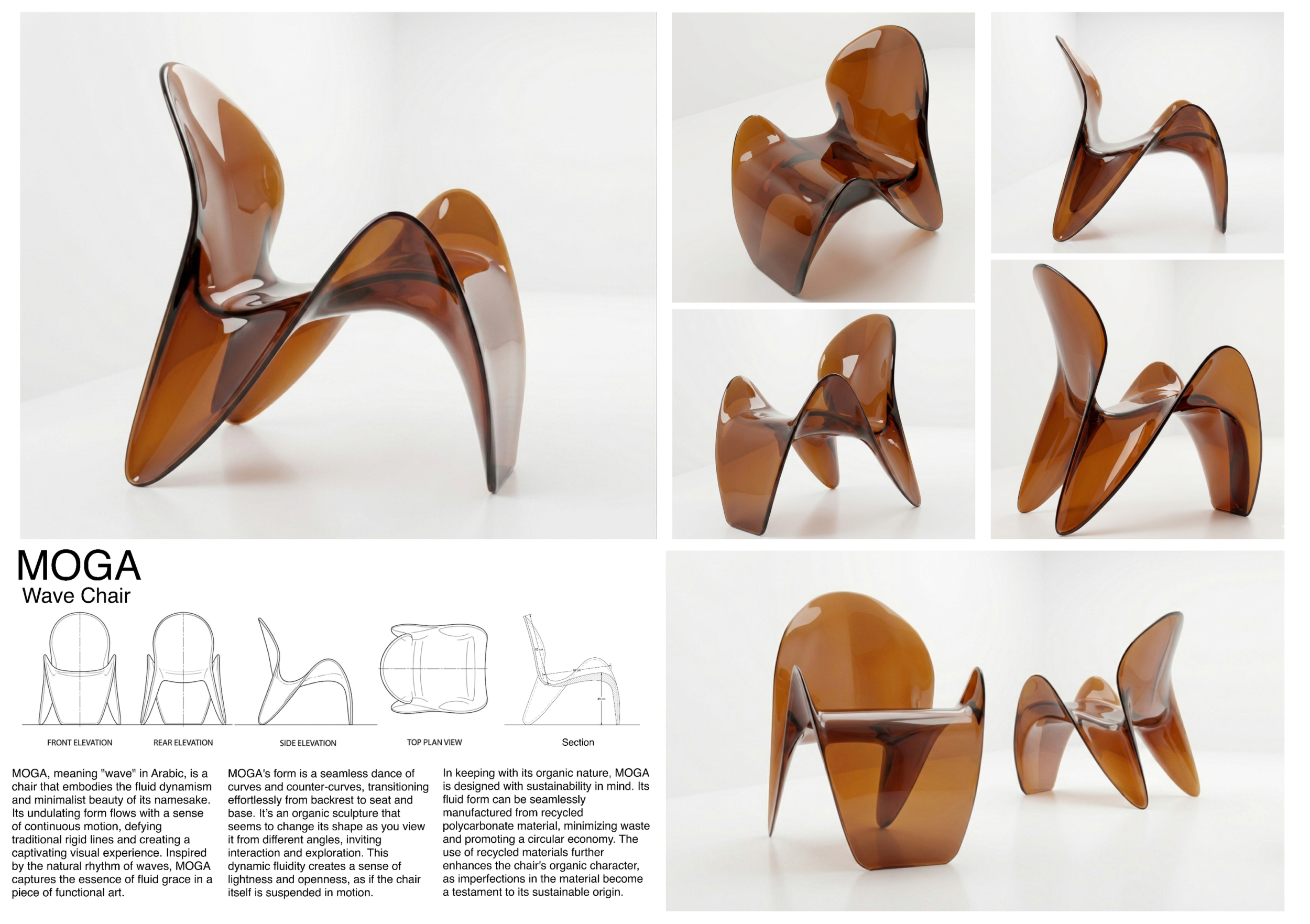
Moga

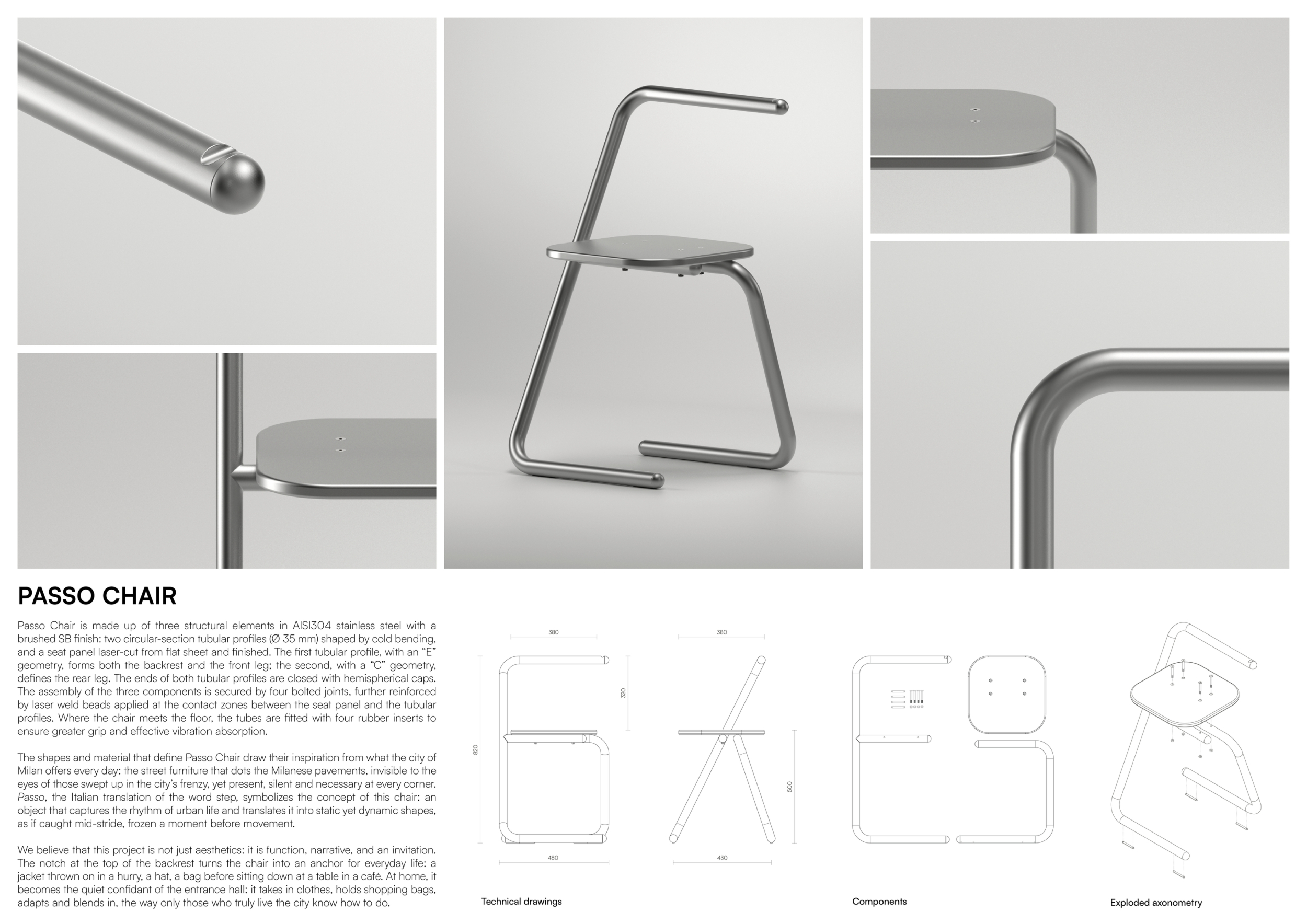
Passo Chair