

Buildner is a global leader in organizing architecture competitions of all scales — from furniture, cottages, and guesthouses to full city rebranding. With prize budgets ranging from €5,000 to €500,000, Buildner brings proven global experience to every competition.
Launch a competitionLaunch a competition
Introduction

Buildner is pleased to announce the results of the 6th edition of the Nuclear Memorial competition.
This year’s edition invited architects, designers, and thinkers from around the world to imagine a place of remembrance for the nuclear age—one that contends with the invisible violence, environmental degradation, and generational trauma left in the wake of atomic testing.
Submissions ranged from monumental land interventions to subtle atmospheric experiences, with proposals exploring themes of silence, ritual, entropy, and reconciliation. Across the competition, there was a marked sensitivity to the passage of time, with many projects using erosion, light, and reflection as metaphors for both decay and remembrance. Some imagined subterranean sanctuaries that slowly reveal their stories through light and descent, while others marked the terrain with vast fields of vertical elements or mirrored voids, transforming scorched landscapes into sites of contemplation.
The jury praised the variety of approaches, from minimal gestures to expressive structural systems, that each negotiated a complex brief with poetic and technical clarity. The 6th edition confirmed architecture’s capacity to bear witness: not through spectacle, but through presence, restraint, and material memory.
We sincerely thank our jury panel
for their time and expertise
Thongchai Chansamak
Sher Maker
Thailand

Patcharada Inplang
Sher Maker
Thailand

Olha Kleytman
Founder of SBM studio
Ukraine

Jiafeng Li
United States
Katie MacDonald
Co-founder of After Architecture
USA

Noa Raviv
artist
USA

Huda Tayob
Royal College of Art
South Africa

Wu Ziye
Co-founder of Mix Architecture
China

1st Prize Winner
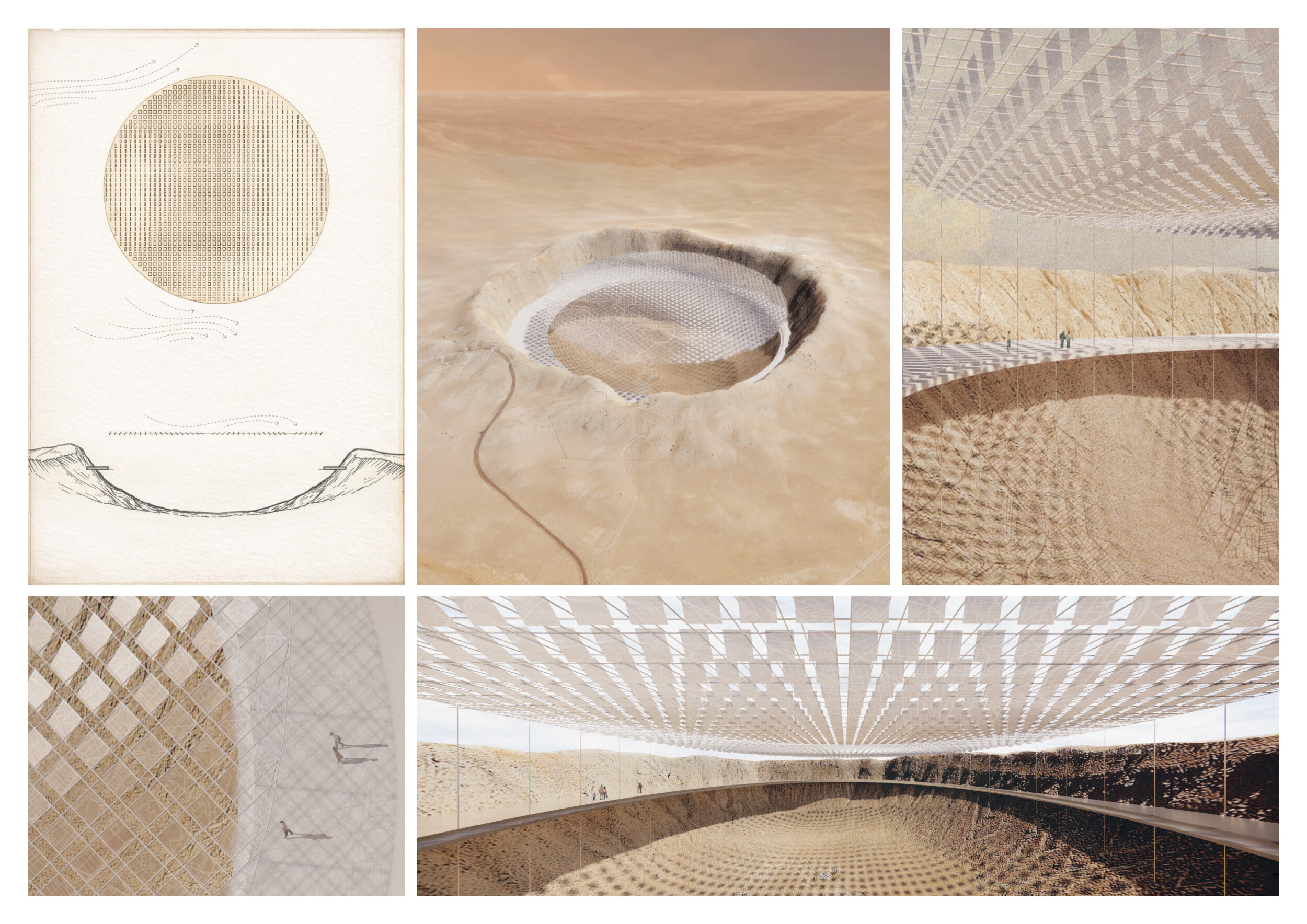
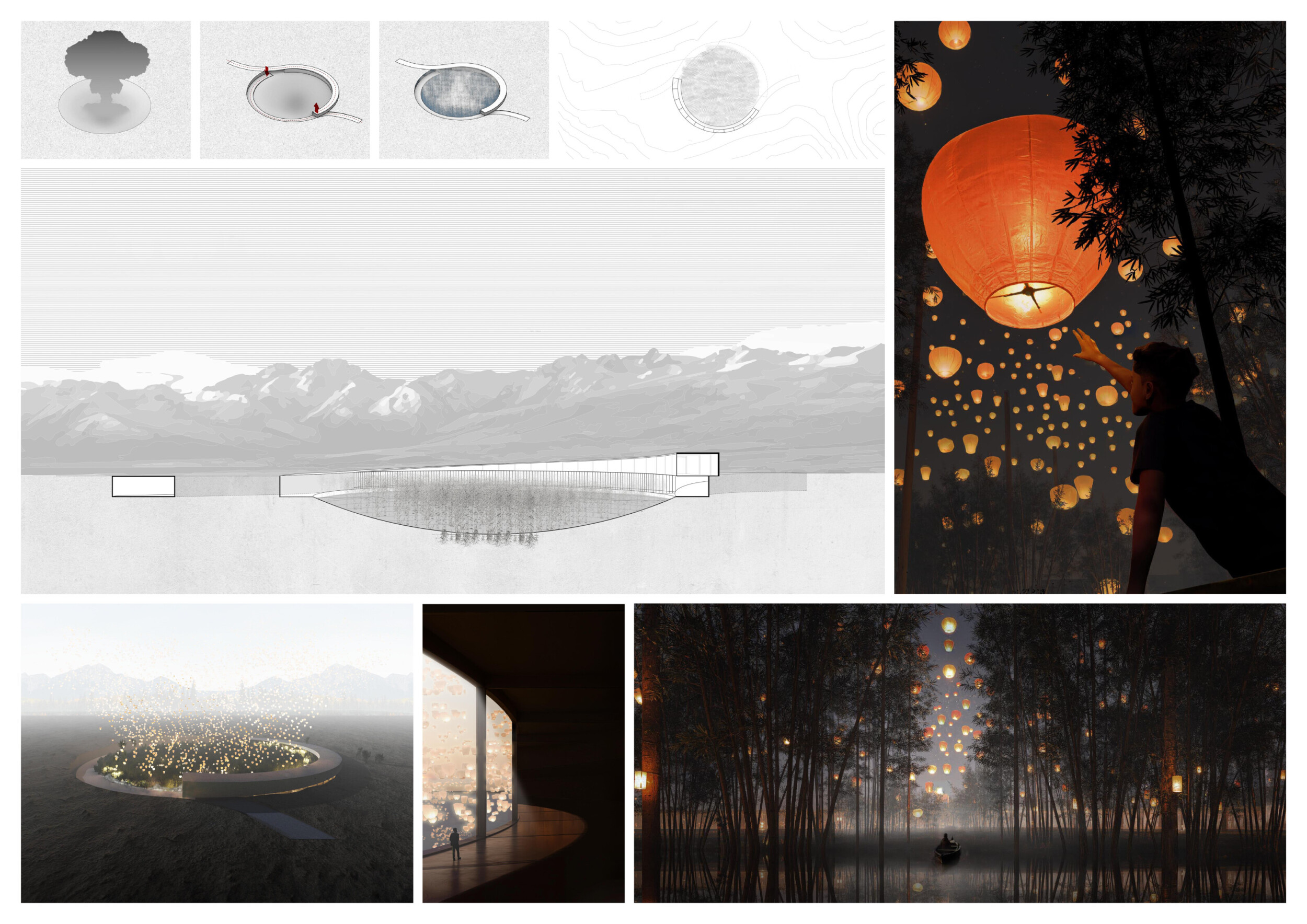
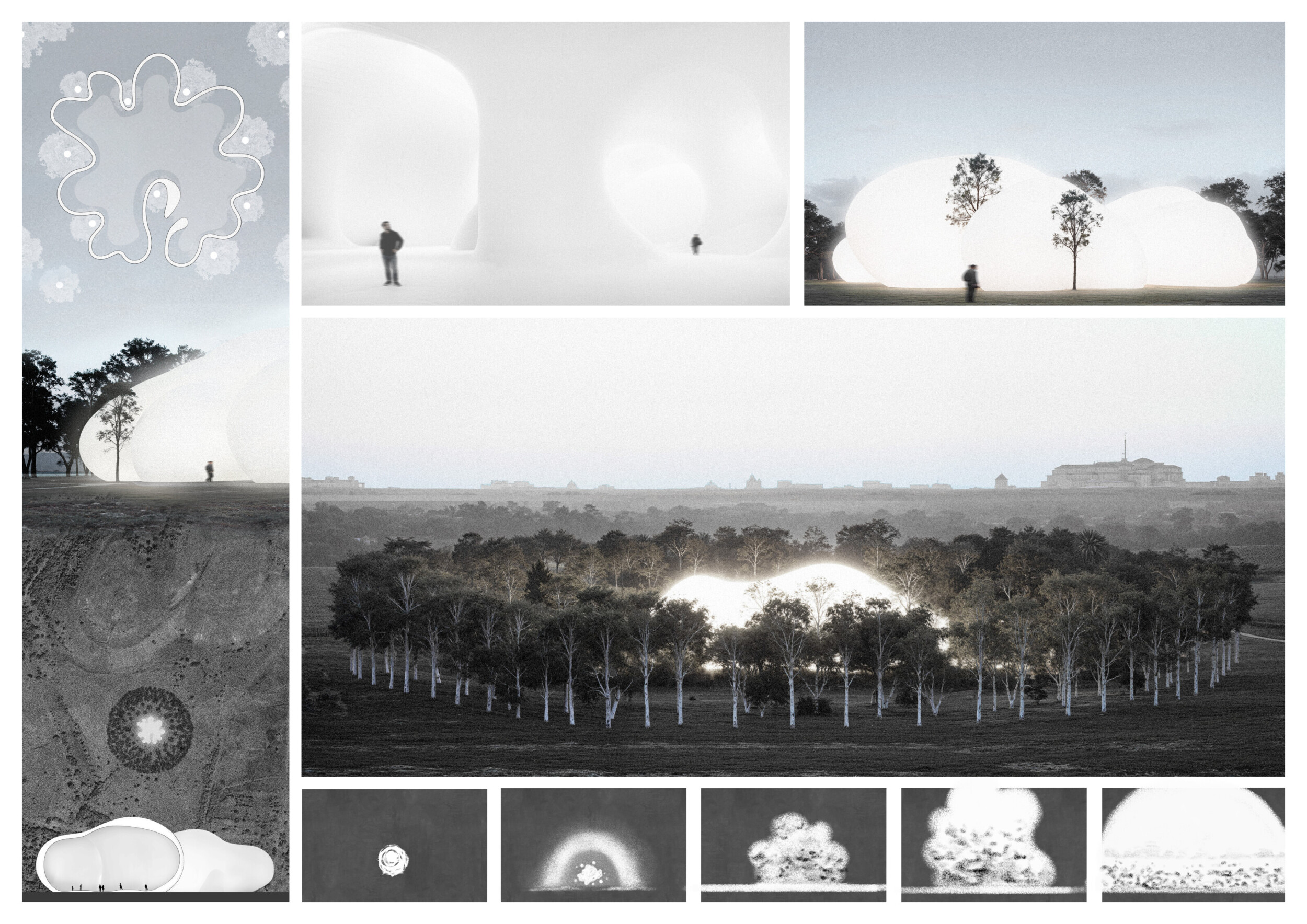
The Suspended Seconds
Taking part in architecture competitions is primarily about learning, discovering new ideas, and pushing ourselves beyond the limits of daily practice. They offer the freedom to experiment and evolve as designers. In this case, we view it as a meaningful chance to collaborate for the first time and to merge our individual perspectives and skills within a shared creative journey.
Read full interview
 Jordan
Jury feedback summary
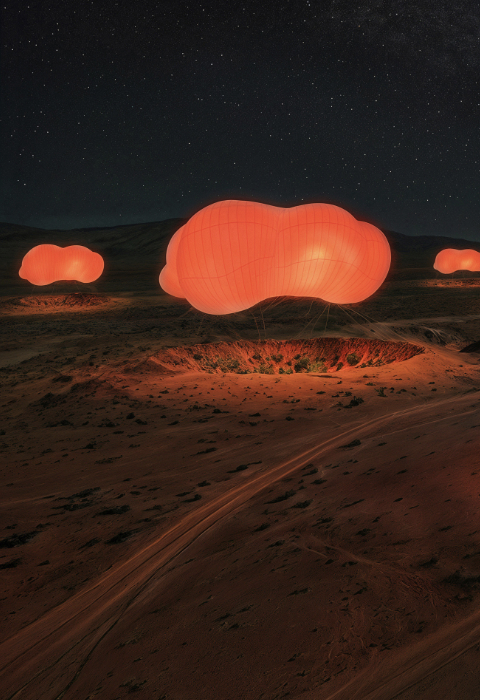
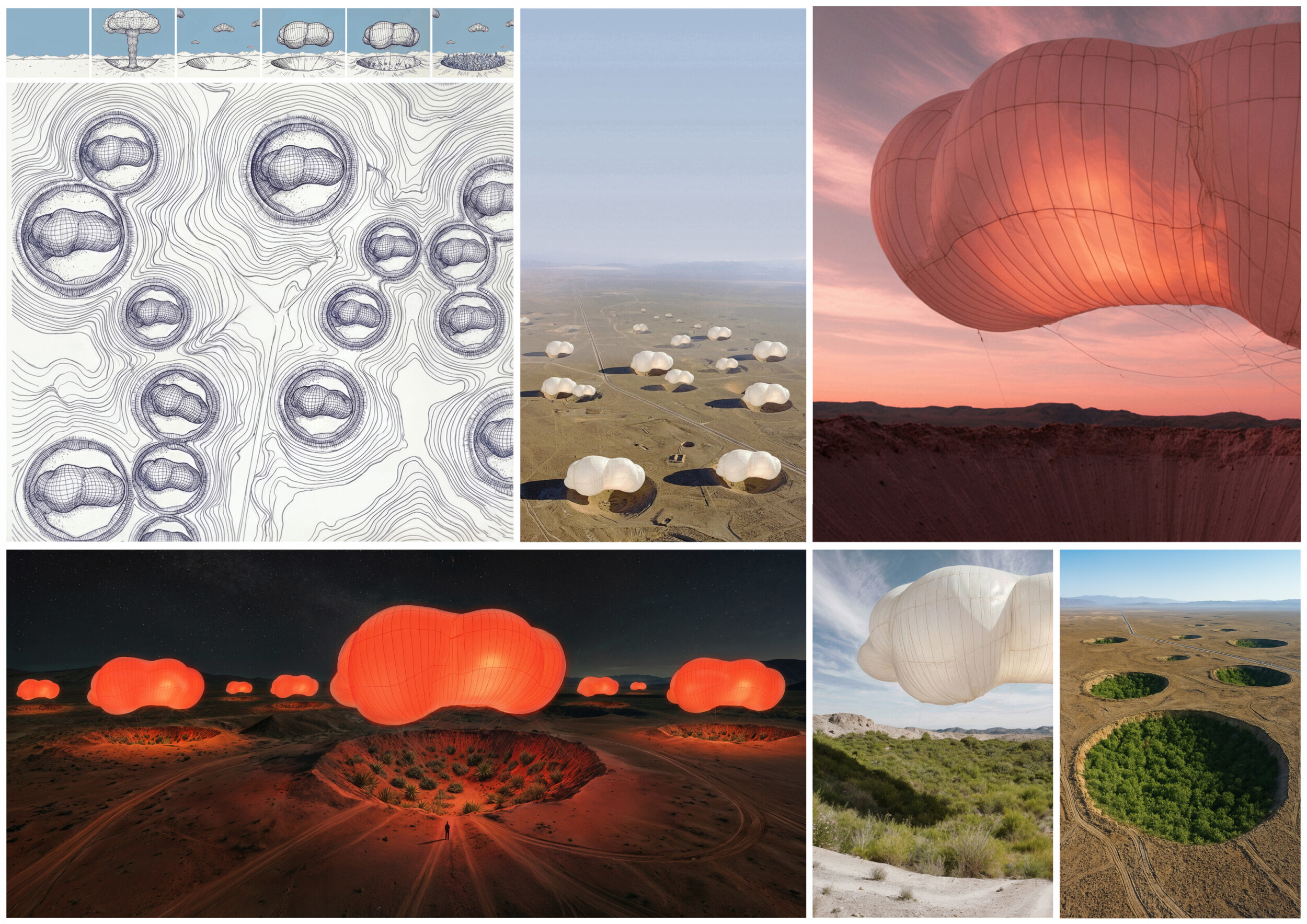
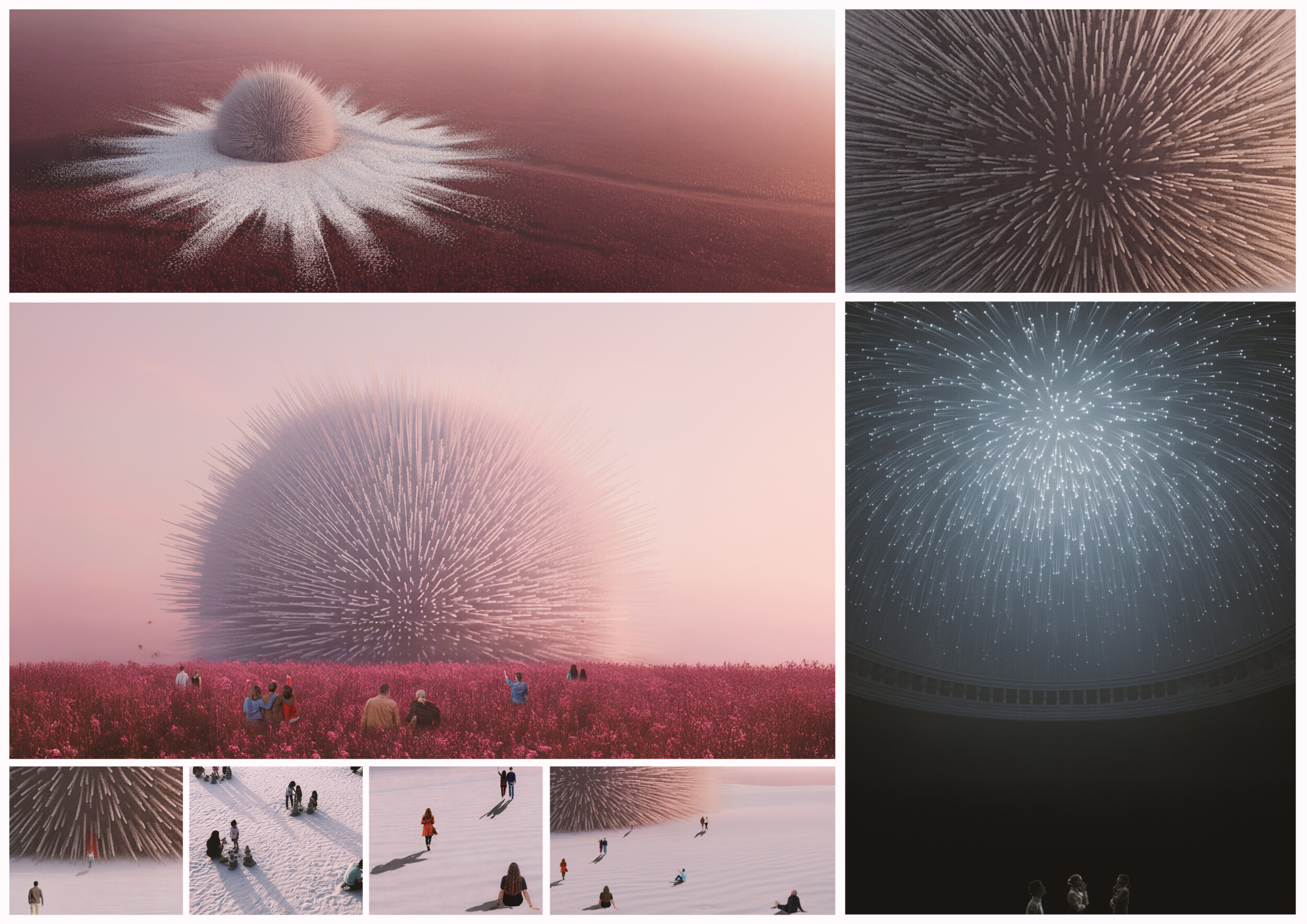
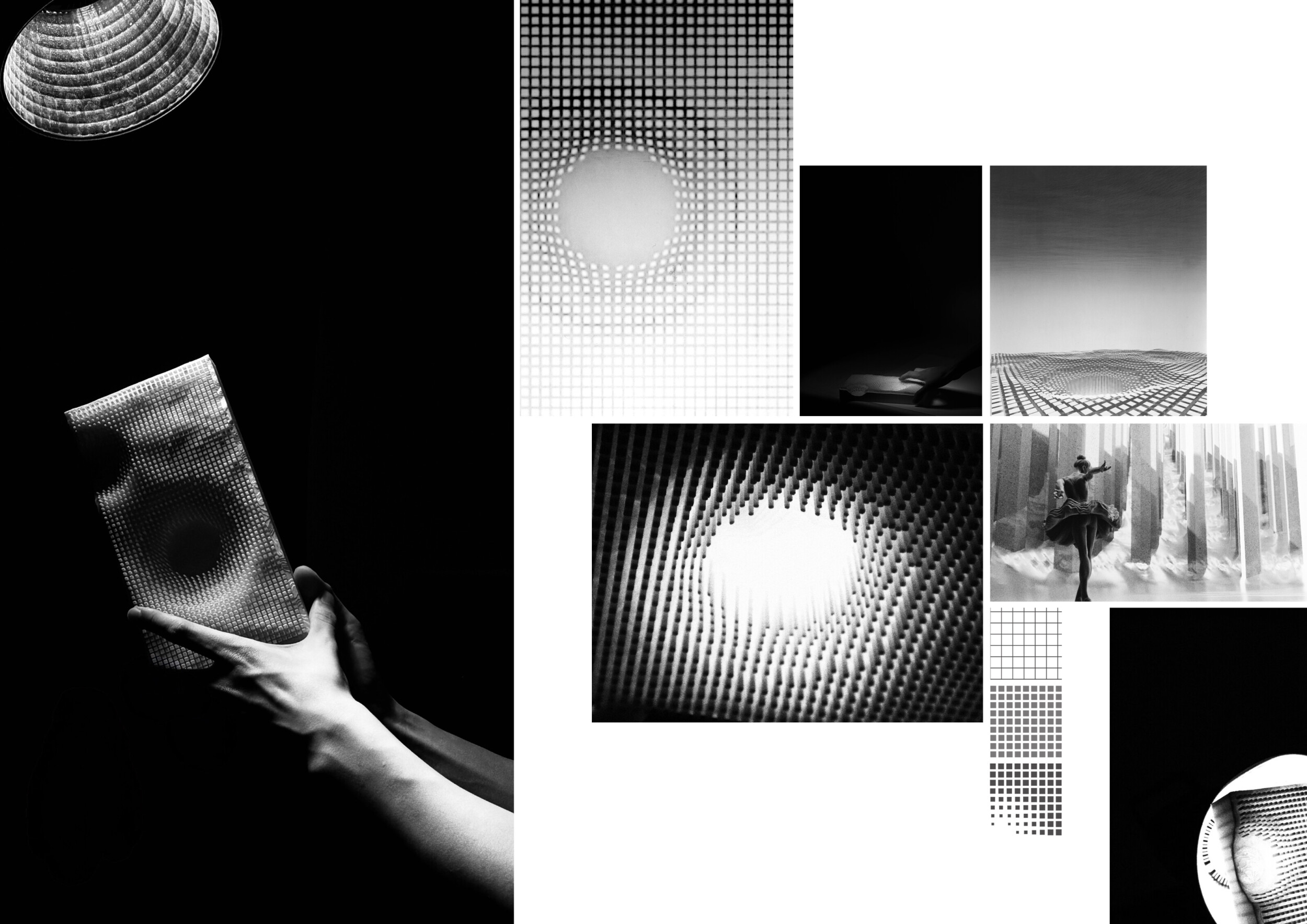
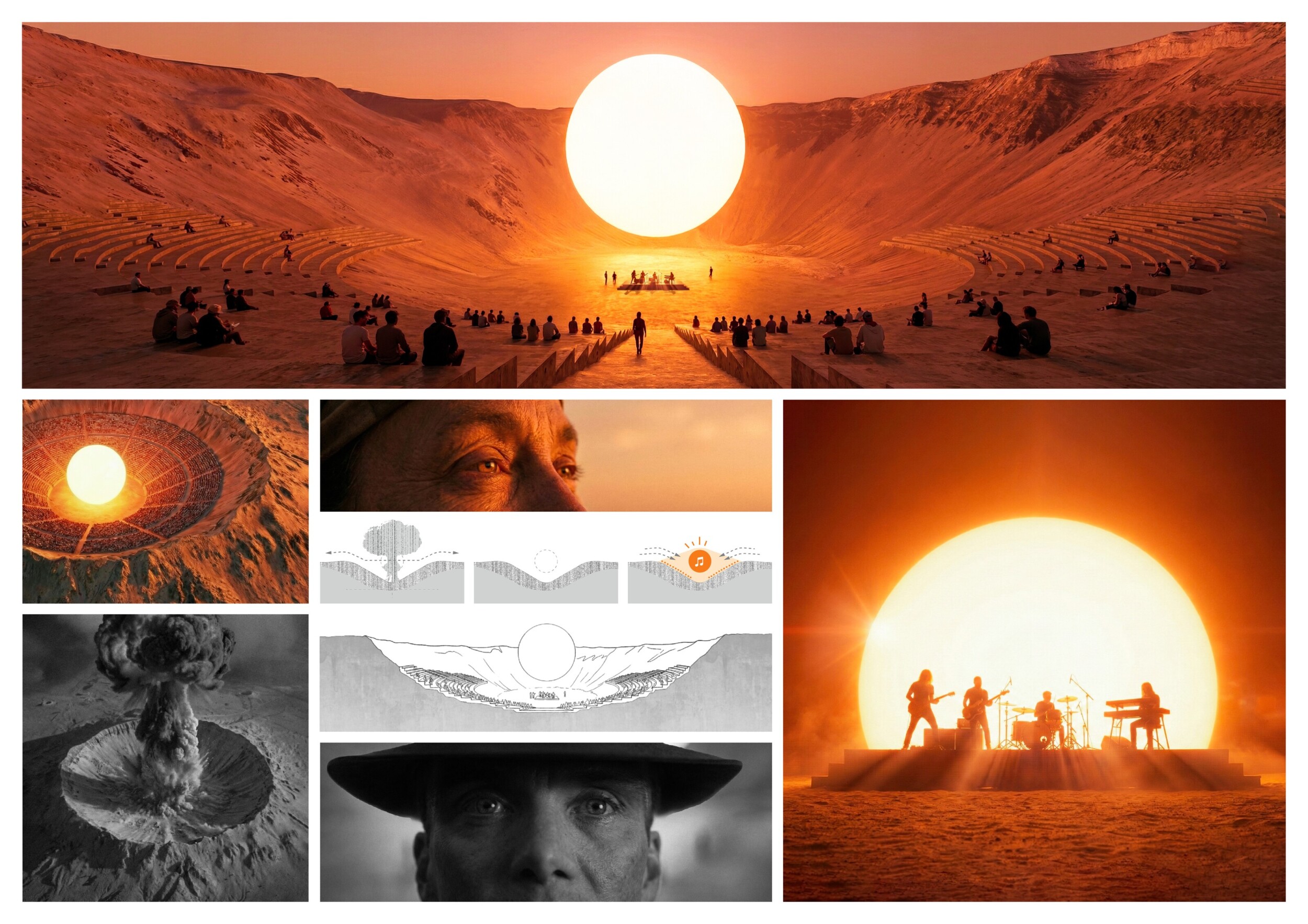
The project responds to the brief with a deliberate inversion of the mushroom cloud, transforming one of history’s most violent spatial symbols into a quiet, atmospheric presence embedded within the landscape. The project deploys a series of inflated, cloud-like volumes that hover above circular ground depressions, referencing both the form of the nuclear blast and the scars it leaves on territory.

It is simple and interesting, deeply related to the theme, and evokes associations. However, the expression is not negative, but rather carries an atmosphere of natural growth and yearning for a better future.
Wu Ziye / Buildner guest jury
Co-founder of Mix Architecture, China

This project delivers a highly impactful symbolic reversal by transforming the oppressive image of the nuclear mushroom cloud into a softly glowing cloud of light. Through this deliberate contrast, the proposal subtly yet powerfully evokes the trauma of nuclear warfare while refusing to reproduce its violence. The inflatable, luminous forms retain the visual memory of the blast, but reframe it through warmth, lightness, and care, allowing trauma to be acknowledged and gently healed. With a restrained architectural gesture, the design demonstrates how minimal intervention can carry profound emotional and ethical weight, positioning architecture as a medium for remembrance, reflection, and the reimagining of a more humane future.
Jiafeng Li / Buildner guest jury
, United States

Beautiful conceptual and design approach which uses the idea of the cloud, central to the Nuclear bomb, yet here repurposing as a generative shade for new growth. Evocative images, and very well scaled at both a (potentially) experiential and territory level.
Huda Tayob / Buildner guest jury
Royal College of Art, South Africa
Buildner's commentary, recommendations and techniques review
Order your review here
The visual narrative is cohesive and atmospheric, with strong compositional balance across the board. Renderings are highly evocative and effective in conveying toney. The color palette is skillfully restrained and symbolically charged. Linework in the topographic studies is precise and well-executed, though it lacks detail in how the inflatable elements interact structurally with the crater sites.
-
8/10 Linework

-
8/10 Quality of drawings

-
9/10 Balance of color

-
8/10 Layout

-
8/10 Hierarchy

-
N/A Annotation

-
N/A Text

-
9/10 Clarity of story

-
7/10 Clarity of diagrams

-
9/10 Quality of overall presentation

Enter an open architecture competition now
2nd Prize Winner
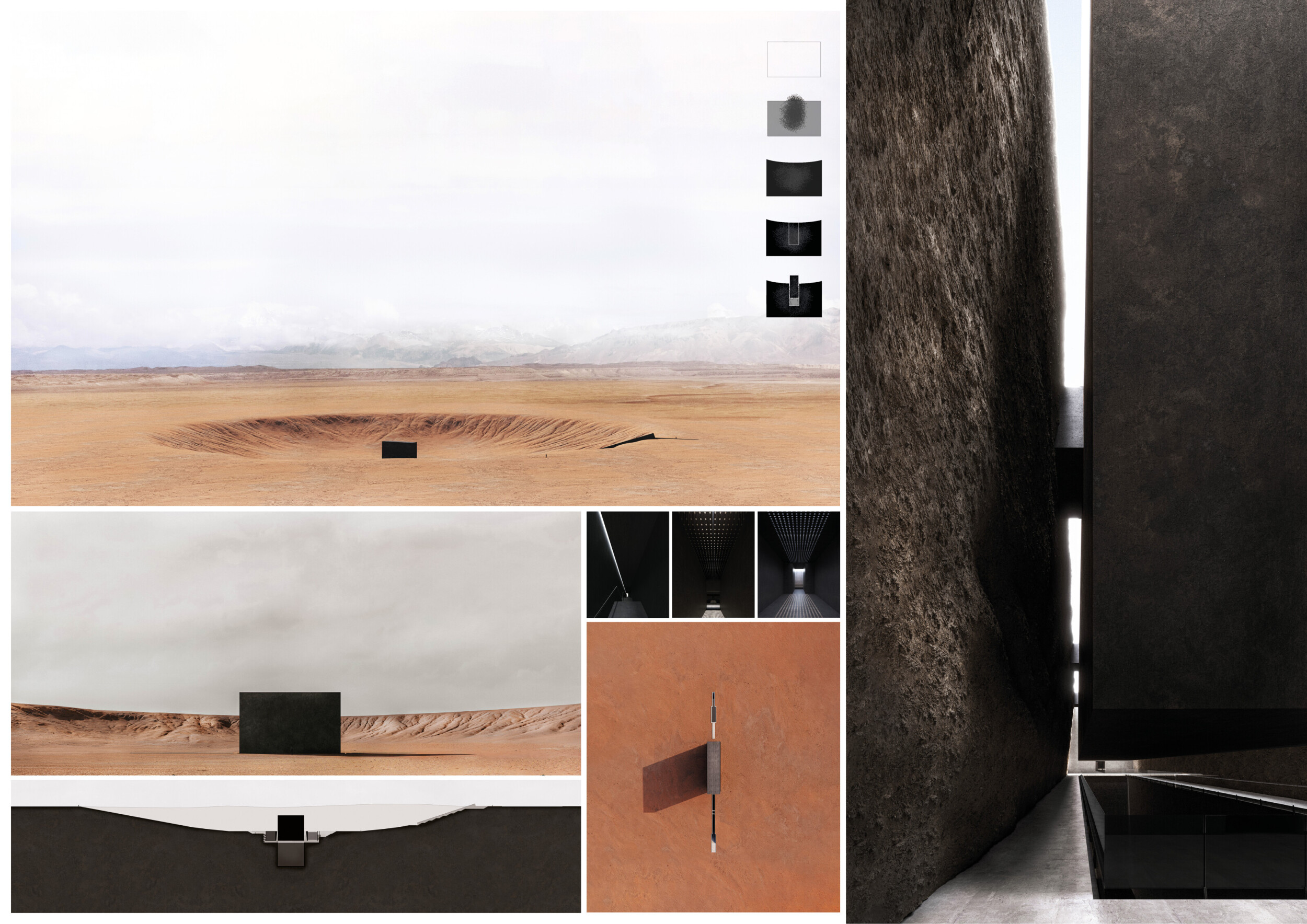
Below The Unseen
Architecture competitions provide a rare space for freedom and experimentation. They allow us to work without predefined answers and to approach architecture as a form of inquiry rather than a product. - For Below the Unseen, the competition format made it possible for us to address a difficult subject (memory, absence, and the long-term consequences of human actions) and allowed us to work with restraint, using light, depth, and reflection to construct an experience rather than a narrative. It offered the freedom to explore architecture as an act of witnessing, one that acknowledges the invisible consequences embedded in the ground and carried forward into the present. Competitions encourage collaboration, critical thinking, and the development of architectural narratives that might not emerge within the limits of everyday professional practice.
Read full interview

Jury feedback summary
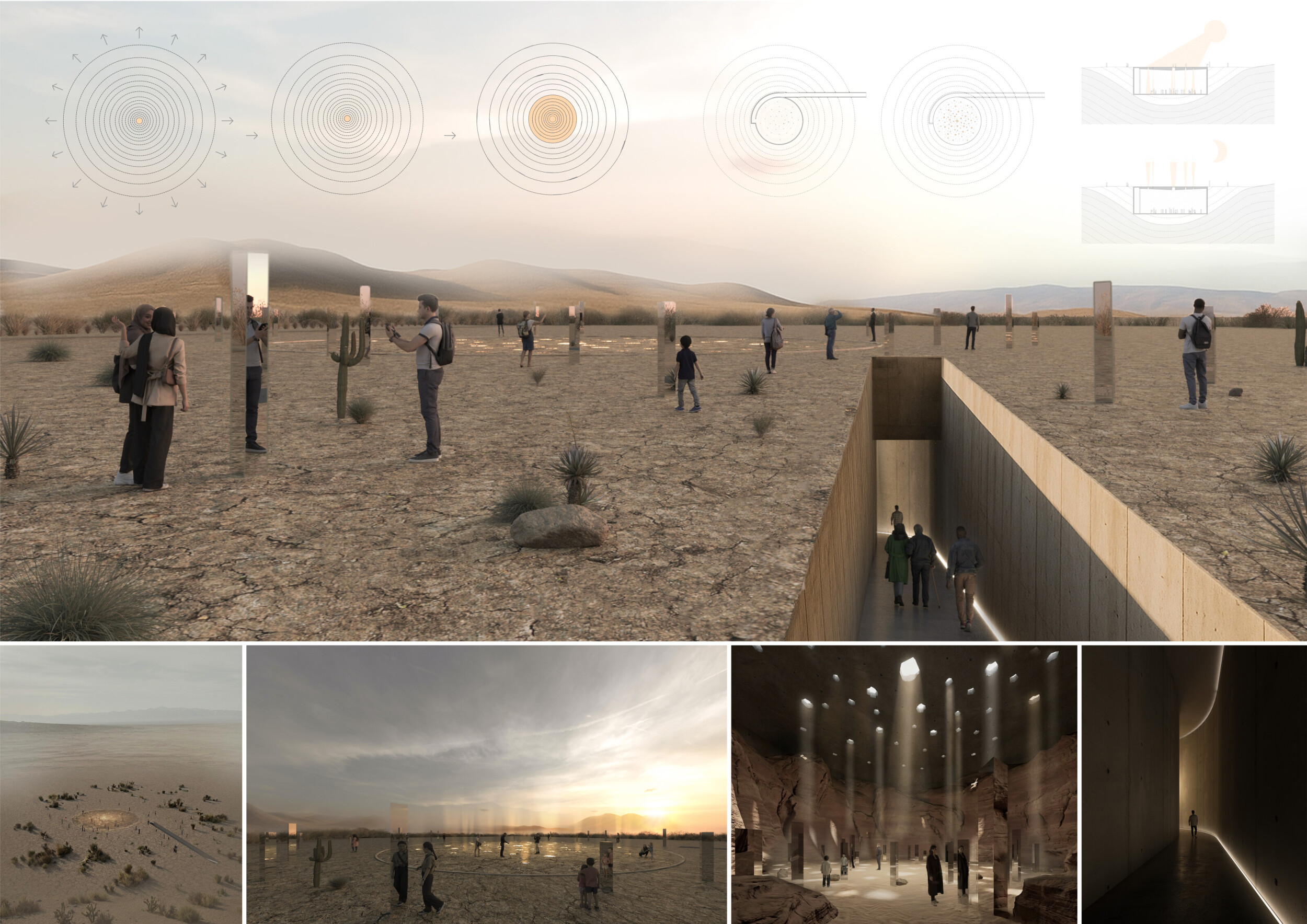
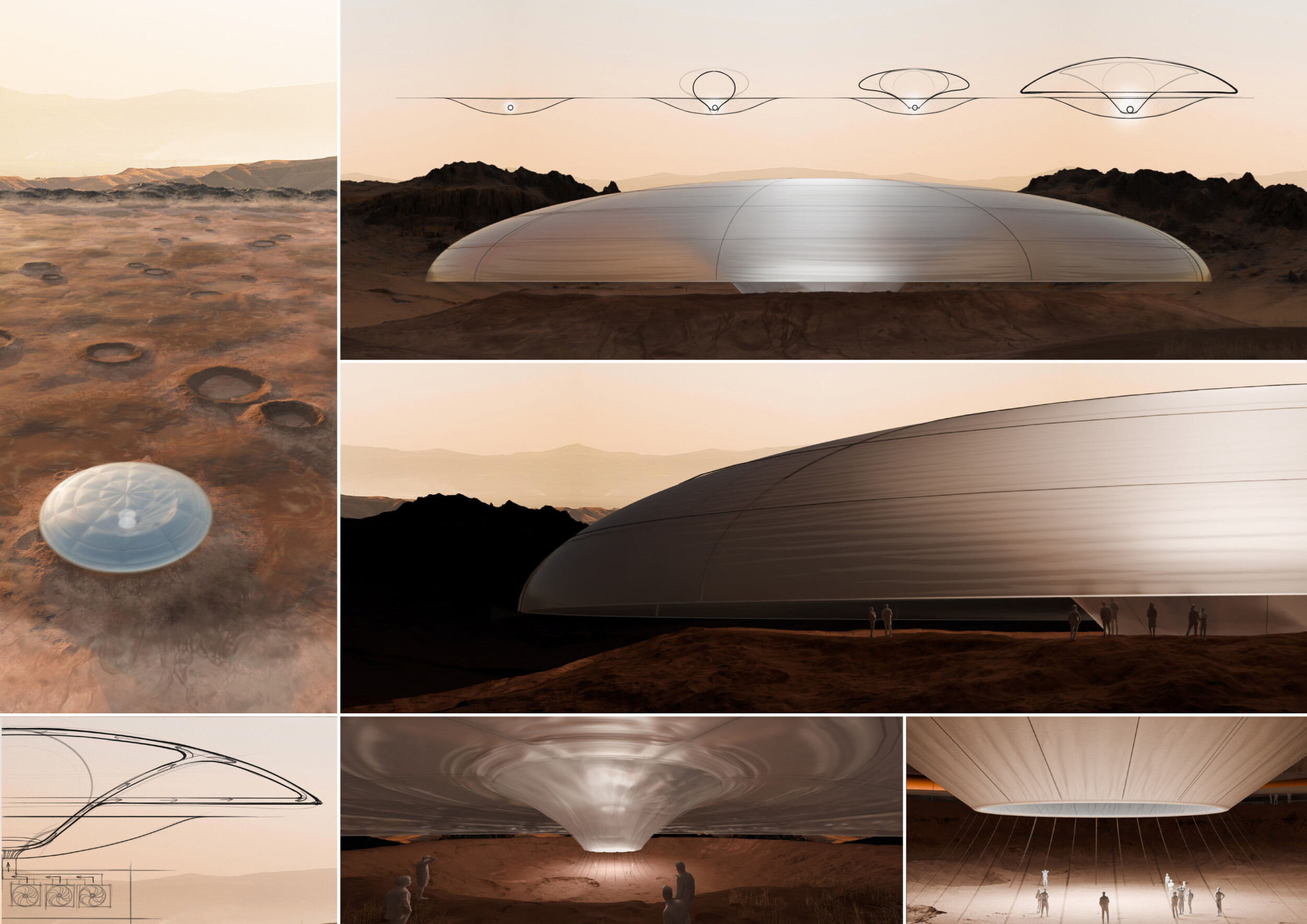
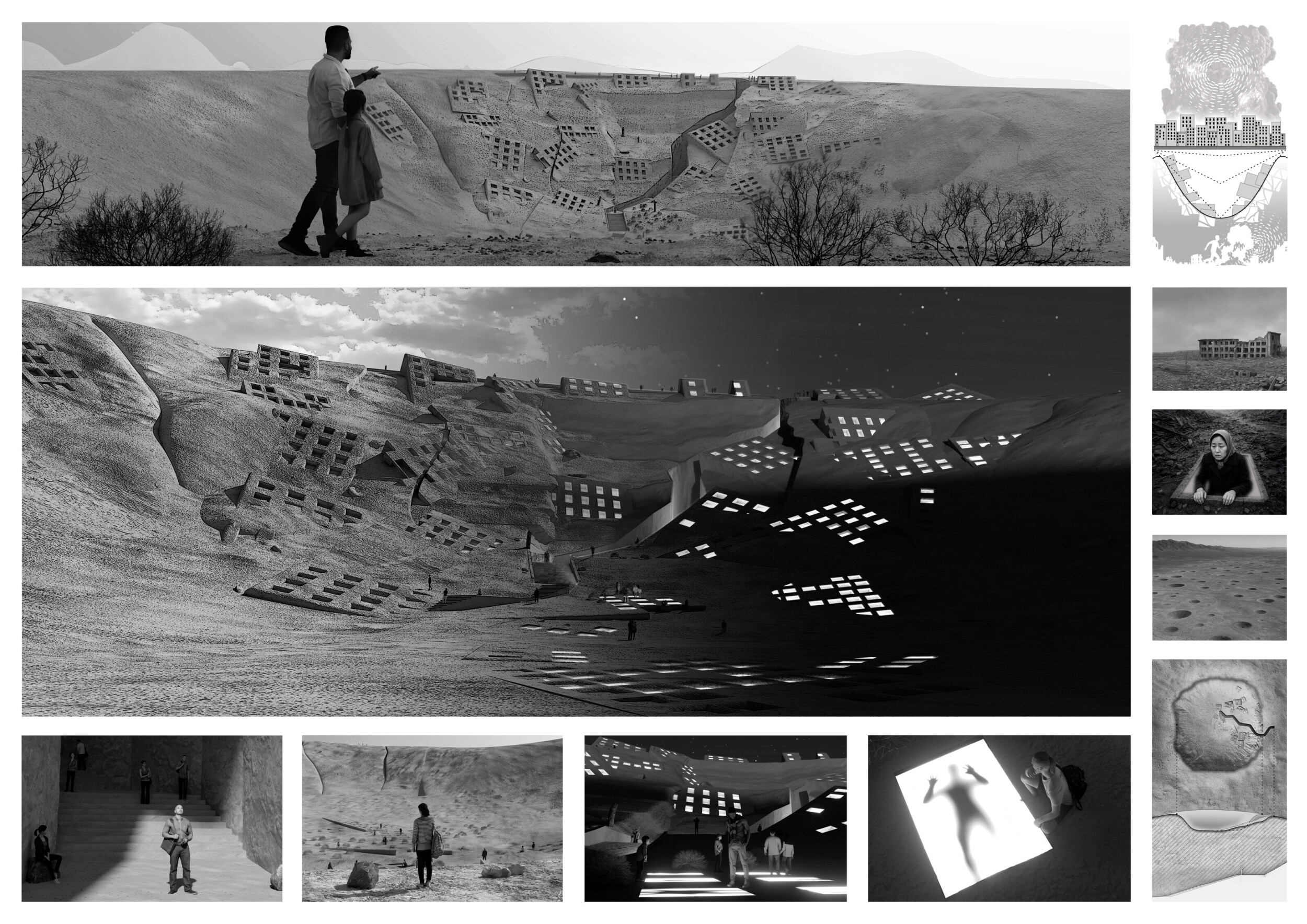
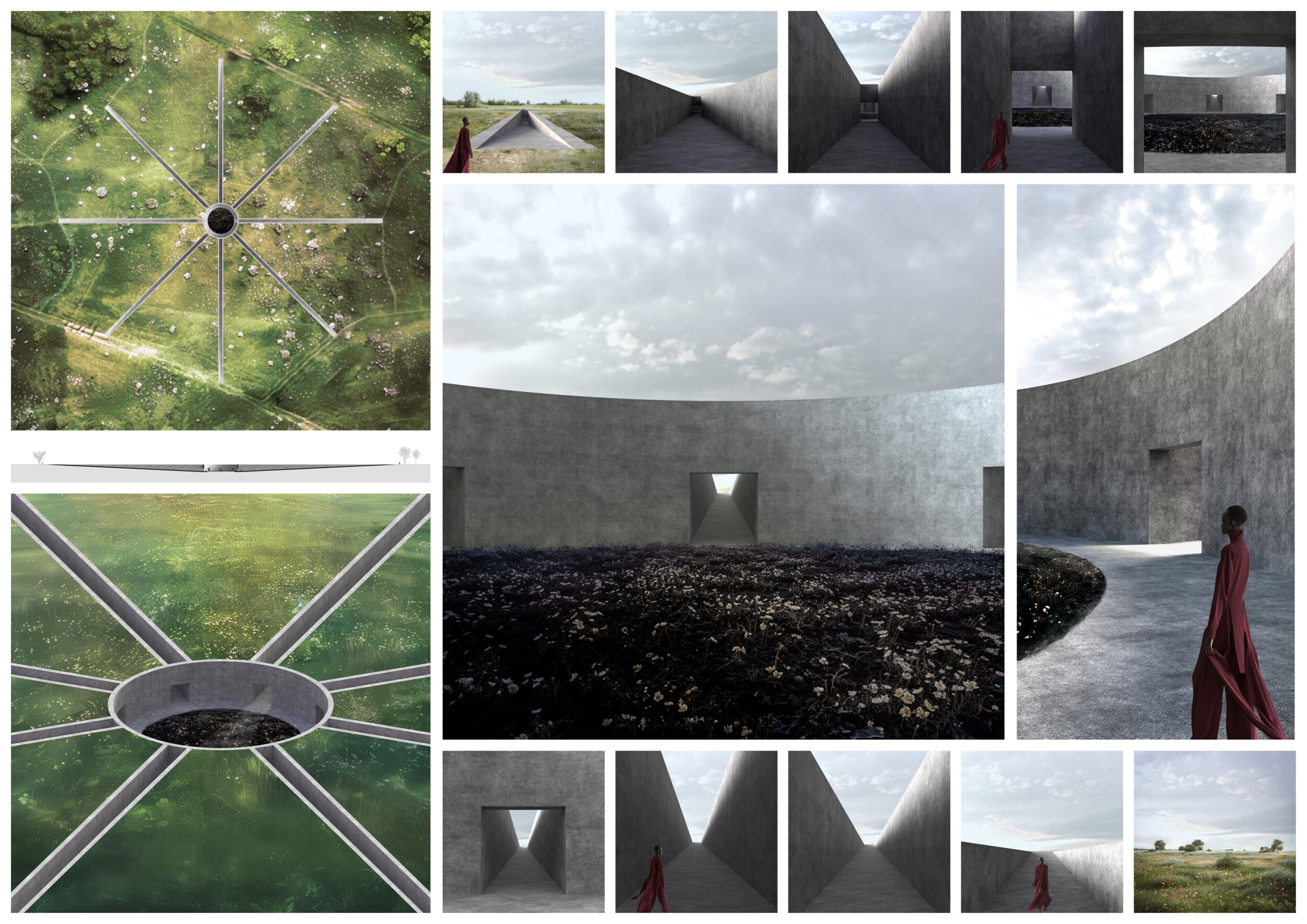
This project proposes a sunken memorial space embedded within the desert landscape, contrasting the vast openness of the terrain with a subterranean chamber of reflection. At surface level, mirrored pillars are arranged in a radial composition, capturing light and fragmenting views to evoke the disorientation of a site marked by trauma. Visitors descend into the earth via a narrow cut in the ground, entering a contemplative void perforated by shafts of daylight.

Contrasting open terrain with a sunken space illuminated by apertures through the ground, the project leverages both natural sublime and constructed wonder.
Katie MacDonald / Buildner guest jury
Co-founder of After Architecture, USA
Clear concept of creating a memorial space in the crater, which includes an added layer of experiencing the site from above. The use of light both above and below ground and the entry through a narrow walkway is evocative, and suggests a moving memorial site.
Huda Tayob / Buildner guest jury
Royal College of Art, South Africa
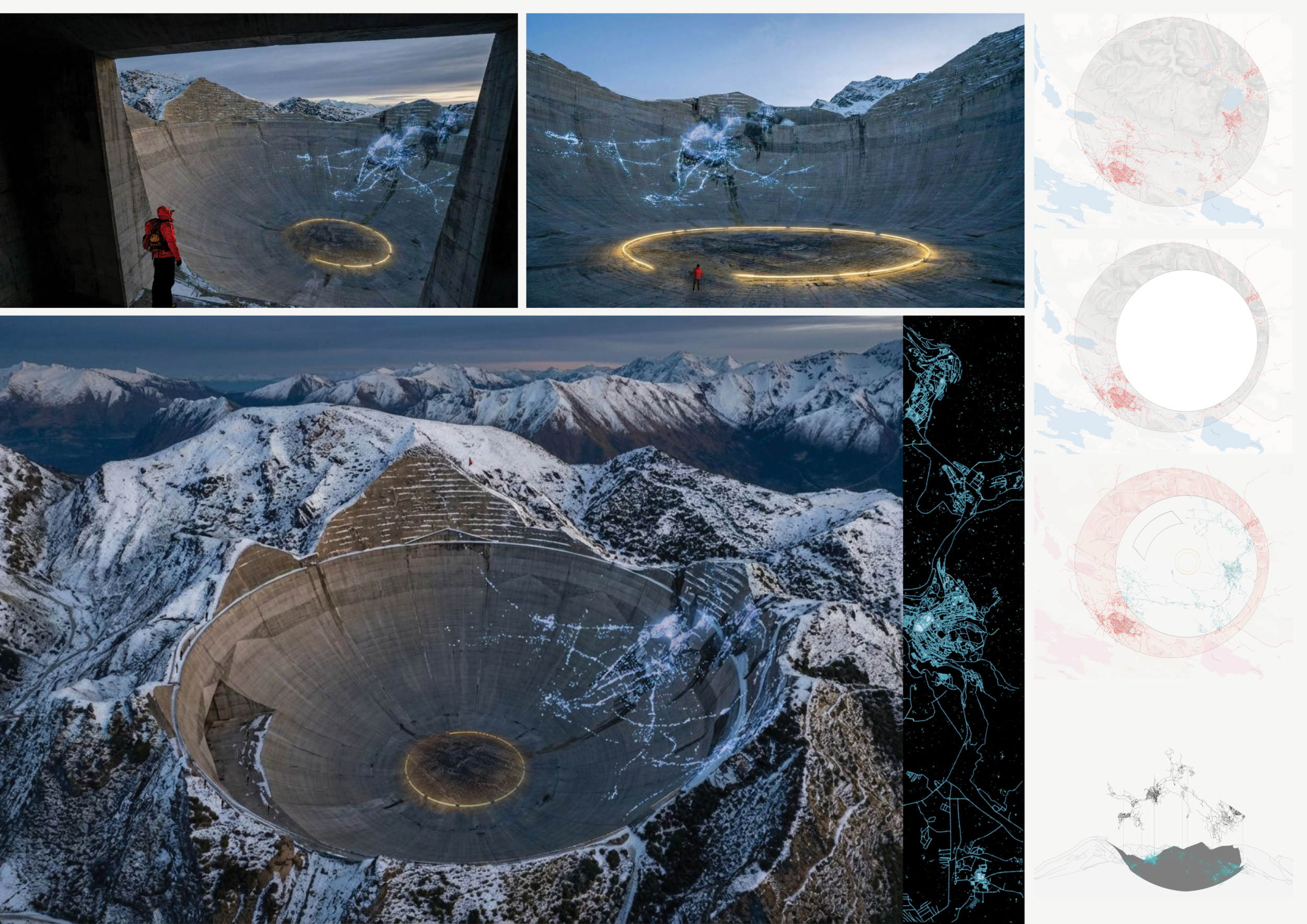
The project employs a perforated ground surface as a perceptual filter through which the scars of the land are observed and contemplated. Rather than depicting destruction directly, the architecture mediates the viewer’s perception of the terrain, allowing the violence embedded in the history of nuclear explosion to be gradually revealed, read, and reflected upon, transforming the ground into a silent yet enduring archive of collective trauma.
Jiafeng Li / Buildner guest jury
, United States
Buildner's commentary, recommendations and techniques review
Order your review here
The presentation is calm and evocative, relying on soft light and subdued tones to establish a solemn, contemplative atmosphere. The renderings are spatially rich, particularly those showing the interior volume, where light penetrates the earthen ceiling in a manner that reinforces both concept and emotion.
-
8/10 Linework
-
9/10 Quality of drawings
-
9/10 Balance of color
-
8/10 Layout
-
8/10 Hierarchy
-
N/A Annotation
-
N/A Text
-
9/10 Clarity of story
-
7/10 Clarity of diagrams
-
9/10 Quality of overall presentation
3rd Prize Winner
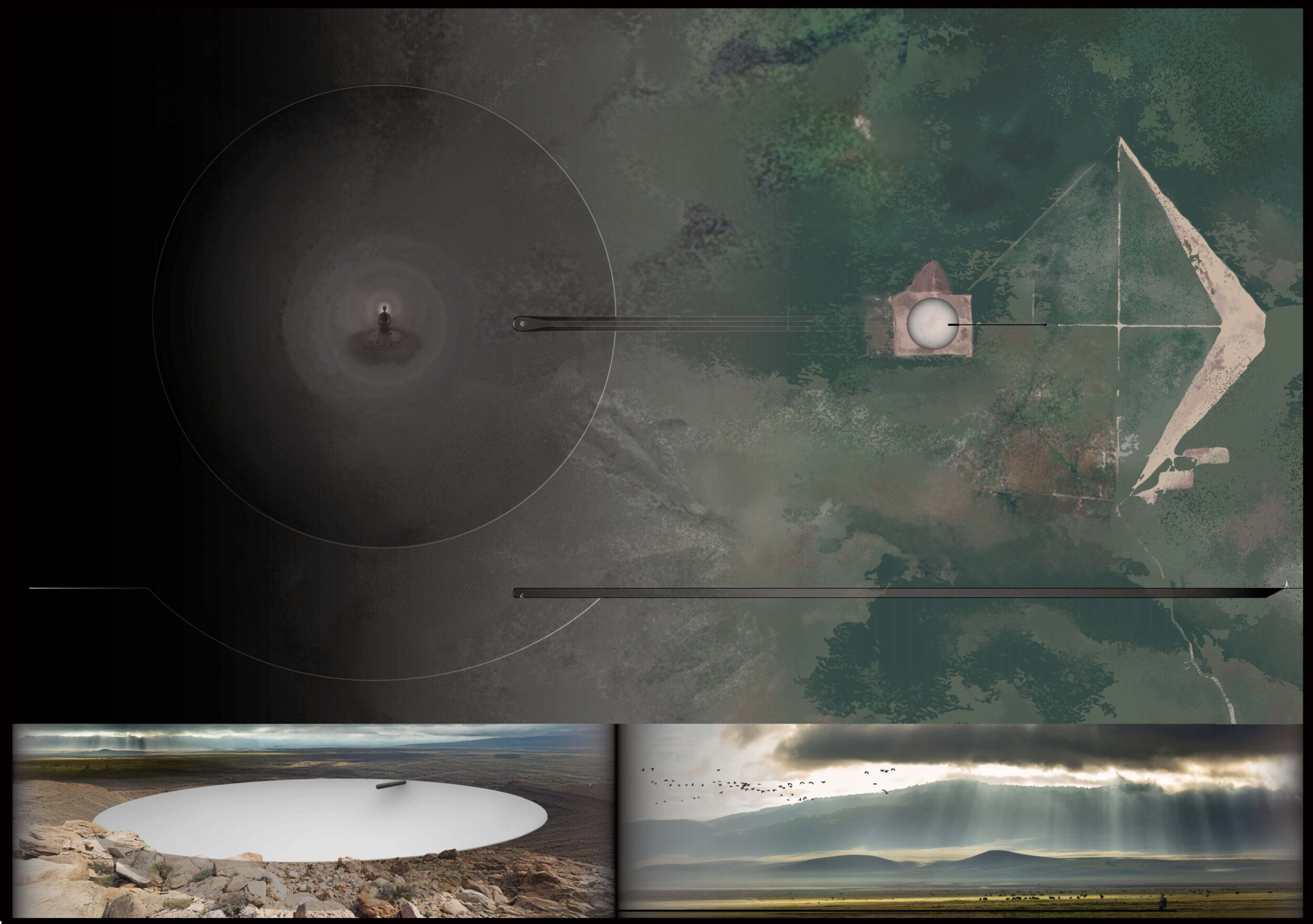
The Silence Beneath
Competitions are a platform for experimentation and reflection - an opportunity to step outside the boundaries of commercial constraints and to test ideas that address deeper cultural, social, or existential questions. They invite architects to think freely, to engage with global issues through design, and to share new perspectives on what architecture can be. For me, competitions are not only about recognition but about rehearsing the future, exploring concepts that may later find resonance in real projects.
Read full interview
 New Zealand
Jury feedback summary
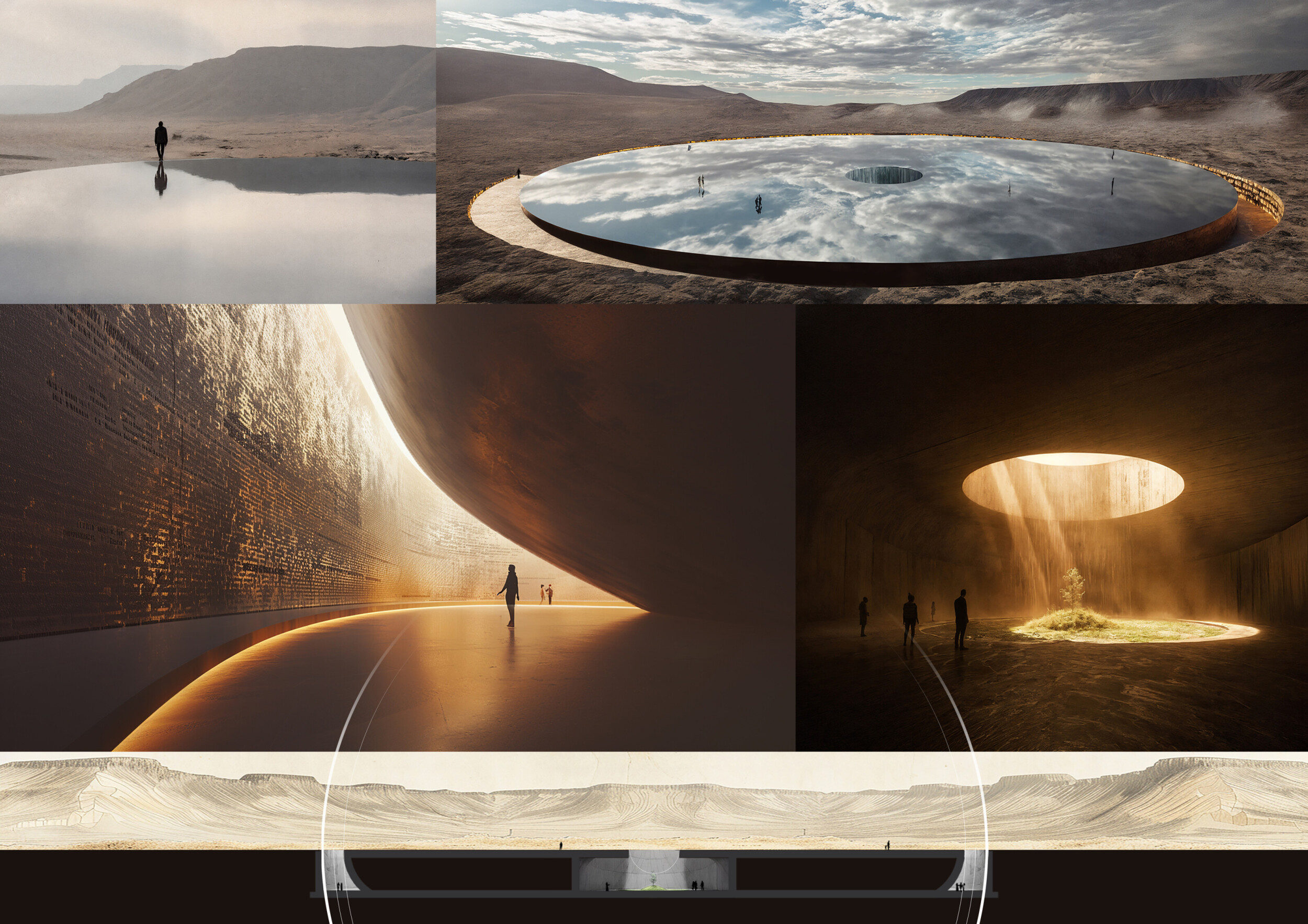
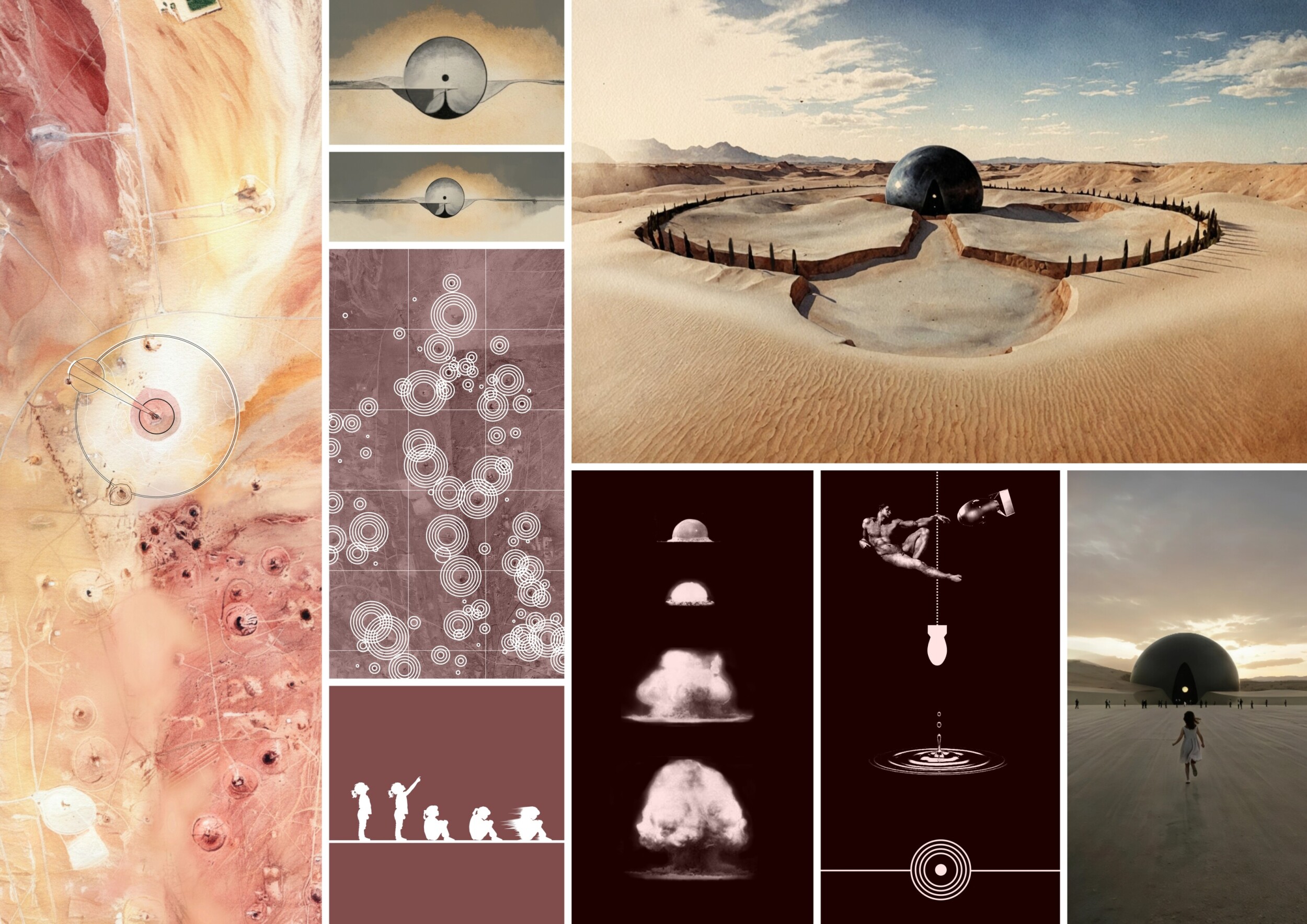
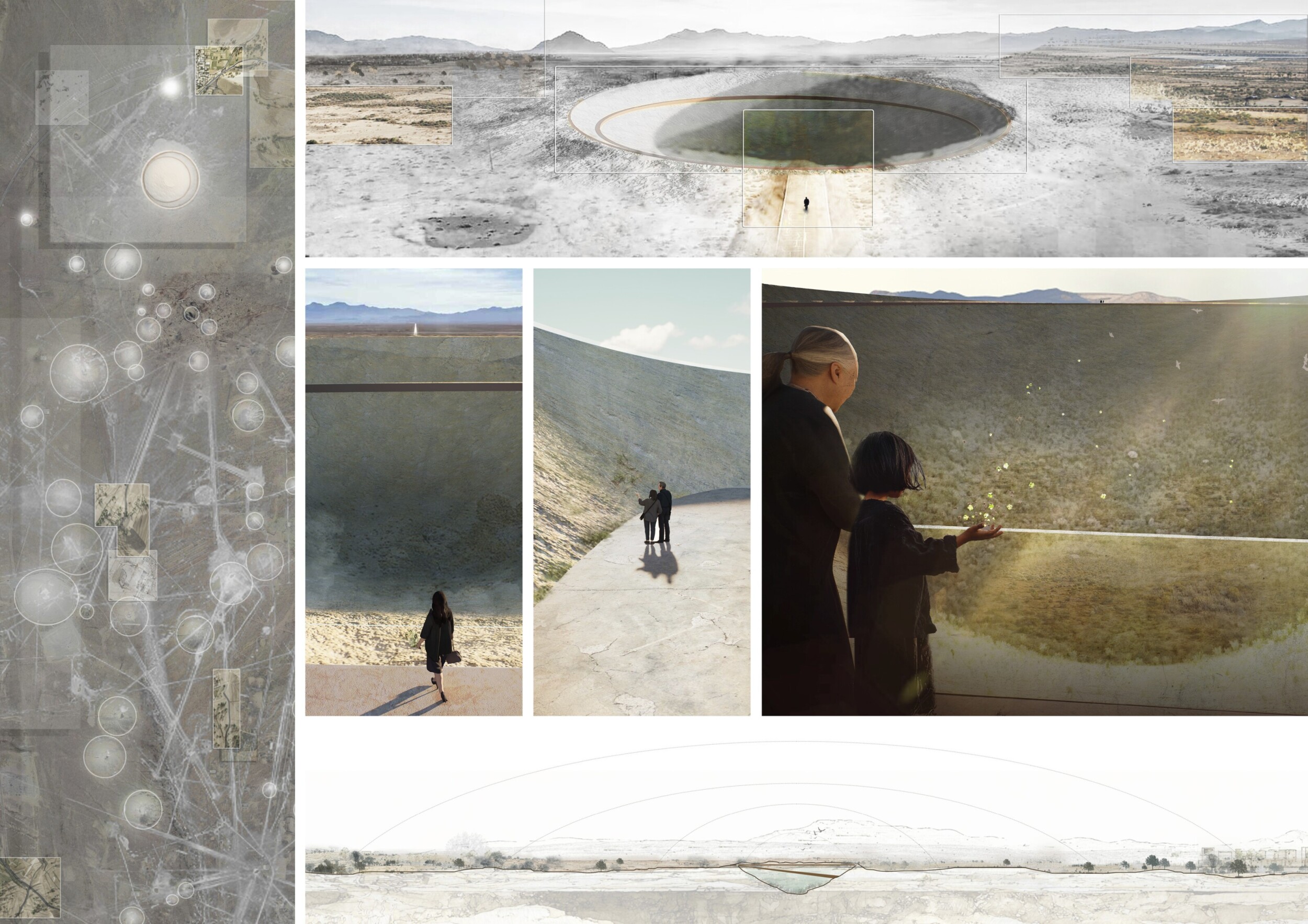
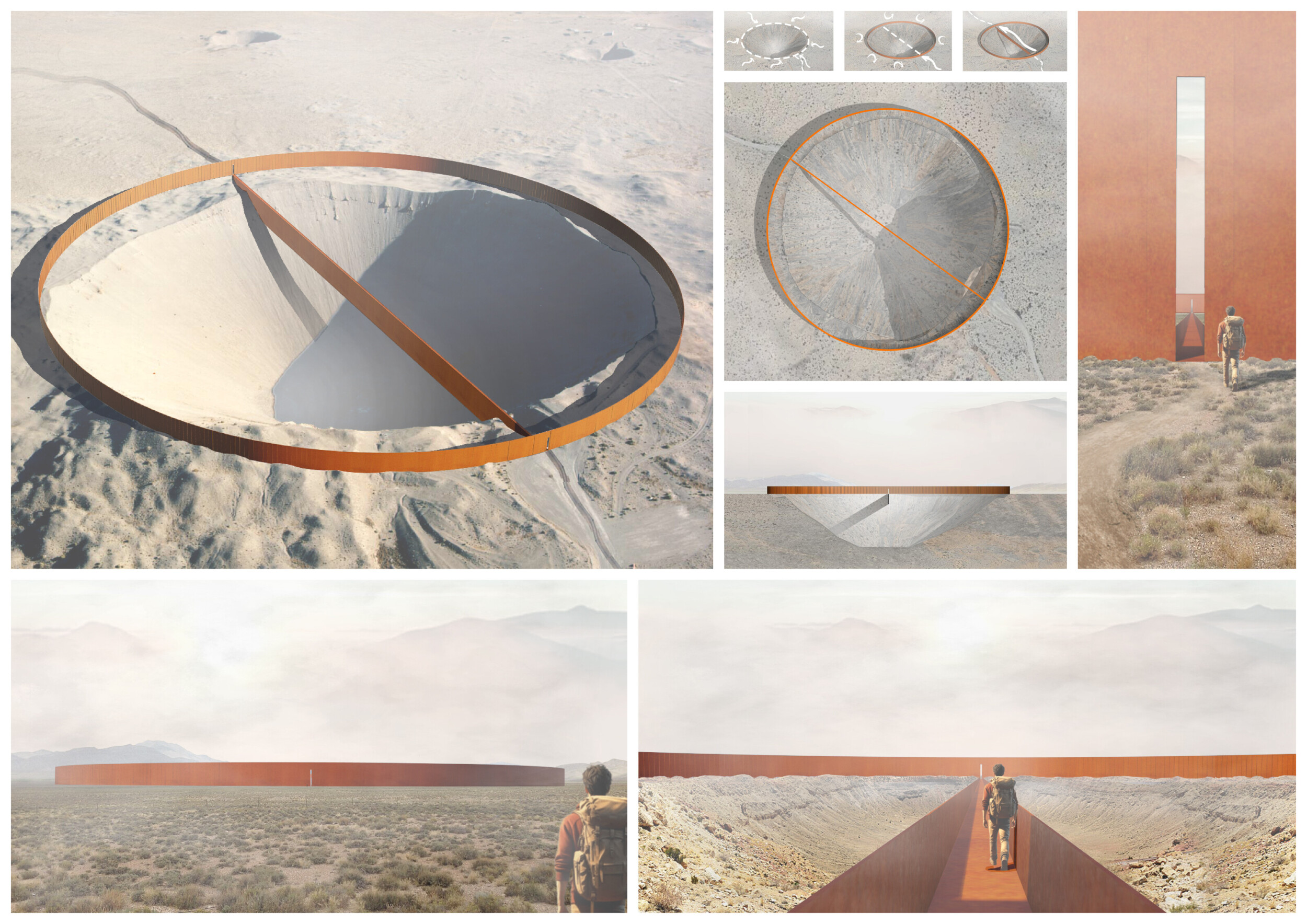
This project presents a crater-like ring in the desert, where a vast mirrored disc rests gently upon the landscape, encircling a central oculus that reveals a subterranean chamber below. The experience begins with a reflection (of sky, of self, of environment) before drawing visitors inward through a gentle descent beneath the reflective surface. Below, a solitary tree bathed in daylight becomes the focal point: a symbol of fragility, resilience, and rebirth.

An interesting idea. The last bomb opened the eyes of the planet. The pupil of the eye lets sunlight into the Earth's body, and there, all that remains is a small, fragile tree. The memorial looks like a prophecy and a warning to humanity. Because the example of the Chernobyl exclusion zone shows us the incredible potential of wild nature to revive. Technically, the implementation looks feasible, but the cost estimate may be quite high and maintenance may be troublesome.
Olha Kleytman / Buildner guest jury
Founder of SBM studio, Ukraine

This memorial feels very sophisticated in the way it interacts with the environment and natural light. The mirrored surface above reflects the sky, creating a sense of expansiveness and evoking ideas of the sublime and infinity, while the underpath forms a more intimate space that encourages quiet reflection.
Noa Raviv / Buildner guest jury
artist, USA
The simple formal design with a central oculus and reflective surface is evocative and strong at a conceptual and experiential level. The reflective surfaces would be incredibly powerful as an experience, in coming to terms with the immense changing skyscape; while the oculus would create a beautiful memorial site below.
Huda Tayob / Buildner guest jury
Royal College of Art, South Africa
Buildner's commentary, recommendations and techniques review
Order your review here
The visual narrative is elegant and emotionally charged, with highly atmospheric renderings that leverage light and shadow to express the project’s symbolic depth. The reflective disc is masterfully composed, capturing the shifting sky in a way that both disorients and uplifts. Interior views reinforce the sacred quality of the space, where minimal intervention heightens the presence of the living tree.
-
7/10 Linework
-
9/10 Quality of drawings
-
9/10 Balance of color
-
8/10 Layout
-
8/10 Hierarchy
-
N/A Annotation
-
N/A Text
-
9/10 Clarity of story
-
6/10 Clarity of diagrams
-
9/10 Quality of overall presentation
Buildner Student Award
The Remains, the Sound and the Wound
We participate in architecture competitions because they offer an opportunity to experiment with design thinking beyond the framework of academic studio projects. Competitions allow us to engage with social, cultural, and environmental issues on a broader scale, where architecture is not simply an exercise but a tool for questioning existing conditions and proposing potential solutions.
Read full interview
Jury feedback summary

It's interesting that water is included as part of the project. The red color of the structure makes the work look more fun.
Thongchai Chansamak / Buildner guest jury
Sher Maker, Thailand
The red structure and raw earth speak to the tension between human and nature.
Katie MacDonald / Buildner guest jury
Co-founder of After Architecture, USA
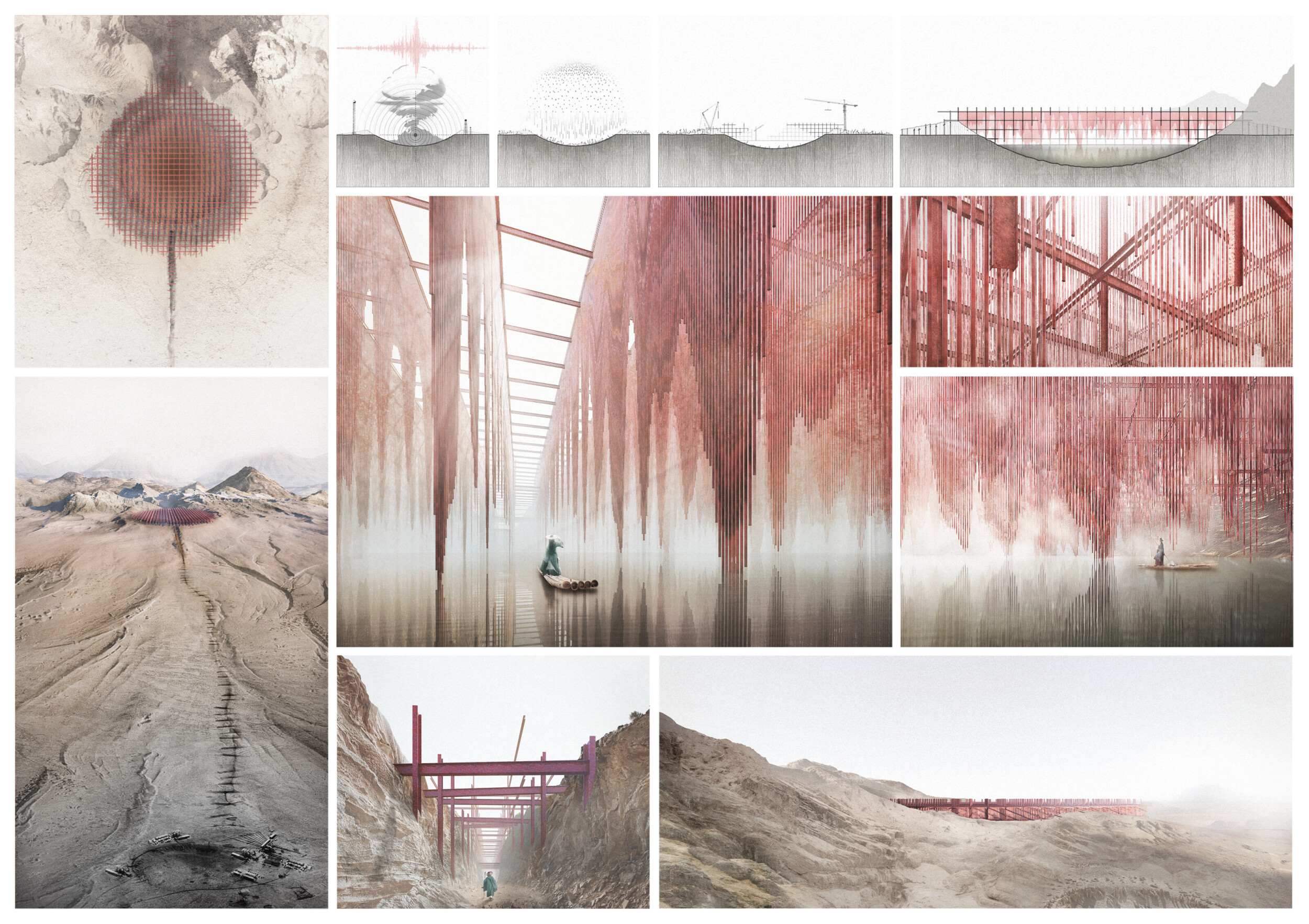
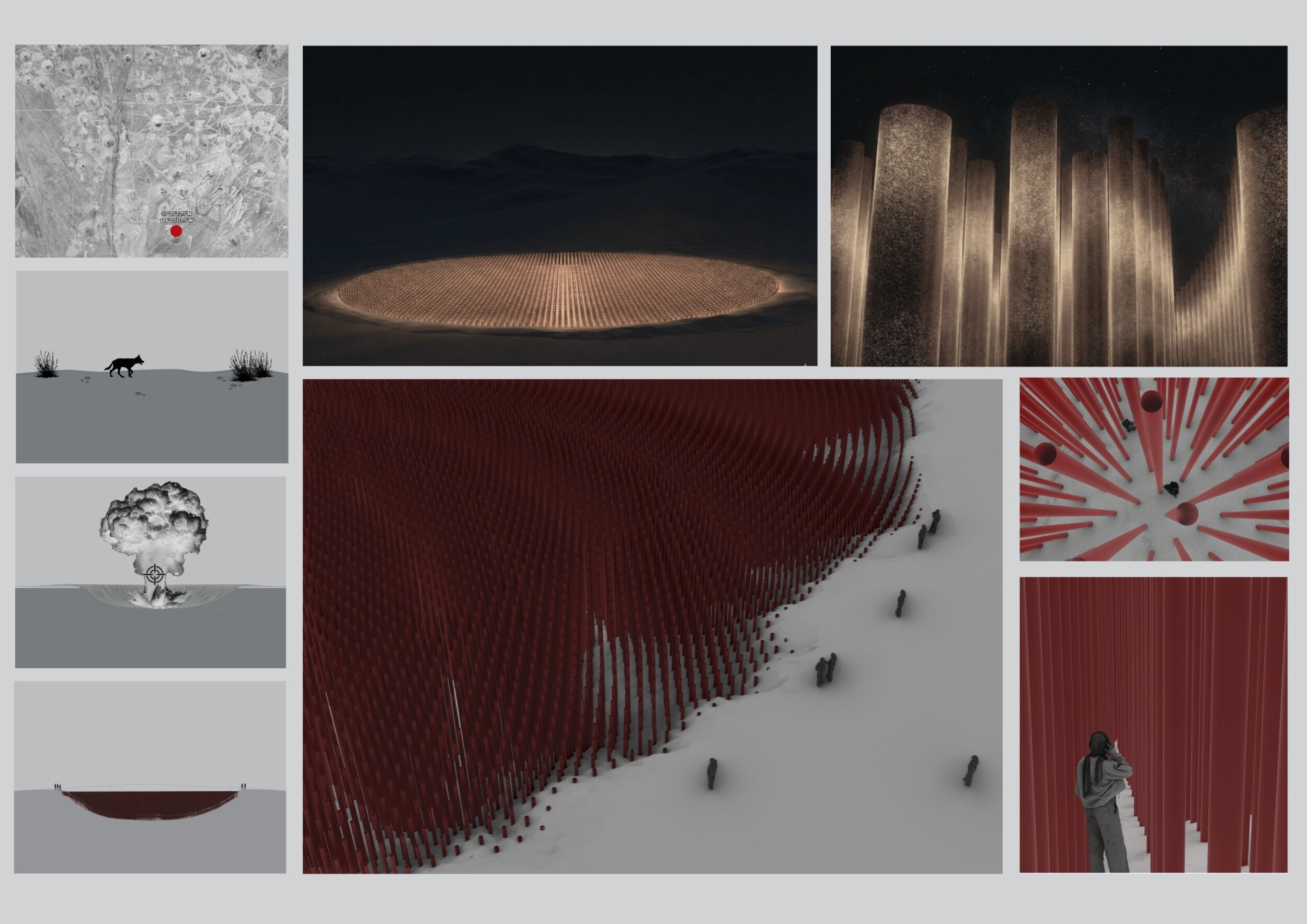
I consider this work to be the best of all those submitted to this competition. From above, the memorial looks like some kind of dangerous inflammatory process on the skin (body) of the earth. Up close, you can see incredibly expressive structures that resemble the flowing blood of humanity in form and colour. Combined with reflections in opaque water, the structures are like giant jaws which seem to squeeze a visitor, who can easily imagine themselves as the last survivor on earth. From a technical point of view, I do not see anything complicated, costly or impossible. In terms of stability and impact on nature, everything also looks very well thought out.
Olha Kleytman / Buildner guest jury
Founder of SBM studio, Ukraine
Buildner's commentary, recommendations and techniques review
Order your review here
This is a visually and emotionally powerful proposal, where each element of representation reinforces the conceptual intensity. The saturated red structural grid creates a surreal, bodily atmosphere that blurs between the architectural and the biological.
-
8/10 Linework
-
9/10 Quality of drawings
-
10/10 Balance of color
-
9/10 Layout
-
8/10 Hierarchy
-
N/A Annotation
-
N/A Text
-
9/10 Clarity of story
-
7/10 Clarity of diagrams
-
10/10 Quality of overall presentation
Honorable mentions






Shortlisted projects
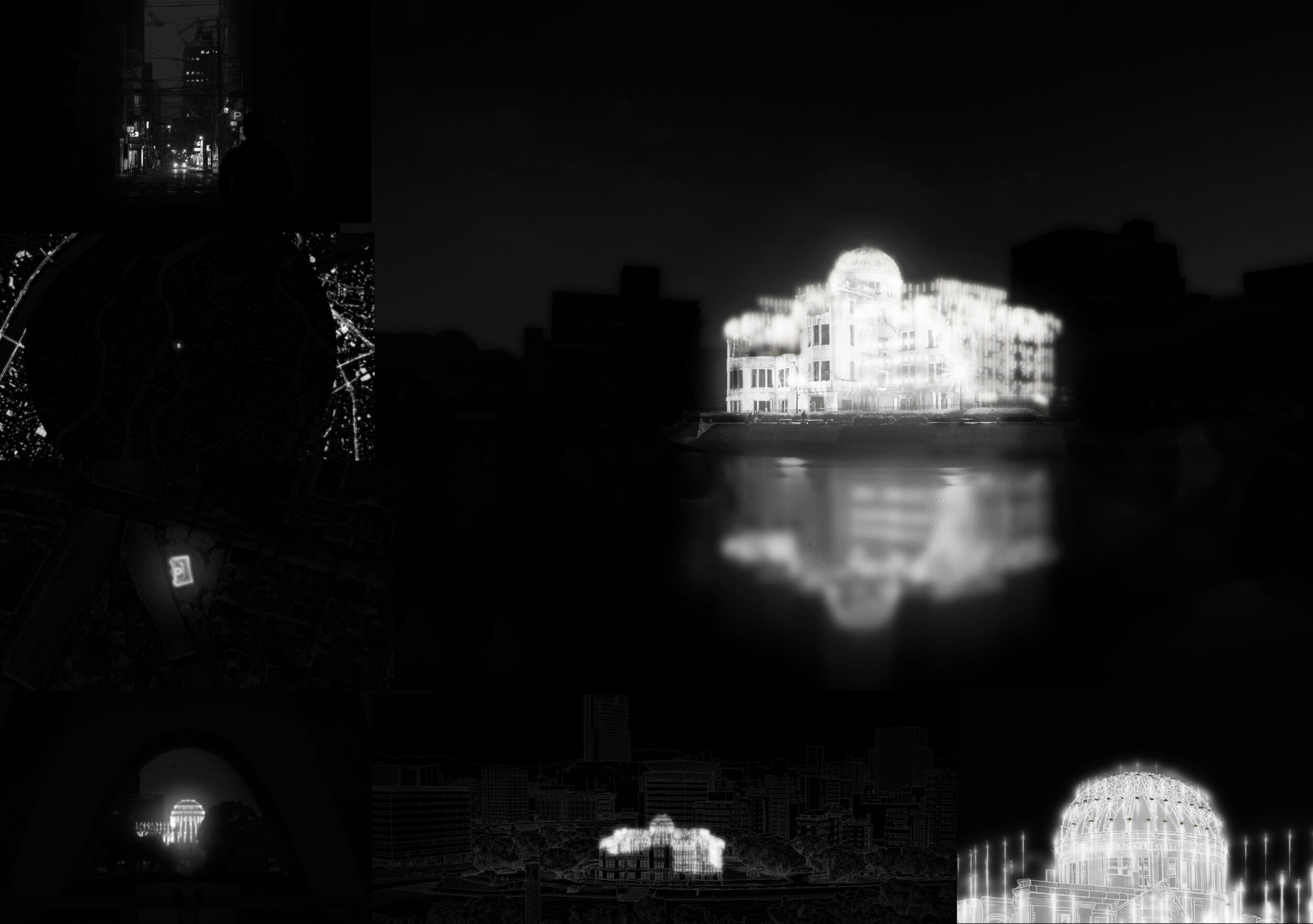
Shadow of a City
 United States
 The Suspended Seconds
A night of silence
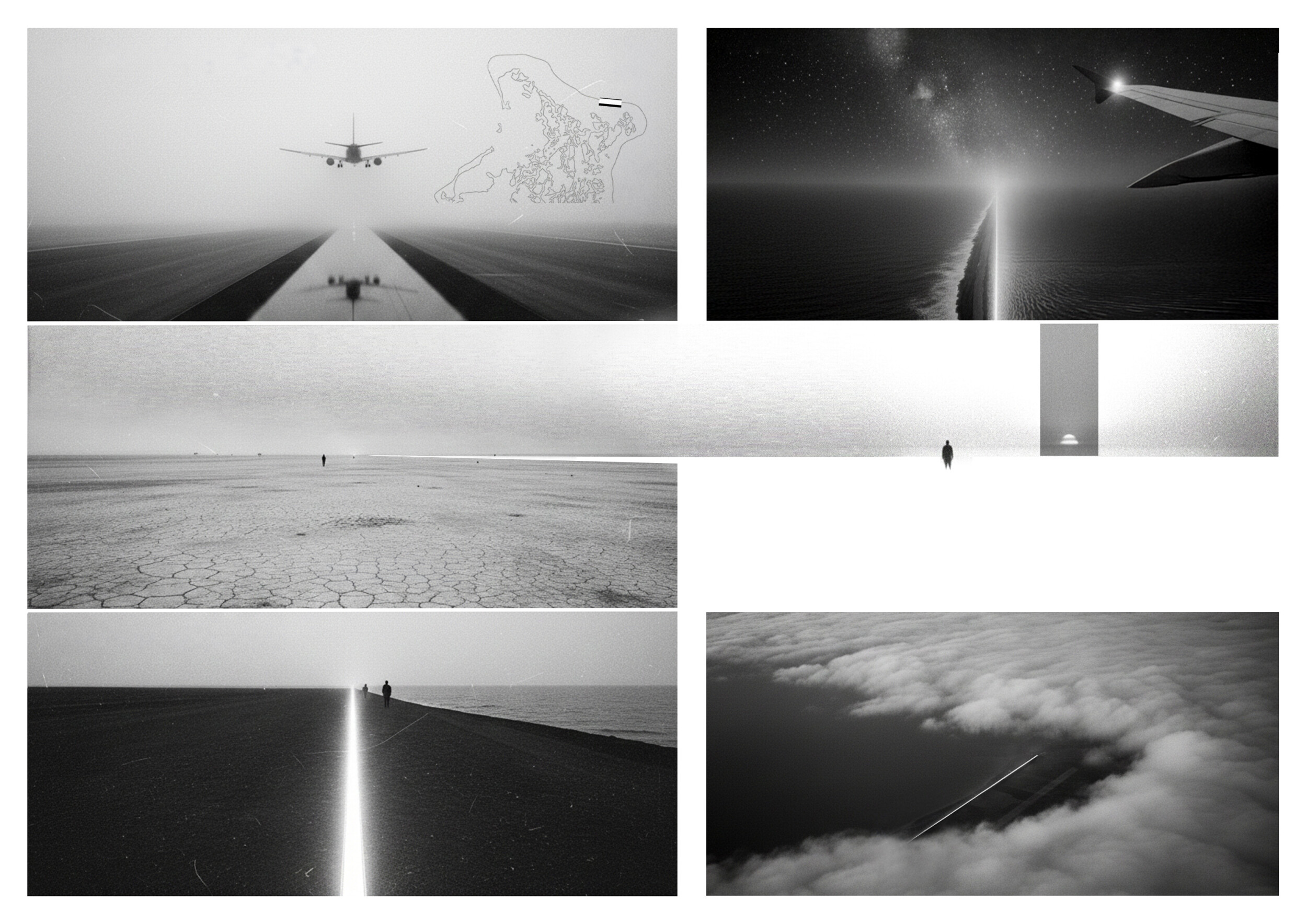
THE INVERSE RUNWAY Reclaiming the Horizon

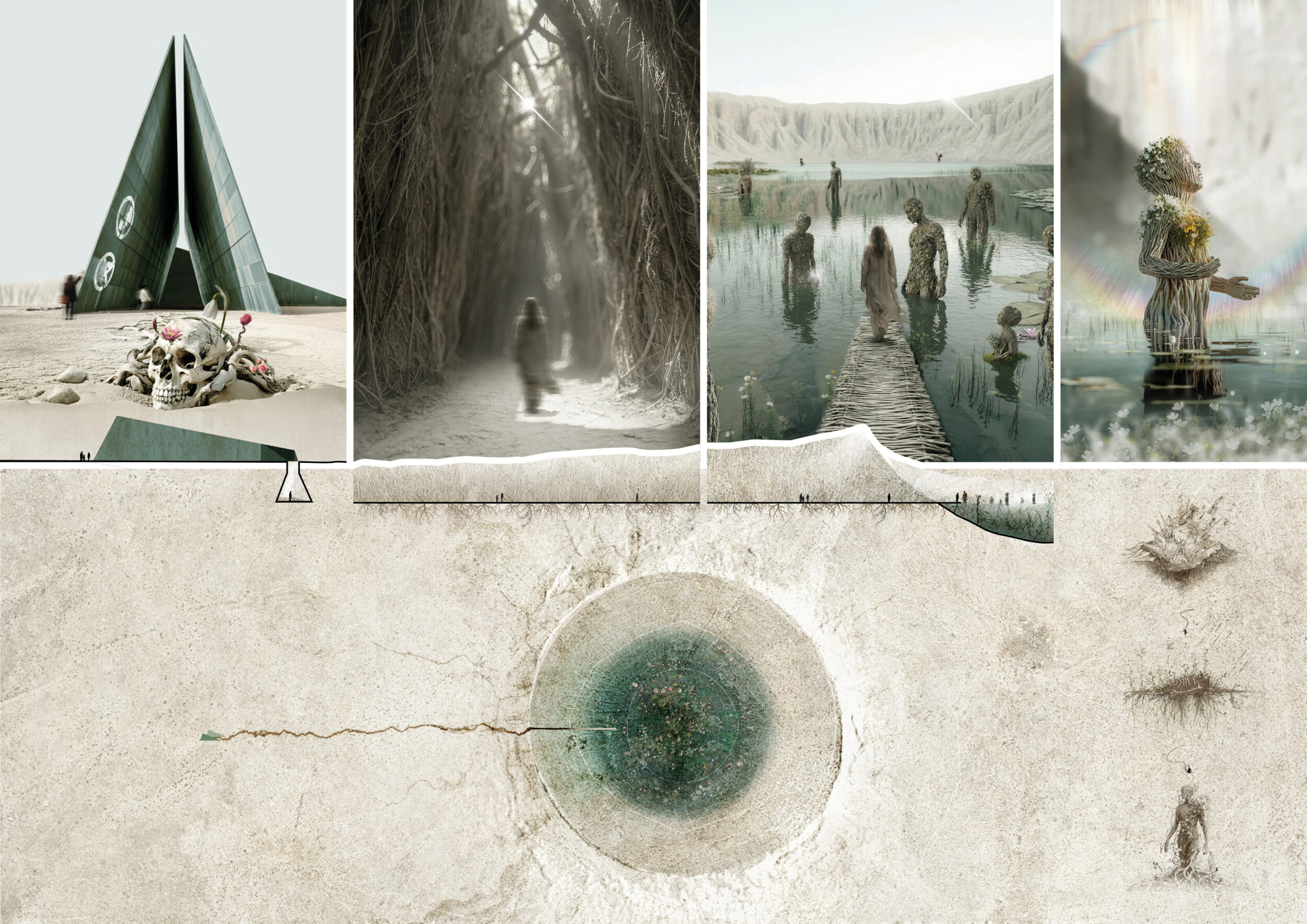
The Rooted Wound
Atomic gardens

Echo of the Surface

The Last Drop

THE CAUSE.
Lantern of Hope

The void that remains

Afterglow

Below The Unseen
The Memory
Echoes of Light
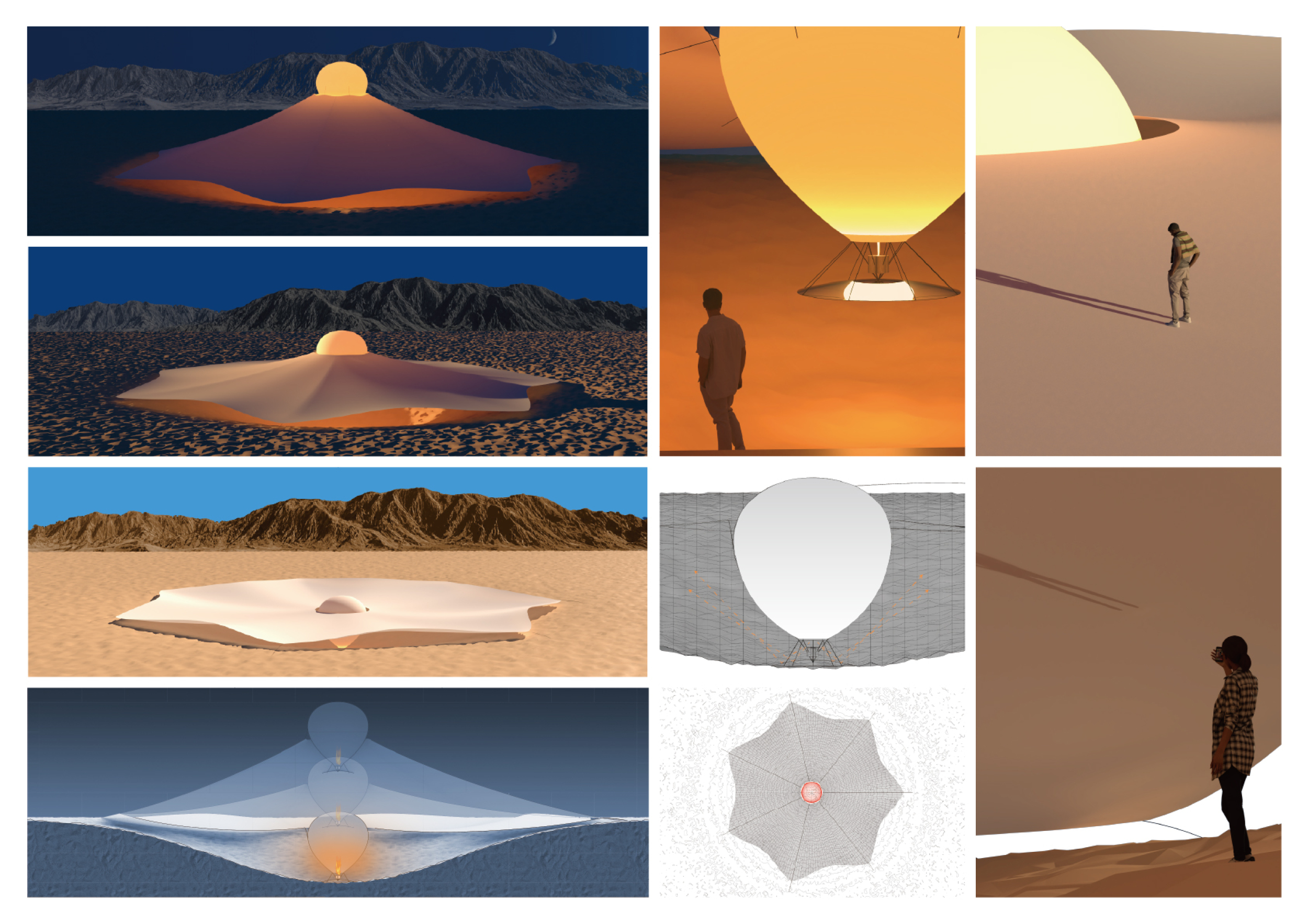
The pulsing planet

The Silence Beneath
Pillars of Memory
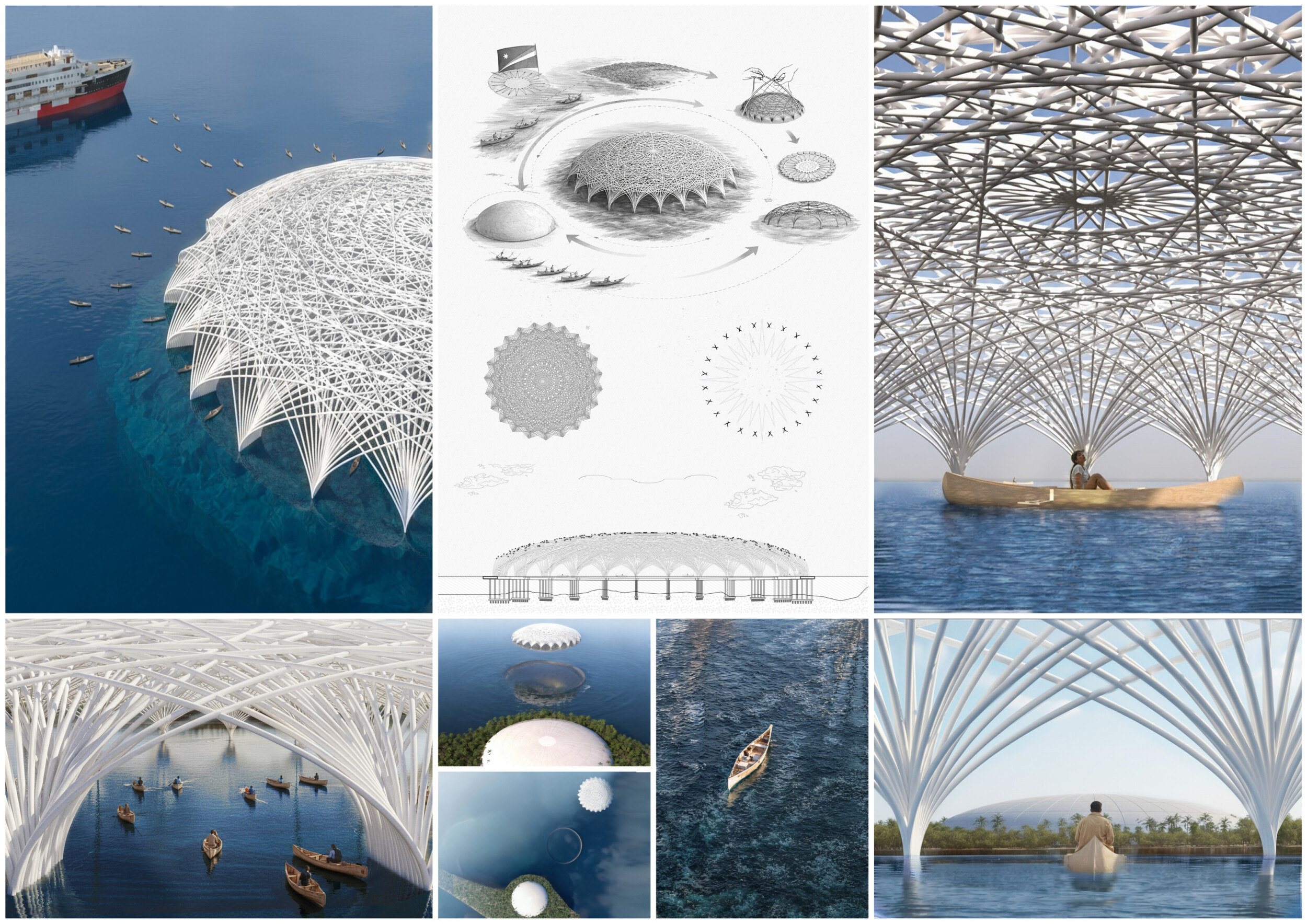
RINEN
Mémorial
After the Cut
Carved in memory

The Swarm

Stand among the silence
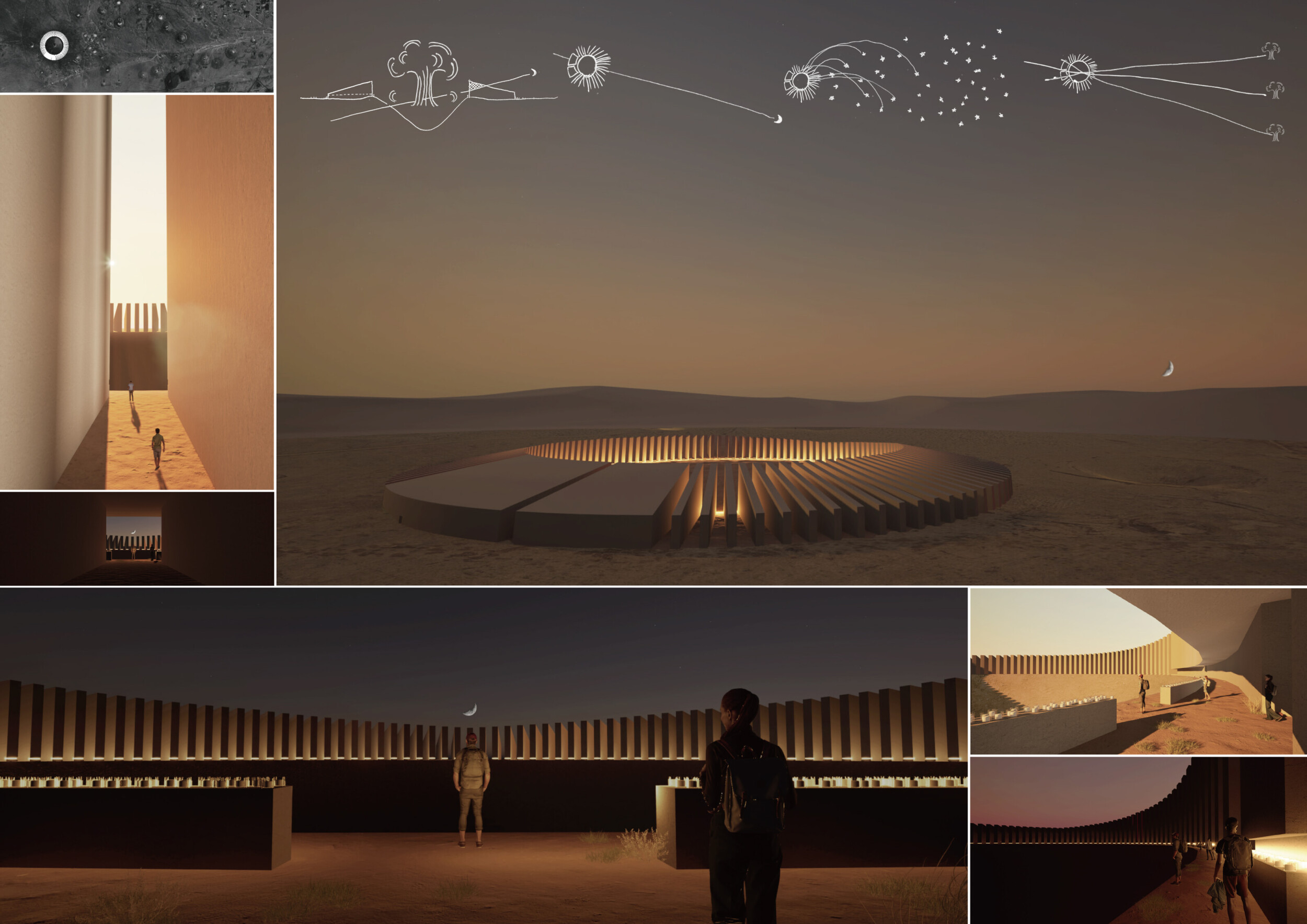
Double Exposure
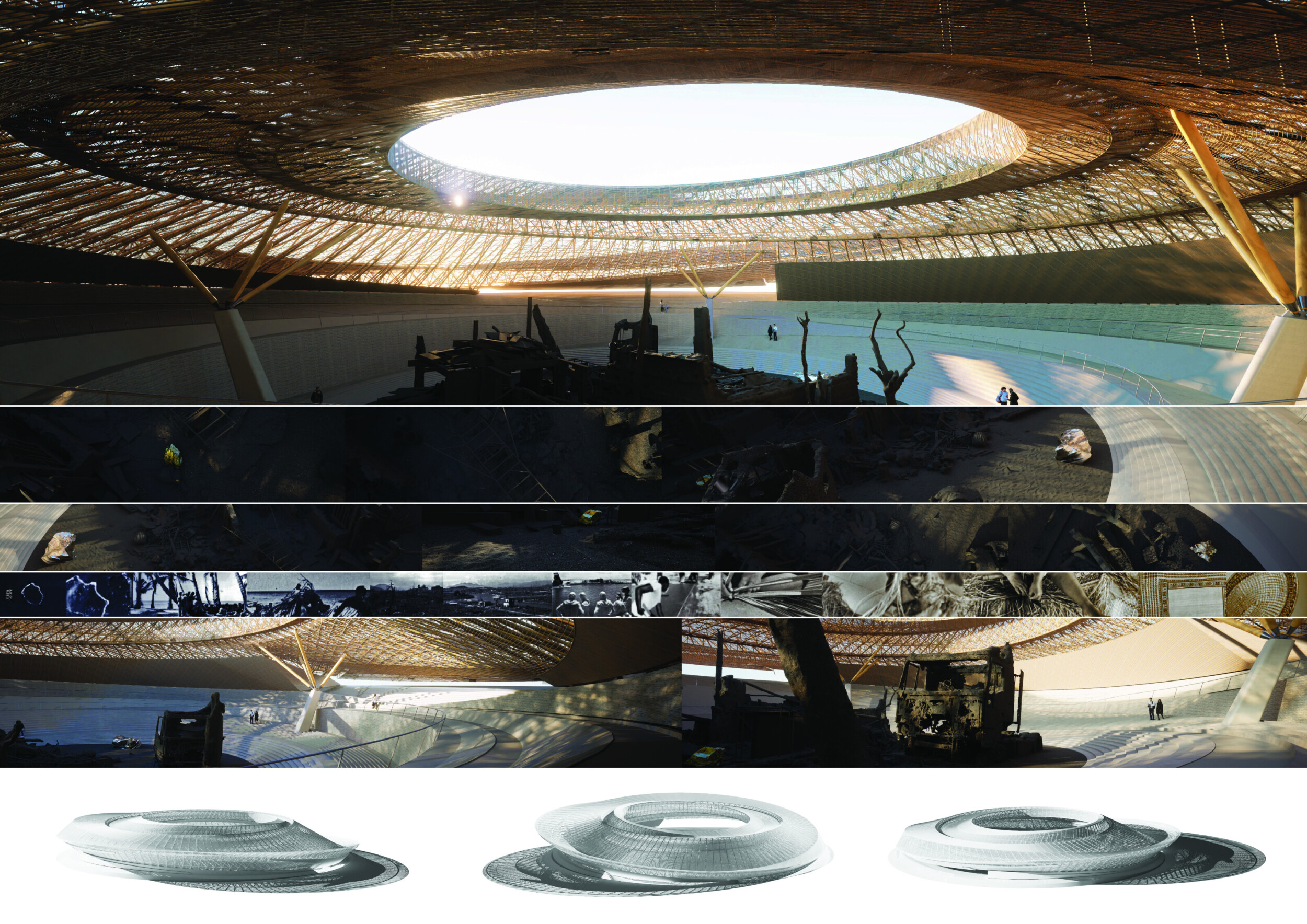
The Remains, the Sound and the Wound
Anti-Order
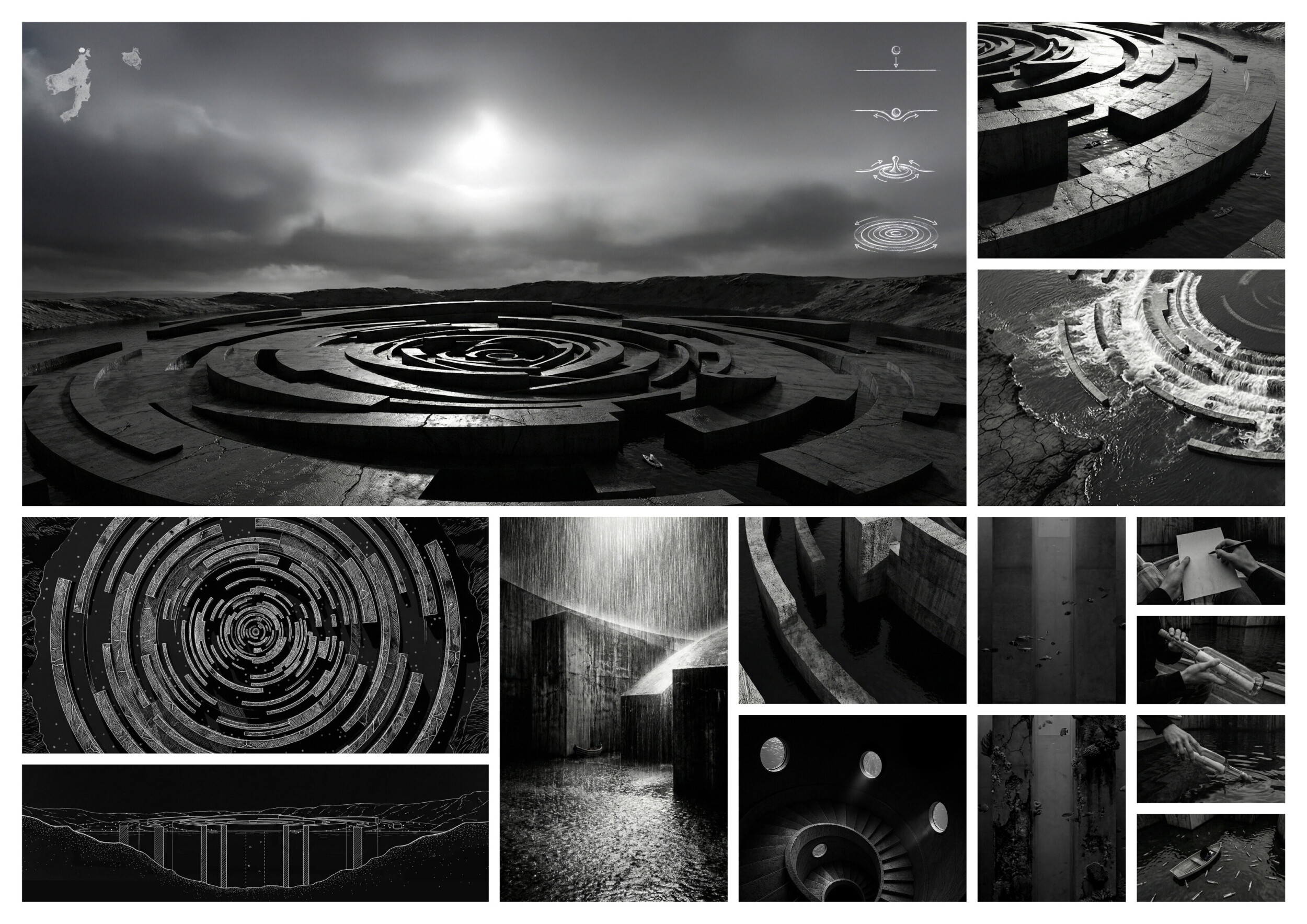
OBLIGATION
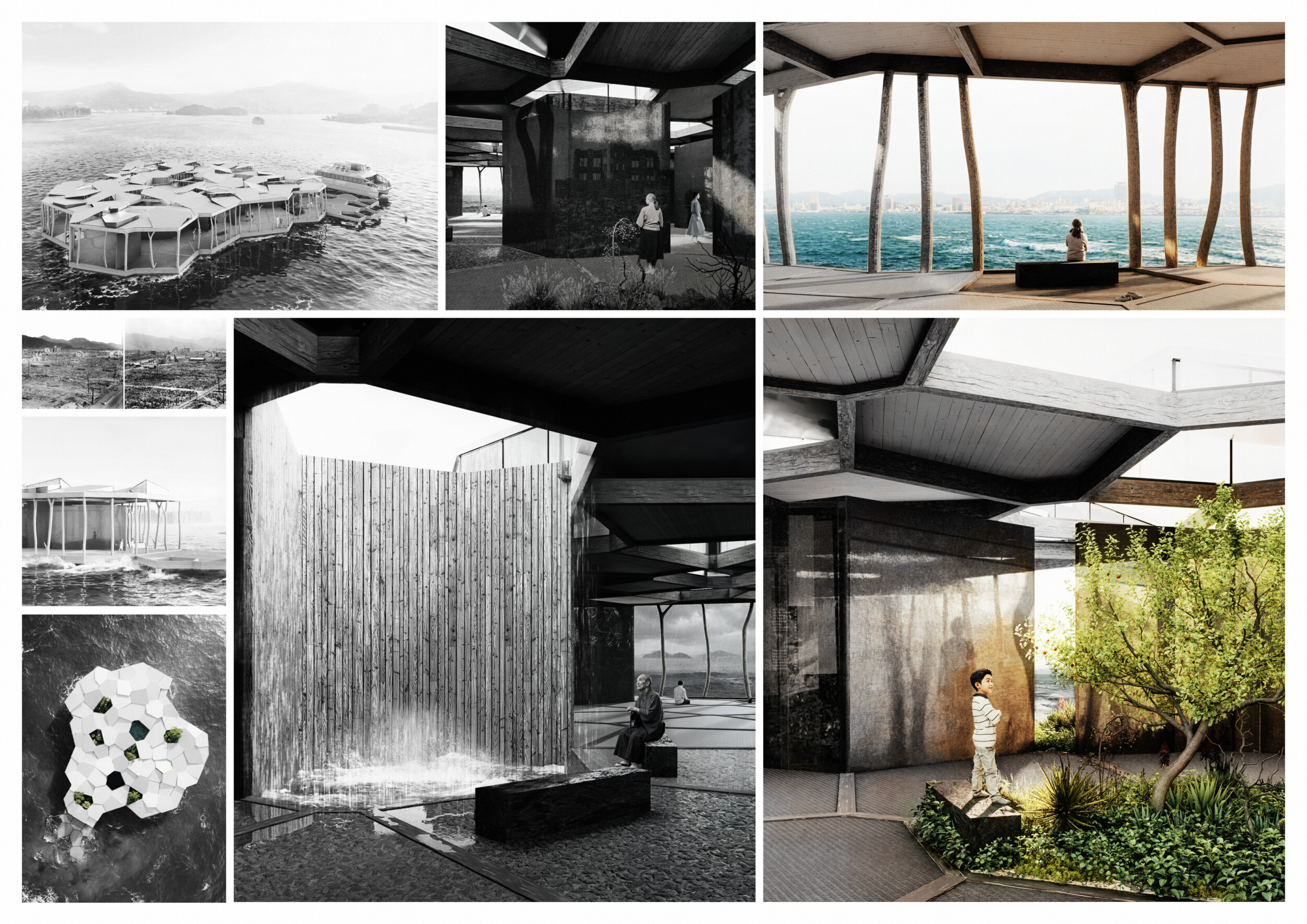
Fragments of Memory
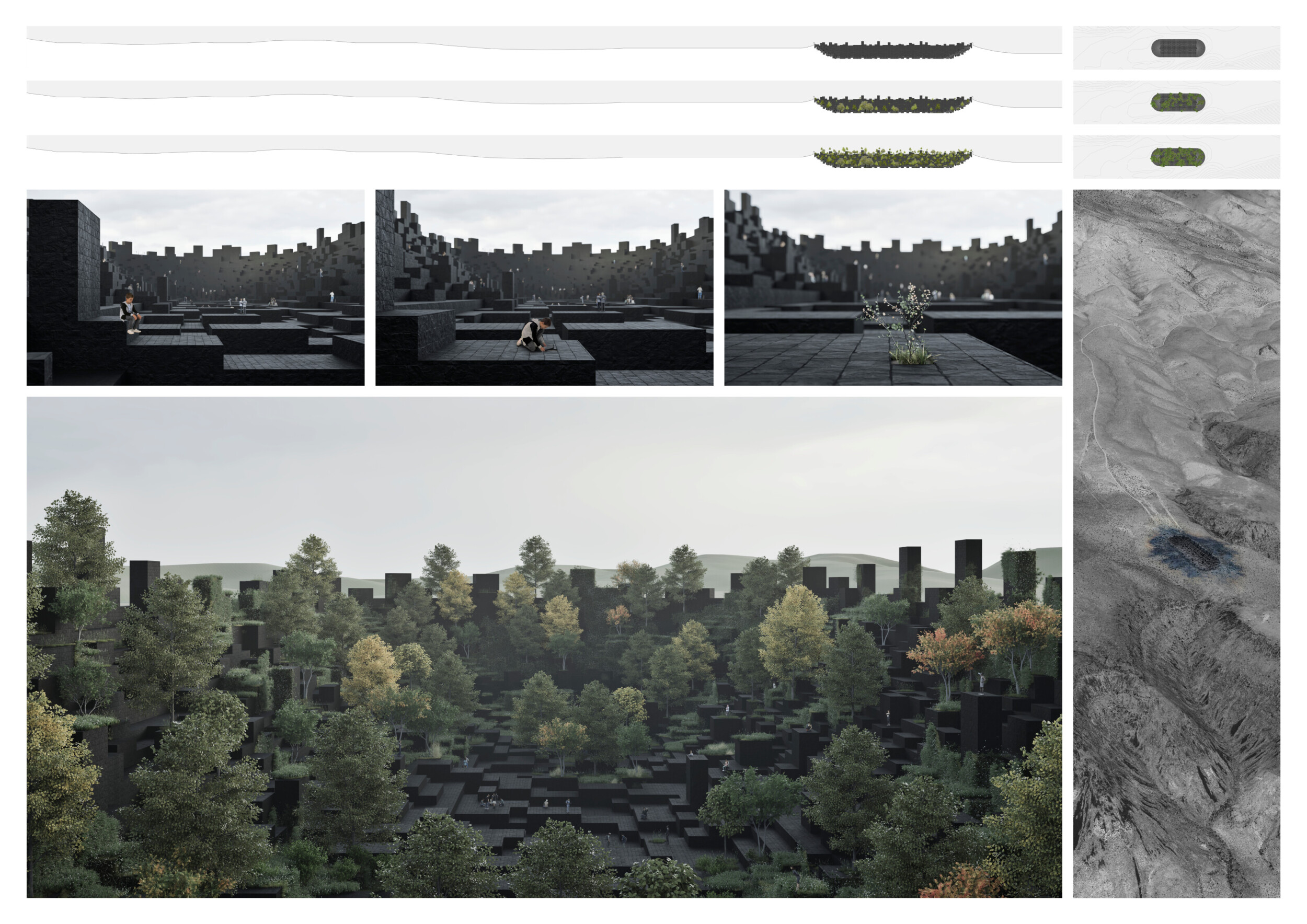
Geddes Valley
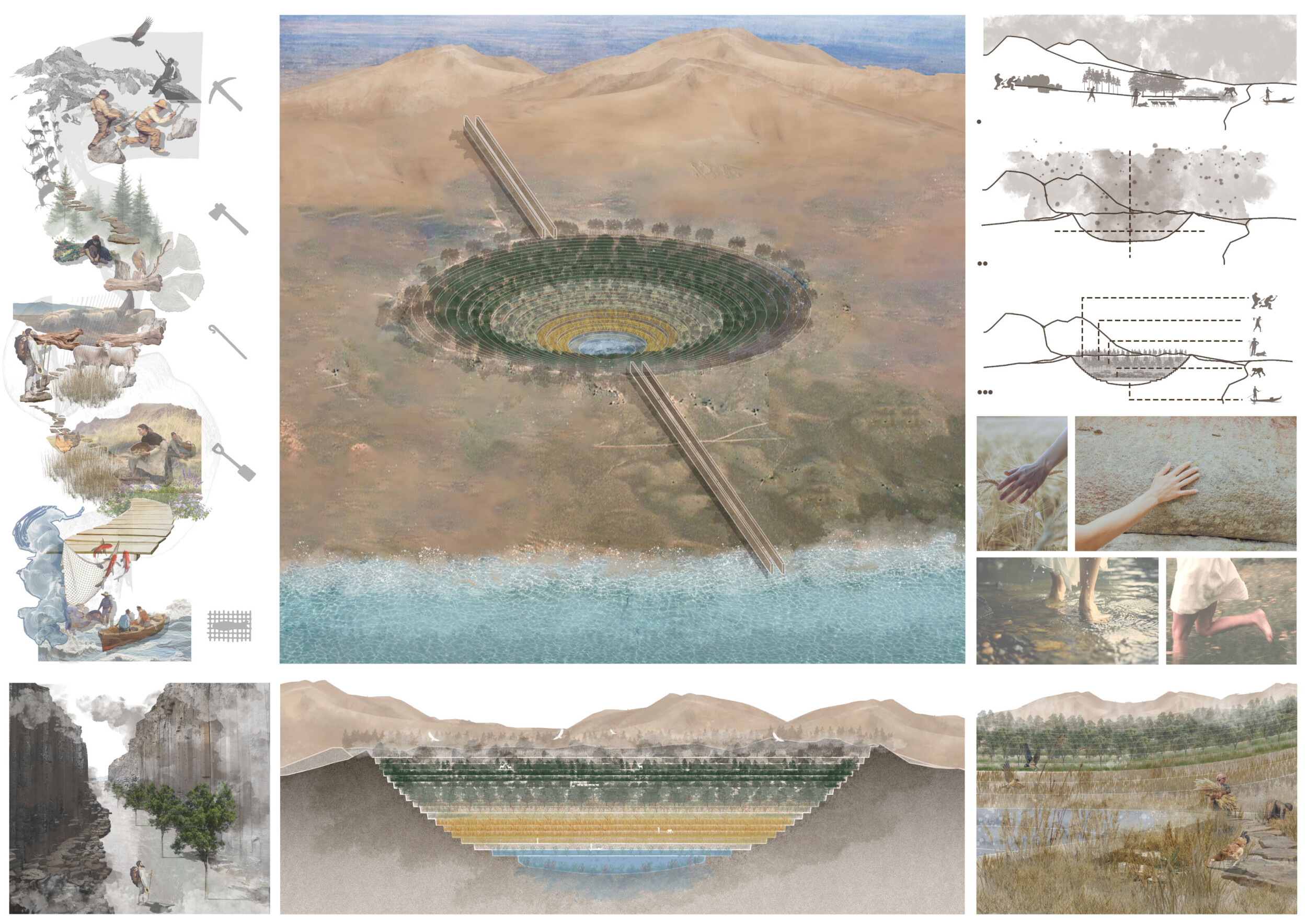
Salt & Stone
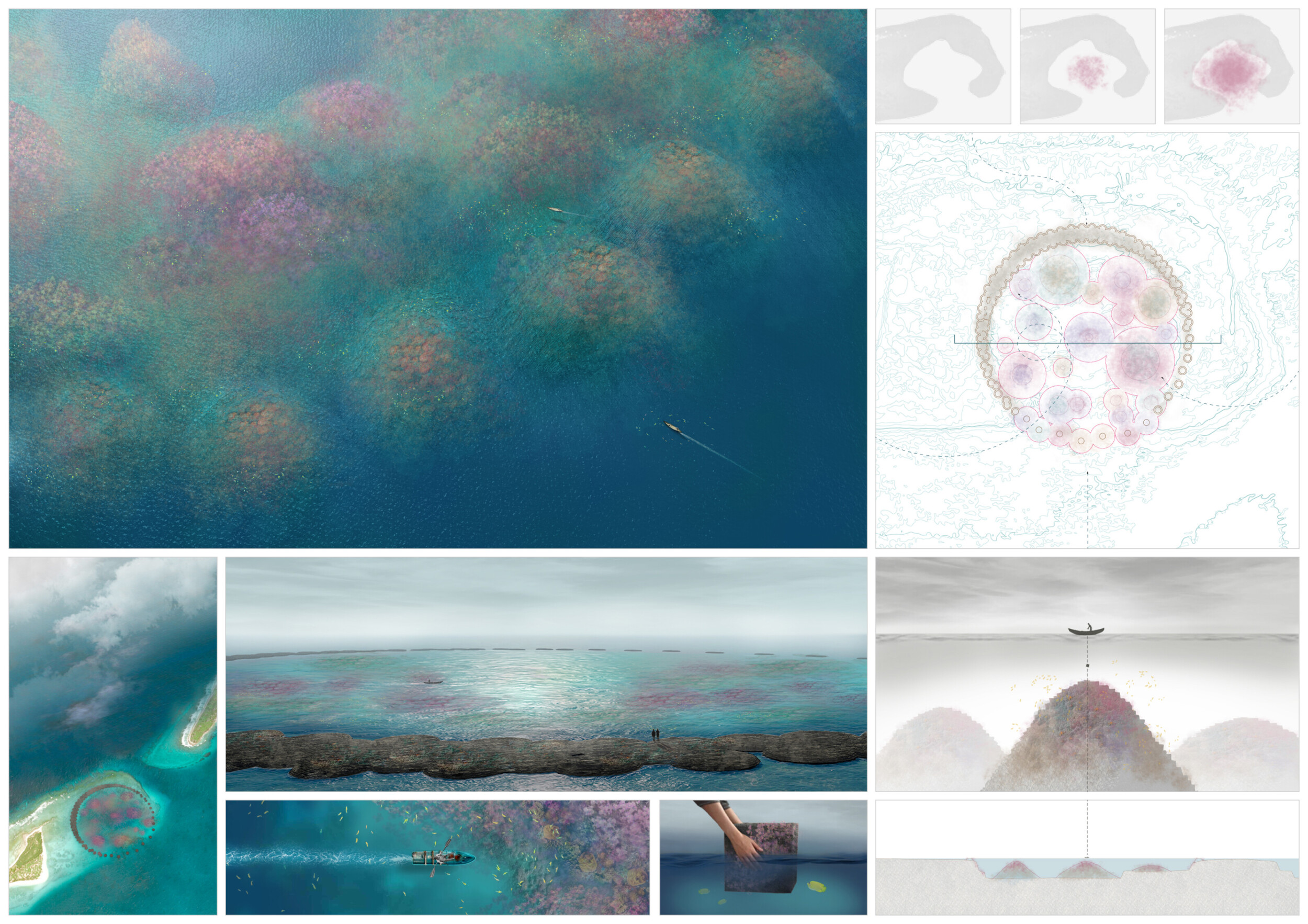
Radius of Renewal
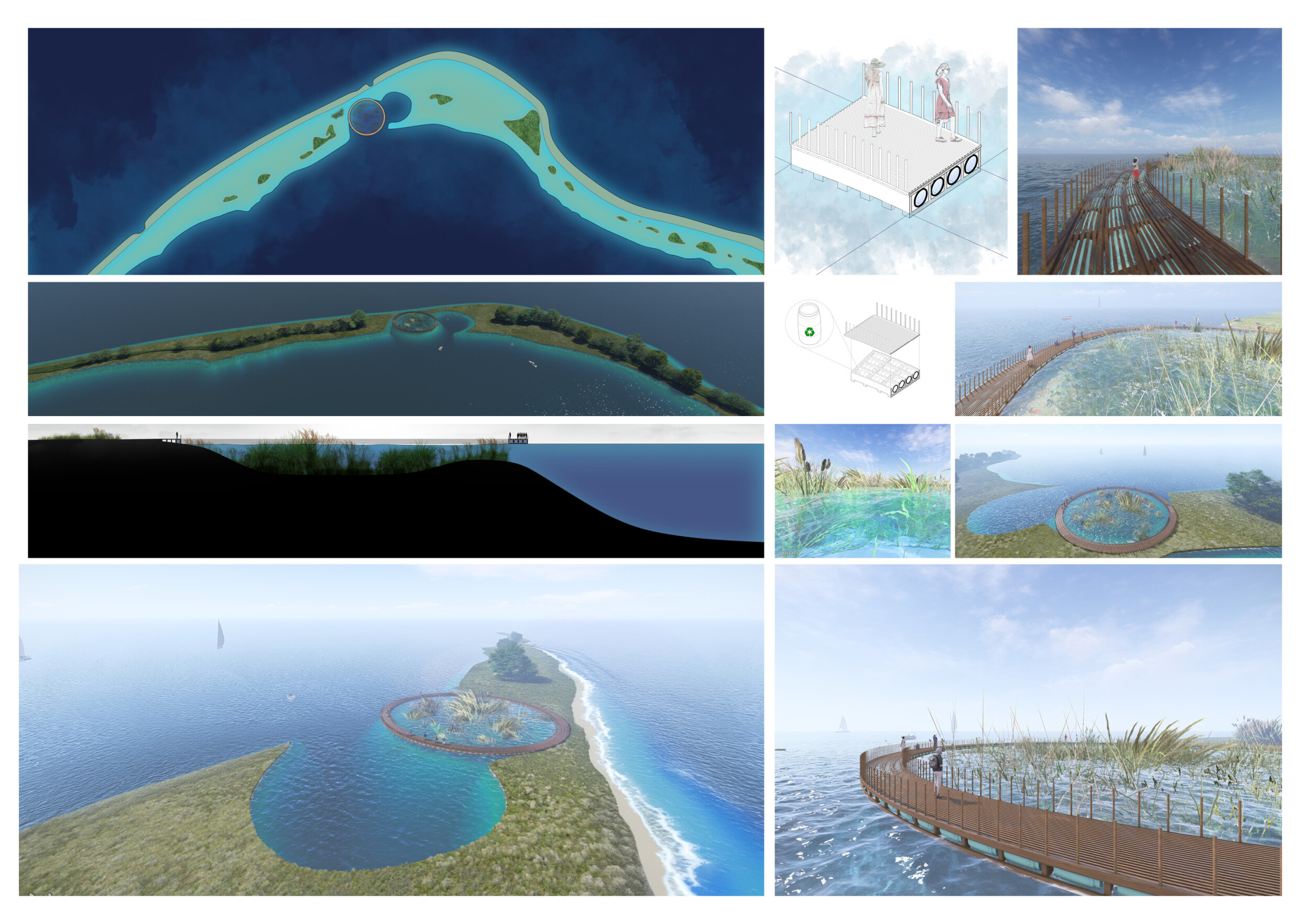
Bloom in the Ash
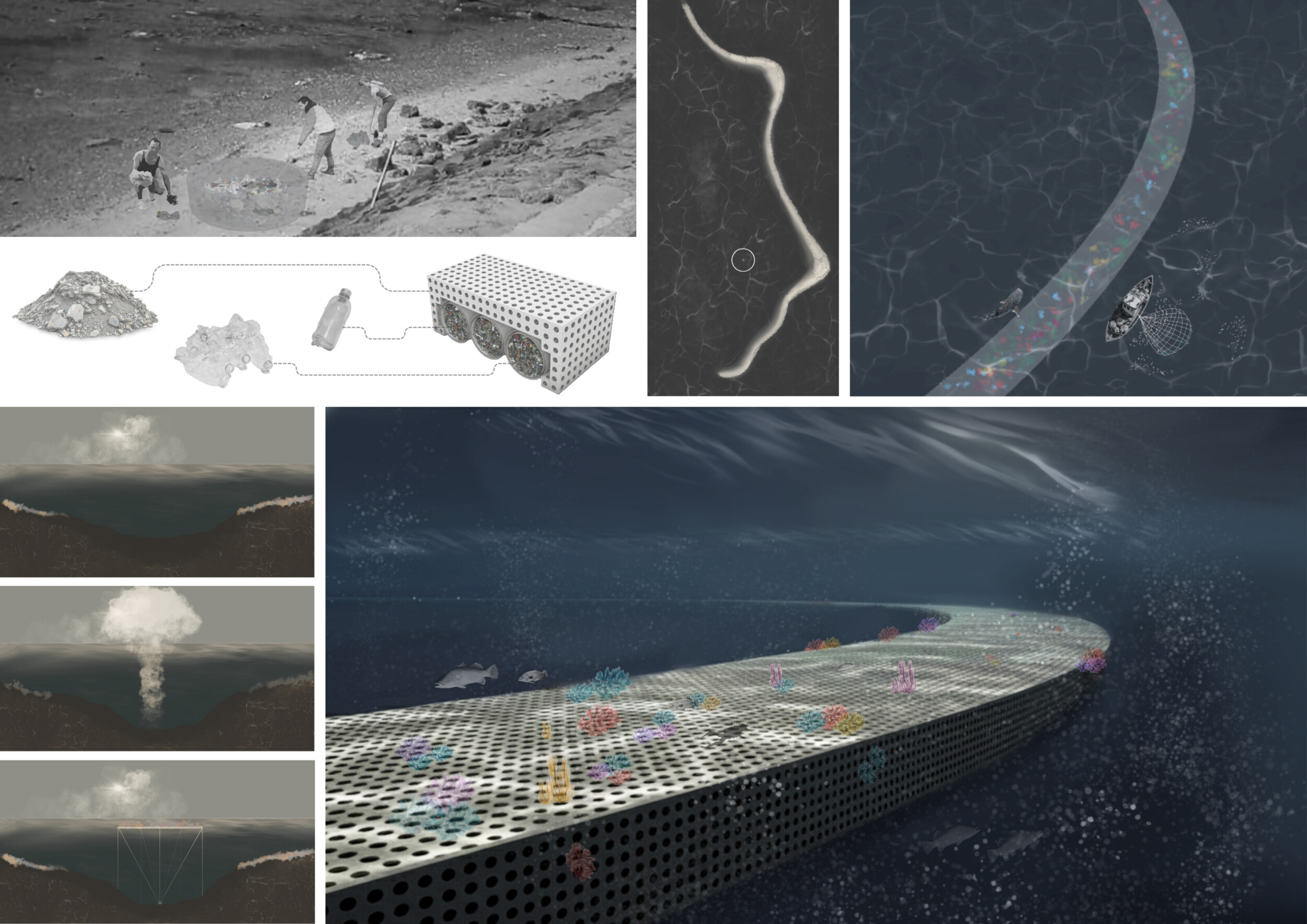

After the Last Wind
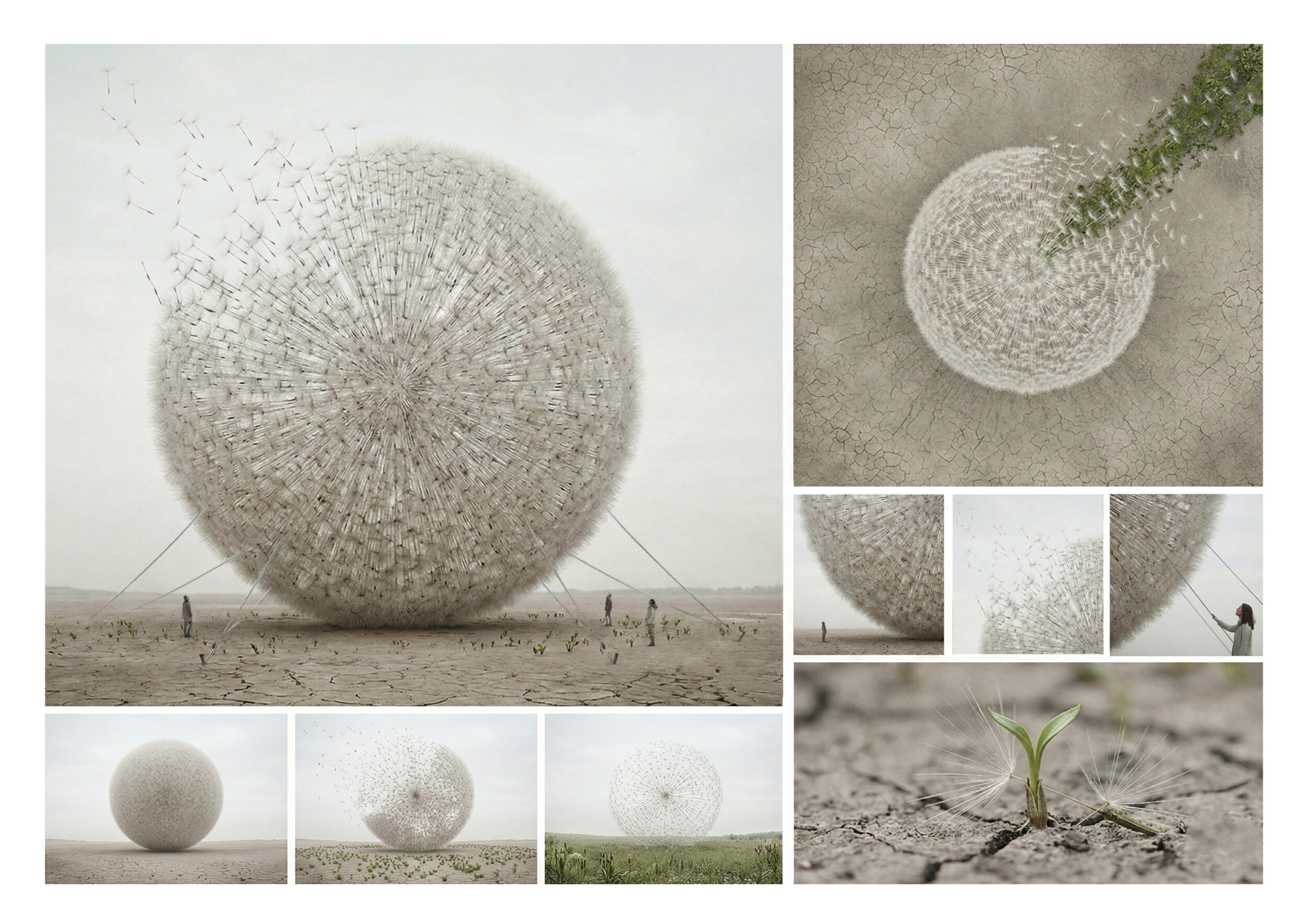
Now, the cloud brings them back
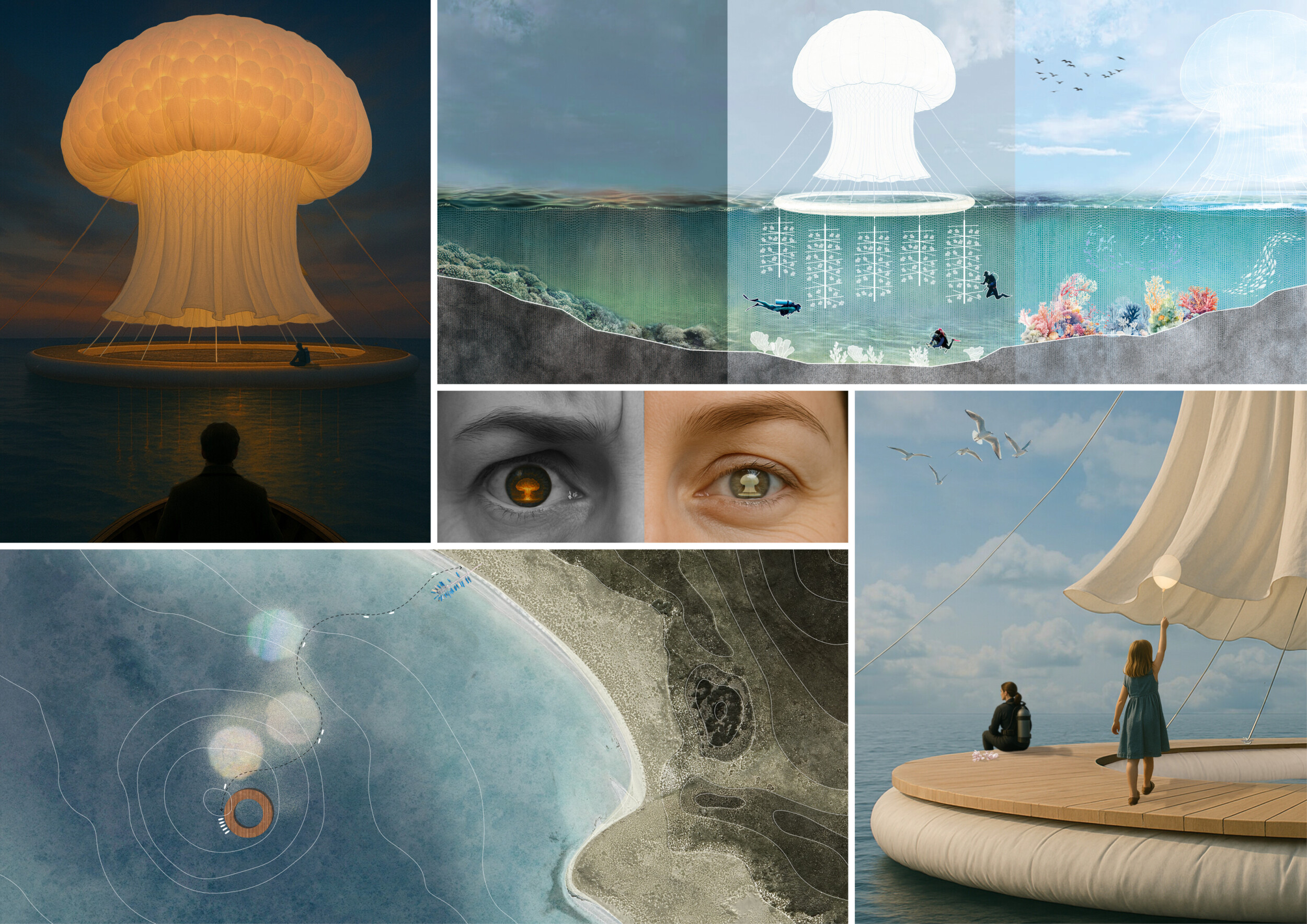
In Cycles
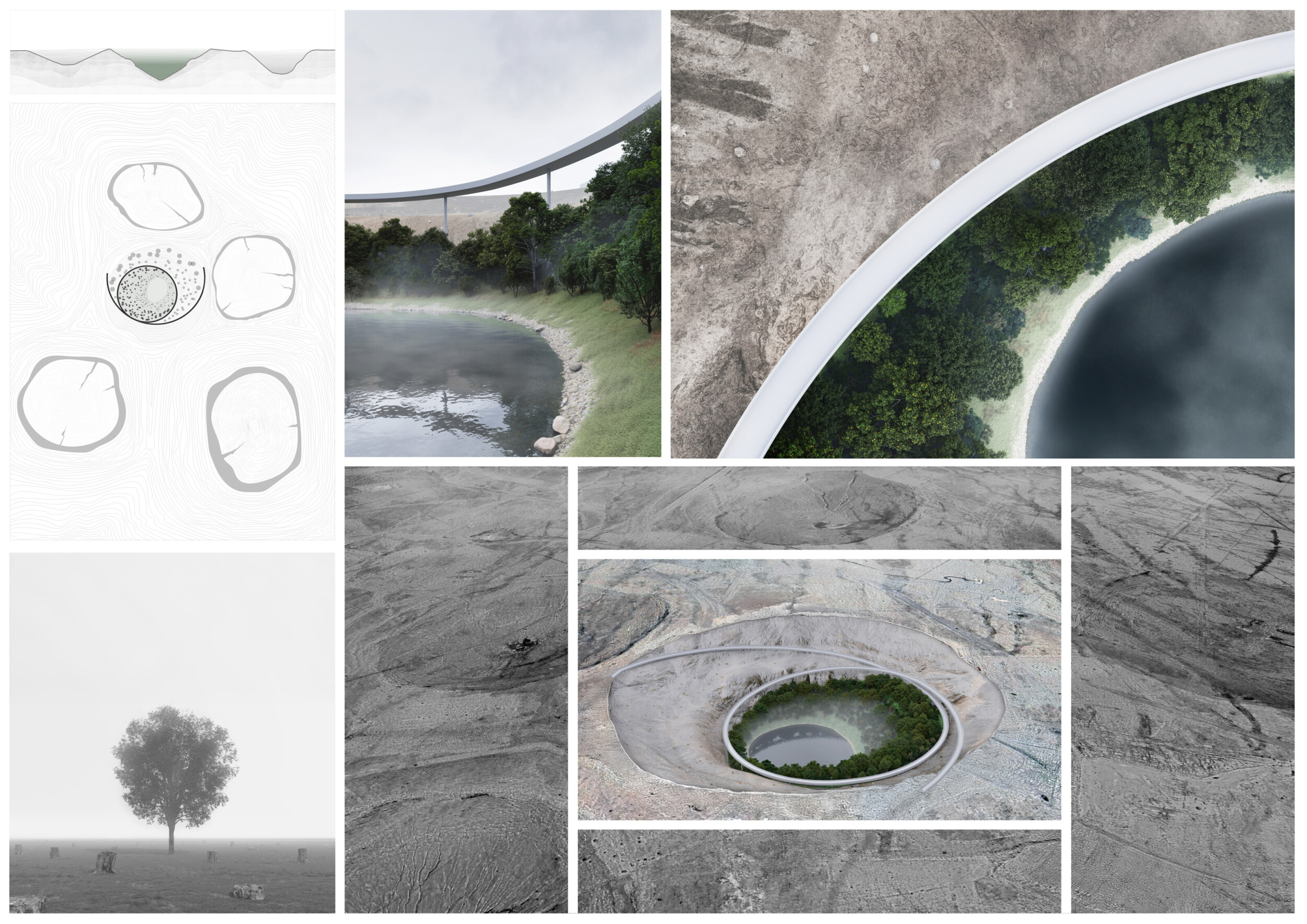
The Radiant Void
ONE WAY ONLY

Never Again
Beyond the Flowers

This project introduces a haunting linear incision across the desert terrain, culminating in a vast field of red structural members suspended above a flooded crater. The architecture acts as both wound and prosthesis: a gridded scaffold that hovers delicately over a landscape marked by violence. Read more From afar, the installation resembles a cauterized scar; from within, the dense vertical elements form a visceral and immersive spatial experience, evoking blood, roots, or even flames. Water plays a central role—both as mirror and barrier—introducing reflection, distortion, and a sense of uncertainty. Visitors navigate the space by raft, moving through the suspended elements with reverence. This is not a space to observe from above, but to inhabit slowly and bodily, where scale is overwhelming and time seems suspended.