We’d like to take the opportunity to introduce you to the 1st and Student Prize winners of our Kinderspace #3 competition – Mazen Eid, Mohamed Khaled Mohamed Farouq Ahmed, Youssef Mohamed Mohamed Dahy Abdalla and Yousef Mohamed Ramadan Mohamed from Egypt!
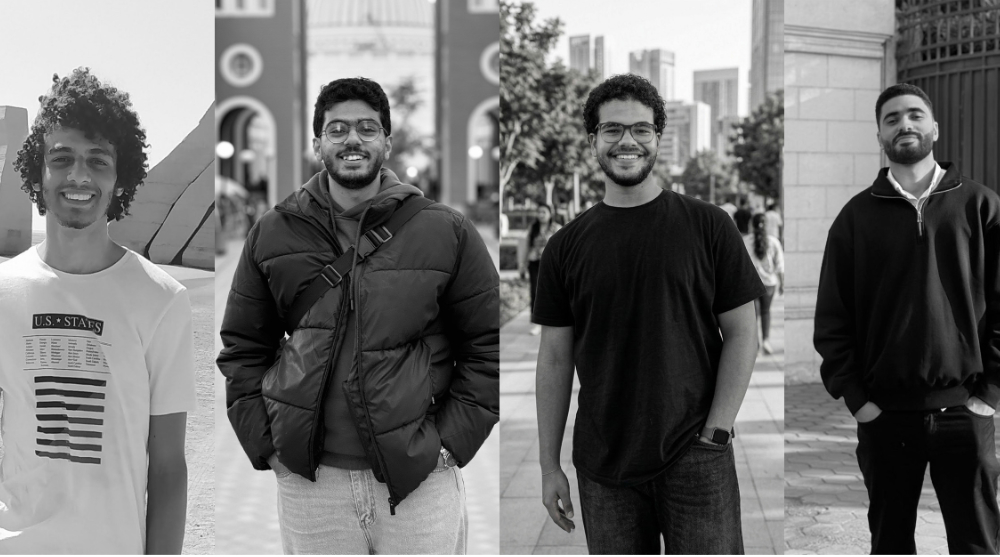
Mazen Eid, Mohamed Khaled Mohamed Farouq Ahmed, Youssef Mohamed Mohamed Dahy Abdalla and Yousef Mohamed Ramadan Mohamed
Please tell us about your company (when it was founded, where it is based, how many employees, etc) Alternatively, if you do not have a company, please give us some insights on your own professional/academia background.
We are a team of four senior architecture students from Cairo University in Egypt. We have a shared curiosity, our university's design studio that has been our second home for years, and a genuine passion for the spaces people inhabit every day.
Brief information about the projects that you/your company have been involved with. For instance, what scale have you focused on/preferred, any significant projects where the company/ individuals have been Involved?
Our academic journey has taken us across a surprisingly wide range of scales and typologies. From intimate residential homes to large civic and institutional buildings, from healthcare to adaptive reuse, our studio projects have rarely asked the same question twice. That variety has been one of the most valuable parts of our education. Each typology comes with its own set of users, constraints, and responsibilities, and learning to shift between them has sharpened how we think about design at its core.
What does architecture mean to you and what is the role of an architect in your society?
To us, the architect plays two roles. The first is the role of a translator. Someone who takes the real needs, wishes, and limitations of people and turns them into physical spaces. In this way, the architect is at the service of others, and we think that is an important and meaningful responsibility. But the second role is just as important: the architect is also the detective who asks the questions that others do not think to ask. The one who notices the things people have stopped paying attention to, who thinks about the child running through a corridor, the elderly person sitting in a courtyard, or how a room feels in the morning compared to the evening. People know what they want, but they do not always know what they need, and they rarely think about what is possible. That is where the architect comes in.
Why do you participate in architecture competitions?
Competitions offer something that the academic studio, for all its value, cannot fully replicate—genuine stakes. Your work is seen and judged by people who do not know you, who have no context for your process, and who owe you no encouragement. For us as students, that exposure matters. It pushes us to be more deliberate, more honest, and more ambitious in our thinking.
What advice would you give to individuals who struggle to decide whether it would be beneficial for them to participate in architecture competitions?
Start before you feel ready. You will rarely feel ready, and that is not a reason to wait. Competitions can feel intimidating, especially when you compare your early sketches to the polished submissions you see online. But those submissions were also once early sketches. What a competition really asks of you is not perfection; it asks for a point of view, and that is something every architecture student already has. Our honest advice: choose a competition whose theme genuinely moves you. When the subject matters to you personally, the long nights become easier and the work becomes more authentic. Participate to win, set your sights on it, take it seriously, and give it everything you have. But know that not winning is not the opposite of success. Every submission teaches you something about your own thinking, your process, and your voice as a designer that no grade or classroom exercise ever could.
Top 3 Reasons Why You Should Enter Architecture Competitions
Curious about the value of architecture competitions? Discover the transformative power they can have on your career - from igniting creativity and turning designs into reality, to gaining international recognition.
Learn more