

Buildner is a global leader in organizing architecture competitions of all scales — from furniture, cottages, and guesthouses to full city rebranding. With prize budgets ranging from €5,000 to €500,000, Buildner brings proven global experience to every competition.
Launch a competitionLaunch a competition
Introduction

Buildner is pleased to announce the results of the Kinderspace Edition #3 competition, an international design challenge inviting architects and designers to rethink the environments in which early childhood learning takes place. The competition called for proposals that move beyond conventional educational models, envisioning spaces that support curiosity, independence, and holistic development through architecture that is both nurturing and adaptable.
Participants were tasked with designing an educational facility that accommodates young children across multiple age groups, alongside educators and support staff, integrating spaces for learning, play, rest, and interaction. The brief emphasized the importance of child-centered design, encouraging proposals that engage scale, materiality, and sensory experience while fostering a strong relationship between indoor and outdoor environments. Rather than treating education as a purely programmatic requirement, the competition sought to explore how architecture can actively shape developmental processes through spatial organization and environmental quality.
The diversity of submissions revealed several recurring themes. Many projects approached the kindergarten as a small community or village, breaking down the overall mass into clusters of intimate, house-like volumes that create a sense of belonging and familiarity. Others focused on the role of nature as a fundamental component of learning, integrating gardens, courtyards, and productive landscapes as extensions of the classroom. A number of proposals explored architecture as a pedagogical tool in itself, exposing materials, construction systems, and environmental strategies to make learning tangible and experiential. Across multiple entries, flexibility and adaptability emerged as key concerns, with spaces designed to evolve throughout the day and respond to different modes of play, teaching, and social interaction.
Following review by an international jury panel, prize winners and honorable mentions have been selected for their clarity of concept, spatial intelligence, and thoughtful engagement with the brief. Together, the selected projects demonstrate how architecture can support early childhood education not only through function, but through atmosphere, material presence, and the creation of environments that inspire exploration, imagination, and a lasting connection to the world around them.
We sincerely thank our jury panel
for their time and expertise
Extended list of jury biographies
Aybars Asci
Efficiency Lab
USA

Betsaida Curto Reyes
Founder, Estudio Copla
Spain

Jake Heffington
...and other works
USA

Matthias Roller
Dannien Roller Architekten + Partner
Germany

Mona Vijaykumar
Perkins&Will
USA

Edward Weysen
WE-S architects
Belgium

Eleni Kalapoda
Embedded Climates Design Group
United States

Enter the next competition edition
Design a kindergarten of tomorrow
1st Prize Winner +
Buildner Student Award
Buildner Student Award
UpCycle Garten

We decided to participate in this competition because we found its scope interesting and different from what we usually work on. It presented an opportunity to explore new ideas and challenge ourselves creatively. In general, we enjoy participating in architecture competitions because they encourage imagination, learning, and healthy competition. They allow us to test new concepts, develop our design thinking, and learn from other participants.
Read full interview


Jury feedback summary
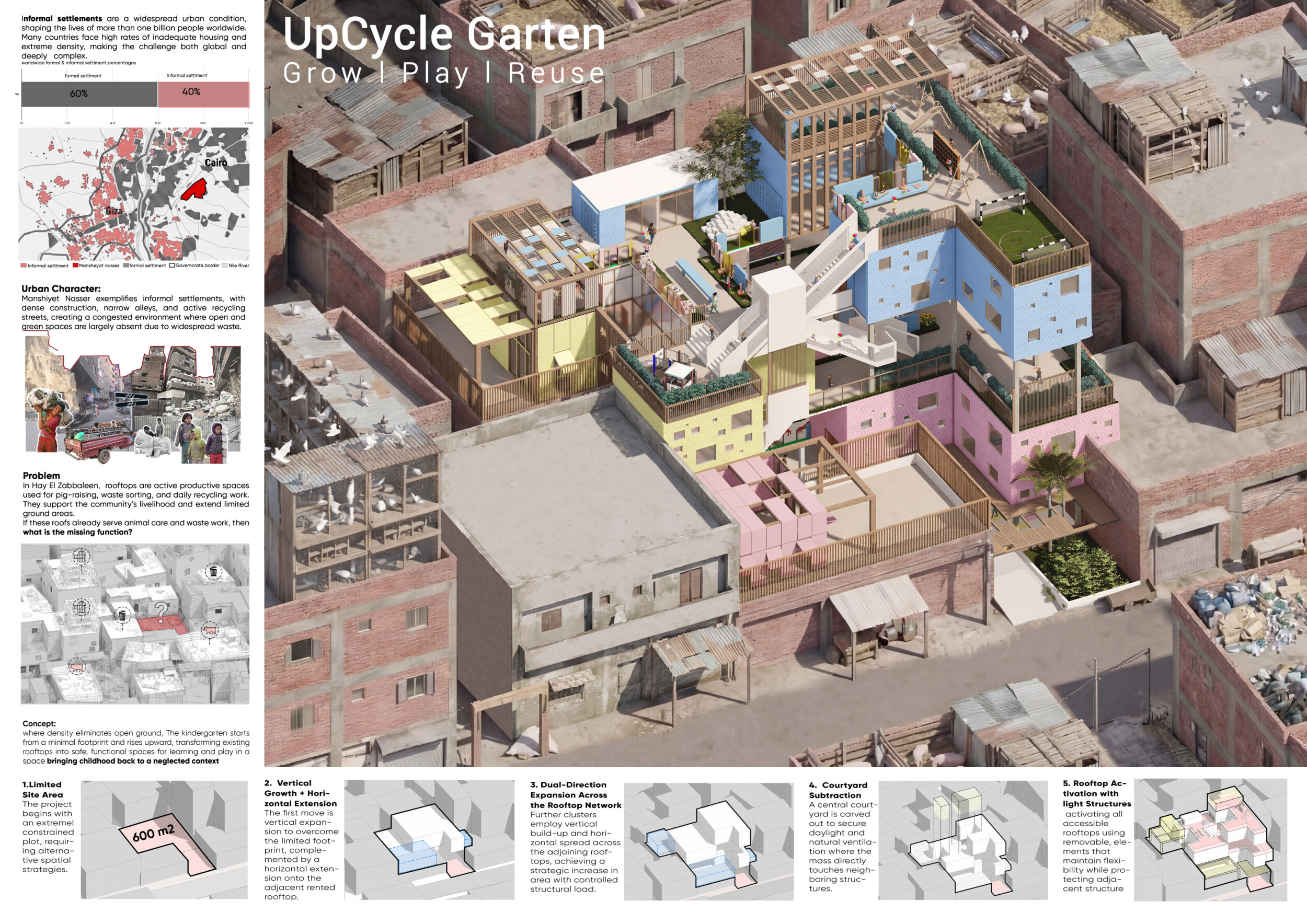
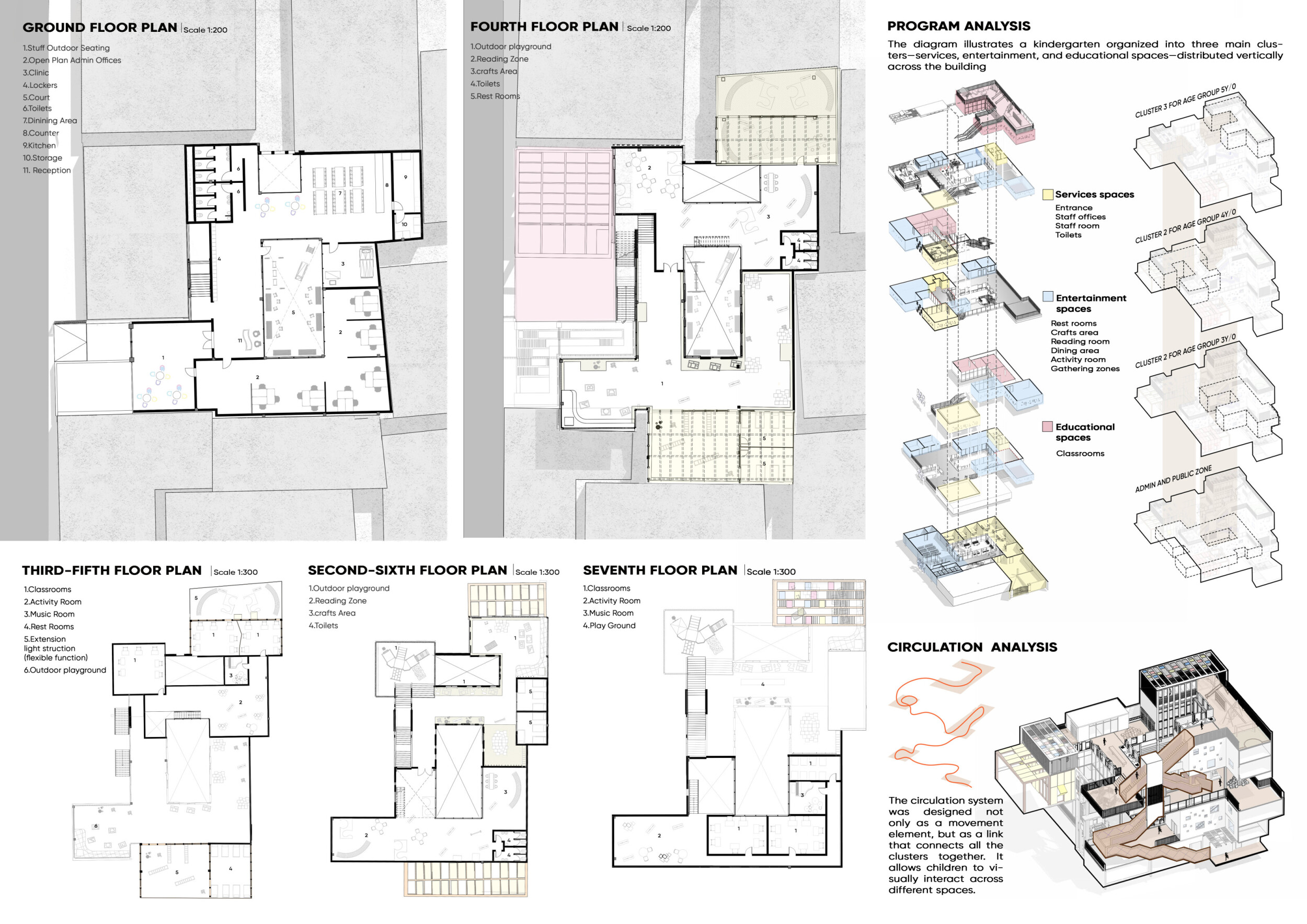
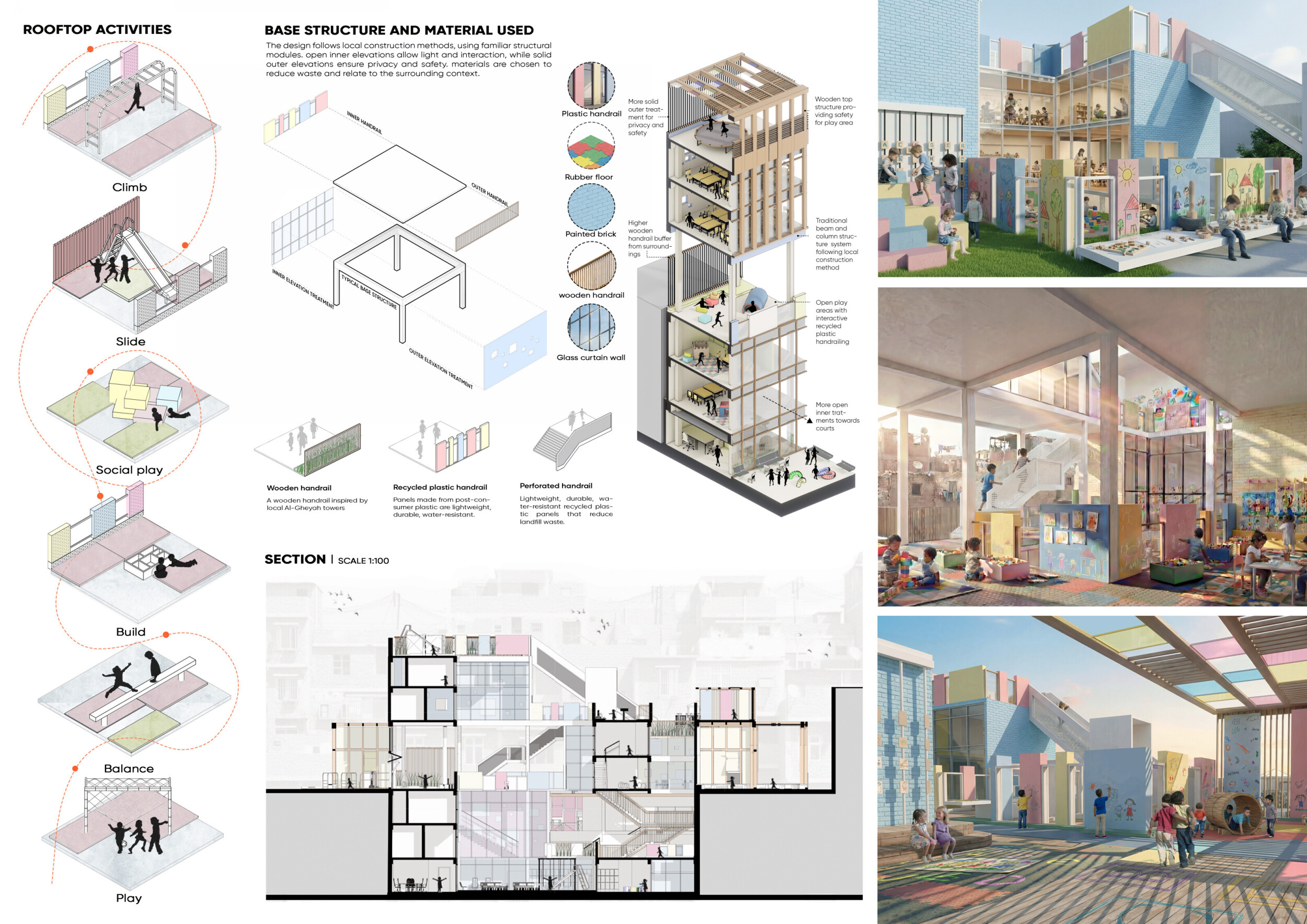
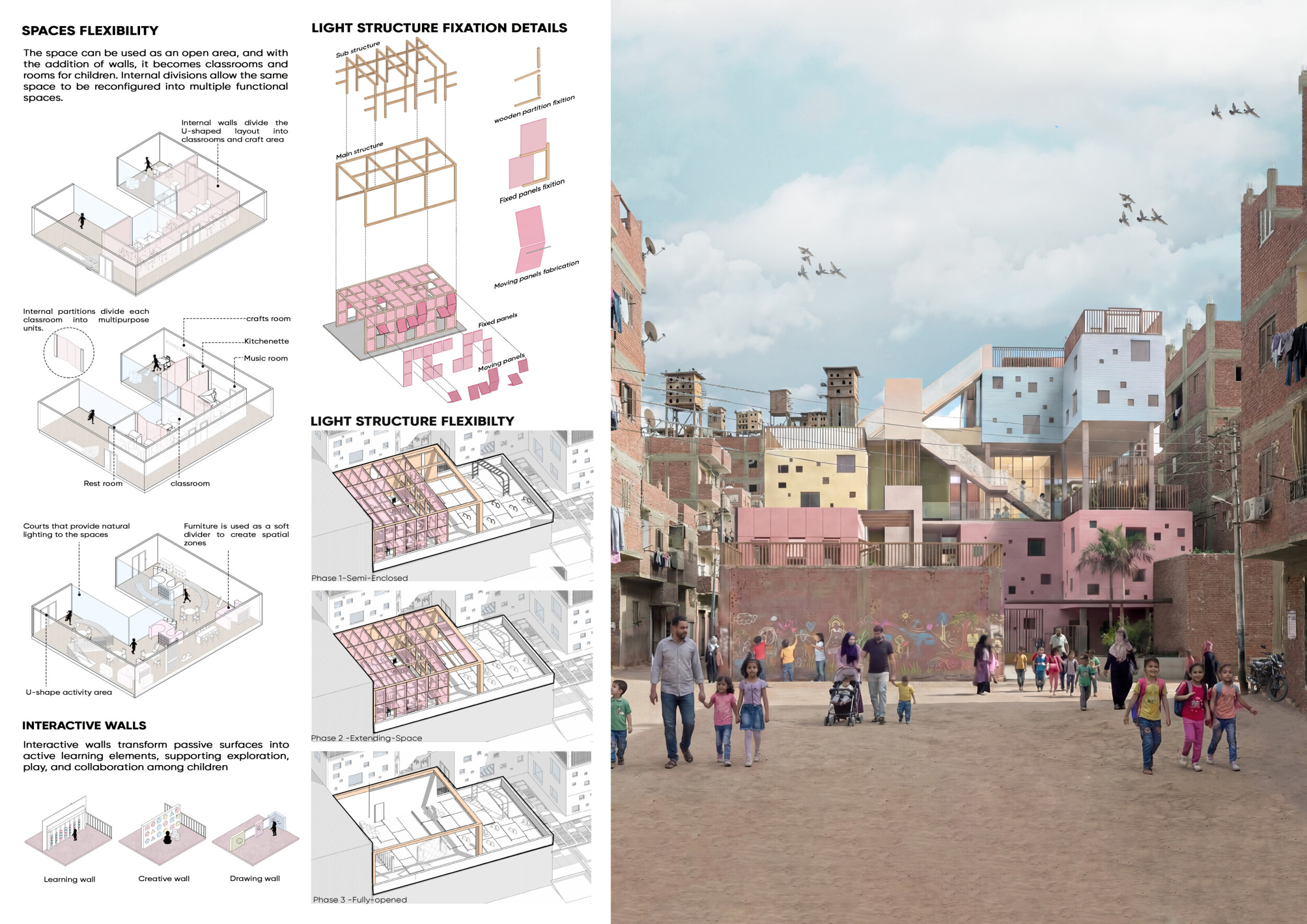
UpCycle Garden proposes a vertically organized kindergarten embedded within the rooftops of a dense informal settlement, transforming underutilized surfaces into a network of learning, play, and community spaces. Rather than occupying scarce ground-level space, the project builds upward through a series of lightweight, modular interventions that connect adjacent roofs into a continuous educational landscape.

I appreciate the designer's efforts to maximize the building area within a limited spatial envelope. The stacked solution, organized around three clusters, on the one hand facilitates morphological and contextual integration, but on the other leads to an unnecessarily complex plan structure. A childcare center generally benefits from a simple and readable model that focuses on ease of use and clarity.
Edward Weysen / Buildner guest jury
WE-S architects, Belgium

This proposal stands out for its inventive and socially grounded approach to sustainability. By reimagining existing rooftops within a dense informal settlement as active learning landscapes, the project transforms a constrained urban condition into an opportunity for growth, play, and discovery. The labyrinthine spatial organization encourages exploration and curiosity, allowing children to navigate a sequence of interconnected spaces that promote physical activity, social interaction, and experiential learning. The project’s most compelling contribution lies in its strategic reuse of existing structures. Repurposing rooftops not only minimizes the need for new ground occupation but also significantly reduces the carbon footprint associated with construction, material extraction, and land disturbance. Sustainability here is not treated as an applied layer, but as an embedded architectural logic—where adaptive reuse, lightweight interventions, and phased growth work together to create a resilient and low-impact solution. Beyond environmental metrics, the proposal demonstrates a strong understanding of social and educational sustainability. By integrating play, learning, and community life into a vertically layered system, the project reinforces the idea that sustainable architecture must also support long-term social value, particularly in under-resourced contexts.
Aybars Asci / Buildner guest jury
Efficiency Lab, USA

The project balances playful forms, colors, and interactive structures with a serious and thoughtful consideration of light and circulation, all on a very challenging site. You get the sense that the children were truly the client, co-creating the architecture.
Jake Heffington / Buildner guest jury
...and other works, USA

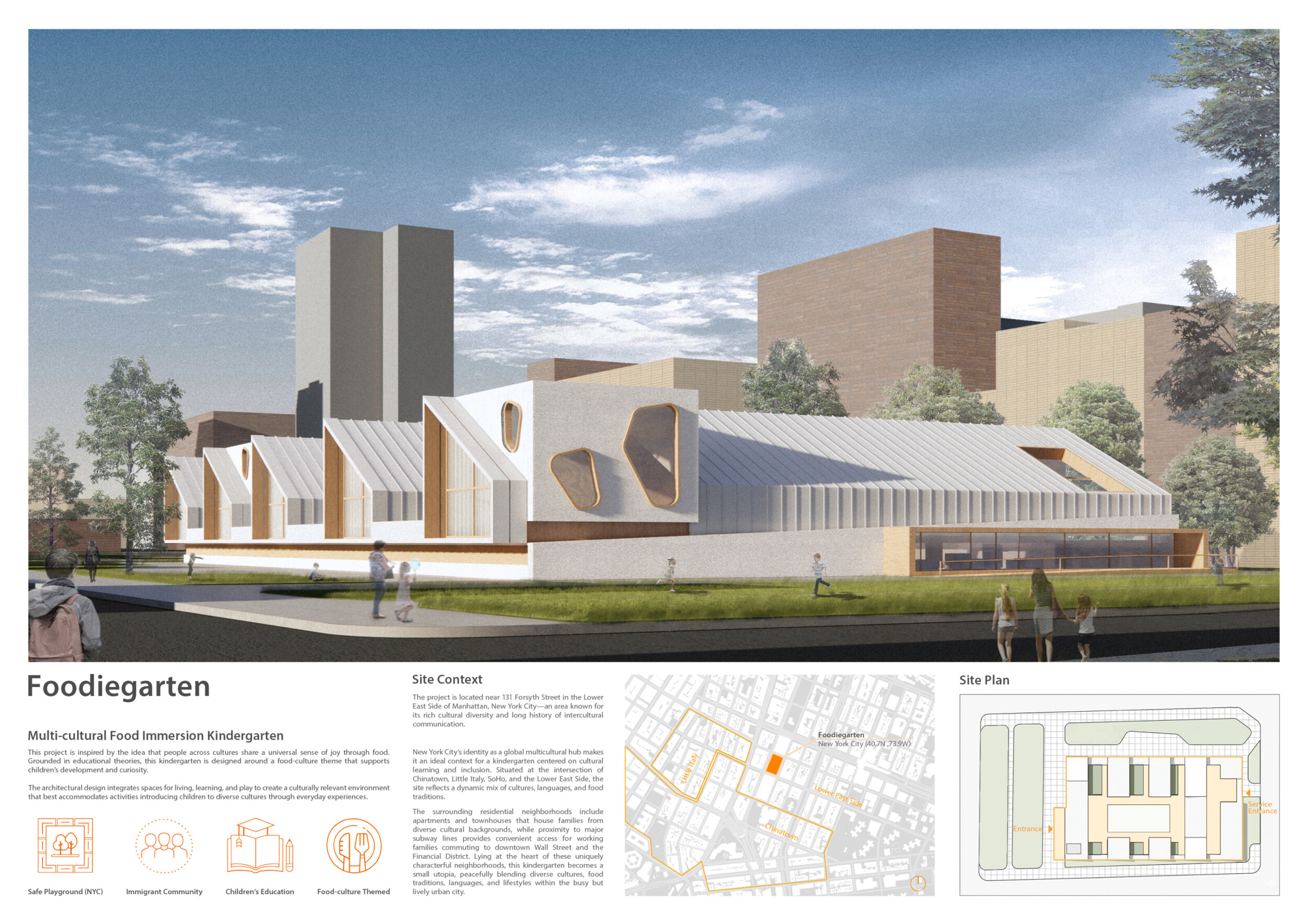
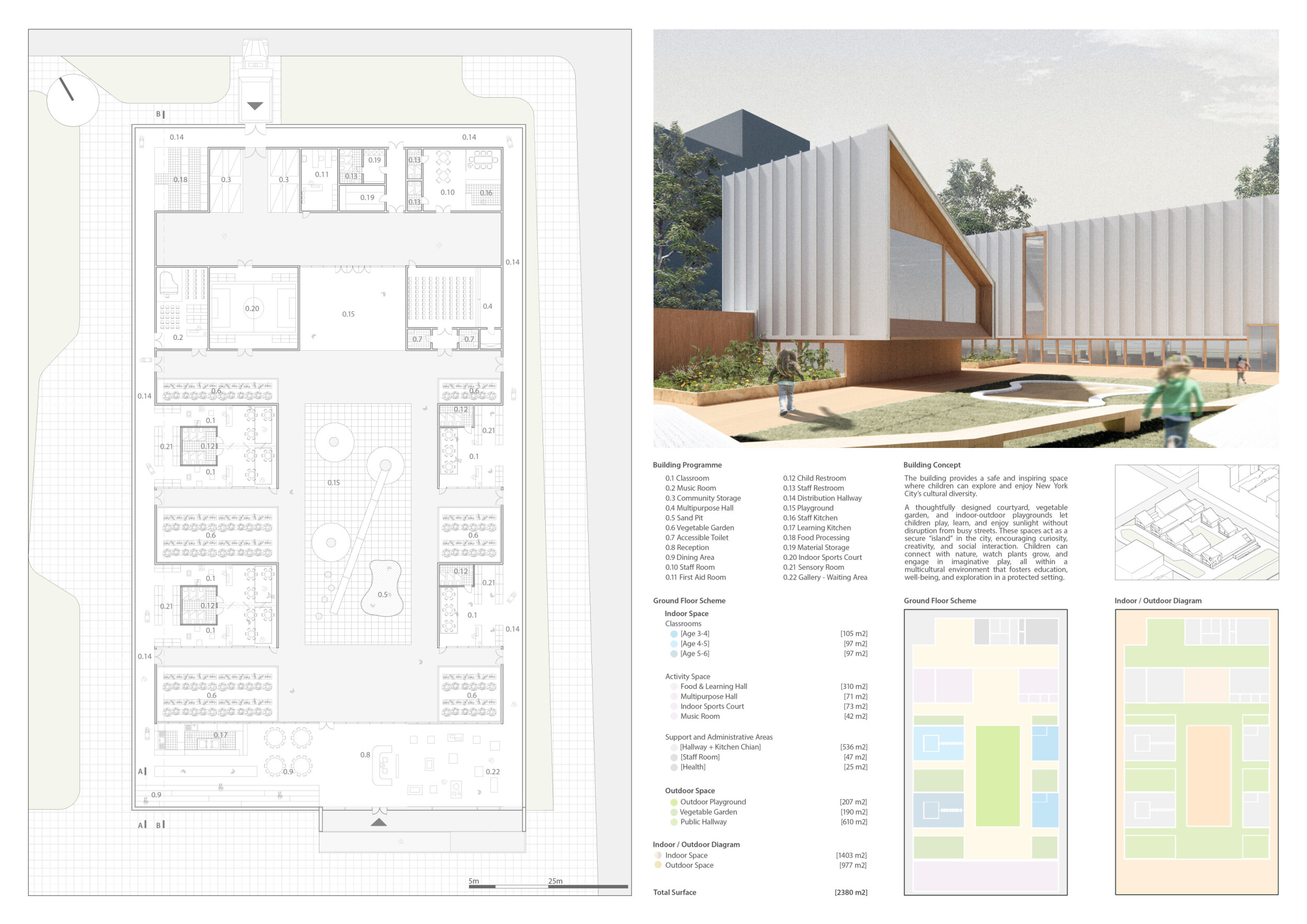
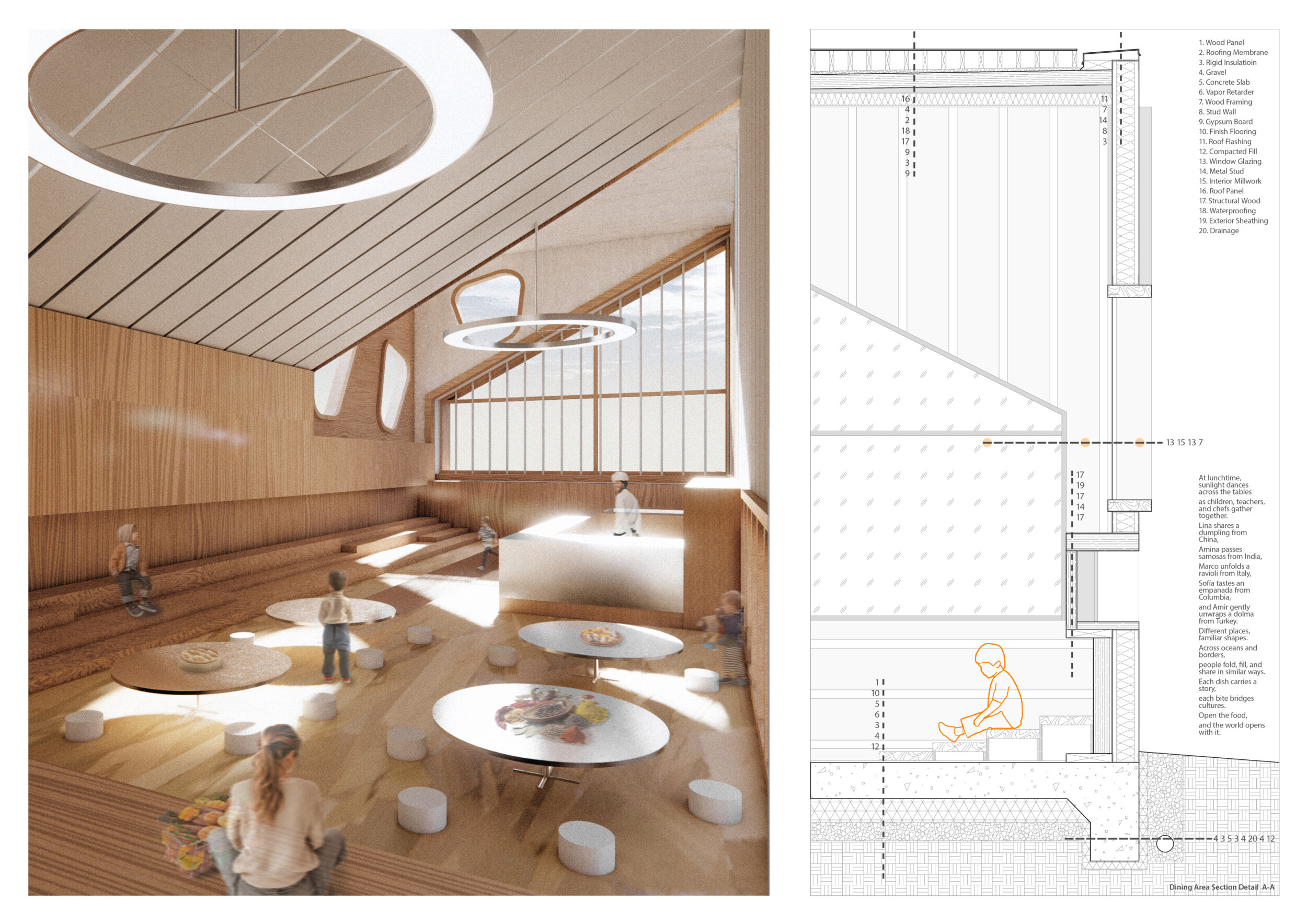
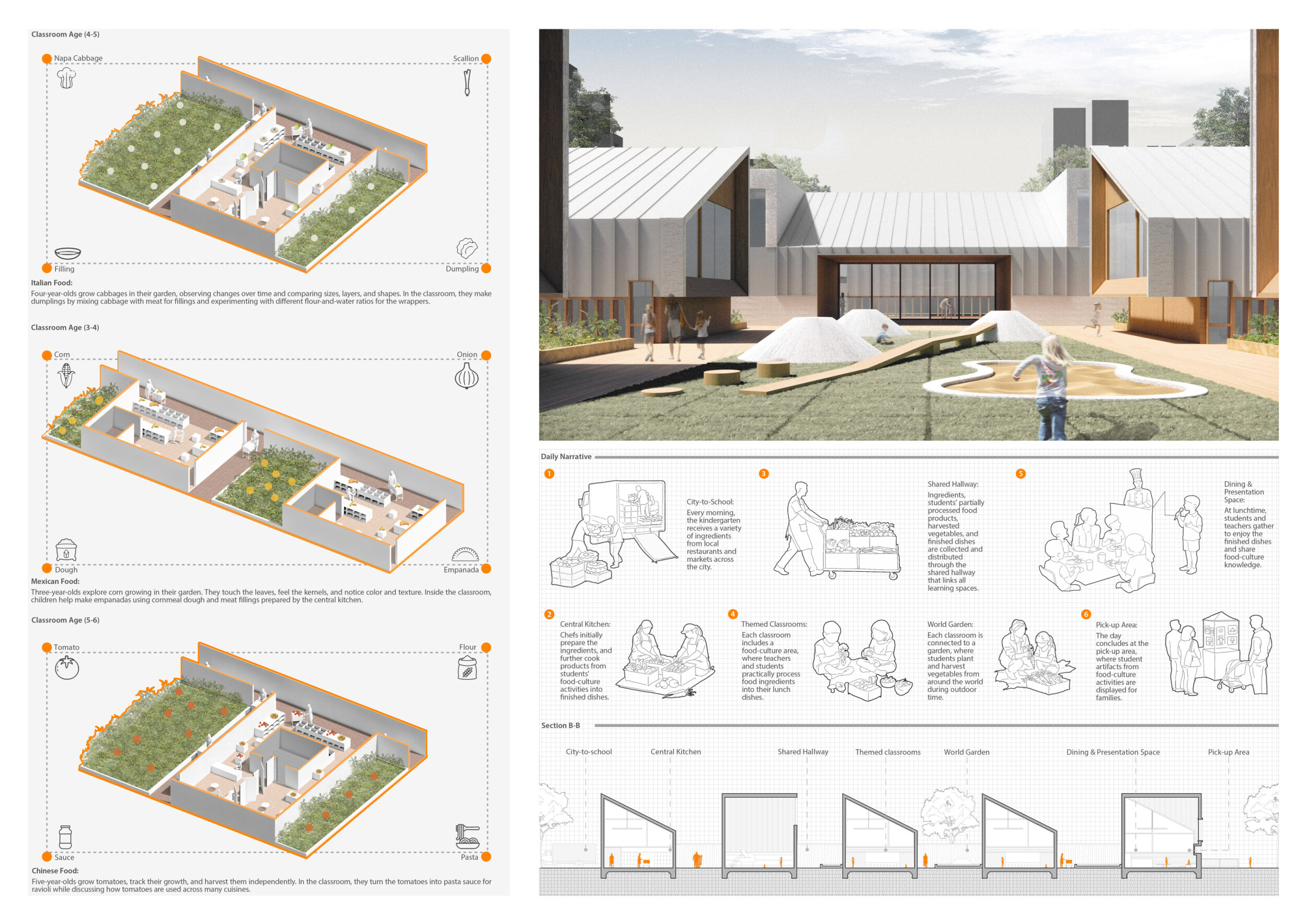
In a block segment of an elongated parking zone stretching across several blocks in the Lower East Side of Manhattan, the authors propose a themed kindergarten, the Foodie Garden, instead of a football pitch. Inspired by the diverse lifestyles and food cultures of the neighborhood, and perhaps also by the metropolitan melting pot of cultures, early learning and experience spaces are created for children, giving hope that food production and preparation represent highly cultural contexts that should be learned and experienced with all the senses from an early age. Clearly structured, beautifully developed, and with dignified, serious interior design, the work represents a foundation for coexistence, communication, and intercultural understanding of humanity. An exciting farm-to-table project for everyday life that more than makes up for the loss of a hardball court.
Matthias Roller / Buildner guest jury
Dannien Roller Architekten + Partner, Germany

A thoughtful and context-sensitive proposal that transforms existing rooftops into playful, productive, and community-oriented spaces. The project is commendable for working with the realities of dense informal settlements through lightweight, incremental interventions rather than imposing a disruptive solution. Its integration of play, reuse, and urban farming creates a meaningful model for reclaiming overlooked spaces and supporting everyday community life.
Mona Vijaykumar / Buildner guest jury
Perkins&Will, USA
Buildner's commentary, recommendations and techniques review
Order your review here
-
8/10 Linework

-
8/10 Quality of drawings

-
9/10 Balance of color

-
8/10 Layout

-
8/10 Hierarchy

-
8/10 Annotation

-
7/10 Text

-
8/10 Clarity of story

-
8/10 Clarity of diagrams

-
8/10 Quality of overall presentation

Enter an open architecture competition now









2nd Prize Winner

Jury feedback summary
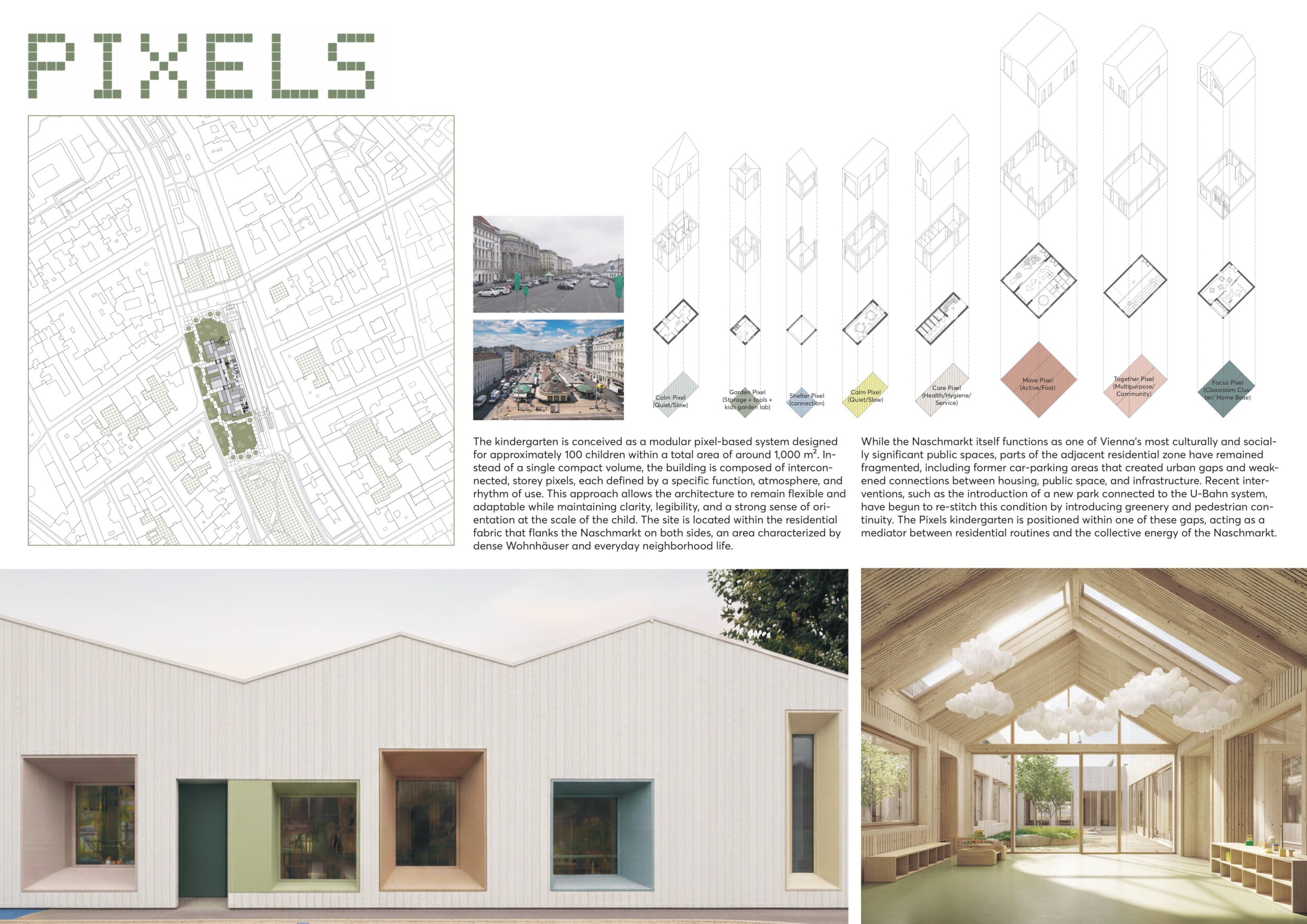
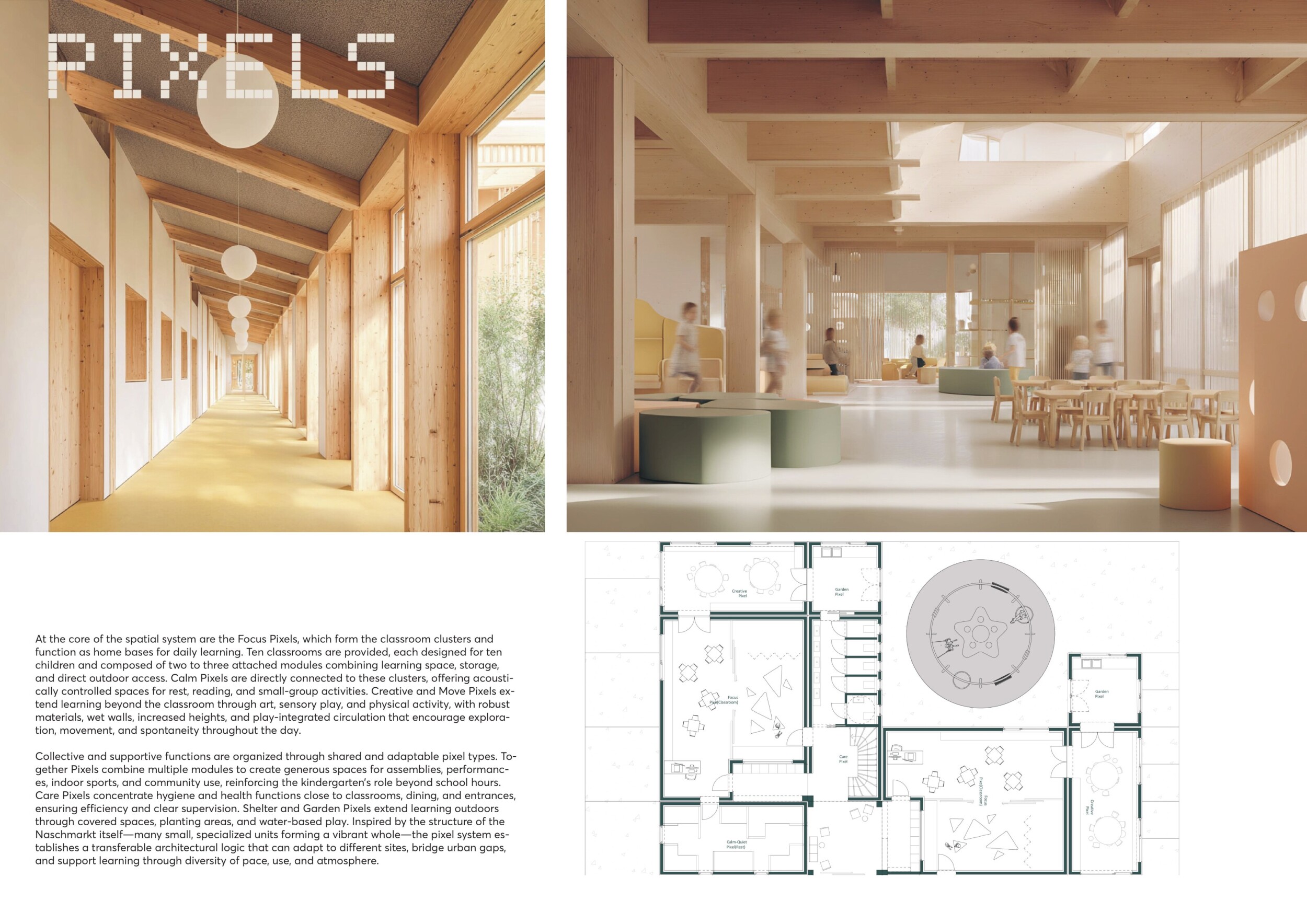
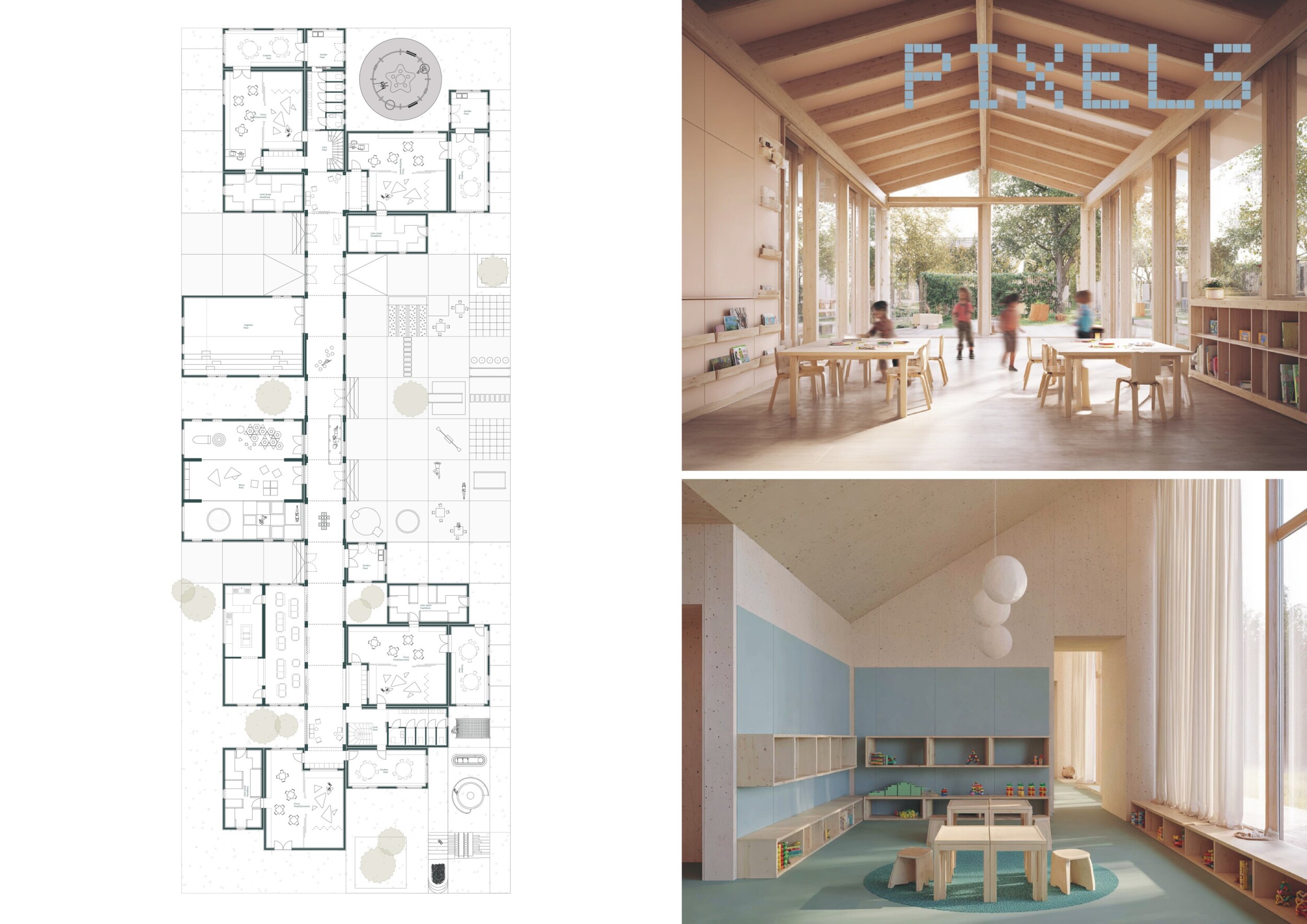
Pixels proposes a kindergarten organized as a modular system of small-scale architectural units, forming a cohesive yet diverse learning environment embedded within the urban fabric of Vienna. Drawing inspiration from the spatial logic of the Naschmarkt’s historic market stalls, the project reinterprets this typology into a child-centered educational landscape composed of interconnected “pixel” volumes.
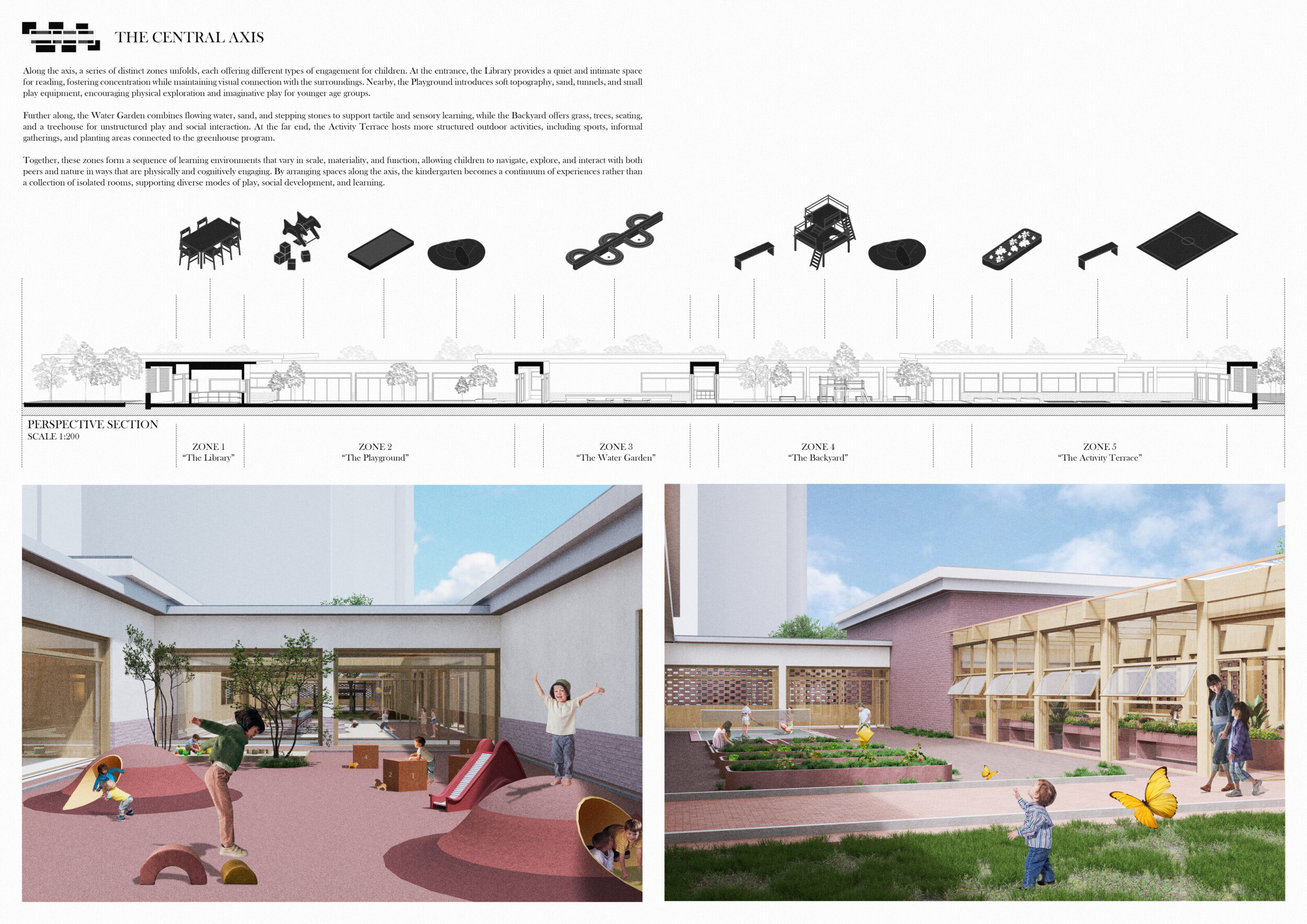
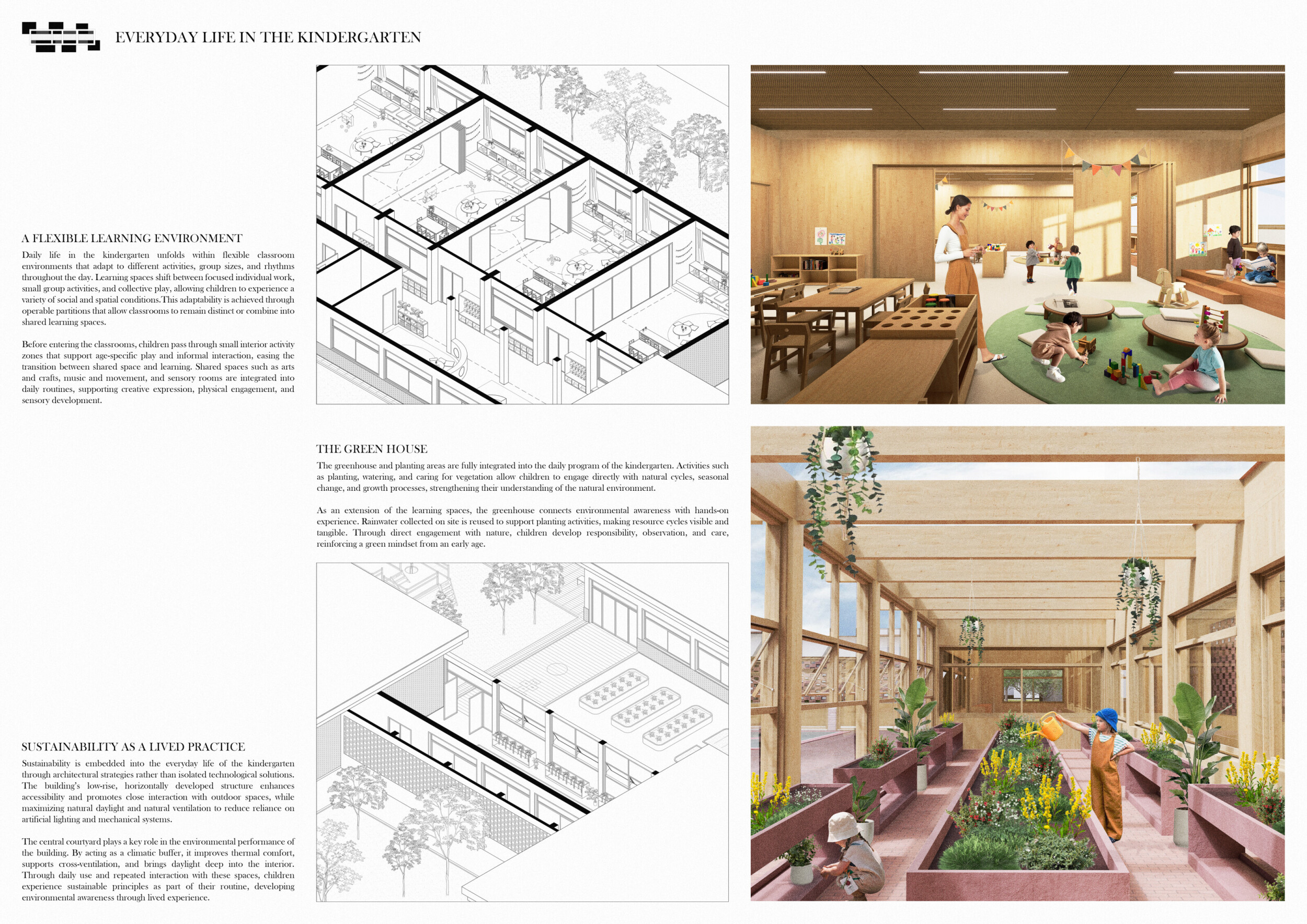
The typological proposal for the design is based on the single-storey sales booths of Vienna's famous traditional permanent market location. The design manages to seamlessly integrate a daycare center into an urban area surrounded by multi-storey buildings from the late 19th century, adjacent to the existing Naschpark park. The theme of pixels is somewhat misleading at first glance, suggesting a modular and technoid abstract interpretation of the building complex. In this loving interpretation, the children's space becomes an imaginative cluster of rooms. The eight different building blocks and their arrangement evoke associations with a child's wooden construction set from the turn of the 19th to the 20th century. Enlivened by children, educators, and parents at a human scale, a high degree of design and contextual quality is developed that is perfectly suited to the construction task and the genius loci, giving hope for its implementation.
Matthias Roller / Buildner guest jury
Dannien Roller Architekten + Partner, Germany
A clear and well-structured proposal that uses a modular “pixel” system to create a flexible and child-scaled learning environment. The project thoughtfully mediates between the lively public character of the Naschmarkt and the surrounding residential fabric, introducing rhythm, adaptability, and spatial diversity. Its careful attention to scale, material warmth, and playful spatial organization makes it both contextually sensitive and architecturally engaging.
Mona Vijaykumar / Buildner guest jury
Perkins&Will, USA
Although the designers envision a flexible and adaptive use of the building based on standardized building modules, we question its practical feasibility and relevance. The proposal's strength rather lies in its clearly legible plan structure, organized around a central axis. The design appears to engage in a captivating dialogue with its surroundings. This is clearly visible in the visualizations, which fully support the design.
Edward Weysen / Buildner guest jury
WE-S architects, Belgium

Refined modular system with adaptable timber units and a warm, neutral palette, including calm, child-centered interiors that support flexible learning.
Eleni Kalapoda / Buildner guest jury
Embedded Climates Design Group, United States
Buildner's commentary, recommendations and techniques review
Order your review here
The presentation demonstrates a high level of refinement, combining precise technical drawings with soft, atmospheric renderings that clearly convey the project’s spatial and material qualities. Linework in plans and diagrams is clean and controlled, reinforcing the clarity of the modular system and the central organizational axis. The layout is well composed, guiding the viewer intuitively from urban context and conceptual diagrams through to interior atmospheres and detailed plans.
-
9/10 Linework
-
9/10 Quality of drawings
-
9/10 Balance of color
-
9/10 Layout
-
8/10 Hierarchy
-
5/10 Annotation
-
7/10 Text
-
9/10 Clarity of story
-
8/10 Clarity of diagrams
-
7/10 Quality of overall presentation
3rd Prize Winner
Oasis of Halaqat

Competitions offer something that the academic studio, for all its value, cannot fully replicate — genuine stakes. Your work is seen and judged by people who do not know you, who have no context for your process, and who owe you no encouragement. For us as students, that exposure matters. It pushes us to be more deliberate, more honest, and more ambitious in our thinking.
Read full interviewJury feedback summary
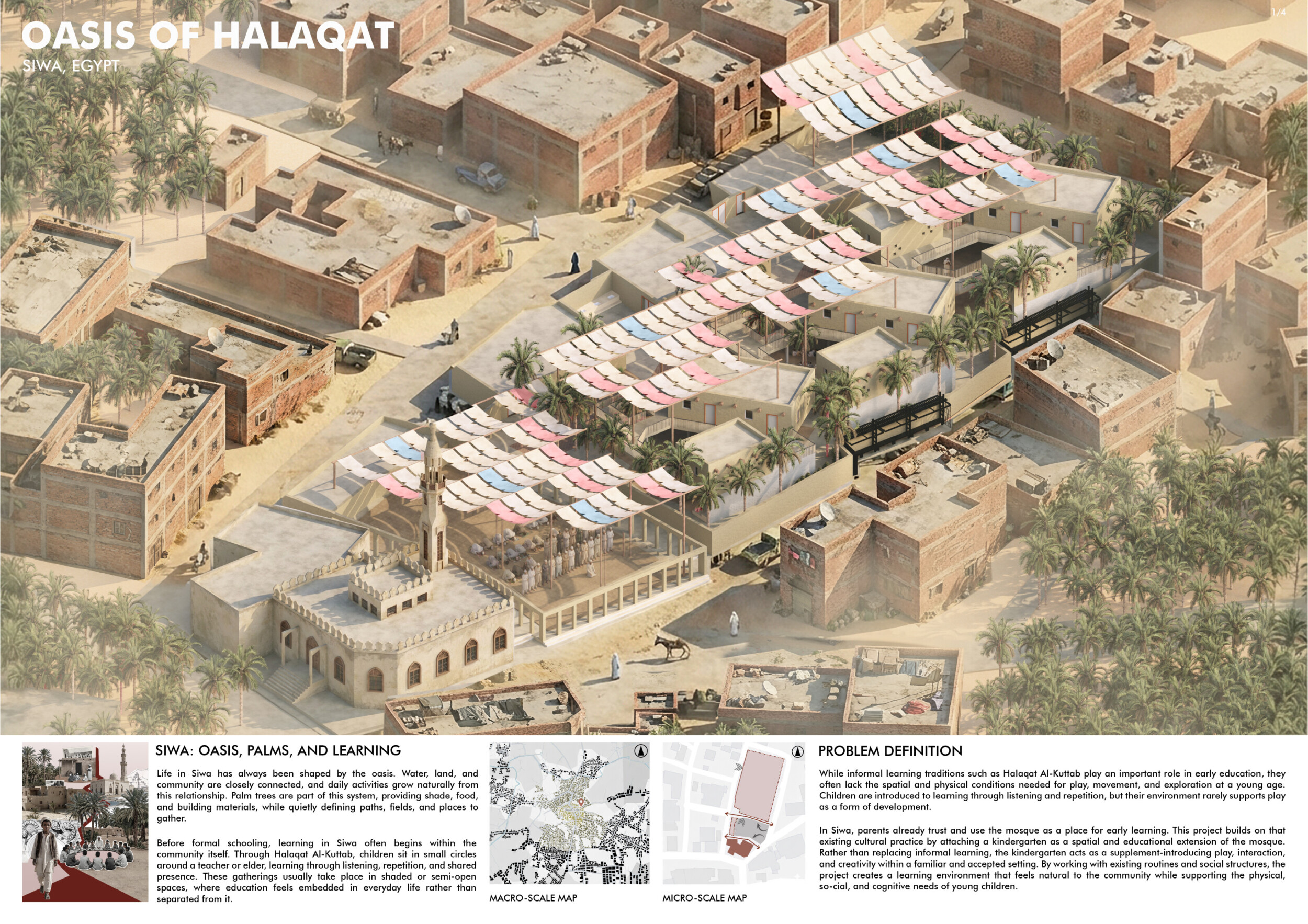
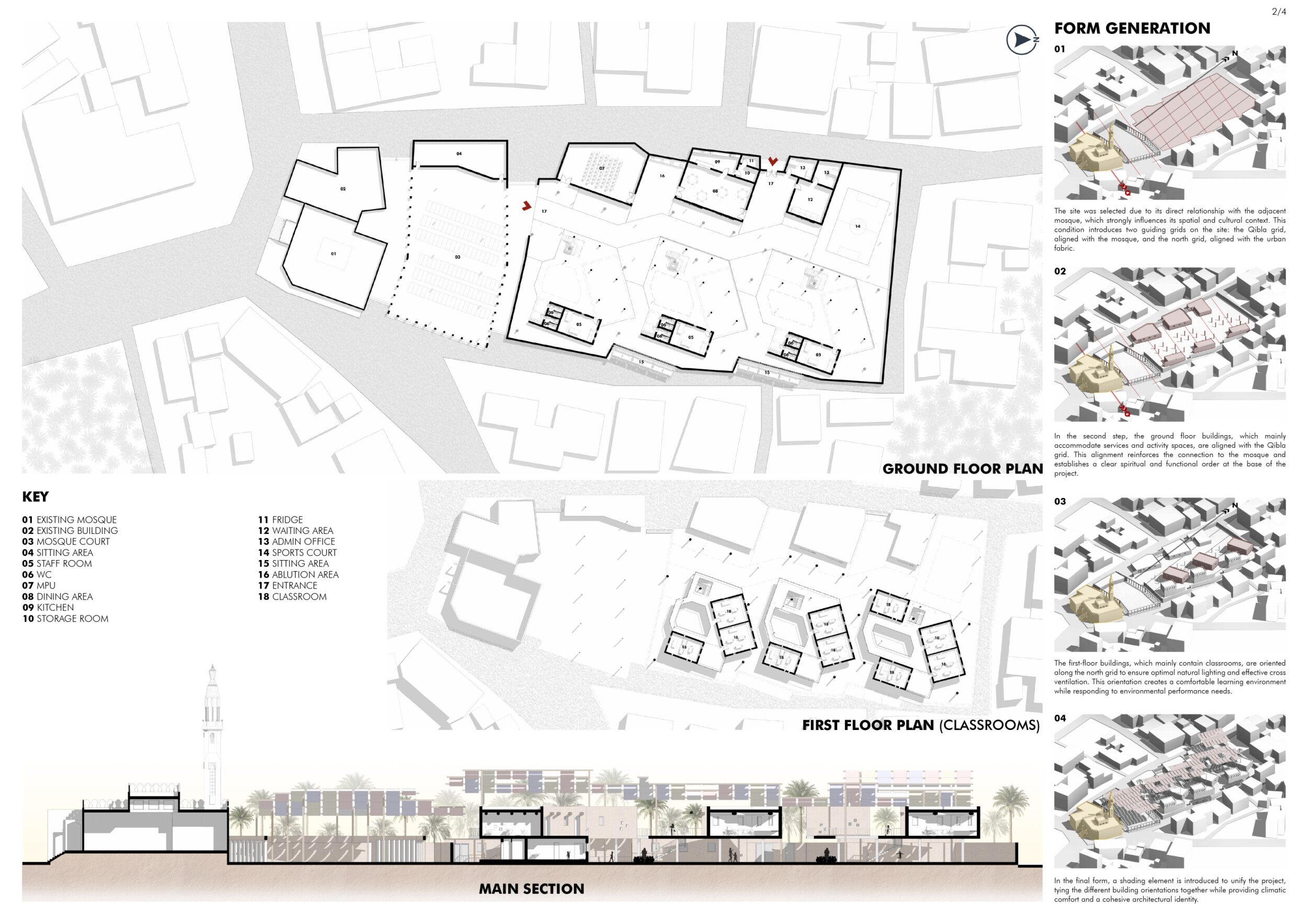
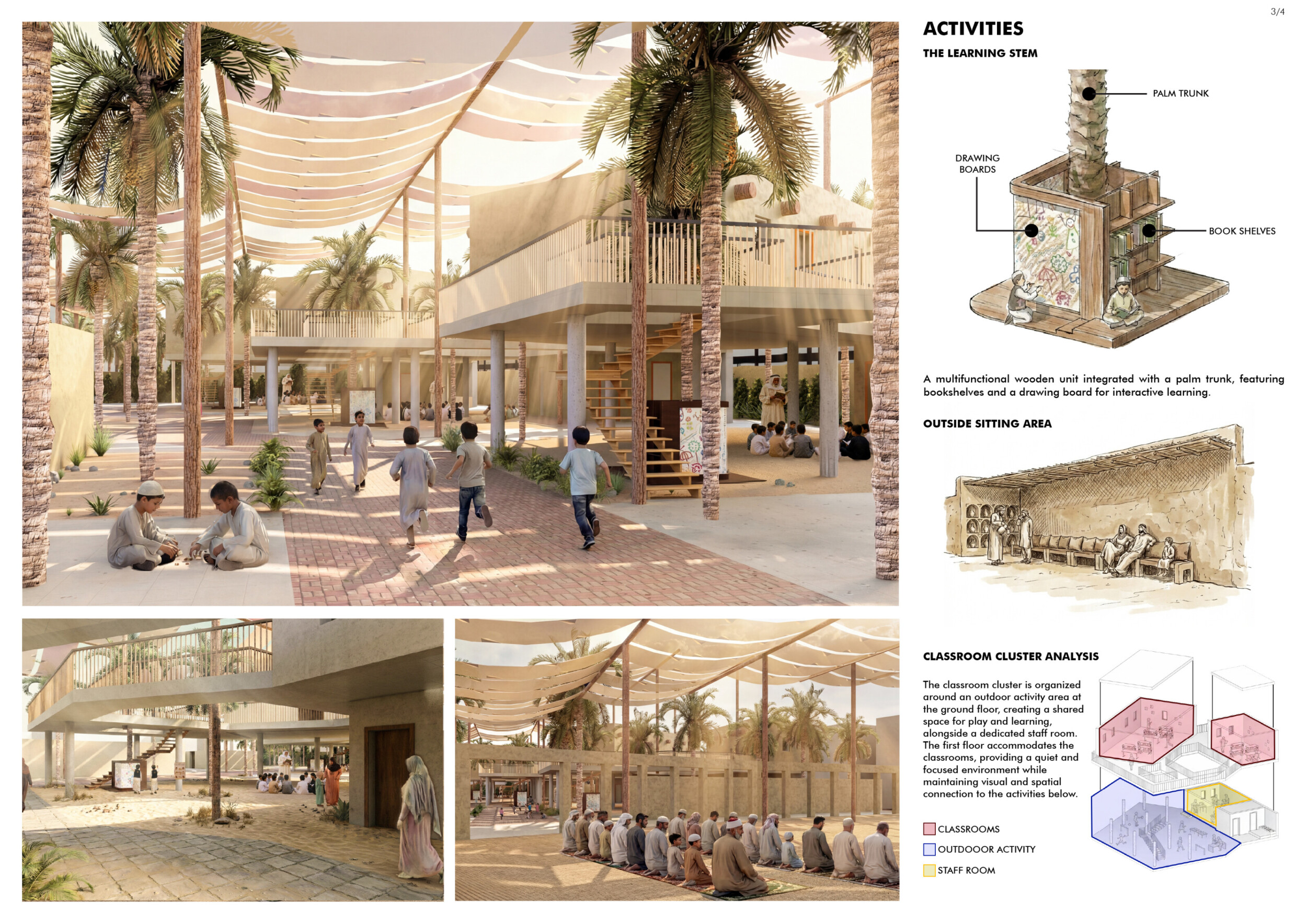
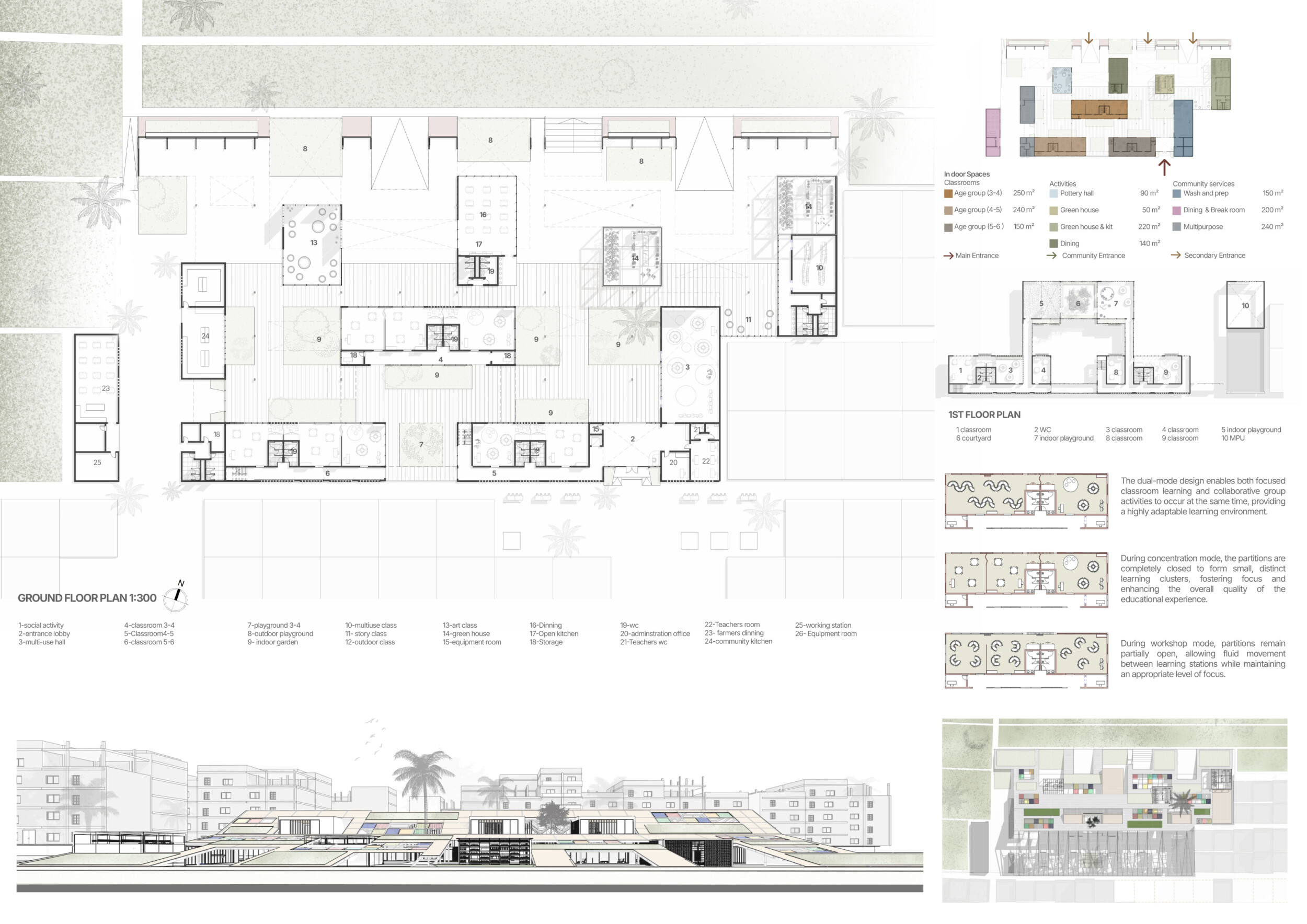
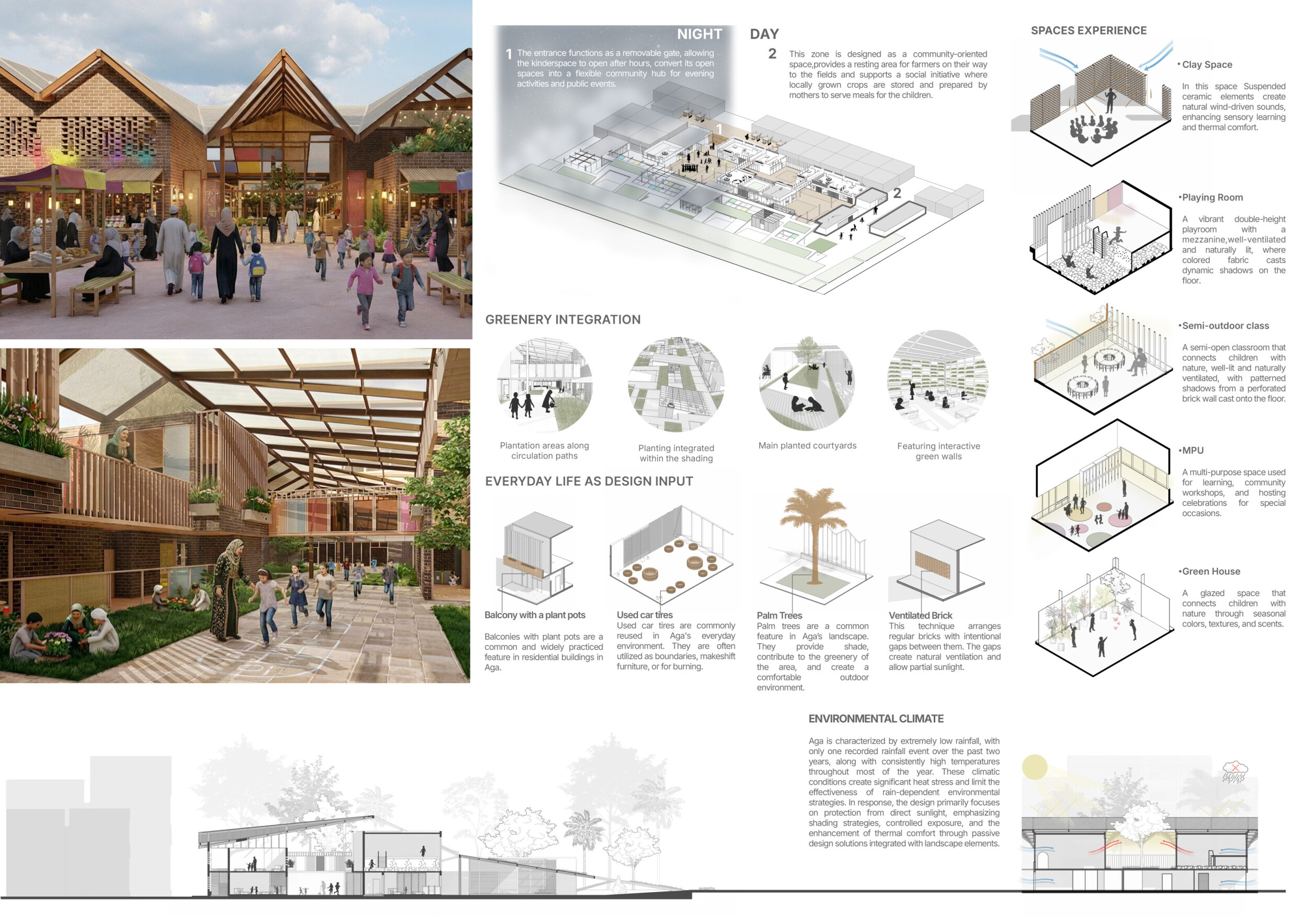
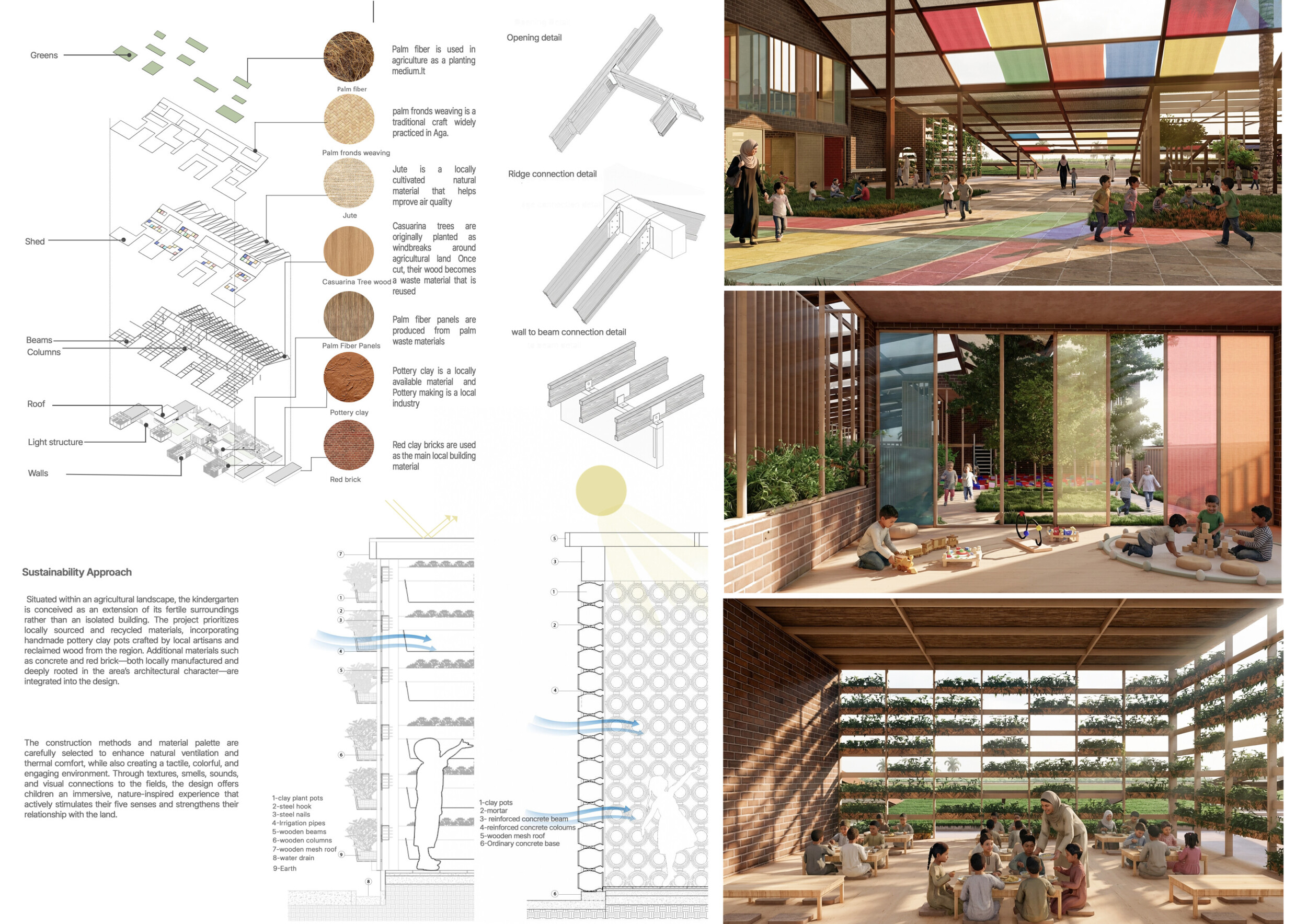
Oasis of Halaqat proposes a kindergarten deeply rooted in the social, climatic, and cultural fabric of Siwa, Egypt, reinterpreting traditional forms of collective learning as the foundation for its spatial organization. The project draws from the halaqat system—informal circles of teaching often held in mosques or shaded outdoor spaces—translating this into a sequence of interconnected courtyards and clustered classrooms arranged along a linear spine.
A sensitive and well-articulated intervention that responds to the social and spatial realities of its context. The project thoughtfully reinterprets traditional street life and public space through lightweight structures and shading strategies, creating a vibrant community environment. Its emphasis on climate responsiveness, adaptability, and everyday urban life makes it a compelling and culturally grounded proposal.
Mona Vijaykumar / Buildner guest jury
Perkins&Will, USA
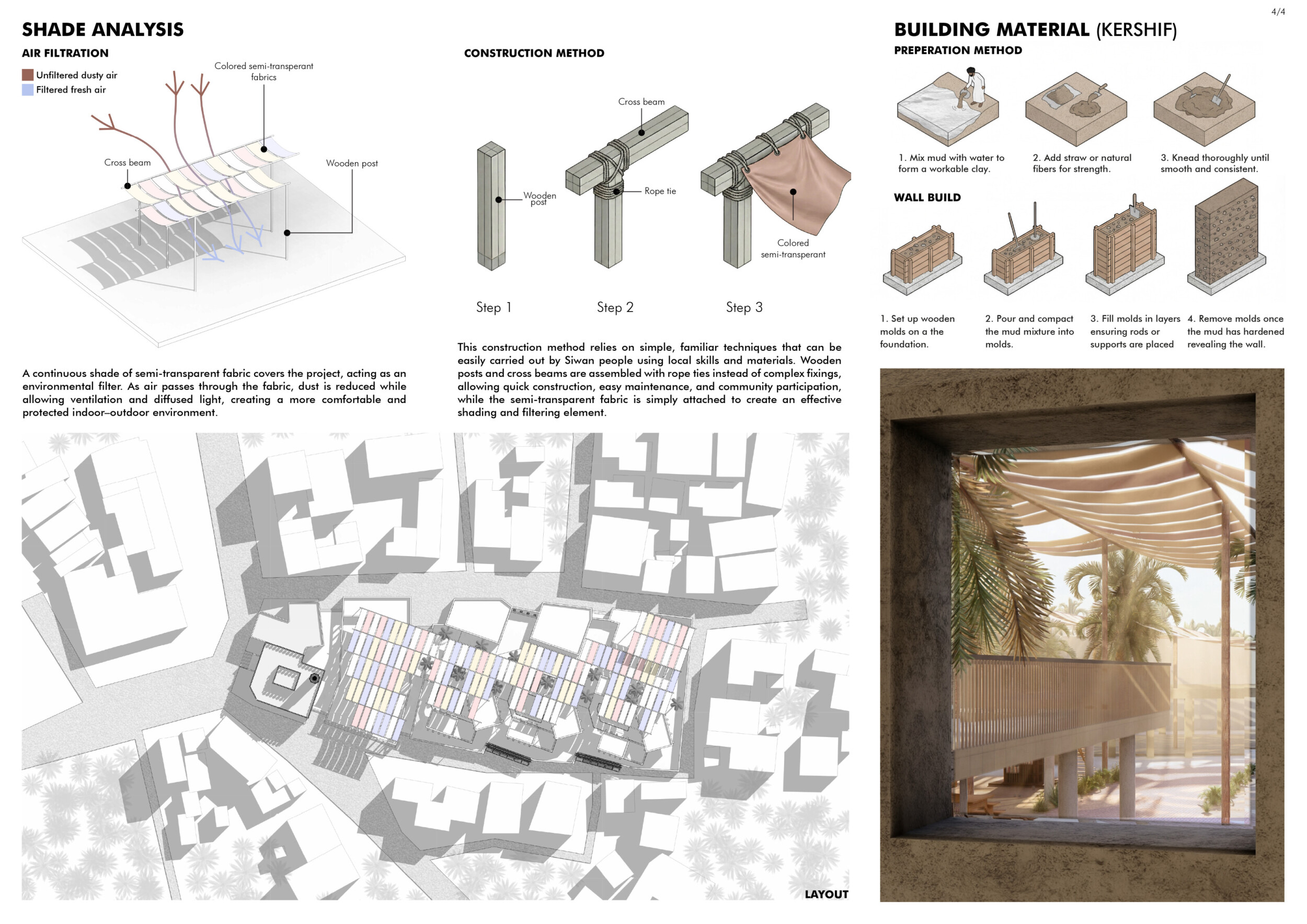
The designer succeeds in translating the vernacular, contextual language and social traditions into a contemporary design that integrates respectfully with its surroundings. Moreover, the proposal is functionally well thought out despite, or perhaps because of, its extreme simplicity. Traditional construction methods are used to enhance the vernacular nature of the proposal. Furthermore, the designer succeeds in communicating this proposal in a captivating, graphic way.
Edward Weysen / Buildner guest jury
WE-S architects, Belgium
This project is distinguished by its low-tech, climate-responsive design approach. Through the use of fabric canopies, shaded courtyards, and passive ventilation strategies, the proposal creates comfortable learning environments without reliance on mechanical systems. Traditional tectonic references are thoughtfully reinterpreted, grounding the project in its cultural and environmental context. The result is a restrained, coherent, and environmentally intelligent model for early childhood education.
Aybars Asci / Buildner guest jury
Efficiency Lab, USA
Buildner's commentary, recommendations and techniques review
Order your review here
The presentation stands out for its ability to merge atmospheric visualization with clear technical explanation, producing a narrative that is both evocative and highly legible. The axonometric overview immediately establishes the project’s relationship to its urban and cultural context, while the continuity of the shading canopy becomes a strong visual and conceptual anchor across the boards.
-
8/10 Linework
-
9/10 Quality of drawings
-
8/10 Balance of color
-
9/10 Layout
-
8/10 Hierarchy
-
8/10 Annotation
-
8/10 Text
-
9/10 Clarity of story
-
9/10 Clarity of diagrams
-
8/10 Quality of overall presentation
Buildner Sustainability Award
Tiny Explorers Village

We believe that working on projects is highly valuable and enriching—it broadens our horizons and provides a great sense of satisfaction. Our previous project work has allowed us to develop our creativity and explore new solutions. Architectural competitions offer the opportunity to experiment with ideas, materials, and spatial strategies, often in a freer way than in everyday design work. We were also eager for the competition projects to enhance our portfolio.
Read full interview
Jury feedback summary
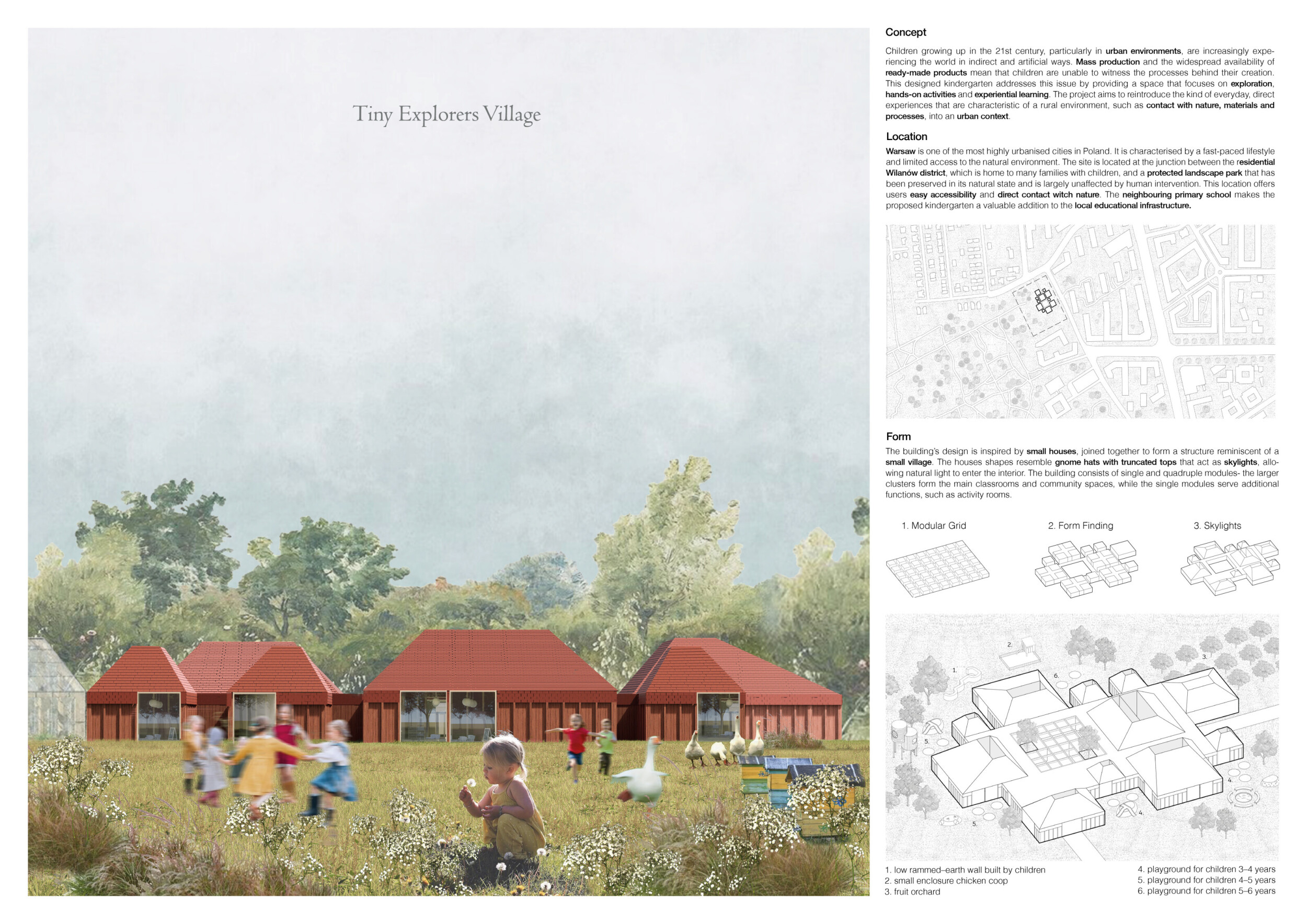
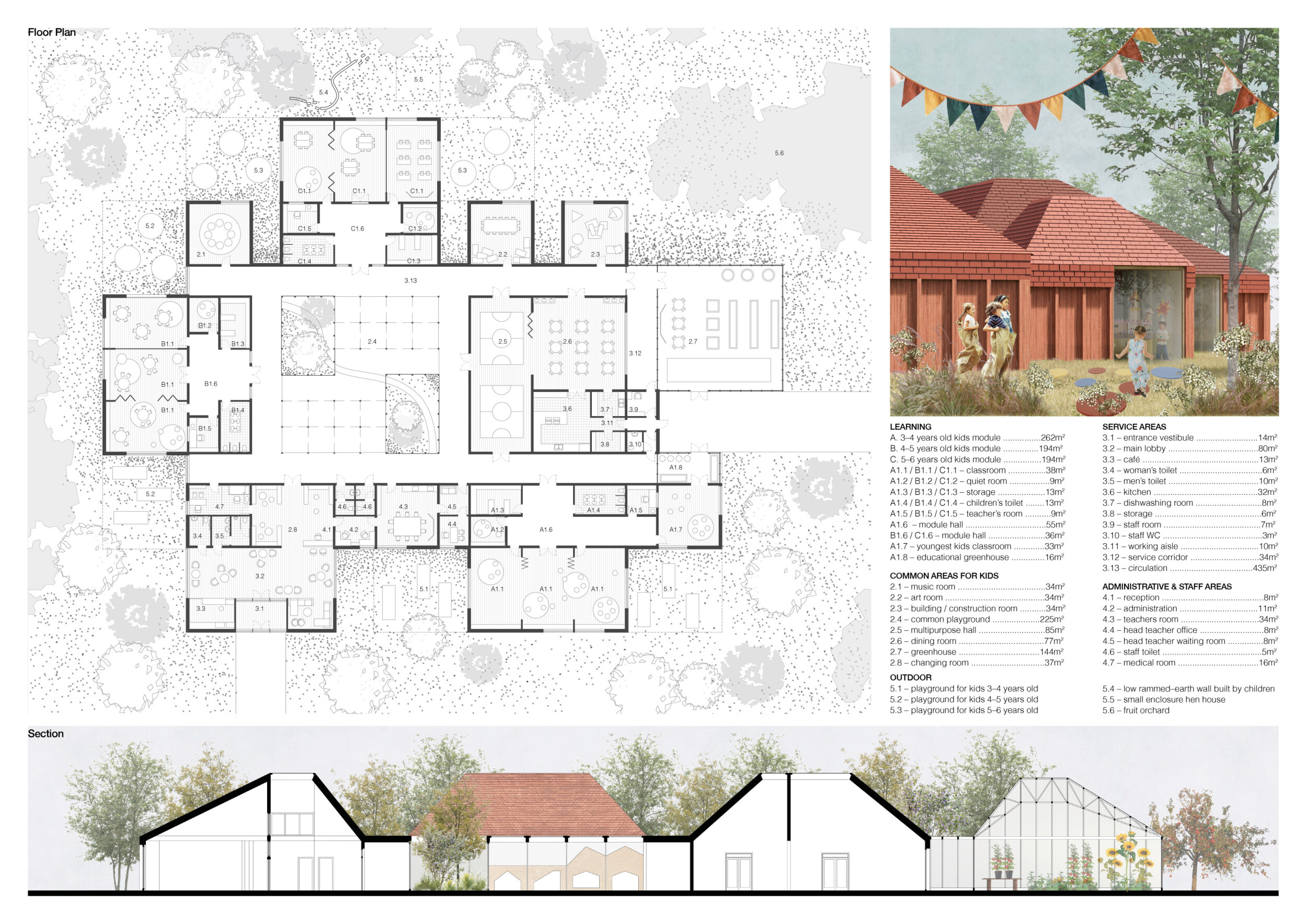
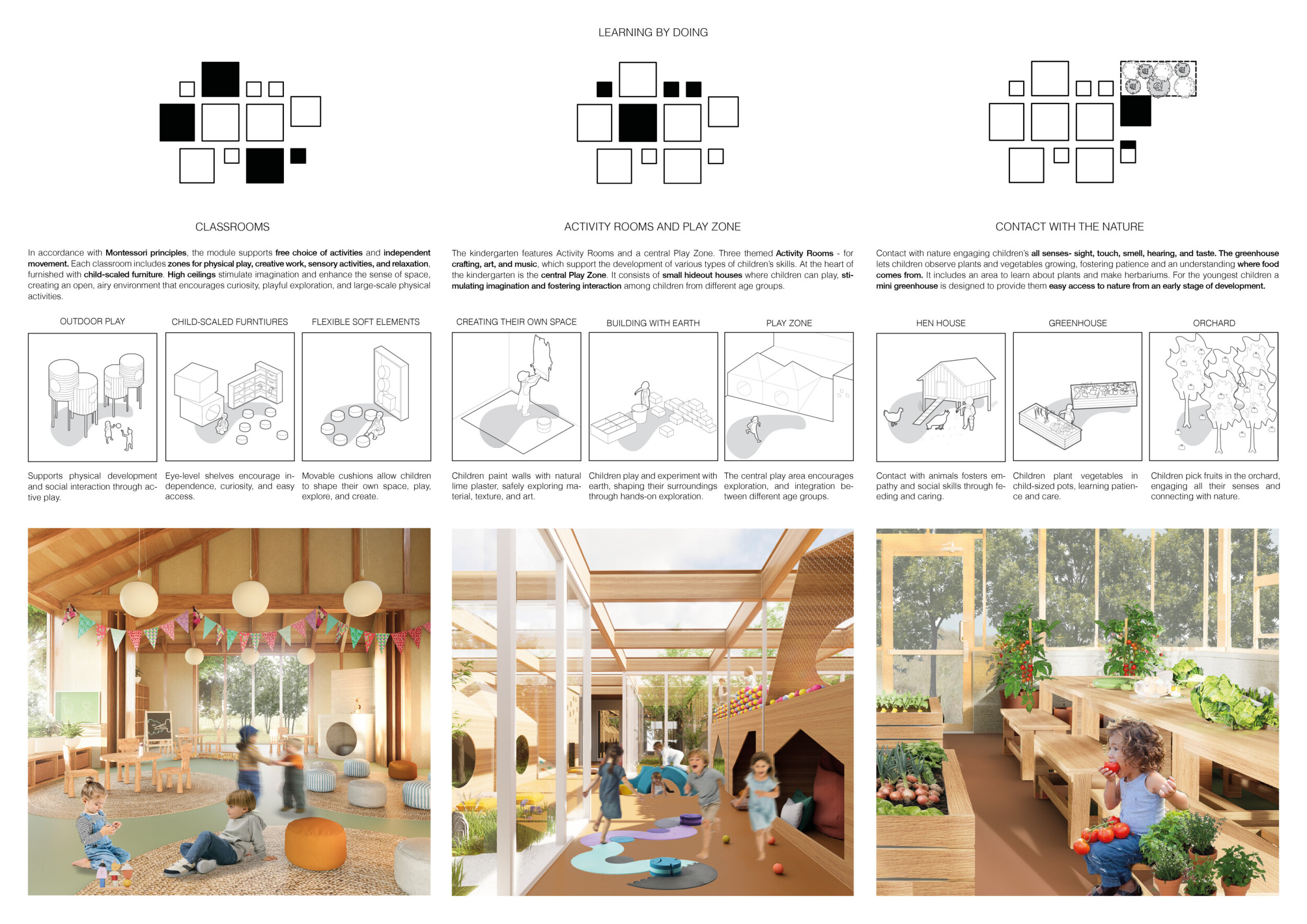
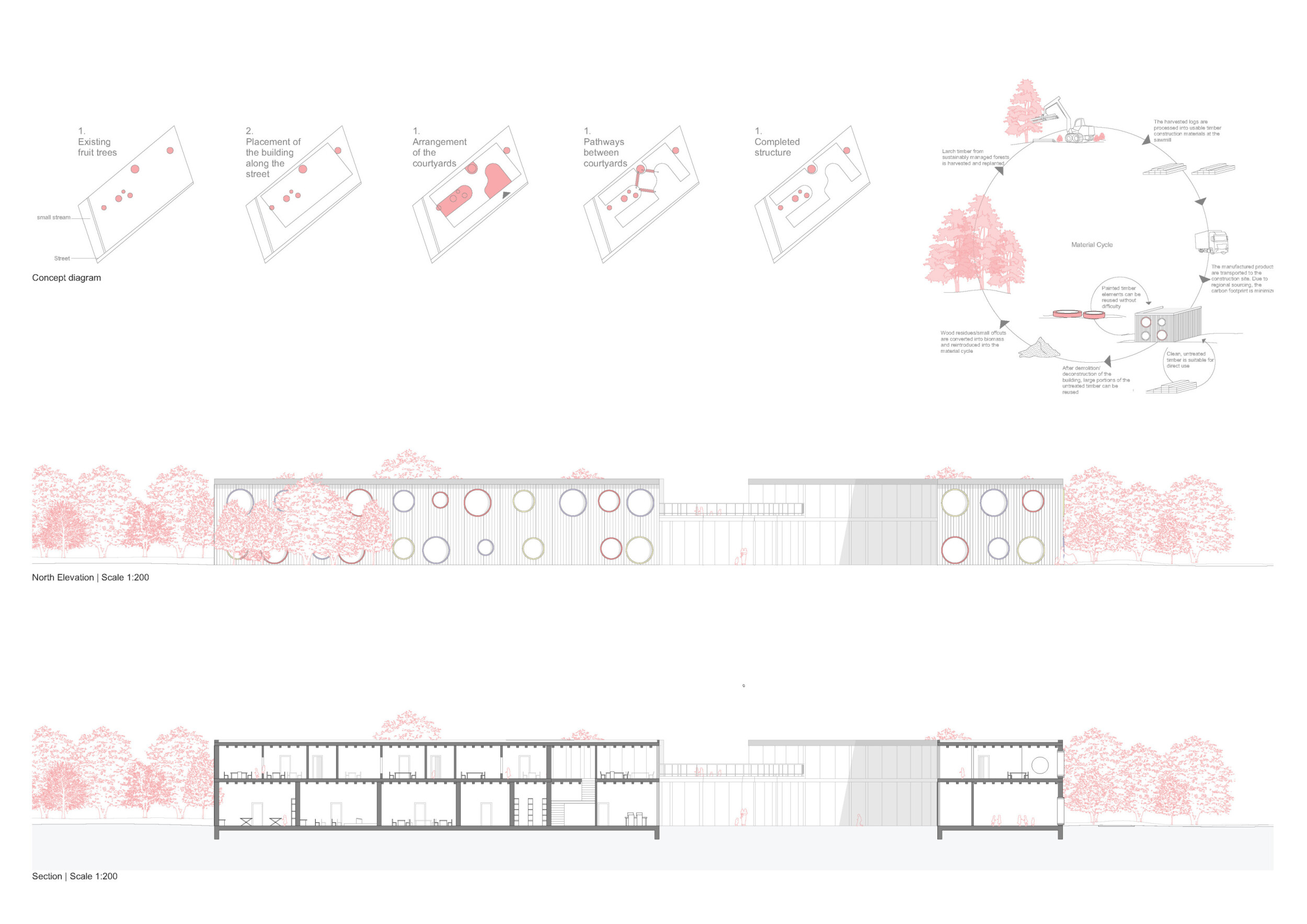
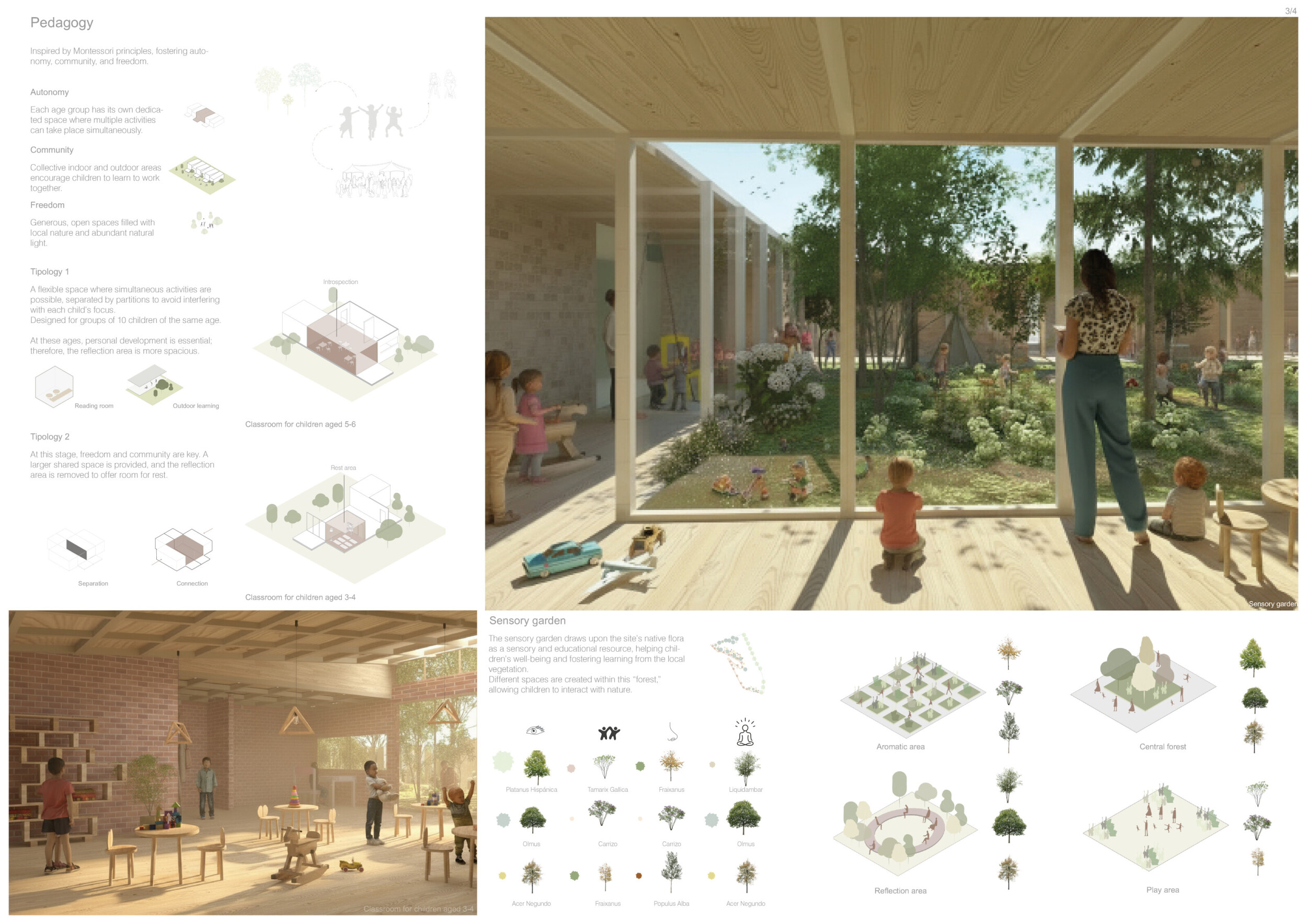
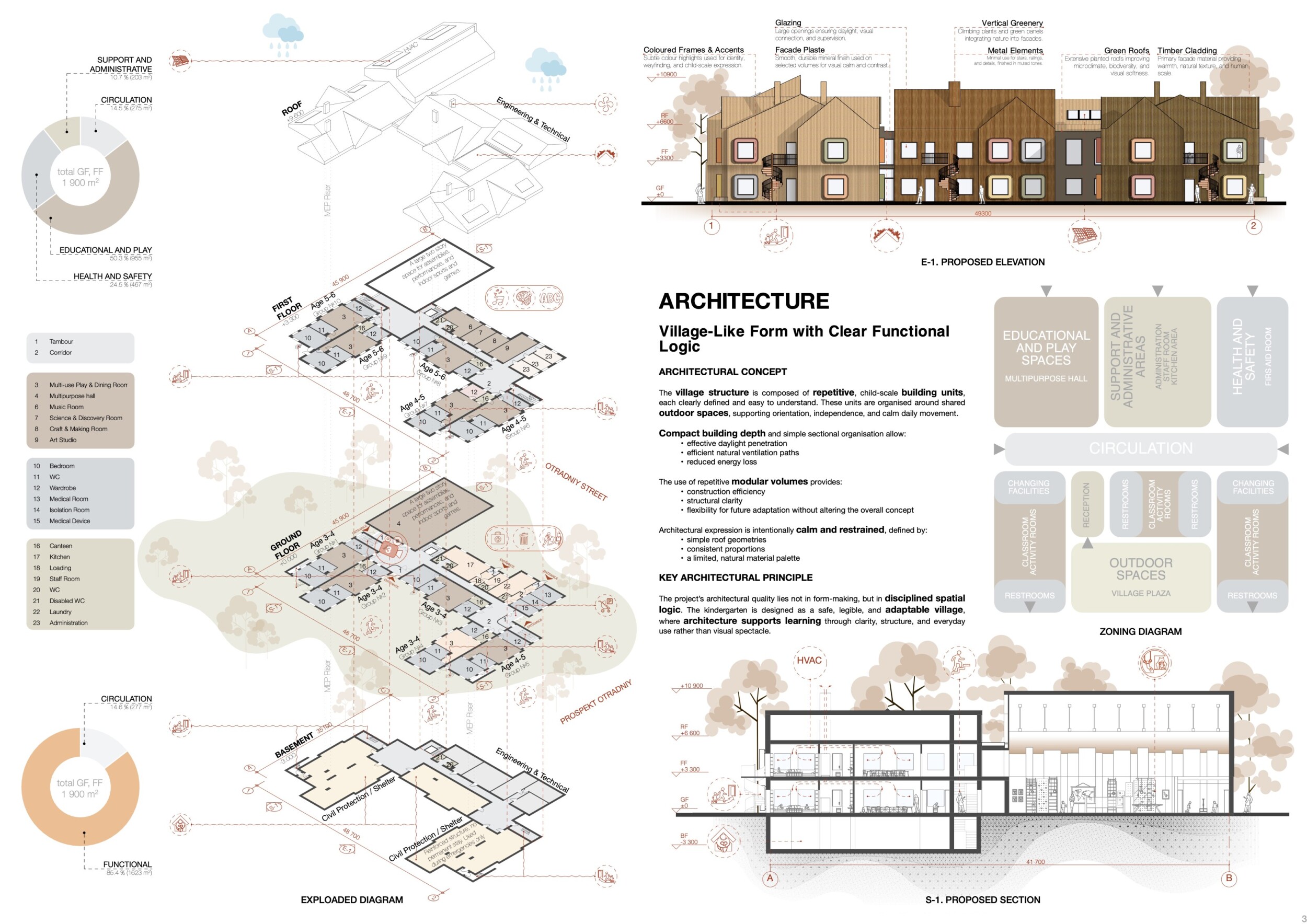
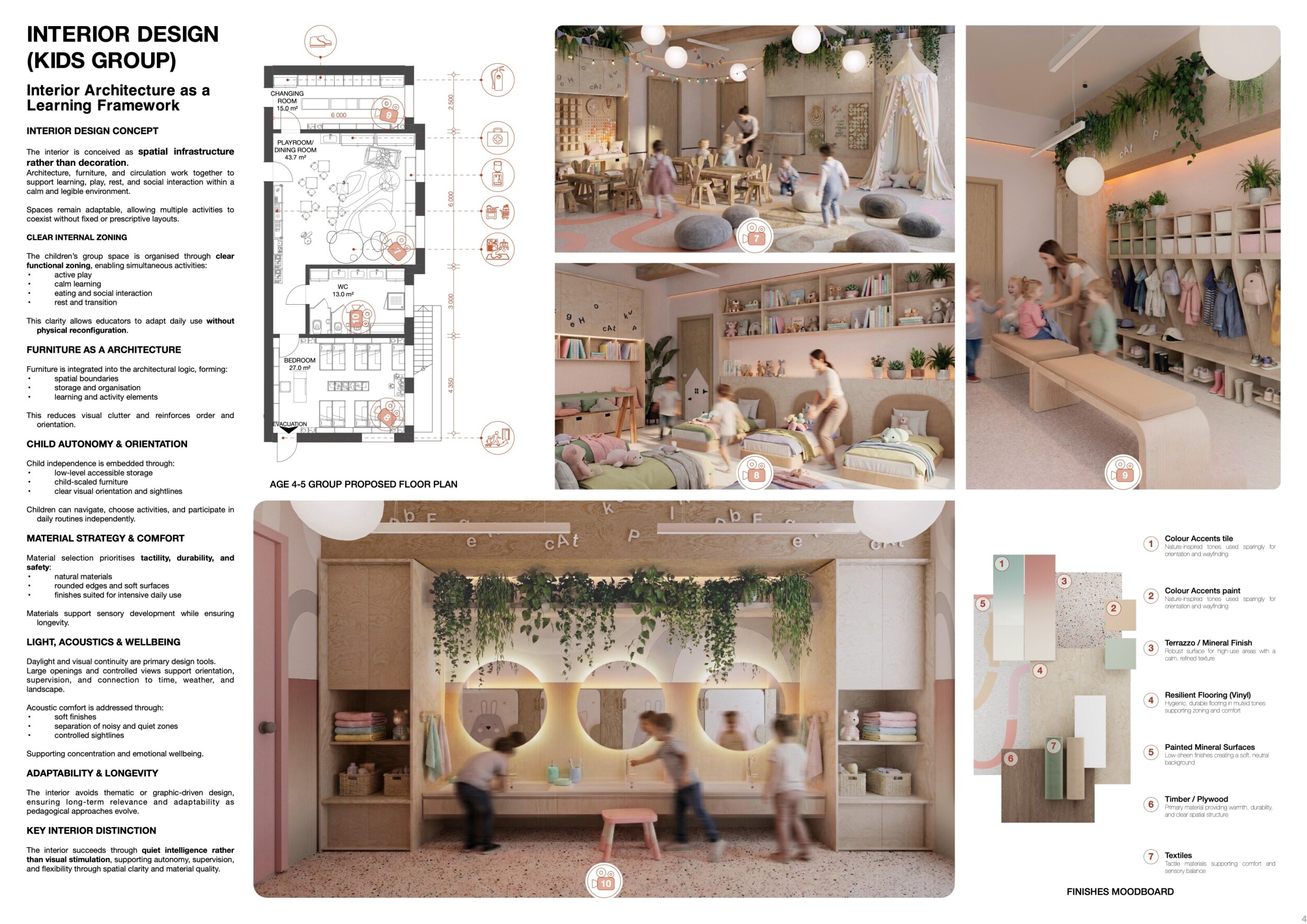
Tiny Explorers Village proposes a kindergarten conceived as a small, self-contained settlement of house-like volumes, translating the scale and familiarity of domestic architecture into a learning environment centered on exploration and autonomy.
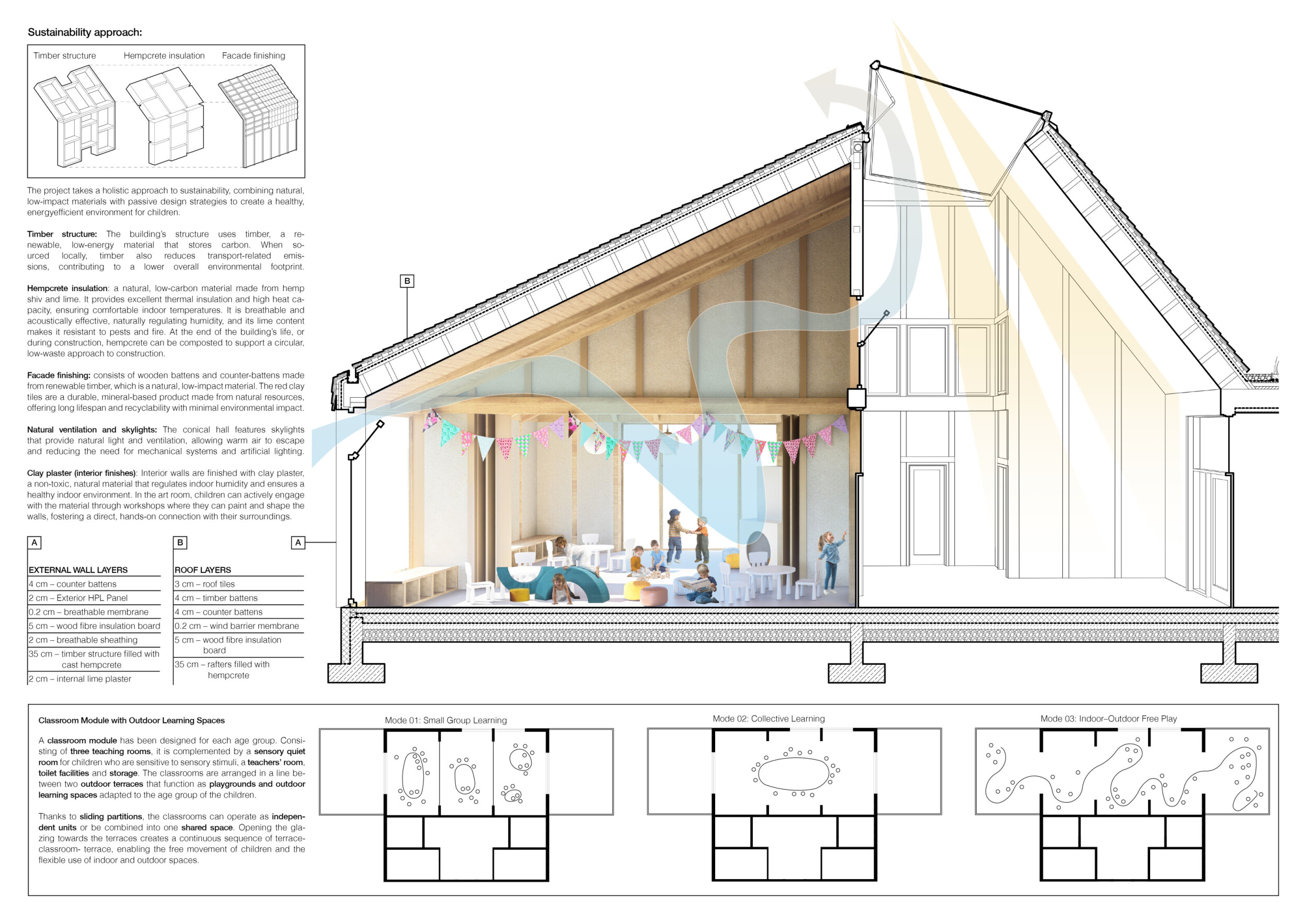
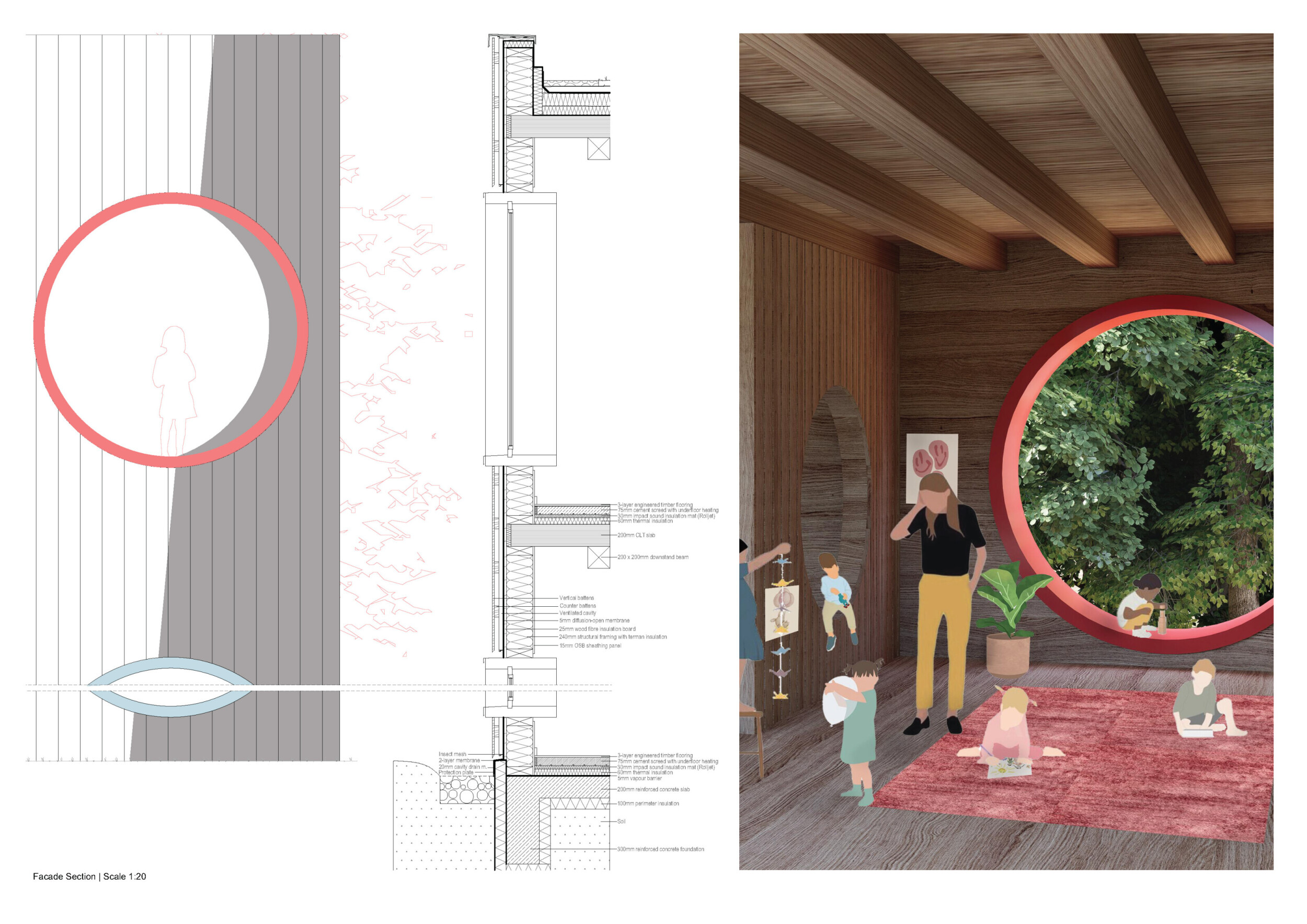
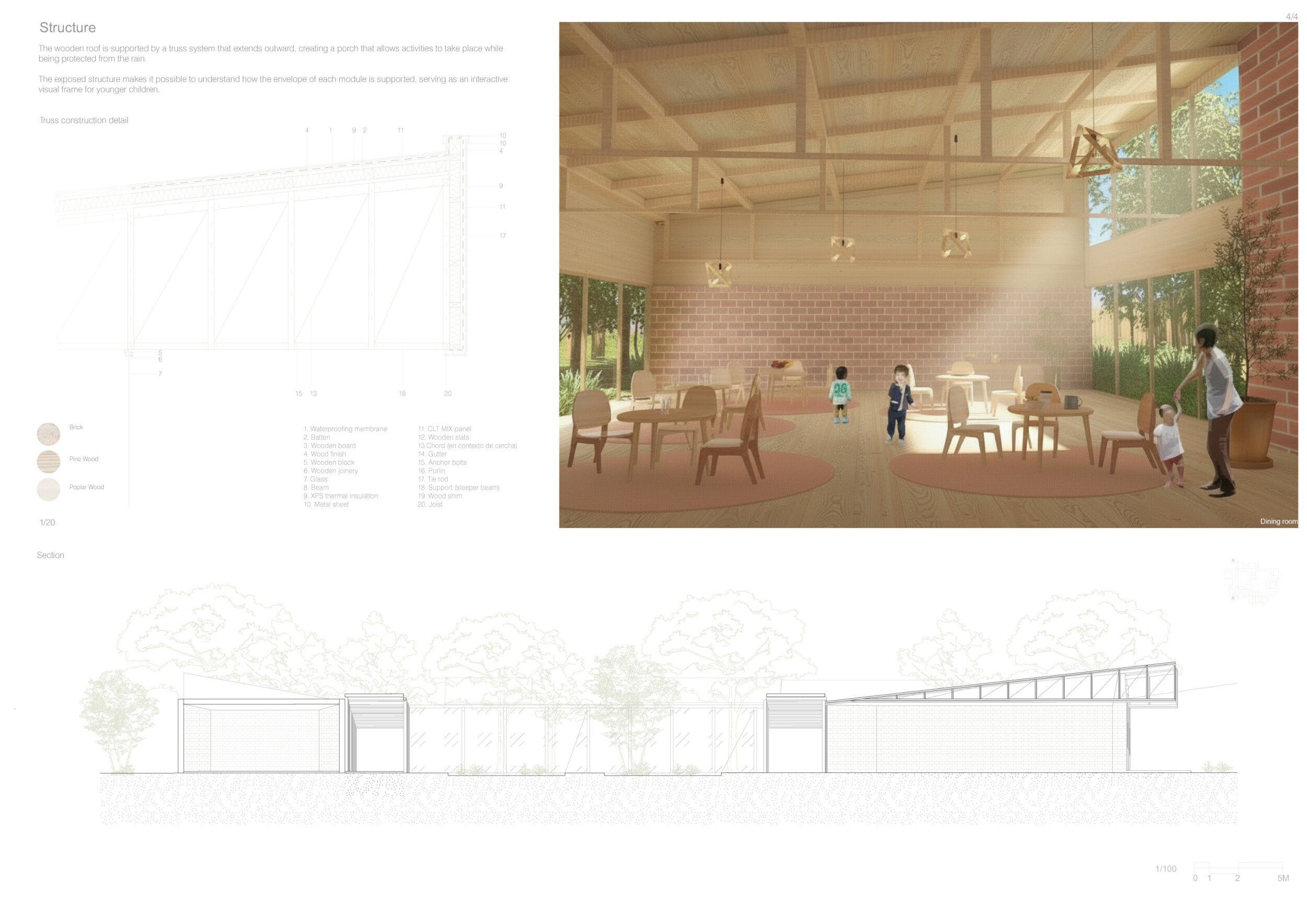
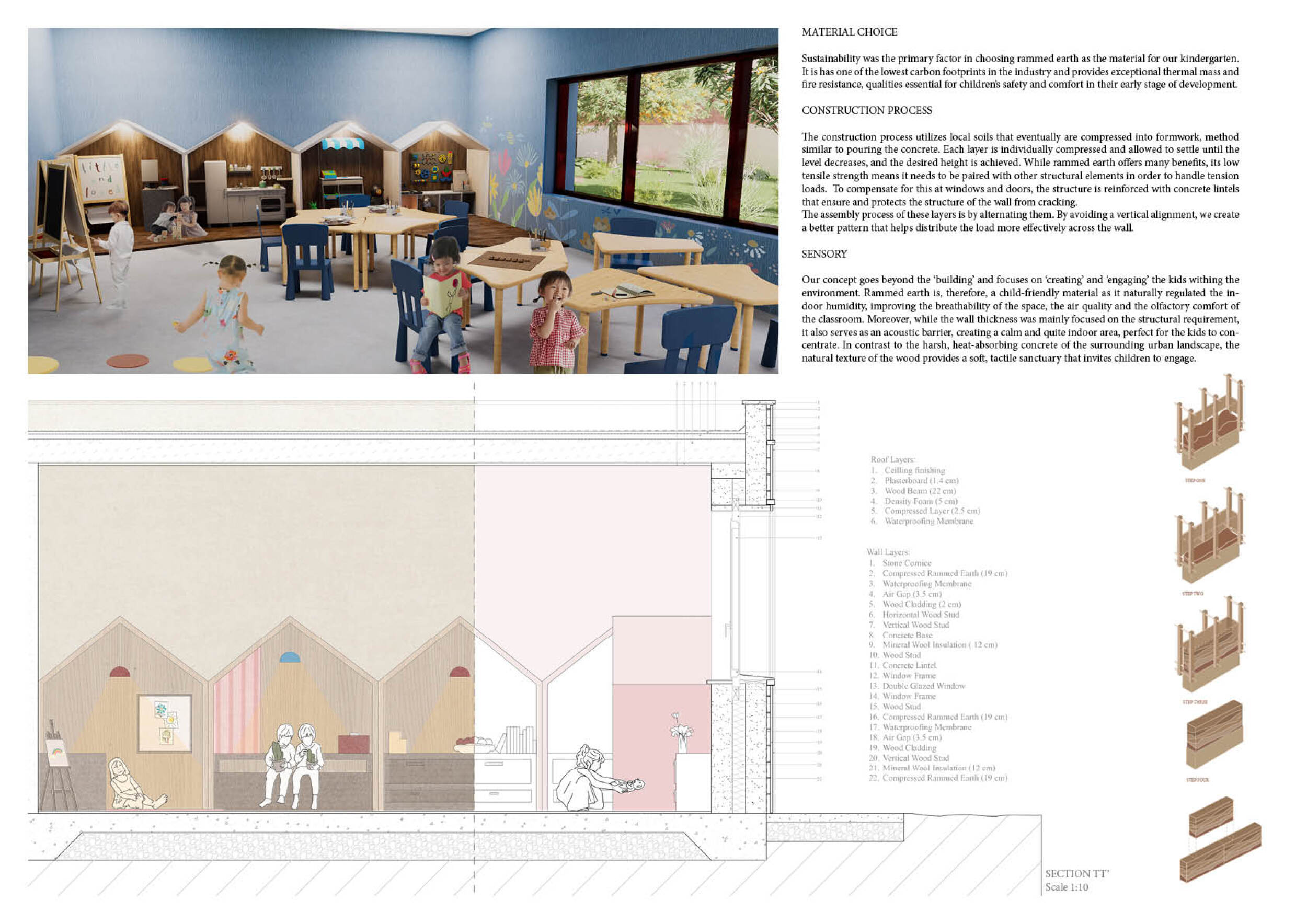
Outstanding spatial and sustainability integration featuring a timber structure, hempcrete, and natural ventilation, includes clay plasters and child-built rammed-earth elements that serve as explicit teaching tools for environmental performance.
Eleni Kalapoda / Buildner guest jury
Embedded Climates Design Group, United States
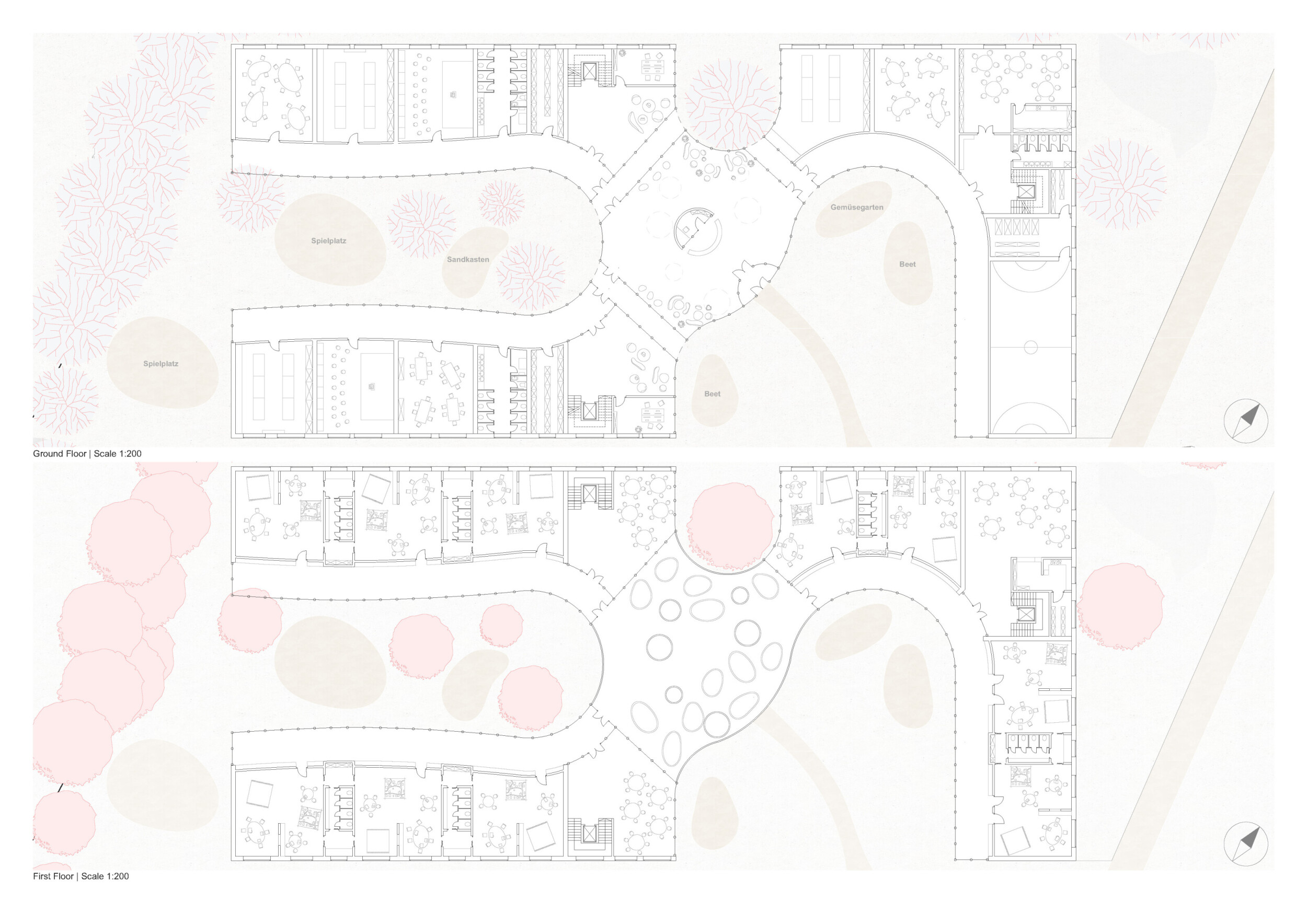
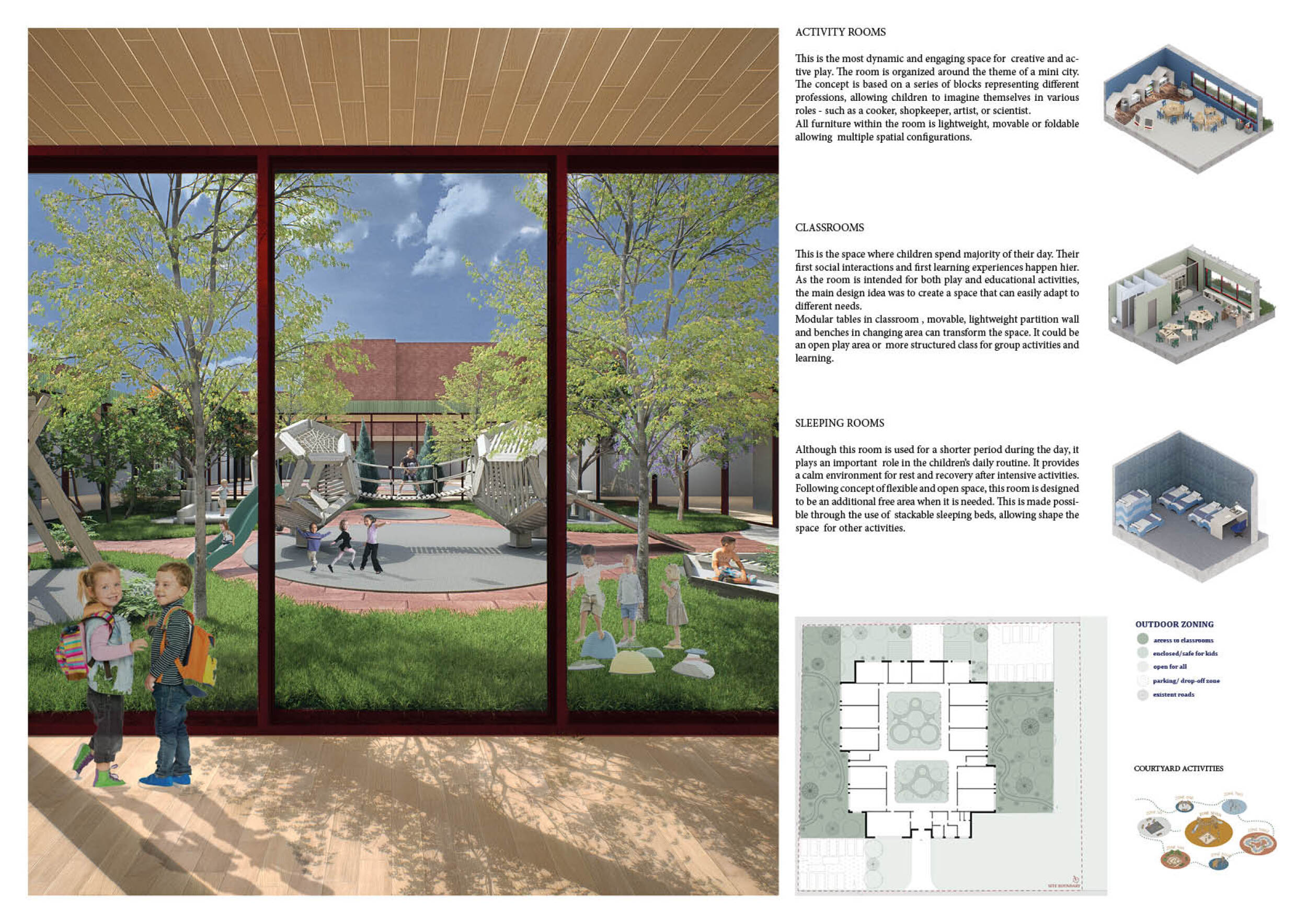
The designers successfully translate the initial concept of the building as a cluster of small-scale homes into an efficient and readable plan. The building is organized around a central playground. Although this effectively results in an introverted layout, the designers succeed in allowing the different age groups to engage with the surroundings. Moreover, the open section demonstrates that the vernacularity of the basic concept enhances the technical execution of the idea.
Edward Weysen / Buildner guest jury
WE-S architects, Belgium

The project presents an intelligent and efficient functional organization. Its layout achieves more with less, creating a welcoming environment for users while incorporating intermediate spaces for play and interaction. At the same time, it remains attentive to the bioclimatic demands of our time.
Betsaida Curto Reyes / Buildner guest jury
Founder, Estudio Copla, Spain
Buildner's commentary, recommendations and techniques review
Order your review here
The presentation is highly coherent, combining precise technical documentation with a clear and engaging narrative that communicates both the architectural concept and its pedagogical intentions. The plan is particularly strong, with clean and controlled linework that clearly expresses the clustered organization and the central role of the shared playground.
-
9/10 Linework
-
9/10 Quality of drawings
-
8/10 Balance of color
-
9/10 Layout
-
8/10 Hierarchy
-
8/10 Annotation
-
8/10 Text
-
9/10 Clarity of story
-
9/10 Clarity of diagrams
-
9/10 Quality of overall presentation
Honorable mentions











Shortlisted projects
Oasis of Halaqat
UpCycle Garten
Bloom Blocks
Shaped by Trees
HEXPLAY
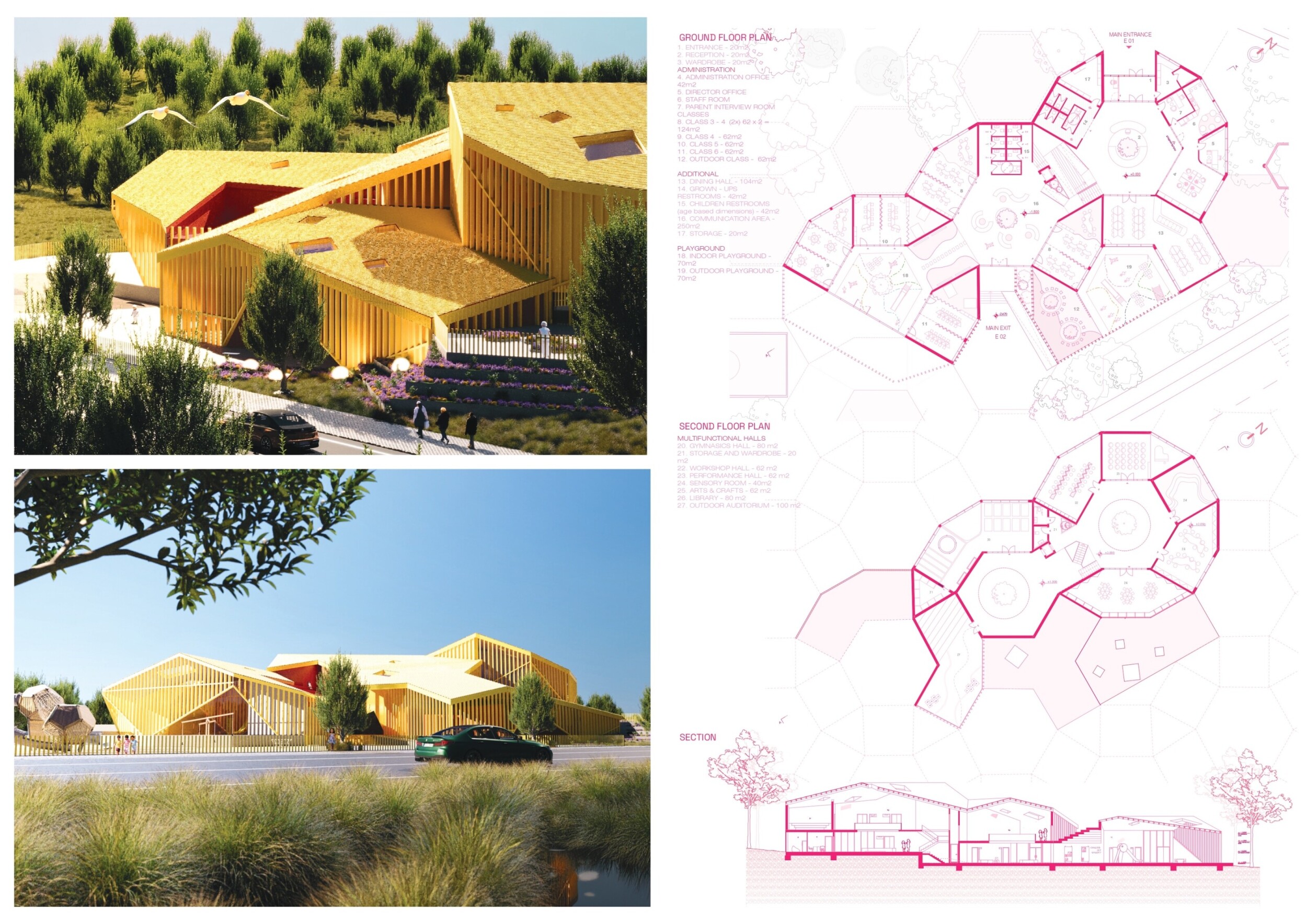
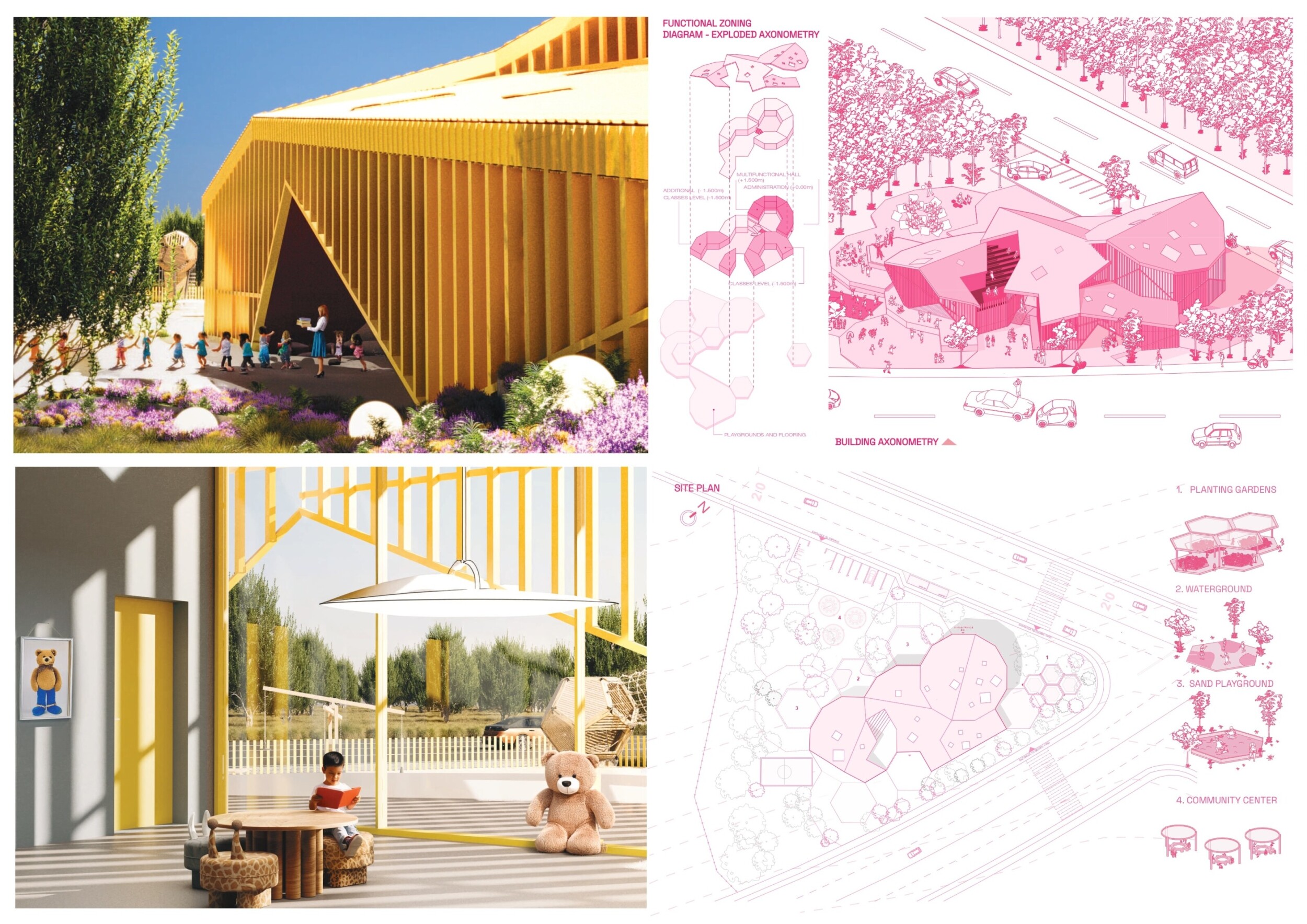
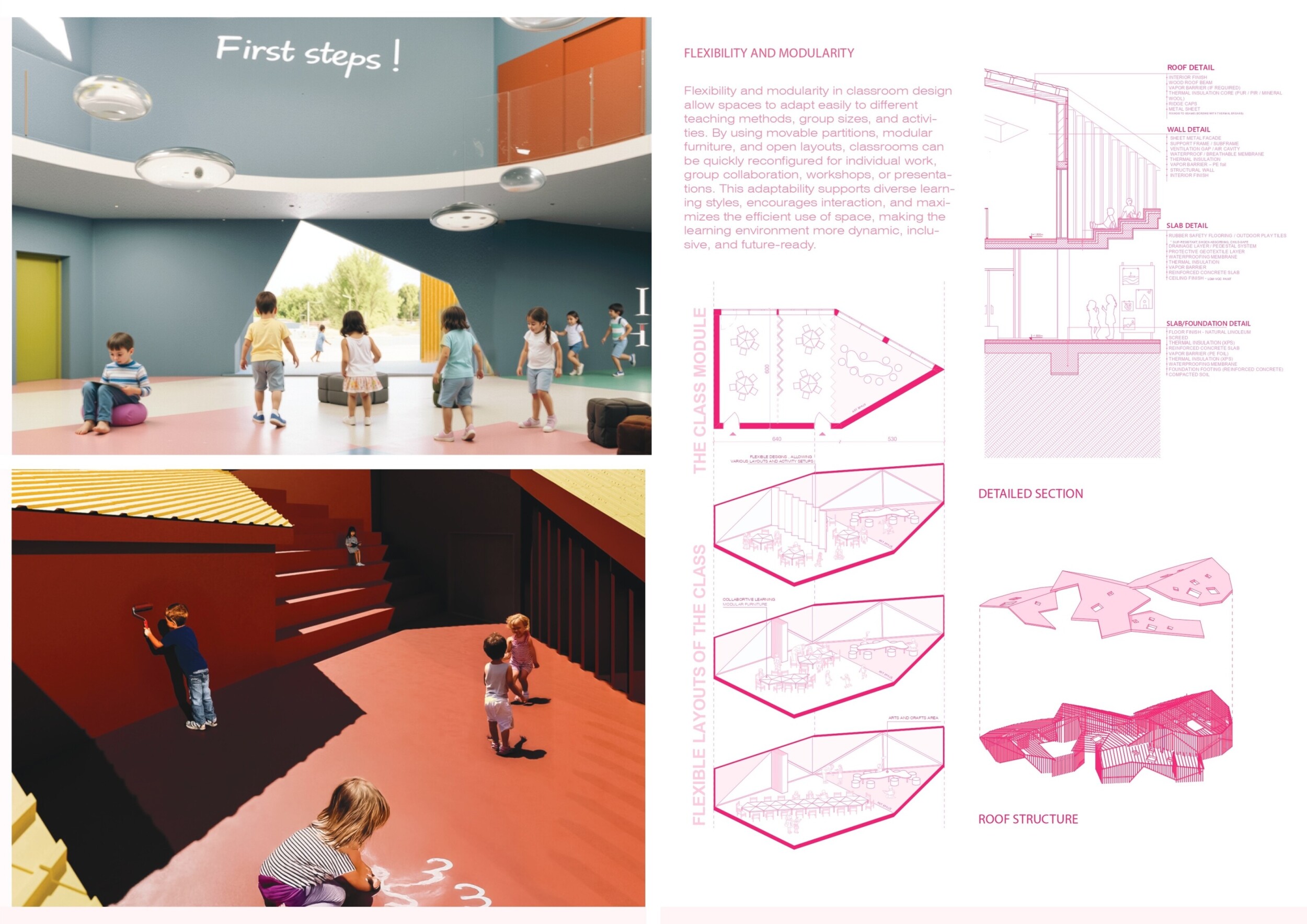

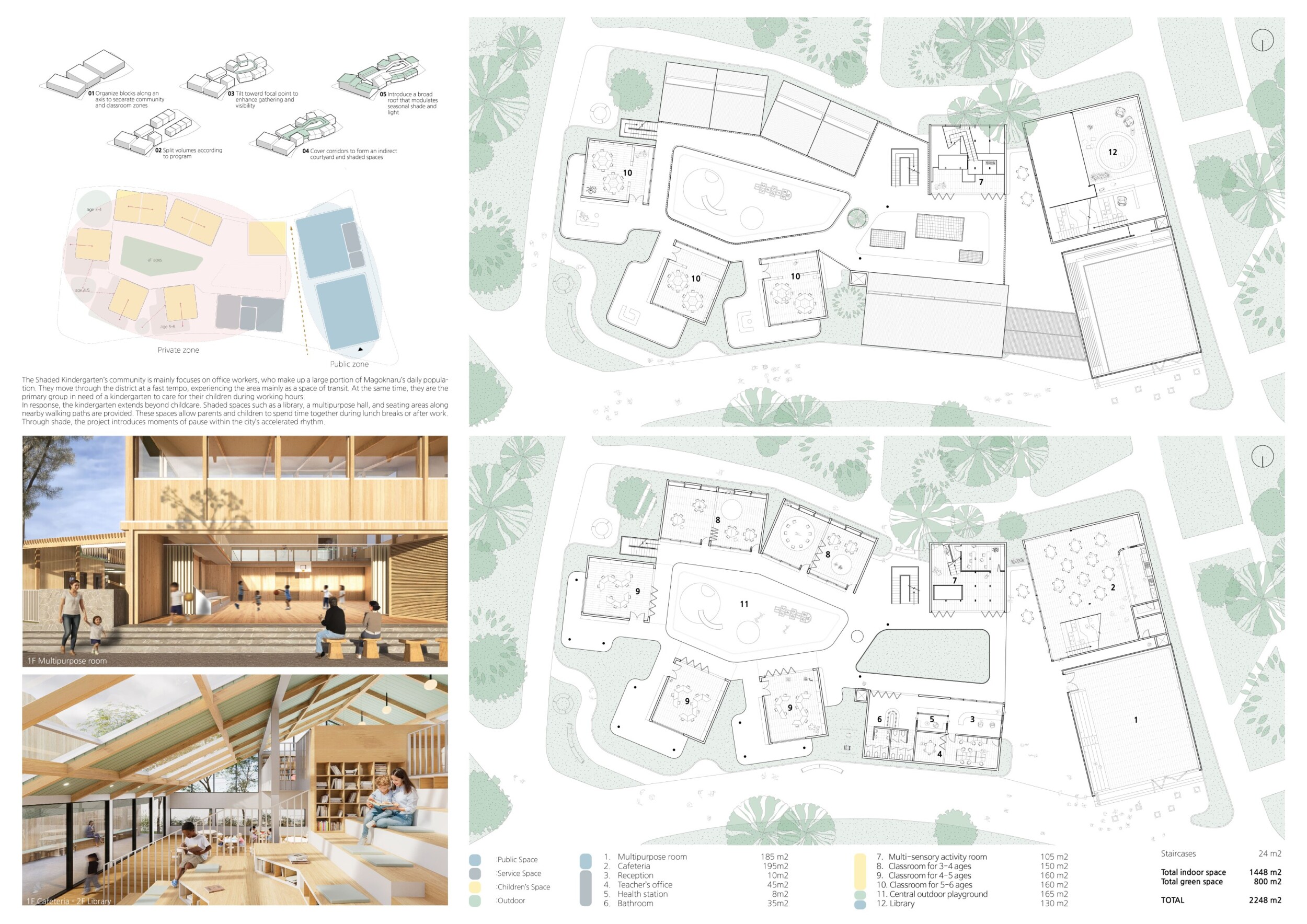
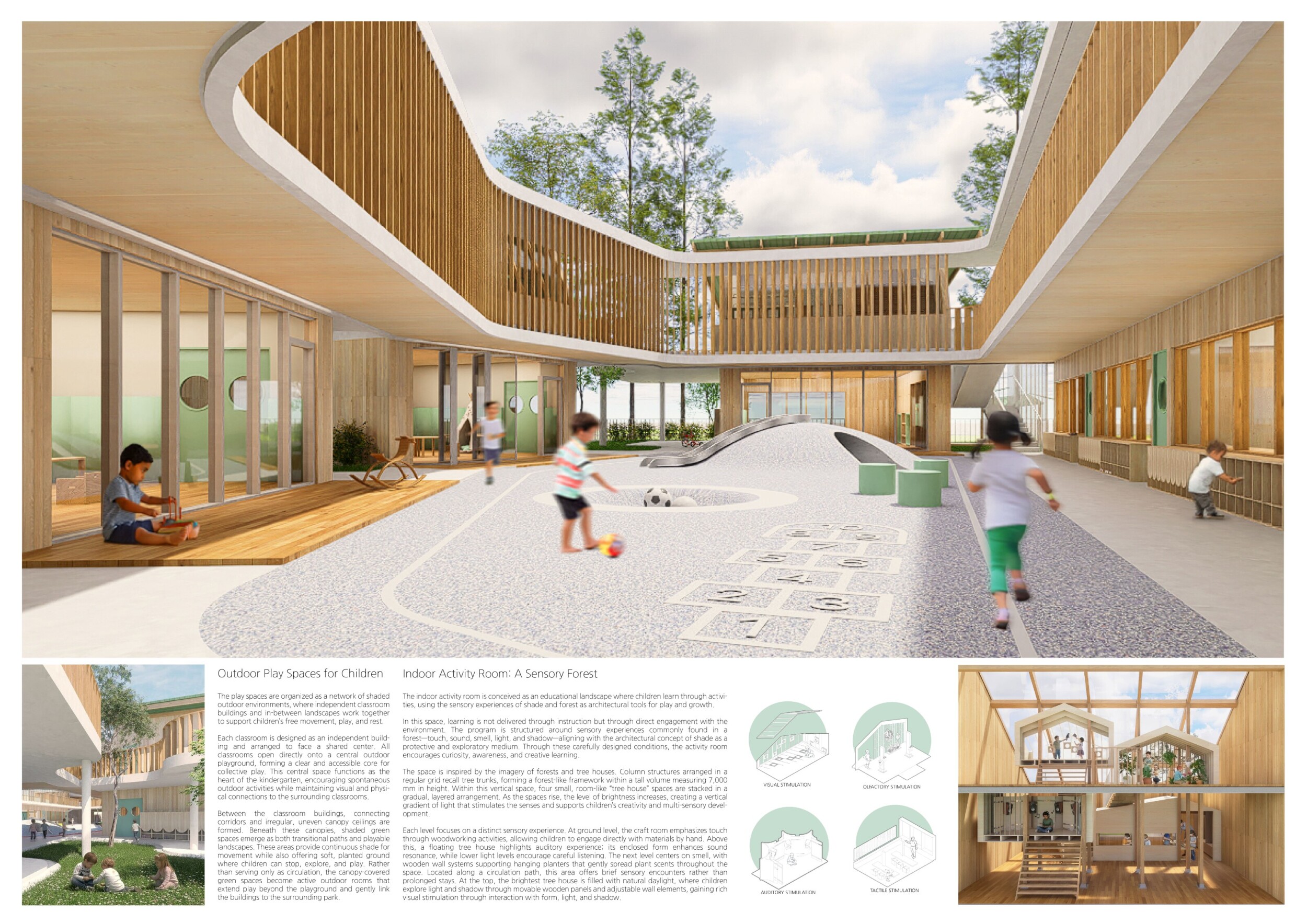
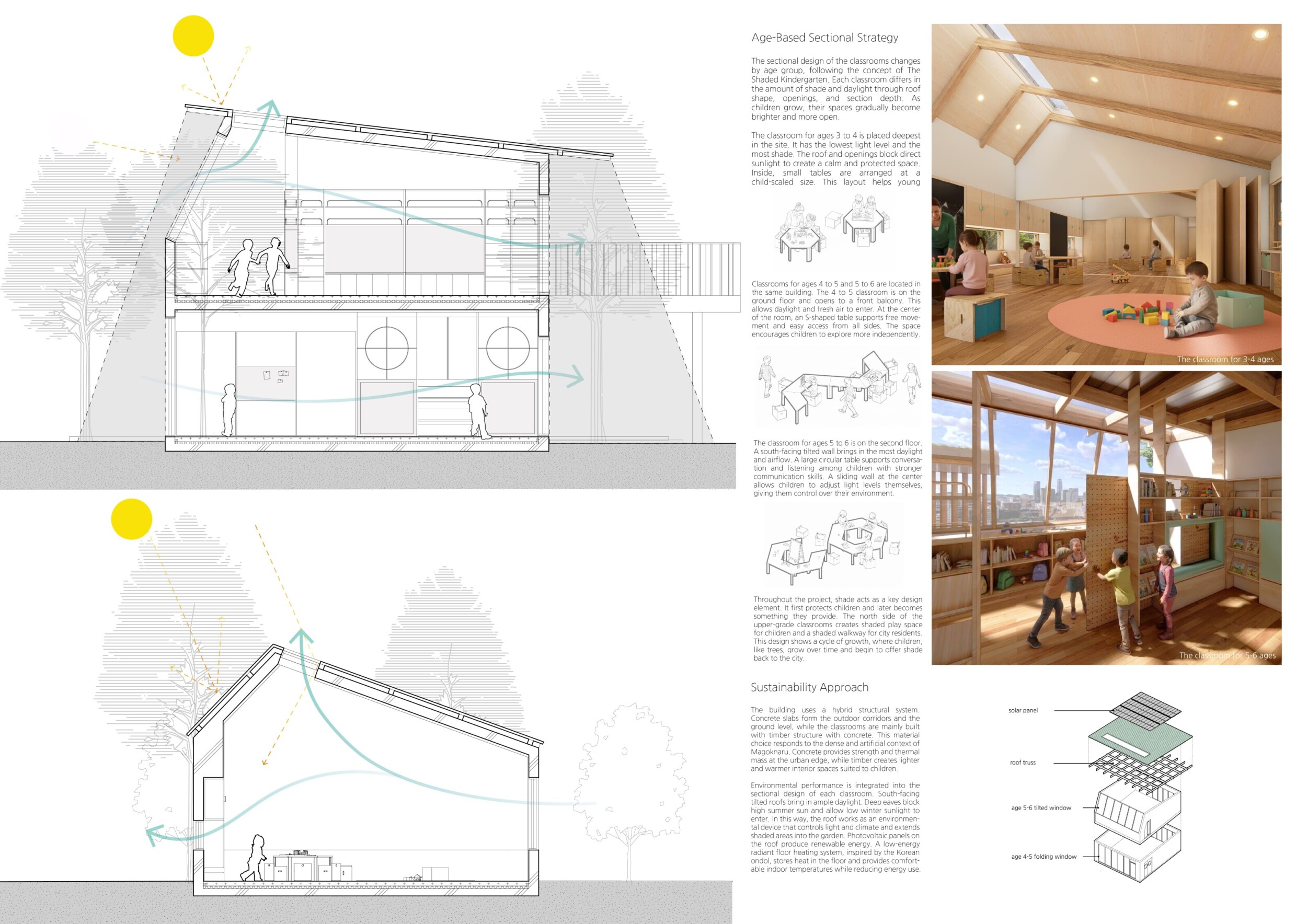
THE SHADED KINDERGARTEN
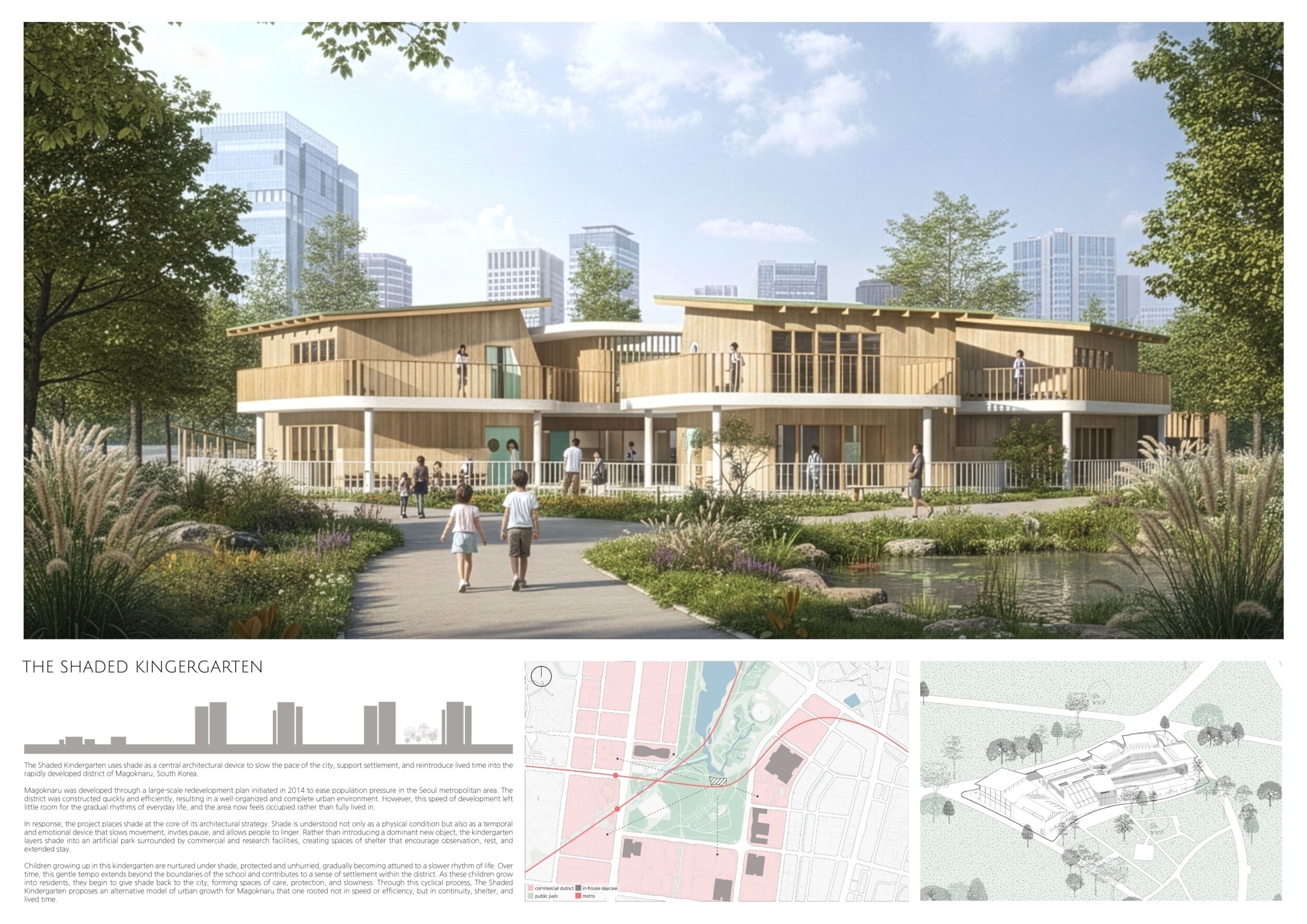
Pixels
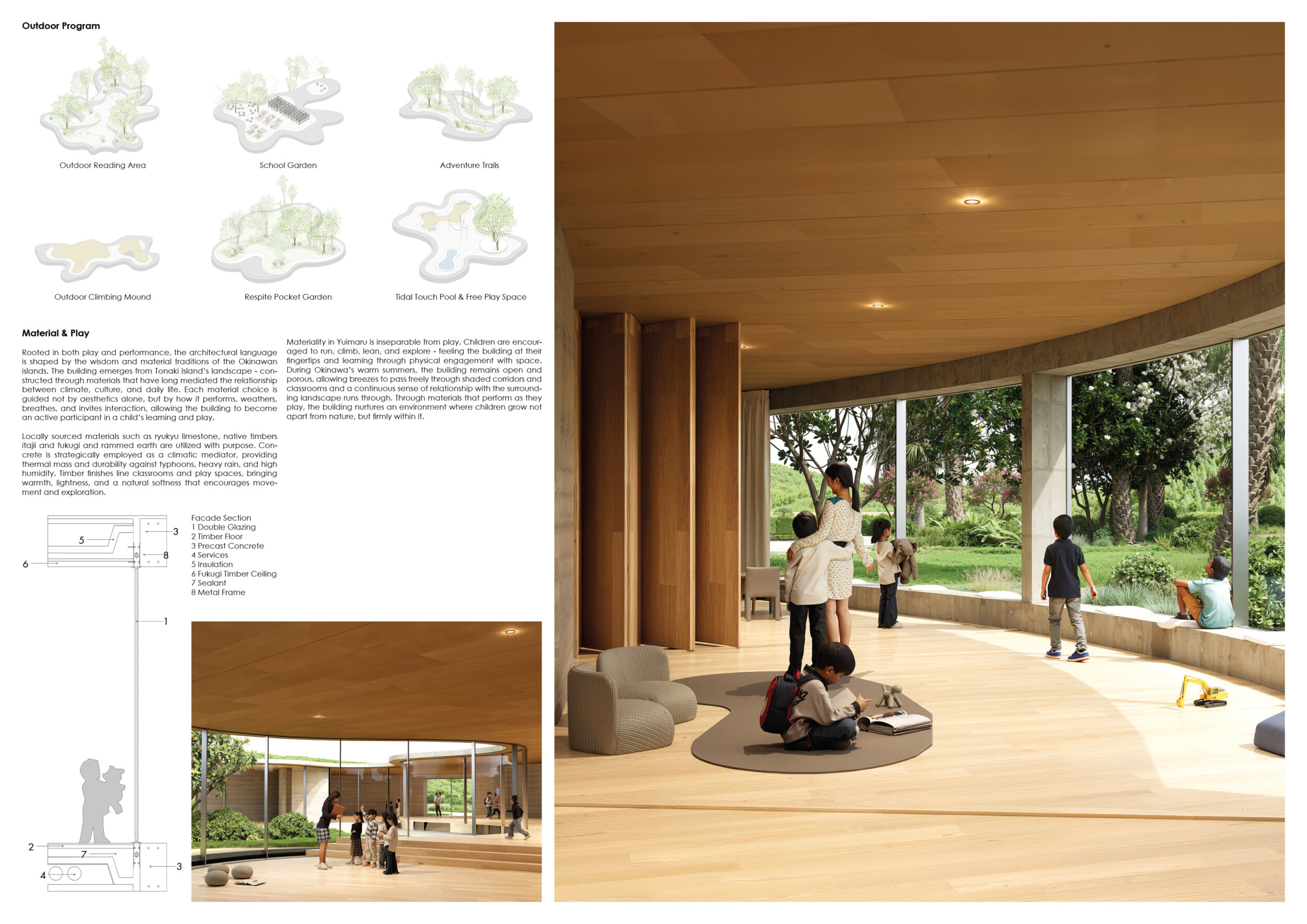
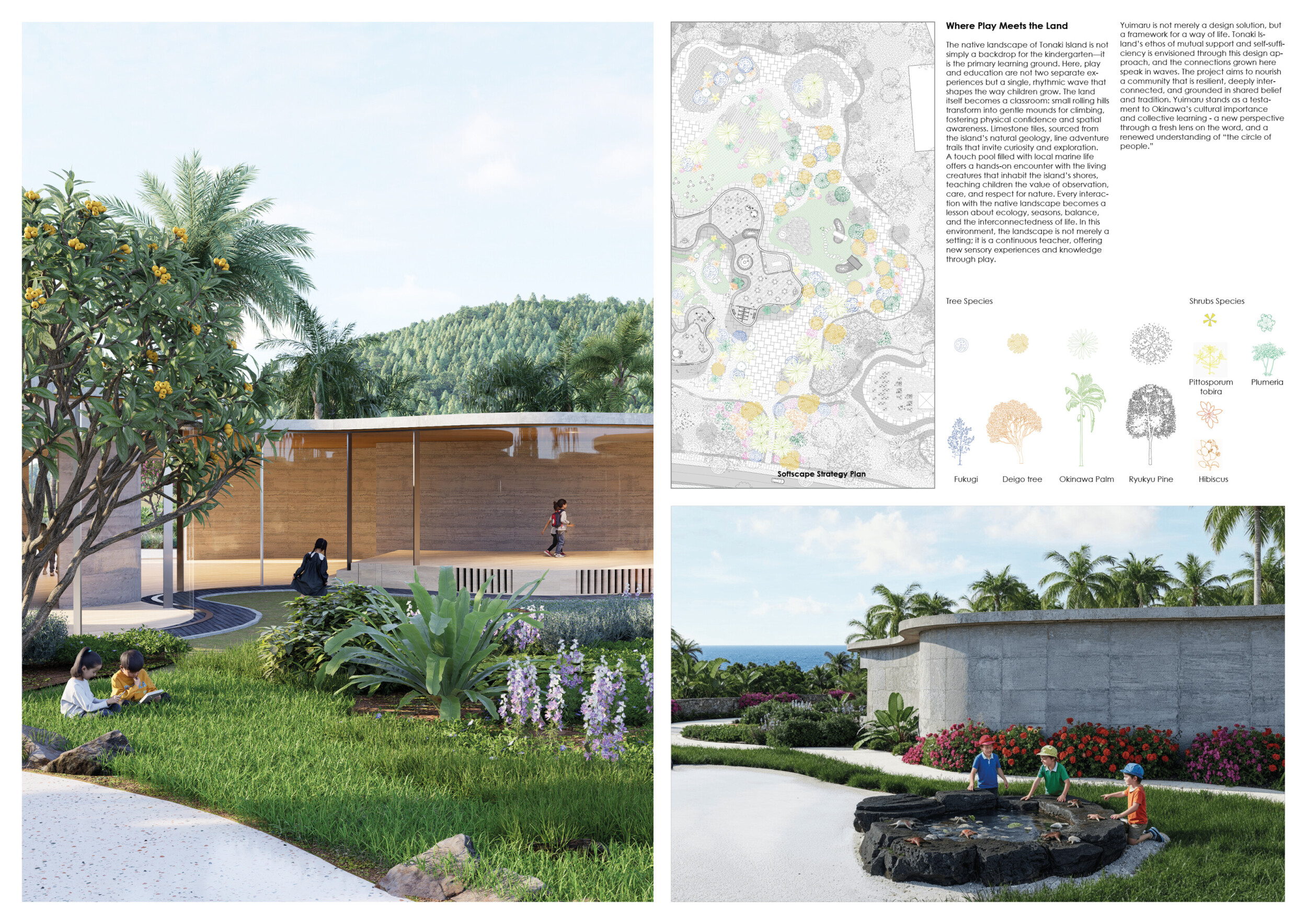
Yuimaru

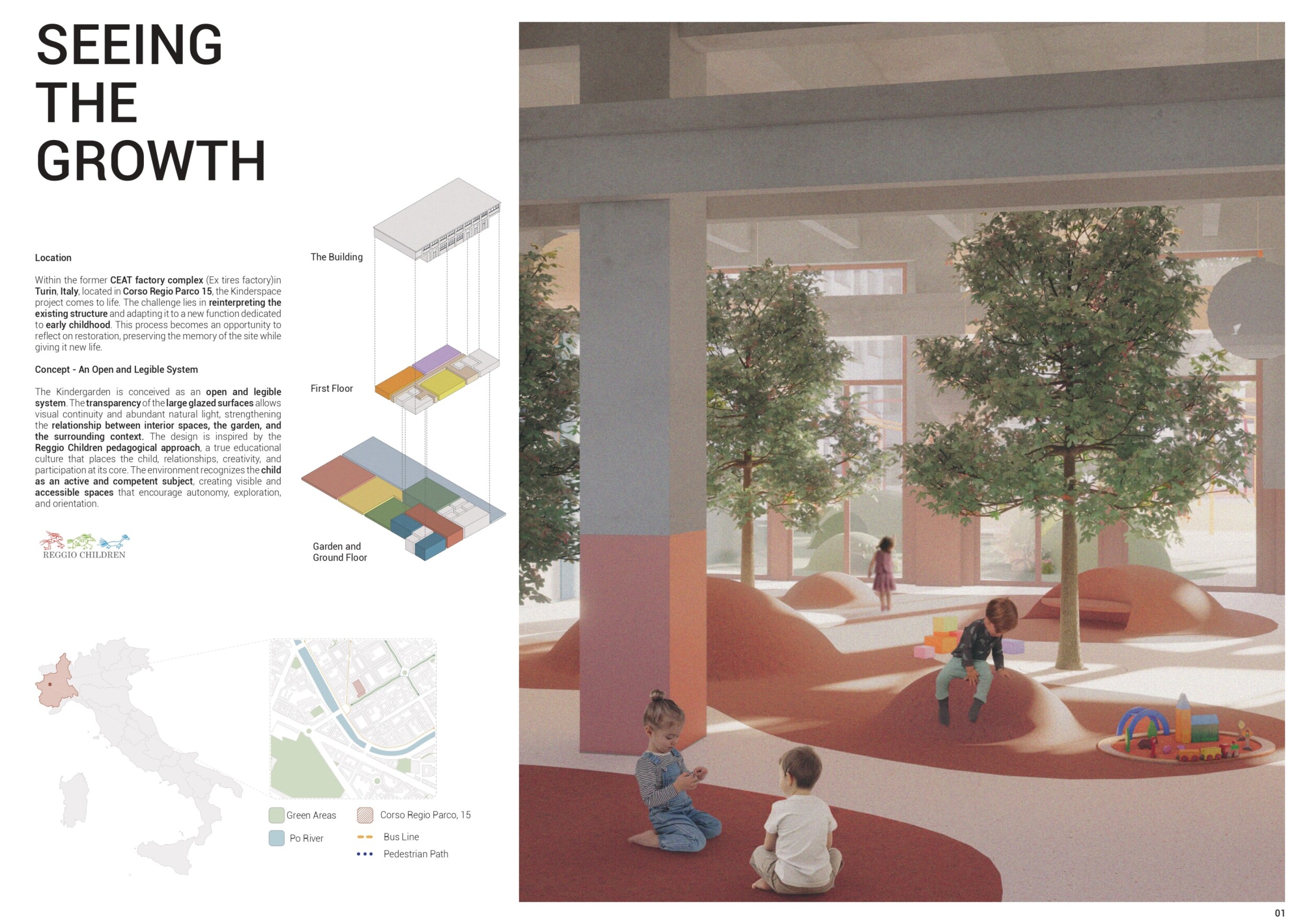
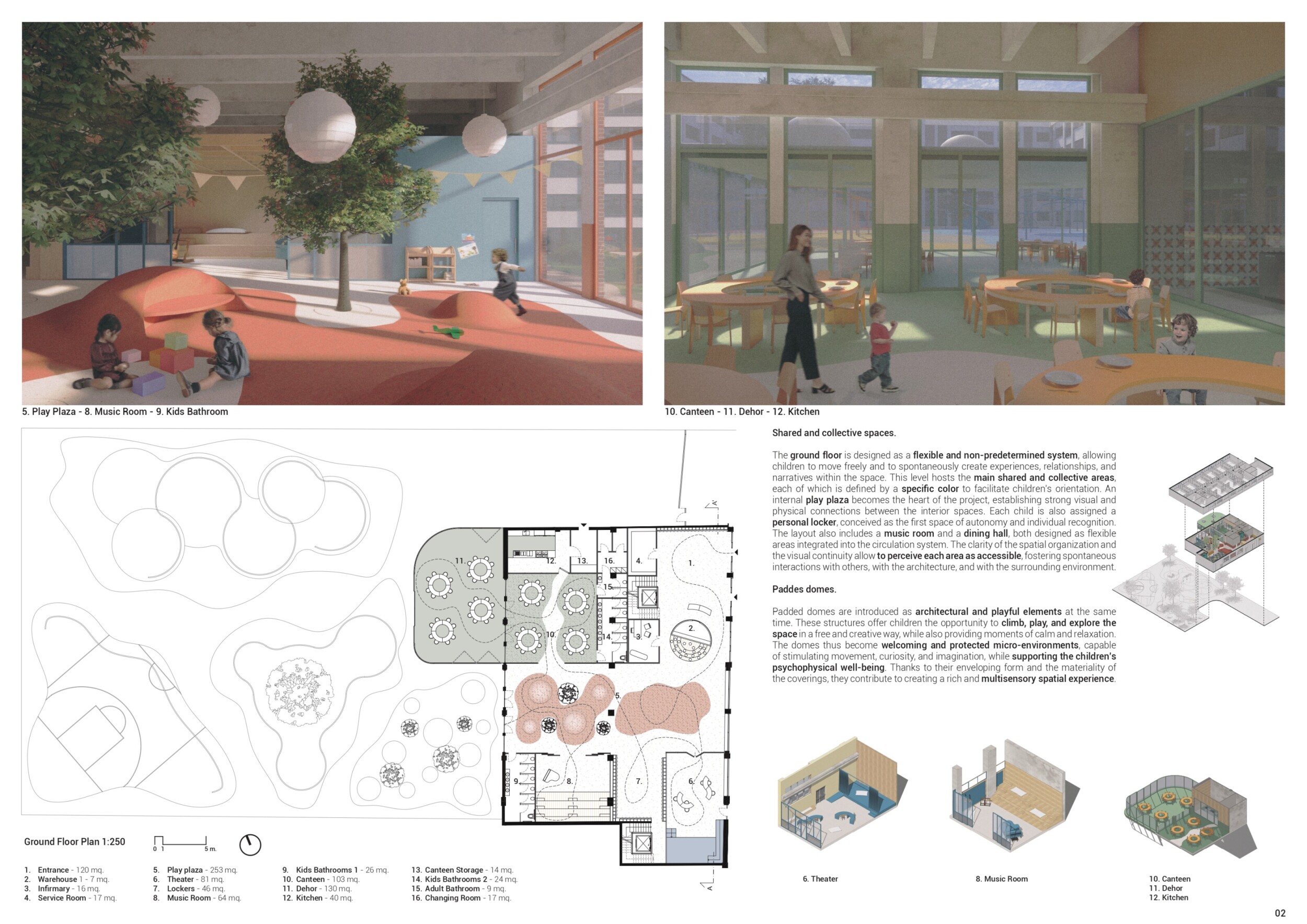
Seeing the growth

THIS WAY, EVERYDAY
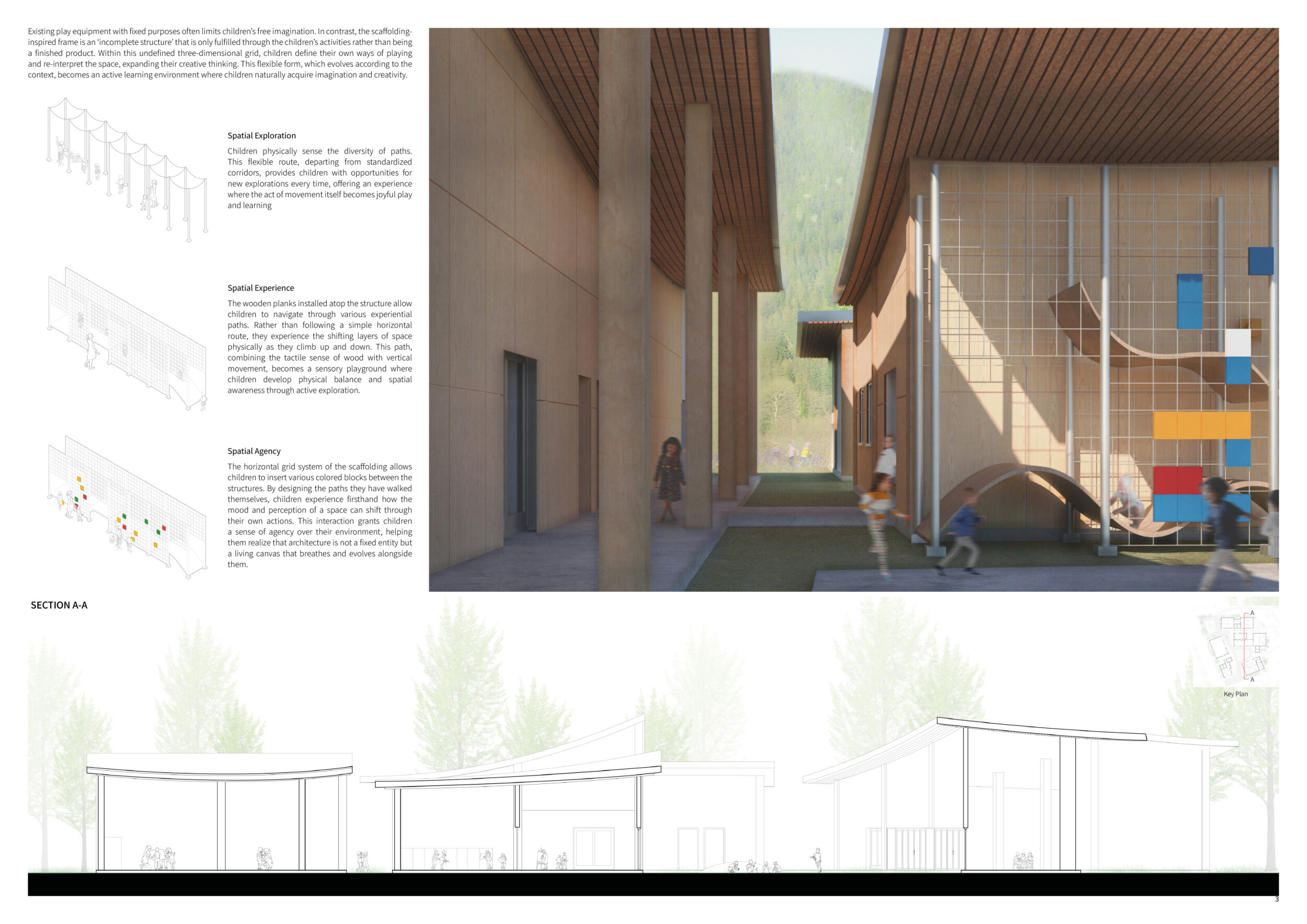
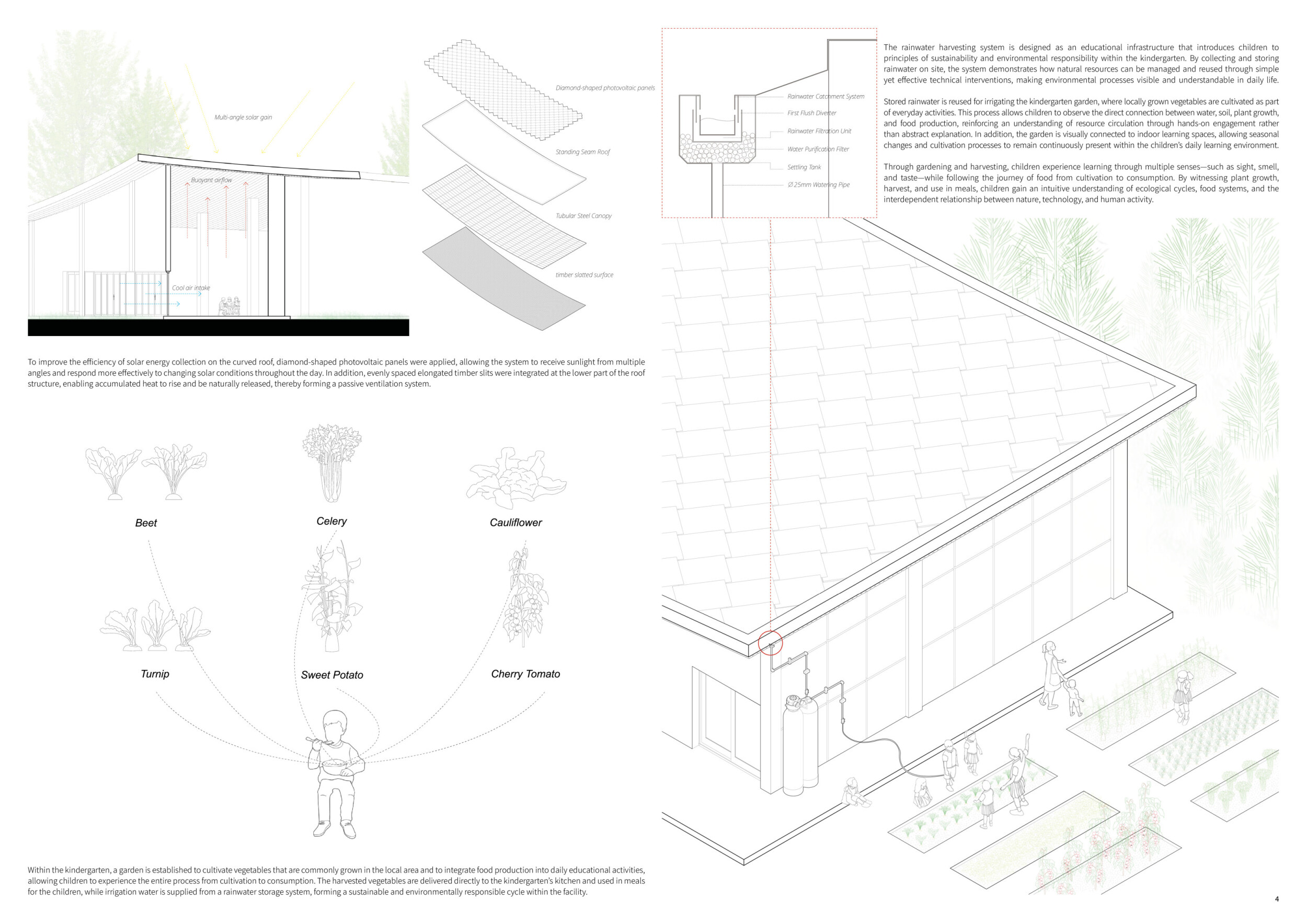
Tailored to your imagination
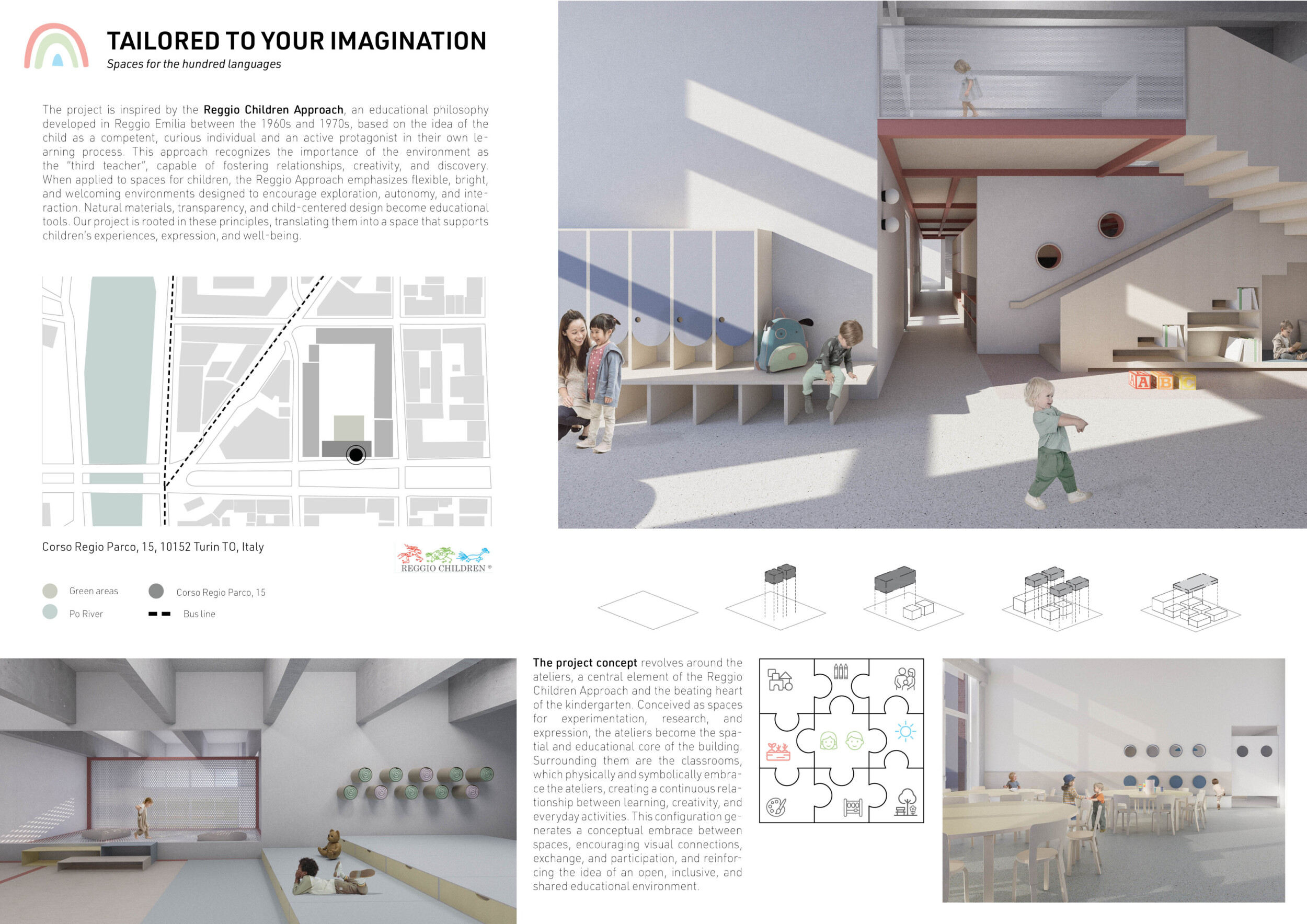
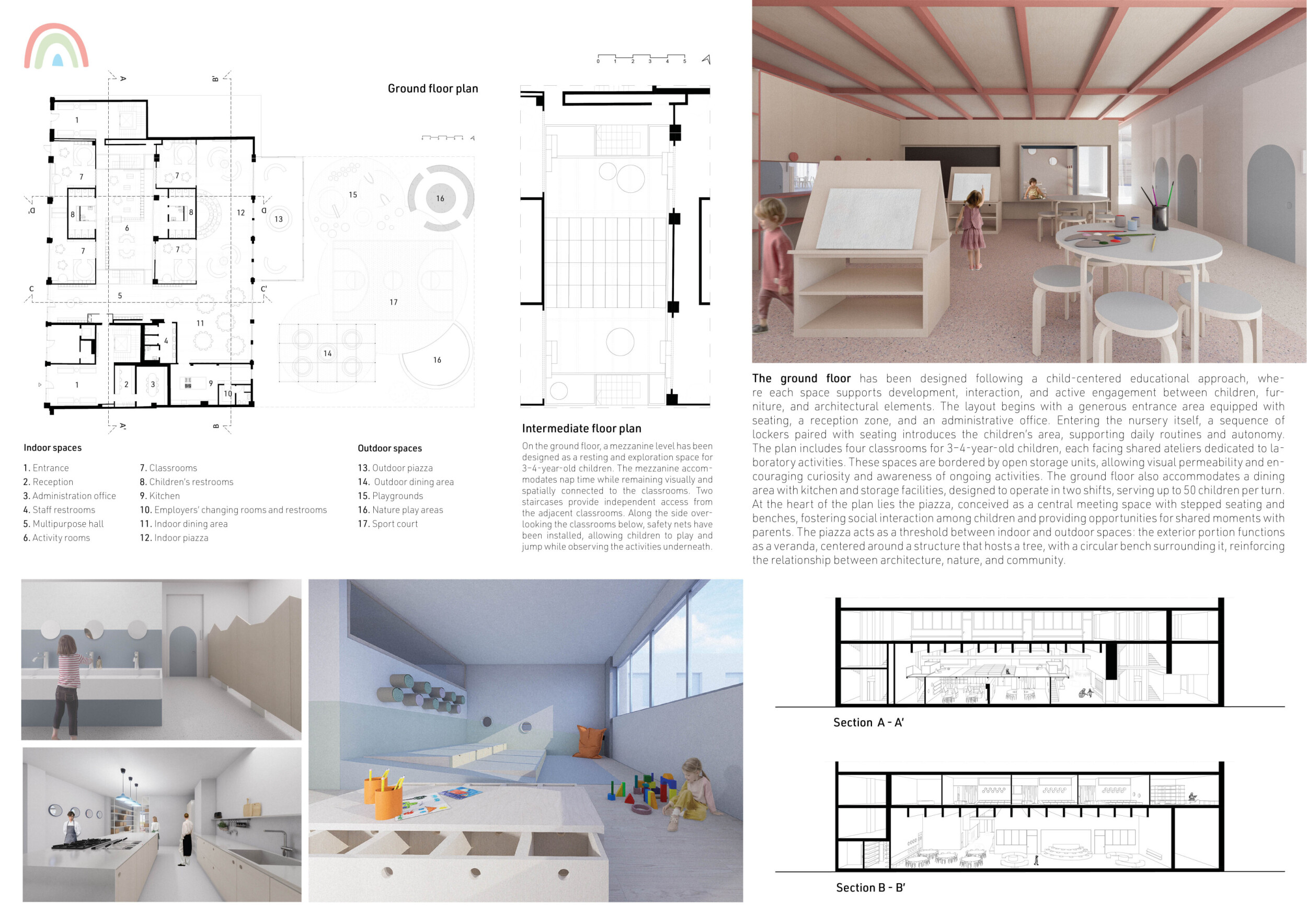
Flower Hill
UniMaru
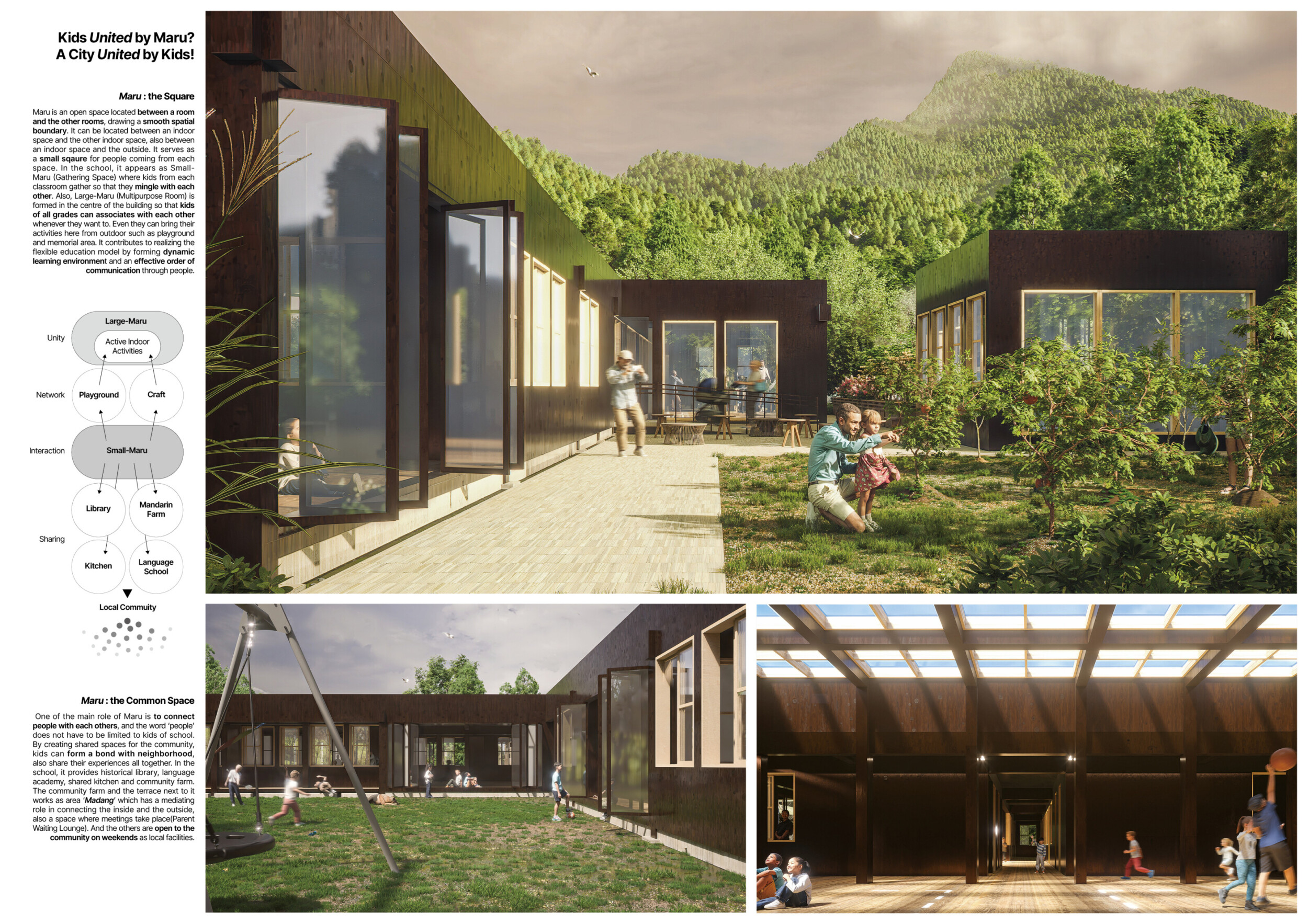
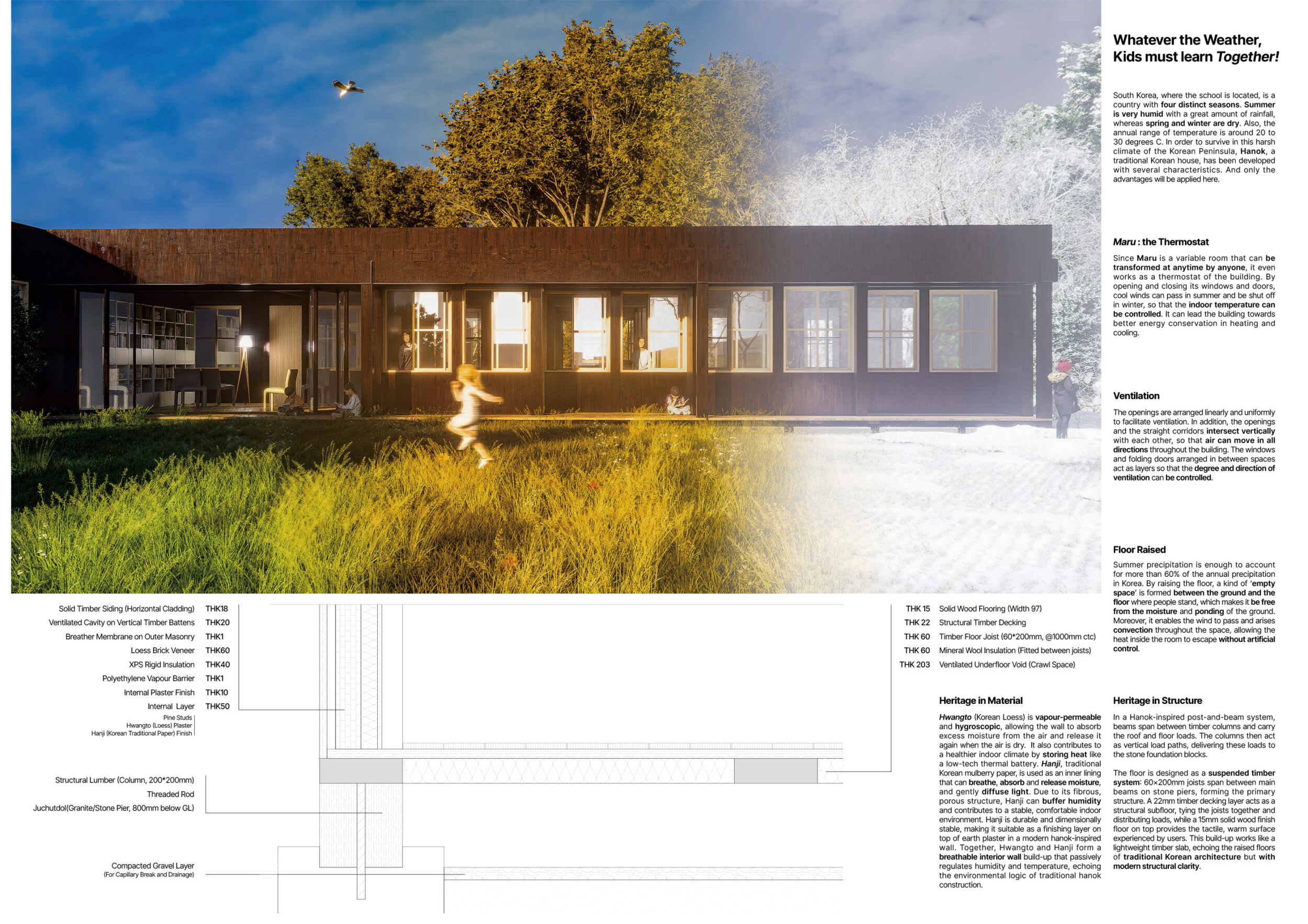
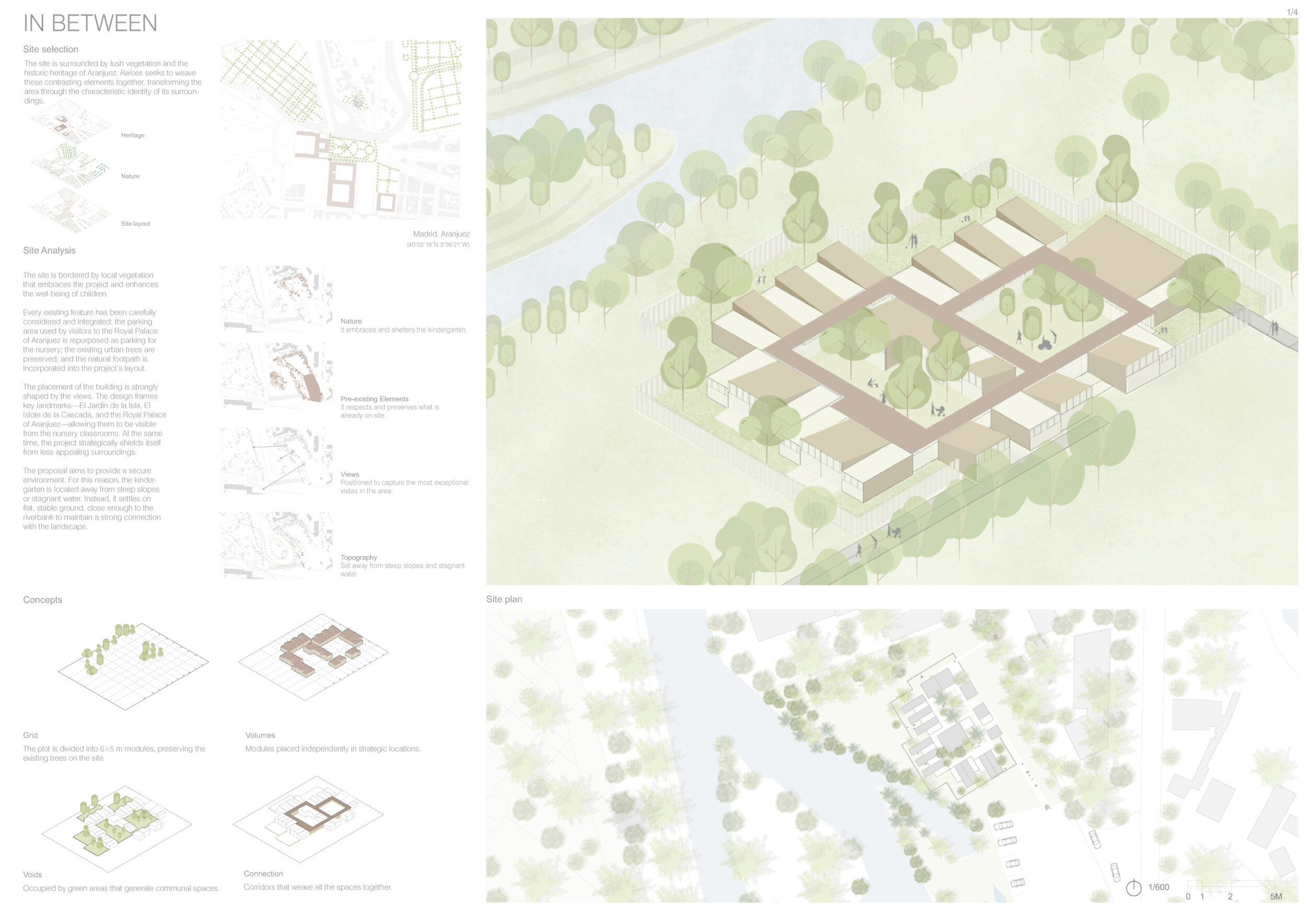
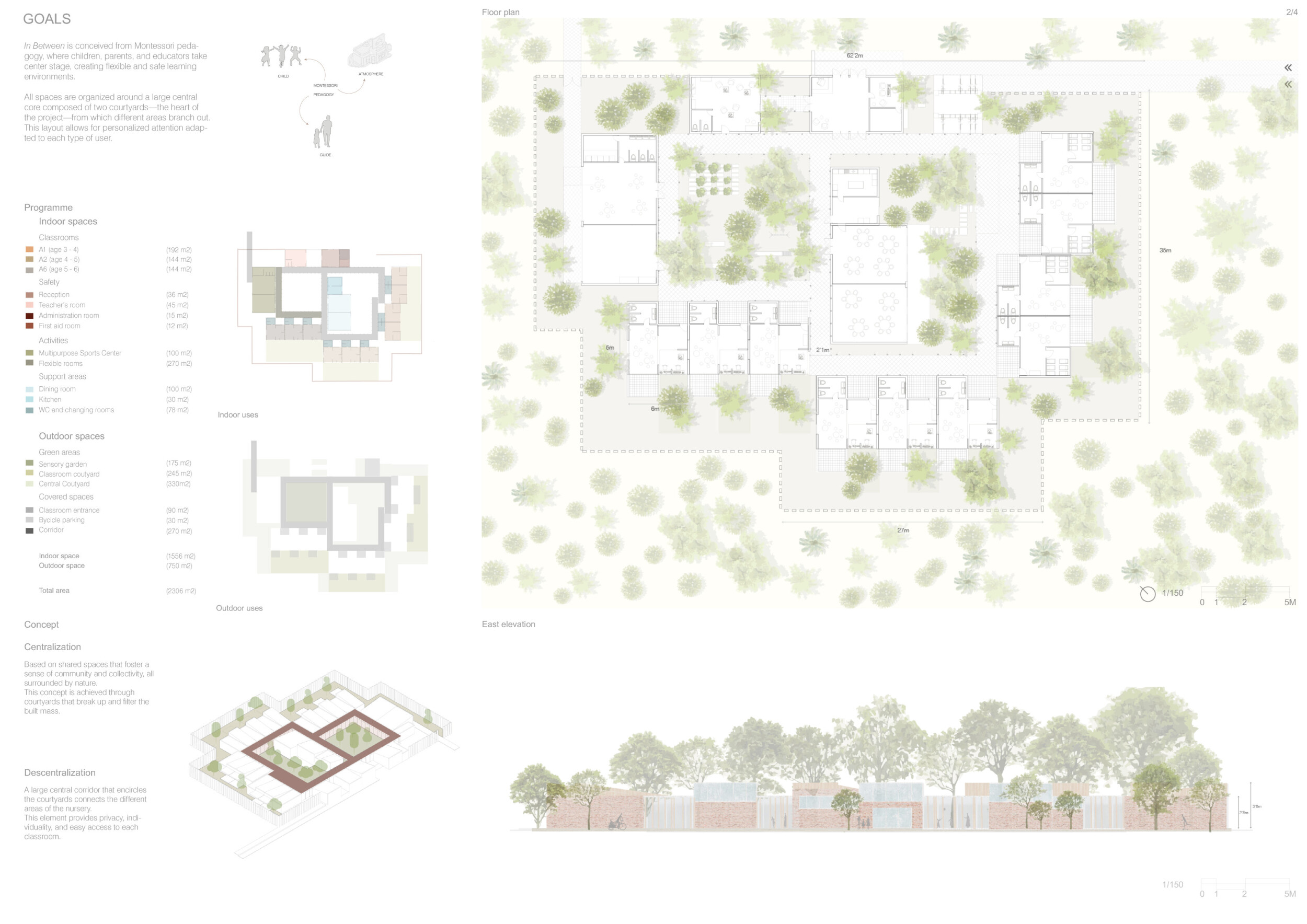
In Between

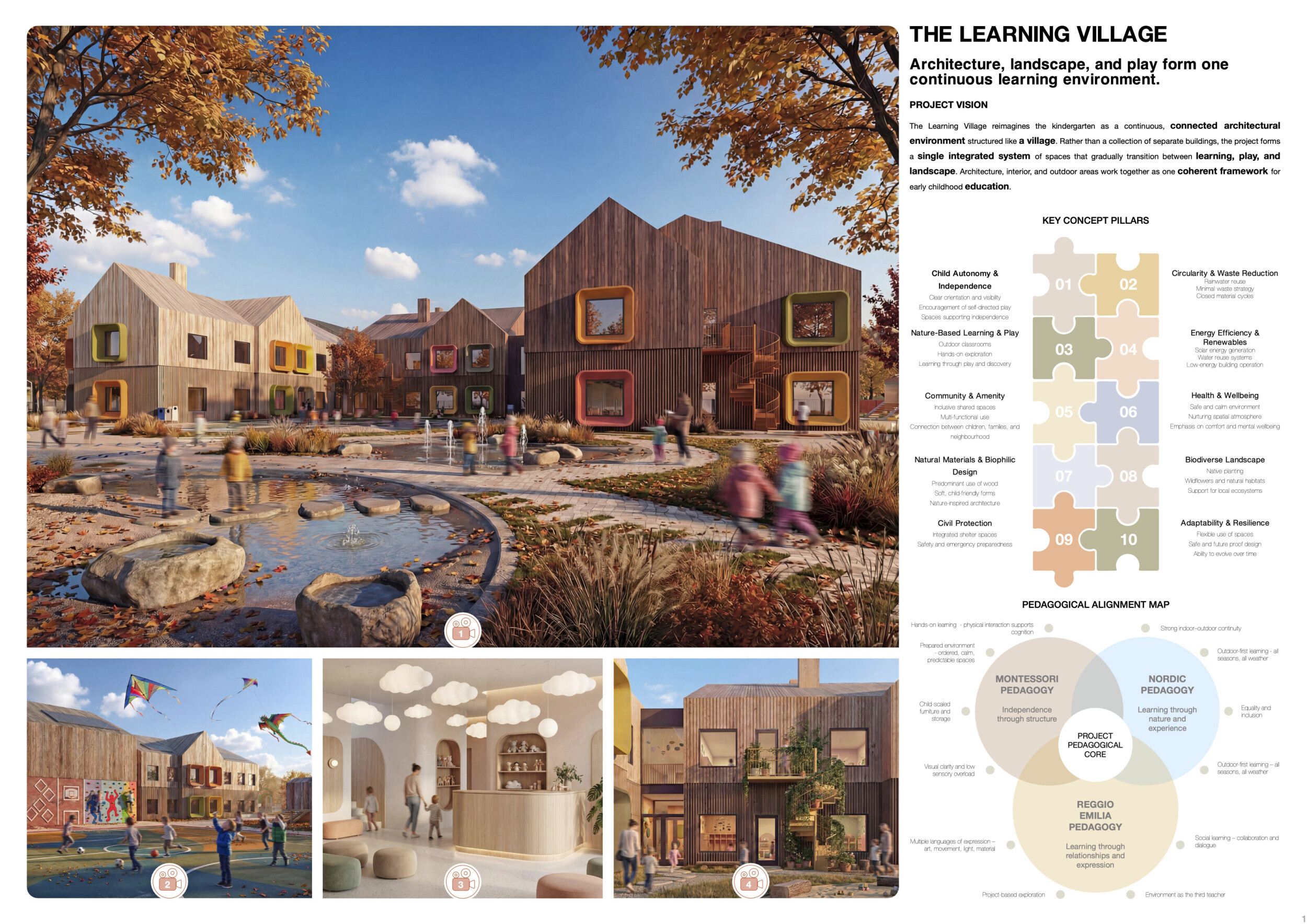
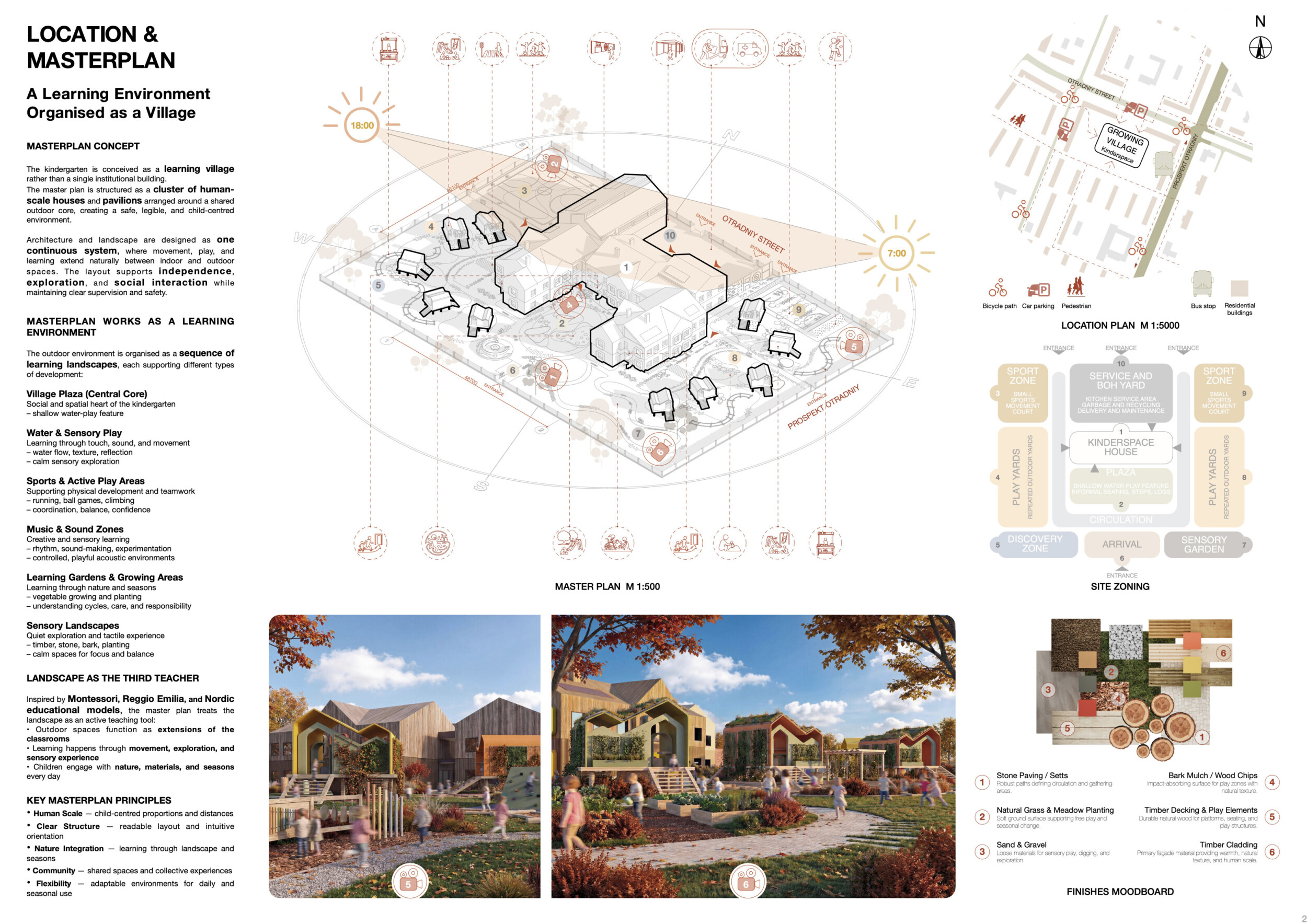
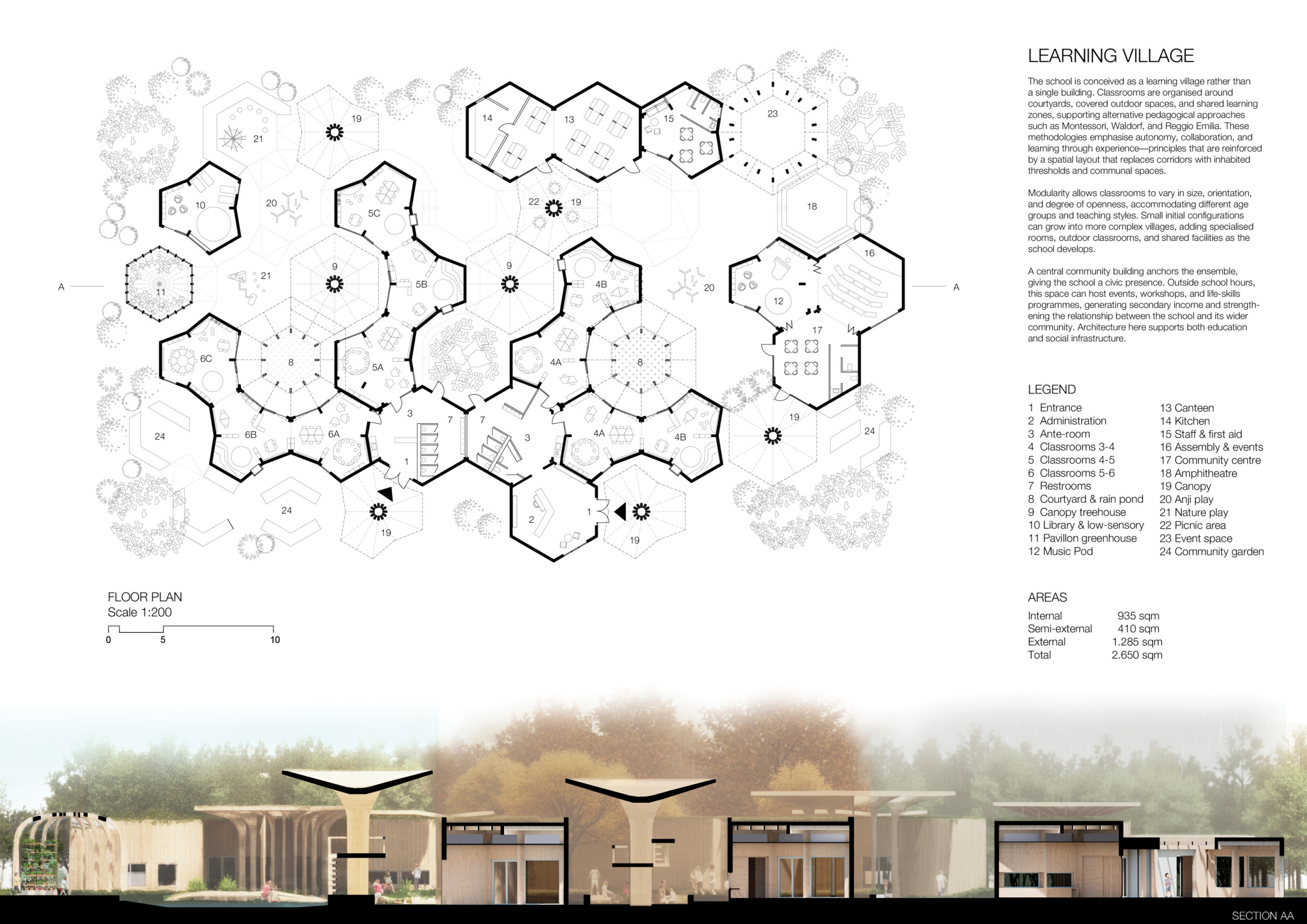
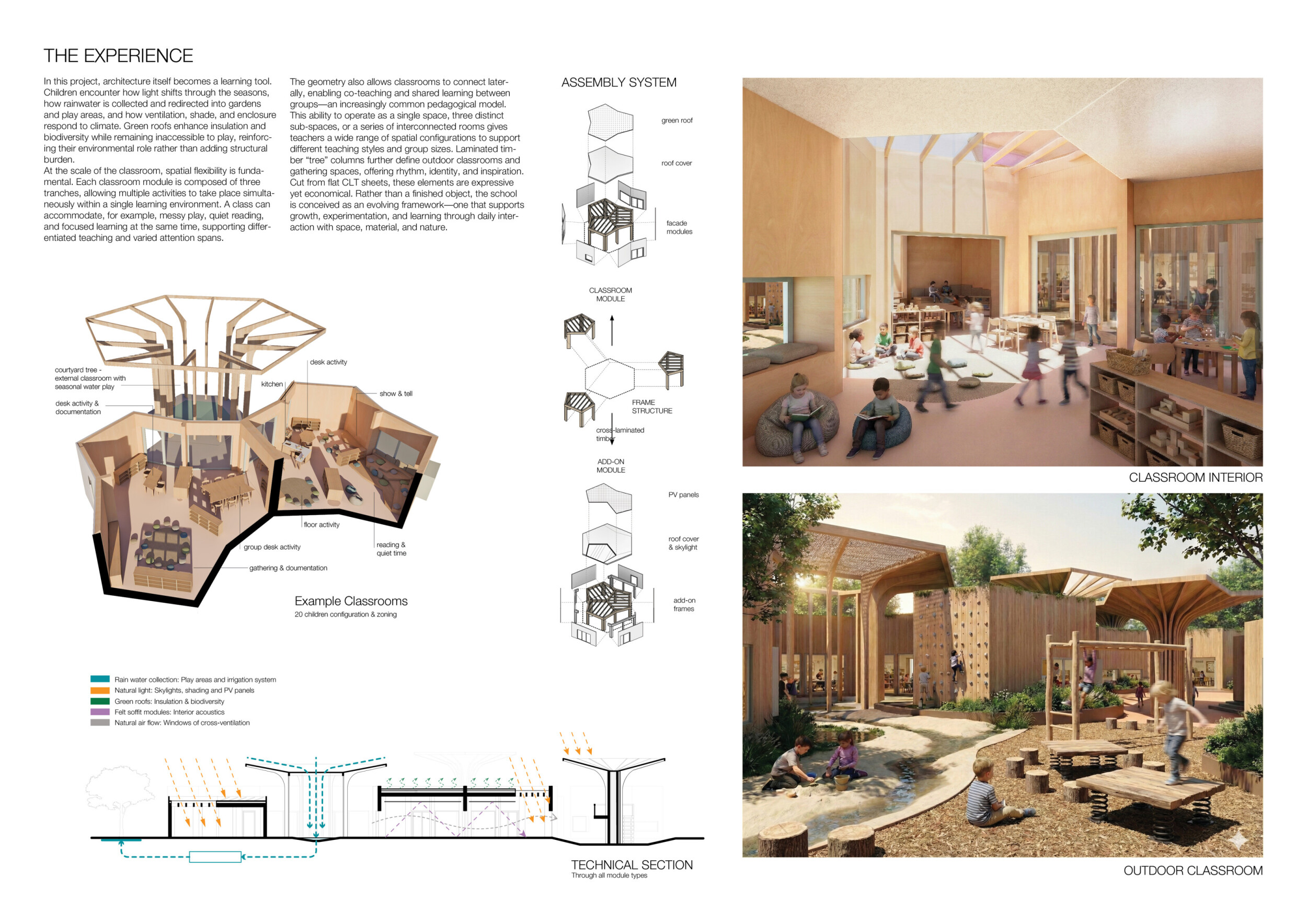
THE LEARNING VILLAGE

Tiny Explorers Village
Microcosm

Foodiegarten
Pocket Meadow

Vessel
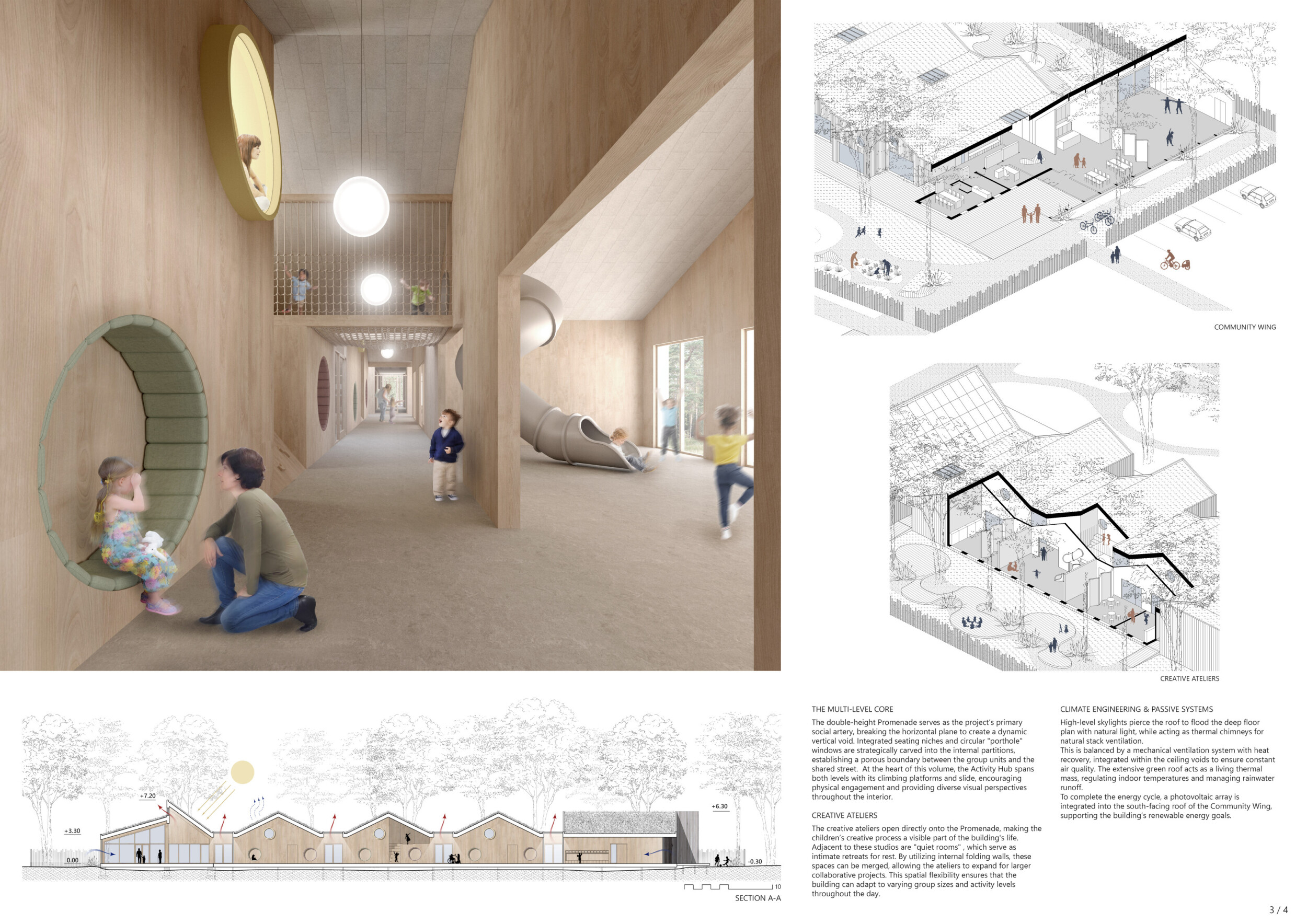
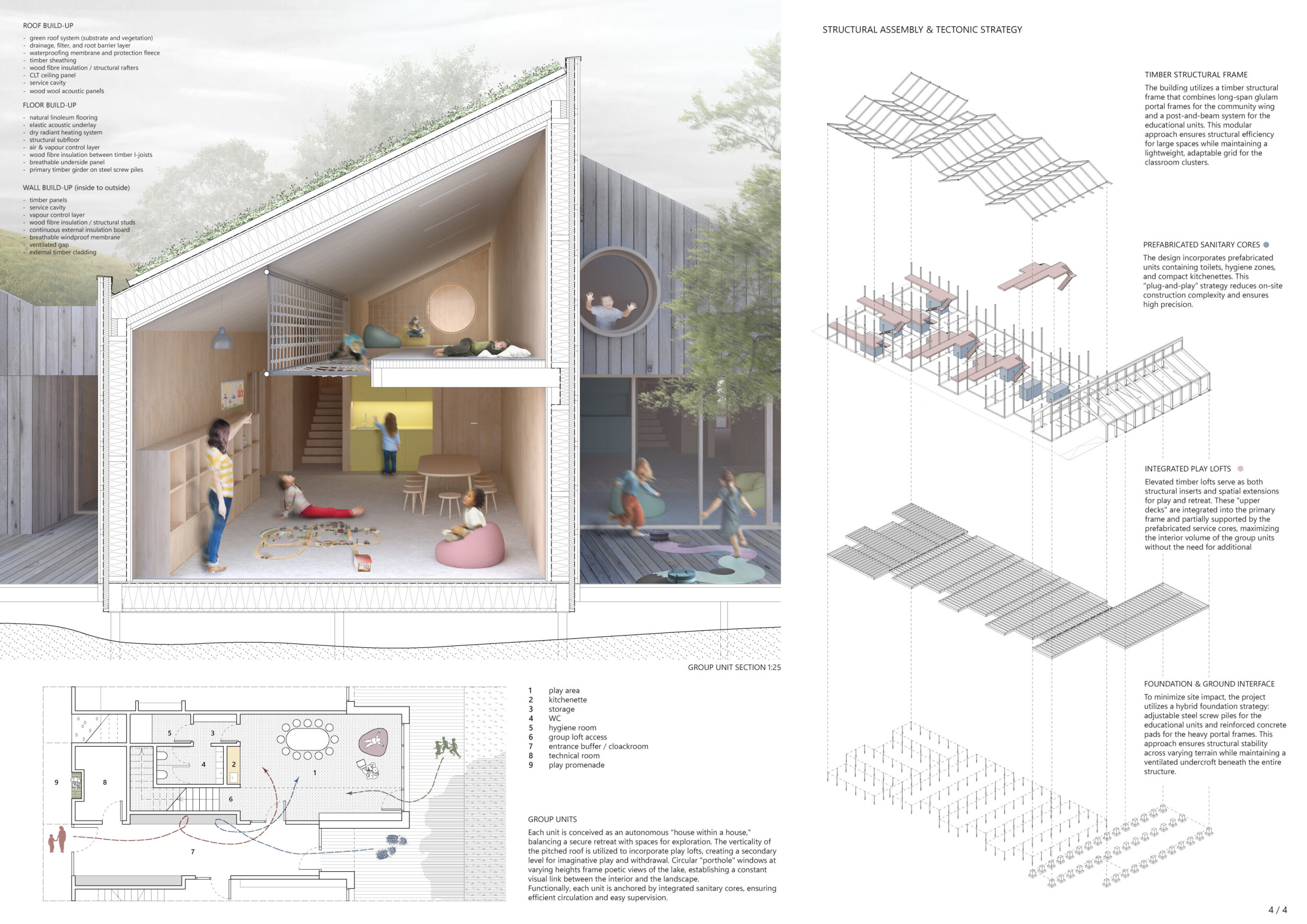
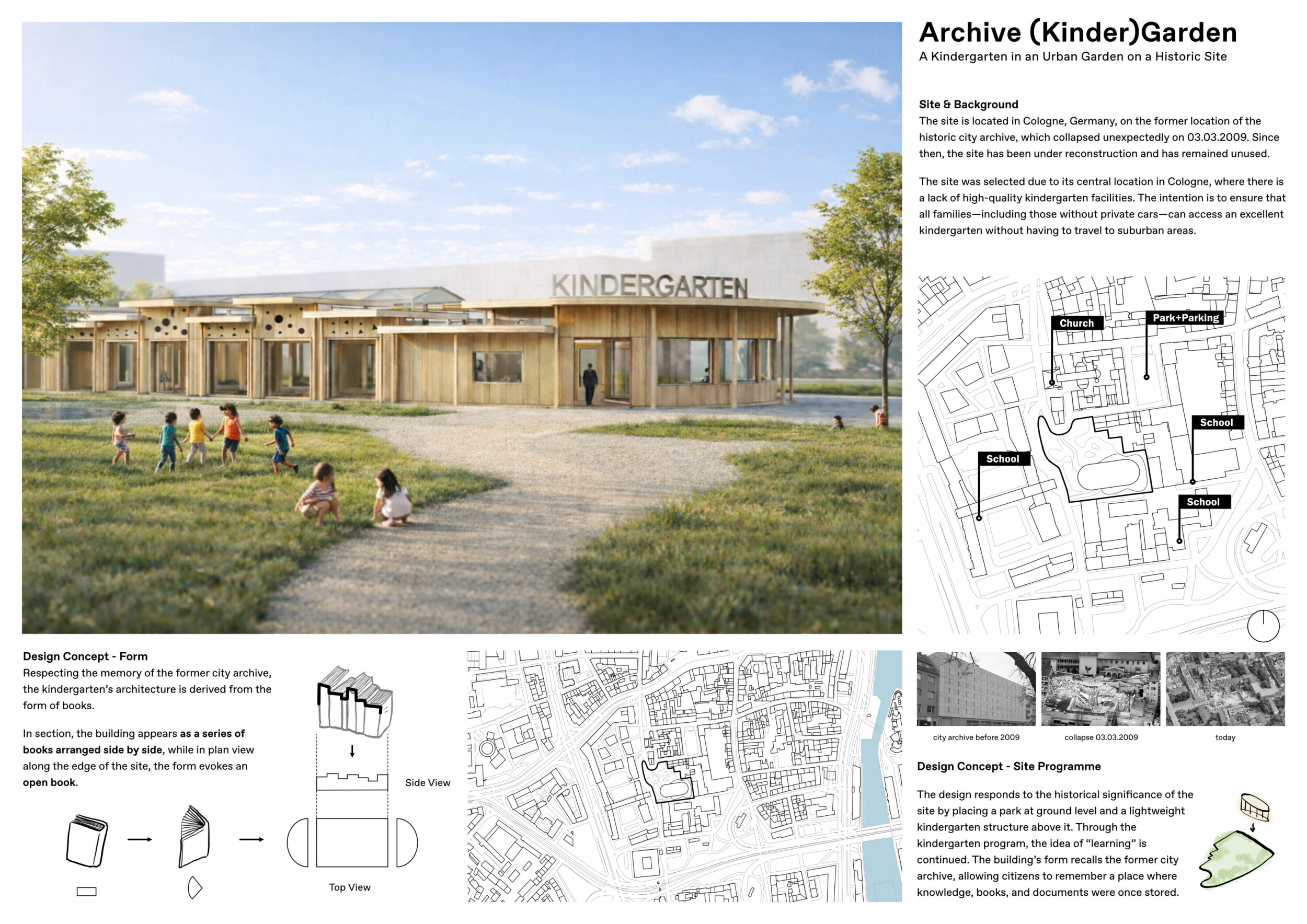
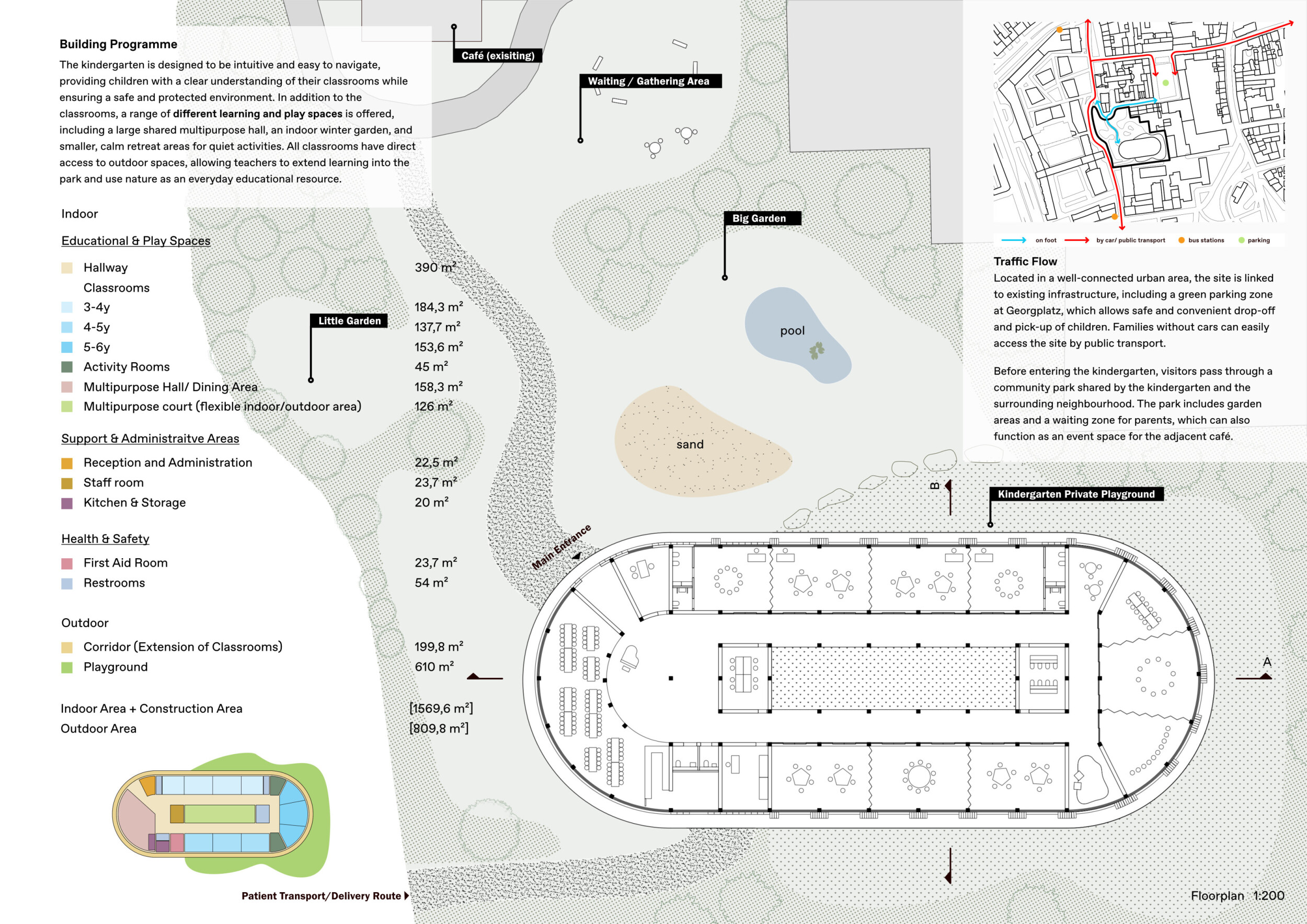
Archive (Kinder)Garden
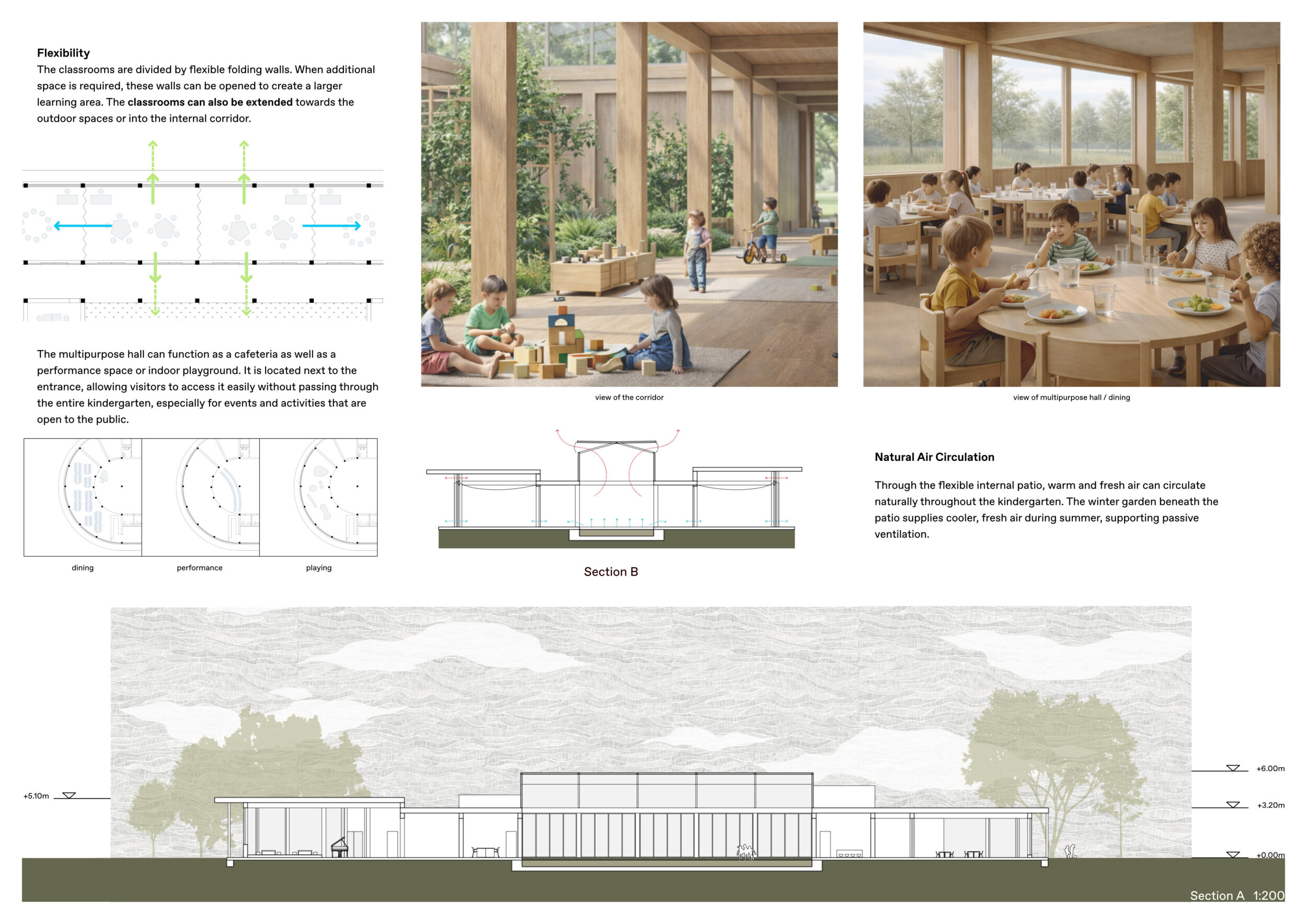
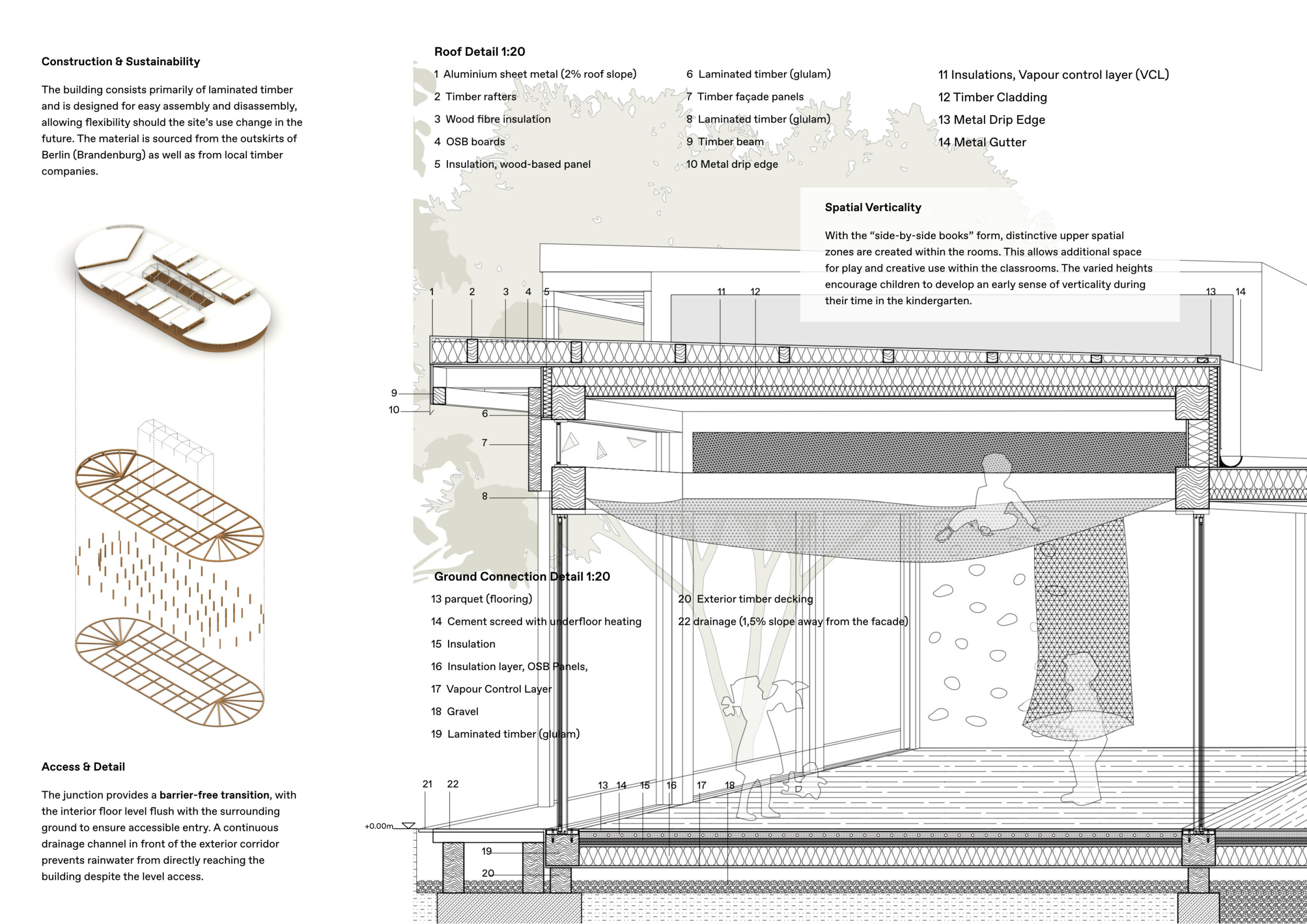
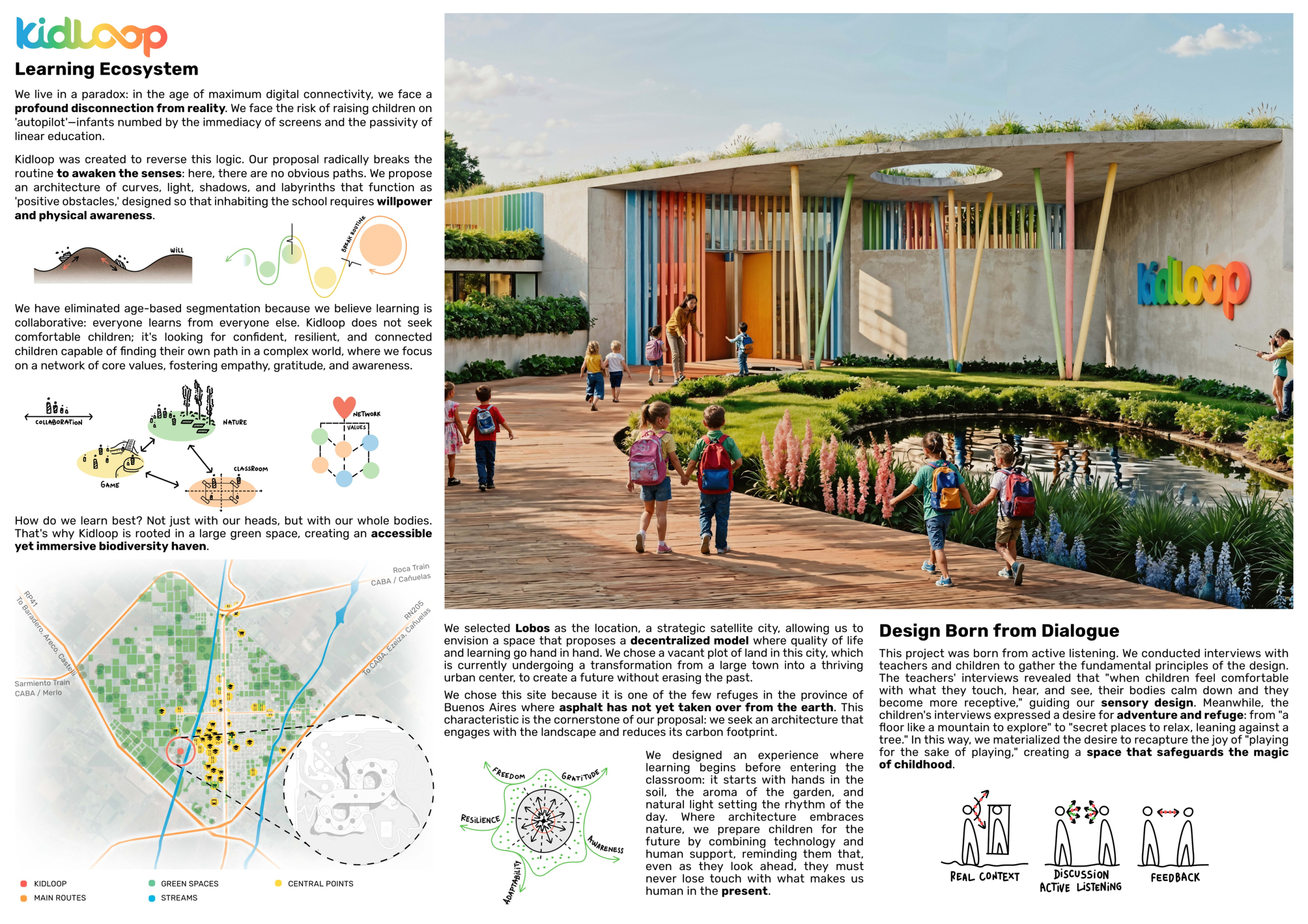
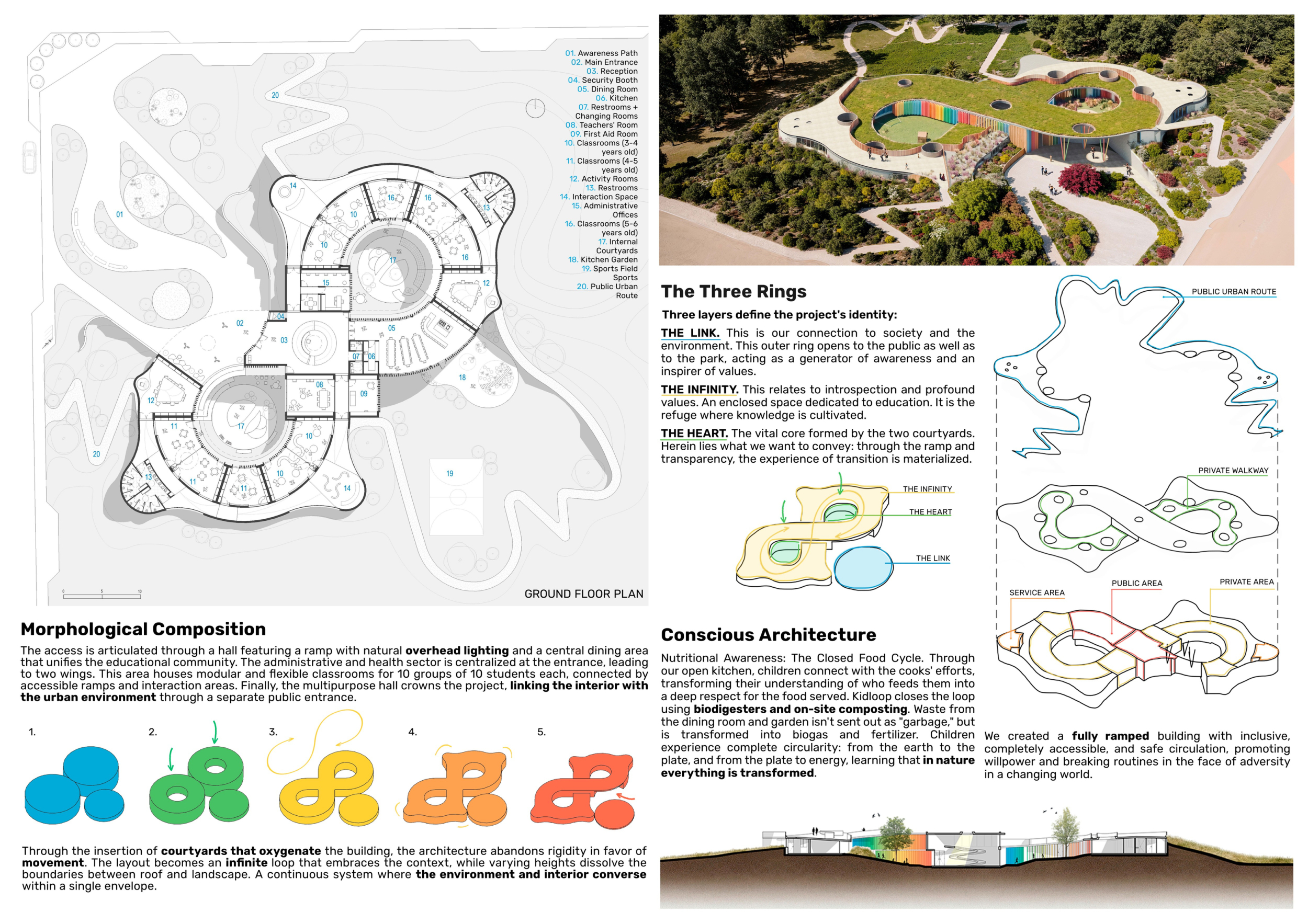
KIDLOOP
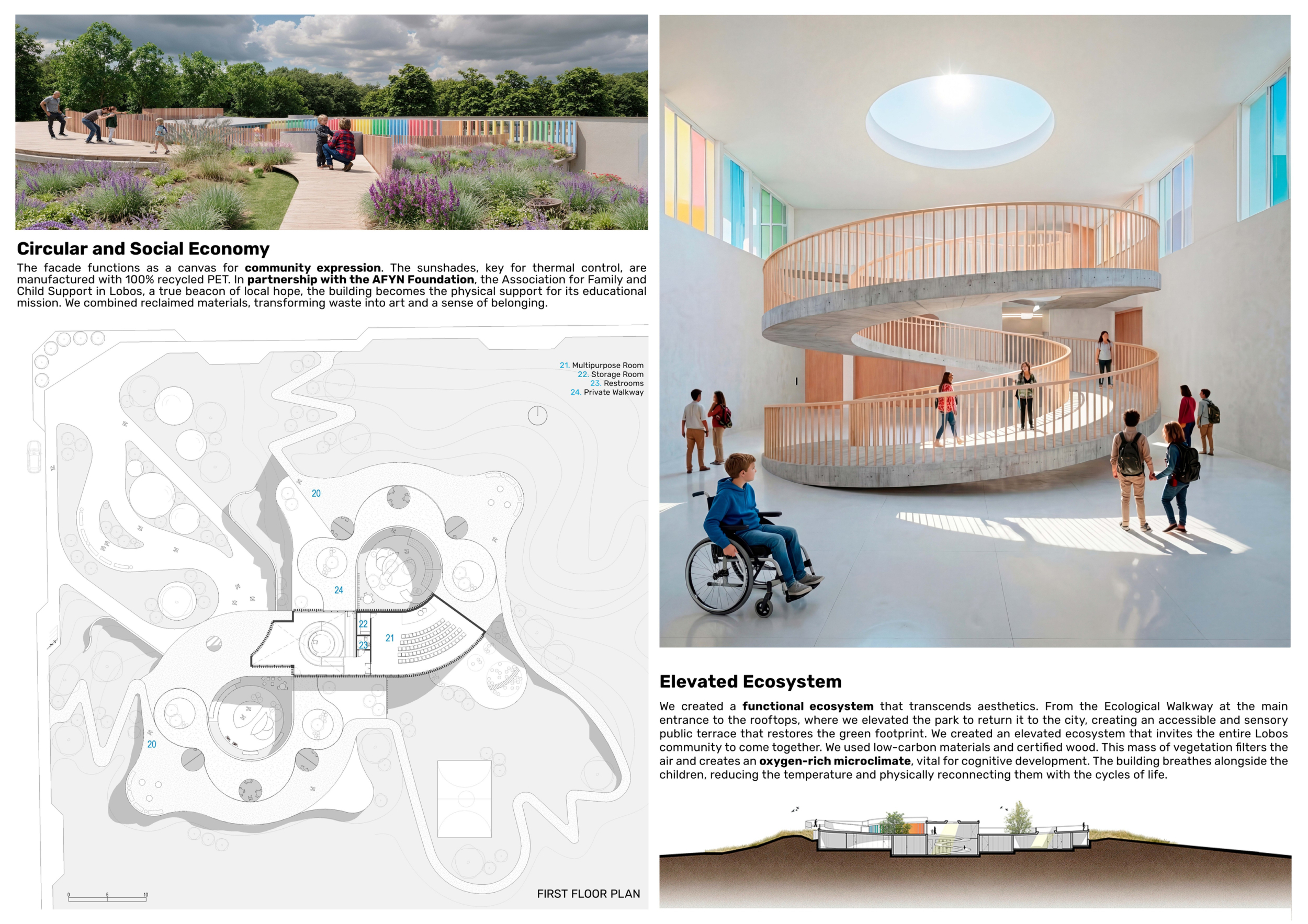
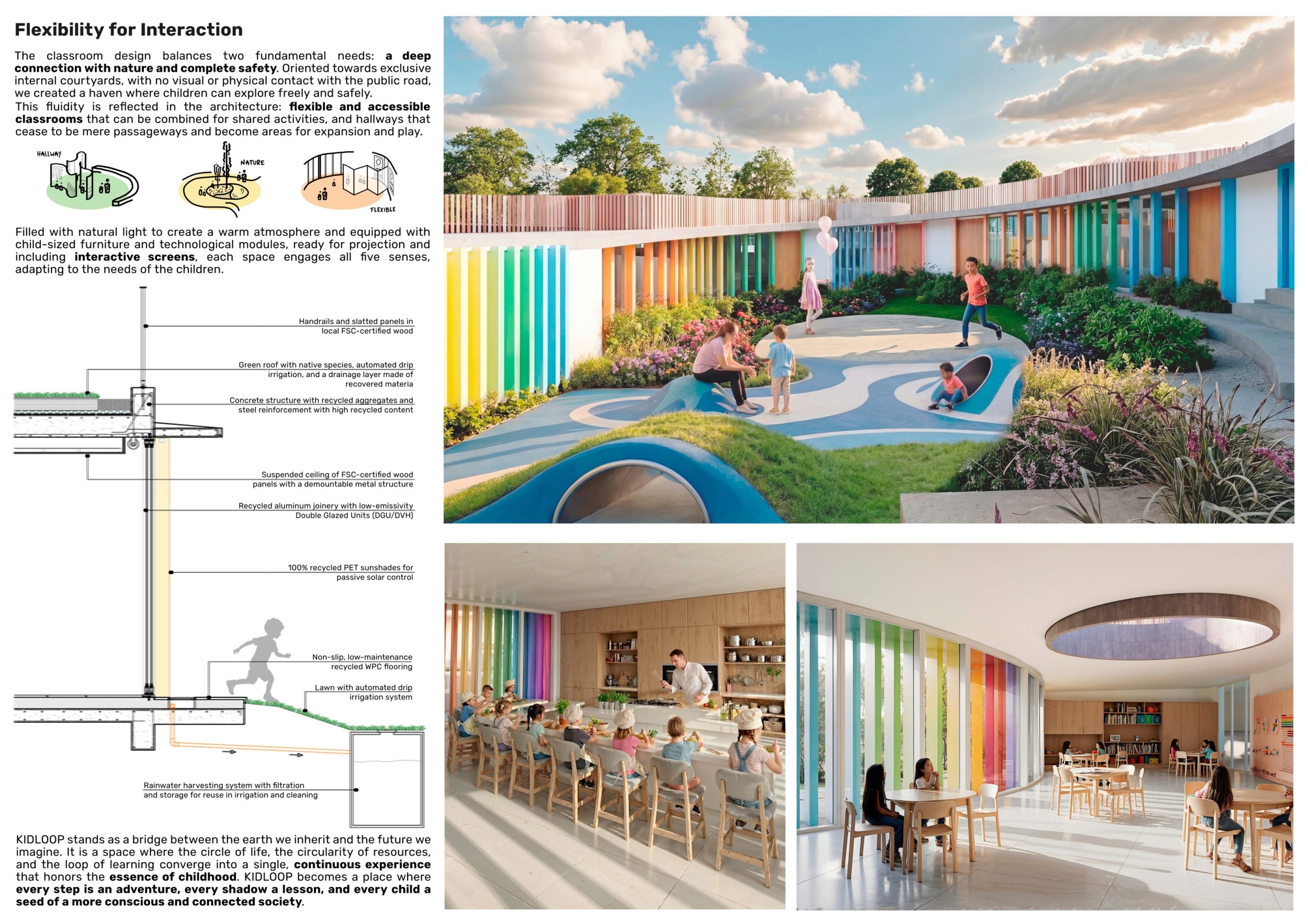

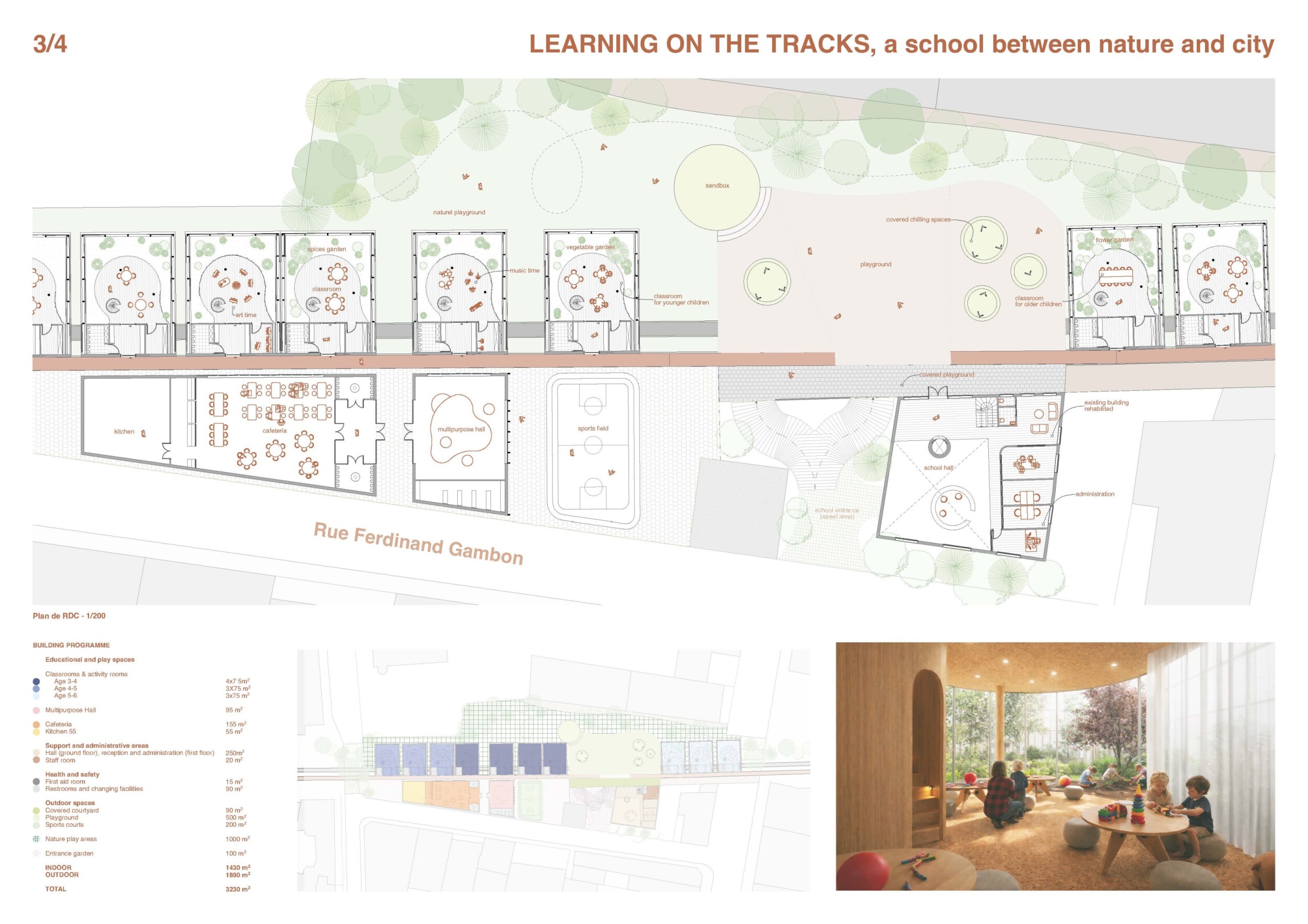
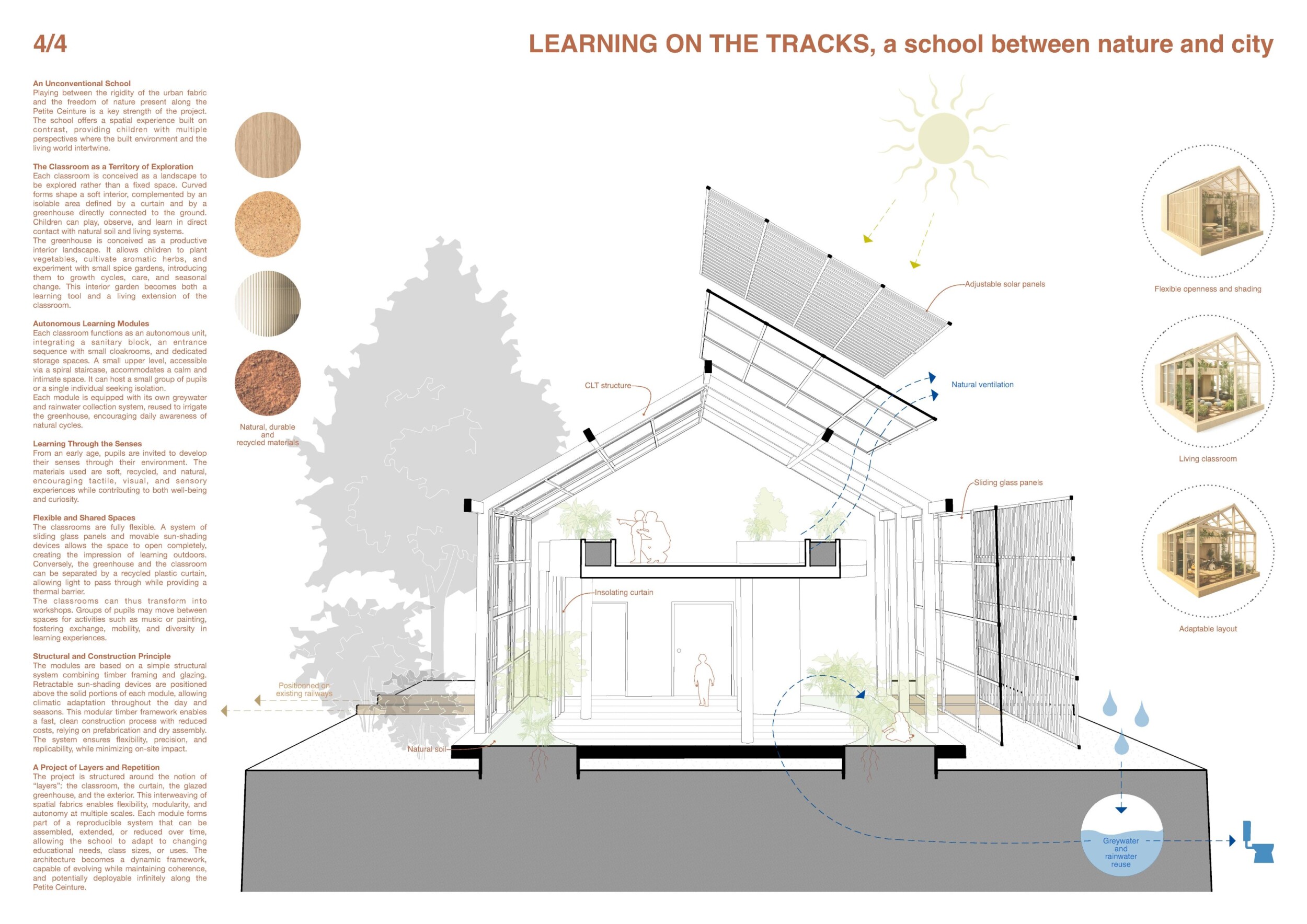
Learning on the Tracks
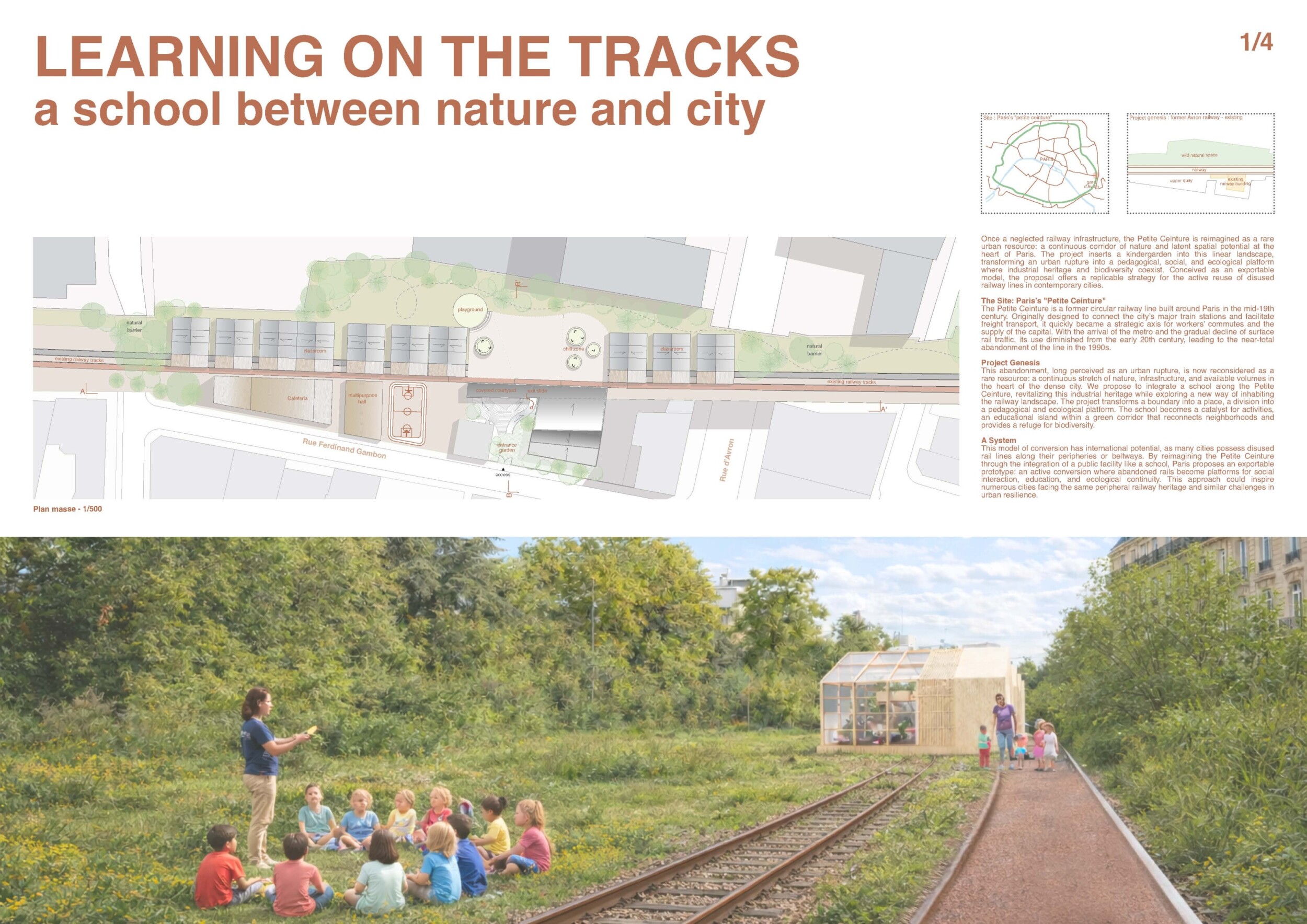
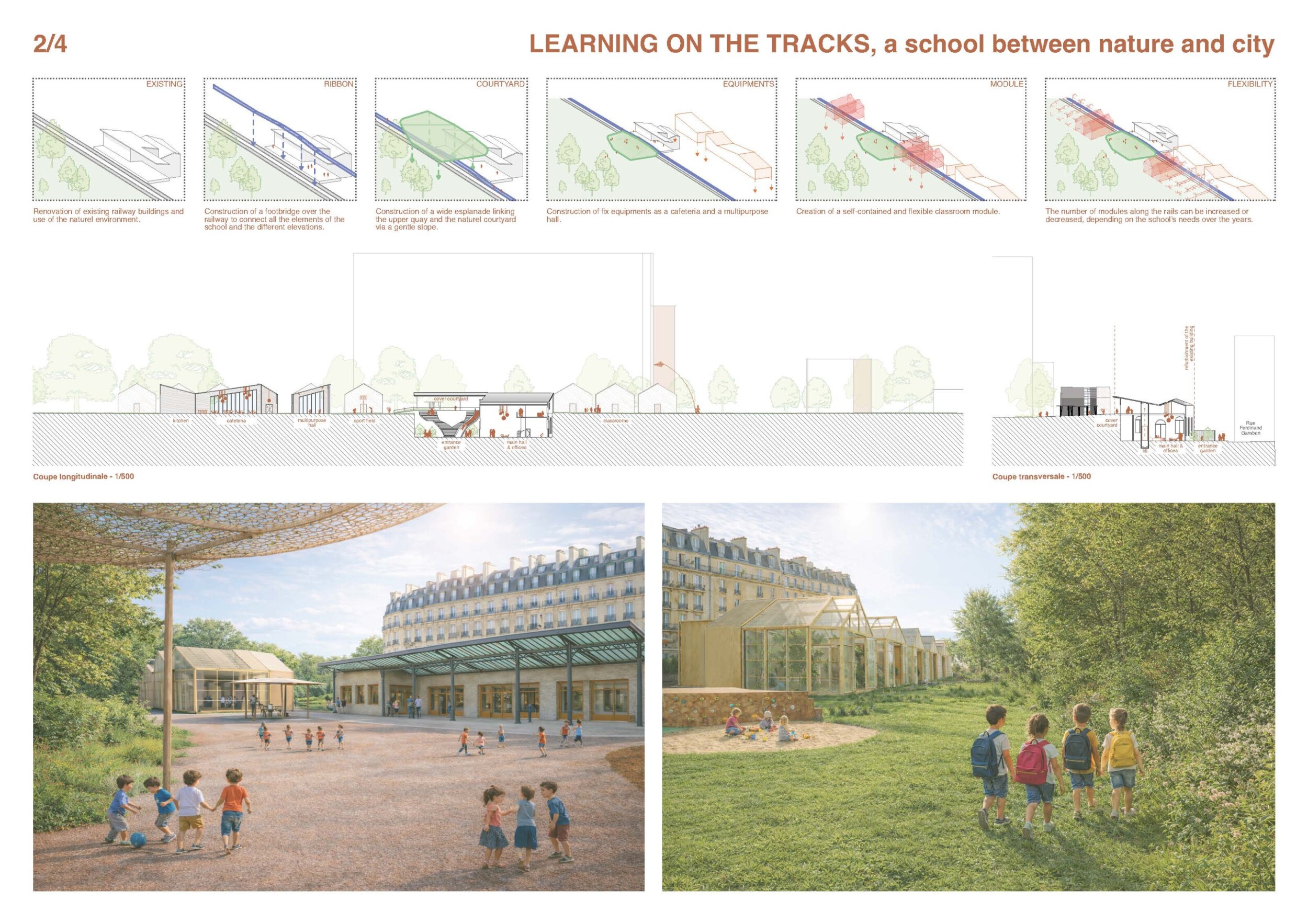

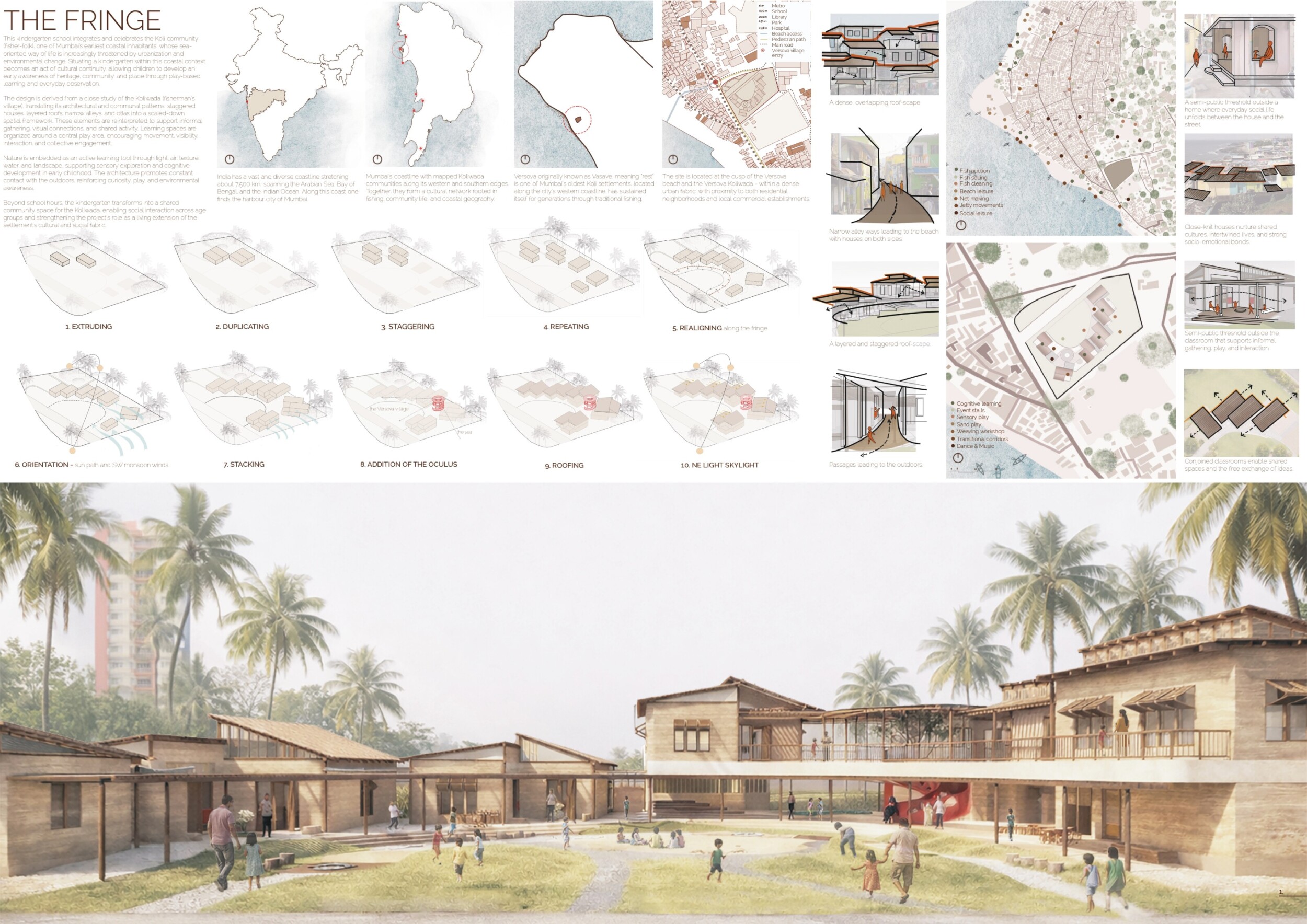
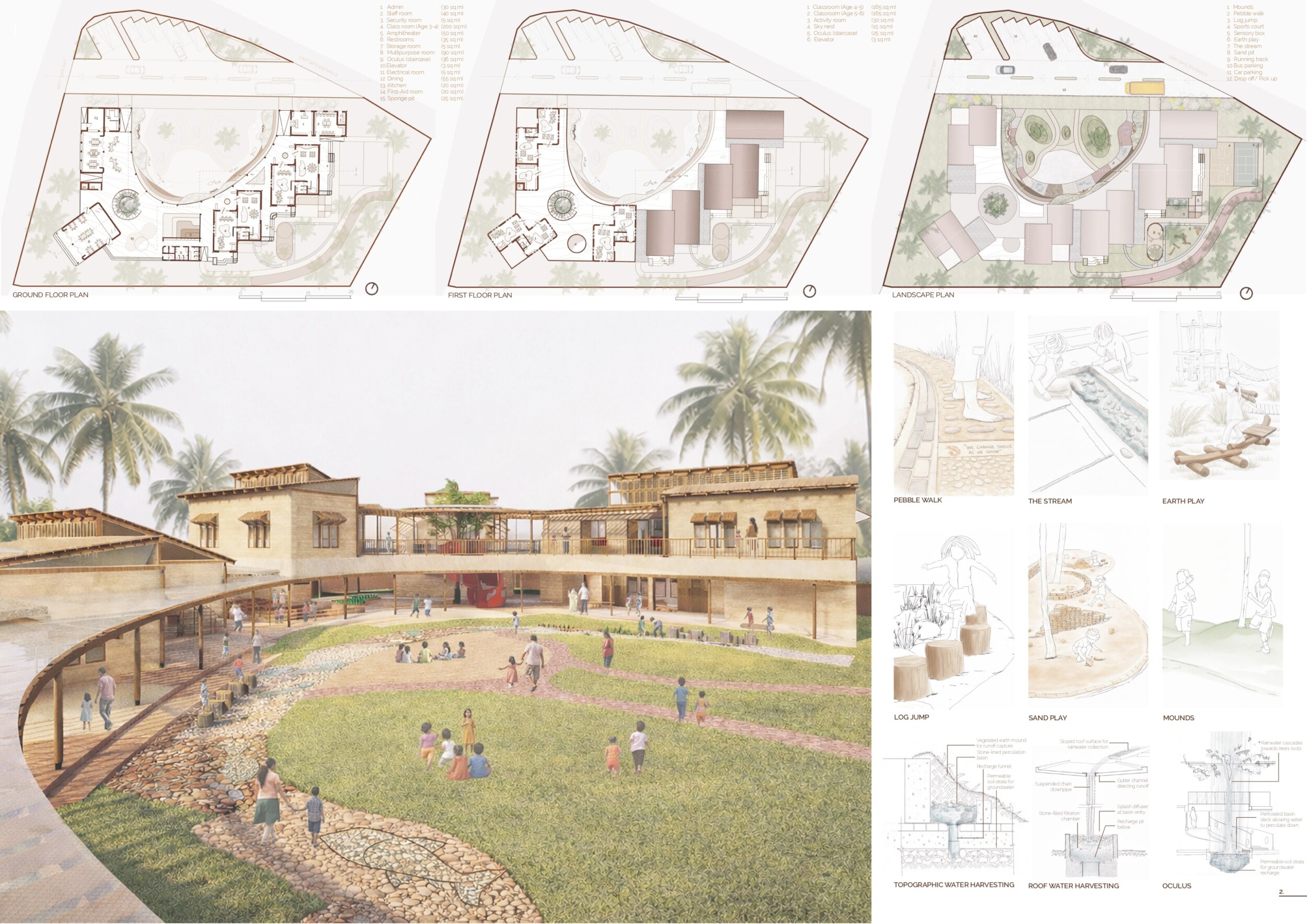
The Fringe
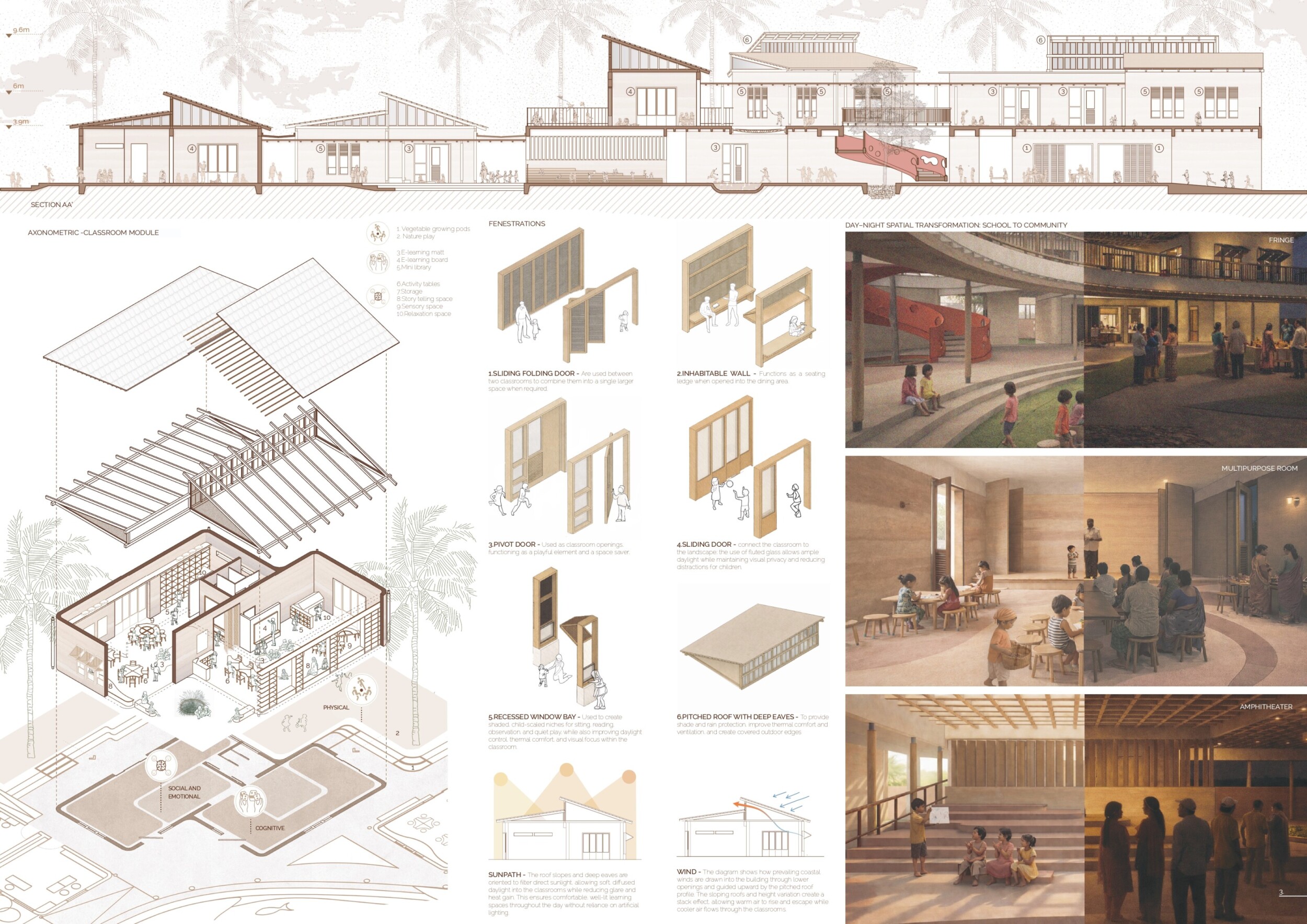
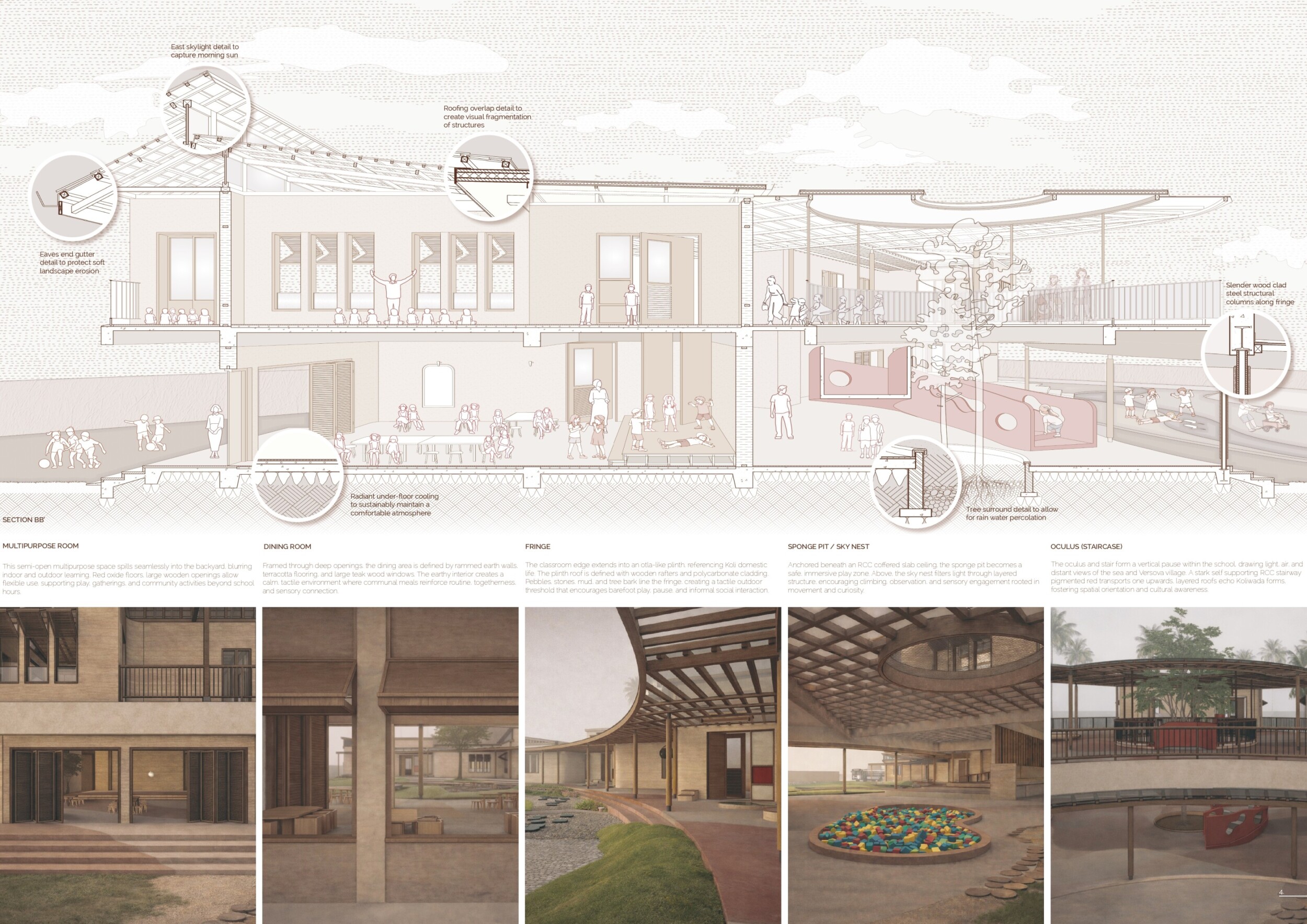

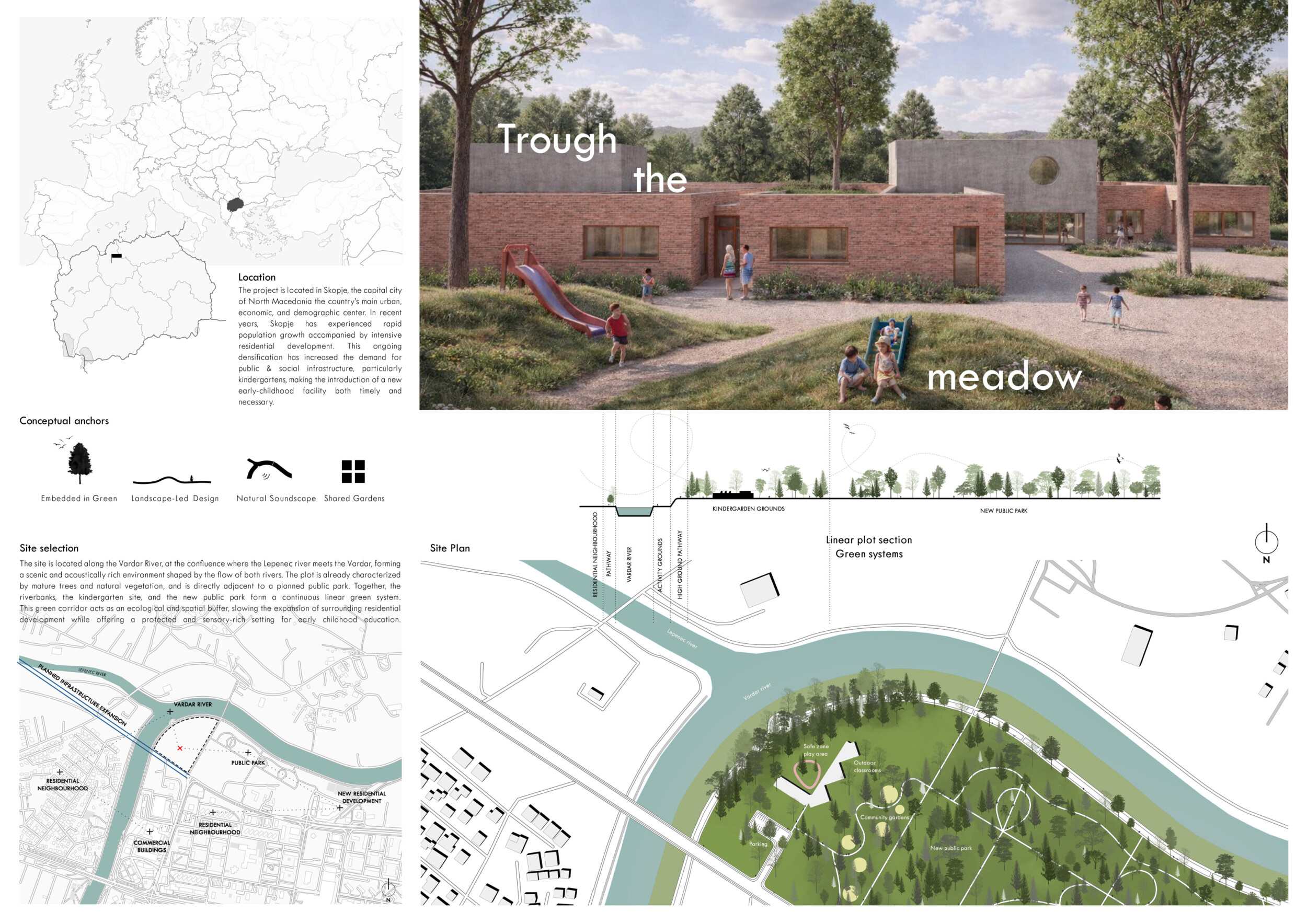
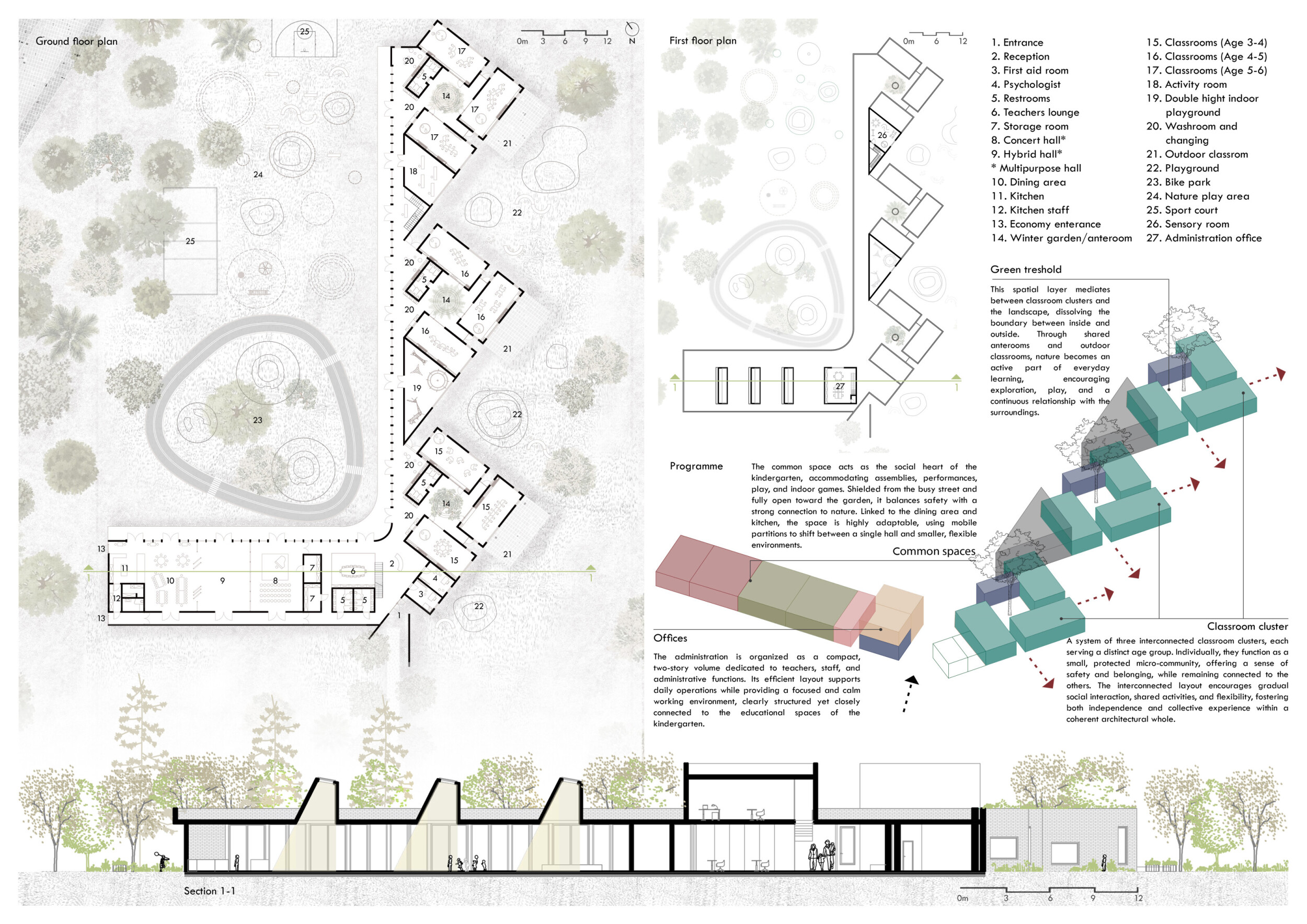
Through the Meadow
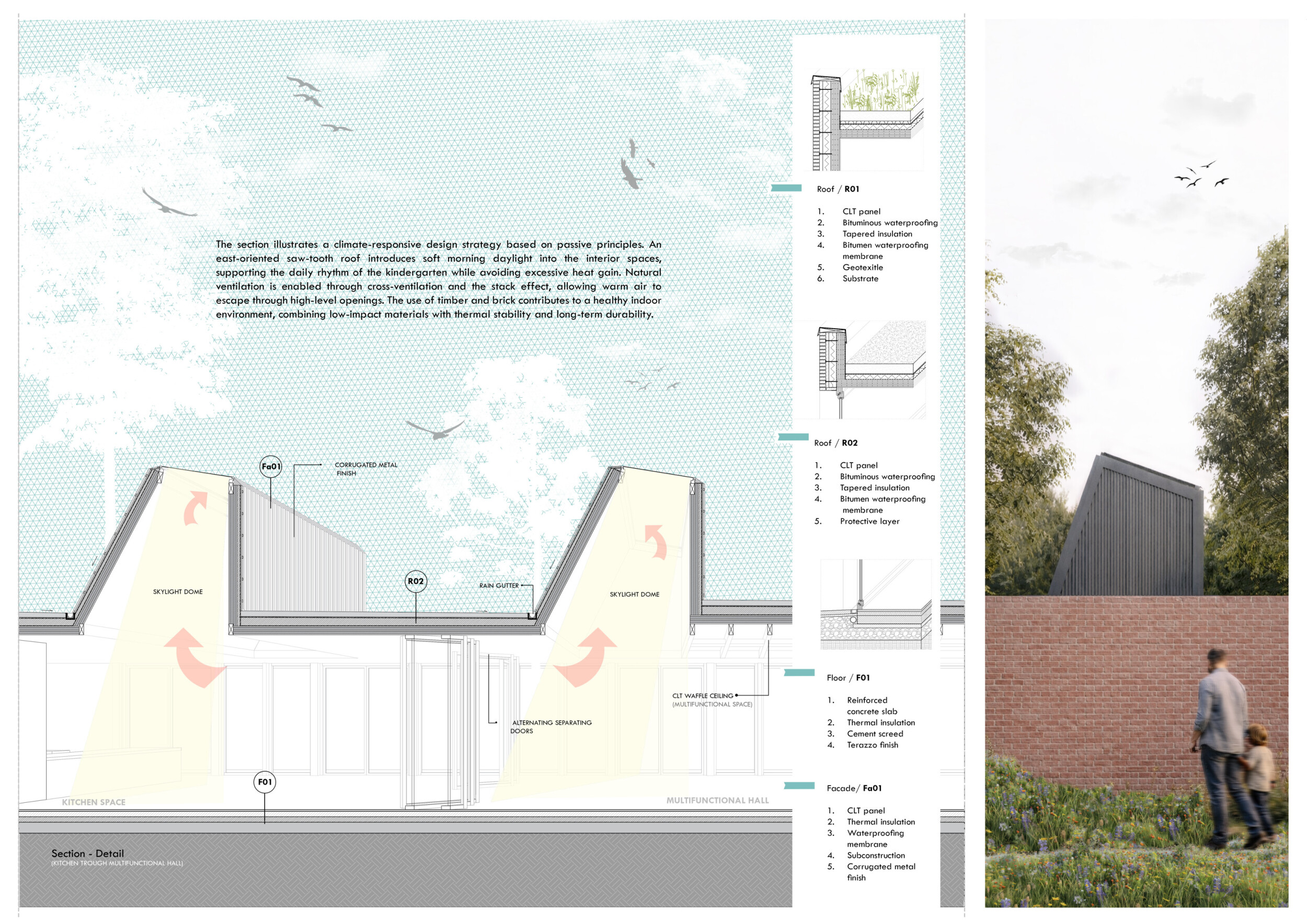
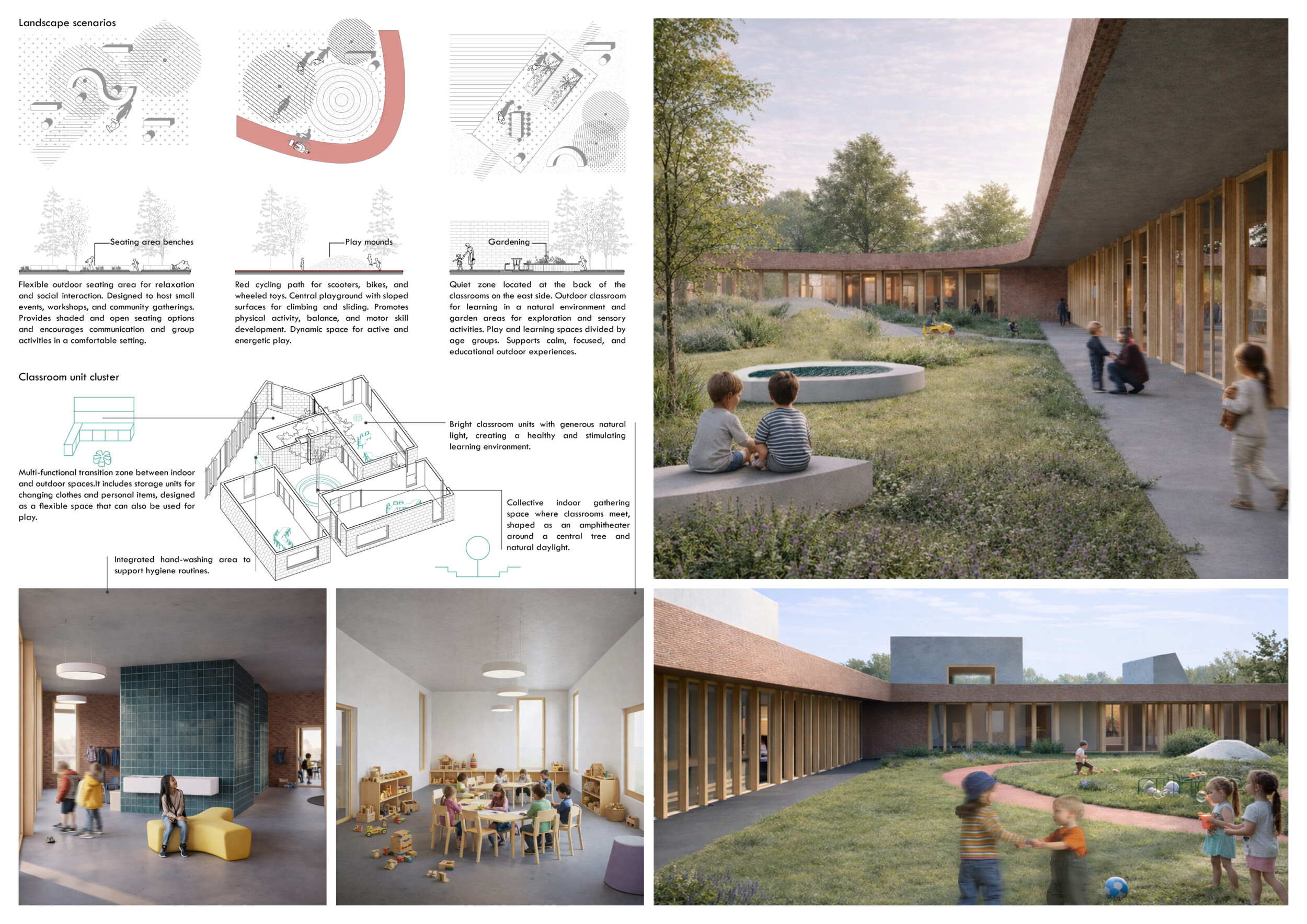
Bellaria Montessori House
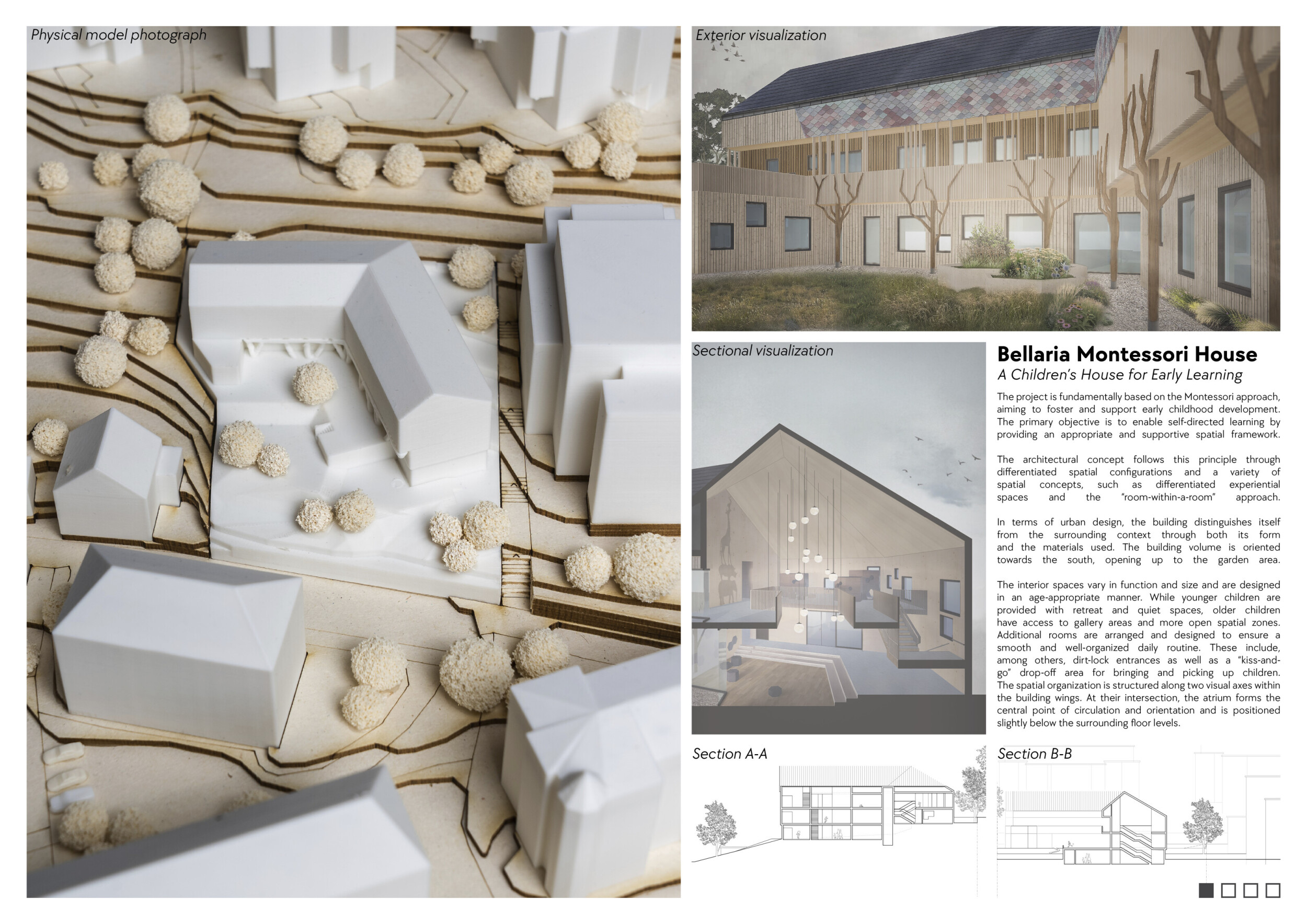
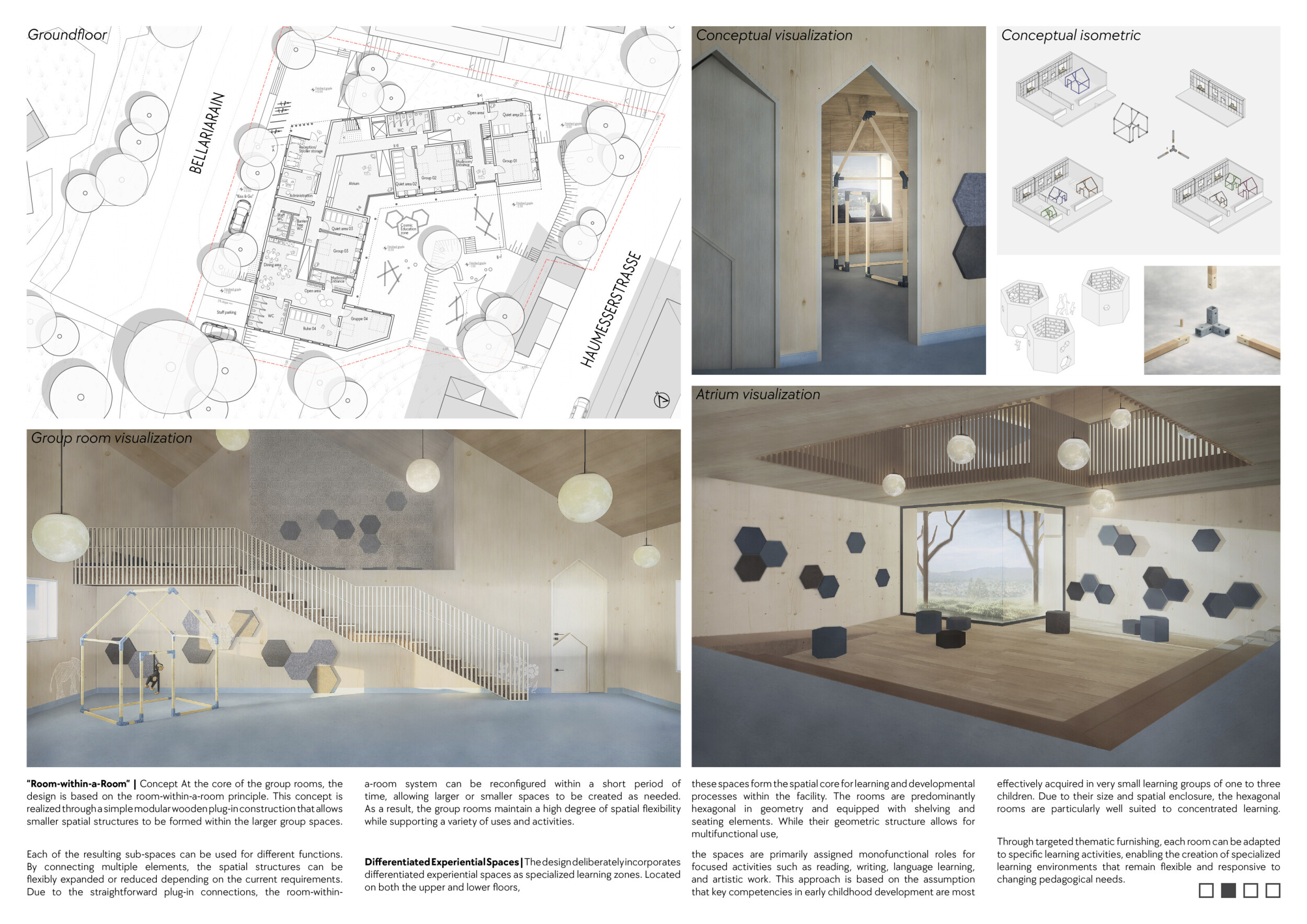
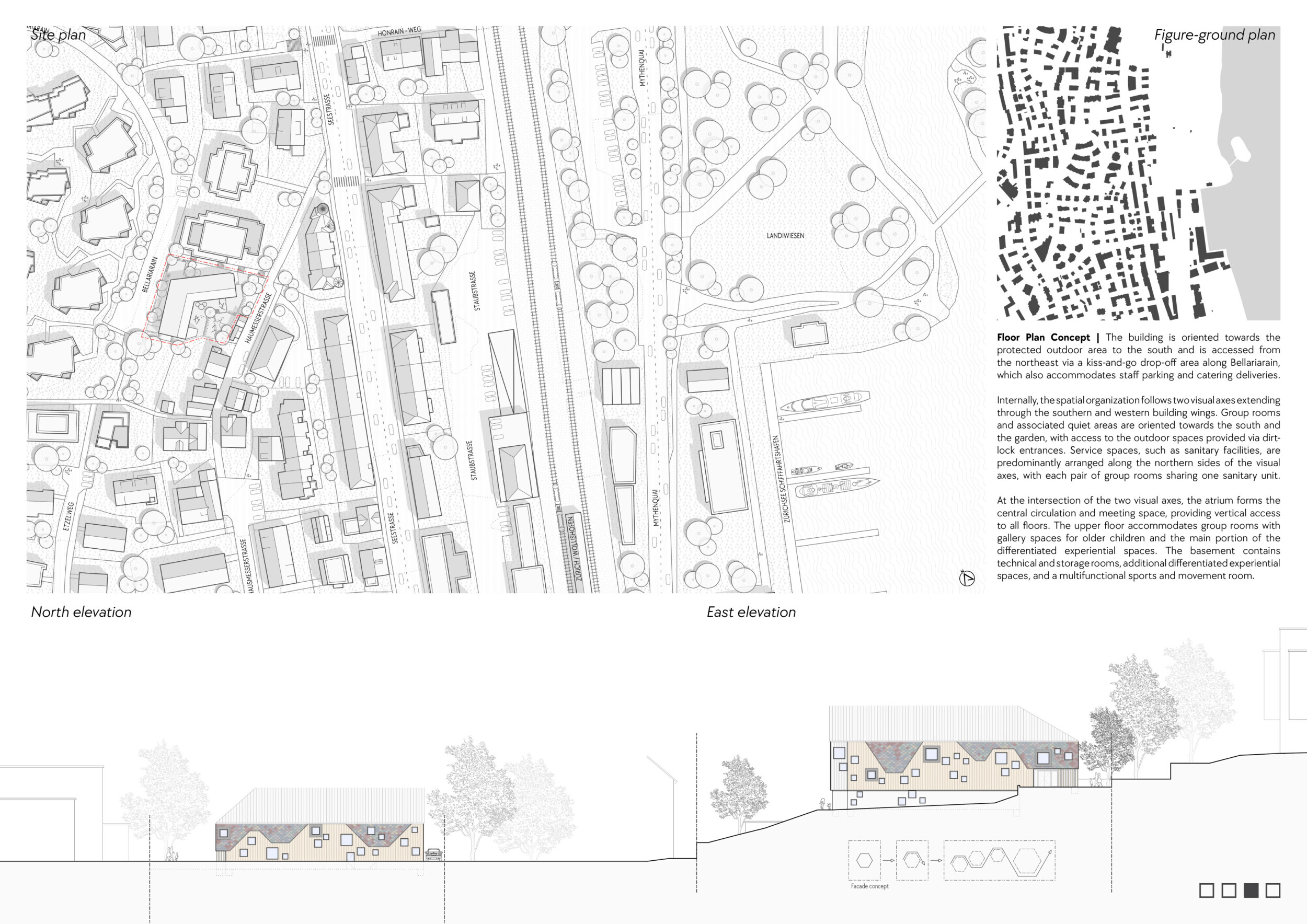
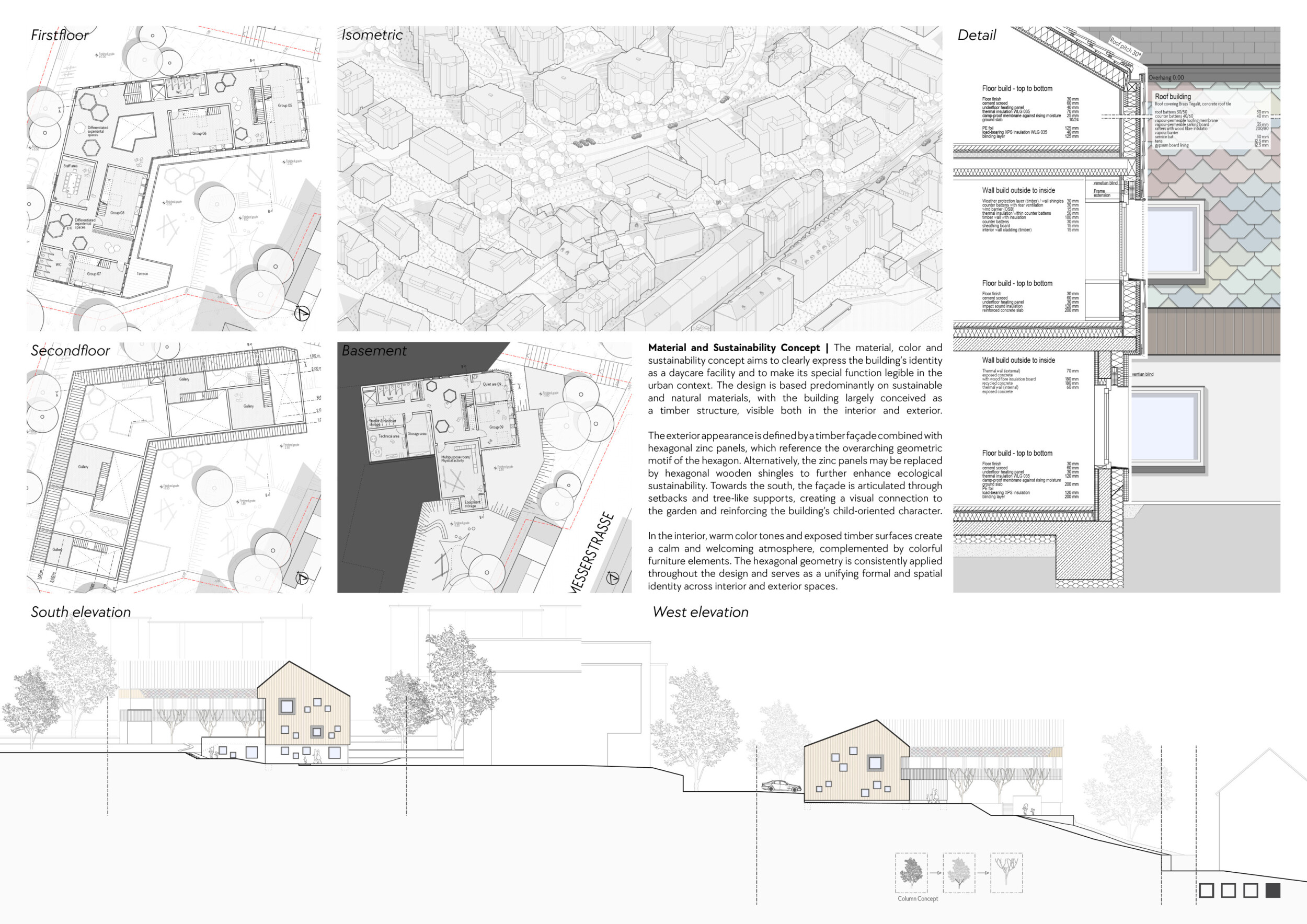
Playful connection
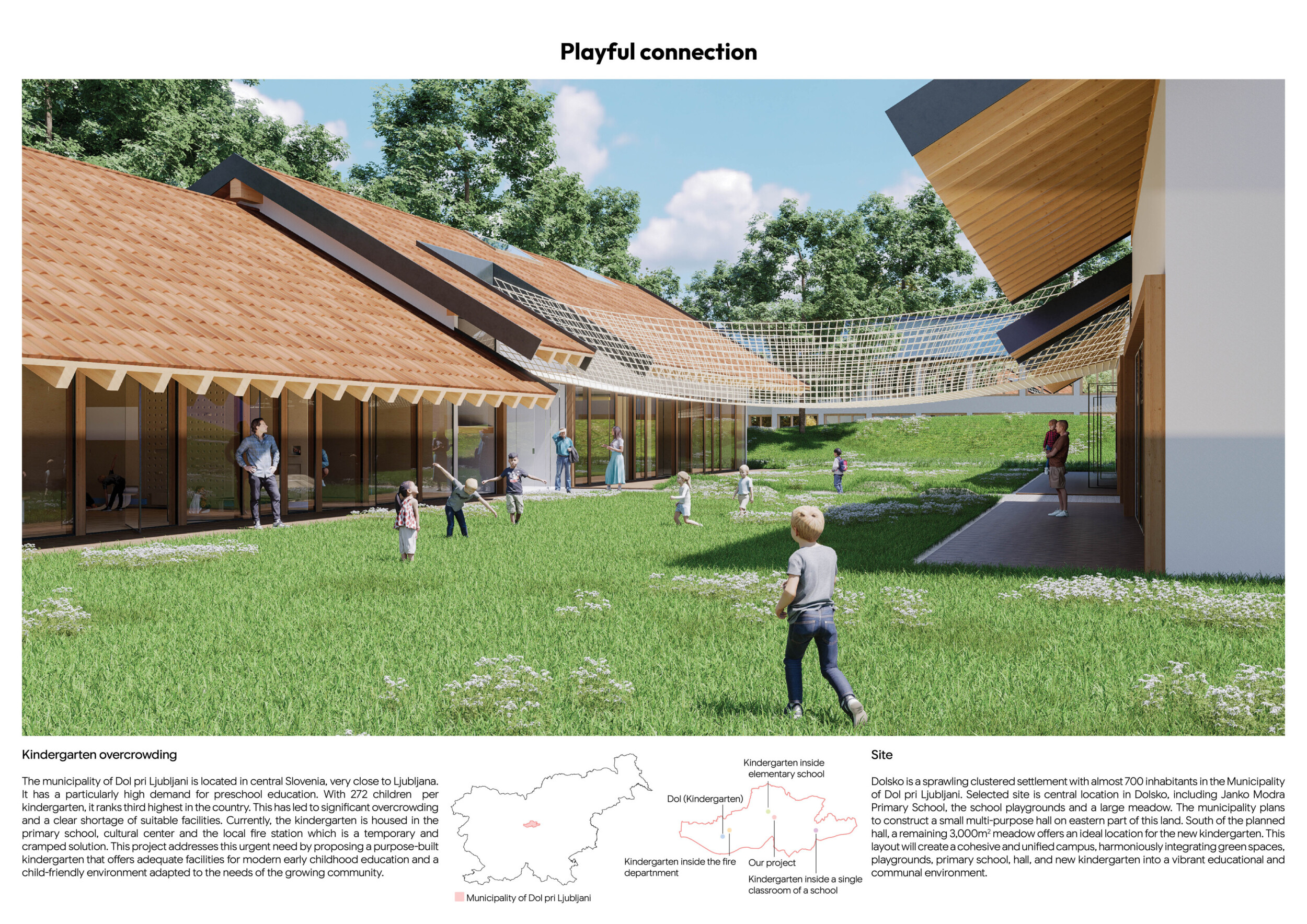
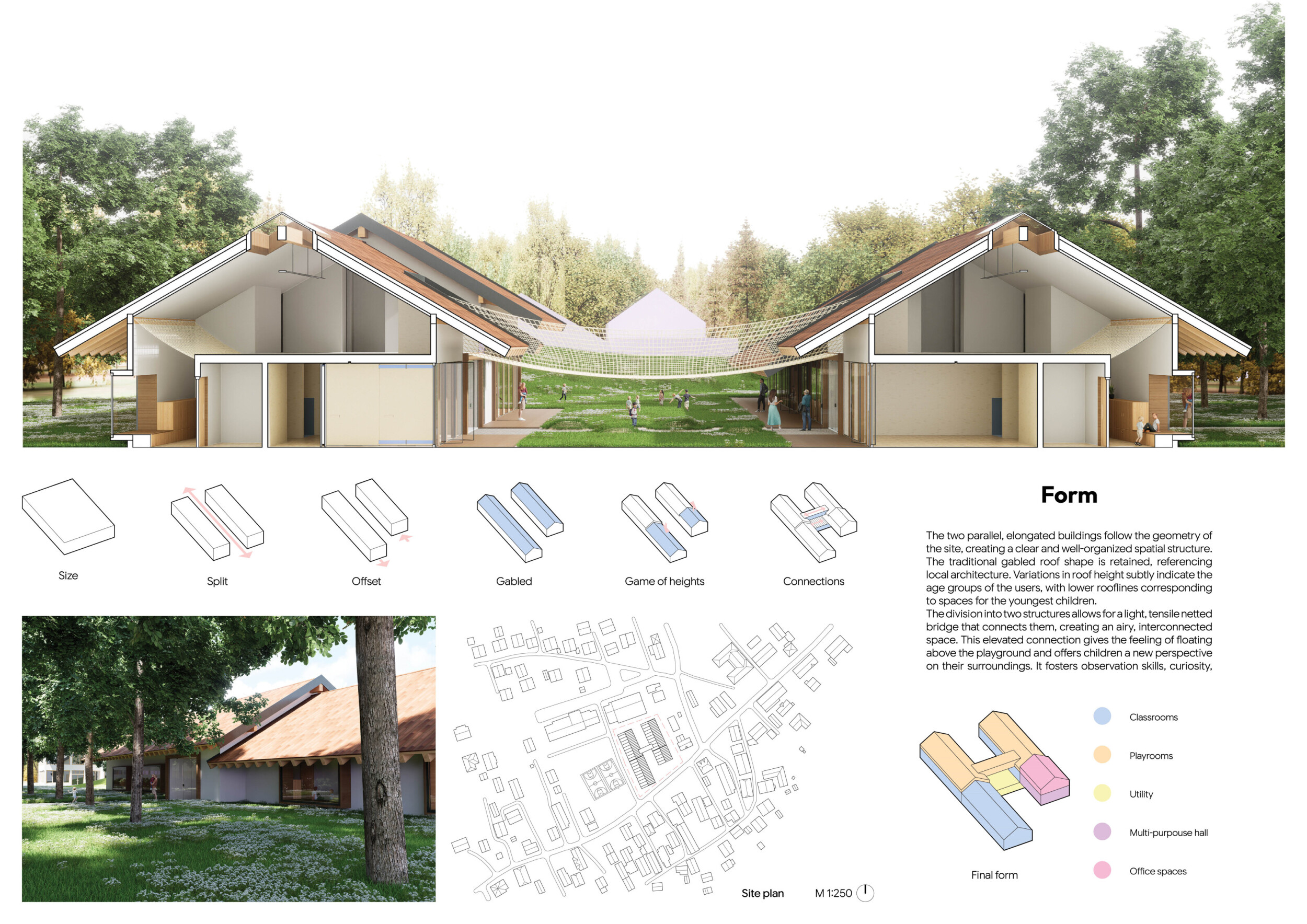
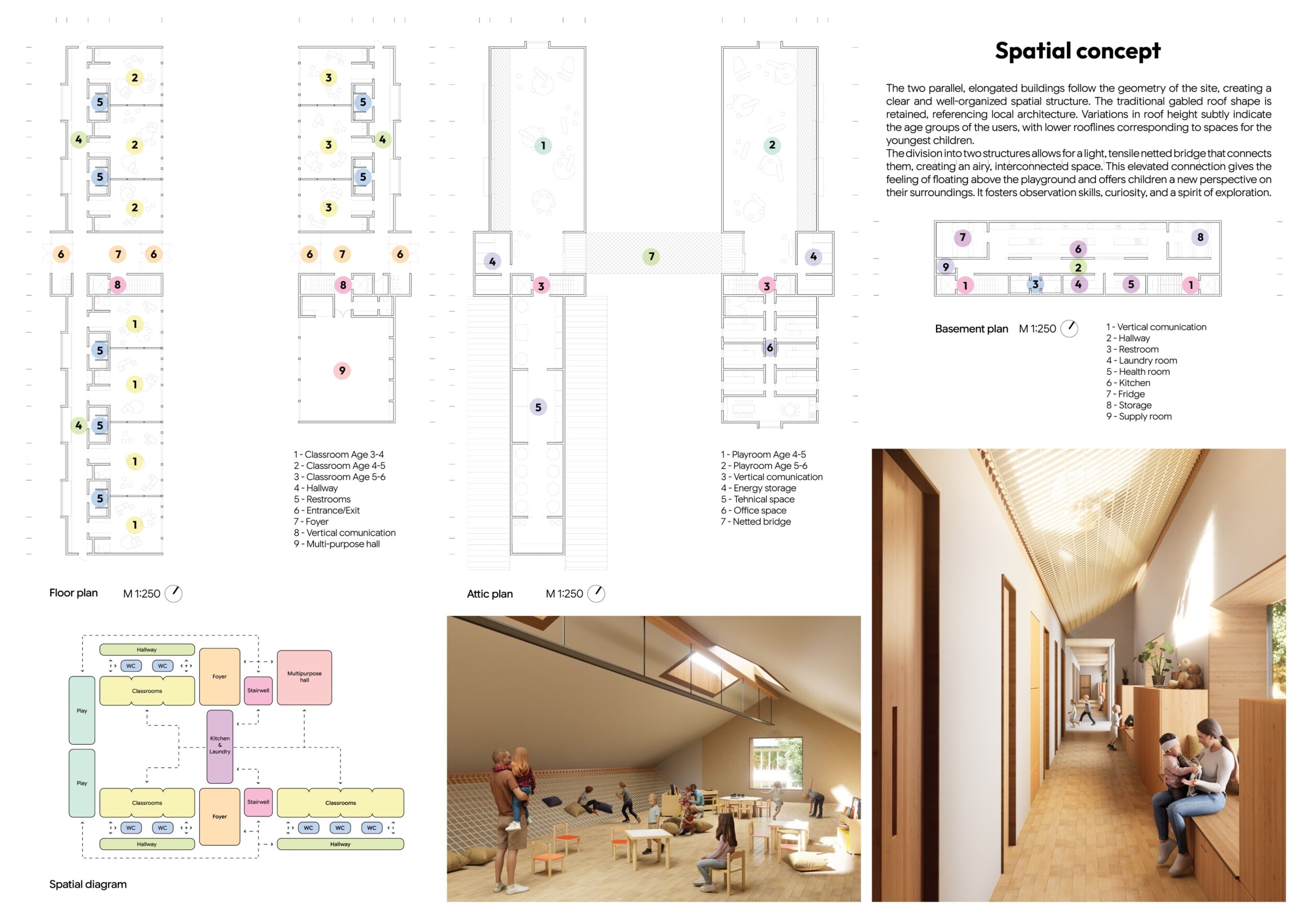
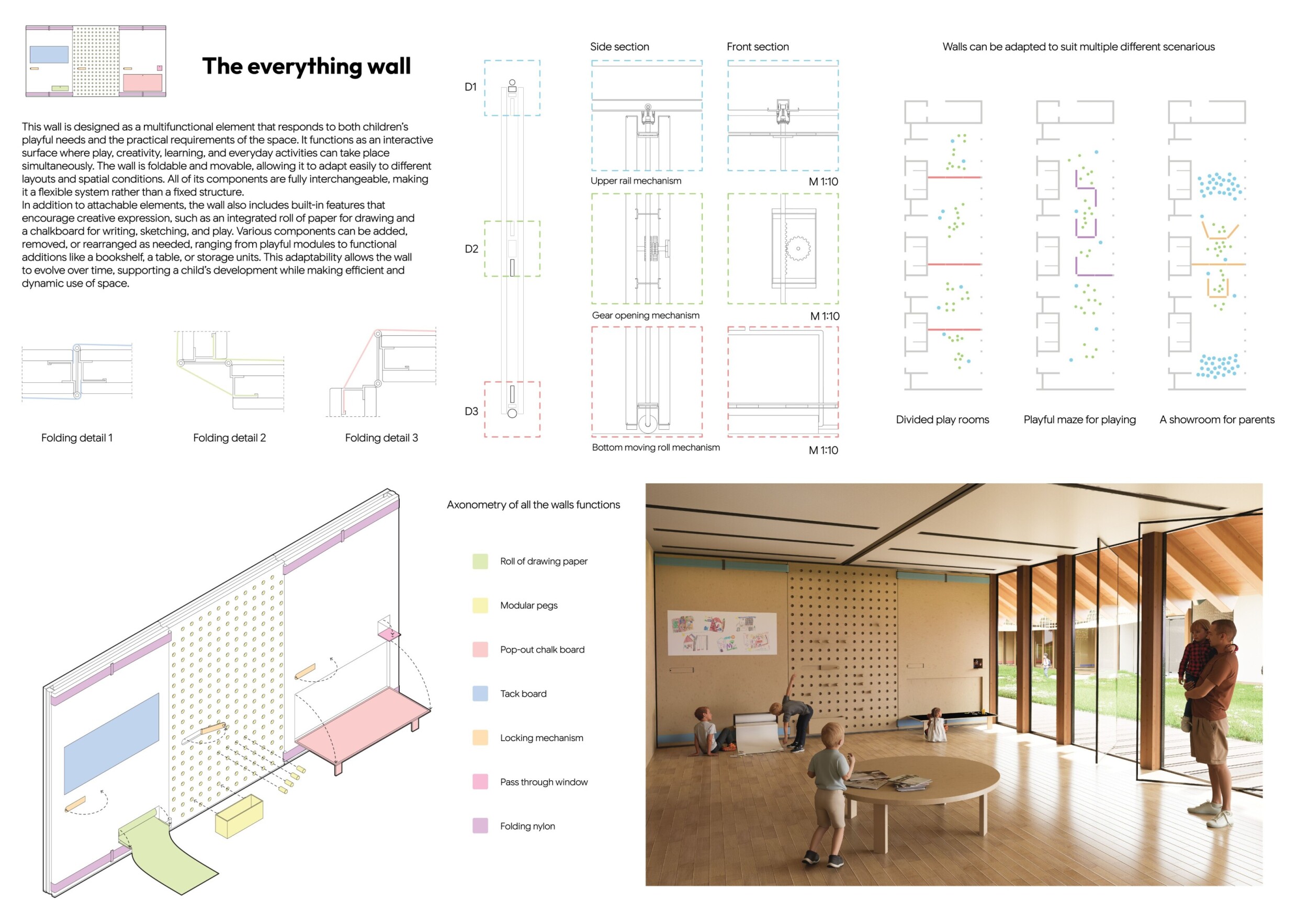

ENTRE ELS HORTS
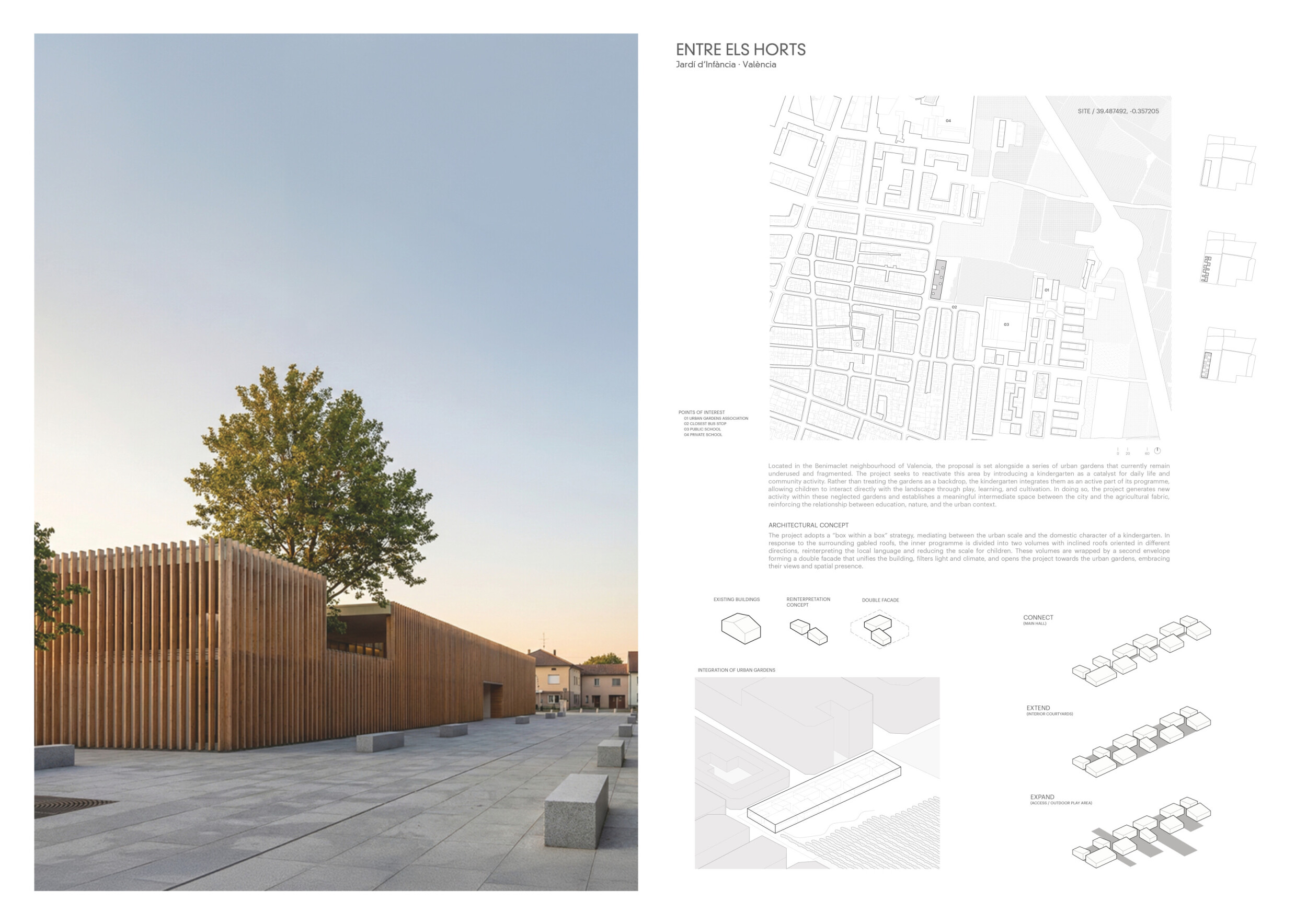
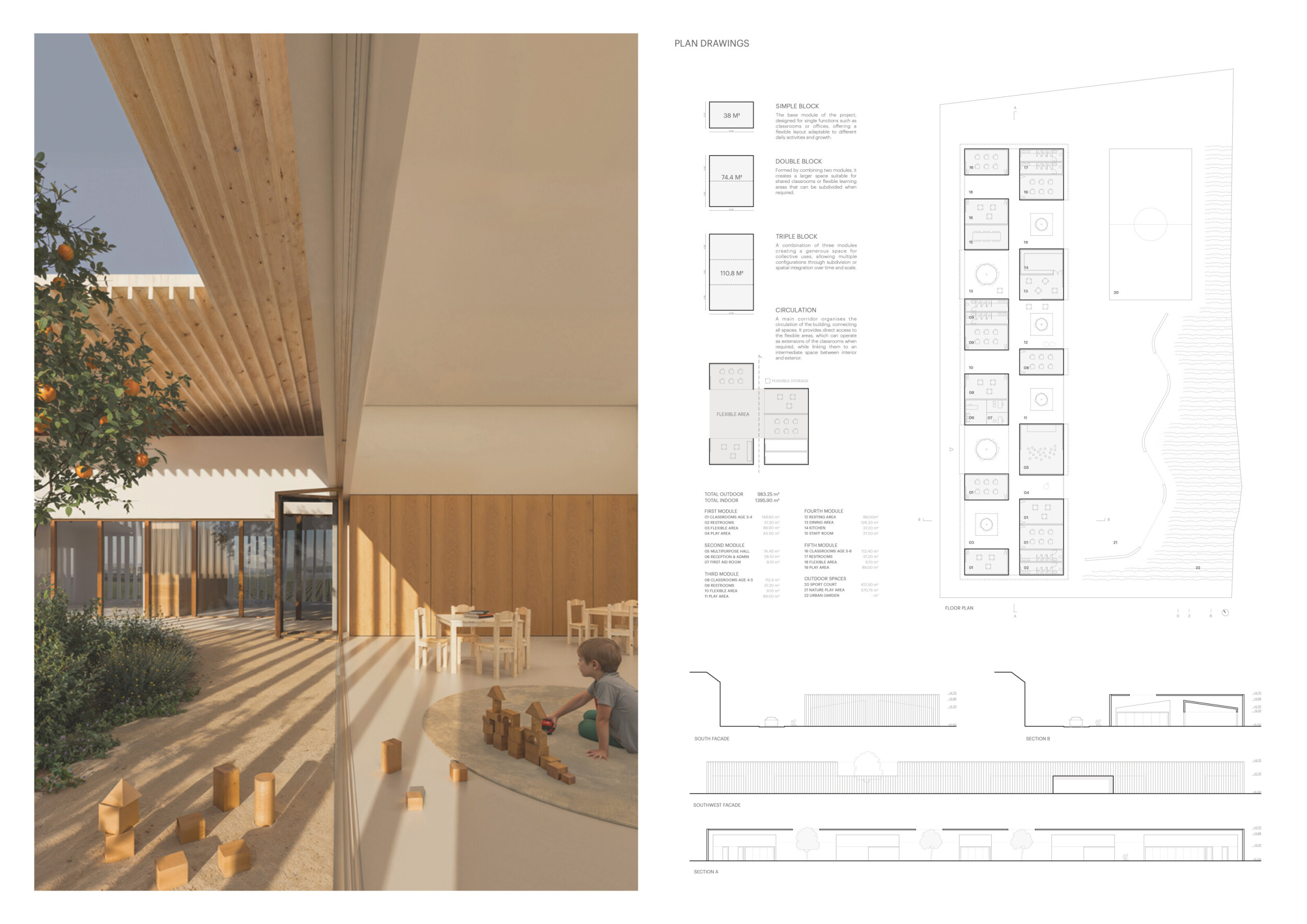
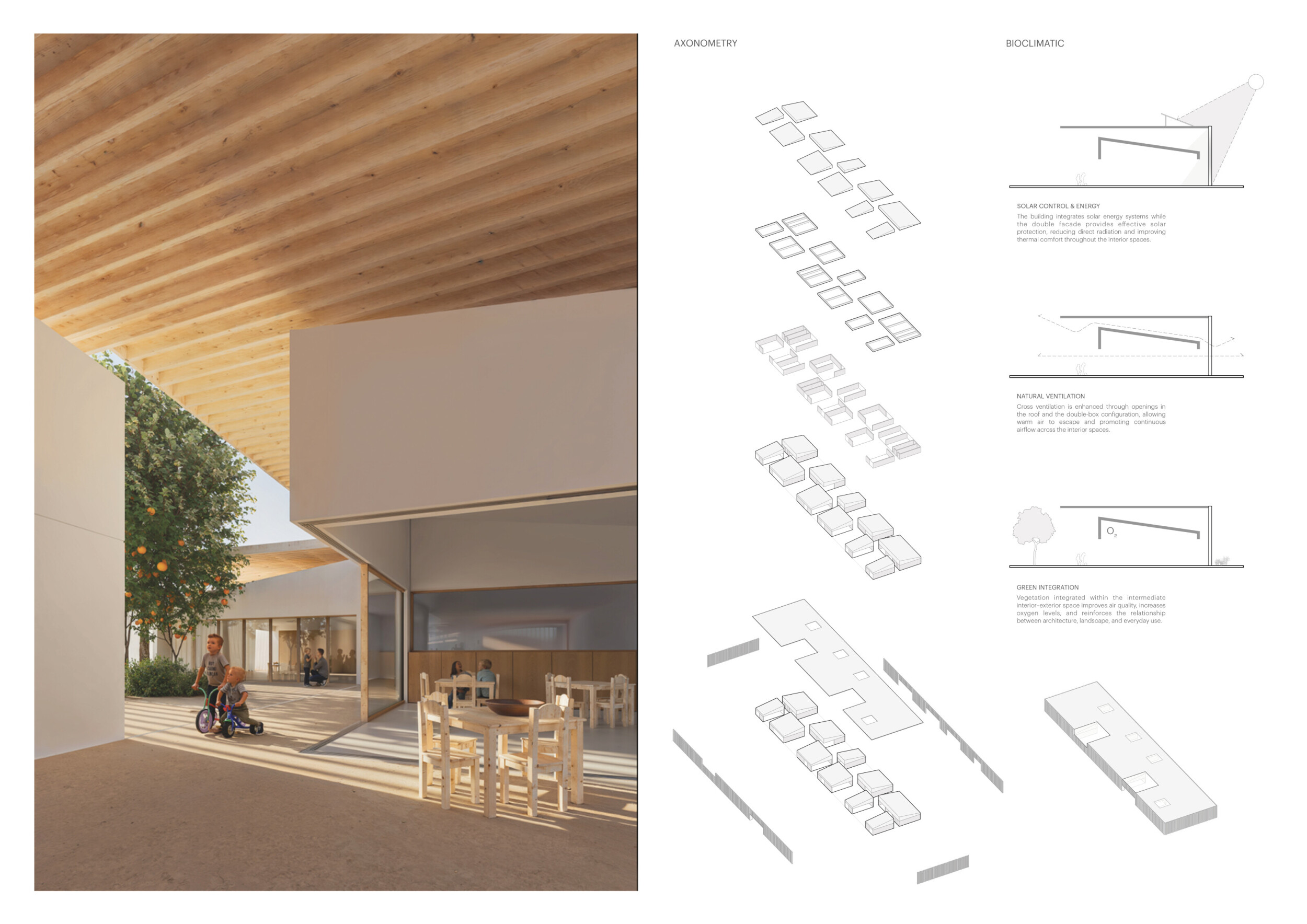
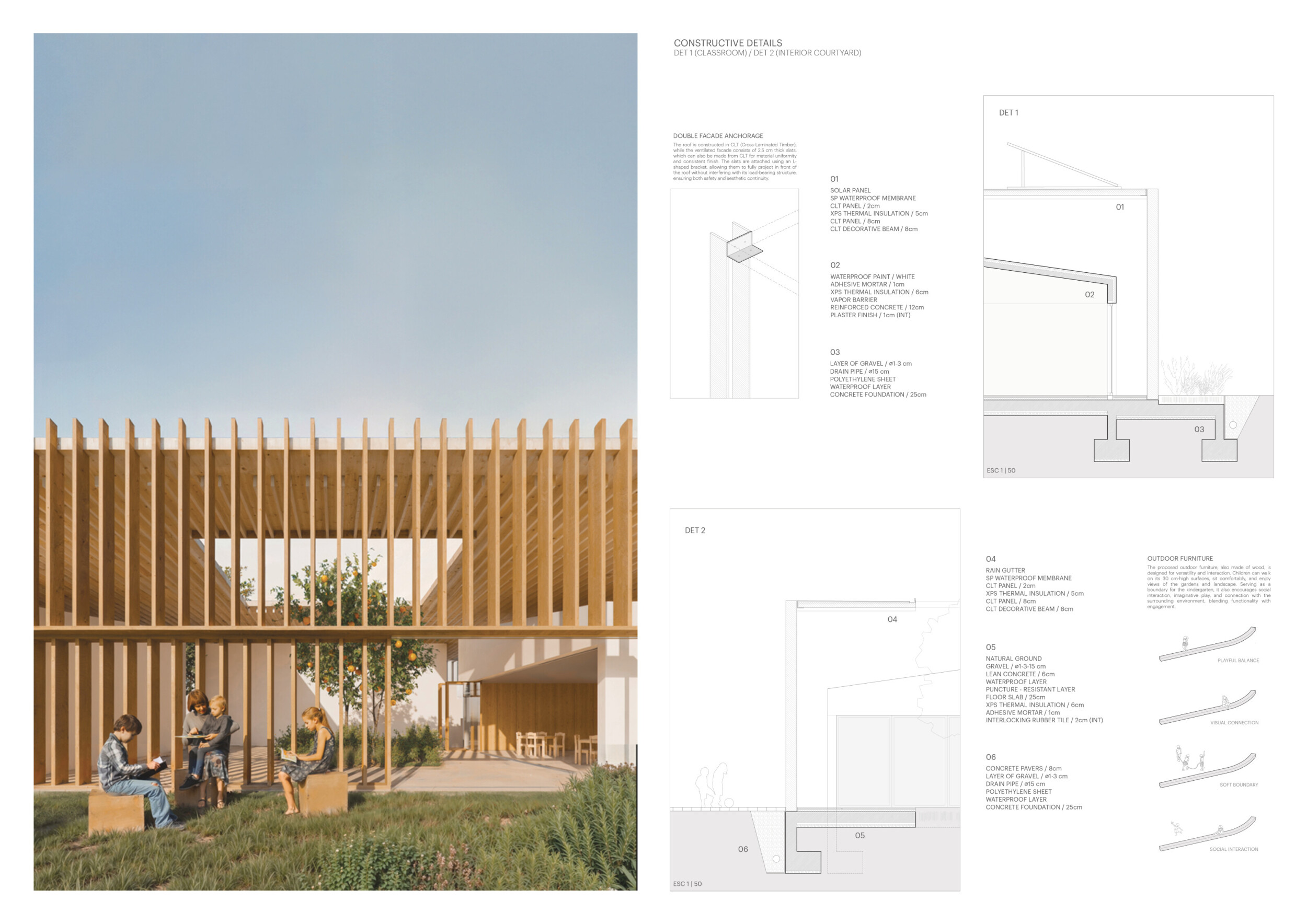
Made to Grow
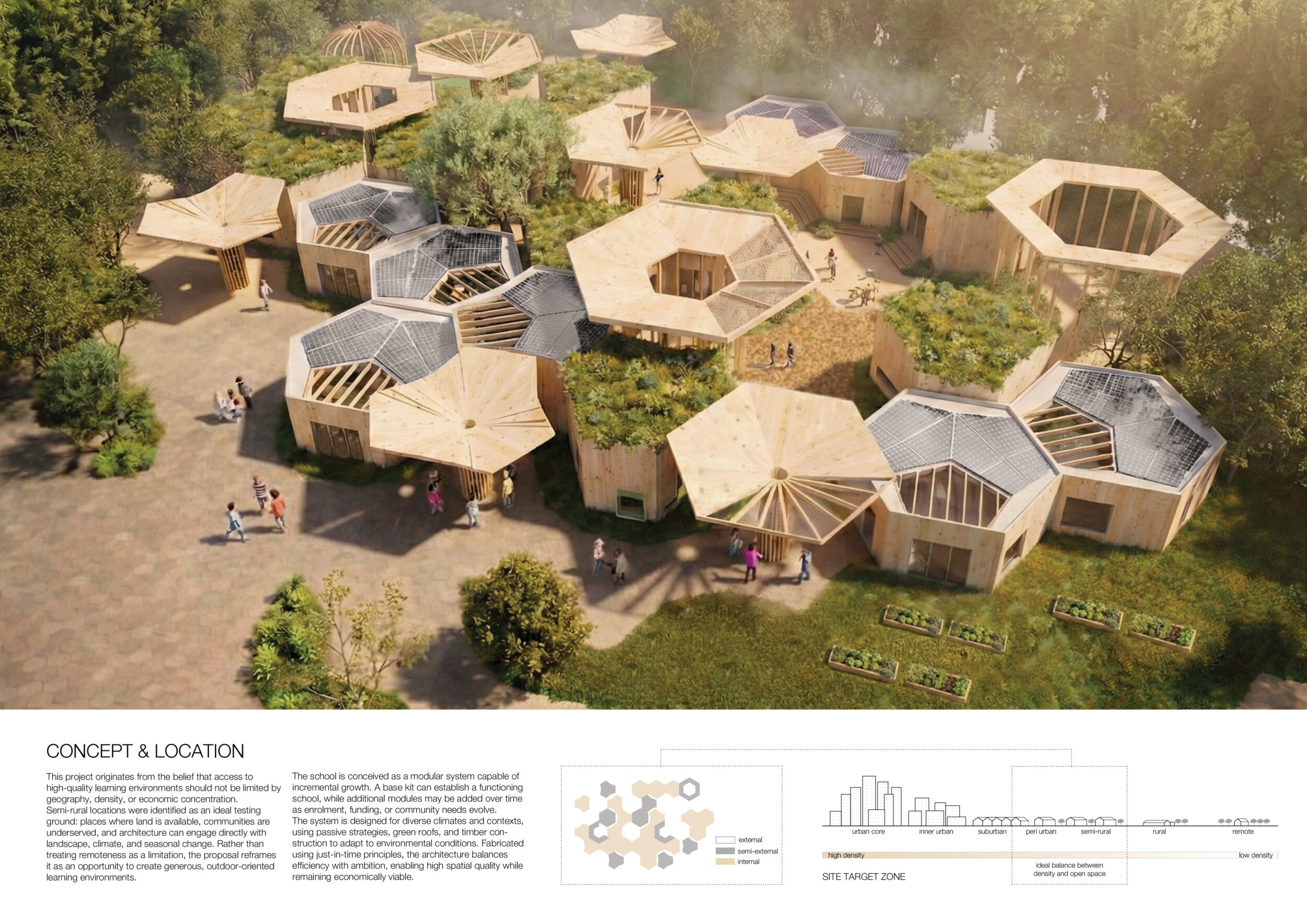
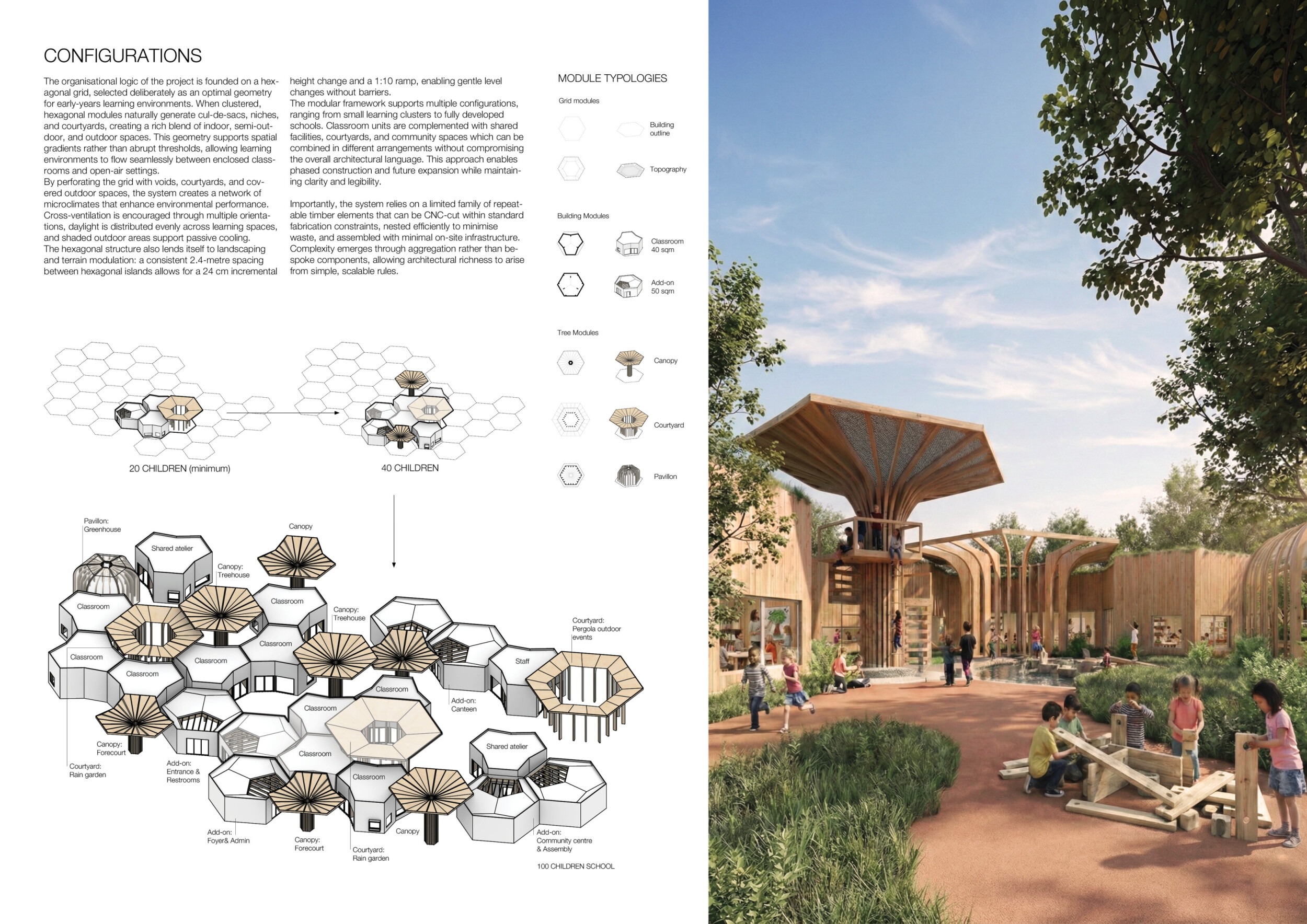

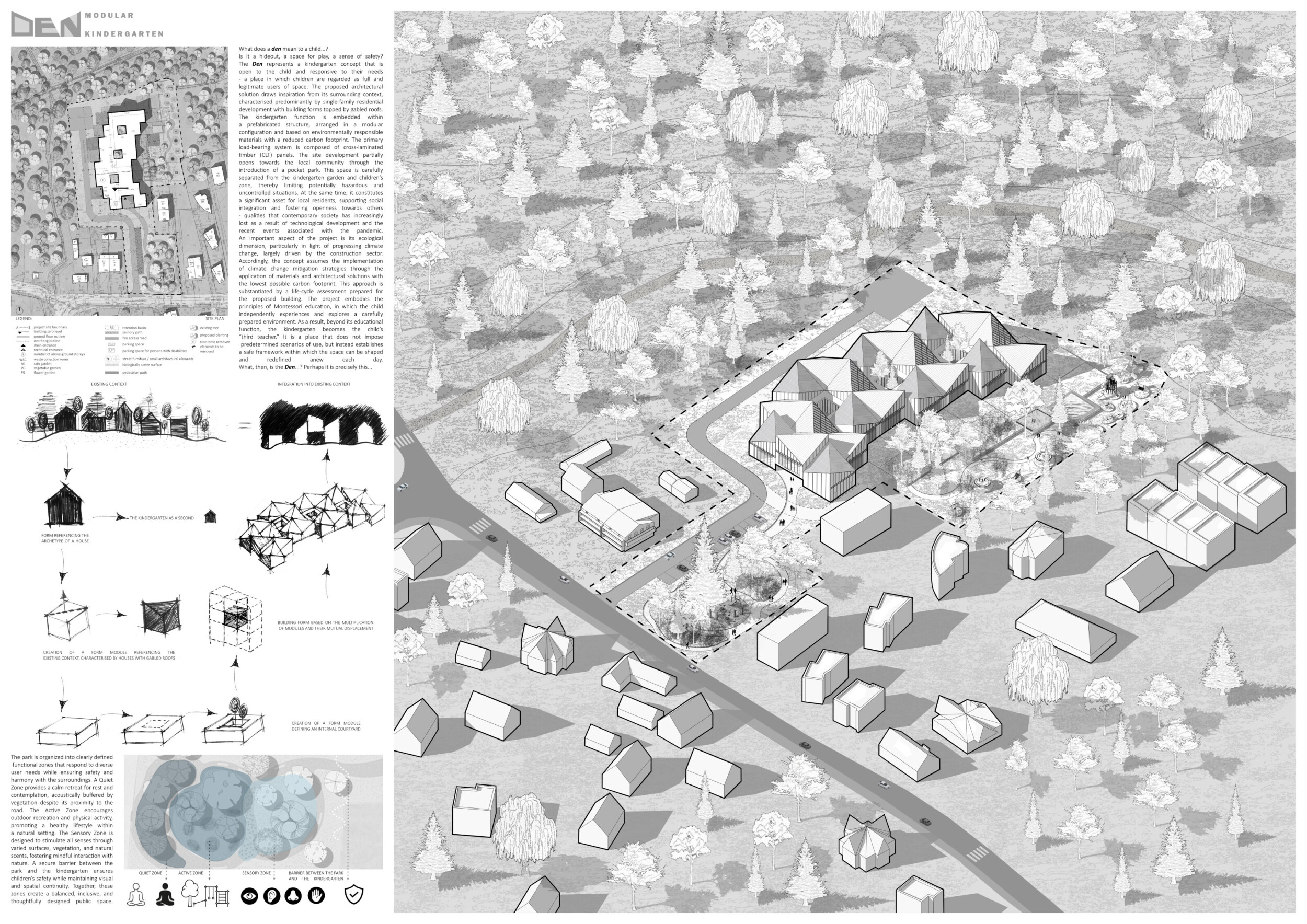
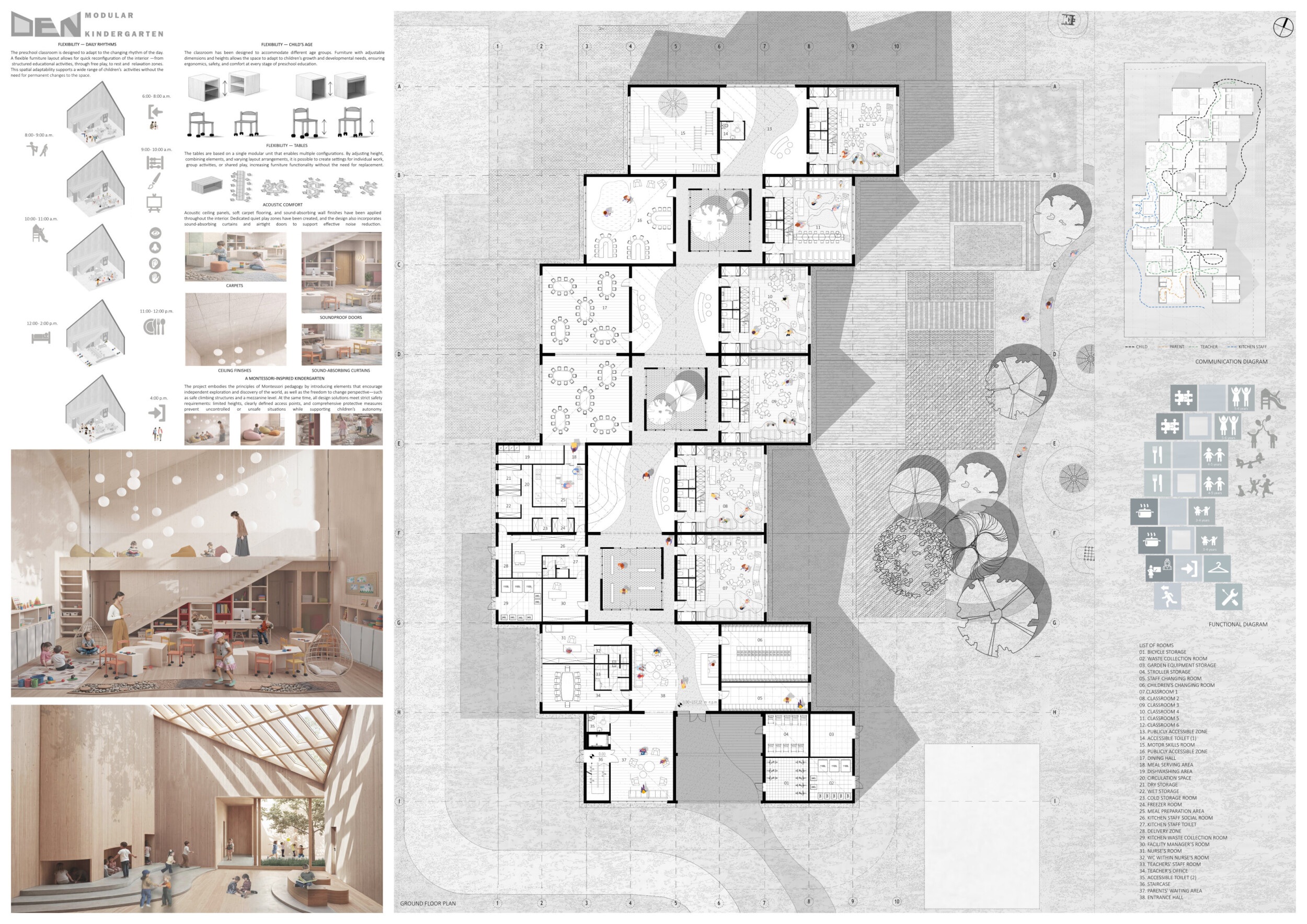
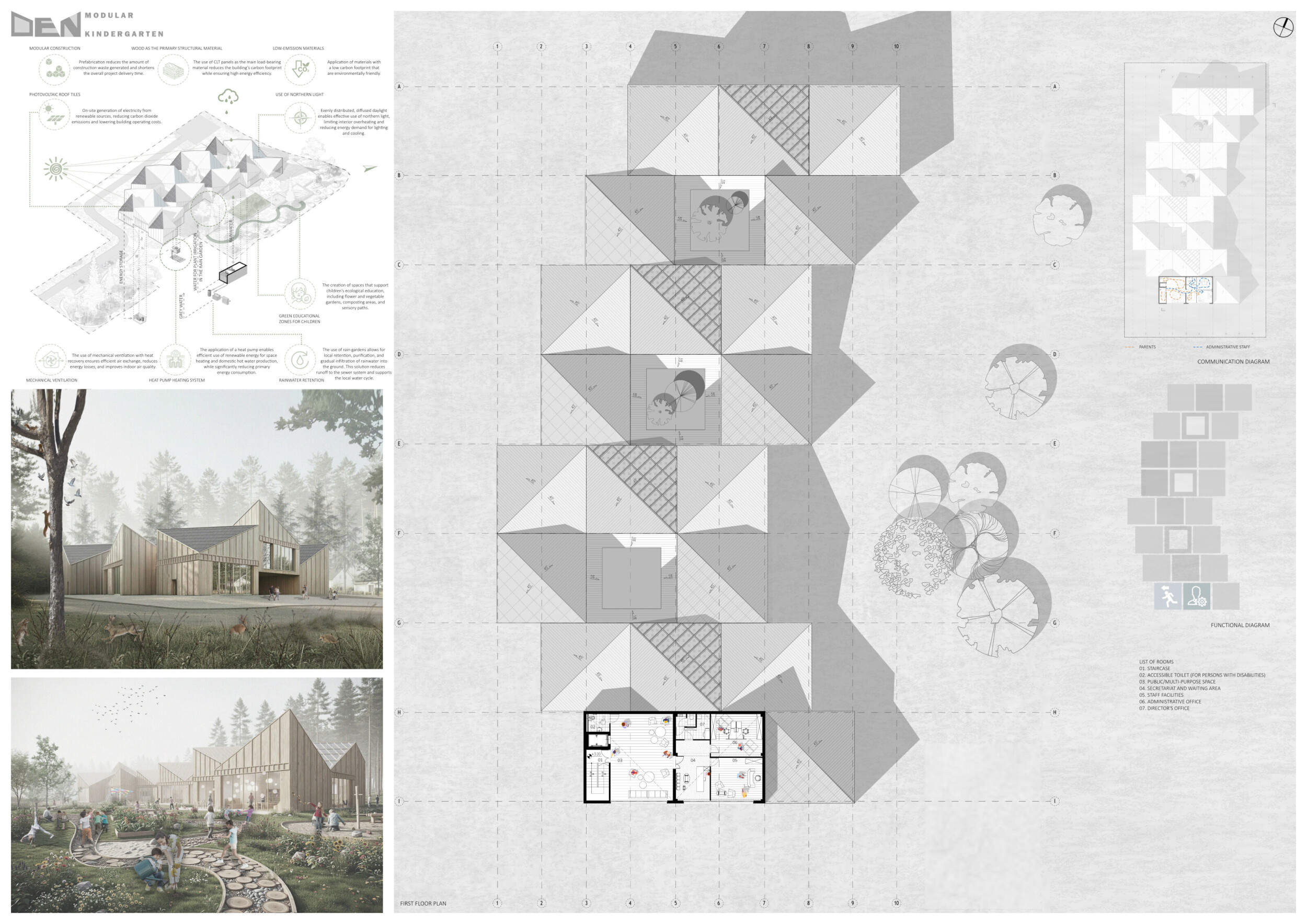
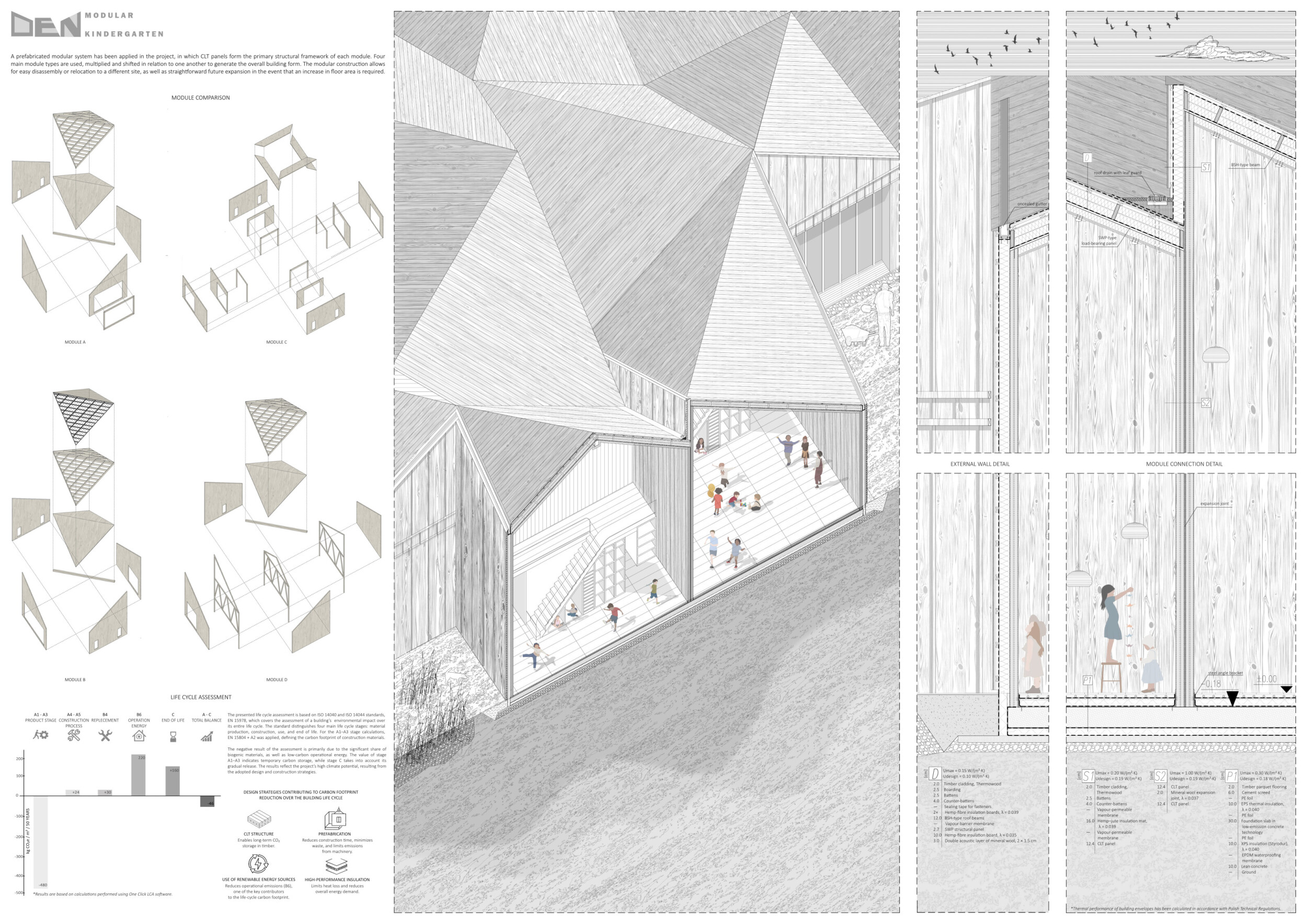
DEN - Modular Kindergarten
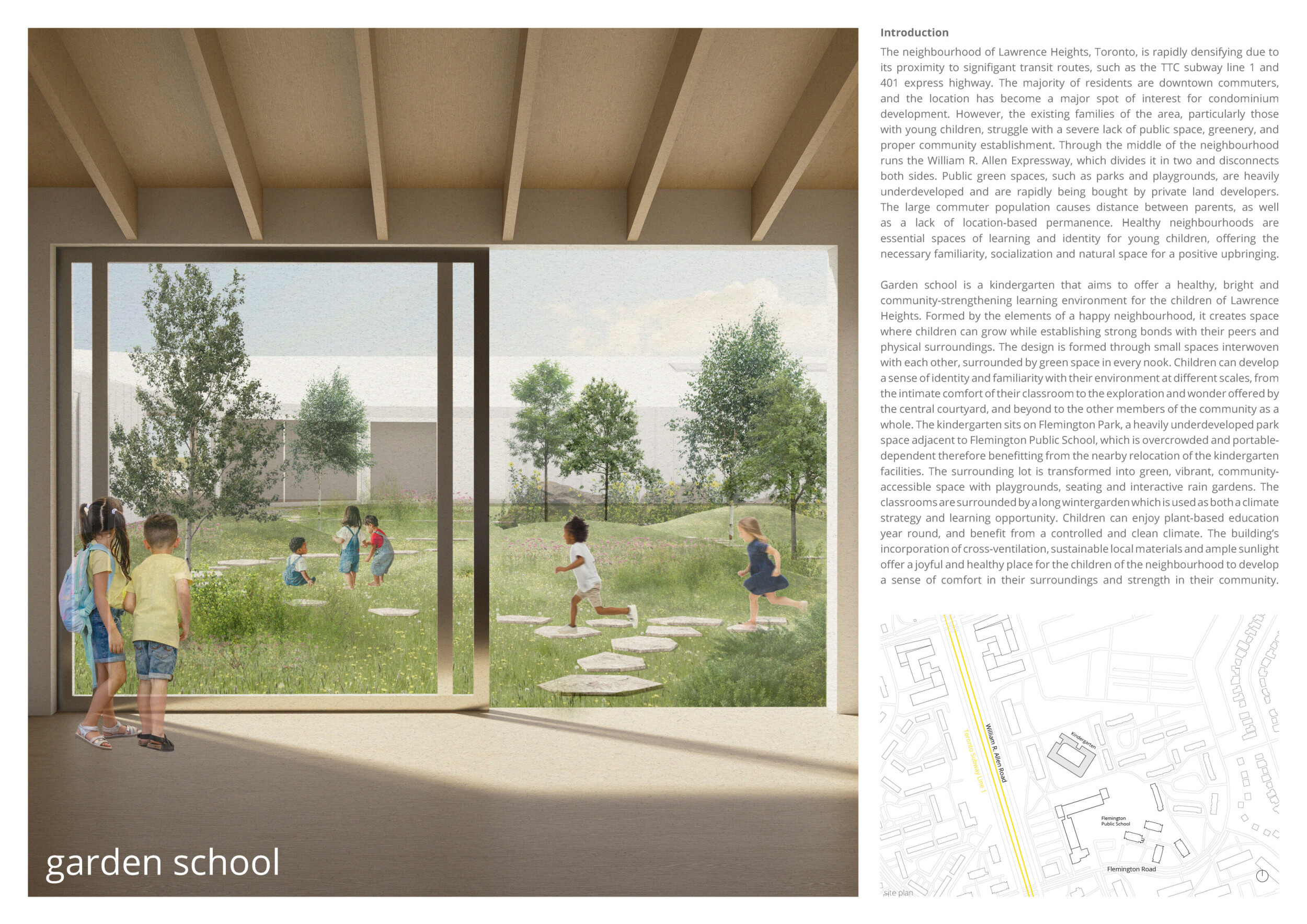
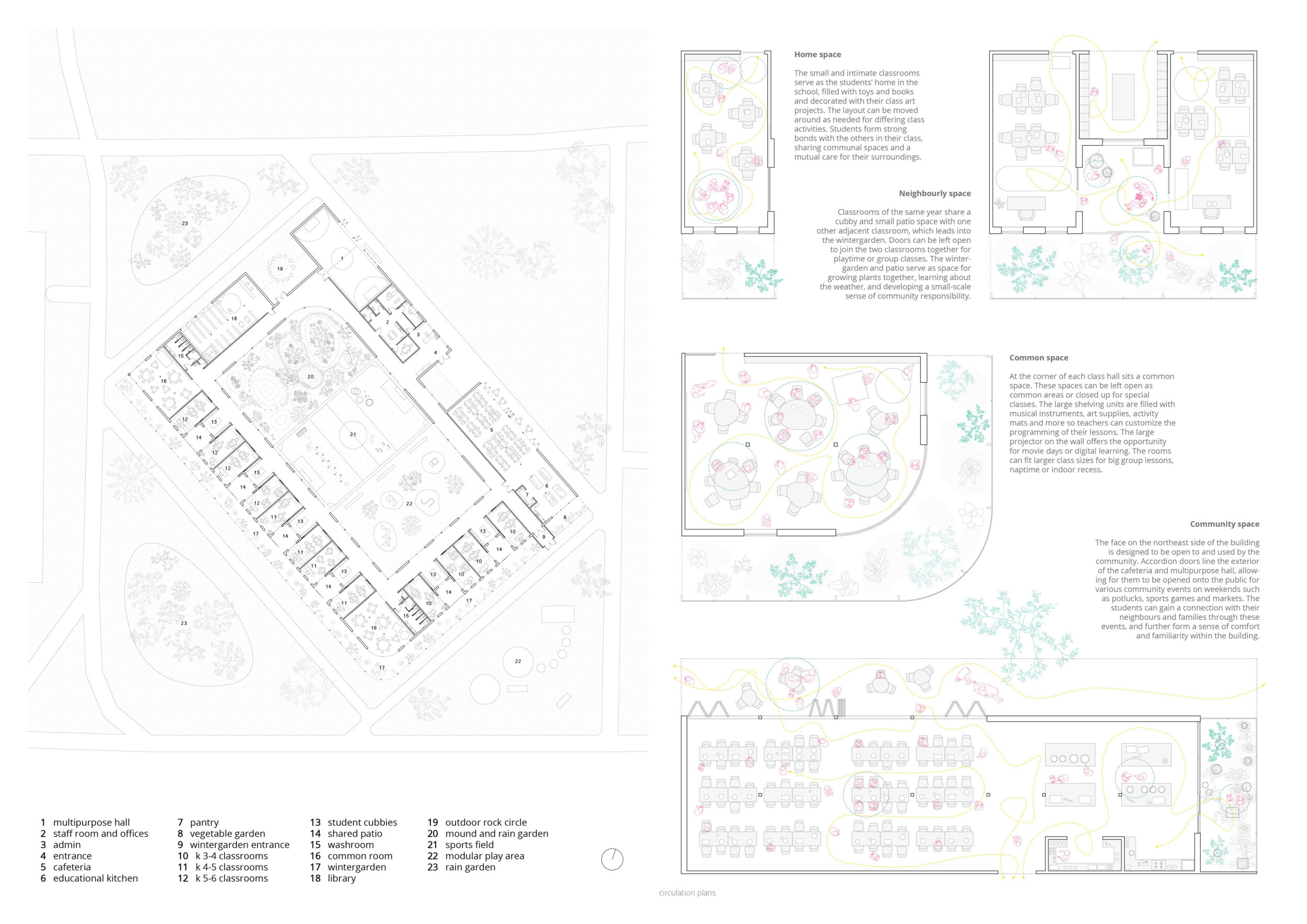
Garden School
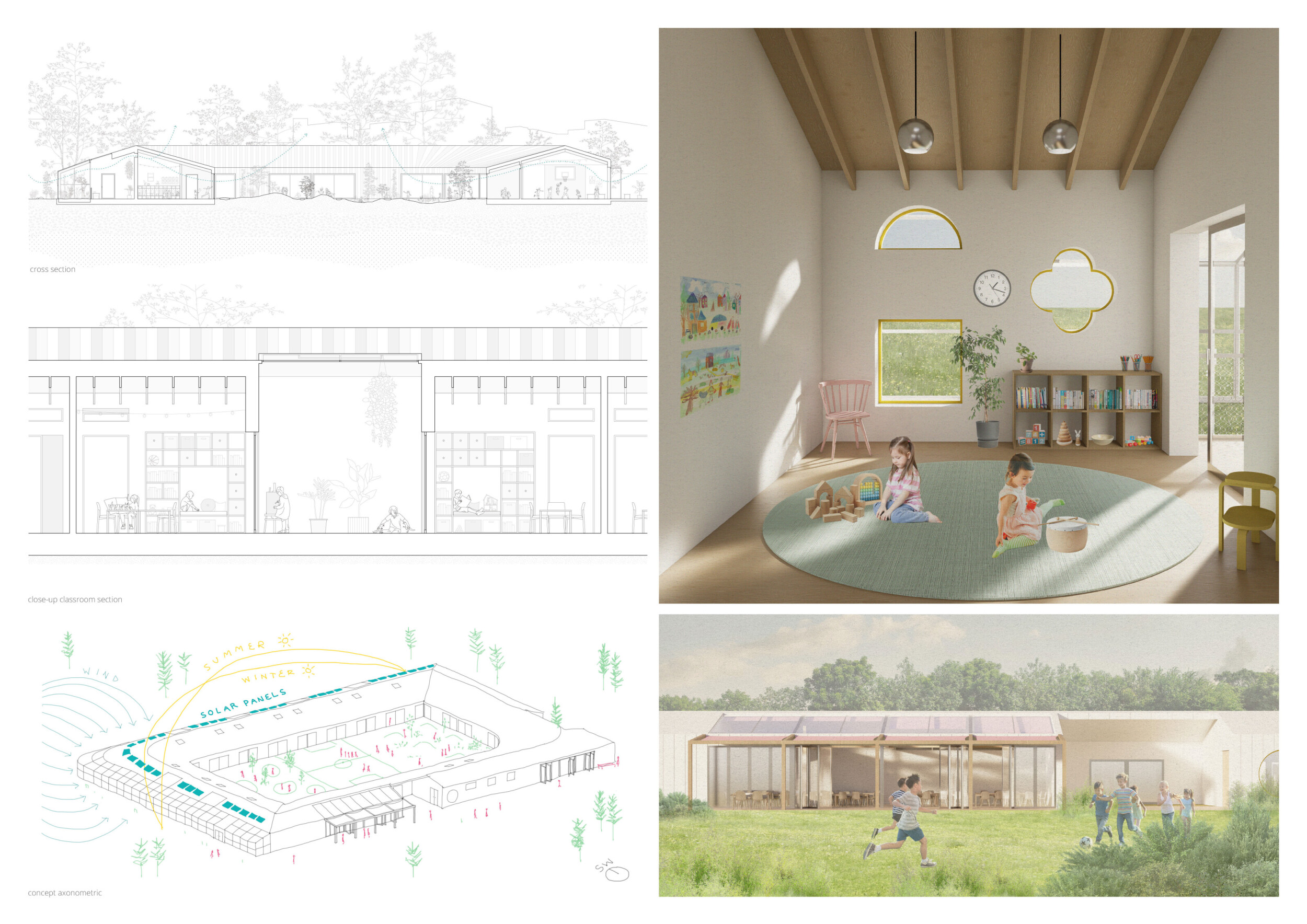
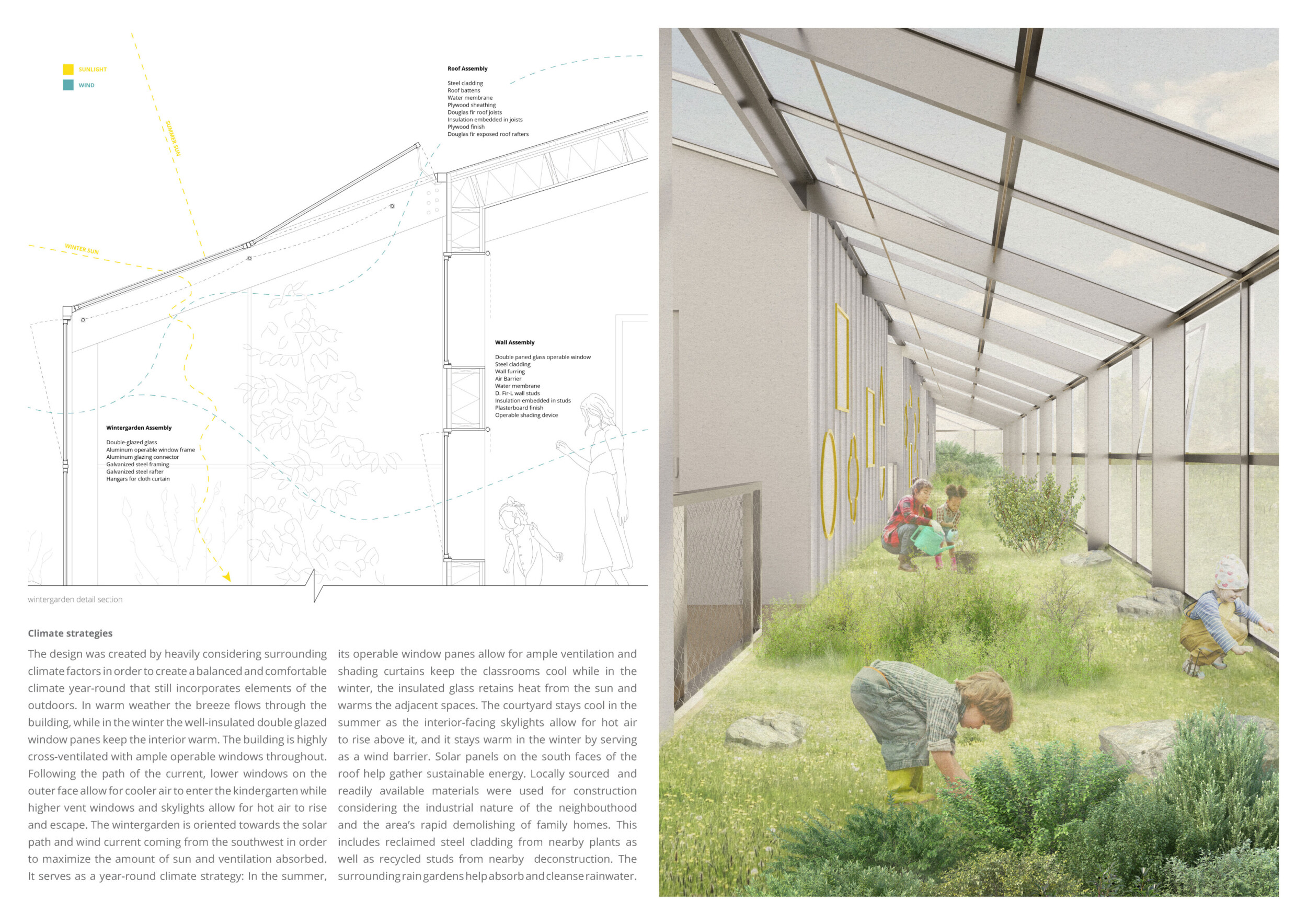

waldkindergarten
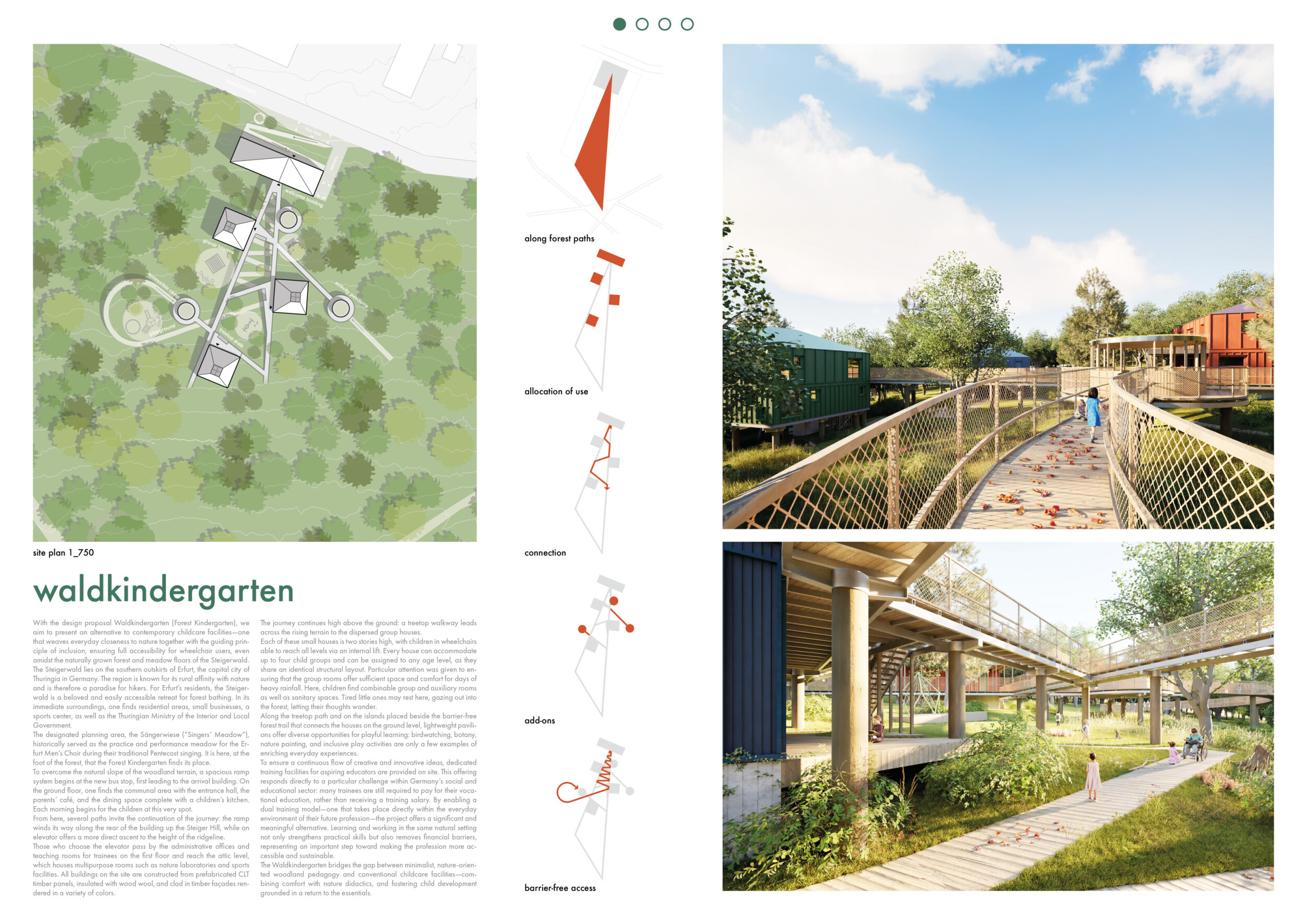
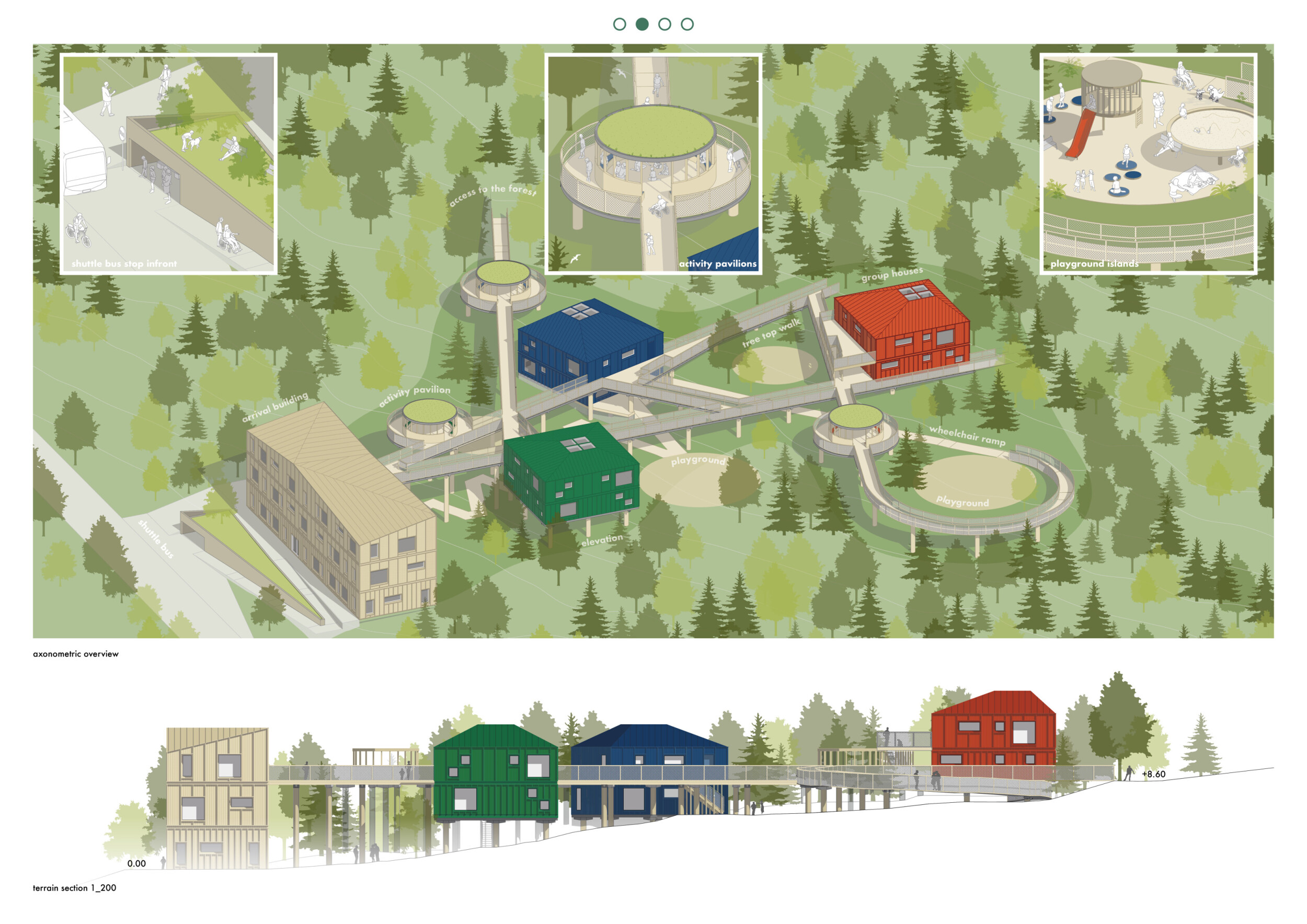
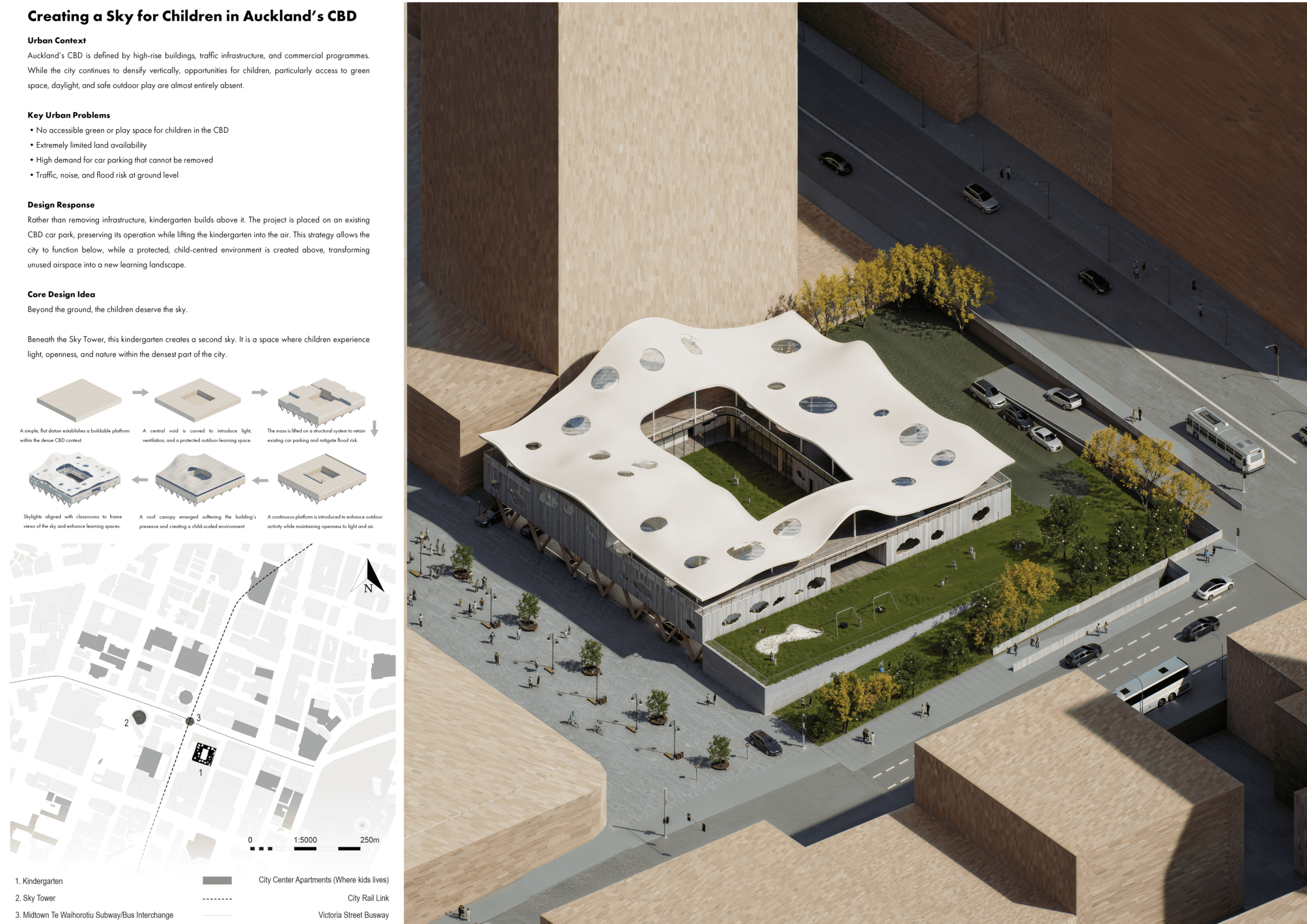
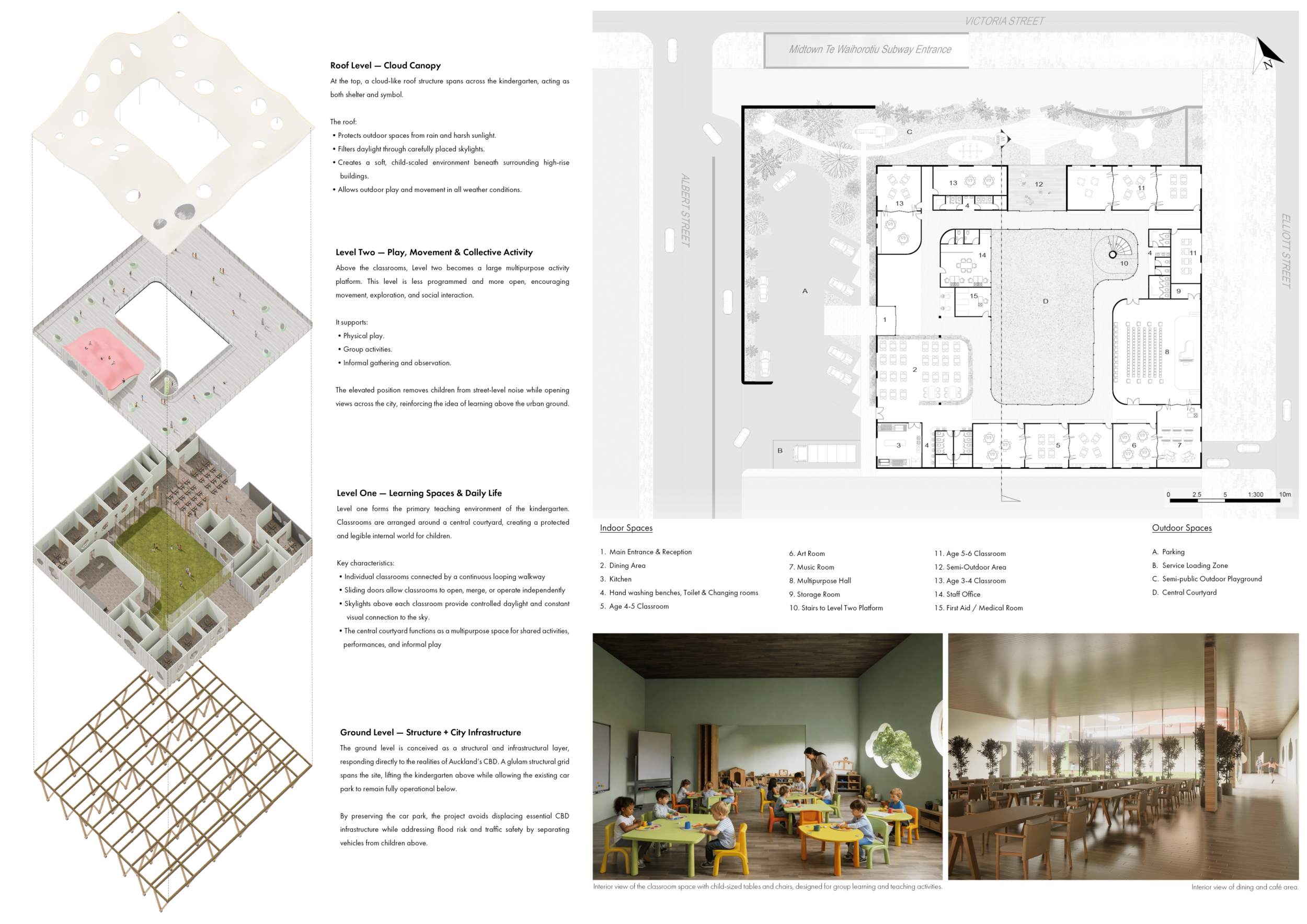
A Sky for Children

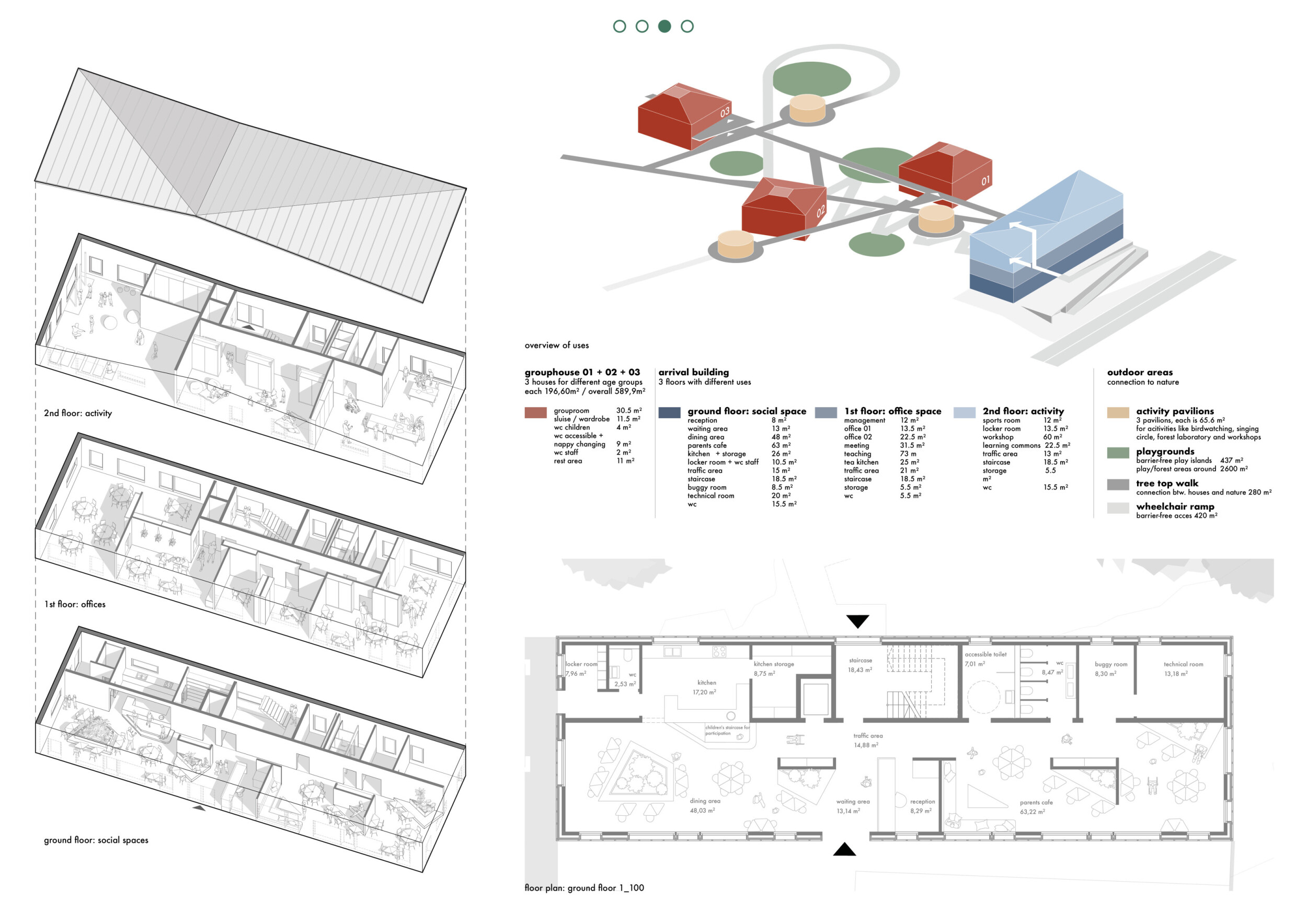
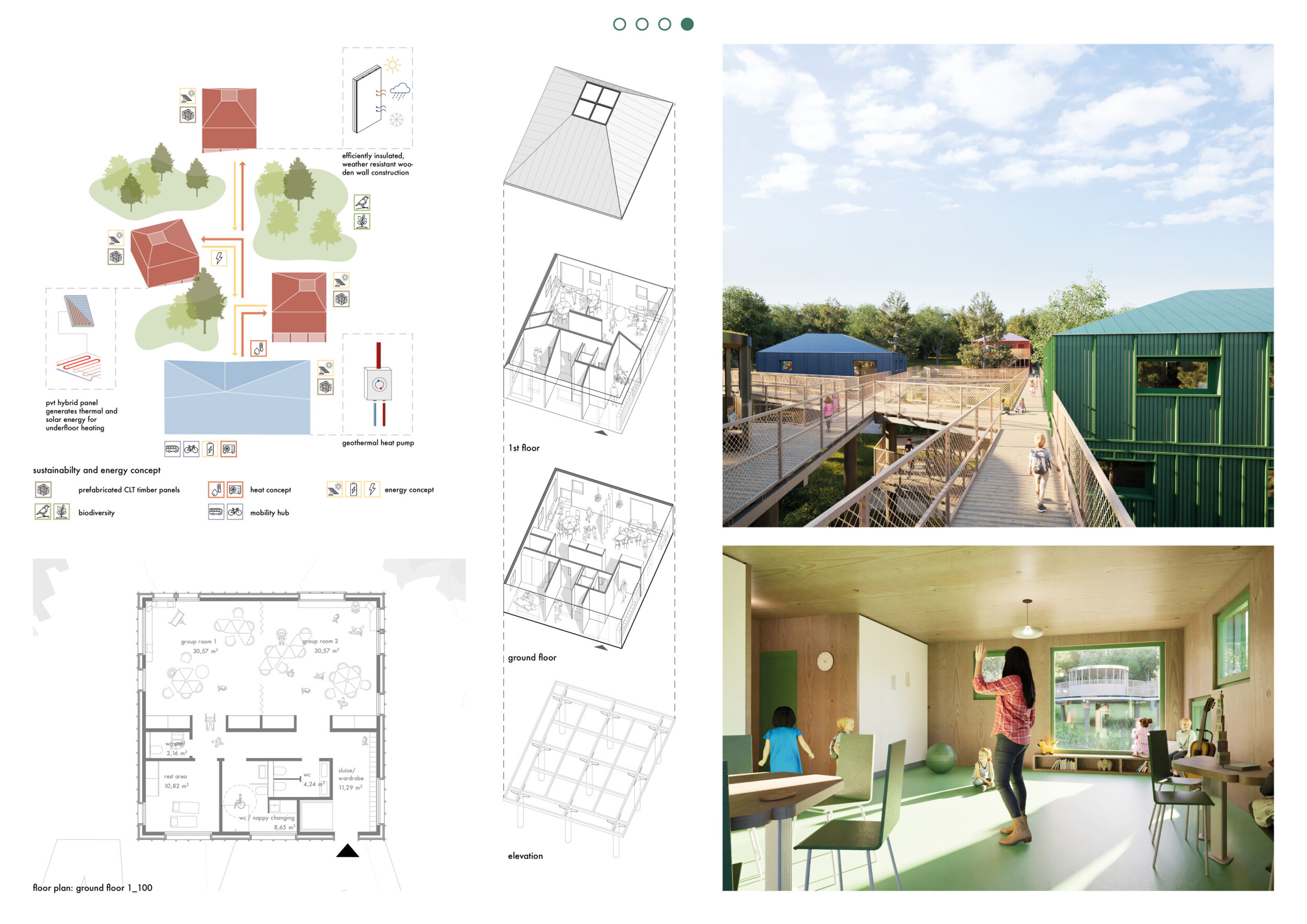
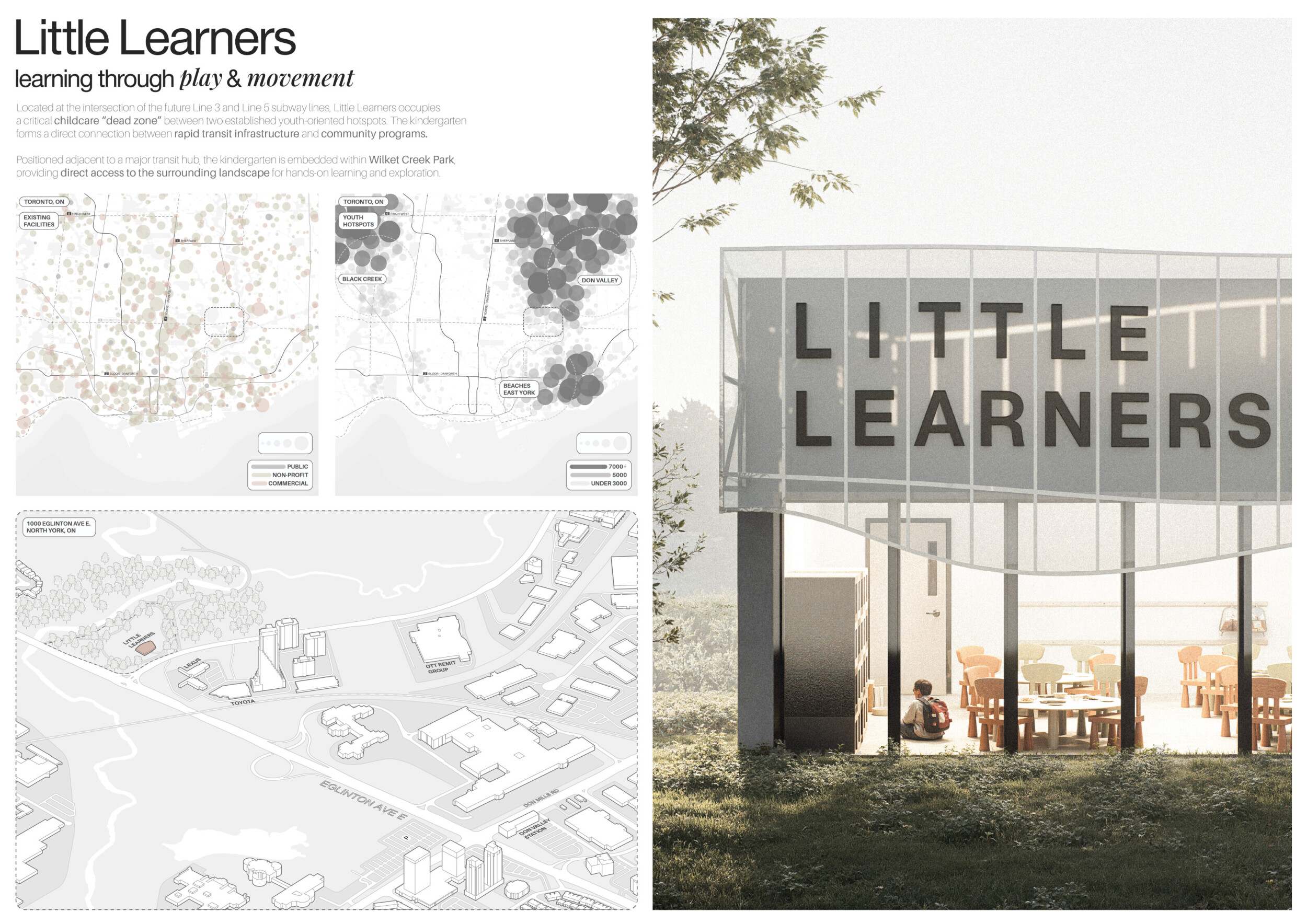
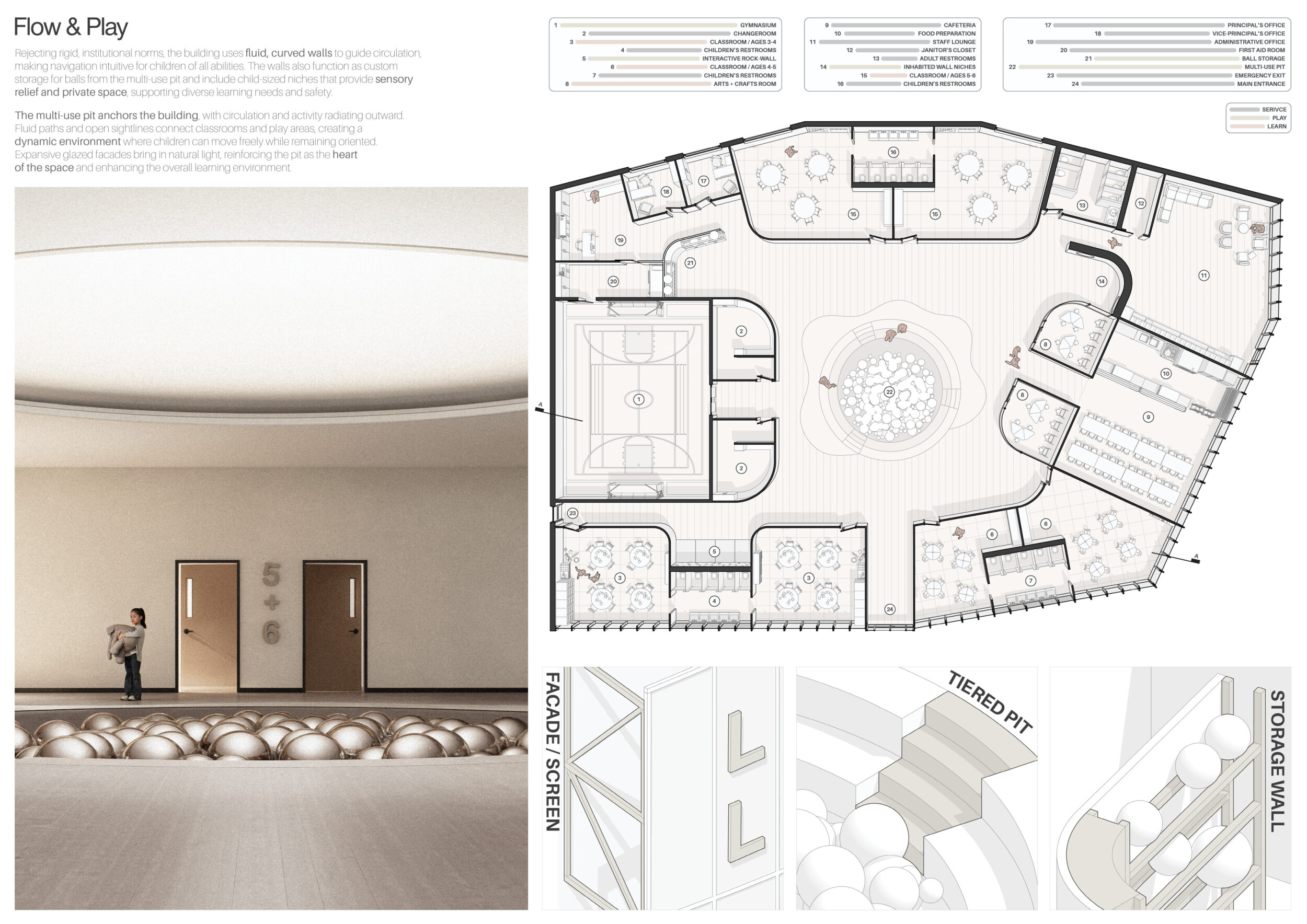
Little Learners
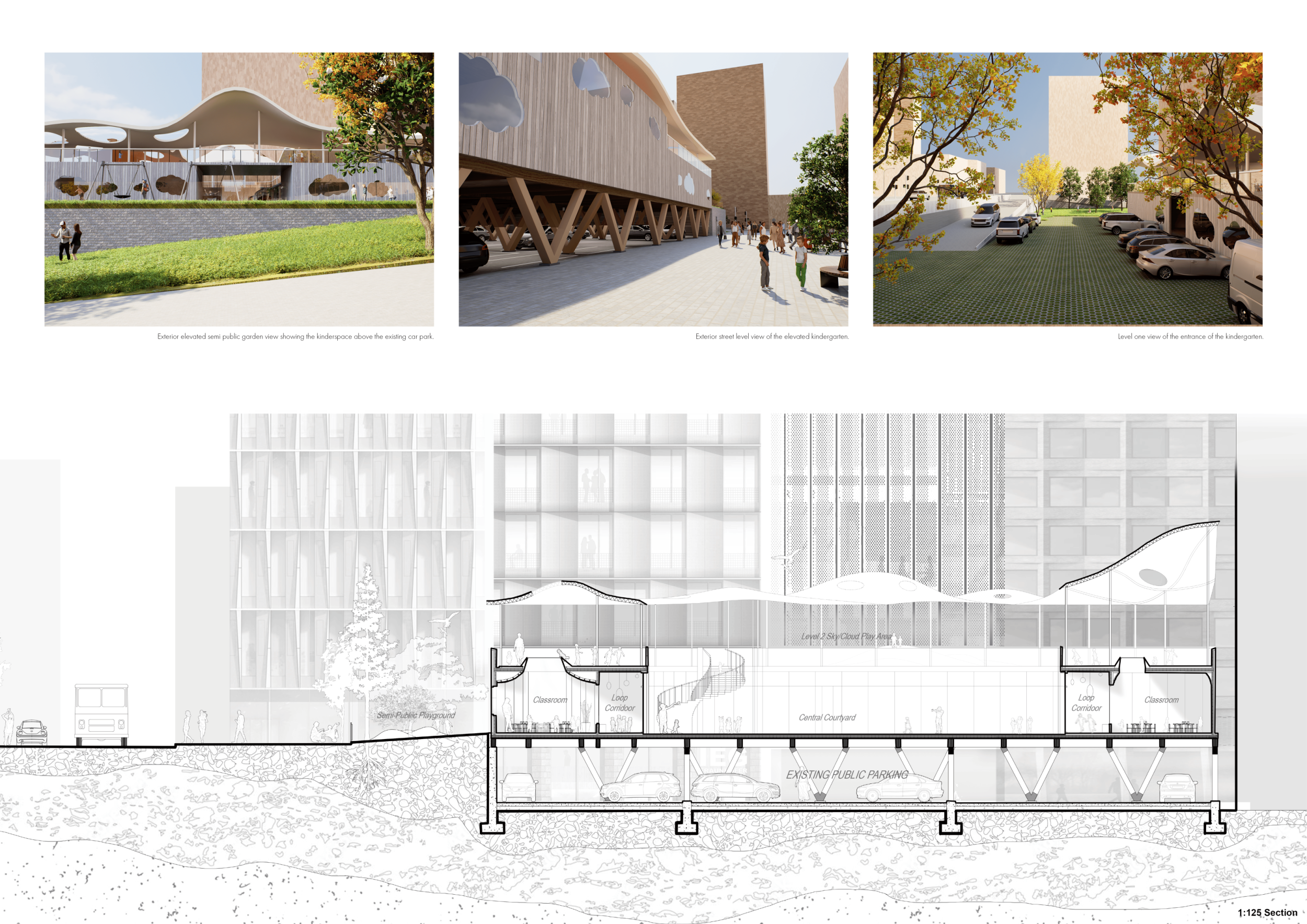
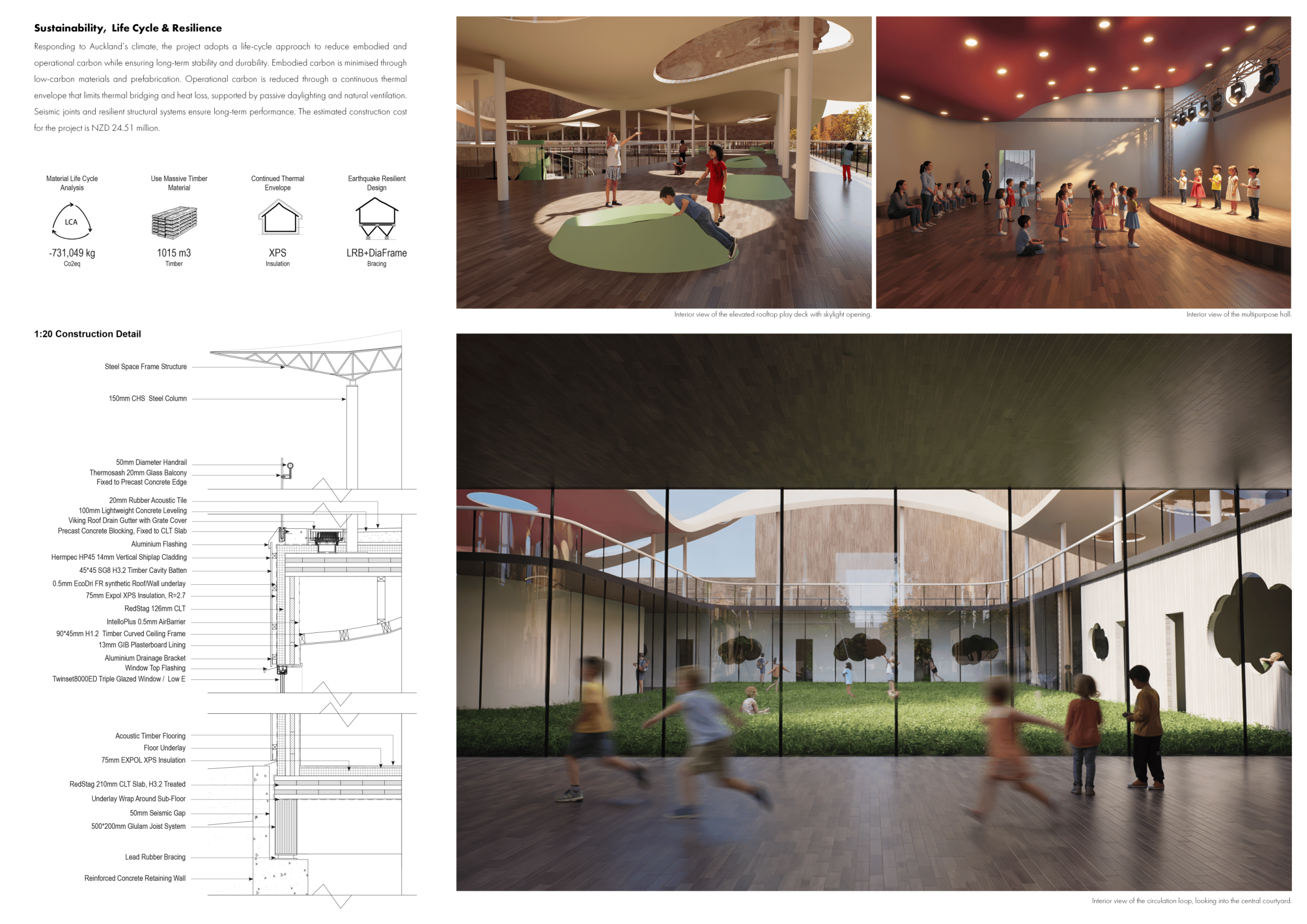
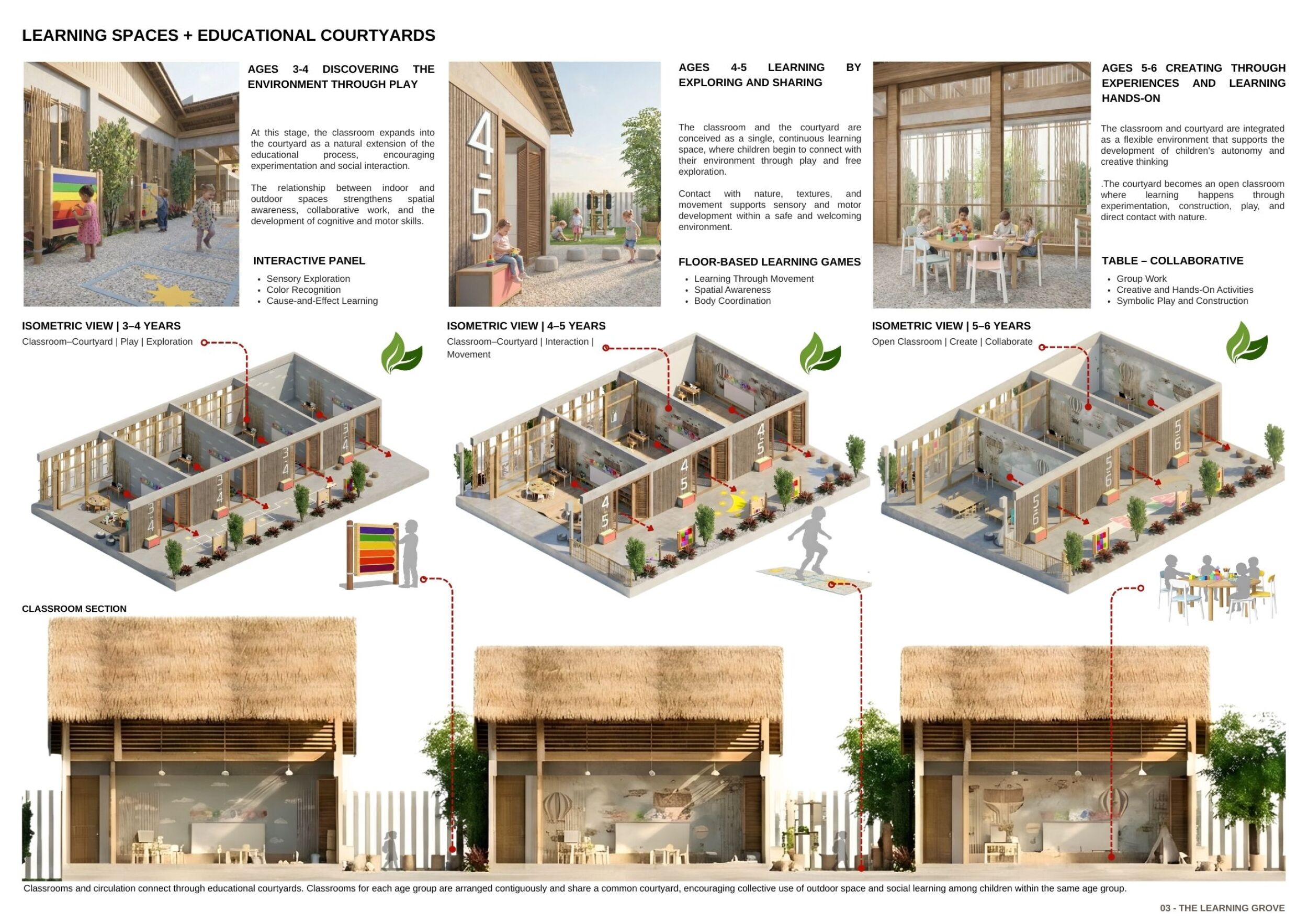
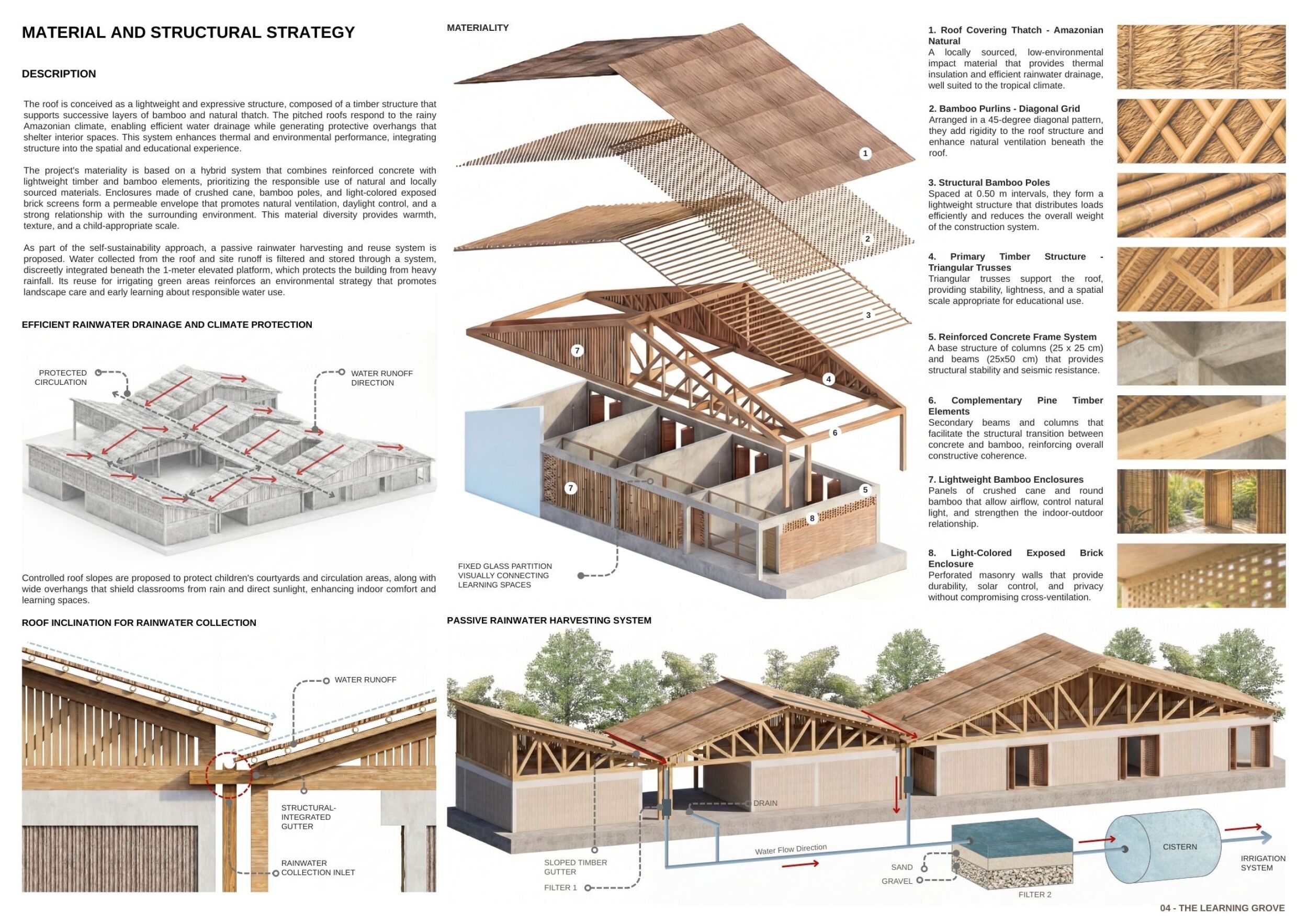
The Learning Grove
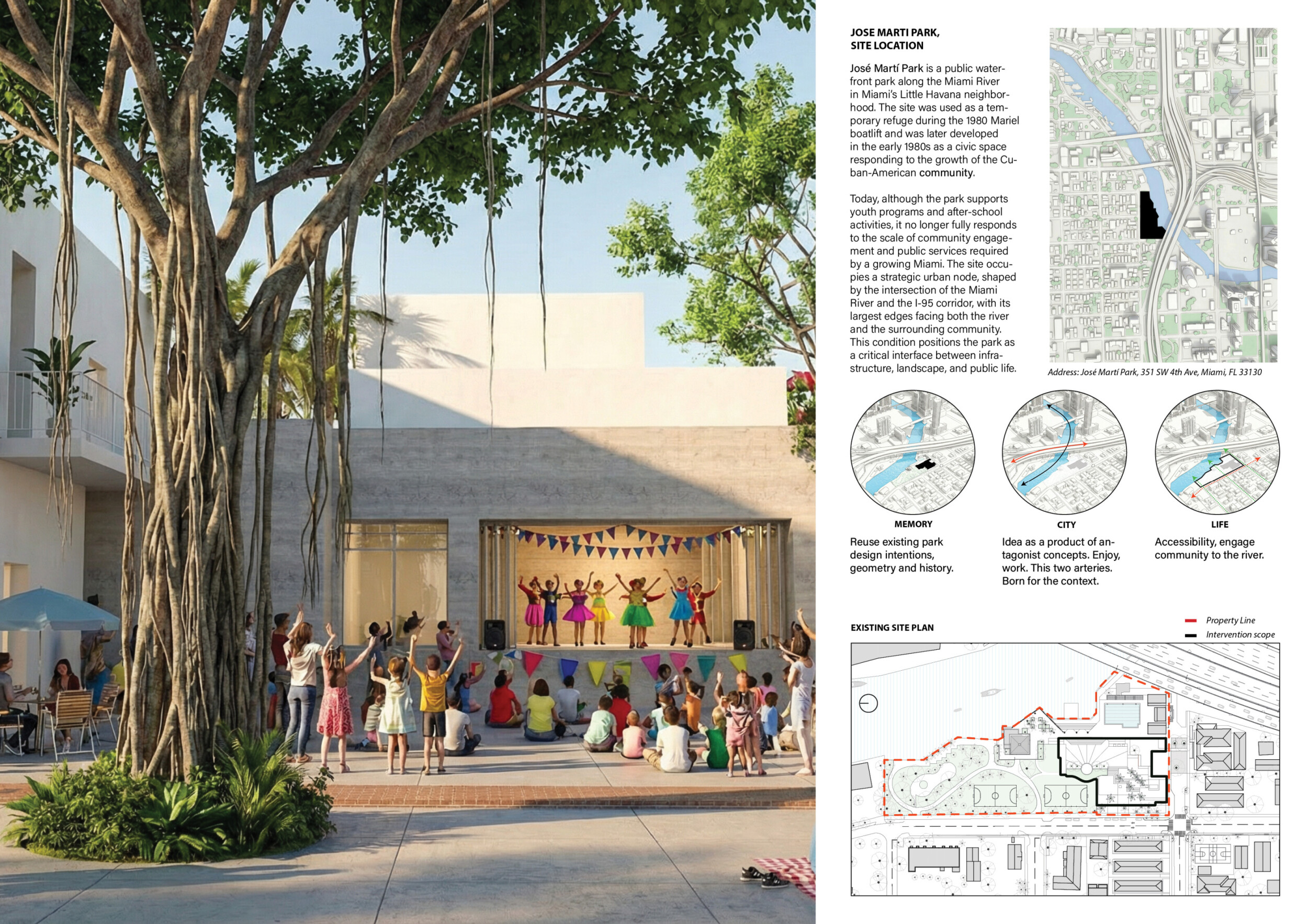
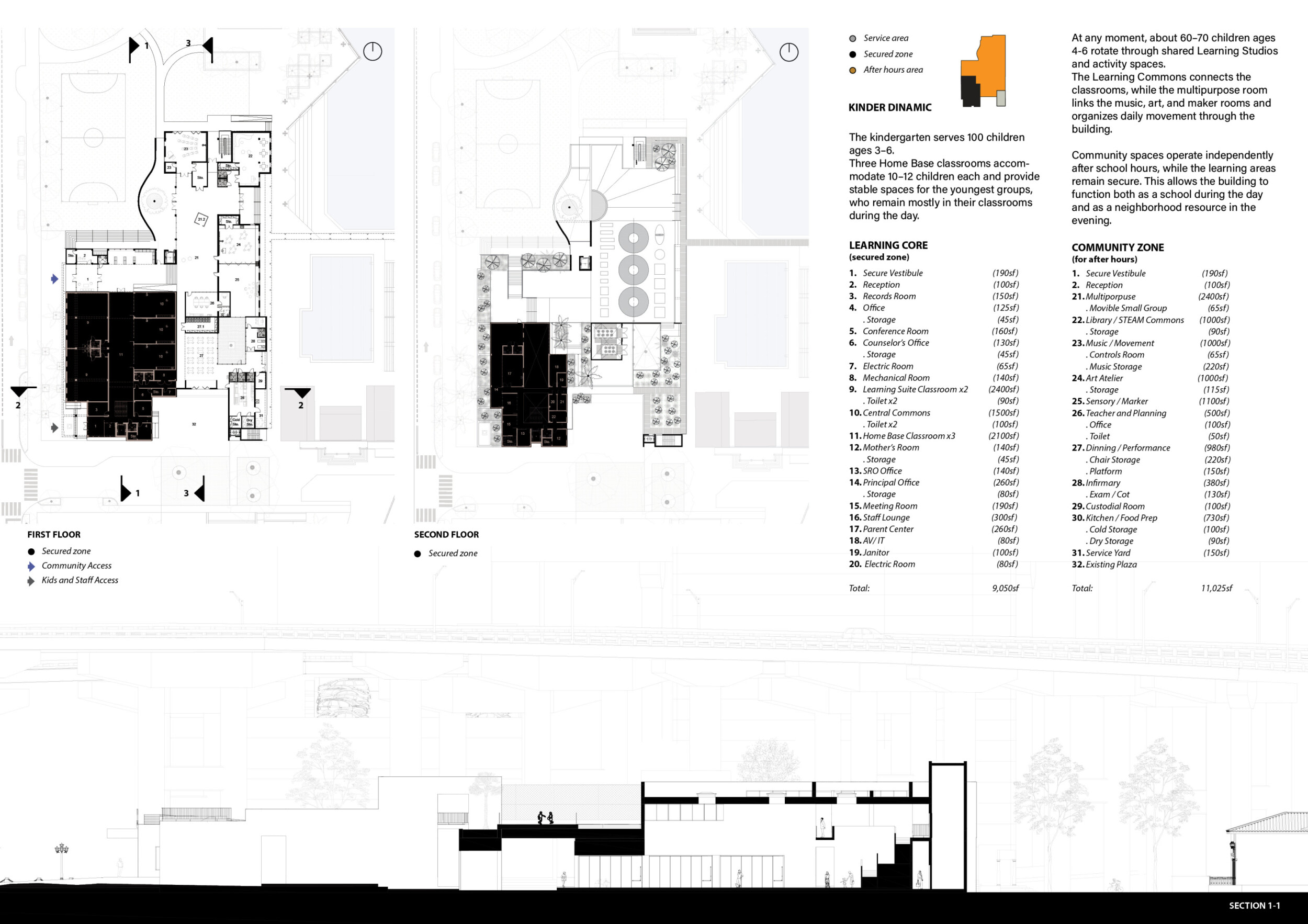
Kinder Jose Marti
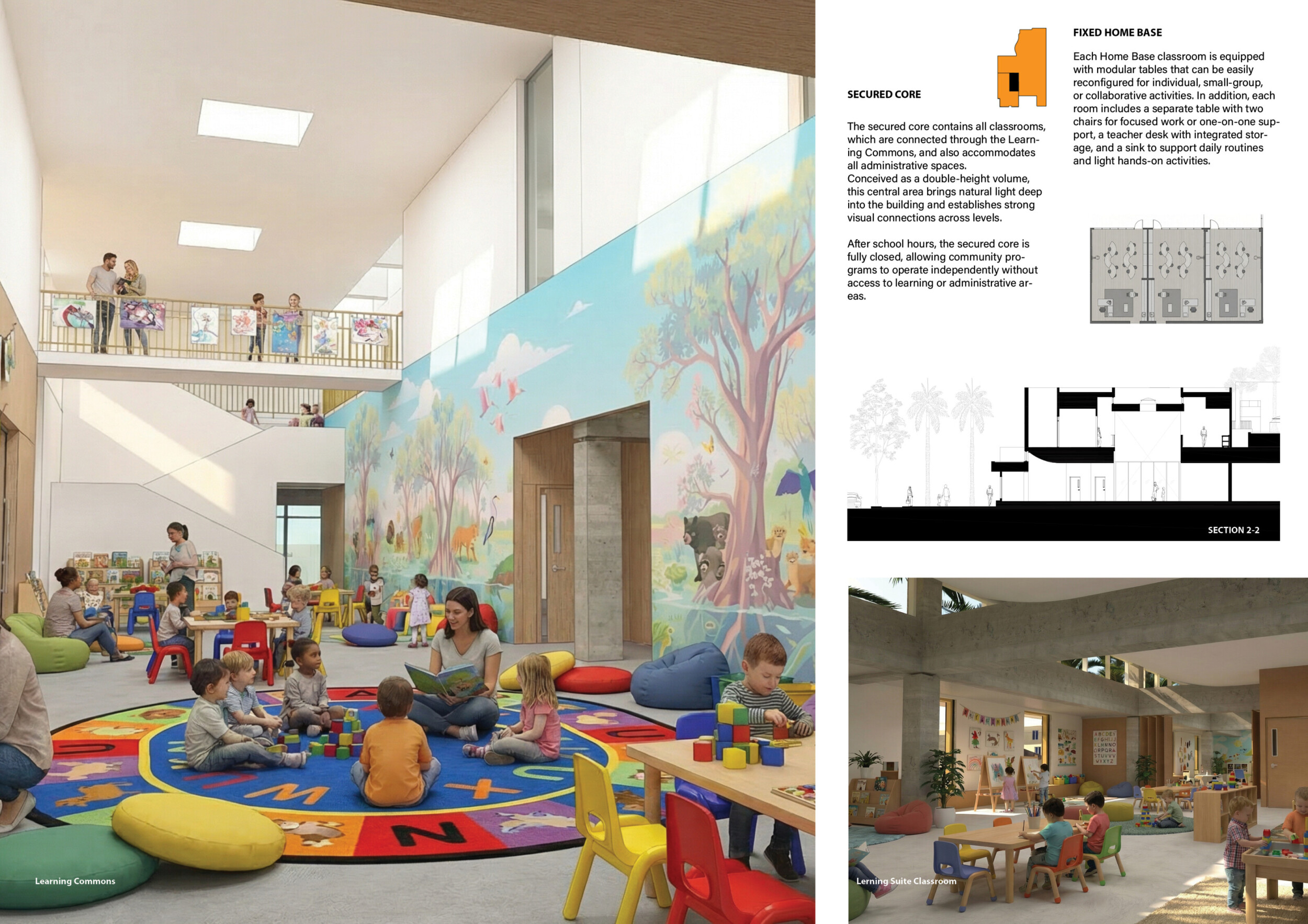
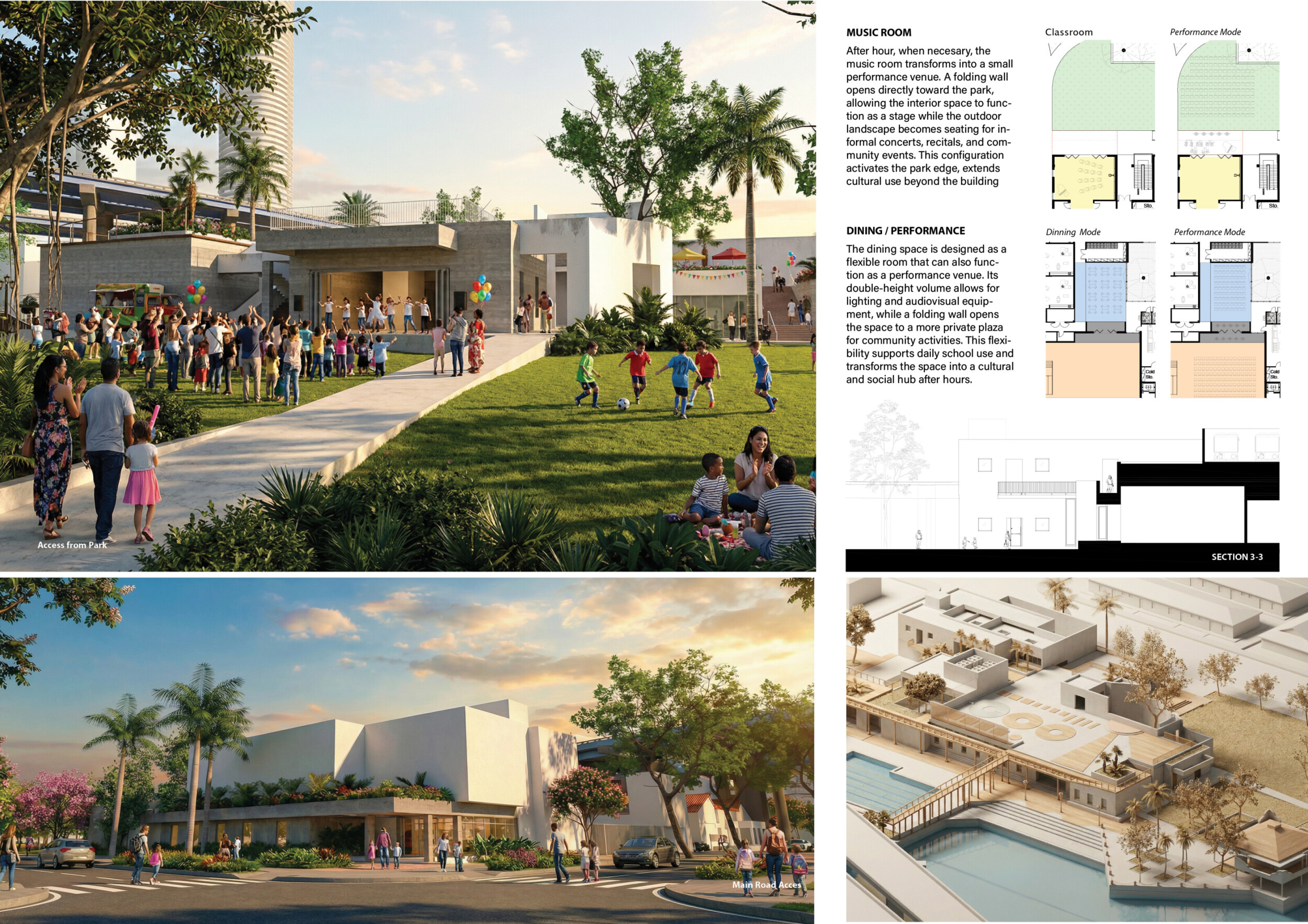
Adaptive Docklands
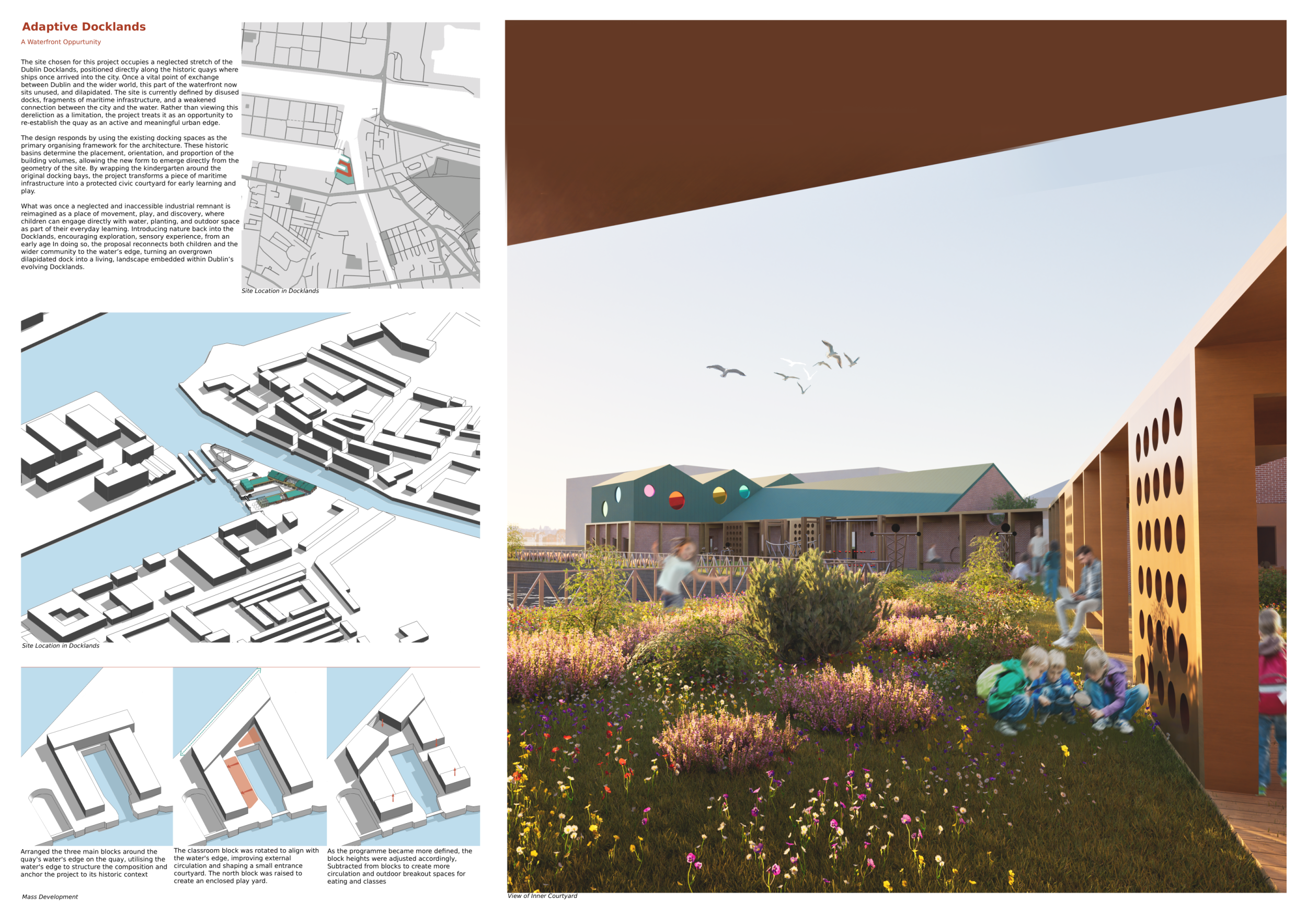
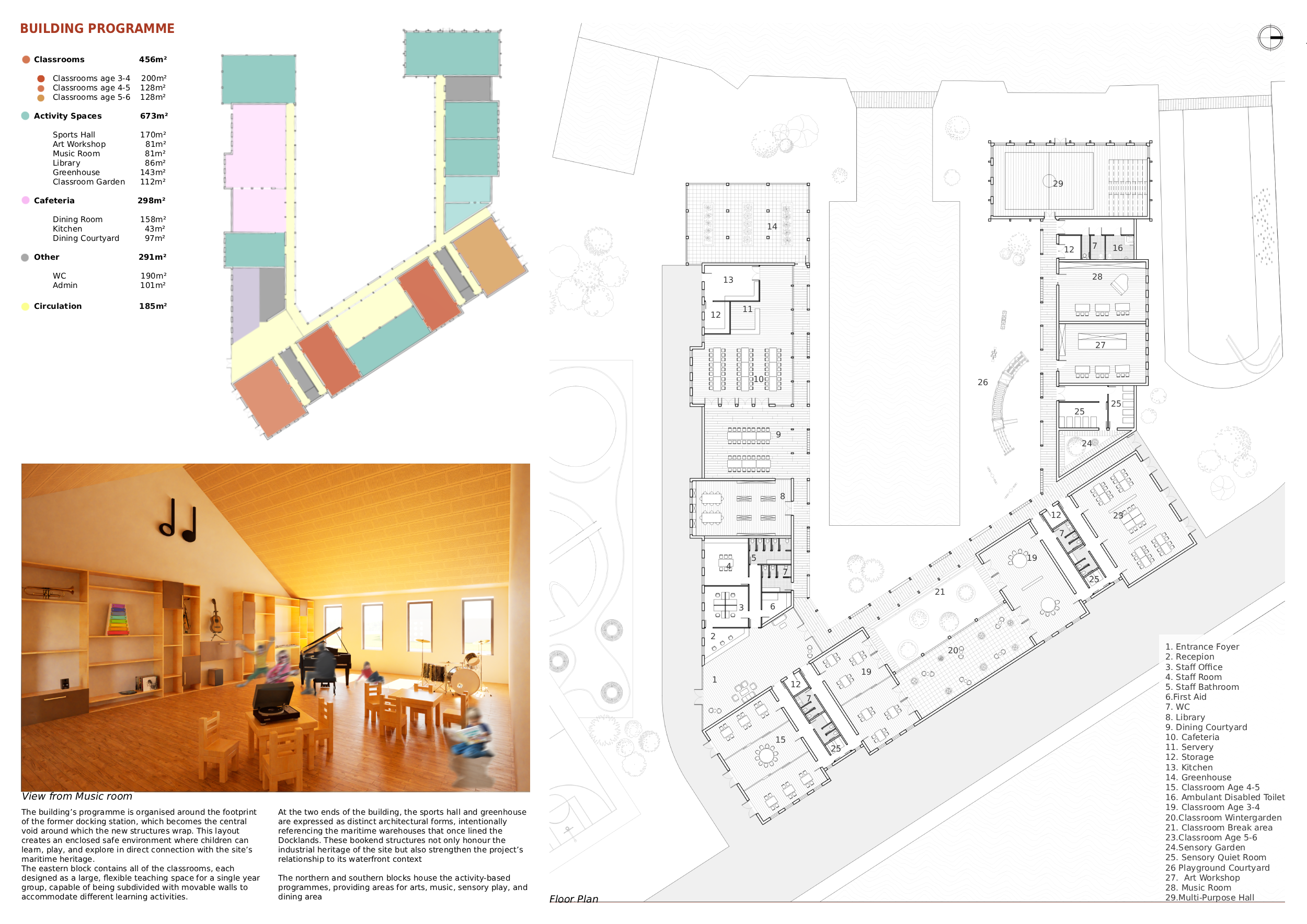
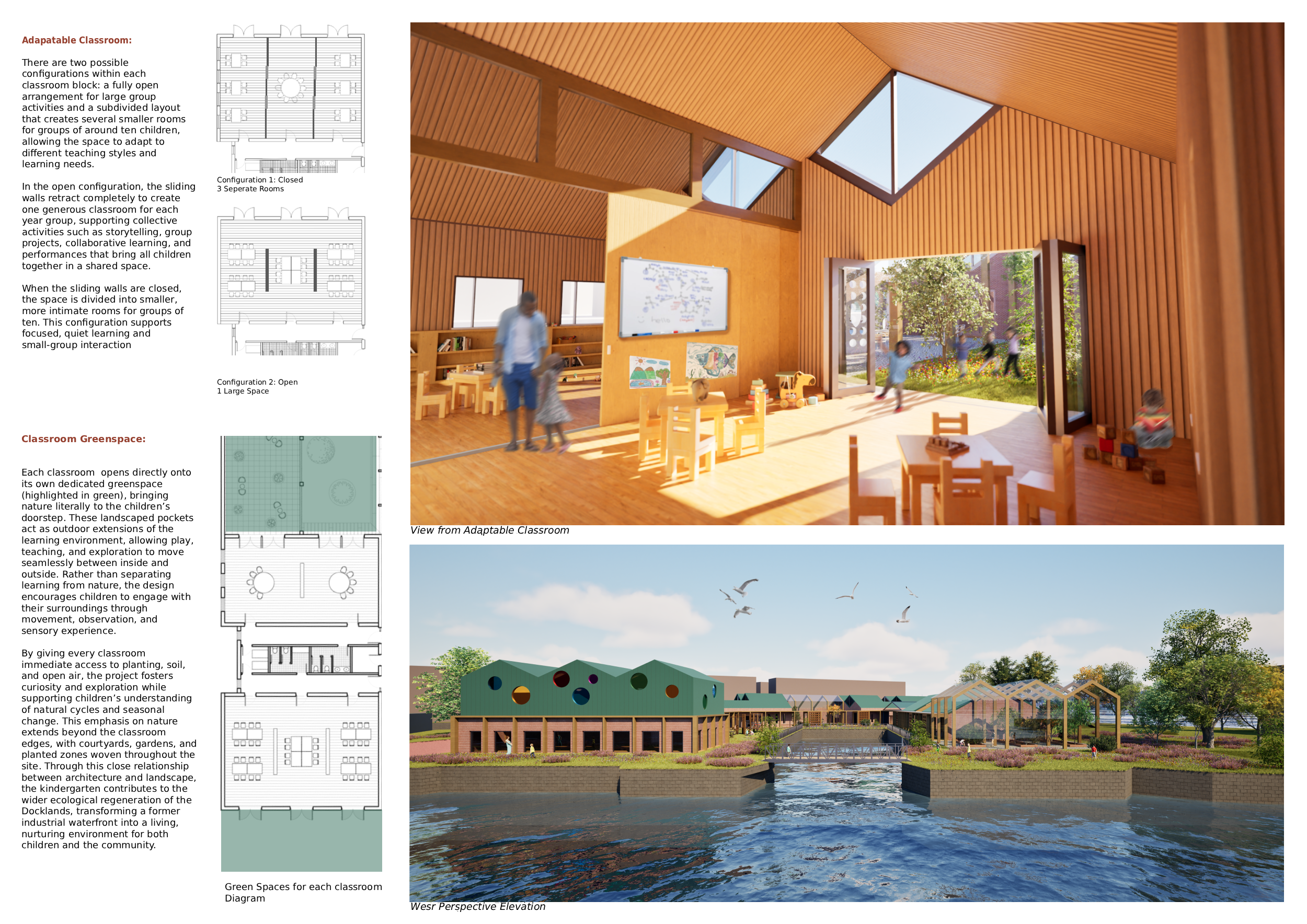
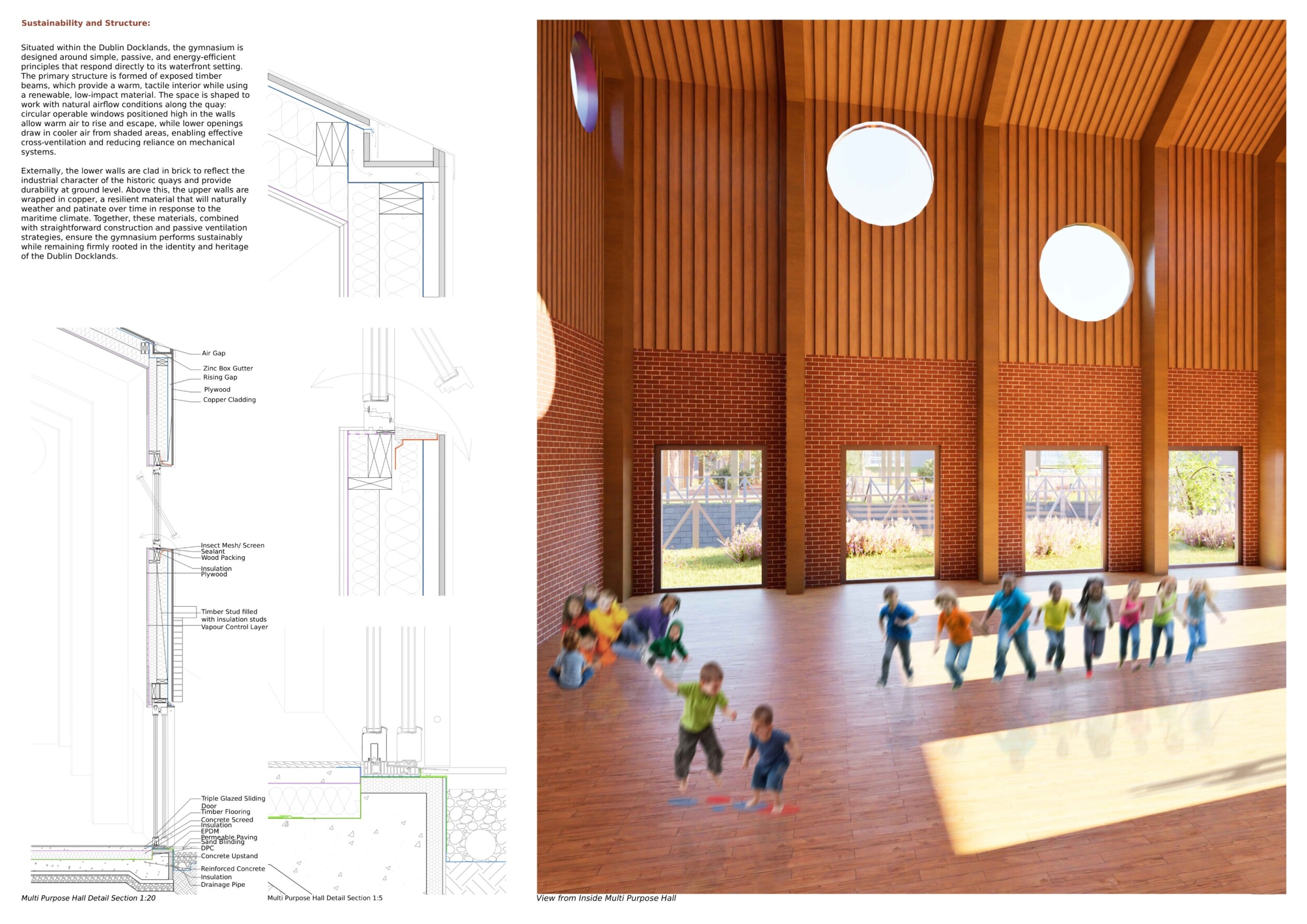

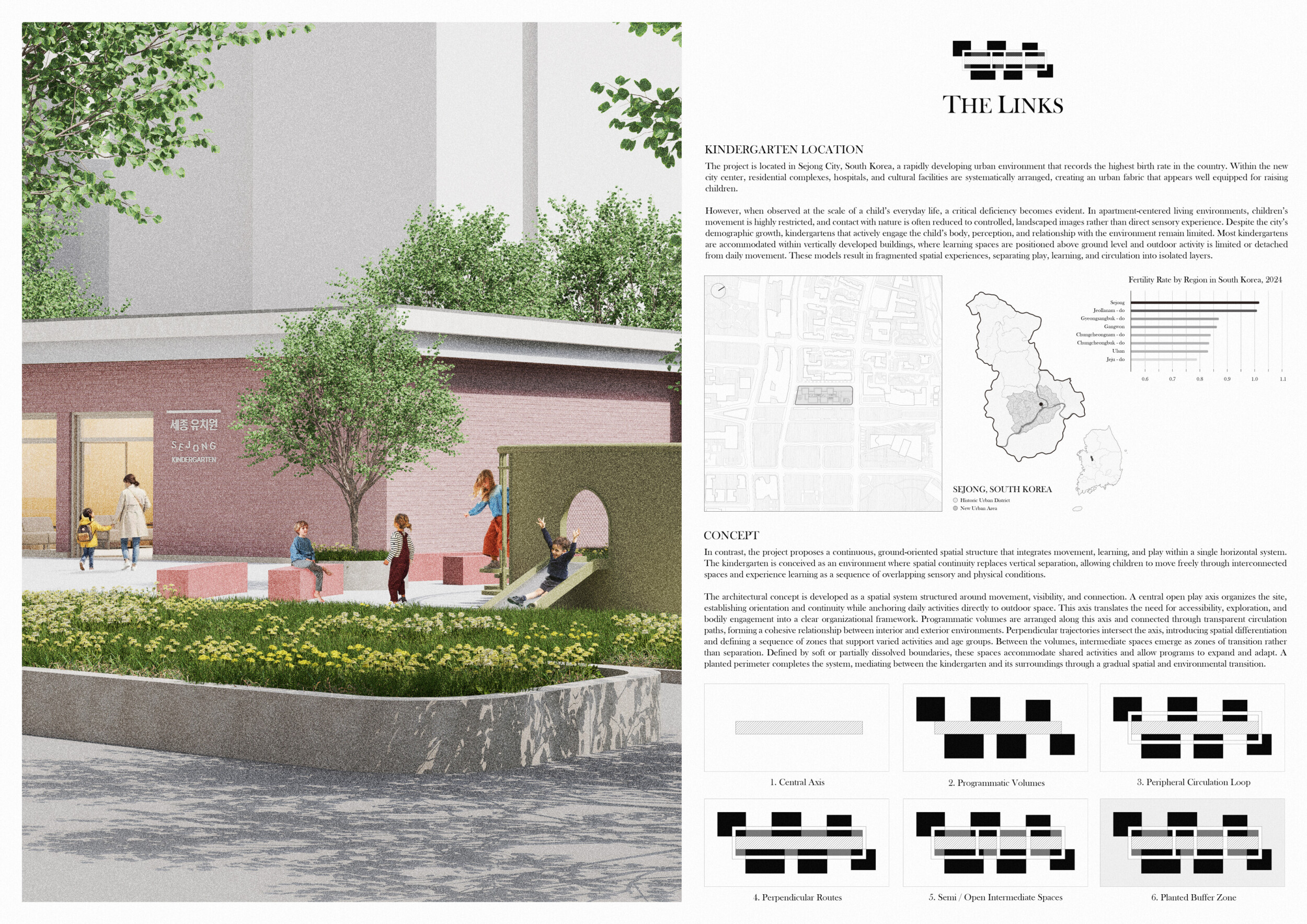
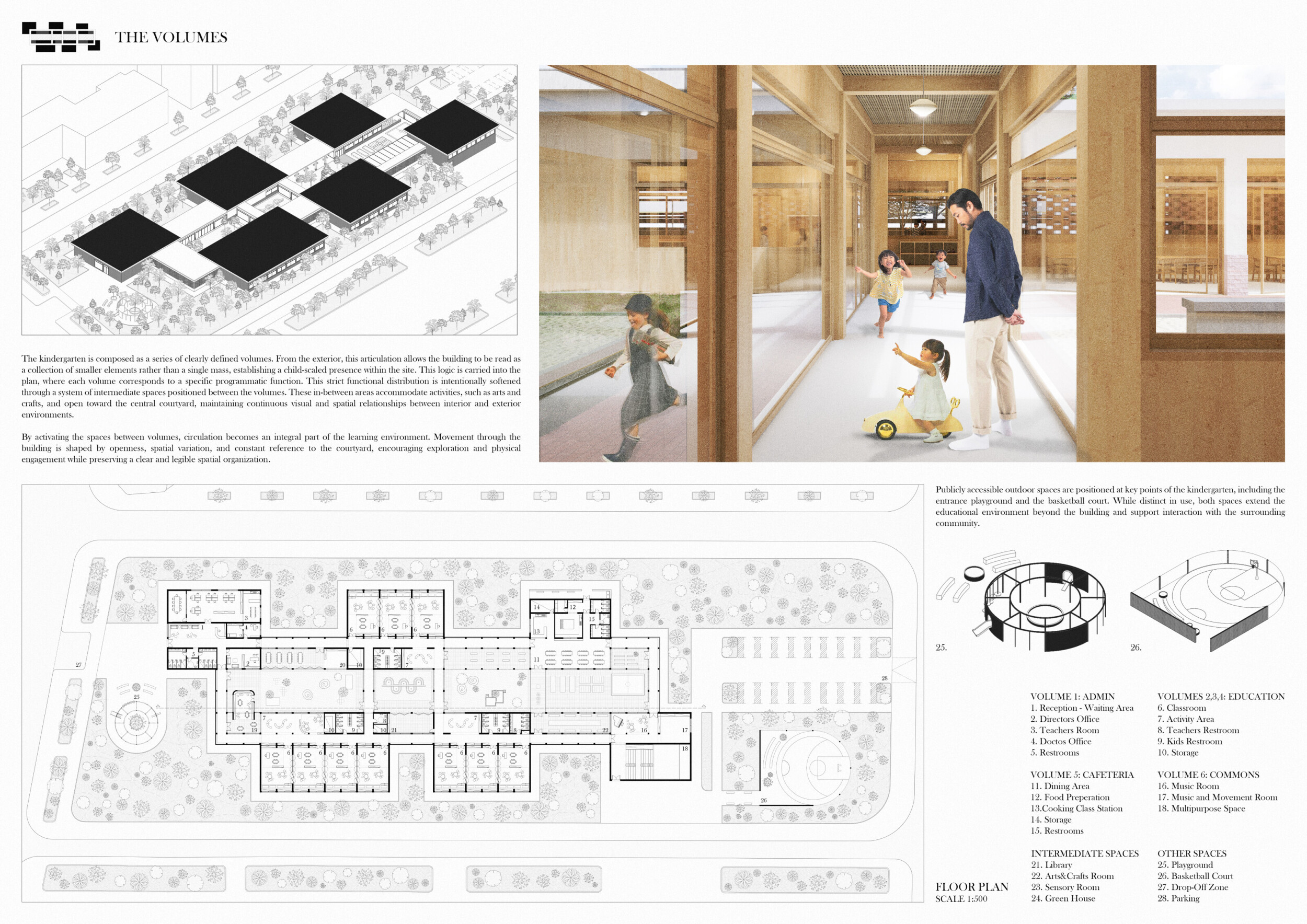
The Links

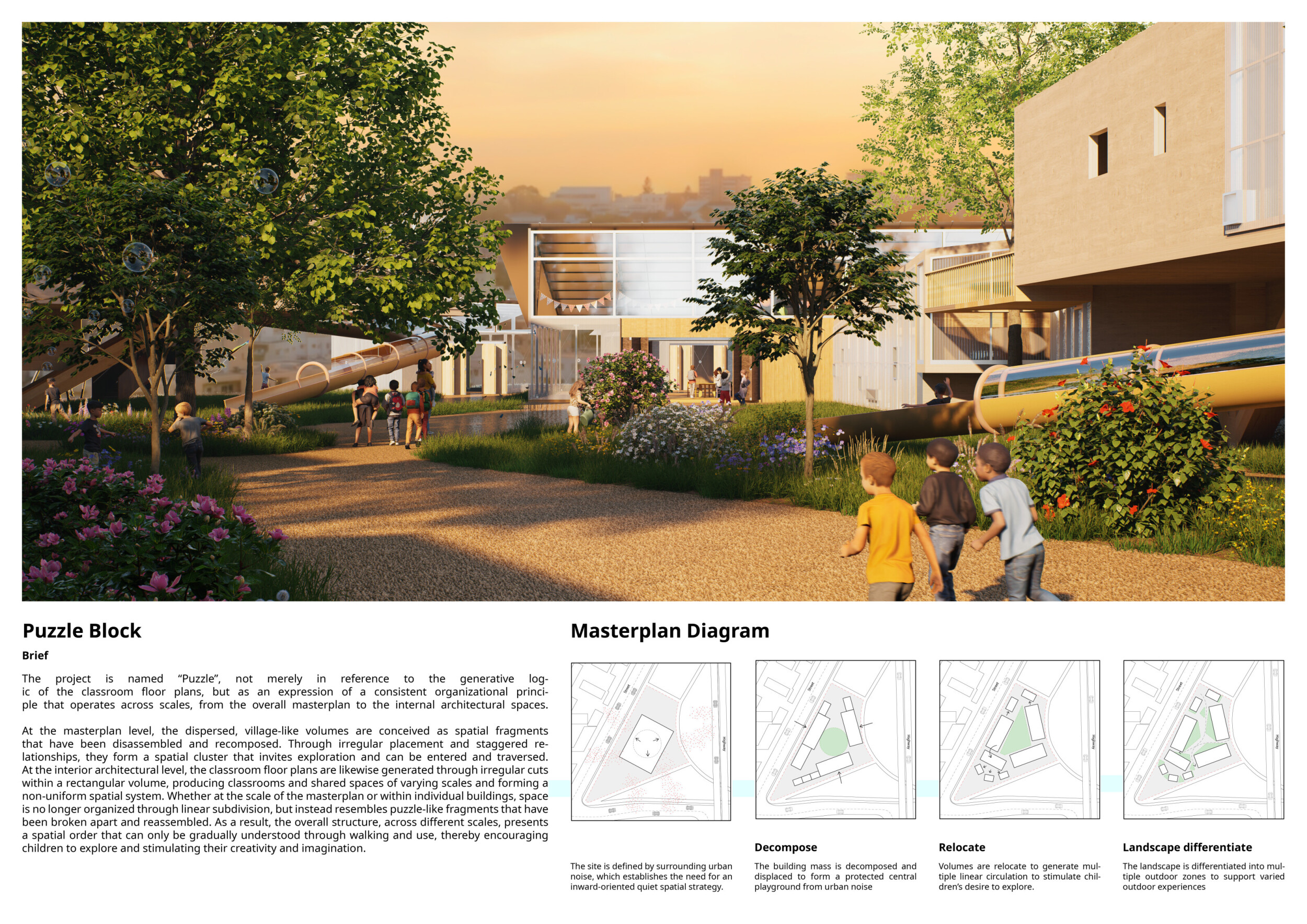
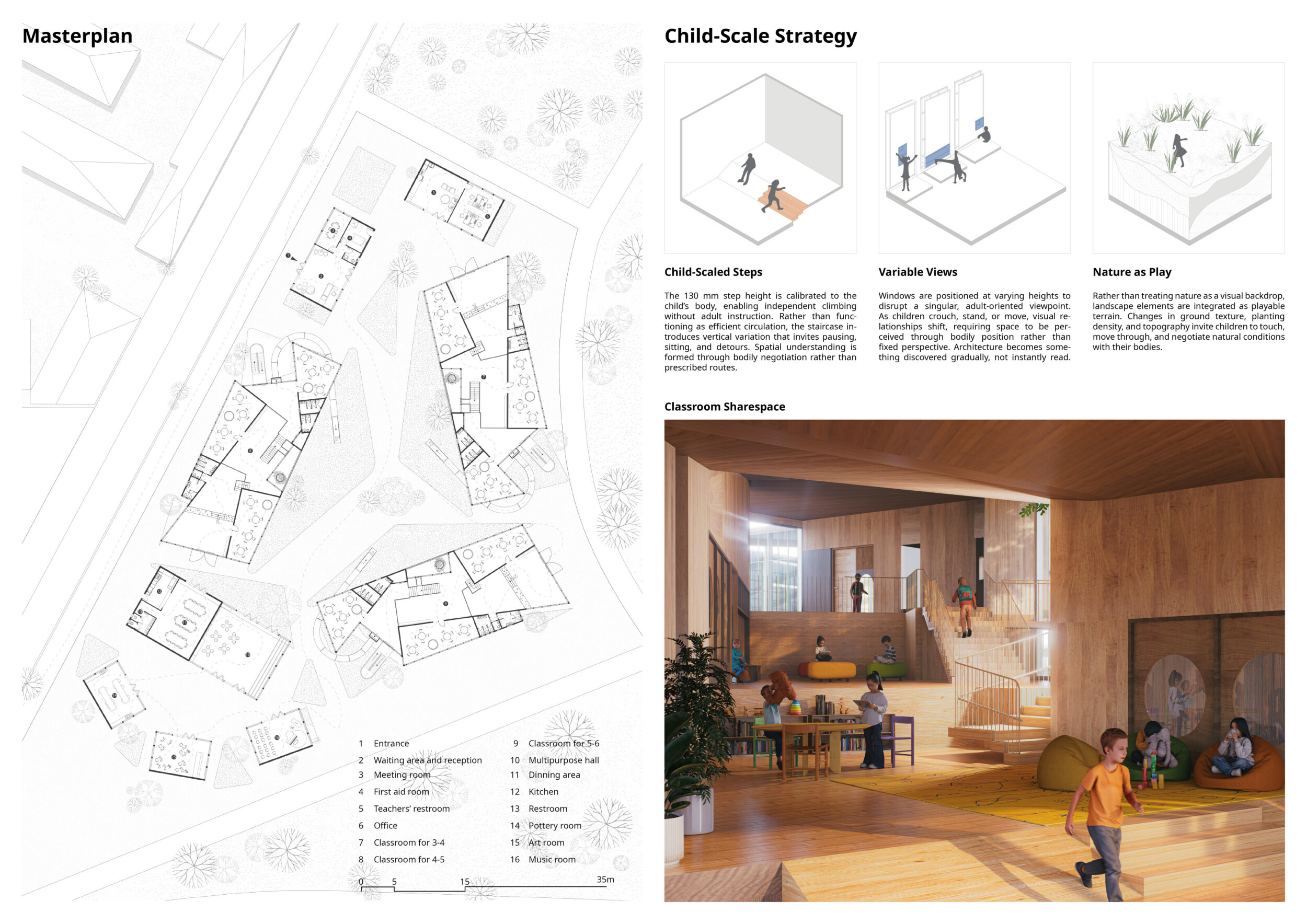
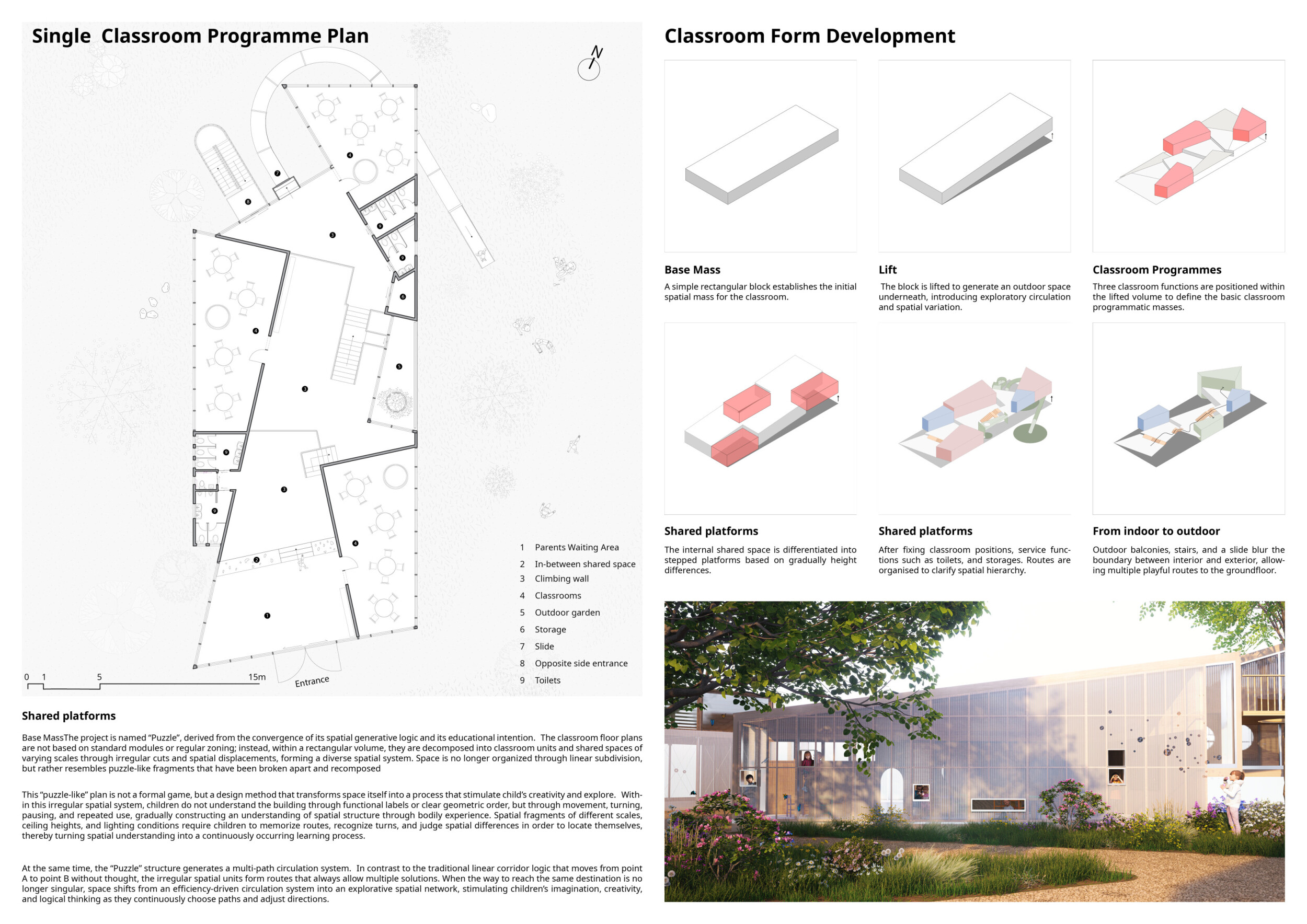
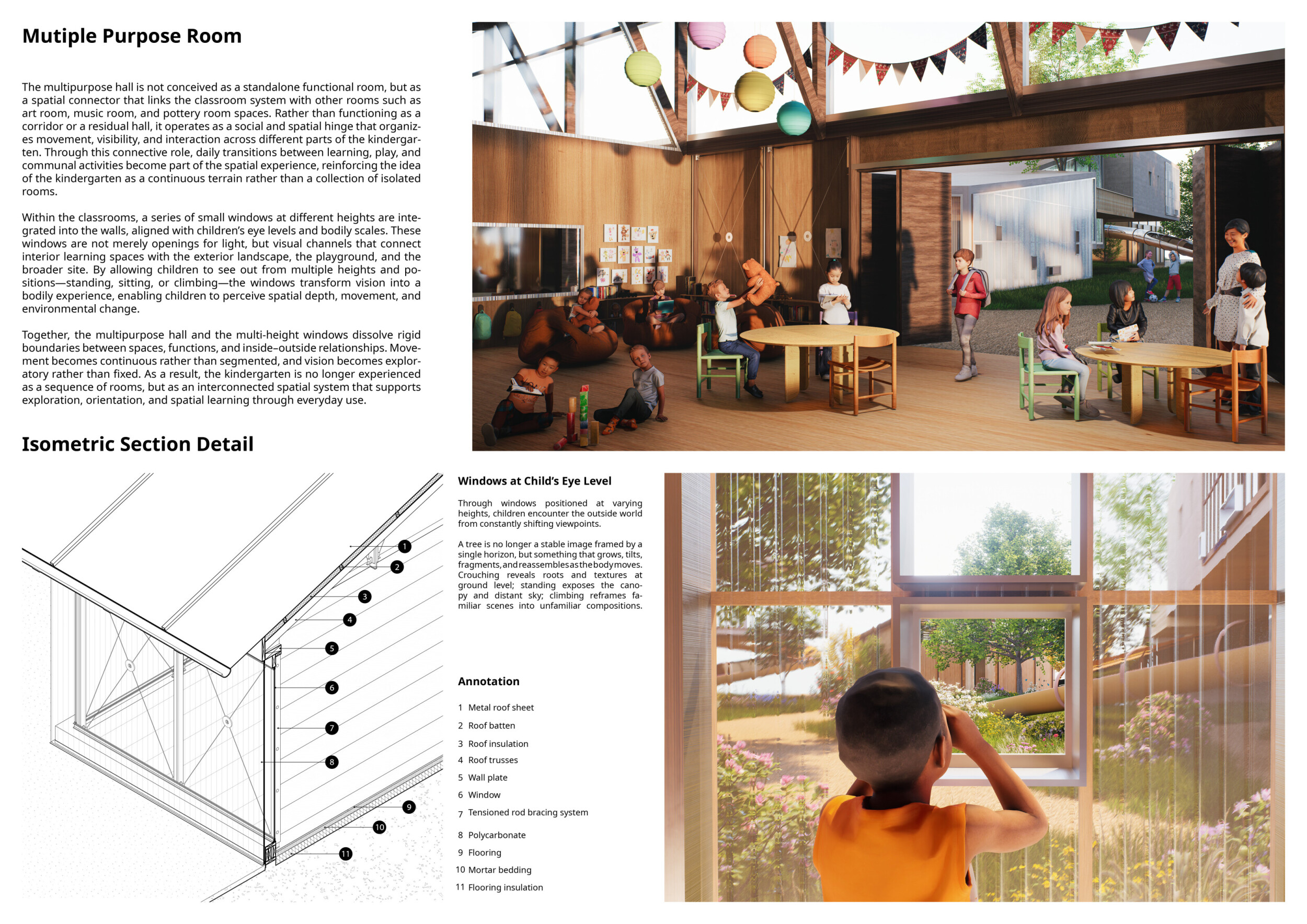
Puzzle Block
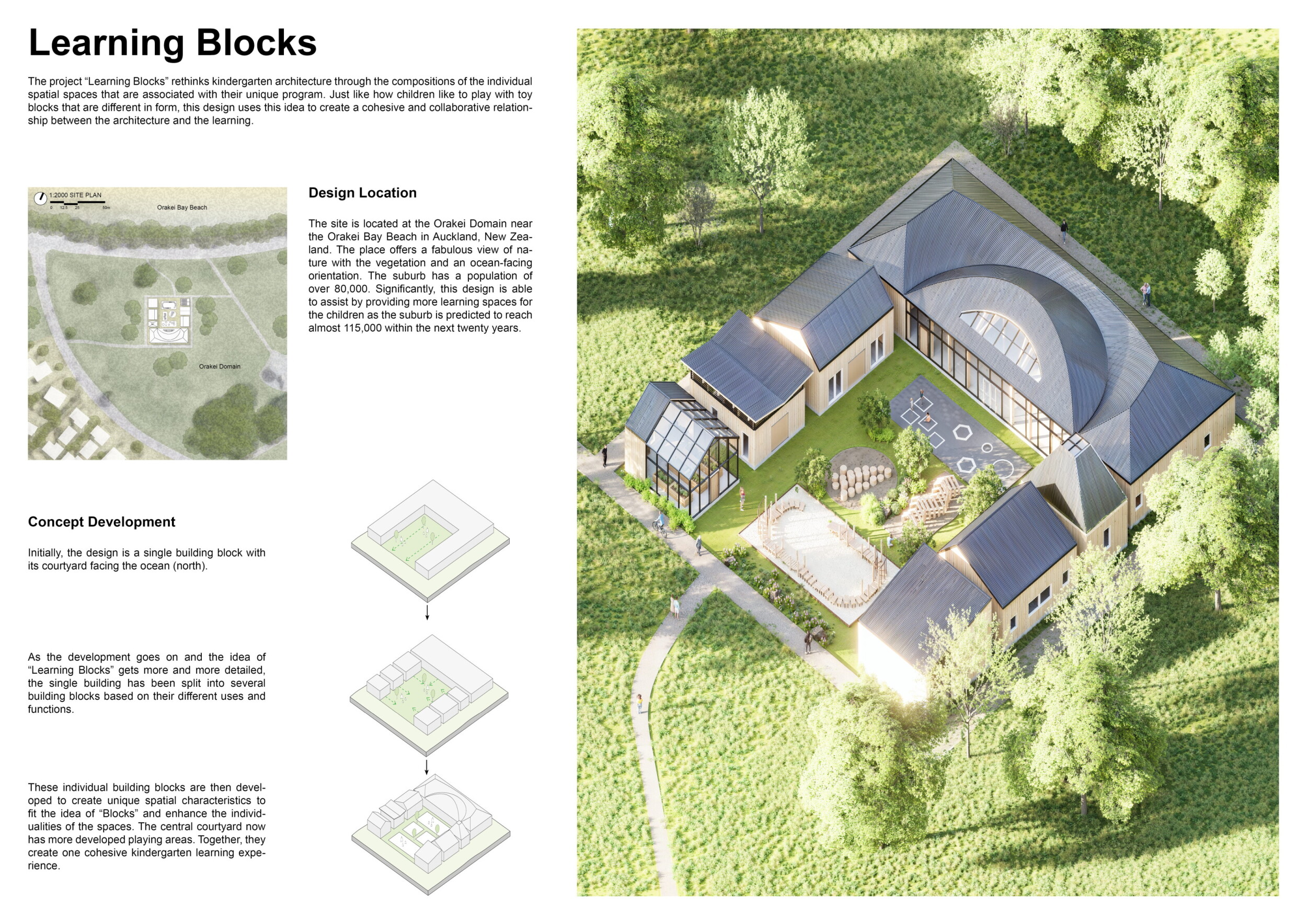
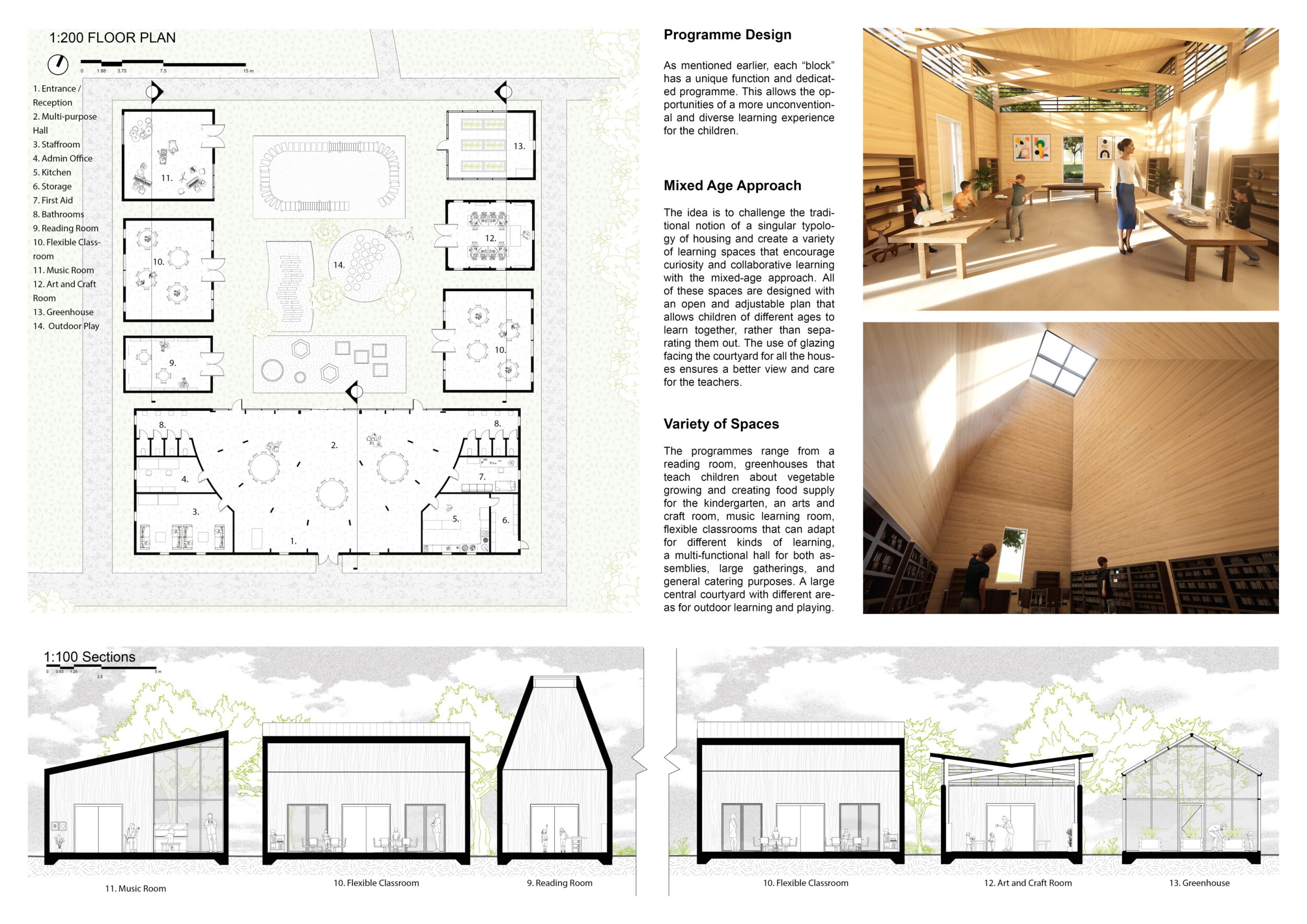
Learning Blocks
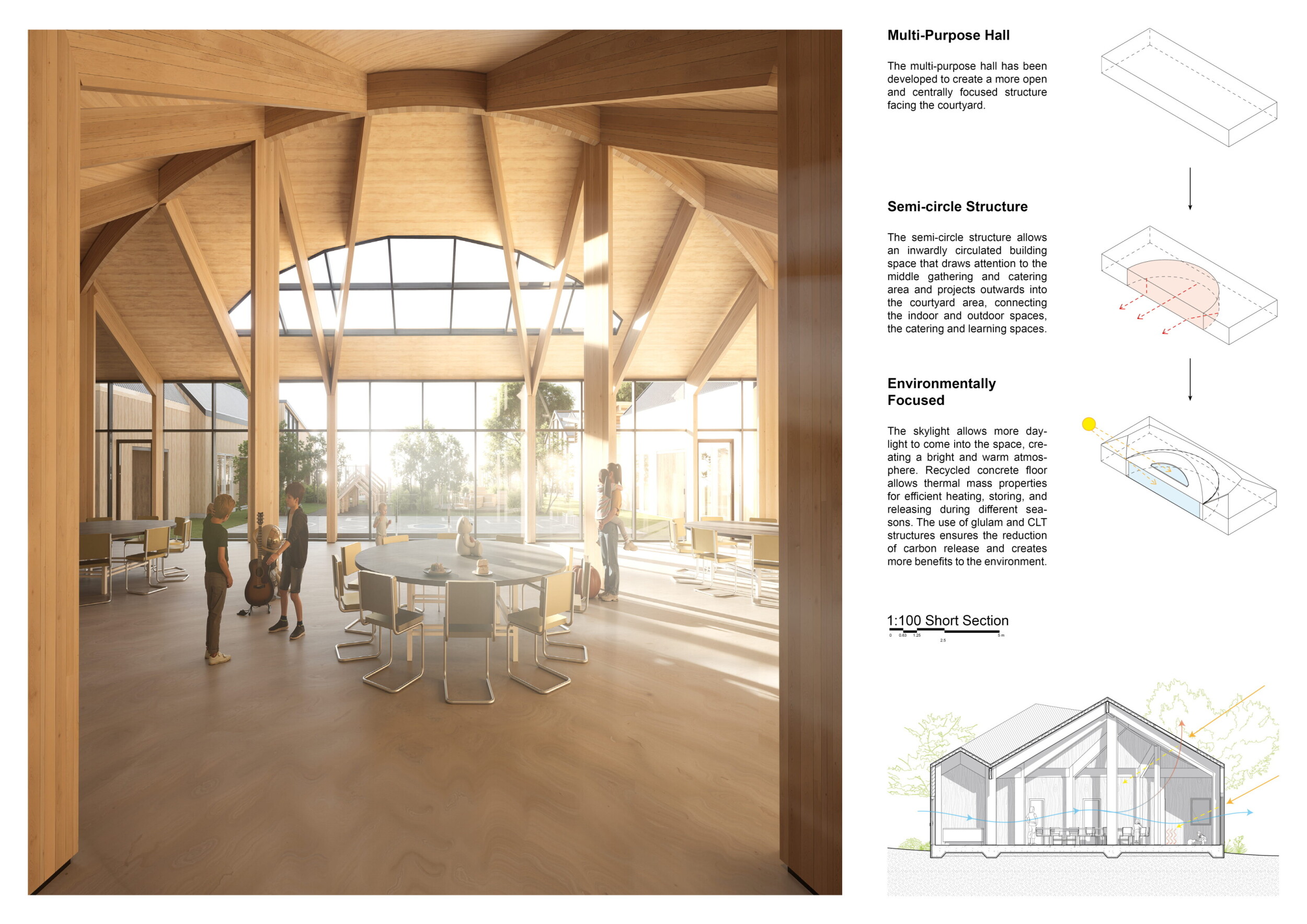
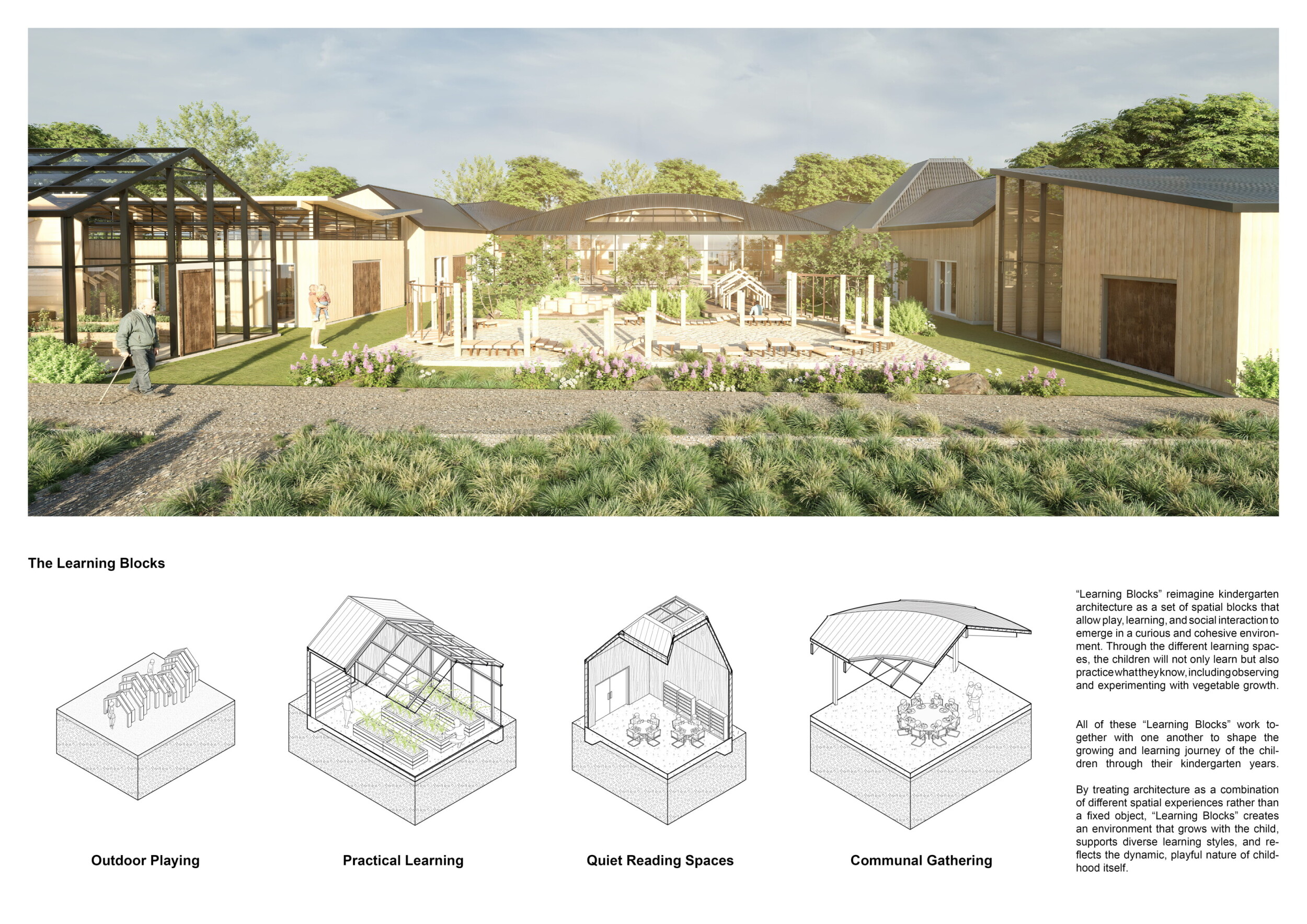
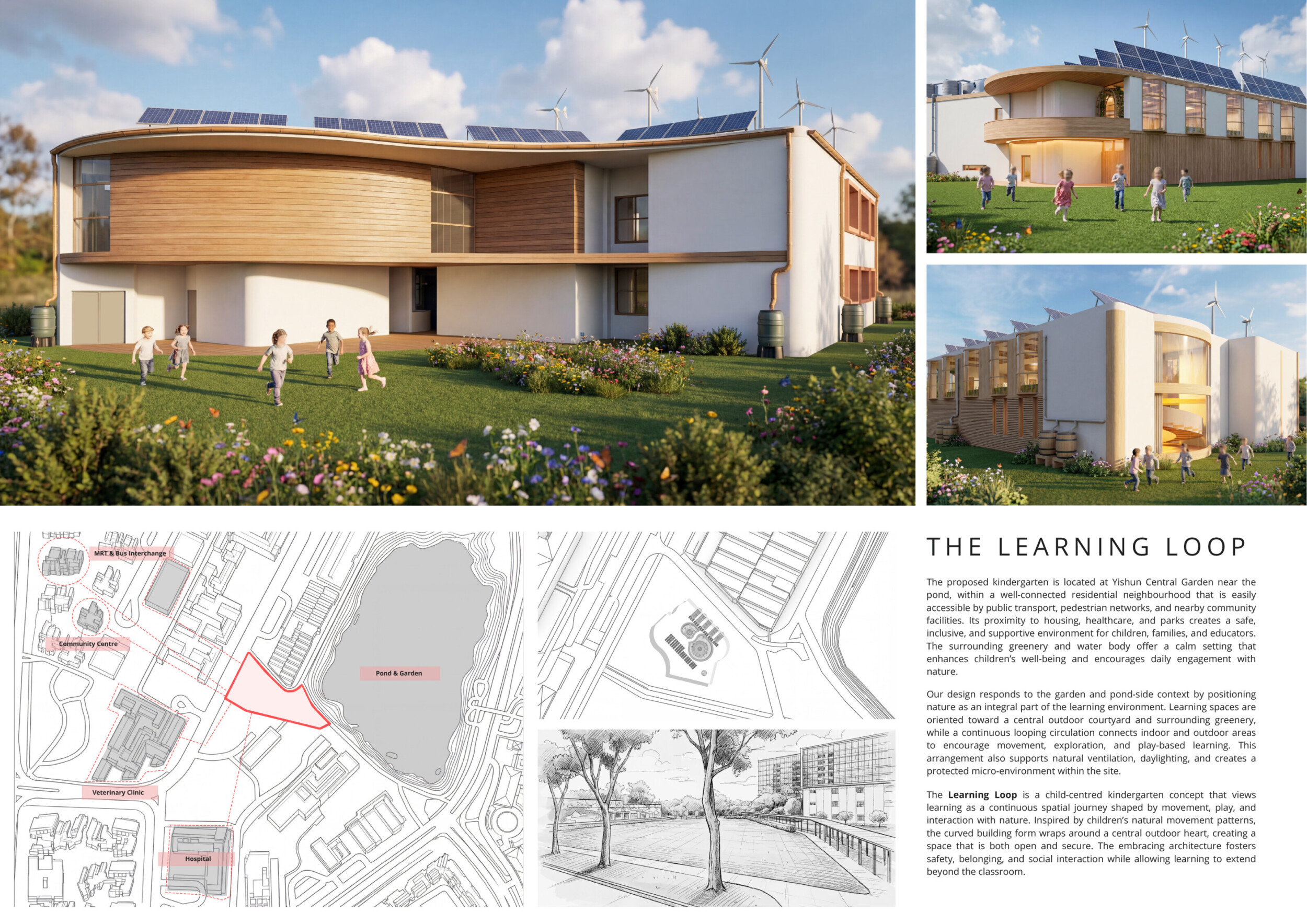
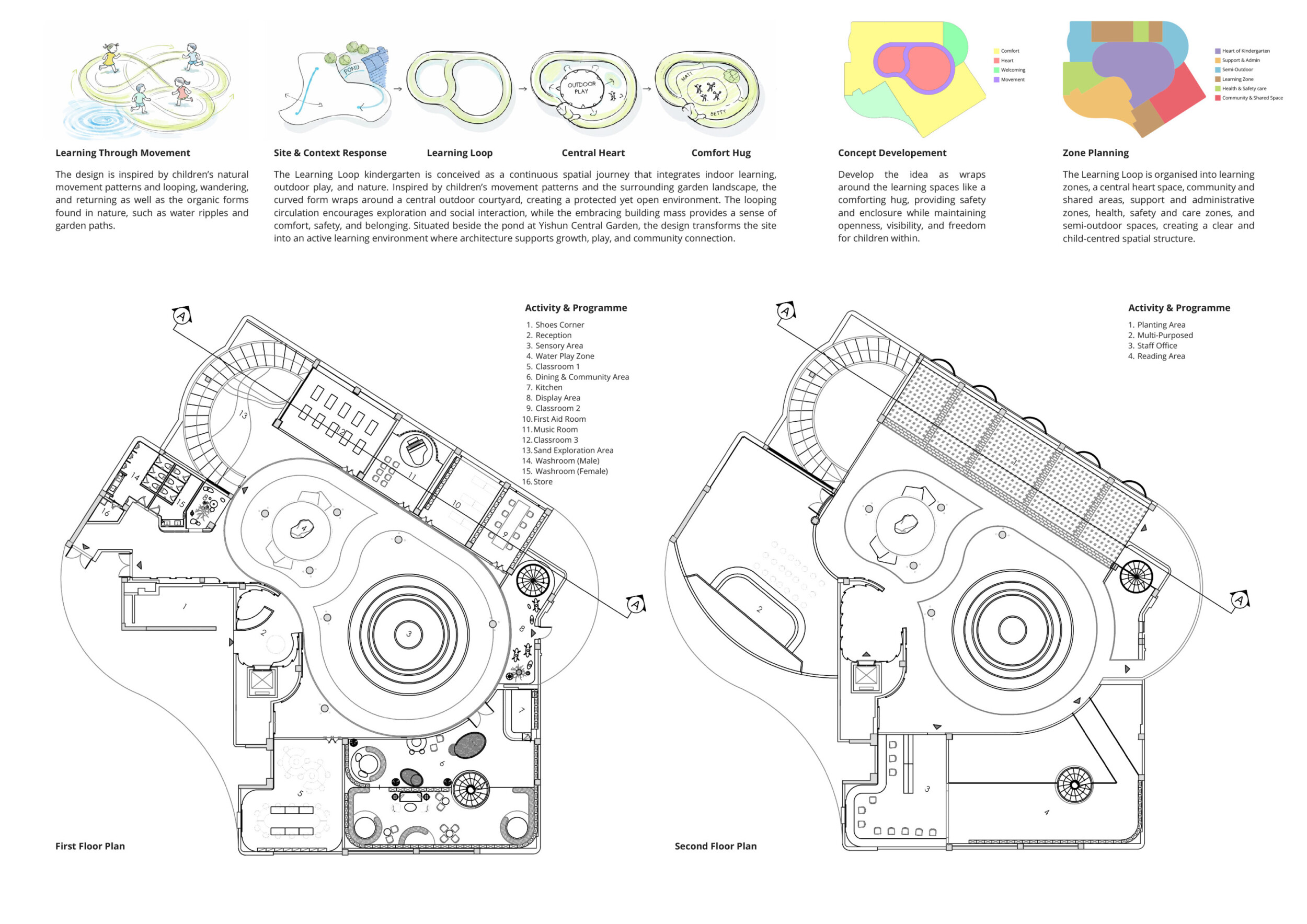
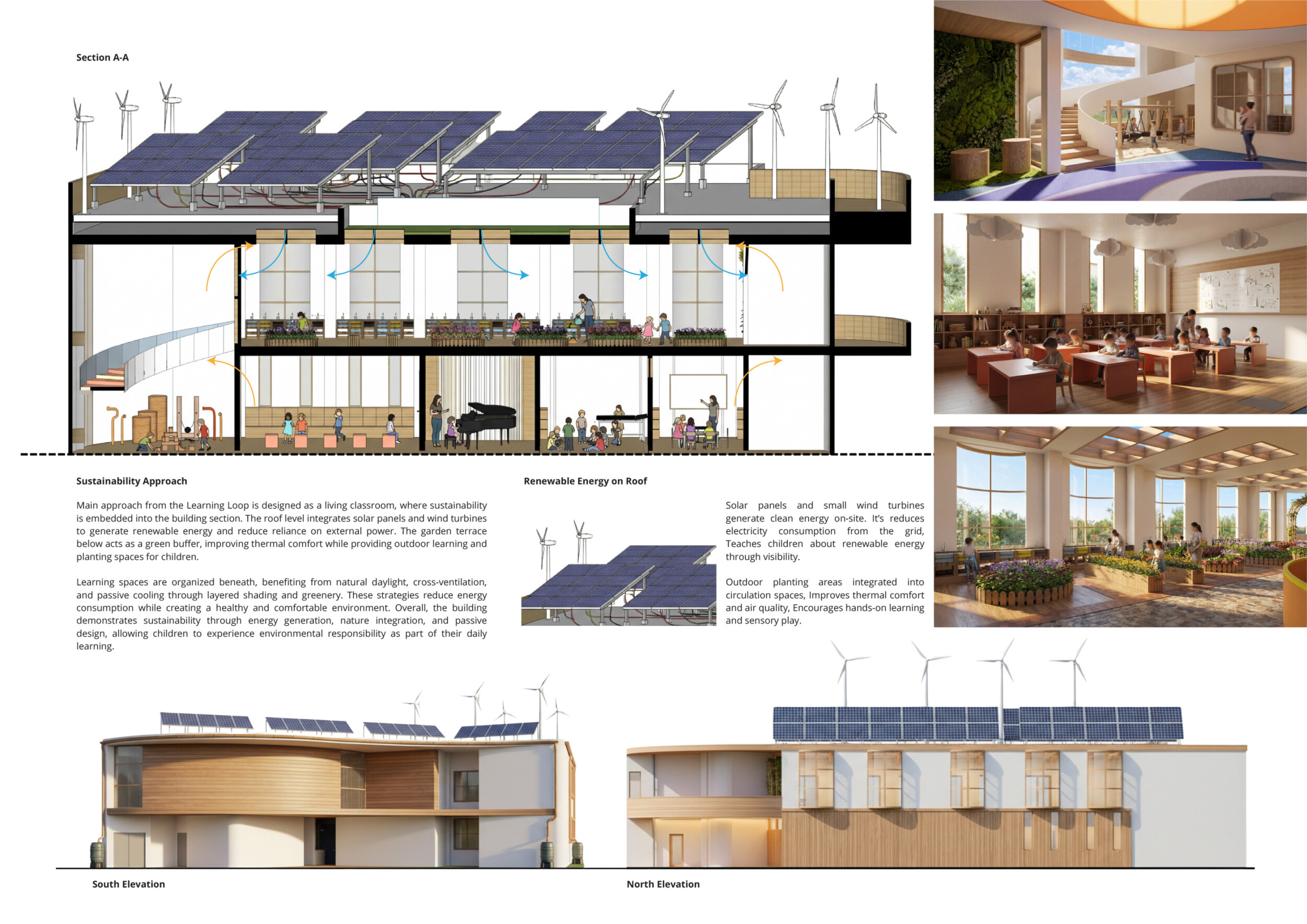
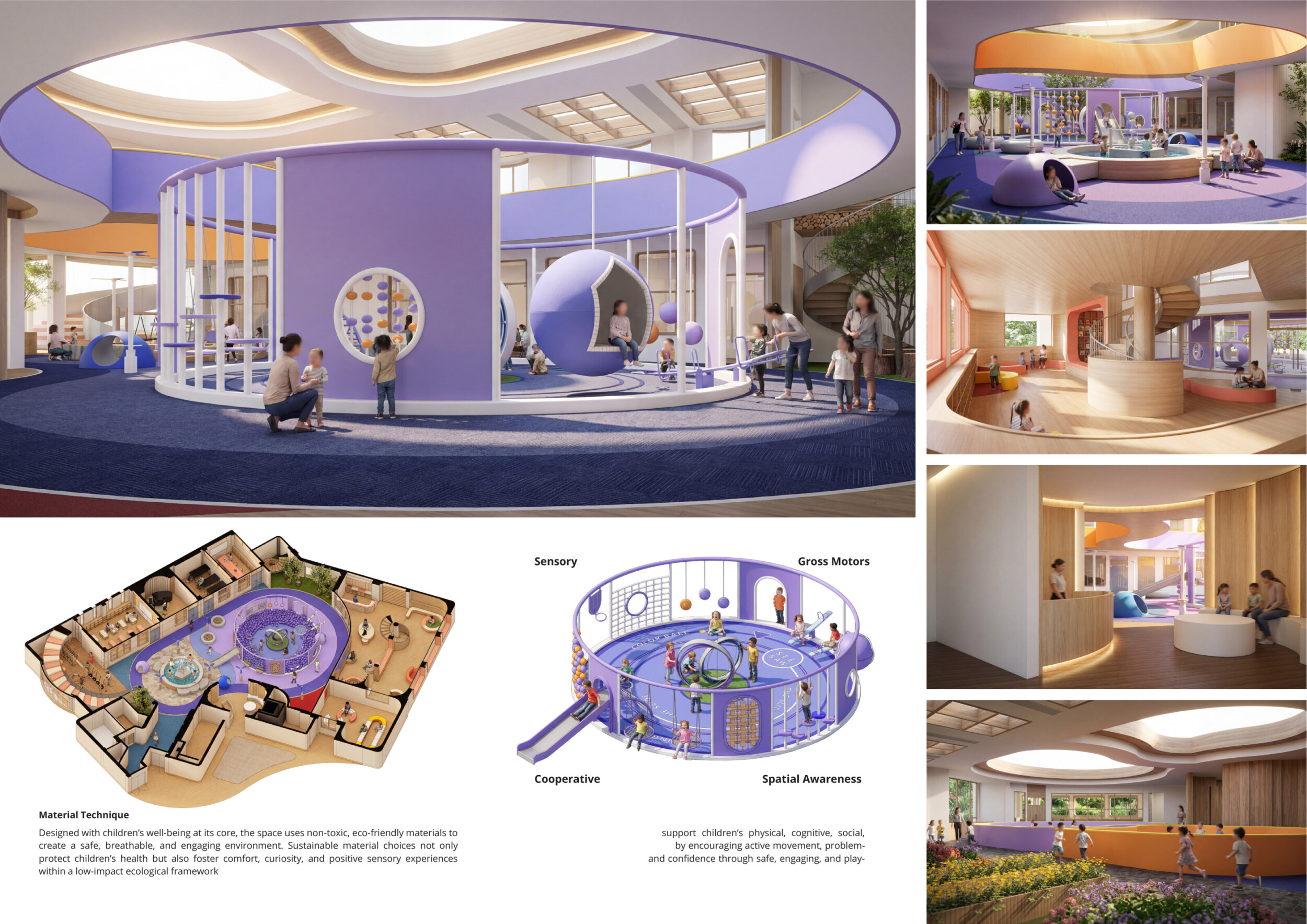


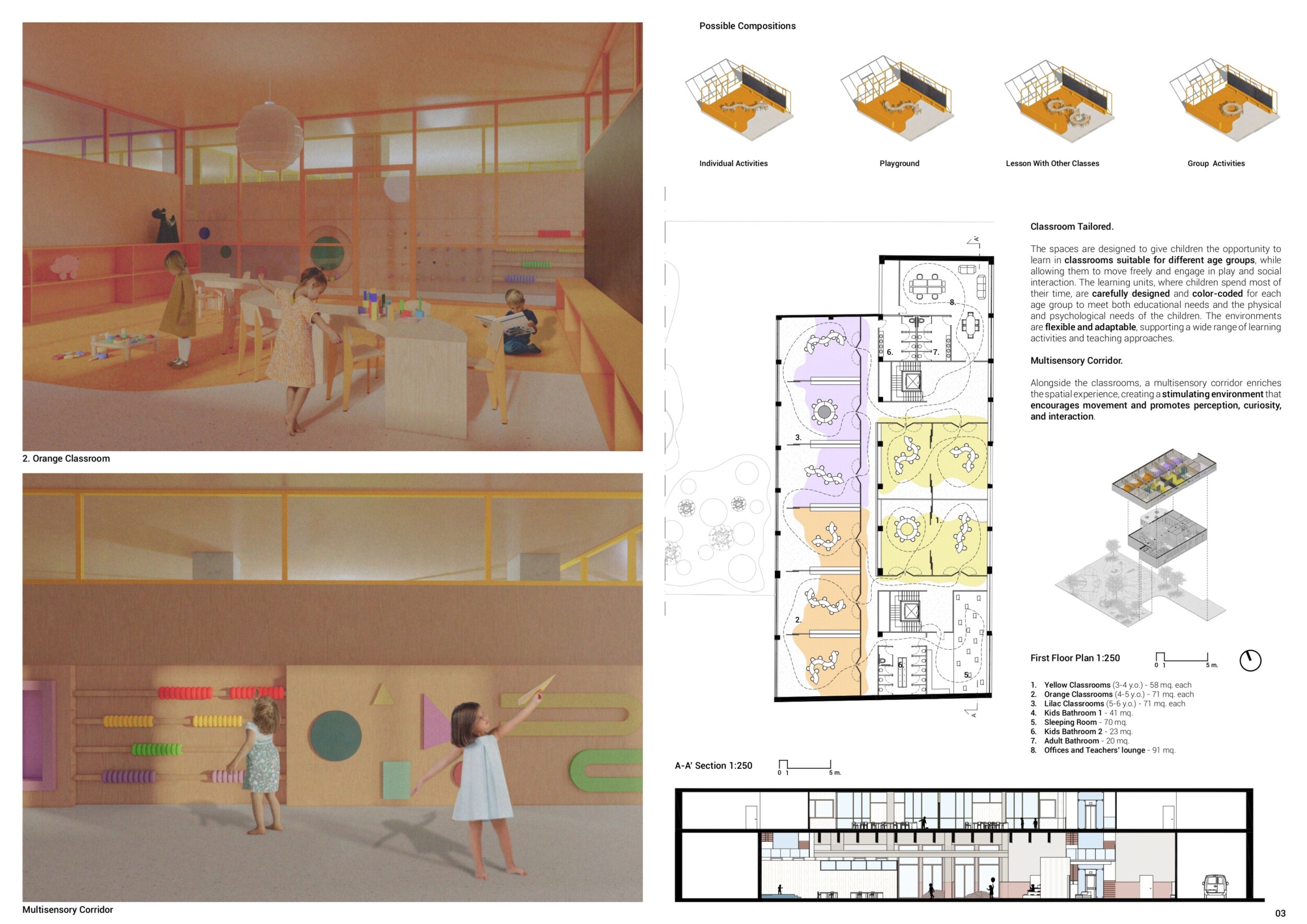
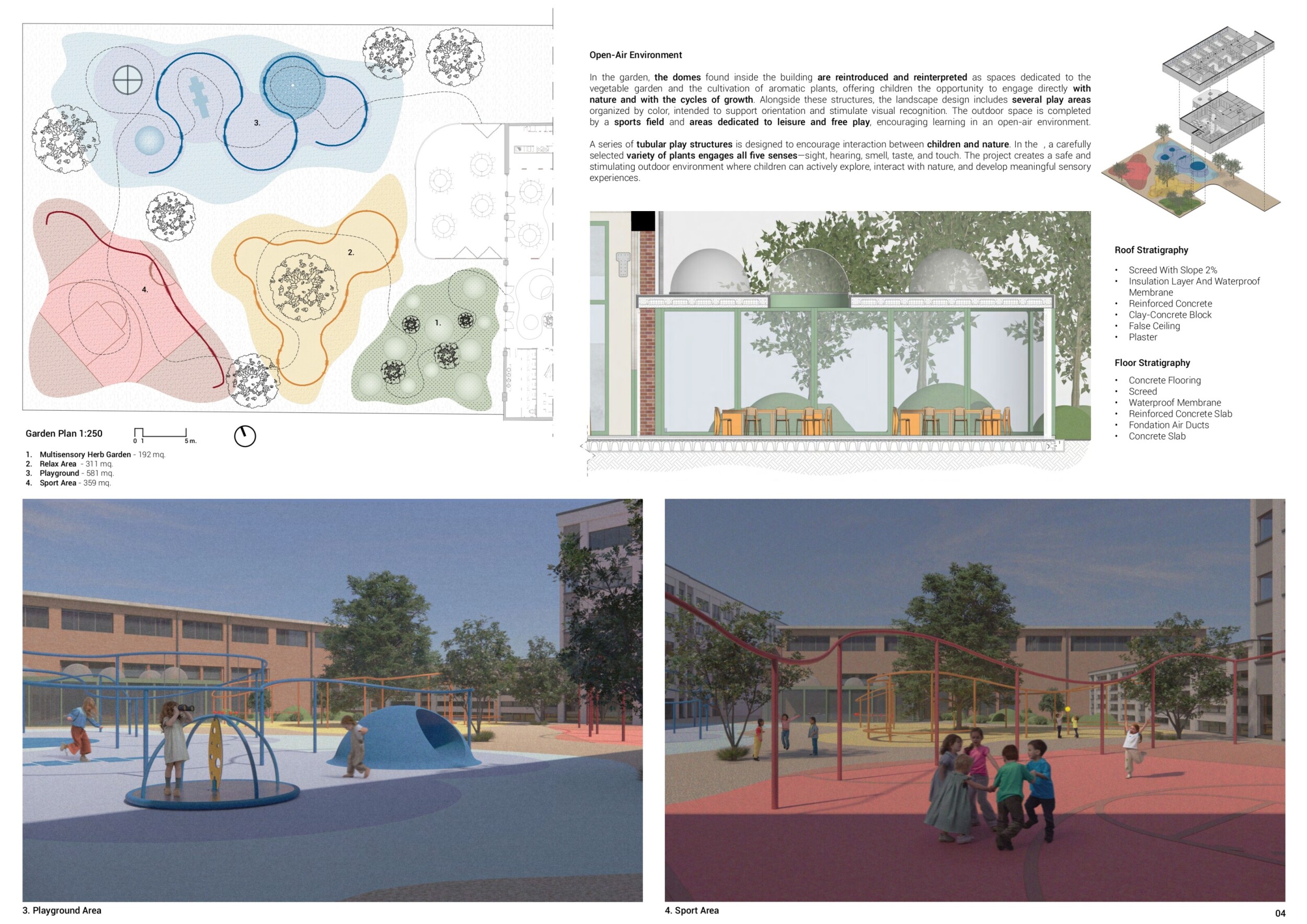
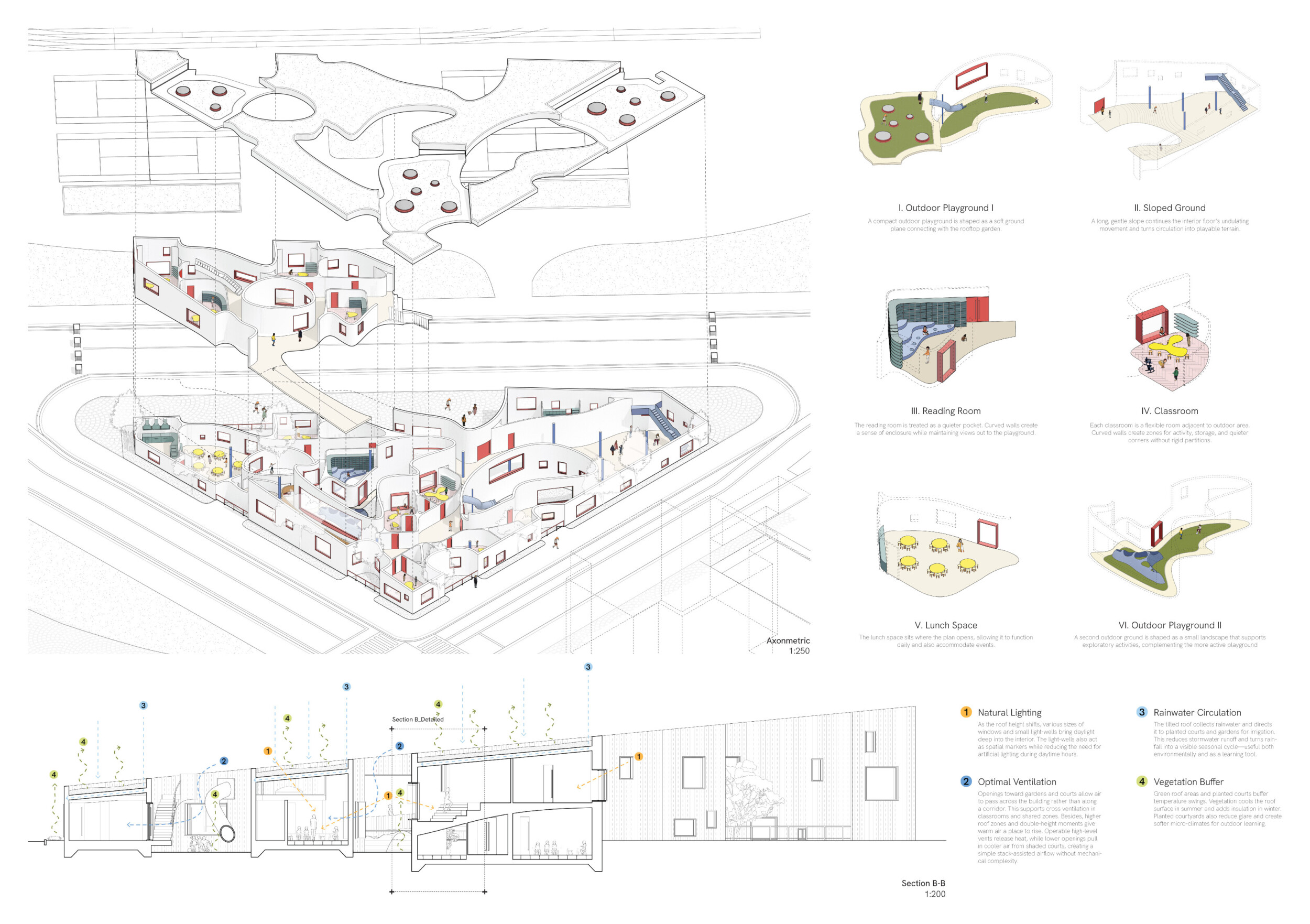
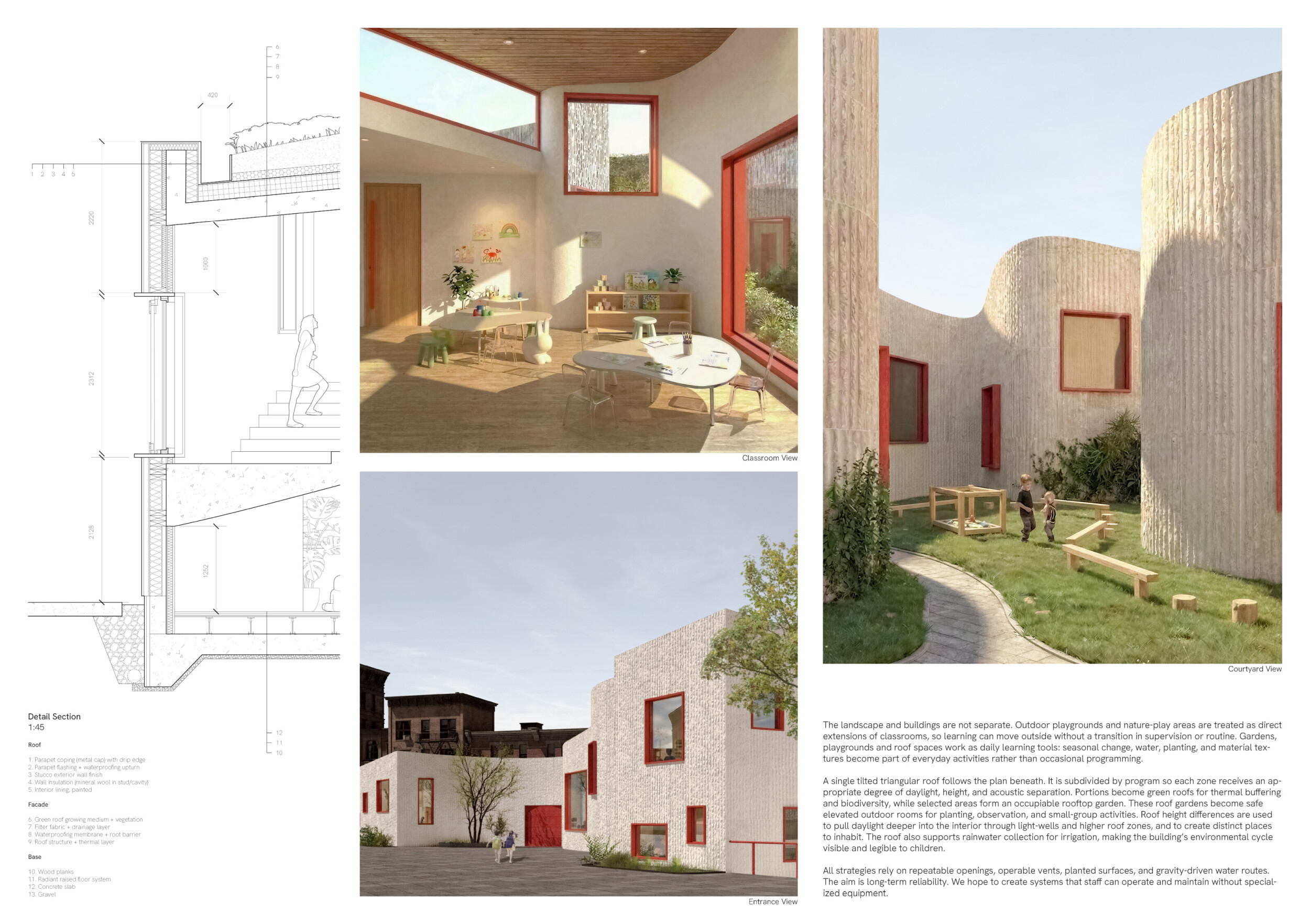
The presentation delivers a visually engaging and conceptually rich narrative, effectively combining analytical drawings with vibrant renderings that communicate the project’s playful and community-driven ambition. Read more Linework in plans, sections, and axonometrics is generally clear and consistent, allowing the vertical organization and clustering strategy to be understood, while the diagrams successfully explain construction logic, phasing, and rooftop expansion. The use of color is particularly strong, reinforcing programmatic differentiation and creating a lively visual identity aligned with the project’s educational intent. However, the overall graphic hierarchy is somewhat diffuse, with multiple diagram types and text blocks competing for attention across the board. Text provides a solid conceptual grounding, though its distribution and emphasis could be more strategically organized to guide the narrative more clearly.