Get inspired!

17,725 architecture projects

Learn from past Buildner architecture competition participants through our extensive project library, curated over more than 15 years!

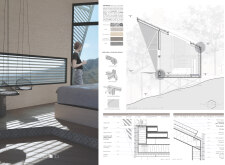
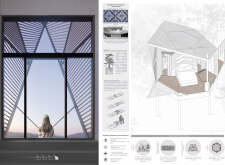
Scented Plants and Plastic Insulation in Modular Forest Retreat

Authors:
Simone Marchese, Elisa Marazzi, Riccardo Marvulli
Scented Plants and Plastic Insulation in Modular Forest Retreat
Explore the full project presentation!
Subscribers only
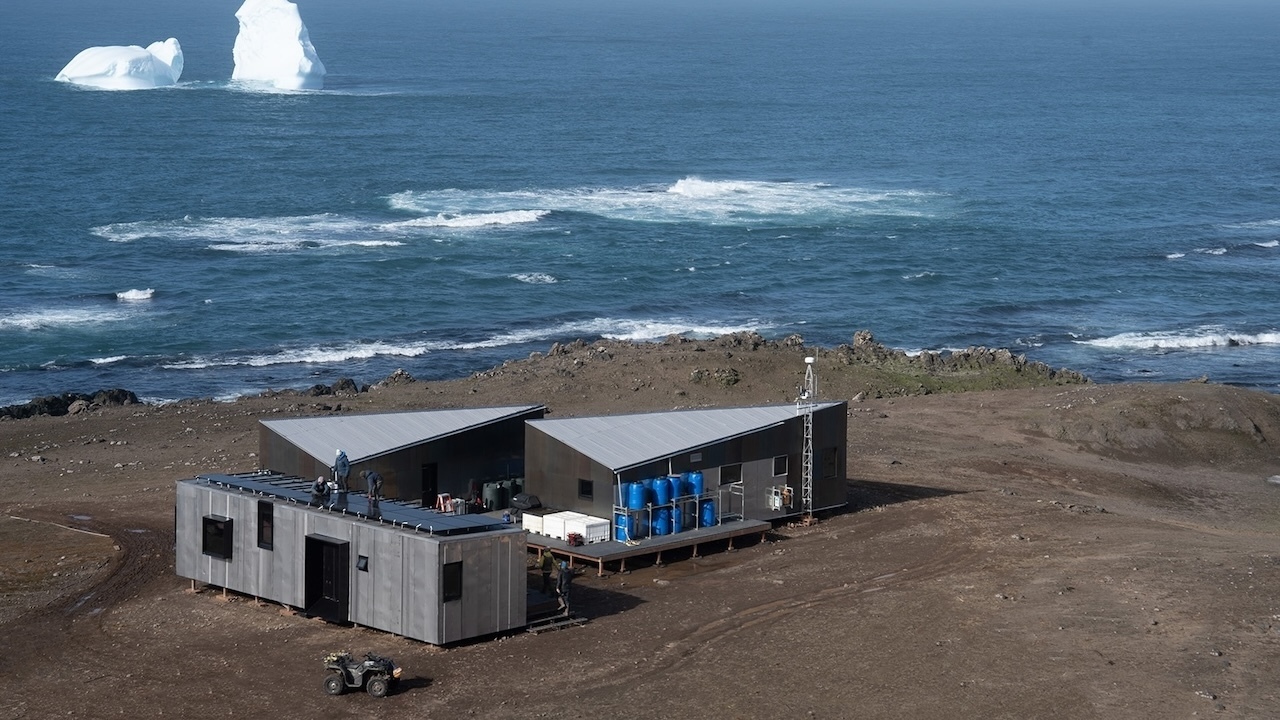
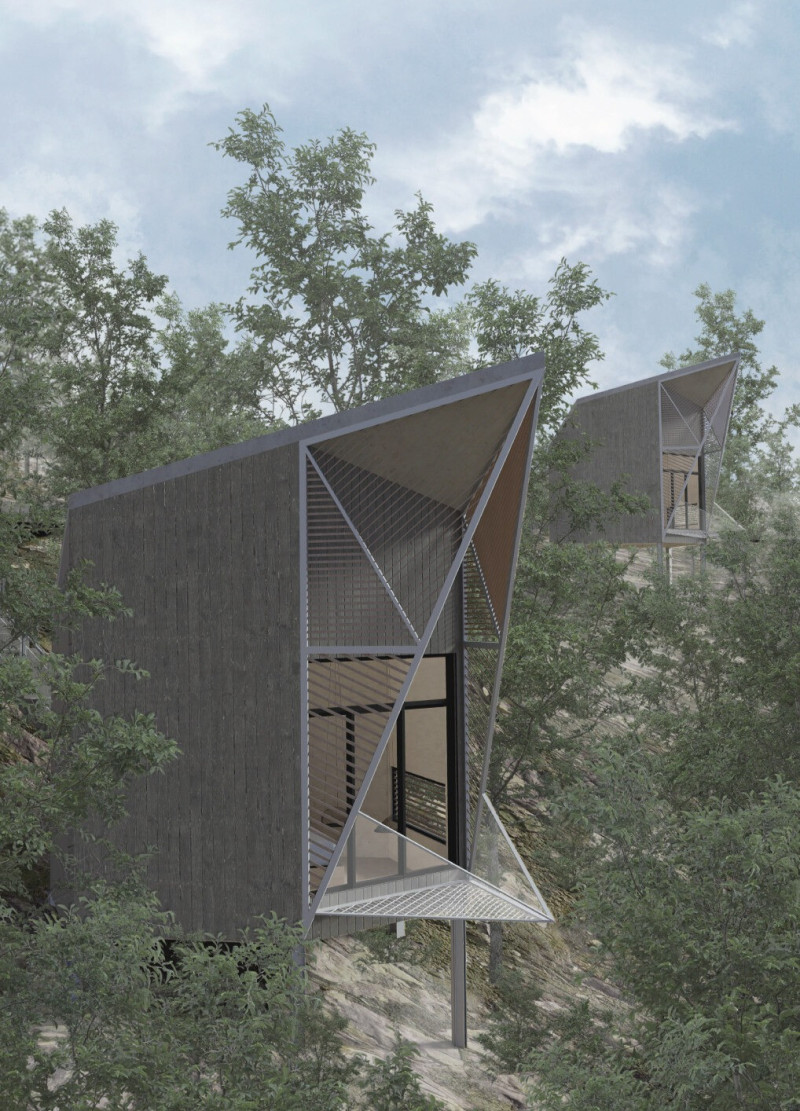
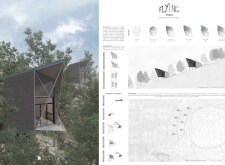
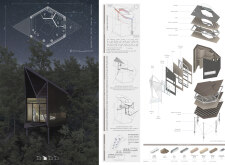
Plastic bottles and scented plants enhance the thermal efficiency and sensory experience of flying pods designed for a wellness retreat in a tranquil forest setting.
5 key facts about this project
01
Flying pods utilize plastic bottles for insulation, promoting recycling and sustainability.
02
Scented plants are incorporated into the design to enhance the sensory experience for users.
03
The pods are strategically placed on a northern slope to maximize solar gain and energy efficiency.
04
Modular construction allows for easy replication and adaptation to varying landscapes.
05
Interior spaces are optimized with multifunctional furniture, promoting efficient use of limited space.

The Vale de Moses Yoga Retreat is situated in a quiet forest in central Portugal, designed as a place that encourages relaxation and a deeper connection with nature. Influenced by the practice of Shinrin-yoku, or "forest bathing," the retreat offers an experience that helps relieve stress and enhances well-being. The design features flying pods that serve as individual living spaces, carefully integrated into the landscape while maximizing sunlight exposure.

Architectural Integration

The flying pods are compact structures adaptable to the varied terrain of the mountains. This flexibility allows the design to respect the natural features of the land while minimizing disturbances to existing ecosystems. With a single-sloped roof, each pod captures sunlight effectively, promoting passive heating without taking up much space. The layout encourages a connection between indoor living and the outdoors, inviting residents to engage with the surrounding environment.

Spatial Efficiency

Inside the pods, the design focuses on multifunctional elements to make the best use of limited space. Features include storage beds, staircase drawers, and pull-out coffee tables, all aimed at accommodating guests comfortably without creating clutter. This approach highlights the relationship between practical use and visual appeal, resulting in open living areas that promote a sense of calm and relaxation.

Sustainable Systems

An innovative heating system circulates air through a channel between solar panels and a copper plate, providing efficient temperature control. Cold air from the interior is warmed up before it flows back inside, showcasing a practical way to manage energy use. This system emphasizes sustainability, highlighting the retreat’s commitment to environmental responsibility.

Material and Sensory Elements

Materials chosen for the retreat enhance the relationship between the building and its natural surroundings. Plastic bottles are used for insulation, and sand improves thermal stability. Pine plywood provides strength, while raw wood cladding blends the building with the environment. Scented plants above the beds add to the calming atmosphere, enriching the sensory experience and supporting the retreat’s focus on well-being.

The design centers around a thoughtful balance of natural light, efficient use of space, and careful material choices, encouraging occupants to immerse themselves in the peacefulness of the forest.

Noticed a mistake?
Highlight the text and click on
Noticed a mistake

Vancouver Tall Challenge: Building Higher Downtown

`
Competition organisers

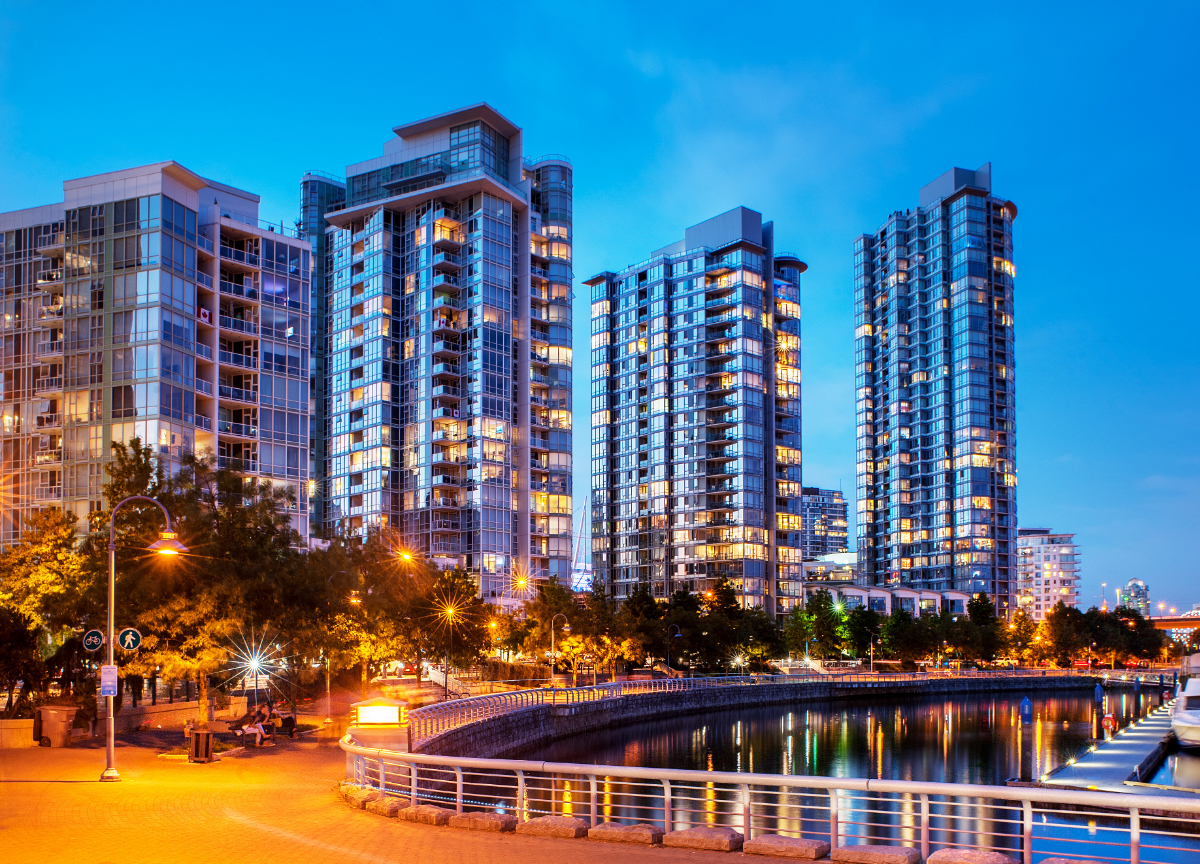
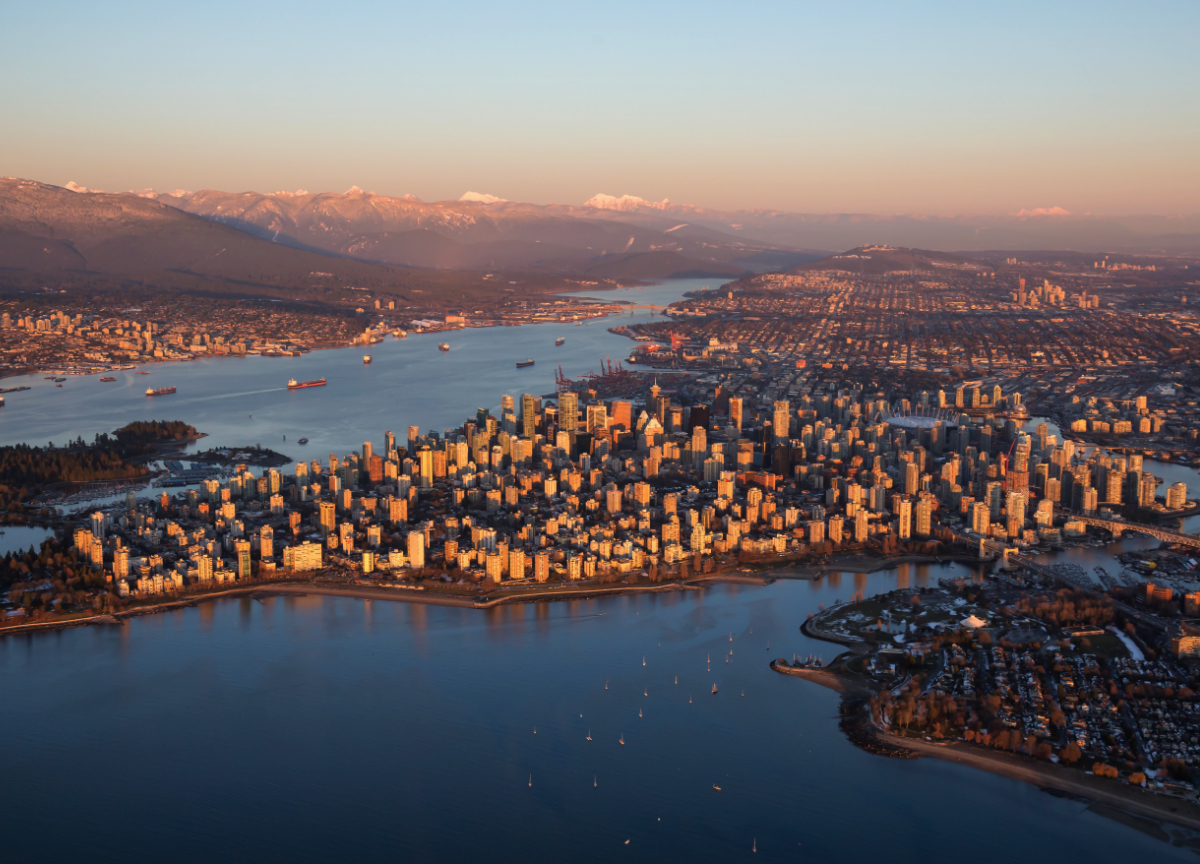
The Vancouver Tall Challenge: Building Higher Downtown is an international architecture competition organized by Buildner in collaboration with the City of Vancouver and the University of British Columbia’s School of Architecture and Landscape Architecture (SALA). The competition invites architects, designers, planners, and creative thinkers to explore innovative approaches to tall buildings in Vancouver’s downtown core, focusing on sustainability, livability, urban density, public space, and the city’s strong connection to nature. As Vancouver continues to grow, participants are challenged to rethink how vertical development can enhance urban life and contribute to a more vibrant, inclusive, and resilient city identity.

The competition offers a total prize fund of $15,000 CAD, with winning proposals selected by an international jury of architects, planners, academics, and city-building professionals. Key dates include the final registration deadline on October 29, 2026, submission deadline on November 30, 2026, and winners announcement on January 26, 2027. Full competition details, requirements, and registration information are available at architecturecompetitions.com/VancouverTallChallenge

Vancouver Tall Challenge

Design the future of Vancouver’s skyline

Building higher downtown ideas COMPETITION
Prize Monetary award
Eligibility Open to all
Final registration deadline 29 October 2026

Open architecture competitions

  • Closest deadline first
  • Project competitions first
    Selected winning projects have the potential to be constructed
  • Ideas competitions
    Experimental competitions with the focus on pushing the boundaries of creativity
New York High Falls 
Riverfront Market

Design a New Riverfront Market in Rochester, New York

ideas COMPETITION
Prize Monetary award
Eligibility Open to all
Advance registration deadline 7 October 2026
Valli Wine 
Tasting Room

Design a wine tasting room in Italy

project COMPETITION
Prize Monetary award
Eligibility Open to all
Advance registration deadline 8 October 2026
The 
Quiet 
Tower

Design an observation tower in Latvia

project COMPETITION
Prize Monetary award
Eligibility Open to all
Advance registration deadline 15 October 2026
Vancouver 
Tall Challenge

Design the future of Vancouver’s skyline

Building higher downtown ideas COMPETITION
Prize Monetary award
Eligibility Open to all
Final registration deadline 29 October 2026
The Oak 
Moon 
Pavilion

Design a yoga pavilion in Italy

project COMPETITION
Prize Monetary award
Eligibility Open to all
Advance registration deadline 5 November 2026
Portugal Long Table 
Restaurant

Design a slow-living restaurant in Portugal

project COMPETITION
Prize Monetary award
Eligibility Open to all
Final registration deadline 9 December 2026

Recurring architecture competitions

Kinderspace

Design a kindergarten of tomorrow

Architecture for Children’s Development #4 ideas COMPETITION
Prize Monetary award
Eligibility Open to all
Final registration deadline 28 October 2026
Museum of 
Emotions

Use architecture to create different emotional states

Edition #9 ideas COMPETITION SILENT CONTEST For this competition, NO DESCRIPTION TEXT is allowed. The architecture ideas must be communicated strictly with visuals.
Prize Monetary award
Eligibility Open to all
Advance registration deadline 12 November 2026
The 
Architect's 
Chair

Take a seat and make a statement!

Stockholm Furniture Fair Edition #6 ideas COMPETITION
Prize Monetary award + Exhibition at Stockholm Furniture Fair
Eligibility Open to all
Final registration deadline 3 December 2026
new
Buildner's Unbuilt Award

Celebrating your unbuilt architecture visions with a 50,000€ prize

50,000€ Prize / 2027 ideas COMPETITION
Prize 50,000 €
Eligibility Open to all
Early bird registration deadline 4 February 2027

Media, partners and clients

To view this project in detail,
please log in with your
Architects’ Network Plus account.
Subscription instantly unlocks all the architecture projects plus other member-only benefits:
  • Access the 17,725 Concept Library
  • Professional tools including file transfer, email, portfolio management, and more
Register now
Already a member? Log in