
5 key facts about this project
## Overview
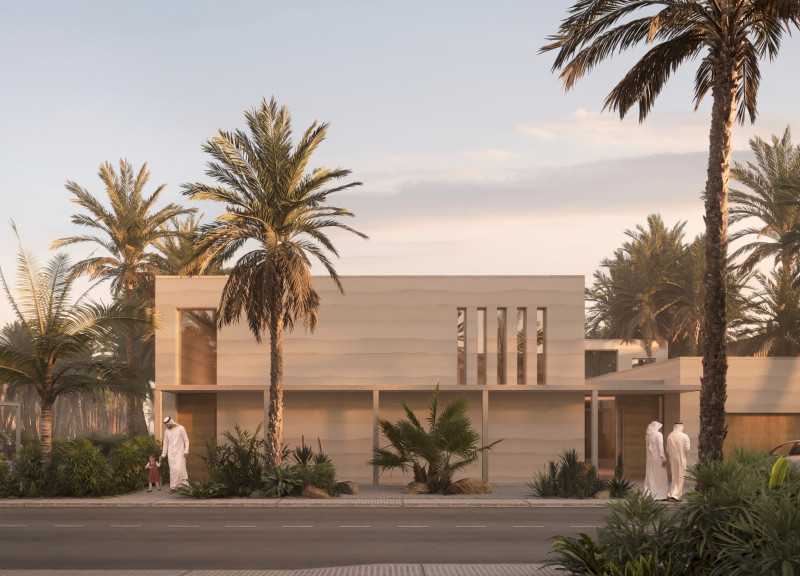
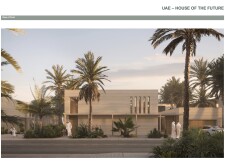
Located in the United Arab Emirates, the House of the Future embodies a synthesis of cultural heritage and contemporary architectural practices. The design reflects a deep understanding of traditional architectural elements, such as the Islamic courtyard and the Wikala, while employing modern interpretations to create a functional and aesthetically pleasing living space. The project aims to foster community interaction and connectivity, aligning with the cultural context and environmental conditions of the region.
## Spatial Configuration
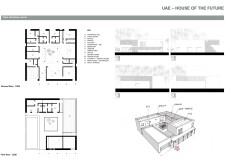
The layout features two distinct levels, centering around a spacious atrium that serves as the heart of the home. The ground floor is designed to facilitate movement and interaction, incorporating entrances, hallways, and a blend of private and communal areas. Bedrooms are strategically positioned to maximize privacy, while shared spaces such as the living and dining areas encourage social gatherings. The upper level primarily consists of additional bedrooms, providing seclusion and expansive views of the surrounding environment.
## Material Selection
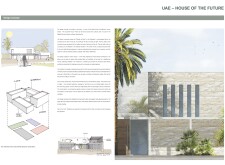
Materiality plays a crucial role in reinforcing the architectural integrity and contextual relevance of the House of the Future. The exterior is clad in natural stone, offering durability and resonance with the local climate. Internally, wood is utilized for finishes and structural elements, contributing warmth and sustainability. Large glass panels enhance transparency, facilitating a connection to the outdoors, while ceramic tiles in communal areas balance aesthetics with practicality, supporting thermal regulation and energy efficiency. Through these thoughtful material choices, the design aligns with both visual and performance objectives in the challenging desert environment.
## Sustainability and Community Engagement
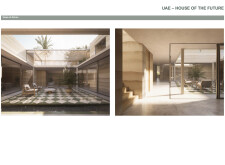
Sustainable design strategies are integrated throughout the project, including passive cooling mechanisms facilitated by the central atrium and the incorporation of photovoltaic panels for energy generation. This approach addresses the climatic challenges of the UAE while prioritizing environmental responsibility. Additionally, the community-oriented spaces promote social connectivity, with the atrium serving as a focal point for family interactions and gatherings. This thoughtful integration of sustainability and community reflects a commitment to enhancing the livability of the residence, all while honoring the cultural narratives of the region.