
5 key facts about this project
### Overview
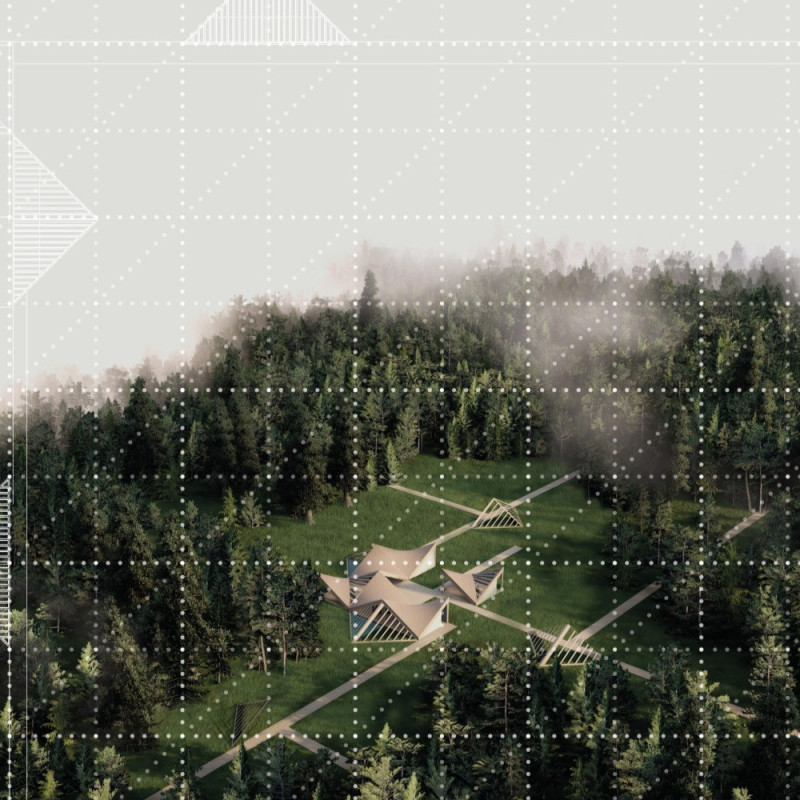
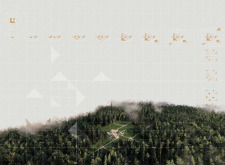
Located within a forested landscape, the design integrates harmoniously with its natural surroundings while fulfilling diverse functional requirements. The project employs a disciplined approach to materiality and spatial organization, aiming to create a cohesive environment that promotes both social interaction and individual privacy. Permeability is a core design principle, allowing for fluid transitions between indoor and outdoor spaces.
### Spatial Strategy and Composition
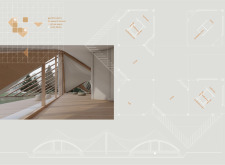
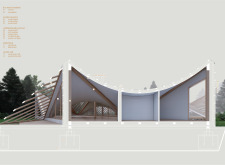
The spatial arrangement consists of interconnected volumes that align organically with the site's topography. The layout distinctly separates public gathering areas from private living quarters, situating communal spaces at the center for accessibility while placing private areas strategically to ensure seclusion. This organization fosters an inviting atmosphere while accommodating varying user needs. The use of large windows enhances natural light penetration and connects the interior with the exterior landscape.
### Materiality and Sustainability
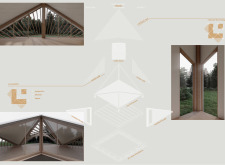
The project features a rich material palette, primarily composed of wood, which contributes to its structural integrity and aesthetic appeal. Key elements include a wooden framework that supports thermal regulation, a ventilated facade system that optimizes energy efficiency, and curtain walls that facilitate connectivity with the outdoors. Sustainable practices are integral to the design, including innovative rainwater harvesting systems and construction methodologies that minimize environmental impact. Local materials and passive design strategies have been employed to reflect regional heritage and promote ecological integration, reinforcing a commitment to sustainable architecture.