

Buildner is a global leader in organizing architecture competitions of all scales — from furniture, cottages, and guesthouses to full city rebranding. With prize budgets ranging from €5,000 to €500,000, Buildner brings proven global experience to every competition.
Launch a competitionLaunch a competition
Introduction

Buildner is pleased to announce the results of The Architect’s Stair #3 competition, an international ideas competition that invited architects, designers, and creative thinkers to reconsider one of architecture’s most fundamental architectural elements through a contemporary conceptual lens. Rather than focusing on technical compliance or conventional circulation requirements, the competition encouraged participants to explore the stair as an architectural artifact capable of expressing identity, atmosphere, movement, symbolism, and spatial narrative.
The competition generated a diverse body of work. Across the submissions, participants transformed stairs into inhabitable landscapes, social gathering spaces, environmental interfaces, sculptural objects, and adaptive systems responsive to changing contexts. Some proposals explored the stair as an extension of public space, dissolving the boundary between circulation and occupation through layered topographies designed for gathering, rest, play, and interaction. Others approached the stair through questions of material reuse and construction logic, demonstrating how discarded or ordinary materials could be elevated into refined architectural interventions carrying traces of memory, labor, and transformation.
A number of projects focused on the relationship between the stair and environmental conditions, proposing responsive systems that reacted dynamically to tides, water levels, gravity, or shifting spatial configurations. These entries treated movement not as a fixed sequence but as a changing spatial experience shaped by external forces and temporal conditions. Other submissions emphasized minimalism and restraint, reducing the stair to a precise structural gesture where lightness, rhythm, and detail became the primary architectural language.
Throughout the competition, the most compelling proposals successfully balanced conceptual ambition with clarity and coherence. The jury particularly appreciated projects that moved beyond the stair as an isolated object and instead developed broader architectural narratives around perception, collective use, environmental responsiveness, spatial choreography, and material expression. Many entries demonstrated that even within an intentionally open-ended brief, the stair remains capable of generating highly specific architectural experiences and critical reflections on how we inhabit and move through space.
We sincerely thank our jury panel
for their time and expertise
Extended list of jury biographies
Beste Aykut
BKSK Architects
United States

Niko Kapa
Studio Niko Kapa
United Kingdom

Pippa Nissen
Nissen Richards Studio
United Kingdom

Pepyn Nolet
Stephen Taylor Architects
United Kingdom

Gary Polk
Bjarke Ingels Group
United States

Shinya Sueyoshi
GAMMA Architects
Japan

Takumi Takahashi
HAKUTEN
Japan

Mengyu Zhao
Kohn Pedersen Fox (KPF)
United States

Zehua Zhang
KPF
United States

Siyu Zhu
Johnston Marklee
United States

1st Prize Winner
AQUALIZER: The Abacus Stairs

I participate in competitions to push the boundaries of my design practice beyond the constraints of daily professional work. These platforms provide an essential arena for critical thinking, allowing me to explore speculative ideas and innovative materials that foster continuous professional growth.
Read full interview Turkey
Jury feedback summary
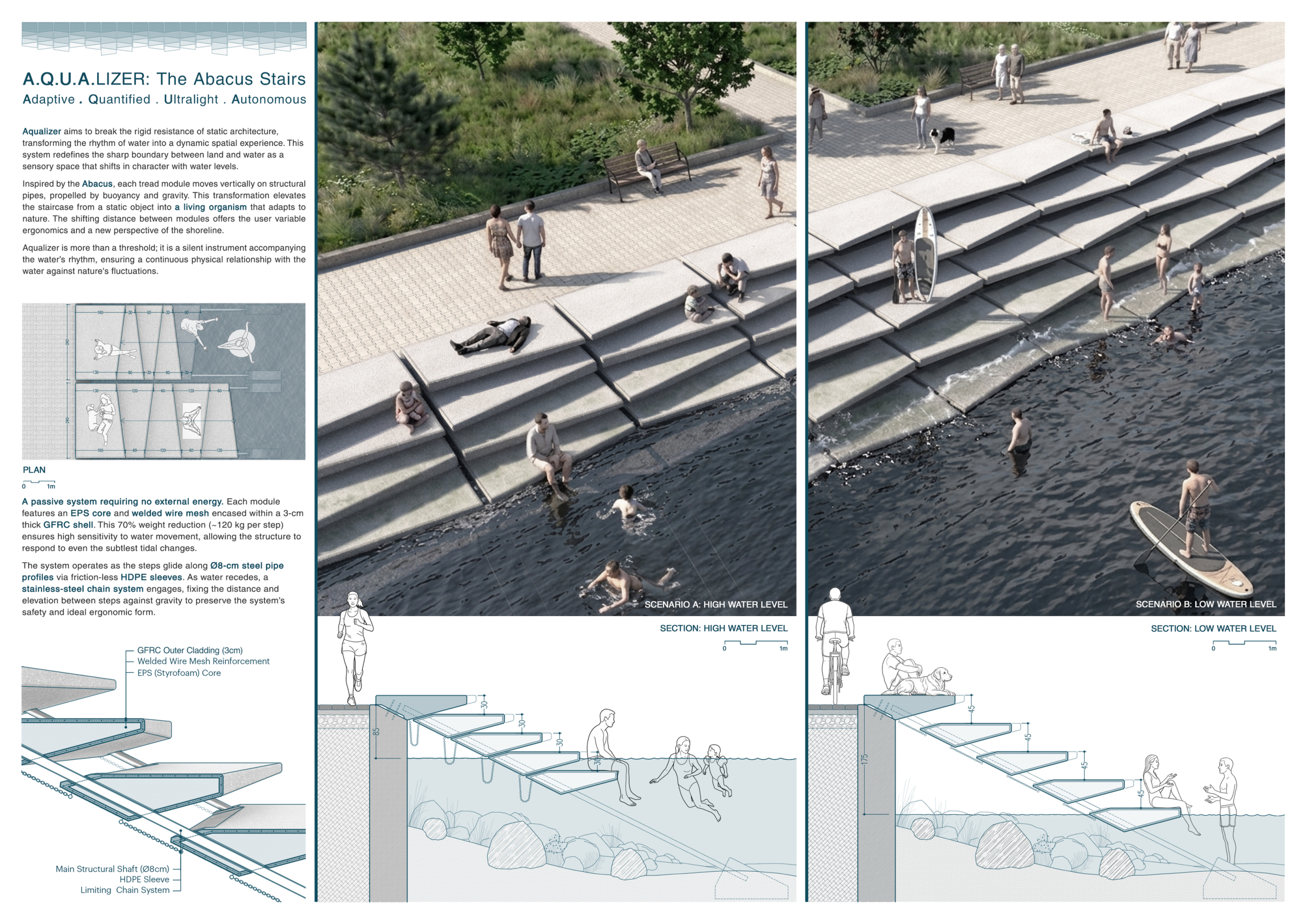
“A.Q.U.A.lizer: The Abacus Stairs” proposes a responsive waterfront stair system that adapts physically to changing water levels through a passive mechanical structure. Inspired by the logic of the abacus, the project organizes a series of modular GFRC stair platforms along steel pipe guides, allowing each tread to rise and fall independently through buoyancy and gravity.

I love the idea of the edge of the water becoming a series of spaces that are, in effect, steps into the water. It is a beautiful solution that animates public space and provides places to pause and spend time with friends. The modular nature of the pieces also means that the system can expand and contract in the future.
Pippa Nissen / Buildner guest jury
Nissen Richards Studio, United Kingdom

A great take on a passive system dependent on environmental conditions, allowing this “stair” to react and change with the tide. Perhaps a bit too one-note, it is a good framework for many other potential ideas.
Gary Polk / Buildner guest jury
Bjarke Ingels Group, United States

It is compelling that the proposal treats changes in water level not as a problem to be solved, but as a condition that generates spatial experience.
Shinya Sueyoshi / Buildner guest jury
GAMMA Architects, Japan

A surprising entry that combines a seemingly practical approach with elegance. The proposal evokes a longing to see the project realized, and the desire to visit it more than once, to experience how the water will sometimes push up the steps to form a compact quay front, while at other times the distance between the steps becomes larger and the sound of water splashes underneath them. The simple geometrical shape brings a great richness to the scheme.
Pepyn Nolet / Buildner guest jury
Stephen Taylor Architects, United Kingdom

A very interesting concept for the application of a staircase in public space. The organic relationship between the otherwise tectonic configuration and the open area is highly appreciated. Clearly, there are technical issues that need further study, but this appears to be a solid concept that could add value to its surroundings.
Niko Kapa / Buildner guest jury
Studio Niko Kapa, United Kingdom

The project gives the stair an intelligent environmental role, turning it into a responsive threshold between land and water. Its design idea is both simple and strong: the steps become adaptive elements that register changing water levels while supporting public occupation. The proposal is especially successful in combining civic use, environmental responsiveness, and a clear construction logic without losing the poetic quality of the stair.
Beste Aykut / Buildner guest jury
BKSK Architects, United States

This project offers an elegant solution for approaching and softening the edge between the water and the bank. It uses simple, modular forms to create a dynamic system that adjusts to tidal changes, and it presents a clear technical strategy to achieve this, with the two scenarios effectively demonstrating how the design is self-adaptive rather than static. That said, I wish the author had elaborated more on the different spatial experiences offered to the public as the dimensions of the stair system shift in response to changing water levels, for instance how these changes shape the way people occupy, move through, or perceive the waterfront at different moments. Overall, this is an effective, straightforward, and elegant design with strong technical merit.
Mengyu Zhao / Buildner guest jury
Kohn Pedersen Fox (KPF), United States

Since the competition brief is entirely open-ended, with no prescriptive site, program, context, or material requirements, Aqualizer stands out as an exceptional proposal for the way it intelligently establishes a compelling framework for the design to respond to. I find the idea of stairs that are controlled by, and physically respond to, changing tides particularly brilliant in its simplicity. The project leverages a basic physical principle in a way that feels both elegant and perfectly attuned to its intended scenario of use. Beyond its conceptual clarity, the material selection and technical detailing are carefully considered and demonstrate a thoughtful approach to how the project could be realized.
Siyu Zhu / Buildner guest jury
Johnston Marklee, United States

This design takes the wave-like imagery of water as its formal inspiration, presenting a certain degree of innovation in its overall form. The spatial language is fluid and aesthetically refined, successfully creating a variety of waterfront platforms and leisure spaces. Throughout the design process, careful consideration and clear articulation of both structure and materiality are evident, reflecting strong professionalism and a high level of completeness. In addition, the drawings and renderings are well executed, with clear communication of information and a compelling visual presentation, making this a highly resolved and well-developed design project.
Zehua Zhang / Buildner guest jury
KPF, United States
Buildner's commentary, recommendations and techniques review
Order your review here
The presentation succeeds in communicating a technically ambitious yet highly accessible concept through a clean and carefully organized layout. The diagrams explaining buoyancy, modular movement, and tidal adaptation are particularly effective, making the passive mechanical system understandable without overcomplicating the presentation.
-
8/10 Linework

-
9/10 Quality of drawings

-
8/10 Balance of color

-
9/10 Layout

-
8/10 Hierarchy

-
8/10 Annotation

-
8/10 Text

-
9/10 Clarity of story

-
9/10 Clarity of diagrams

-
8/10 Quality of overall presentation

Enter an open architecture competition now








2nd Prize Winner
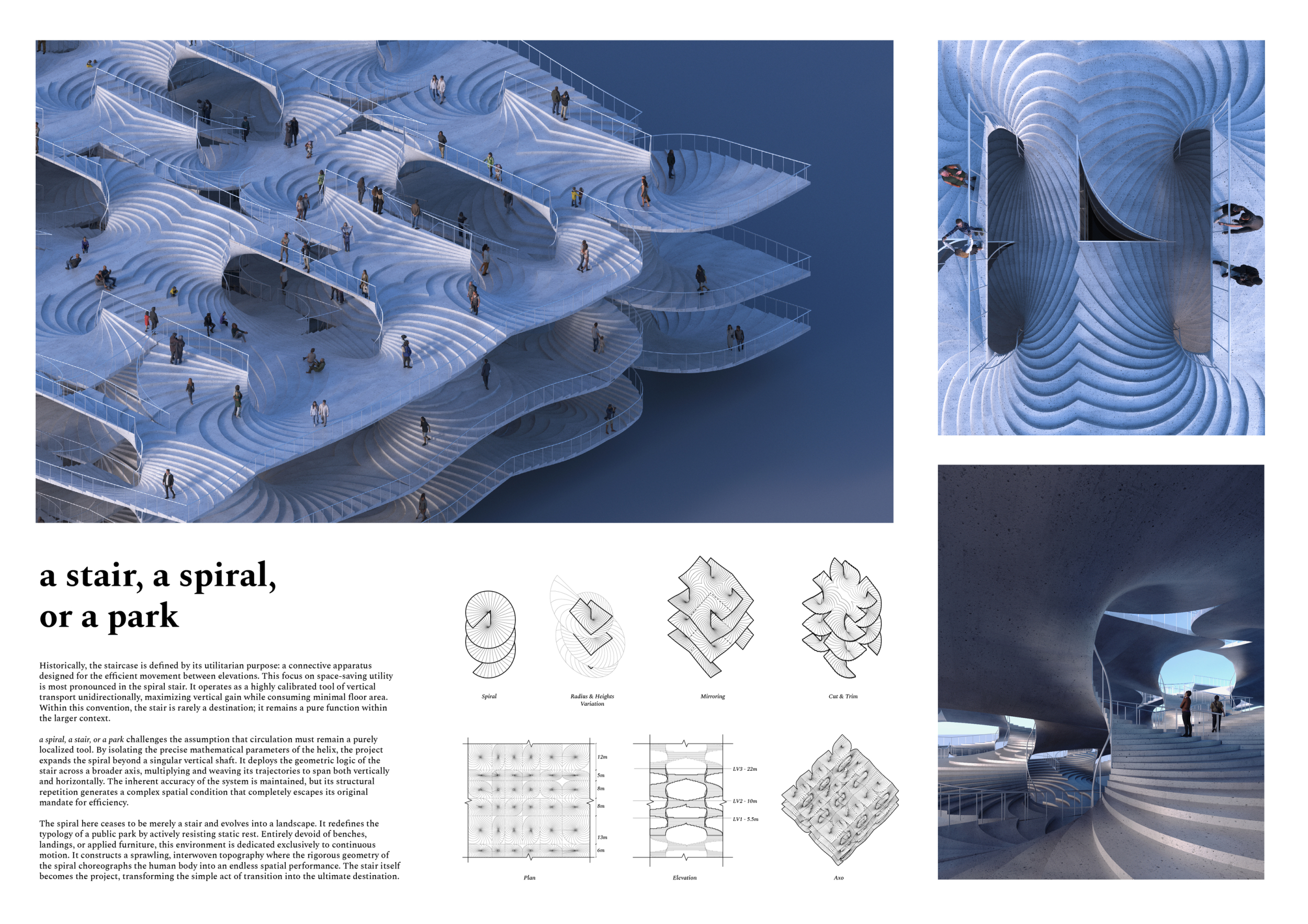
A stair, a spiral, or a park

 United States
Jury feedback summary
“A stair, a spiral, or a park” transforms the staircase into a continuous inhabitable landscape shaped through the repetition, mirroring, and deformation of spiral geometries. The resulting system creates a layered topography of ramps, plateaus, voids, and gathering spaces distributed across multiple levels, where movement, rest, observation, and public interaction are integrated into a single spatial language.
This scheme dares to question the idea of the staircase as a singular object compartmentalized into a conventional system as a connector, and challenges us to consider the “stair” as a fabric, even as an urban condition. I appreciate that it utilizes only stair elements in its makeup, even though it produces some aggressive blemishes and quirky conditions, but maybe that is part of its charm - what would a space driven entirely by the logic of stairs produce?
Gary Polk / Buildner guest jury
Bjarke Ingels Group, United States
I enjoy the way this project exploits the idea of a staircase that is in continuous motion. I imagine enjoying the experience of the undulating surface that can become a seat or gentle series of steps, while also creating natural spaces for gatherings and events. A very elegant solution.
Pippa Nissen / Buildner guest jury
Nissen Richards Studio, United Kingdom
Expanding the stair into an inhabitable topography of movement, gathering, and urban performance, the project convincingly challenges the stair’s linear logic and transforms circulation into landscape, program, and social space. Its formal system is strong, visually distinctive, and supported by clear diagrams that make the conceptual leap legible.
Beste Aykut / Buildner guest jury
BKSK Architects, United States
Interesting concept, especially in the way the design of the staircase relates to spatial formation. The stair is the space here.
Niko Kapa / Buildner guest jury
Studio Niko Kapa, United Kingdom
It is excellent in the way it goes beyond the staircase as a mere functional element, elevating it into the realm of a public facility and an integral part of the urban landscape. Furthermore, the strength of this proposal lies in the fact that it does not fall into becoming an exaggerated sculptural object, but instead expands the structural logic of the staircase into a landscape. It is a highly compelling work, with a well-balanced relationship between functionality and spatial experience.
Shinya Sueyoshi / Buildner guest jury
GAMMA Architects, Japan

The spatial composition, where stairs expand and multiply seamlessly, transcends the very concept of a staircase to create a new landscape. The undulating shadows cast by the ripple-like steps continuously and richly transform the character of the space with the passage of time.
Takumi Takahashi / Buildner guest jury
HAKUTEN, Japan
The project is an interesting exploration of making the stair a “destination” in its own right, rather than just a means to one. It is reminiscent of Vessel by Heatherwick Studio, where the stair becomes a public place. As the author puts it, it is a park without benches, furniture, or the typical accessories we expect, because the form itself already absorbs and performs those roles. The stairs form an interesting three-dimensional landscape that provides a very rich spatial experience for visitors. I wish the author had considered more carefully the details where these spiral stair typologies intersect with each other, developing more deliberate connections so the spatial experience becomes smoother and more continuous. Additionally, in the presentation, it would be helpful to show more of the actual bodily experience within this landscape, rather than primarily focusing on its highly rational composition from the outside. After all, it is an extremely smart design with a strong perspective on seeing the stair as a destination.
Mengyu Zhao / Buildner guest jury
Kohn Pedersen Fox (KPF), United States
The design concept is clearly articulated, and the diagrams effectively illustrate the underlying design intentions with clear logic and well-structured layers. The proposal successfully frees the staircase from its purely functional role as a sequence of steps, integrating it more fully into the architectural whole as an integral part of the spatial system. This approach enhances the continuity and fluidity of the overall space, demonstrating strong skills in holistic composition and conceptual integration.
Zehua Zhang / Buildner guest jury
KPF, United States
I find the project’s association between stairs and landscape particularly strong. In a way, the interconnected stairs transform into a series of adjoining plateaus with meandering contours. The design demonstrates a strong understanding of geometry, and the resulting space is compelling as a three-dimensional park. I appreciate how the stairs and architecture are merged into a cohesive form, as well as the consideration given to openings, skylights, and framed visual connections throughout the project.
Siyu Zhu / Buildner guest jury
Johnston Marklee, United States
Buildner's commentary, recommendations and techniques review
Order your review here
The presentation communicates the project’s formal and spatial ambition with clarity and confidence, particularly through the large renderings and geometric diagrams that effectively explain the transformation of the stair into an inhabitable landscape. The atmospheric perspectives successfully convey scale, continuity, and the sculptural quality of the spaces, while the diagrammatic studies clearly communicate the project’s generative logic.
-
8/10 Linework
-
9/10 Quality of drawings
-
9/10 Balance of color
-
8/10 Layout
-
7/10 Hierarchy
-
5/10 Annotation
-
7/10 Text
-
8/10 Clarity of story
-
9/10 Clarity of diagrams
-
8/10 Quality of overall presentation
3rd Prize Winner
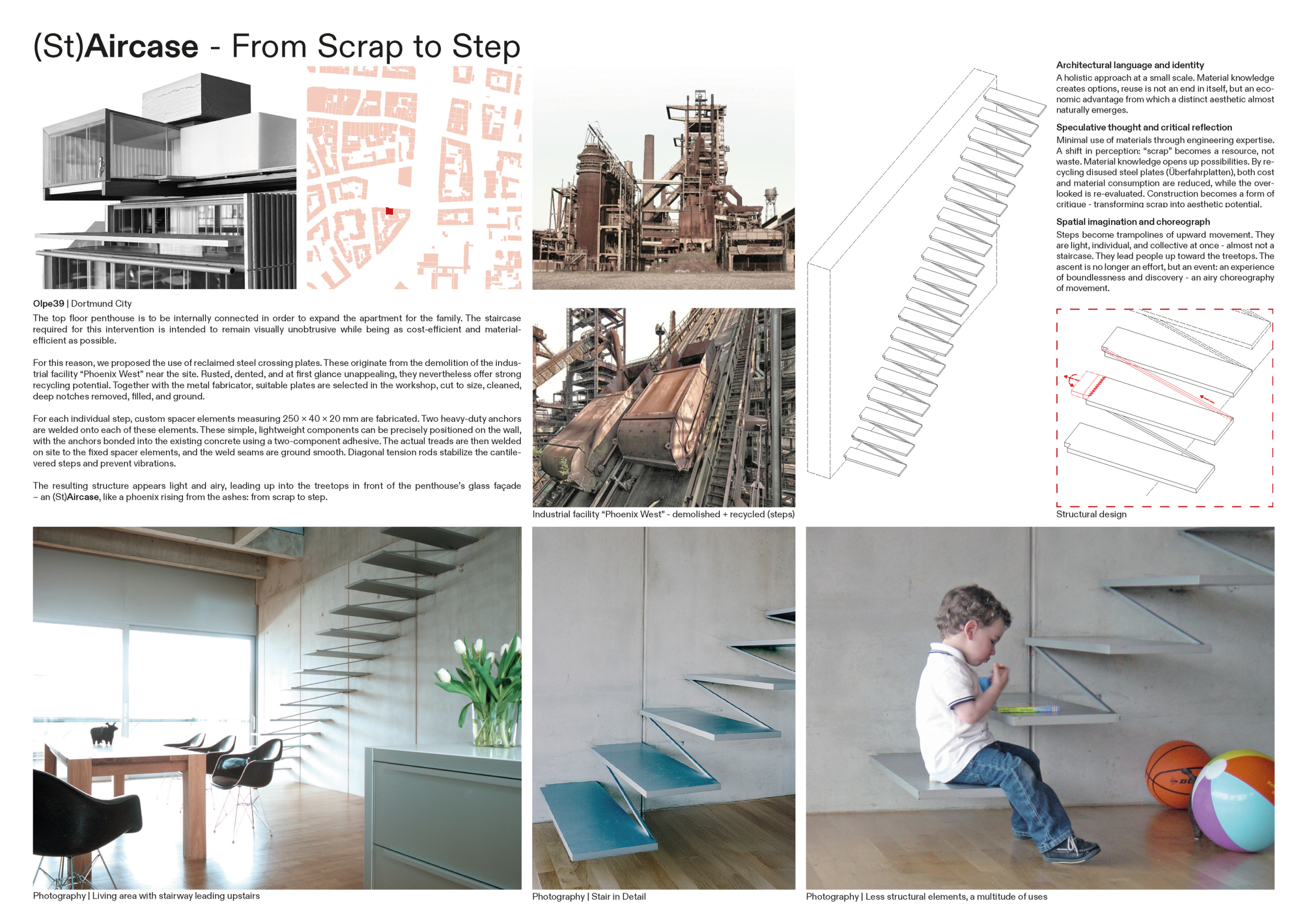
(St)Aircase - From Scrap to Step
 Germany
Jury feedback summary
“(St)Aircase - From Scrap to Step” proposes a lightweight residential stair constructed from reclaimed industrial steel plates recovered from the demolition of the Phoenix West industrial complex in Dortmund. The intervention connects two levels of an existing penthouse apartment through a suspended sequence of folded steel treads anchored directly into the concrete structure.
As a staircase within a residential space, the project avoids unnecessary elements, while its modest presence conveys a careful and thoughtful design approach. The selection of materials and the resolution of details have been considered with great care, resulting in a work that is simple yet possesses a subtle beauty that quietly draws the eye.
Shinya Sueyoshi / Buildner guest jury
GAMMA Architects, Japan
The project makes a clear and convincing architectural argument: reuse can be more than material efficiency, it can become spatial expression. By transforming discarded industrial steel into a refined stair, the design gives ascent a second life, carrying traces of demolition, labor, and memory into a precise domestic intervention. The strength of the proposal lies in its restraint, technical clarity, and ability to turn scrap into architectural identity.
Beste Aykut / Buildner guest jury
BKSK Architects, United States
Beautifully executed with an excellent and rational narrative behind it. Although the “multitude of uses” is somewhat misleading, the simplicity and understated nature of the end product not only suits its use case, it inversely mirrors the noisy and chaotic nature of its origins.
Gary Polk / Buildner guest jury
Bjarke Ingels Group, United States
While the design of the staircase is particularly airy and sculptural, the omitted railing poses a serious hazard, especially in an environment with young children. The challenge here would be to resolve the relationship between form and functional requirements. Construction-wise, the design shows attention to detail and appears very interesting for a modern interior.
Niko Kapa / Buildner guest jury
Studio Niko Kapa, United Kingdom
I really like the idea of the recycled elements becoming a rising series of steps that can be used as a table as well as a staircase. There would need to be more structural support around it, including a handrail I assume, but the overall solution feels simple and effective.
Pippa Nissen / Buildner guest jury
Nissen Richards Studio, United Kingdom
An elegant tread design, and it is great that it is apparently made from reused metal. The stair is so lightweight, and so free of railings, that it probably requires a bit of courage to climb for the first time.
Pepyn Nolet / Buildner guest jury
Stephen Taylor Architects, United Kingdom
The design approach is relatively limited, with a degree of repetition present. The spatial and formal variations are insufficiently rich, resulting in a lack of hierarchy and rhythm in the overall composition.
Zehua Zhang / Buildner guest jury
KPF, United States
Buildner's commentary, recommendations and techniques review
Order your review here
The presentation communicates the project clearly through a restrained graphic language that mirrors the simplicity and precision of the stair itself. The combination of built photographs, technical descriptions, and structural diagrams effectively explains the reuse strategy and the relationship between industrial scrap material and domestic architectural application.
-
7/10 Linework
-
7/10 Quality of drawings
-
8/10 Balance of color
-
8/10 Layout
-
7/10 Hierarchy
-
7/10 Annotation
-
7/10 Text
-
8/10 Clarity of story
-
7/10 Clarity of diagrams
-
7/10 Quality of overall presentation
Buildner Student Award
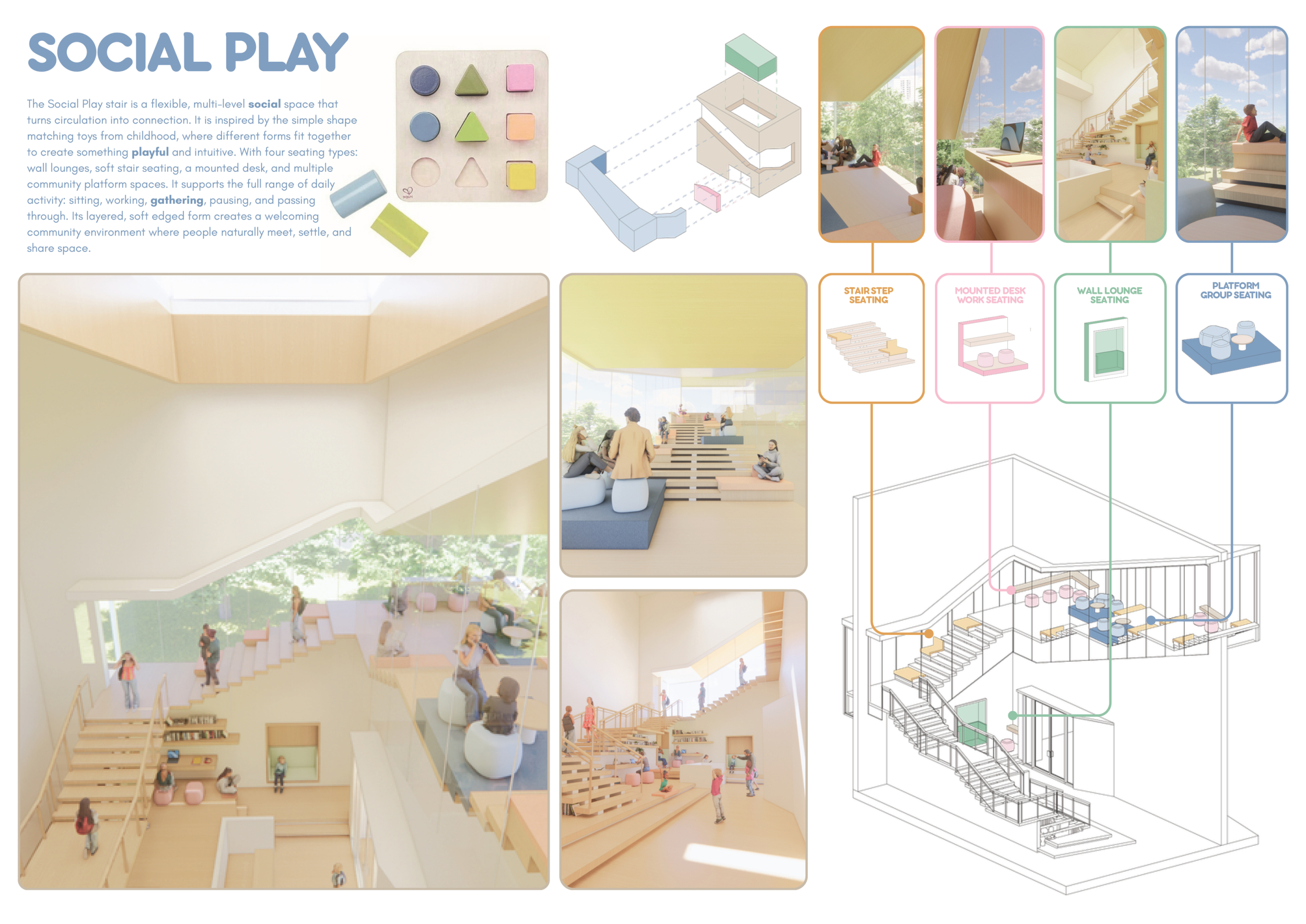
Social Play
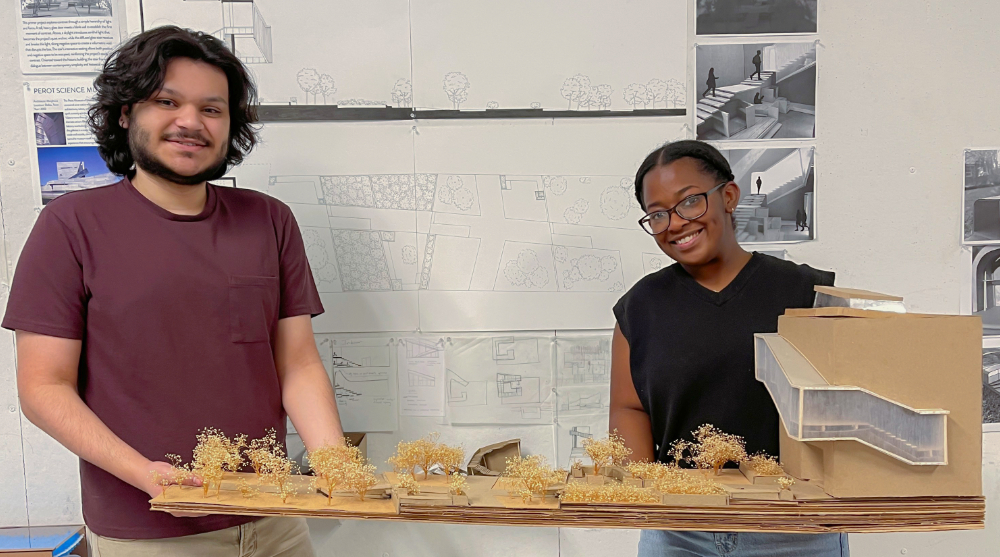
We participate in competitions because our university has emphasized not only the value of engaging in these opportunities, but also the discipline required to make rational, well‑informed decisions while keeping design and architecture at the forefront. These experiences challenge us to think critically, refine our process, and uphold the integrity of architectural thinking in every stage of development.
Read full interview
Jury feedback summary
“Social Play” reinterprets the staircase as a multi-level social environment where circulation, seating, work, gathering, and informal occupation are integrated into a single spatial system. Inspired by the geometry and color logic of children’s matching toys, the proposal organizes a series of modular interventions around a stepped circulation spine that expands into lounges, mounted desks, platform seating, and embedded resting areas.
The intention to connect the staircase layout with spatial articulation is highly appreciated in this proposal. The playfulness of the design is also clear in the visual presentation.
Niko Kapa / Buildner guest jury
Studio Niko Kapa, United Kingdom
The idea of transforming circulation into a place for social interaction is interesting. However, the proposal would benefit from a greater sense of expansion, such as generating new uses or different spatial qualities through the combination of forms. Rather than simply placing each element side by side, the proposal would have been stronger if new experiences emerged from the relationships between them.
Shinya Sueyoshi / Buildner guest jury
GAMMA Architects, Japan
This concept has a clear drive and holistic concept but has a few misses and weak links in its execution. At its essence, it is a fairly simple, straightforward stair. What the concept suggests is primarily programming the stair with diverse functions. The Wall Lounge seat, for example, has little relationship to the stair itself. I would challenge this scheme to push the concept further by allowing the stair itself to react, pushing and pulling in direct relationship with its program.
Gary Polk / Buildner guest jury
Bjarke Ingels Group, United States
This staircase design has a clear concept and a concise composition, demonstrating a strong sense of logic and order in its spatial organization. The design introduces various resting areas and functional modules, enriching the user experience and adding spatial layers. At the same time, the use of vivid color language creates a warm and lively atmosphere throughout the space, enhancing its sense of accessibility and approachability.
Zehua Zhang / Buildner guest jury
KPF, United States
Buildner's commentary, recommendations and techniques review
Order your review here
The presentation communicates the project’s central idea clearly through a playful visual language and a coherent combination of perspectives, diagrams, and sectional axonometric drawings. The use of color effectively distinguishes different seating types and programmatic interventions, reinforcing the accessible and community-oriented atmosphere of the proposal.
-
N/A Linework
-
N/A Quality of drawings
-
N/A Balance of color
-
N/A Layout
-
N/A Hierarchy
-
N/A Annotation
-
N/A Text
-
N/A Clarity of story
-
N/A Clarity of diagrams
-
N/A Quality of overall presentation
Honorable mentions











Shortlisted projects
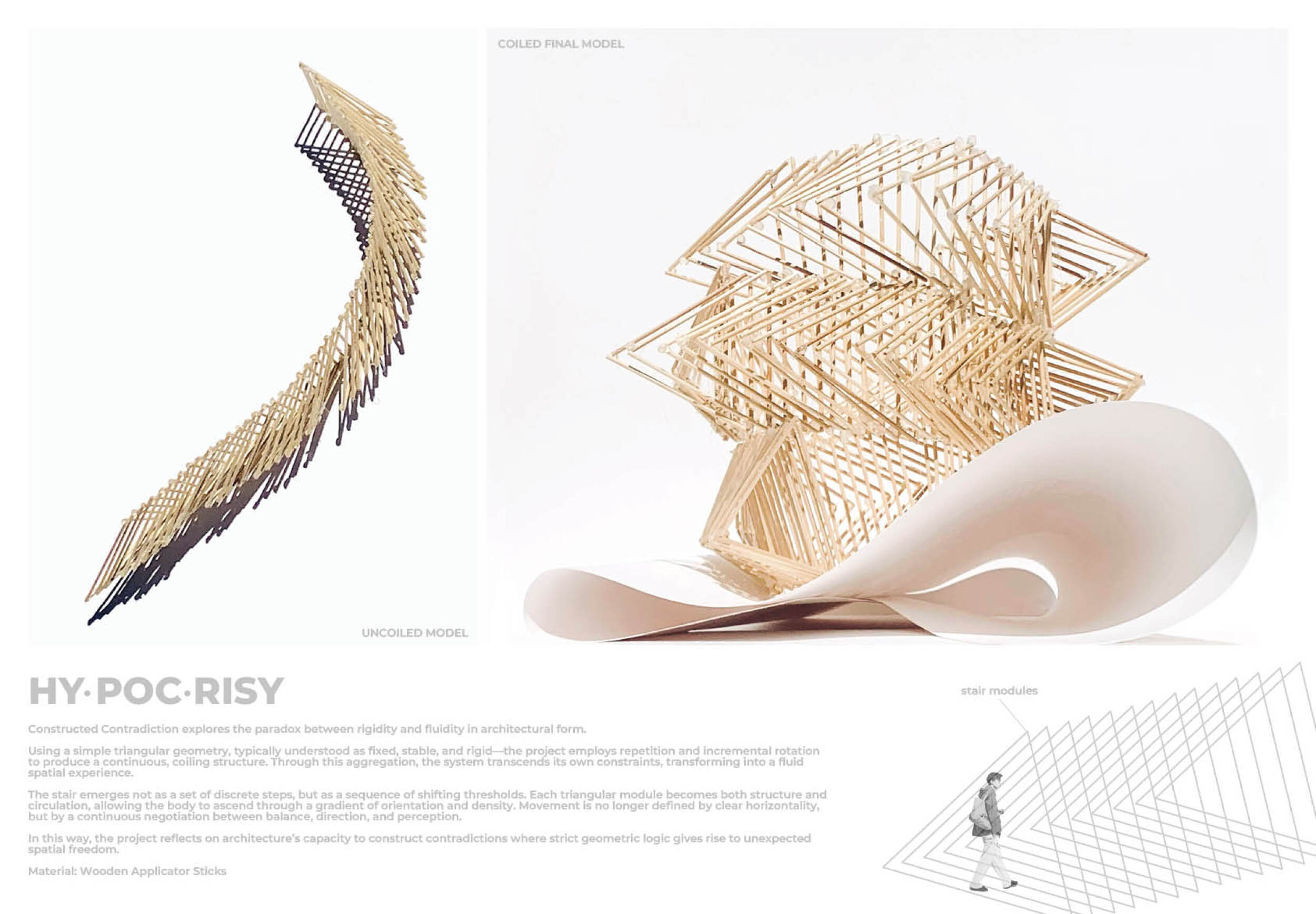
Hypocrisy
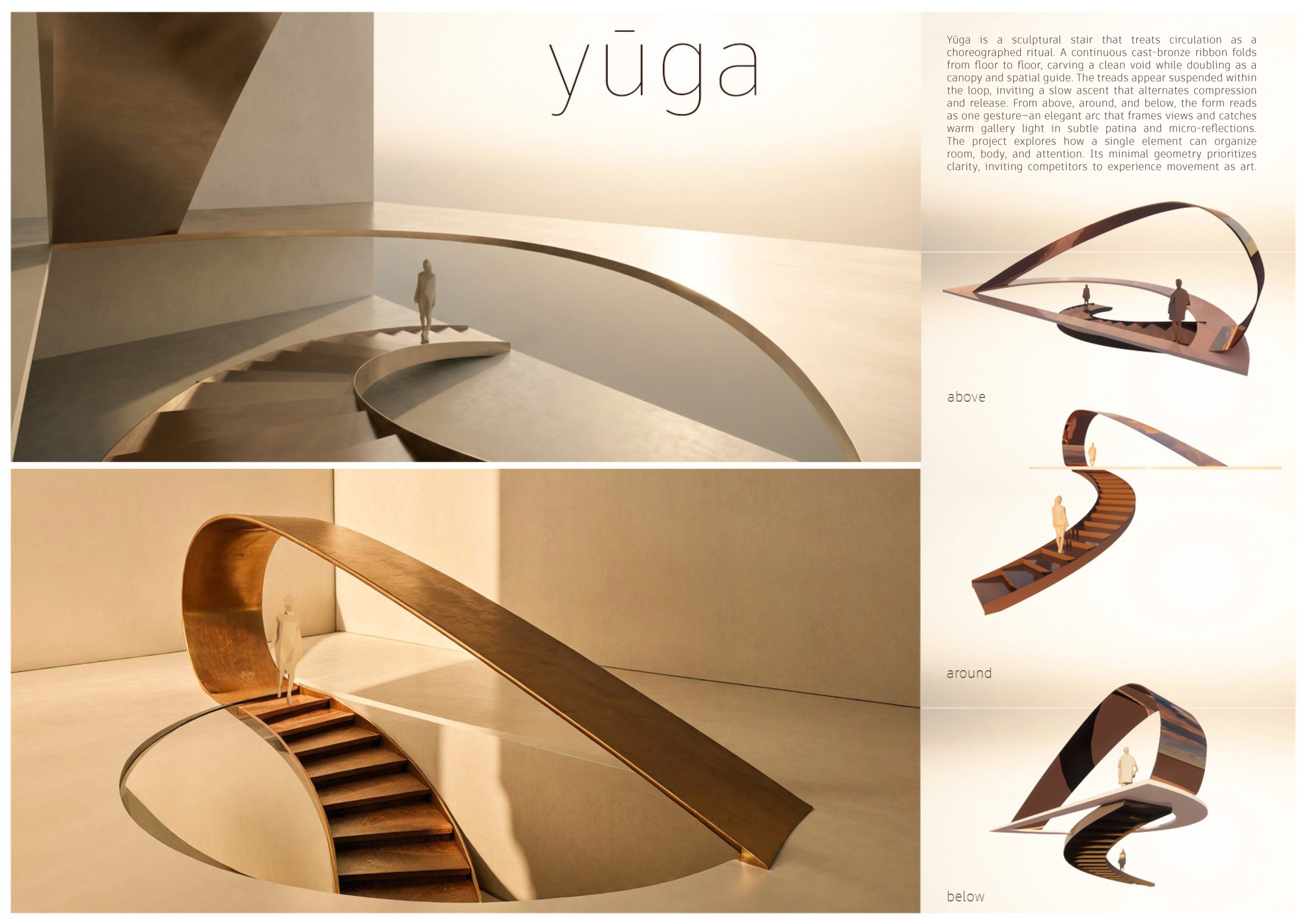
Yūga
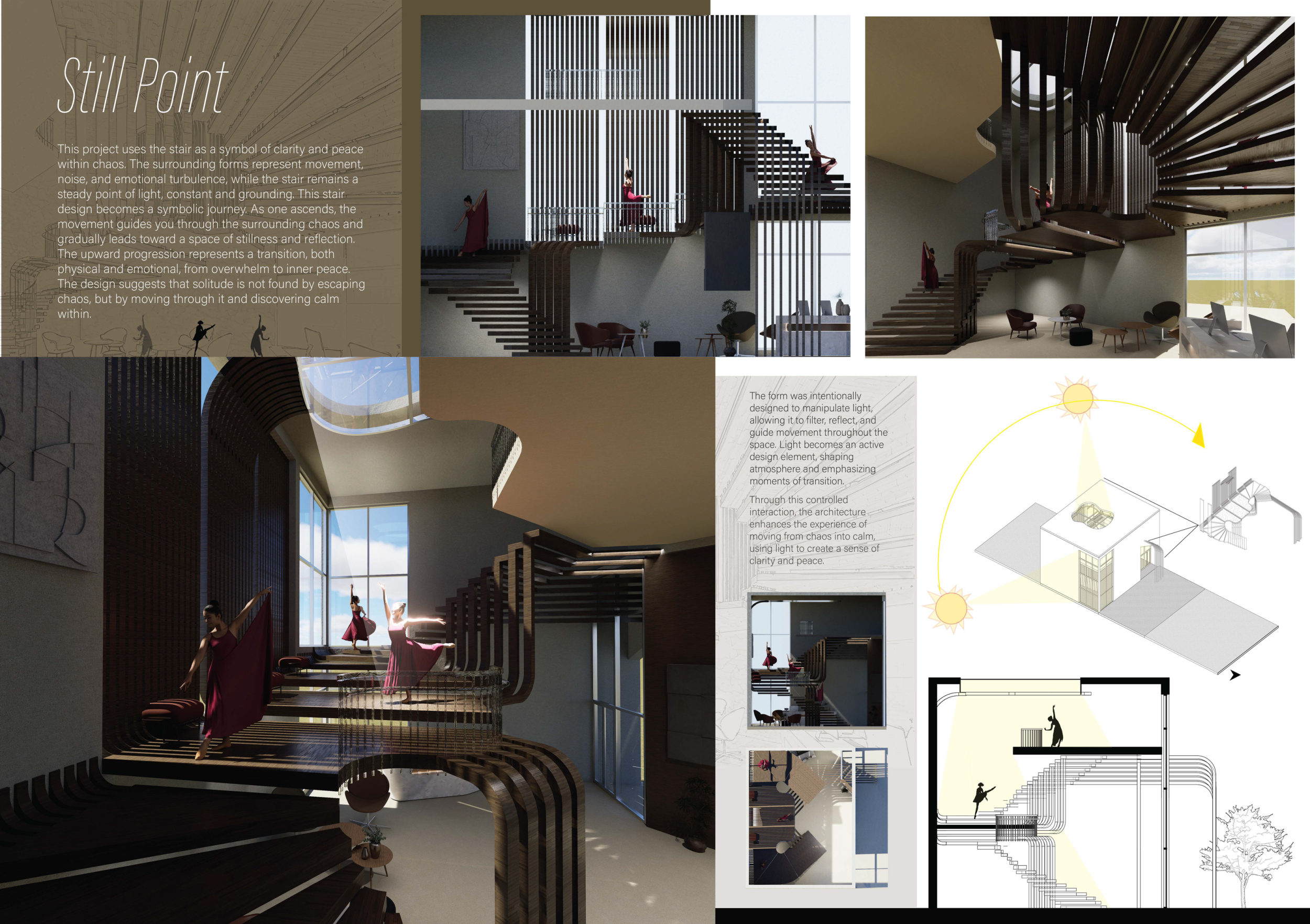
Still Point
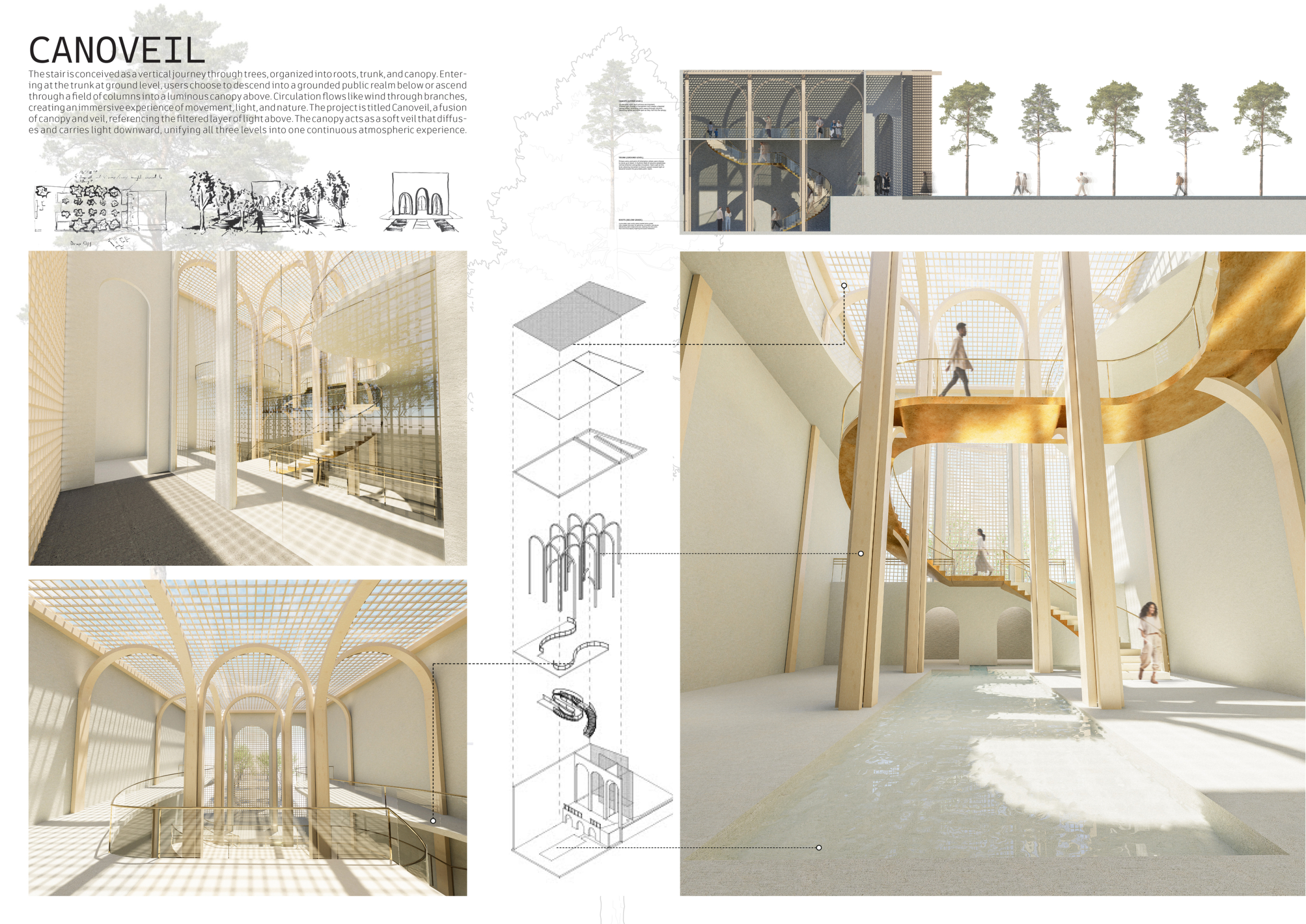
Canoveil
A stair, a spiral, or a park
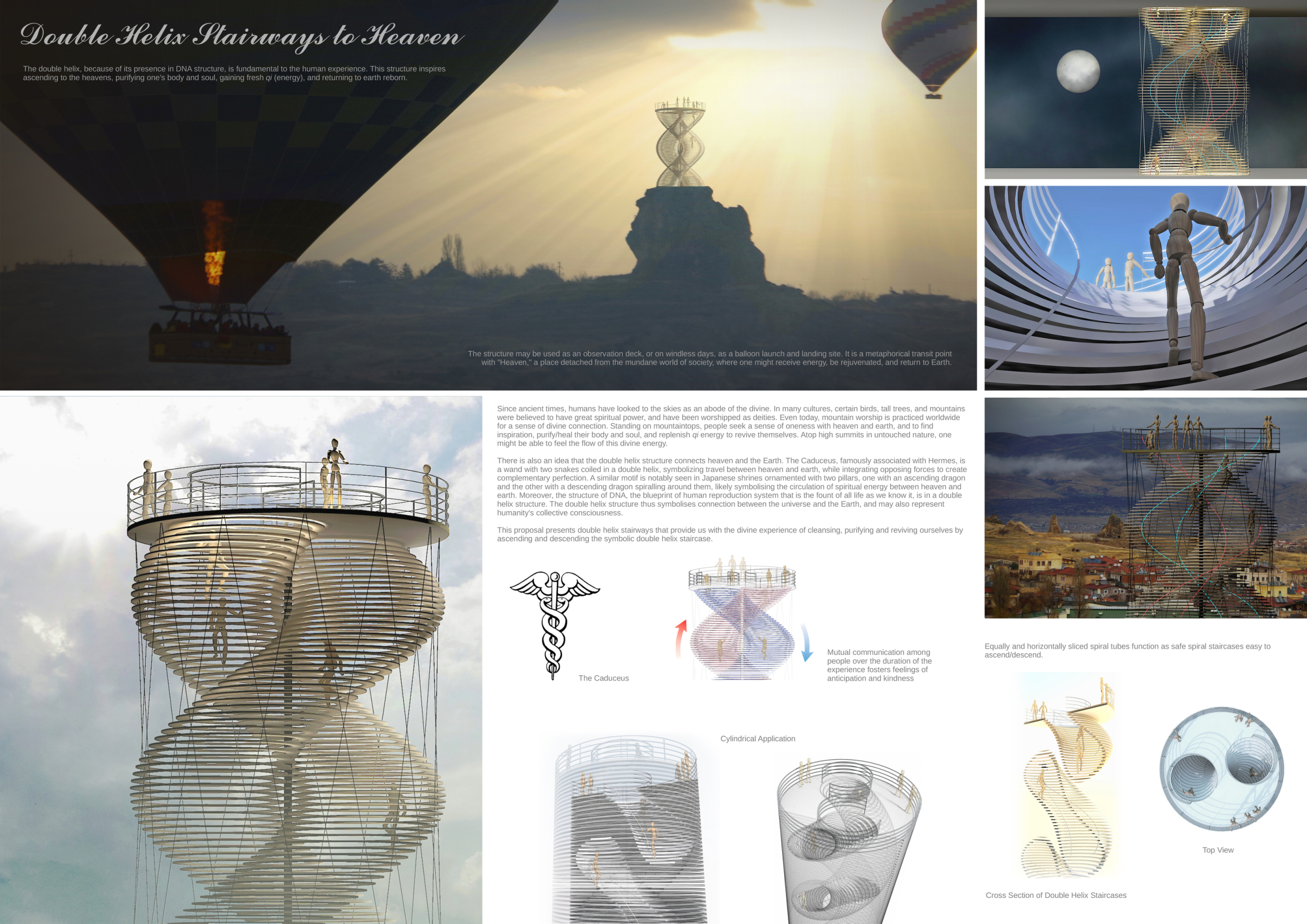
Double Helix Stairways to Heaven

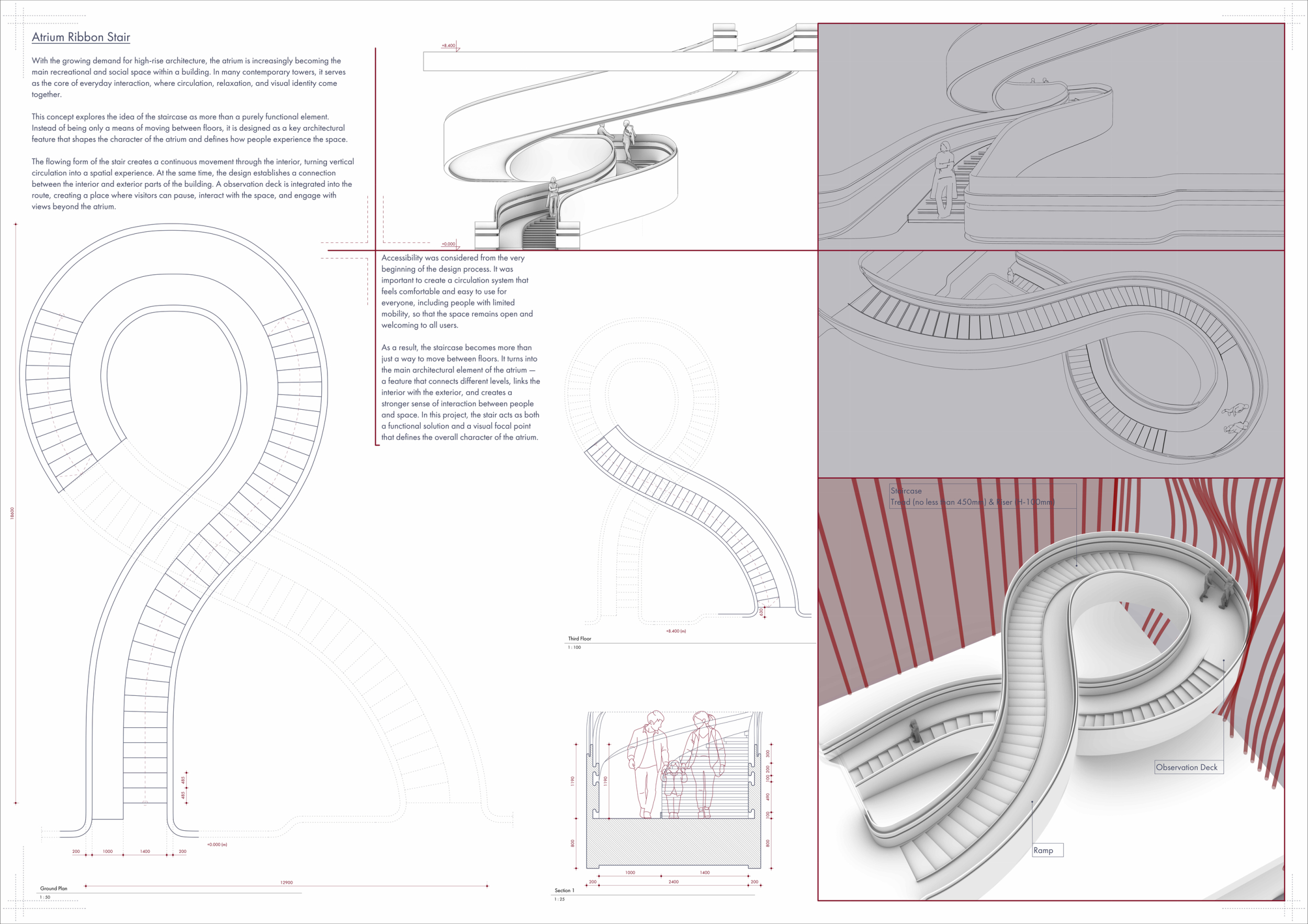
Atrium Ribbon Stair
LIGHT BREAKS THE MASS
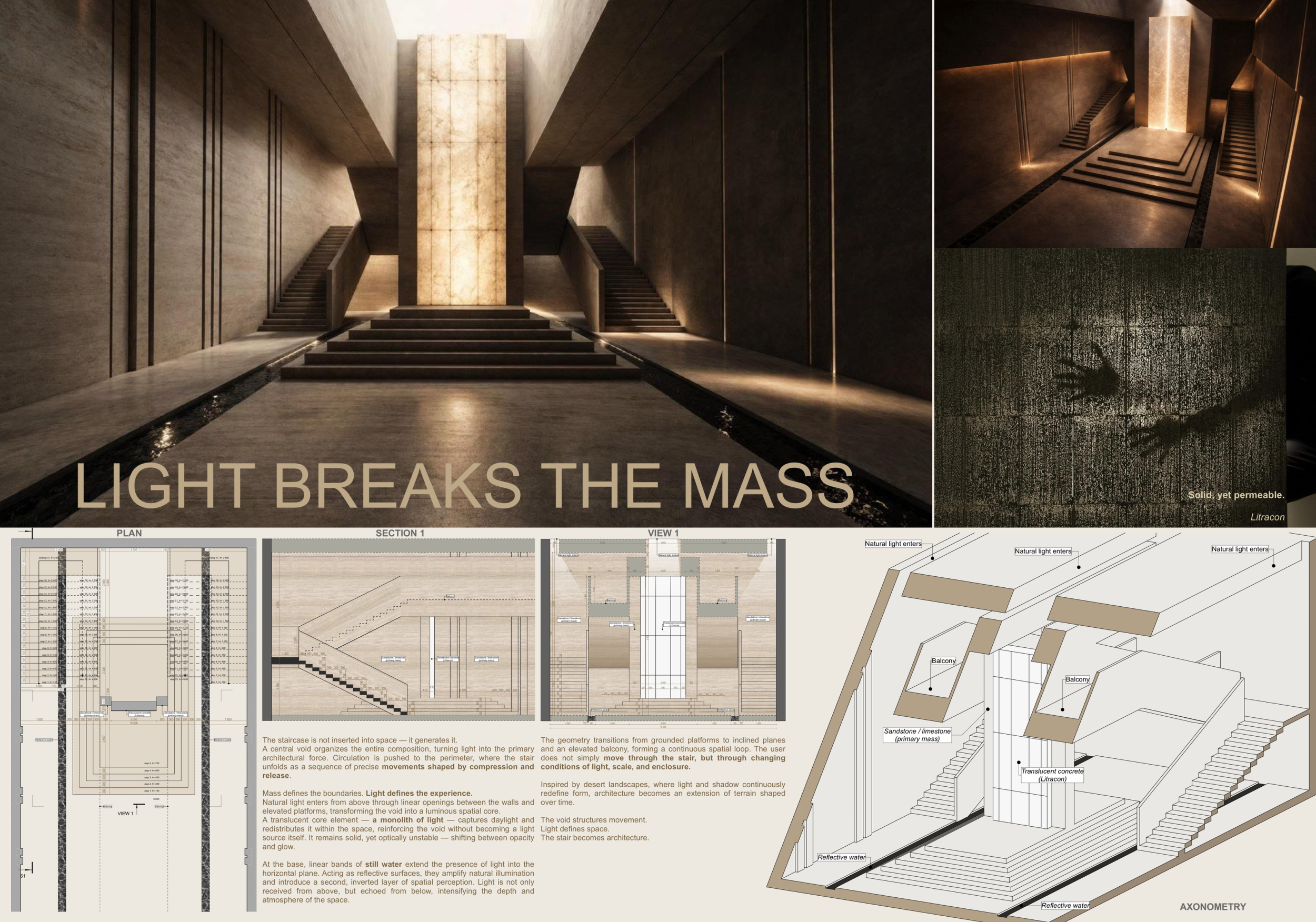
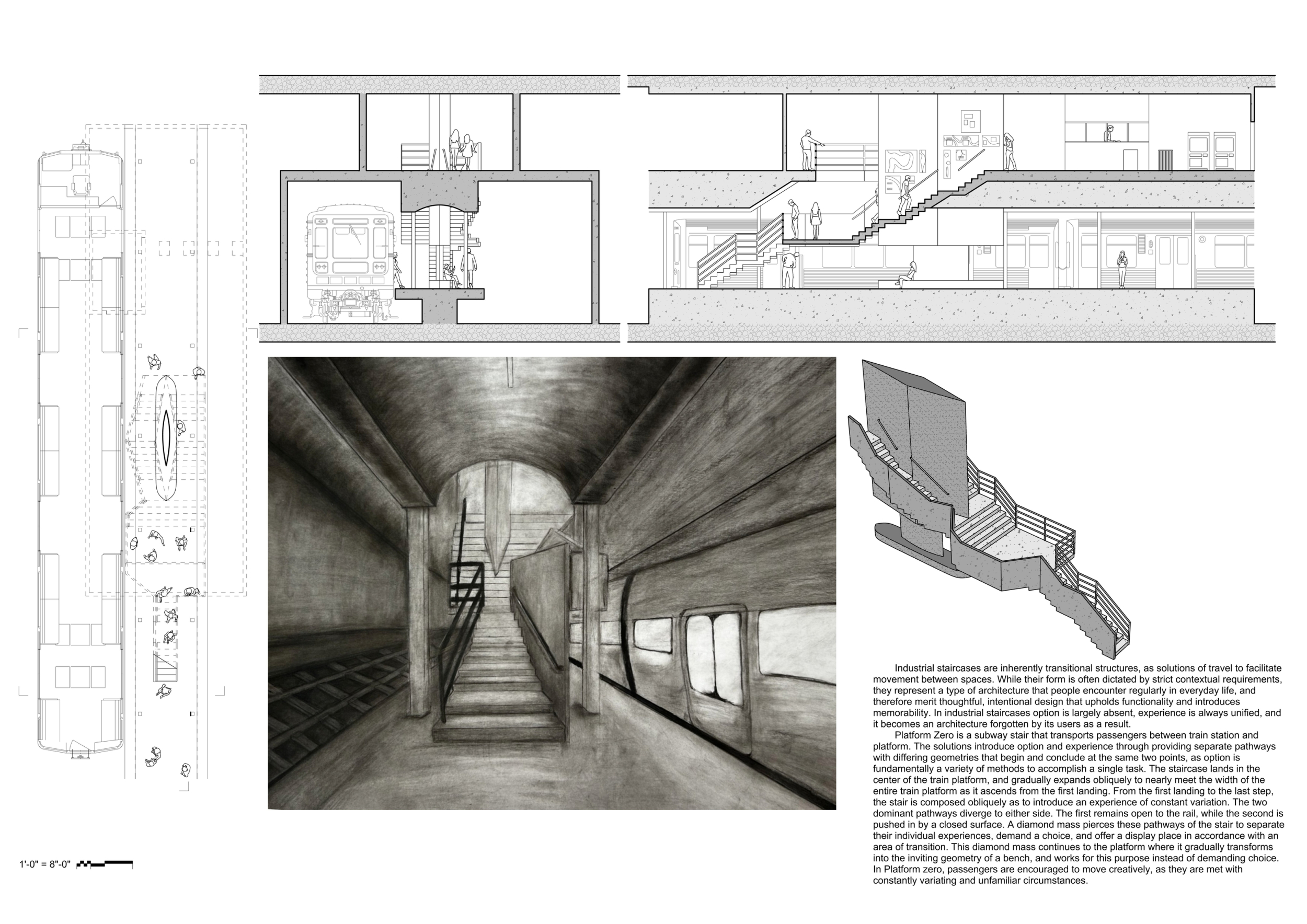
Platform Zero
Social Play
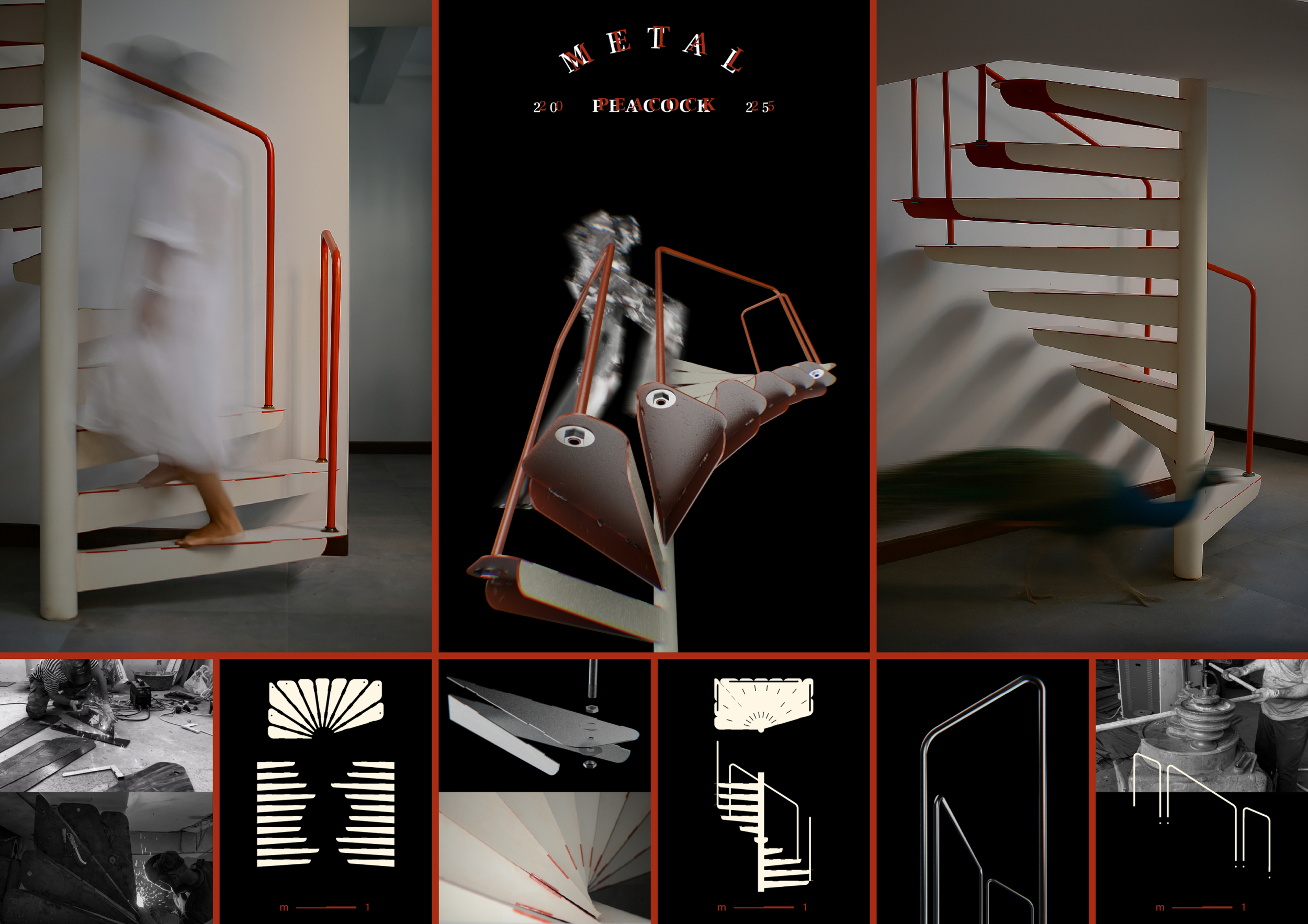
Metal Peacock

(St)Aircase - From Scrap to Step
Weight of Memory
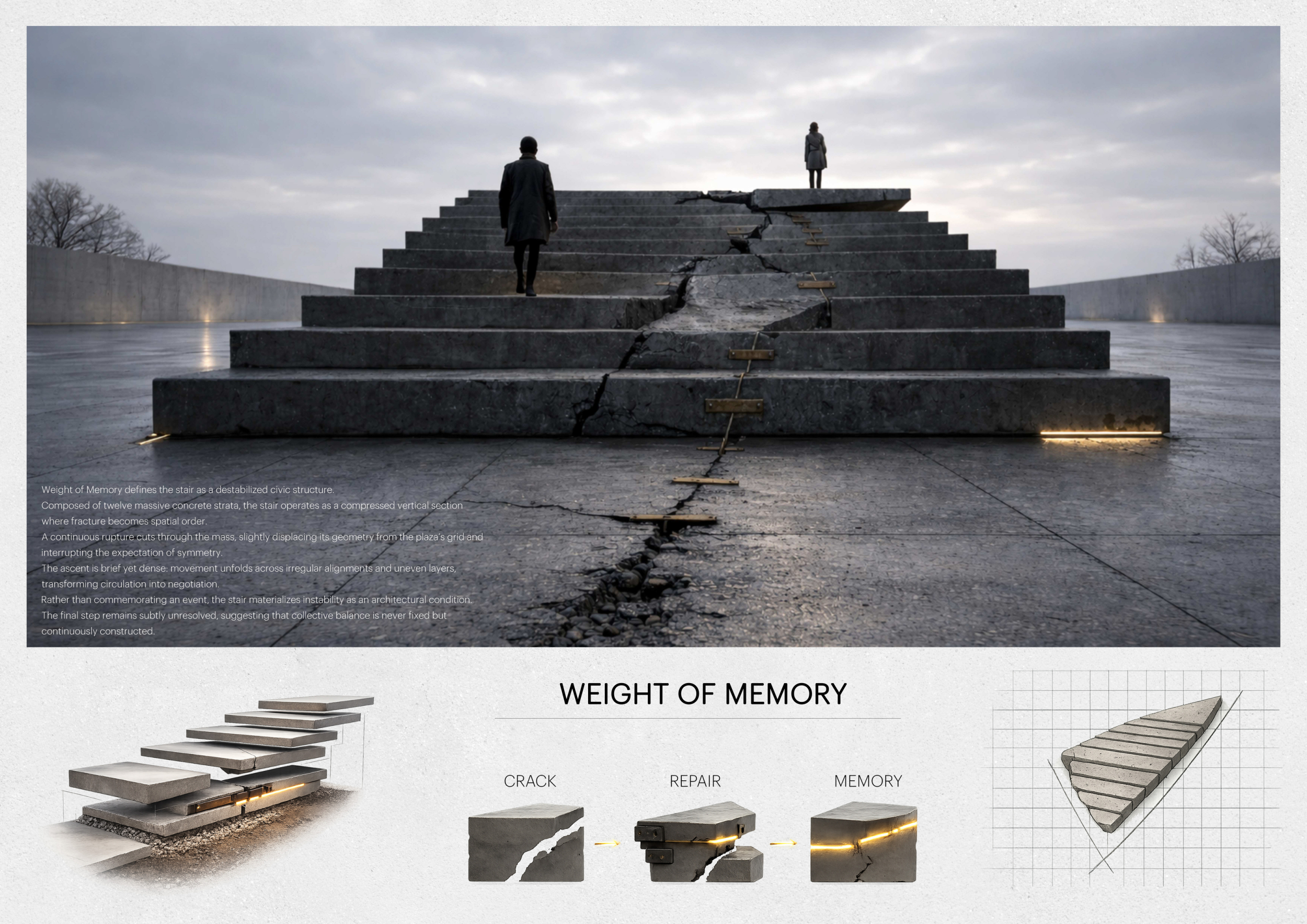
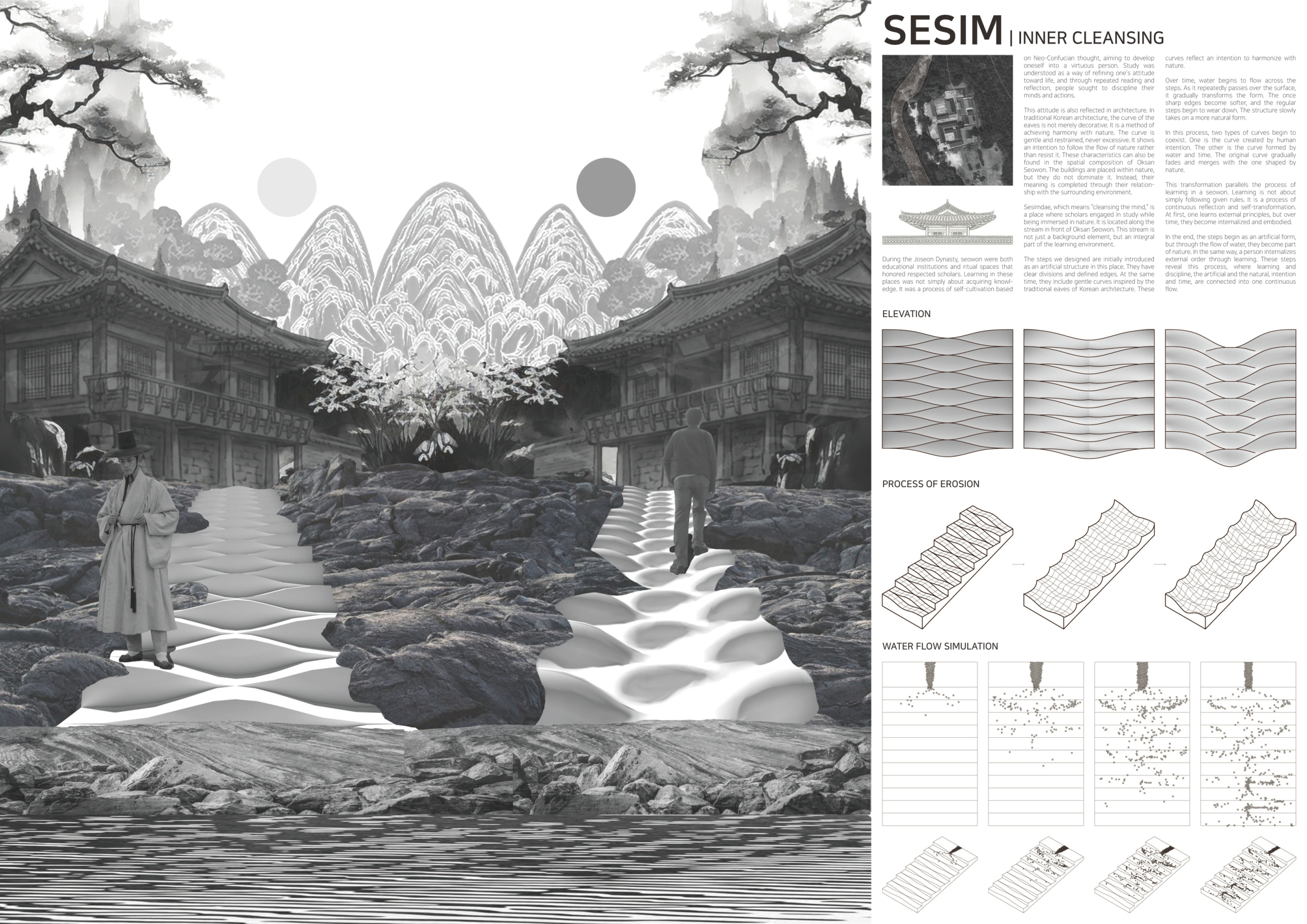
SESIM_Inner cleansing
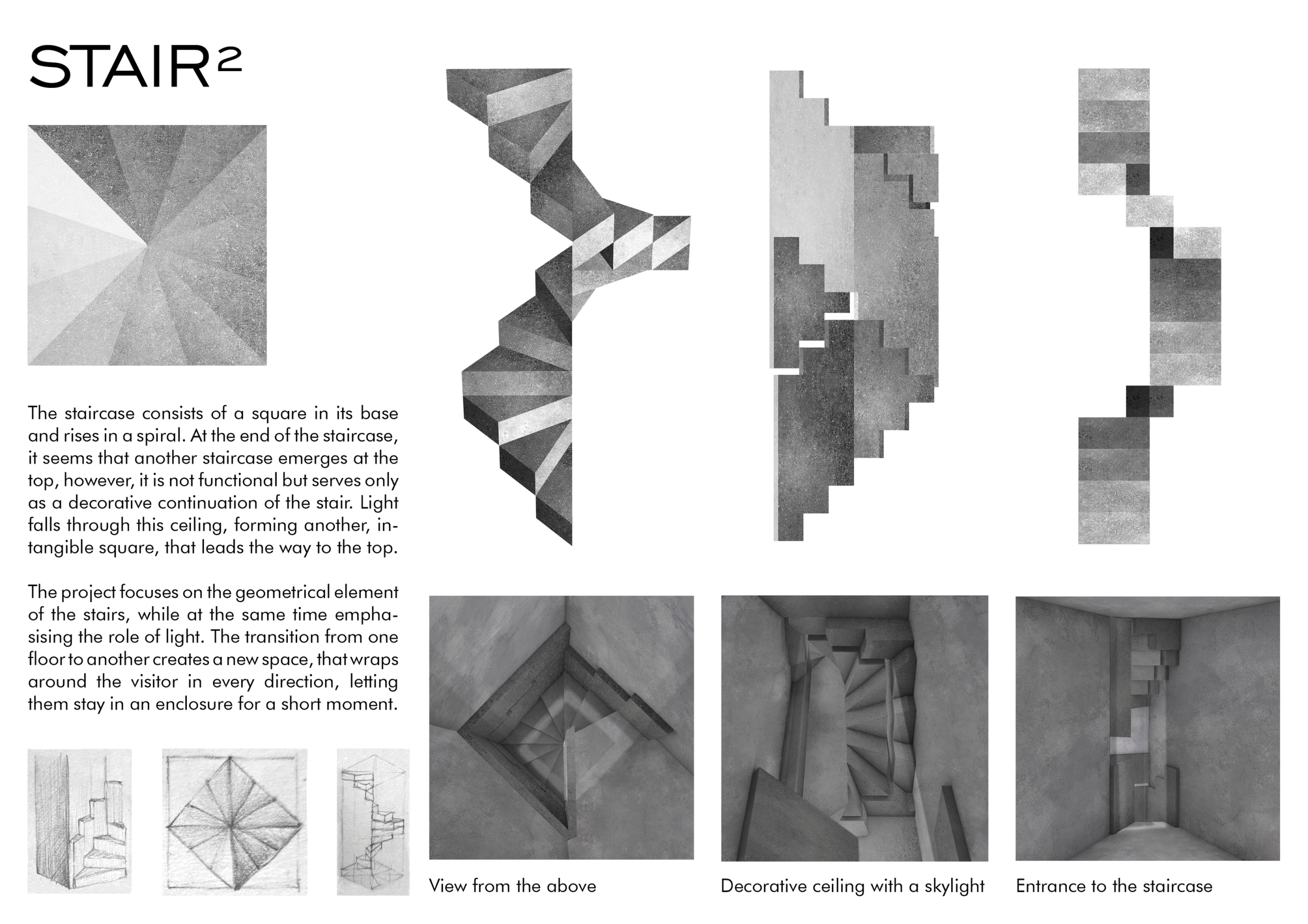
stair²
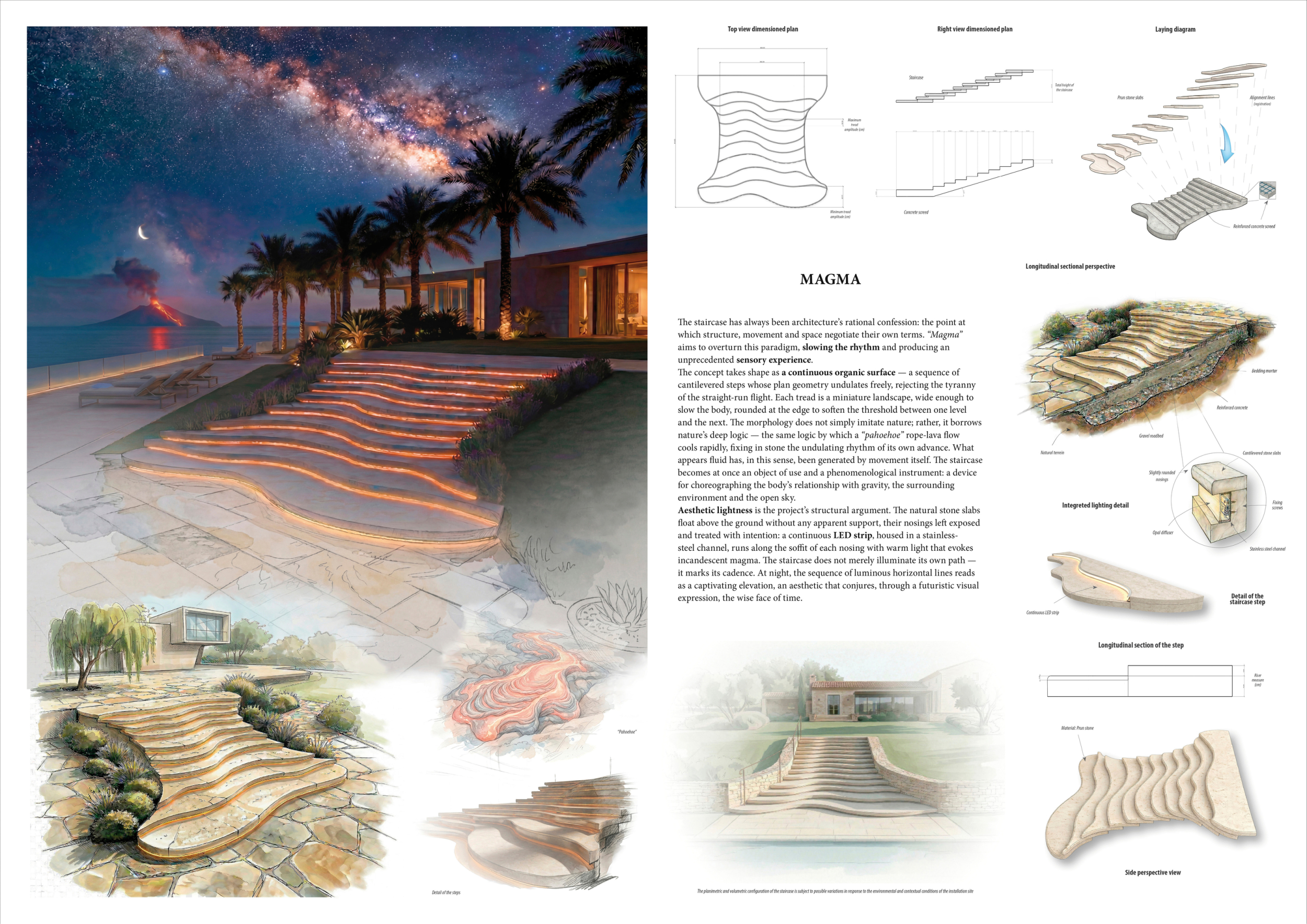
Magma
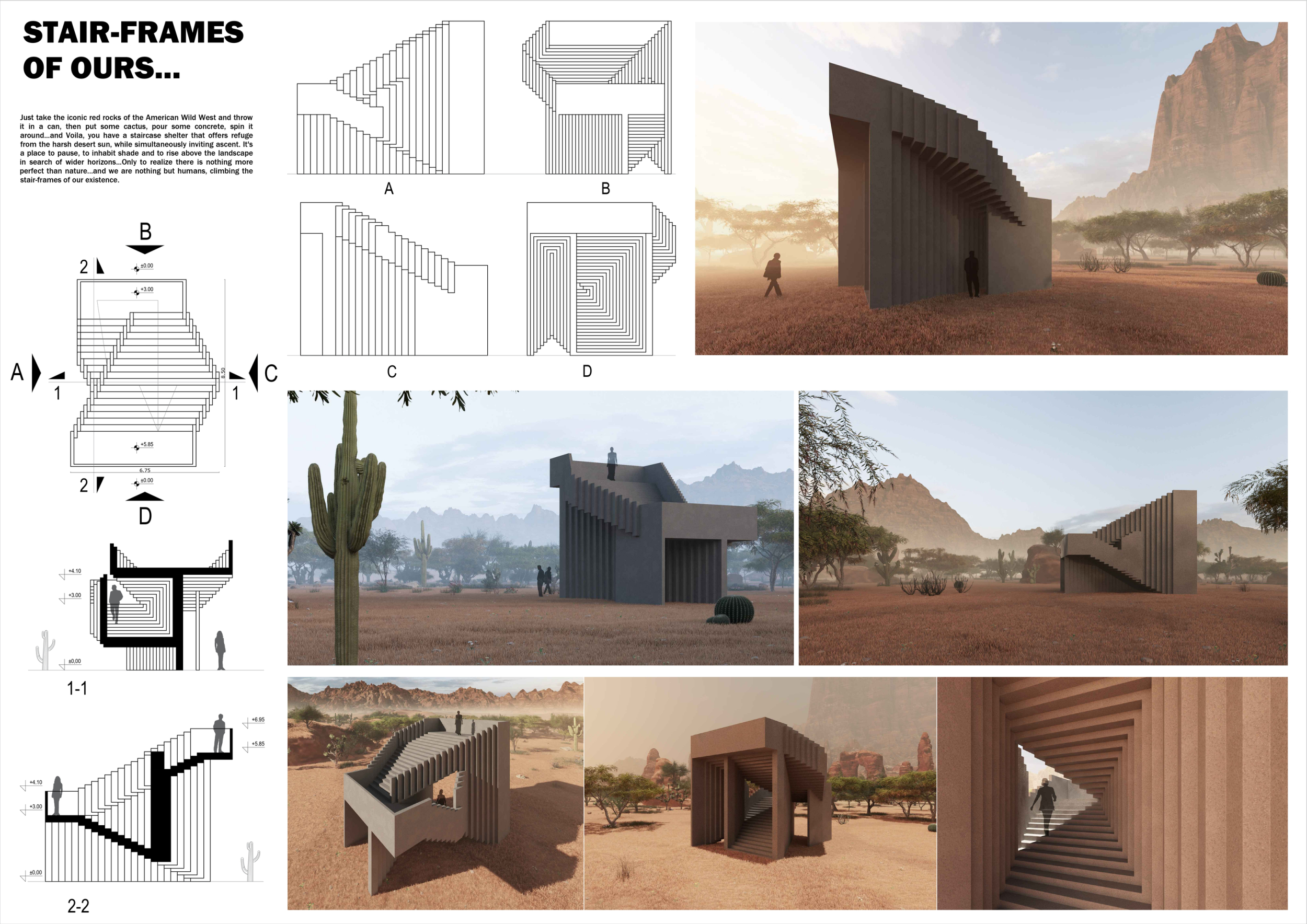
Stair-frames of ours

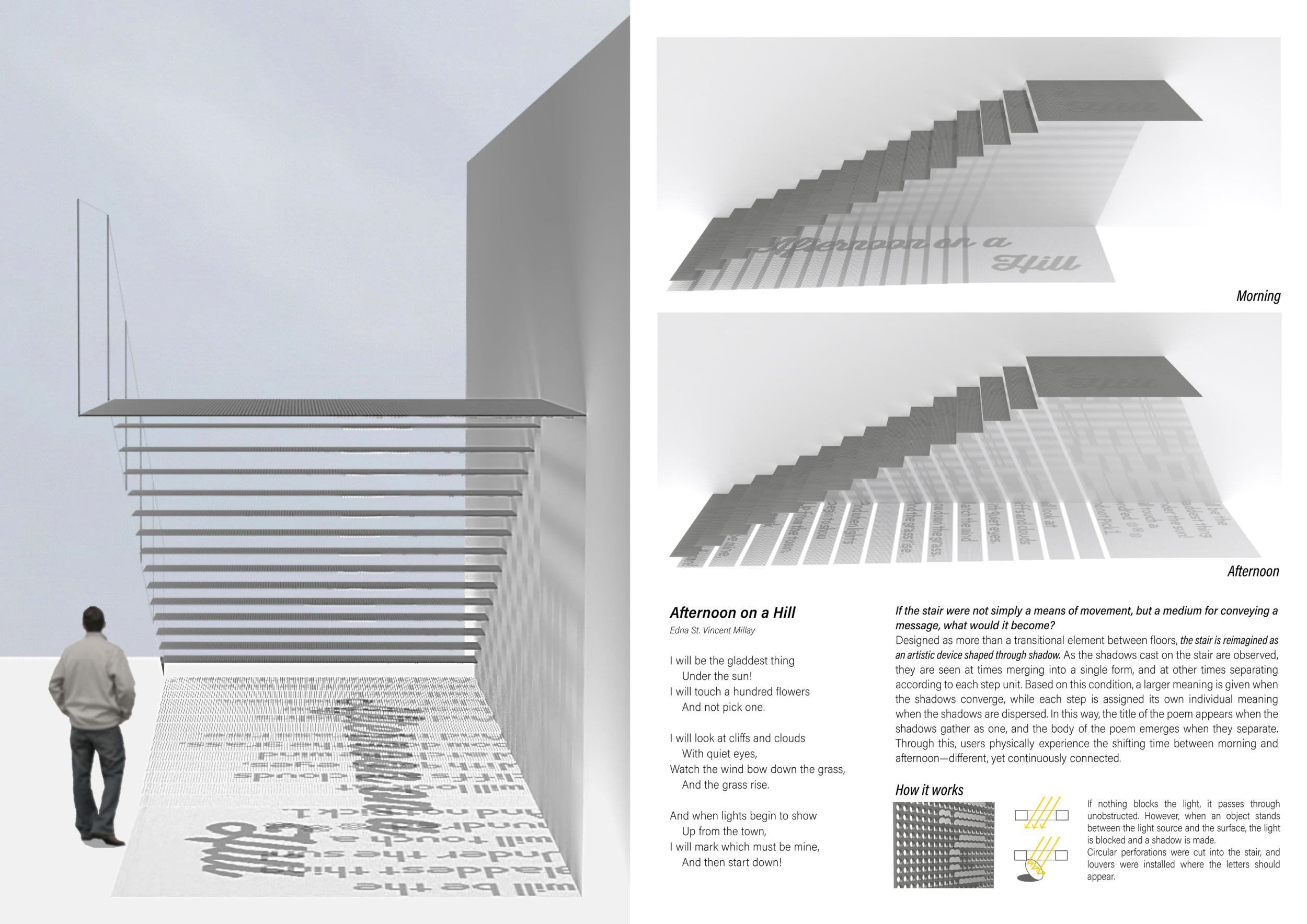
Shadow + Stair
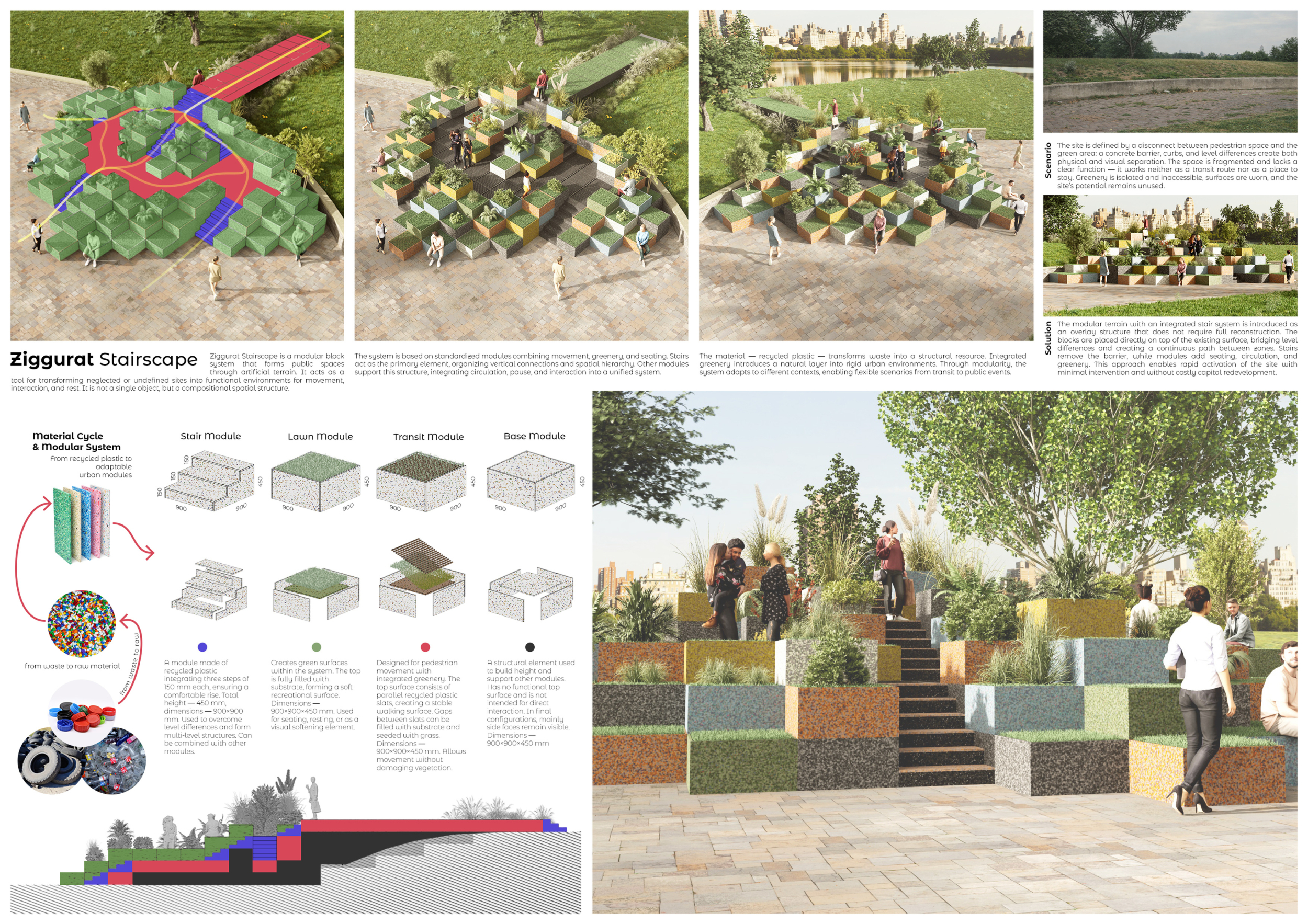
Ziggurat Stairscape
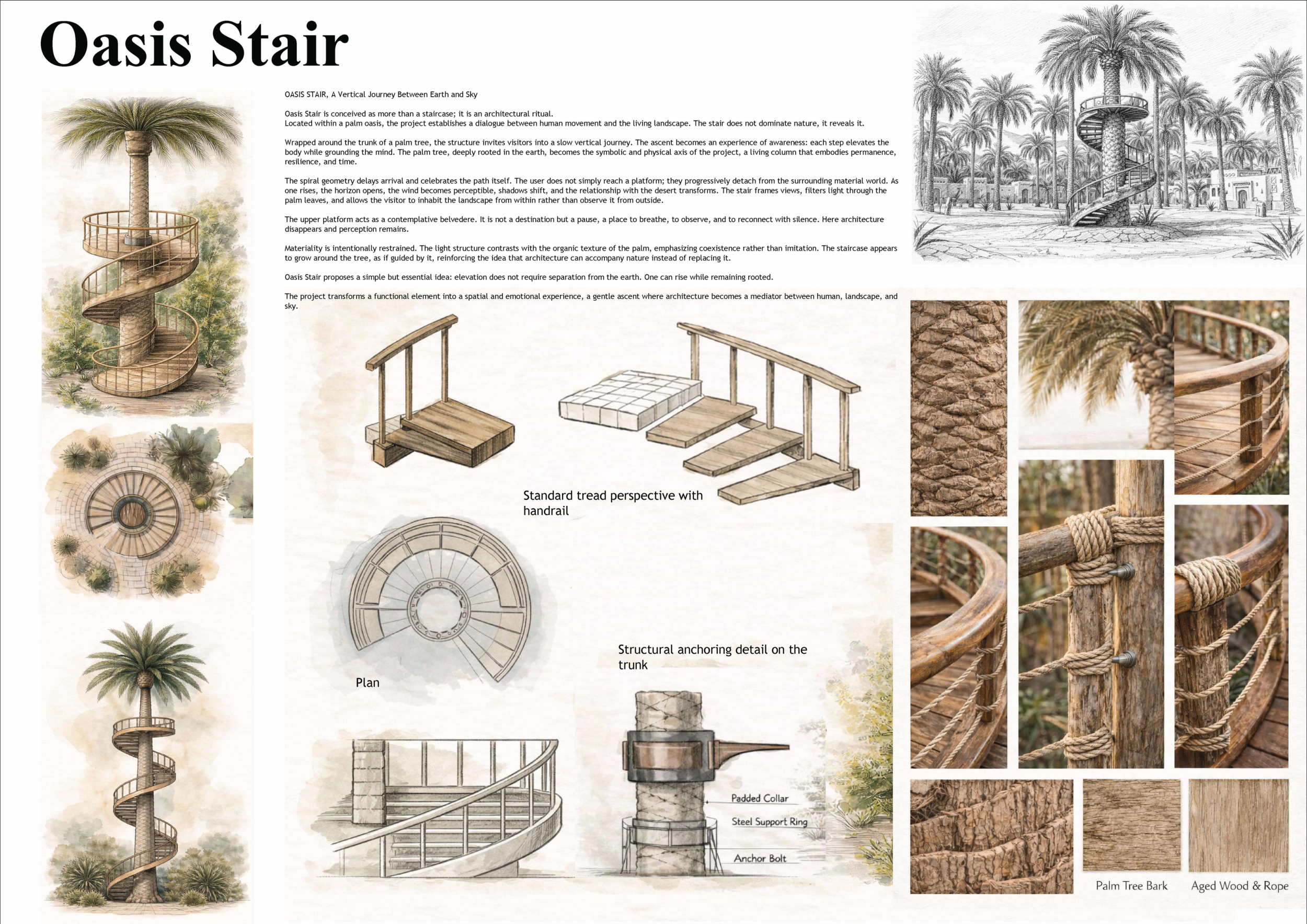
Oasis Stair

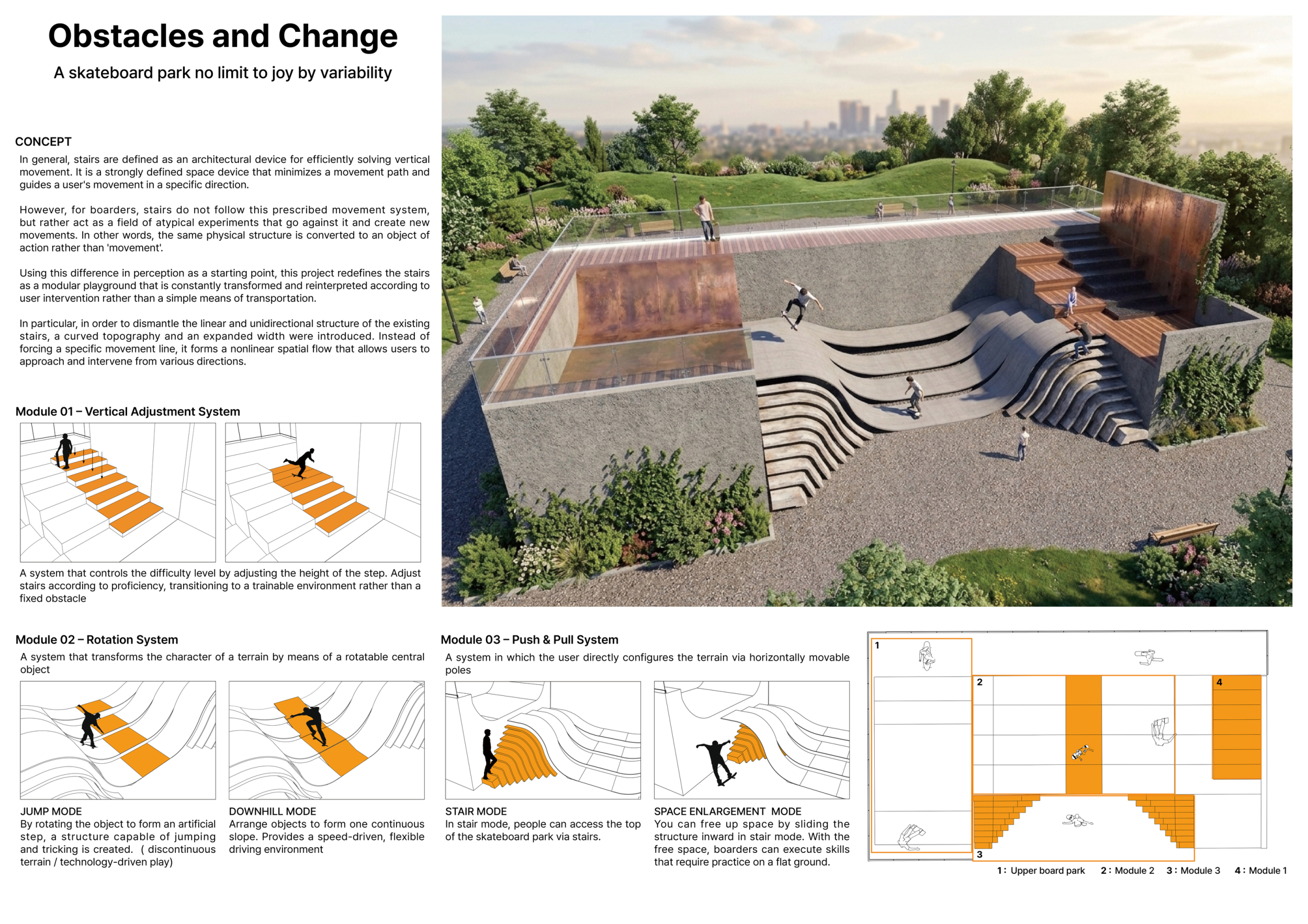
Obstacles and Change
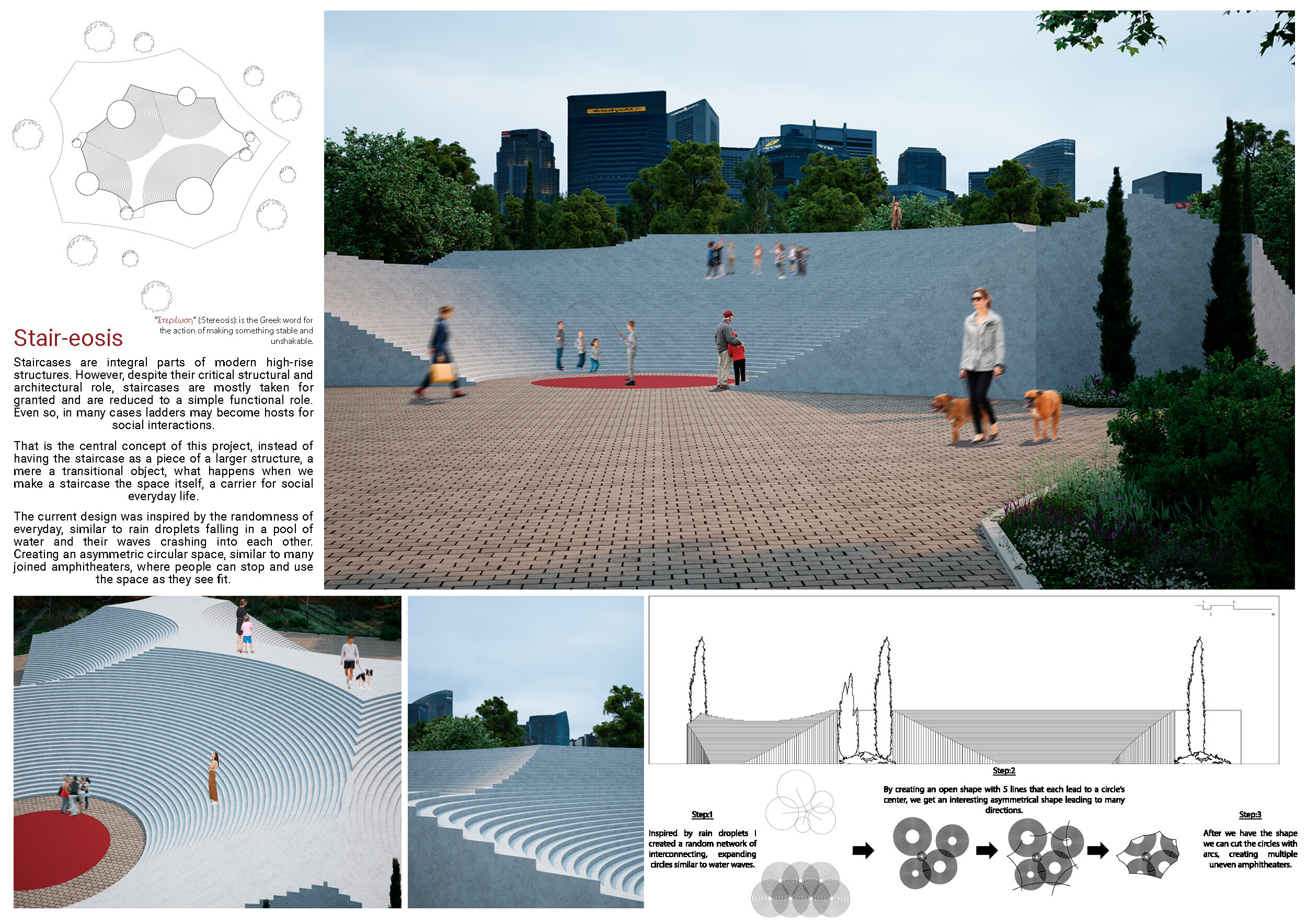
Stair-eosis

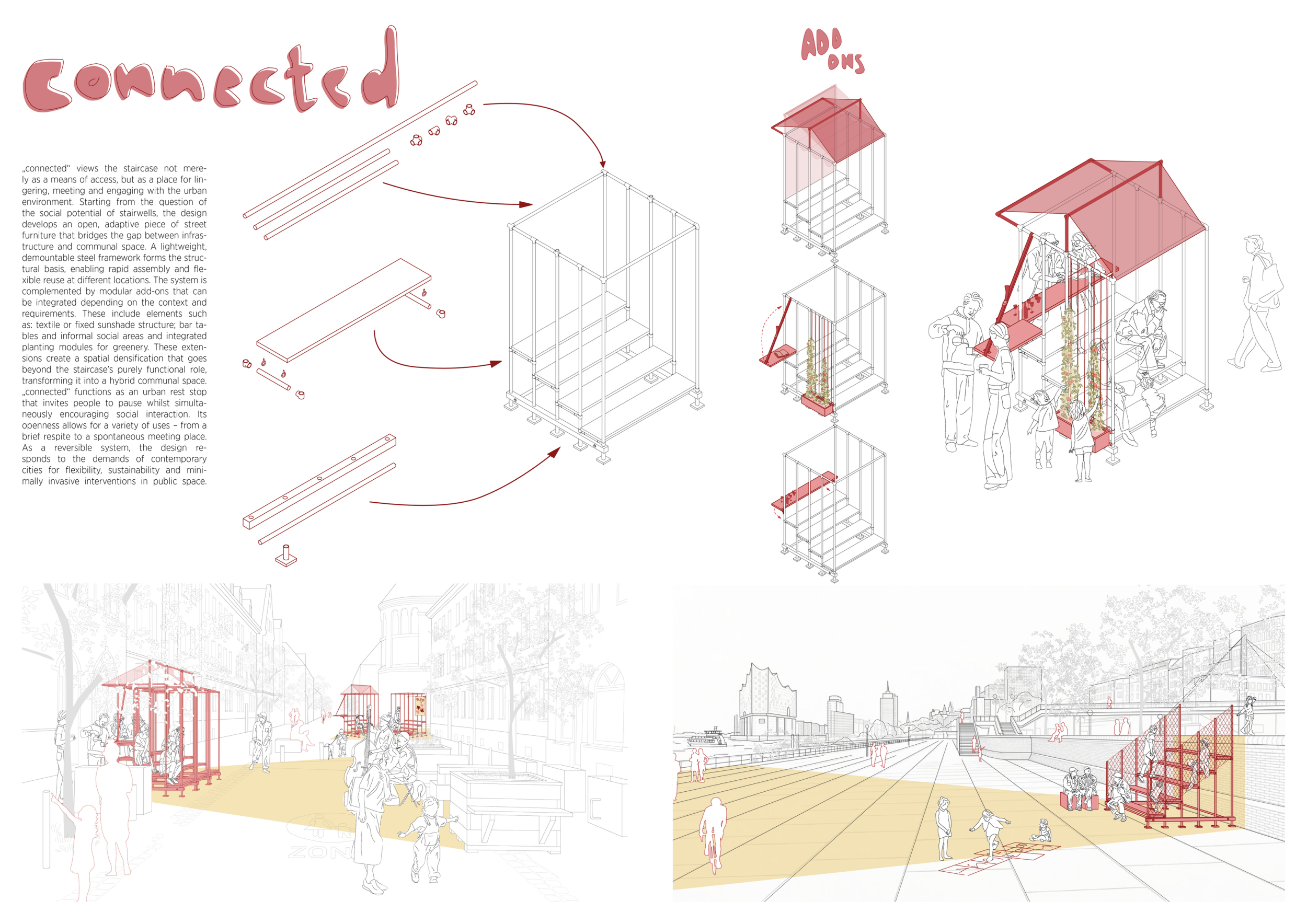
connected
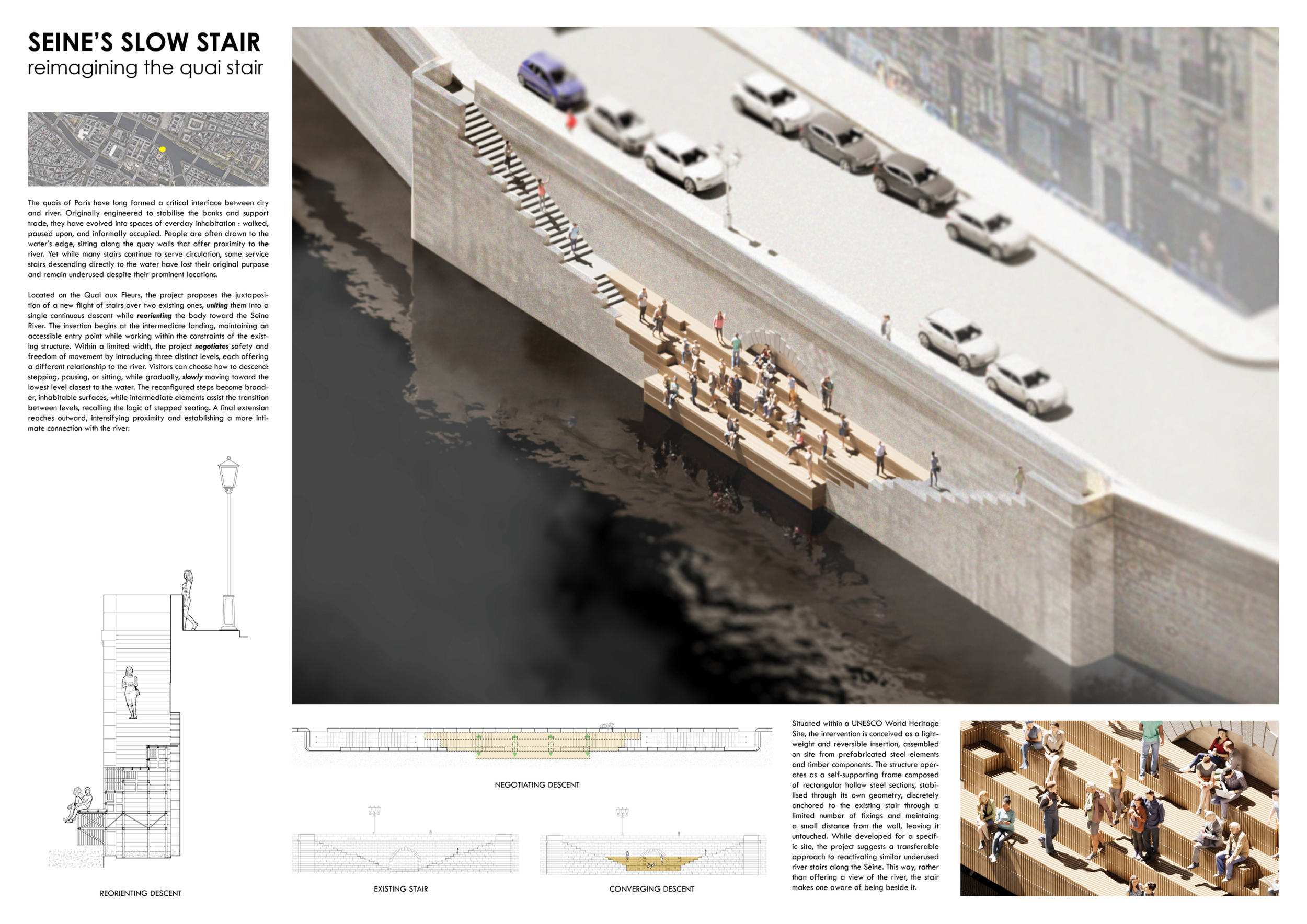
Seine's Slow Stair
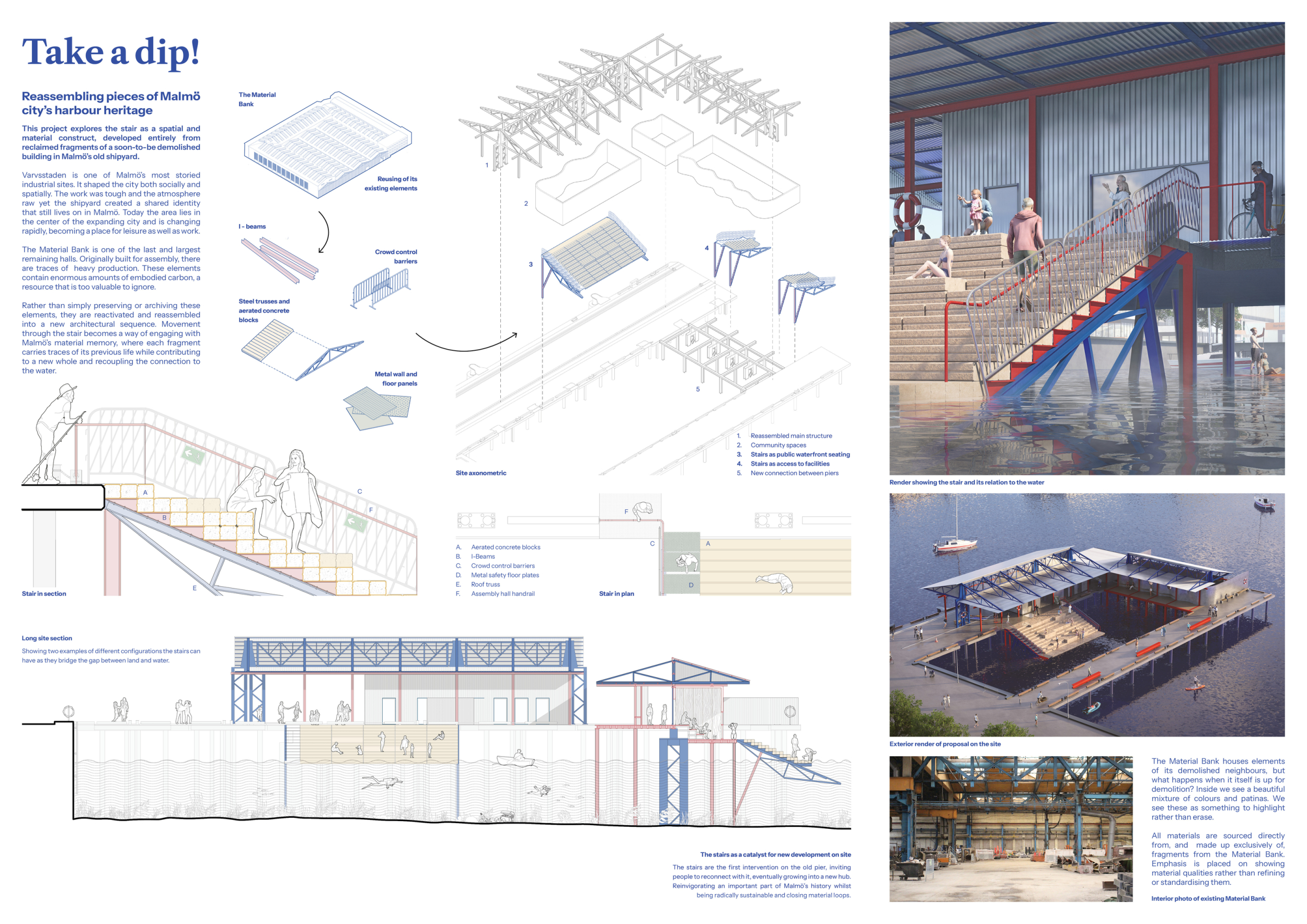
Take a dip! Reassembling pieces of Malmö city’s harbour heritage

AQUALIZER: The Abacus Stairs
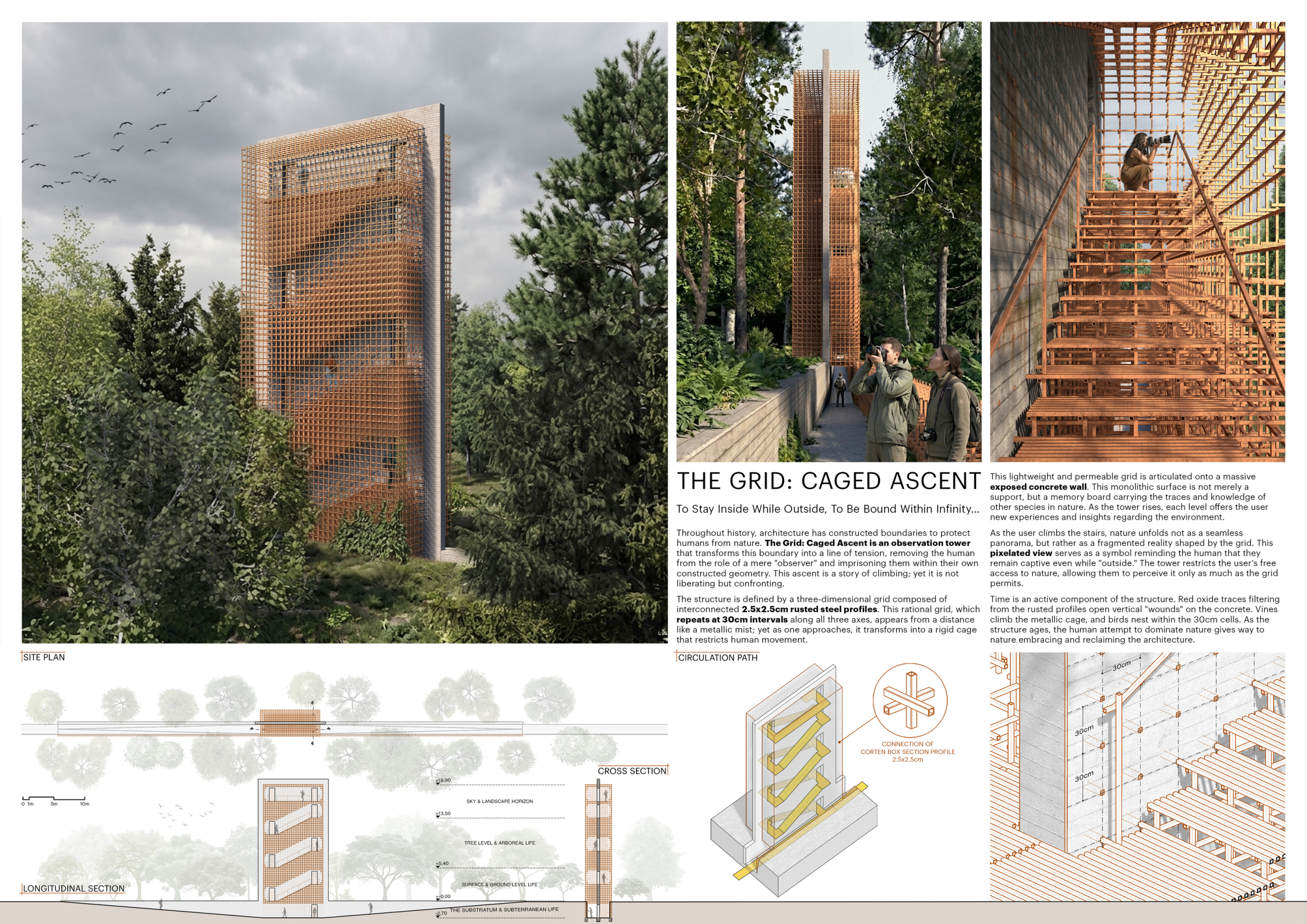
THE GRID: Caged Ascent
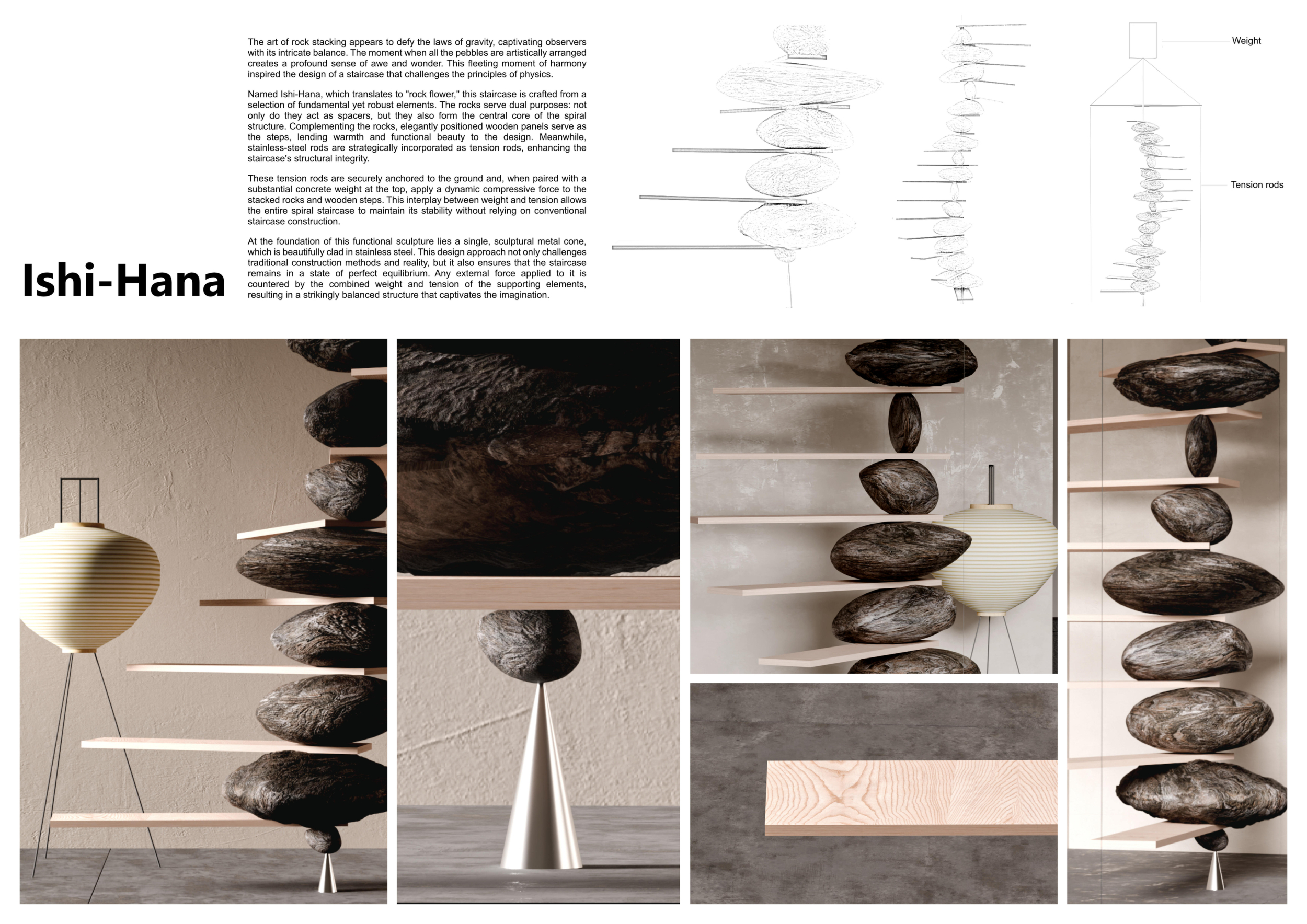
Ishi-Hana
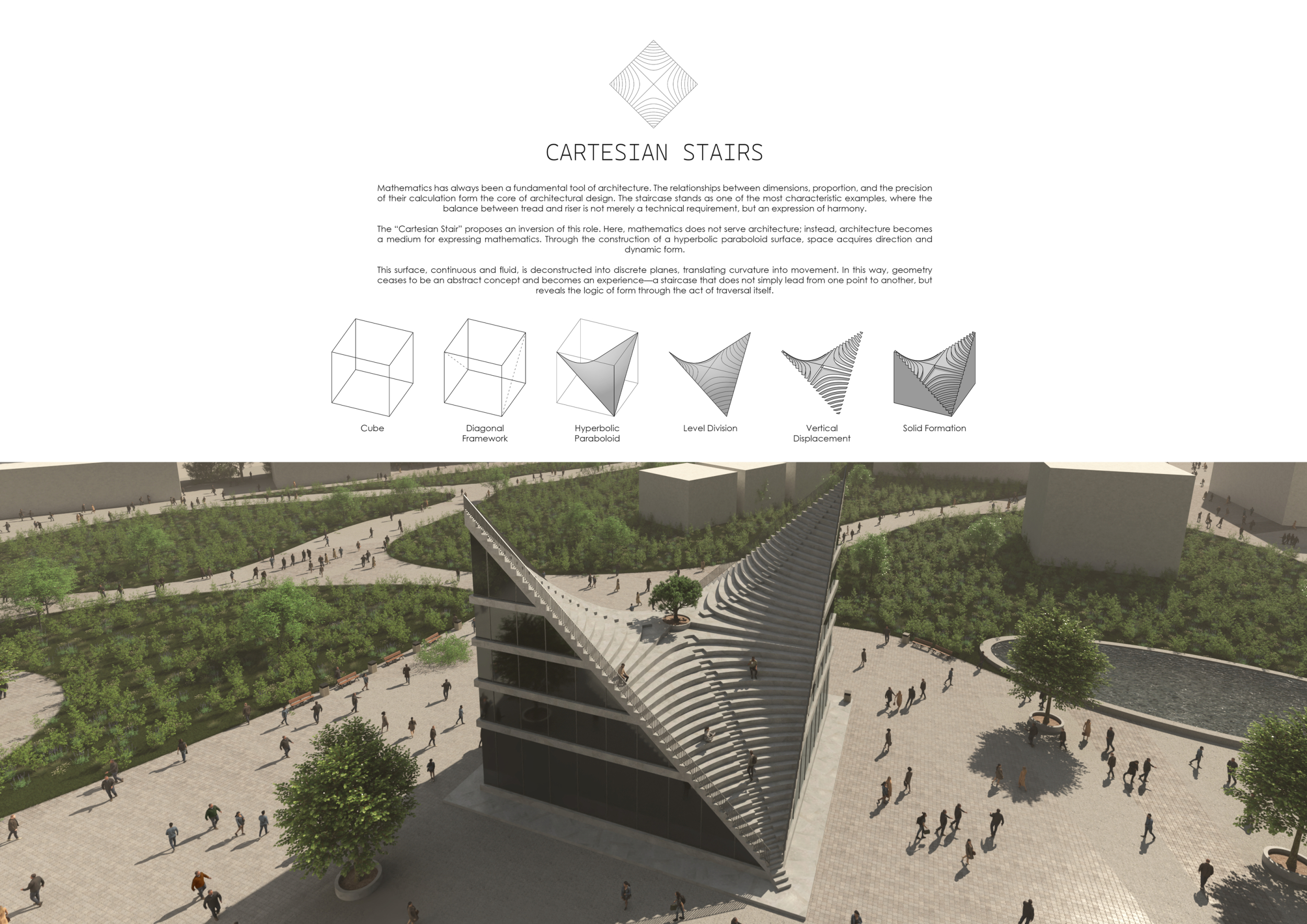
CARTESIAN STAIRS
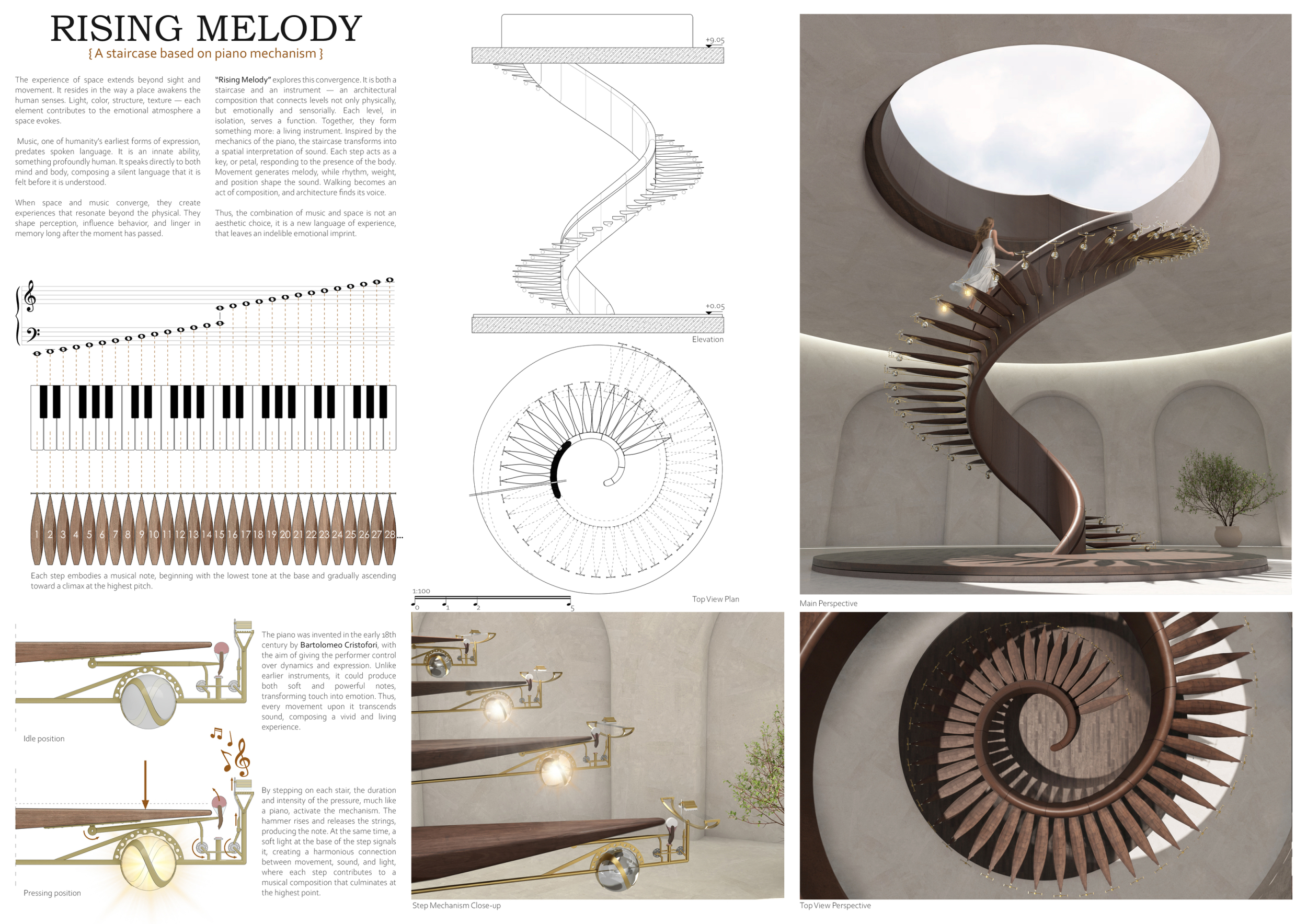
RISING MELODY
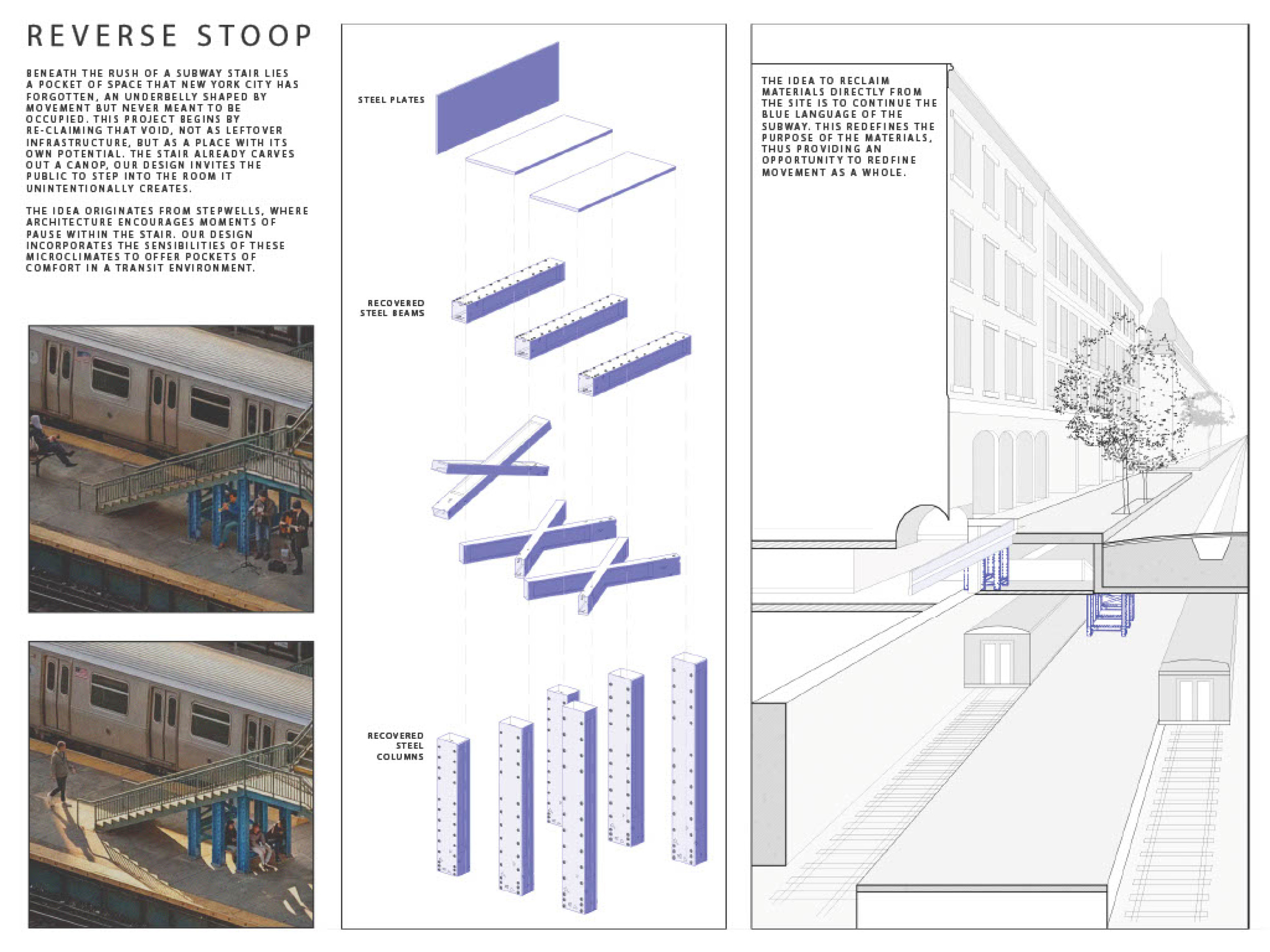
REVERSE STOOP
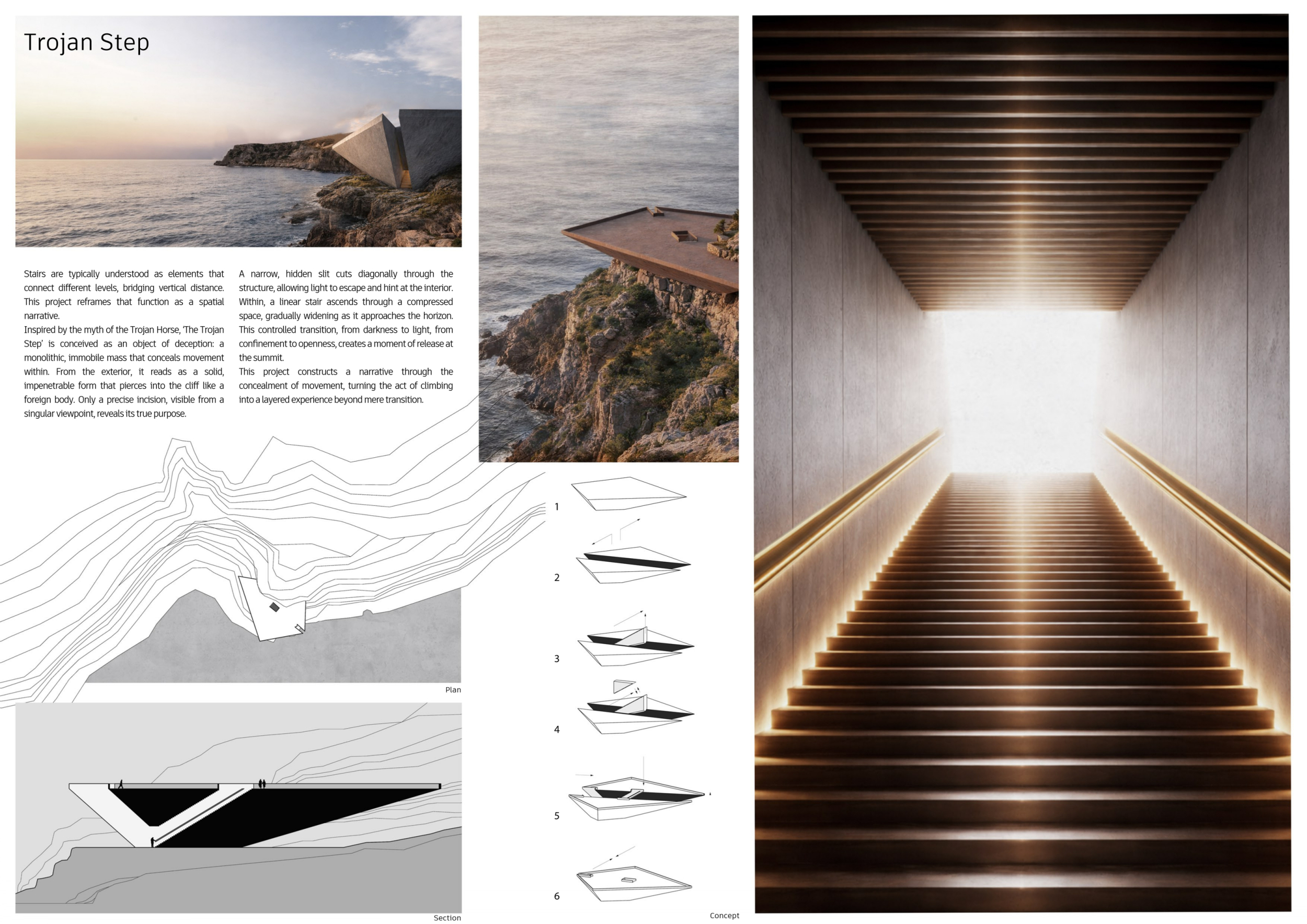
The Trojan Step
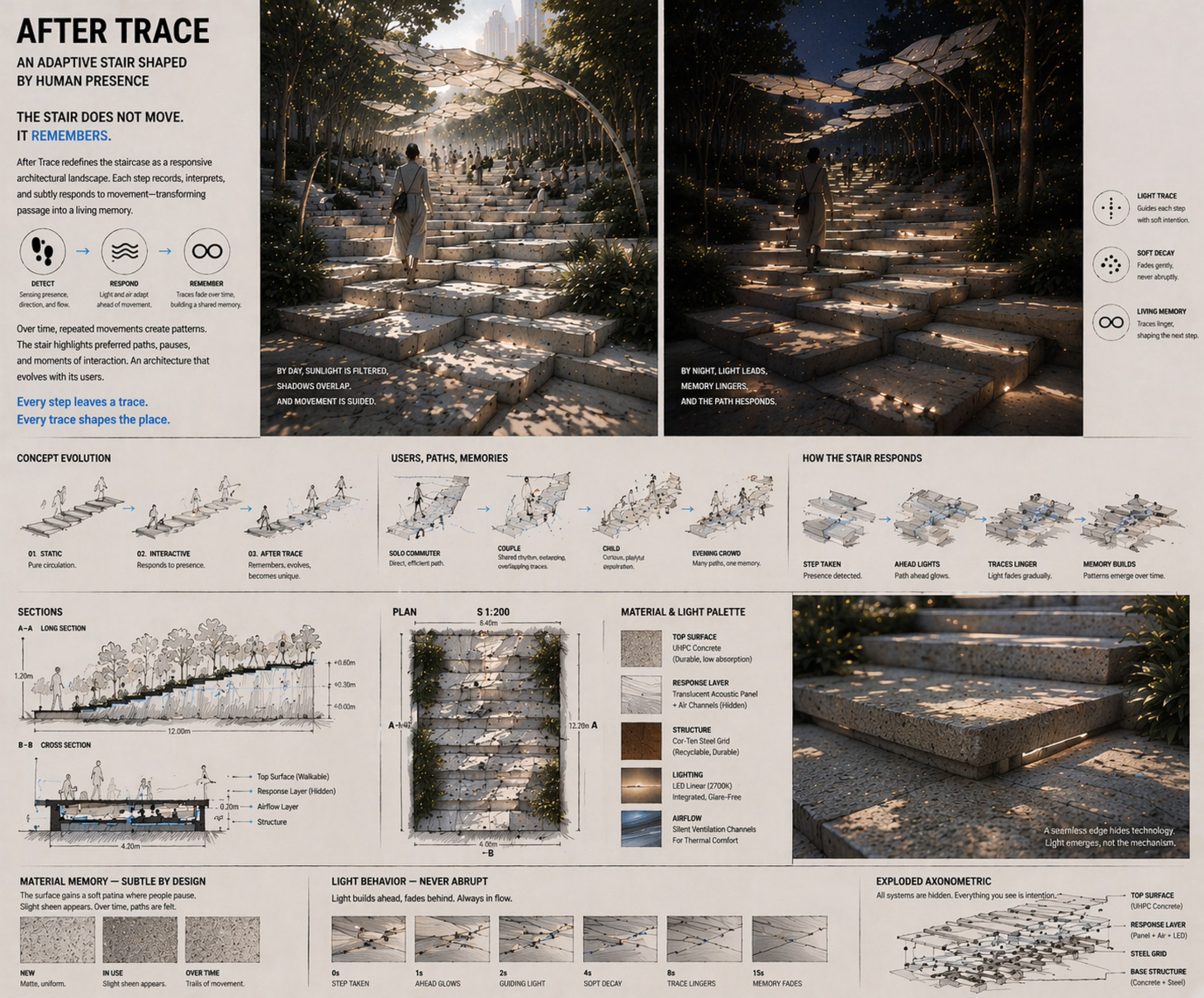
After Trace
New Tail