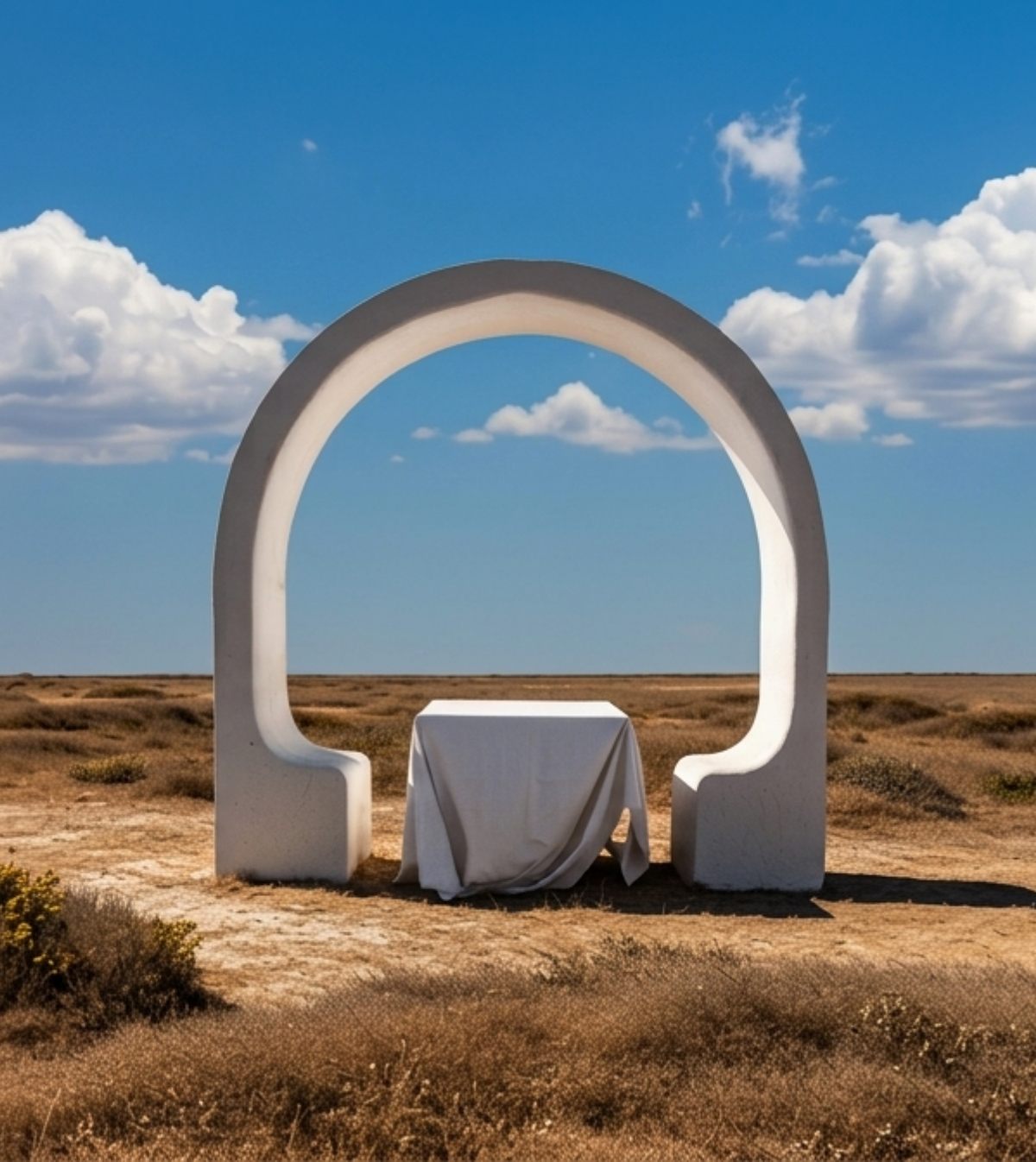
We’d like to take the opportunity to introduce you to the Student Award winners of our Concrete Pavilion competition – Yi Yang and Chun Zhou from United States!
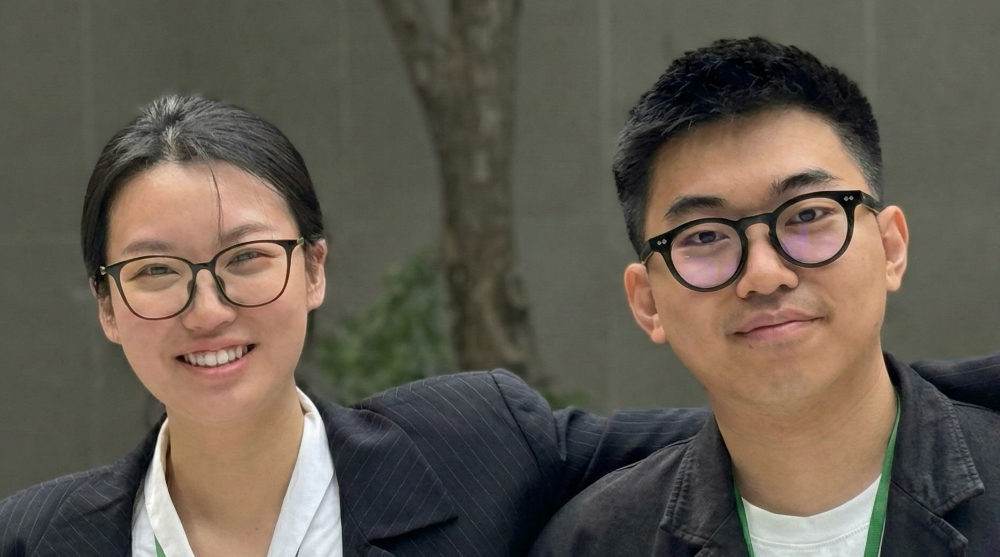
Yi Yang and Chun Zhou
Please tell us about your company (when it was founded, where it is based, how many employees, etc) Alternatively, if you do not have a company, please give us some insights on your own professional/academia background.
Chun and Simone are Master of Architecture candidates at the University of Pennsylvania. Coming to architecture as non-traditional entrants, Chun brings a background in interior design, while Simone brings training in mathematics. These distinct foundations shape a shared design approach that values both spatial experience and underlying systems of logic. Their work is driven by a strong interest in geometry—not as an abstract exercise, but as a tool for shaping spatial perception, movement, and human experience. By combining interior sensibility with mathematical rigor, they explore how proportion, structure, and spatial sequencing can produce environments that are both intuitive and conceptually precise. Together, they see architecture as a discipline where analytical thinking and embodied experience are inseparable, and where diverse academic backgrounds can generate new modes of design inquiry.
Brief information about the projects that you/your company have been involved with. For instance, what scale have you focused on/preferred, any significant projects where the company/ individuals have been Involved?
As emerging designers and current Master of Architecture students, our work to date has focused primarily on small- to medium-scale projects, including single-family houses and experimental pavilions. These scales allow us to engage closely with questions of structure, material behavior, and spatial experience, while maintaining a high level of design control and precision. We are particularly drawn to projects where conceptual ideas can be tested through making—whether through pavilion-scale installations, prototypical structures, or residential projects that explore the relationship between geometry, construction logic, and everyday inhabitation. While our built experience is currently limited in scale, these projects have provided valuable exposure to the realities of fabrication, assembly, and detailing, and continue to inform our approach to larger architectural ambitions.
What does architecture mean to you and what is the role of an architect in your society?
Architecture, to us, is the careful negotiation between structure, space, and human experience. It is not only the act of building, but the responsibility of shaping environments that influence how people move, feel, and relate to one another. Architecture has the power to translate abstract ideas—such as geometry, efficiency, and technology—into spaces that are deeply lived and understood. We see the role of the architect in society as both a designer and an advocate. Through the use of emerging technologies and new fabrication methods, architects can create buildings that are structurally efficient and materially responsible, reducing excess while maximizing performance. Yet efficiency alone is not enough. These tools must be guided by empathy—by an understanding of everyday use, accessibility, and the emotional impact of space on common people. An architect’s responsibility, therefore, is to bridge innovation and care: to harness advanced techniques in service of spaces that are not only intelligent and expressive, but also inclusive, humane, and socially grounded.
Why do you participate in architecture competitions?
We participate in architecture competitions as a space for constant experimentation and growth. Competitions allow us to test ideas that may be difficult to pursue within conventional academic or professional constraints, pushing us to challenge assumptions about form, structure, and spatial experience. They encourage innovation—not as novelty, but as a disciplined process of questioning, prototyping, and refining. Each competition becomes an opportunity to explore new technologies, fabrication methods, and design logics, while sharpening our ability to communicate ideas clearly and rigorously. For us, competitions are not about a single outcome, but about sustaining a mindset: always experimenting, always challenging ourselves, and always innovating through design.
What advice would you give to individuals who struggle to decide whether it would be beneficial for them to participate in architecture competitions?
Use architecture competitions as a testing ground for your craziest ideas. They are one of the few spaces where you are allowed—even encouraged—to take risks without the pressure of clients, budgets, or established norms. If you’re unsure whether to participate, think of competitions not as a measure of success or failure, but as a laboratory. They help you clarify your design values, sharpen your voice, and discover what kinds of questions truly motivate you. Even ideas that don’t “work” often reveal new directions worth pursuing. Participation itself is already a benefit: you gain freedom, confidence, and momentum. Competitions reward curiosity and courage as much as polish—and those qualities translate directly into stronger architectural thinking.
Top 3 Reasons Why You Should Enter Architecture Competitions
Curious about the value of architecture competitions? Discover the transformative power they can have on your career - from igniting creativity and turning designs into reality, to gaining international recognition.
Learn more