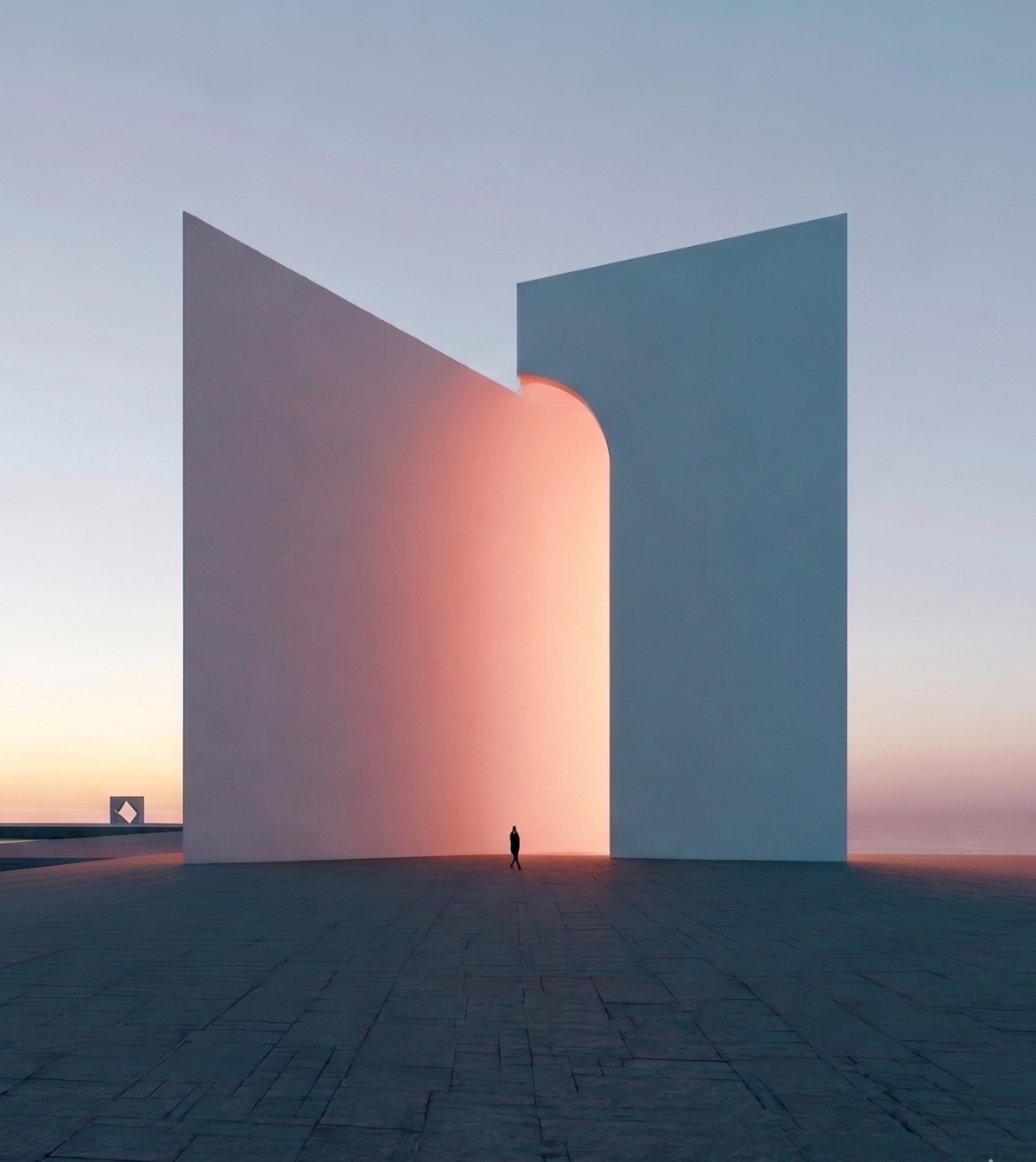
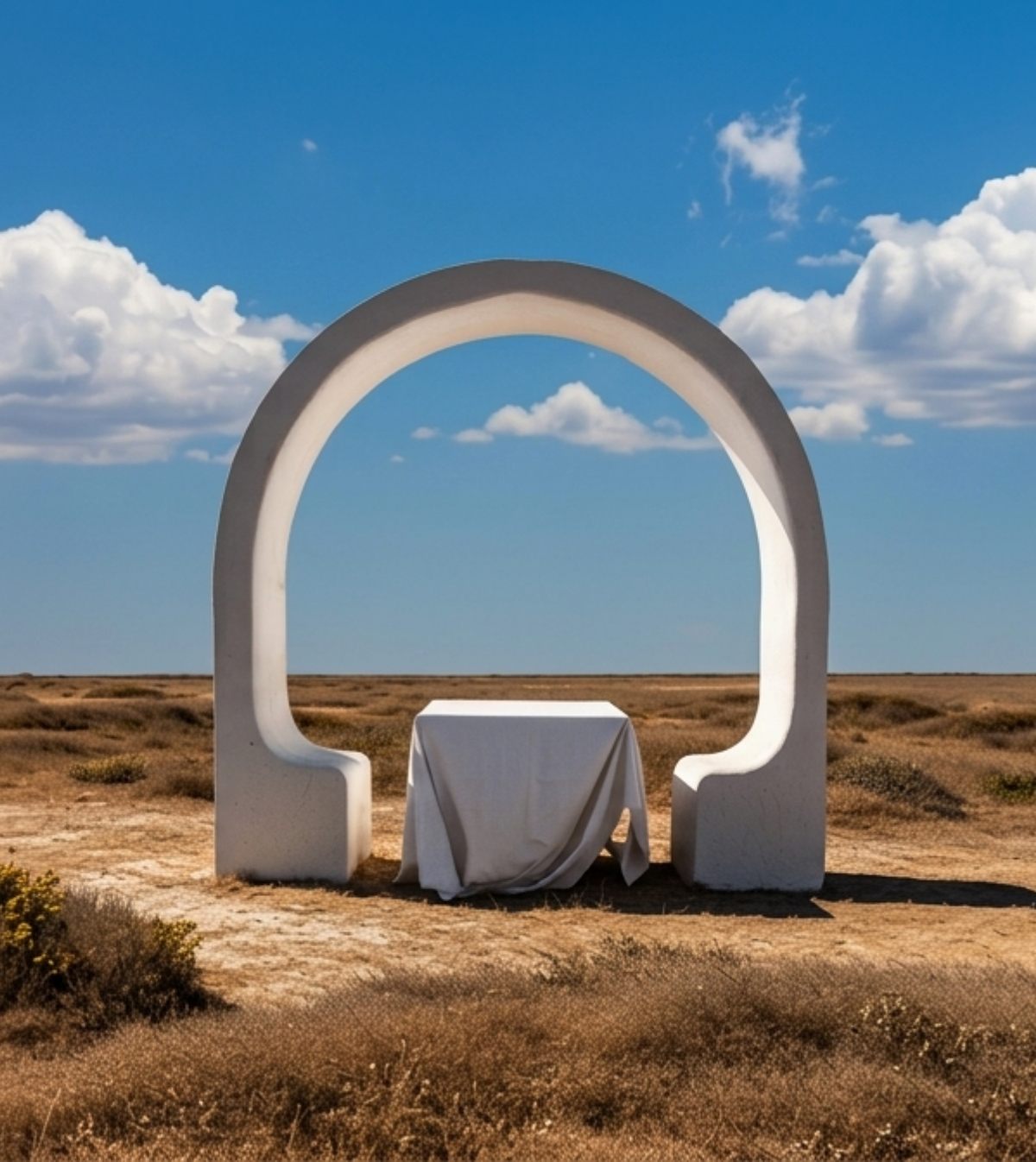
We’d like to take the opportunity to introduce you to the Honorable mention winners of our Concrete Pavilion competition – Junyub Kim and Jeon Chaeeun from Switzerland!

Junyub Kim and Jeon Chaeeun
Please tell us about your company (when it was founded, where it is based, how many employees, etc) Alternatively, if you do not have a company, please give us some insights on your own professional/academia background.
We are an architectural duo working between Switzerland and the Republic of Korea. Our collaboration emerged from shared academic and professional experiences and has developed into a cross-cultural practice operating in both contexts. One of us is currently based in Switzerland, engaged in professional practice, while the other continues to work in Korea. This geographical distance functions not as a limitation but as a productive condition. It allows us to observe different architectural cultures, construction methods, and social frameworks, and to reflect on them through continuous dialogue. Rather than defining ourselves by size, we consider our practice a compact and flexible platform for research and design.
Brief information about the projects that you/your company have been involved with. For instance, what scale have you focused on/preferred, any significant projects where the company/ individuals have been Involved?
Our work ranges from academic research and installations to architectural competitions and built commissions. We are particularly interested in public and cultural projects where architecture mediates between collective space and individual experience. Recently, we have focused on projects that explore material clarity and structural logic — especially through concrete, which we understand not merely as a construction material but as a spatial medium. The awarded concrete pavilion reflects our interest in tectonic expression and restrained form-making. Structure, material, and light are conceived as a single system.
What does architecture mean to you and what is the role of an architect in your society?
For us, architecture does not begin with a clear answer; it begins with a question. We understand architecture as a process of organizing relationships — between people, spaces, material, and time. In rapidly transforming societies, the architect’s role is not only to produce buildings but to carefully mediate change. Working between Korea and Switzerland, we experience different attitudes toward permanence, density, and public life. We see ourselves as translators — between cultures, and between ideas and physical reality.
Why do you participate in architecture competitions?
Competitions allow a degree of freedom that daily practice often cannot afford. They provide a concentrated moment to test ideas, experiment with material strategies, and articulate architectural positions with clarity. For young practices especially, competitions open access to public agendas that might otherwise remain distant. For us, competitions are opportunities to refine questions and sharpen our position within architectural discourse.
What advice would you give to individuals who struggle to decide whether it would be beneficial for them to participate in architecture competitions?
Competitions demand time, energy, and resilience. They should not be approached lightly. However, they can function as a laboratory — especially early in one’s career. Rather than asking whether participation will bring recognition, it may be more important to ask whether the project resonates with a genuine question you carry. If the question is authentic, the process itself becomes meaningful, regardless of the outcome.
Top 3 Reasons Why You Should Enter Architecture Competitions
Curious about the value of architecture competitions? Discover the transformative power they can have on your career - from igniting creativity and turning designs into reality, to gaining international recognition.
Learn more