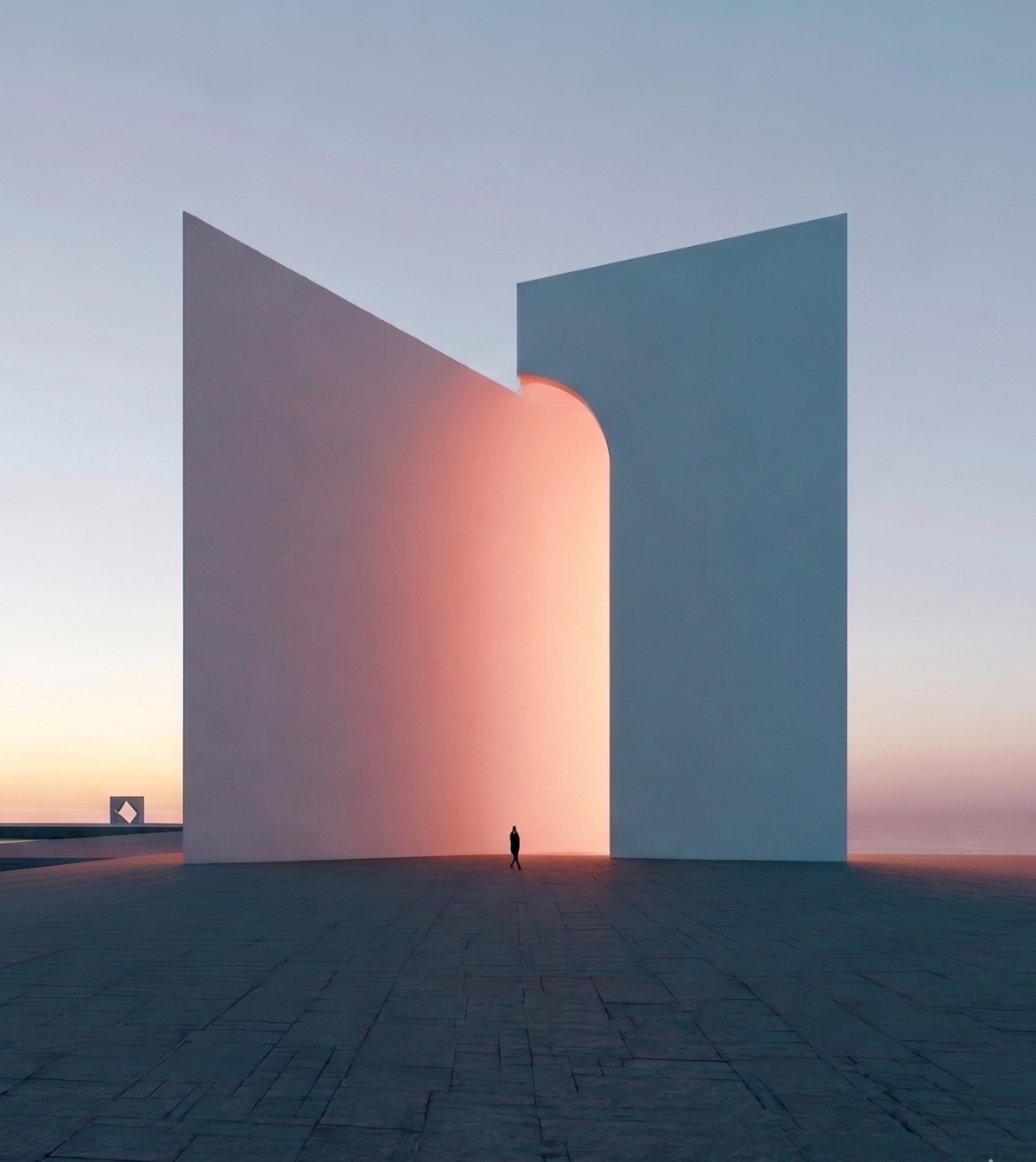
We’d like to take the opportunity to introduce you to the Honorable mention winners of our Concrete Pavilion competition – Diane Yun Choi and Yuka Imada from United States!

Diane Yun Choi and Yuka Imada
Please tell us about your company (when it was founded, where it is based, how many employees, etc) Alternatively, if you do not have a company, please give us some insights on your own professional/academia background.
Archive of Aggregate is a collaborative team of two designers, Yuka Imada and Diane Choi, both current graduate students in the Master of Architecture program at Columbia University GSAPP.
Yuka Imada is a Japanese architectural designer whose work investigates material intelligence, craft, and construction systems, with a particular focus on wood/timber architecture. Her practice treats material as an active design agent rather than a passive medium, allowing fabrication logic, structural behavior, and spatial expression to emerge through iterative experimentation. Her approach emphasizes tectonic clarity and holistic design, where material performance and architectural form are developed simultaneously. She holds an academic background from the University of Cincinnati and has professional experience at firms including Kengo Kuma & Associates(Tokyo) and Woods Bagot(NY).
Diane Choi approaches architecture as a research-driven practice grounded in site, narrative, and theories of placehood. With an academic background in philosophy and cognitive science from the University of Michigan, her work is shaped by methods of critical inquiry, argumentation, and systems thinking. She understands architecture as a process of constructing meaning where land, historical archives, and social structures are analyzed, layered, and synthesized through design. Material exploration operates as a mediating tool between ecological systems, cultural memory, and architectural form.
Brief information about the projects that you/your company have been involved with. For instance, what scale have you focused on/preferred, any significant projects where the company/ individuals have been Involved?
Yuka Imada was involved in a research project at the University of Cincinnati exploring biodegradable 3D-printed wood construction as a sustainable approach to material systems and fabrication. The work investigated timber aggregates as both structural and expressive material, and was exhibited at the Venice Architecture Biennale in 2025. During her master’s program at GSAPP, she expanded this line of inquiry to include concrete and soil waste generated by natural disasters, examining their potential as alternative material systems. Diane Choi has researched the displacement of the Pointe-au-Chien Tribe in coastal Louisiana and the accelerating loss of marshlands due to climate change and infrastructural neglect. The project proposed a 3D-printable shrimp-shell-based biomaterial as a means of creating a cyclical system that is both economically and ecologically beneficial to the community. This research is currently being developed into a film and documentary project, expanding the work beyond architecture to document land loss, cultural resilience, and material futures through narrative media.
What does architecture mean to you and what is the role of an architect in your society?
Architecture is a social and ecological practice rooted in responsibility. Architects are members of society who must be accountable not only to people, but also to the land and its ecosystems. Design is an act of interpretation—of historical narratives, environmental conditions, and cultural archives—translated through spatial decisions and material choice. Architecture, for us, is a way of shaping relationships between past and present, human and non-human systems, with materiality as a central medium. (can we add beauty in inpermanence?)
Why do you participate in architecture competitions?
We participate in competitions as a space for exploration beyond the formal boundaries of academic institutions or professional practice. Competitions allow us to engage directly with a defined brief, site conditions, and constraints such as budget and program, while still operating with intellectual and creative freedom. They function as both a testing ground for ideas and a method of developing our own design positions through focused research, experimentation, and collaboration.
What advice would you give to individuals who struggle to decide whether it would be beneficial for them to participate in architecture competitions?
Competitions are valuable not only for recognition, but as a way to explore ideas that may not be possible within school or professional constraints. They offer a low-risk environment to test positions, work at self-defined scales, and engage with new materials, places, and narratives. Additionally, competitions can open unexpected opportunities in the future—through visibility, networking, and the development of a clear design voice—making them a worthwhile investment of time and curiosity.
Top 3 Reasons Why You Should Enter Architecture Competitions
Curious about the value of architecture competitions? Discover the transformative power they can have on your career - from igniting creativity and turning designs into reality, to gaining international recognition.
Learn more