We’d like to take the opportunity to introduce the 1st Prize winner of our Dubai Urban Elements Design Challenge – Oliver Charles Hessian from United Kingdom!
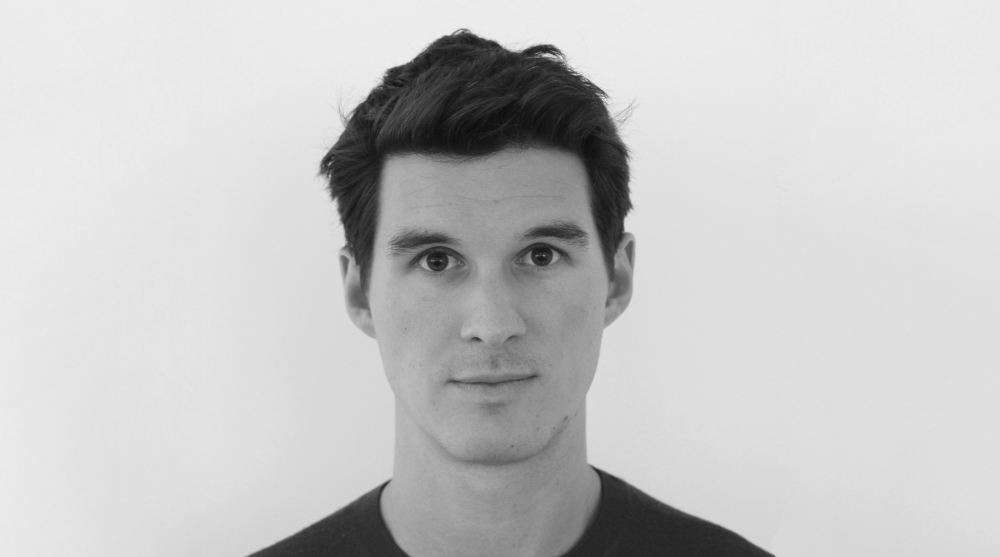
Oliver Charles Hessian
Please tell us about your company (when it was founded, where it is based, how many employees, etc) Alternatively, if you do not have a company, please give us some insights on your own professional/academia background.
I am an architect and designer based in the United Kingdom, currently working through my studio Kiln. My background spans architecture, design communication, and international project work, shaped by living and working across the UK, US, Australia, the Middle East, and East Africa. Kiln was founded as a design-led studio focused on architecture, visualisation, and strategic communication. Currently based in Bath, the studio operates with a small, flexible structure, collaborating with other architects and designers as needed. This approach allows each project to be shaped by its specific context rather than by a fixed organisational model. My training is in architecture, and my professional experience includes working on projects ranging from infrastructure and transport to cultural and residential work. Alongside built projects, I have developed a strong interest in how architectural ideas are communicated, particularly how complex systems, values, and constraints can be made legible and meaningful to a wider audience. Living and working in very different cultural and environmental contexts has been a significant influence on my approach to design. It has reinforced the importance of architecture as a contextual, social, and long-term discipline, one that must respond as carefully to people and place as it does to form and performance.
Brief information about the projects that you/your company have been involved with. For instance, what scale have you focused on/preferred, any significant projects where the company/ individuals have been Involved?
My professional work spans a wide range of scales, from large infrastructure and transport projects to private homes, luxury interiors, and product design. I have been involved in projects that range from complex, multidisciplinary urban and infrastructural systems to highly crafted, human-scale environments. This breadth of work is important to me. On some projects I am the designer, directly shaping the architectural response; on others I work alongside architects and designers to help develop, refine, and communicate their ideas. Moving between these roles, and between large-scale systems and intimate spaces, has reinforced the value of clear thinking, strong underlying concepts, and attention to detail at every scale. I am particularly interested in how principles developed at an infrastructural or urban level can inform smaller, more personal environments, and how the sensitivity required at a domestic or interior scale can, in turn, enrich larger architectural systems.
What does architecture mean to you and what is the role of an architect in your society?
To me, architecture is fundamentally about connection. It is not simply the creation of static objects, but the shaping of experiences that bind people to a place. Whether designing an urban element, a building, or a masterplan, architecture is defined by how it weaves history, function, and human experience into moments that are remembered. This perspective relies on viewing architecture as a sequence rather than a single gesture. By identifying the key moments through which a space is encountered, movement, pause, shade, orientation, rest, design decisions are made with greater clarity. How these systems are communicated is equally important, ensuring that the project’s intent is understood and its long-term value is sustained. At a societal level, architects play a critical role in shaping the legibility of our cities. Even for those with little interest in the built environment, the public realm forms the lasting memory of a place. In fast-growing cities like Dubai, architecture must do more than perform efficiently; it must anchor rapid change to culture, memory, and continuity. I see the role of the architect as bridging the practical and the poetic: designing robust, adaptable systems that function effortlessly over time, while shaping environments that feel meaningful, human, and alive; places that connect past, present, and future through everyday use.
Why do you participate in architecture competitions?
Architecture competitions offer a rare space for focused, unconstrained creativity. They allow ideas to be explored with clarity and intent, often resulting in work that helps define the future direction of a studio. For me, this competition was a deliberate counterpoint to the collaborative nature of daily practice. I chose to work independently in order to test the limits of my own capabilities, carrying a project from concept through to technical resolution with a clear and consistent vision. This process creates space for ideas to develop without dilution. It is an opportunity to produce work I can stand behind fully: a project that is not only a response to a brief, but a considered expression of my design approach and an indication of the direction I hope to continue exploring.
What advice would you give to individuals who struggle to decide whether it would be beneficial for them to participate in architecture competitions?
I would advise approaching competitions not as a commercial risk, but as an intellectual opportunity; provided you wait for the right spark. For this submission, I spent a significant amount of time refining the underlying story before drawing anything. Once the narrative became clear, the idea of a ‘thread’ weaving through time, the blank page felt far less daunting. The story created its own deliberate constraints, and the design decisions naturally followed. My practical advice is to read a brief early and allow ideas to develop without pressure. If a concept genuinely clicks and excites you, the time commitment no longer feels like a gamble; it becomes a reward. You are not simply entering a competition, but bringing an idea to life. Approached this way, the real value lies less in the result and more in the process itself, in the clarity it brings and the momentum it generates for your own thinking.
Top 3 Reasons Why You Should Enter Architecture Competitions
Curious about the value of architecture competitions? Discover the transformative power they can have on your career - from igniting creativity and turning designs into reality, to gaining international recognition.
Learn more