
5 key facts about this project
### Overview and Intent
The House of the Future Flower is located in a context that emphasizes ecological sensitivity and innovative residential design. The project aims to create an environment that harmonizes with nature while providing functional living spaces. The design integrates various elements that reflect a contemporary aesthetic while adhering to sustainable building practices.
### Spatial Organization
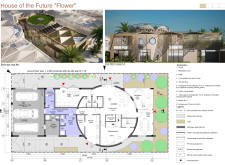
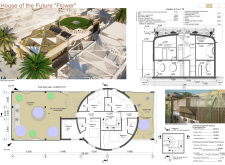
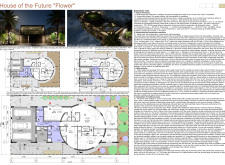
The layout incorporates a radial plan, centering on a communal living area that encourages interaction while maintaining privacy in designated zones such as bedrooms and service spaces. The ground floor encompasses a main living room of 34.9 m², complemented by private areas including rooms for guests and drivers, and service zones featuring a laundry room for operational efficiency. Garden spaces are integrated to enhance biodiversity and provide outdoor retreats.
The first floor continues this strategy with a selection of private bedrooms and recreational areas that promote natural light through large windows and glass doors. These openings facilitate a connection with the nearby gardens, ensuring an interactive and enjoyable living experience.
### Material Selection and Environmental Strategies
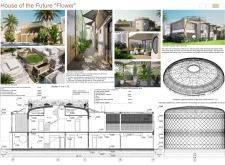
A diverse array of materials has been selected to support structural integrity and sustainability. Reinforced concrete underpins the foundational elements, while hydraulic concrete ensures durability in water-related components. The aesthetic includes ceramic tiles and natural stone, fostering a cohesive design throughout the home. Wood elements enhance warmth, and metal frameworks contribute to structural stability.
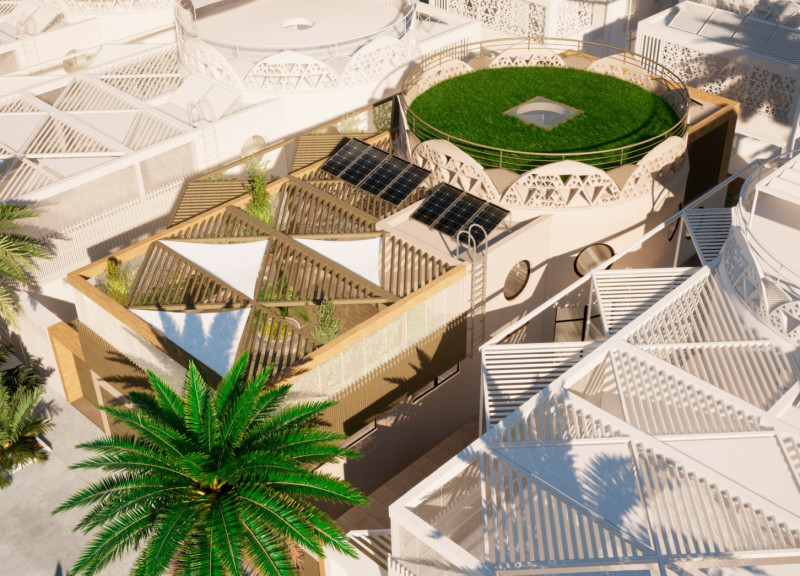
The project's emphasis on sustainability is evident in its use of renewable energy solutions, including solar panels for minimizing environmental impact. Principles of the circular economy are applied through the utilization of local materials, which reduce transportation emissions. Additionally, adaptive design considerations allow for flexibility in room use, catering to changing household needs, while rainwater catchment systems offer supplementary insulation and resource conservation.