
5 key facts about this project
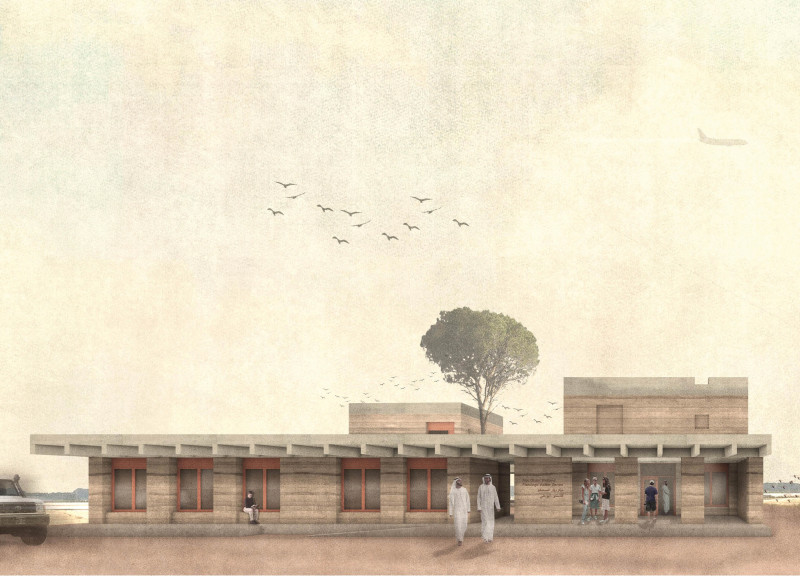
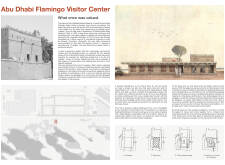
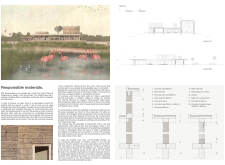
Located within the Al Wathba Wetland Reserve in the United Arab Emirates, Abu Dhabi Flamingo Visitor Center is a conceptual proposal for an ecological and educational facility that promotes engagement with the region’s distinctive wetland landscape. The project explores how architecture can foster environmental awareness and appreciation of the area’s avian habitats through spatial organization, material choice, and climate responsiveness.
Design Intent
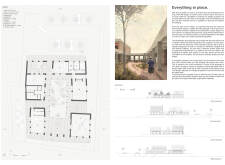
The proposal envisions a visitor-oriented environment that supports both education and observation. Spaces are organized to guide visitors through a sequence of learning and viewing experiences, encouraging interaction with the surrounding ecosystem. The layout integrates open and enclosed zones that frame key views of the wetlands, reinforcing visual and spatial connections to the landscape.
Materiality and Sustainability
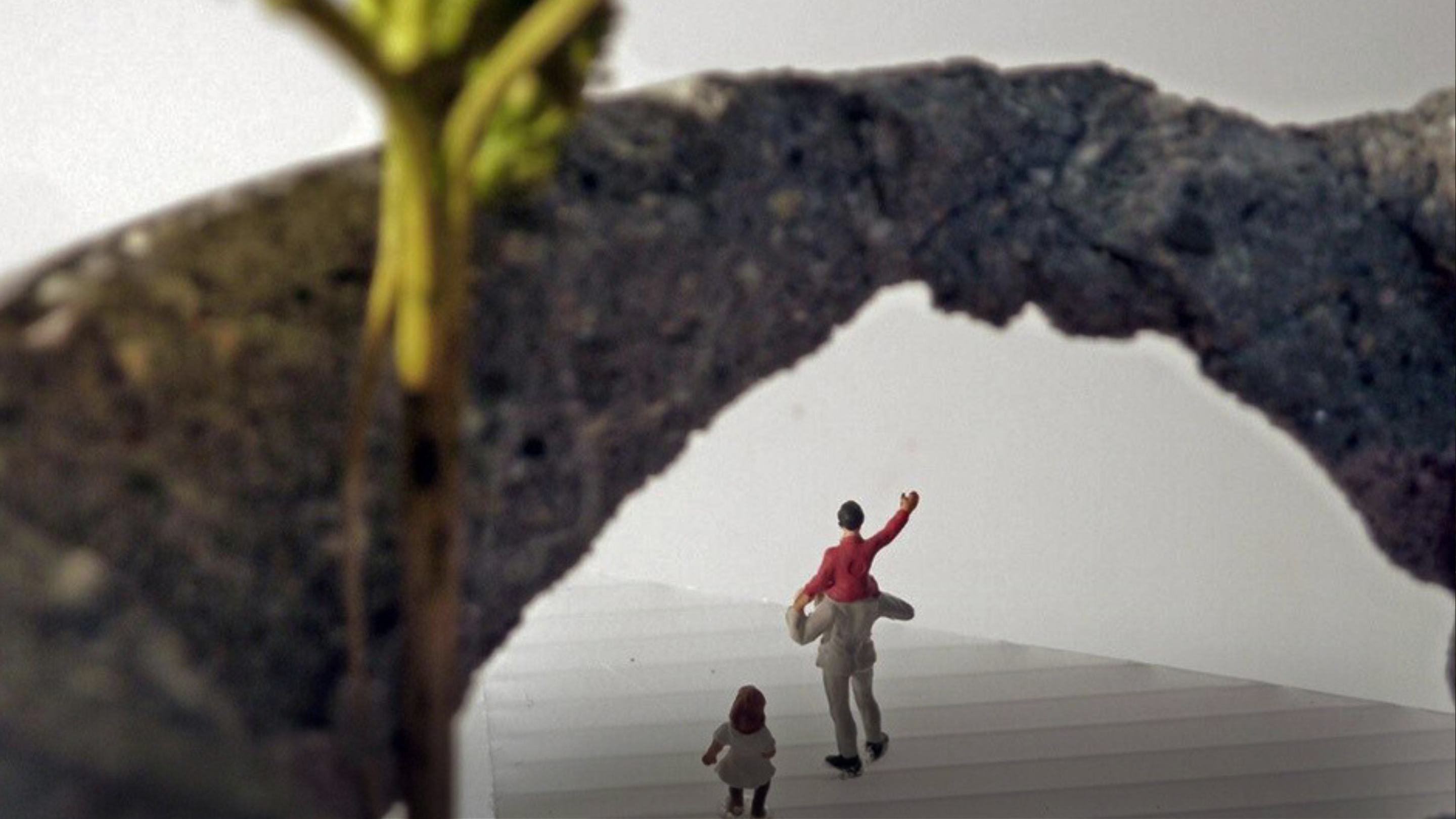
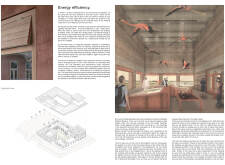
Rammed earth is employed as the primary building material, emphasizing sustainability, local resource use, and a tactile connection to the desert context. Its thermal mass stabilizes indoor temperatures, reducing reliance on mechanical cooling systems. Complemented by natural ventilation and concrete core activation, the design demonstrates a passive environmental approach suited to the region’s climate conditions.
Spatial Strategy
The form is shaped by the natural topography, creating a dialogue between built and natural environments. Circulation routes are designed to encourage gradual discovery, leading visitors from shaded courtyards to open observation decks. This spatial rhythm enhances the educational journey while maintaining a strong relationship with the landscape.
Cultural Integration
Traditional Emirati design principles inform the shading systems and courtyard typologies, grounding the proposal in local heritage. By merging cultural references with ecological sensitivity, the project positions architecture as a mediator between human experience, environmental stewardship, and community engagement.