
5 key facts about this project
The Teamakers Guesthouse is located in Latvia, a country known for its rich natural beauty and dedication to sustainability. The design emphasizes the reuse of existing structures, integrating them into a fresh concept that nurtures relaxation and connection with the environment. The guesthouse functions as a peaceful retreat, inviting individuals to unwind while being surrounded by nature. The overall design focuses on reducing environmental impact by adapting and repurposing materials from older buildings.
Reuse and Sustainability
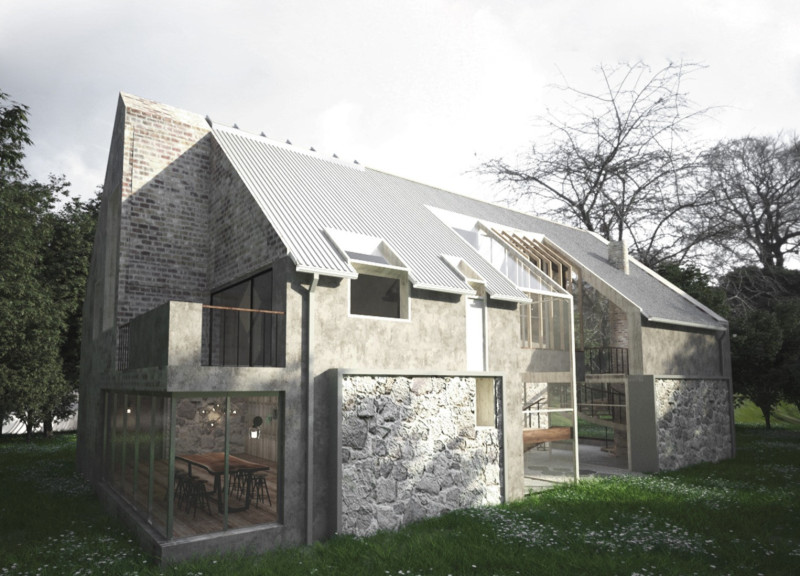
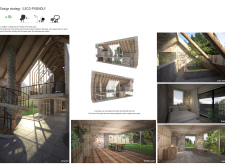
The approach to the Teamakers Guesthouse centers on the reuse of materials, specifically stone walls and wood from previous buildings. By recycling these materials, the design honors the cultural history of the area while minimizing harm to the environment. This focus on adaptation helps maintain a narrative within the region, where old and new coexist. The result is a building that not only serves its purpose but also respects its past.
Natural Light and Ventilation
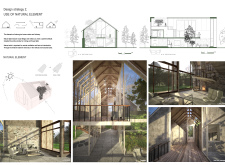
Large windows are a prominent feature of the guesthouse, designed to bring in plenty of natural light. This illumination enhances the connection to the outdoors, allowing sunlight to fill the interior spaces. Additionally, the placement of windows supports natural airflow, which improves comfort within the building. The inclusion of voids in the living room contributes to a spacious feel, creating an inviting atmosphere for relaxation and contemplation.
Integration with Landscape
The design promotes a strong relationship between indoor and outdoor spaces. Each guest room includes a terrace, providing a private area for visitors to enjoy nature. This layout allows for easy movement between the inside and outside, encouraging guests to engage with their surroundings. The thoughtfully positioned terraces offer views of the landscape, enriching the experience of staying at the guesthouse.
Material Selection and Aesthetics
Materials such as stone and wood are chosen carefully to reflect the local context. These materials are not only durable but also create an inviting atmosphere. The stone provides structural stability and connects the building to the region’s geology, while the warmth of wood adds comfort inside. Together, these materials help create a harmonious relationship between the guesthouse and its natural environment.
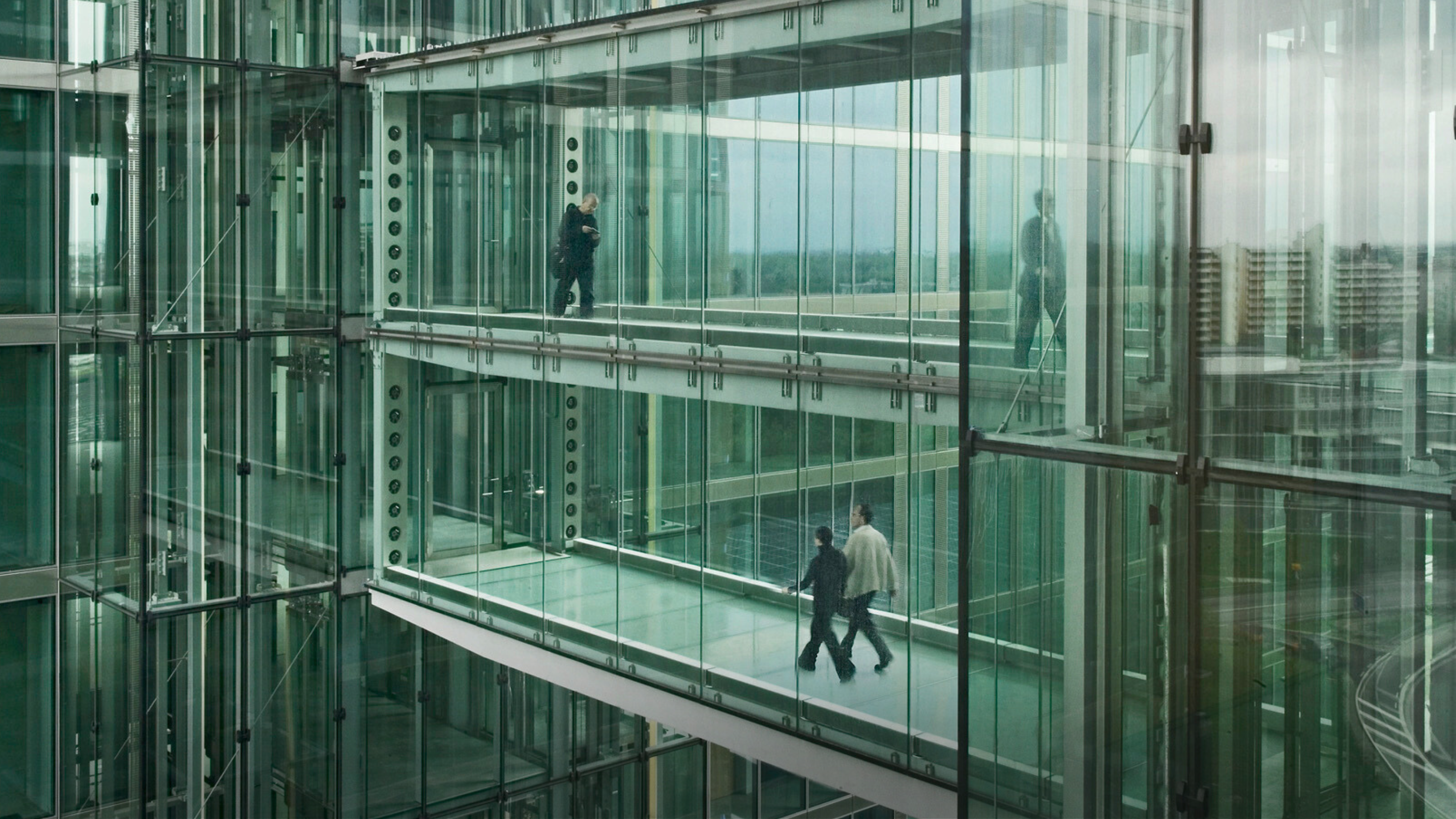
The design features large glass elements that enhance the connection to the outdoors. Daylight plays across the interior, shifting the ambiance throughout the day. The way light interacts with the space brings a dynamic quality to the guesthouse, offering a varied experience for visitors.