

Buildner is a global leader in organizing architecture competitions of all scales — from furniture, cottages, and guesthouses to full city rebranding. With prize budgets ranging from €5,000 to €500,000, Buildner brings proven global experience to every competition.
Launch a competitionLaunch a competition
Introduction

The results of Buildner’s Museum of Emotions Competition – Edition #7 reflect a strong and focused engagement with the core question of how architecture can construct emotional experience through space, sequence, and material. This year’s submissions explored the dualities of light and darkness, openness and compression, nature and artificial mass, serenity and confrontation.
Many projects relied on clear spatial contrasts, guiding visitors from calm, elevated landscapes into intense, immersive interiors. These transitions were handled through simple but deliberate formal gestures, demonstrating how minimal interventions can generate powerful experiential impact.
A number of entries also addressed themes of memory, consumption, and ecological responsibility. Proposals examined the transformation of familiar materials and landscapes, questioning permanence, reuse, and the afterlife of objects. In several cases, the act of entering or descending into a structure became central, reinforcing the museum as a place of reflection rather than spectacle.
Edition #7 demonstrates a continued maturity in how participants approach emotional architecture. The strongest projects aligned spatial clarity with conceptual intent, using controlled formal strategies to provoke genuine contemplation.
We sincerely thank our jury panel
for their time and expertise
Extended list of jury biographies
Stephanie Deumer
Visual Artist
USA

José Luis Pérez Hermo
Coop Himmelb(l)au
Austria

Bartosz Haduch
NArchitekTURA
Poland

Françoise N’Thépé
Françoise N'THEPE - Architecture & Design
France

Andreas Profanter
Architect
Austria

Nuno Pimenta
NUNO PIMENTA
Portugal

Charles Tashima
Studio Tashima
United Kingdom

Enter the next competition edition
Use architecture to create different emotional states
1st Prize Winner +
Buildner Student Award
Buildner Student Award
Nevertheless

We participate in architecture competitions to prove ourselves and challenge ourselves.
Read full interview

Jury feedback summary
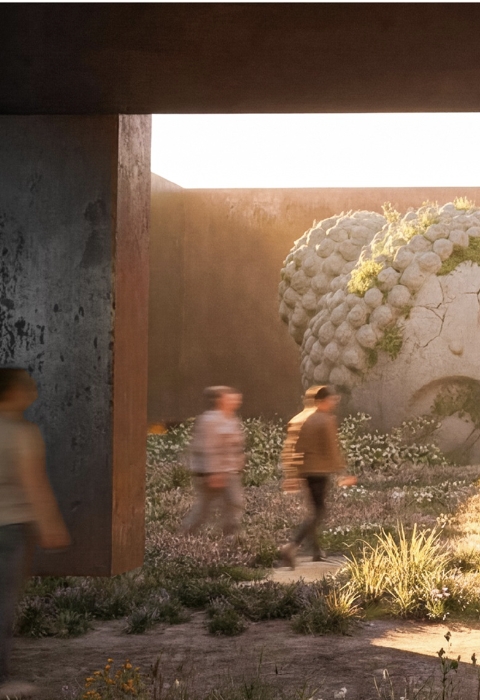
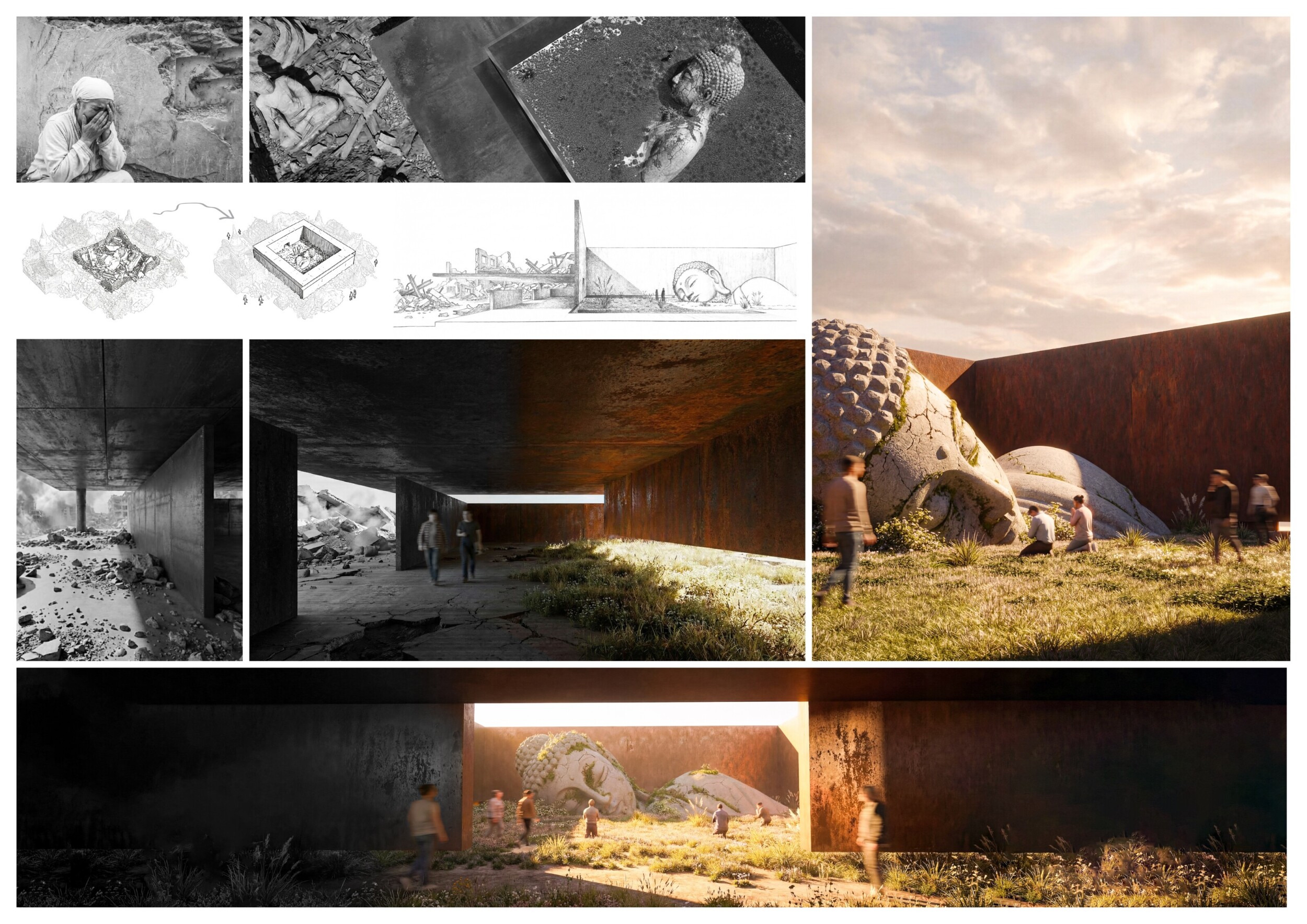
This proposal stages an emotional journey through rupture, preservation, and renewal, framed around the fractured remains of a fallen sacred figure. Set within a walled, excavated landscape, the project juxtaposes chaos and stillness: rubble and collapse on one side, controlled geometry and contemplative enclosure on the other. A singular planar wall operates as both spatial divider and symbolic threshold, separating destruction from reflection.

A personal interpretation: a terrifying earthquake splitting a place of worship, a Buddha falling, yet also an idea of preservation, a dormant calm, and an optimistic ending. A simple wall clearly separates order from chaos.
Andreas Profanter / Buildner guest jury
Architect, Austria

Although dialogue between cultural loss and reconstruction has appeared in previous editions, this proposal clearly adds transformative power to the symbolic fragment being reused. The once desolate site is reimagined as a renewed place of faith and becomes a catalyst for collective reflection. The composition is clear, and the concept is communicated through a thoughtful narrative sequence. Its storytelling approach strengthens the emotional resonance of the project.
José Luis Pérez Hermo / Buildner guest jury
Coop Himmelb(l)au , Austria

It is a subtle and poetic symbolic project about the constant process of discovering what is invisible and the awareness that there is still much undiscovered. It can be read in a religious context and as a search for the sacred, meaning, and history, but it also carries a more universal dimension.
Bartosz Haduch / Buildner guest jury
NArchitekTURA, Poland
Buildner's commentary, recommendations and techniques review
Order your review here
The board is visually disciplined and emotionally controlled, relying on a restrained palette of rusted steel, muted earth tones, and desaturated landscape imagery to establish a solemn atmosphere. The contrast between the warm corten surfaces and the soft natural light creates a powerful visual anchor, particularly in the large perspective views, where spatial depth and mood are convincingly rendered.
-
8/10 Linework

-
8/10 Quality of drawings

-
9/10 Balance of color

-
9/10 Layout

-
8/10 Hierarchy

-
N/A Annotation

-
N/A Text

-
9/10 Clarity of story

-
7/10 Clarity of diagrams

-
8/10 Quality of overall presentation

Enter an open architecture competition now






2nd Prize Winner
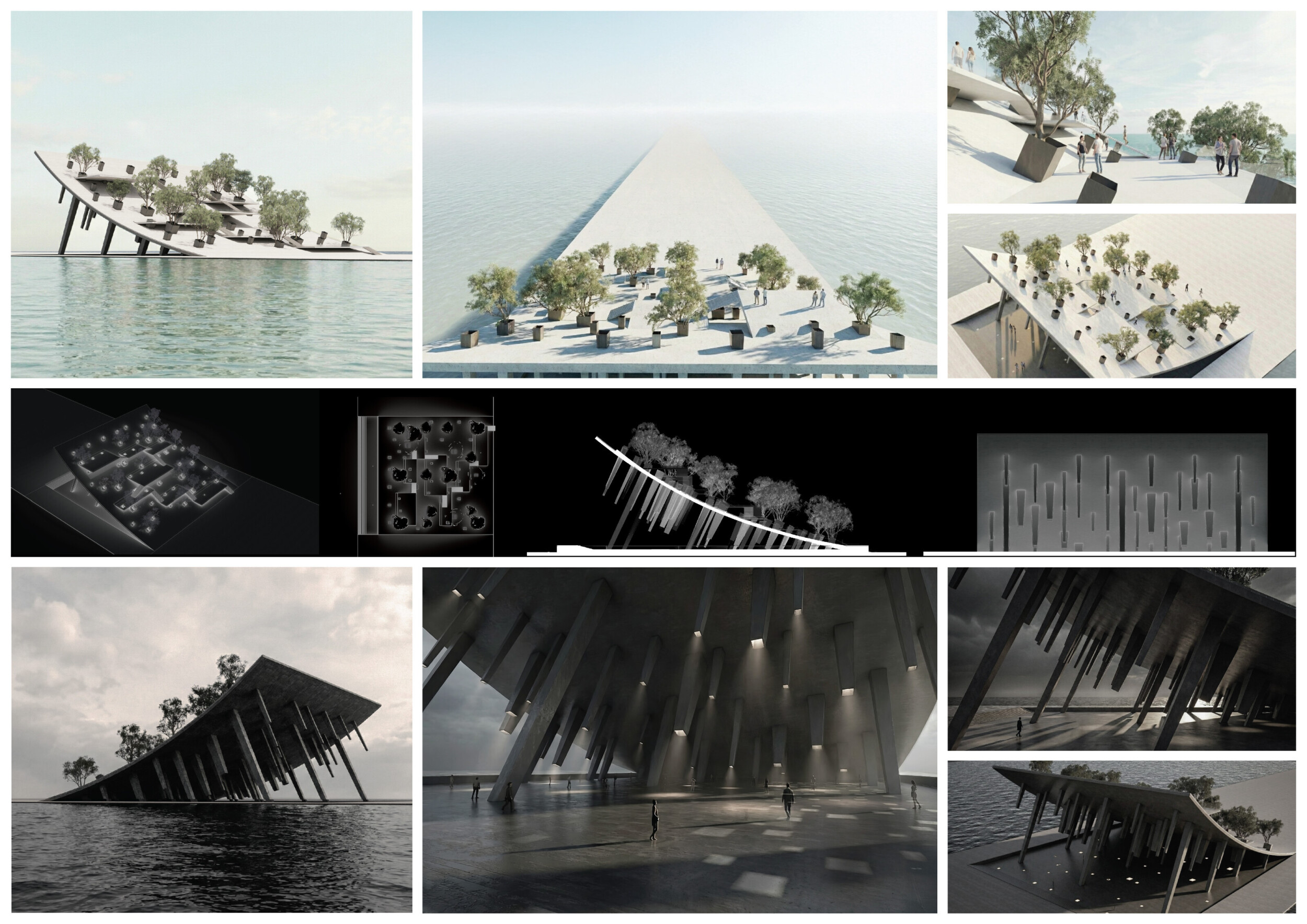
The Dark Side of the Moon
I joined design competitions to test new conceptual ideas and push my design thinking further—while also sharing that work with a broader design community. To me, it’s like a global conversation among designers.
Read full interview
 United States
Jury feedback summary
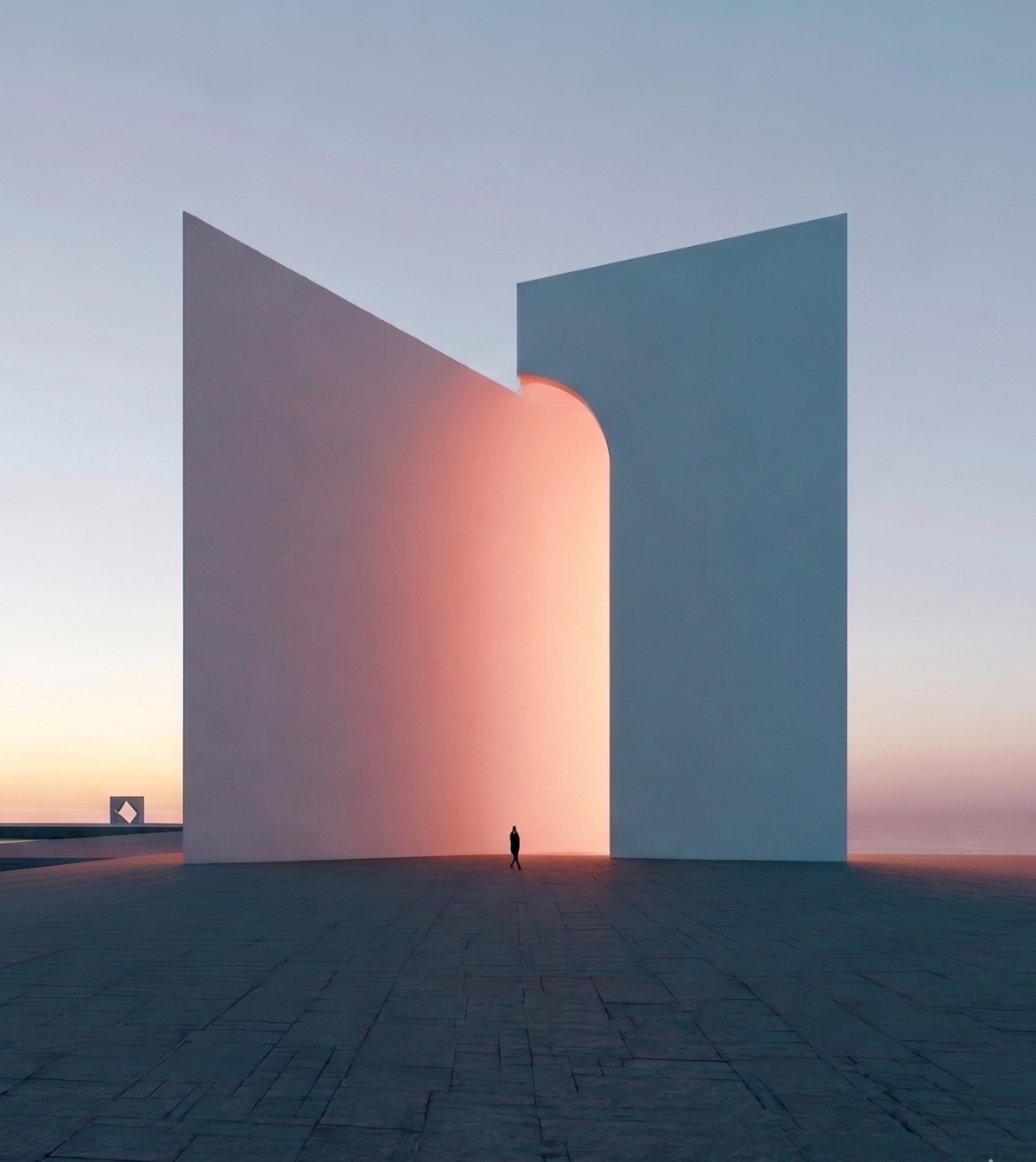
A single tectonic gesture defines the project: a monumental slab lifted and tilted from the sea, creating two radically different spatial worlds within one continuous form. Above, the inclined plane becomes a white, open plaza populated with trees, seating elements, and an elevated promenade that extends toward the horizon. This luminous terrain reads as calm and civic, almost infrastructural in its clarity.

This is a strong and intriguing proposal. The renders are well detailed and clearly demonstrate the many facets of the project. There is a clear emotional and experiential divide between the airy surface and the dark underbelly. The decision to make some planters and columns hollow, allowing light to penetrate to the bottom, is particularly effective, as is the elevated path for visitors. A concern remains whether the tree roots would have sufficient space for growth; a diagram clarifying the planting strategy and root systems would strengthen the feasibility of the proposal.
Stephanie Deumer / Buildner guest jury
Visual Artist, USA

A Christo-like walkway cuts through the sea, gently rising into a white, tree-shaded square. Then comes a shift in perspective: a forest of spikes confronting the visitor. An elegant and intelligent move that triggers a powerful change of mood. The upper world might benefit from a more materially grounded expression, perhaps as a concrete urban plaza, while the underside already achieves atmospheric intensity through its filtered light.
Charles Tashima / Buildner guest jury
Studio Tashima, United Kingdom

A spectacular project reminiscent of cinematic spatial inversions. It explores folds of space and shifting perspectives, constructing symbolic worlds above and below.
Nuno Pimenta / Buildner guest jury
NUNO PIMENTA, Portugal
A structural gesture in motion captures contrasting emotions: joy in the rising landscape above the ocean and tension in the compressed world beneath it.
José Luis Pérez Hermo / Buildner guest jury
Coop Himmelb(l)au , Austria
The underside is especially evocative. Its scale and sense of instability are powerfully represented, emphasizing the fragility and temporality of human presence.
Bartosz Haduch / Buildner guest jury
NArchitekTURA, Poland
While the lower part is dramatic and compelling, the elevated terrain above could be studied further to complete and balance this duality.
Andreas Profanter / Buildner guest jury
Architect, Austria
Buildner's commentary, recommendations and techniques review
Order your review here
The board communicates its central concept with clarity, relying on a strong visual contrast between pale, almost ethereal upper landscapes and the moody, shadowed interior below. The color strategy is disciplined and effective, with soft blues and whites above offset by deep grays and dramatic lighting in the undercroft, reinforcing the emotional narrative without excess.
-
N/A Linework
-
N/A Quality of drawings
-
N/A Balance of color
-
N/A Layout
-
N/A Hierarchy
-
N/A Annotation
-
N/A Text
-
N/A Clarity of story
-
N/A Clarity of diagrams
-
N/A Quality of overall presentation
3rd Prize Winner
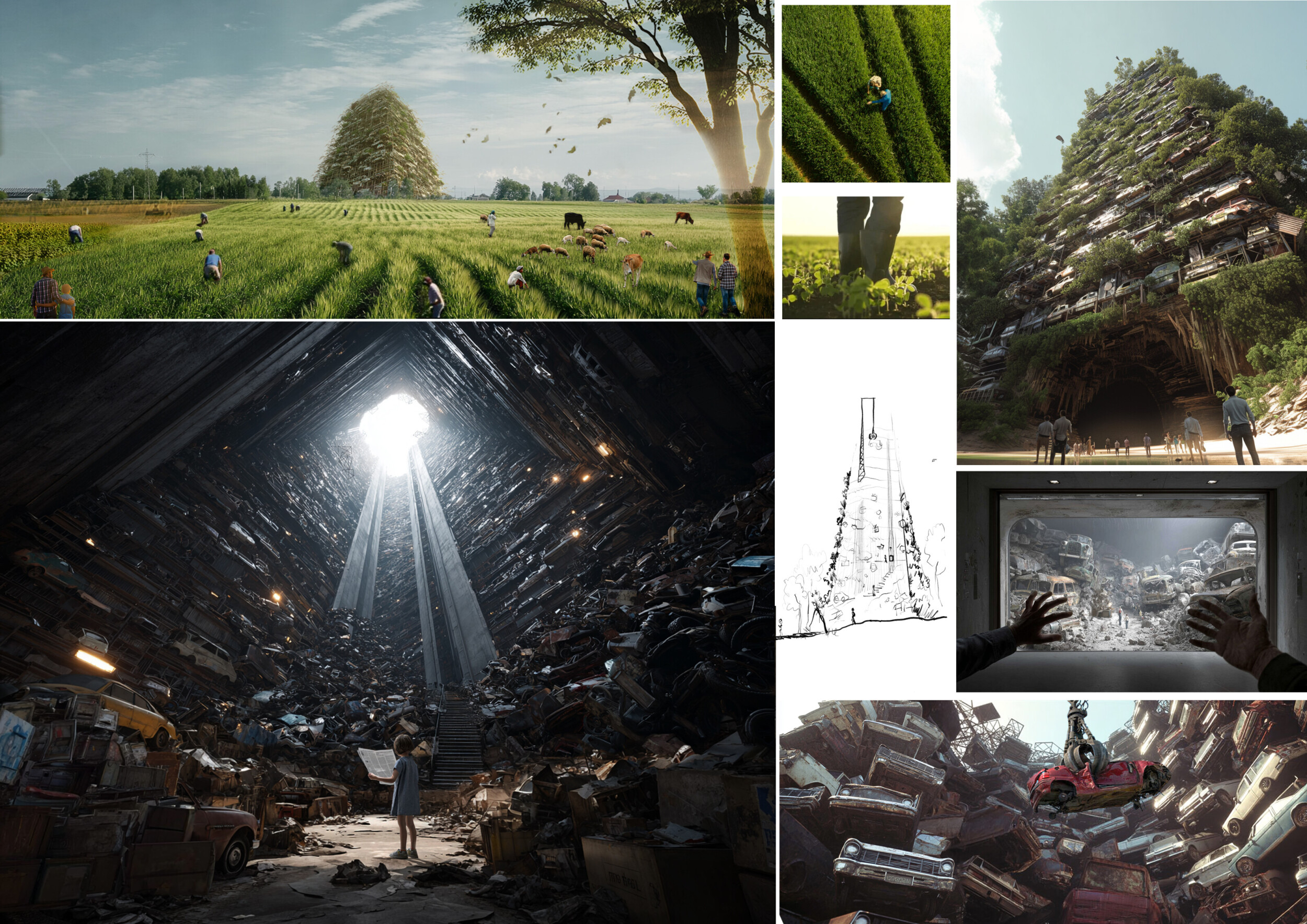
Big Reset
Besides enjoying creating together, designing without boundaries inspires us. Seeing the diverse perspectives of talented architects worldwide on the same subject is invaluable and enriching. We gain a better understanding of the critical nature of architecture and its openness to interpretation. We also feel that the competition process and managing its psychological challenges contribute to our professional development.
Read full interview
 Turkey
Jury feedback summary
Rising from an agricultural landscape, the project takes the form of a monumental mound that at first reads as a lush, cultivated hill. Its exterior is overtaken by vegetation, blending into the surrounding fields and suggesting a narrative of ecological recovery. Only gradually does the artificial nature of the mass become apparent: beneath the green surface lies a vast accumulation of discarded objects, layered into a conical structure that can be entered.
The approach to the mound is handled convincingly. The dominance of green establishes nature as the primary reading, with the artificial mass only gradually understood beneath it. The reclaiming of nature on this heap of trash is forward-looking, suggesting faith in regenerative processes, yet it also raises the question of duration. The most compelling aspect is the possibility of entering the mound. Conceived as a tomb of civilisation, it allows visitors to encounter preserved fragments of our disposable culture. Familiar objects such as cars and everyday waste make the experience immediate and unsettling. The project succeeds because its spatial idea, symbolism, and emotional impact align clearly, provoking genuine contemplation about consumption, memory, and the persistence of traces in both beauty and despair.
Charles Tashima / Buildner guest jury
Studio Tashima, United Kingdom
The proposal presents a strong duality between nature and the artificial as a critique of normalized overconsumption and waste. While this duality is powerfully expressed, especially in the overwhelming interior space, it would be valuable to understand more about the green transition and the mechanisms behind this ecological transformation. A more intentional use of drawings and diagrams would help clarify the central argument.
José Luis Pérez Hermo / Buildner guest jury
Coop Himmelb(l)au , Austria

The project carries a clear ecological statement. It suggests that nature can reclaim wasteland, while the interior of the tower invites us to learn from our mistakes and seek a better path toward light. At the same time, it can be read more critically, as an image of humanity trapped by its own excess.
Françoise N’Thépé / Buildner guest jury
Françoise N'THEPE - Architecture & Design, France
Conceptually reminiscent of Arman’s Long Term Parking, the project presents an intriguing image of contemporary ruins and prompts reflection on the excessive production of waste in modern societies.
Bartosz Haduch / Buildner guest jury
NArchitekTURA, Poland
Buildner's commentary, recommendations and techniques review
Order your review here
The visual narrative is immediate and striking, anchored by a powerful contrast between pastoral greens and the dark, claustrophobic interior of compressed debris. The large central section rendering is particularly effective, using light as both compositional and symbolic device to guide the viewer’s eye upward through the vertical void.
-
7/10 Linework
-
8/10 Quality of drawings
-
9/10 Balance of color
-
8/10 Layout
-
8/10 Hierarchy
-
N/A Annotation
-
N/A Text
-
9/10 Clarity of story
-
6/10 Clarity of diagrams
-
9/10 Quality of overall presentation
Honorable mentions






Shortlisted projects
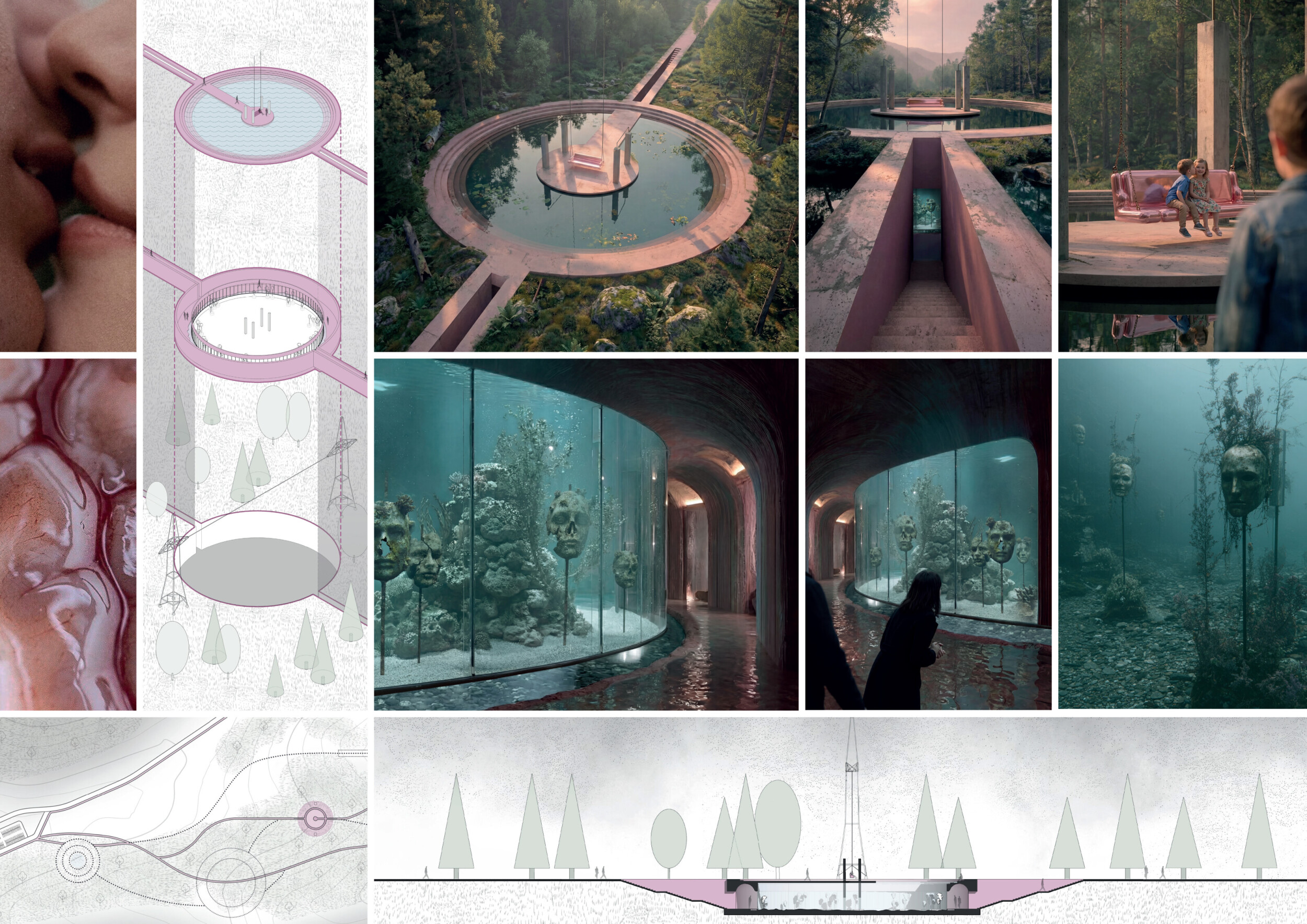
Resonance
 United States
 F.O.E
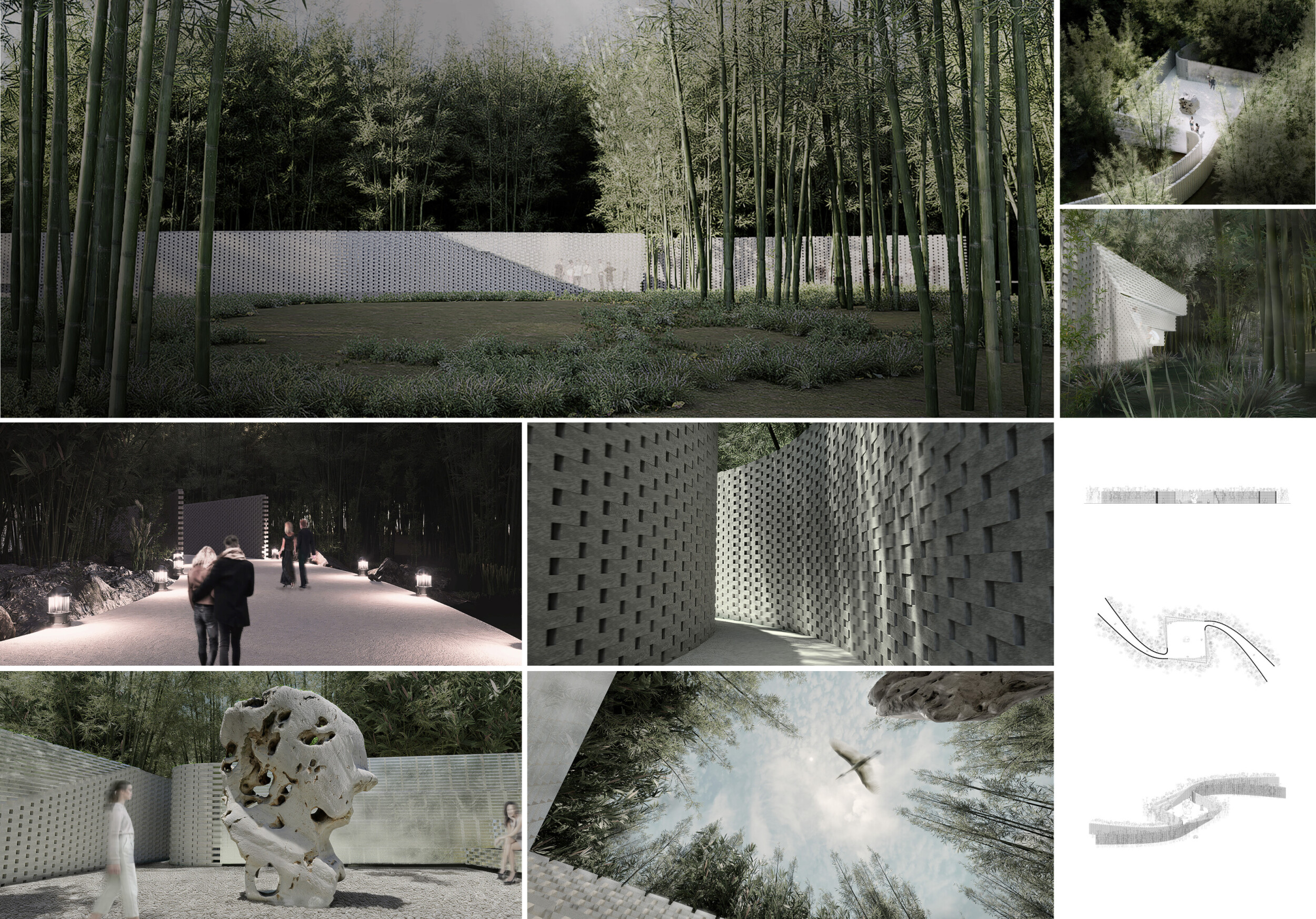
Ascended
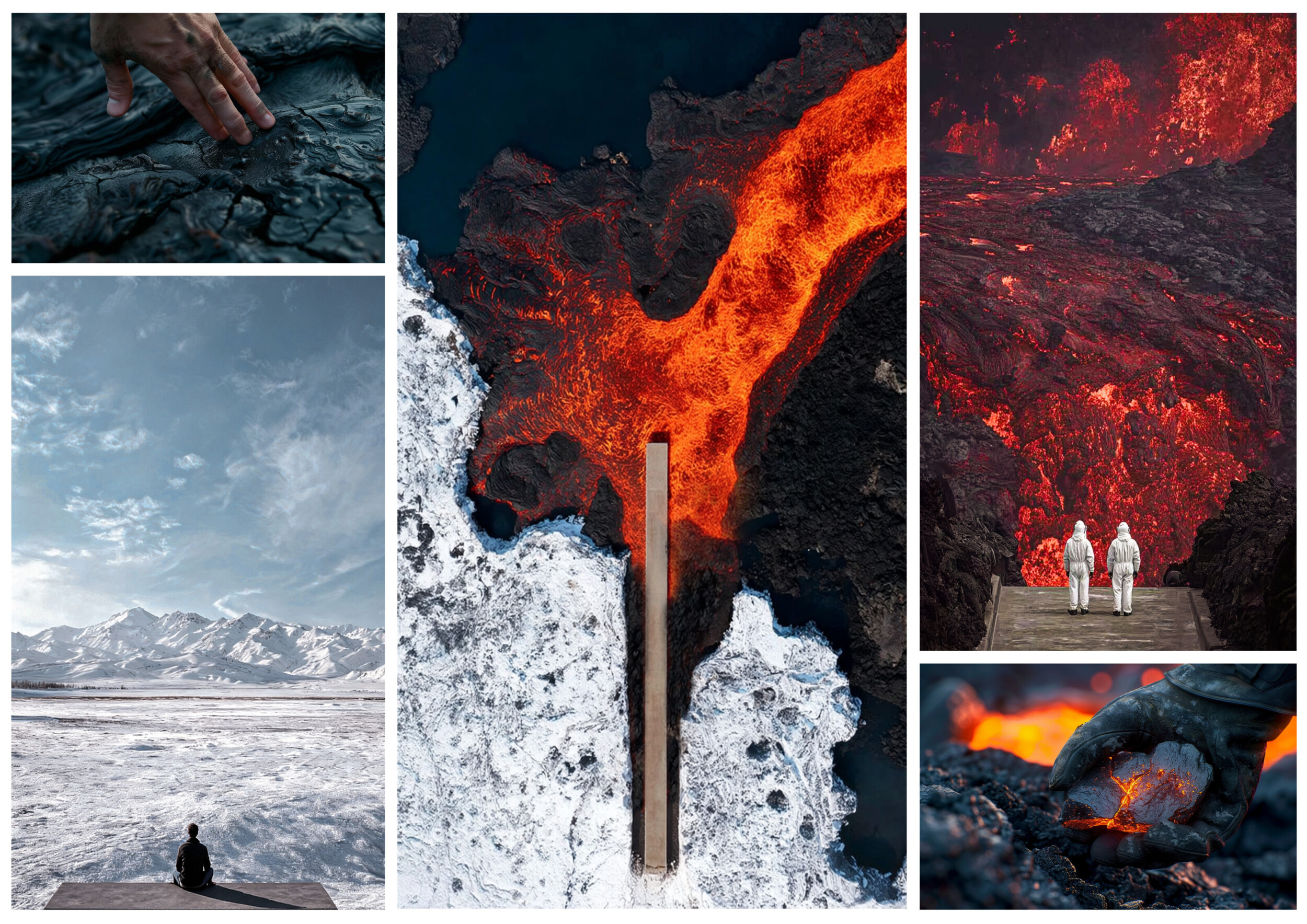
Magma & Basalt

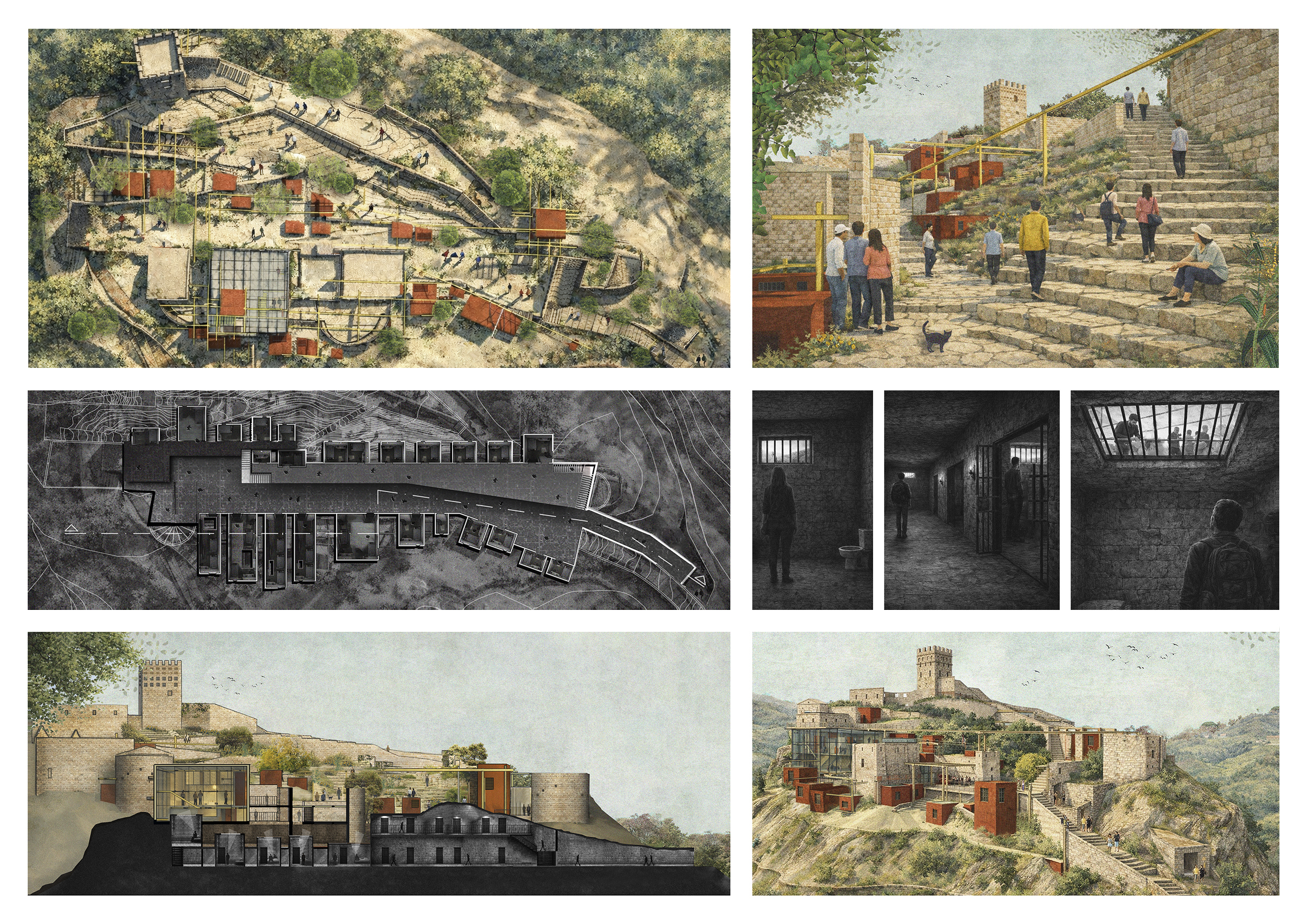
Threshold of Freedom

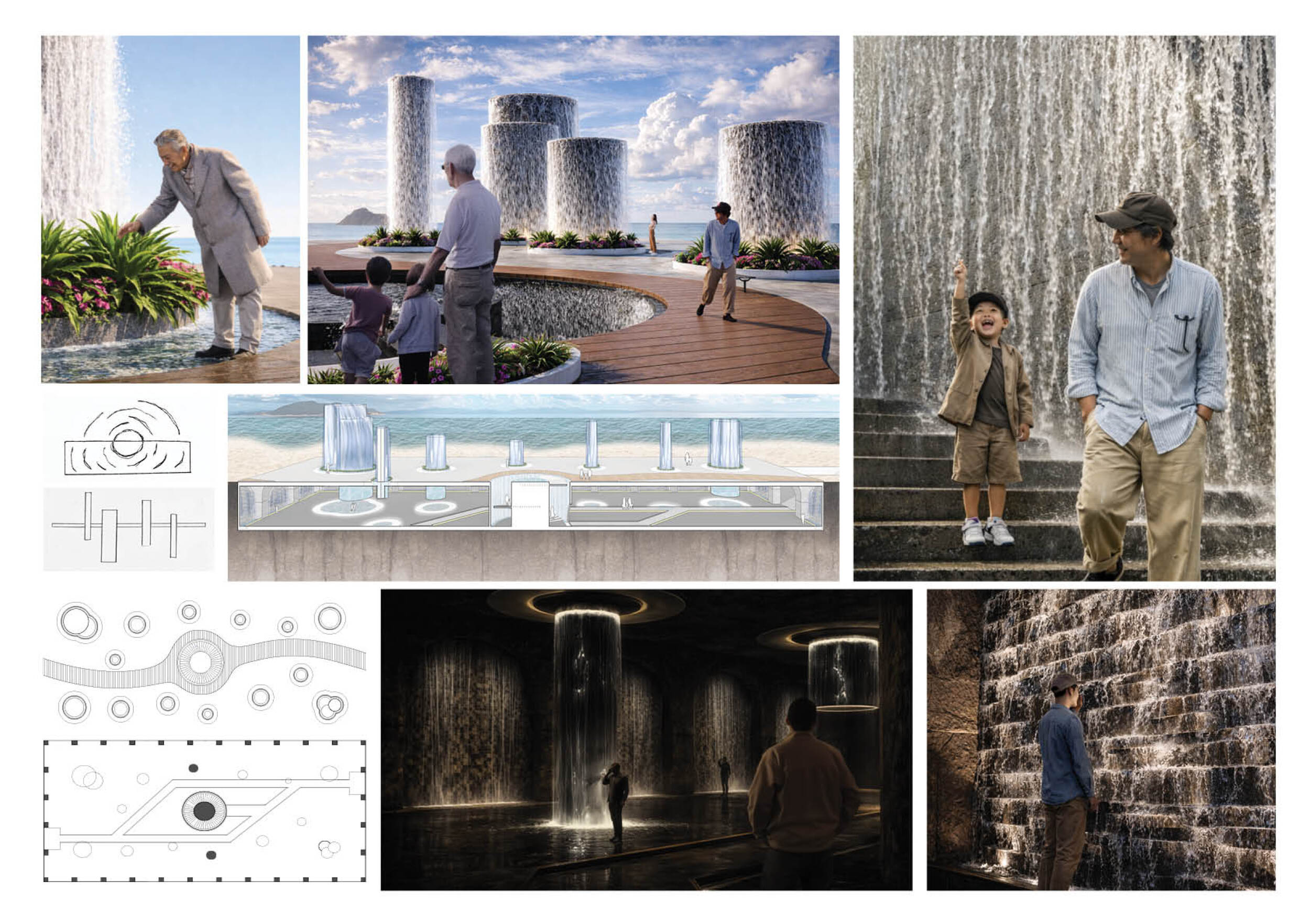
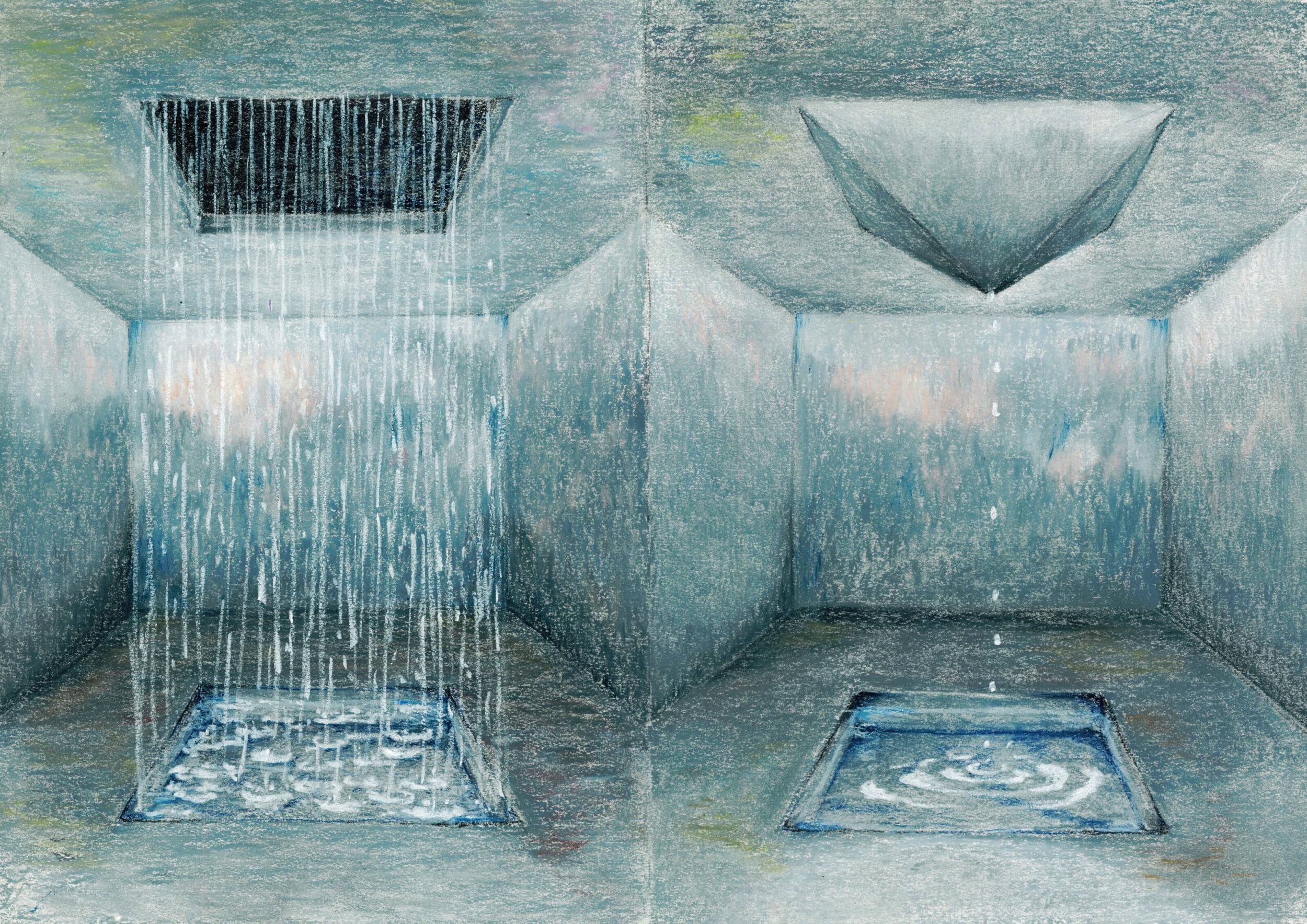
Ambiguous Rains

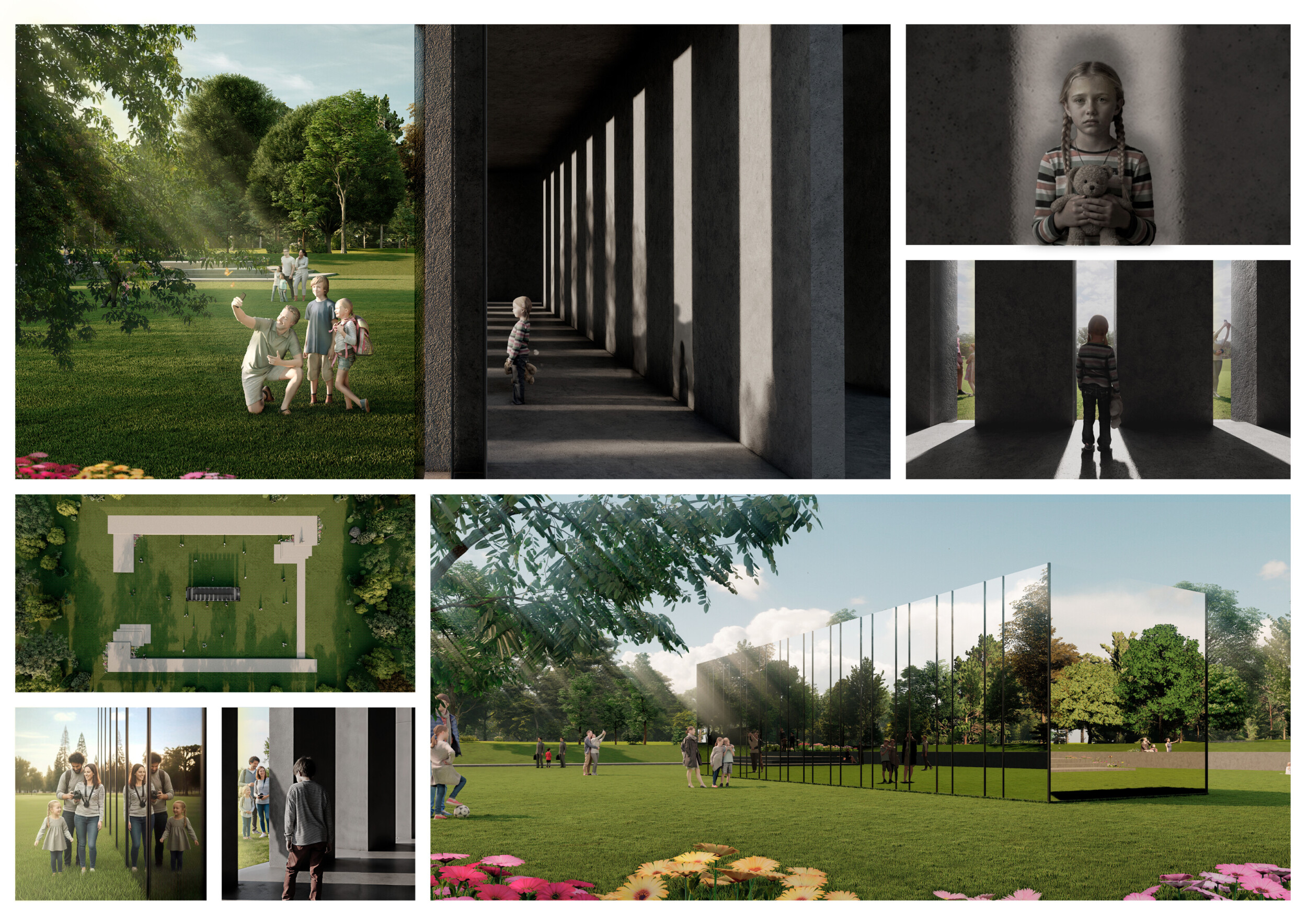
Robbed Affection

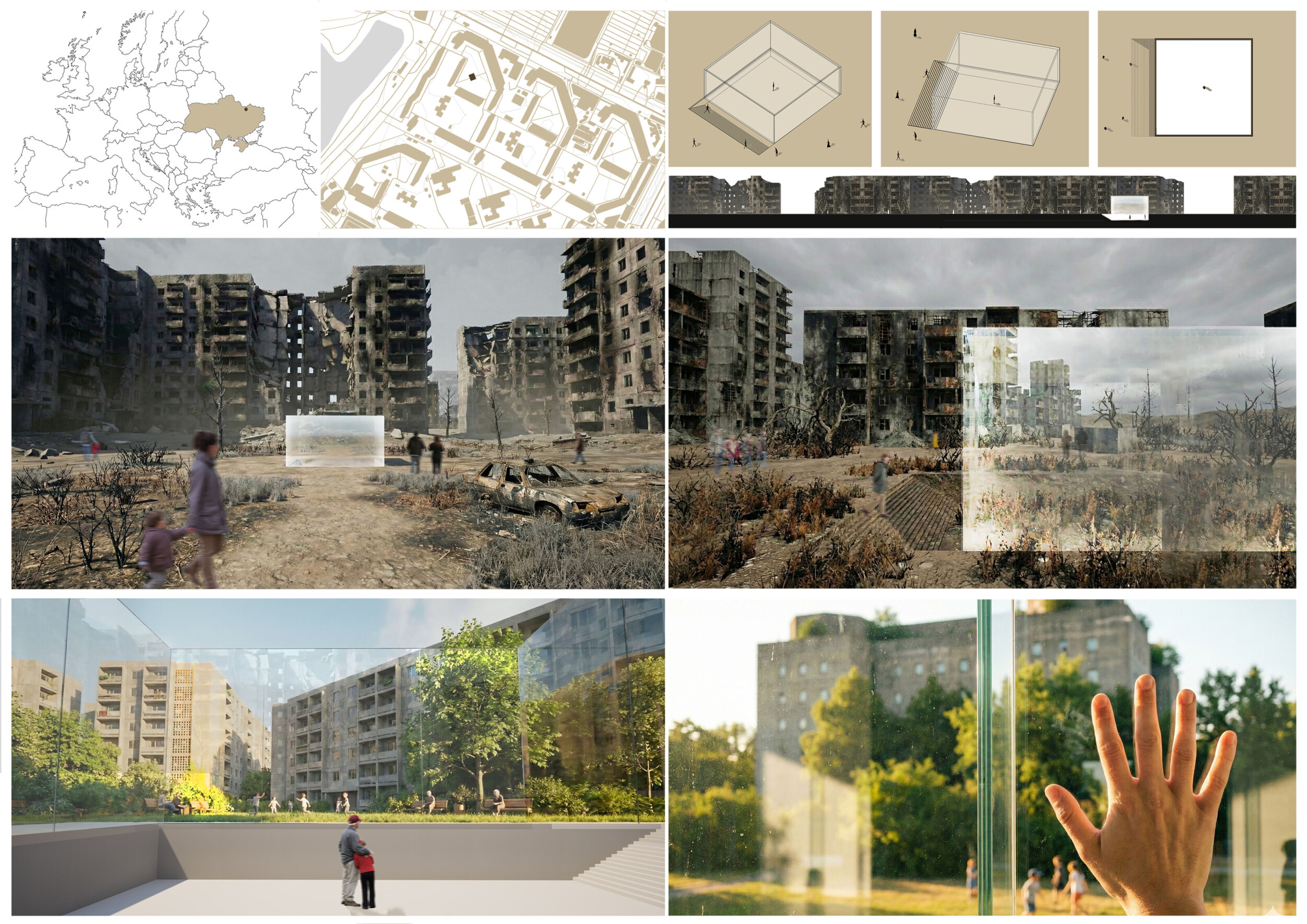
Memento
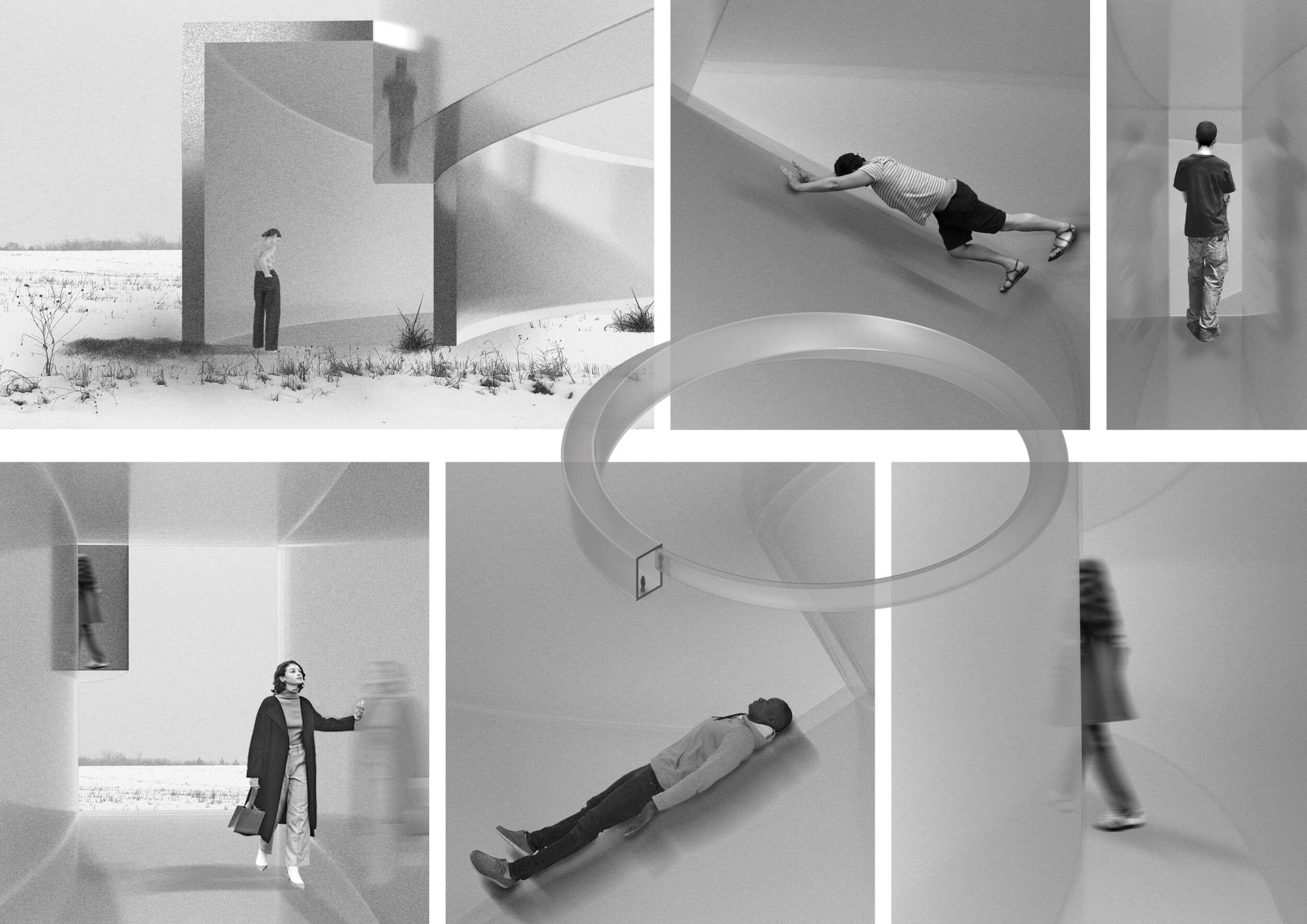
EN(D)TRY
Imprints of Metamorphosis
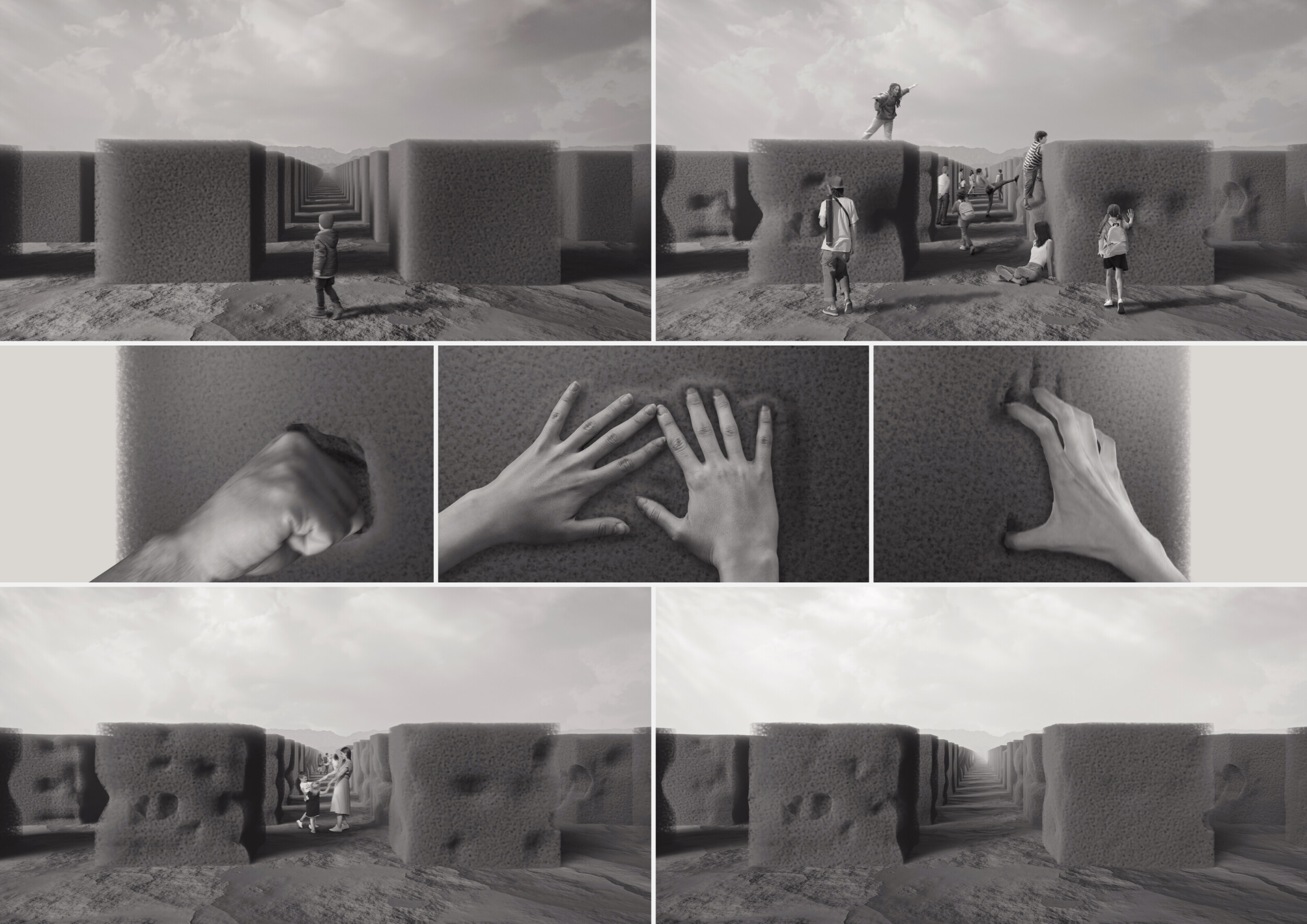
Ancestral Memorial
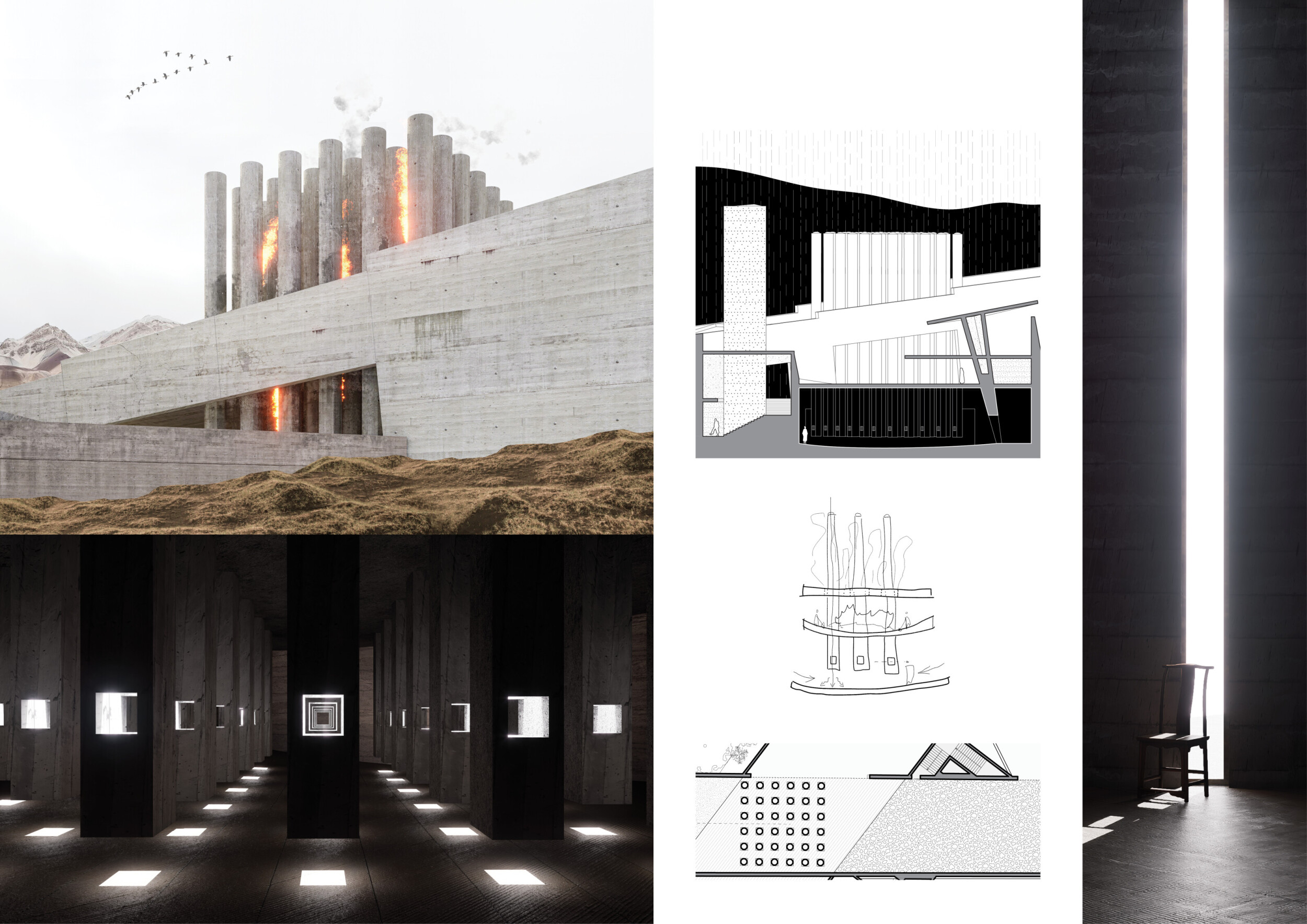
City Oasis
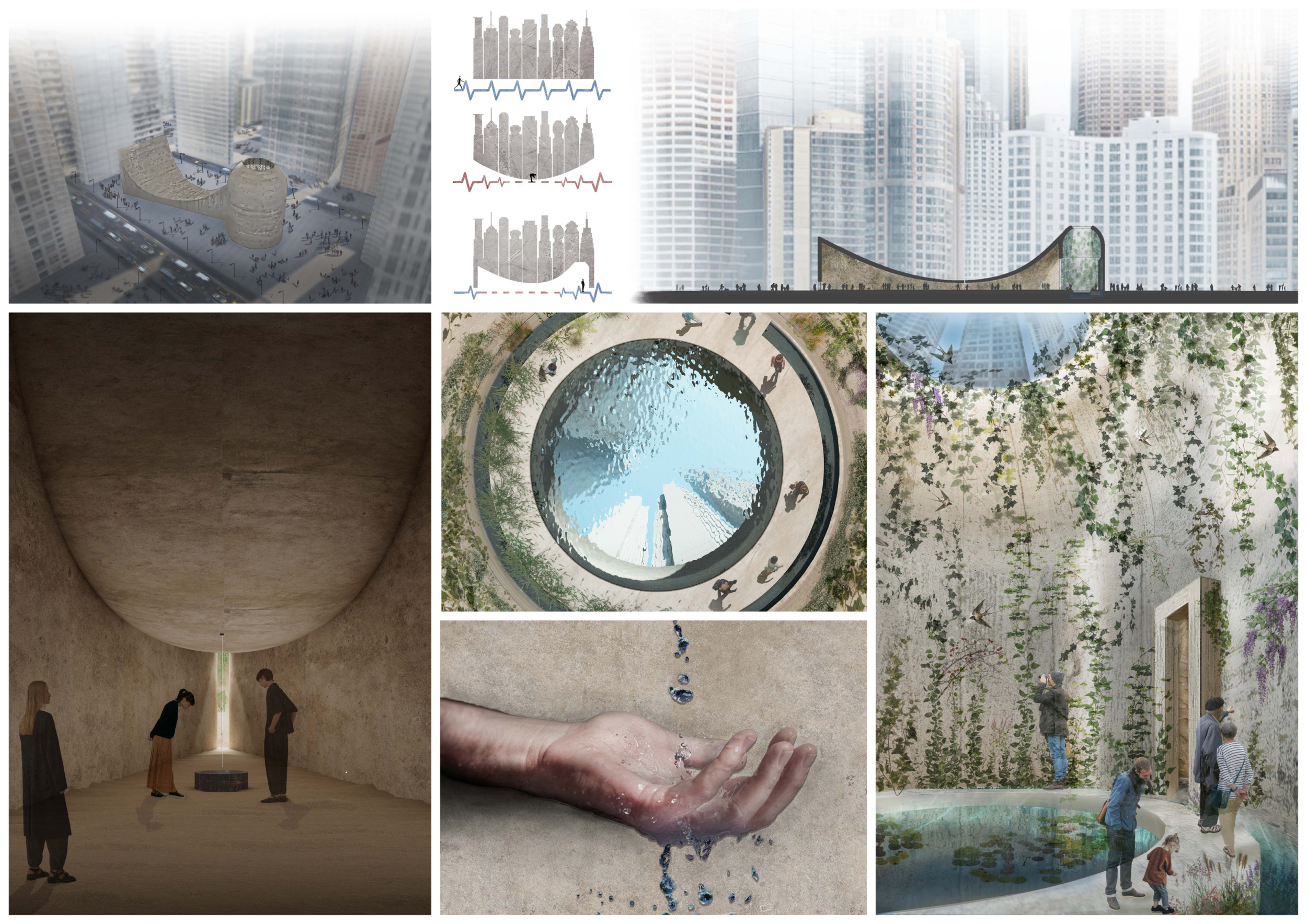
The Void of Realization
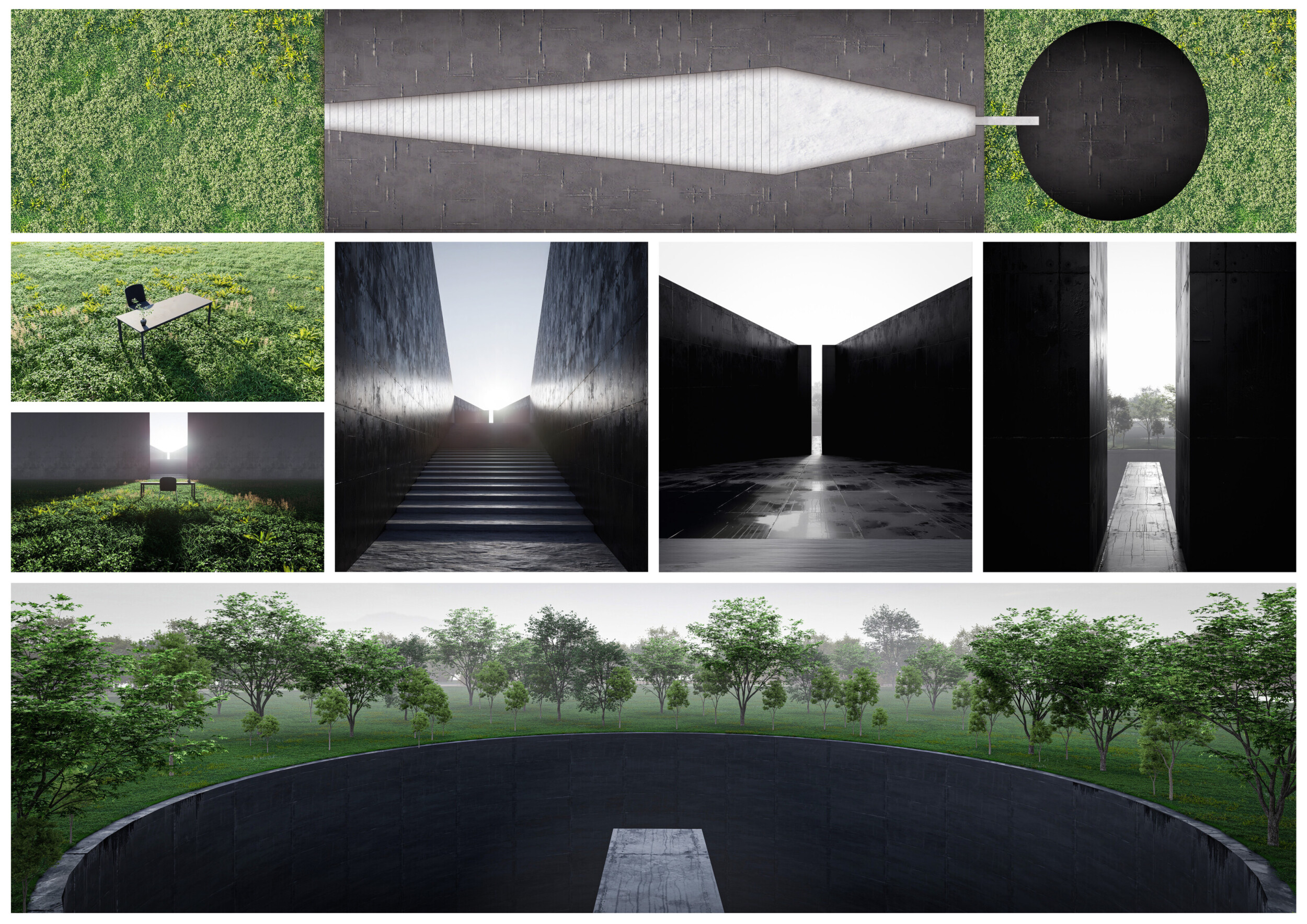
Passage
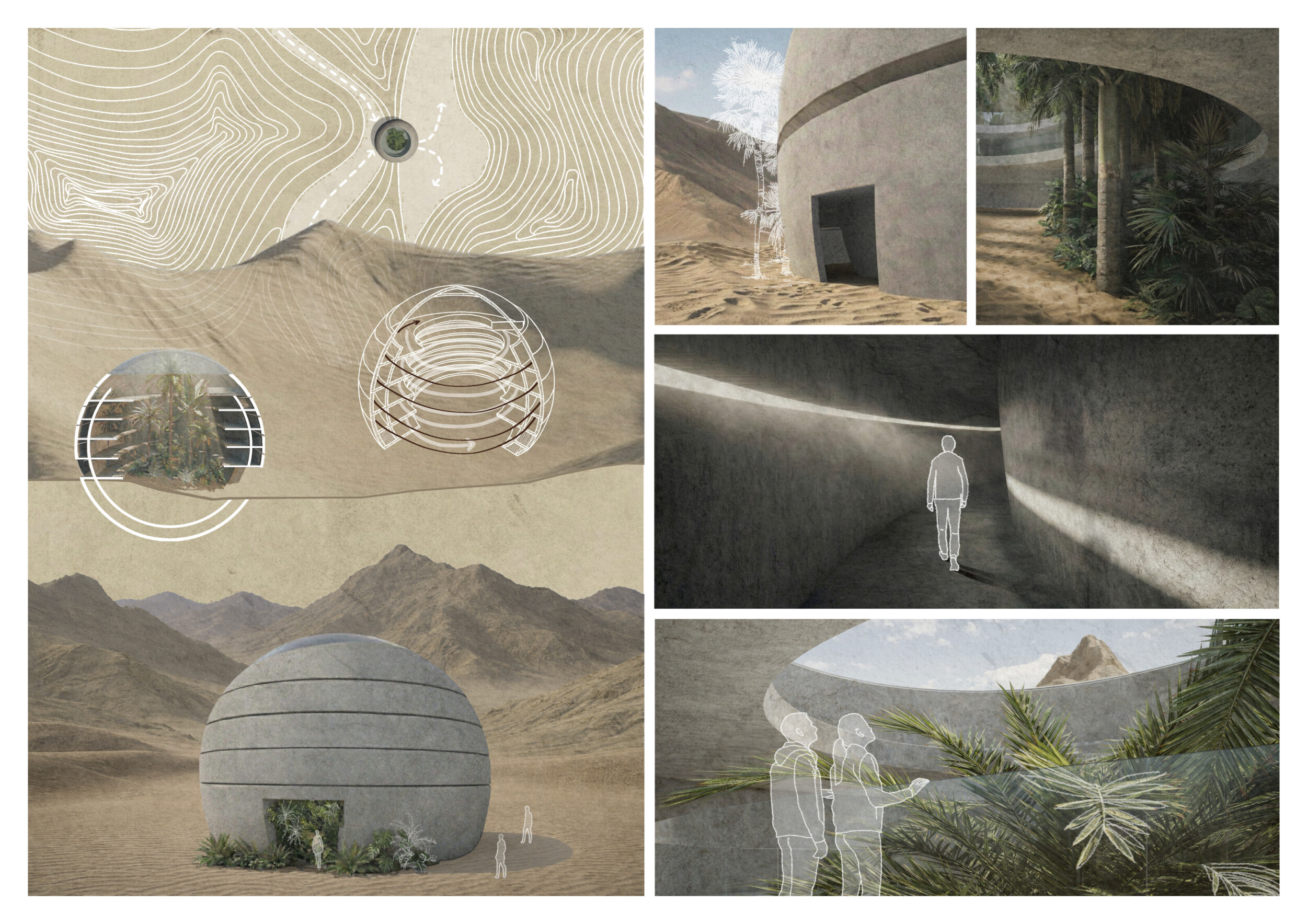

Absences
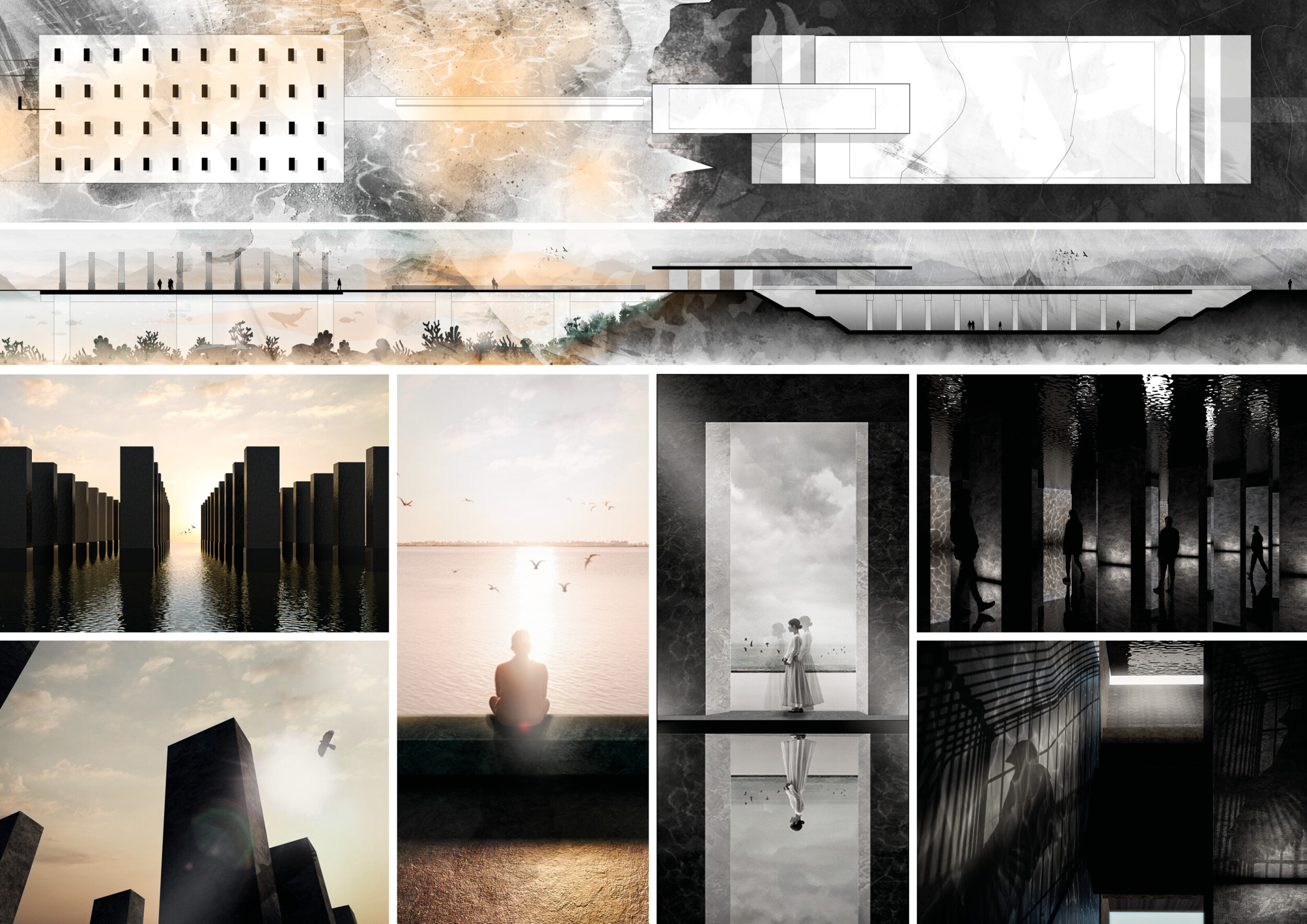

A Walk in the Rain
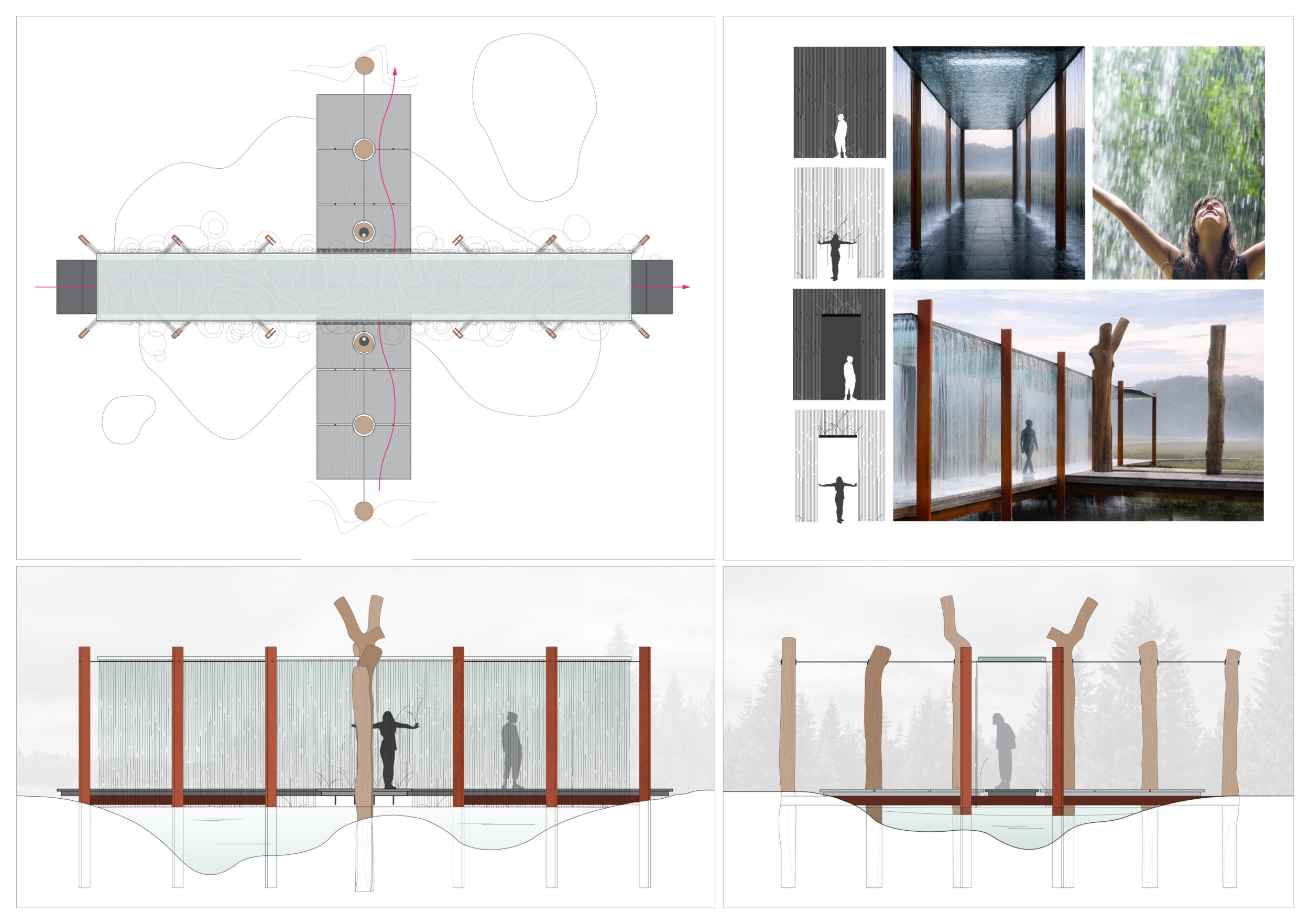
The Dark Side of the Moon
Geometry of Yin & Yang
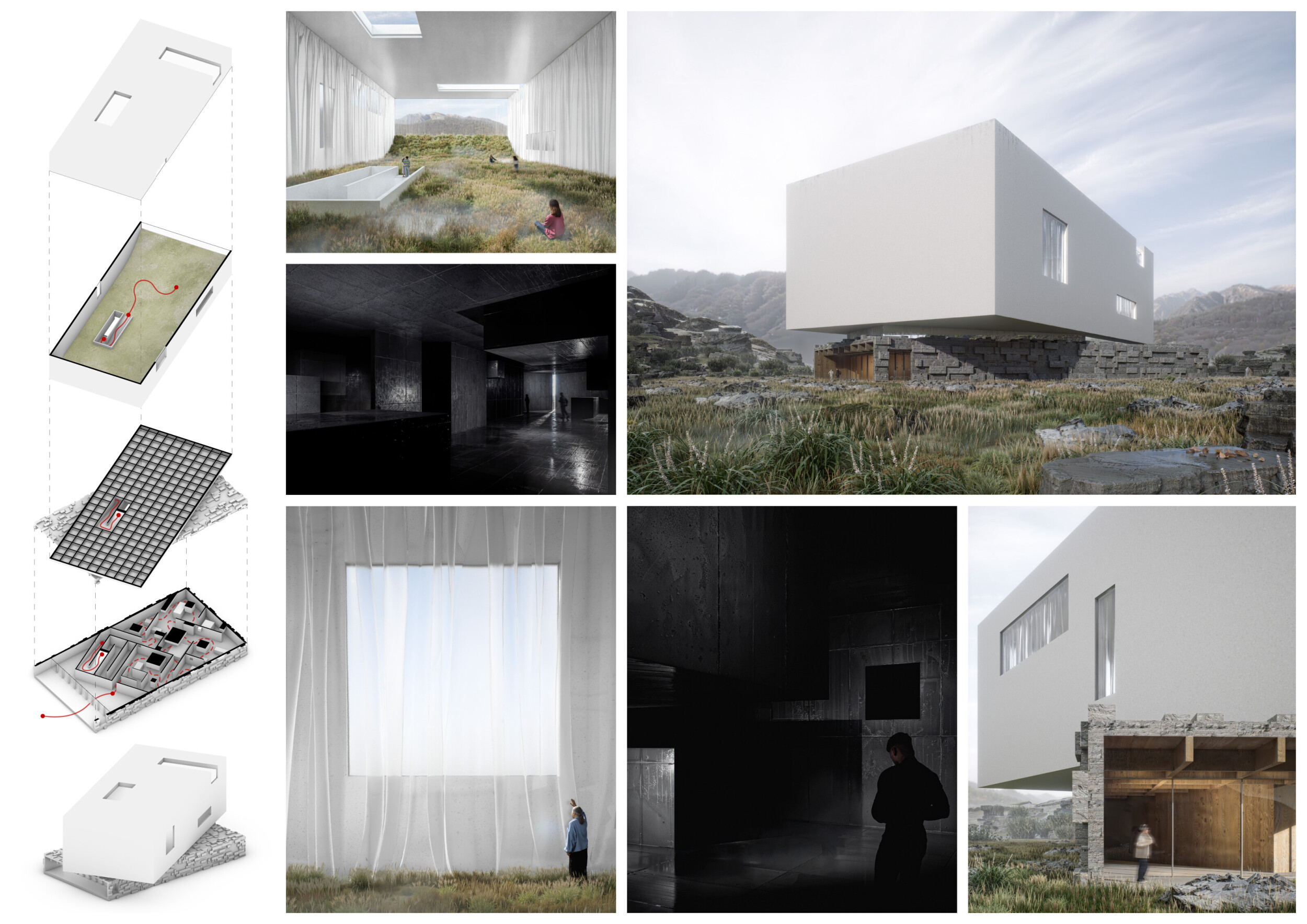

Quantum: Superposition of Emotions
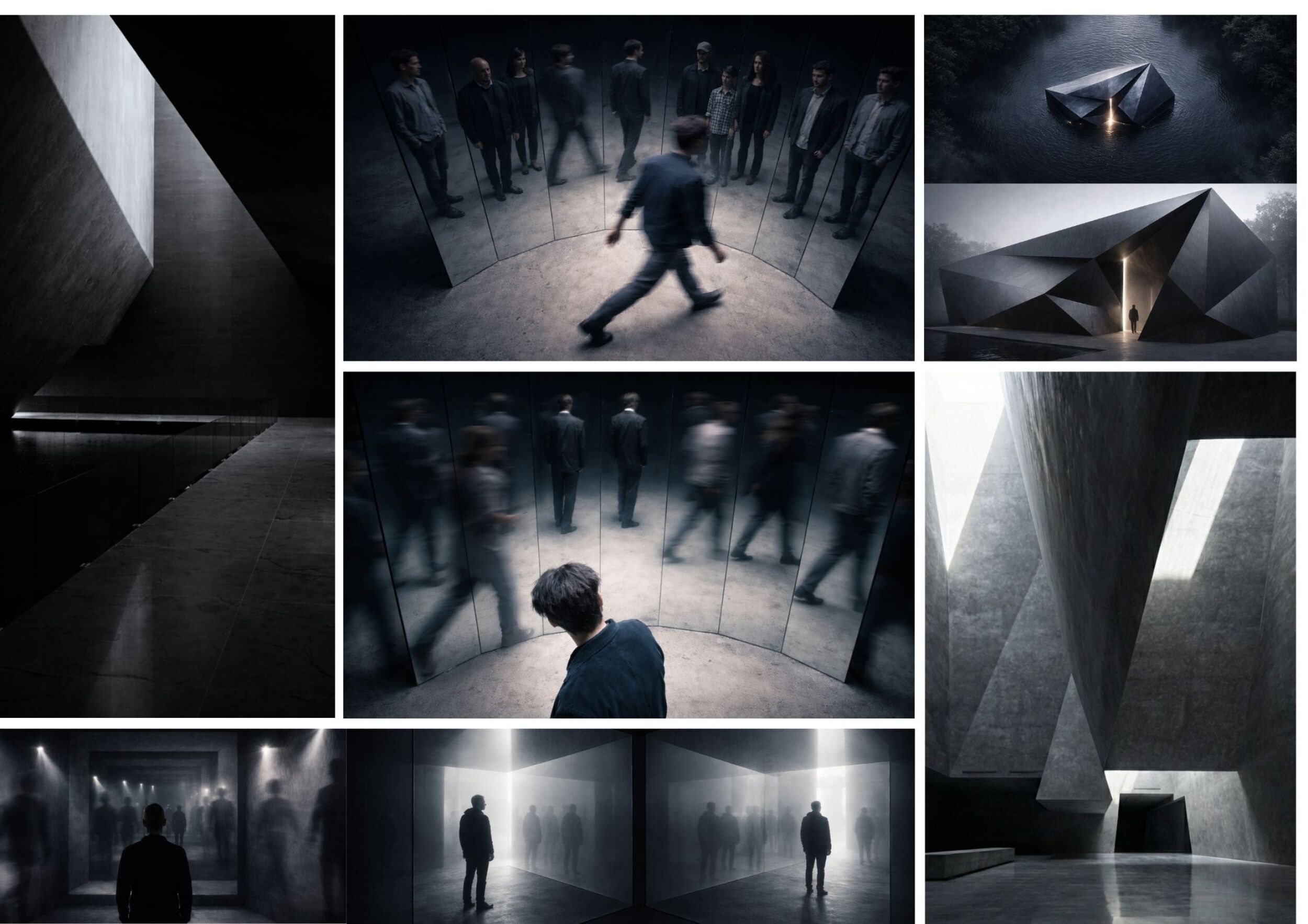
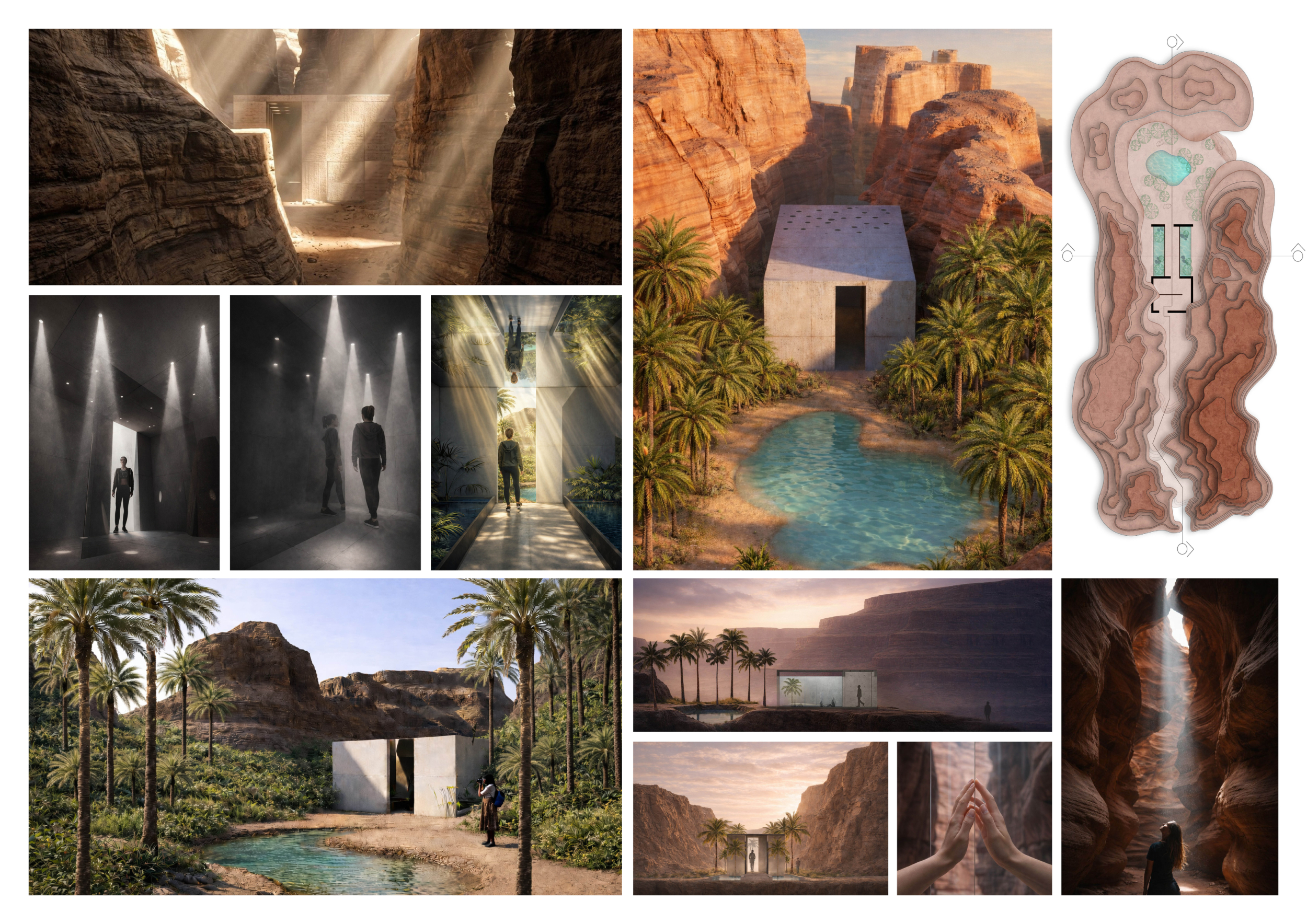
OASIS OF ARRIVAL

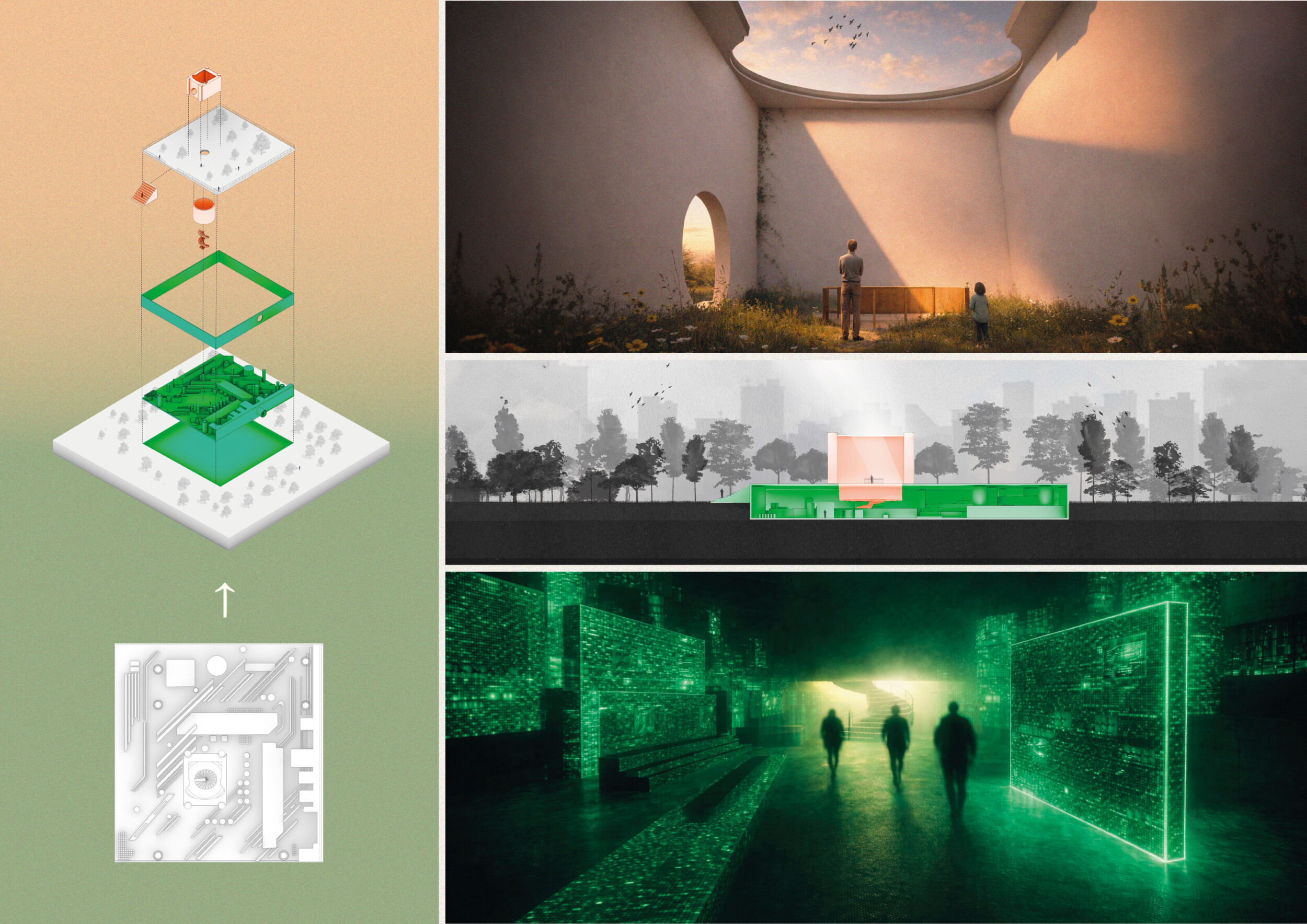
Mother Earth || Motherboard

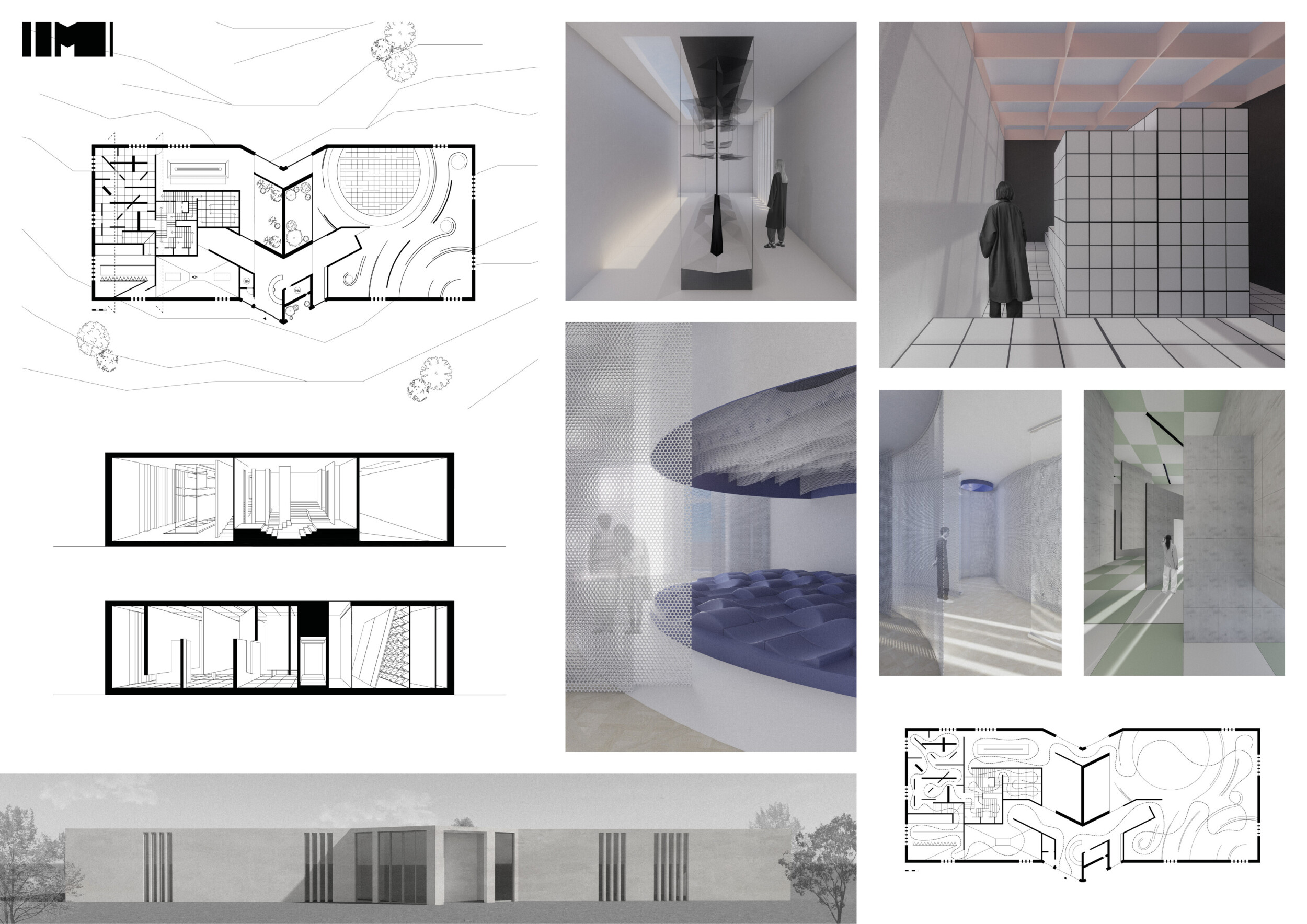
Duo

Veil of Shadow, Grove of Light
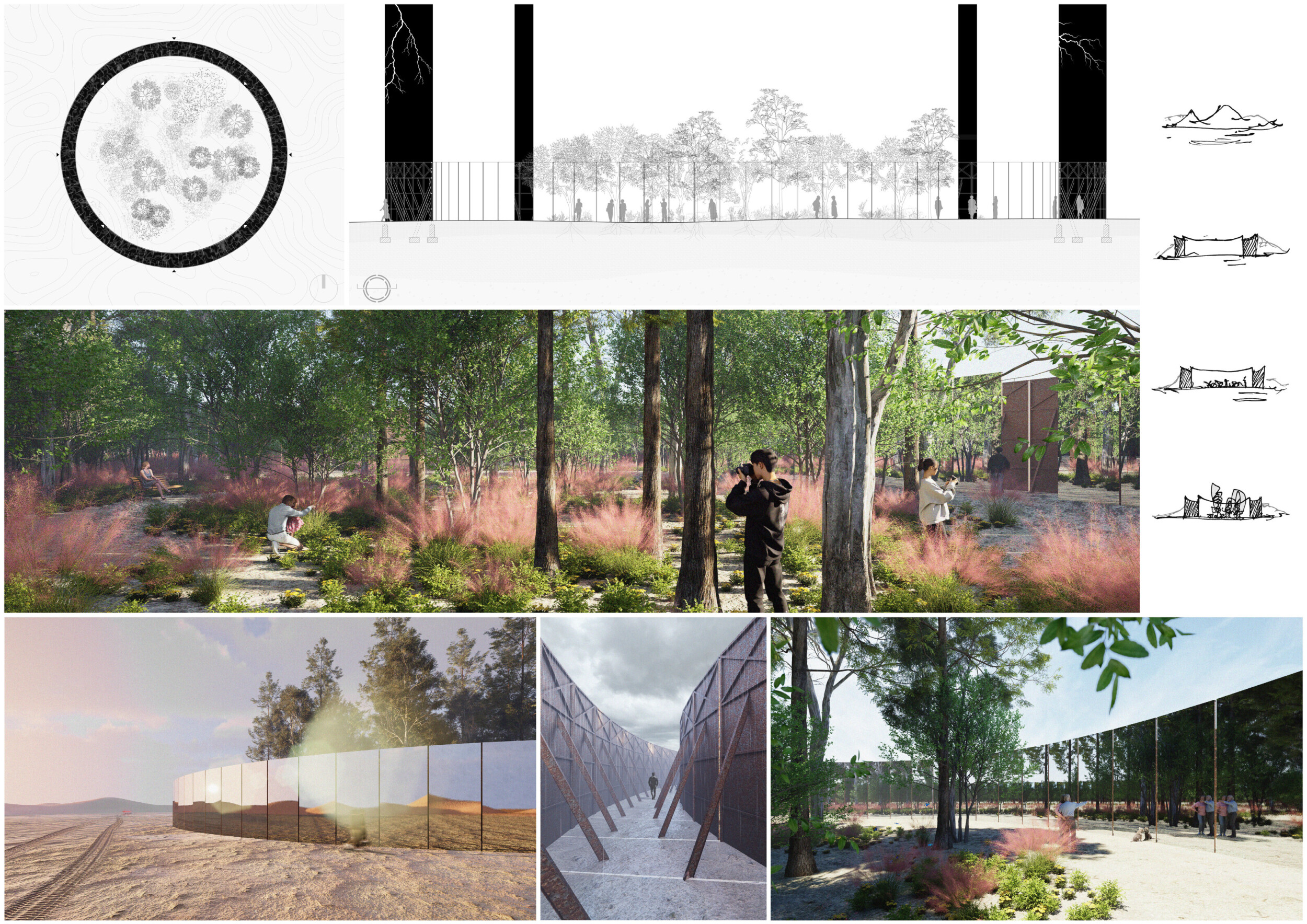
Museum of Emotions
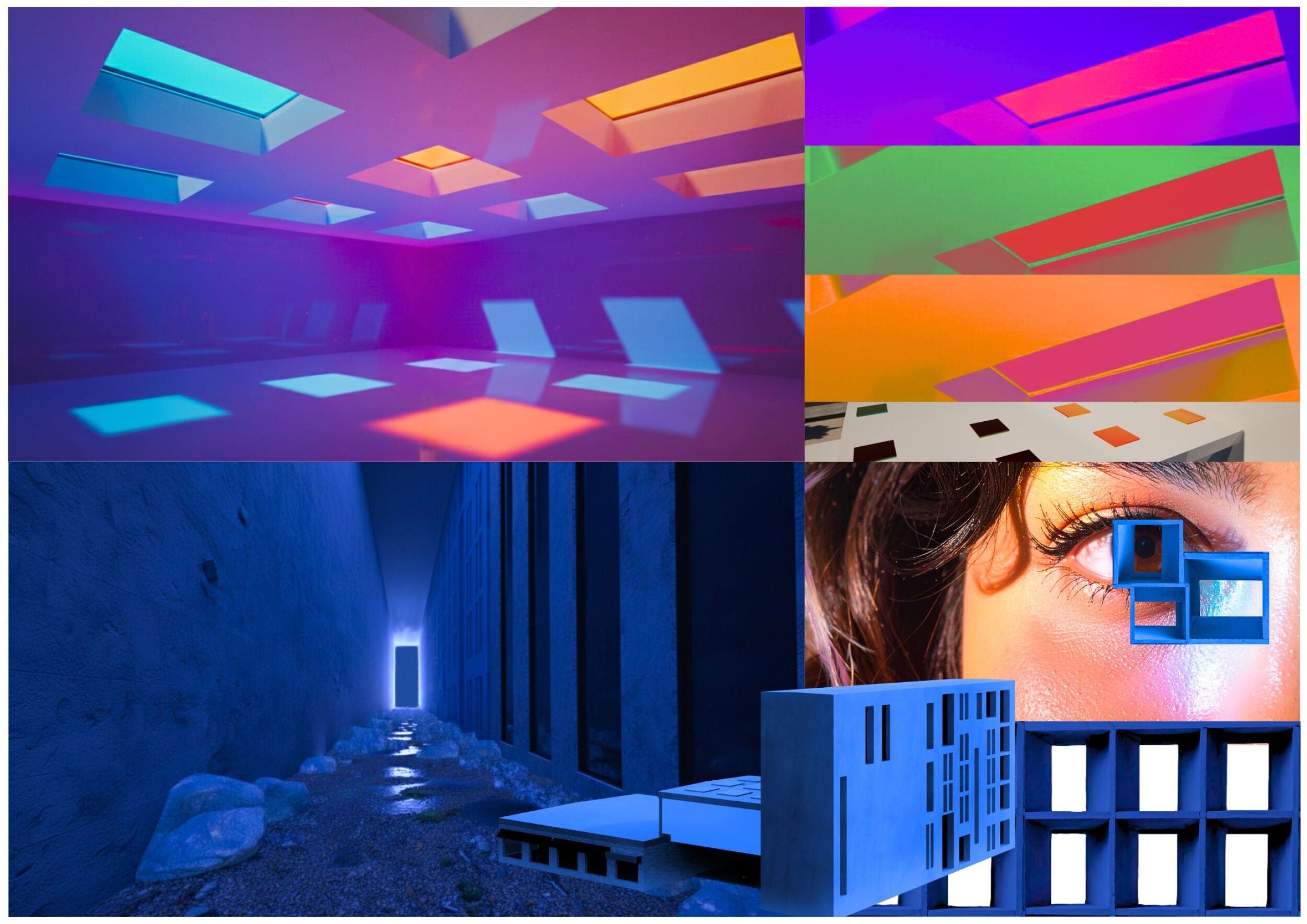
Oscillating Spectrum
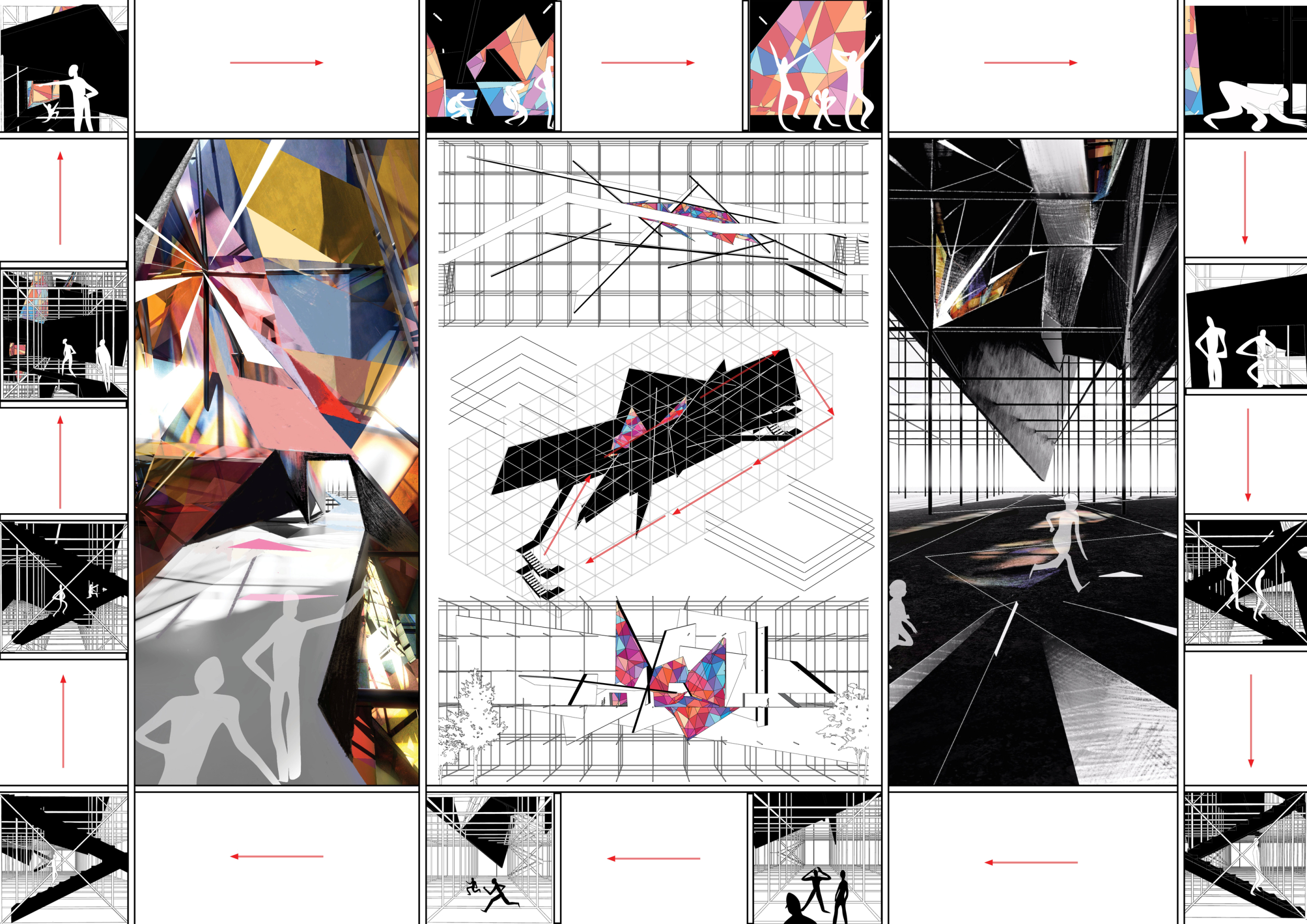
A Single Reflection
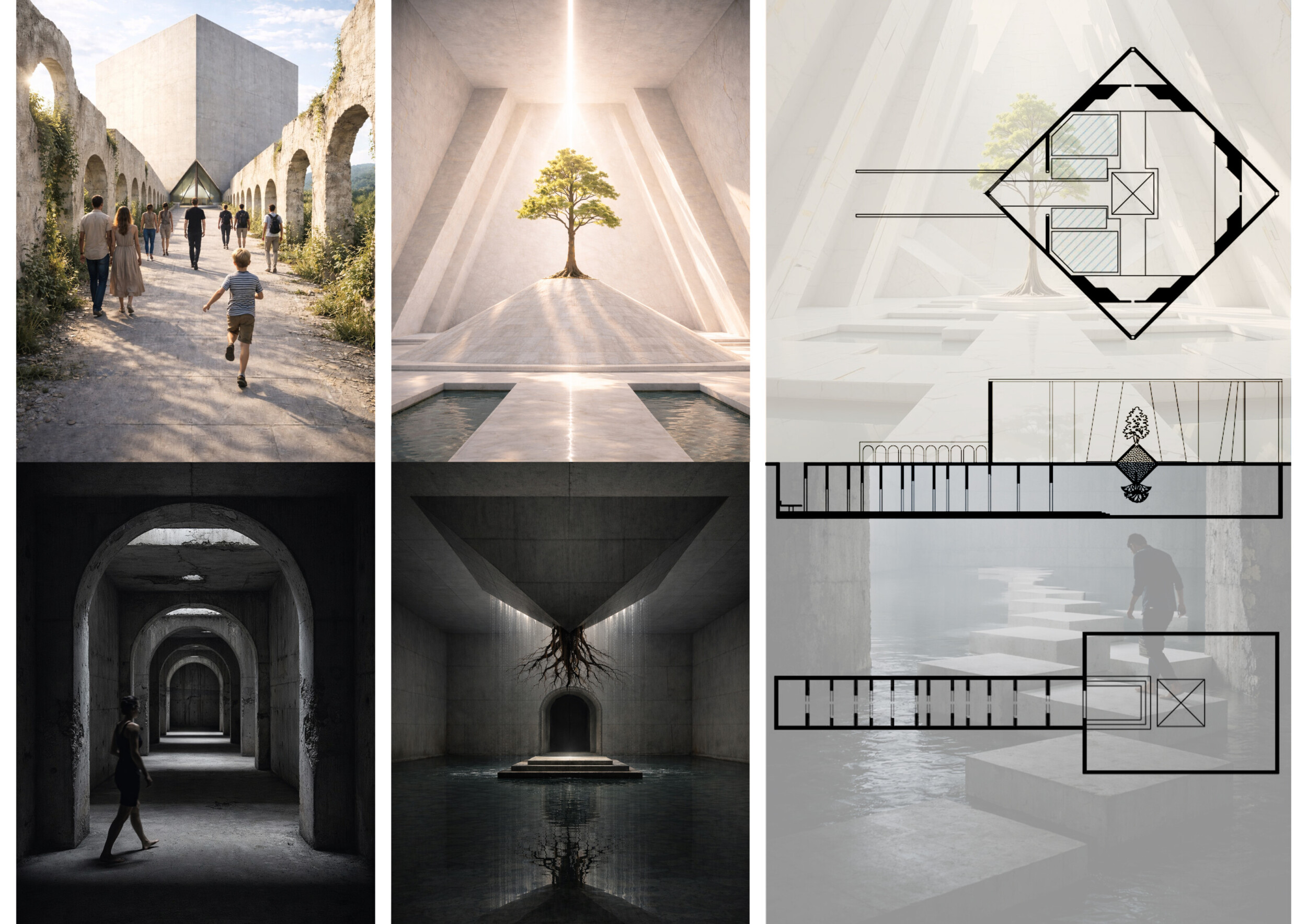
Trivium
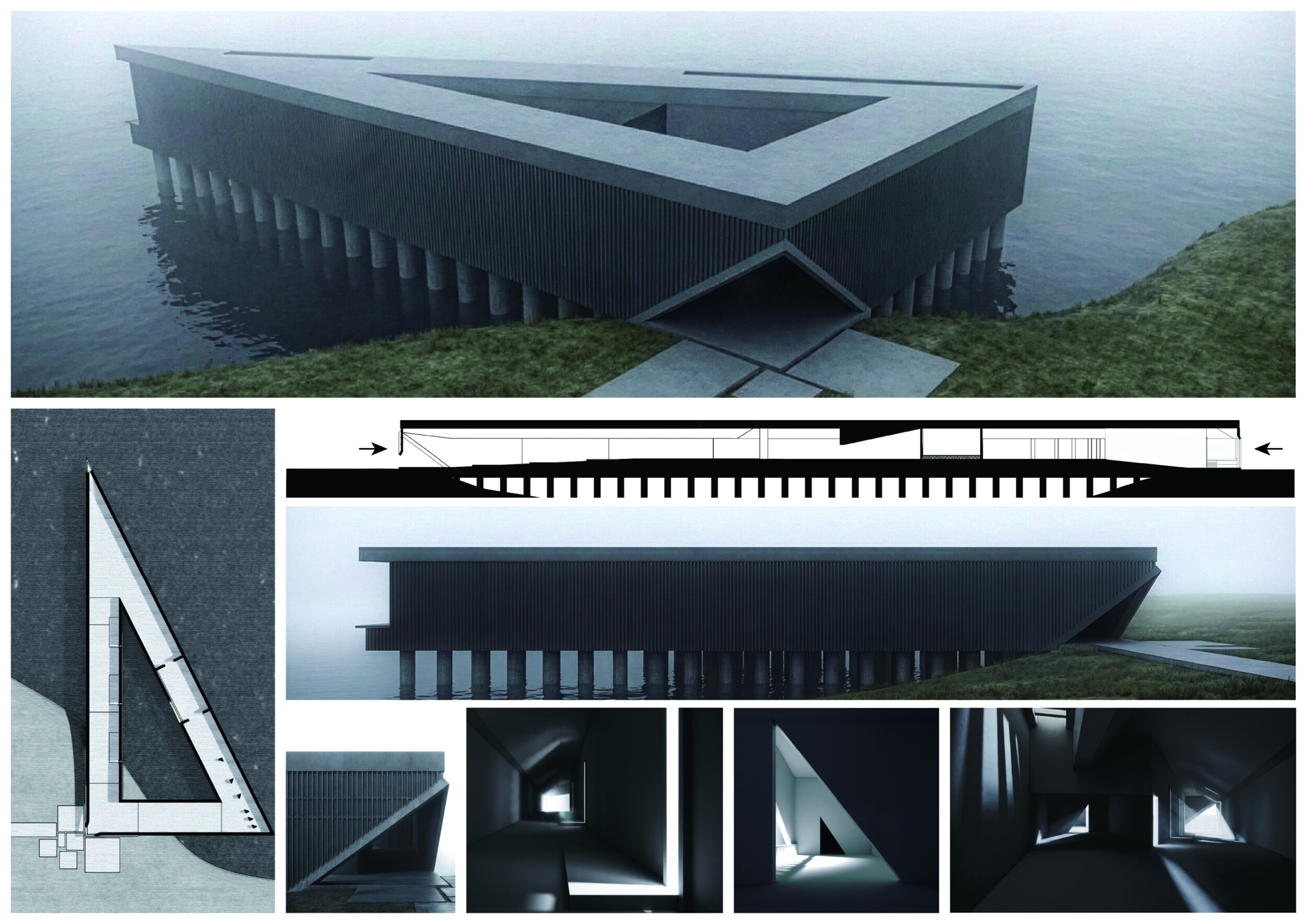
Portal
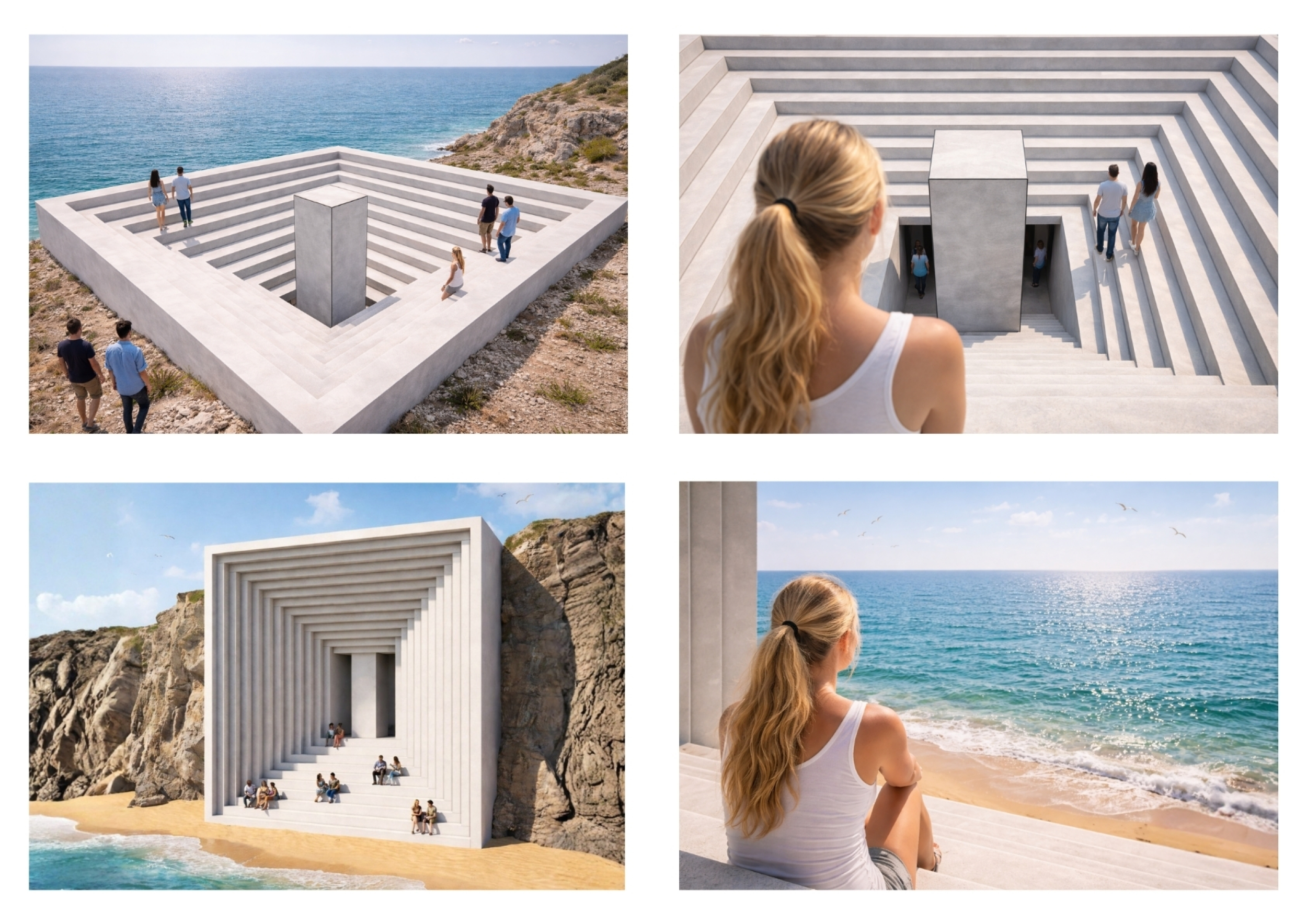
House of Stairs and Relativity
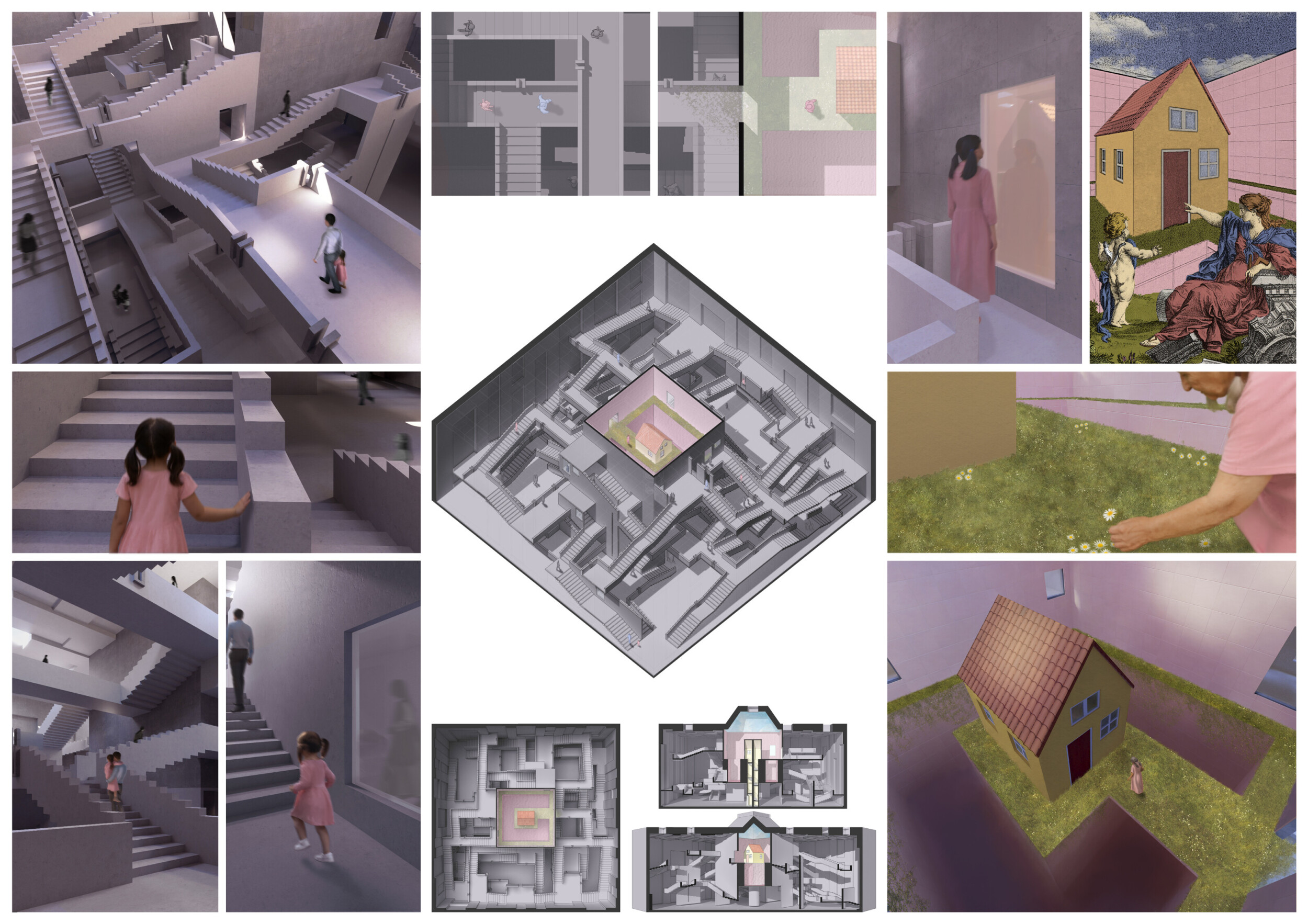

dis/connect
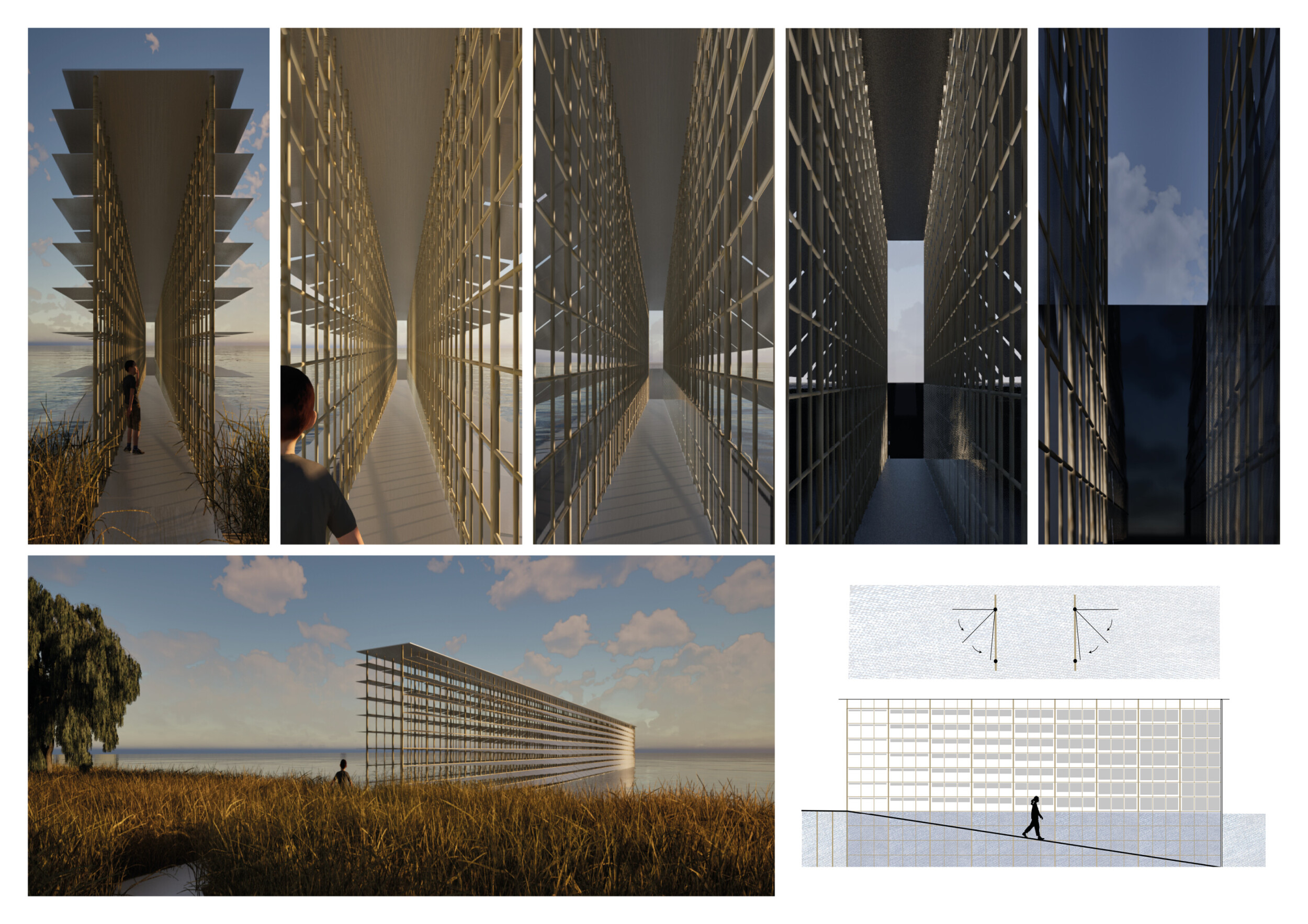

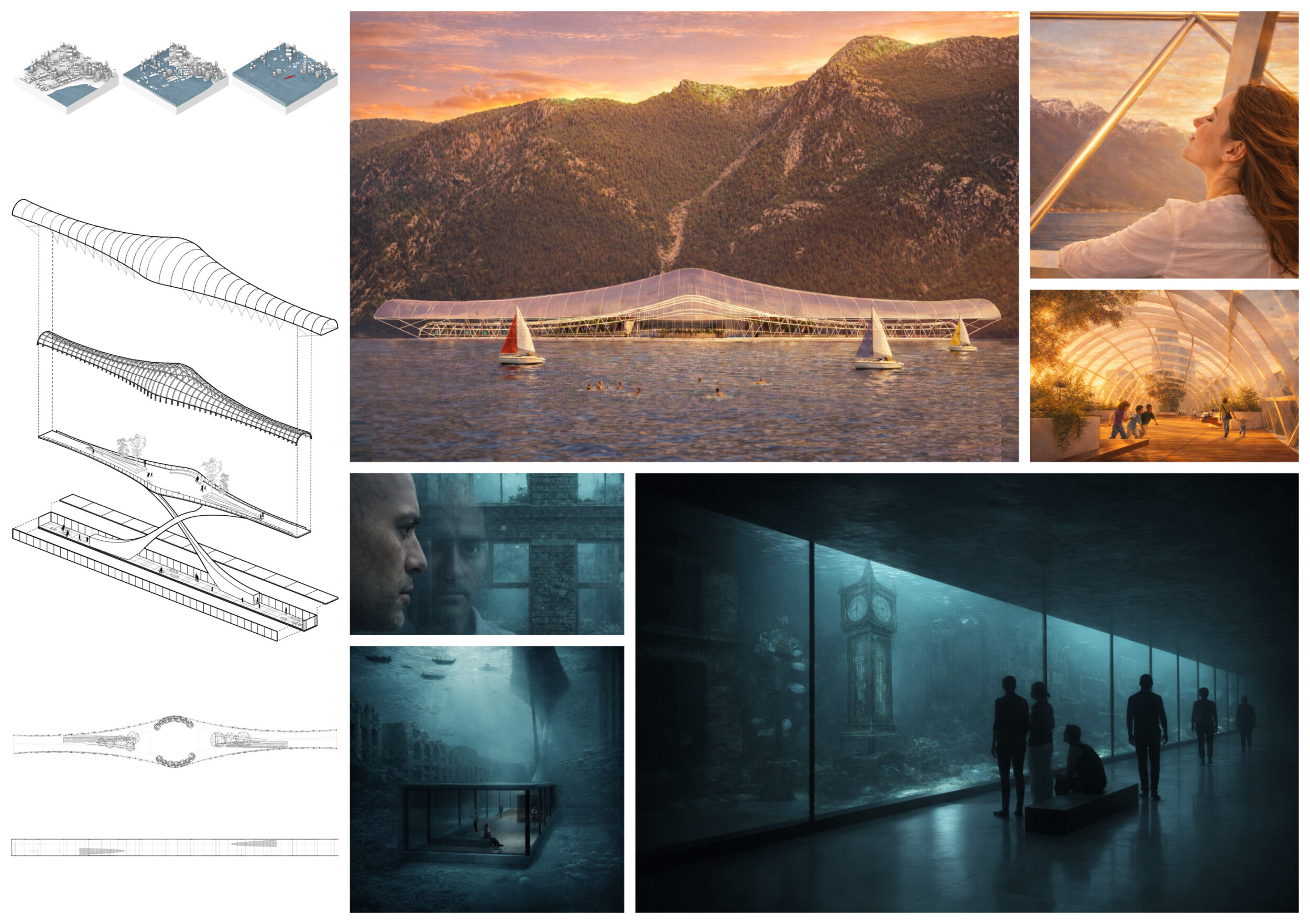
Vancouver 2326: Where Water Remembers
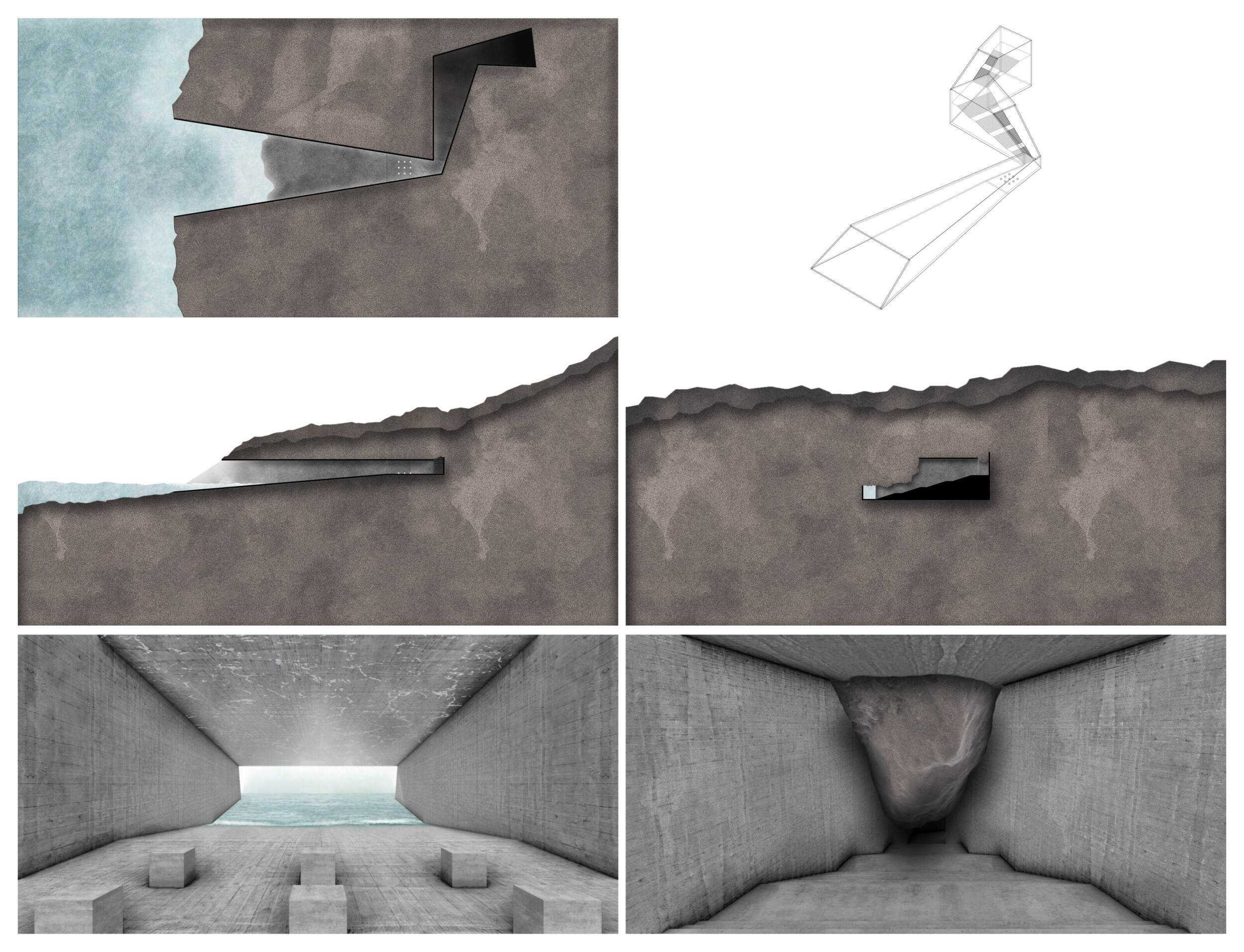
Silent Chasm
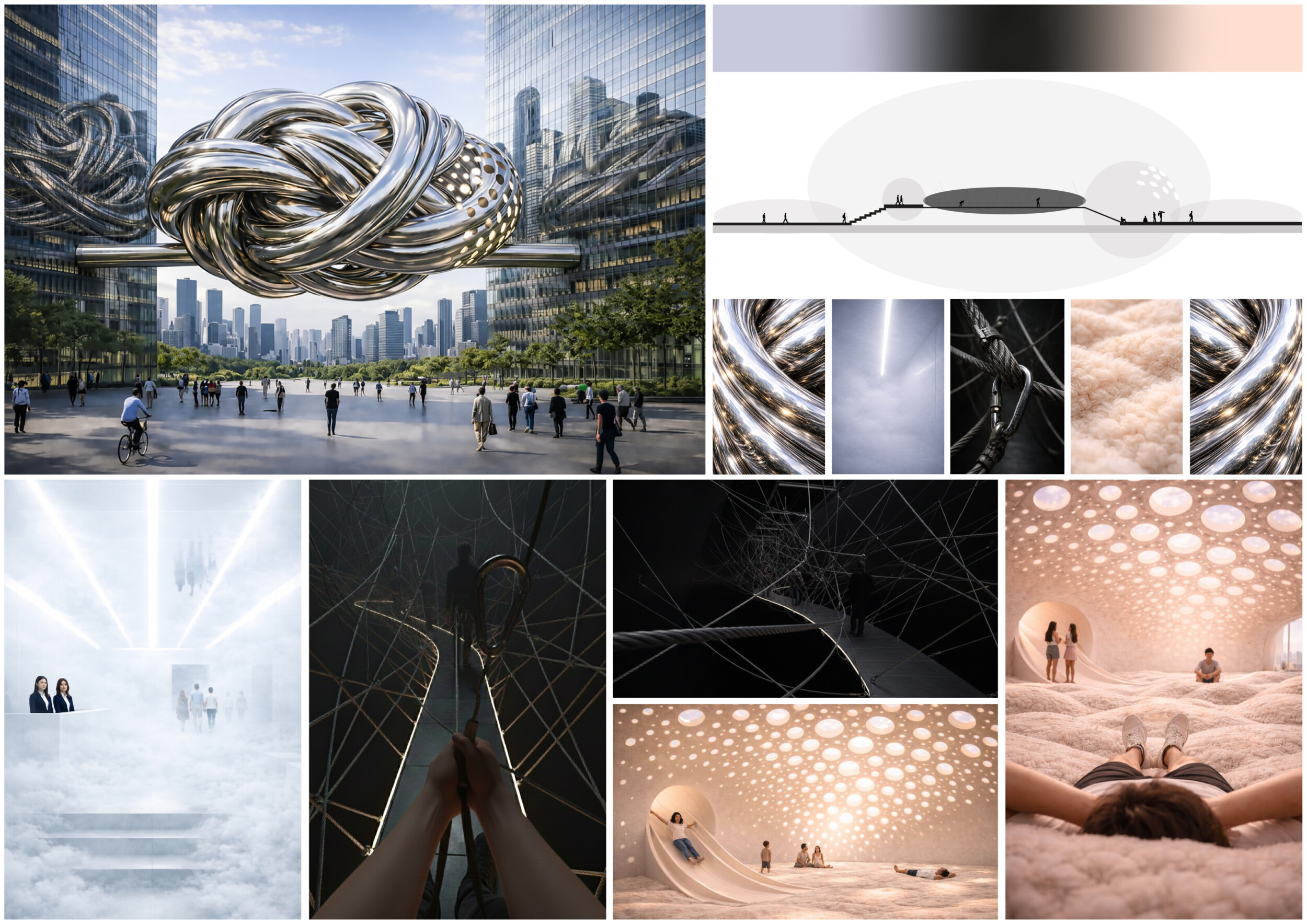
TANGLE
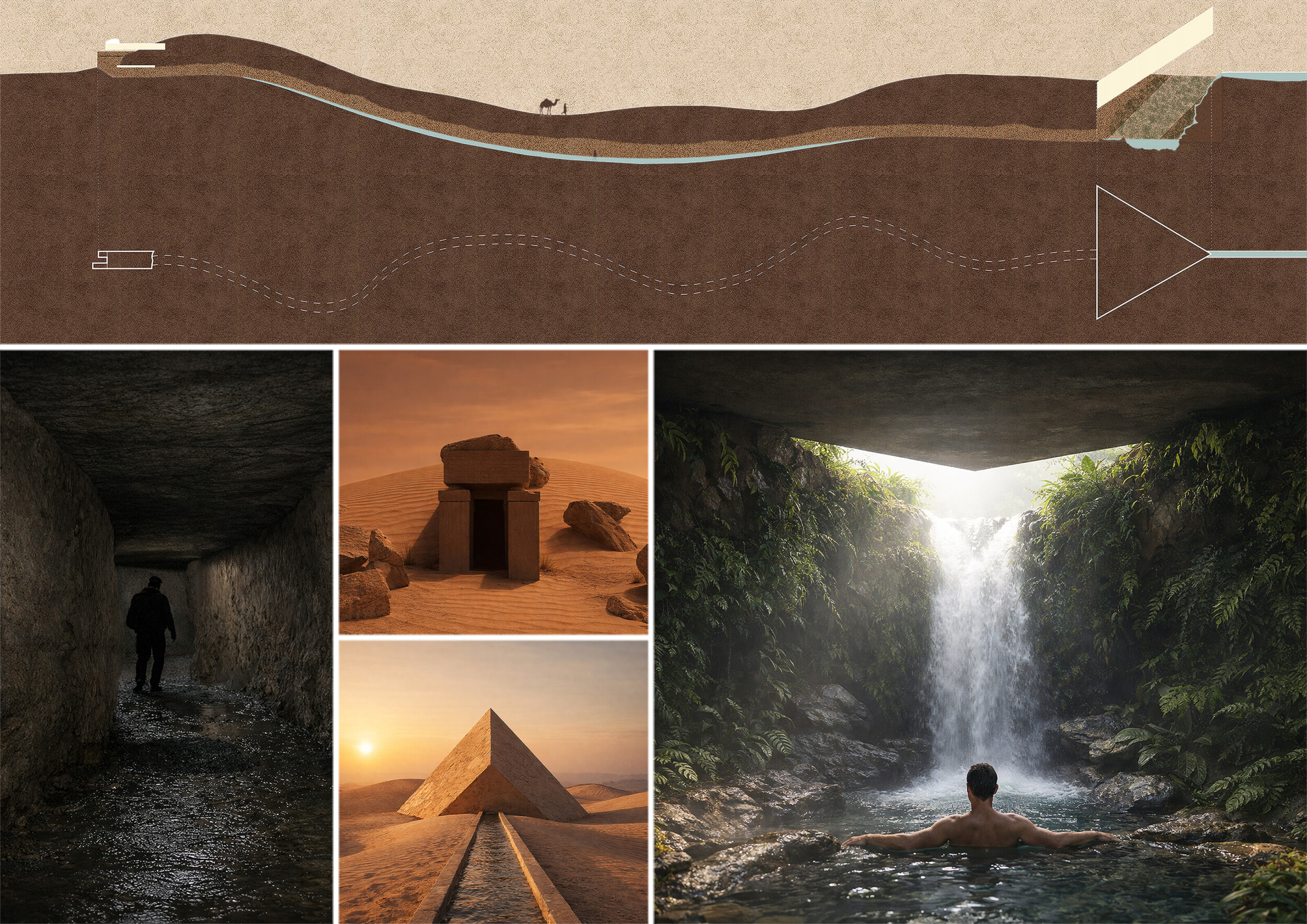
Lost Oasis

Big Reset
Inversion
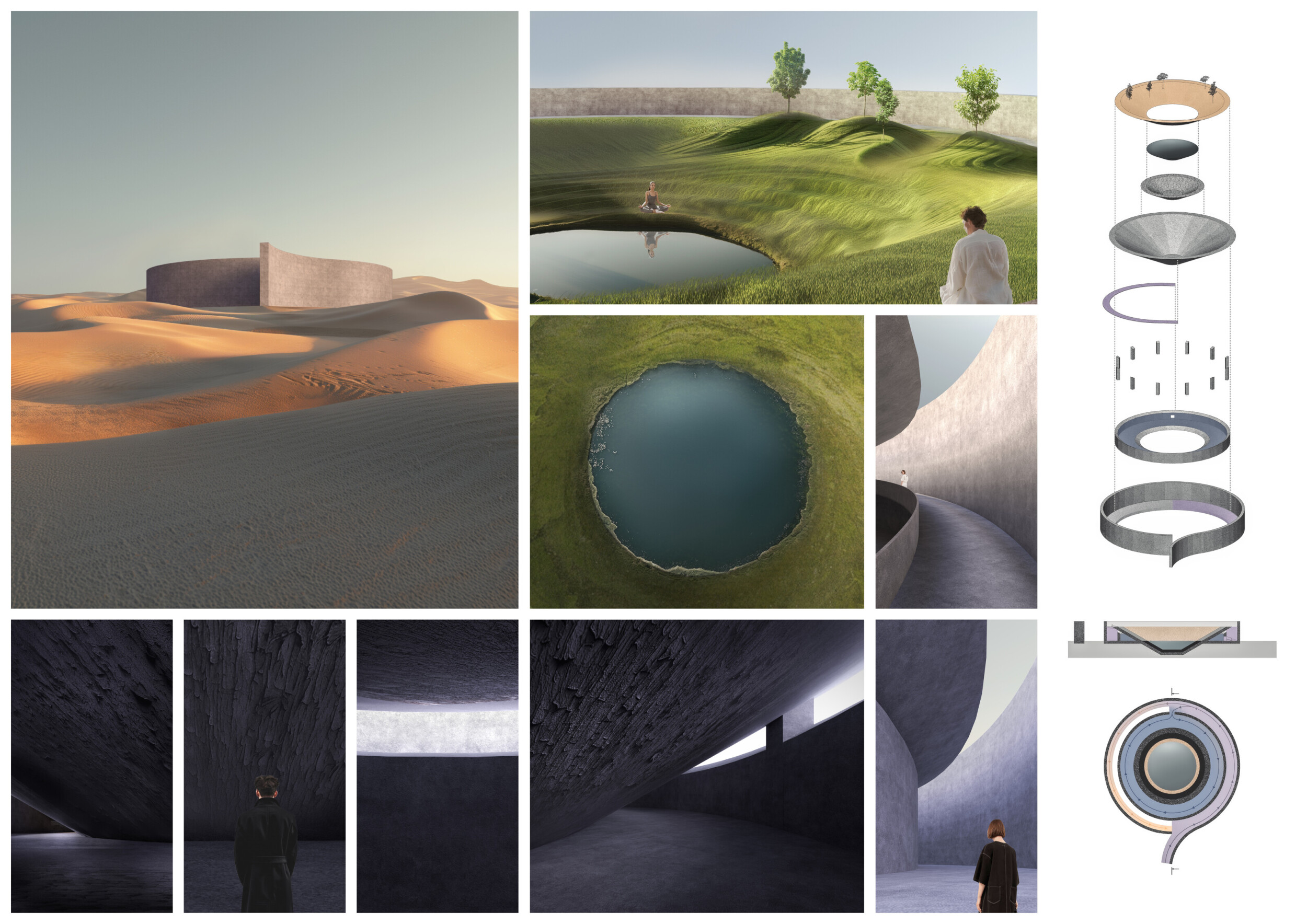
Nevertheless
Spectating Imposition
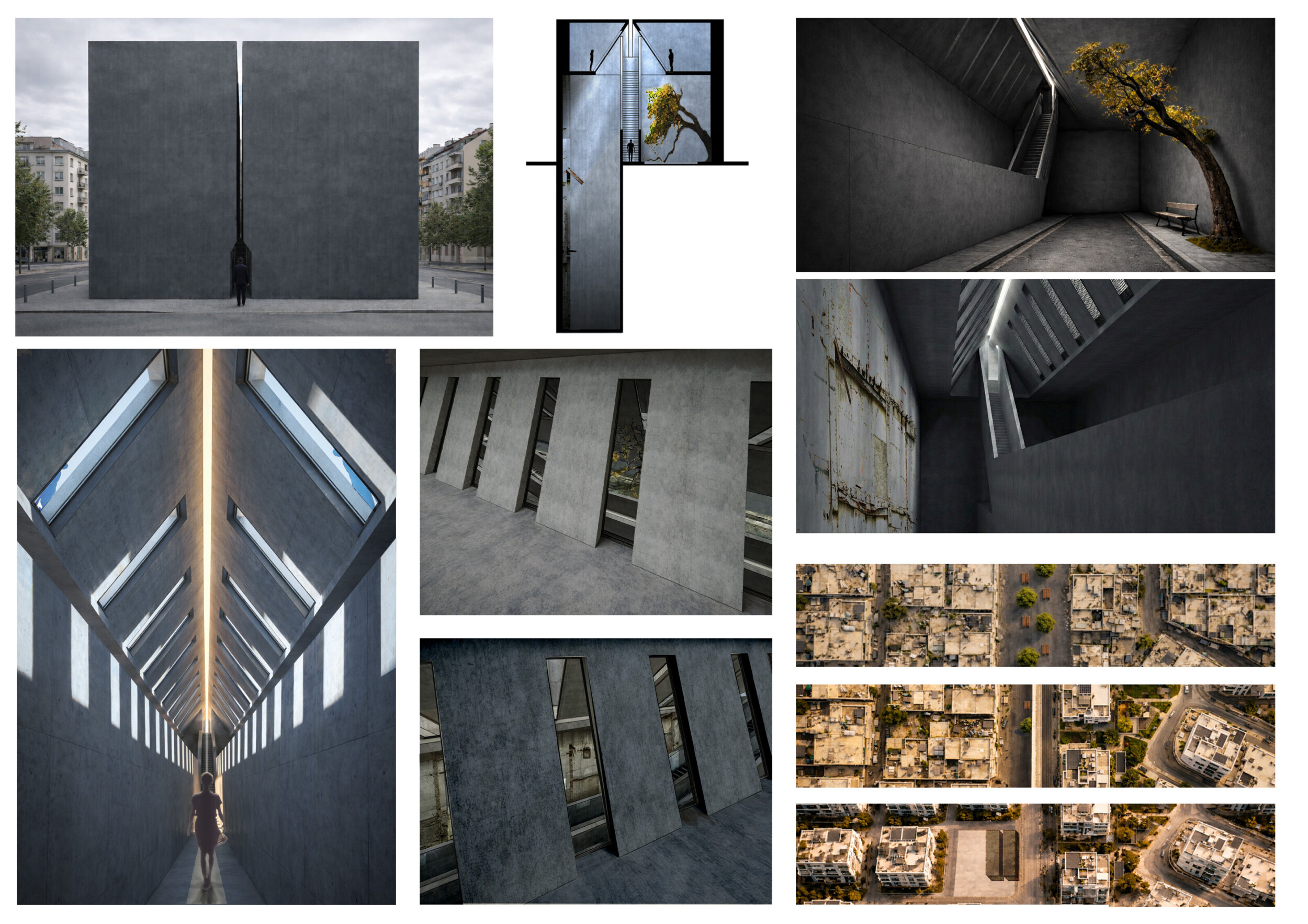
Nameless Museum
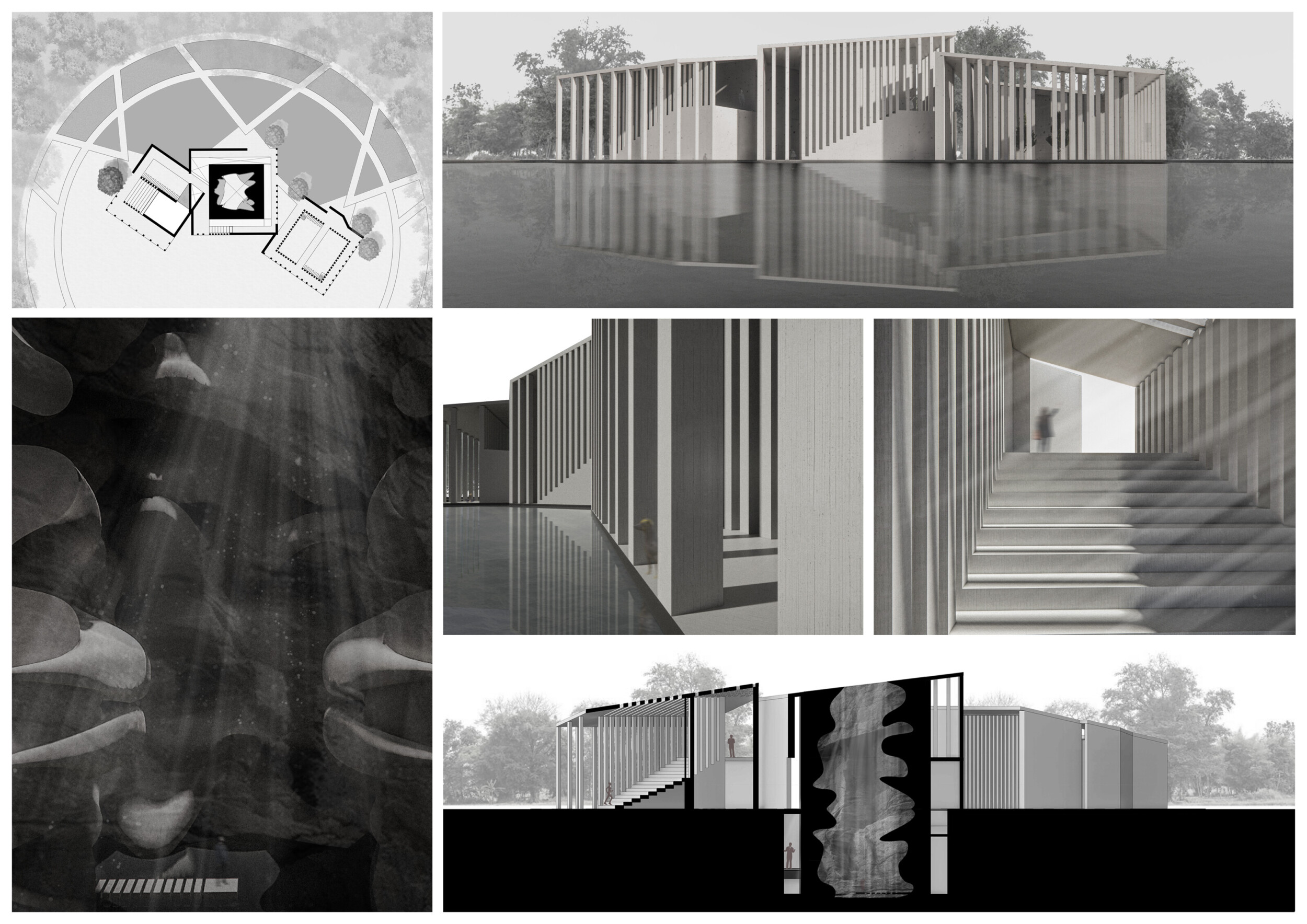

Reflection: Museum of looted Artefacts and Restitution