We’d like to take the opportunity to introduce you to the Student Award winners of our Denver Affordable Housing Challenge competition – Thiên Trí Võ, Gia Bảo Lương, đức Tuệ Nguyễn and Phương Uyên Phạm from Vietnam!
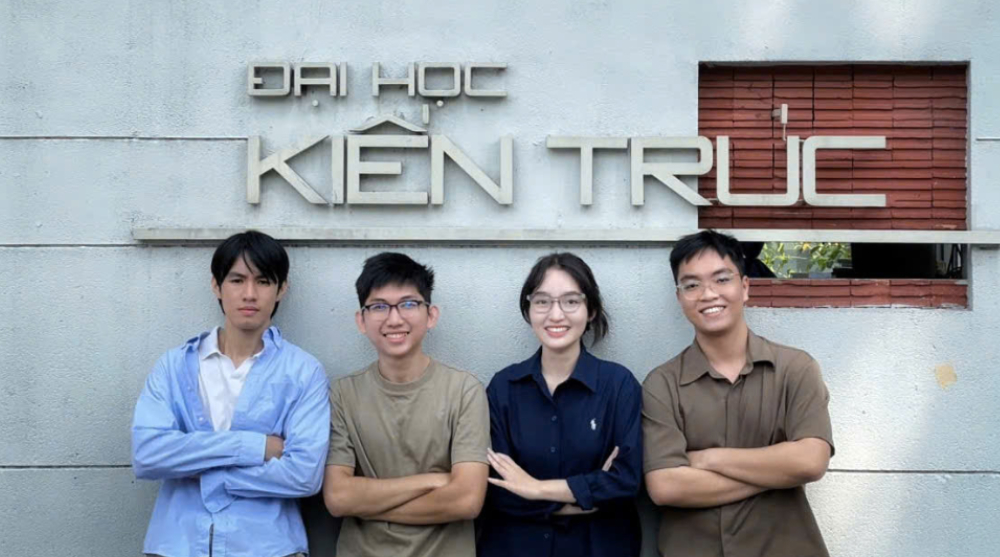
Student Award winners from Vietnam
Please tell us about your company (when it was founded, where it is based, how many employees, etc) Alternatively, if you do not have a company, please give us some insights on your own professional/academia background.
We are a group of final-year students who share the same class at the Ho Chi Minh City University of Architecture. We came together naturally through our mutual interest in participating in international architecture competitions. Throughout our academic journey, we have built a strong foundation in architectural design and developed a collaborative mindset that drives us to challenge ourselves beyond the classroom.
Brief information about the projects that you/your company have been involved with. For instance, what scale have you focused on/preferred, any significant projects where the company/ individuals have been Involved?
We have previously collaborated on several architectural competitions, mainly focusing on housing and educational facilities. These are project types we are familiar with, as they closely relate to the studio courses and design topics we have studied at our university. Through these experiences, we have strengthened our ability to work as a team, explore human-centered and context-responsive design approaches, and refine our shared architectural perspective.
What does architecture mean to you and what is the role of an architect in your society?
To us, architecture is a reflection of who we are as human beings. It expresses our true needs for shelter, belonging, and a meaningful sense of place. Architecture is not only about creating functional spaces, but also about understanding how people live, what they value, and how their environment can support their physical and emotional well-being. Around the world, architects are increasingly expected to respond to urgent challenges such as rapid urbanization, climate change, and the rising demand for affordable housing.Vietnam is not an exception. In fact, these global pressures are strongly felt in Vietnamese society. Living and working in such an environment, we have become highly sensitive to issues of space efficiency, affordability, and long-term sustainability. These conditions shape the way we think about design: we naturally prioritize compact yet flexible layouts, multifunctional community spaces, and modular systems that reduce both cost and construction time. This local experience becomes a valuable advantage when approaching international competitions. For instance, in the Affordable Housing challenge for Denver, we draw on lessons from Vietnam to propose housing that is not only economical but also adaptable, resilient, and rooted in human-centered design.
Why do you participate in architecture competitions?
My primary motivation is to bridge the gap between academic theory and professional reality. While my university education has provided me with a strong conceptual foundation, I believe that true growth comes from navigating the constraints and complexities of real-world problems. Participating in this competition is an opportunity for me to step out of my academic comfort zone, challenge my problem-solving skills against tangible constraints, and gain the practical insights essential for my future career as an architect. More importantly, I want to move beyond "paper architecture" to create solutions that are not only visually compelling but also structurally viable and contextually responsive. This competition challenges me to consider the lifecycle of a building, material efficiency, and the actual user experience—elements that are often idealized in a purely academic setting.
What advice would you give to individuals who struggle to decide whether it would be beneficial for them to participate in architecture competitions?
Our advice is to stop thinking of competitions as a waste of time and start seeing them as a testing ground. In professional practice, we are often bound by budgets, client demands, and regulations. Competitions offer a rare freedom to experiment, fail, and refine your unique design voice without consequence. Even if you don't win, the resilience and discipline required to complete a submission will sharpen your skills faster than any routine project could.
Top 3 Reasons Why You Should Enter Architecture Competitions
Curious about the value of architecture competitions? Discover the transformative power they can have on your career - from igniting creativity and turning designs into reality, to gaining international recognition.
Learn more