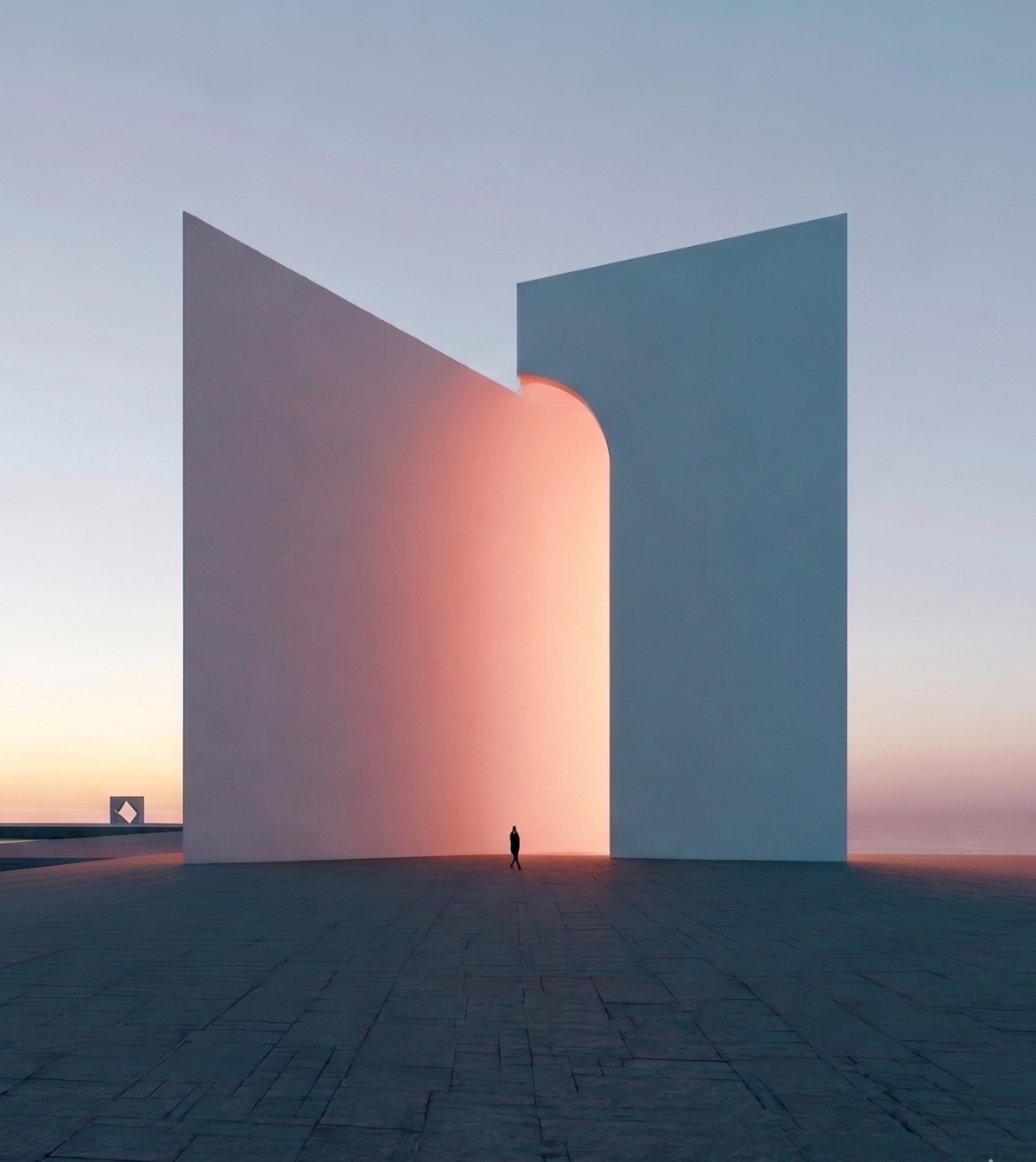
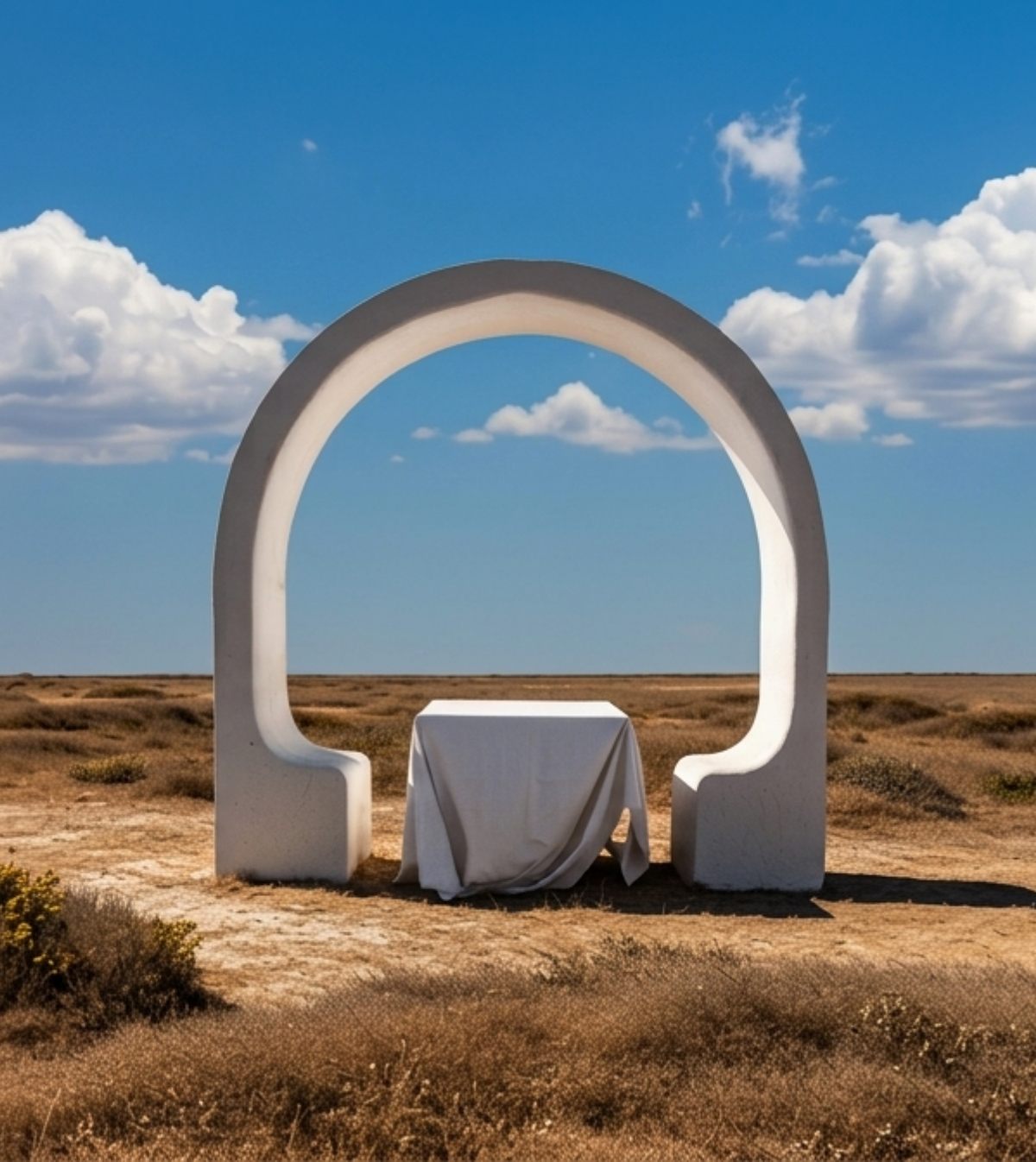
We’d like to take the opportunity to introduce the Honorable Mention winners of Buildner's Unbuilt Award 2025 competition – Catherine Marielle Wilmes and Eduardo Cilleruelo Teran from United States!

Eduardo Cilleruelo Teran and Catherine Marielle Wilmes
Please tell us about your company (when it was founded, where it is based, how many employees, etc) Alternatively, if you do not have a company, please give us some insights on your own professional/academia background.
Catherine Wilmes is an Assistant Professor at the Illinois Institute of Technology College of Architecture. Her work has two primary threads: designing educational environments—campus plans, school interiors, and furniture—and academic research on architectural pedagogy and representation. She has taught at Cornell University (Visiting Critic and Design Teaching Fellow), Pratt Institute (Visiting Assistant Professor), and Syracuse University (Visiting Instructor).
Eduardo Terán is an Assistant Professor of Architecture at Texas Tech University’s Huckabee College of Architecture. His work has two primary threads: research on the spatial, cultural, and political implications of infrastructure and digital networks, and design inquiry at the intersection of technology and territory. He has taught at Cornell University as a Design Teaching Fellow and has also been a Visiting Instructor at Syracuse University and Montana State University. His work has received awards and been exhibited internationally, including at the Venice Biennale, the Cornell University Biennial, and by Spain’s Ministry of Housing and Urban Agenda, among others.
Brief information about the projects that you/your company have been involved with. For instance, what scale have you focused on/preferred, any significant projects where the company/ individuals have been Involved?
Catherine Wilmes’s built has focused on educational environments from nursery through 12th grade, spanning projects in the United States, Brazil, and China. As a former Design Teaching Fellow at Cornell’s AAP, Wilmes developed a body of academic work on architectural pedagogy and representation. She taught seminars on photography, drawing, and visual analysis that examined the production of architectural knowledge through images. Within this work, she curated the exhibition Identity Crisis (2024) and directed SIGHTLINES (2025), a symposium on architectural representation and photography, among many other student exhibitions that she uses as pedagogical tools for collective learning.
In 2025, Eduardo Terán co-designed De Roca Madre, a temporal pavilion in Gran Canaria that mobilizes local stone-and-wood traditions to set geological time against accelerated ecological impact and the circulation of waste and microplastics. In 2024 at Cornell AAP, he presented Data Tactics and Post—Lands (Milstein Hall, Ithaca, New York), drawing on operating strategies and a sequence of chambers to reframe the data center as a political and territorial apparatus.
What does architecture mean to you and what is the role of an architect in your society?
Architecture is a practice of care—care for materials, for labor, for the people who inhabit and construct space. It's not just about solving problems but about revealing opportunities within constraints. The role of the architect is to design systems that are responsive, repairable, and rooted in the specificity of place and material. In society, architects have a responsibility to challenge waste, both material and conceptual. We should build in ways that acknowledge uncertainty and variability rather than trying to eliminate them. This means creating structures that can adapt, be repaired by hand, and persist through reuse rather than permanence. Architecture should teach—it should reveal how things are made, how they work, and how they can be remade.
Why do you participate in architecture competitions?
Competitions offer space for speculation—a chance to test ideas without the immediate constraints of client approval or regulatory frameworks. They allow us to explore material behaviors and construction methods that might seem unconventional within typical practice. For Playwood specifically, the competition format provided an opportunity to challenge the industry's relationship with "defective" materials. The project asks: what if we built with what's discarded rather than perfected? Competitions let designers ask these questions publicly and materially, turning propositions into tangible prototypes that can circulate, provoke, and inform future work.
What advice would you give to individuals who struggle to decide whether it would be beneficial for them to participate in architecture competitions?
Participate when you have something specific to test—a material curiosity, a typological question, or a construction method you want to explore outside the constraints of conventional practice. Competitions are most valuable when they help you advance an ongoing line of research or thinking, not just when they promise a prize. Consider the competition brief as a framework, not a prescription. The best projects emerge when designers bring their own questions to the prompt. If the competition allows you to work at a scale or with a freedom you don't normally have access to, it's worth the investment. Finally, approach competitions as a form of practice, not just as validation. Whether you win or not, the work should advance your thinking and contribute to a body of research that matters to you.
Top 3 Reasons Why You Should Enter Architecture Competitions
Curious about the value of architecture competitions? Discover the transformative power they can have on your career - from igniting creativity and turning designs into reality, to gaining international recognition.
Learn more