

Buildner is a global leader in organizing architecture competitions of all scales — from furniture, cottages, and guesthouses to full city rebranding. With prize budgets ranging from €5,000 to €500,000, Buildner brings proven global experience to every competition.
Launch a competitionLaunch a competition
Introduction

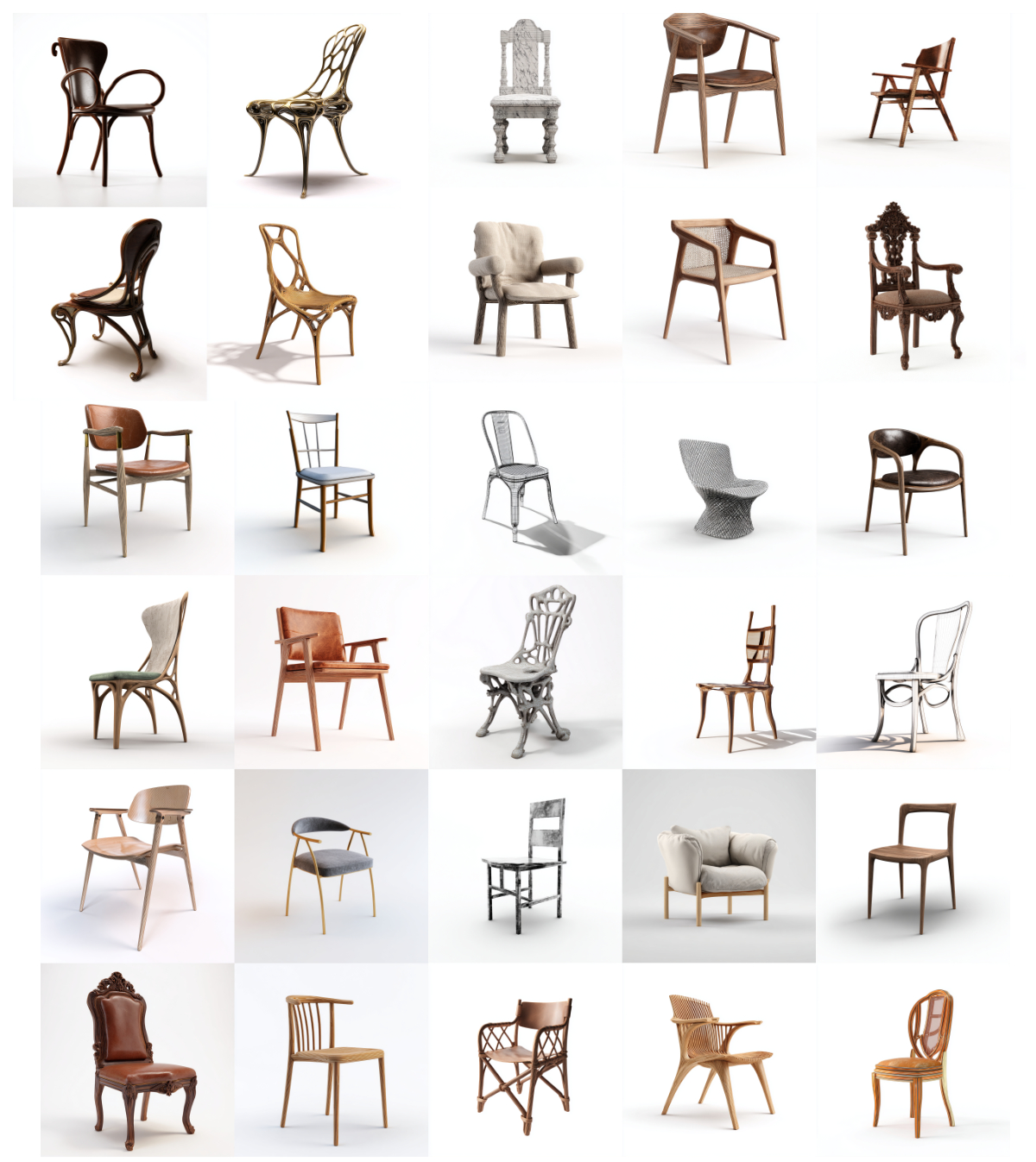
Buildner is proud to announce the results of the fourth edition of the Architect’s Chair Competition, which once again gathered an exceptional collection of ideas from designers and architects across the globe. Now firmly established, the competition continues to serve as a unique platform where architectural thinking, craftsmanship, and material exploration converge through the intimate scale of chair design.
As the competition evolves, Buildner is delighted to celebrate the continued success of its growing publication series, which now includes books featuring the most notable projects from earlier editions. These collections highlight the remarkable creativity and technical rigor demonstrated year after year:
Chair design offers architects a distinct opportunity to test spatial instincts, rethink structure, and refine their relationship to materials. Whether through sculpted minimalism, modular experimentation, or culturally informed craftsmanship, this year’s winning entries reflect the breadth of architectural approaches that can emerge from a single typology.
An accomplished international jury—comprising leading voices in architecture, product design, and furniture craft—evaluated the submissions across several key criteria: functionality and comfort; materiality and construction; aesthetic clarity; ergonomic resolution; and versatility within architectural environments.
Buildner extends its appreciation to all participants for their thoughtful and ambitious contributions. The selected winners represent the highest level of precision, imagination, and technical achievement in contemporary chair design, and we are proud to share their work with the global design community.
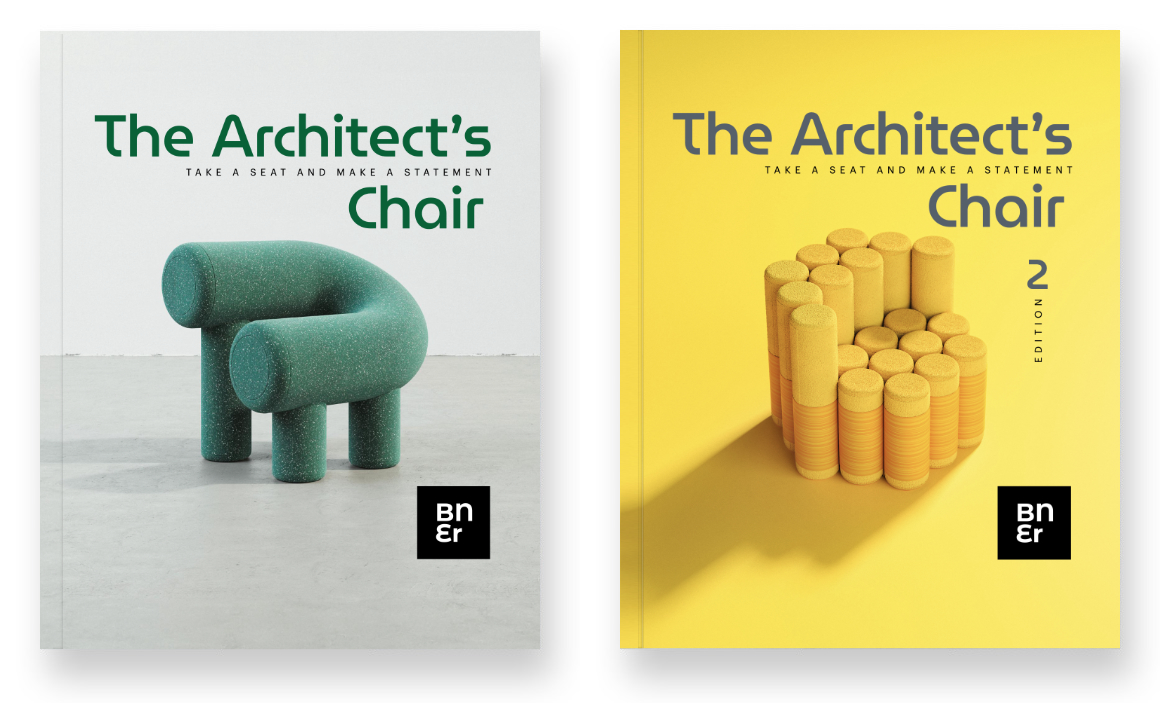
Buildner is also pleased to announce the availability of two beautifully curated books showcasing exemplary chair designs from our previous competitions. Each volume features outstanding projects, celebrating innovation, craftsmanship, and architectural ingenuity. Available in both printed editions for your library and digital PDF versions for convenient access, these publications offer invaluable insights and inspiration for architects, designers, and furniture enthusiasts alike. Explore and order your copies here: Buildner's Bookshop
We sincerely thank our jury panel
for their time and expertise
Sebastian Alberdi
industrial designer
Spain

Anne Brandhøj
designer at Bly Studio, Anne Brandhøj
Denmark

Sarah Hossli
Product designer
Switzerland

Flora Lee
Associate Partner, MAD Architects
USA

Alexander Lervik
Designer
Sweden

Lorenz Noelle
Product designer
Germany

Fabien Roy
Fabien Roy Studio
Switzerland

Harrison Stallan
OMA
Netherlands

Enter the next competition edition
Take a seat and make a statement!
1st Prize Winner
Eero chair
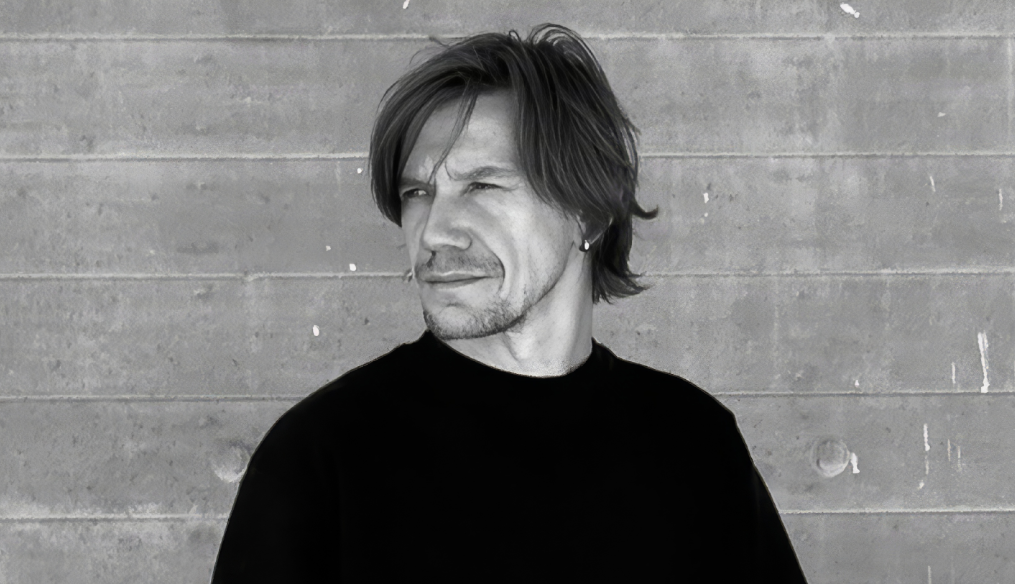
I do not have experience with furniture competitions yet, but I do have successful experience with interior competitions. For a beginner, competitions are one of the few ways to receive objective feedback from a professional community rather than from social media users.
Read full interview
 Cyprus
Jury feedback summary
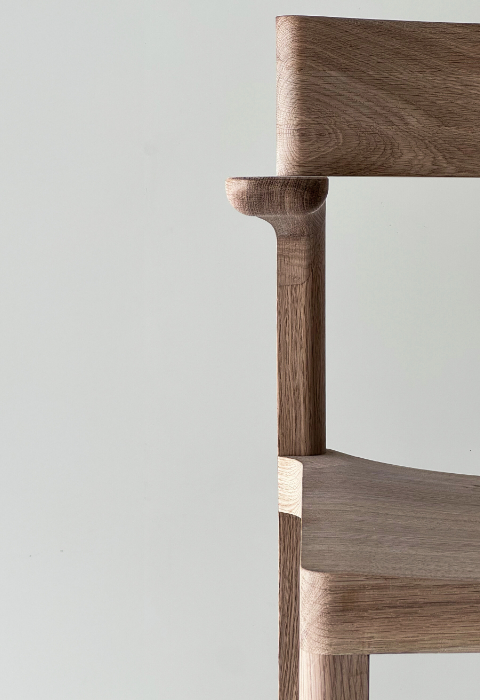
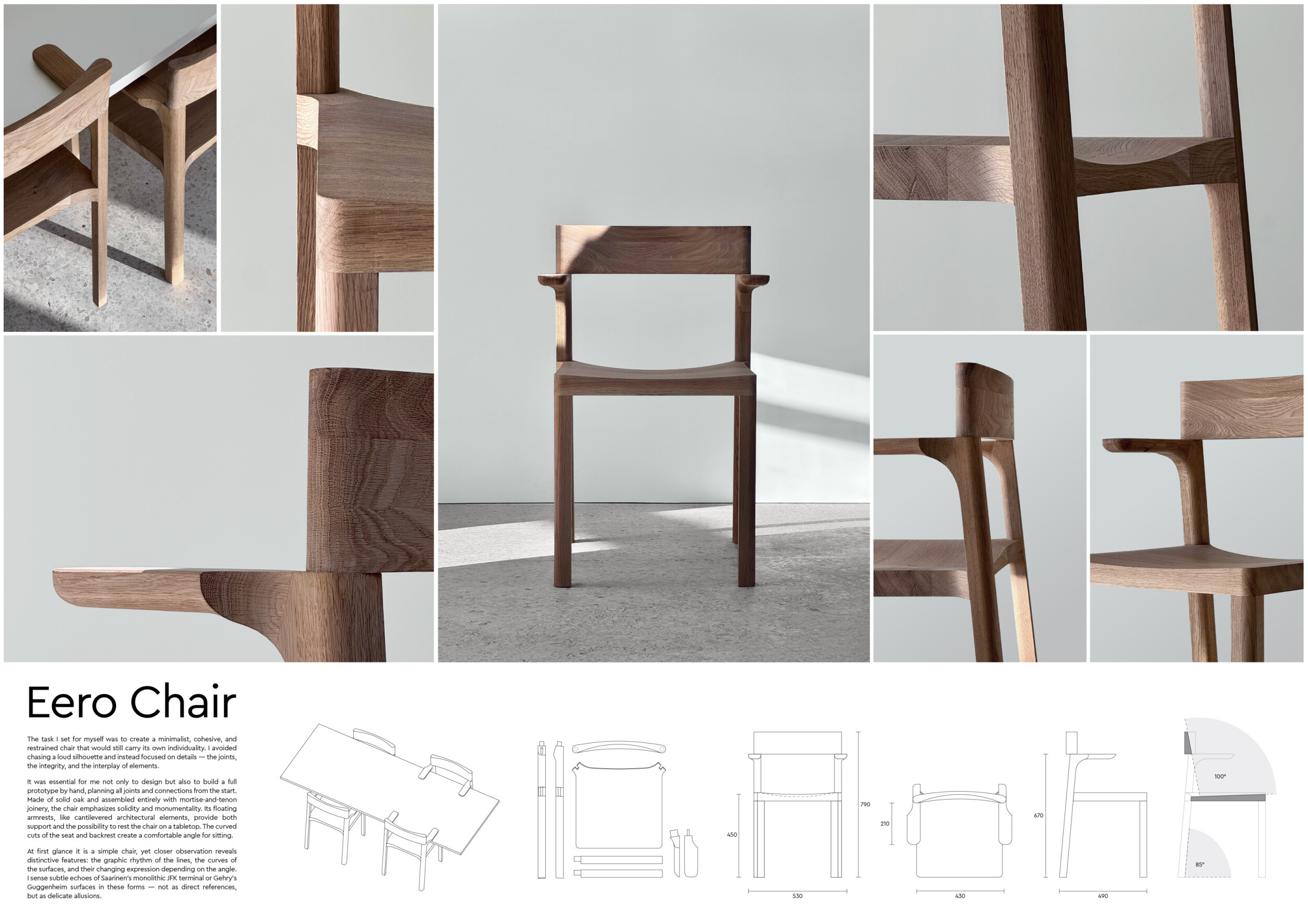
Eero Chair is a minimal wooden chair designed around coherence, sculpted transitions, and the expressive potential of solid timber. The form focuses on continuity between planes, using carved junctions and softened geometries to create a fluid relationship between legs, armrests, seat, and back. Each component is shaped to provide ergonomic comfort without adding superfluous detail, relying instead on the visual warmth and structural clarity of natural wood.

An aesthetic well balanced. However, I am not convinced about some connection details.
Fabien Roy / Buildner guest jury
Fabien Roy Studio, Switzerland

Simple at first glance, the Eero Chair reveals a subtle complexity in its forms and achieves a perfect balance that defines its elegant character and contemporary aesthetic. With its clever construction, ergonomically shaped seat, armrests, and backrest made of skillfully crafted natural wood, it is both user-friendly and material-efficient. Selected for the Sustainability Award due to its choice of materials and aesthetic longevity.
Lorenz Noelle / Buildner guest jury
Product designer, Germany

The Eero Chair stands out for its masterful woodworking, seamless transitions, and sculpted details that feel both modern and timeless. Ergonomics are clearly prioritized, with beautifully carved surfaces and arms that express comfort through form. The chair achieves iconic clarity without relying on ornament or narrative, instead embodying pure architectural refinement. Its balance of structural strength, visual softness, and precise craftsmanship is exceptional. One of the strongest contenders in the entire competition.
Anne Brandhøj / Buildner guest jury
designer at Bly Studio, Anne Brandhøj, Denmark

A great combination of functionality and contemporary elegance. A pleasure to the eyes, each corner of the Eero Chair is a showcase of beautifully crafted details and the perfect balance between materiality and lightness.
Sebastian Alberdi / Buildner guest jury
industrial designer, Spain
Buildner's commentary, recommendations and techniques review
Order your review here
-
8/10 Linework

-
9/10 Quality of drawings

-
8/10 Balance of color

-
9/10 Layout

-
8/10 Hierarchy

-
6/10 Annotation

-
8/10 Text

-
8/10 Clarity of story

-
8/10 Clarity of diagrams

-
9/10 Quality of overall presentation

Enter an open architecture competition now







2nd Prize Winner +
Buildner Student Award
Buildner Student Award
Silent Equilibrium


Jury feedback summary
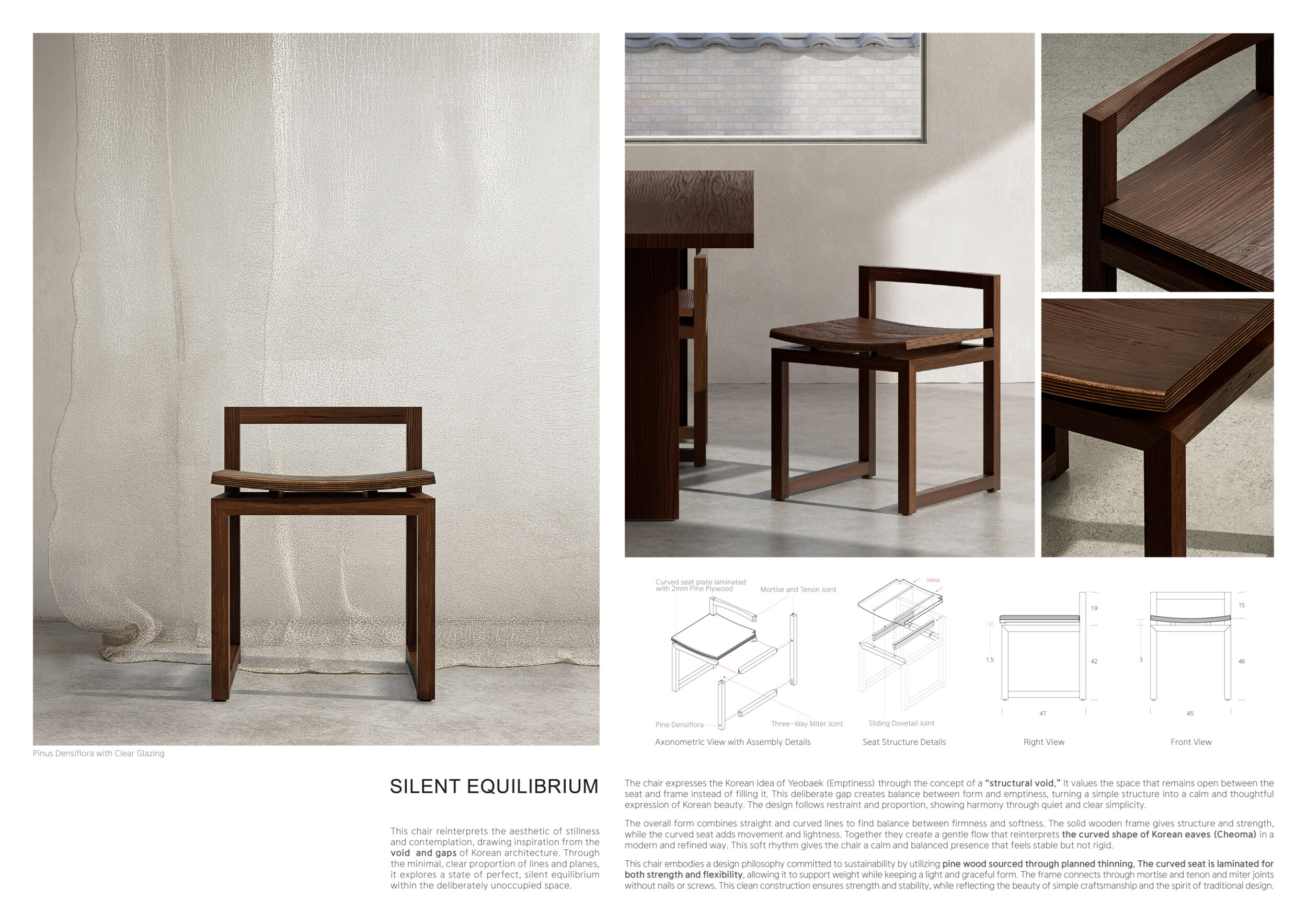
Silent Equilibrium is a minimal wooden chair that investigates balance, emptiness, and proportion through references to Korean spatial philosophy. The design is centred around the idea of a “structural void,” using the space between seat and frame as an active compositional element rather than something to be filled. Its form combines straight, geometric members with a gently curved seat, creating a dialogue between firmness and softness.
Silent Equilibrium is a serene and beautifully controlled composition inspired by notions of emptiness and balance in Korean architecture. The design embraces negative space as an active element, giving the chair a striking minimal presence. The joinery is impeccably detailed, and the mix of curved and straight elements showcases both strength and sensitivity. Though visually austere, it conveys a powerful architectural philosophy. A subtle but very sophisticated entry.
Anne Brandhøj / Buildner guest jury
designer at Bly Studio, Anne Brandhøj, Denmark
I found in Silent Equilibrium a minimal, elegant and timeless design — a combination of well-balanced materiality and strong character. Details like the curved seat elevating from the straight-lined frame give this design a unique style, both poetic and contemporary.
Sebastian Alberdi / Buildner guest jury
industrial designer, Spain

Clean and timeless design.
Alexander Lervik / Buildner guest jury
Designer, Sweden
The strikingly minimalist Silent Equilibrium chair combines geometric precision with an elegant seat and an extremely reduced backrest, giving it a strong character. Dark wood, minimal use of materials, and precise traditional carpentry create a sculptural presence that fits perfectly with contemporary architecture.
Lorenz Noelle / Buildner guest jury
Product designer, Germany

A beautifully crafted and elegantly presented chair that captures a strong sense of calm and aesthetic balance. The design demonstrates refined detailing and proportion, creating a piece that feels both timeless and poetic. While it could further explore innovation in function or construction, the overall execution reflects a deep understanding of craft, material, and cultural inspiration.
Harrison Stallan / Buildner guest jury
OMA, Netherlands
Buildner's commentary, recommendations and techniques review
Order your review here
The submission achieves a high degree of compositional clarity, presenting the chair as both a crafted object and an architectural statement. Renderings are atmospheric and well-lit, communicating the calm, contemplative qualities that underpin the project. Close-up images highlight joinery precision and material depth, while the technical diagrams effectively reveal construction logic without overwhelming the viewer.
-
8/10 Linework
-
9/10 Quality of drawings
-
8/10 Balance of color
-
9/10 Layout
-
7/10 Hierarchy
-
7/10 Annotation
-
8/10 Text
-
9/10 Clarity of story
-
8/10 Clarity of diagrams
-
9/10 Quality of overall presentation
3rd Prize Winner
Hills modular soft furniture collection
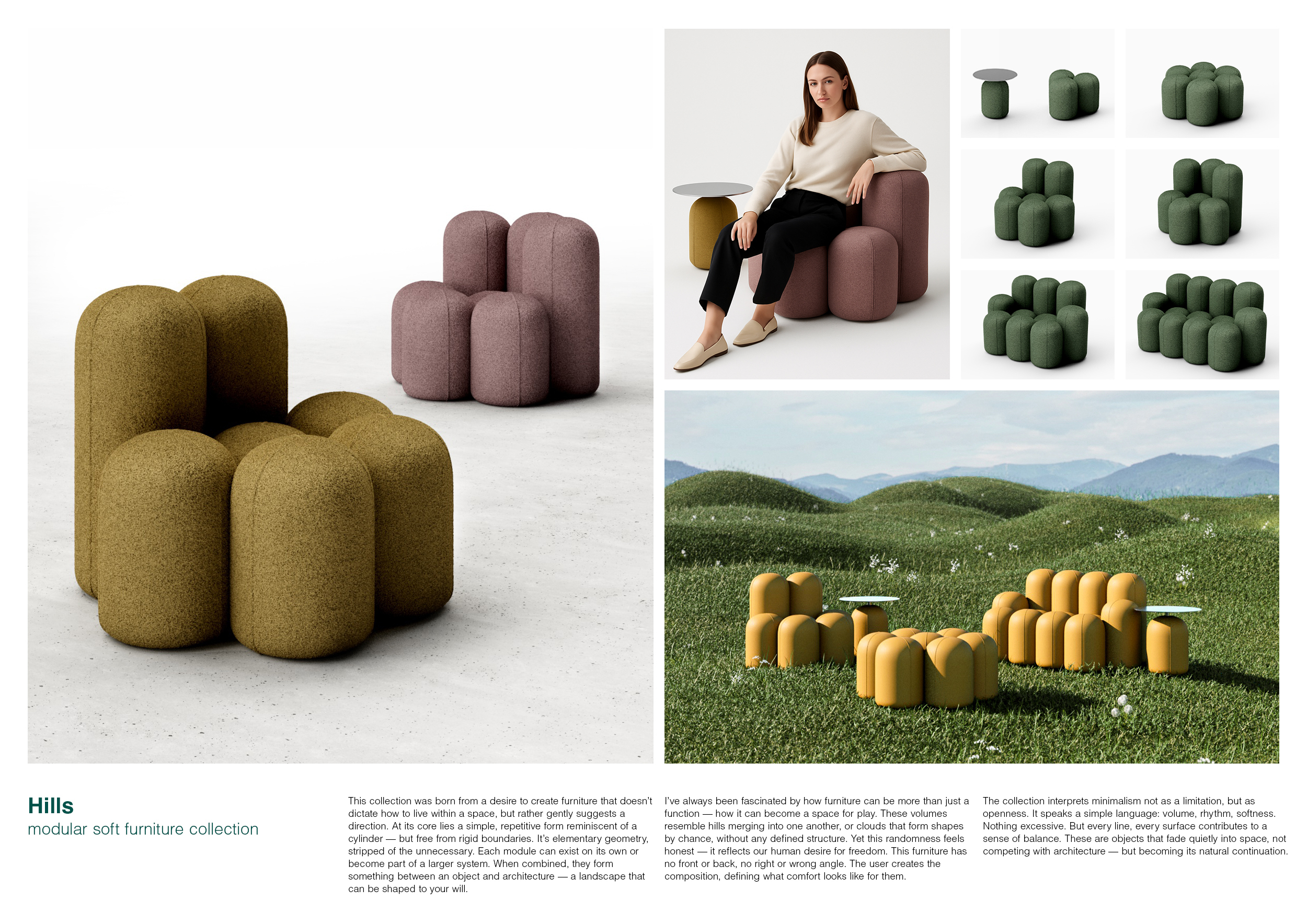
Competitions allow me to connect with like-minded designers, discover diverse perspectives, and challenge myself creatively beyond commercial constraints.
Read full interview Ukraine
Jury feedback summary
Hills is a modular soft-furniture collection composed of simple cylindrical volumes that can be grouped, repeated, or used individually to form flexible seating landscapes. Each element is based on a consistent geometric language—a rounded vertical cylinder—varying only in height. The modules can function as independent stools or combine into larger compositions, allowing users to shape spatial arrangements according to context and scale.

I appreciate the design’s flexibility and sense of play. The concept of ‘Hills’ is compelling, and the overall design appears functional. However, it would have been helpful to understand the mechanism by which the modules are combined or assembled.
Flora Lee / Buildner guest jury
Associate Partner, MAD Architects, USA
Buildner's commentary, recommendations and techniques review
Order your review here
The submission presents a cohesive visual identity, supported by strong renderings that communicate both material softness and volumetric simplicity. The landscape-based imagery effectively reinforces the conceptual foundation showing how the modules operate at multiple scales—from a single seat to larger spatial constellations. The consistent color palette and clean layout give the board a calm, unified presence.
-
7/10 Linework
-
8/10 Quality of drawings
-
8/10 Balance of color
-
8/10 Layout
-
7/10 Hierarchy
-
5/10 Annotation
-
8/10 Text
-
8/10 Clarity of story
-
7/10 Clarity of diagrams
-
7/10 Quality of overall presentation
Buildner Sustainability Award
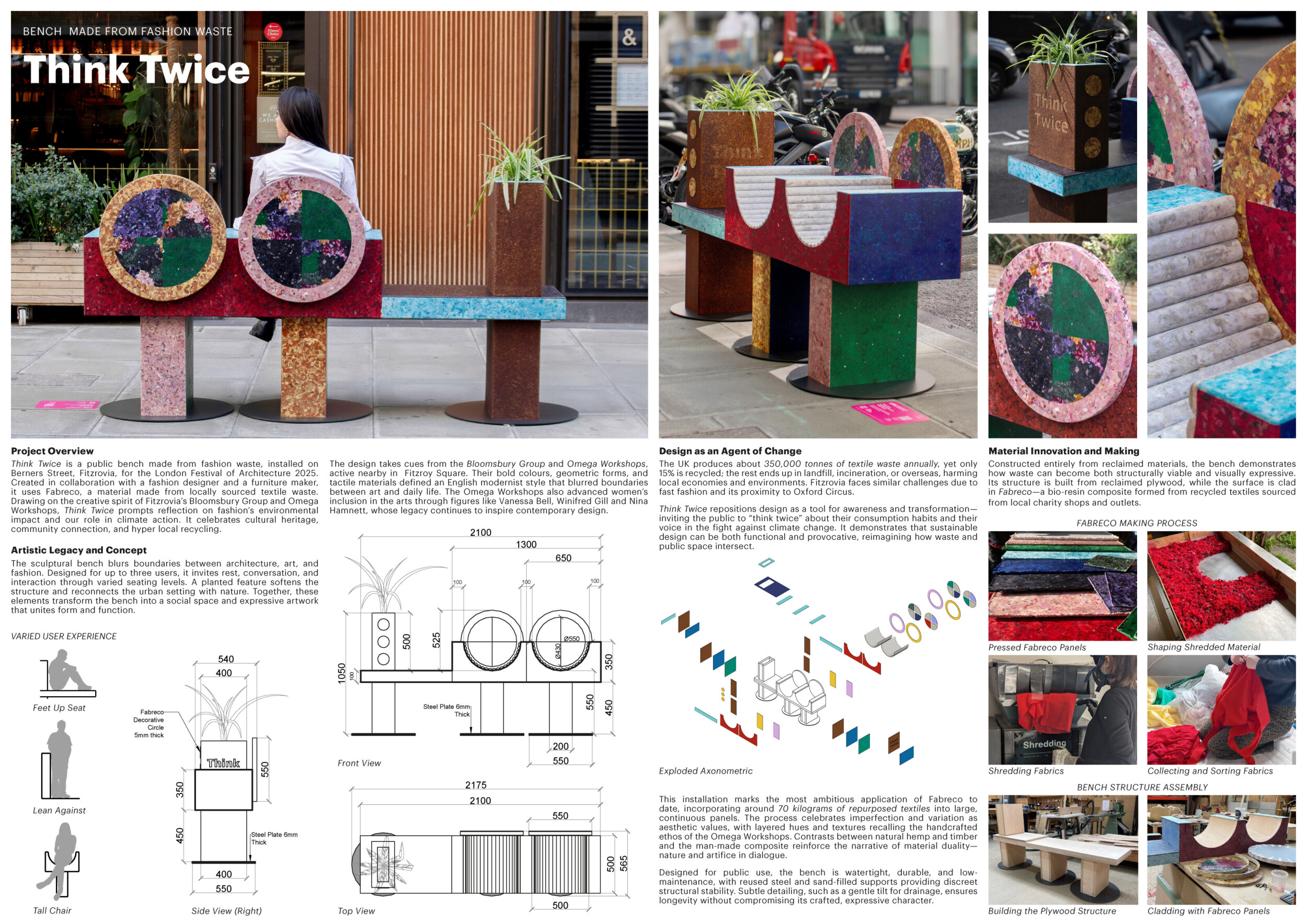
Think Twice

I participate in architecture competitions because they challenge me to move beyond the familiar and keep evolving as a designer. The briefs are often far more provocative and ambitious than what I encounter in everyday practice, and that pushes me to think critically, explore new directions, and test ideas that wouldn’t surface otherwise. That level of creative freedom is incredibly energising—it allows me to take risks, stretch my capabilities, and refine my understanding of my own creative practice and the design ethos I want to build. Competitions also offer a valuable break from routine, but what I appreciate most is the collaborative energy they create. They allow me to work with different people—peers, mentors, and professionals from across the industry—each bringing unique strengths and perspectives. Collaborating in this way broadens my thinking, sharpens my process, and helps me build a strong network and meaningful connections that continue to influence my work long after the competition ends. And at the core of it, I do competitions because they bring me joy. They remind me of the curiosity and playfulness that first drew me to architecture and design—the thrill of problem-solving, the excitement of imagining possibilities, and the simple fun of creating something meaningful. They keep me inspired, grounded, and continuously growing.
Read full interview
 United Kingdom
Jury feedback summary
Think Twice is a public bench constructed entirely from textile waste, transforming discarded fashion materials into a functional piece of urban furniture. Installed in London for the Festival of Architecture, the project demonstrates how reclaimed fabrics can be repurposed into durable, visually expressive architectural components.
Think Twice excels as a conceptual and socio-environmental project, turning textile waste into a bold piece of public furniture. Its graphic presence is striking and communicates its message effectively. However, it fits more naturally within the category of an urban bench than an architectural chair. Ergonomic and functional qualities take second place to the narrative. A powerful concept, though not fully aligned with the competition’s typology.
Anne Brandhøj / Buildner guest jury
designer at Bly Studio, Anne Brandhøj, Denmark
The design cleverly integrates the issue of fashion waste into a piece of furniture. It is meaningful, playful, and versatile.
Flora Lee / Buildner guest jury
Associate Partner, MAD Architects, USA
Buildner's commentary, recommendations and techniques review
Order your review here
The submission delivers a compelling narrative supported by a visually rich presentation. The use of bold colour-blocked photography and detailed process imagery clearly communicates both the material innovation and the fabrication sequence. The exploded axonometric and technical drawings are well composed and help anchor the project’s structural logic, though some annotations could be expanded to clarify joinery, panel fixing methods, or maintenance considerations.
-
7/10 Linework
-
8/10 Quality of drawings
-
9/10 Balance of color
-
8/10 Layout
-
7/10 Hierarchy
-
7/10 Annotation
-
8/10 Text
-
9/10 Clarity of story
-
7/10 Clarity of diagrams
-
8/10 Quality of overall presentation
Honorable mentions








Shortlisted projects
Atlas Lounge Chair
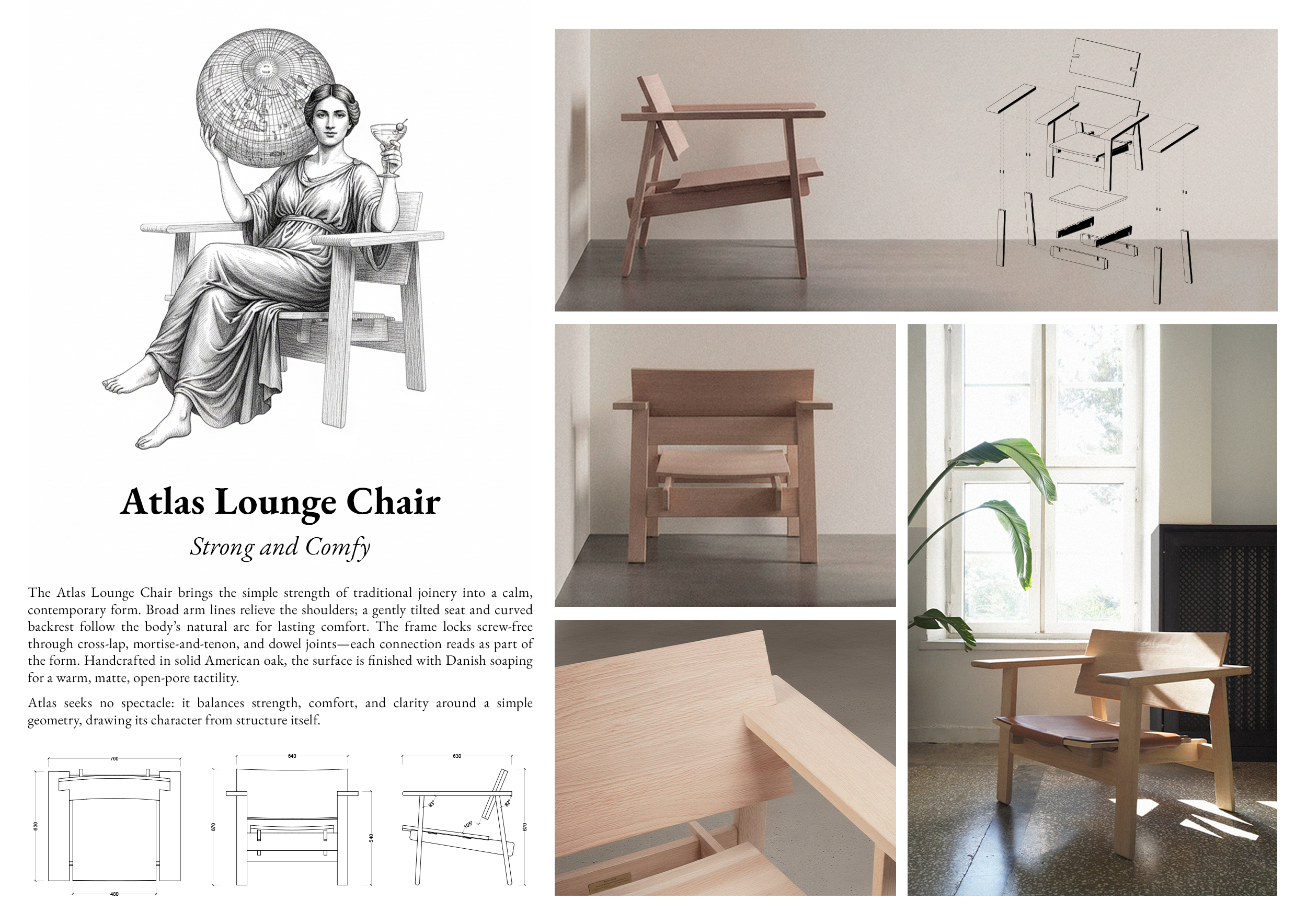
 Turkey
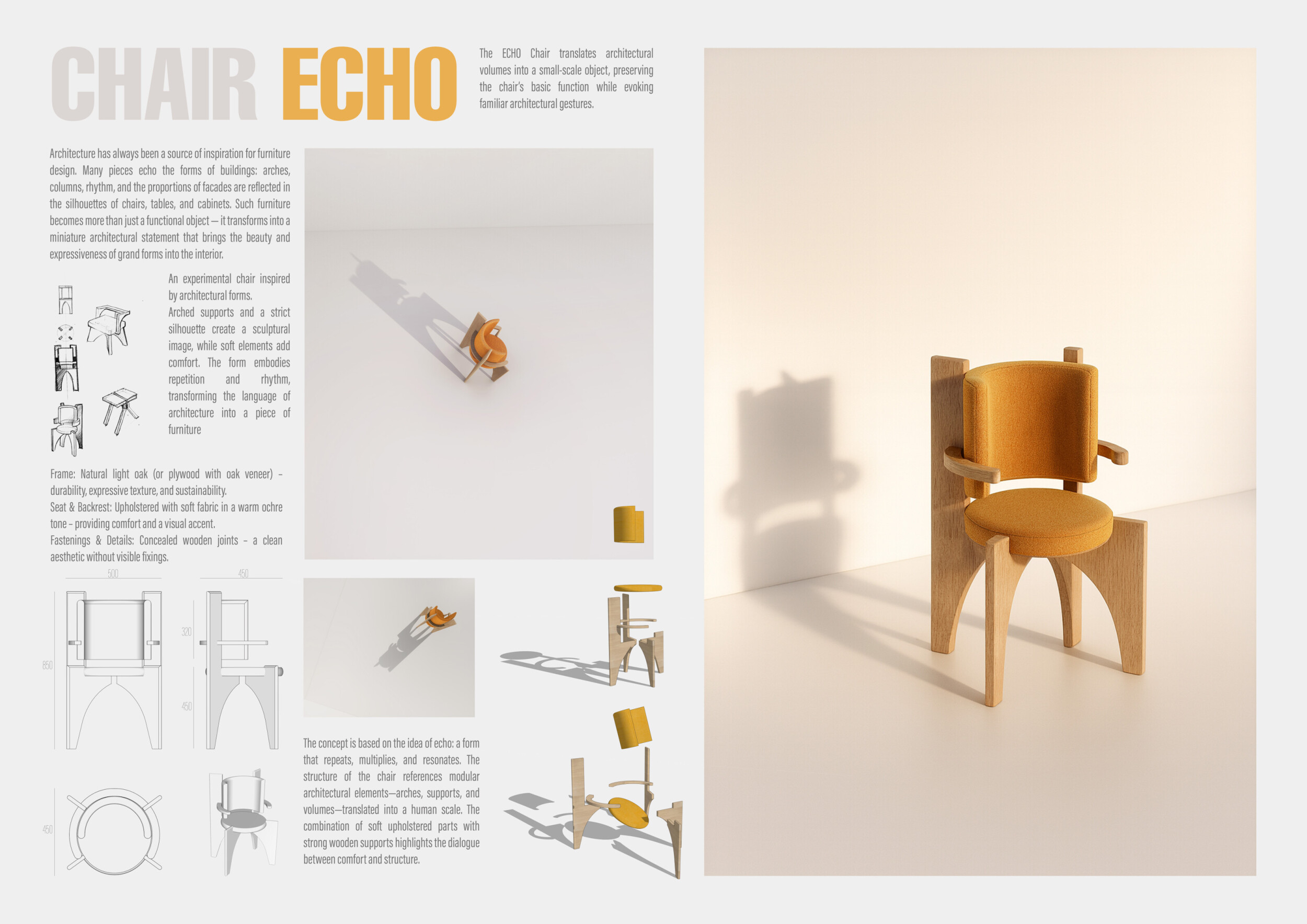
 CHAIR ECHO
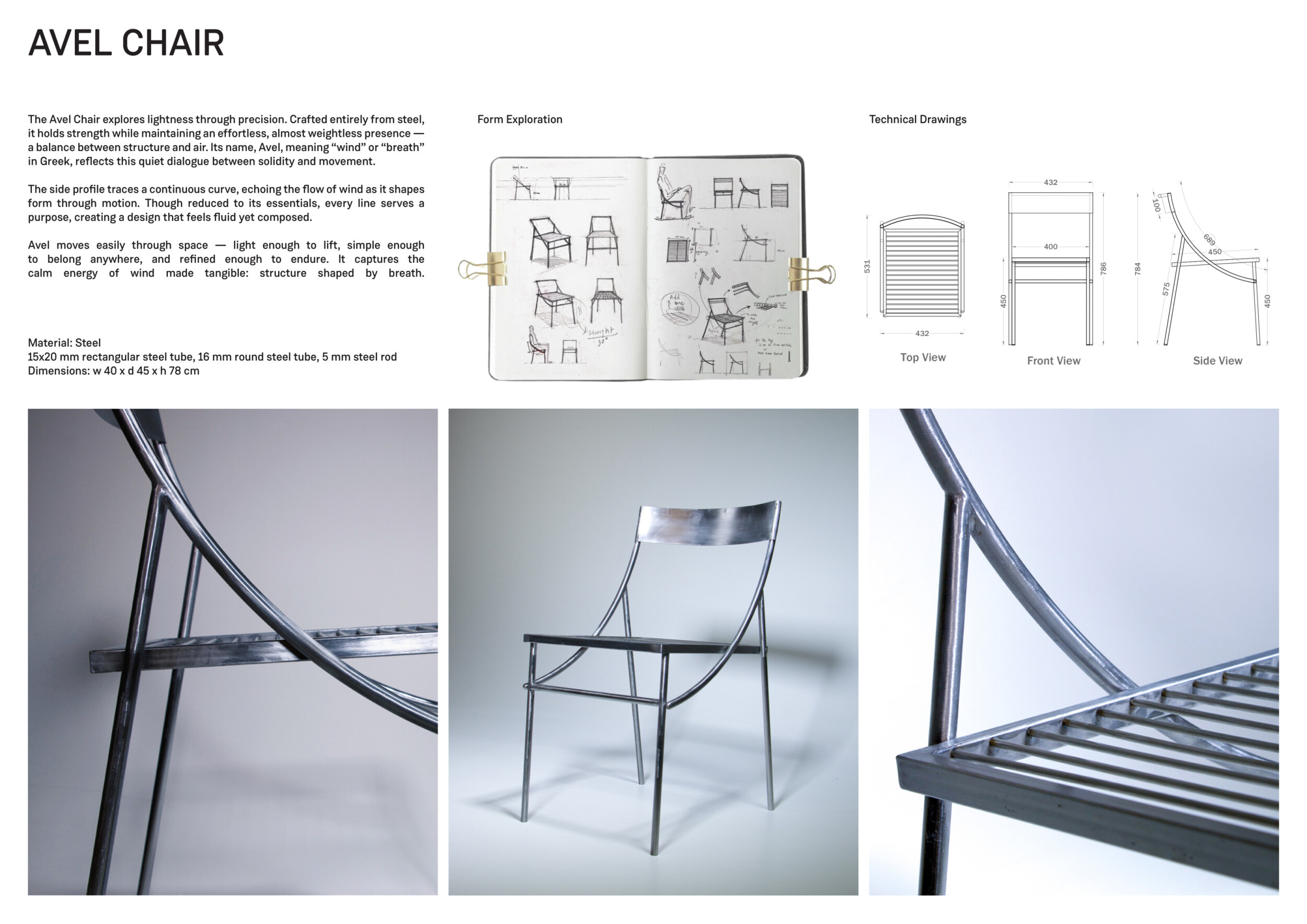
Avel Chair
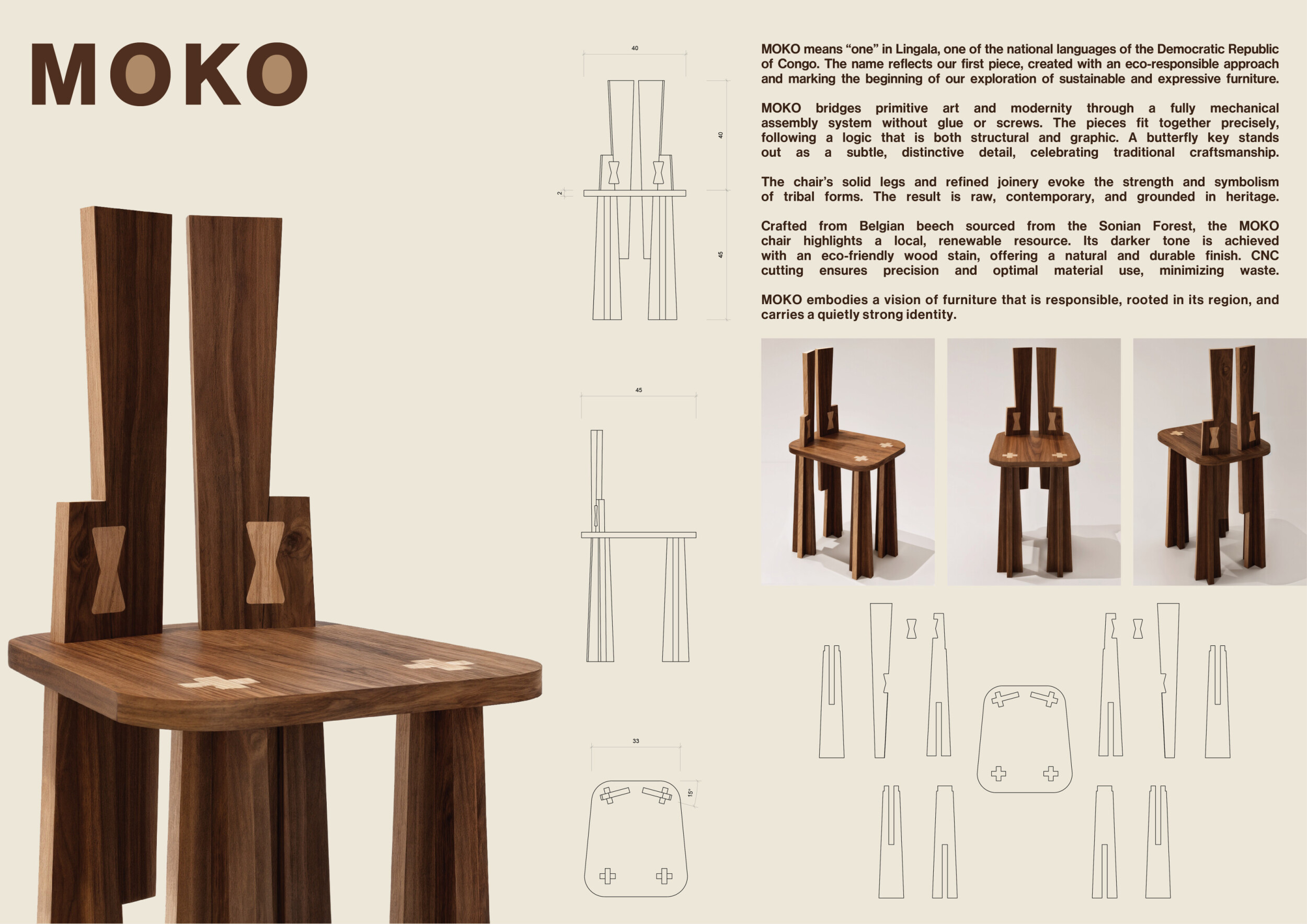
MOKO

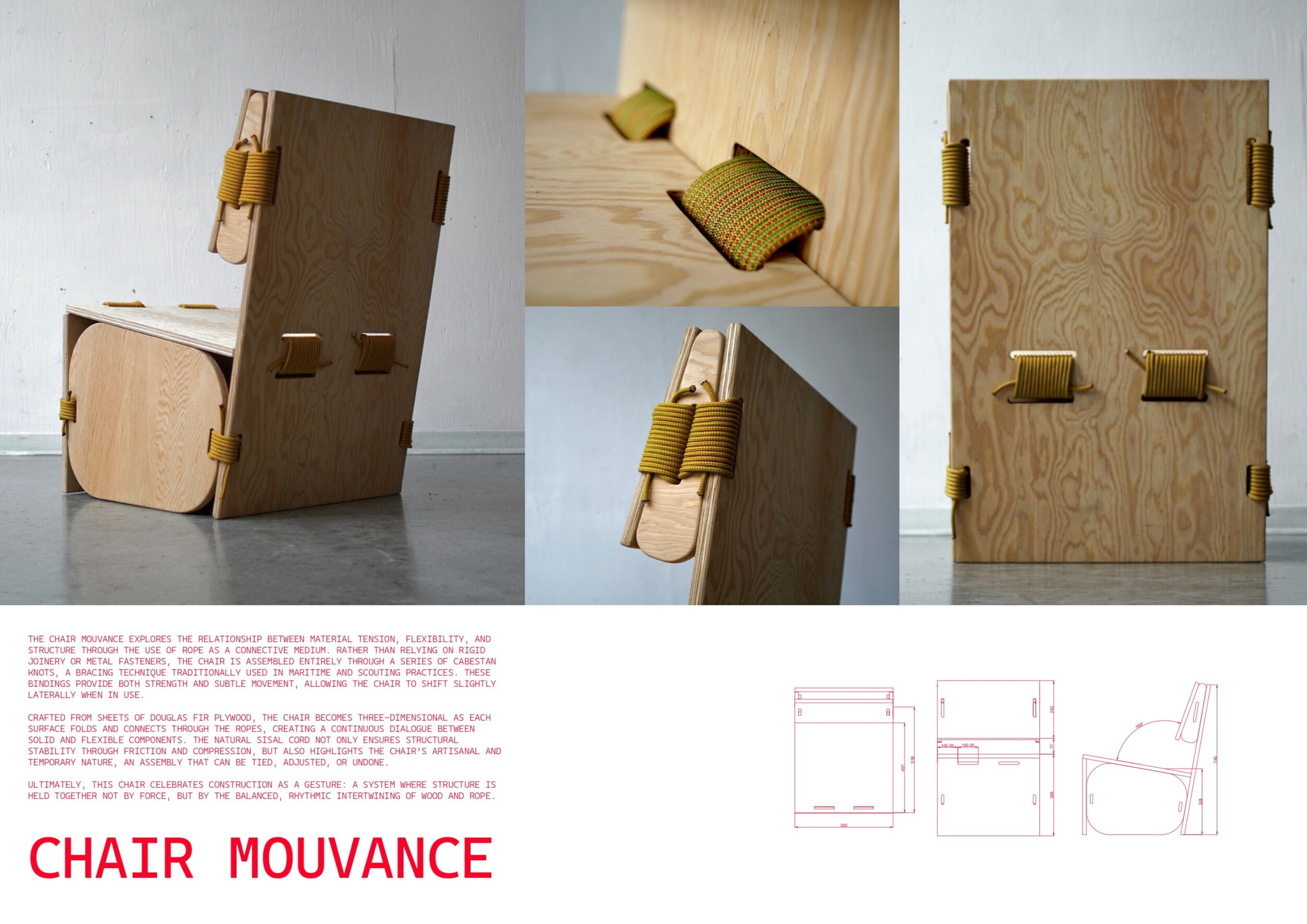
Mouvance
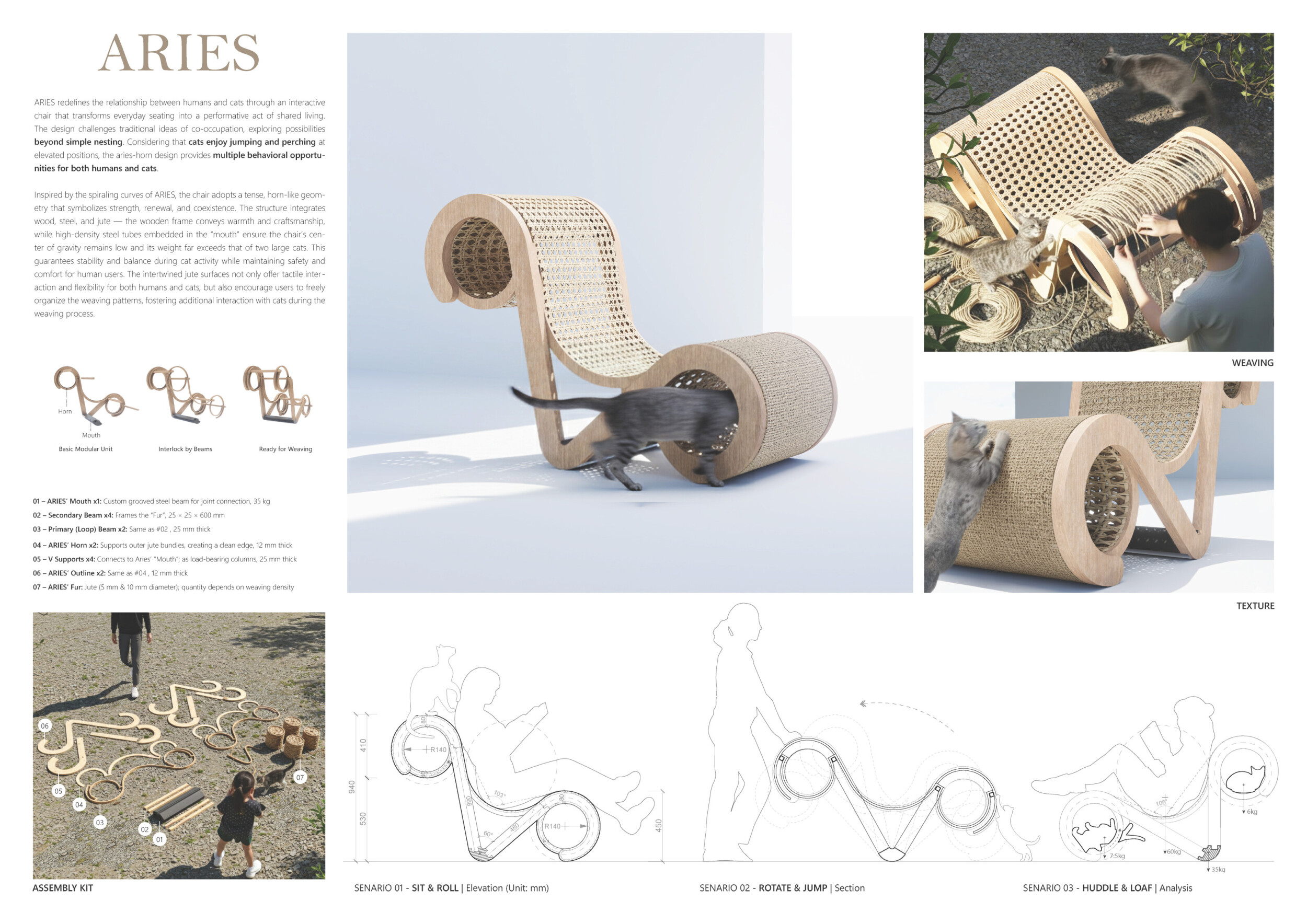
ARIES
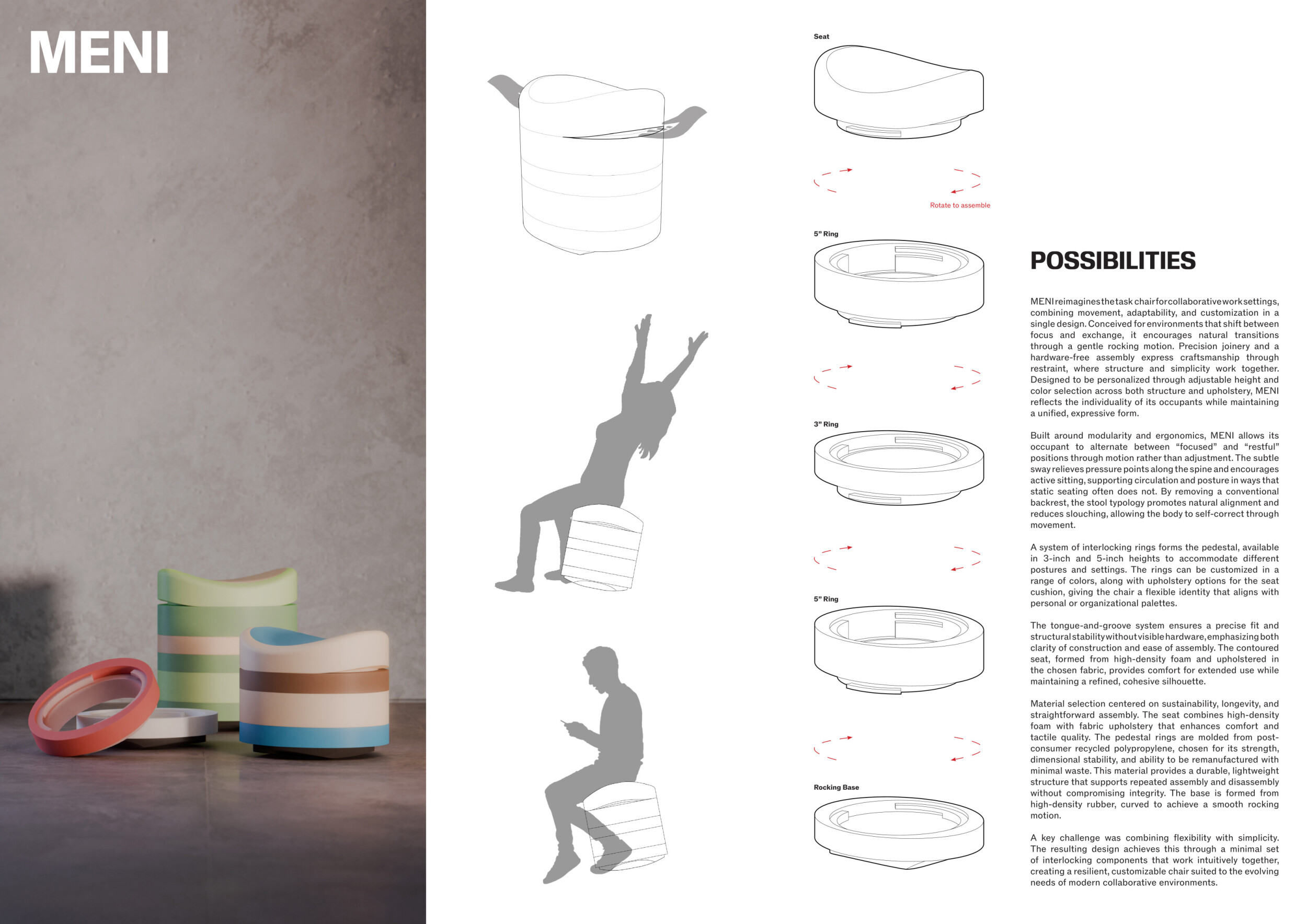
MENI
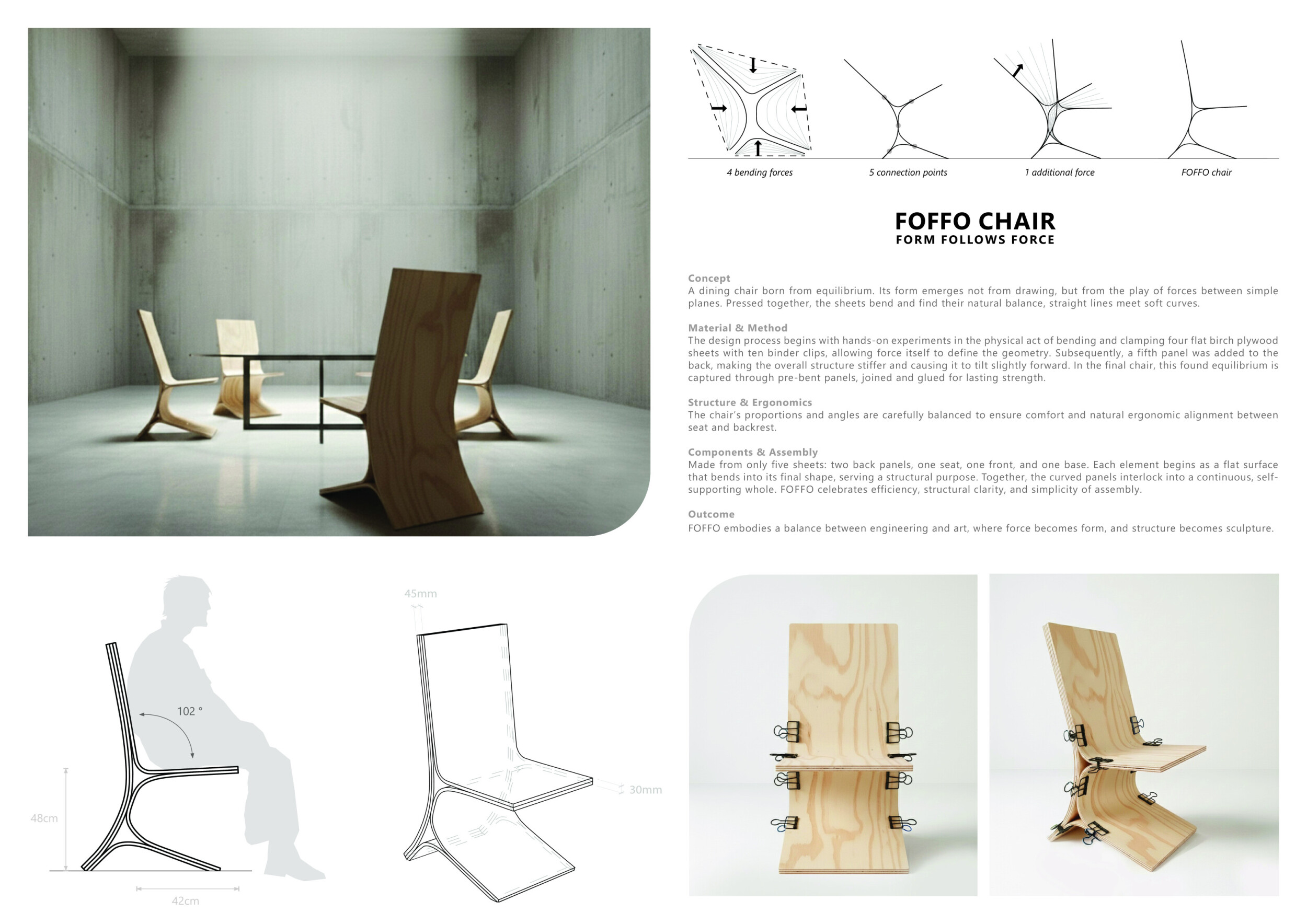
FOFFO

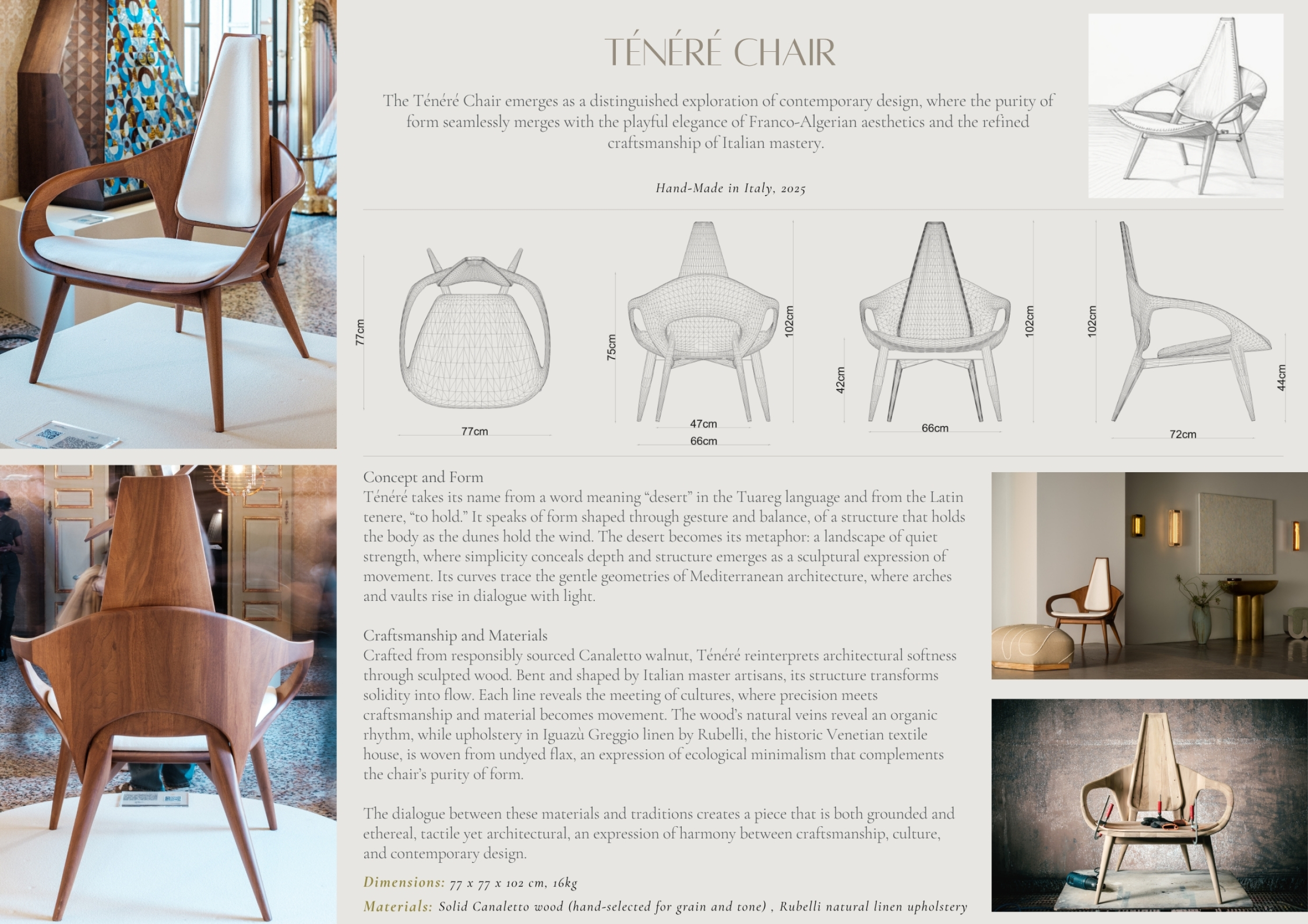
TÉNÉRÉ CHAIR
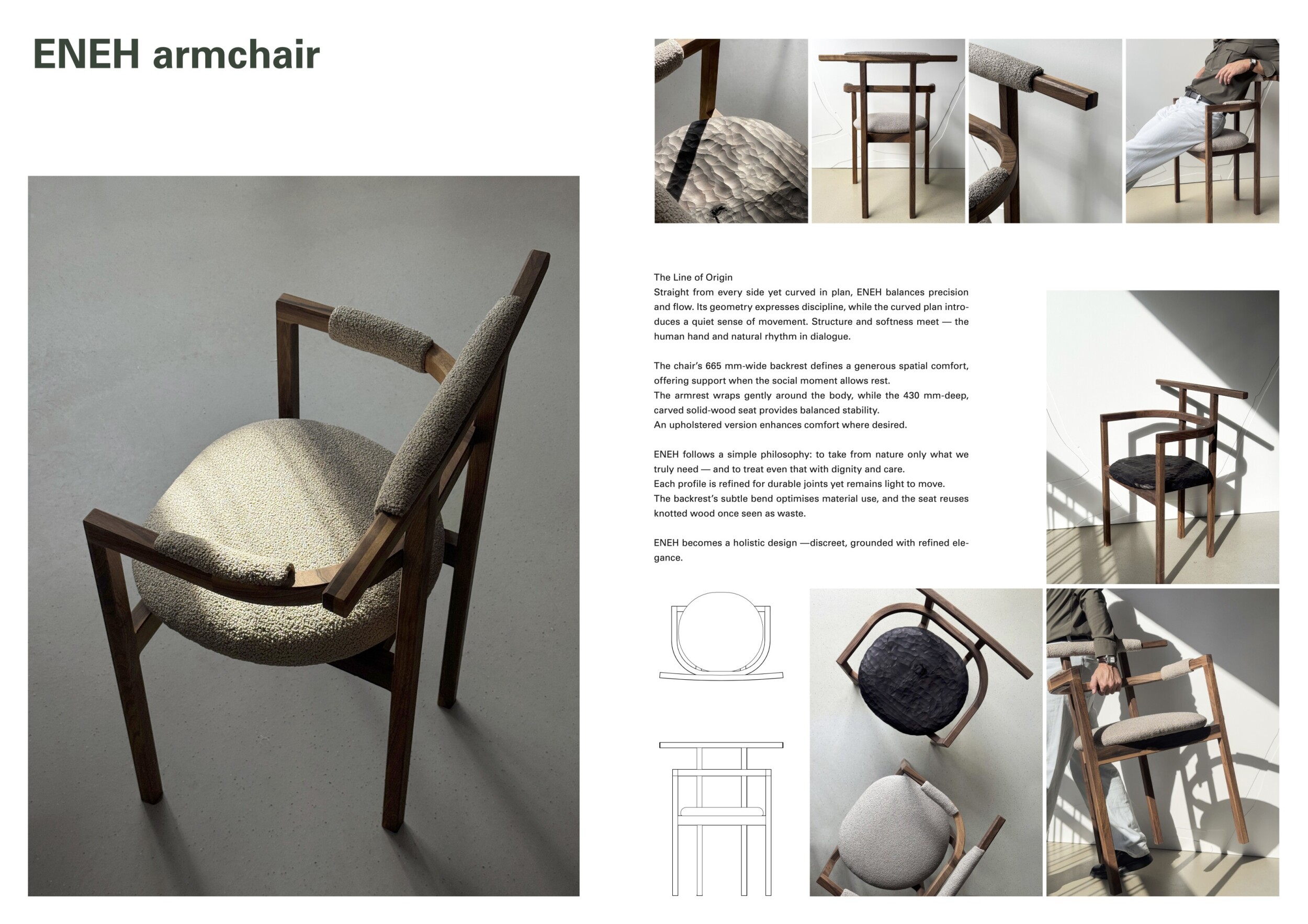
Eneh armchair

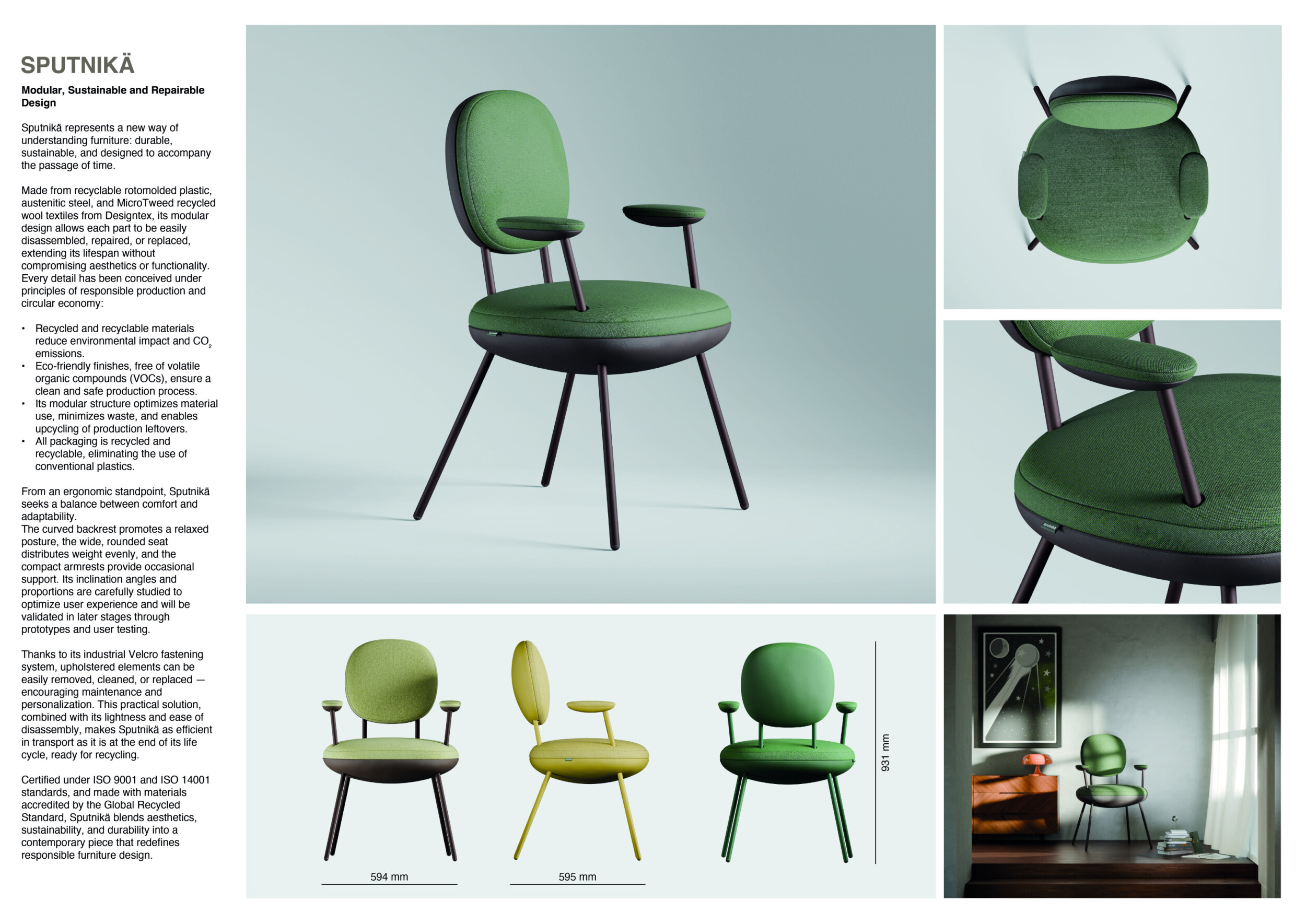
SPUTNIKÄ

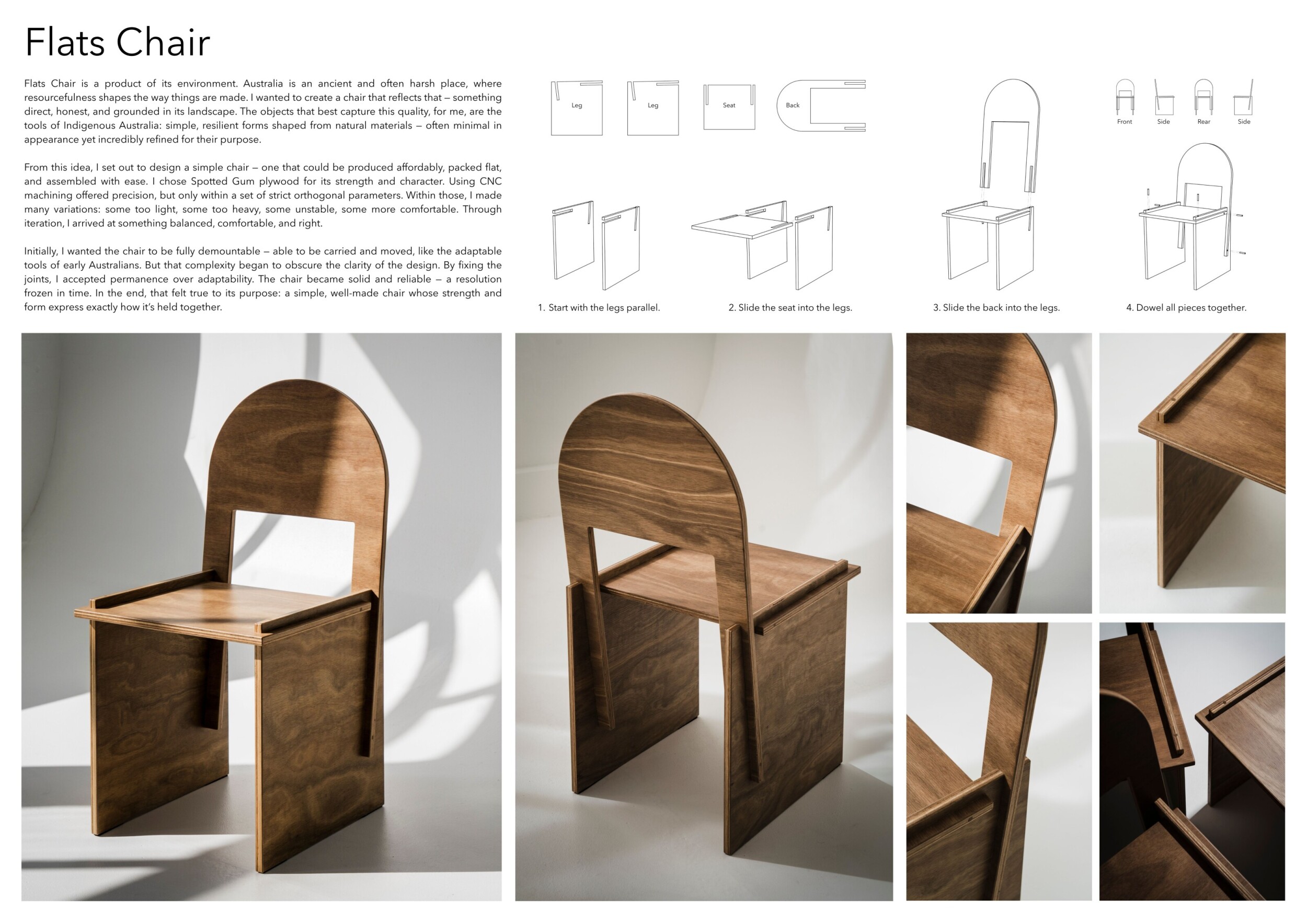
Flats Chair

La Chaise Monolithe

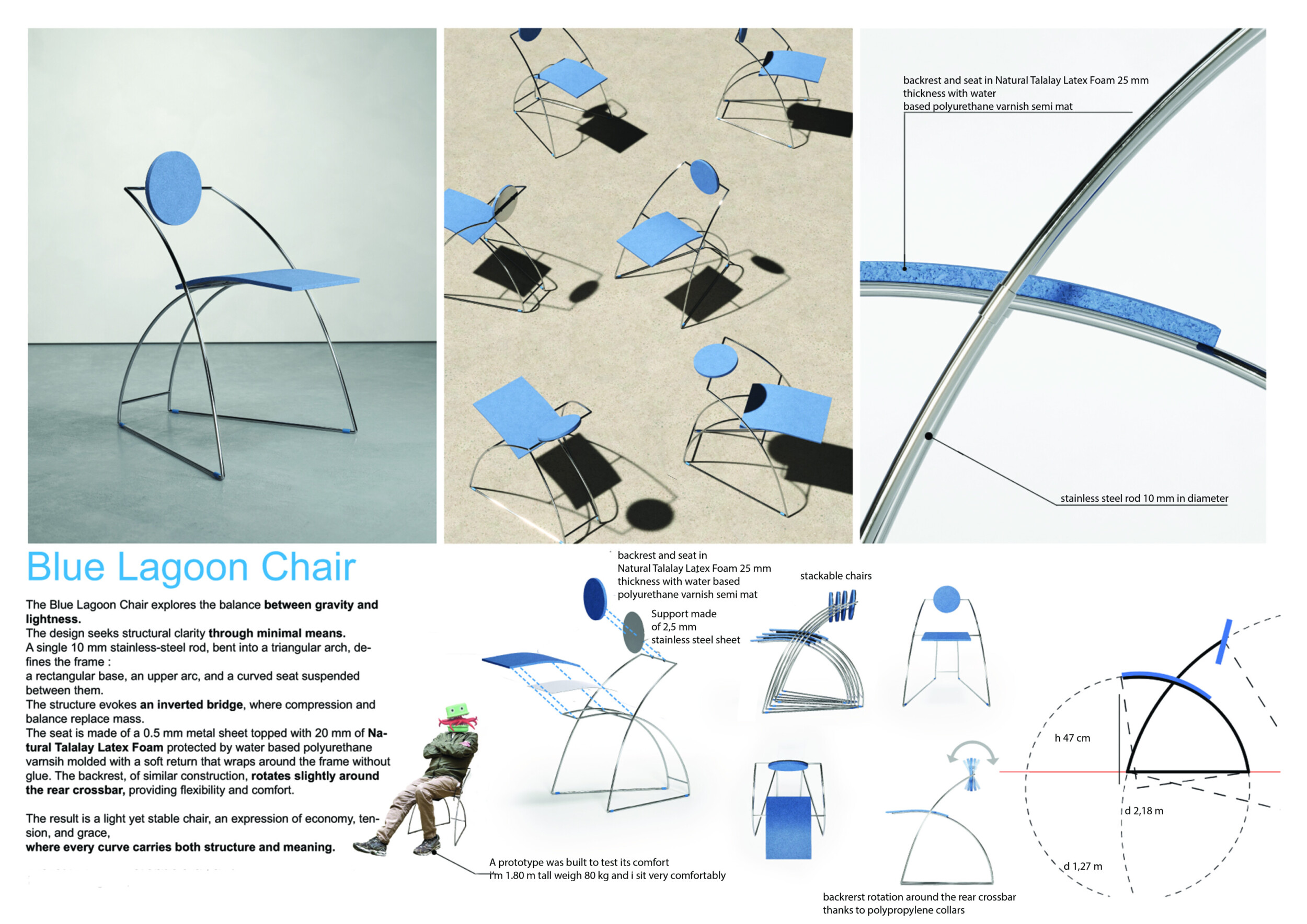
BLUE LAGOON

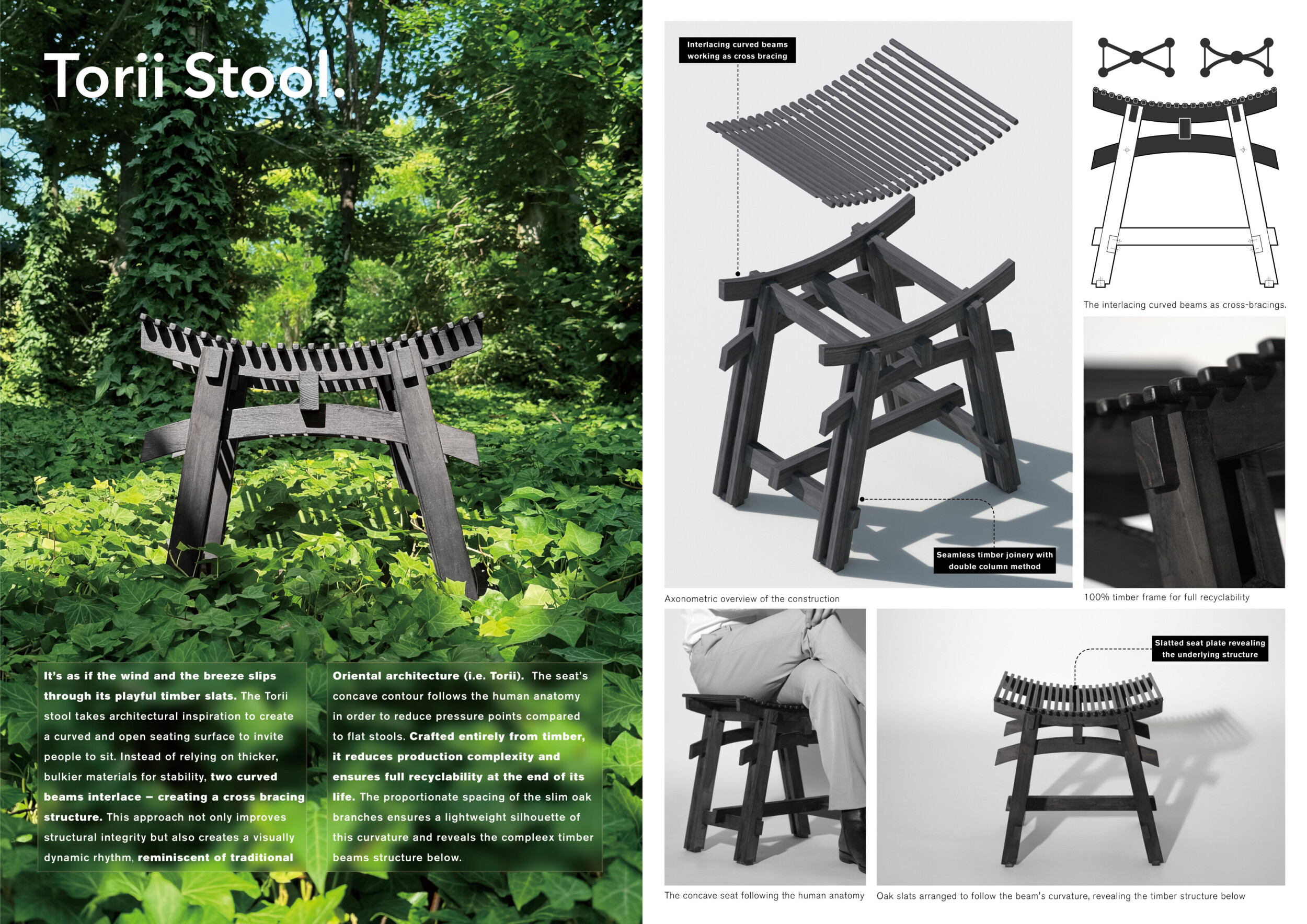
Torii Stool
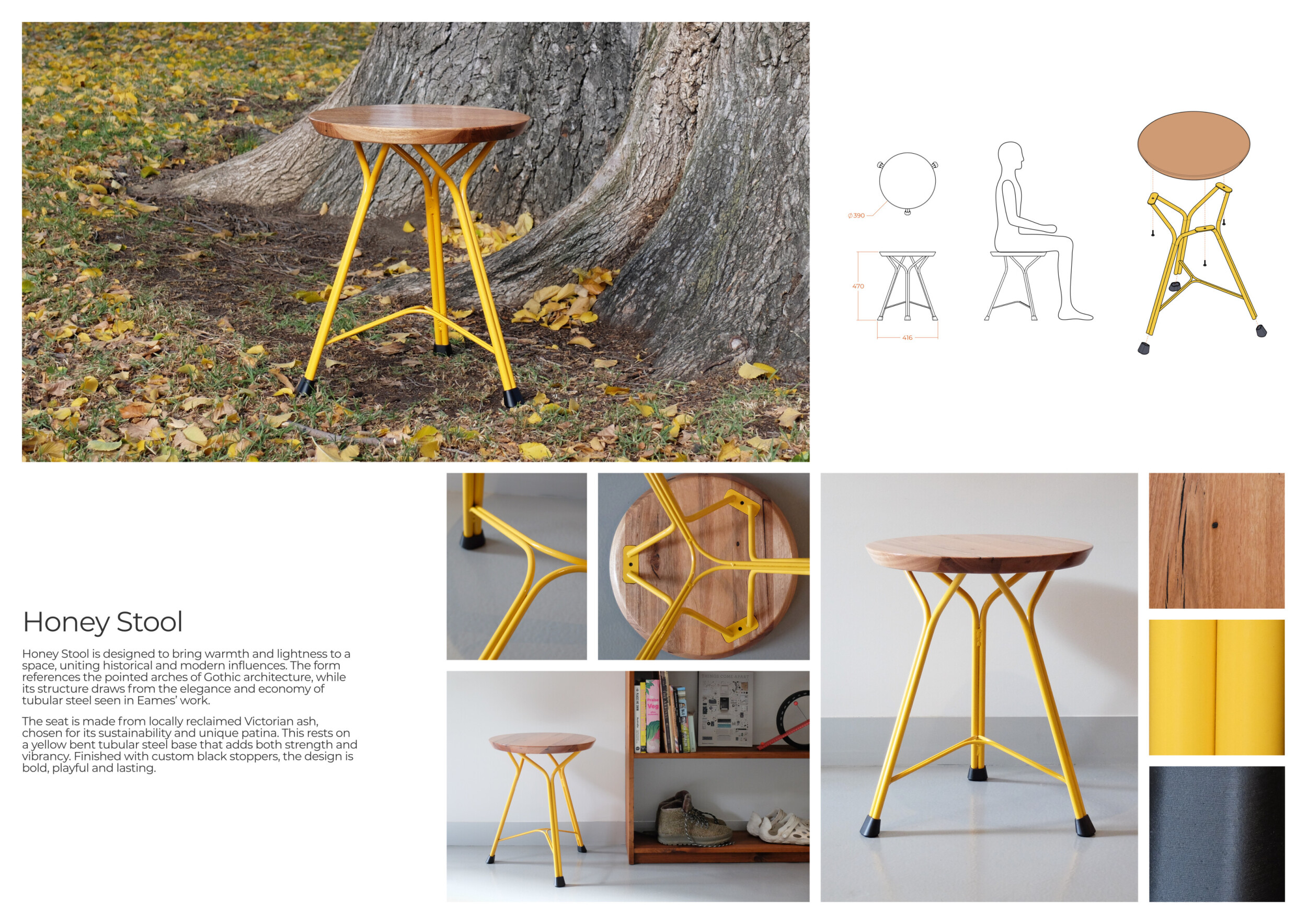
Honey Stool
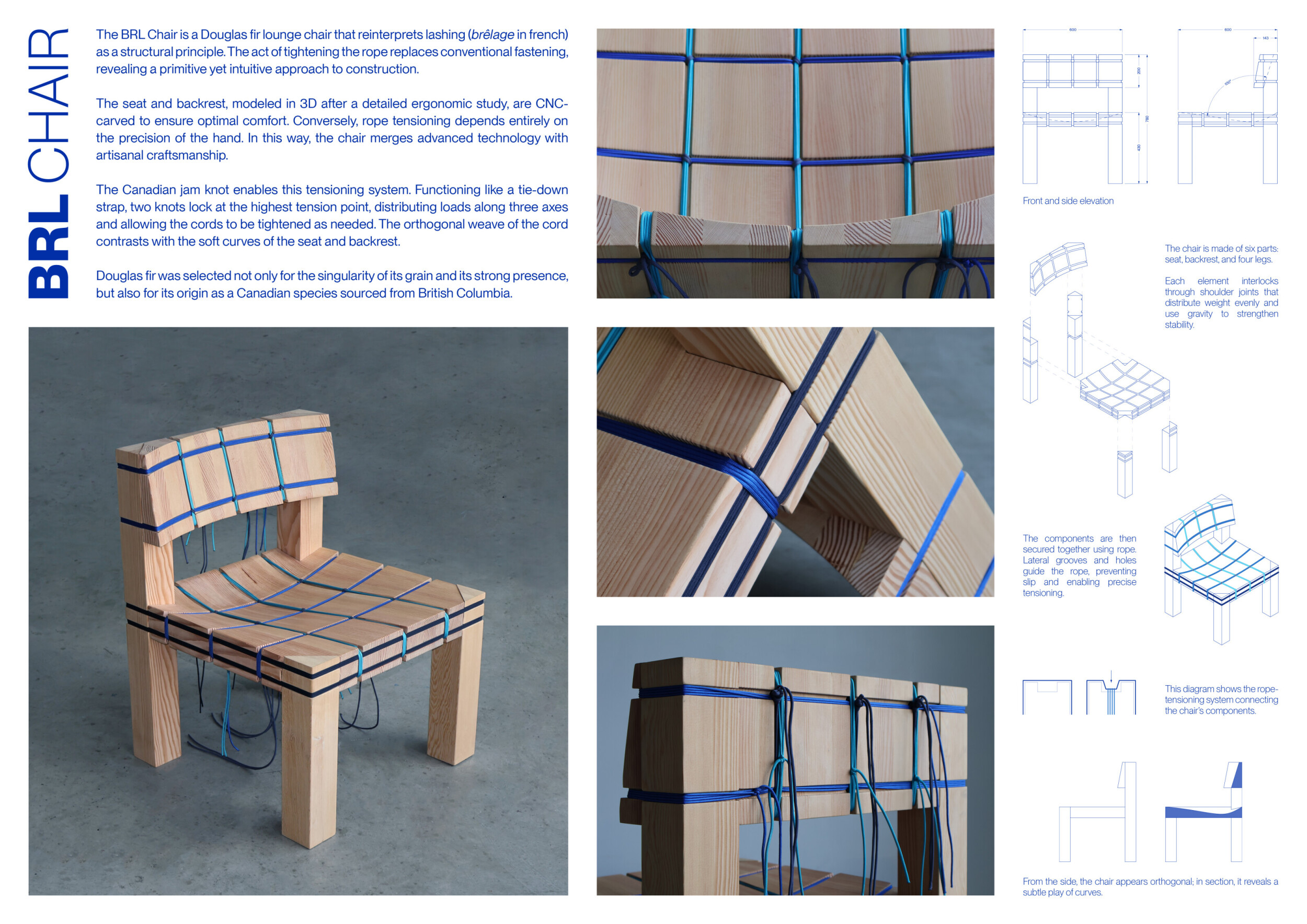
BRL Chair
Eaves Lounge Chair

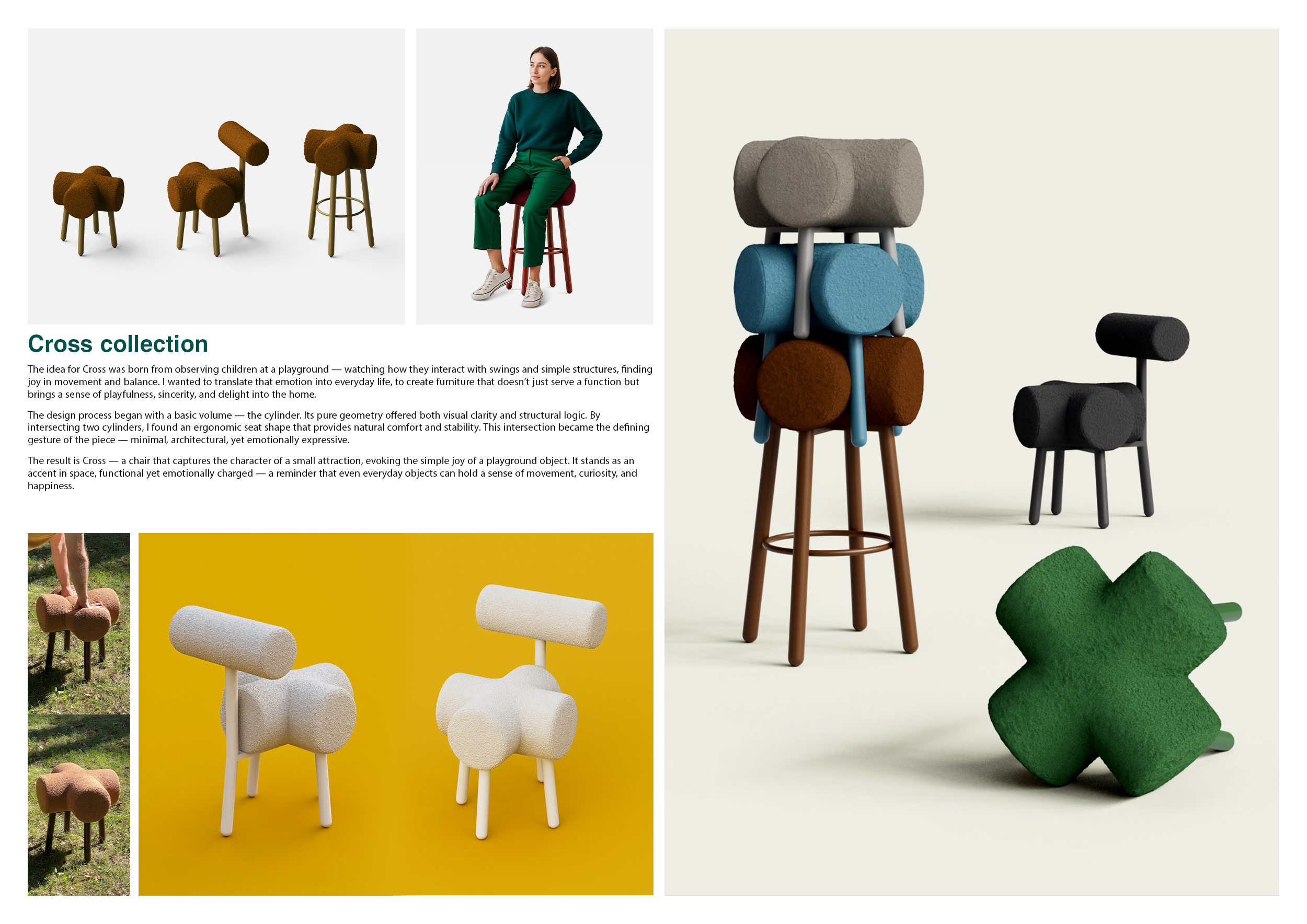
Cross collection
Hills modular soft furniture collection
Duetta
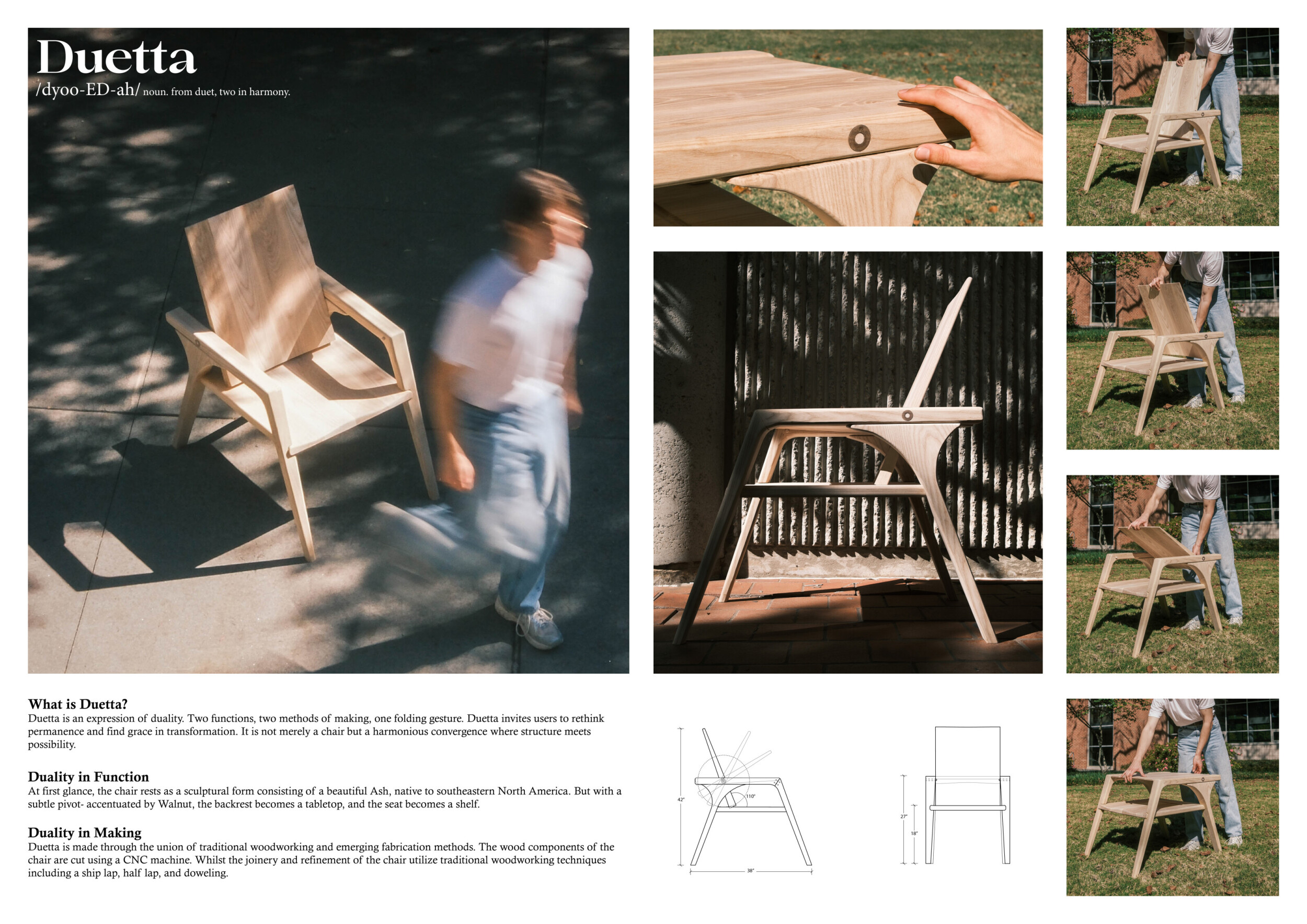
Eero chair
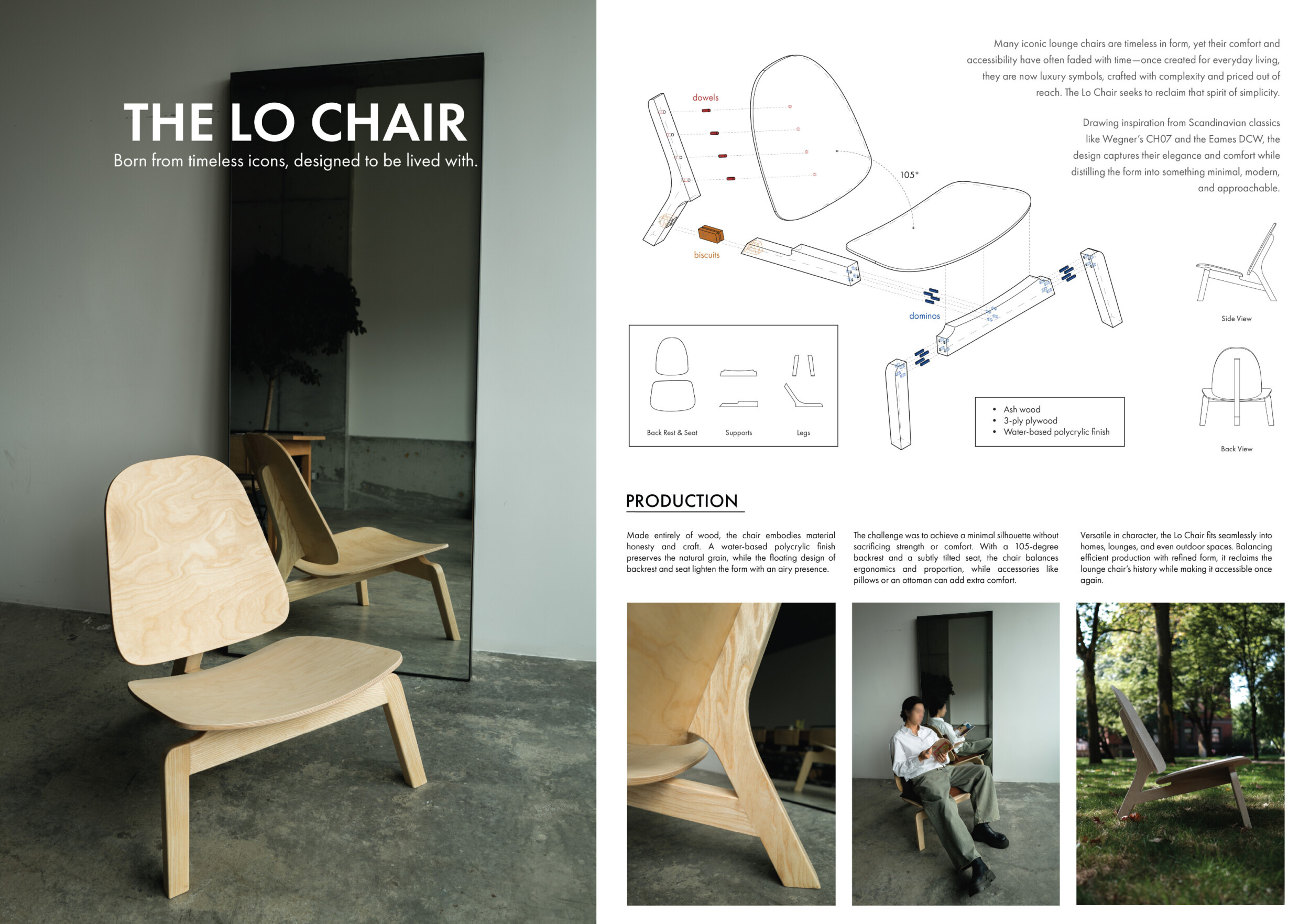
The Lo Chair
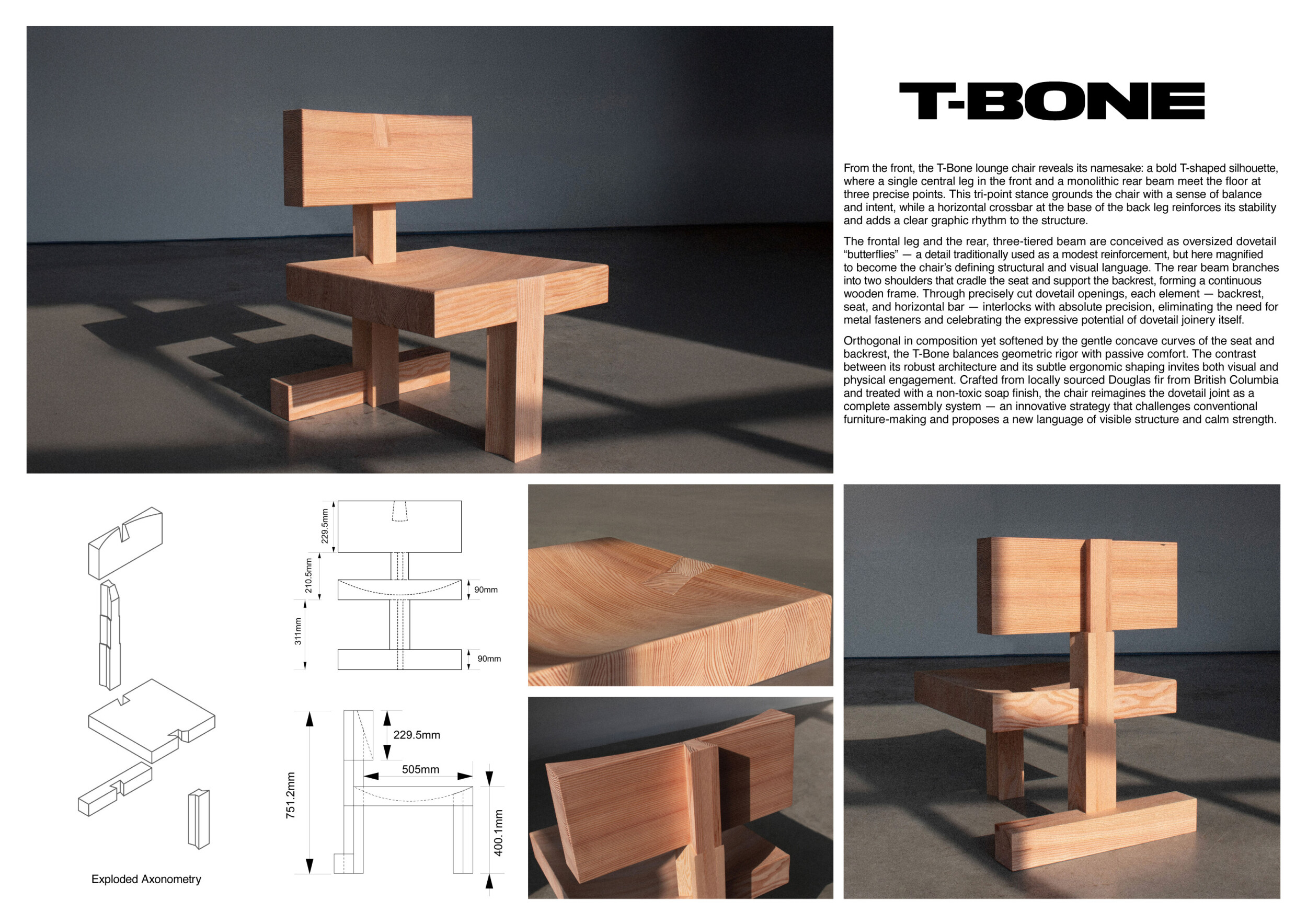
T-BONE Chair
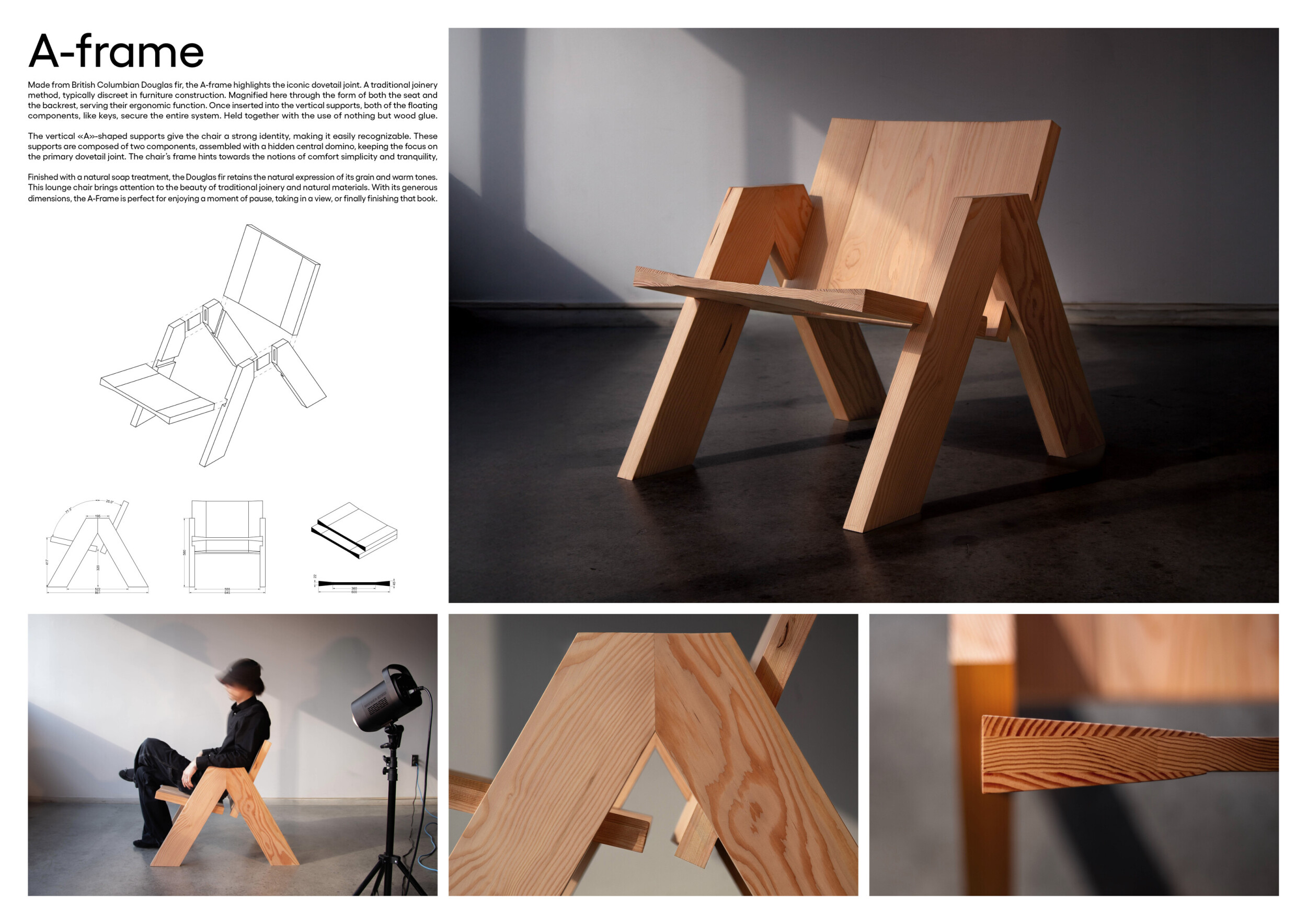
A-frame
Stretchy stool


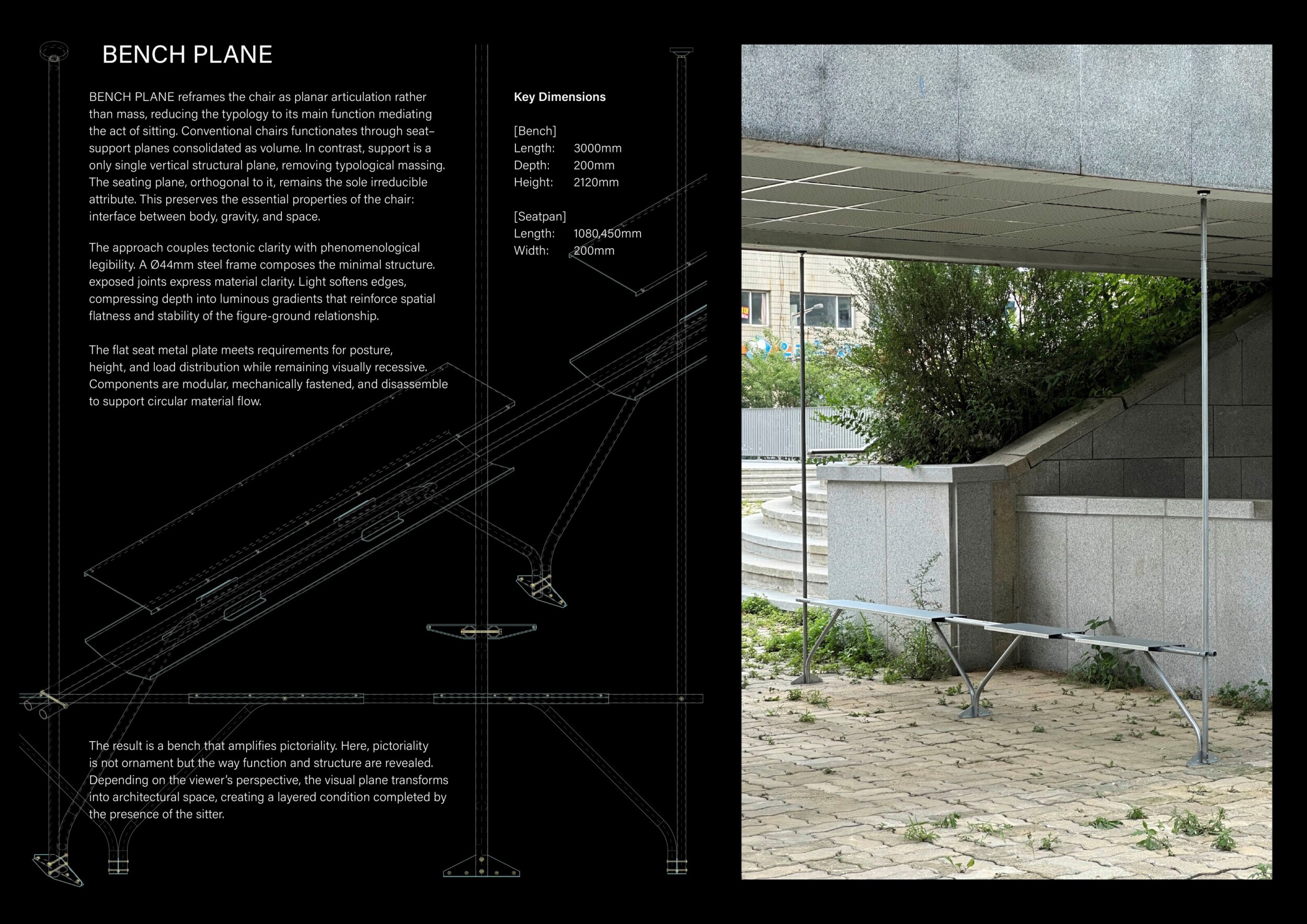
Bench Plane
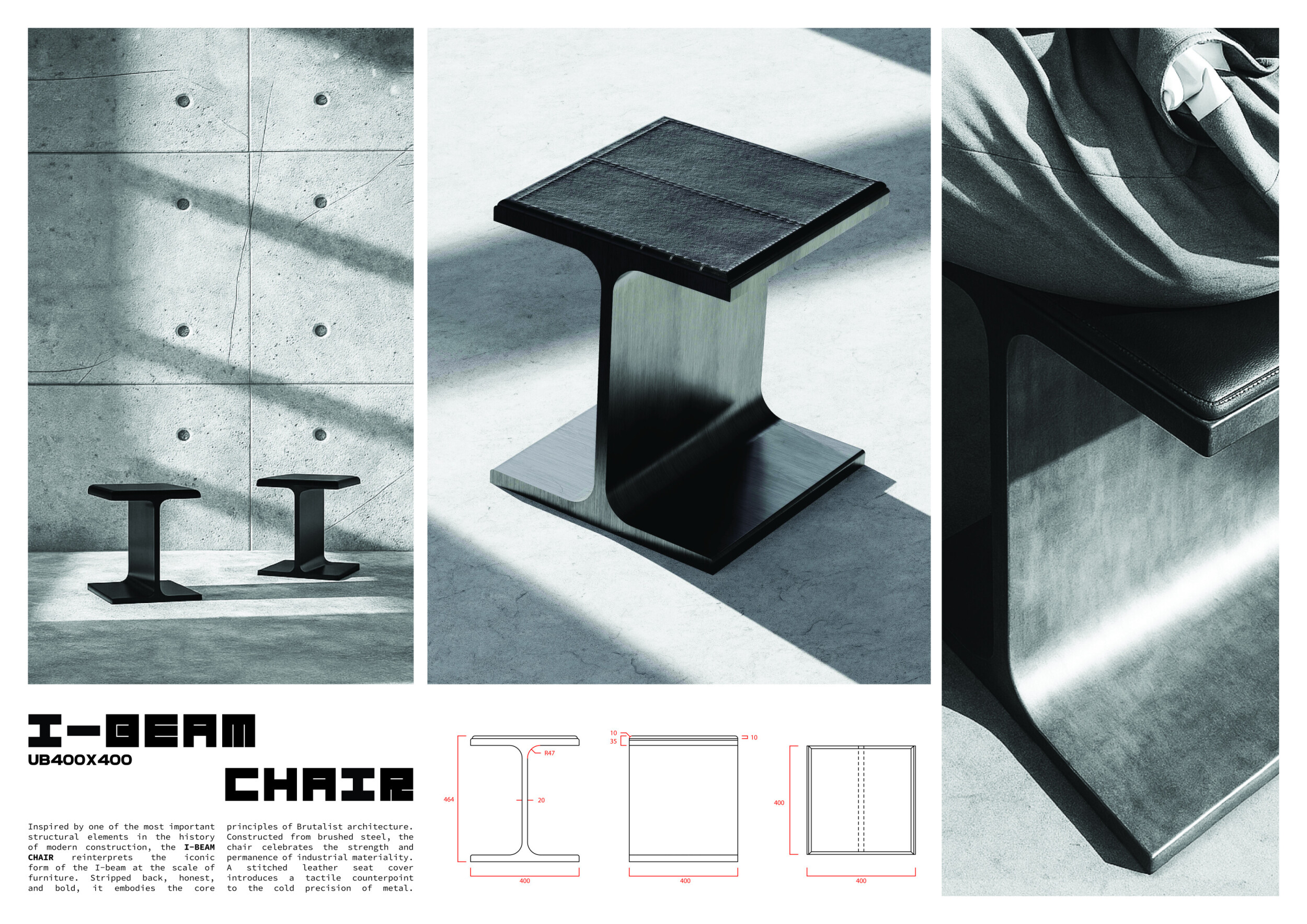
I-Beam Chair
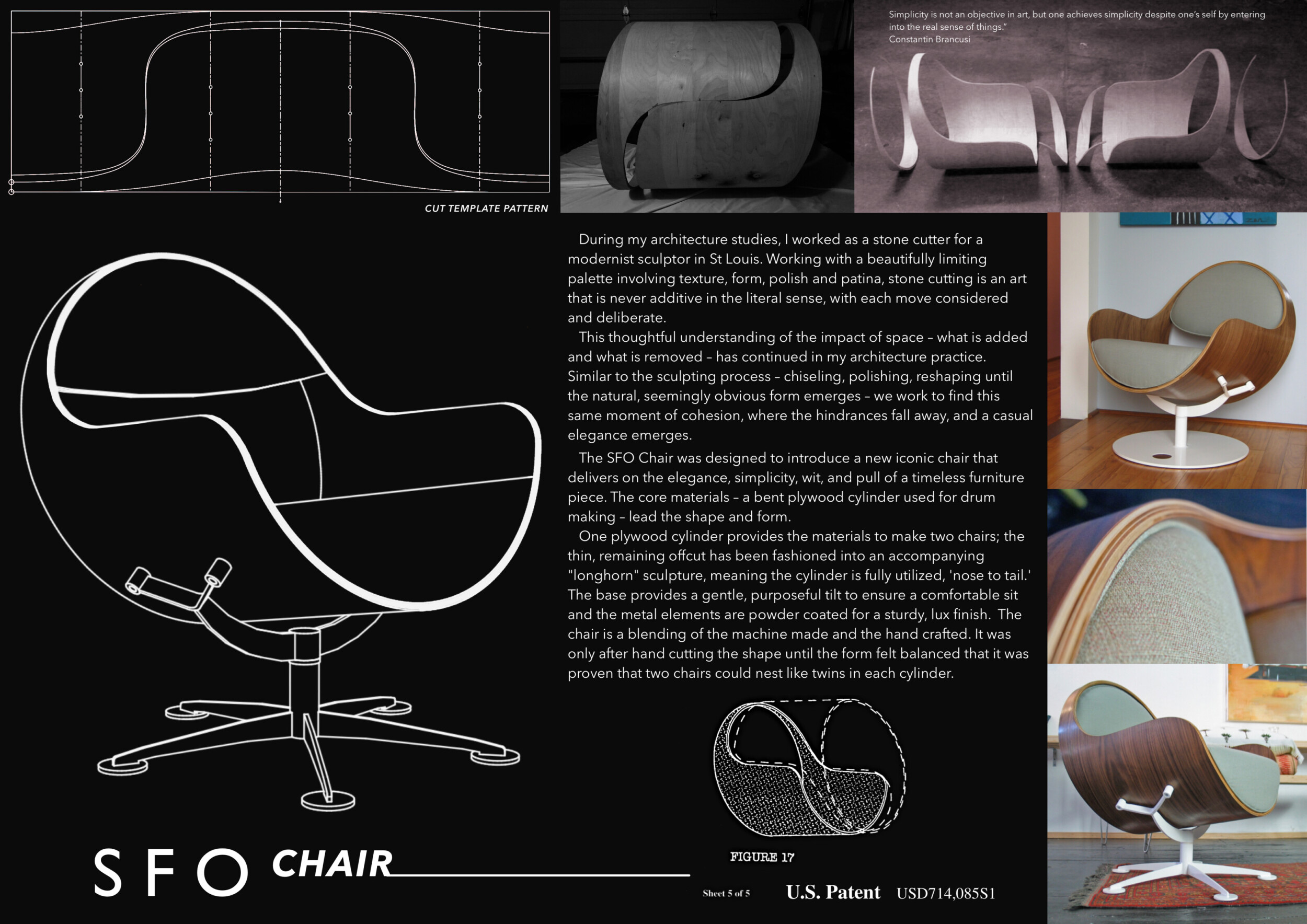
SF0 chair
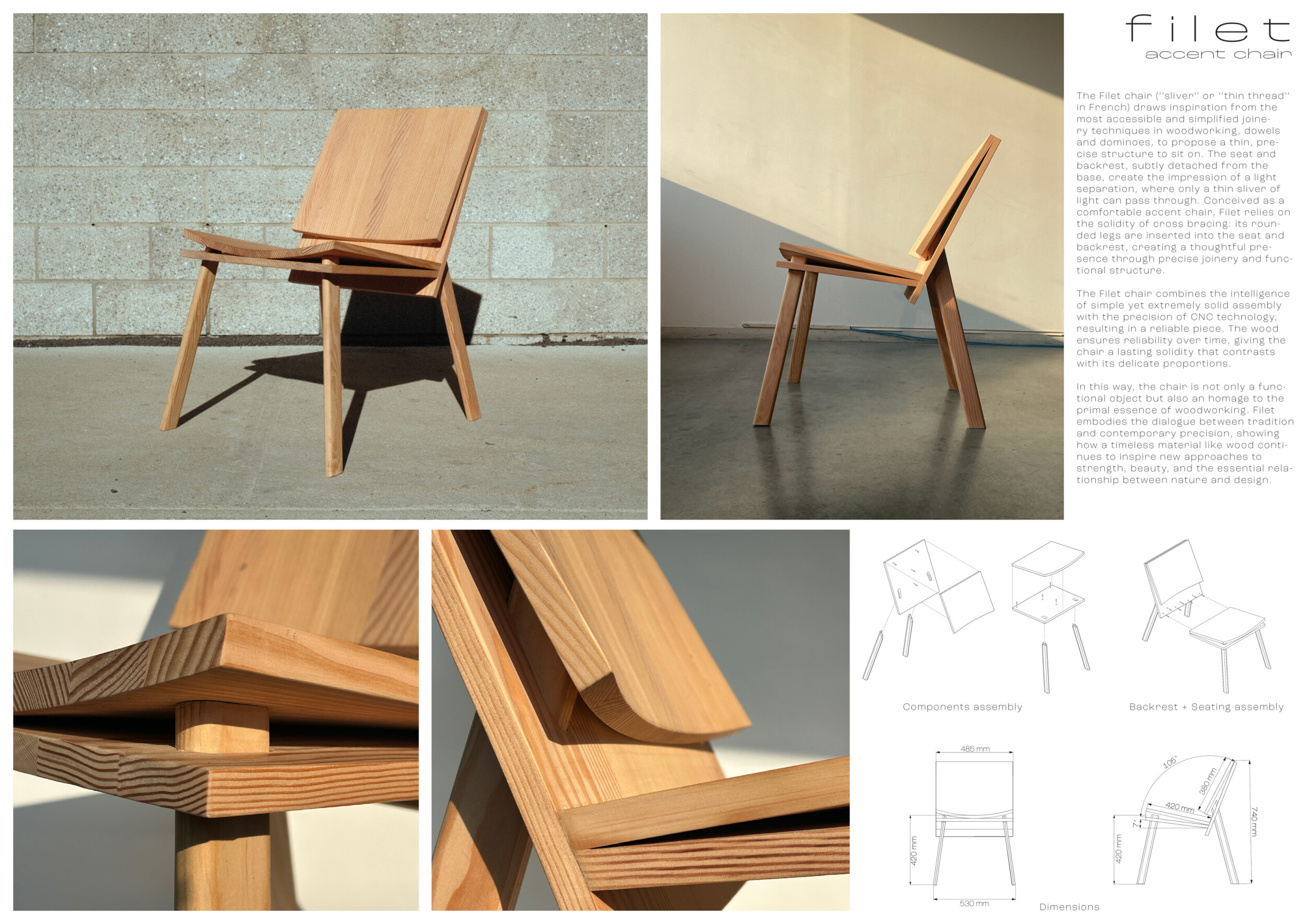
Filet Chair
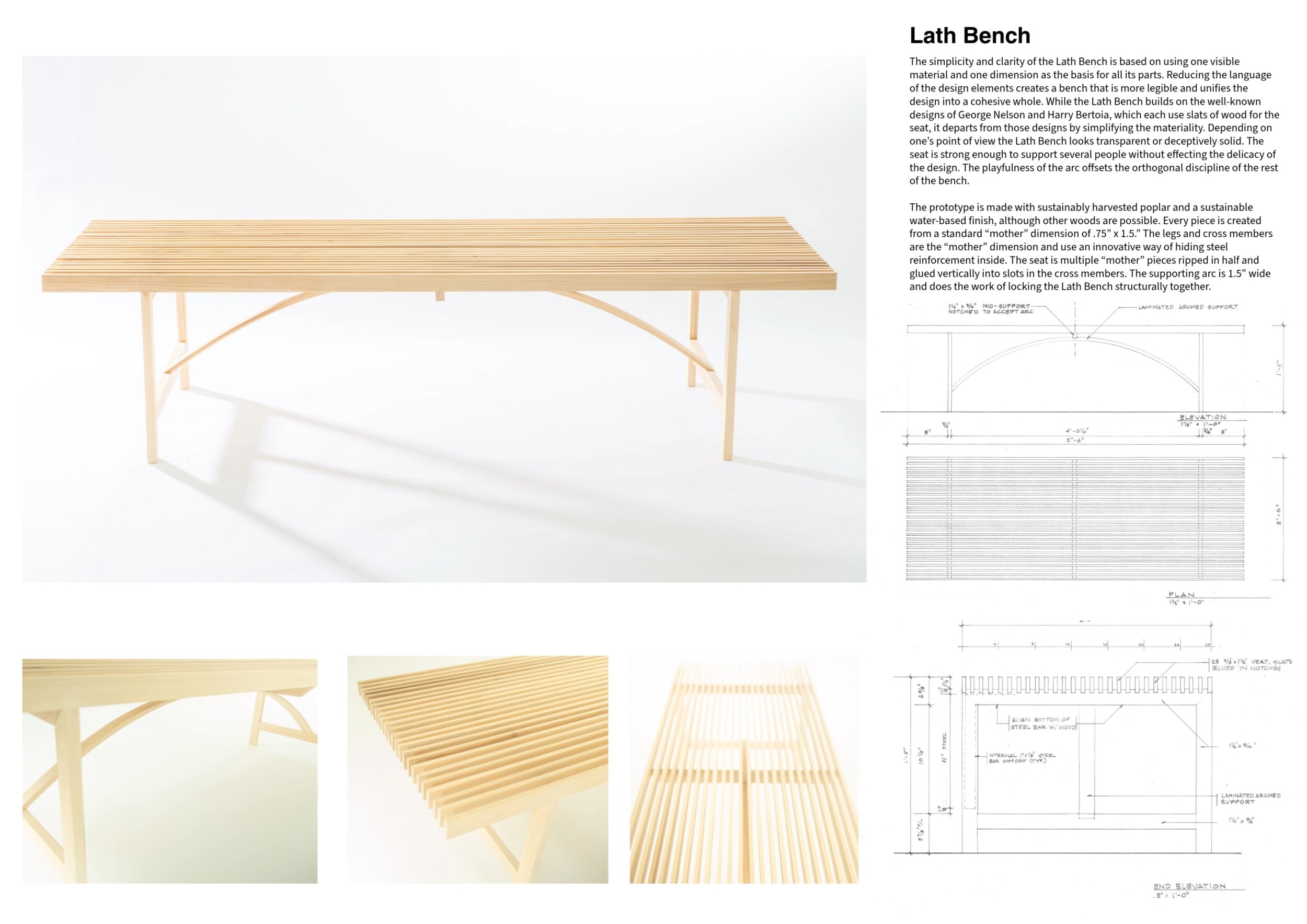
Lath Bench
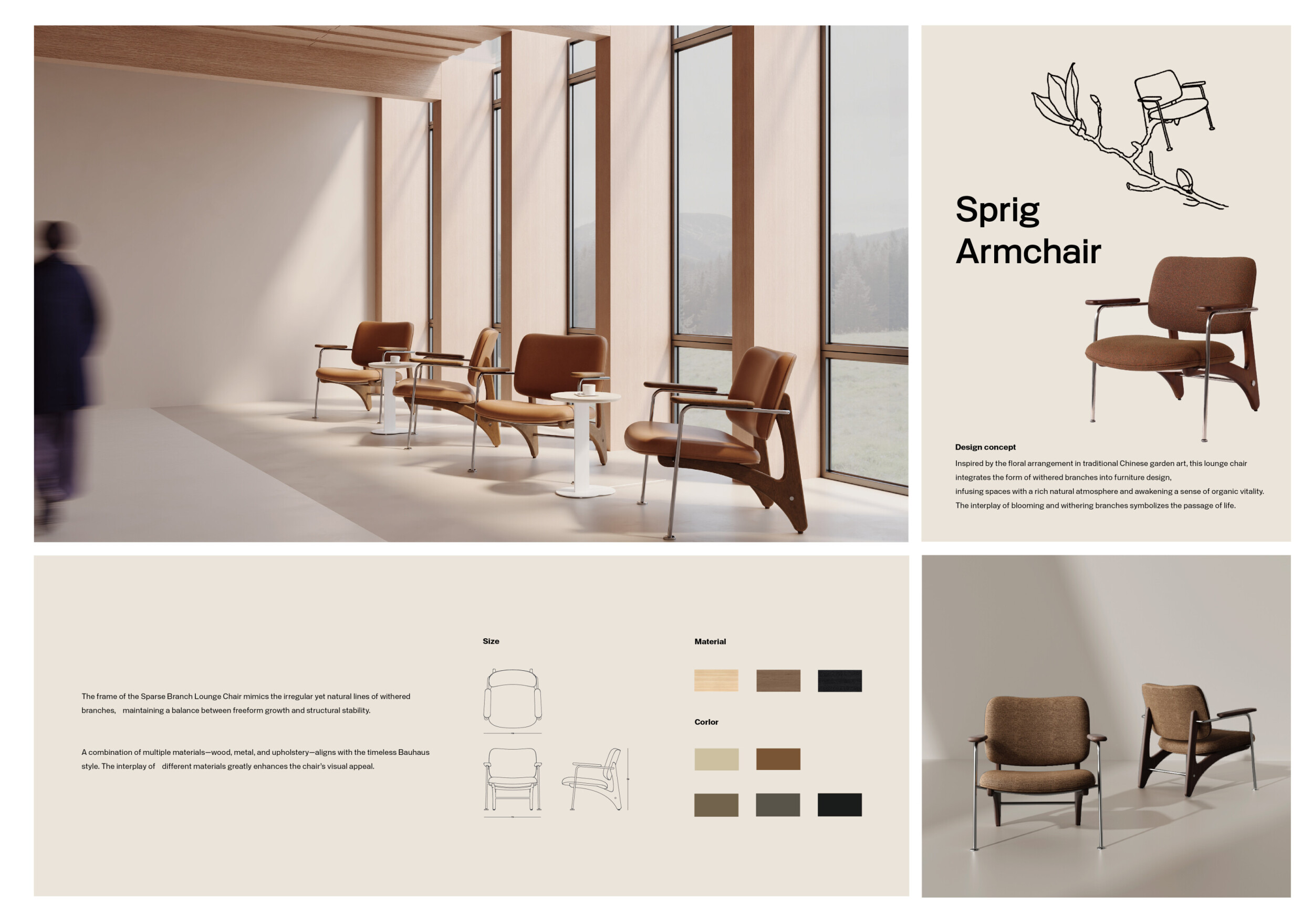
Sprig Armchair
Silent Equilibrium
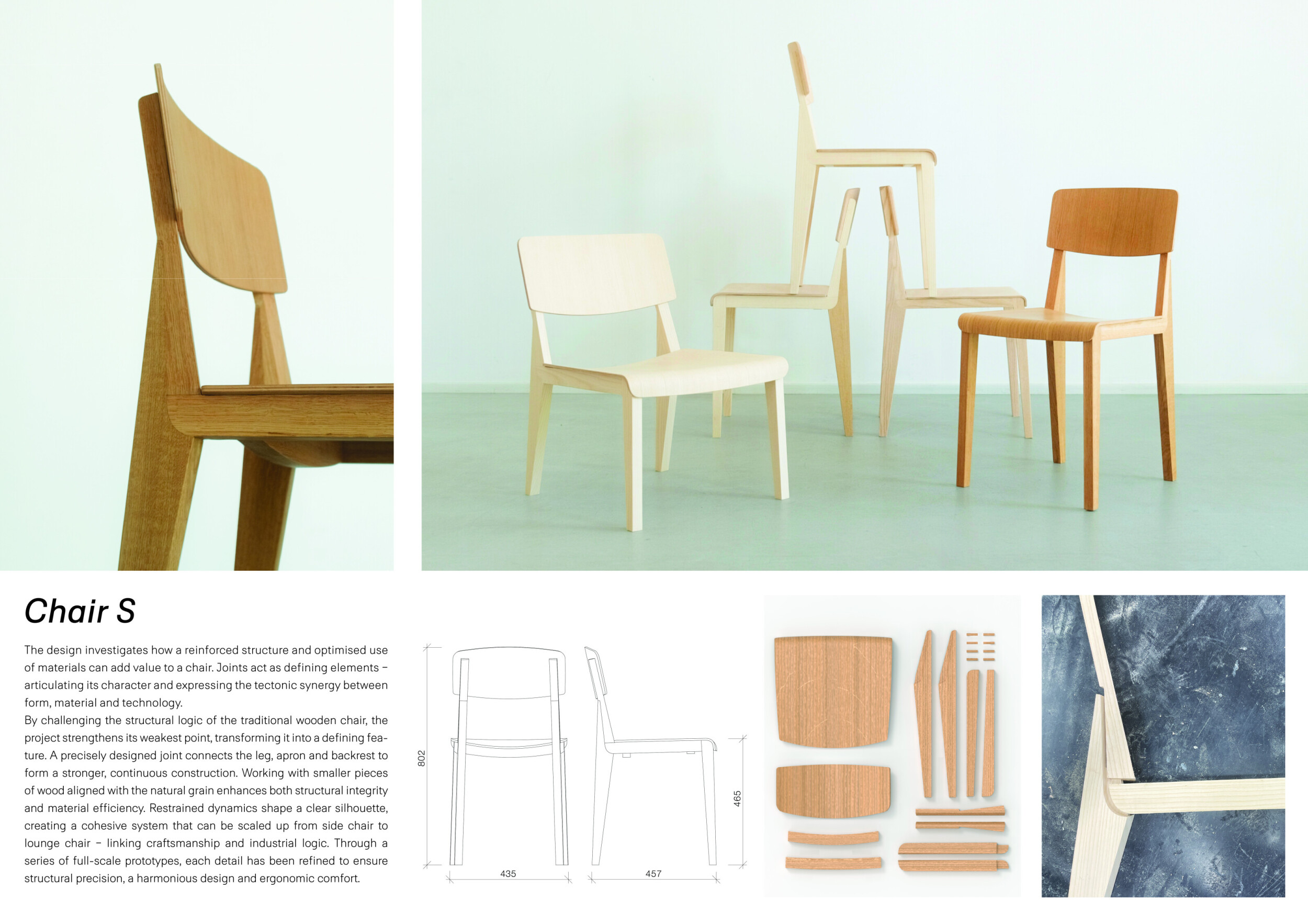
Chair S
Think Twice
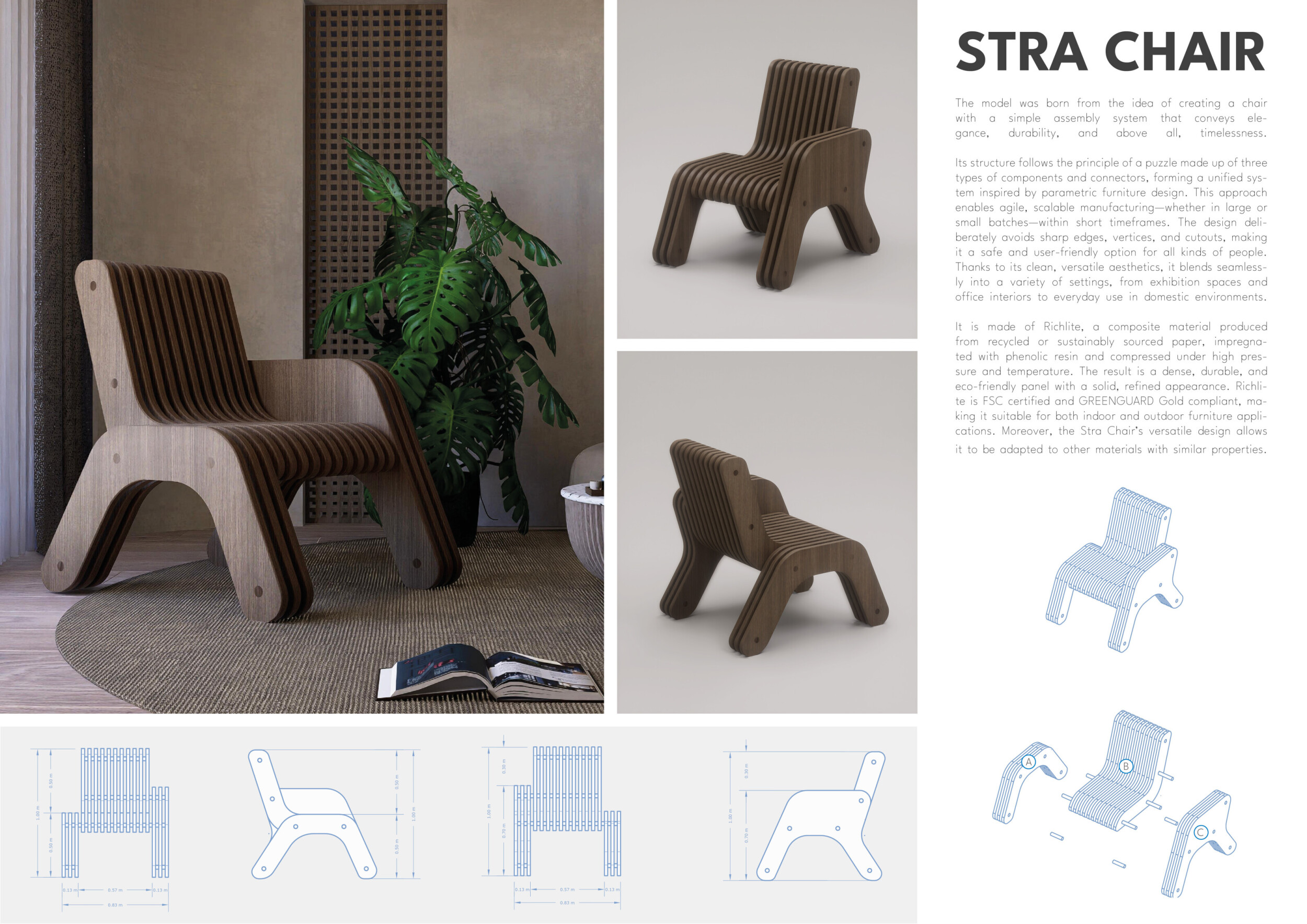
Stra Chair
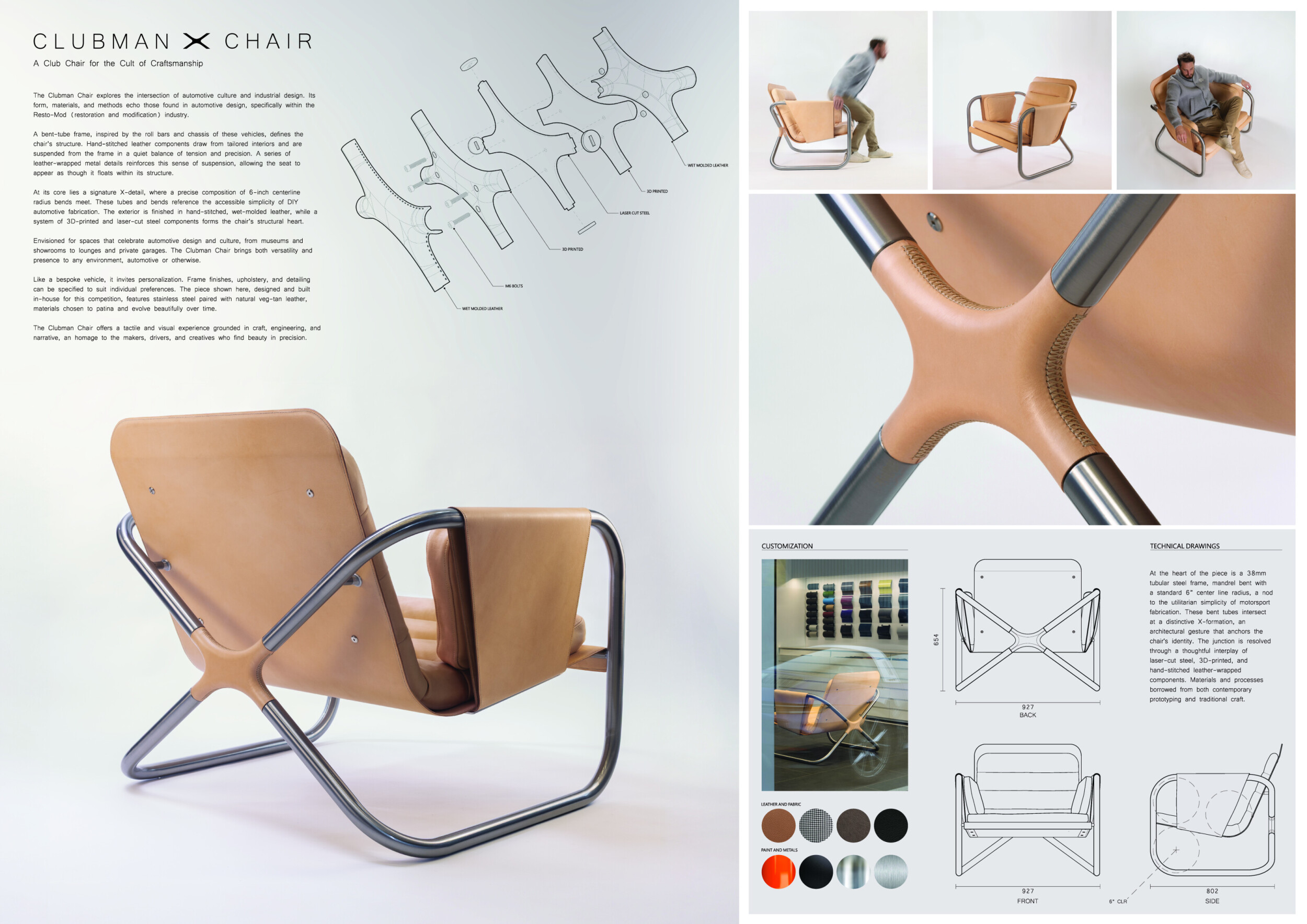
The Clubman Chair
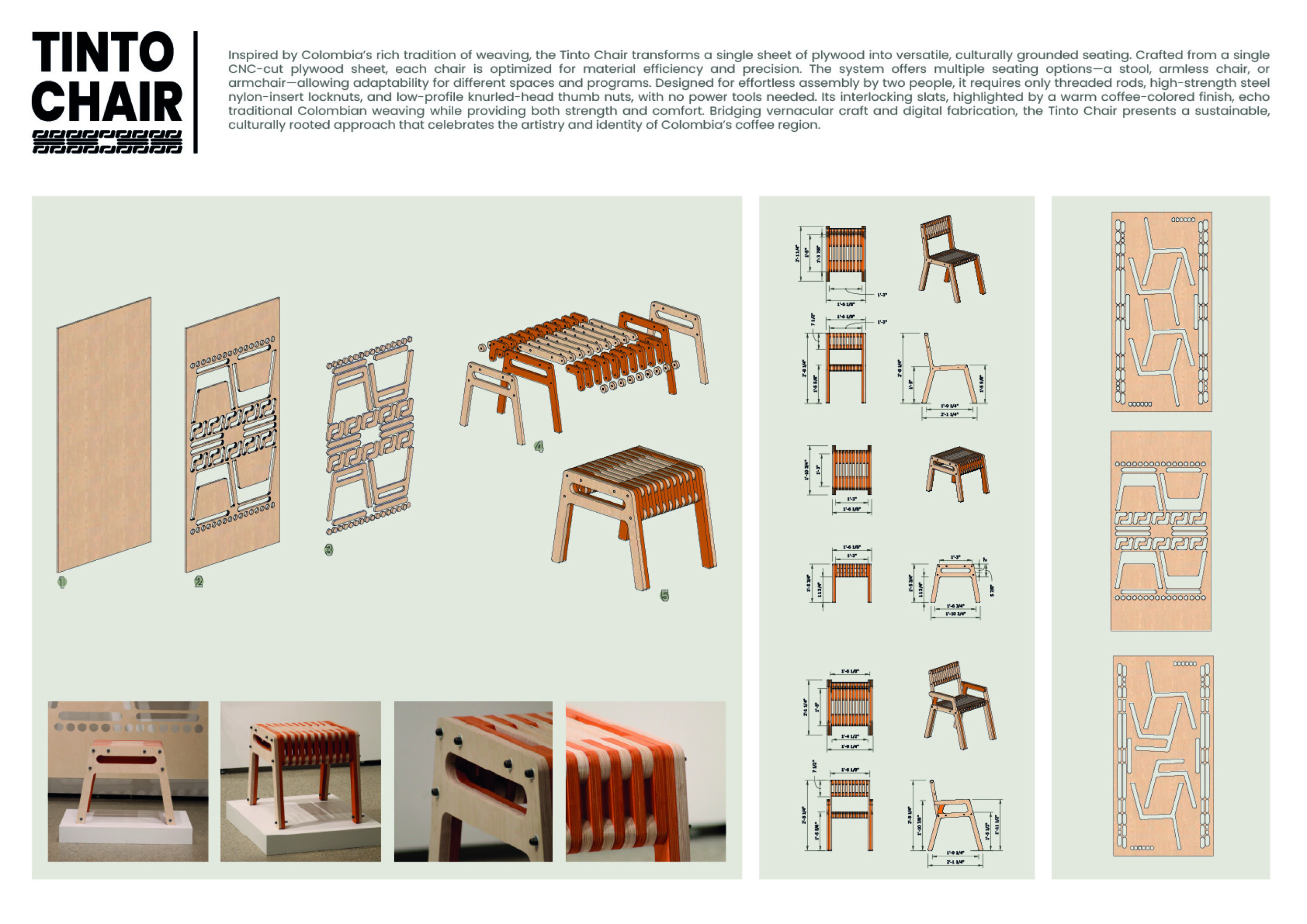
Tinto Chair
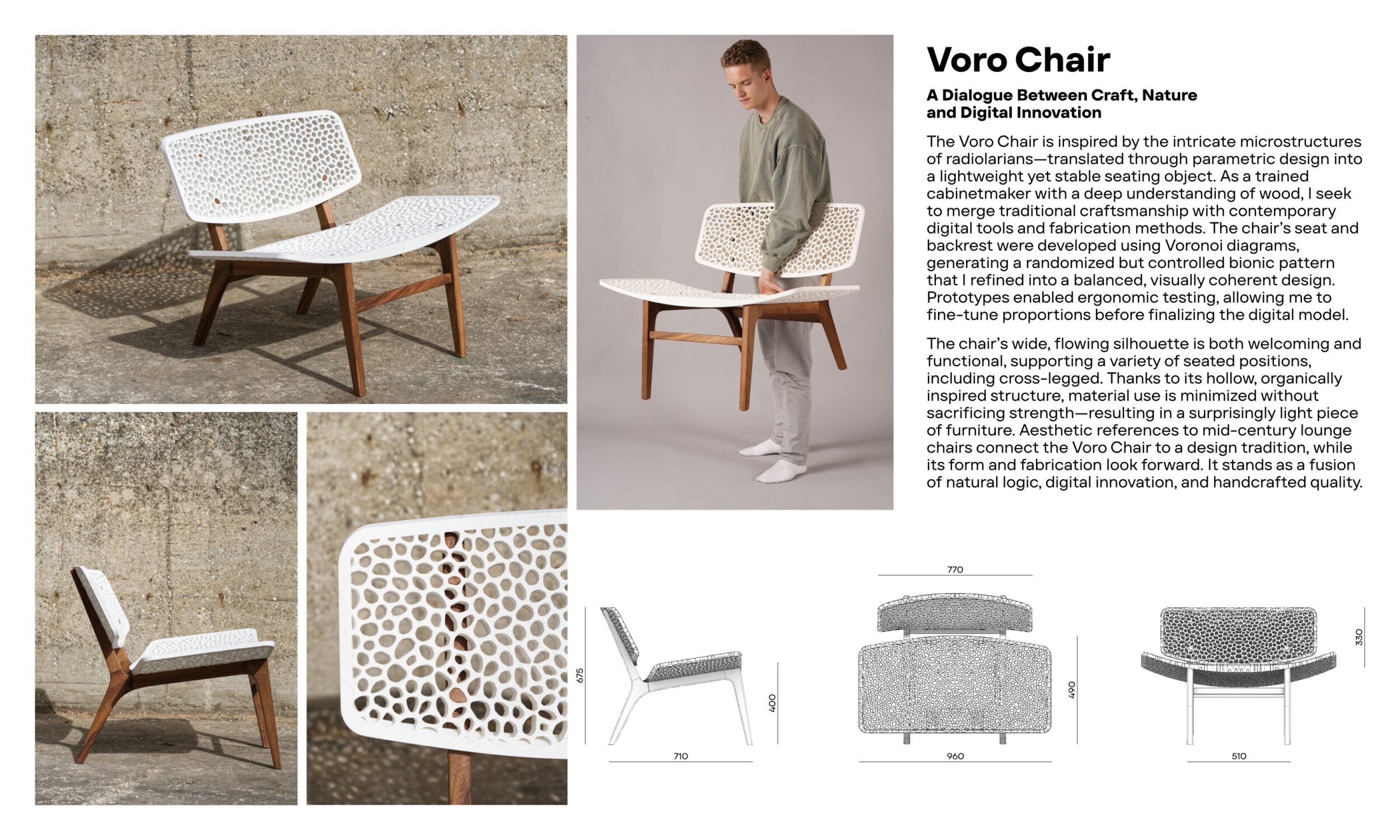
Voro Chair

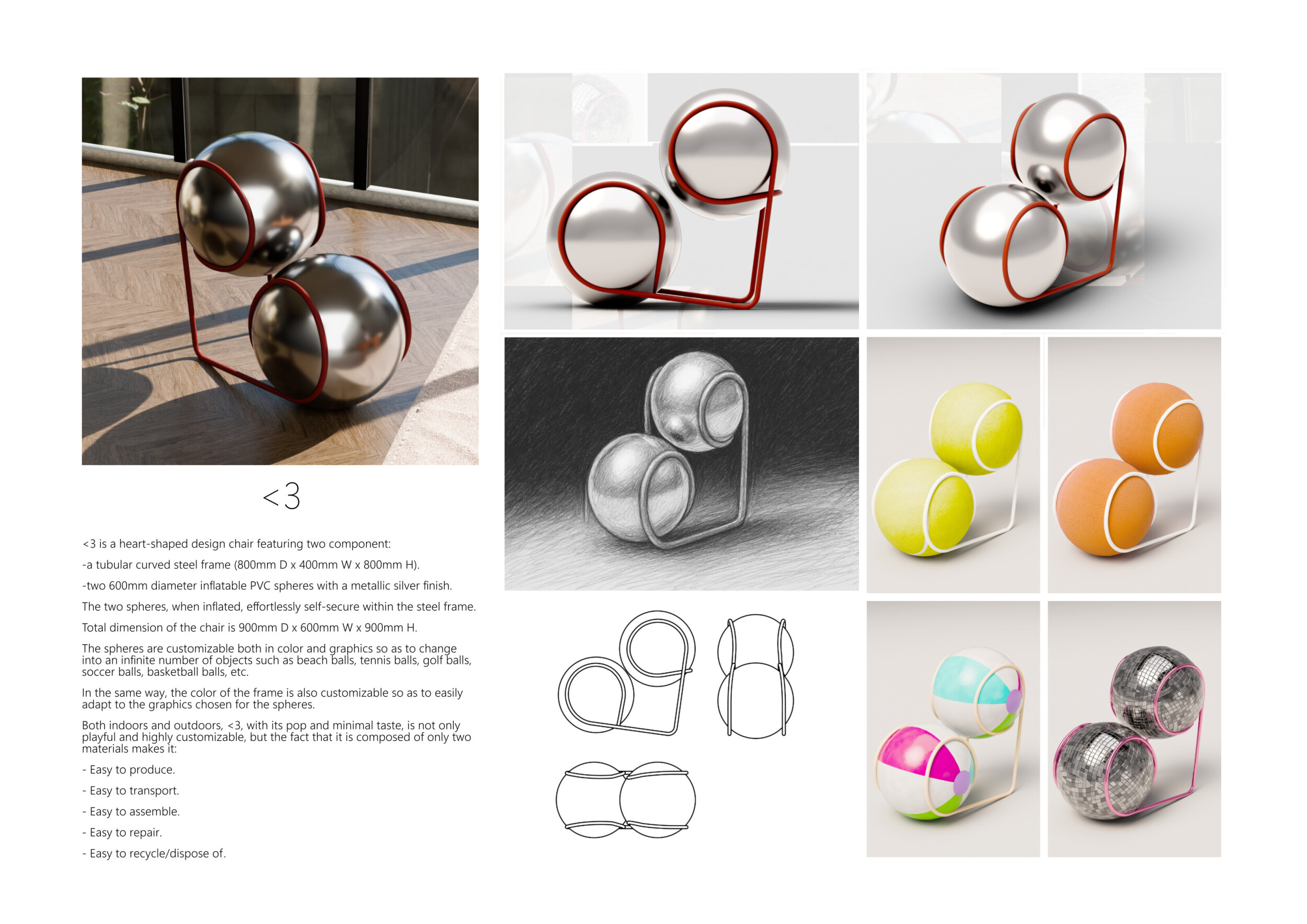
<3 .


The board presents a cohesive visual strategy built around soft daylight and neutral backgrounds that highlight the sculpted wood transitions. The close-up photography is particularly successful, revealing the carved junctions, grain orientation, and ergonomic shaping that define the chair’s character. Read more These images convey the craftsmanship with clarity and help viewers understand the nuances of the form. The technical drawings support the visual narrative through clean linework and well-proportioned diagrams. Some annotations could be expanded to clarify connection details or to describe how structural thicknesses vary across the chair, especially given that joinery refinement is central to the design. The text is concise and reflective, but a slightly clearer division between concept, process, and functional attributes would strengthen its hierarchy. The composition manages the balance between sculptural photography and analytical information effectively. Renderings and photos communicate the chair’s tactile qualities, while the measured drawings provide sufficient precision for understanding scale and ergonomics.