

Buildner is a global leader in organizing architecture competitions of all scales — from furniture, cottages, and guesthouses to full city rebranding. With prize budgets ranging from €5,000 to €500,000, Buildner brings proven global experience to every competition.
Launch a competitionLaunch a competition
Introduction

Buildner is pleased to announce the results of the Re:Form – New Life for Old Spaces Edition #2 competition, an international design challenge inviting architects and designers to rethink how existing buildings - often overlooked, abandoned, or underused - can be transformed into meaningful spaces for contemporary life. As the second edition of this now annual competition, Re:Form continues to attract a global range of participants, each engaging with the urgent question of how architecture can work with what already exists rather than building anew.
The competition asked participants to select a site anywhere in the world and propose an adaptive reuse intervention within a compact footprint, encouraging thoughtful, small-scale transformations with broader social and environmental impact . With no fixed program, submissions explored a wide spectrum of uses, from housing and community spaces to cultural and hybrid civic programs. The brief emphasized sustainability, functionality, and contextual integration, challenging designers to balance creative ambition with practical and material awareness.
Across the submissions, several shared themes emerged. Many proposals approached adaptive reuse not as a singular architectural object but as a process: phased, incremental, and capable of evolving over time. Others focused on systems rather than forms, developing modular strategies that could be replicated, adapted, and scaled across different contexts. A strong emphasis was also placed on material reuse and circular thinking, with projects exploring how existing structures, demolition waste, or local materials could be reassembled into new spatial frameworks. At the same time, a number of entries highlighted the social dimension of reuse, framing architecture as a tool for rebuilding community life, supporting collective activity, and reactivating forgotten urban and rural sites.
The selected winning projects reflect these tendencies while each advancing a distinct interpretation of the brief. Together, they demonstrate a shift in architectural thinking—from replacement to transformation, from permanence to adaptability, and from isolated interventions to systems that engage broader environmental and social conditions. Following careful evaluation by an international jury panel, the awarded proposals stand out for their clarity of concept, depth of investigation, and ability to translate complex challenges into coherent and compelling architectural strategies.
We sincerely thank our jury panel
for their time and expertise
Extended list of jury biographies
Anne Cecilie Haug
Senior Architect, Snøhetta
Norway

Haggai Dror
AggEquo
United States

Kevin Lim
Studio SKLIM
Singapore

Roman Izquierdo Bouldstridge
Studio Roman Izquierdo Bouldstridge
Spain

Oliverio Najmias
Oliverio Najmias Arquitectos
Argentina

Tom Schroeder
Patkau Architects
Canada

Tiago do Vale
Tiago do Vale Arquitectos
Spain

Bart Van Leeuw
ZAmponearchitectuur
Belgium

1st Prize Winner
Seeds in Forgotten Soil
We participated in this competition because we wanted a platform to express our ideas. Through collaboration, we imagined a unique piece of work created from a blend of our different thoughts, perspectives, and creativity.
Read full interview Indonesia
Jury feedback summary
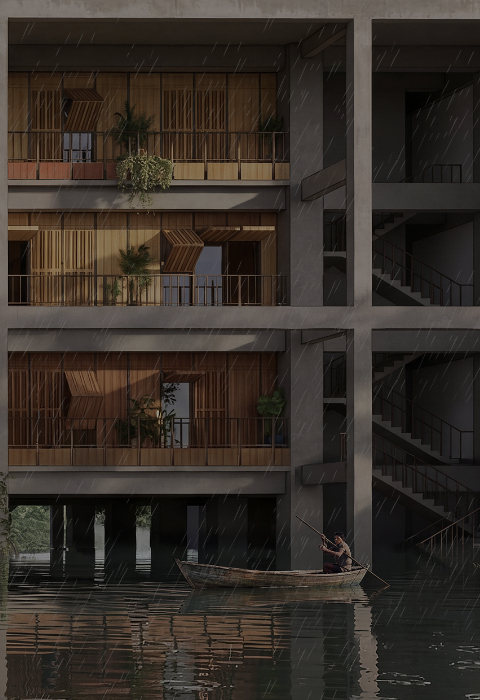
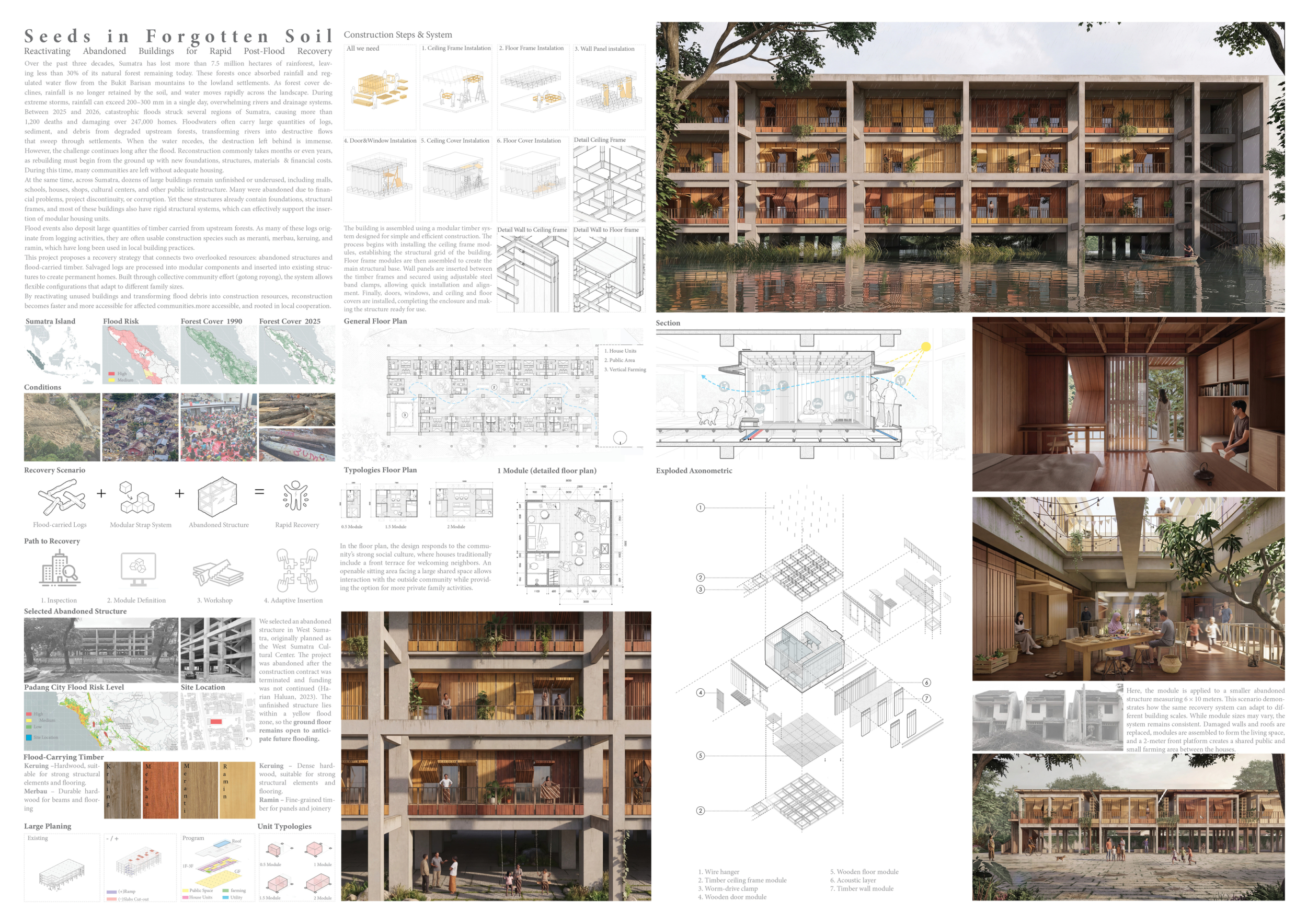
Seeds in Forgotten Soil proposes a post-disaster housing strategy based on the adaptive reuse of abandoned concrete structures combined with modular timber insertions. The project operates as a scalable system rather than a single building, using existing structural frames as a foundation for new residential units organized around shared circulation and communal spaces.

This proposal stood out for its sensitive transformation of abandoned structures into places of renewal and collective life. It responds convincingly to current environmental and social challenges. The project combines adaptive reuse with dignity, resilience, and community value. Its architectural language is clear, calm, and emotionally engaging. A strong and hopeful vision for the future.
Bart Van Leeuw / Buildner guest jury
ZAmponearchitectuur, Belgium

Intensive study into modular fabrication and local materials. The idea of individual houses or volumes within an abandoned complex is intriguing. The cultural aspect of opening up the frontage is reminiscent of vernacular verandahs in Southeast Asia, which cultivate community spirit through shared activity. This is totally on point and perhaps what high-rise modern residential units lack these days. Beautiful drawings and diagrams convey this atmosphere. The passive climatic response is appreciated.
Kevin Lim / Buildner guest jury
Studio SKLIM, Singapore

A compelling and socially grounded proposal that addresses reconstruction not only as a physical task, but as a community-centered process. The submission stands out for linking climate resilience, material reuse, and post-disaster recovery into a coherent architectural strategy. Rather than proposing a singular object, it presents a replicable system that could support real needs in vulnerable regions. One of the strongest aspects of the project is the clarity of its mission. The use of abandoned concrete frames combined with modular timber insertions is intelligent, pragmatic, and highly relevant to contexts where speed, cost, and resource efficiency are critical. The proposal demonstrates a strong understanding of how architecture can work with what already exists rather than relying on complete replacement. The modular logic is well developed.
Haggai Dror / Buildner guest jury
AggEquo, United States
Construction sequencing, component diagrams, and adaptable unit typologies communicate a system that appears scalable and flexible. The ability to accommodate different family sizes and combine private dwellings with shared communal spaces adds social depth and suggests thoughtful consideration of long-term habitation rather than temporary shelter alone. The visualizations are warm and convincing. They portray dignified living environments with generous light, natural materials, and meaningful shared spaces. This human quality is important, as many resilience-focused proposals can become overly technical or utilitarian. Here, functionality and atmosphere are balanced effectively.
Haggai Dror / Buildner guest jury
AggEquo, United States
Where the project could be pushed further is in architectural distinctiveness. While highly competent and commendably practical, the spatial language feels somewhat conventional, and the formal expression is secondary to the system itself. A stronger architectural identity or more site-specific adaptation could elevate the emotional and cultural resonance of the proposal. Additionally, some claims around implementation, governance, or real-world deployment would benefit from deeper explanation. The strategy is promising, but successful execution in post-disaster conditions often depends on logistics, ownership structures, and local participation frameworks that are only lightly addressed.
Haggai Dror / Buildner guest jury
AggEquo, United States
Buildner's commentary, recommendations and techniques review
Order your review here
-
8/10 Linework

-
9/10 Quality of drawings

-
8/10 Balance of color

-
8/10 Layout

-
7/10 Hierarchy

-
9/10 Annotation

-
8/10 Text

-
9/10 Clarity of story

-
9/10 Clarity of diagrams

-
9/10 Quality of overall presentation

Enter an open architecture competition now





2nd Prize Winner
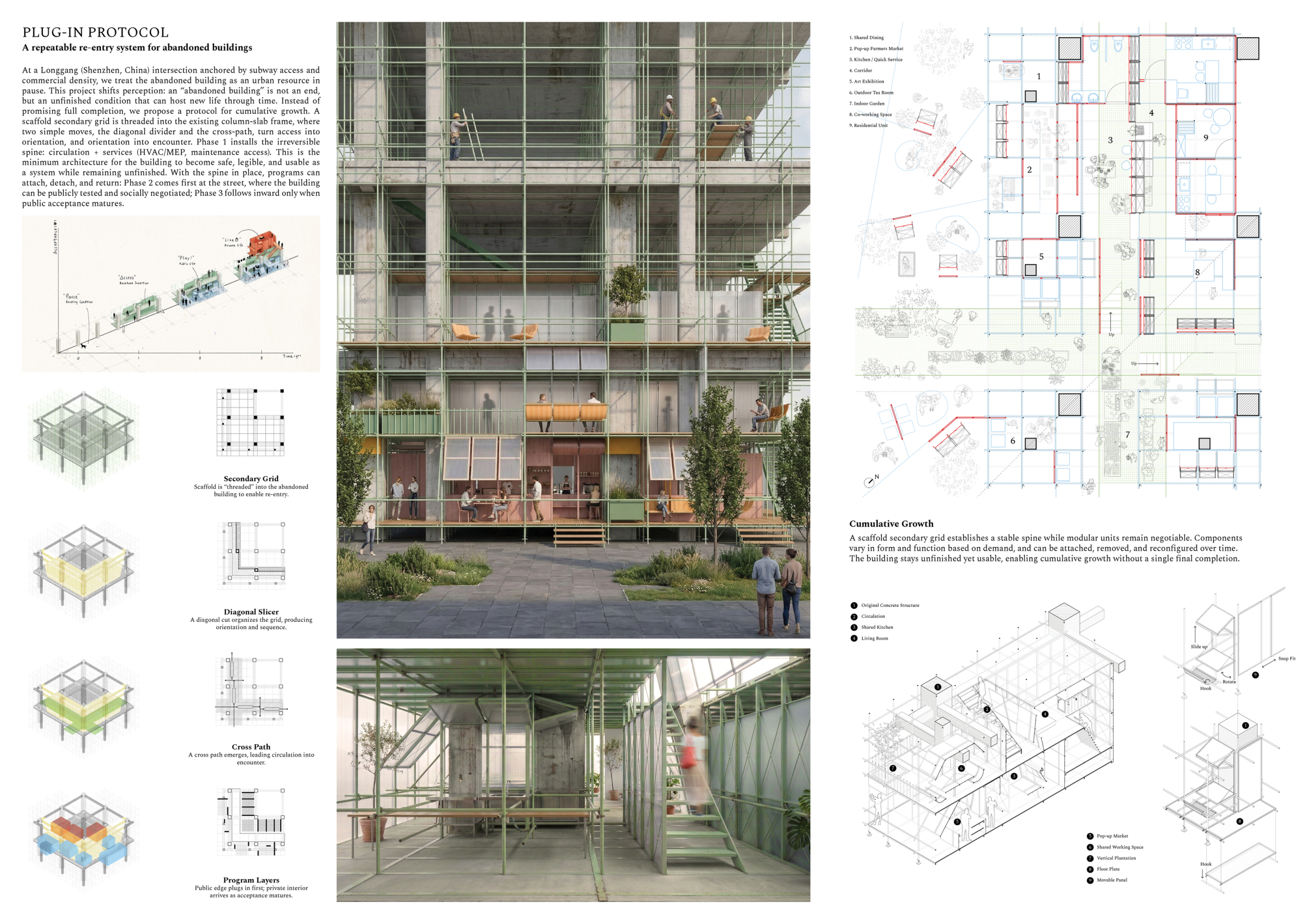
Plug-In Protocol

We participate because competitions allow curiosity to move faster. They are a testing ground—a place to refine ideas, take risks, and push questions further than conventional practice usually allows.
Read full interview
 United States
Jury feedback summary
Plug-In Protocol proposes a phased strategy for the reactivation of unfinished and abandoned building structures through a system of lightweight, modular insertions. Rather than completing the original construction as intended, the project introduces a secondary scaffold-like framework that attaches to the existing concrete skeleton, enabling incremental occupation and transformation over time.

Plug-In Protocol marries an ephemeral aesthetic with the heavy permanence of an existing structure. This design philosophy creates a compelling tension between the transient nature of modern architectural interventions and the enduring legacy of the structure’s original framework. By utilizing lightweight, adaptable components that “plug into” the existing skeleton, the project avoids the heavy-handedness of traditional construction. The resulting contrast is an elegant combination that surpasses what was originally planned, yielding a space defined by the raw reality of what is. This synthesis not only respects the economic history and momentum of the structure but also breathes new life into it through a sophisticated interplay of material lightness and structural weight.
Tom Schroeder / Buildner guest jury
Patkau Architects , Canada
With cyclical financial crises and the abandonment of large-scale residential complexes in China, this project offers a thought-provoking solution through a series of phased architectural interventions. With practicality in mind, the project uses service routes as a starting spine to grow interventions over time. A mature thought process. The diversity of spaces this intervention could incubate is appreciated.
Kevin Lim / Buildner guest jury
Studio SKLIM, Singapore
A highly intelligent response to the brief, focused on unfinished and underused structures. The proposal shows how minimal intervention can unlock new use and social relevance. Its phased and flexible strategy feels realistic and replicable. The project is resource-conscious and forward-thinking. A convincing example of architecture through smart adaptation.
Bart Van Leeuw / Buildner guest jury
ZAmponearchitectuur, Belgium
Buildner's commentary, recommendations and techniques review
Order your review here
The presentation clearly explains the project through a series of diagrams and axonometric drawings that show how the system grows and changes over time. The structural diagrams and phased development studies make the overall idea easy to understand and give a strong sense of how the project could be built.
-
8/10 Linework
-
9/10 Quality of drawings
-
8/10 Balance of color
-
9/10 Layout
-
7/10 Hierarchy
-
8/10 Annotation
-
8/10 Text
-
9/10 Clarity of story
-
9/10 Clarity of diagrams
-
9/10 Quality of overall presentation
3rd Prize Winner +
Buildner Sustainability Award
Buildner Sustainability Award
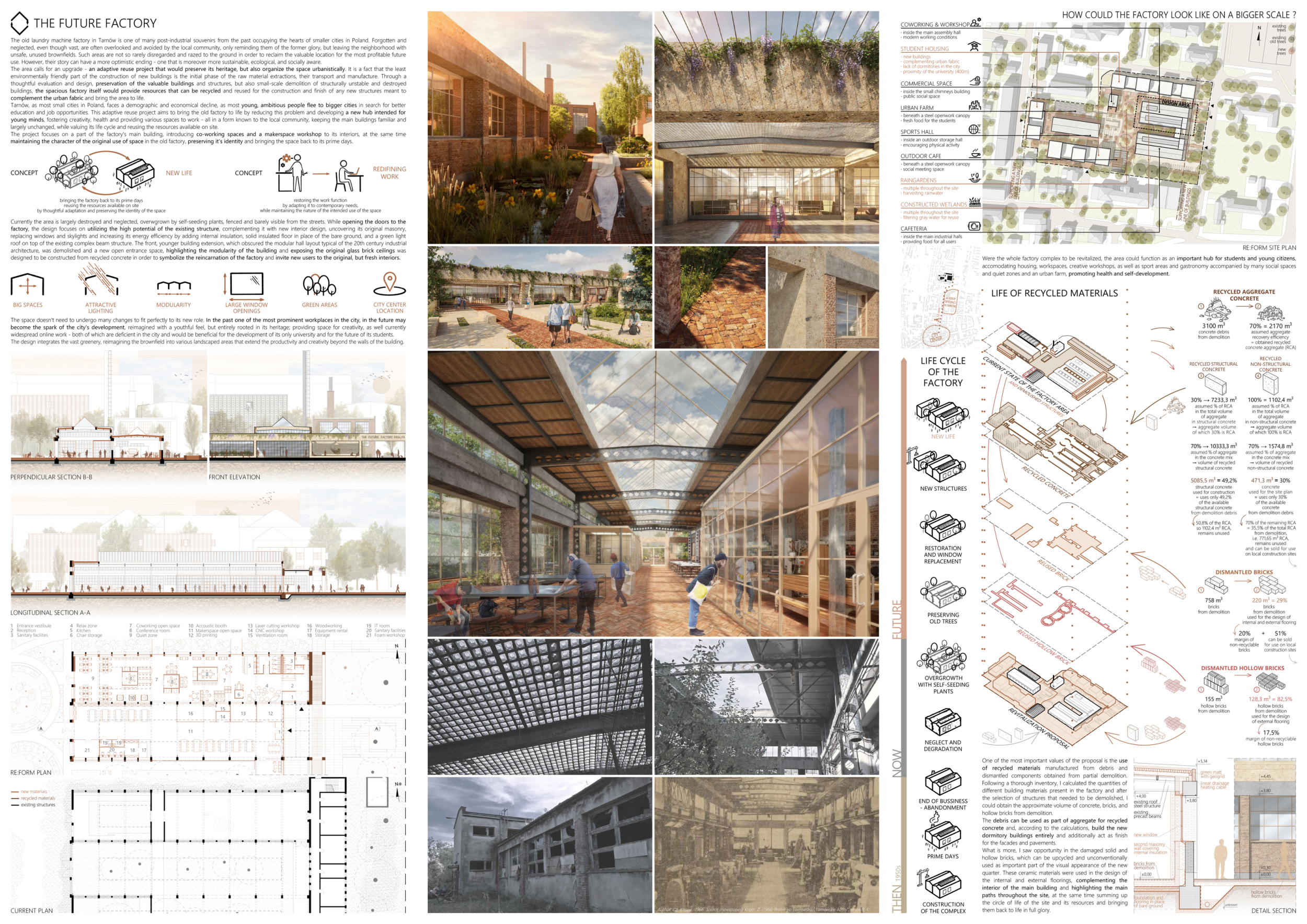
The Future Factory

Competitions provide room to grow, to explore one’s own creativity and expand its boundaries. Through registering for the competition I wished to challenge myself, test my own creative thinking abilities and feel inspired to think boldly and create something meaningful. What I value in architectural competitions are their unique themes that often inspire to delve deeper and seek creative answers that may shape future architecture.
Read full interview

Jury feedback summary
The Future Factory proposes the adaptive reuse of an abandoned industrial complex as a mixed-use civic and productive environment, reactivating the site as a place of community, collaboration, and material transformation. The project retains and works within the existing structural framework, introducing new programs such as workshops, co-working spaces, housing, and public amenities to create a diverse and active ecosystem.
A robust adaptive reuse proposal grounded in practicality and long-term value. The transformation of industrial heritage into civic use is well resolved. The project combines sustainability, reuse, and public activation successfully. Its programmatic richness adds depth and relevance. A complete and convincing entry.
Bart Van Leeuw / Buildner guest jury
ZAmponearchitectuur, Belgium
The beautiful vision of the Future Factory is that it houses a diverse community of actors rather than serving a singular, monolithic purpose. This approach shifts the paradigm of industrial architecture from a site of isolated production to a vibrant ecosystem of collaboration. While the revitalization of an industrial facility is not a new idea in urban planning, the project distinguishes itself through its commitment to reclaiming the overgrown trees and wild landscape that have claimed the site during its period of dormancy. Rather than clearing the land for traditional development, the design integrates this spontaneous ecology, positioning the factory as a threshold where industrial heritage and natural regeneration coexist. This synthesis creates a unique environment for the community, where the history of the facility is celebrated through the lens of environmental stewardship and adaptive reuse.
Tom Schroeder / Buildner guest jury
Patkau Architects , Canada
A thoughtful and mature proposal that demonstrates a strong understanding of adaptive reuse as both an architectural and social opportunity. The project successfully embraces the existing industrial fabric rather than treating it as a constraint, and the narrative around giving the factory a new life through mixed uses is convincing and relevant. One of the strongest aspects of the submission is its atmosphere. The visualizations communicate a warm, human-scaled environment with careful attention to materiality, light, and the relationship between old and new. The reuse of existing structural elements, incorporation of greenery, and emphasis on communal spaces create an appealing sense of place. The proposal feels realistic, buildable, and sensitive to context. The circular economy strategy and lifecycle diagrams are also commendable.
Haggai Dror / Buildner guest jury
AggEquo, United States
The effort to quantify reused materials and integrate demolition waste into the new intervention adds depth and aligns well with the competition’s sustainability ambitions. Where the project could go further is in the level of innovation and specificity. While elegant and well-resolved, the program and spatial strategy feel somewhat familiar compared to more experimental or transformative entries. The proposal would benefit from a sharper defining gesture—something that elevates it from a strong adaptive reuse scheme to a truly memorable one. Additionally, some practical aspects such as phasing, economic feasibility, or how the various uses would coexist operationally could be explored in greater detail. The presentation is beautiful, but certain drawings require closer reading to fully understand circulation and functional organization.
Haggai Dror / Buildner guest jury
AggEquo, United States
Comprehensive deep dive into reusing materials and analyzing the lifecycle of the factory. While being very technical in nature, the project also exhibits a beautiful juxtaposition between old and new, soft landscape with hard structural elements. A poetic vision for the future.
Kevin Lim / Buildner guest jury
Studio SKLIM, Singapore

A complex building in a complex setting, delicately intervened with attention to detail and to the specificities of each part.
Tiago do Vale / Buildner guest jury
Tiago do Vale Arquitectos, Spain
Buildner's commentary, recommendations and techniques review
Order your review here
The presentation excels in conveying atmosphere and material sensitivity, with renderings that effectively communicate the interplay between existing industrial elements and new architectural insertions, particularly in the use of light, texture, and vegetation to create a cohesive spatial experience.
-
8/10 Linework
-
9/10 Quality of drawings
-
9/10 Balance of color
-
8/10 Layout
-
7/10 Hierarchy
-
8/10 Annotation
-
8/10 Text
-
8/10 Clarity of story
-
9/10 Clarity of diagrams
-
9/10 Quality of overall presentation
Buildner Student Award
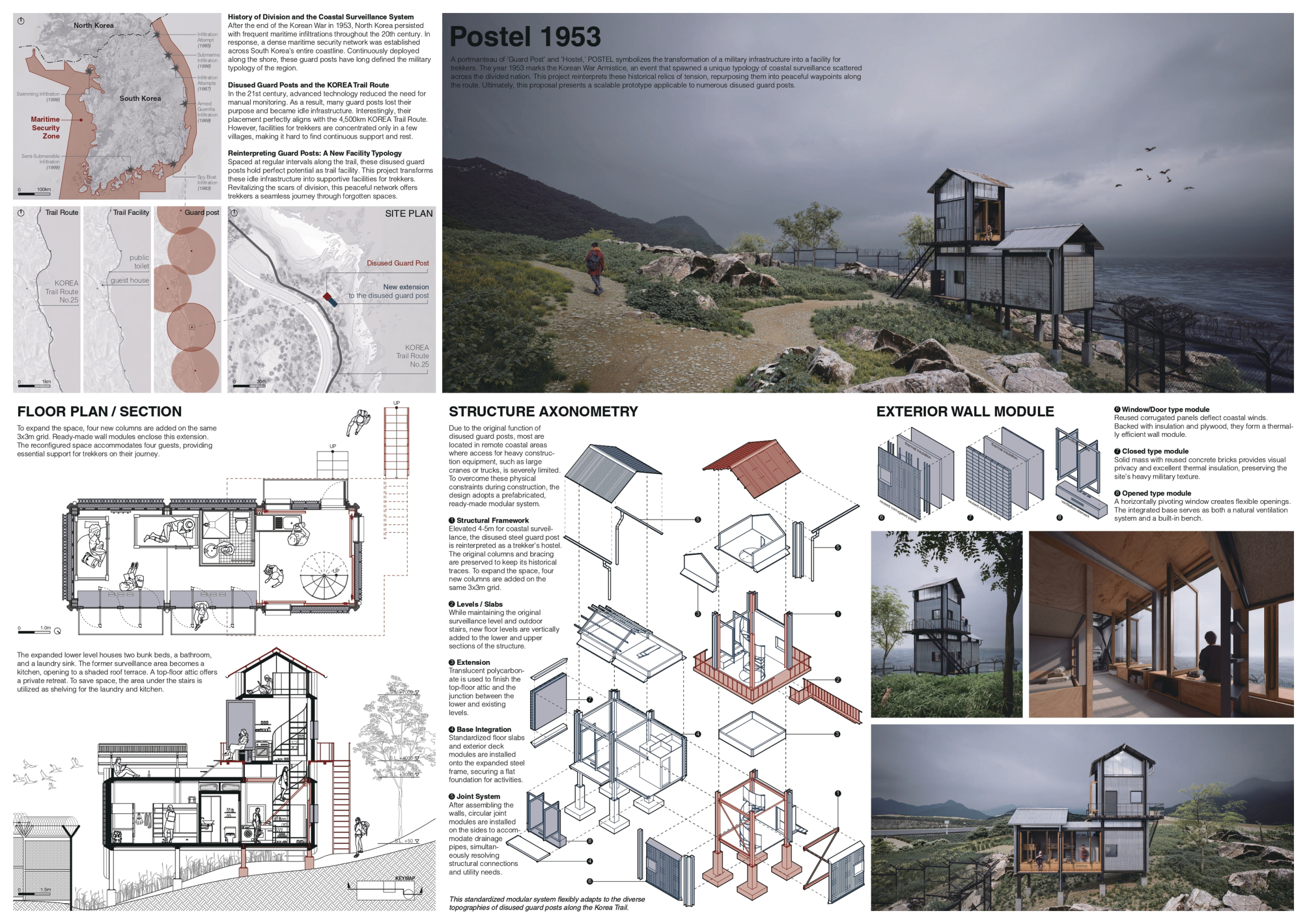
Postel 1953

The competition theme reminded me of a 5-day trek I took along the Korea Trail last summer with my friends. While walking along the coast, I noticed many abandoned military guard posts. They were old and neglected, but I believed they held significant historical and symbolic value. At the same time, I realized the trail really lacked basic infrastructure for hikers. I thought that repurposing these outposts into trekking hubs would be a great way to preserve history while solving a practical social problem.
Read full interview
Jury feedback summary
Postel 1953 proposes the transformation of abandoned coastal guard posts along the Korean border into small-scale shelters for trekkers, reframing a landscape historically defined by surveillance and division into one of movement, reflection, and public access.

It is very good to turn a relic that symbolizes fear and control into something used for exploration and physical adventure. The add-on is simple yet contains all you need. A picture of an existing structure would have been nice to see, as well as an indication of how many of these huts exist.
Anne Cecilie Haug / Buildner guest jury
Senior Architect, Snøhetta, Norway
The idea of confronting the history of the Korean War and educating the public through the adaptive reuse of old military structures is a refreshing approach to engaging the past with a positive architectural intervention, while educating the public through the spatial context of the entire trail and its surroundings. Clear drawings on modular construction with apt renders.
Kevin Lim / Buildner guest jury
Studio SKLIM, Singapore
An informal shape that belongs to the place. A play between memory and a dissonant program.
Tiago do Vale / Buildner guest jury
Tiago do Vale Arquitectos, Spain
This proposal presents a thoughtful transformation of an abandoned structure into a place of renewed relevance and collective use. The project responds intelligently to questions of reuse, permanence, and contemporary need. Its architectural language is measured and coherent, with a calm strength in its composition. The intervention balances functional clarity with sensitivity to the existing context. A mature and well-resolved submission with lasting value.
Bart Van Leeuw / Buildner guest jury
ZAmponearchitectuur, Belgium
A strong and evocative proposal that transforms militarized infrastructure into a place of rest, reflection, and peaceful occupation. The reinterpretation of abandoned coastal guard posts as shelters for trekkers is both symbolically powerful and practically sensible. It successfully reframes a landscape shaped by division into one of access, hospitality, and reconnection. The conceptual premise is one of the project’s greatest strengths. By working with remnants of surveillance and defense architecture, the submission engages history directly rather than erasing it. The act of converting a former guard post into a civic amenity carries emotional and political resonance, giving the proposal meaning beyond the physical intervention itself. The architectural response is clear and well resolved. The sectional development, modular wall systems, and exploded axonometric demonstrate careful technical thinking. The proposal shows a convincing understanding of how lightweight additions can extend and adapt the original structure while preserving its identity.
Haggai Dror / Buildner guest jury
AggEquo, United States
The balance between old and new feels measured and intentional. The visualizations are particularly successful. They communicate solitude, exposure, and contemplation in a dramatic coastal setting. The atmosphere aligns well with the narrative of retreat and recovery, while the interiors appear compact yet comfortable. The project presents a believable user experience. Where the proposal could be stronger is in the broader strategic dimension. While the single intervention is compelling, the idea of a network of transformed posts along the coast could be developed further. Questions of access, trail infrastructure, management, and scalability remain somewhat open and could strengthen the larger vision. Additionally, the architectural language, while elegant, remains relatively restrained. Some jurors may look for a more ambitious formal or spatial transformation that pushes the inherited typology further rather than refining it carefully. Overall, a thoughtful and poetic submission that combines adaptive reuse, historical reflection, and sensitive architectural execution in a memorable way.
Haggai Dror / Buildner guest jury
AggEquo, United States
Buildner's commentary, recommendations and techniques review
Order your review here
The presentation is highly effective in articulating both the conceptual and technical dimensions of the proposal, particularly through the use of the exploded axonometric and modular wall diagrams, which clearly communicate construction logic and the relationship between new insertions and existing structure.
-
8/10 Linework
-
9/10 Quality of drawings
-
8/10 Balance of color
-
8/10 Layout
-
7/10 Hierarchy
-
8/10 Annotation
-
8/10 Text
-
9/10 Clarity of story
-
9/10 Clarity of diagrams
-
9/10 Quality of overall presentation
Honorable mentions









Shortlisted projects

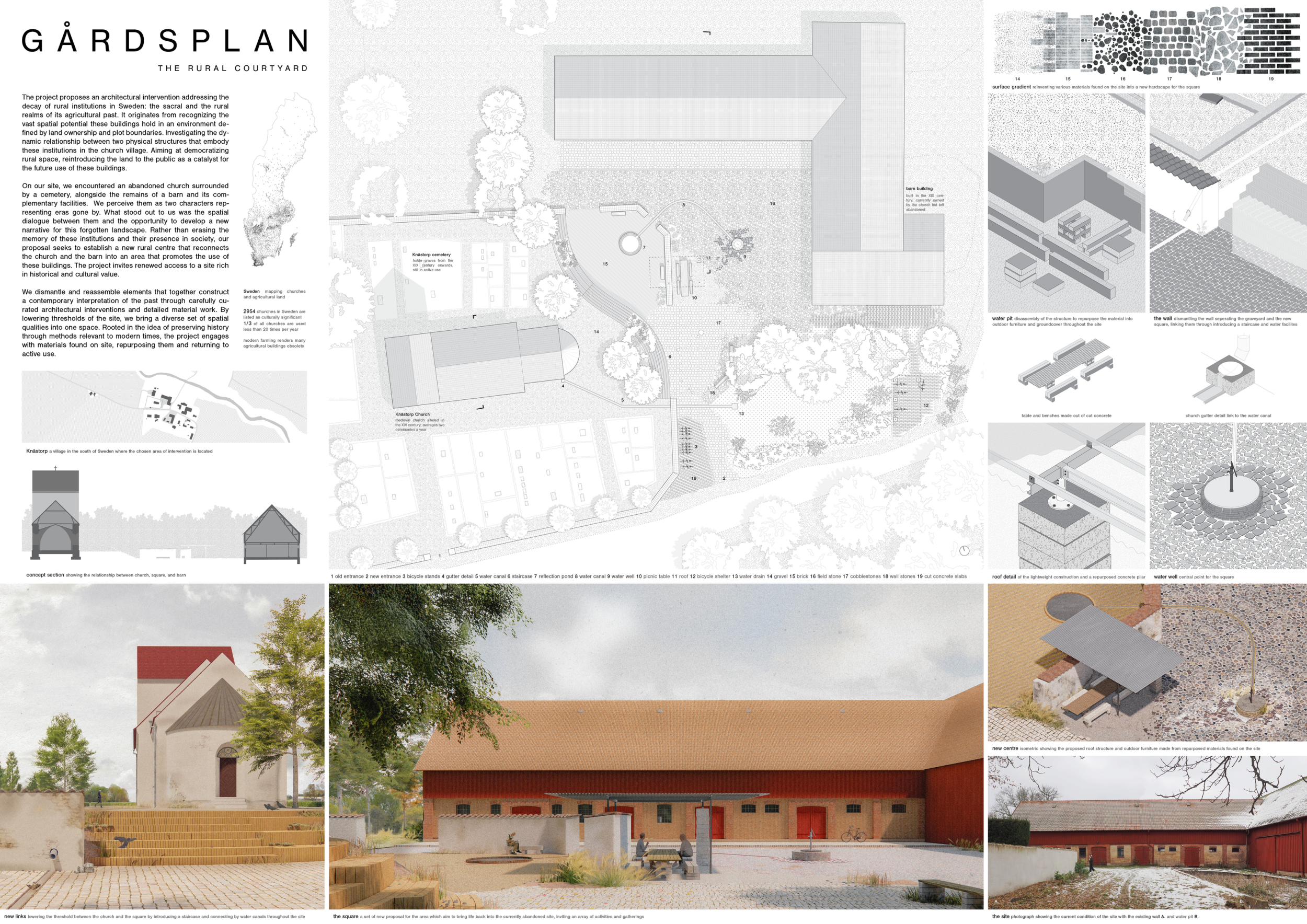
Gårdsplan - The Rural Courtyard

The Future Factory
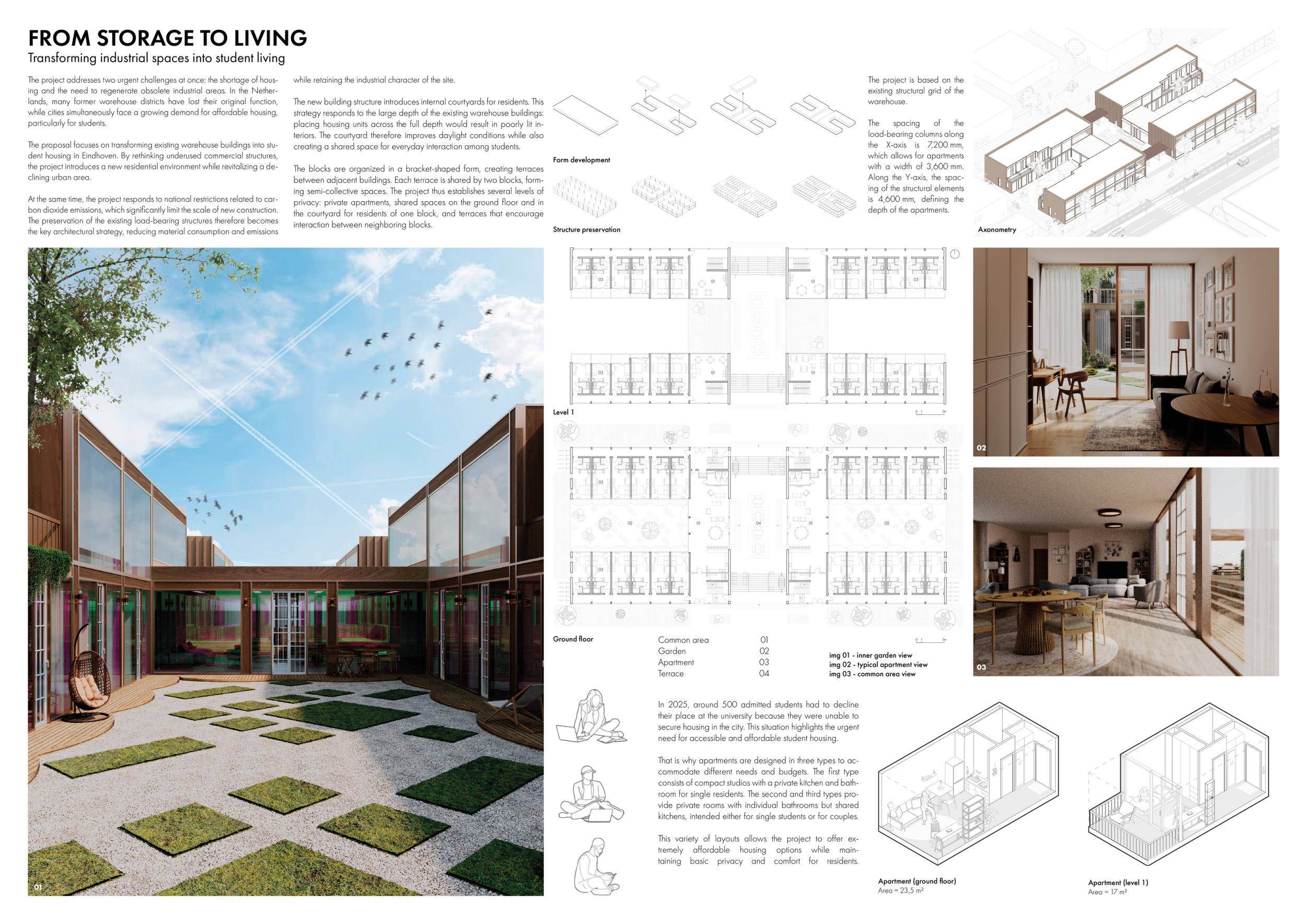
FROM STORAGE TO LIVING

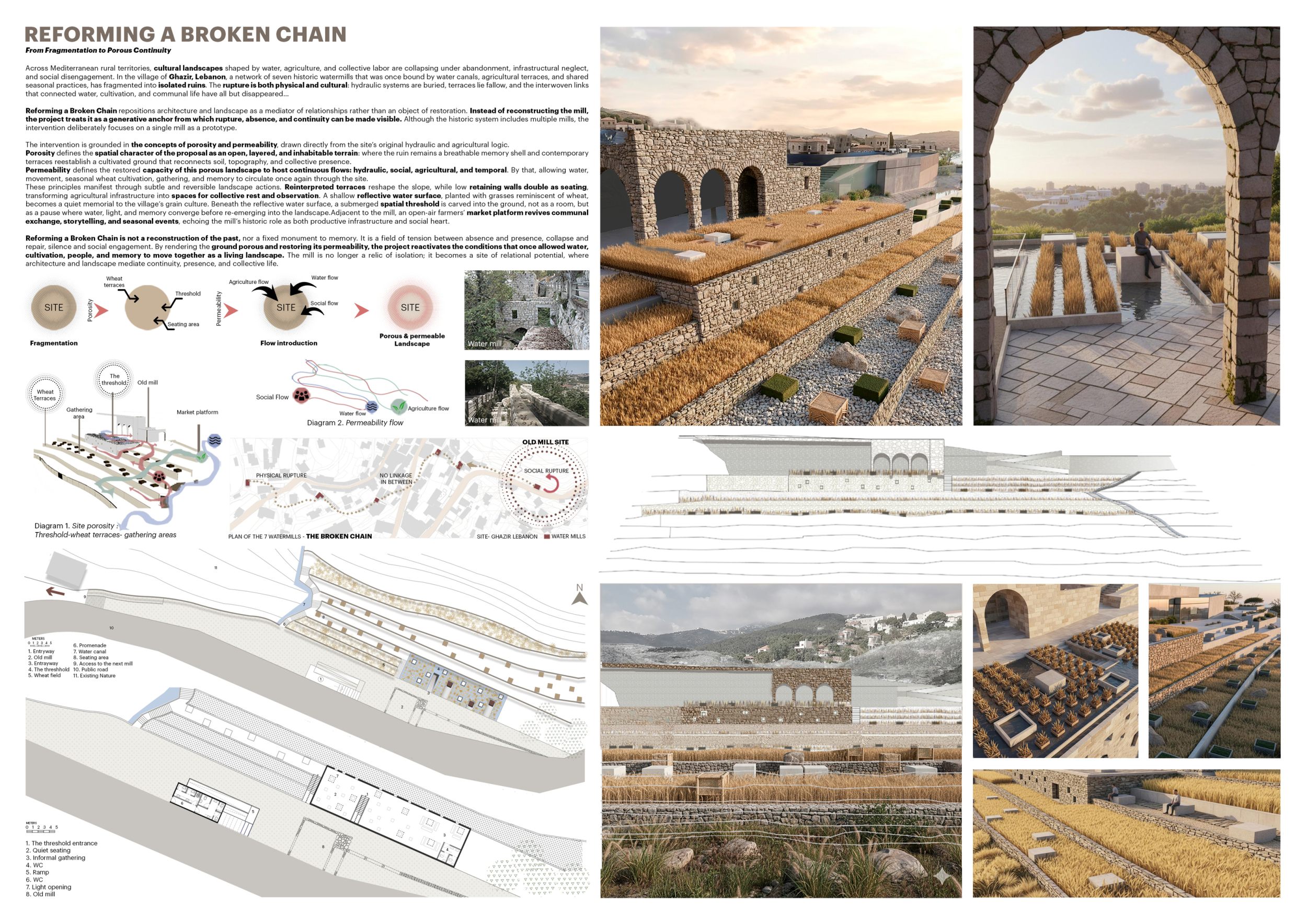
Reforming a broken chain

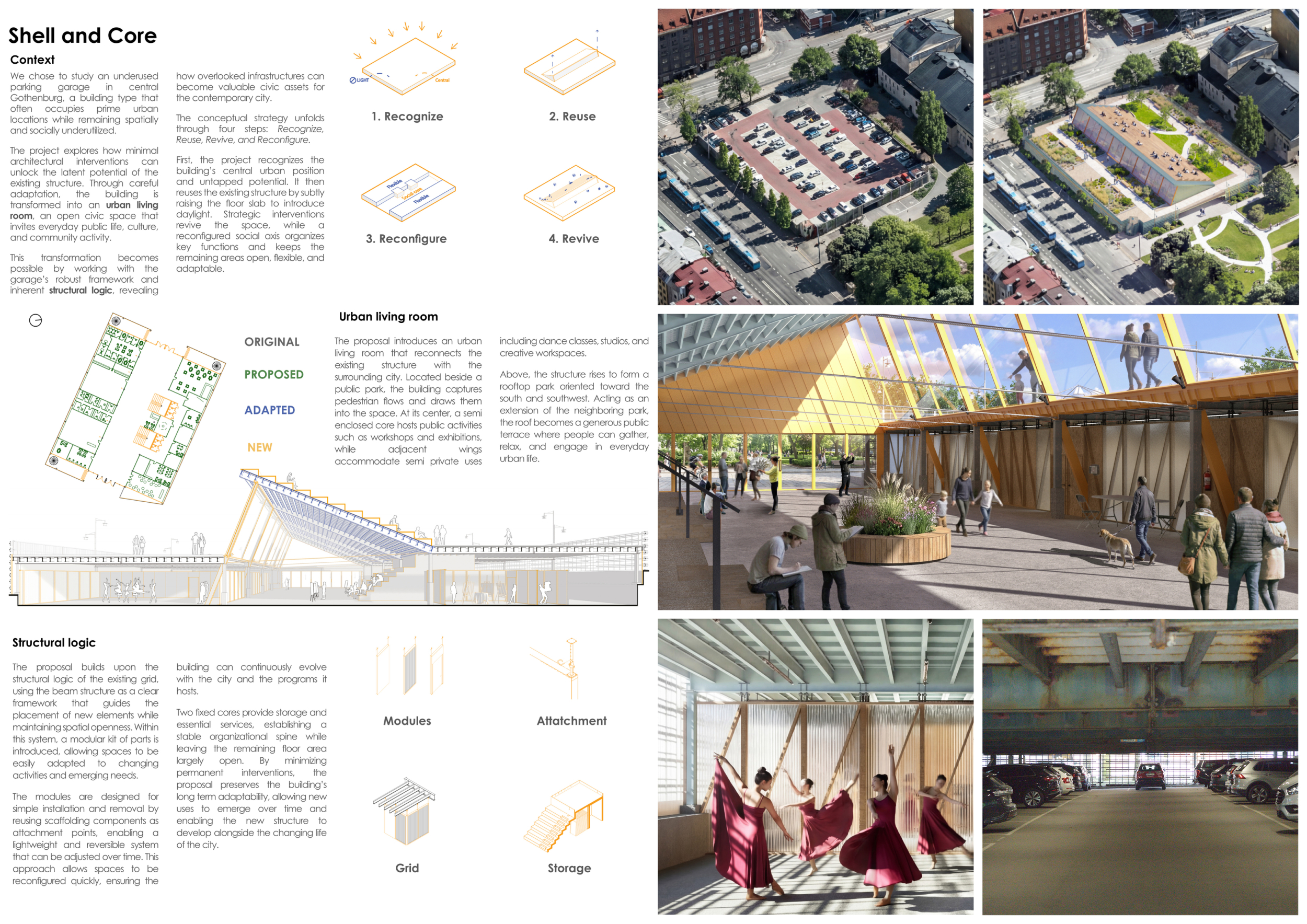
Shell and Core
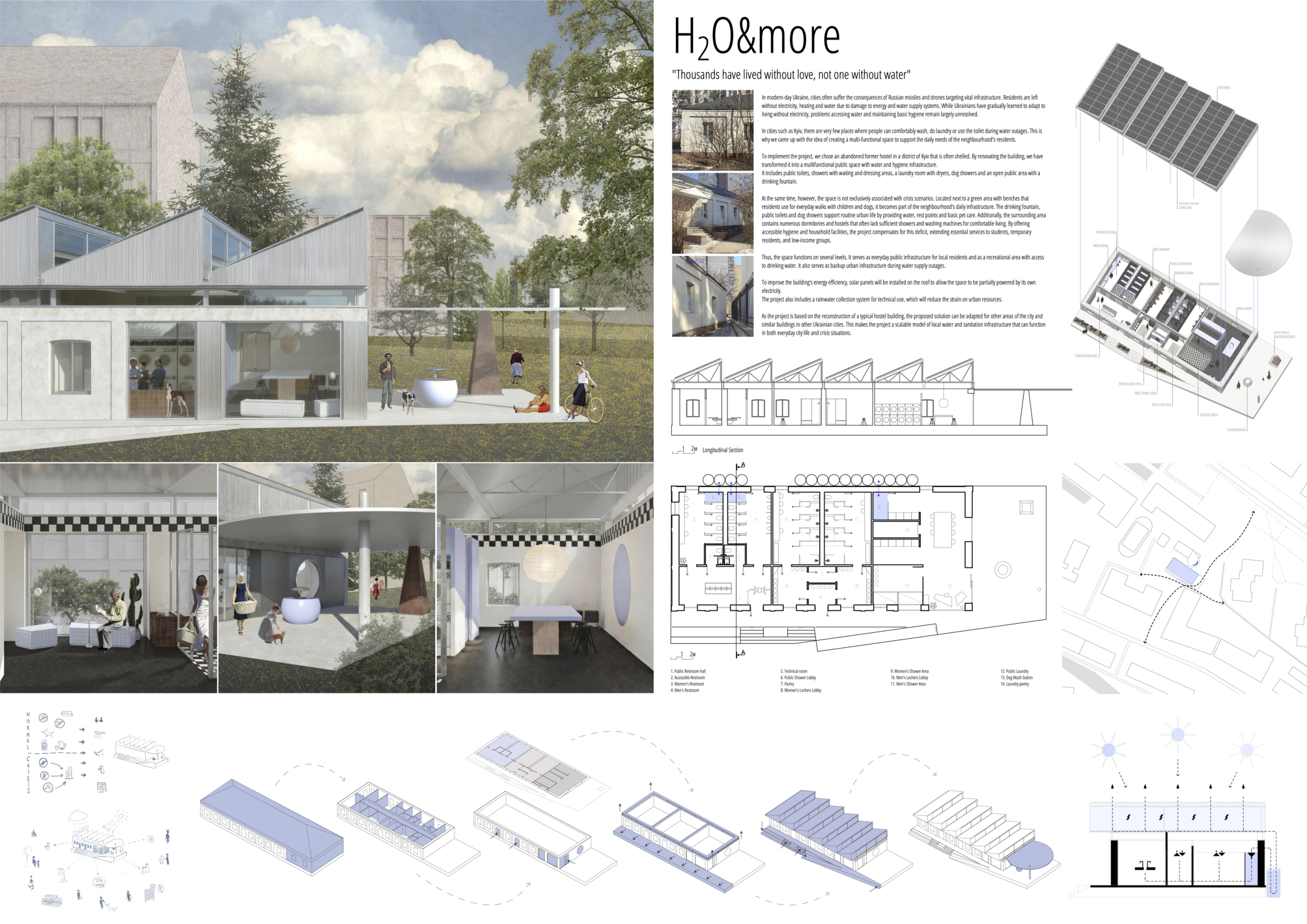
H2O&more

Postel 1953
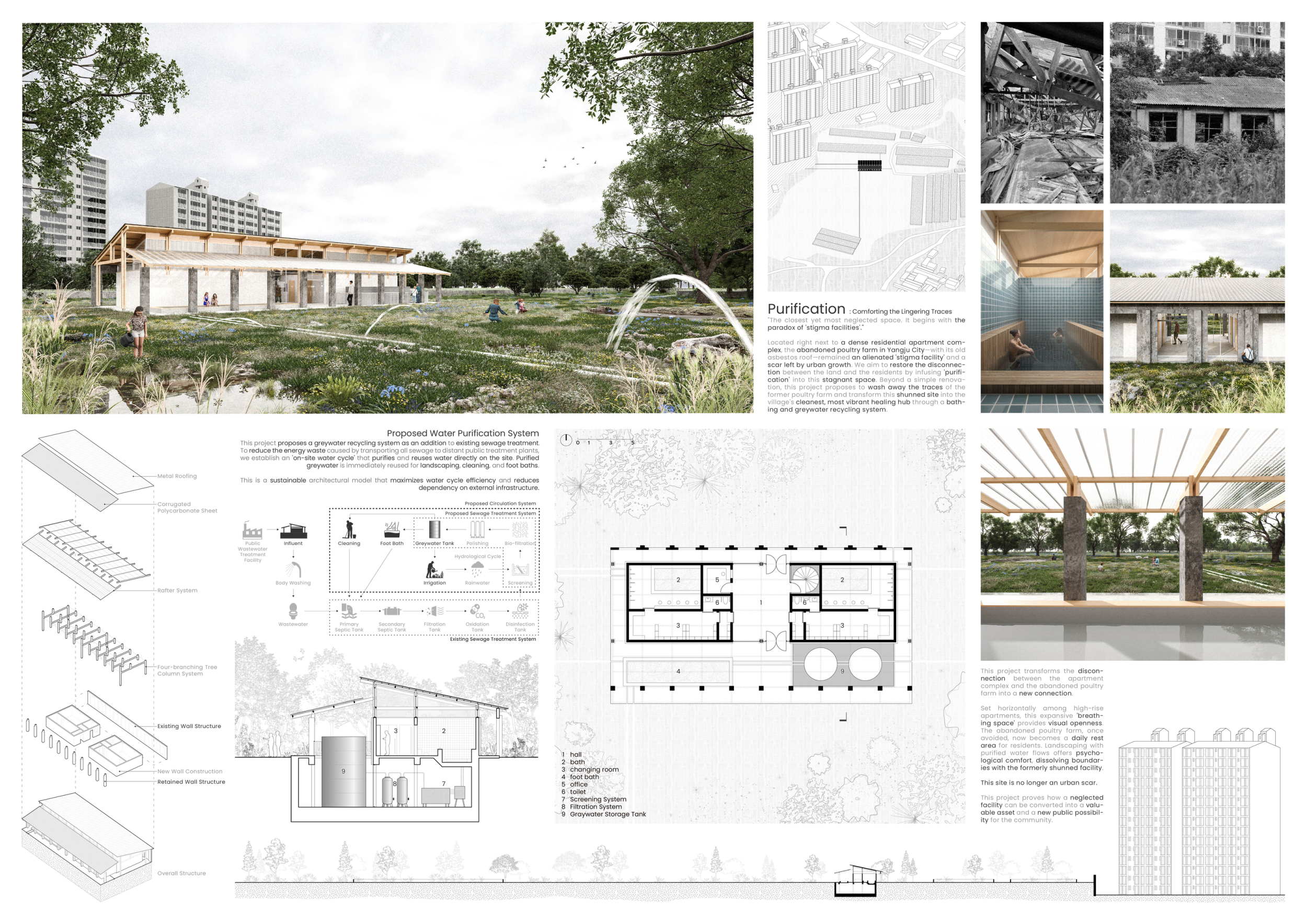
Purification : Comforting the Lingering Traces
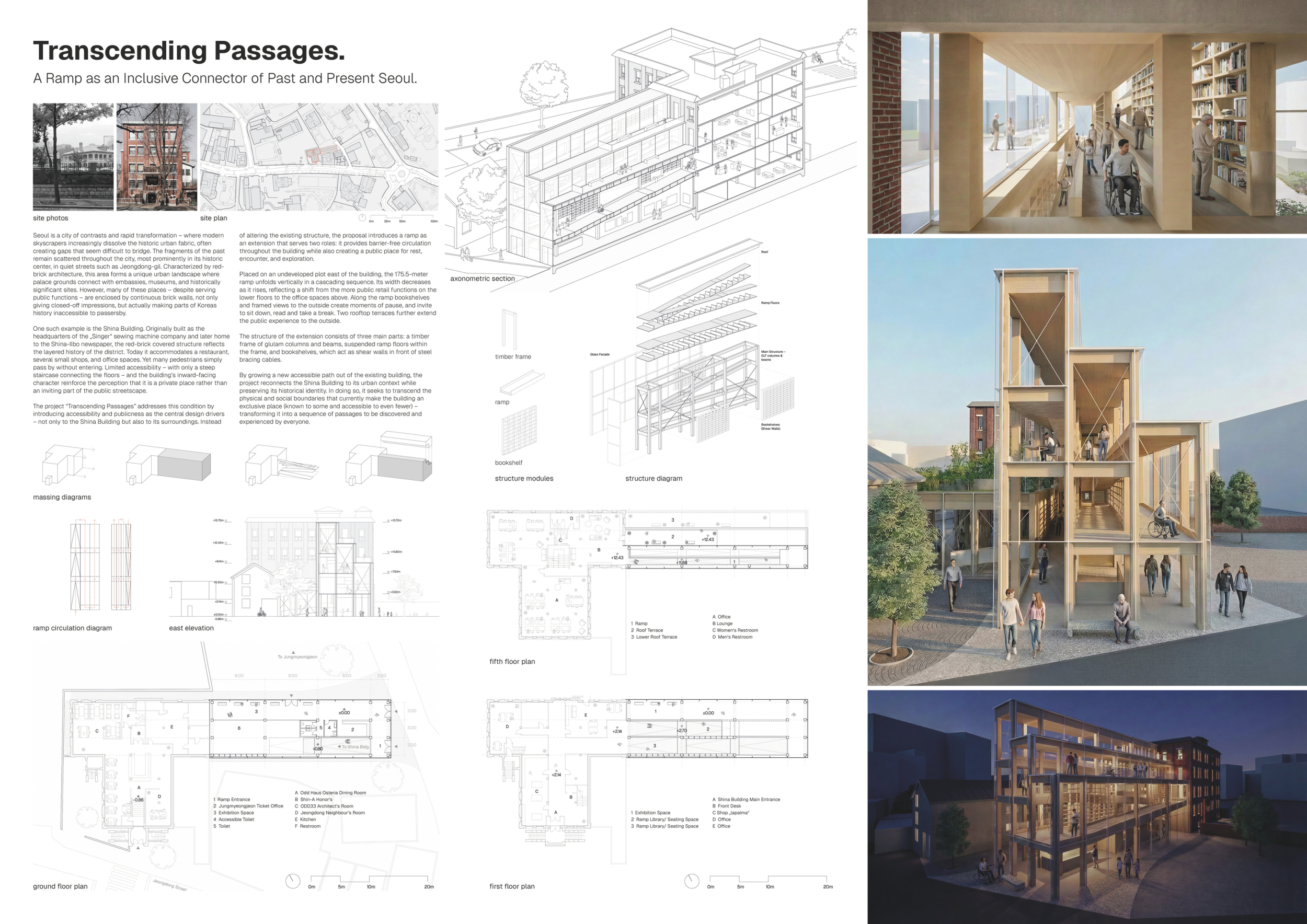
Transcending Passages

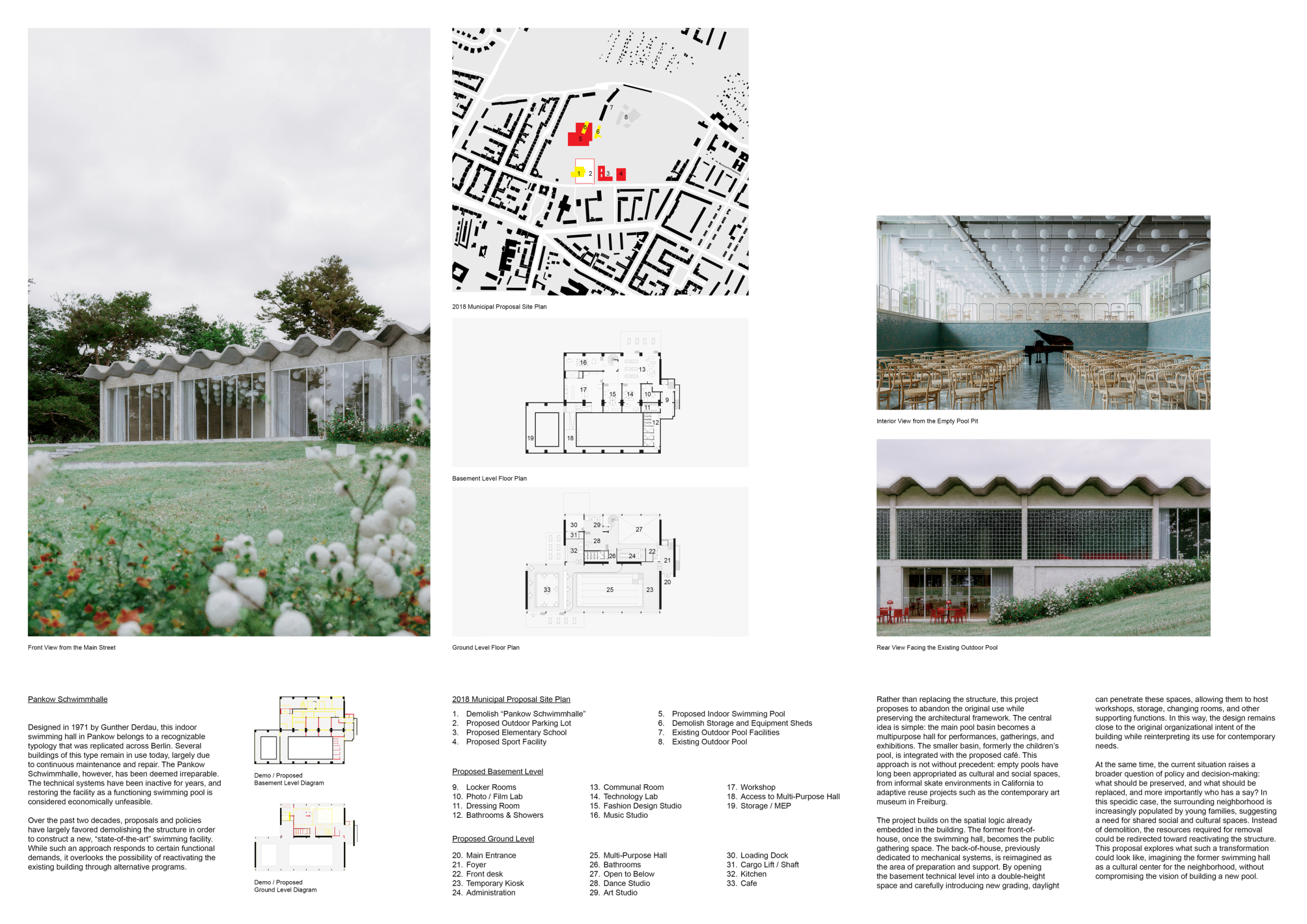
Pankow Schwimmhalle

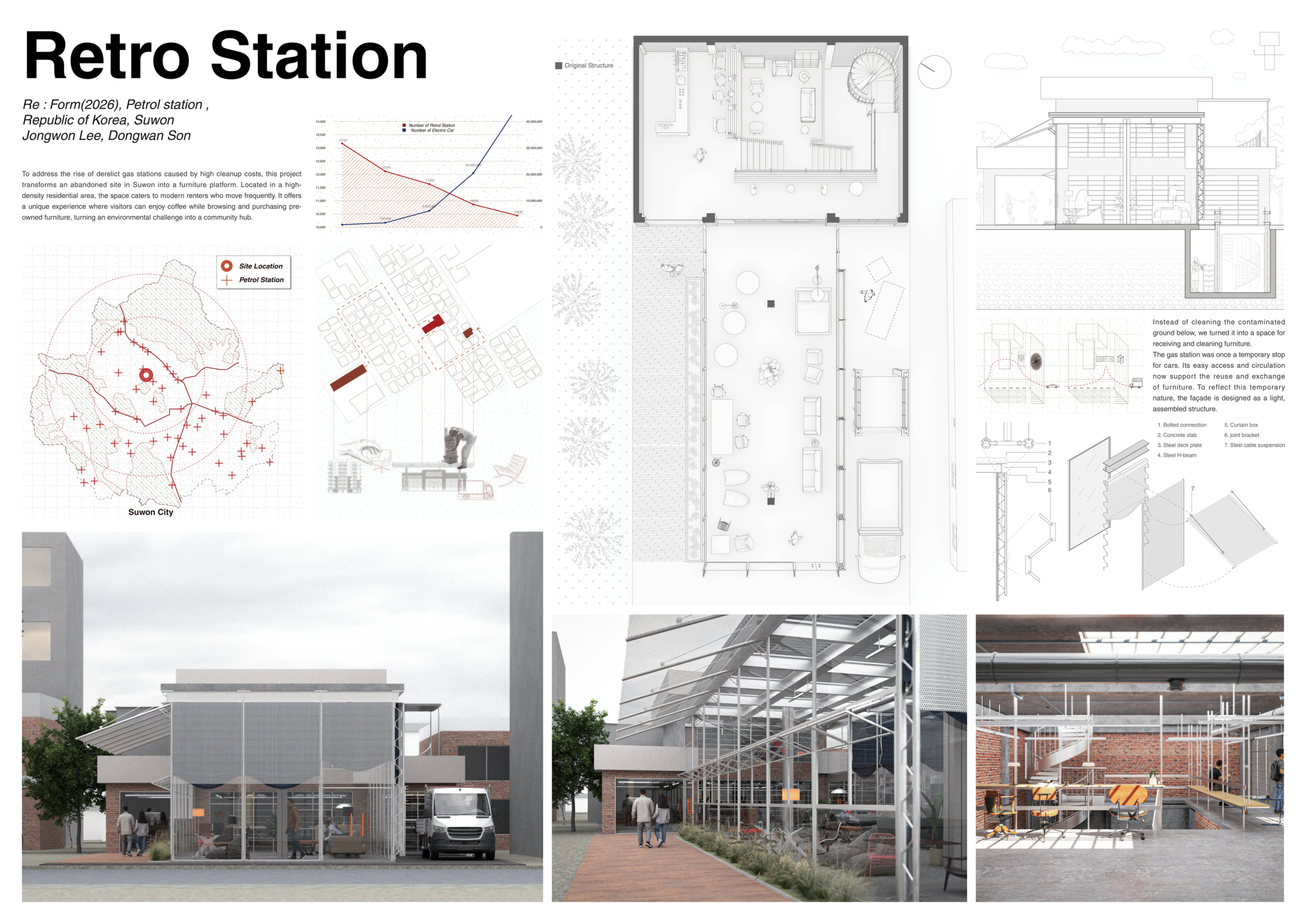
Retro Station
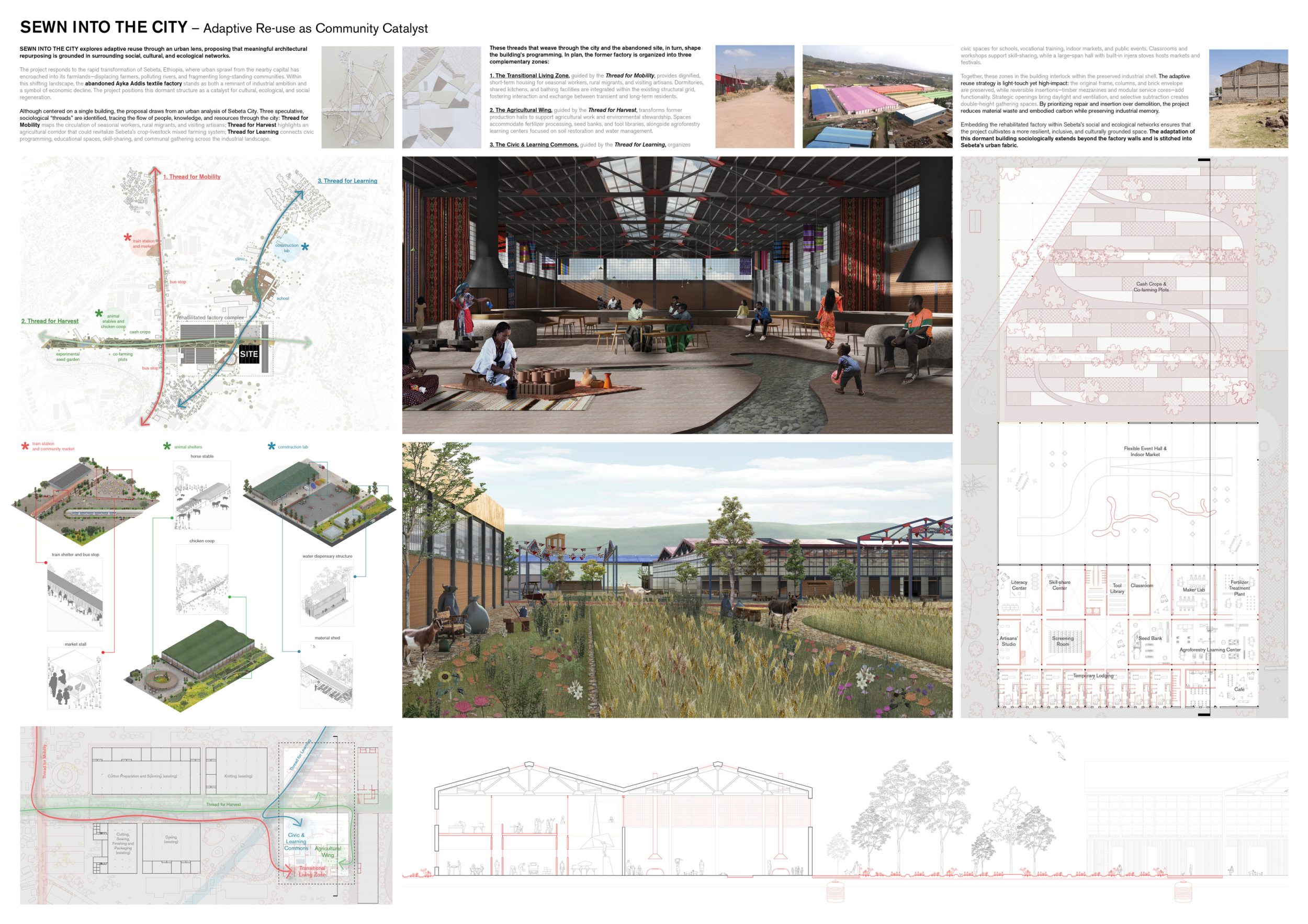
SEWN INTO THE CITY: Adaptive Re-use as Community Catalyst
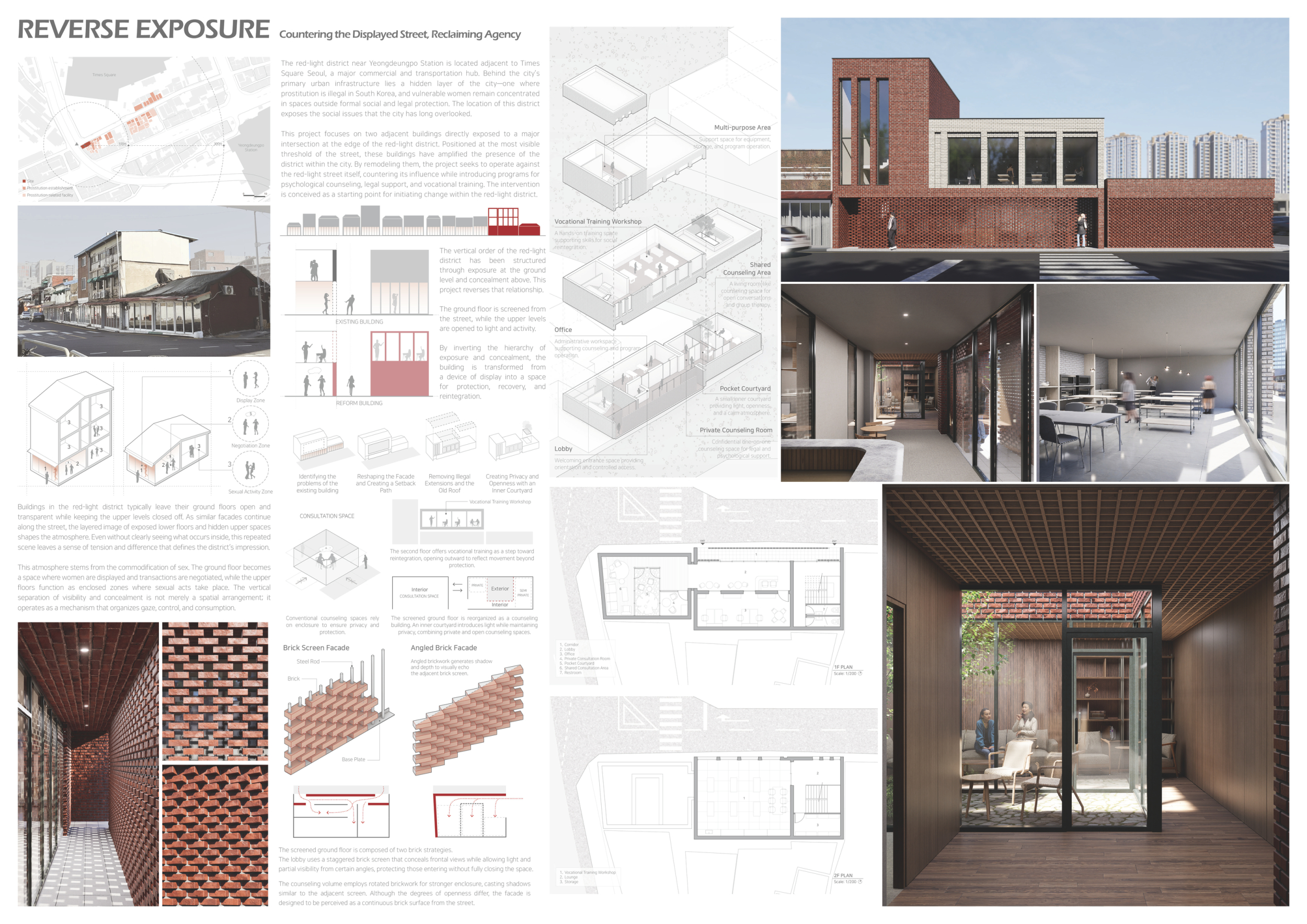
Reverse Exposure
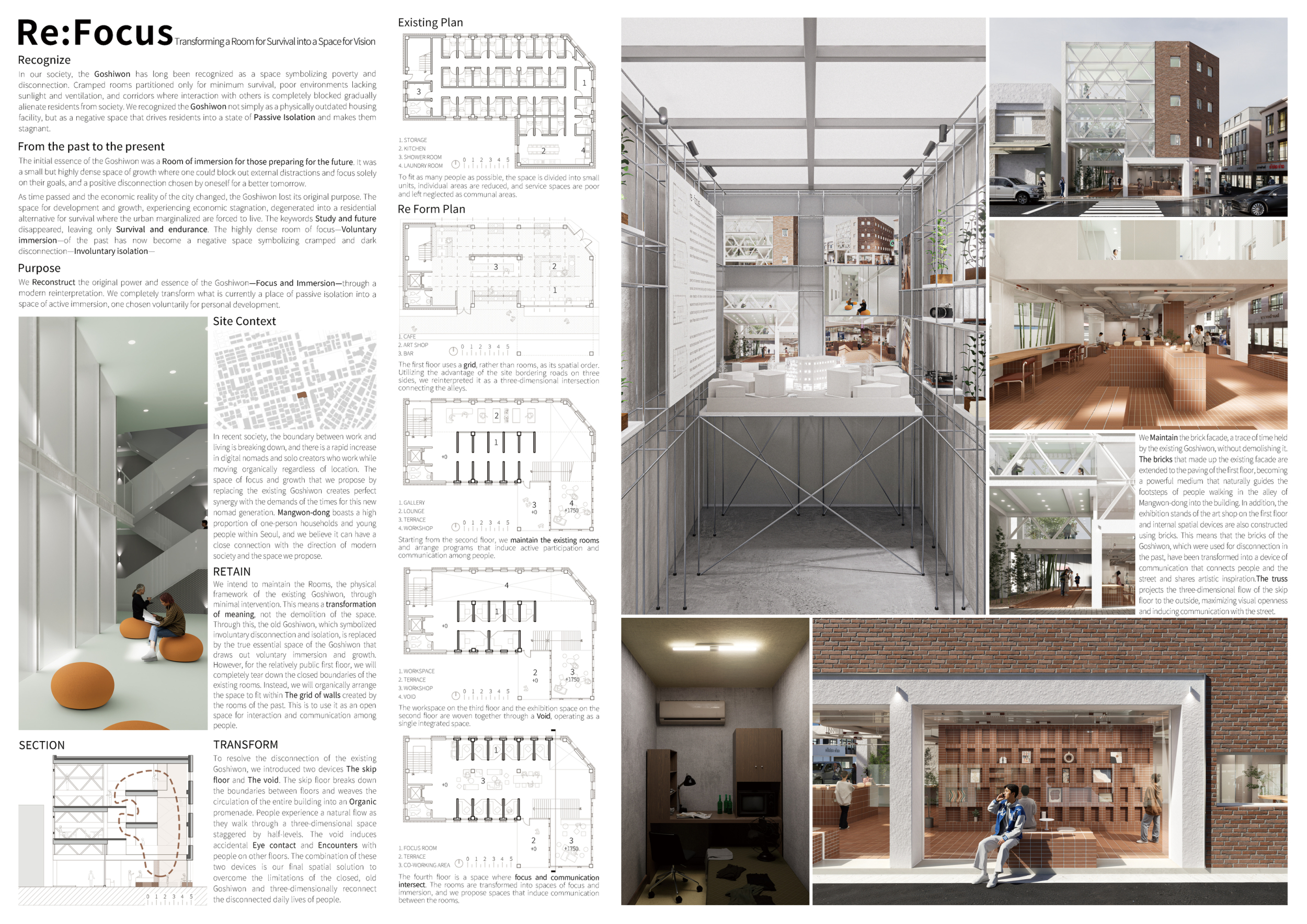
re-focus
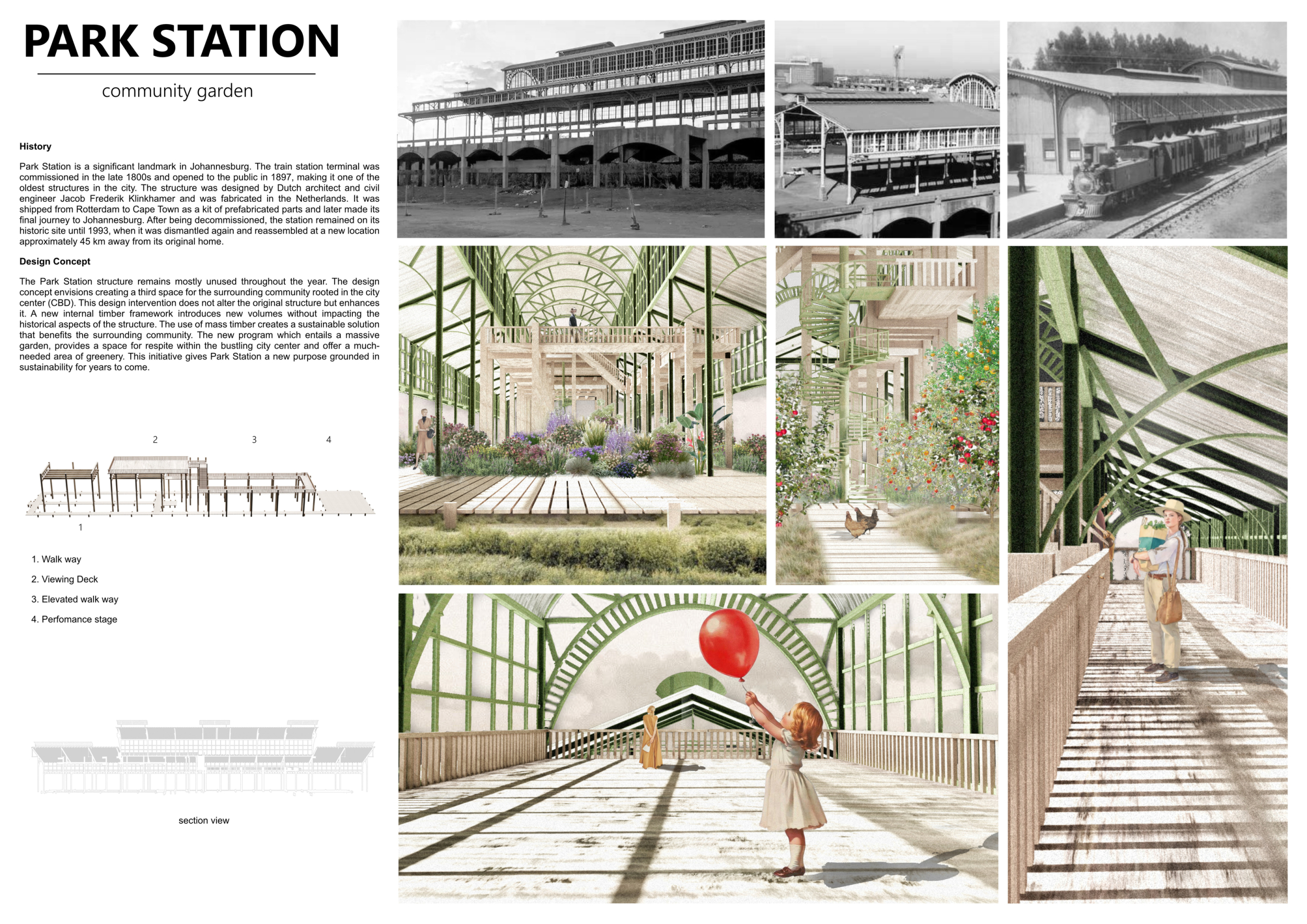
Park Station community garden

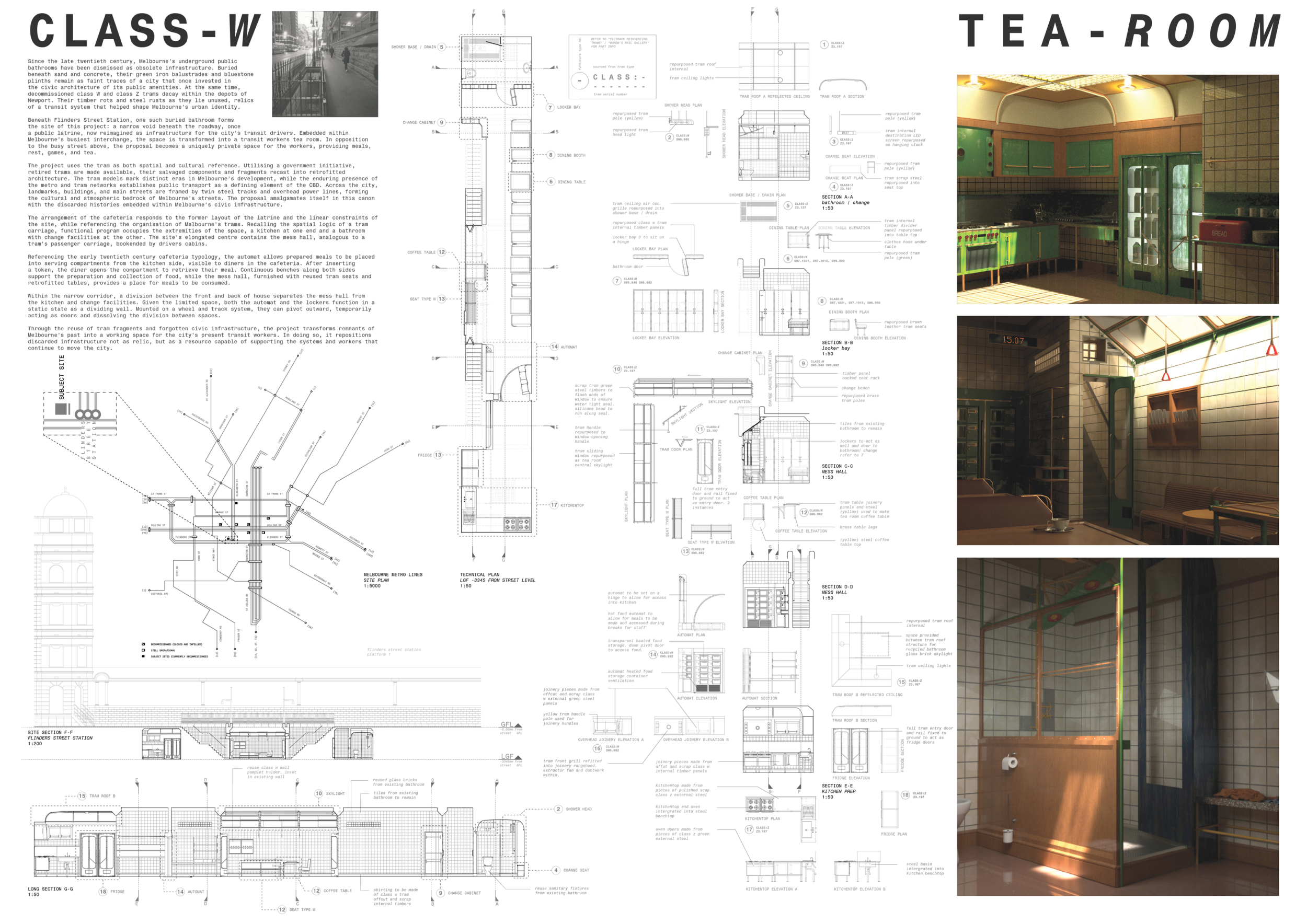
Class-W Tea-Room
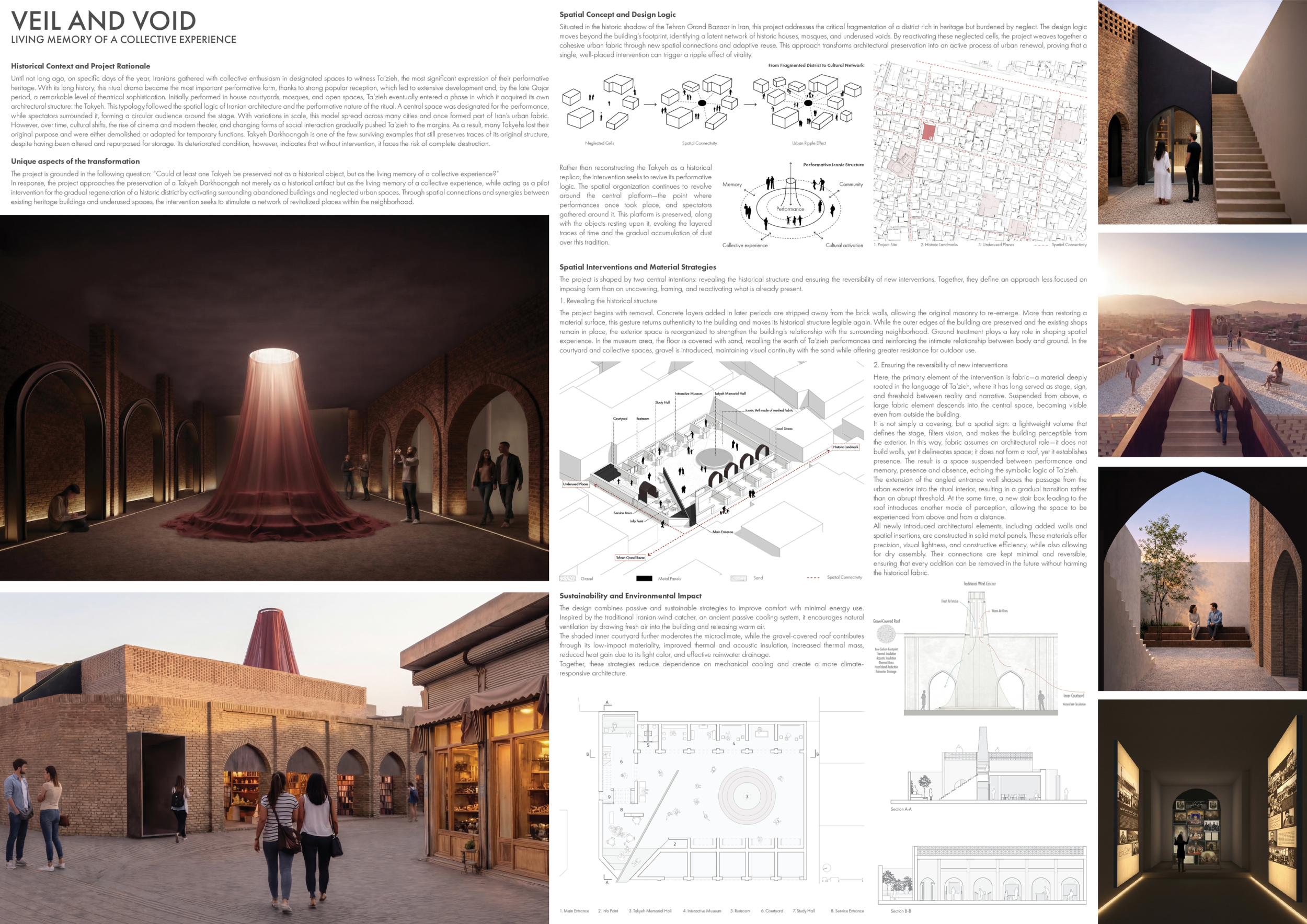
Veil and Void
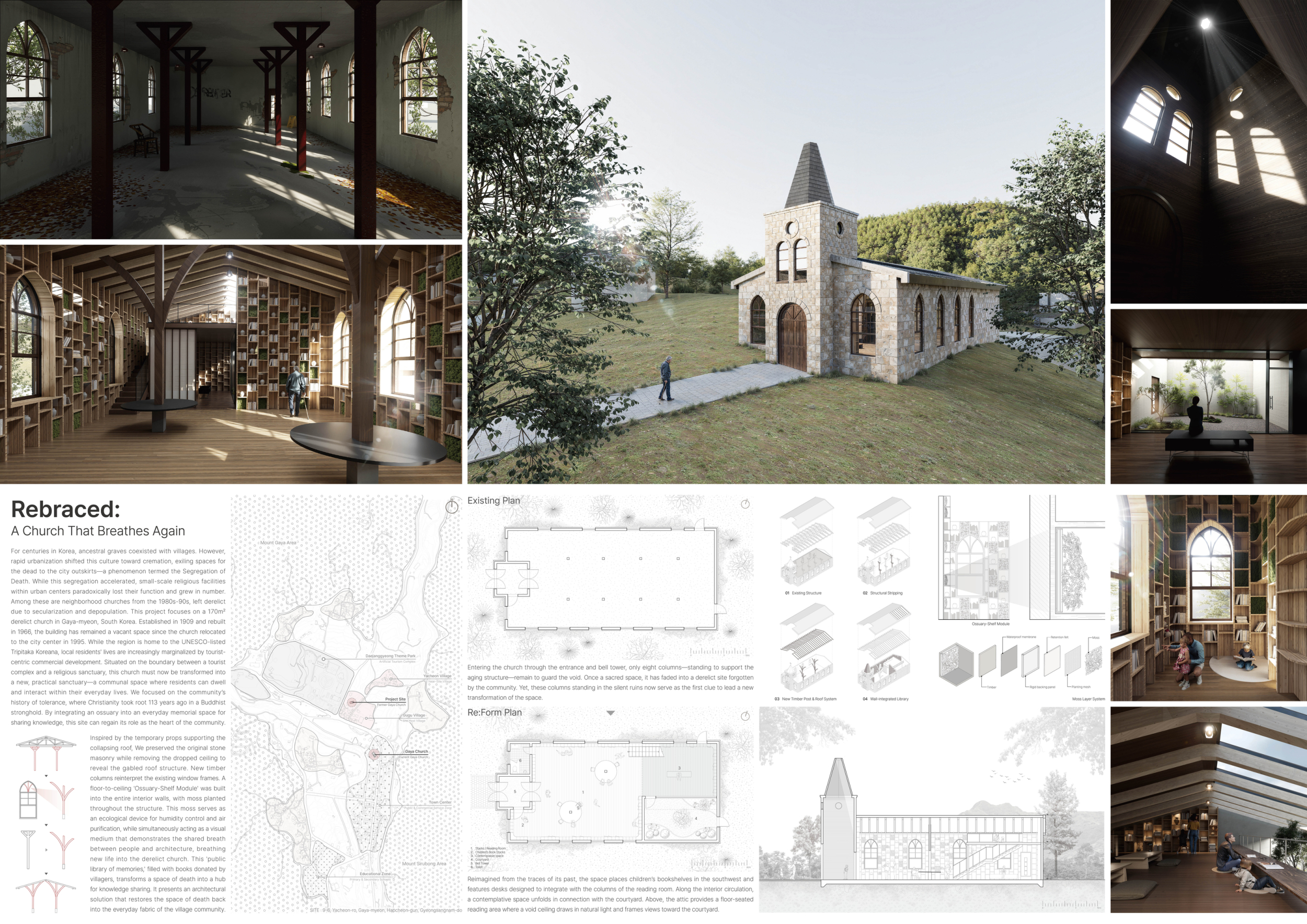
Rebraced : A Church That Breathes Again
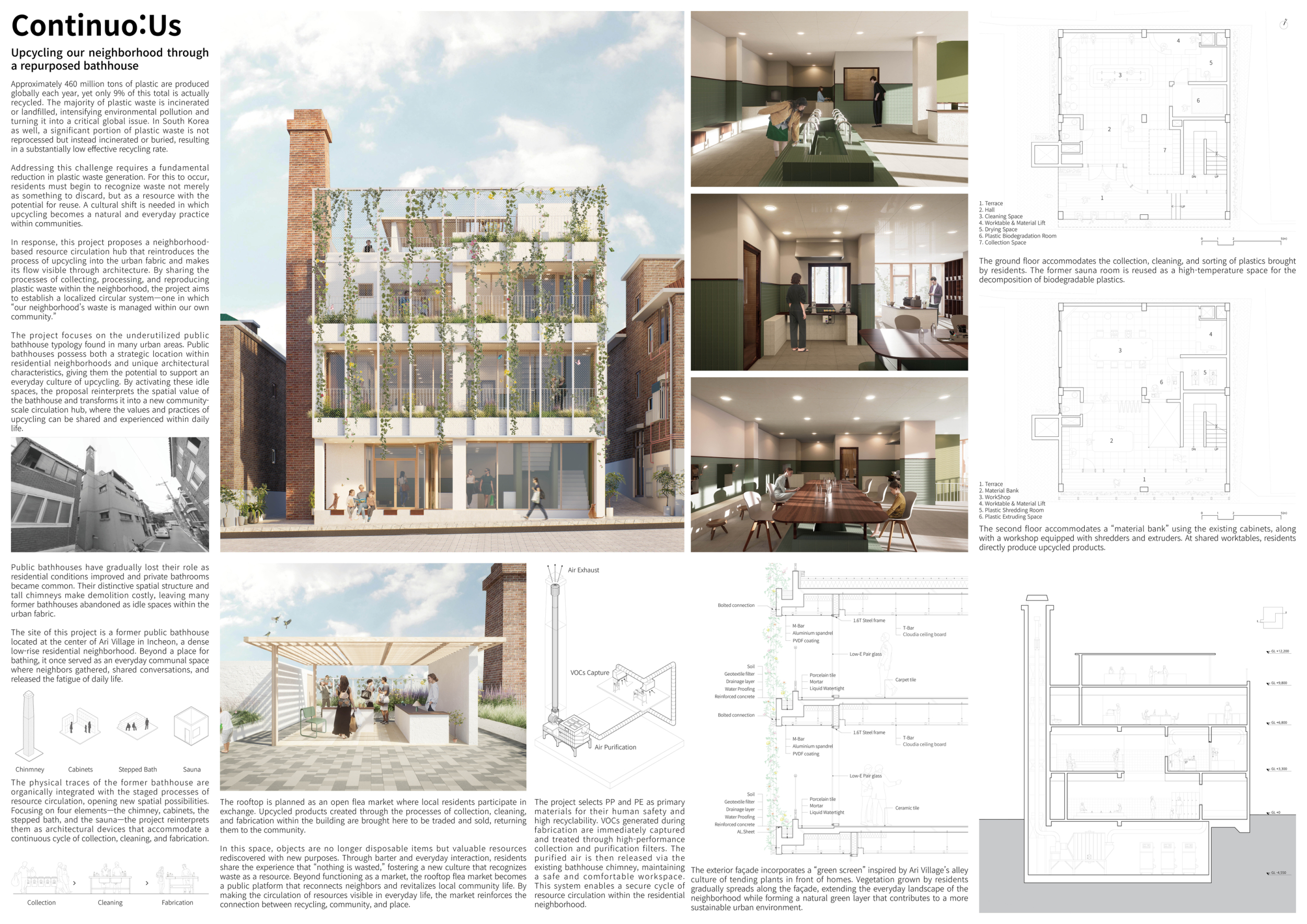
Continuo:Us
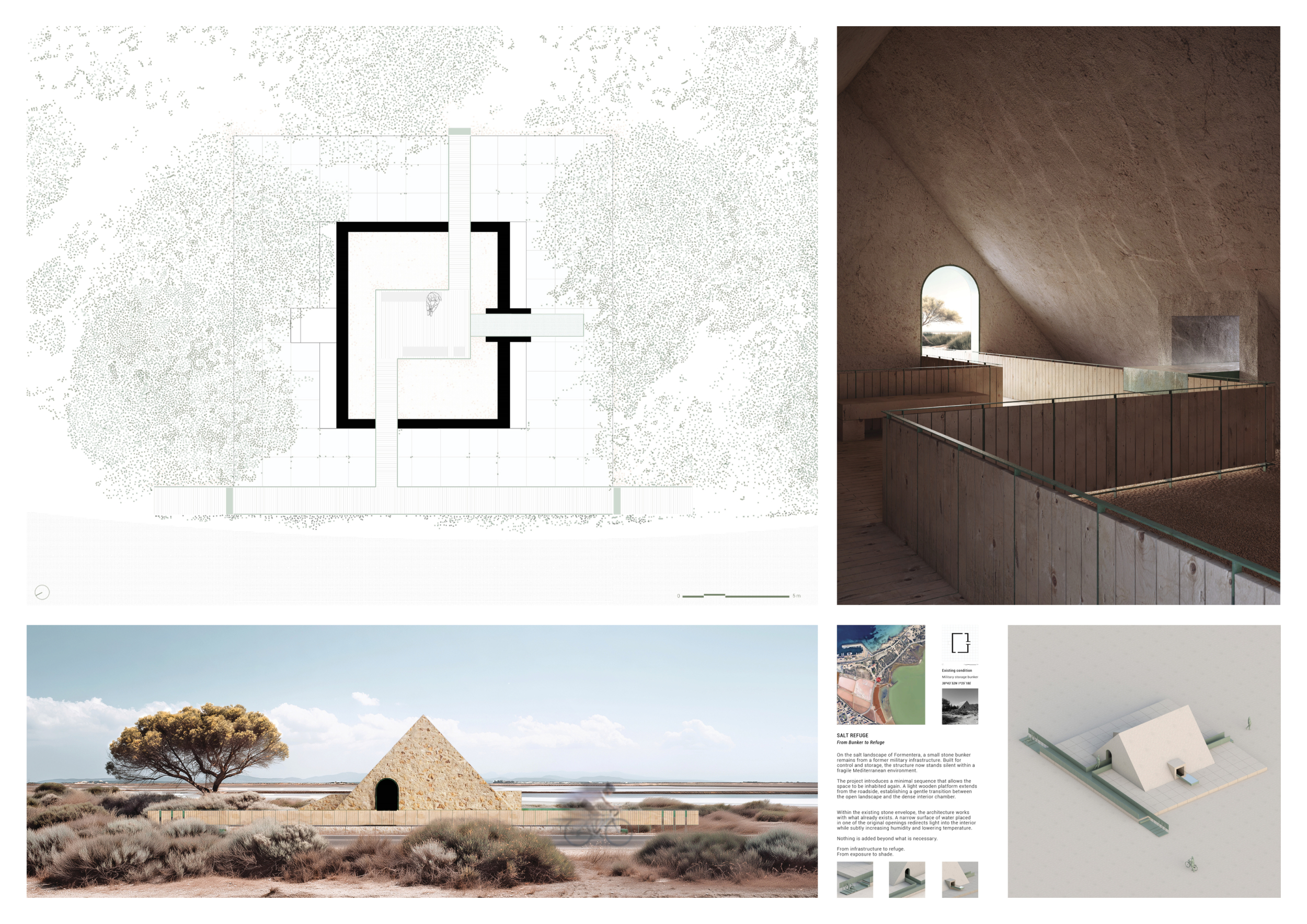
Salt Refuge
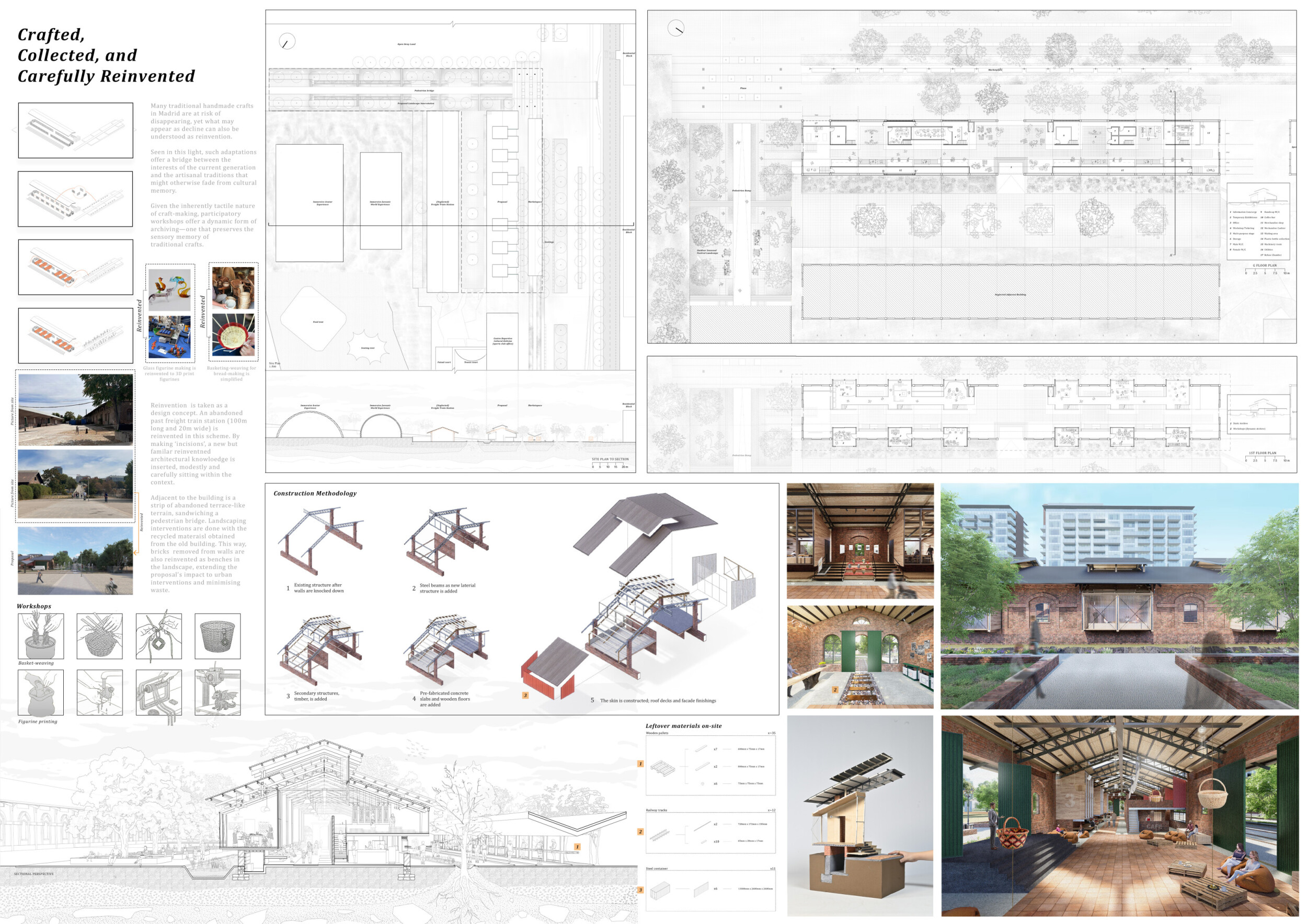
Crafted, Collected, and Carefully Reinvented
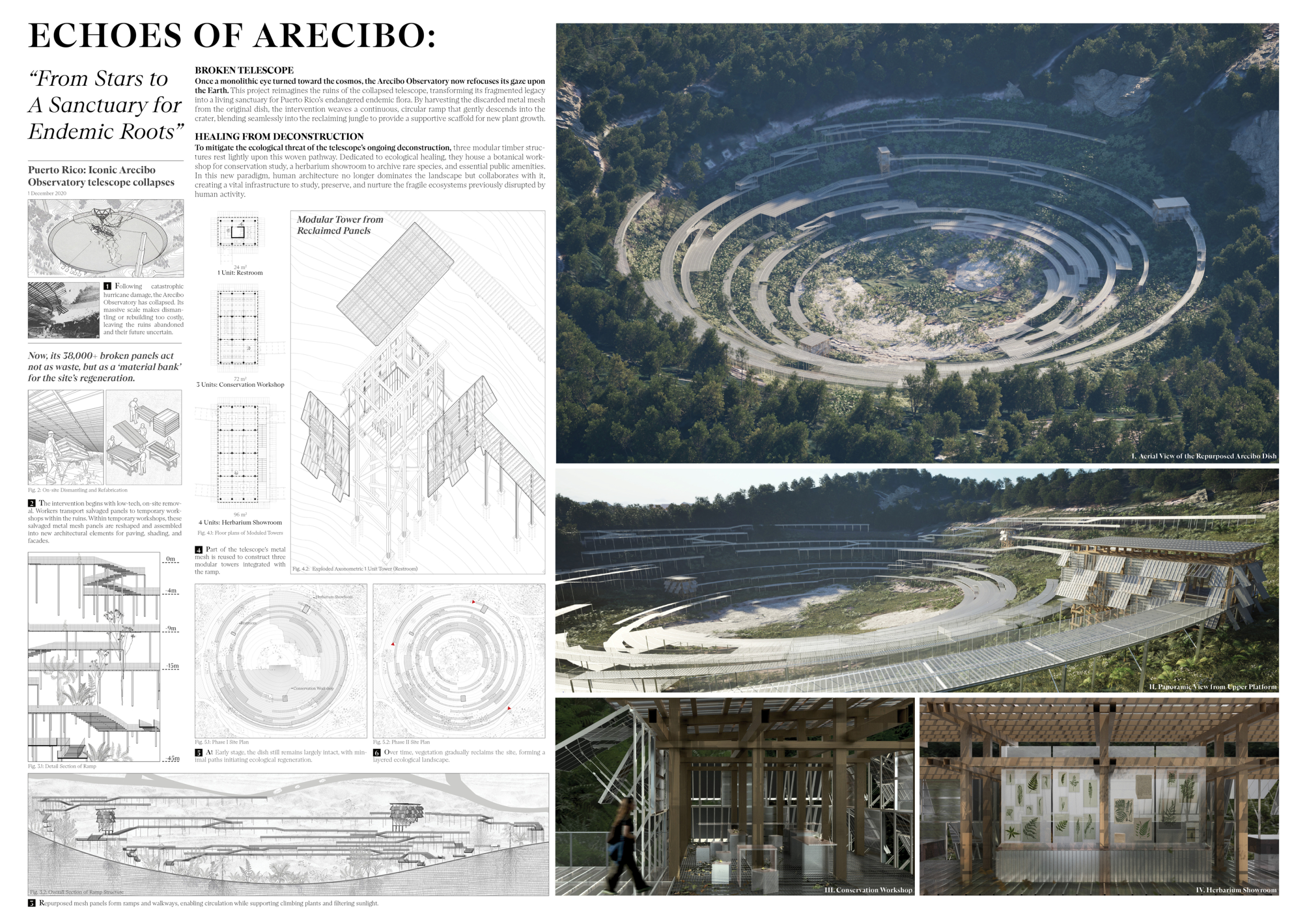
Echoes of Arecibo

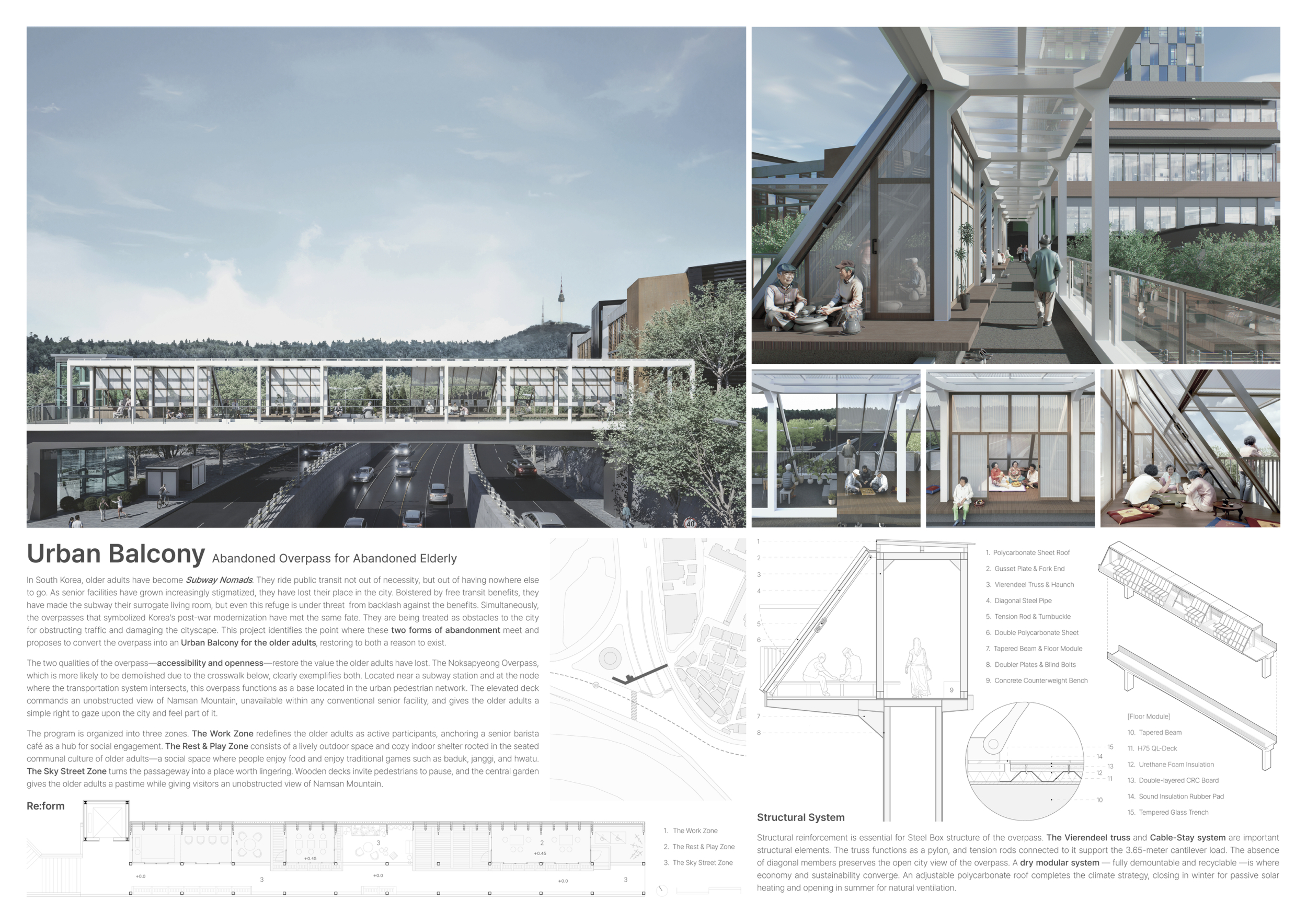
Urban Balcony
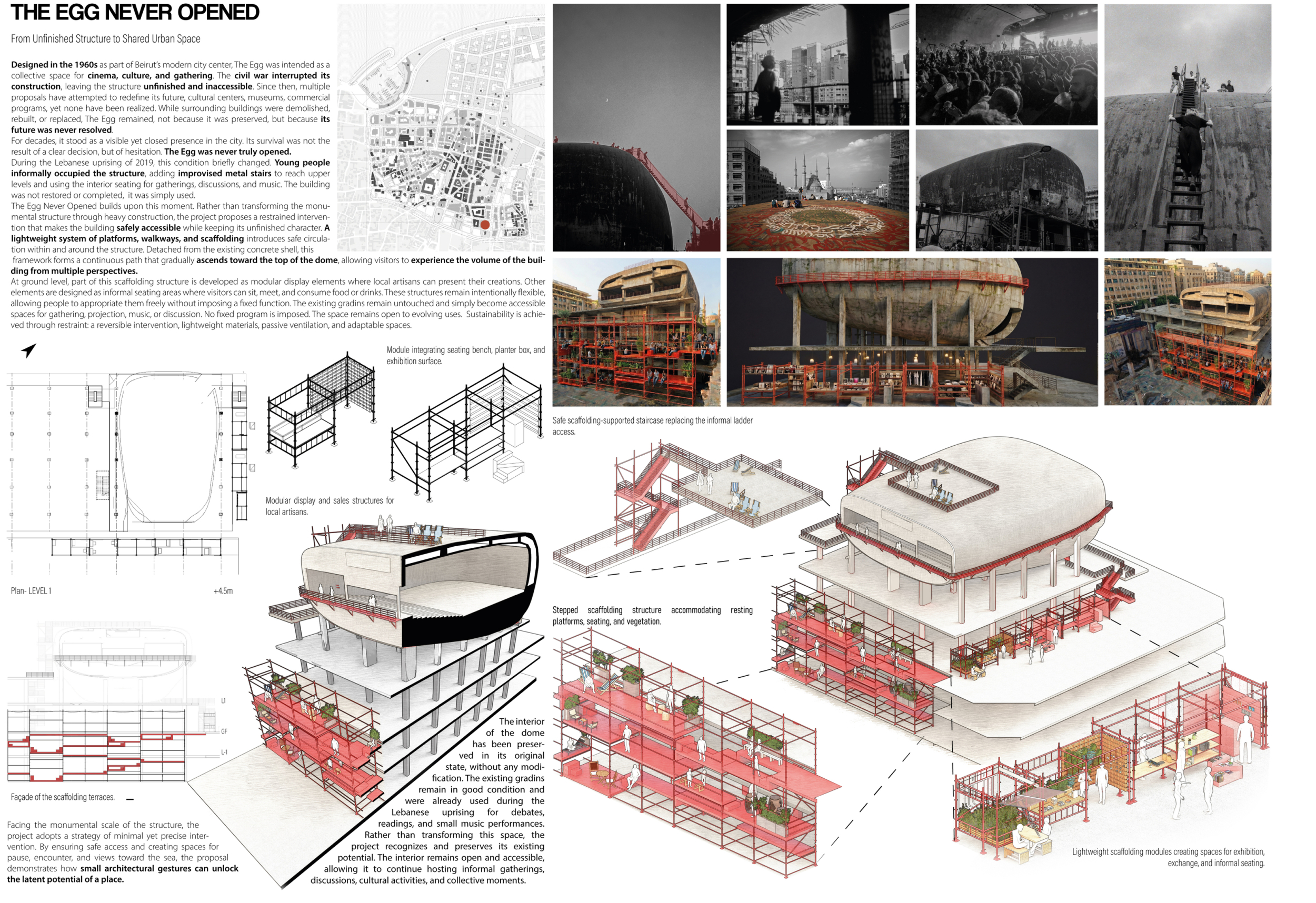
The Egg never Opened
Lantern of Shards
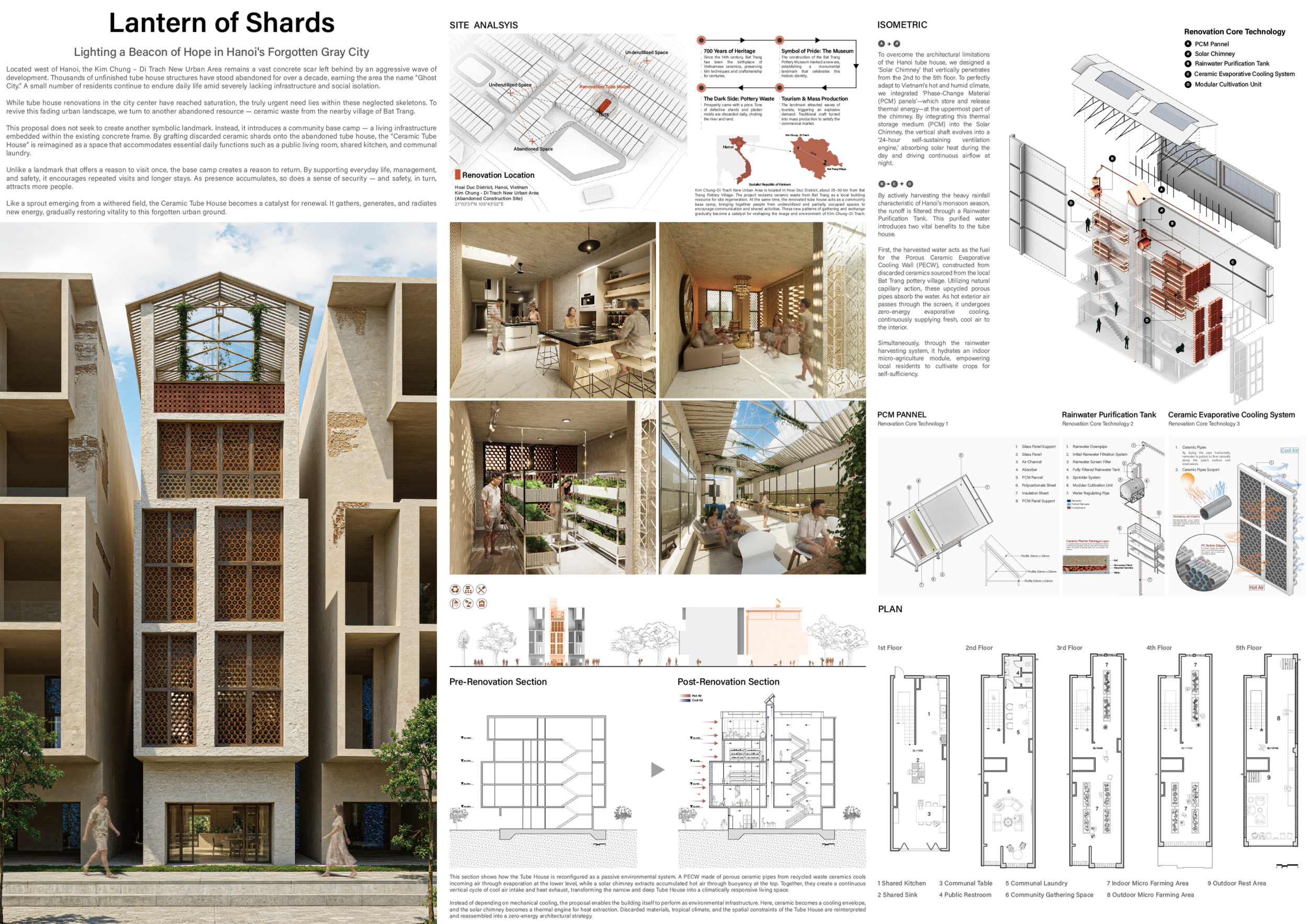
Co-Equilibrium
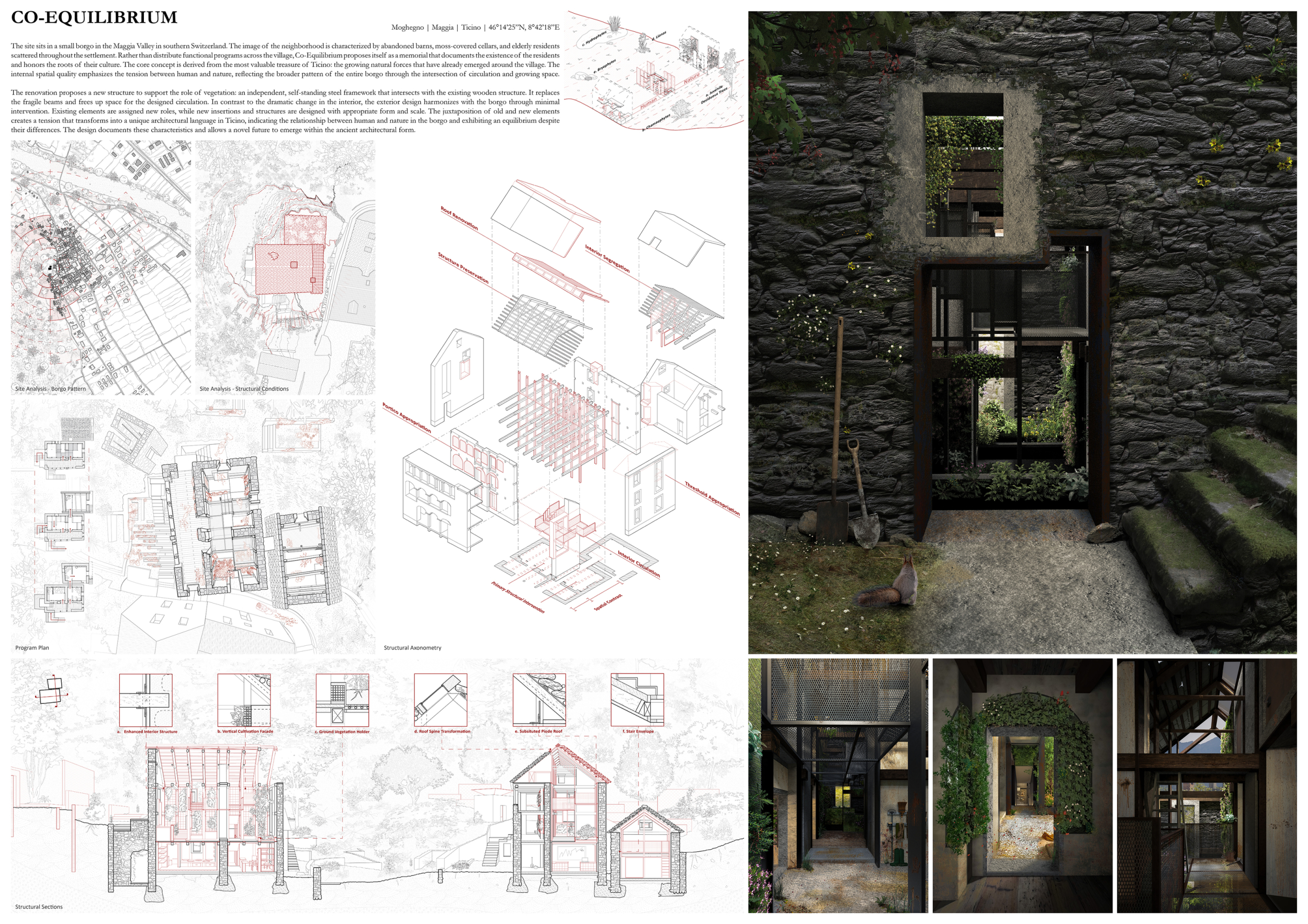
Tjimahi Photo Studio + Dark Room
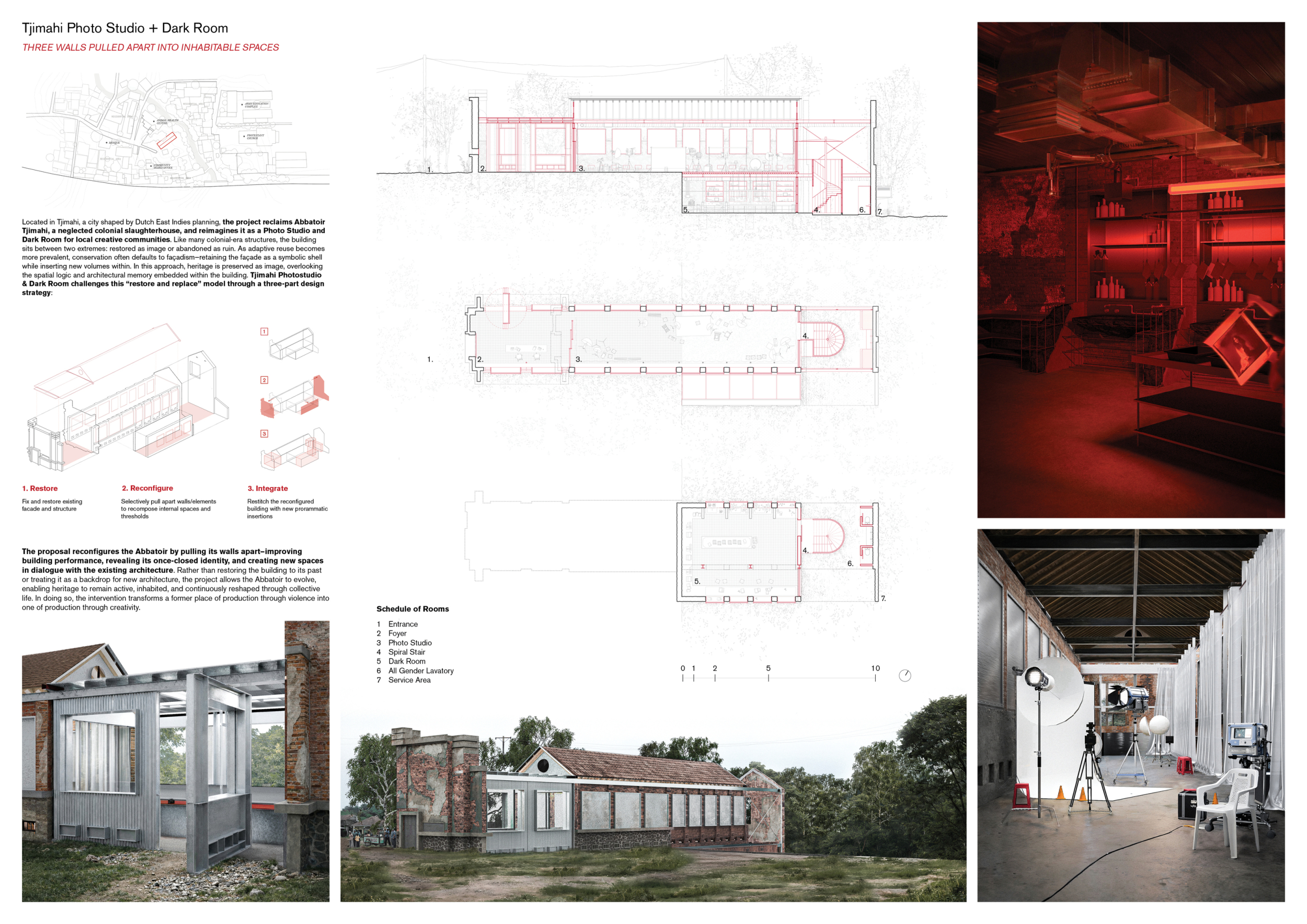
HEALING WATER
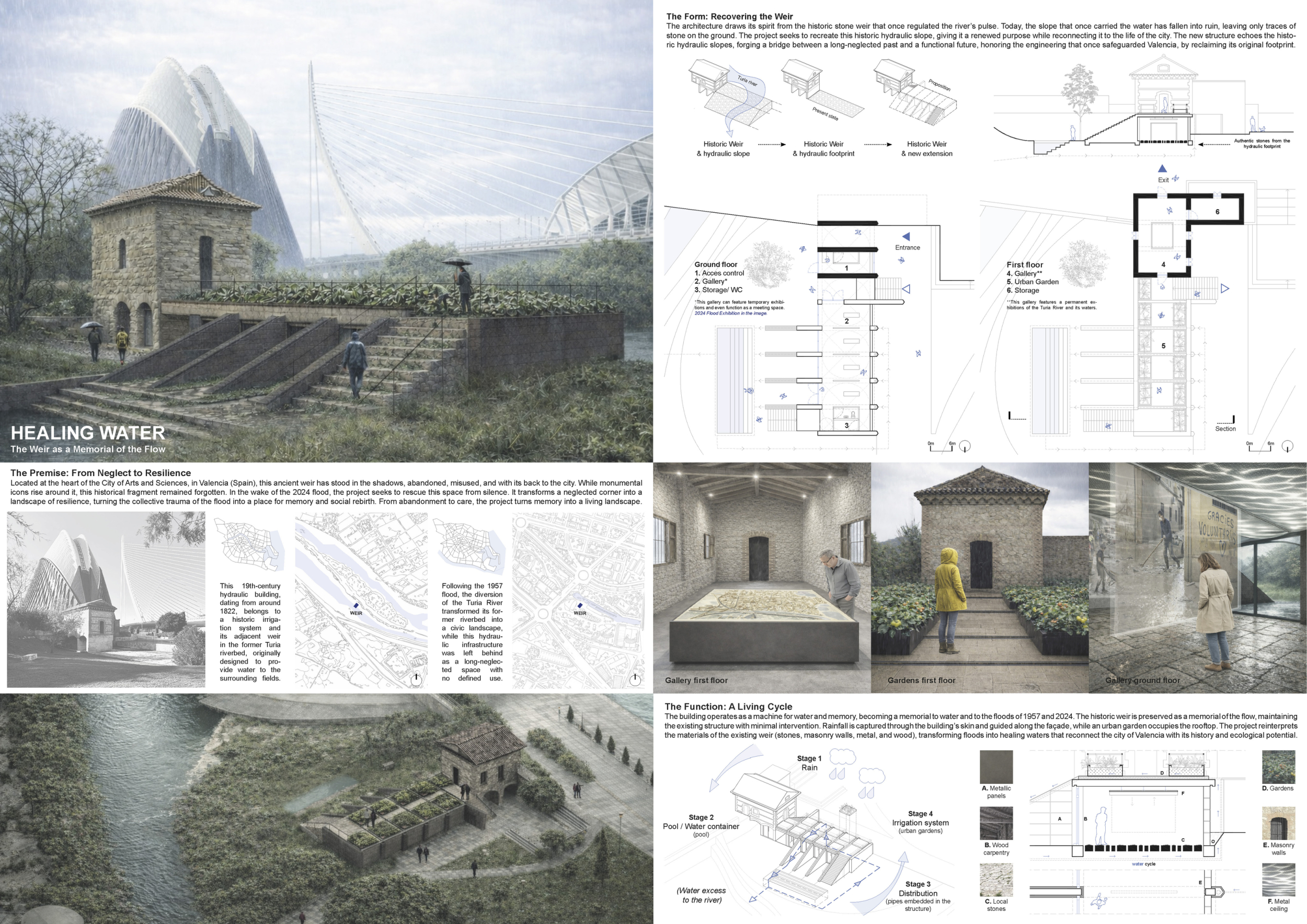
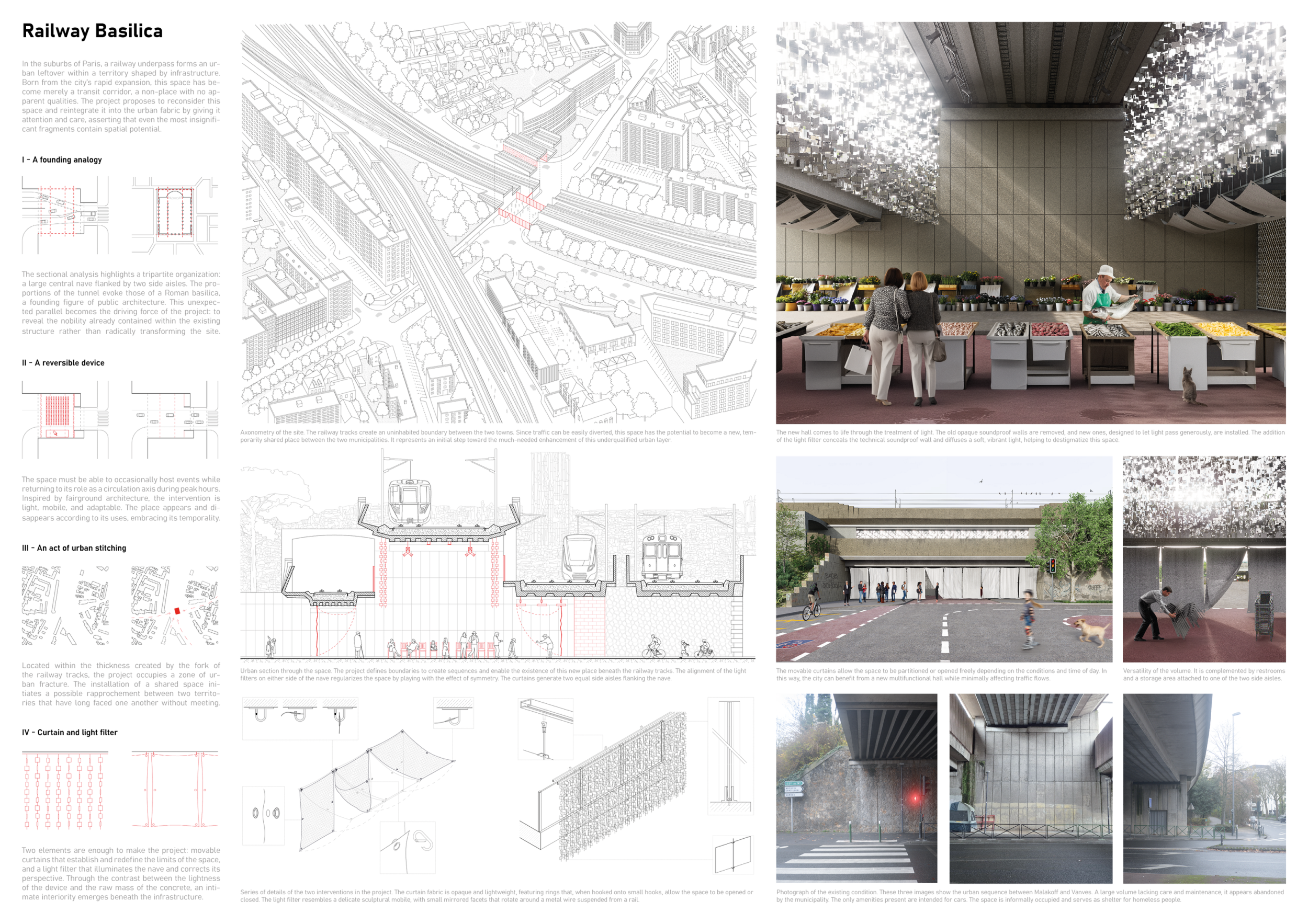
Railway Basilica
Plug-In Protocol
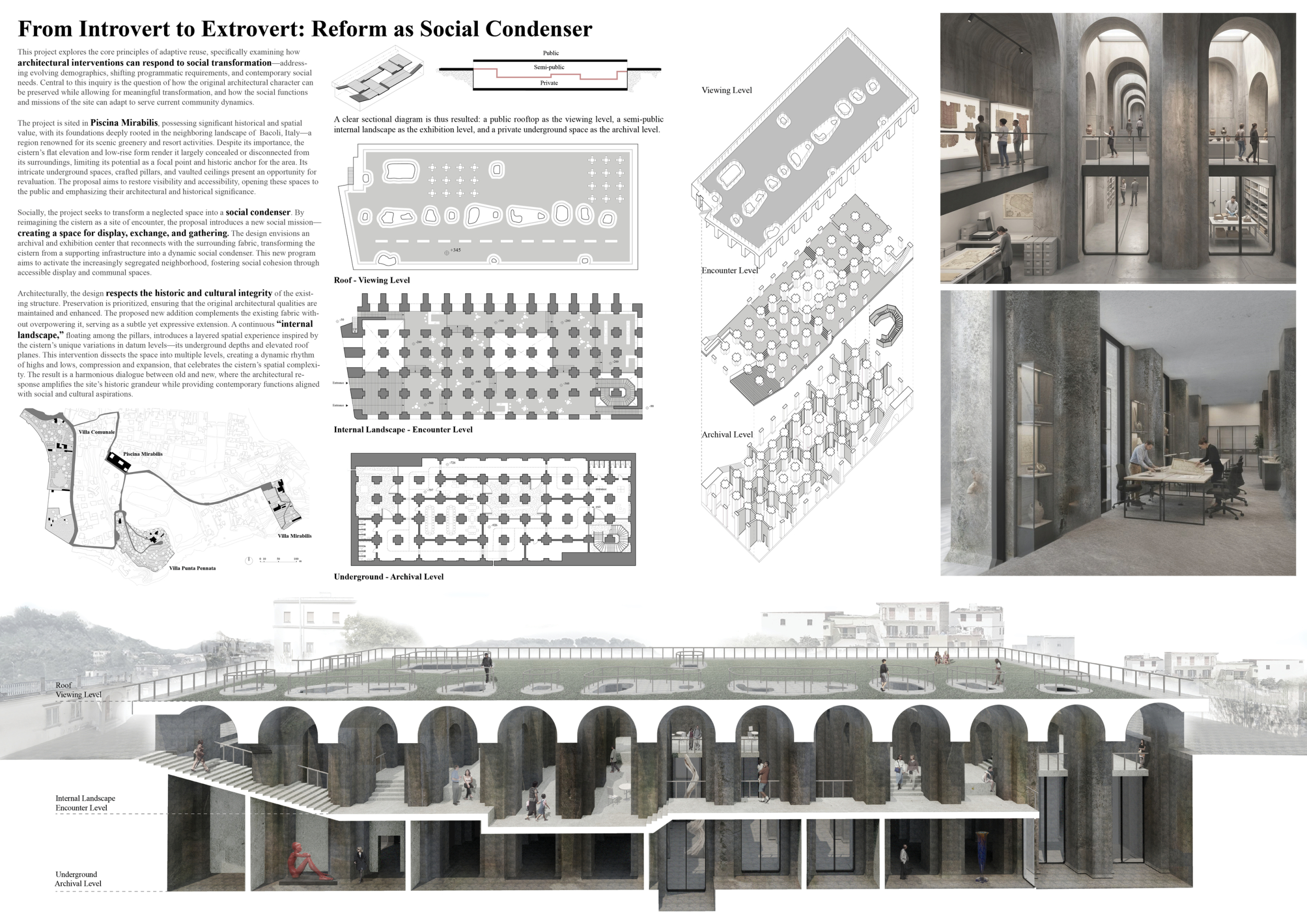
From Introvert to Extrovert: Reform as Social Condenser
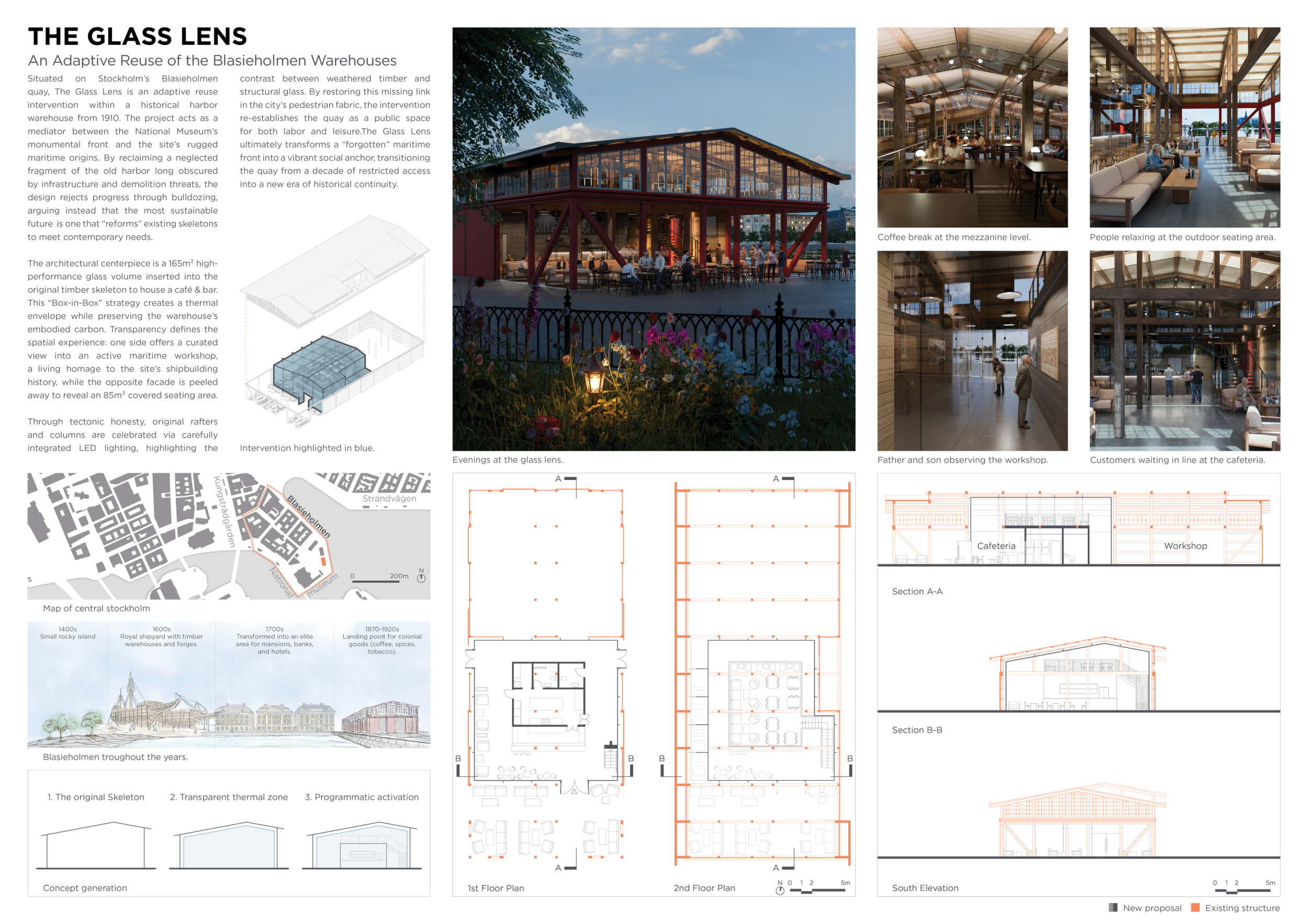
The Glass Lens
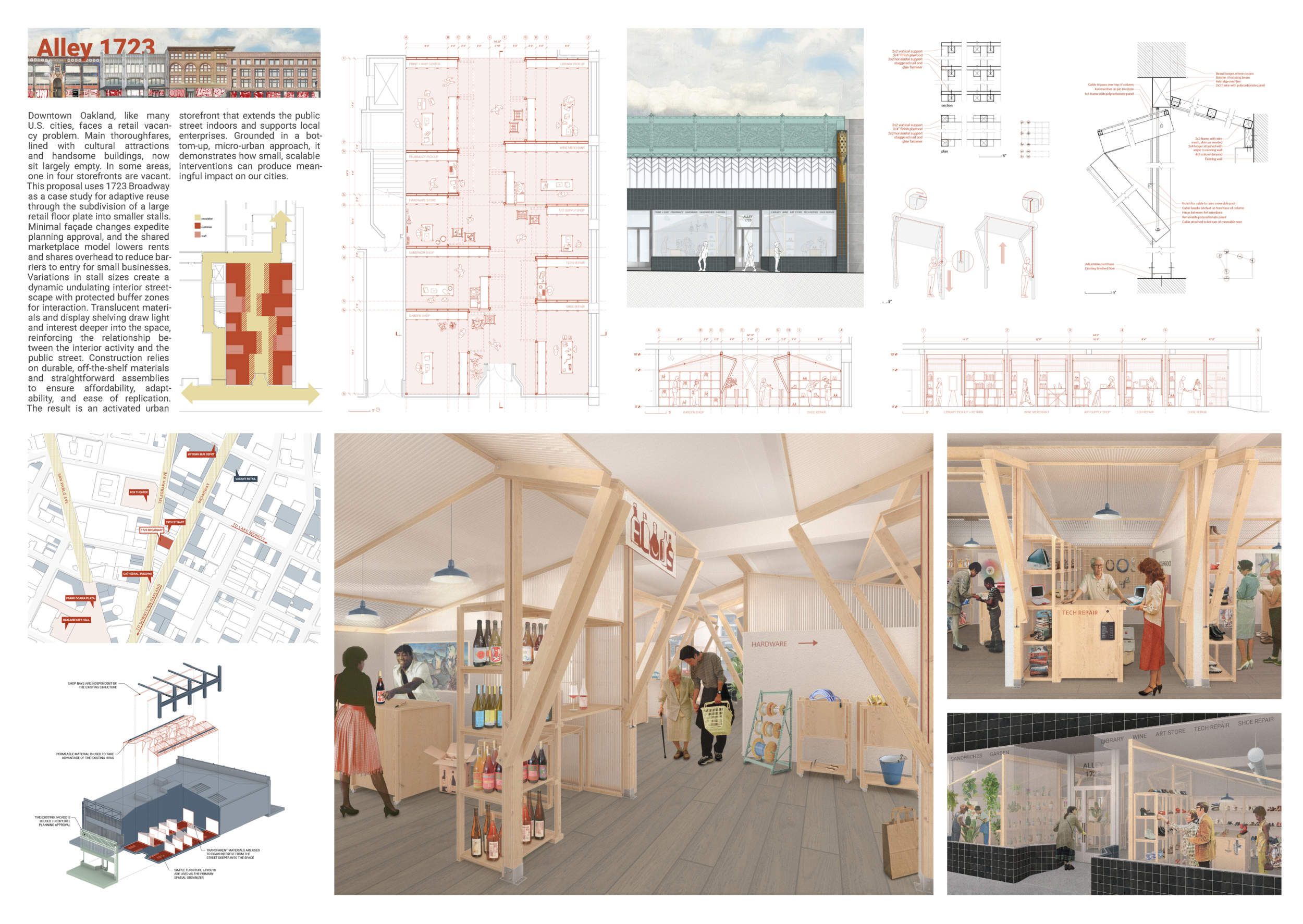
Alley 1723
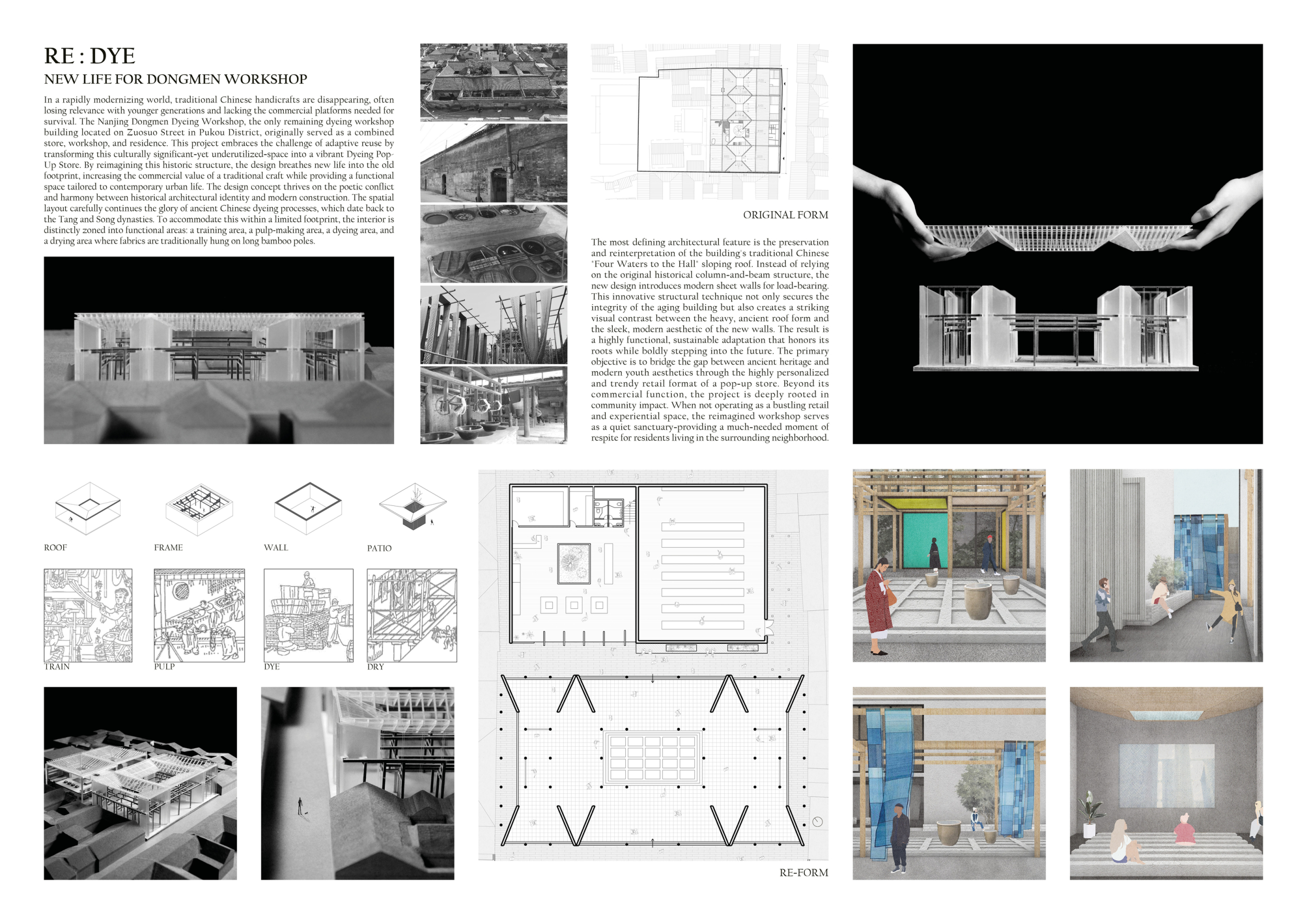
RE:DYE
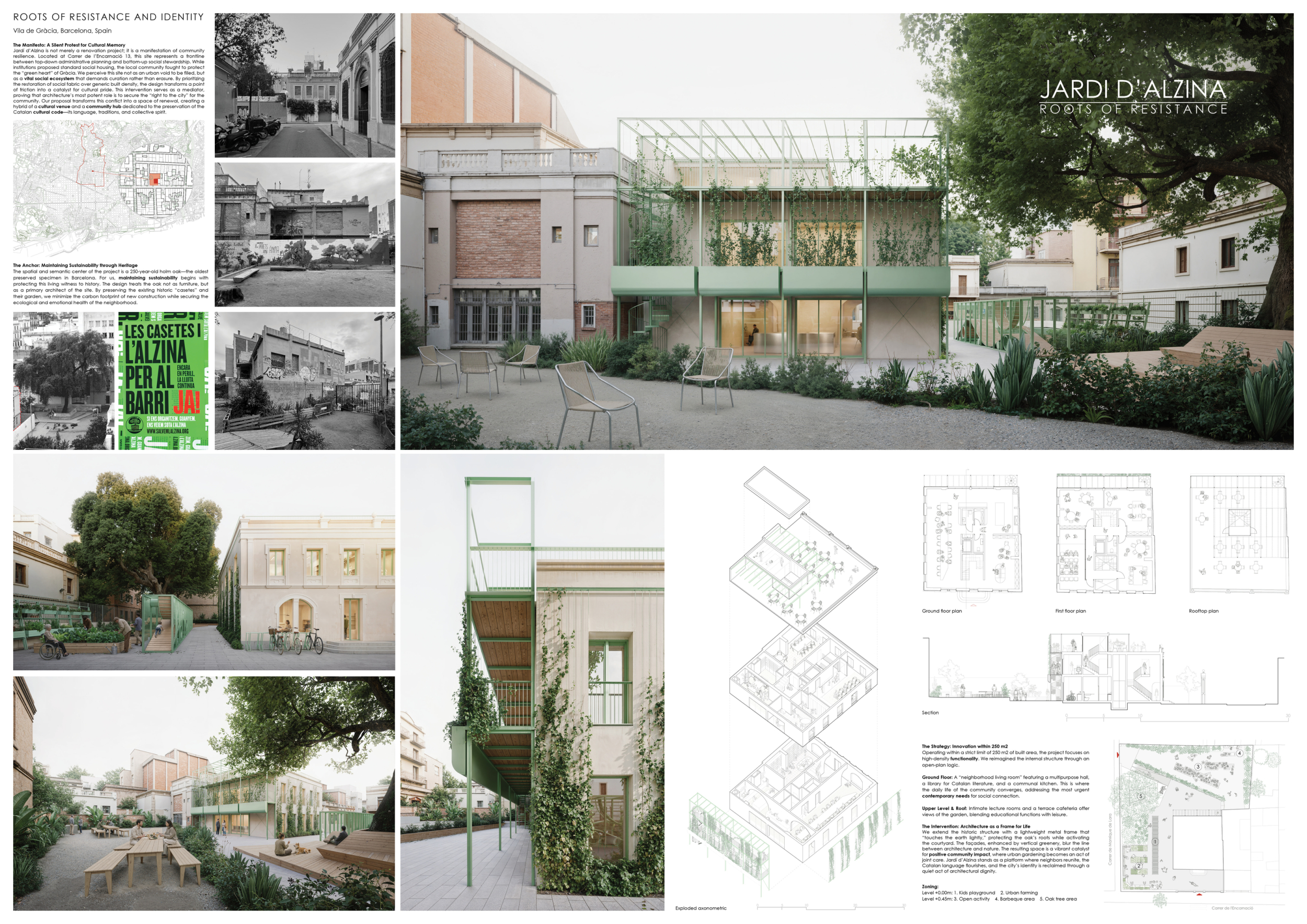
JARDI D'ALZINA / Roots of resistance
Seeds in Forgotten Soil
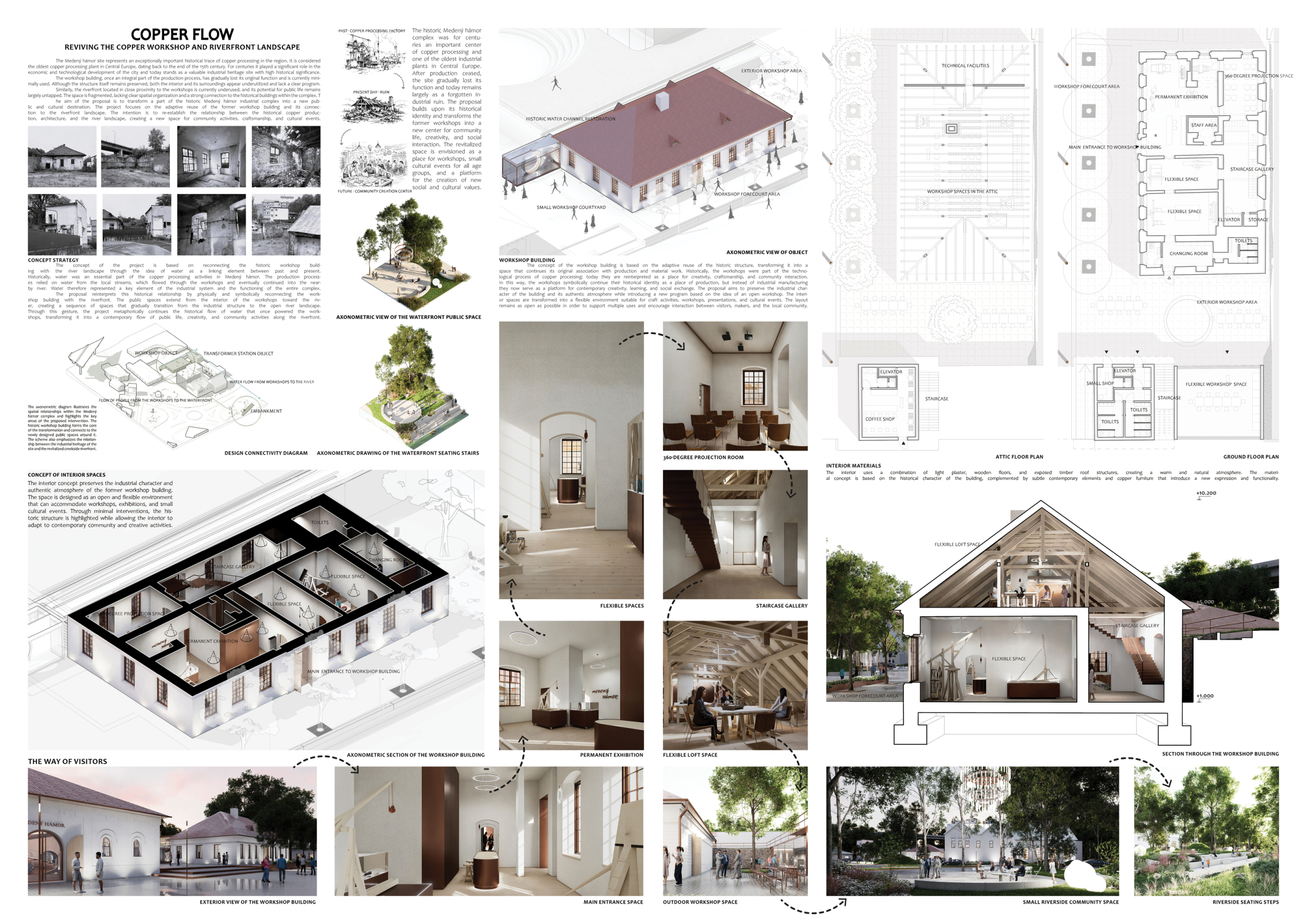
Copper Flow

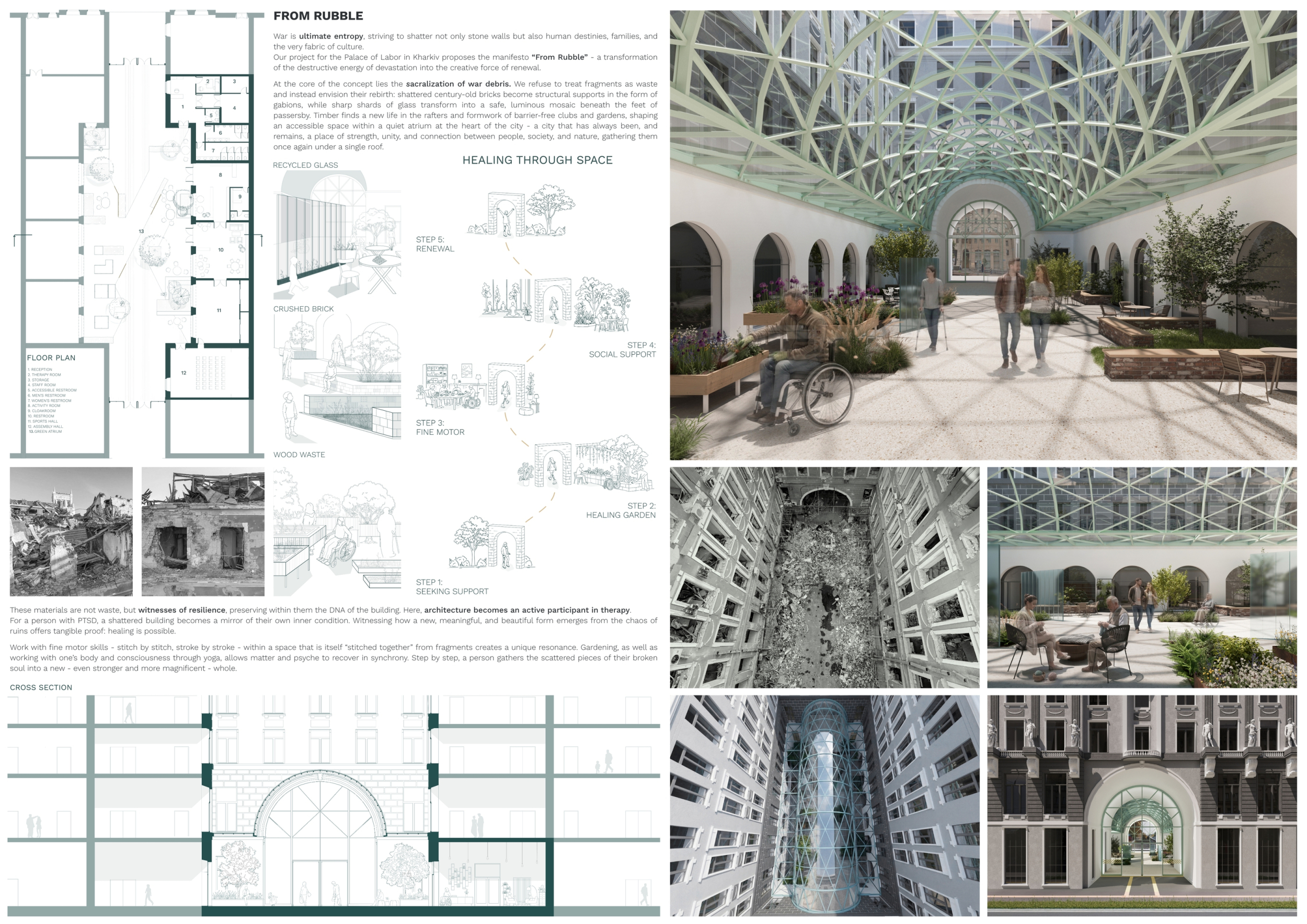
From Rubble
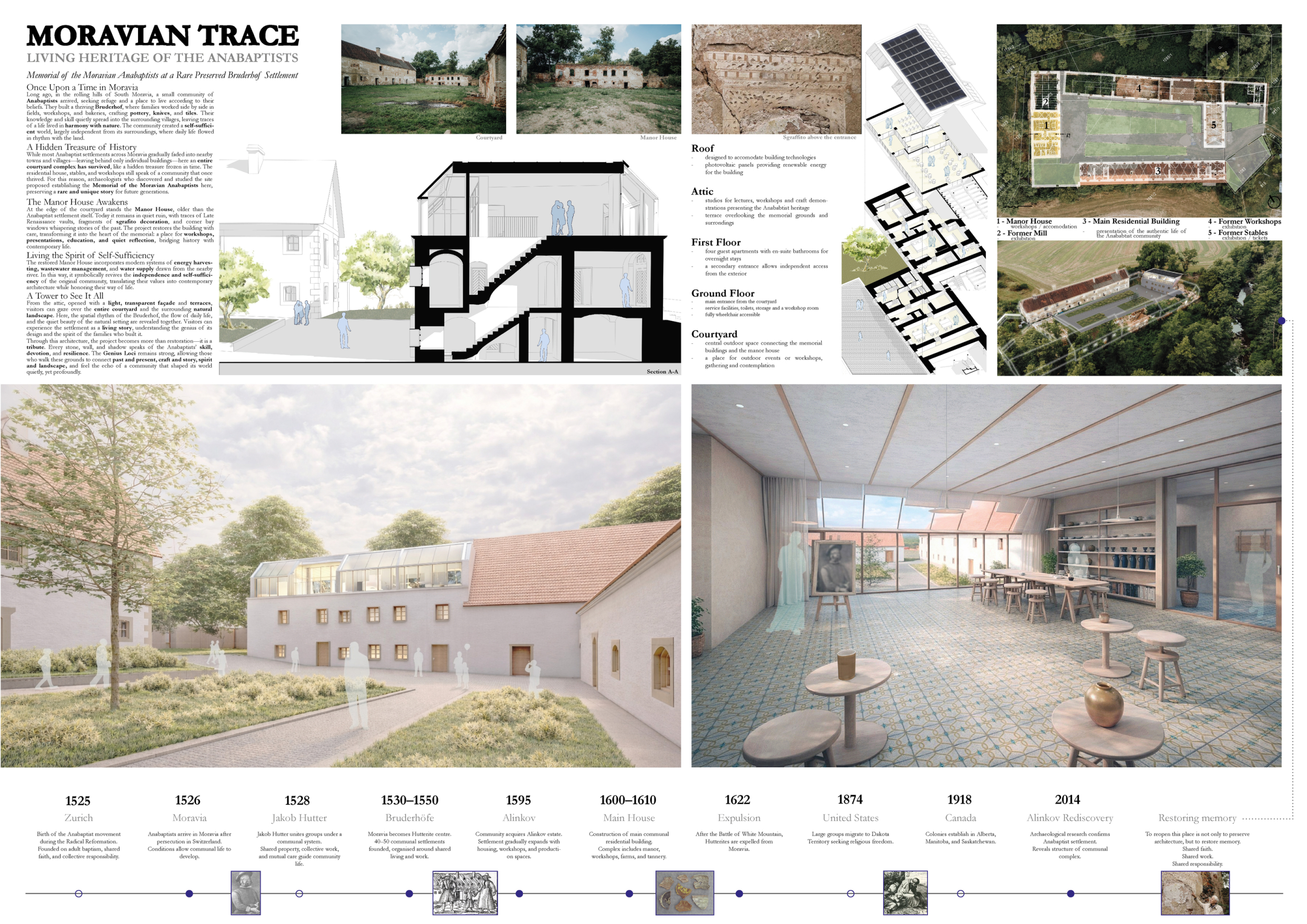
MORAVIAN TRACE

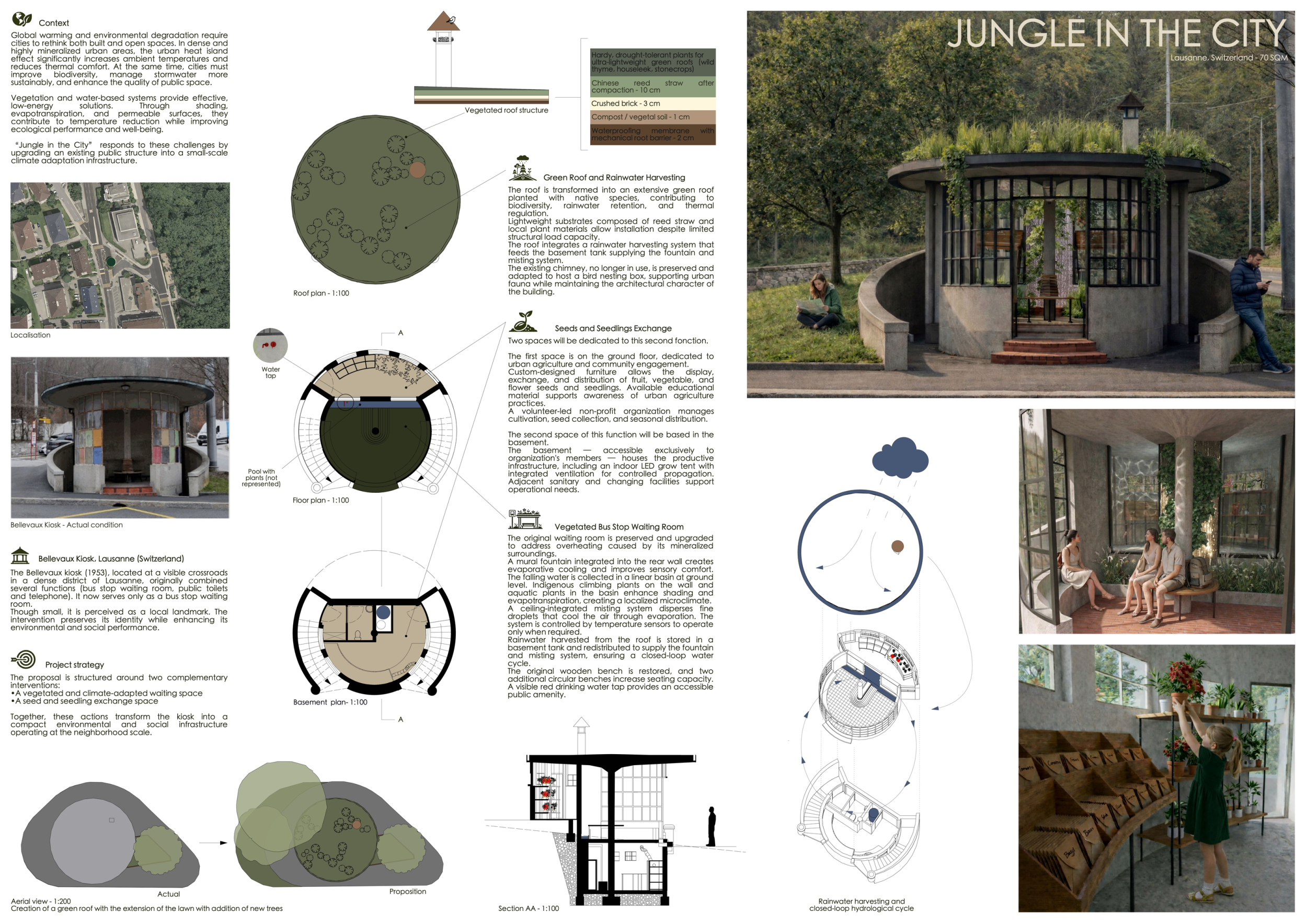
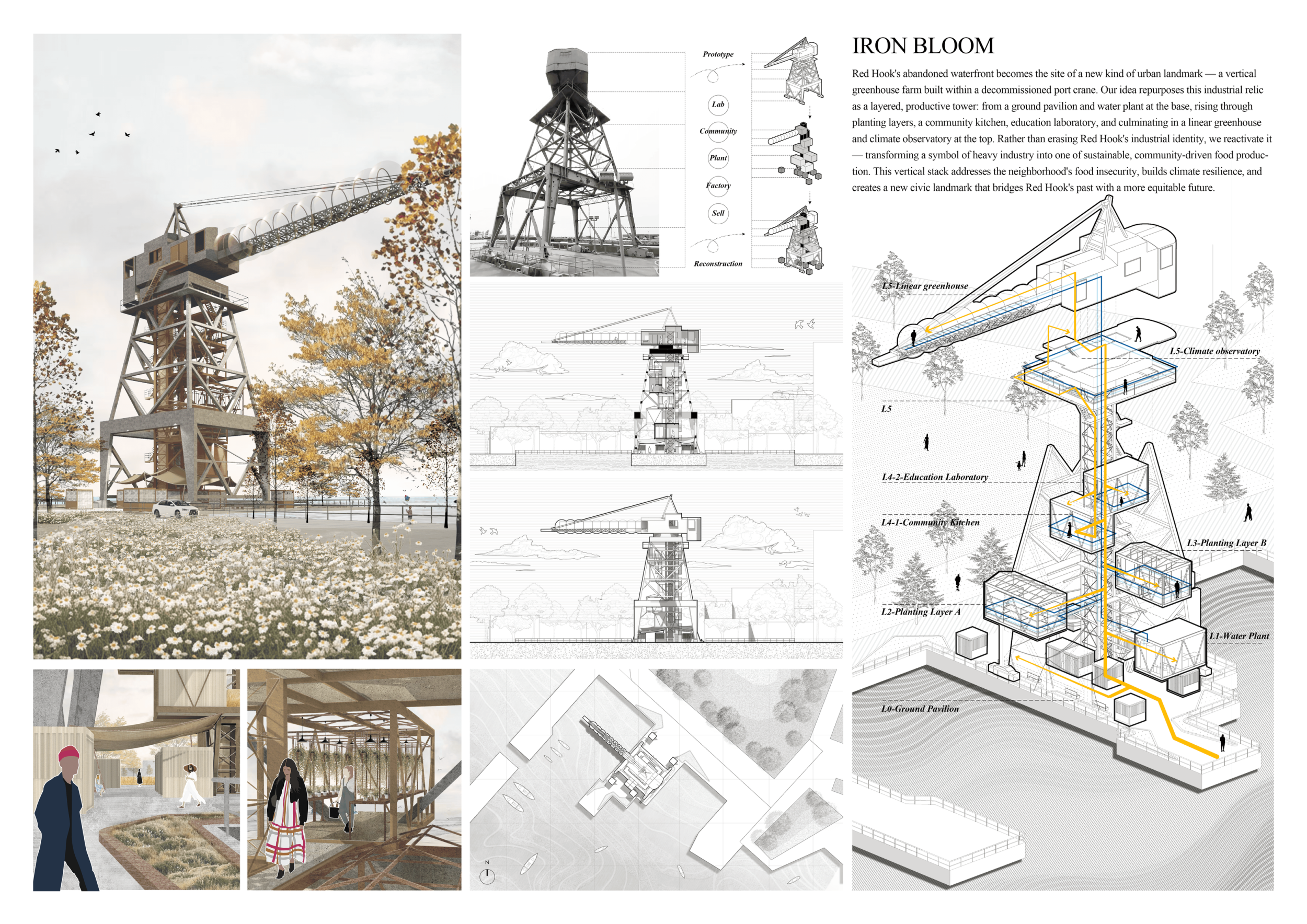

The presentation is strong in its ability to communicate a complex system through clear and well-structured diagrams, particularly in the sequencing of construction steps and the articulation of modular components, which together establish a convincing narrative around feasibility and scalability. Read more The exploded axonometric and typological studies are especially effective, allowing the reader to understand how individual units aggregate into a larger framework while maintaining adaptability. The integration of environmental data, site analysis, and material strategies reinforces the project’s grounding in real-world conditions, though at times the density of information slightly competes for attention due to a relatively even graphic hierarchy across the board. Perspective renderings provide a valuable counterpoint to the technical drawings, illustrating the lived experience of the spaces with warmth and clarity, and reinforcing the social dimension of the proposal. While the system is rigorously explained, the architectural expression remains more subdued, with less emphasis on distinct spatial moments or identity beyond the modular logic. Further differentiation between key diagrams and supporting content, as well as a clearer emphasis on how the system adapts to specific sites or cultural contexts, could strengthen both readability and impact.