

Buildner is a global leader in organizing architecture competitions of all scales — from furniture, cottages, and guesthouses to full city rebranding. With prize budgets ranging from €5,000 to €500,000, Buildner brings proven global experience to every competition.
Launch a competitionLaunch a competition
Introducing Microhome: The Kingspan Edition with a 100,000 € prize fund


Buildner, in continued partnership with Kingspan, is proud to announce the results of the tenth edition of the MICROHOME competition. This milestone edition once again drew an exceptional range of proposals from architects and designers worldwide, reaffirming the competition’s role as a platform for rethinking small-scale living through innovation, sustainability, and material intelligence.
As global housing pressures intensify—driven by climate instability, rising construction costs, and growing demographic needs—the call for compact, resilient, and culturally responsive dwellings has never been more urgent. Microhomes continue to offer a powerful testing ground for architects to explore new construction systems, low-carbon materials, and adaptable spatial strategies that can respond to diverse environmental and social contexts. This year’s submissions demonstrated remarkable breadth, ranging from amphibious housing systems for flood-prone regions to climate-specific modular designs for extreme cold, dense urban infill solutions, and highly flexible models capable of evolving with families and communities over time.
The brief challenged participants to design an off-grid modular dwelling of no more than 25 m² for a hypothetical young professional couple. Entrants were encouraged to treat the microhome as a prototype—compact yet dignified, efficient yet expressive, technologically advanced yet economically viable. No geographical constraints were imposed; participants were free to situate their proposals in any climate or cultural setting, provided the design responded rigorously to environmental, social, and technical conditions.
Across the submissions, several themes emerged with strong clarity:
Climate Adaptation and Environmental Logic
Many of the most compelling entries embedded themselves deeply within their ecosystems—absorbing monsoon rhythms, accommodating sea-level rise, harvesting solar energy, adapting to permafrost, or responding to high-altitude conditions. Kingspan’s high-performance envelope technologies were frequently integrated to elevate thermal resilience, reduce operational energy, and enable off-grid autonomy.
Modularity and System Thinking
This edition saw an increased focus on modularity not only as a method of construction but as a spatial and social framework. Several winning projects proposed expandable families of units, allowing households to evolve in size and function. Others explored kit-of-parts assemblies that prioritised local materials, rapid deployment, and low-impact manufacturing.
Cultural and Social Grounding
Many submissions positioned the microhome as a civic tool—supporting community continuity, local economies, or indigenous knowledge systems. Whether addressing rural migration, coastal livelihoods, or urban affordability, the strongest proposals treated architecture as a bridge between people and place.
Craft, Materiality, and Technical Precision
Entries demonstrated a high level of technical refinement, from carefully detailed bamboo systems to highly efficient timber envelopes and modular joinery solutions. Drawings and diagrams revealed an elevated commitment to constructability, lifecycle performance, and ease of maintenance.
Spatial Ingenuity
Within the strict 25 m² limit, designers introduced inventive ways to expand perceived space—through convertible furniture, integrated joinery, open-plan volumes, and multifunctional partitions that adapt throughout the day. Many interiors achieved surprising generosity with minimal means.
Buildner extends its sincere appreciation to all participants, whose work continues to advance global discourse on small-scale, climate-conscious living; to the international jury for its thoughtful evaluations; and to Kingspan for its ongoing support and commitment to a more sustainable built environment. We congratulate this year’s winners and commend all entrants for contributing ambitious, contextually rich, and technically rigorous proposals that push the boundaries of what a microhome can be. We look forward to the next edition and to the continued evolution of compact, resilient, and future-focused architecture.
Buildner and its jury panel congratulate the winners and thank all participants of this truly global competition. Please see our latest Microhome Magazines, featuring previous exceptional projects, now available in our Bookstore.
Buildner and Kingspan have also announced the MICROHOME 2026 Competition, featuring a €100,000 prize fund. This global competition invites architects, designers, and creative thinkers to redefine the concept of microhomes. Visit the MICROHOME 2026 website to register.
Buildner worked with an international jury panel to evaluate the received entries:
Extended list of jury biographiesNeall Digert, Ph.D.
Kingspan
United States

Sandra Del Bove
Head of Innovation, Kingspan
Germany

Zack Giffin
Tiny House Nation
USA

Mitchell Joachim
Terreform ONE
USA

Flora Lee
Associate Partner, MAD Architects
USA

Adele Peters
Fast Company
USA

1st Prize Winner
Living on Groundwater
20,000 €

We see competitions as opportunities to test ideas beyond the constraints of commercial practice. They give us the freedom to experiment, refine our design identities, and engage with topics or contexts we may not encounter in everyday work.
Read full interview
 United States
Jury feedback summary
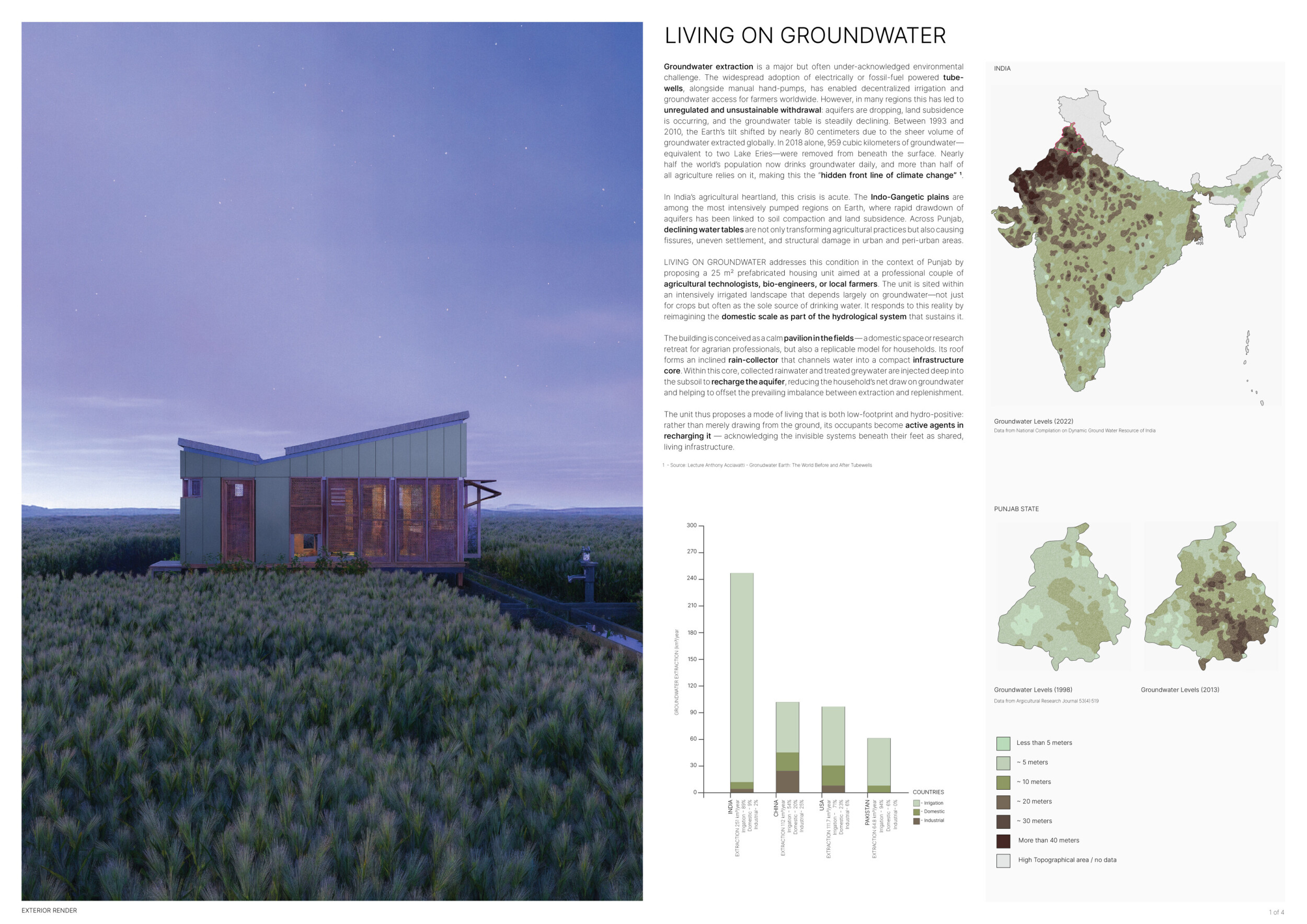
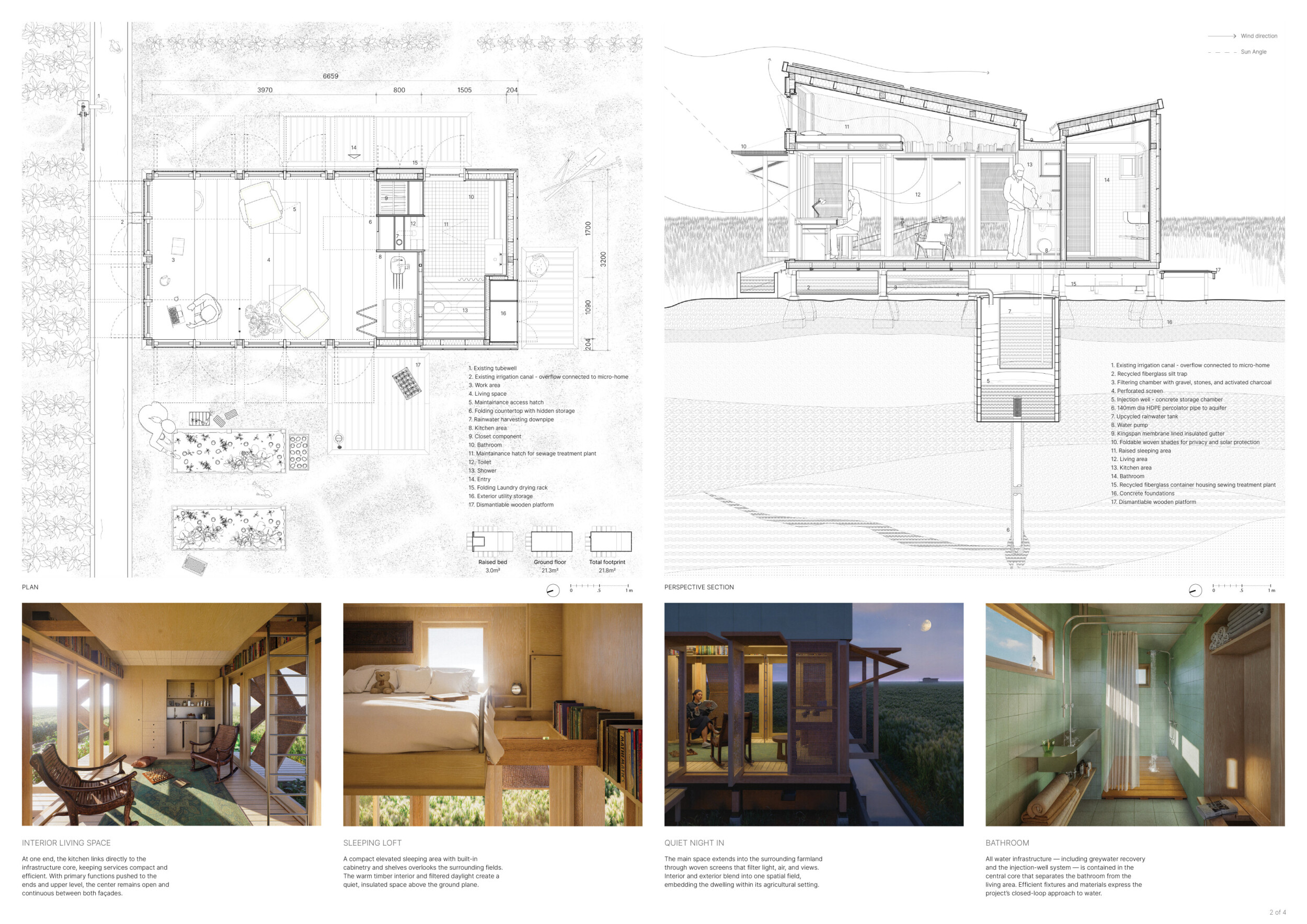
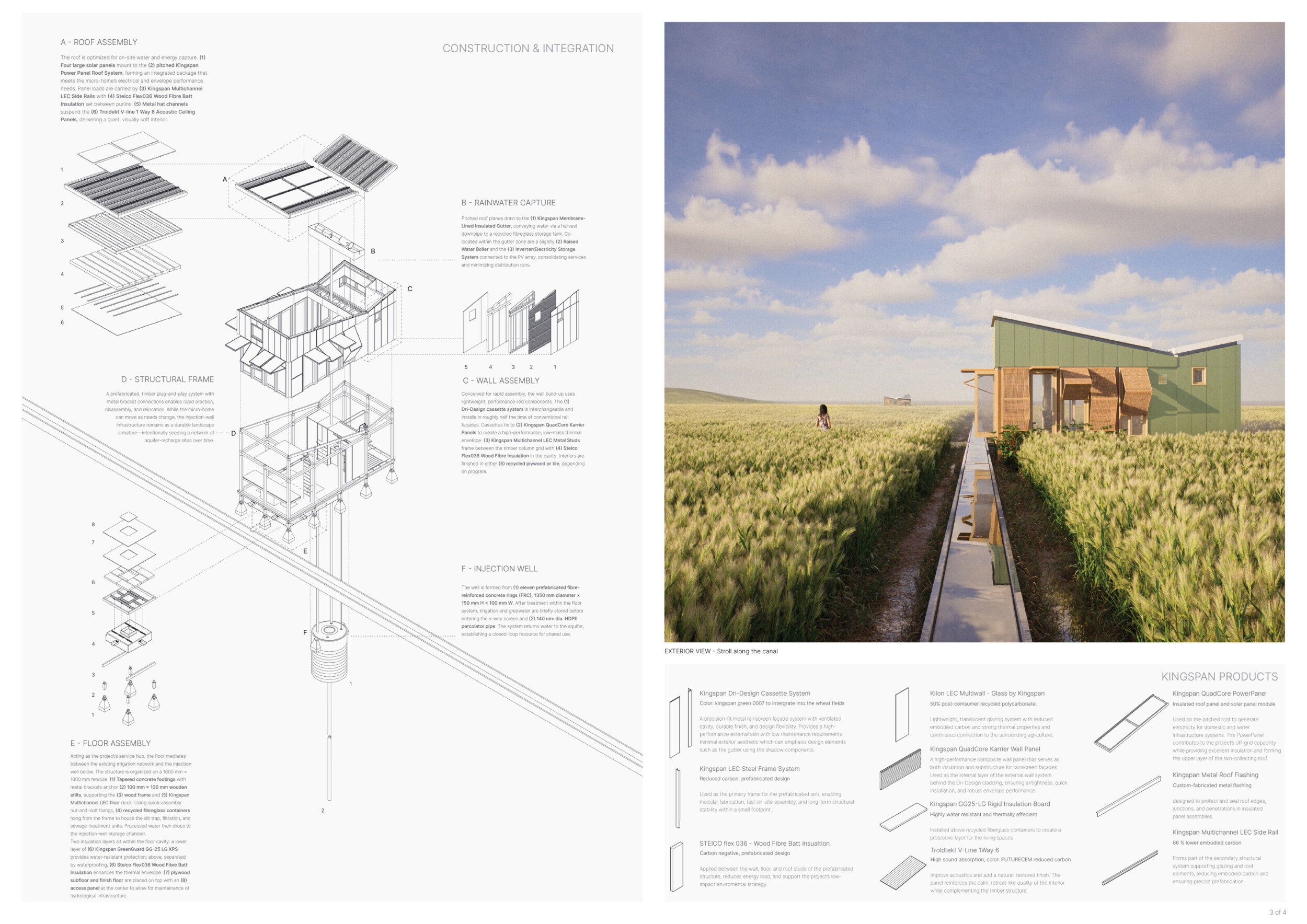
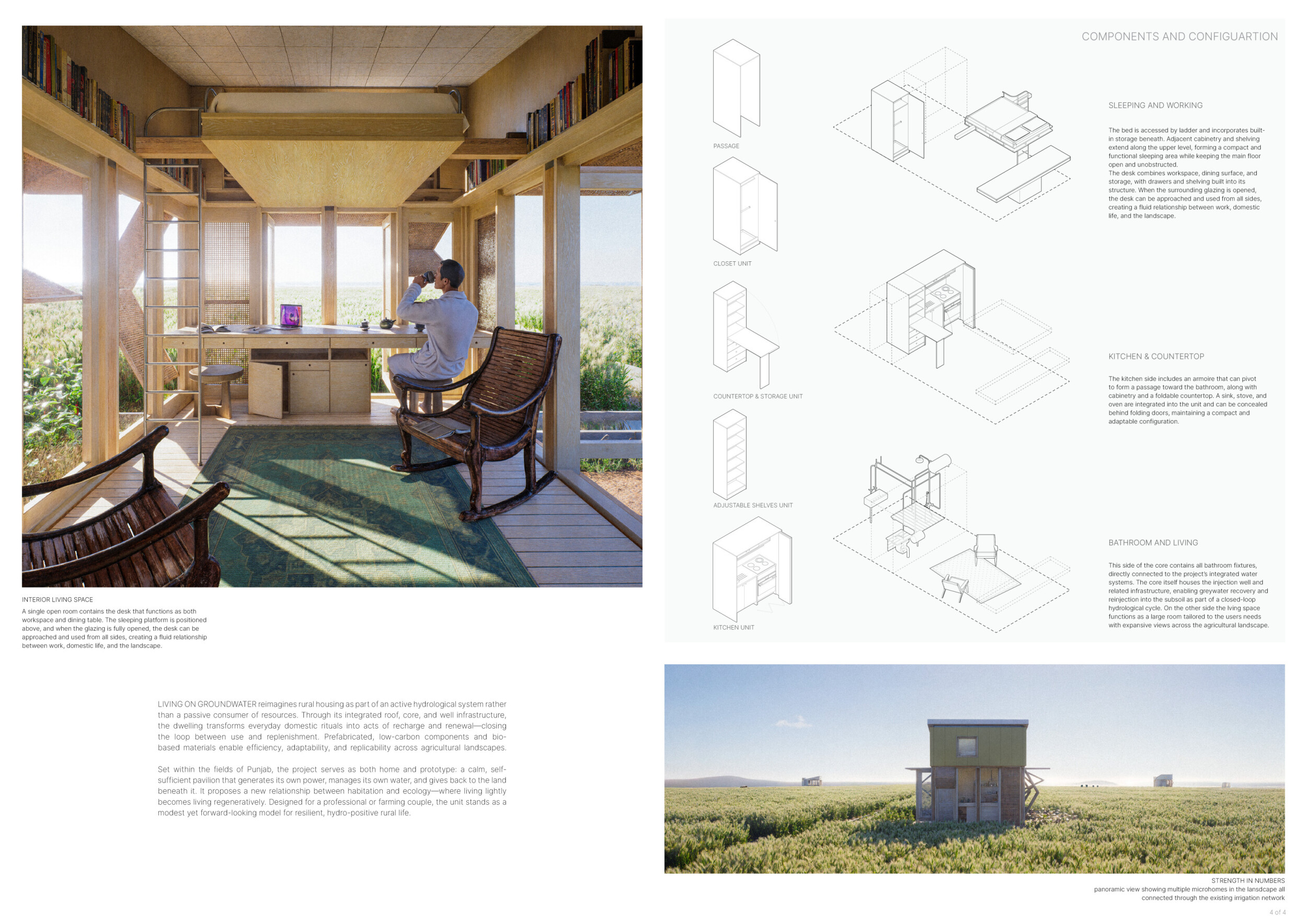
Living on Groundwater is a 25 m² microhome designed as part of a broader hydrological system rather than as an isolated dwelling. Set within the agricultural fields of Punjab, India, one of the regions most affected by severe groundwater depletion, the project proposes a low-footprint, hydro-positive housing model in which residents become active agents in groundwater recharge.

The project provides an interesting solution to the climate-driven overuse of groundwater, and proposes a unique, self-sufficient microhome solution for recharging waning aquifer resources. The microhome applies thoughtful, fully integrated systems and technologies to yield an easily constructed, modular, and sustainable design solution.
Neall Digert, Ph.D. / Buildner guest jury
Kingspan, United States

The proposal stands out for its clear environmental narrative, positioning the home not merely as a low-impact dwelling but as an active agent that recharges groundwater rather than only reducing consumption. The architectural concept is strong and cohesive, expressed through an elegant rural aesthetic that fits naturally within the Punjab agricultural landscape. Its construction logic is pragmatic, with a high degree of prefabrication and repeatability that supports real-world deployment. The link between the chosen site and the project’s mission is particularly compelling, directly addressing groundwater depletion in the very agricultural context most affected by it.
Sandra Del Bove / Buildner guest jury
Head of Innovation, Kingspan, Germany
Buildner's commentary, recommendations and techniques review
Order your review here
The board communicates a technically sophisticated project through a clear set of drawings, combining precise architectural detailing with an accessible explanation of hydrological performance. The sectional perspective and axonometric assemblies are particularly effective, articulating how the microhome integrates rainwater capture, filtration, and aquifer recharge within a compact structural frame.
-
9/10 Linework

-
9/10 Quality of drawings

-
8/10 Balance of color

-
9/10 Layout

-
8/10 Hierarchy

-
8/10 Annotation

-
9/10 Text

-
10/10 Clarity of story

-
9/10 Clarity of diagrams

-
9/10 Quality of overall presentation

Enter an open architecture competition now









2nd Prize Winner
Resilience Is Politics
10,000 €

I generally take part in competitions that aim at realizing proposals, as they provide an opportunity to diversify design approaches and address new contexts, challenges, and locations. It is always valuable to expose one’s ideas to new perspectives.
Read full interview
 Chile
Chile
Jury feedback summary
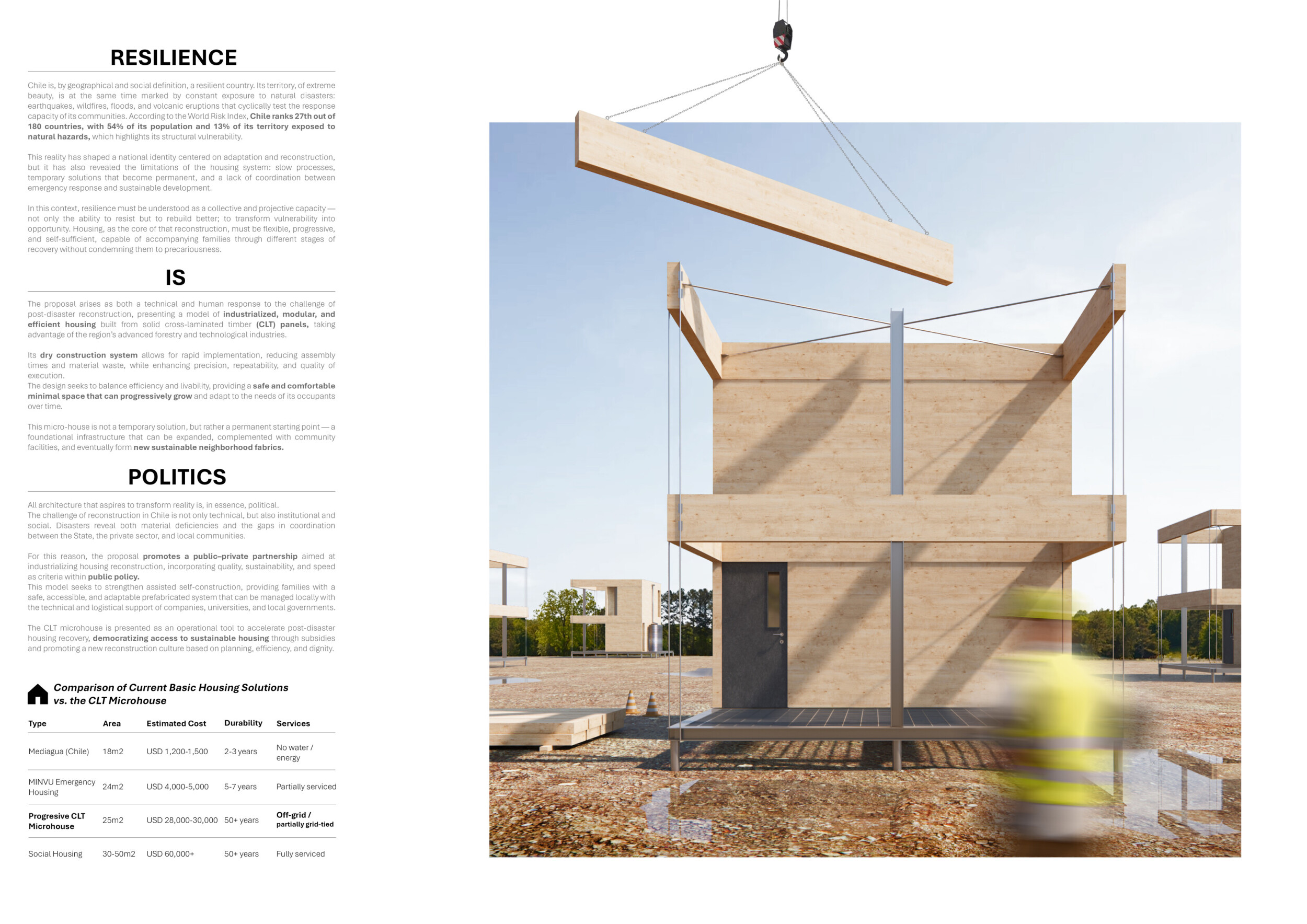
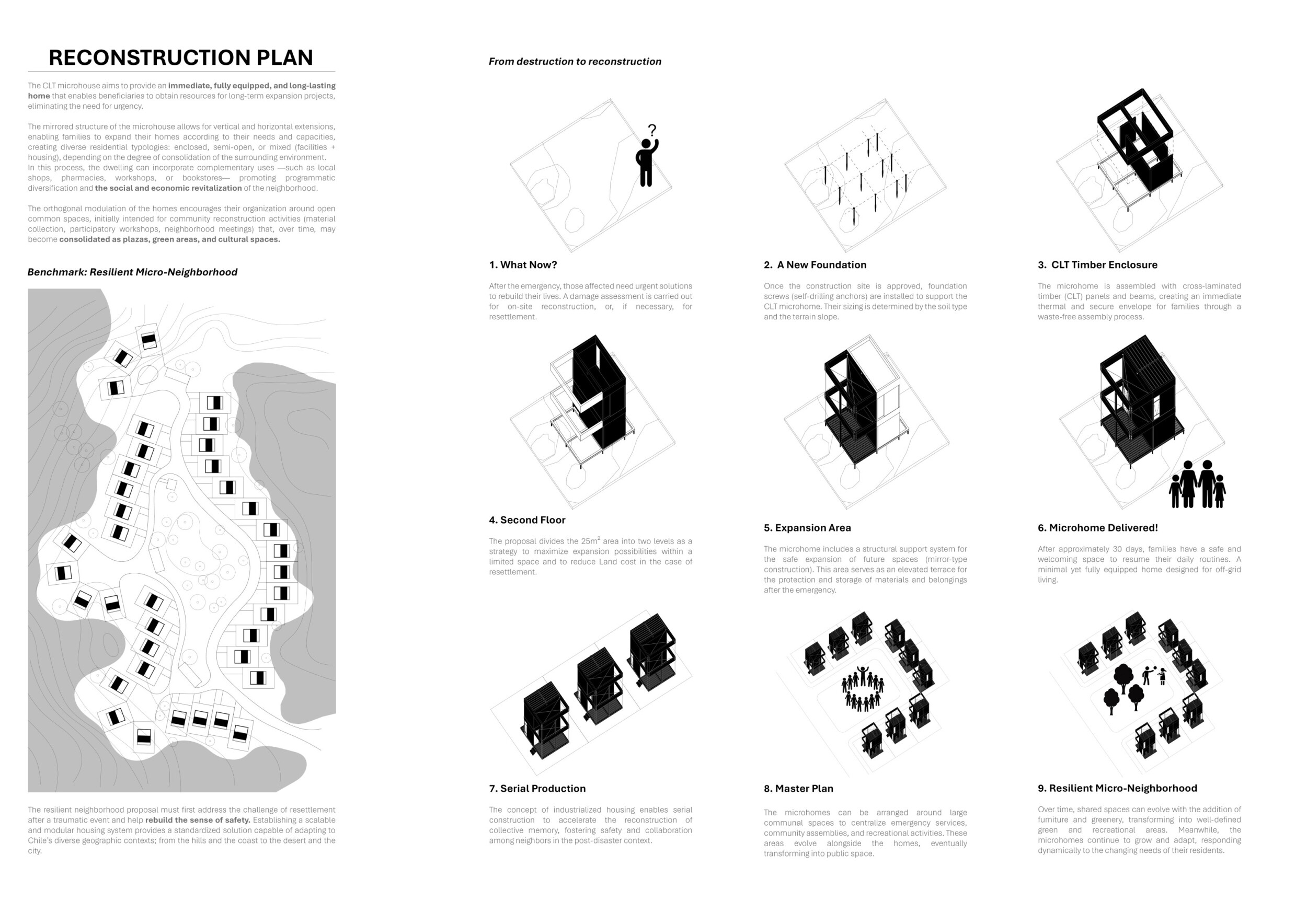
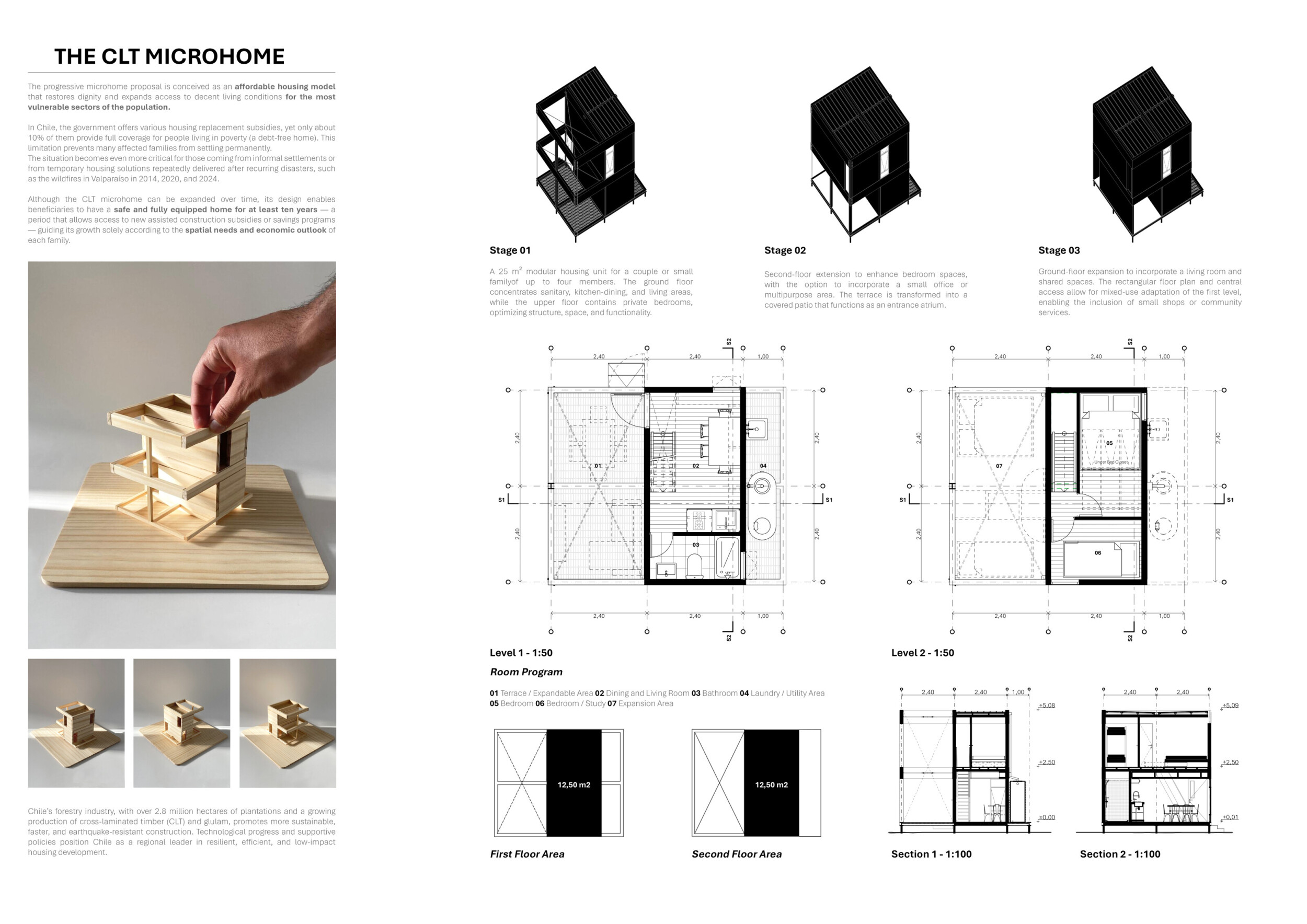
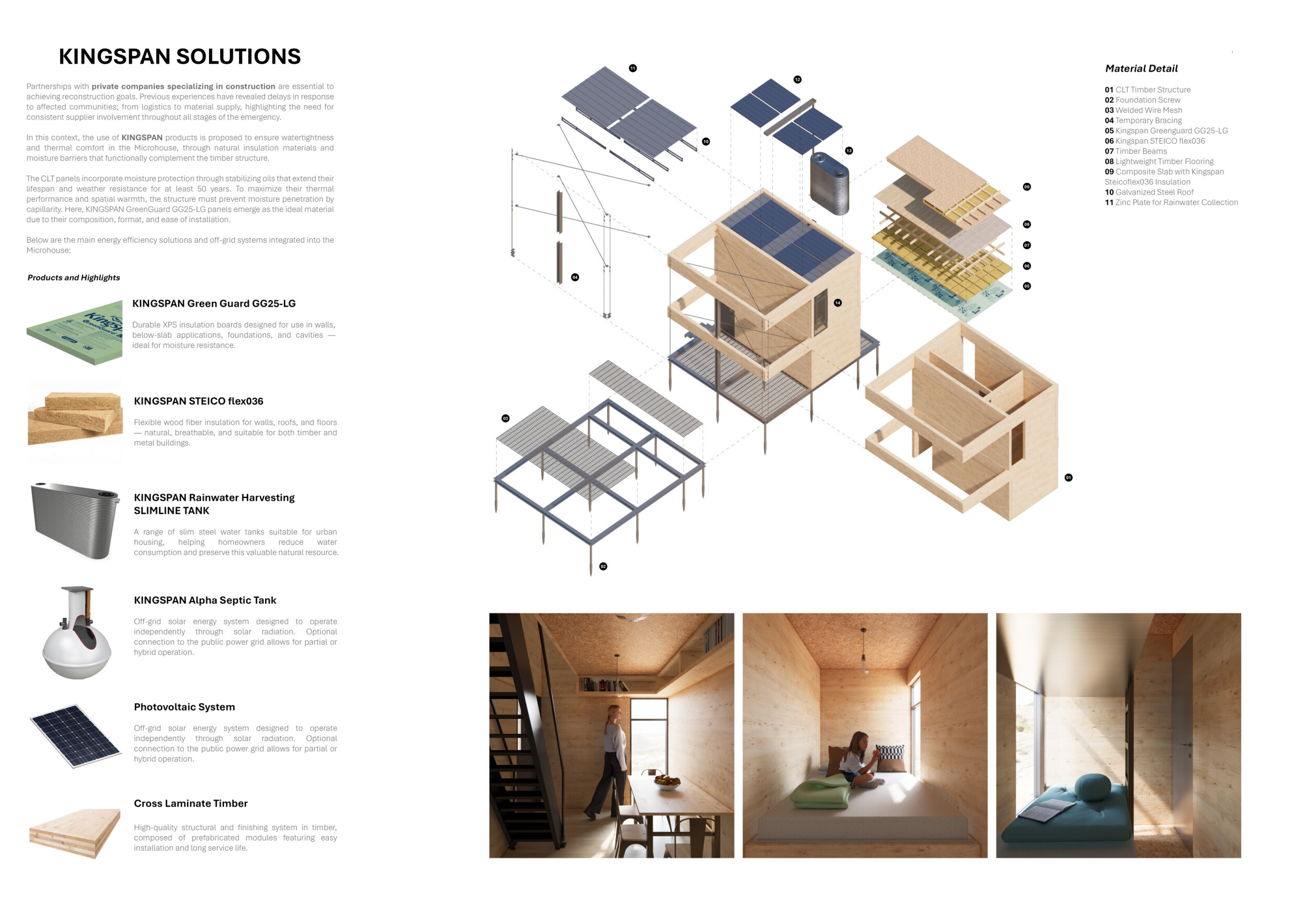
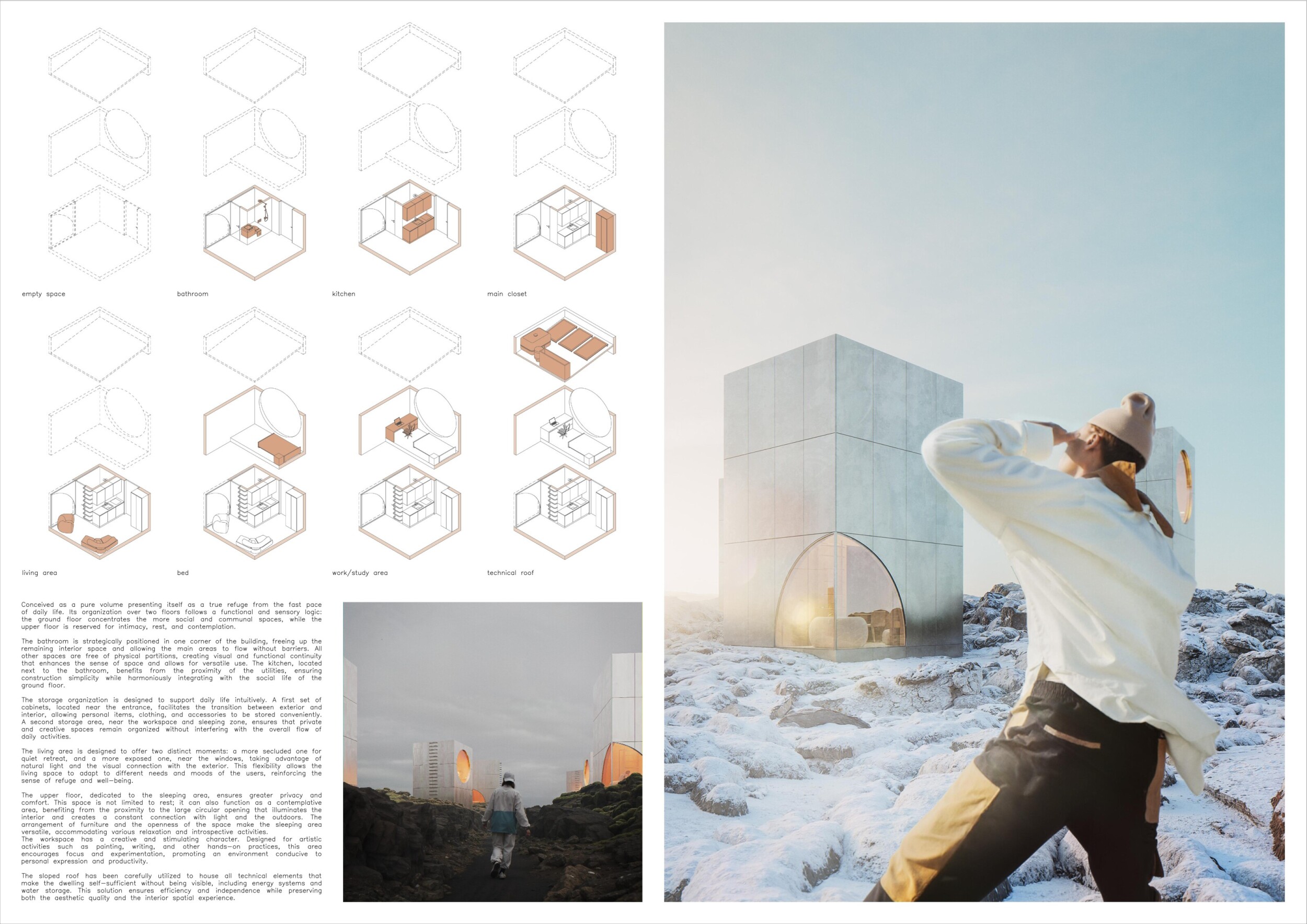
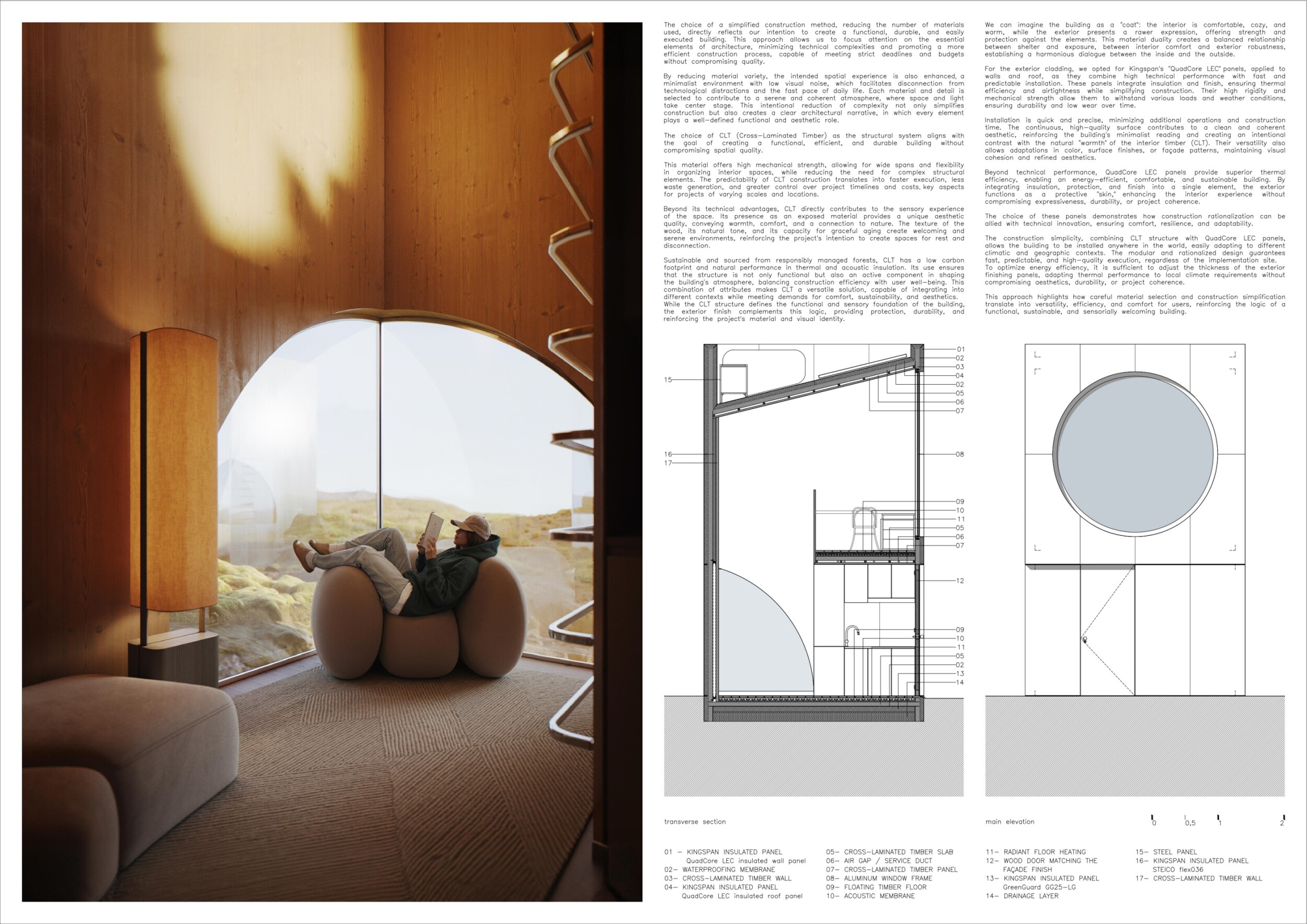
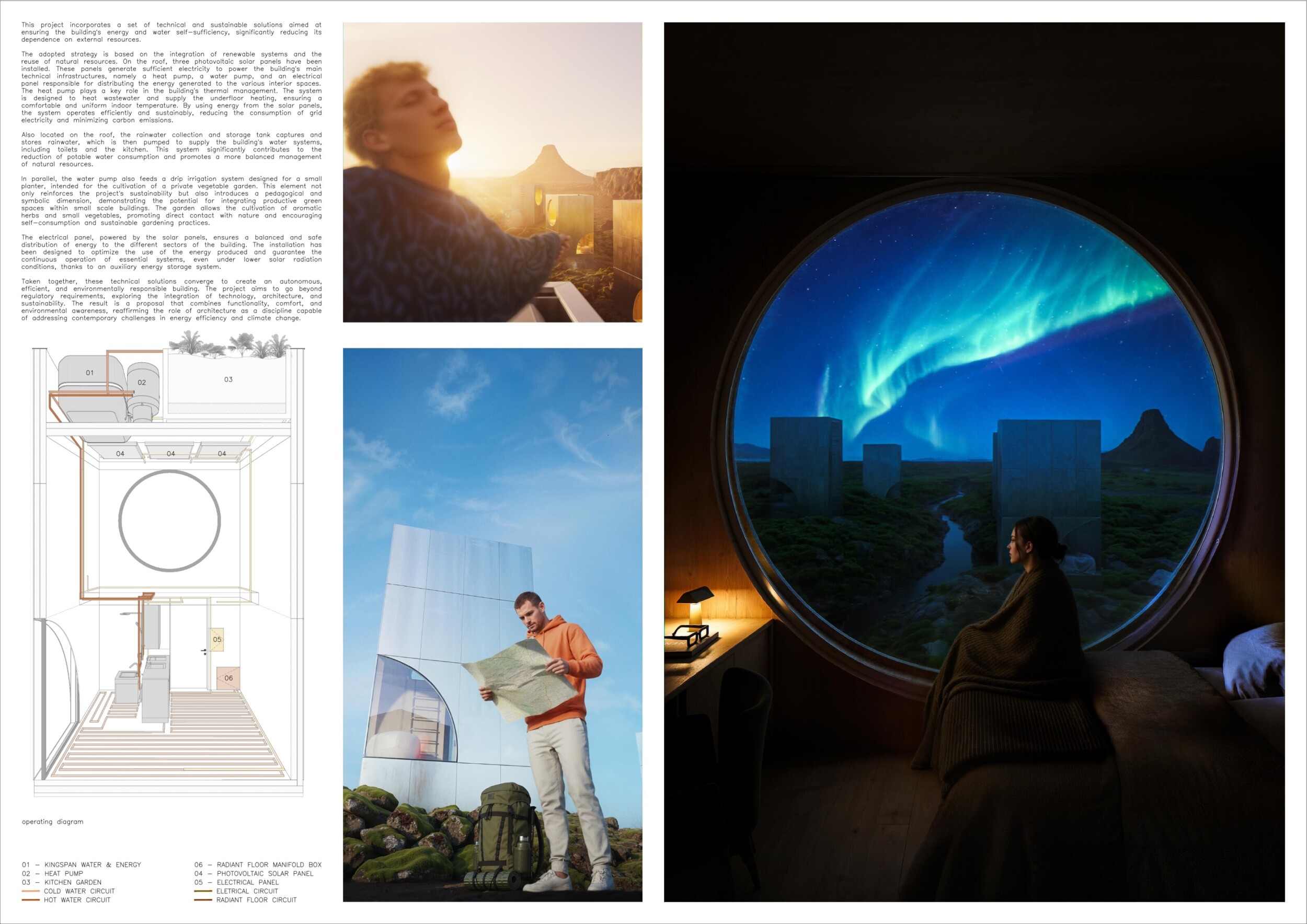
The CLT Microhome proposes a compact timber dwelling that combines fast assembly with long-term adaptability. The design uses a simple structural grid and modular CLT panels to create a robust envelope that can be erected quickly in post-disaster or low-resource settings. A clear vertical separation places communal living and service spaces on the ground floor and private rooms above.

This proposal presents a remarkably intelligent and thoughtful approach to compact living. The CLT design is smart, simple, and rooted in a deeply sustainable logic. I appreciated how the entire structure operates at a small yet highly considered scale, demonstrating real spatial efficiency without compromising livability or architectural clarity. The use of monolithic components, cleanly joined and rationally organized, reinforces the idea that sustainability can emerge through reduction rather than technological excess. Every element appears to do double or triple duty, compressing structure, enclosure, and finishing into a single high performance system. Equally compelling is the project’s restraint. It avoids over designed micro living and focuses on what truly matters: healthy materiality, ease of assembly, and durable performance. The relationship between form, structure, and fabrication is well aligned and the result feels grounded and deployable beyond a single context.
Mitchell Joachim / Buildner guest jury
Terreform ONE, USA

There is something surprising about this design. It is not a shape I typically think of as attractive yet the open unfinished beams suggest growth and future potential. It challenges the viewer to imagine what comes next. Many people resist micro homes because they fear their needs cannot evolve. This design preempts that concern and replaces it with a plan for expansion. The beams provide reassurance and may help more people embrace small footprint living. I did not see specifics on how the end walls are braced and with this height to width ratio I assume those beams play a role in shear support. It would be good to understand how the walls resist wind loads.
Zack Giffin / Buildner guest jury
Tiny House Nation, USA
This proposal stands out for its focus on real world deployment. It is designed for mass rollout with a construction system that can be prefabricated, transported, and assembled at scale. The staged expansion strategy is another strength. It allows families to begin with a compact habitable unit and grow the home as needs and resources evolve. The project offers a pragmatic and long term approach to resilient housing.
Sandra Del Bove / Buildner guest jury
Head of Innovation, Kingspan, Germany
Buildner's commentary, recommendations and techniques review
Order your review here
The presentation communicates a clear system that links rapid deployment with long term growth and it uses diagrams well to explain the construction sequence and the staged expansion model. The drawings are clean and precise and the exploded axonometric clarifies how the CLT shell, steel frame, and panels come together. Renderings support the narrative of resilient living although some could better highlight interior spatial quality.
-
8/10 Linework
-
8/10 Quality of drawings
-
7/10 Balance of color
-
8/10 Layout
-
7/10 Hierarchy
-
7/10 Annotation
-
8/10 Text
-
8/10 Clarity of story
-
8/10 Clarity of diagrams
-
8/10 Quality of overall presentation
3rd Prize Winner
Sumak Wasi
5,000 €
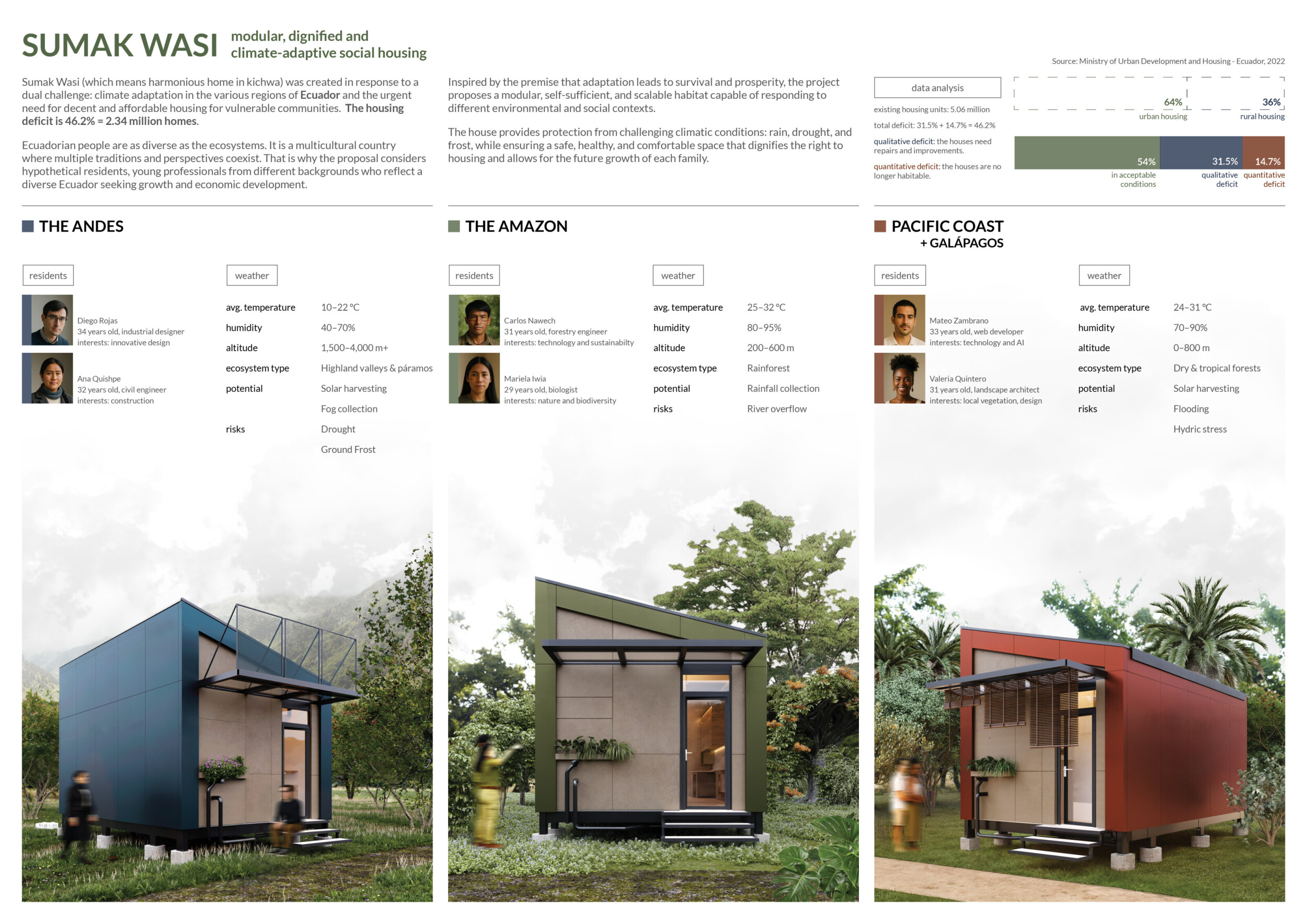

We participate in competitions because they provide a space for creative freedom, allowing us to explore ideas without the typical limitations of professional practice. They enable us to take on conceptual challenges, experiment with new strategies, and dive deeper into topics we consider priorities, such as minimal housing, climate resilience, and social integration. Furthermore, competitions motivate us to grow as a team, strengthen our methodologies, and share our vision with a global community.
Read full interview
 Ecuador
Jury feedback summary
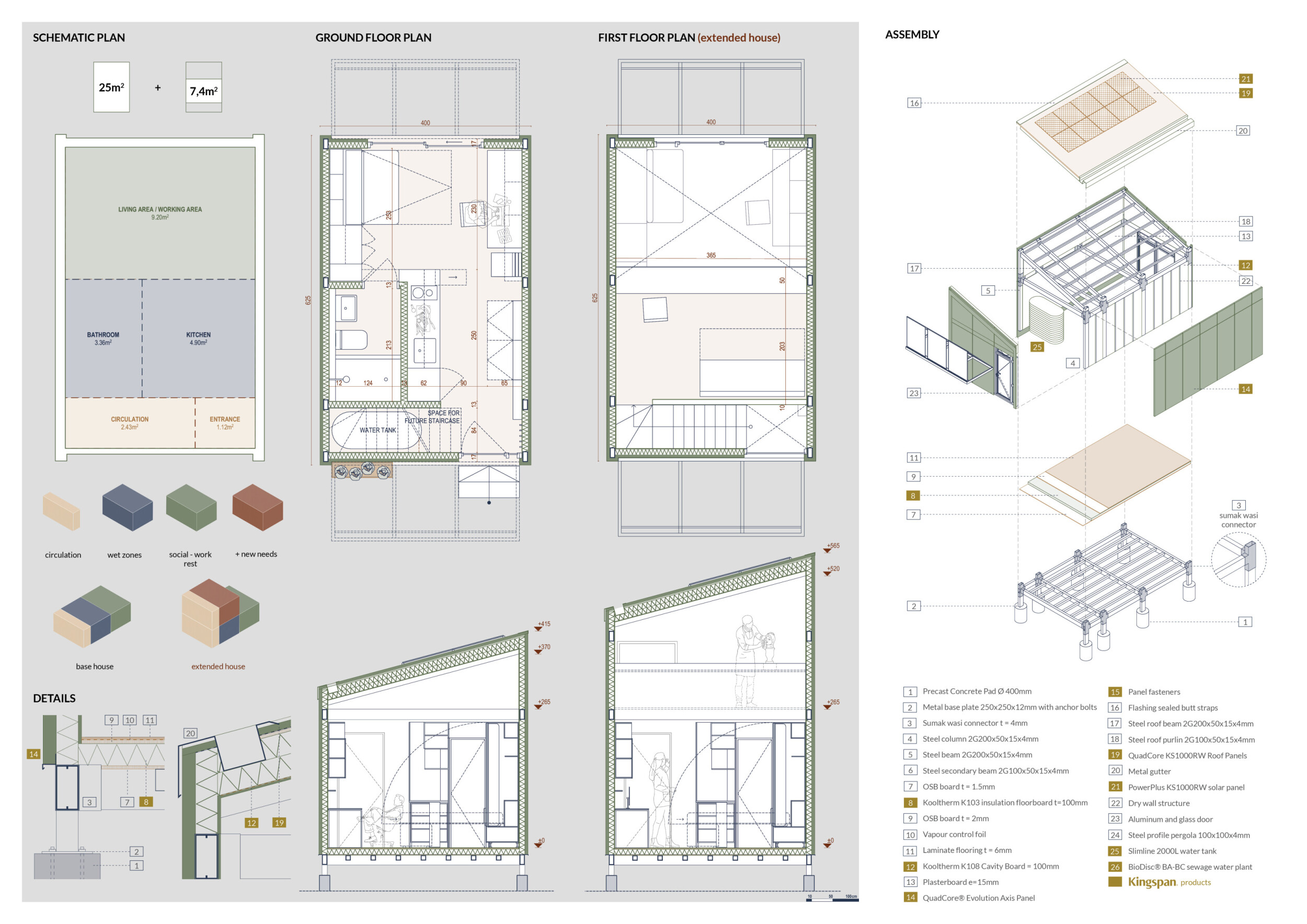
SumakWasi proposes a modular microhome system designed to meet Ecuador’s diverse climates and social conditions through a single adaptable housing model. The project responds to urgent housing deficits by offering a compact 25 m² base unit enhanced by a 7.4 m² extension that supports long term growth. The design uses a simple structural grid, efficient panelized construction, and clear zoning to create flexible interiors that adjust to changing family needs.
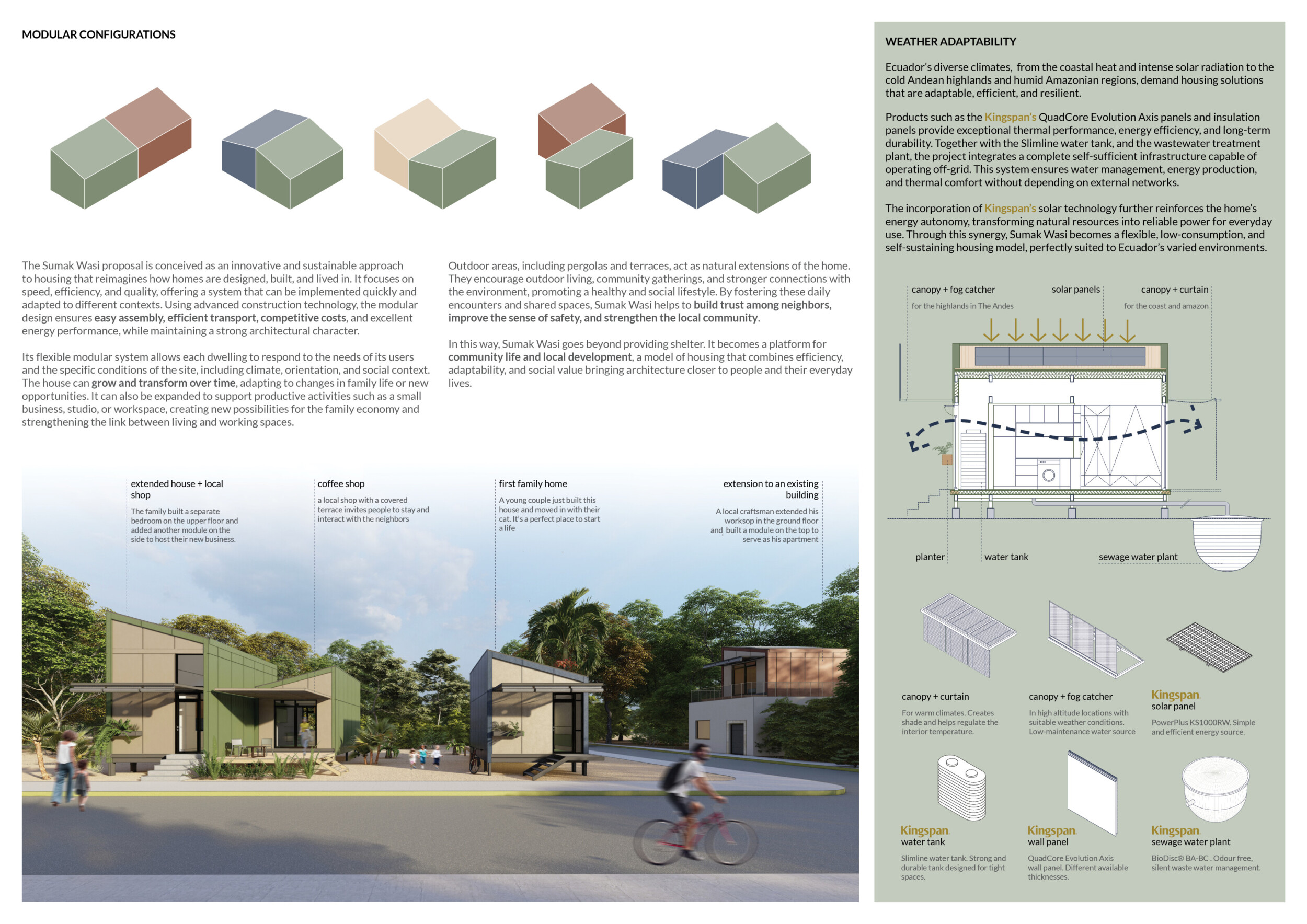
A well resolved and climate adaptive housing system with credible grounding across Ecuador’s major ecosystems. The project excels in sustainability, climatic specificity, and its clear approach to modular growth. The architecture is simple yet coherent. Its strength lies in its climate logic, flexible expansion model, and integration of economic and social uses.
Sandra Del Bove / Buildner guest jury
Head of Innovation, Kingspan, Germany
SUMAK WASI presents a highly adaptable microhome solution suited to Ecuador’s diverse environmental and social challenges. The proposal provides a clear and scalable framework that meets the specific needs of the identified user groups. Its modular system allows families to adjust their home over time while relying on efficient construction and sustainable product choices.
Neall Digert, Ph.D. / Buildner guest jury
Kingspan, United States
Buildner's commentary, recommendations and techniques review
Order your review here
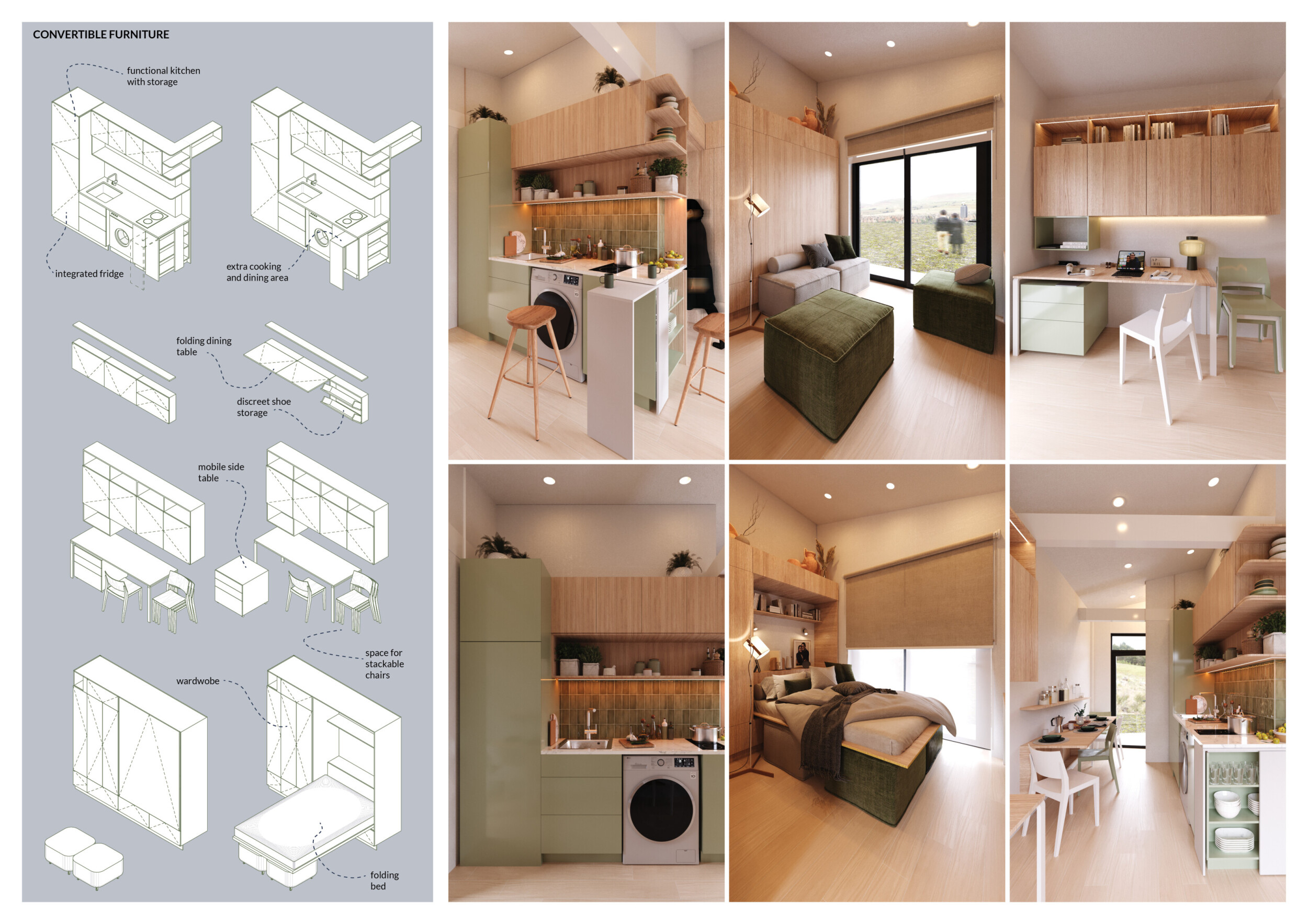
The presentation is polished and readable, with confident linework and well-produced drawings that communicate the system clearly. The layout maintains good rhythm across boards, yet certain pages compress a large amount of information, which softens hierarchy and makes some diagrams compete for attention. Color is pleasant but somewhat uniform, so the three climatic contexts could stand out more through stronger contrast or clearer visual cues.
-
8/10 Linework
-
8/10 Quality of drawings
-
7/10 Balance of color
-
8/10 Layout
-
7/10 Hierarchy
-
8/10 Annotation
-
8/10 Text
-
8/10 Clarity of story
-
8/10 Clarity of diagrams
-
8/10 Quality of overall presentation
Kingspan award winner
Laneway House
30,000
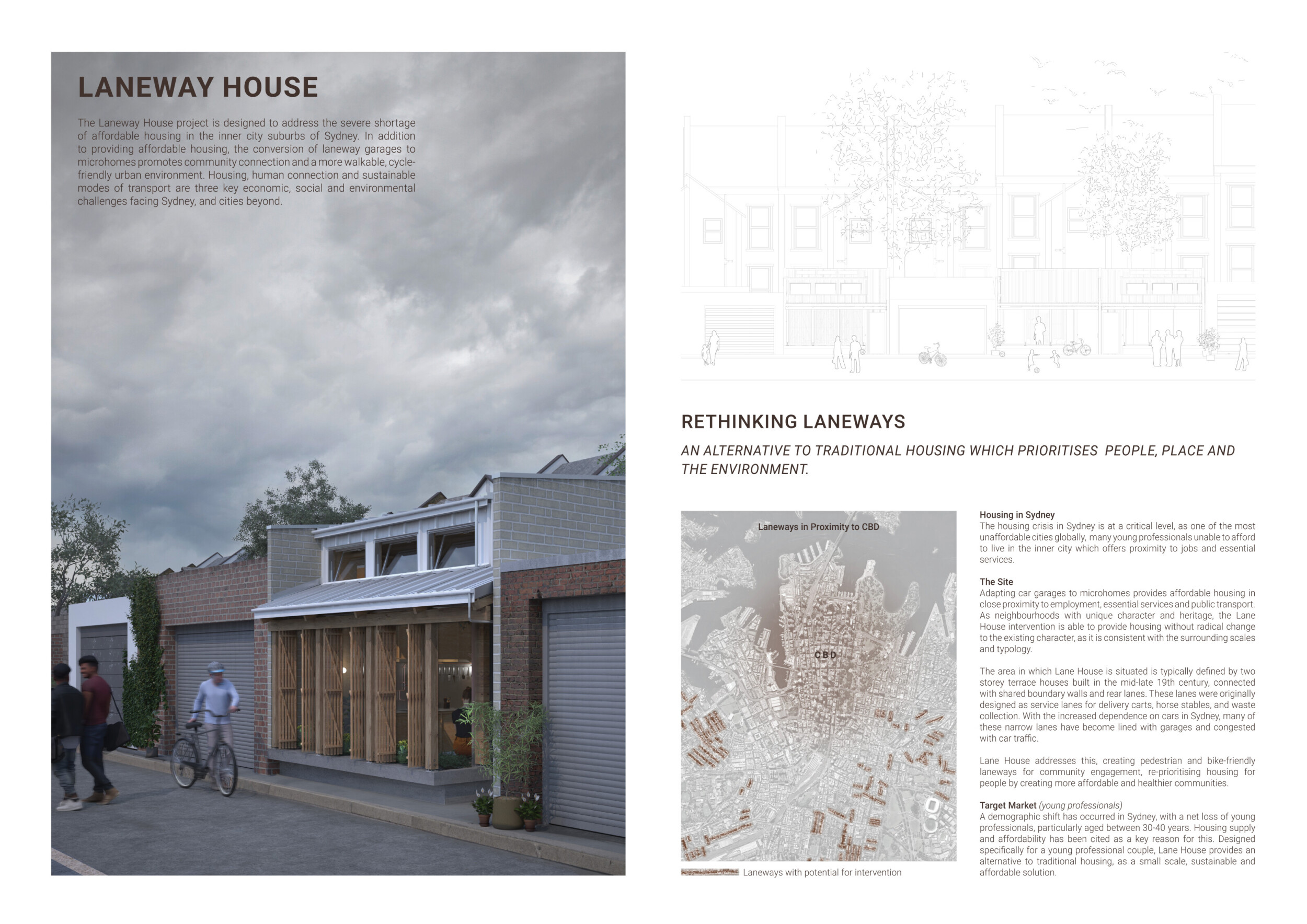
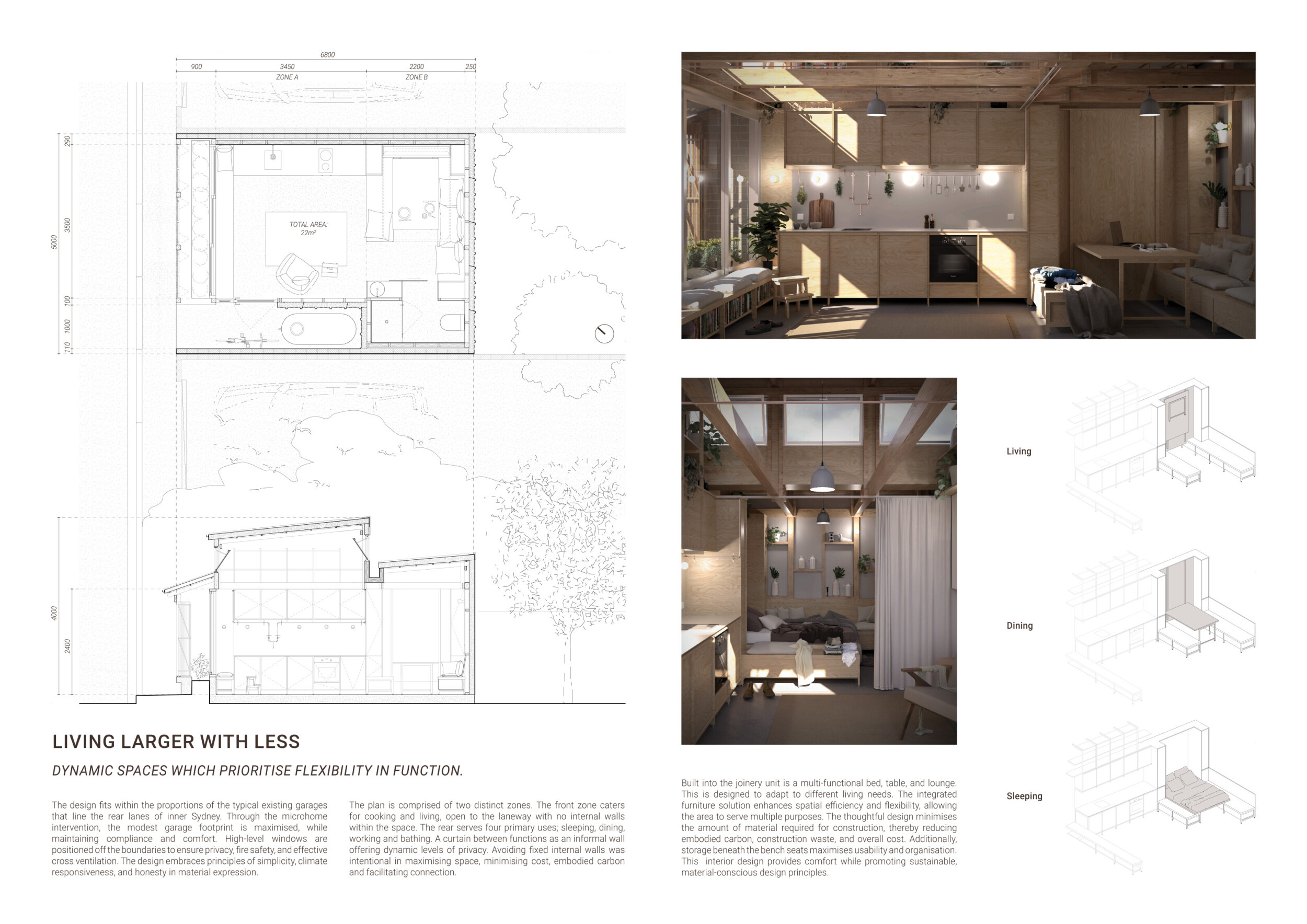
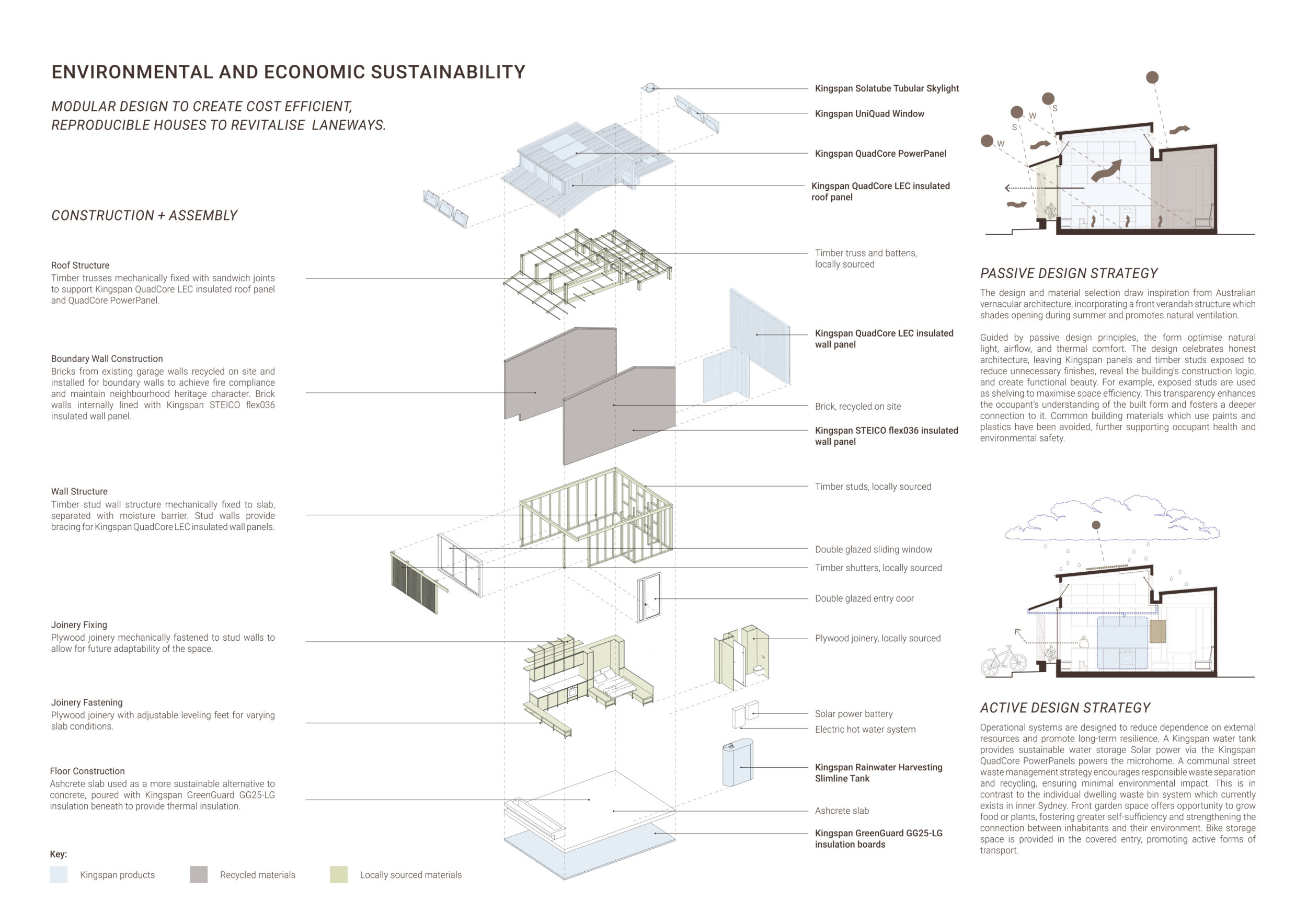
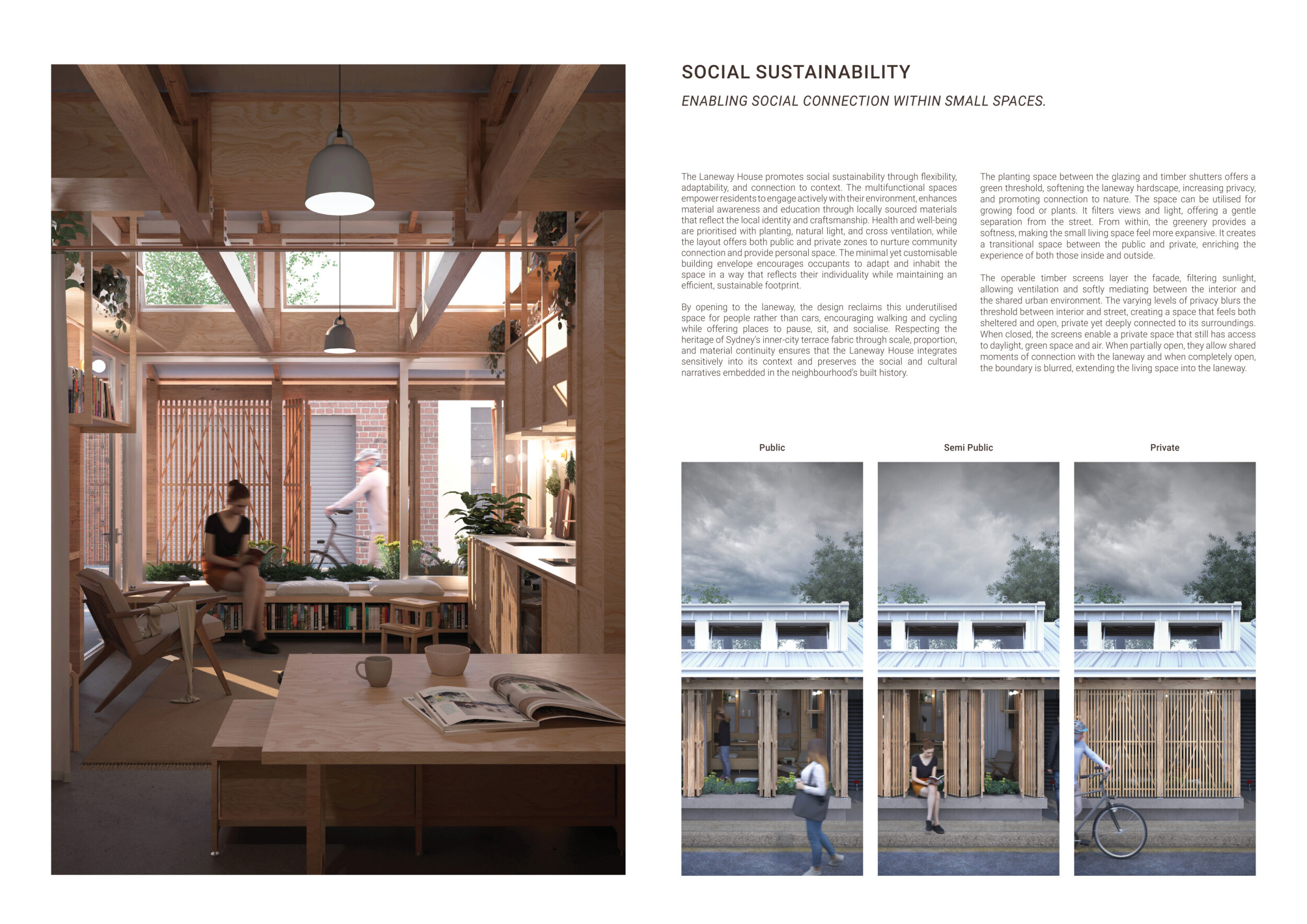

We participate in architecture competitions as they provide opportunities to explore new design methods and test ideas beyond the constraints of typical briefs. Competitions encourage a level of experimentation that expands our architectural thinking and allows us to investigate how theoretical concepts can translate into tangible solutions.
Read full interview
 Australia
Jury feedback summary
This proposal reimagines Sydney’s laneway garages as compact, socially responsive microhomes that maximise a constrained footprint through flexible interiors, material simplicity, and a clear urban narrative. The plan separates the 22 m² unit into two functional zones: a front living-and-cooking area opening directly to the laneway, and a rear zone dedicated to sleeping, bathing, and work, moderated by a curtain partition for adjustable privacy.
Kingspan's commentary
-
8/10 Linework
-
8/10 Quality of drawings
-
7/10 Balance of color
-
8/10 Layout
-
7/10 Hierarchy
-
7/10 Annotation
-
8/10 Text
-
8/10 Clarity of story
-
7/10 Clarity of diagrams
-
8/10 Quality of overall presentation
Kingspan Compliments
Home Park
5,000 €
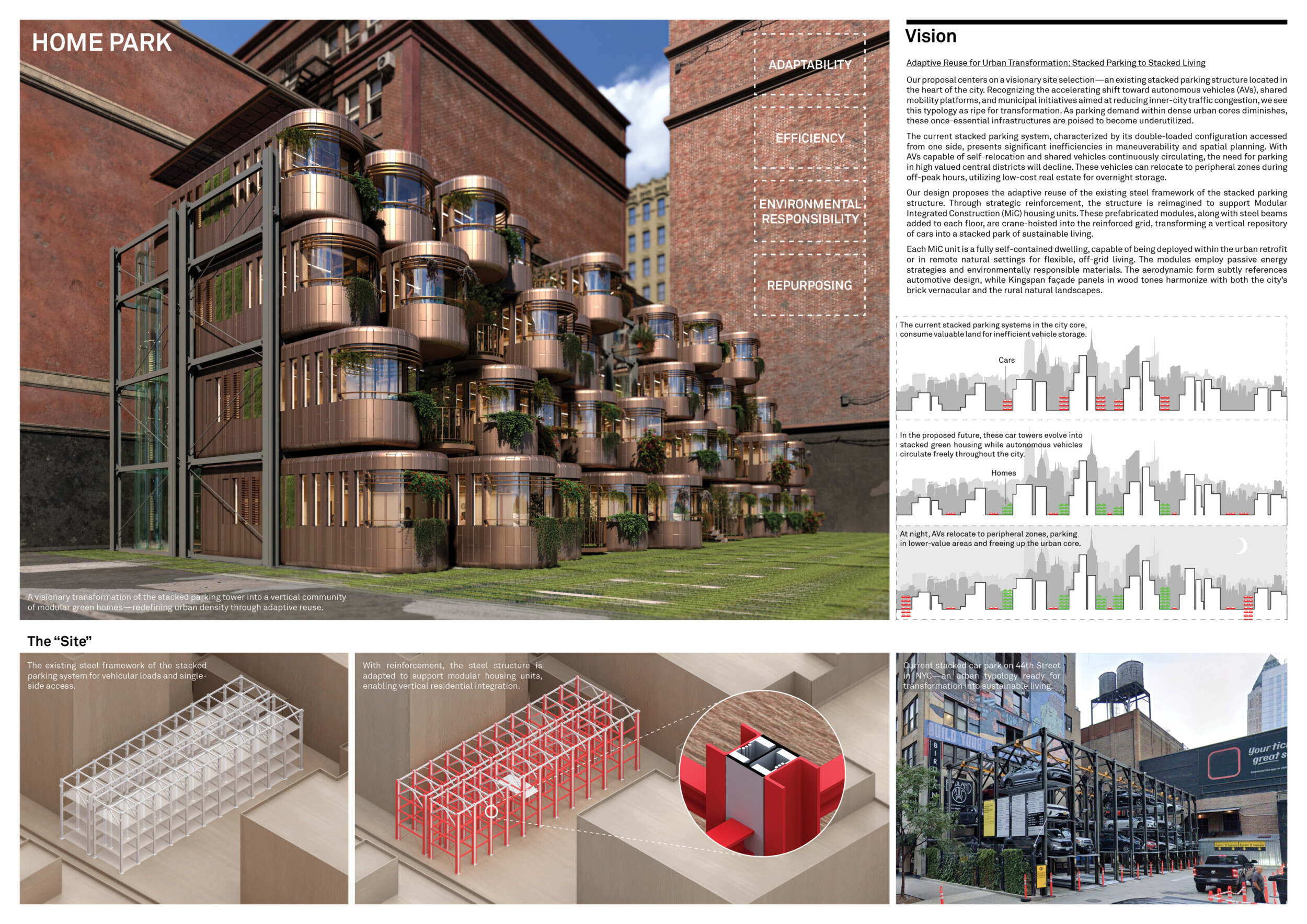
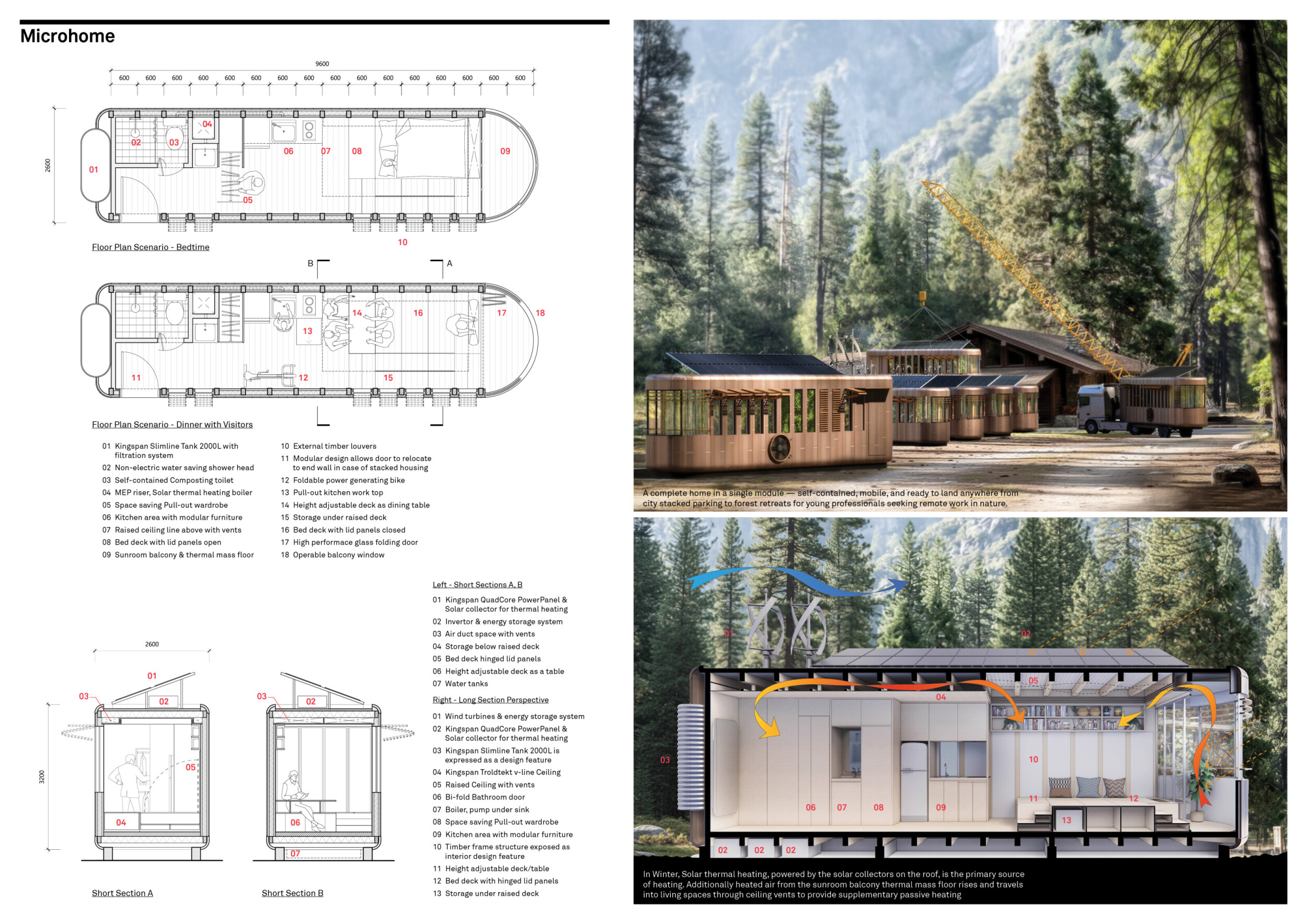
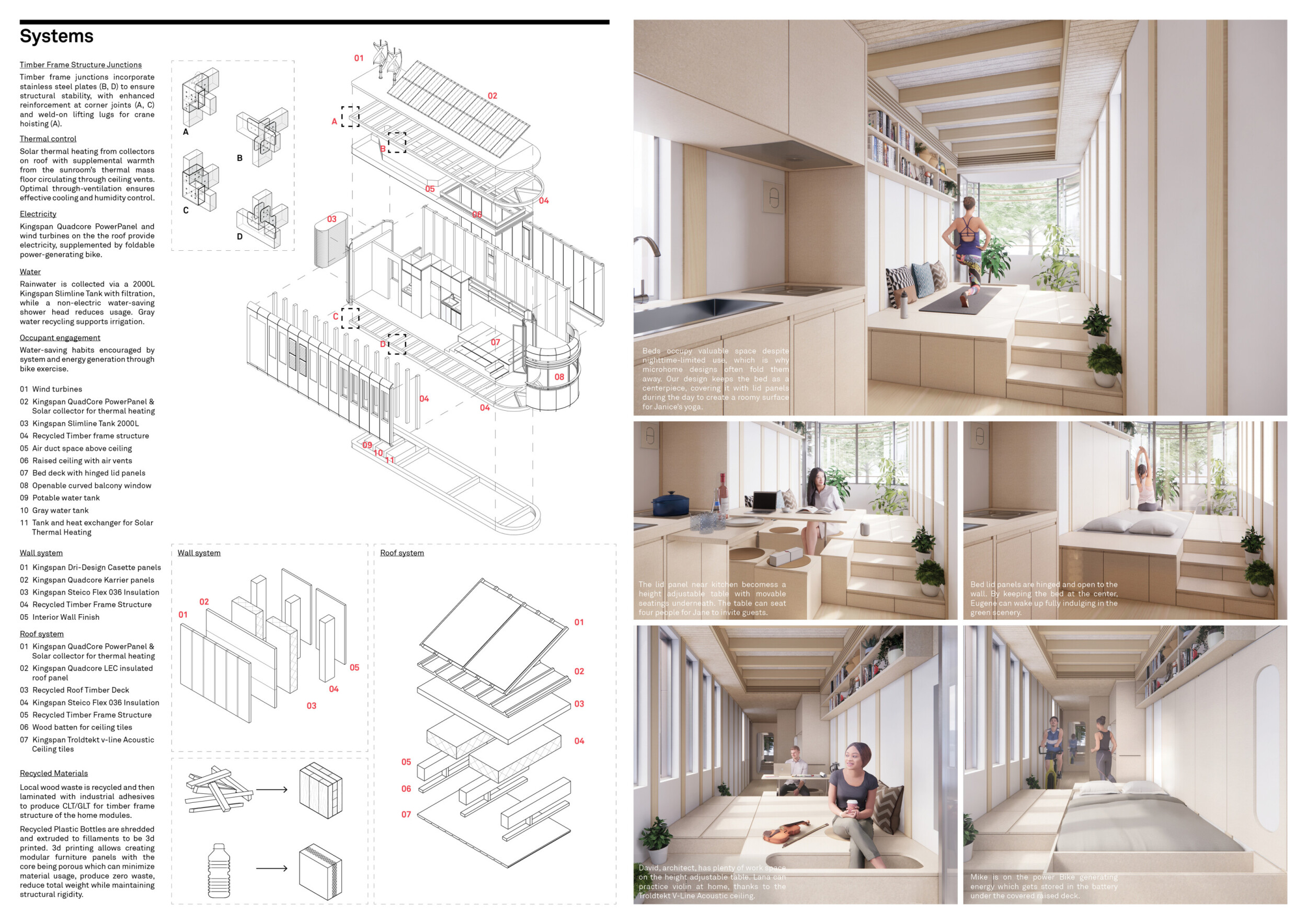
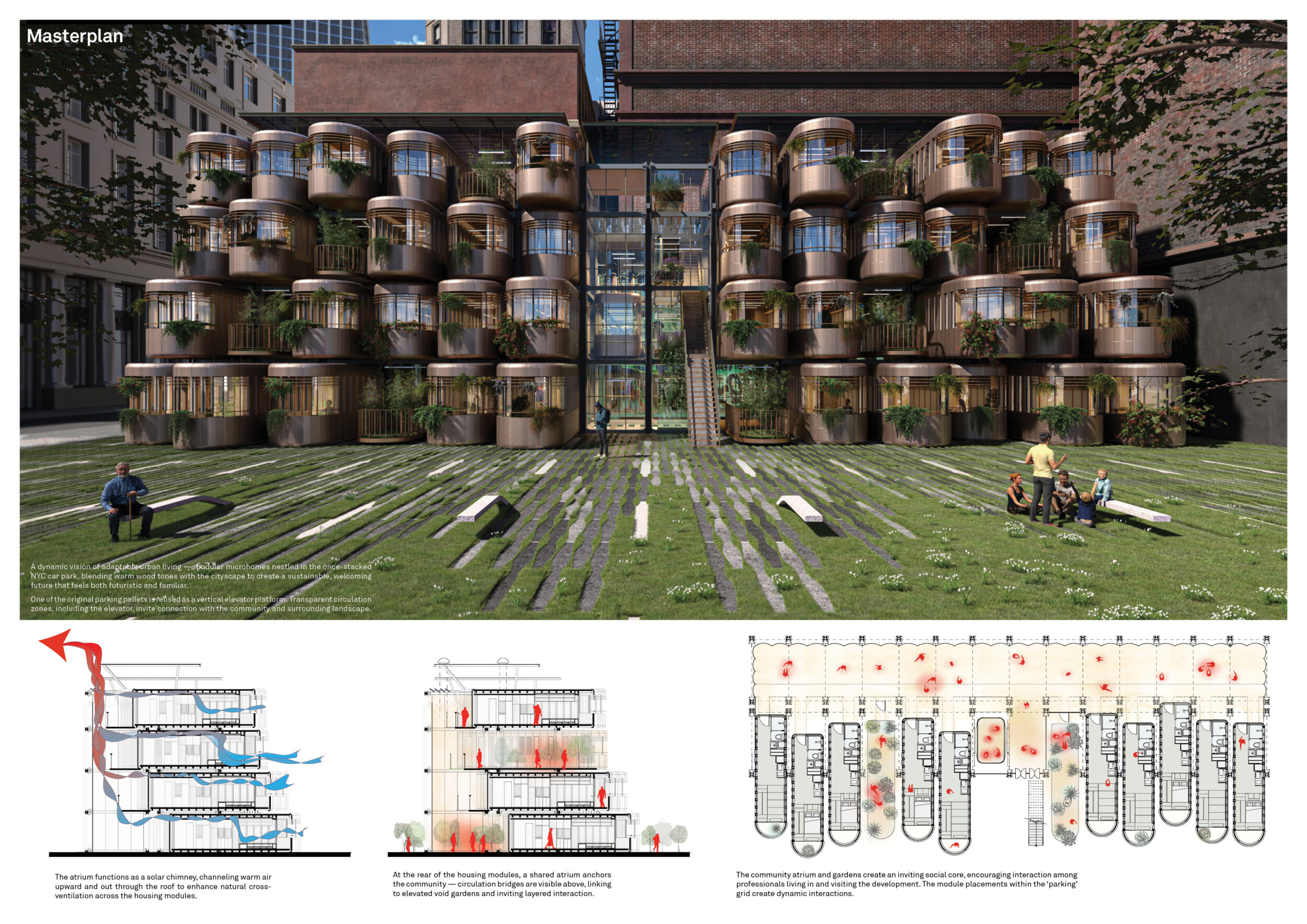
 South Korea
Kerb House
5,000 €
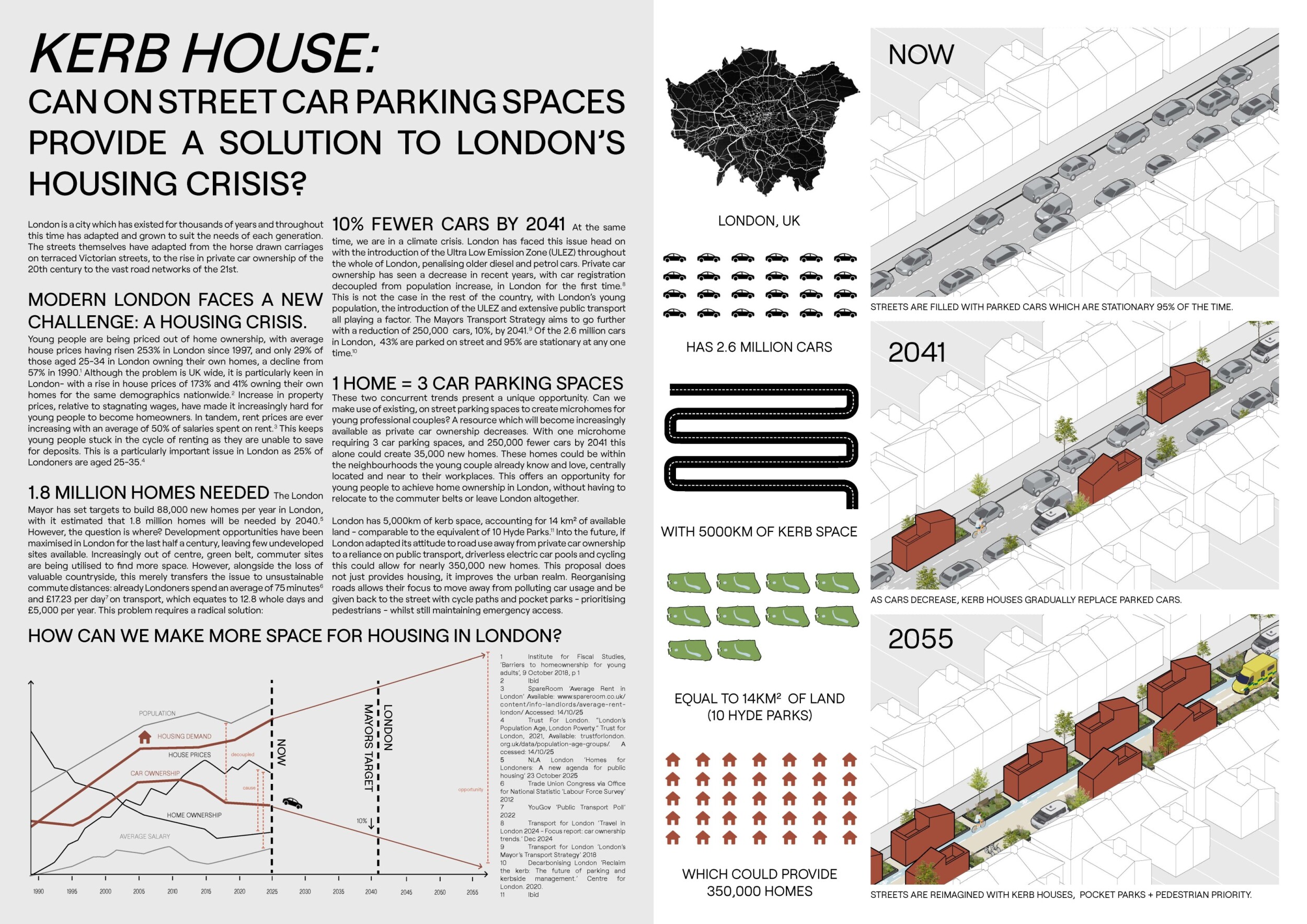
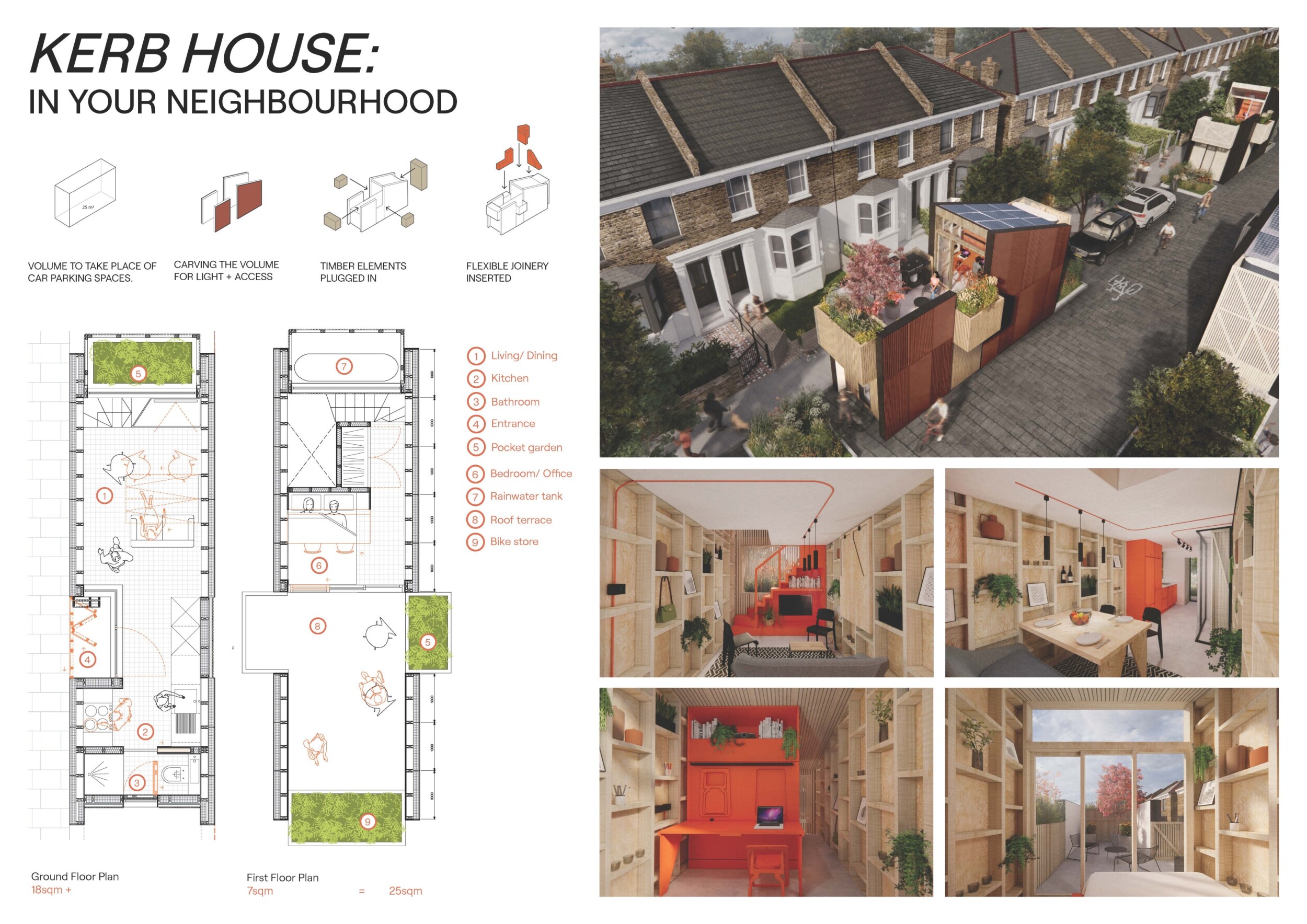
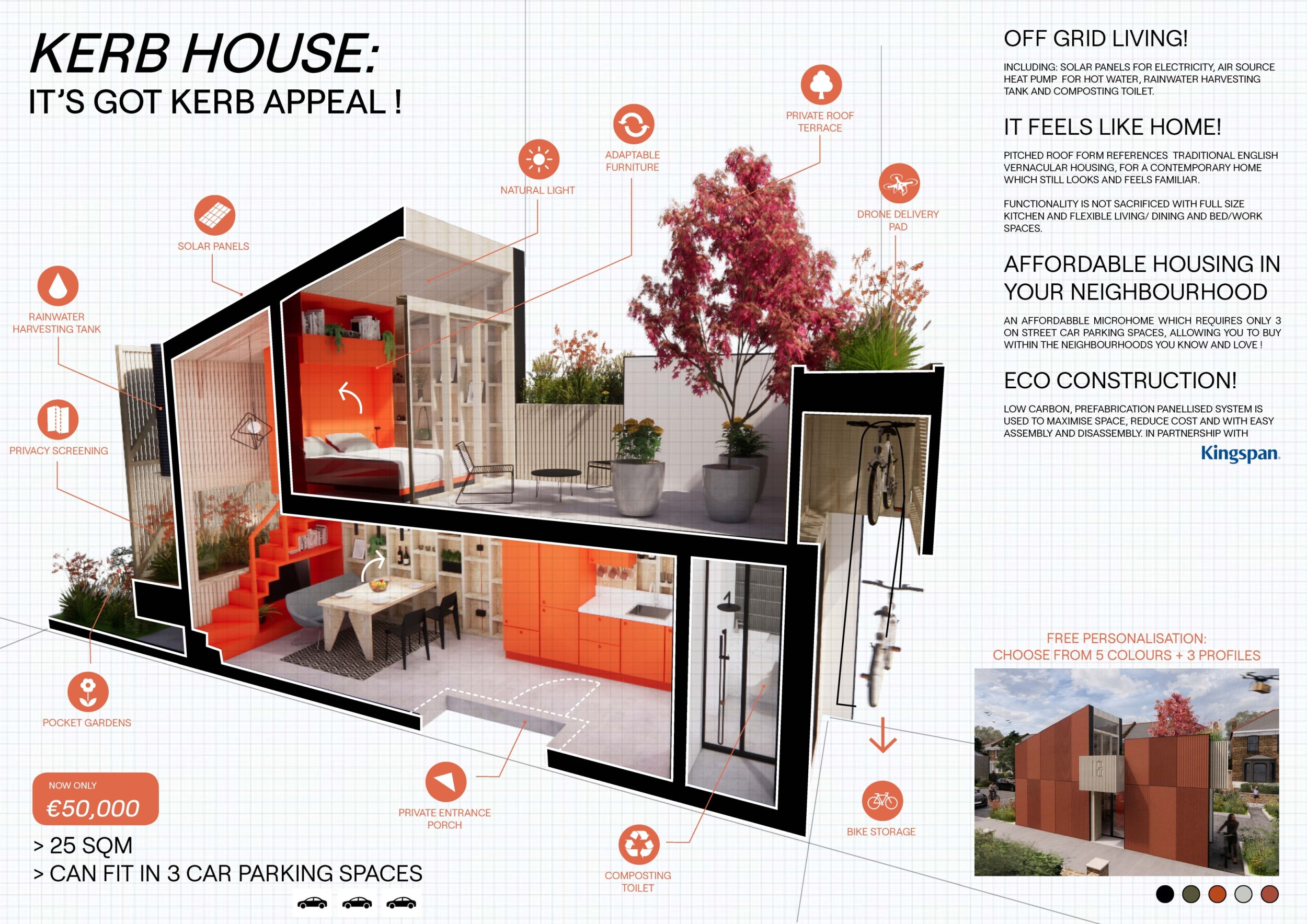
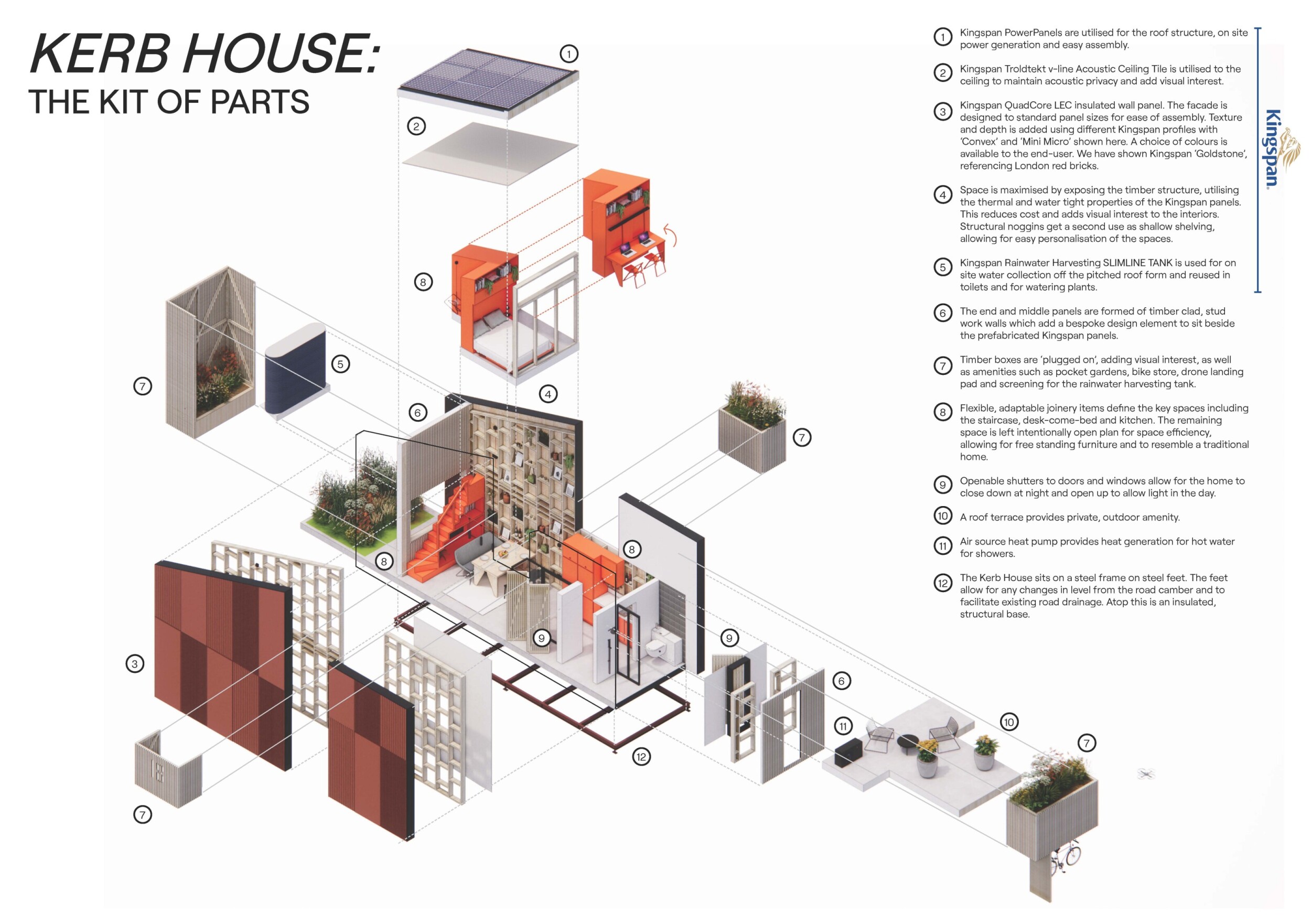

Architecture competitions are a great opportunity to push the limits of our creativity and work in an unrestricted and speculative way which can establish an interesting narrative and really push it to its limits - which can be hard to achieve in day-to-day practice. In the case of the Microhome 10 Competition, our experience of residential architecture in London has highlighted the housing crisis that we are in. The Competition gave us the opportunity to develop on an innovative design solution to this crisis.
Read full interview
 United Kingdom
Aperture
5,000 €
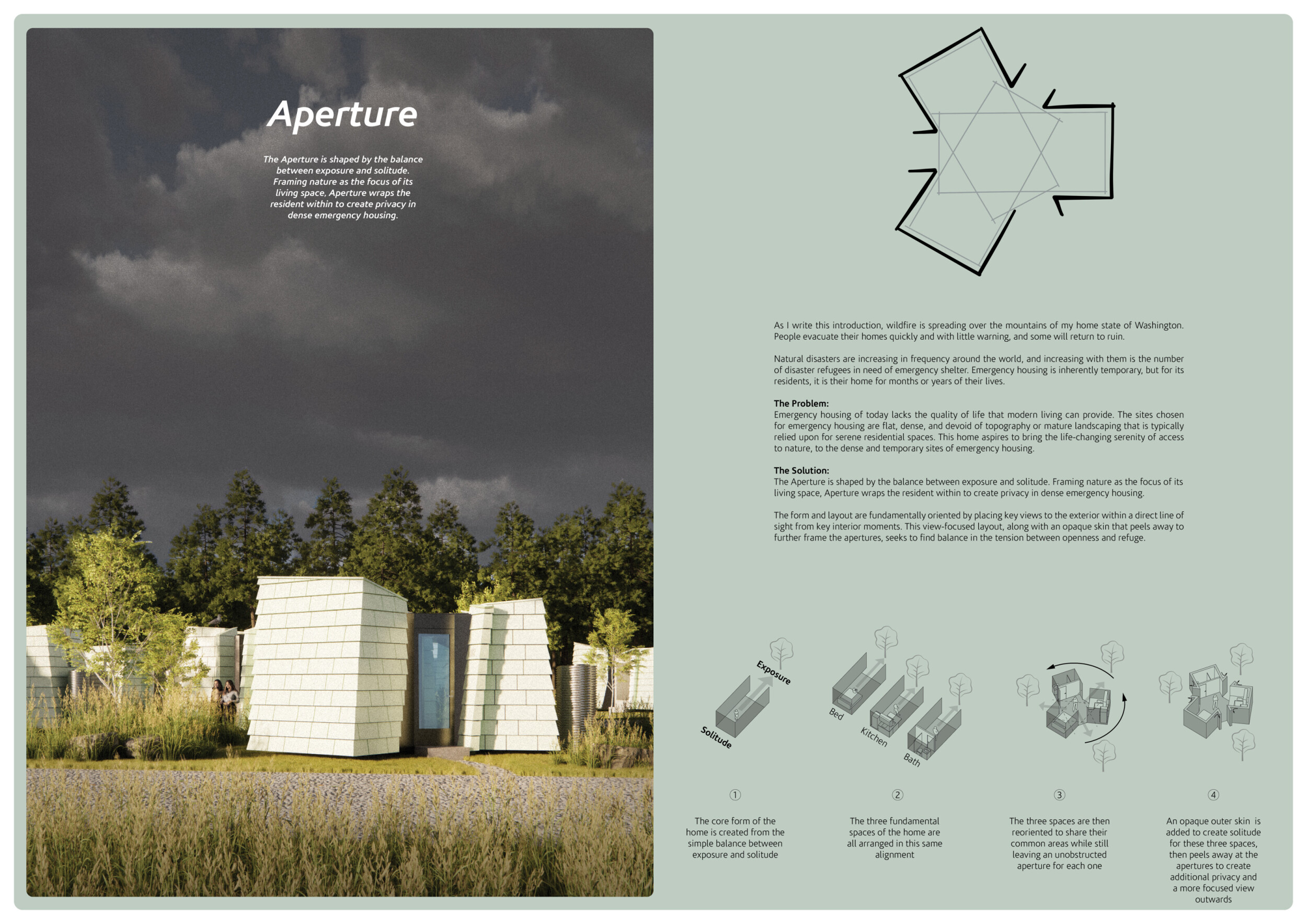
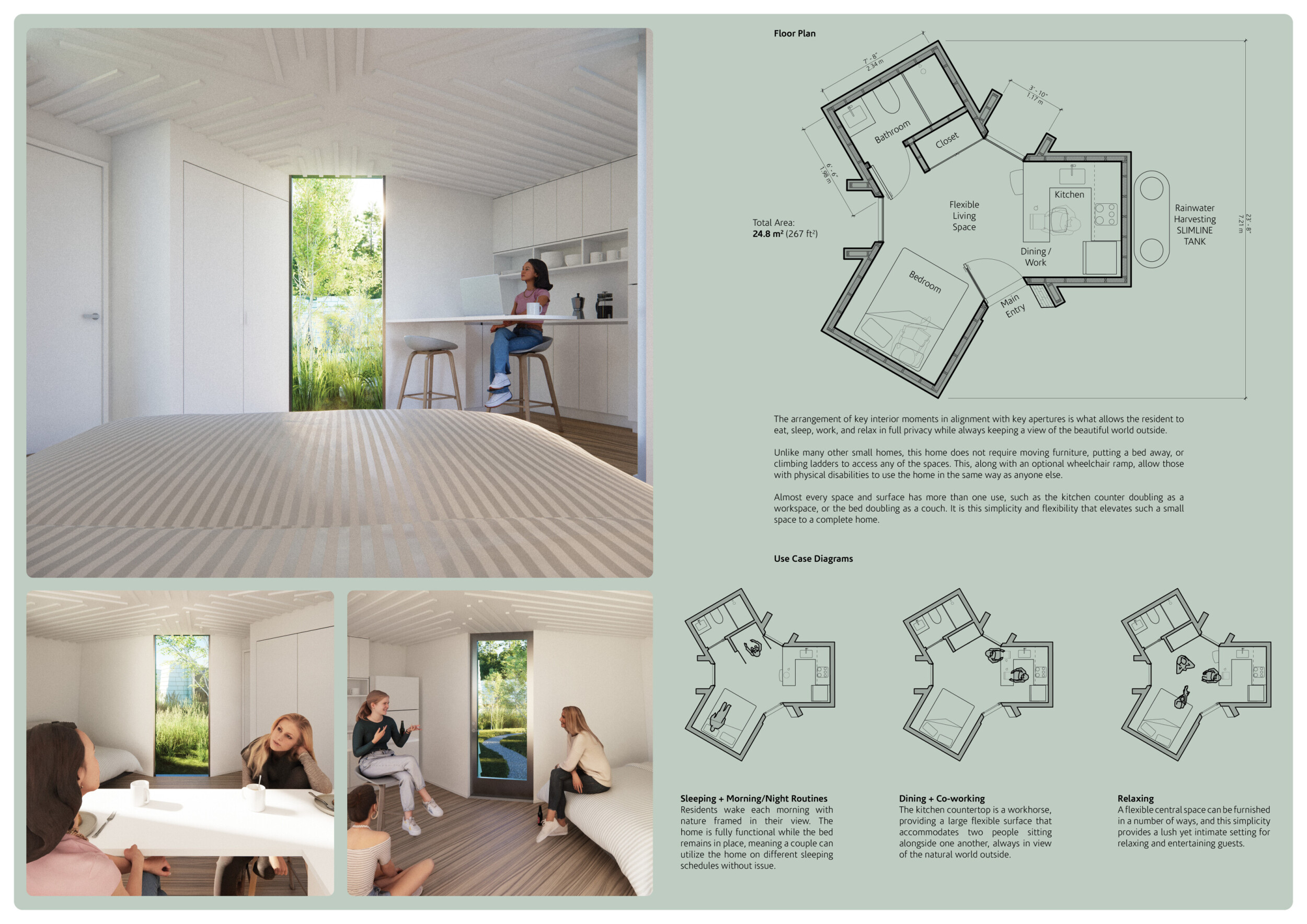
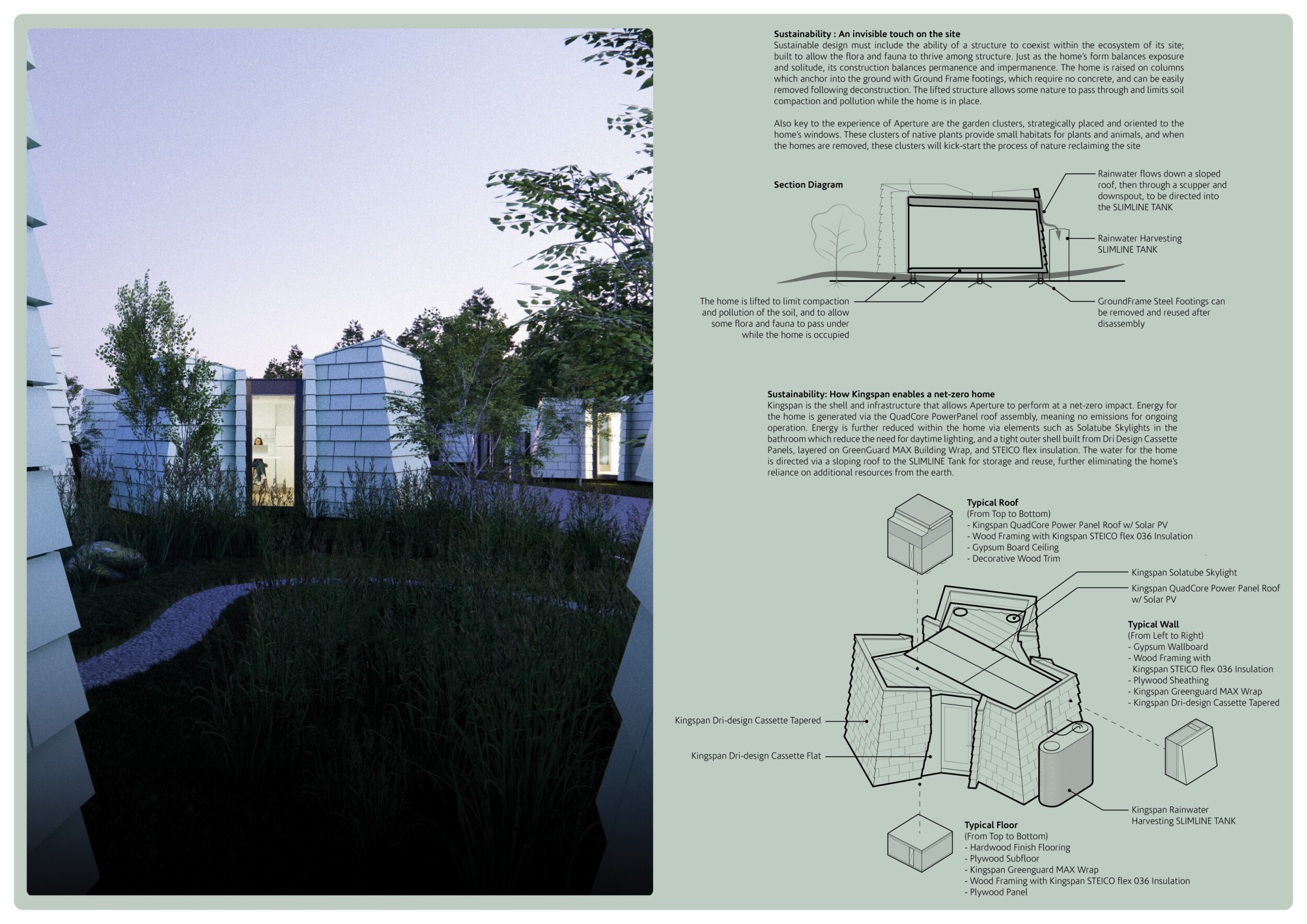
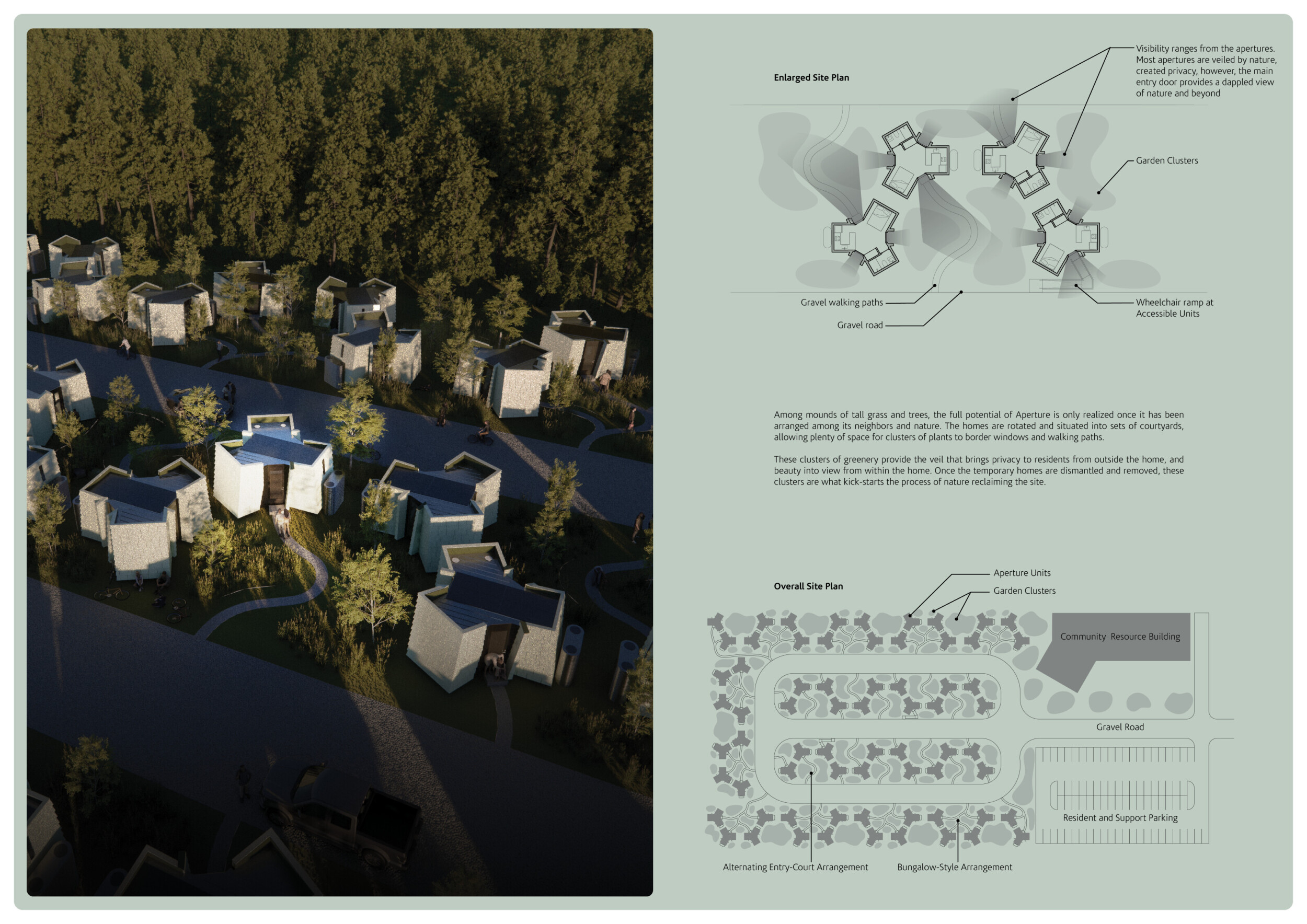

I participate in architecture competitions as a setting to follow a design idea to its most extreme end.
Read full interview
United States
Buildner Student Award
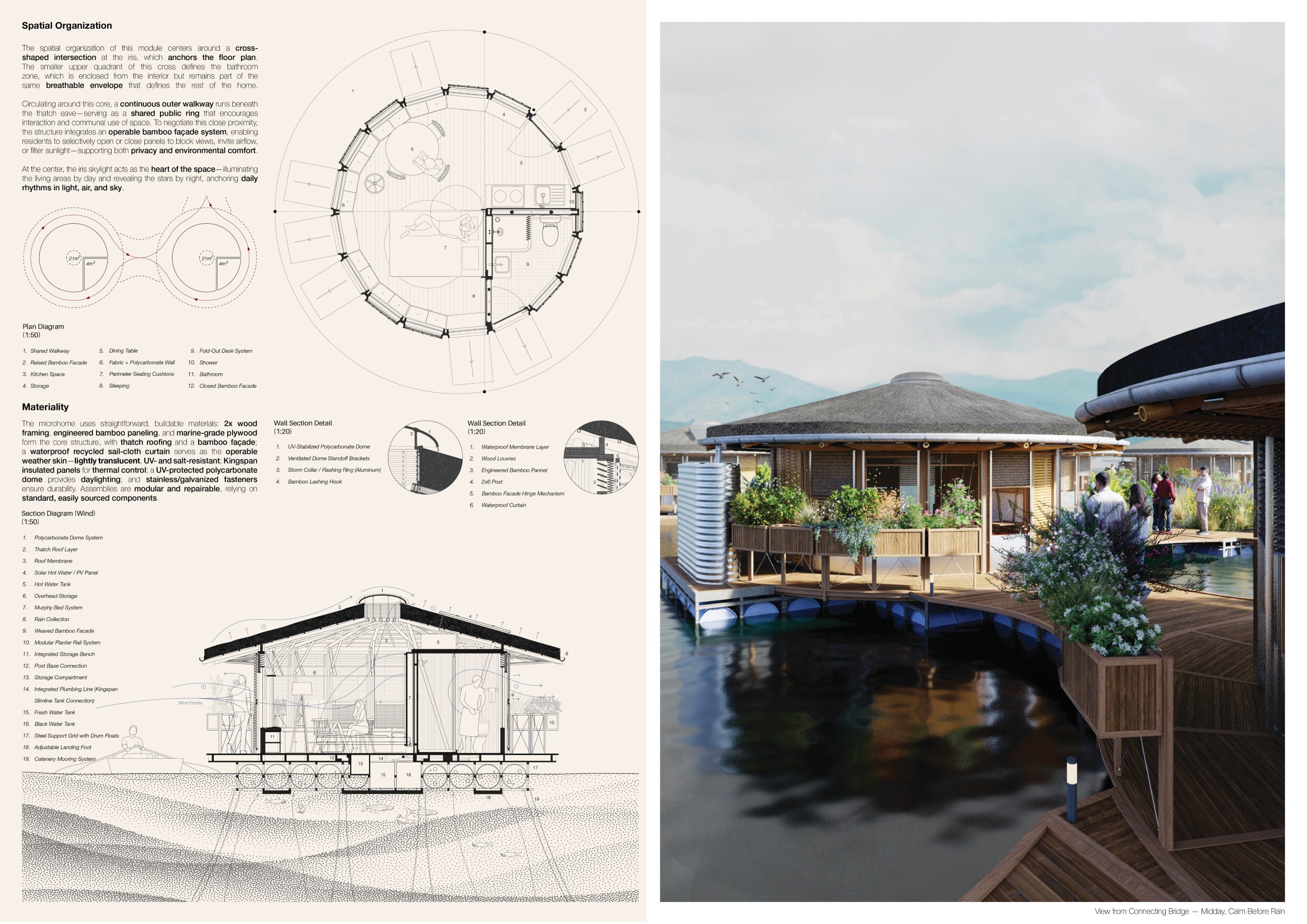
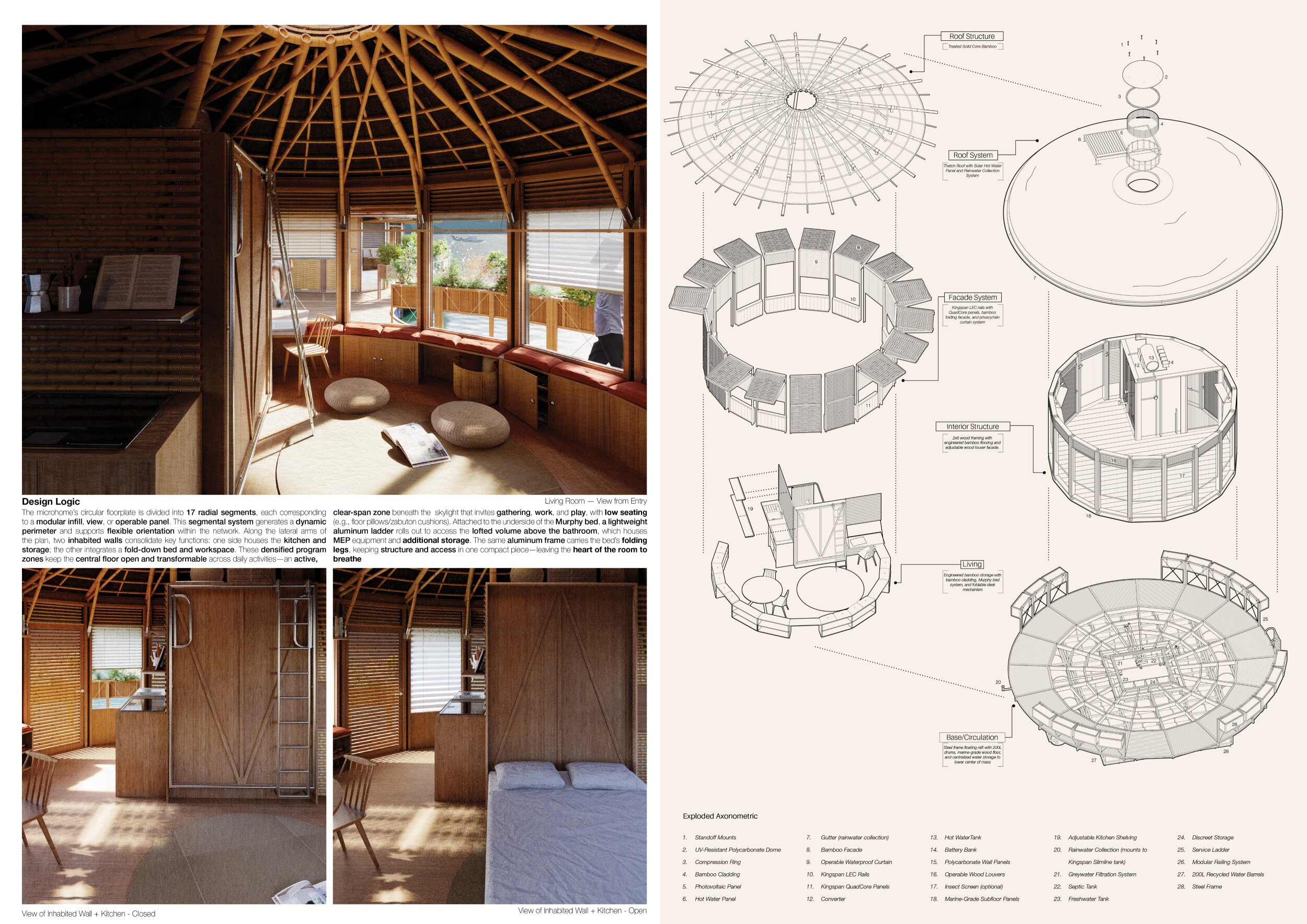
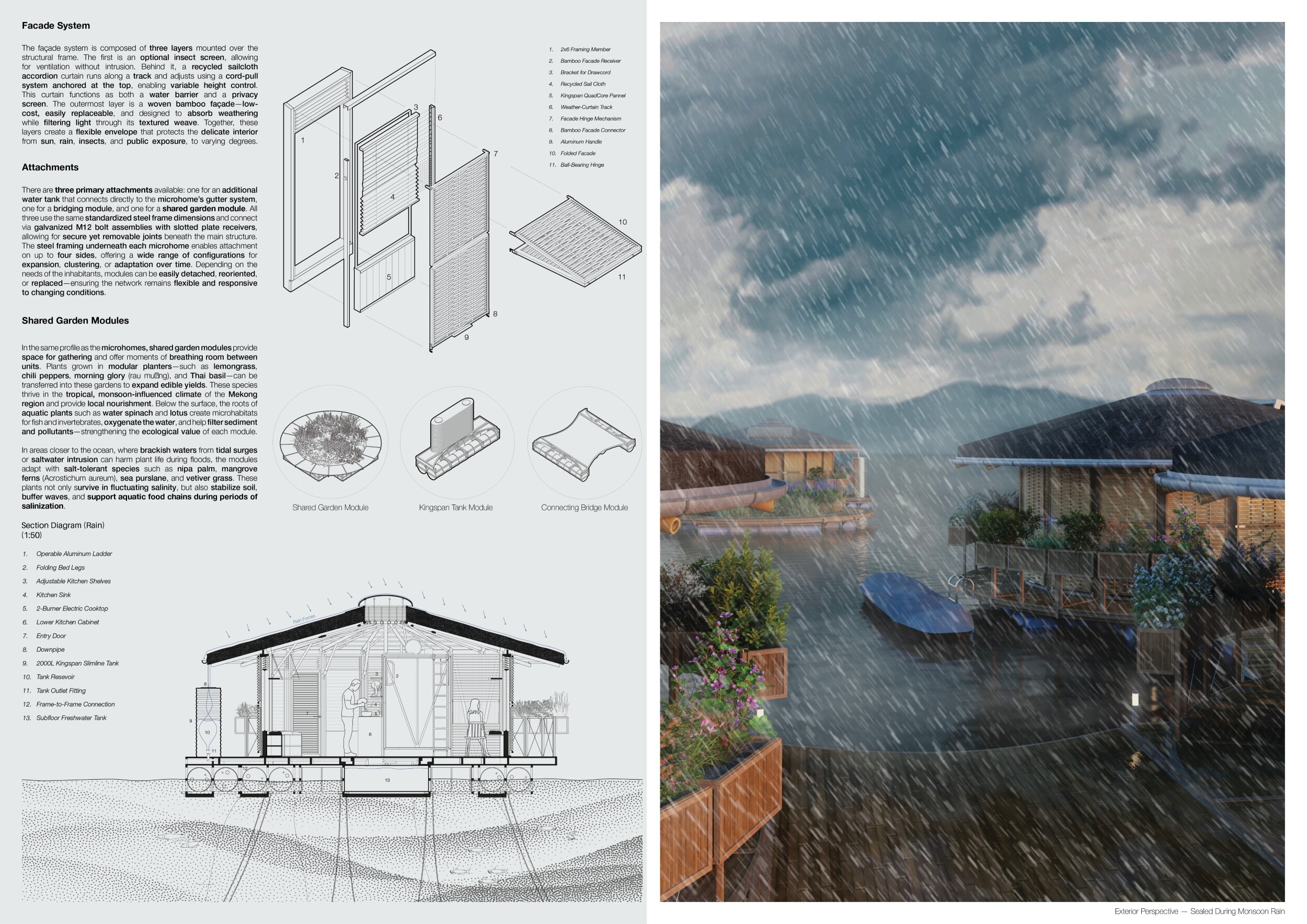
Amphibious Living Unit — Mekong Prototype
5,000 €
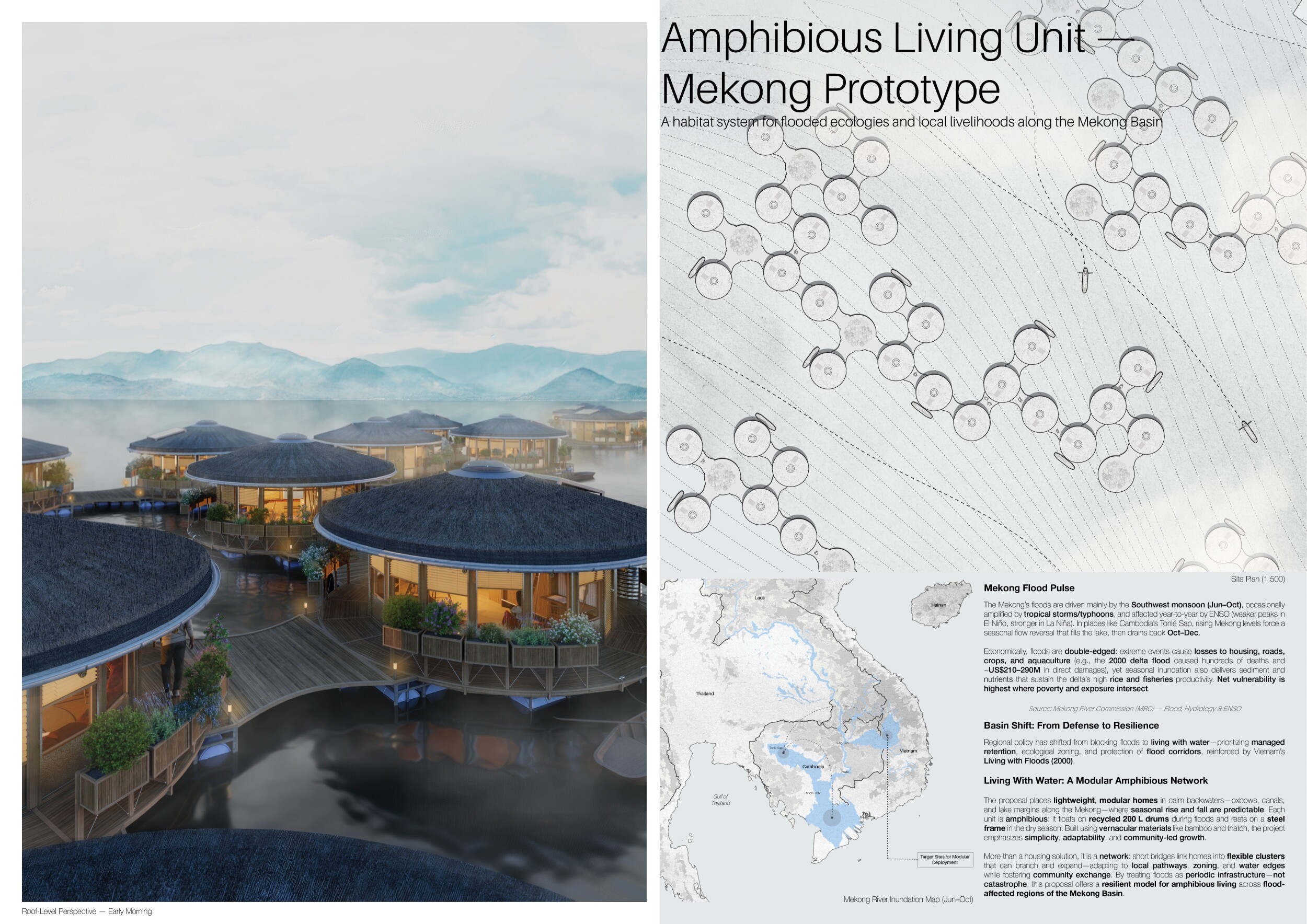

I participate in architecture competitions as an opportunity to learn, to identify meaningful problems and offer thoughtful, beautiful solutions. More than that, I’m curious about how my ideas can contribute to the broader architectural dialogue. What perspectives do I bring? What can I create that serves others? These challenges help me uncover my values as a designer and push me to grow.
Read full interview
Jury feedback summary
This amphibious microhome prototype proposes a circular, modular dwelling designed for communities along the Mekong Basin where seasonal flooding shapes daily life. The unit floats during high water and stabilizes on a simple frame at low water, creating a resilient habitat that adapts to shifting conditions without relying on heavy infrastructure.
I like the Aikido spirit of the project, which adapts to the environment rather than trying to overpower it. The idea has relevance far beyond Southeast Asia since many regions now face flooding where it was not previously an issue. While I do not know bamboo construction in detail, I can imagine technical challenges near constant water exposure, yet the concept is strong and worth exploring.
Zack Giffin / Buildner guest jury
Tiny House Nation, USA

The proposal demonstrates a thoughtful response to the identified climate conditions and delivers a design that feels both sustainable and adaptable.
Flora Lee / Buildner guest jury
Associate Partner, MAD Architects, USA
A sophisticated amphibious housing system with deep ecological and cultural grounding. The narrative of living with water is convincing and the architecture is elegant. The main limitation is scalability outside the Mekong Basin, yet as a conceptual microhome it shows impressive spatial invention.
Sandra Del Bove / Buildner guest jury
Head of Innovation, Kingspan, Germany
This amphibious unit offers an innovative community-scale solution. The submission provides clear environmental context and demonstrates how indigenous materials and efficient sustainable technologies can support flood-resilient living.
Neall Digert, Ph.D. / Buildner guest jury
Kingspan, United States
Buildner's commentary, recommendations and techniques review
Order your review here
The boards deliver strong visual coherence with expressive renders and careful linework, yet the density of information often reduces hierarchy and makes some diagrams compete for attention. The color palette is calm and consistent but sometimes too soft, giving certain technical drawings less presence than they deserve.
-
8/10 Linework
-
8/10 Quality of drawings
-
7/10 Balance of color
-
8/10 Layout
-
7/10 Hierarchy
-
7/10 Annotation
-
8/10 Text
-
8/10 Clarity of story
-
7/10 Clarity of diagrams
-
8/10 Quality of overall presentation
THE HAPI HOMES AWARD
Northern Domino
15,000 €
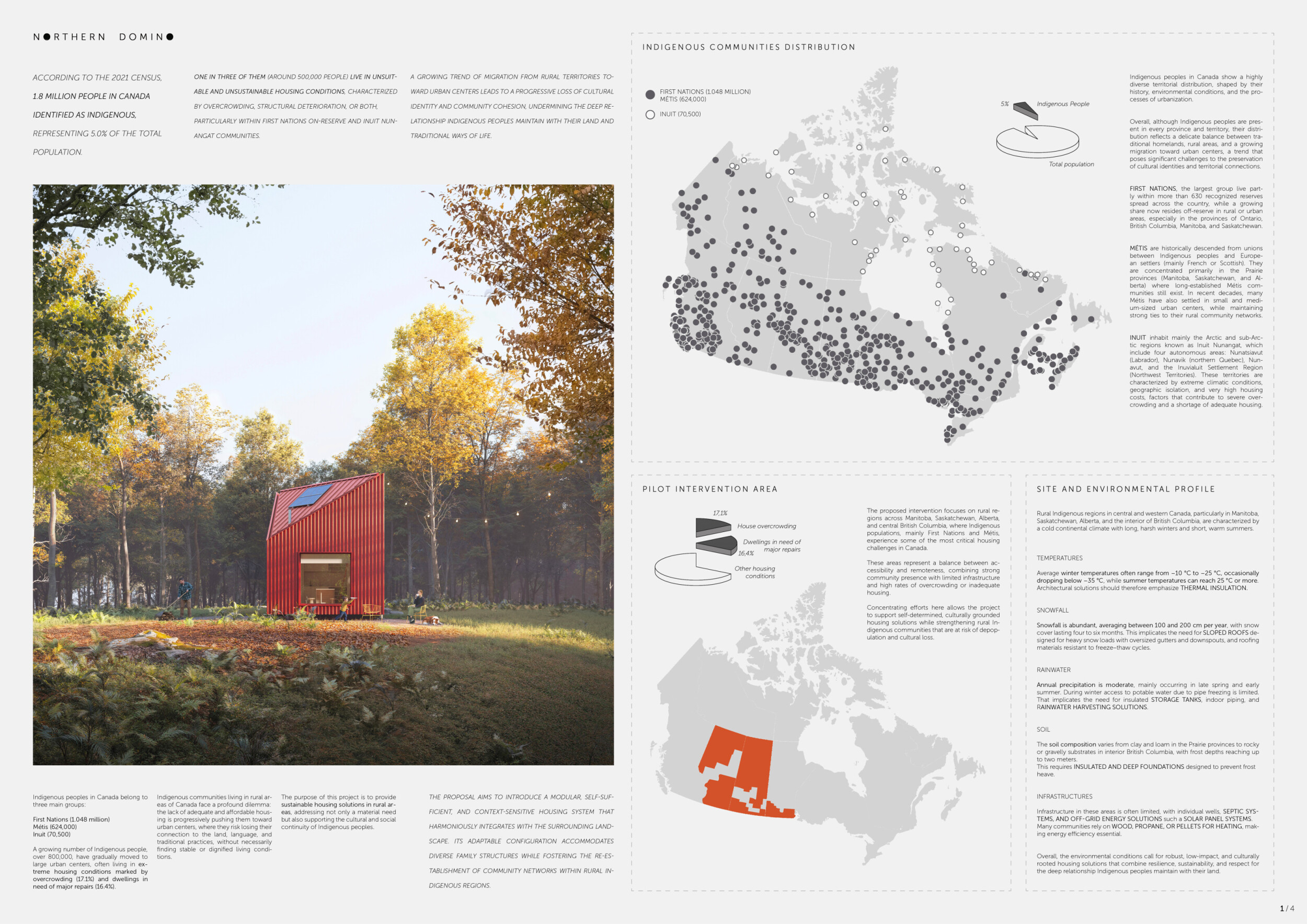
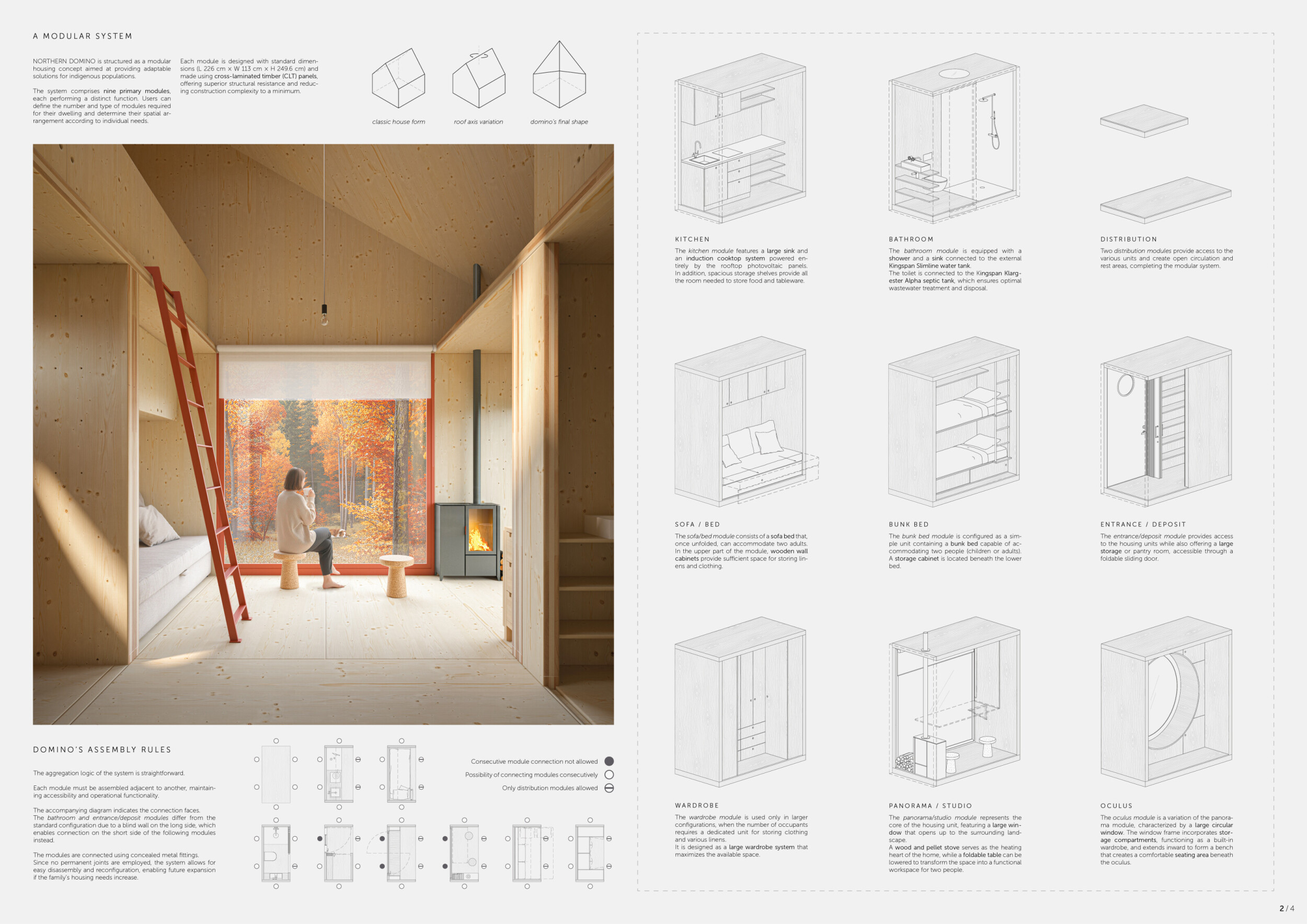
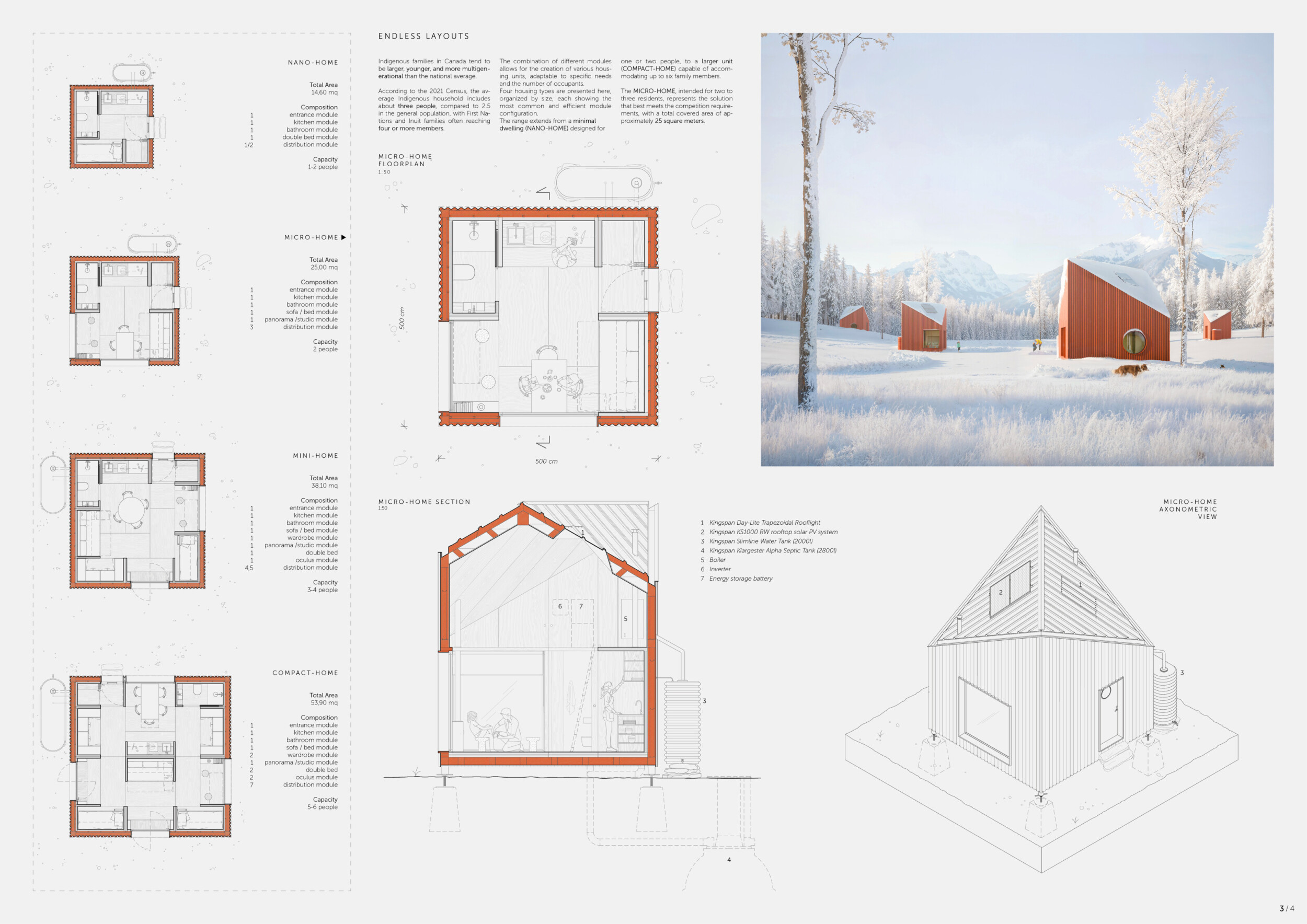
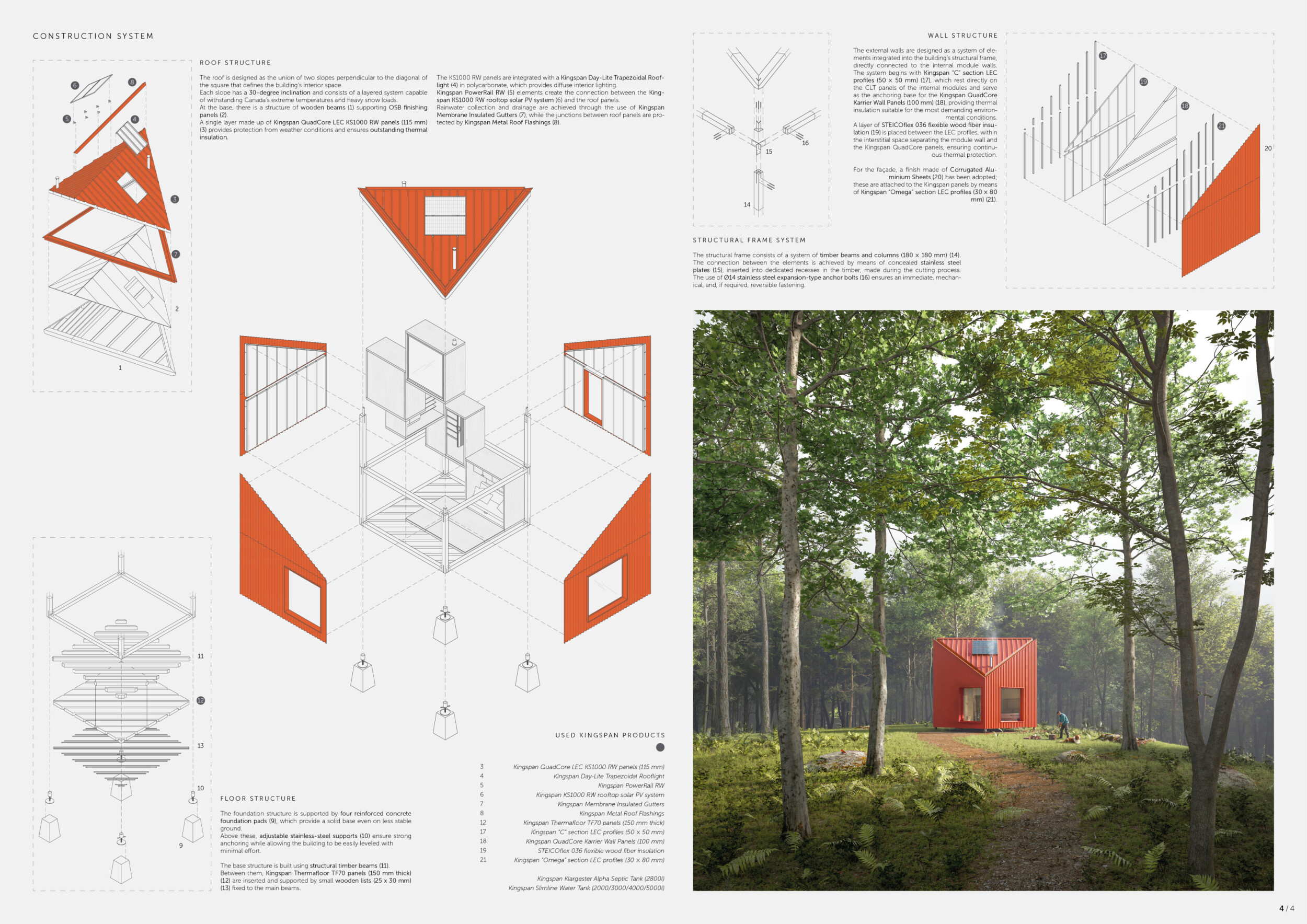

I enjoy participating in architecture competitions because each one is an opportunity for professional growth. Every competition leaves me enriched, with new perspectives, refined skills, and a strengthened creative approach.
Read full interview
 Italy
Italy
Jury feedback summary
Northern Domino proposes a modular, context-sensitive microhome system designed for Indigenous communities across rural Canada. The project responds to severe housing deficits by creating a flexible family-oriented model that adapts to varied climates and social structures while respecting traditional land relationships. Its unit is built from a clear kit of nine modules that combine into multiple configurations, allowing families to expand or reconfigure their homes as needs evolve.
The design’s modular logic produces generous intermediary spaces that support varied uses and allow the dwelling to grow with its occupants.
Flora Lee / Buildner guest jury
Associate Partner, MAD Architects, USA
Northern Domino offers a well-defined self-sufficient housing system built from a disciplined modular framework. Its nine interchangeable modules create a wide range of configurations that address diverse family structures and provide adaptable microhome solutions.
Neall Digert, Ph.D. / Buildner guest jury
Kingspan, United States
Buildner's commentary, recommendations and techniques review
Order your review here
The presentation is precise and visually coherent, with clean linework, strong diagram clarity, and well-structured modular explanations that help the reader understand how the system scales. The layout handles a large volume of information with discipline, though some boards pack text and diagrams tightly which reduces breathing room and softens the visual rhythm.
-
8/10 Linework
-
9/10 Quality of drawings
-
7/10 Balance of color
-
8/10 Layout
-
8/10 Hierarchy
-
8/10 Annotation
-
8/10 Text
-
8/10 Clarity of story
-
9/10 Clarity of diagrams
-
8/10 Quality of overall presentation
Honorable mentions








Shortlisted projects
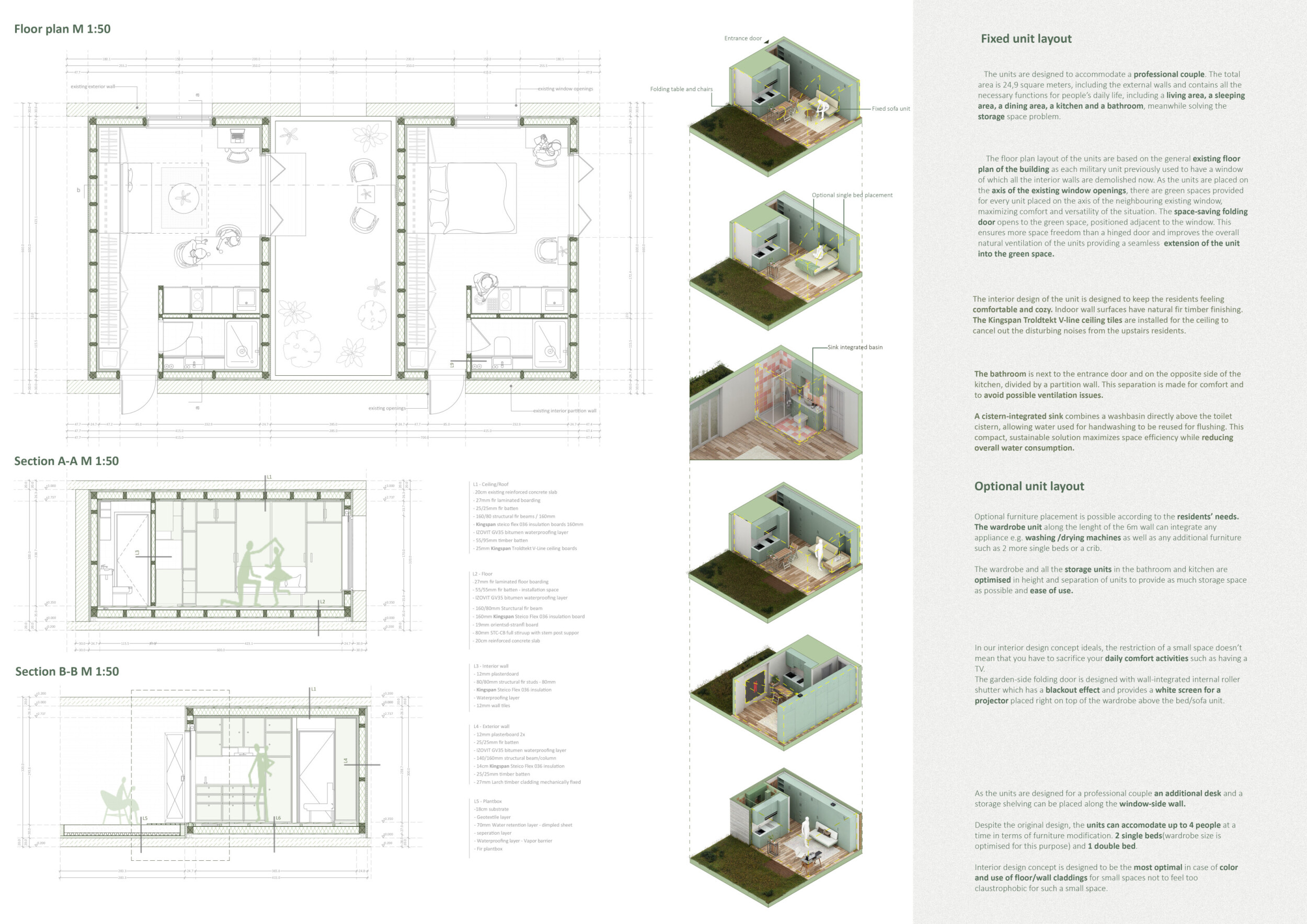
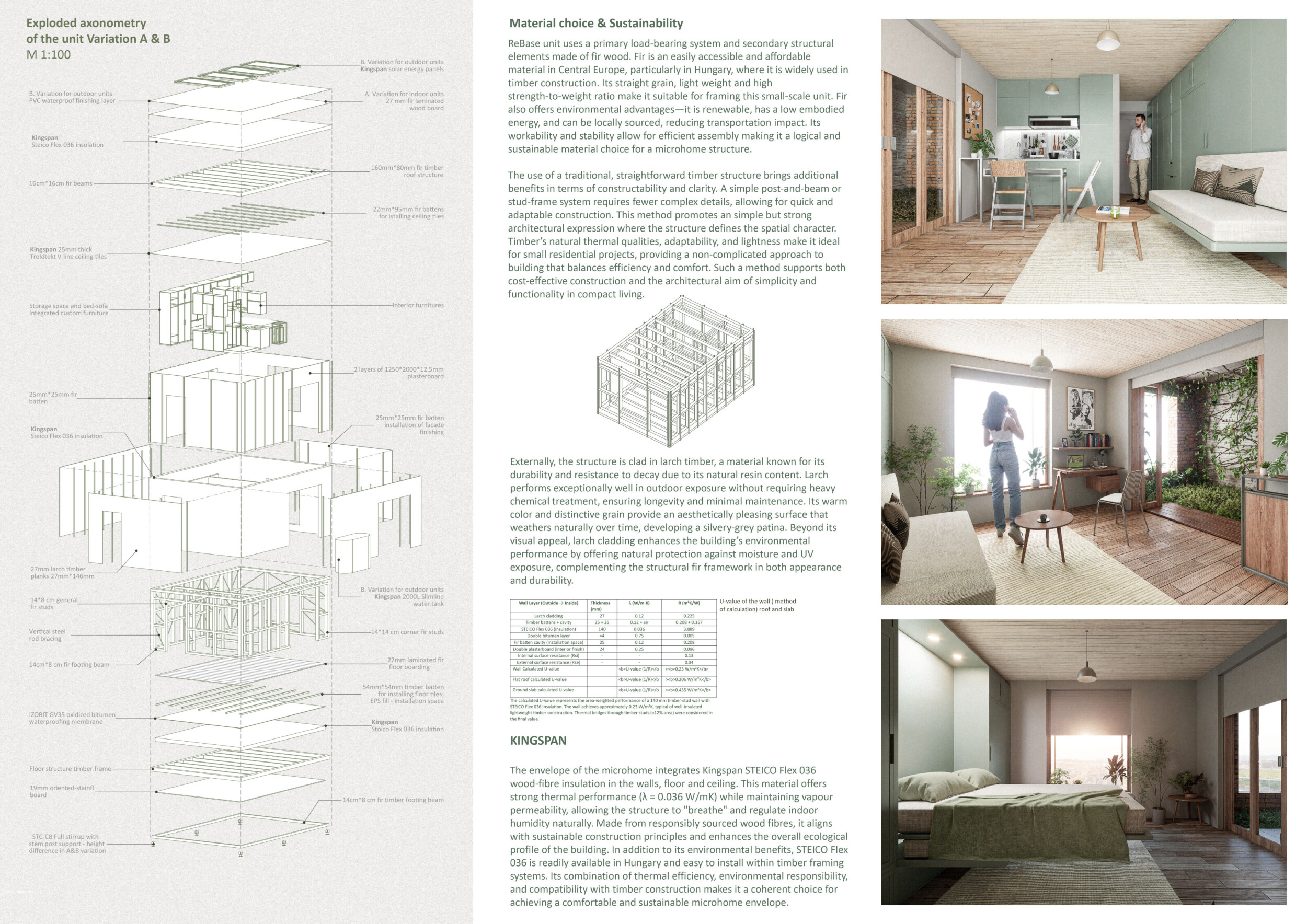
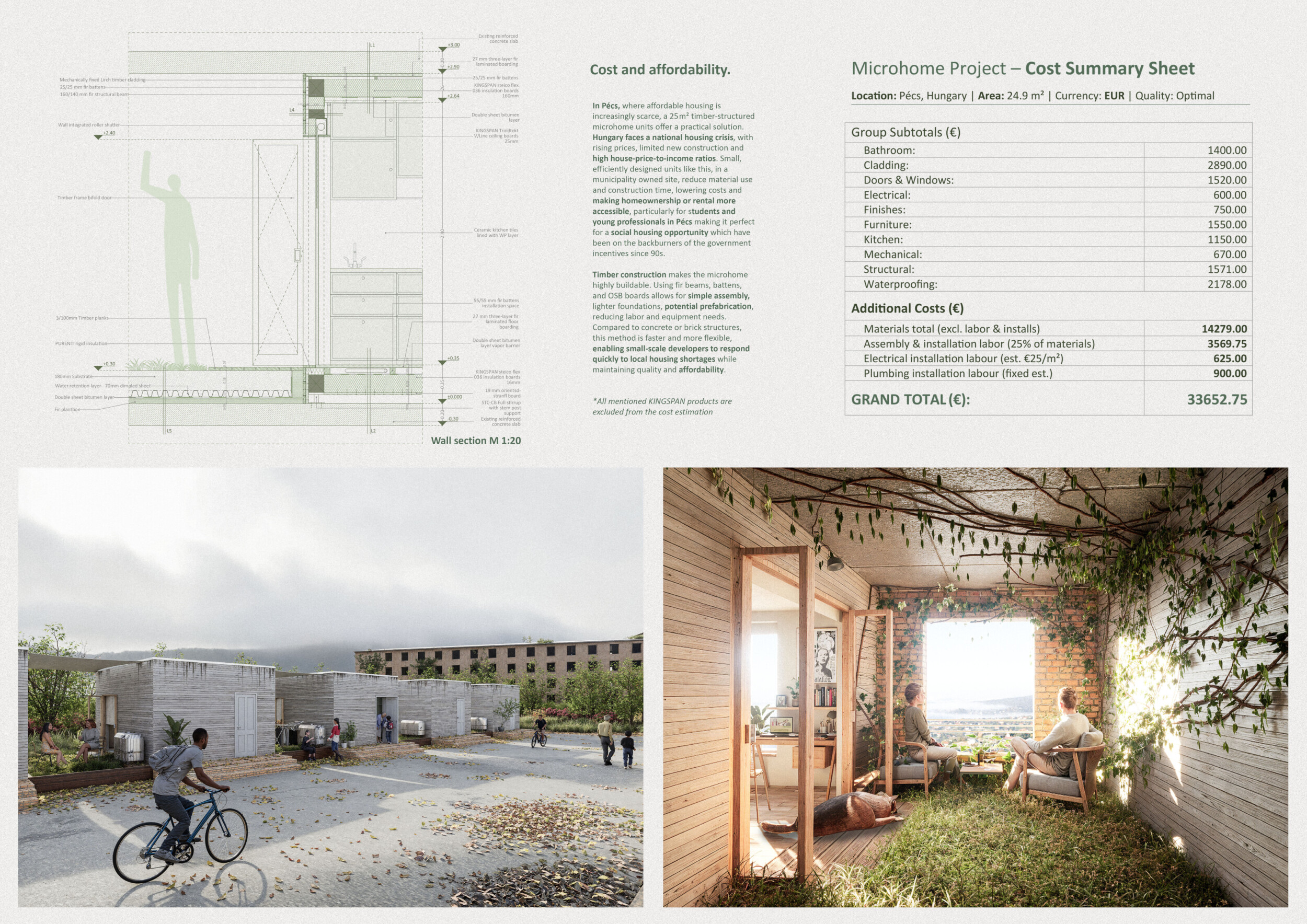

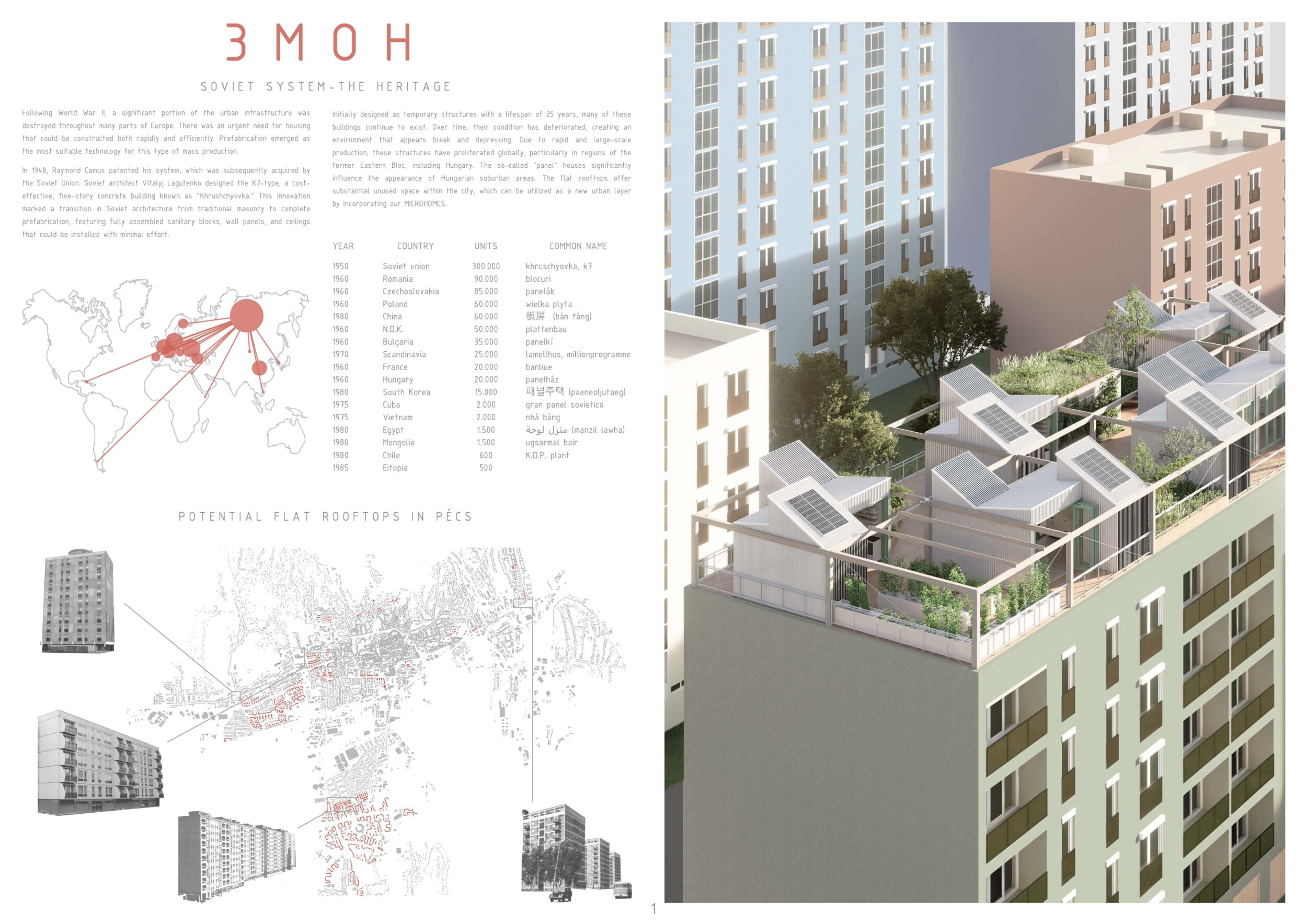
3MOH
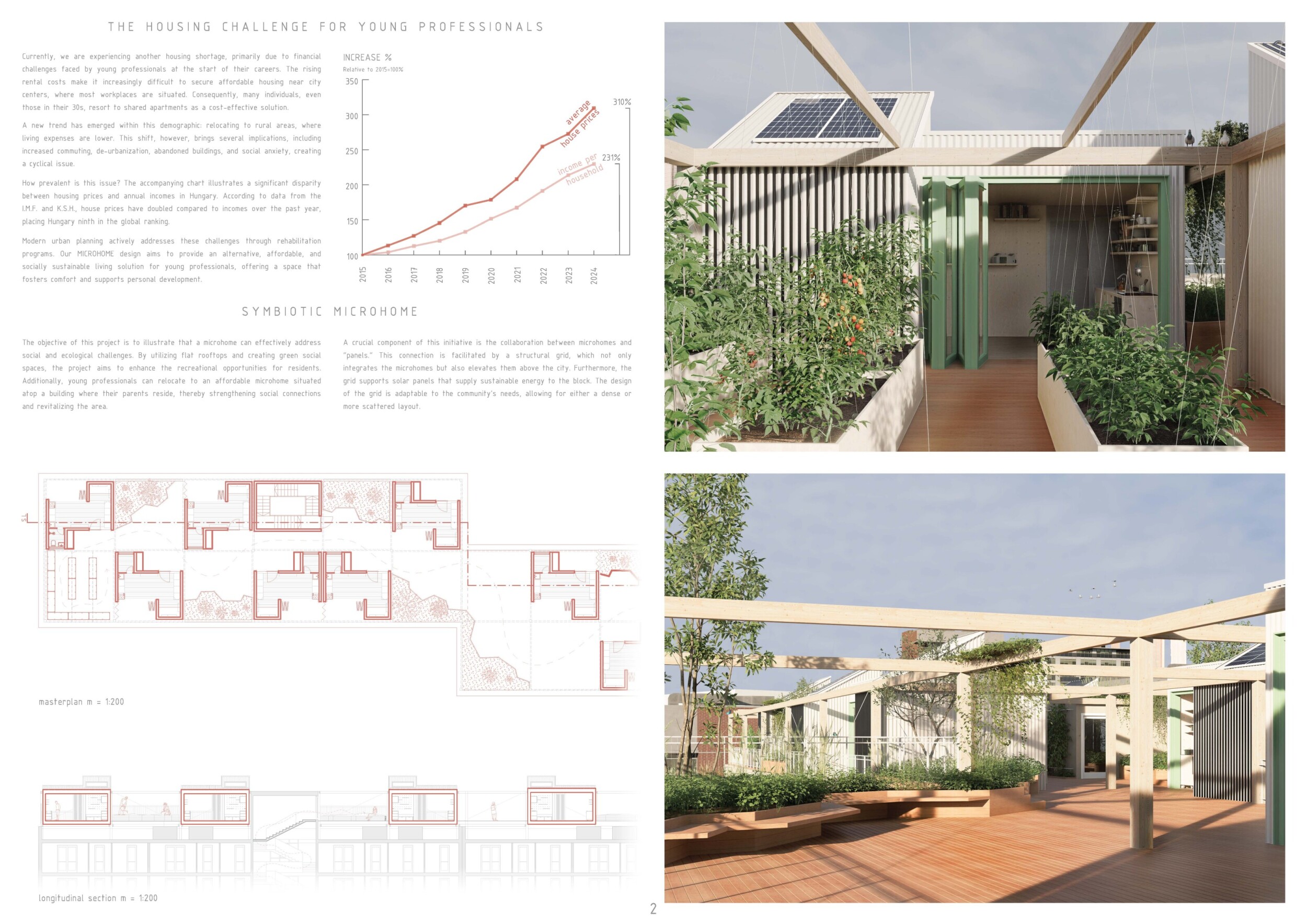
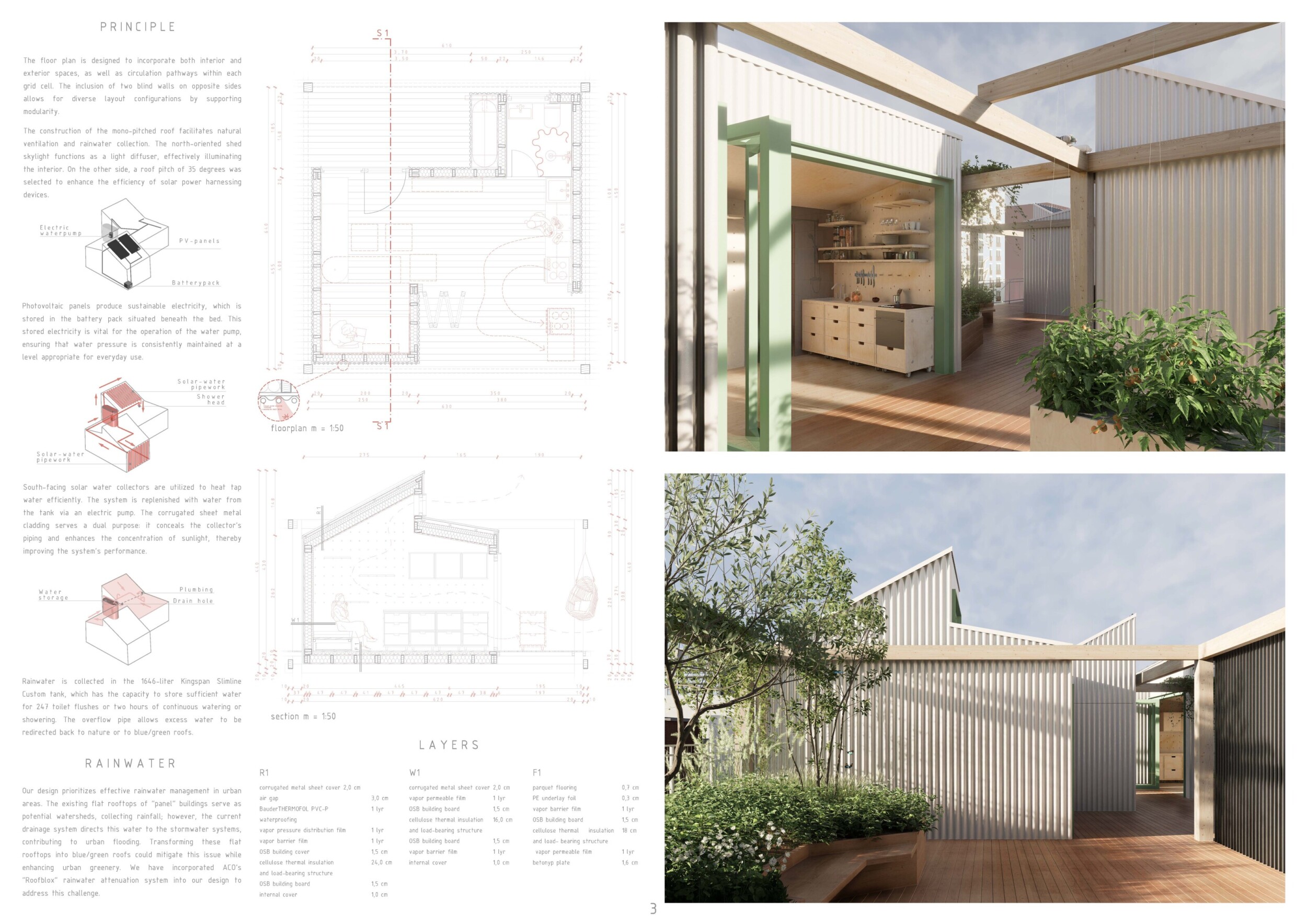
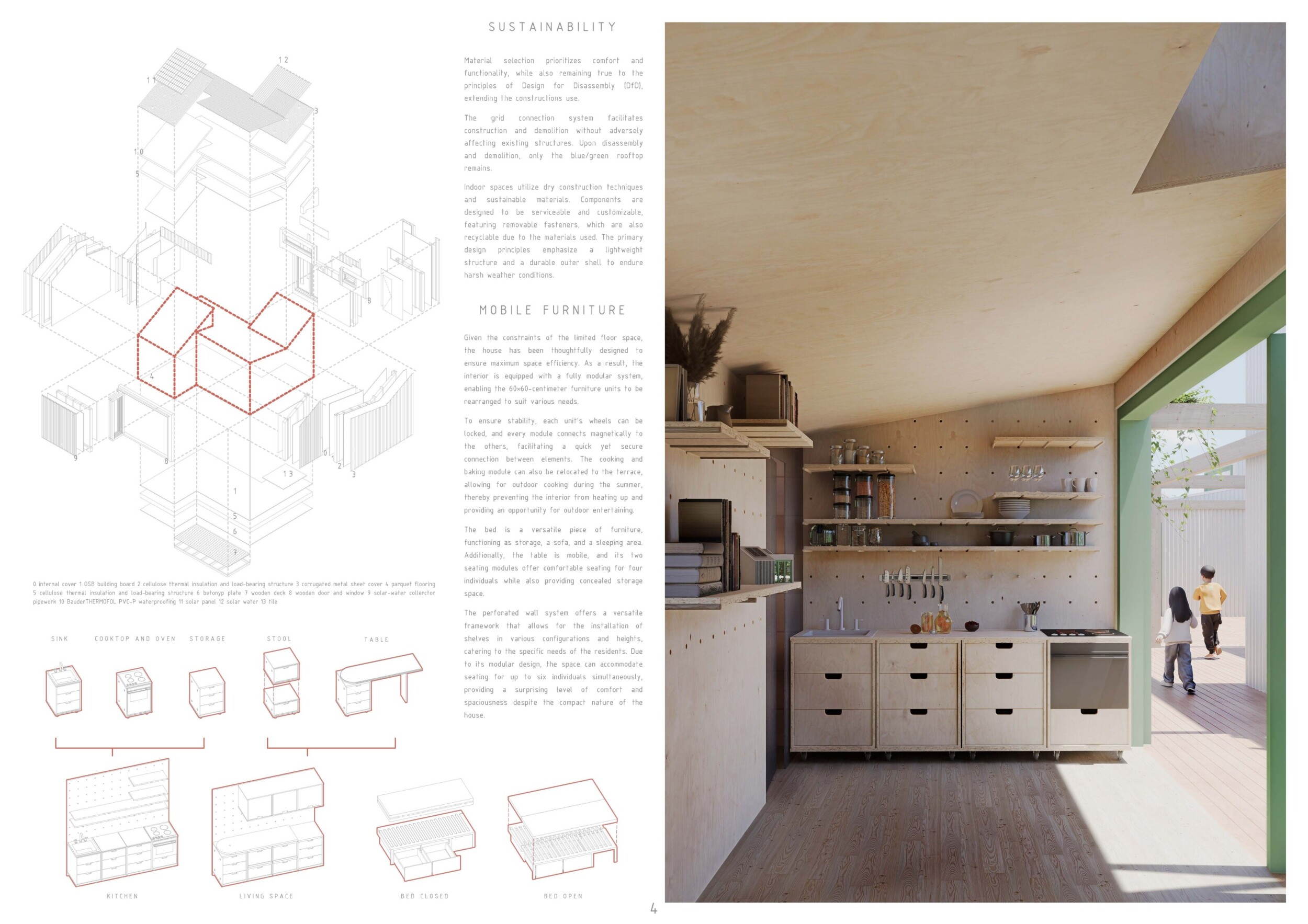
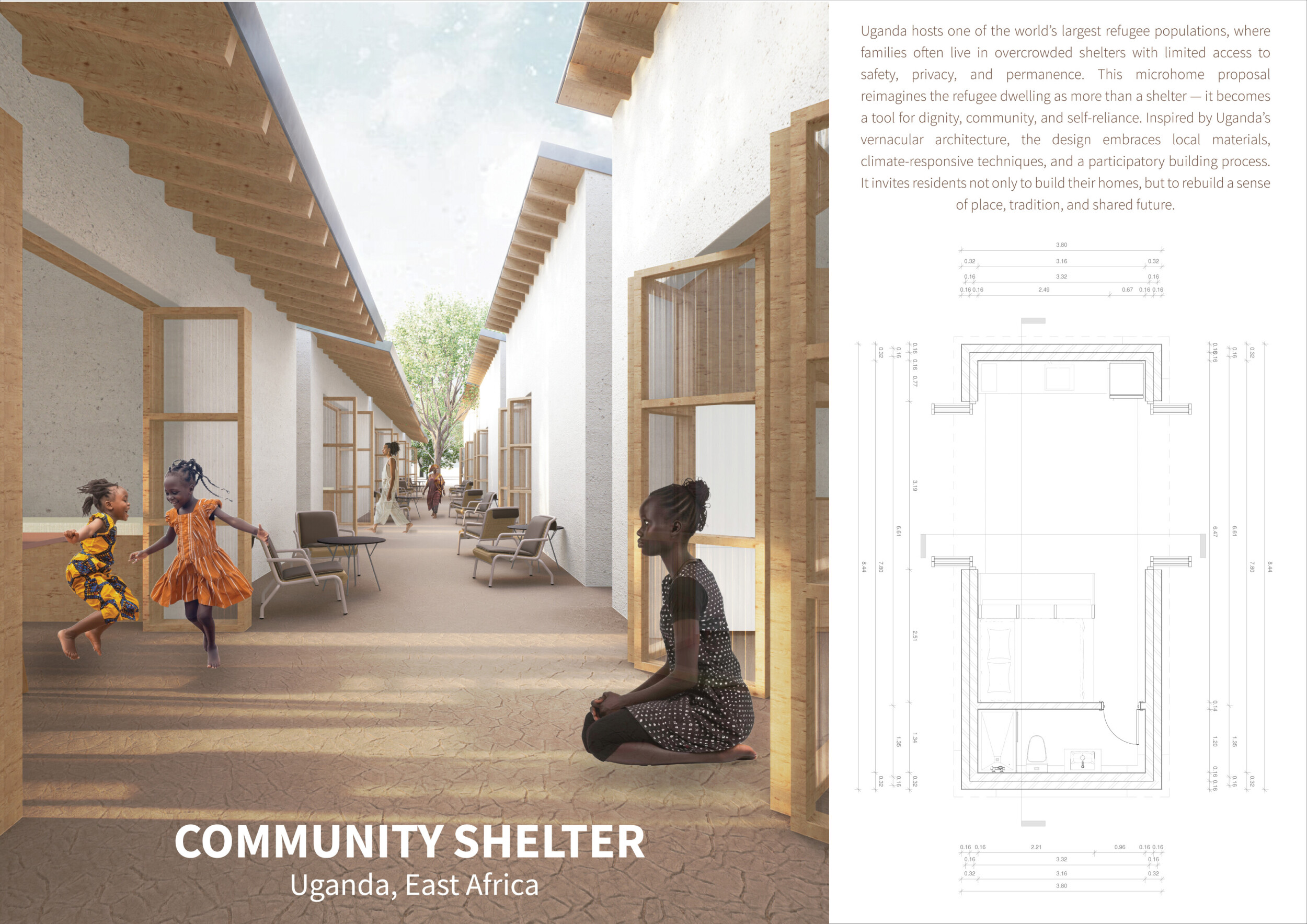
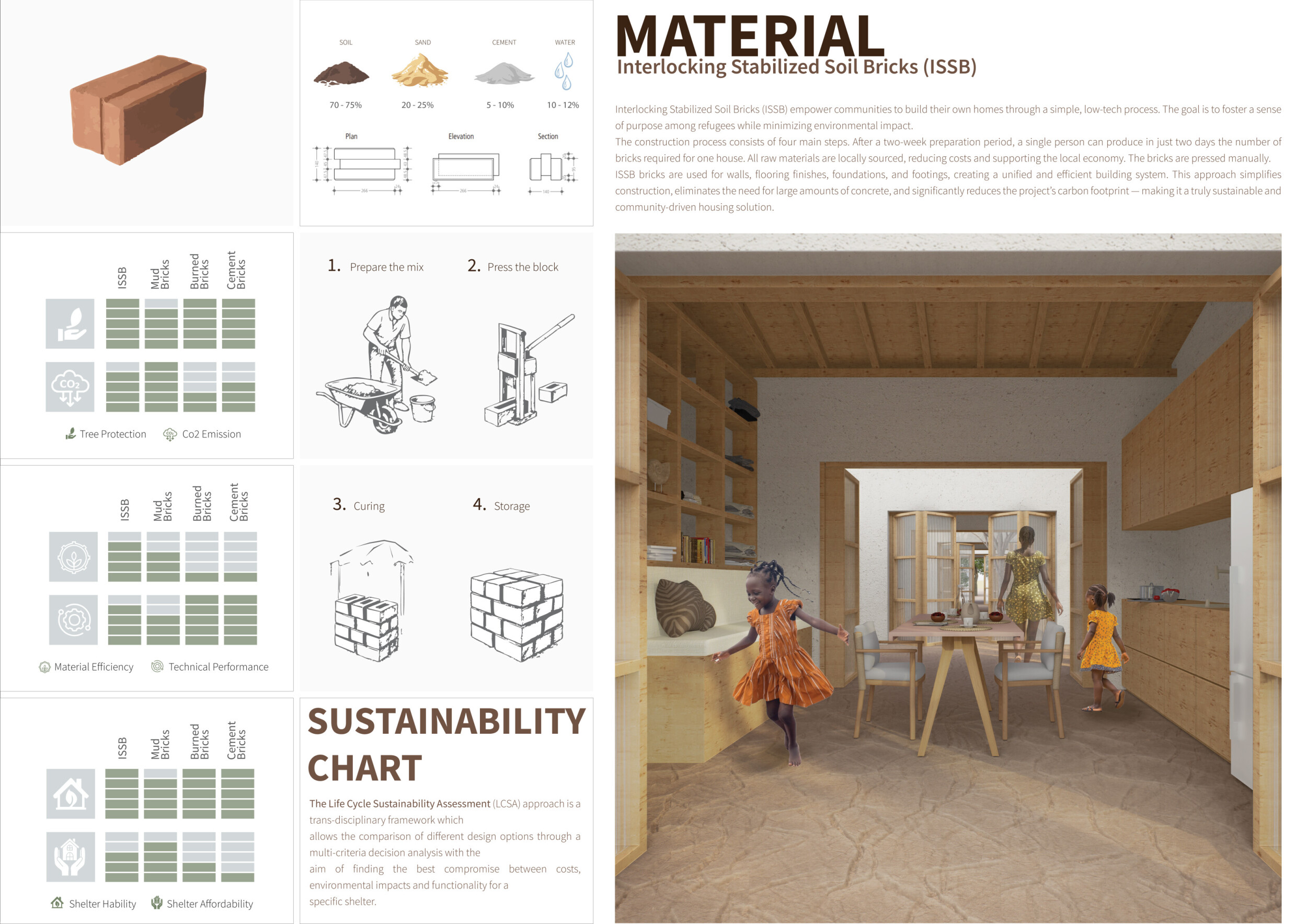
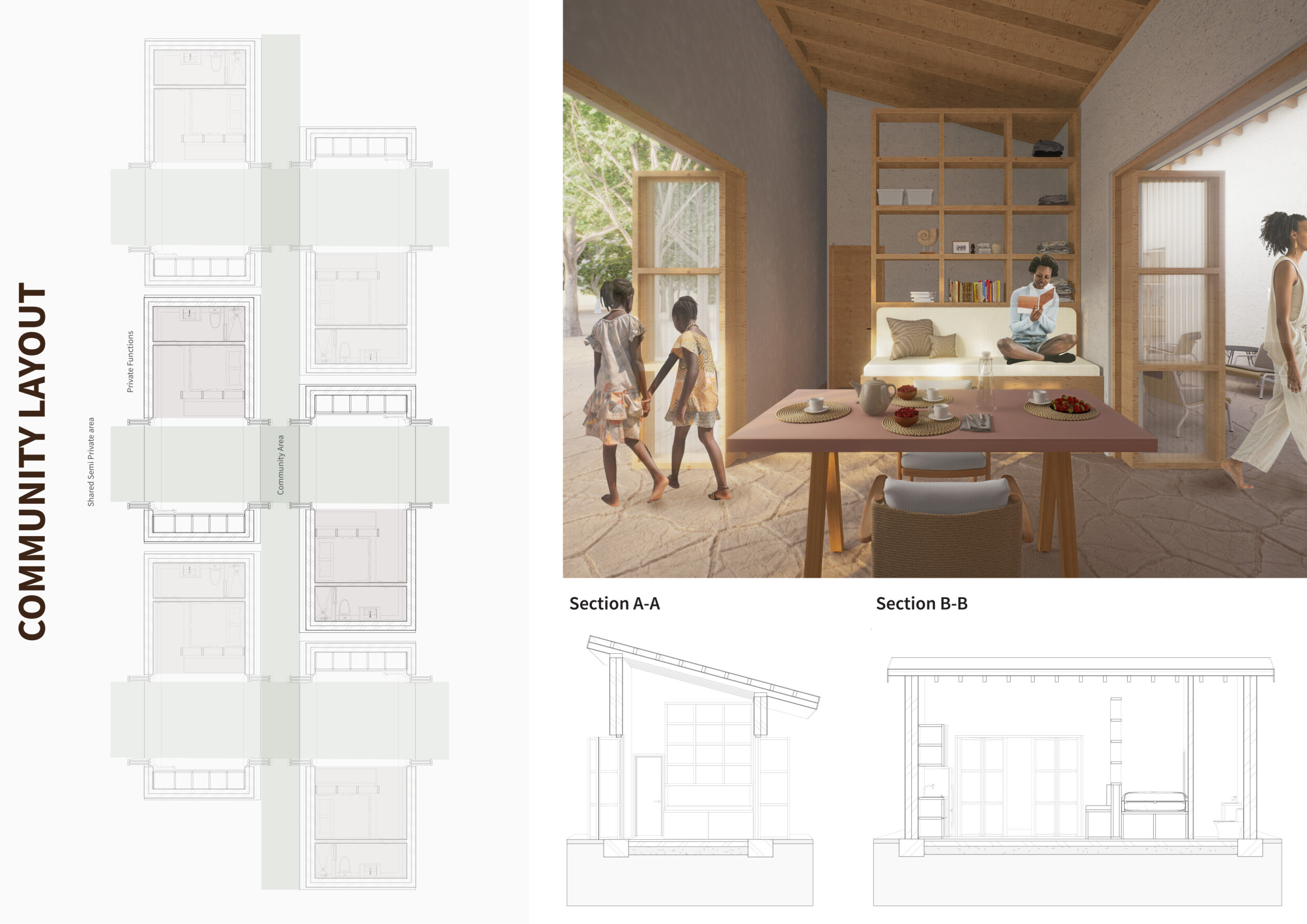
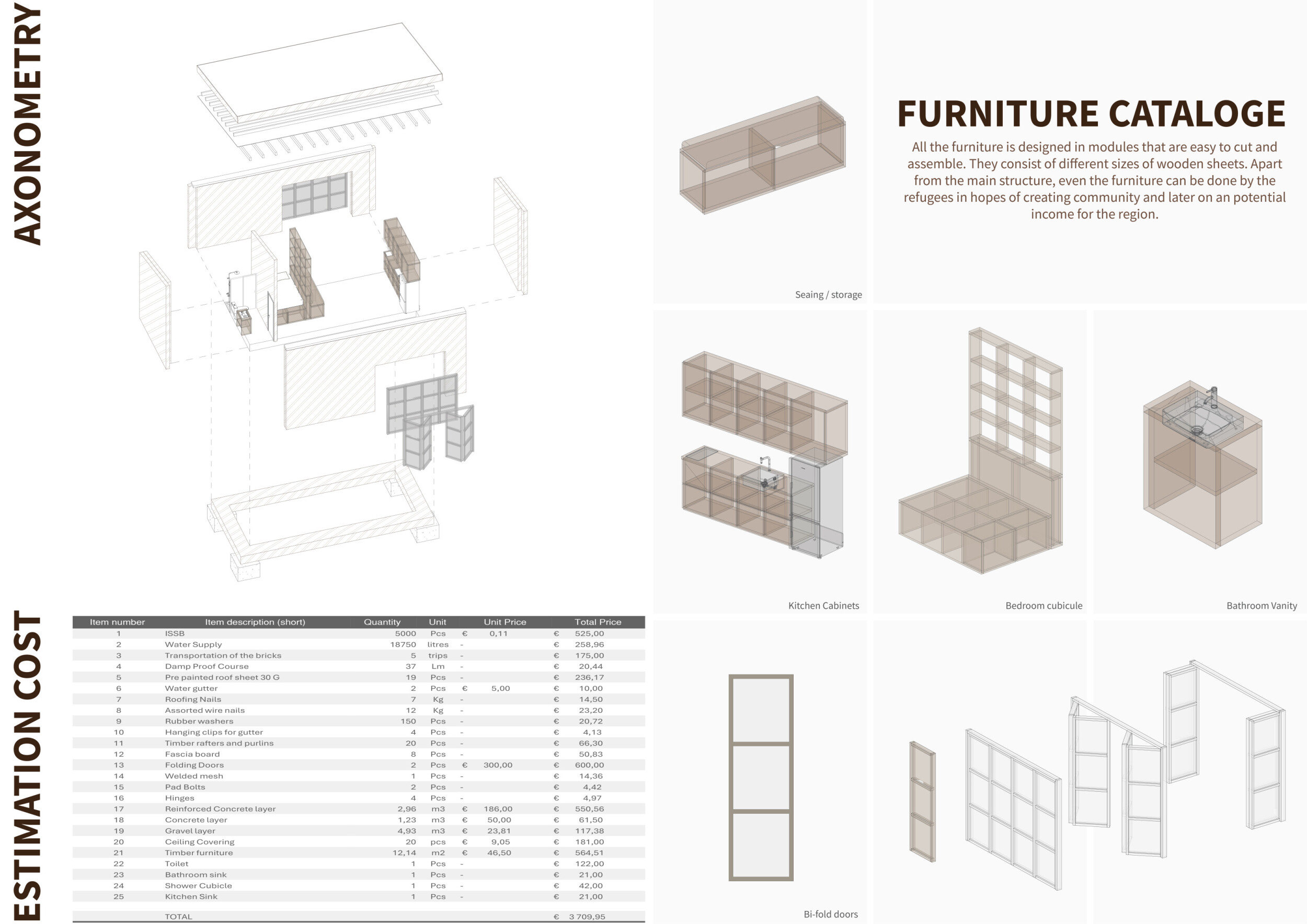
Community Shelter
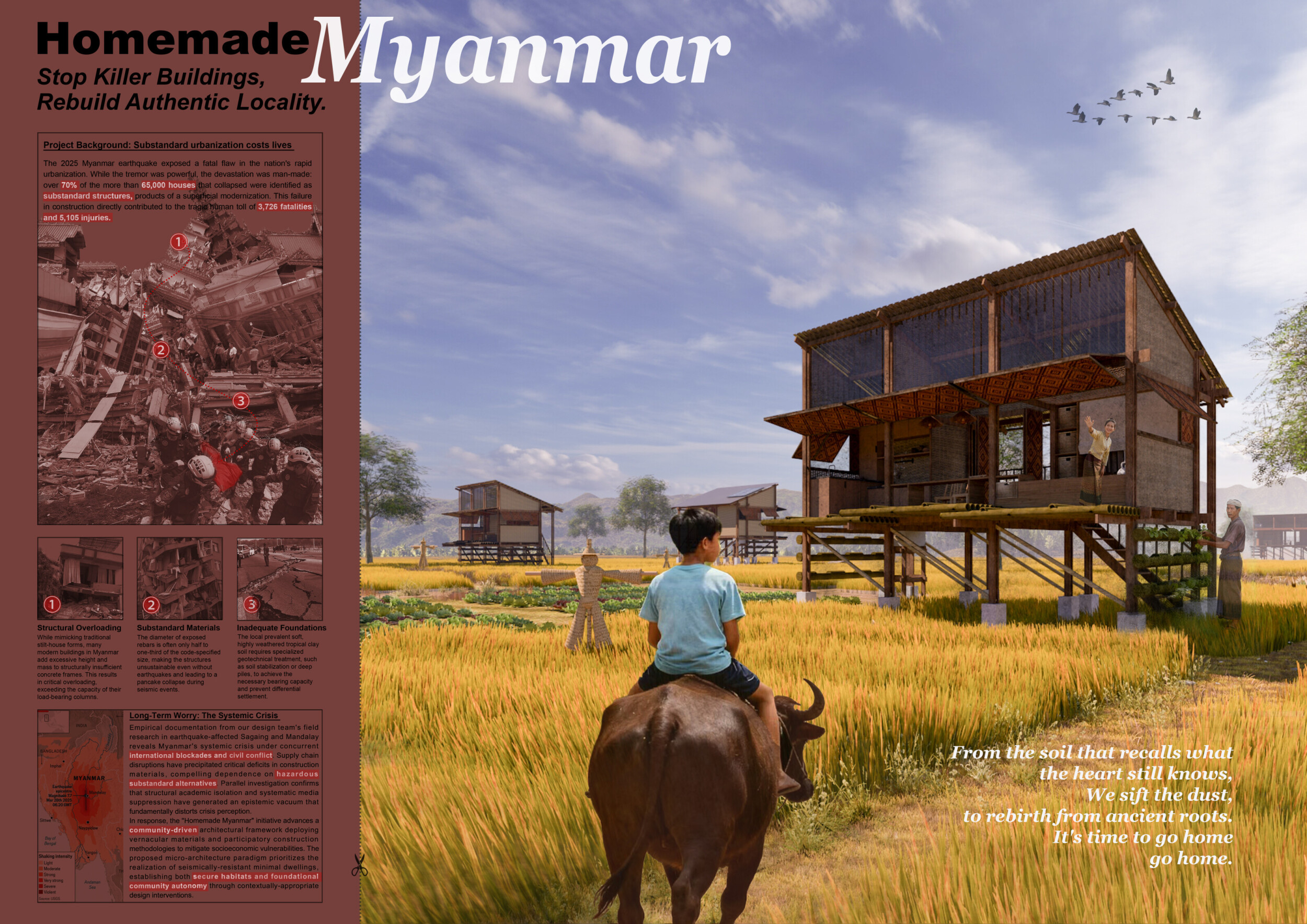
Homemade Myanmar
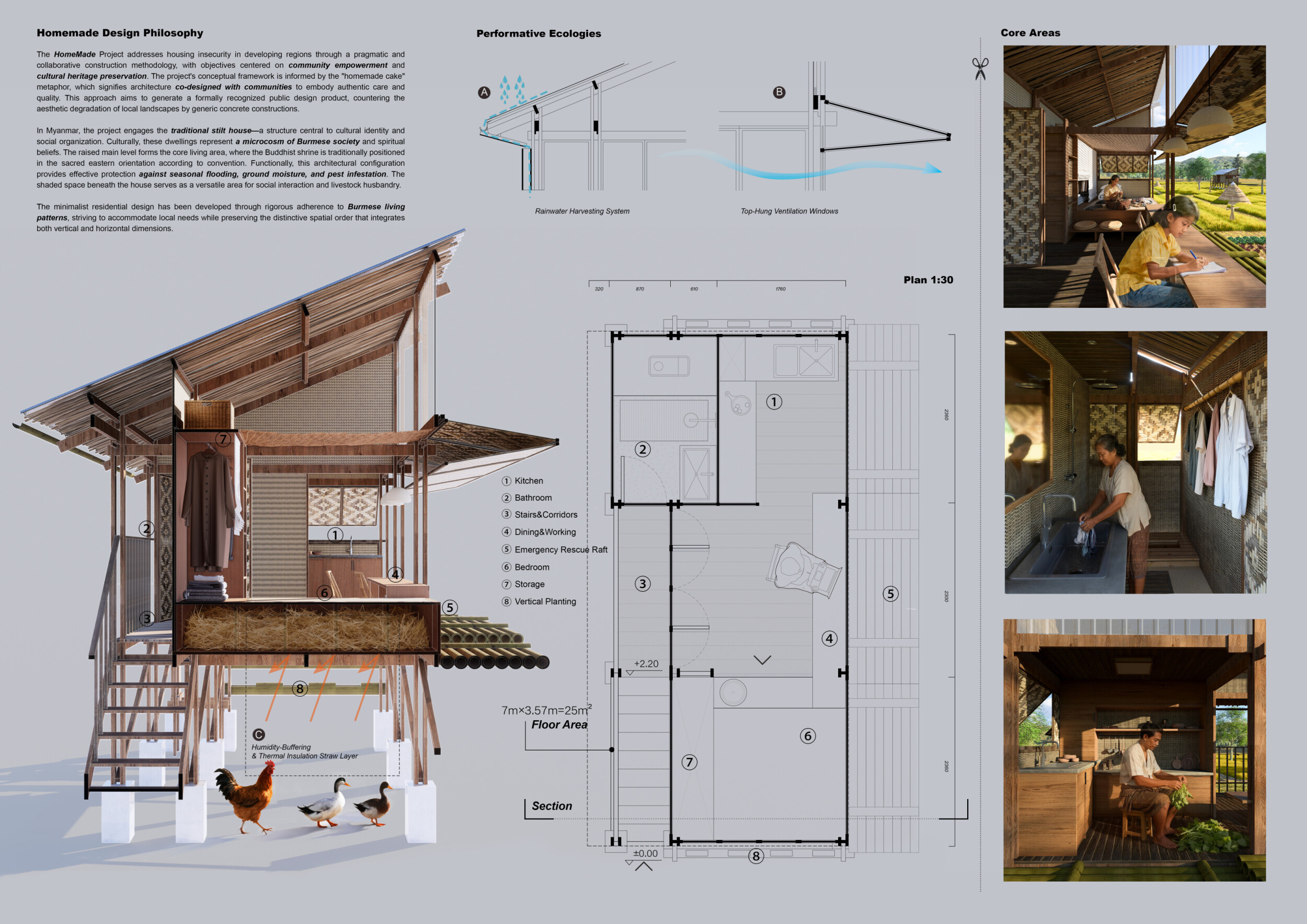
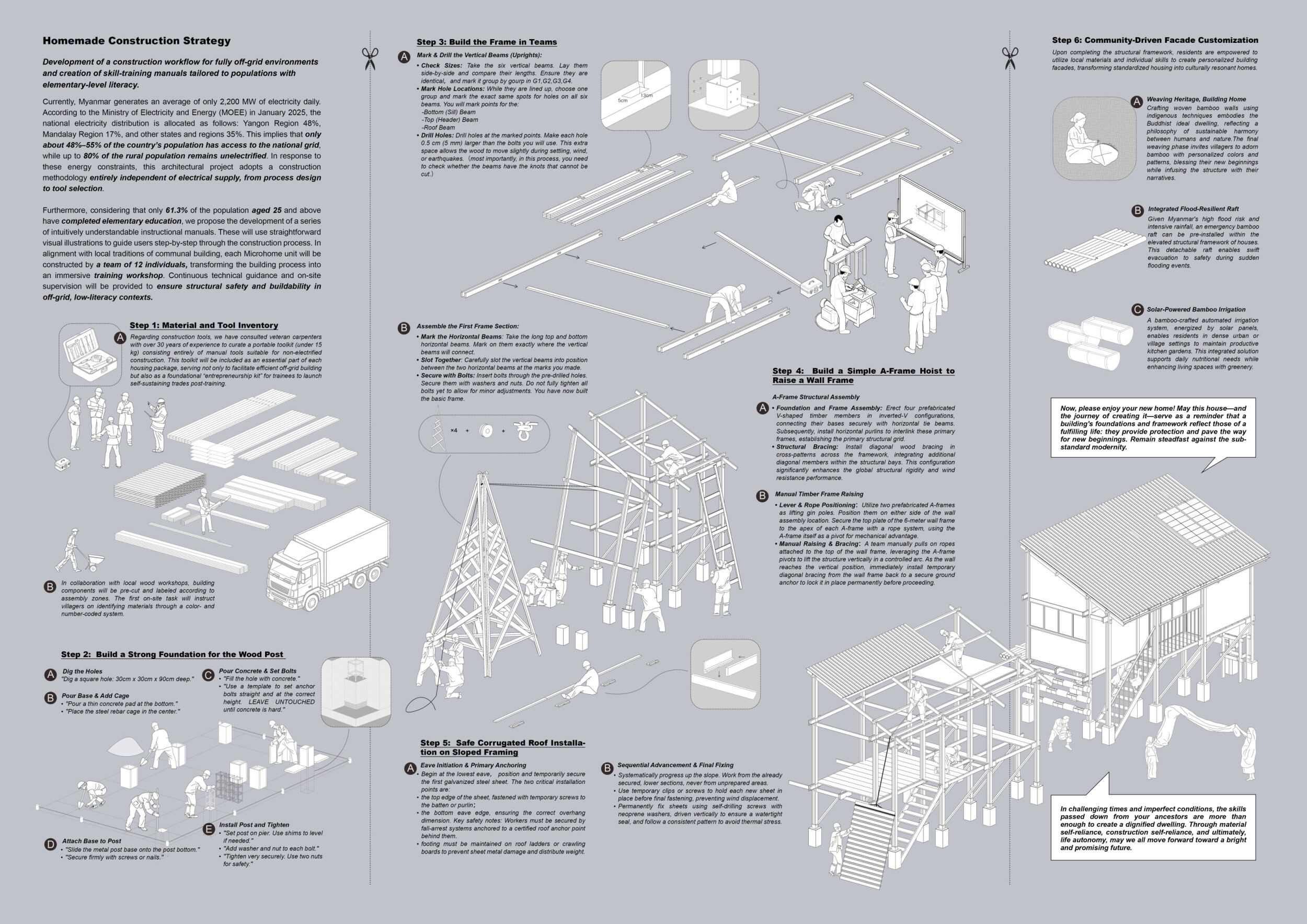
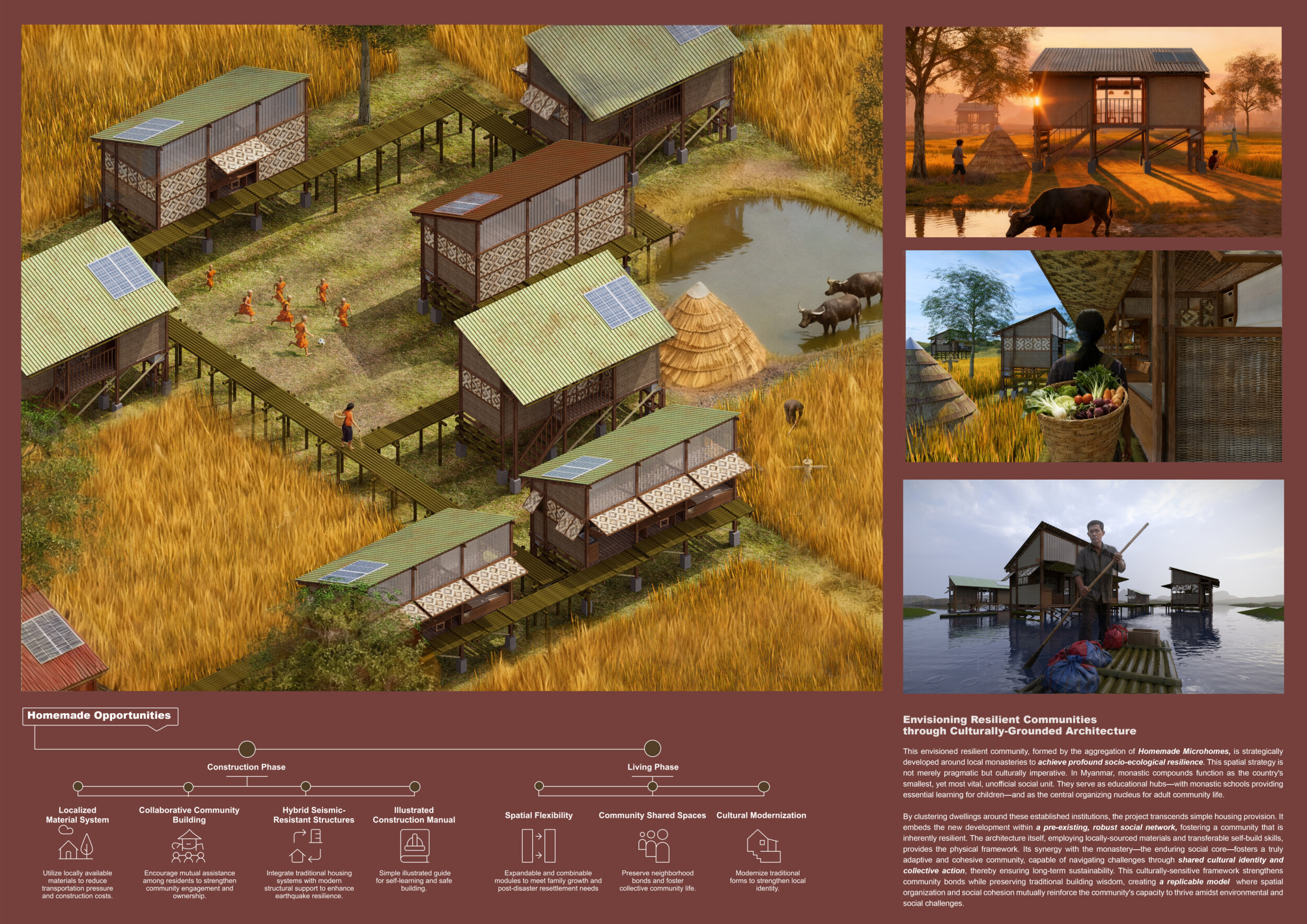

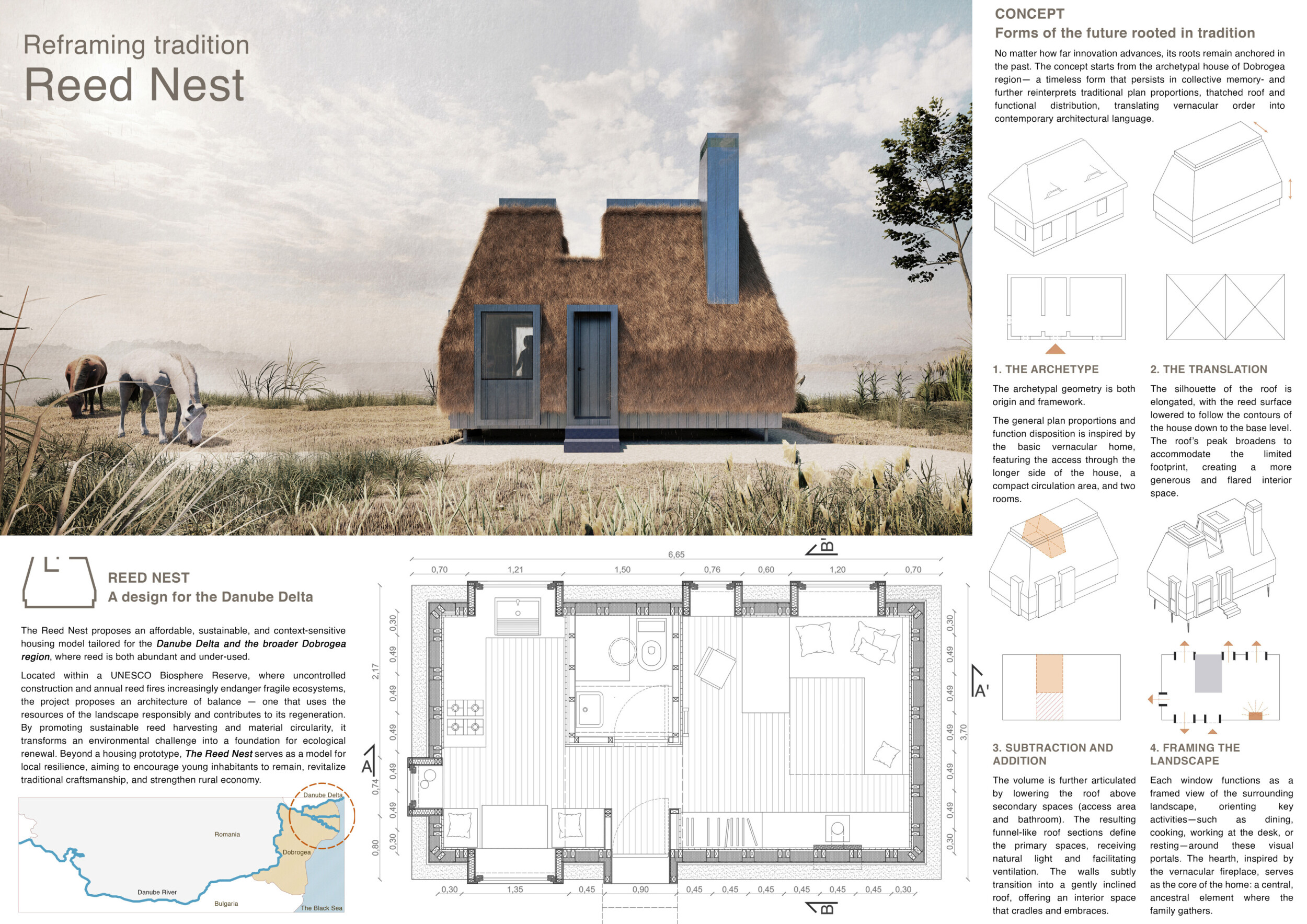
Reed Nest
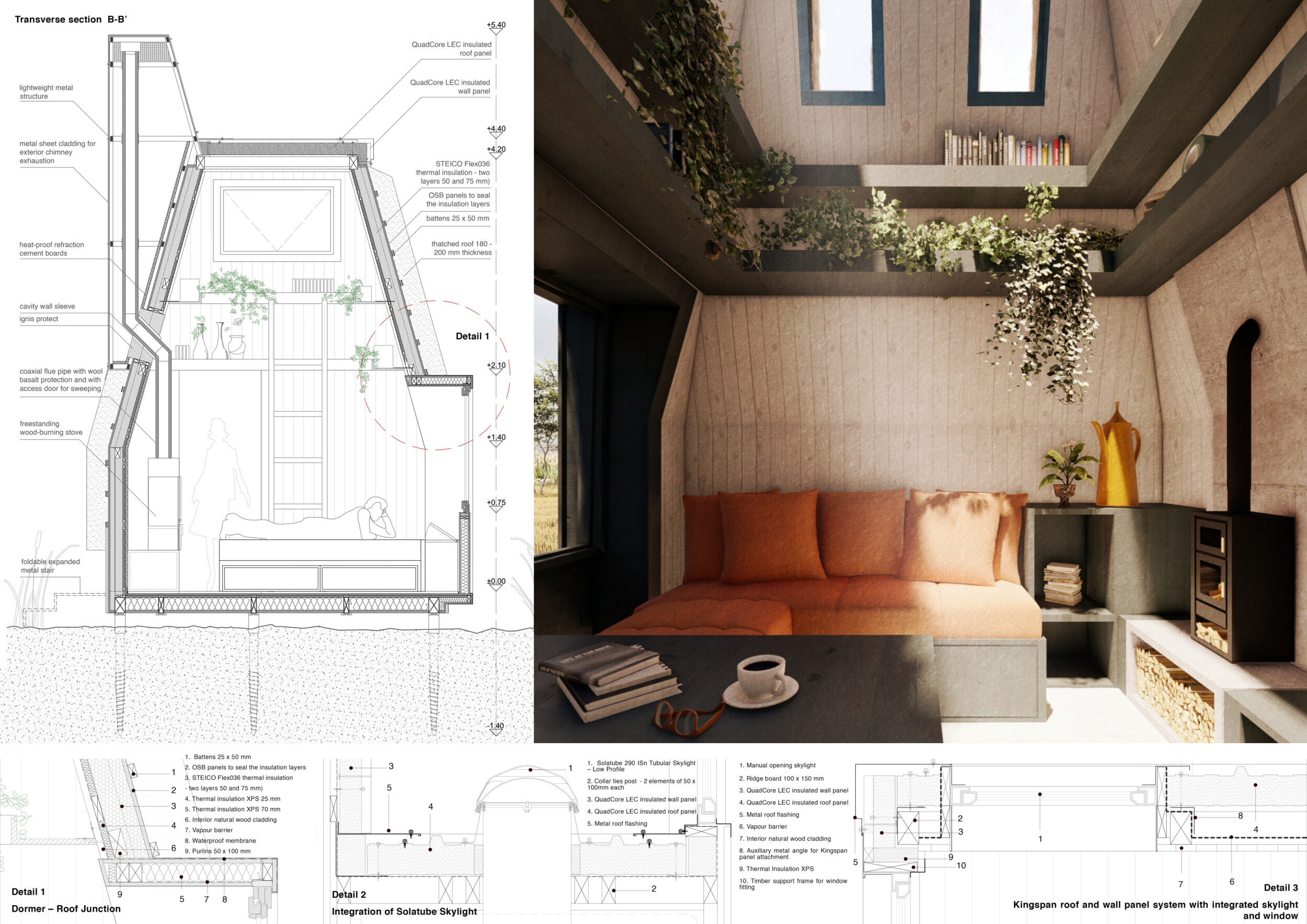
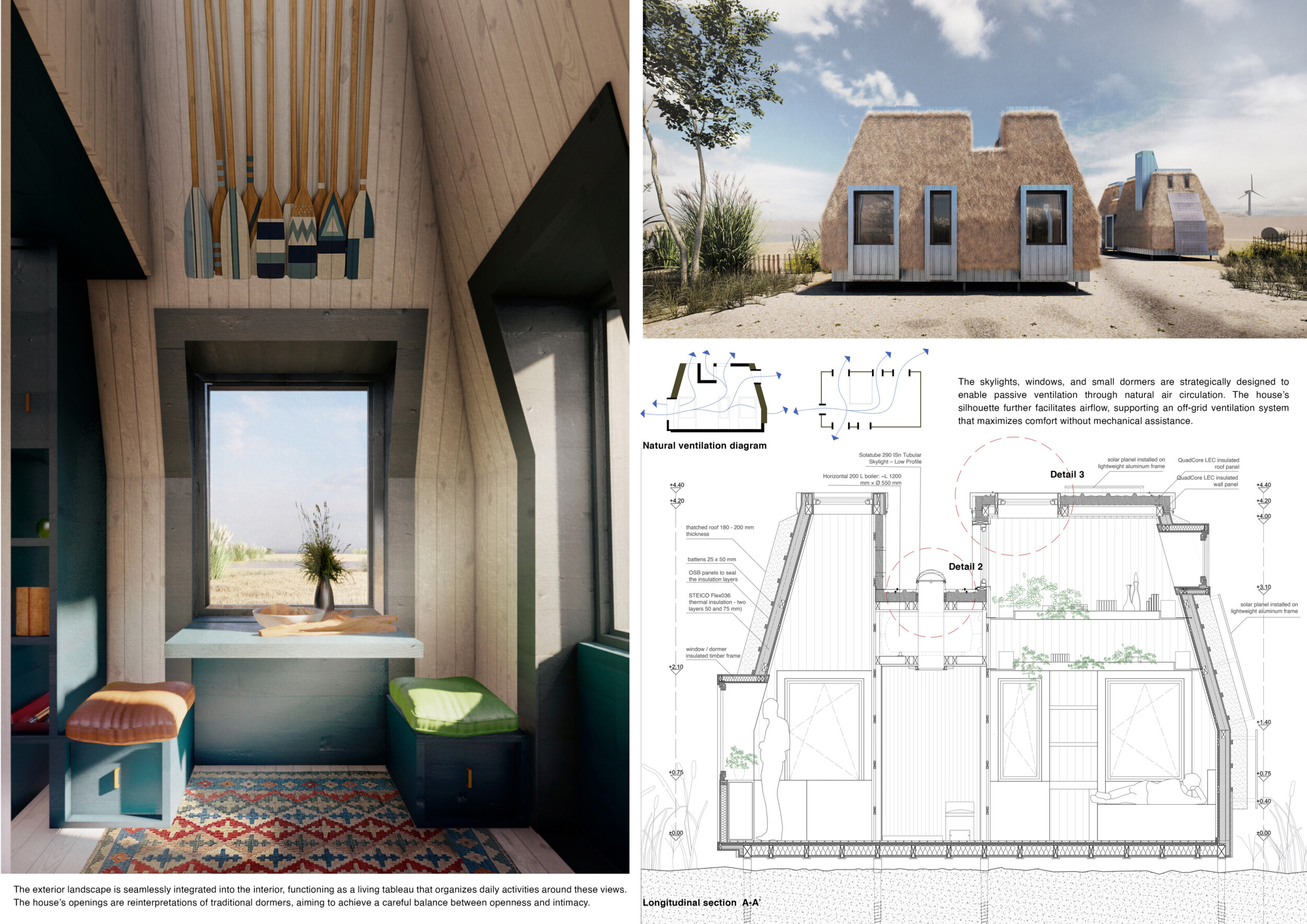
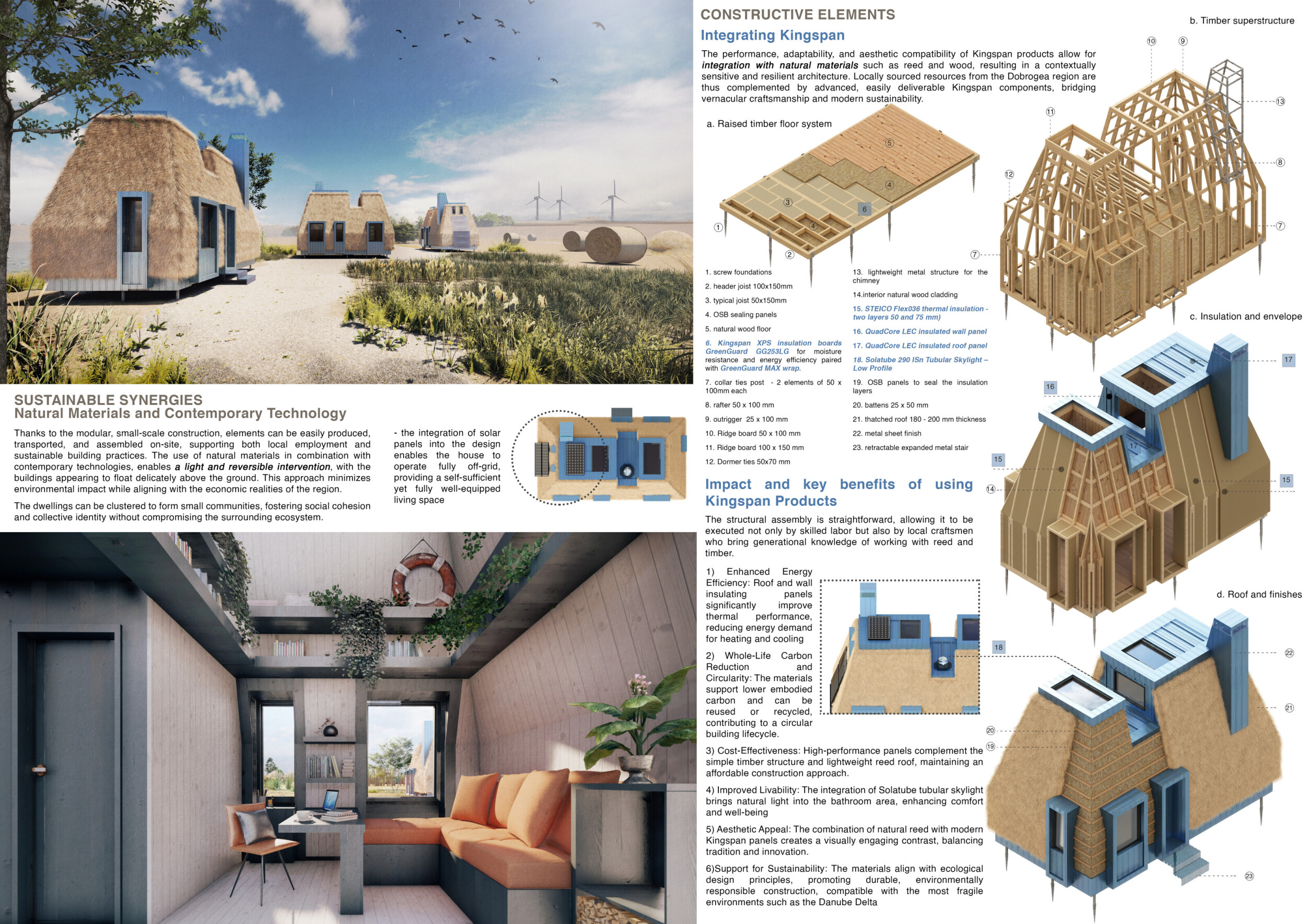
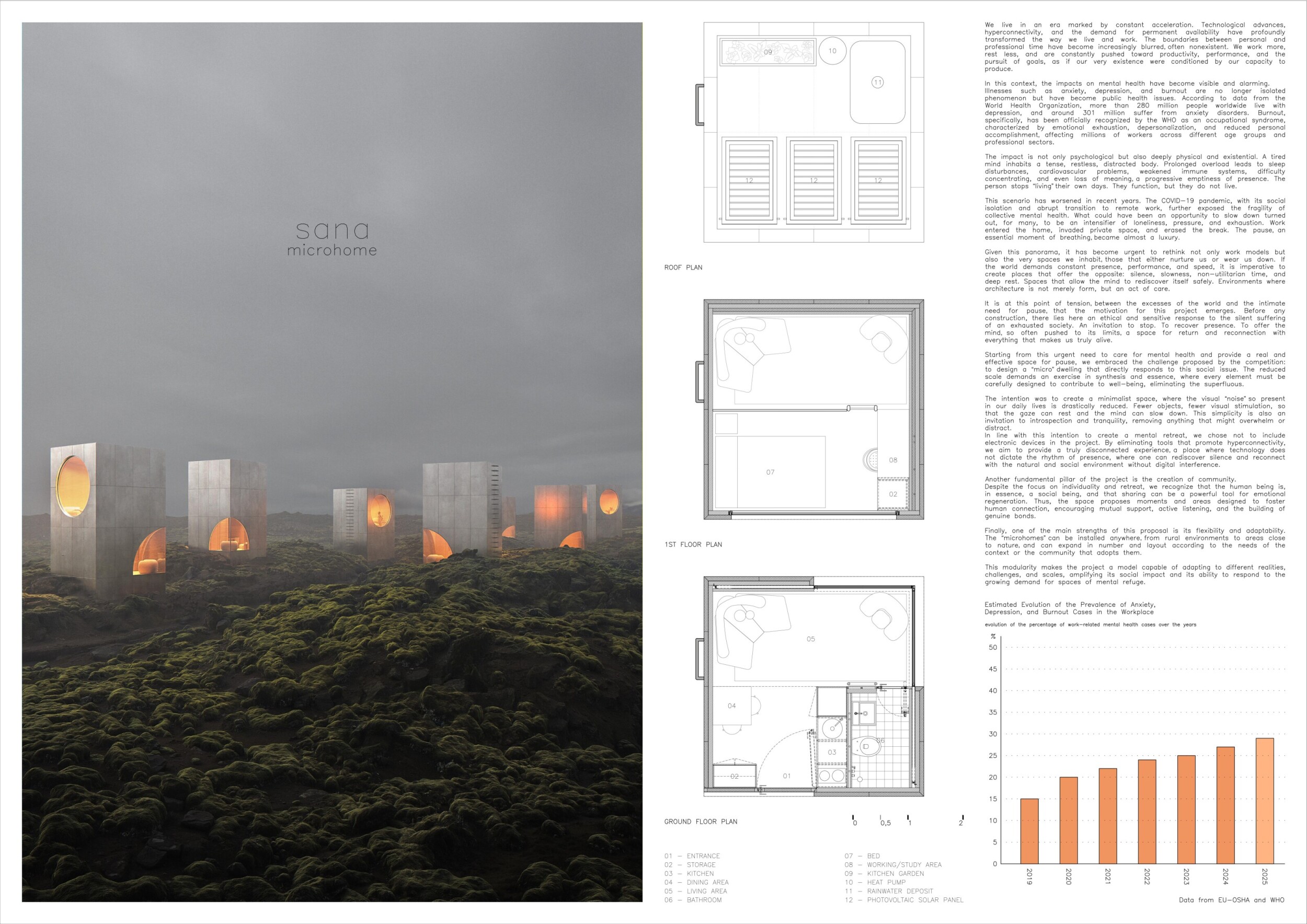
SANA

Re:Habitat — Forest as Home
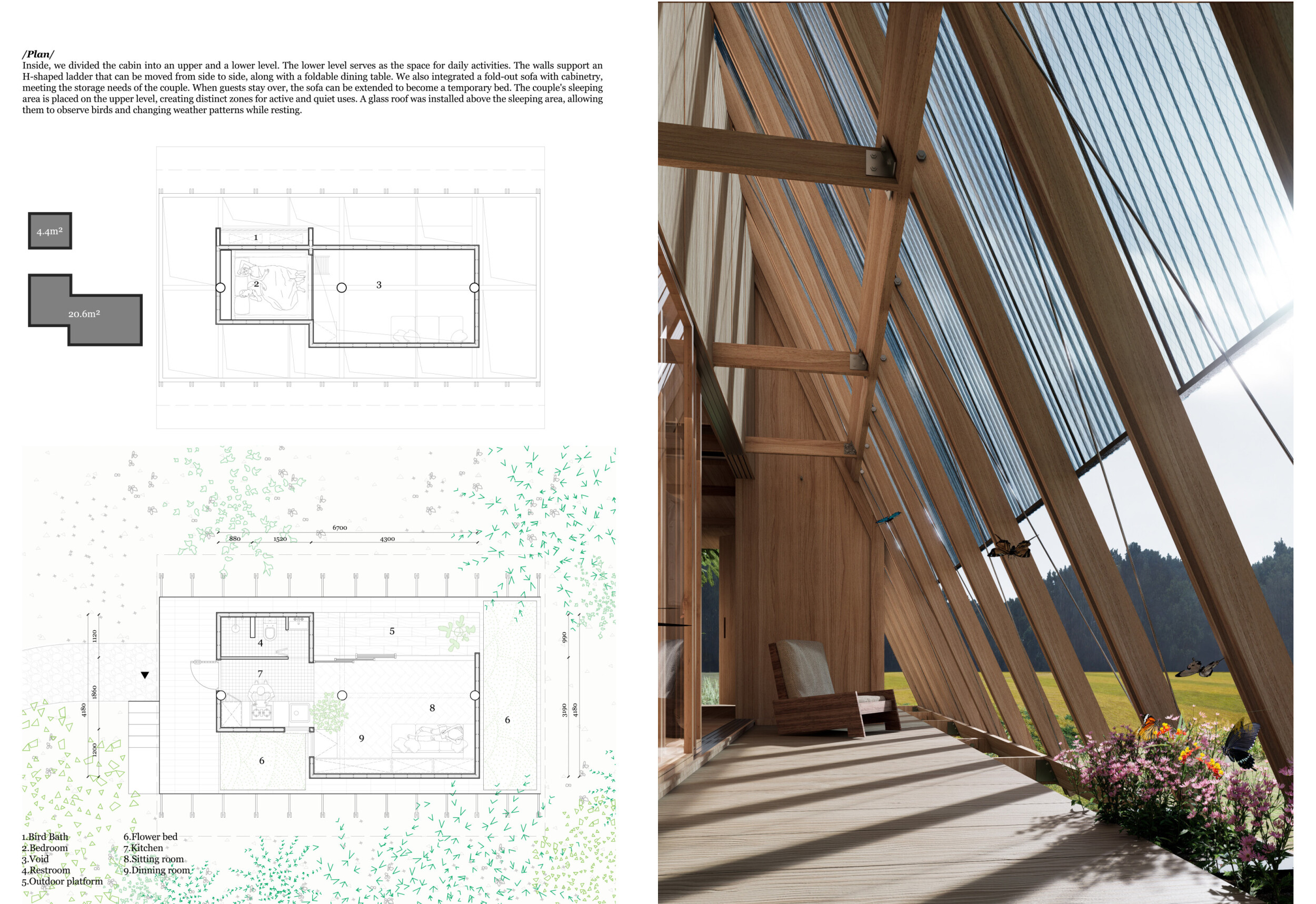
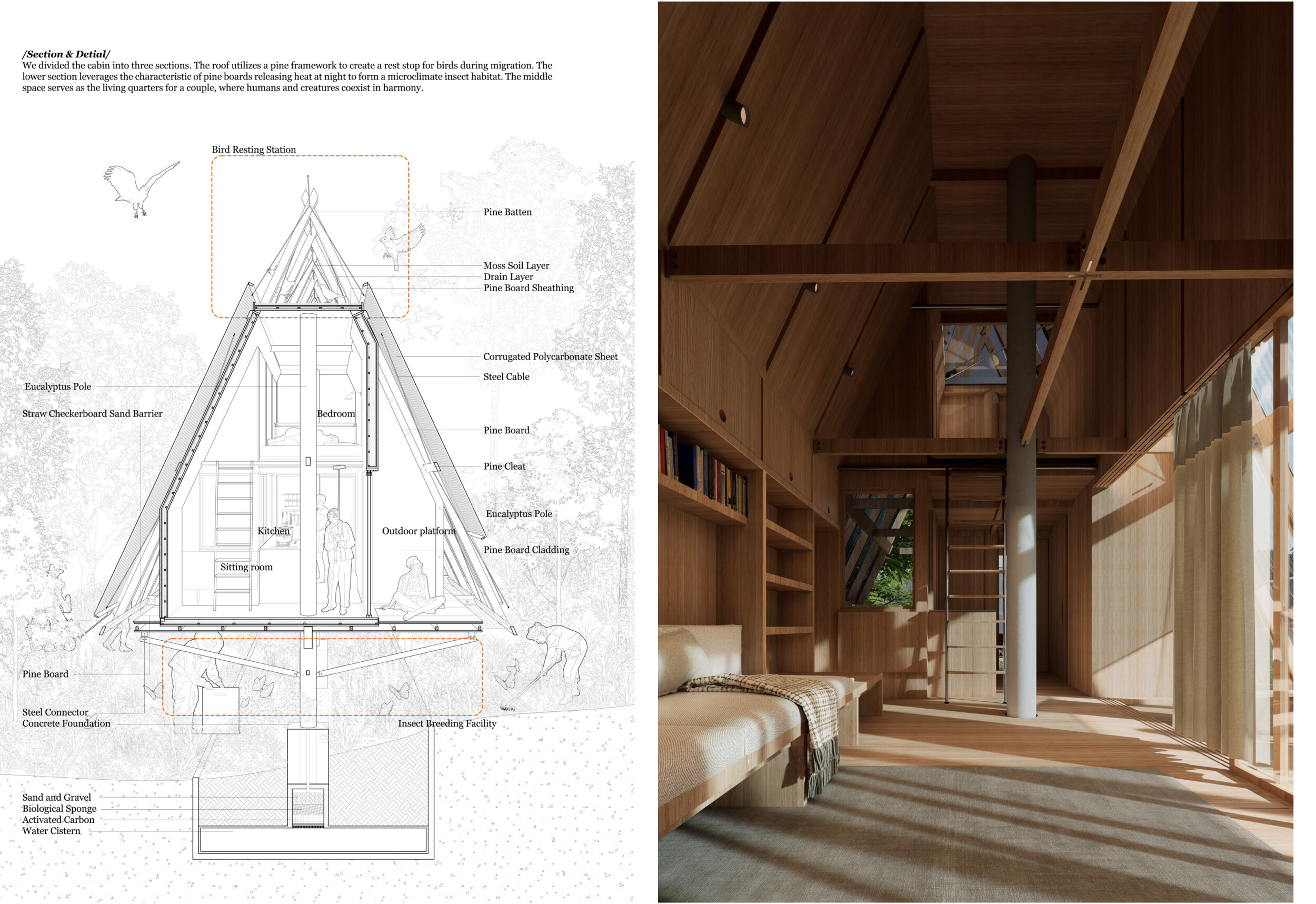
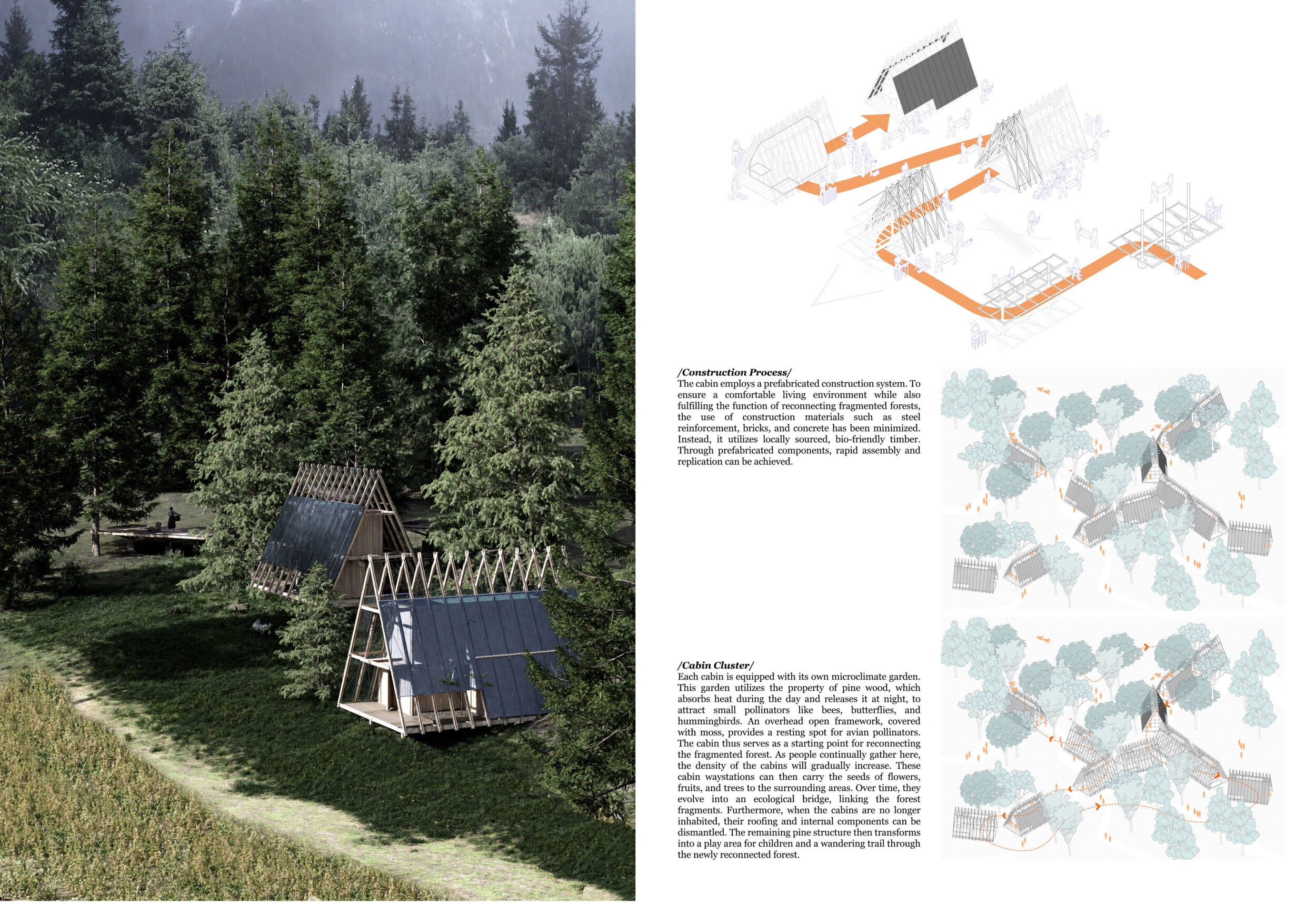
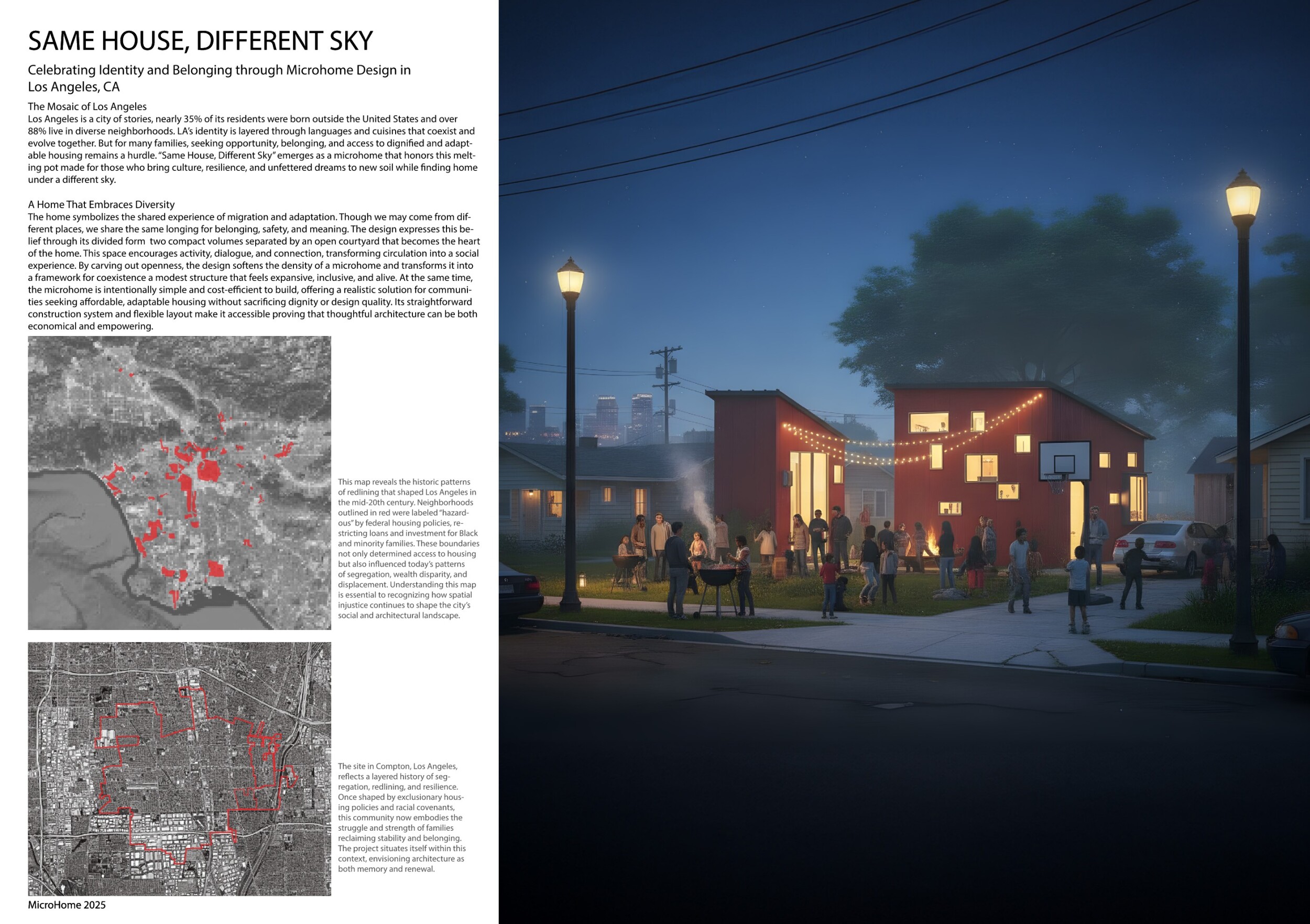
SAME HOUSE, DIFFERENT SKY
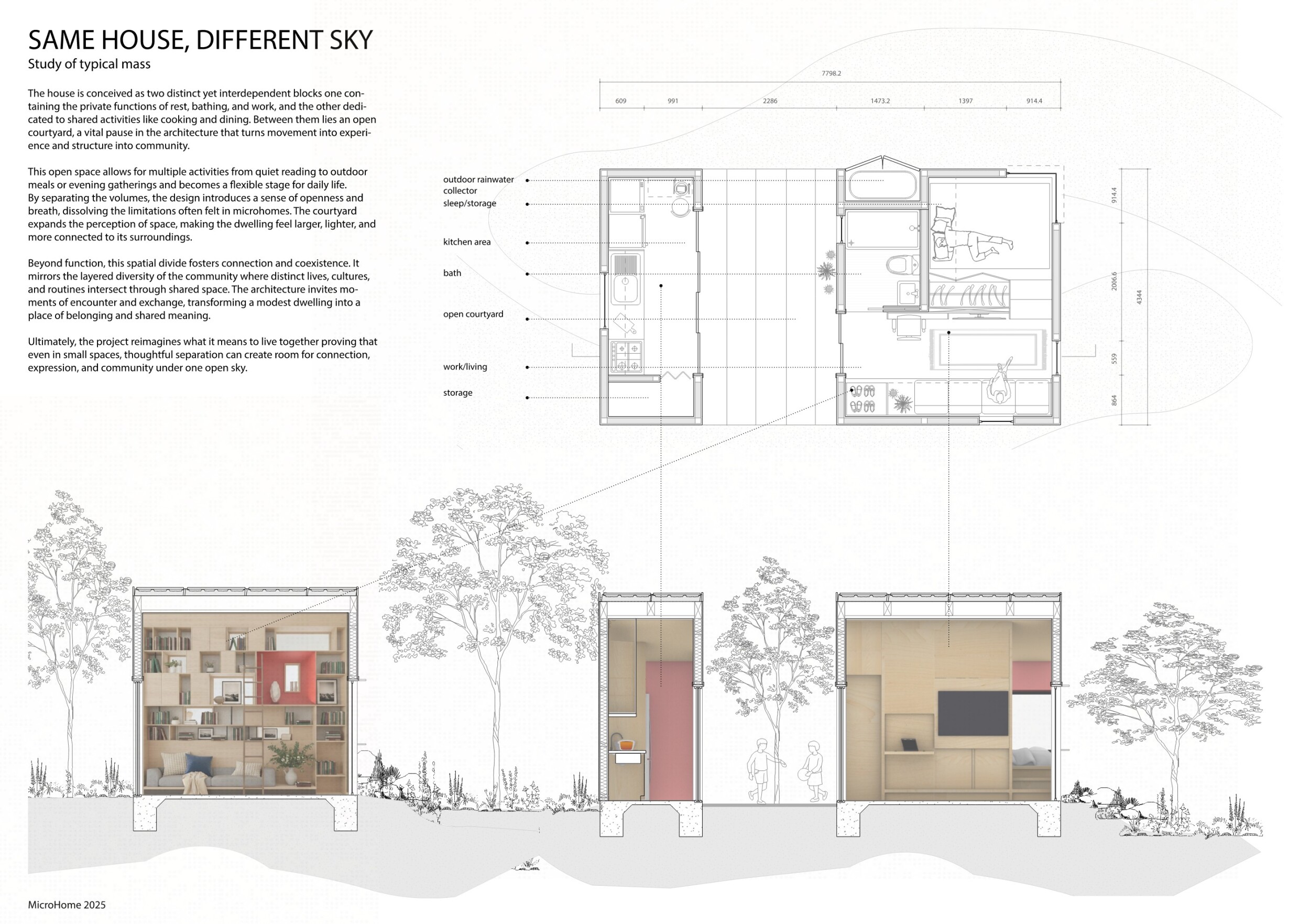
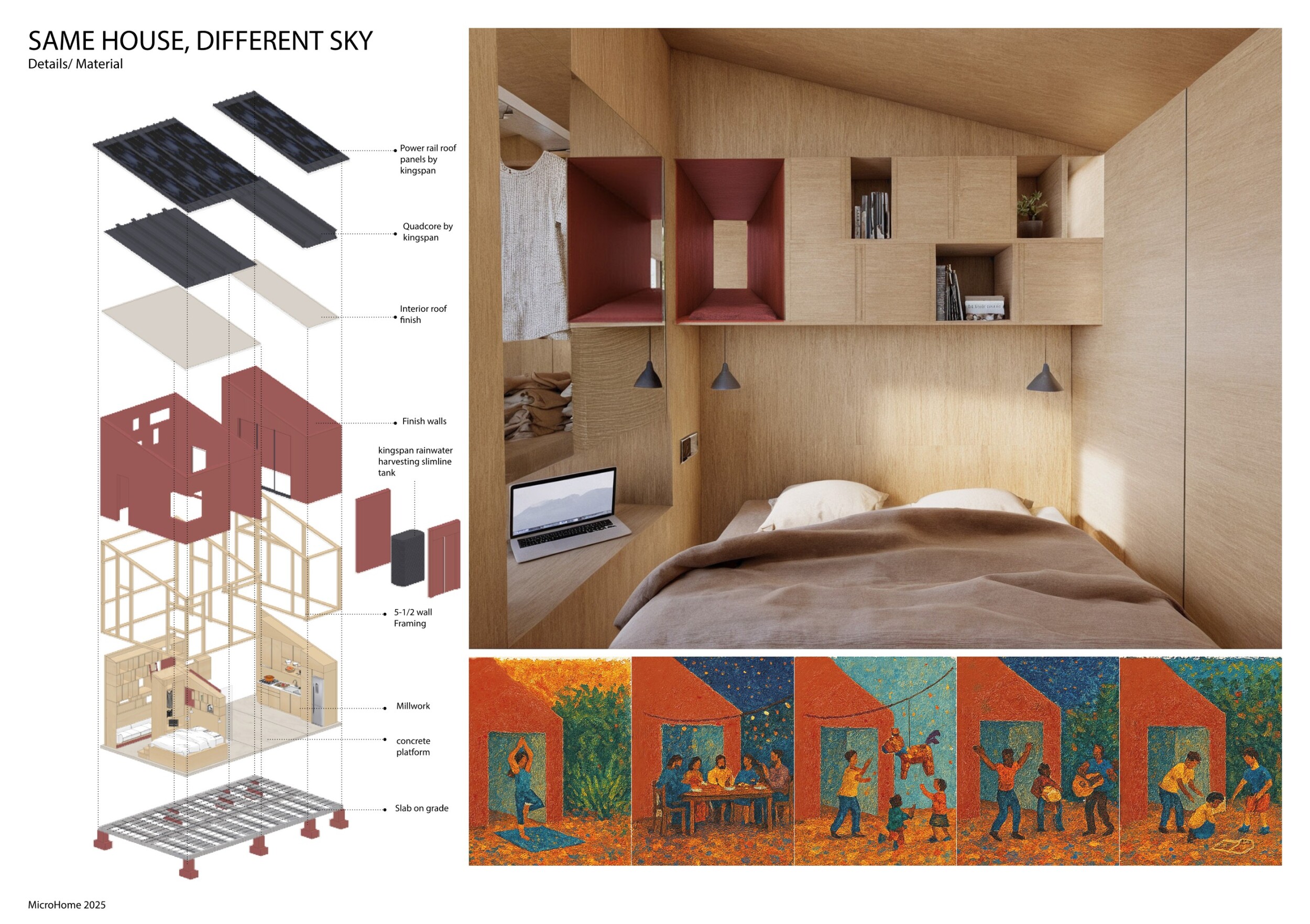
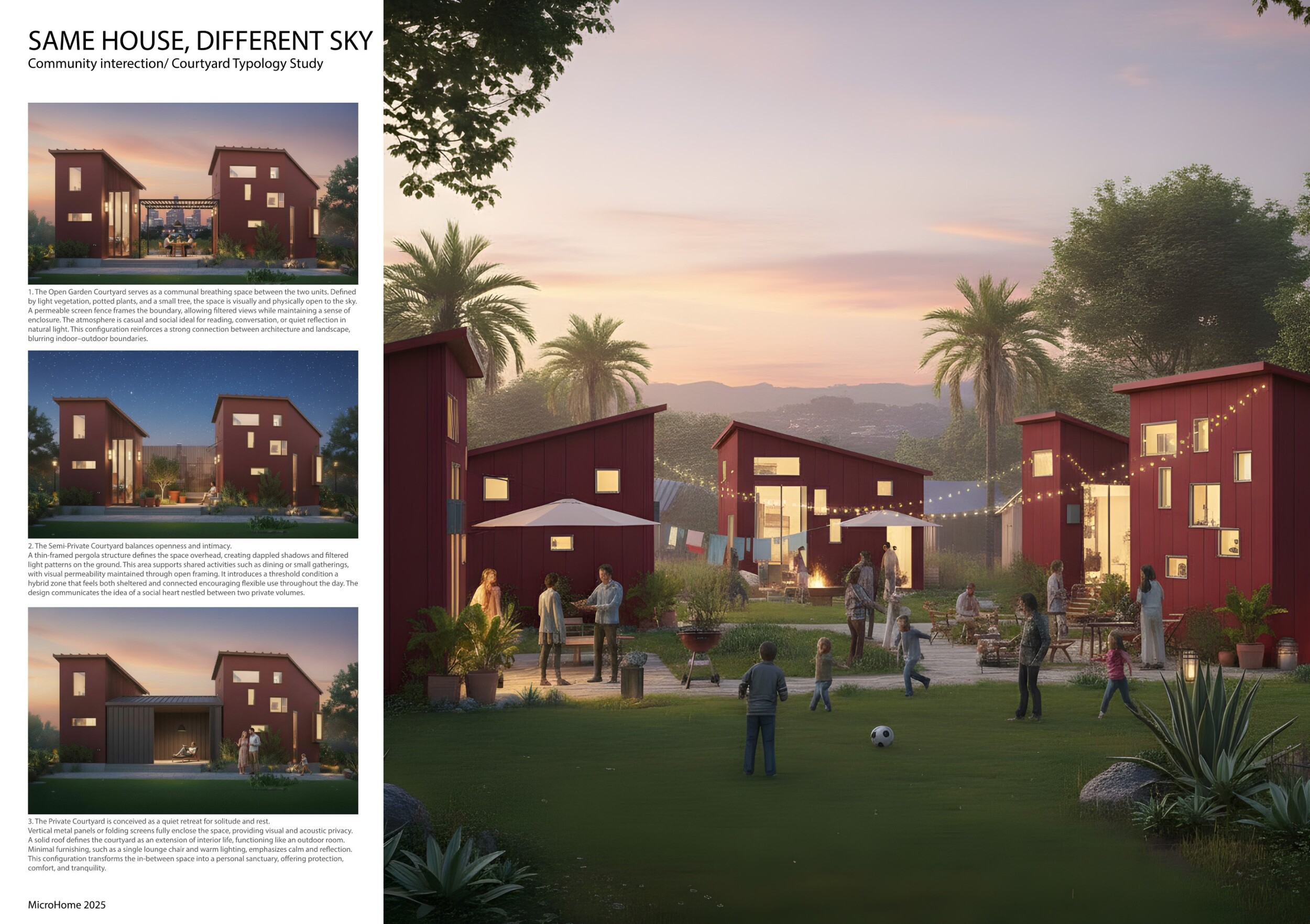
Amphibious Living Unit — Mekong Prototype
Aperture
Living on Groundwater
Kerb House
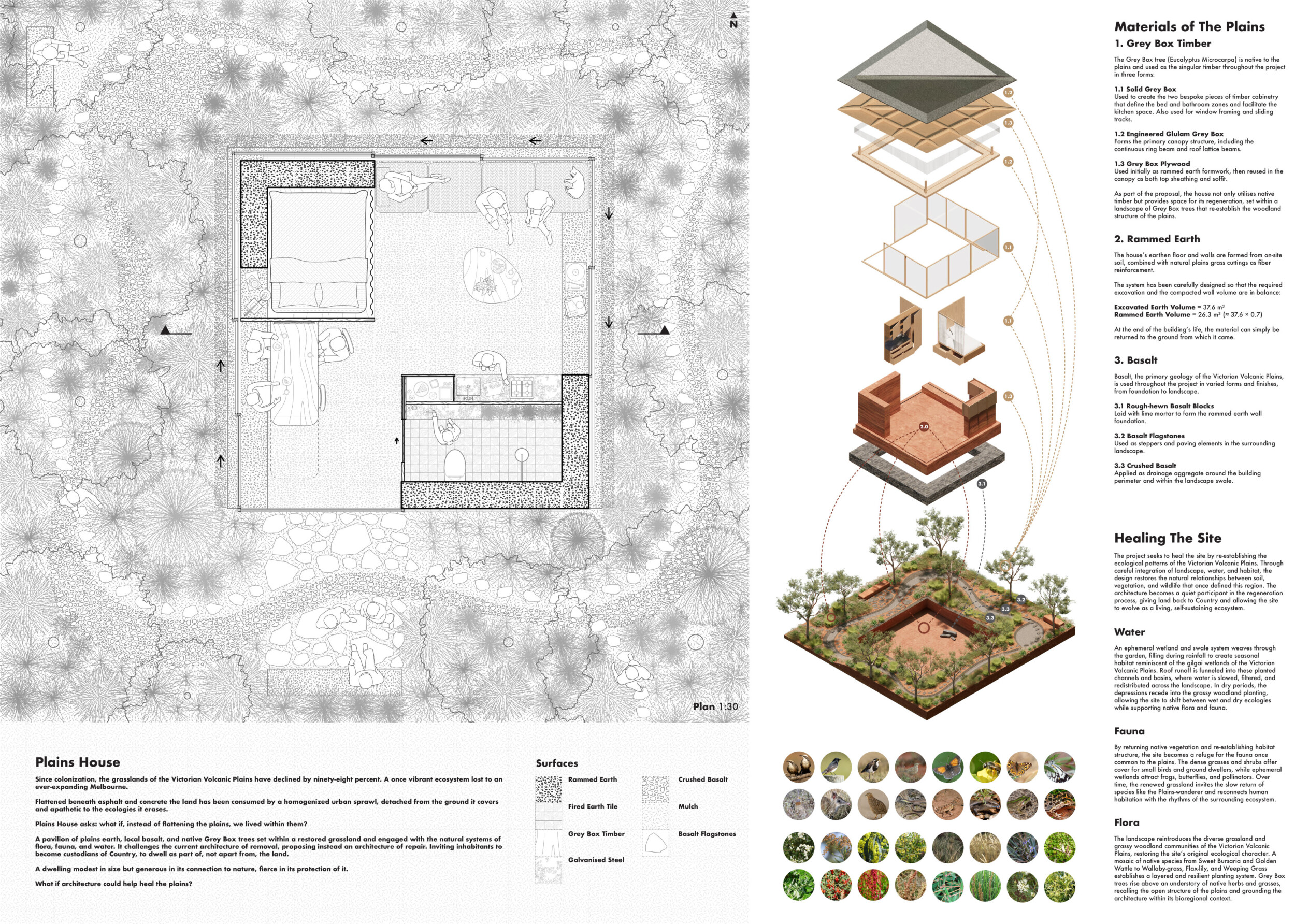
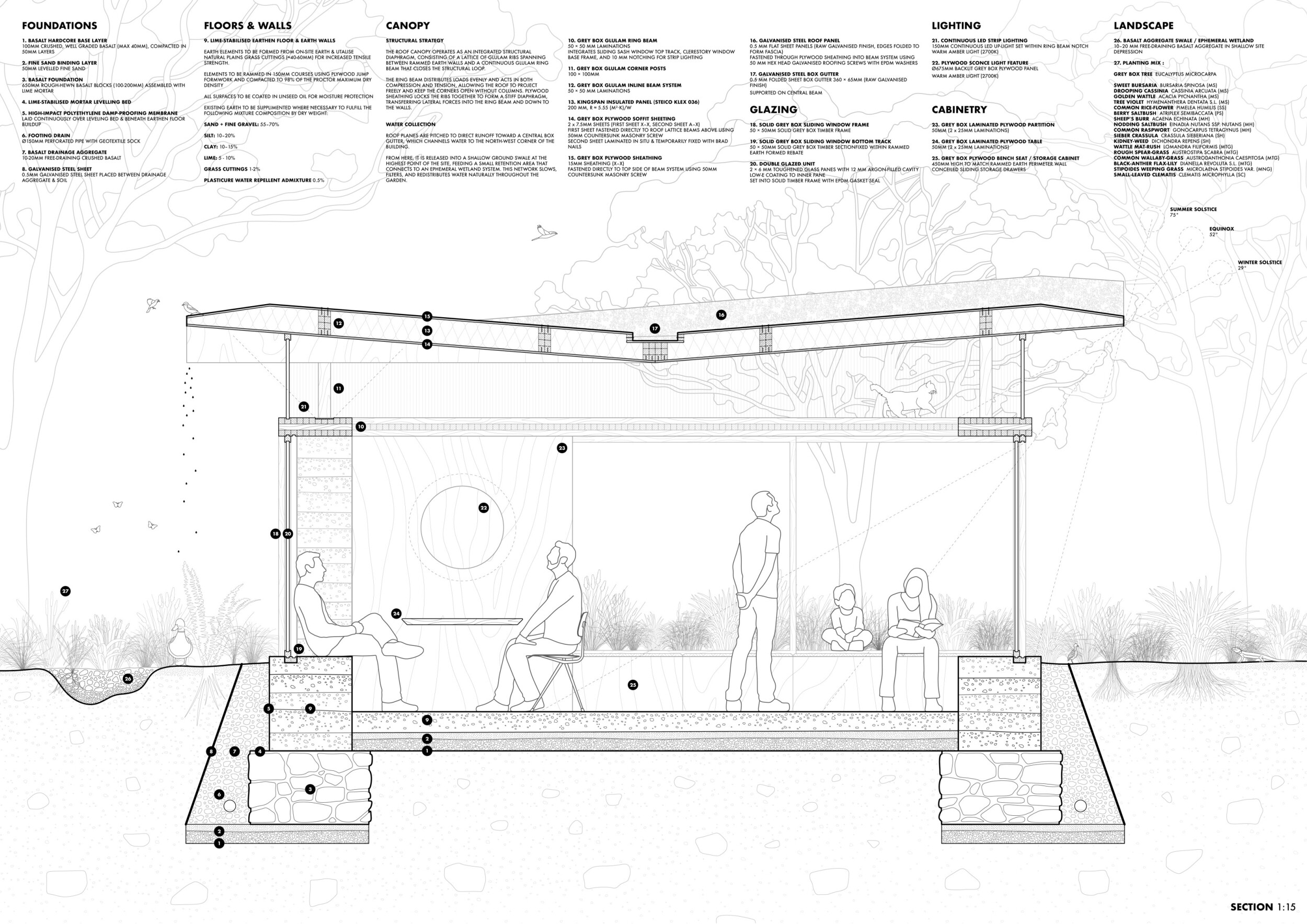
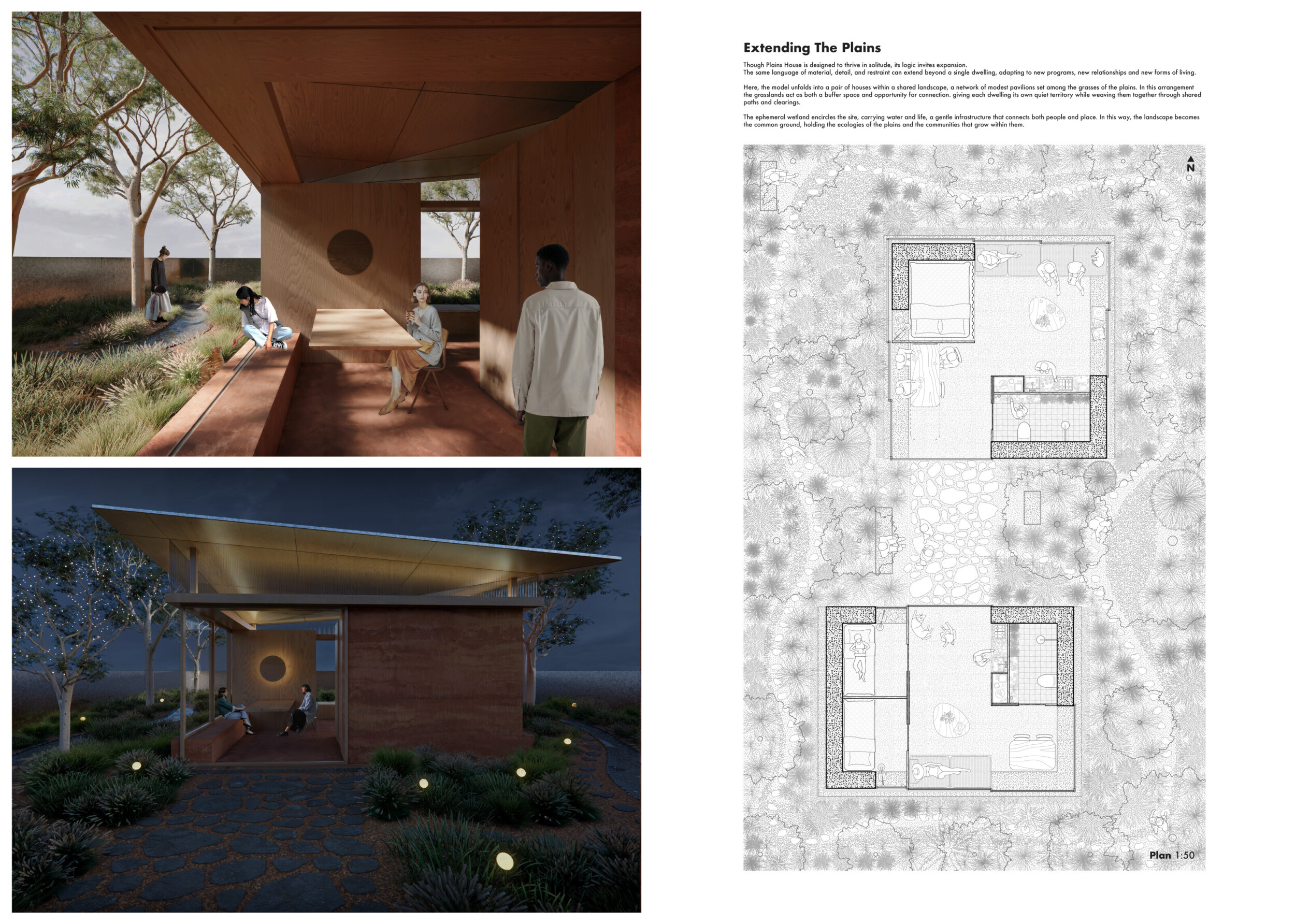
Plains House
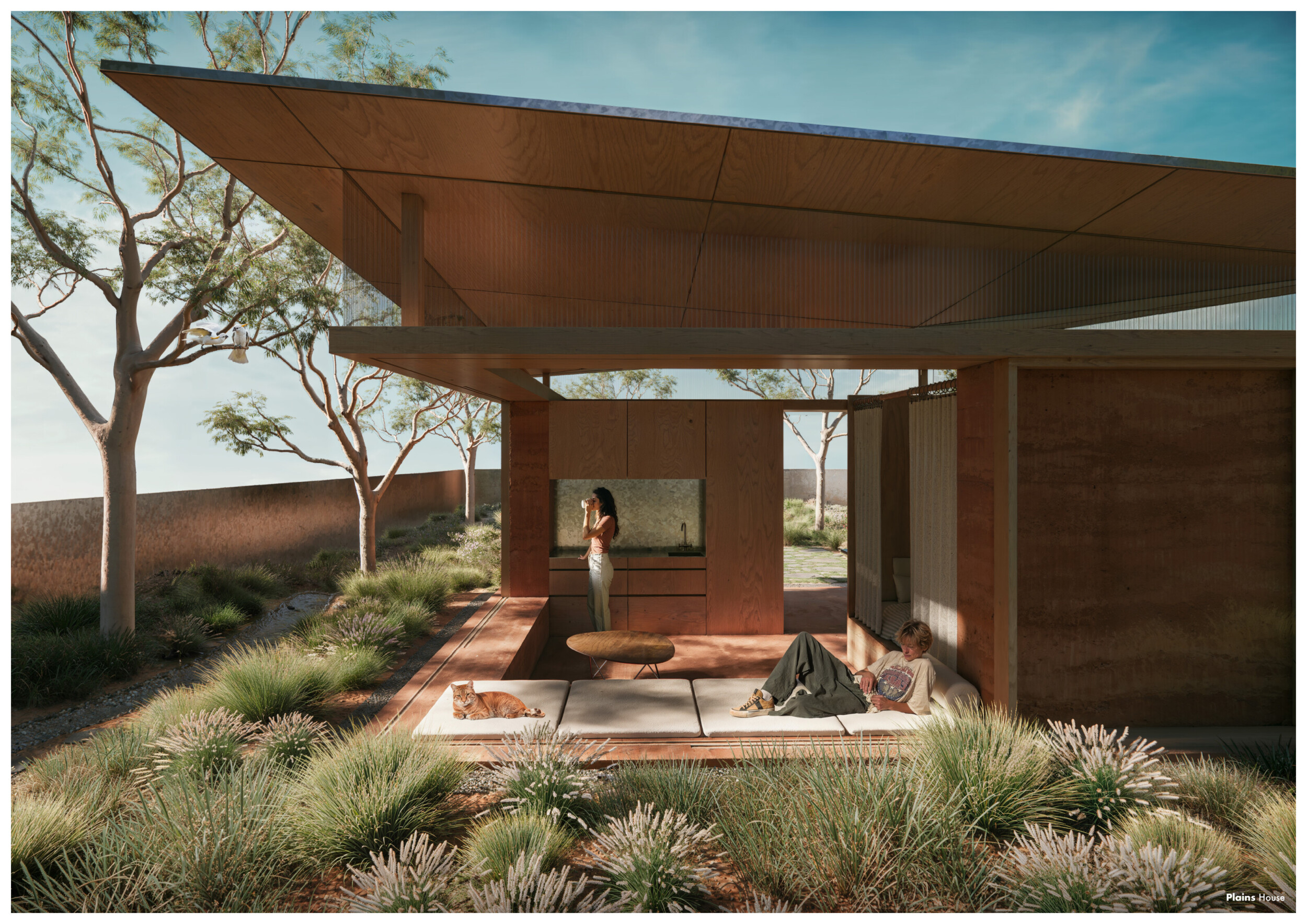
Home Park
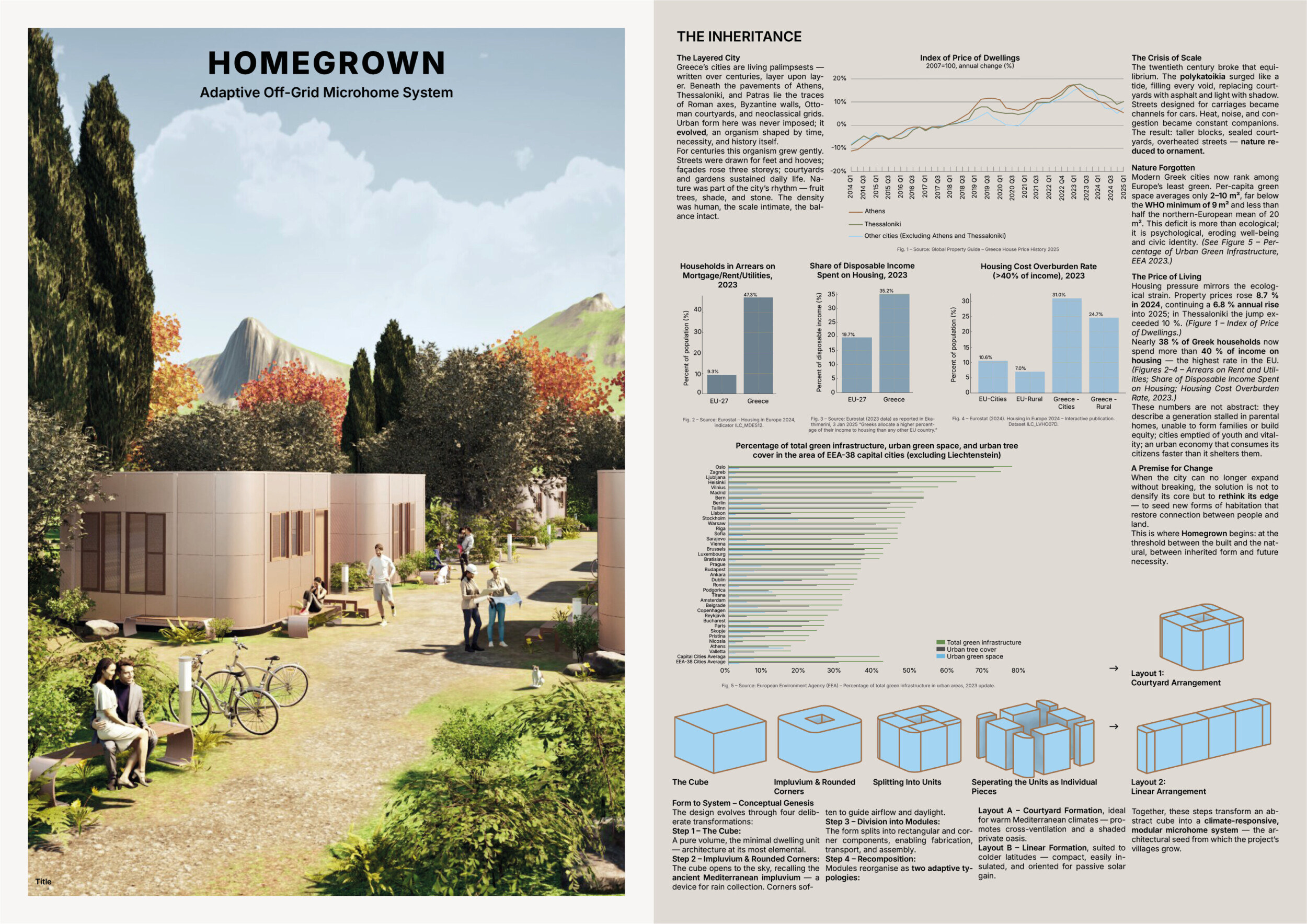
Homegrown
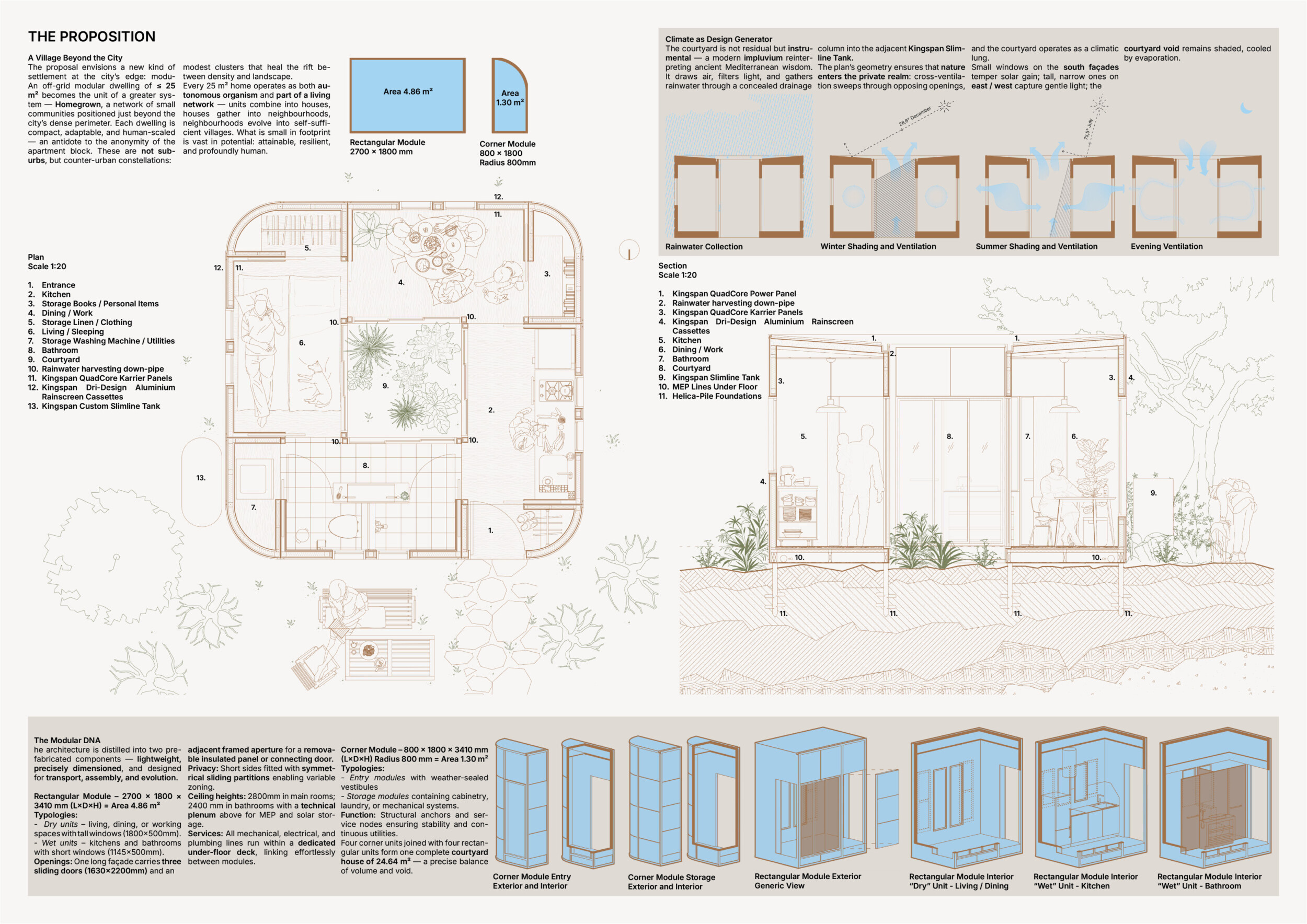
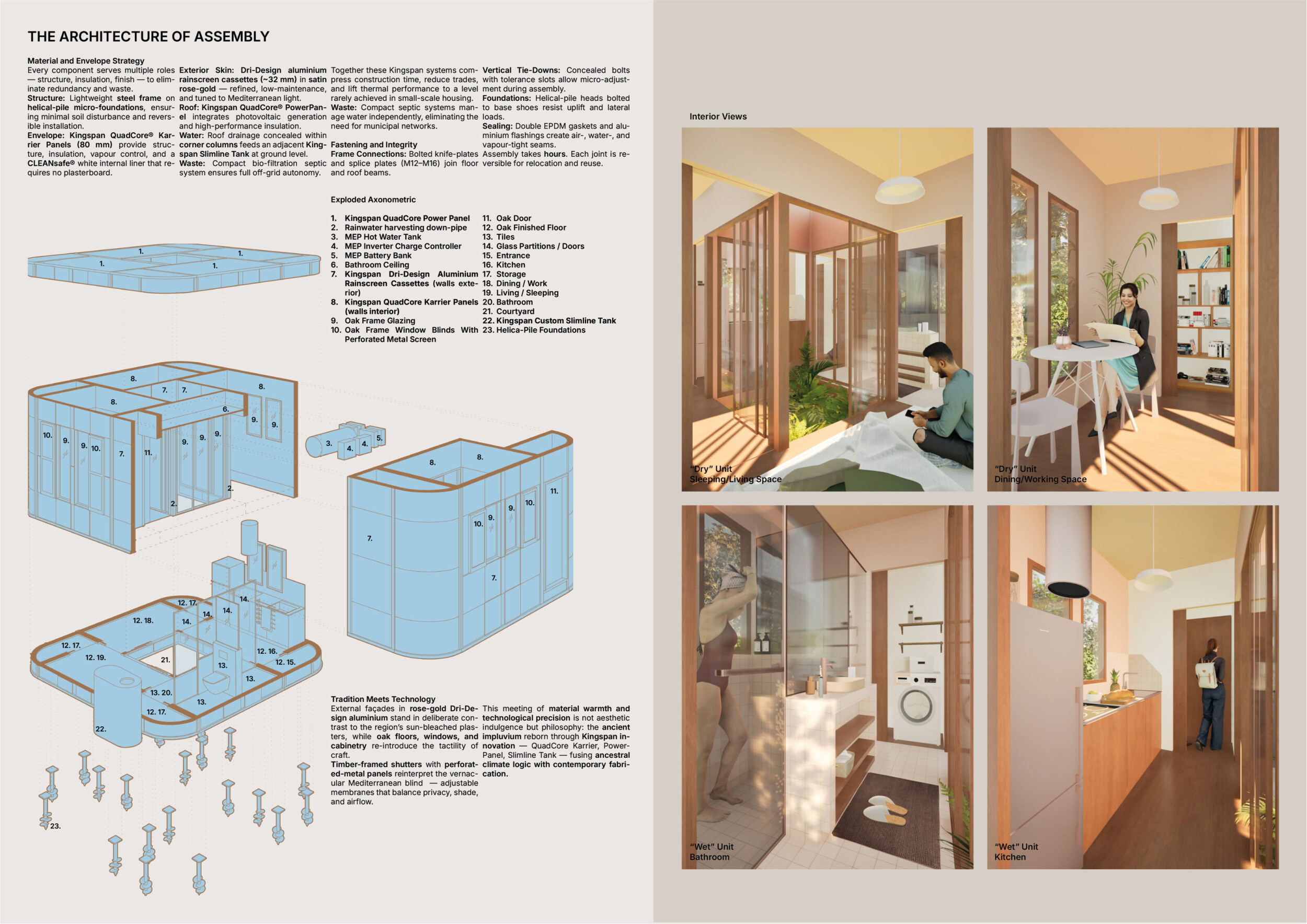
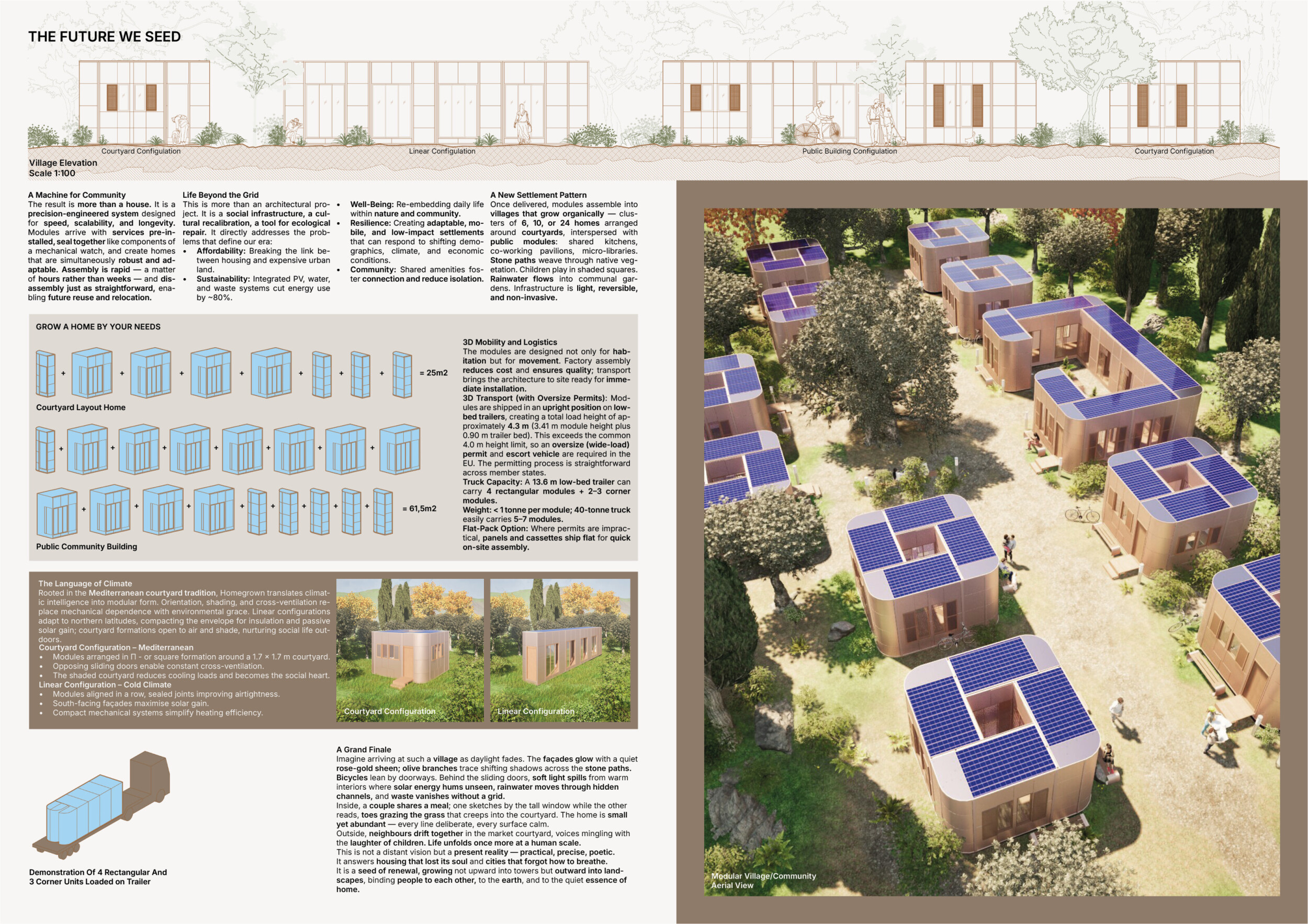

Northern Domino
Laneway House
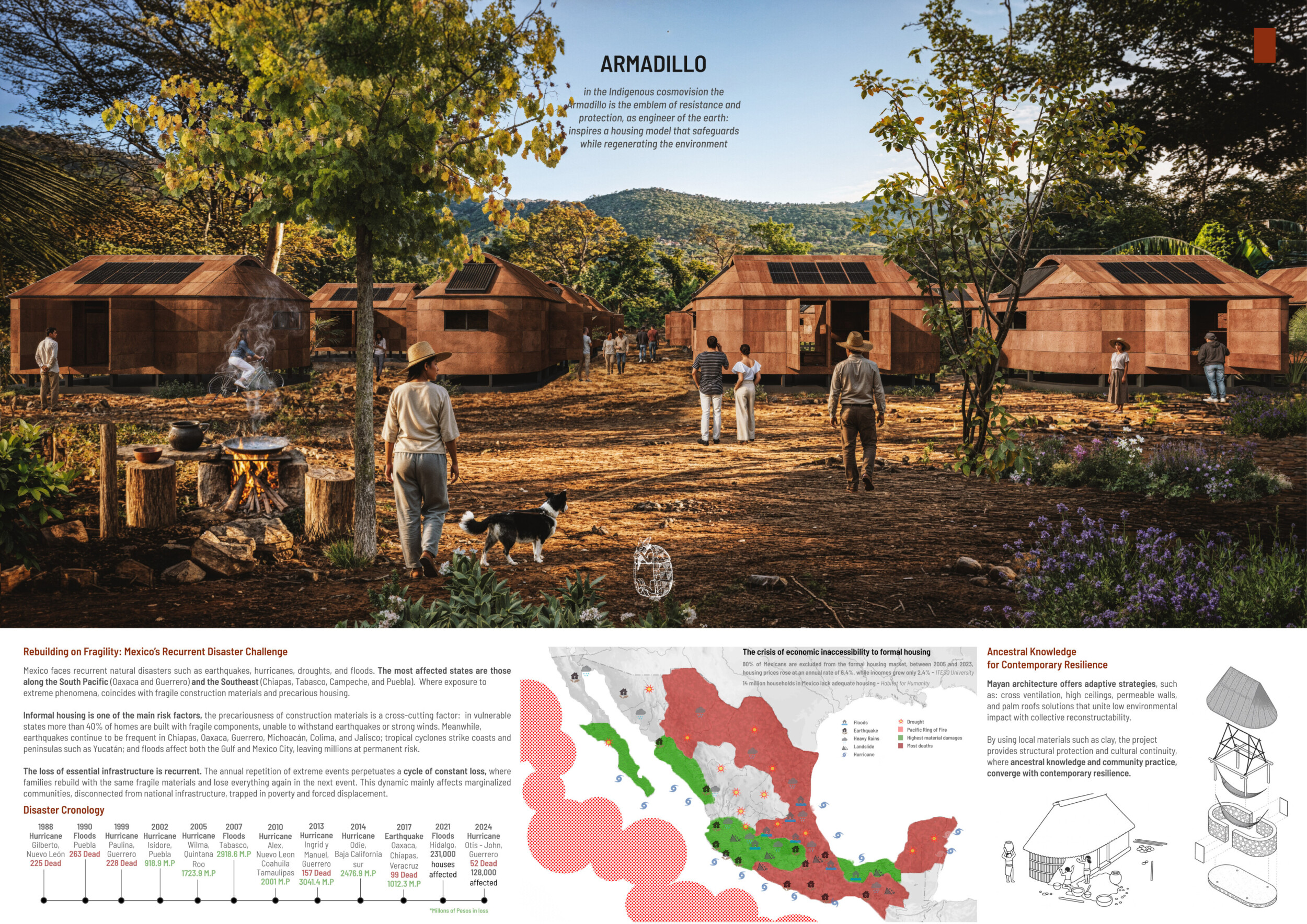
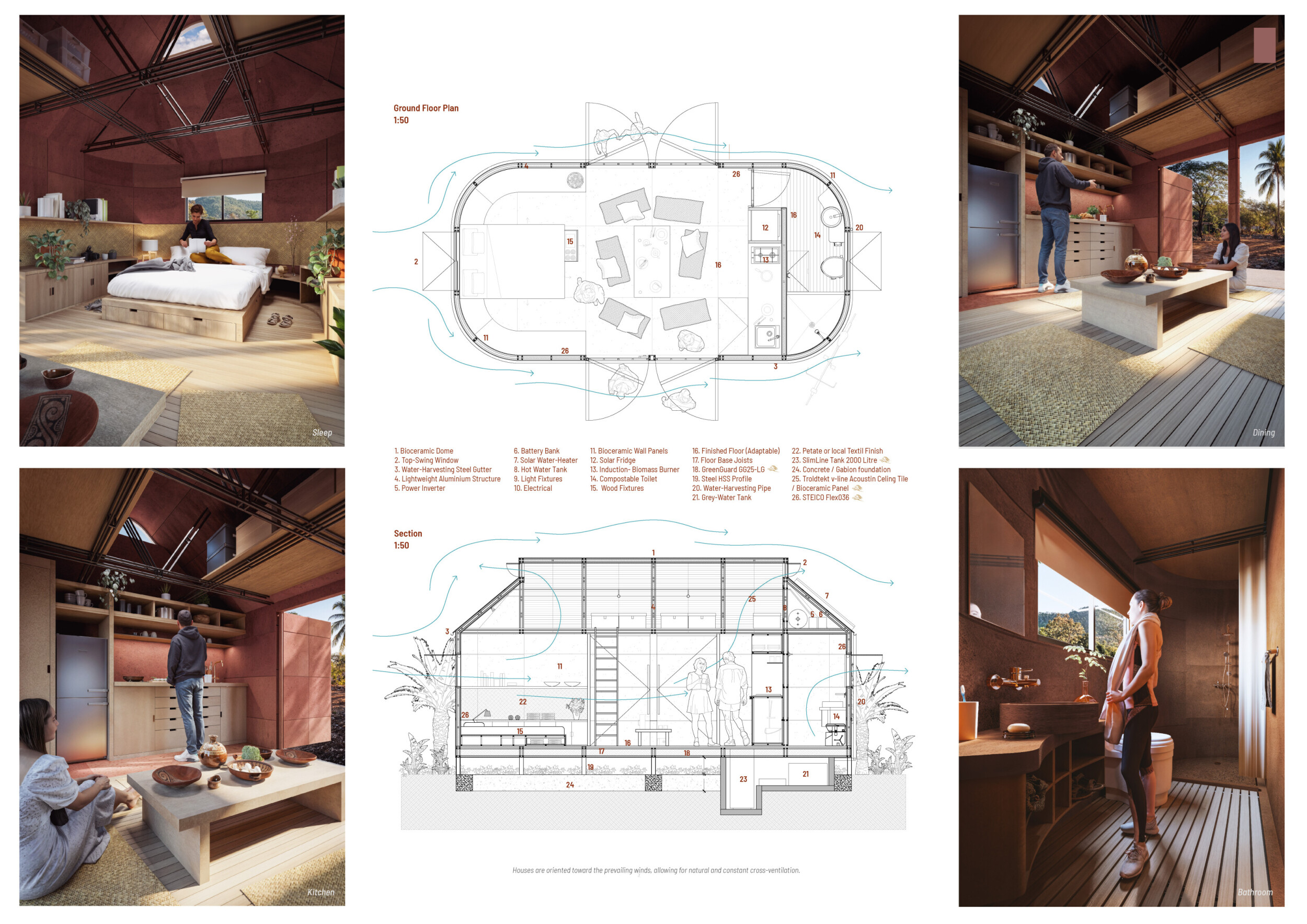
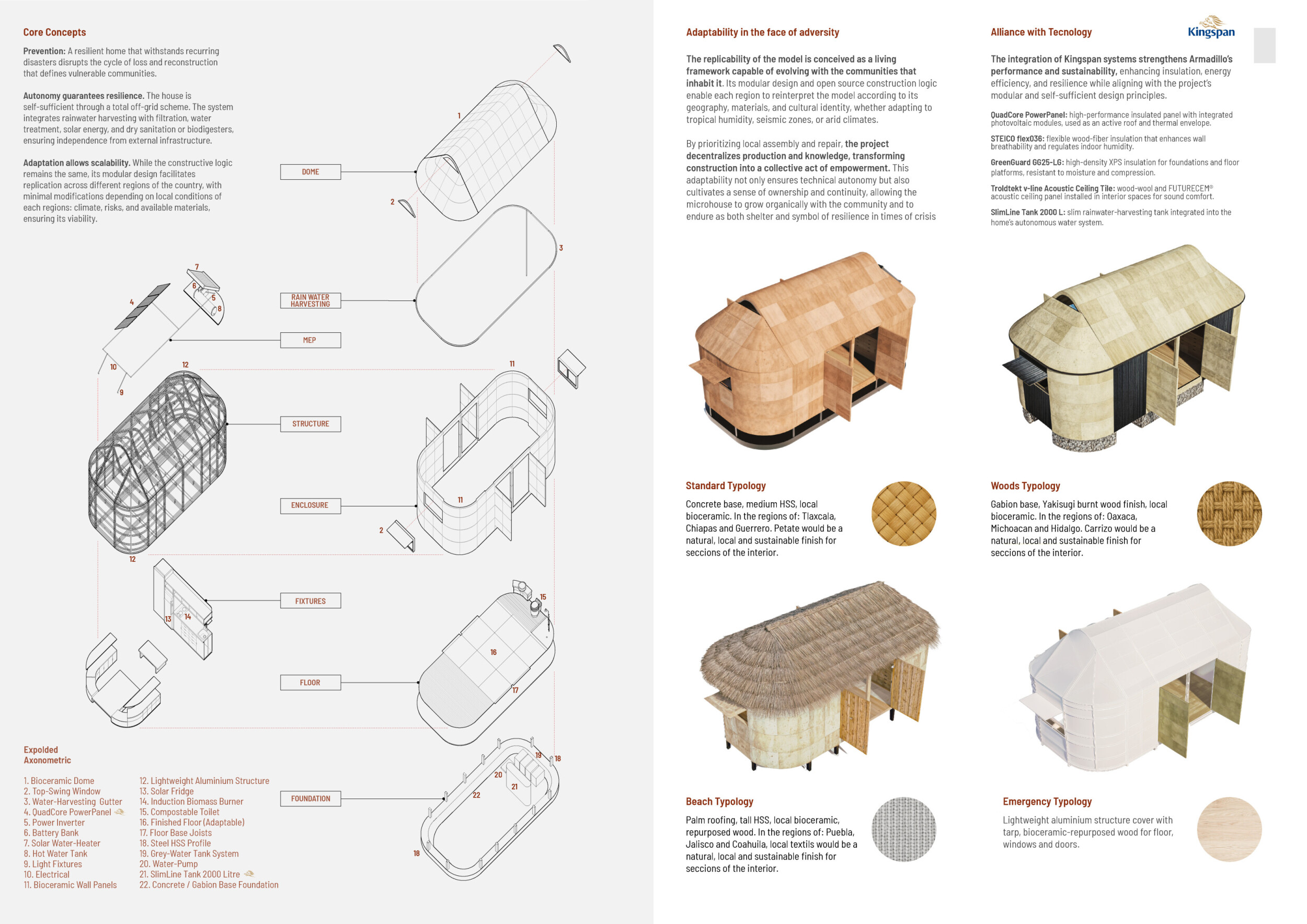
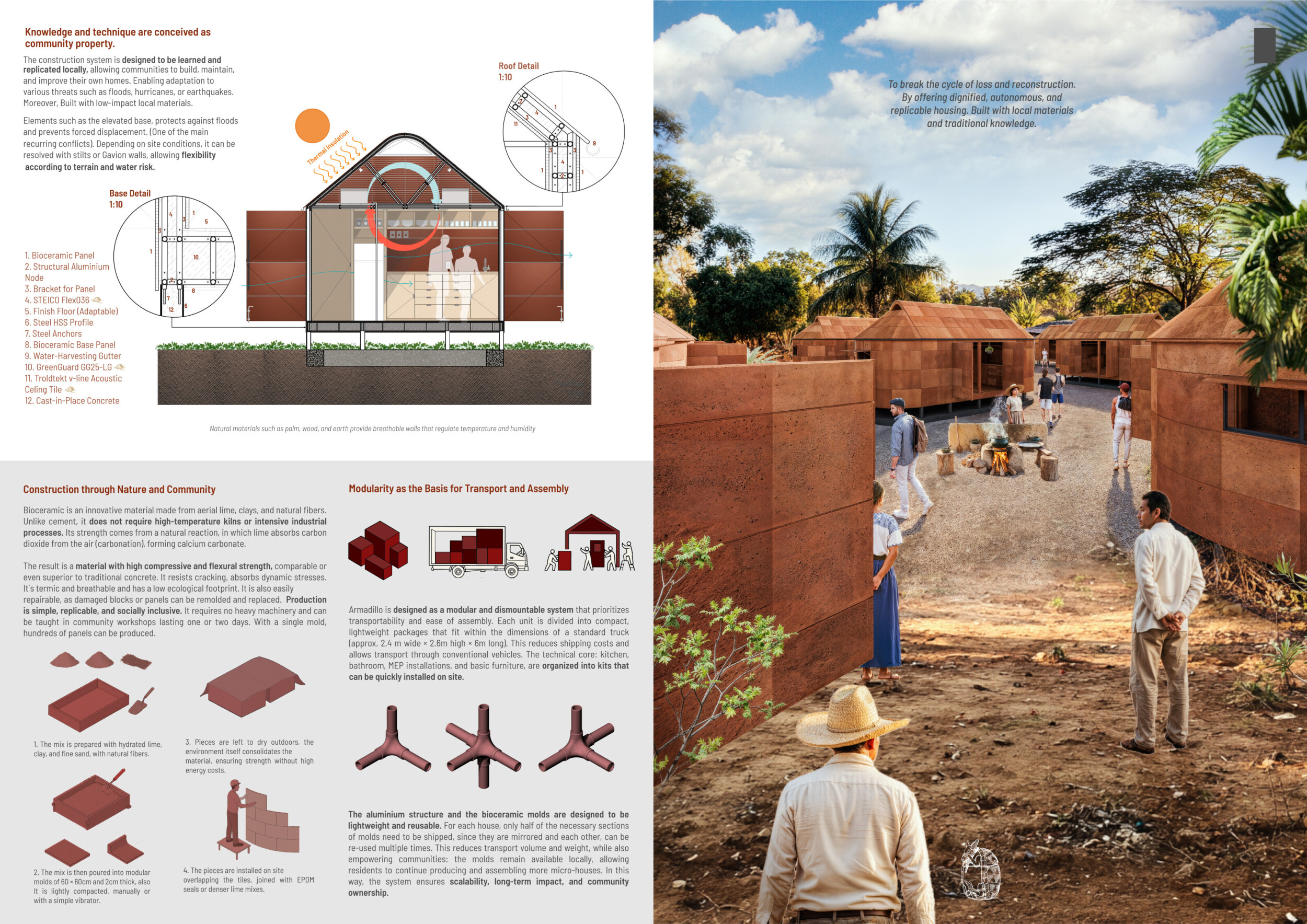
Armadillo

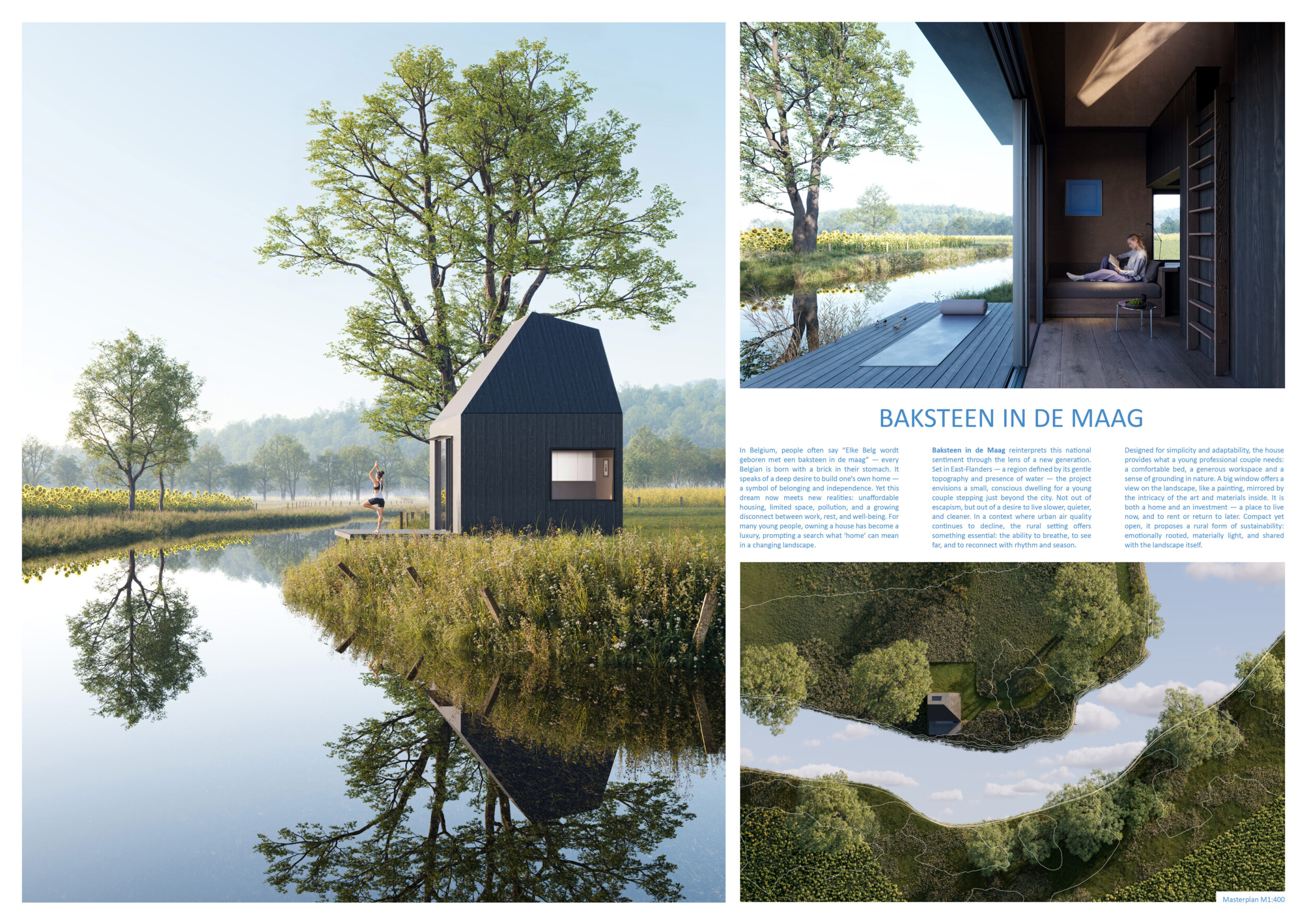
Backsteen in de maag

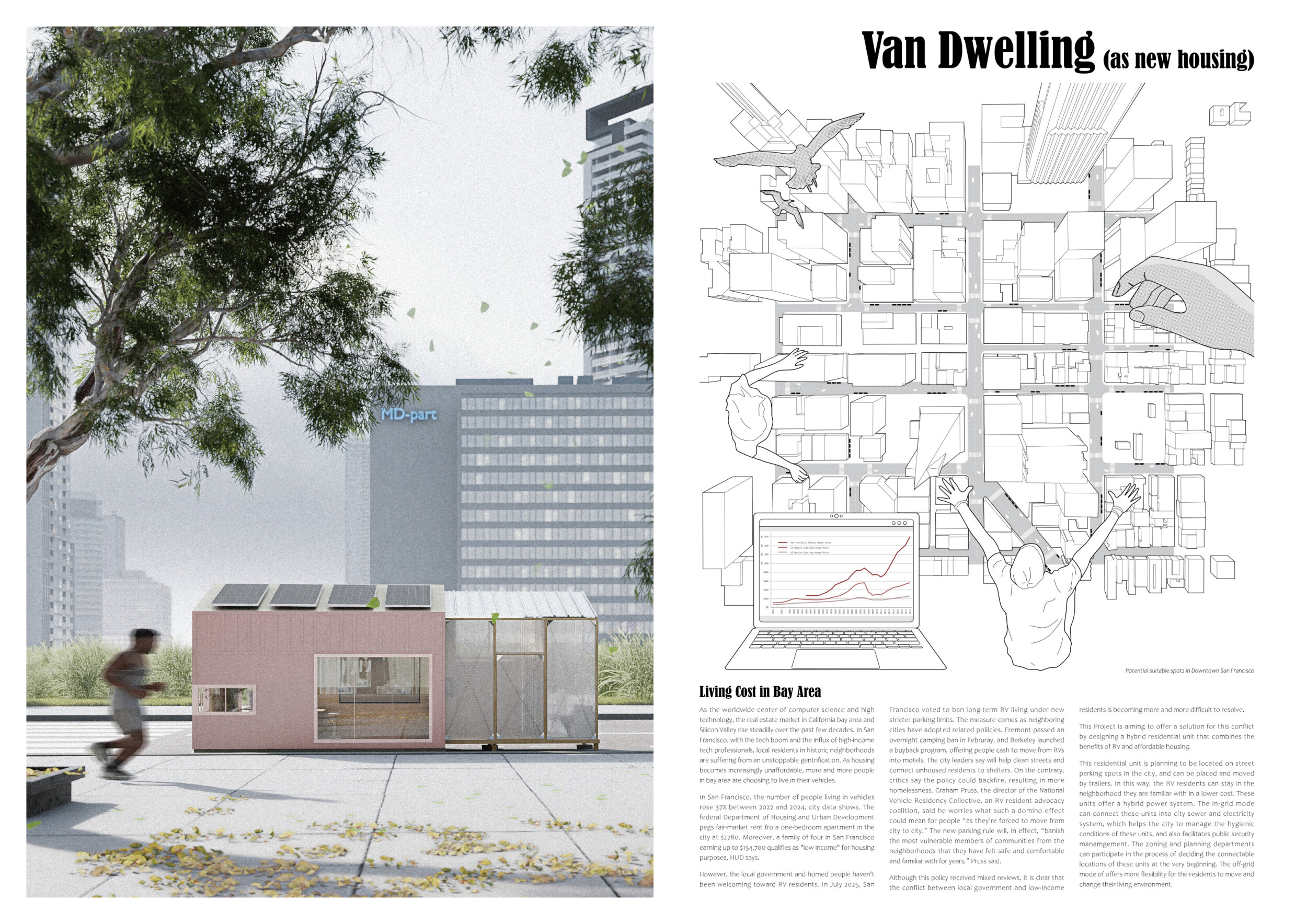
Van Dwelling (as new housing)
ORIGO
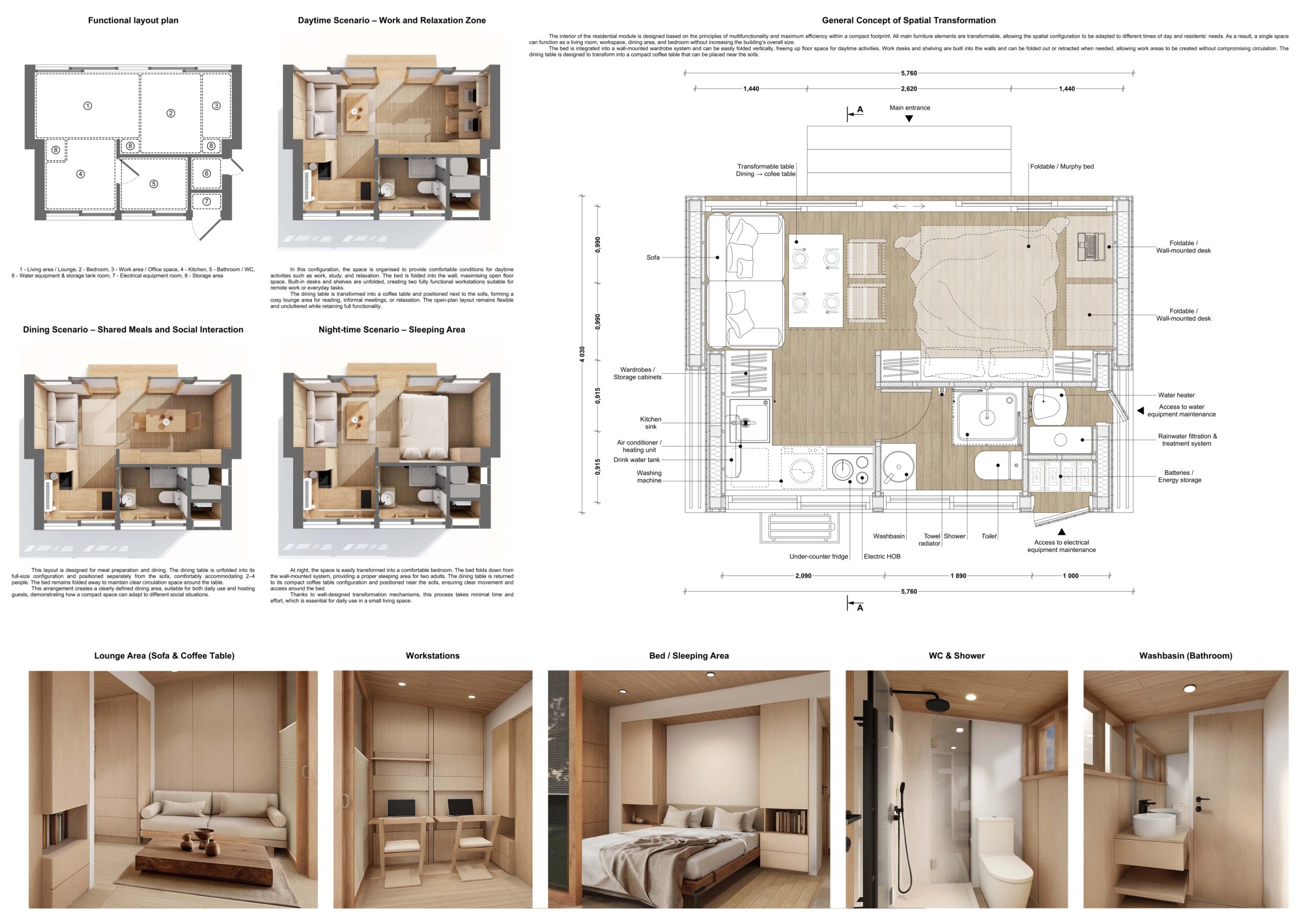
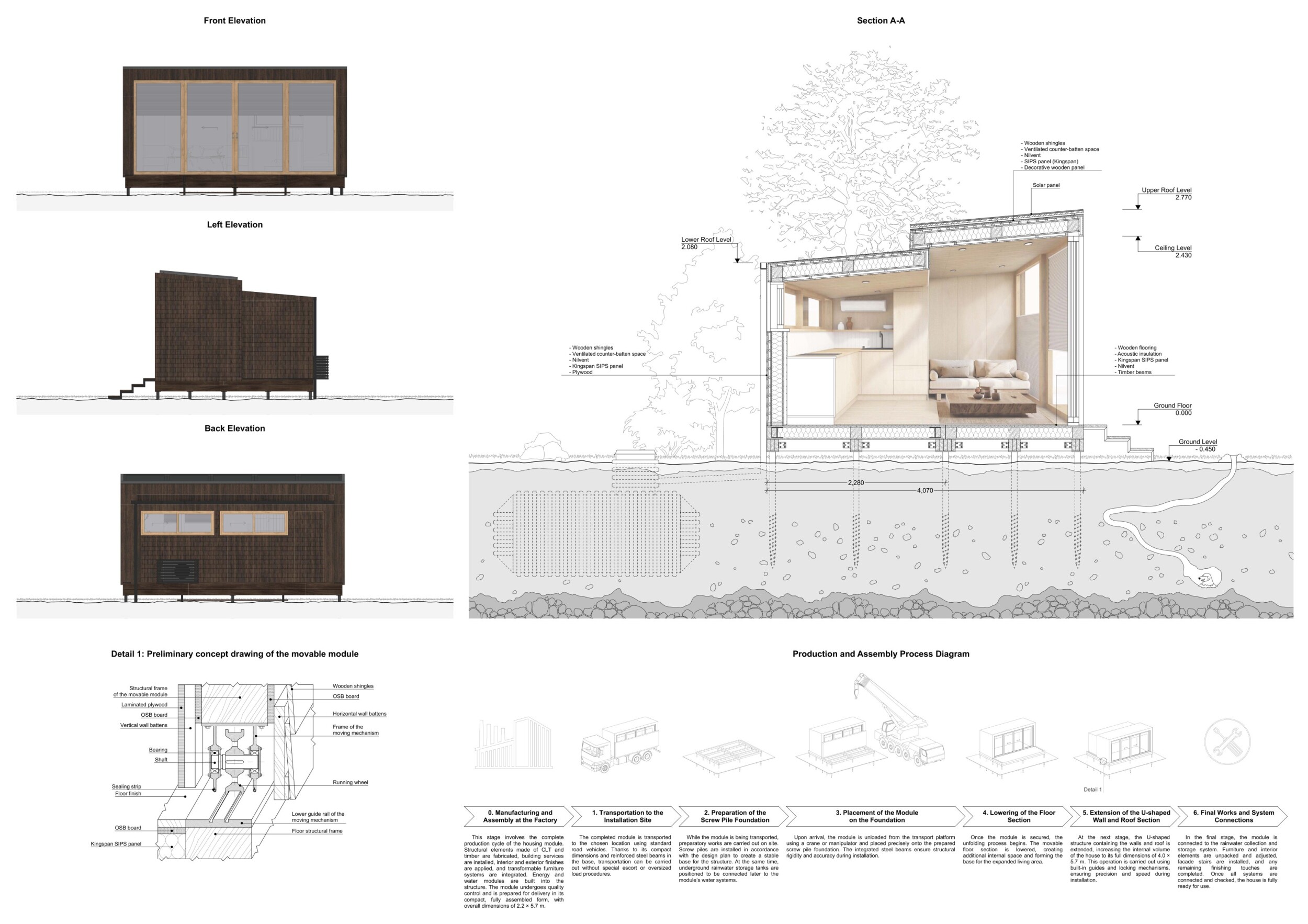
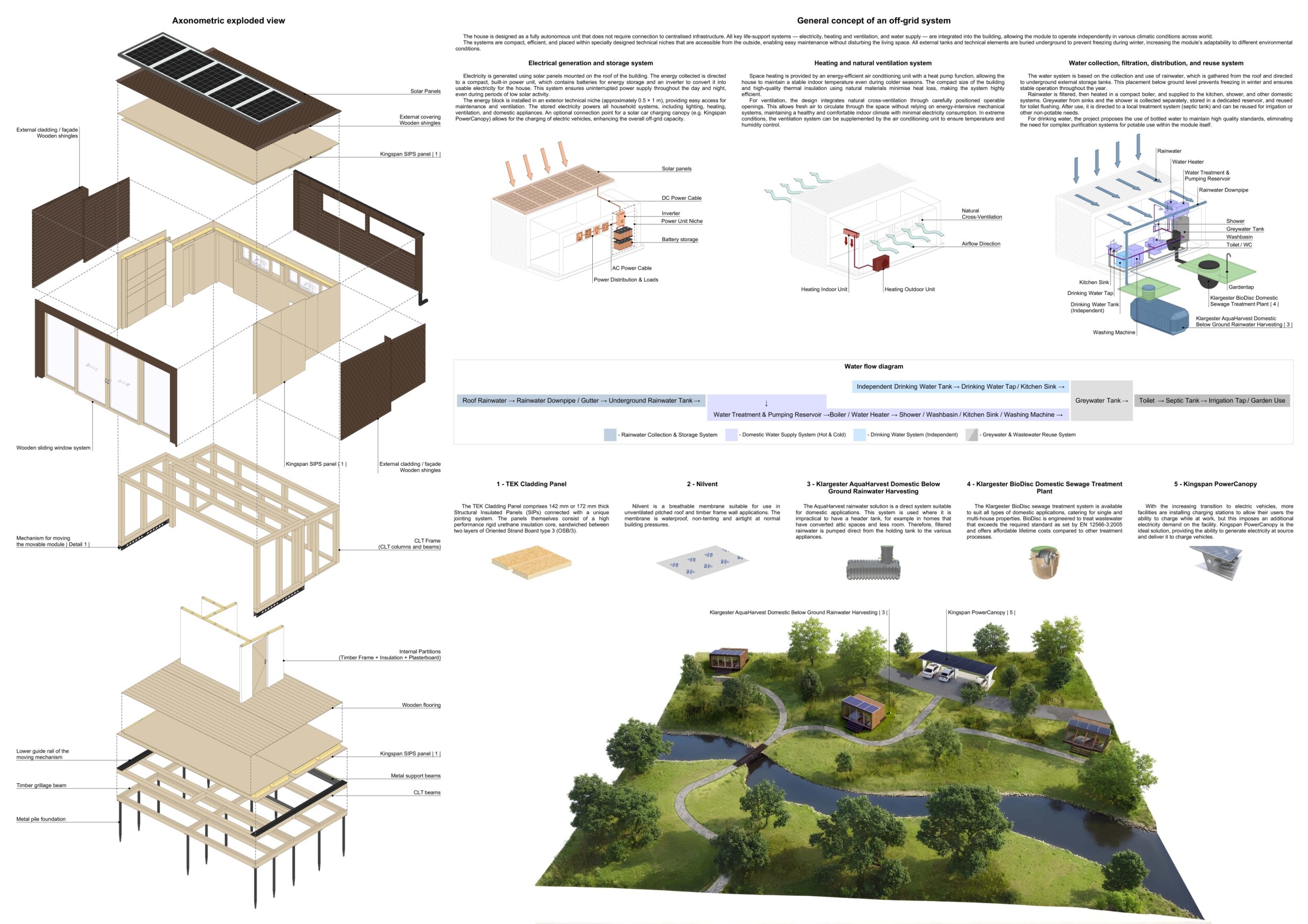

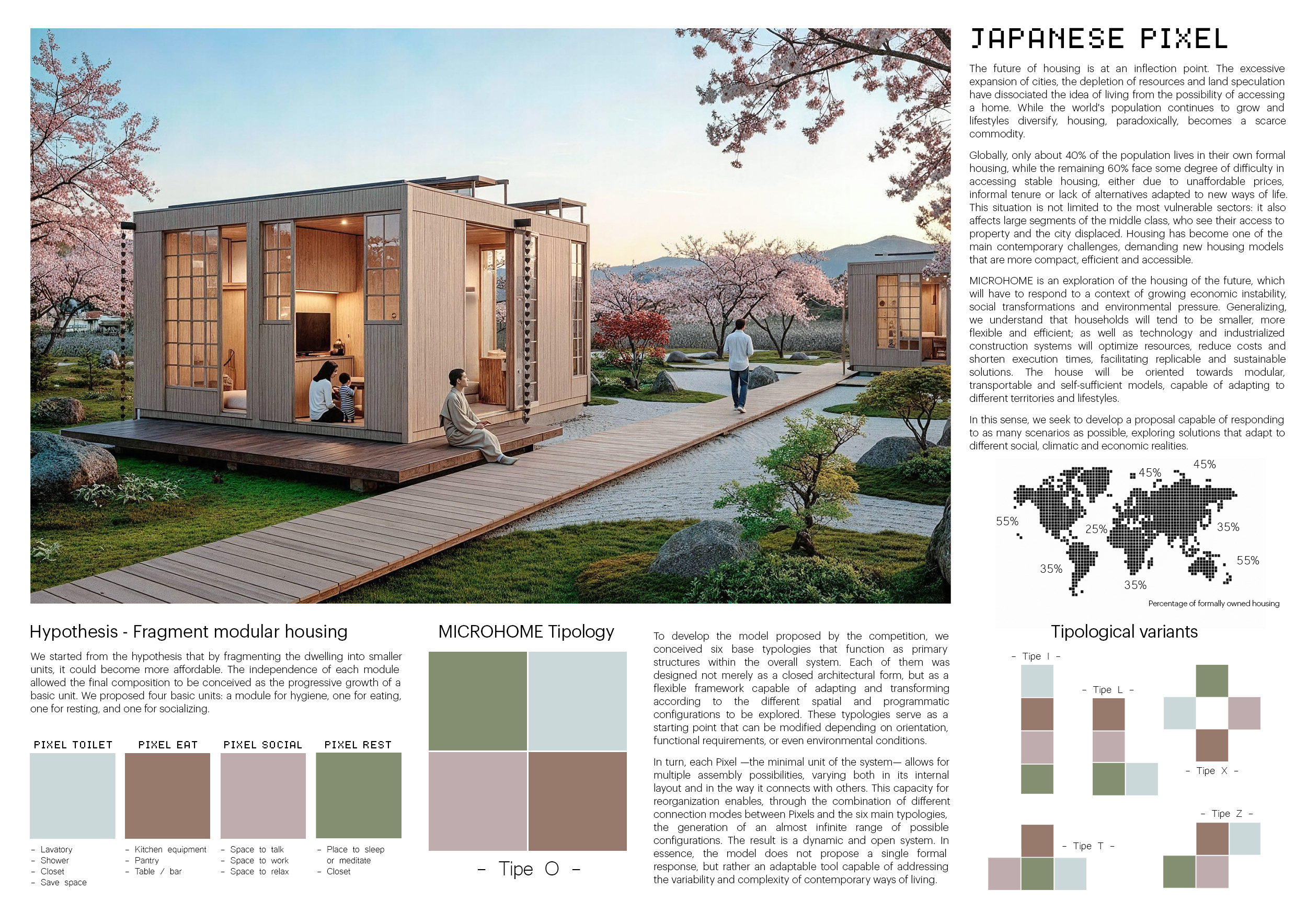
Japanese Pixel
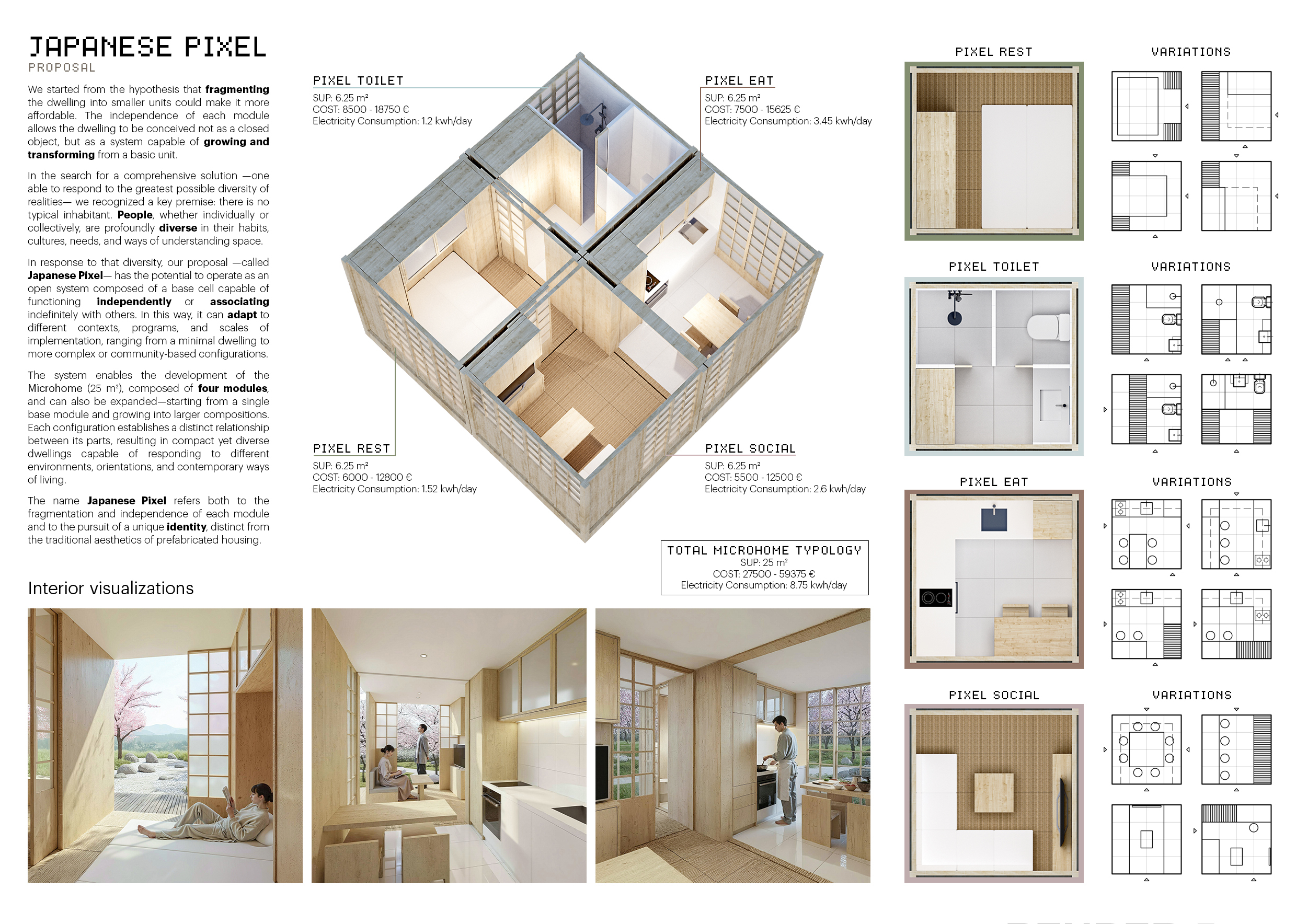
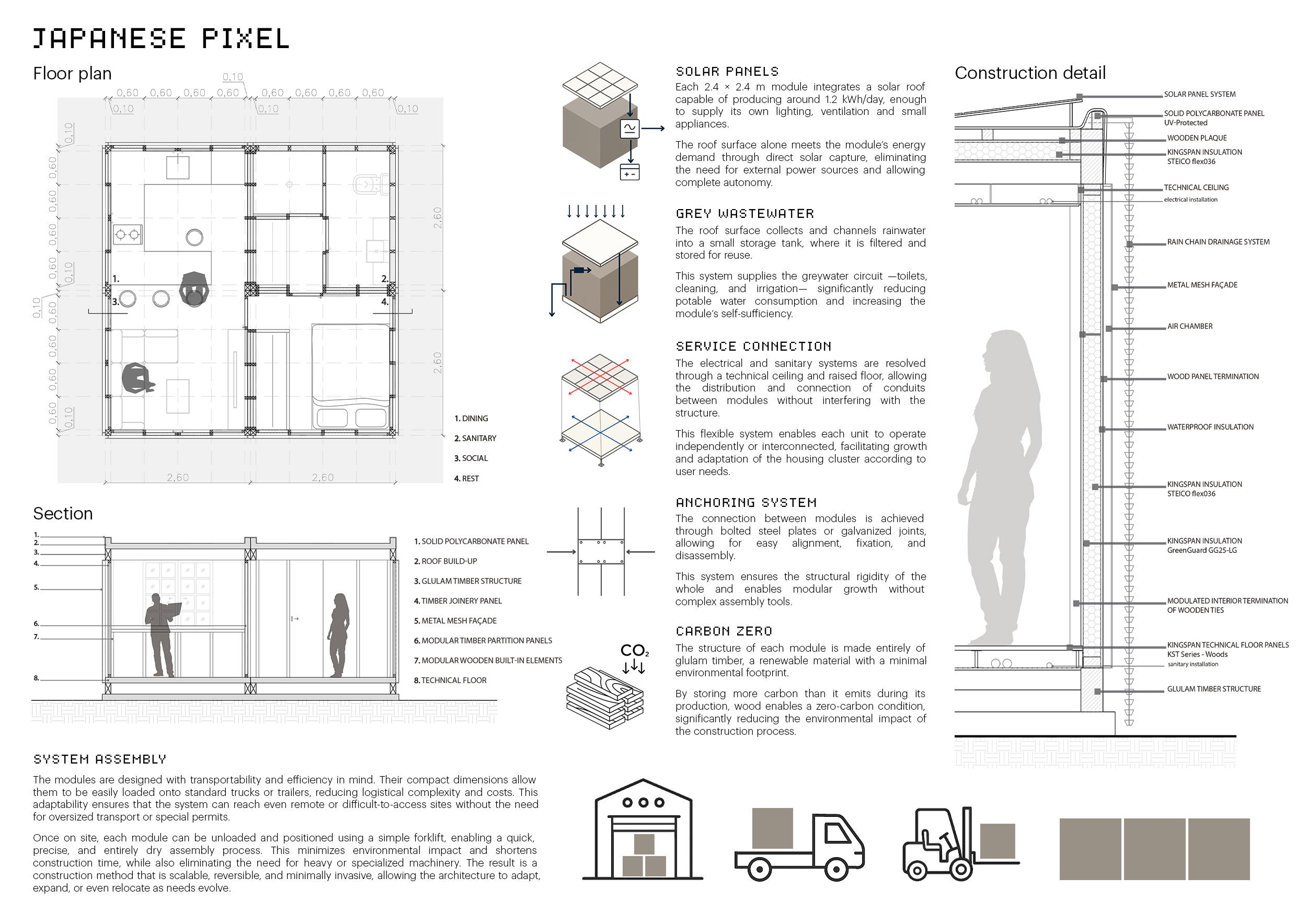
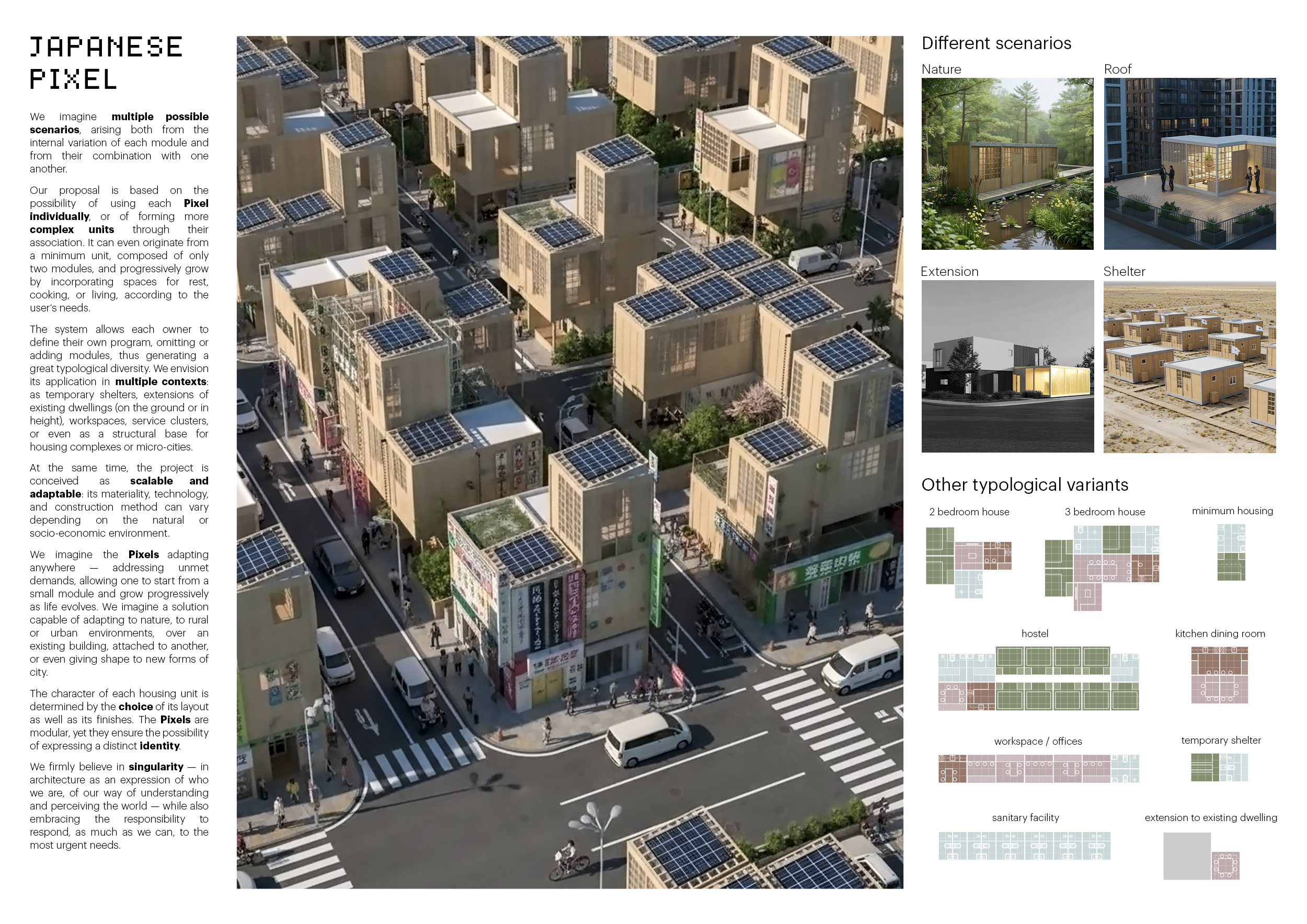
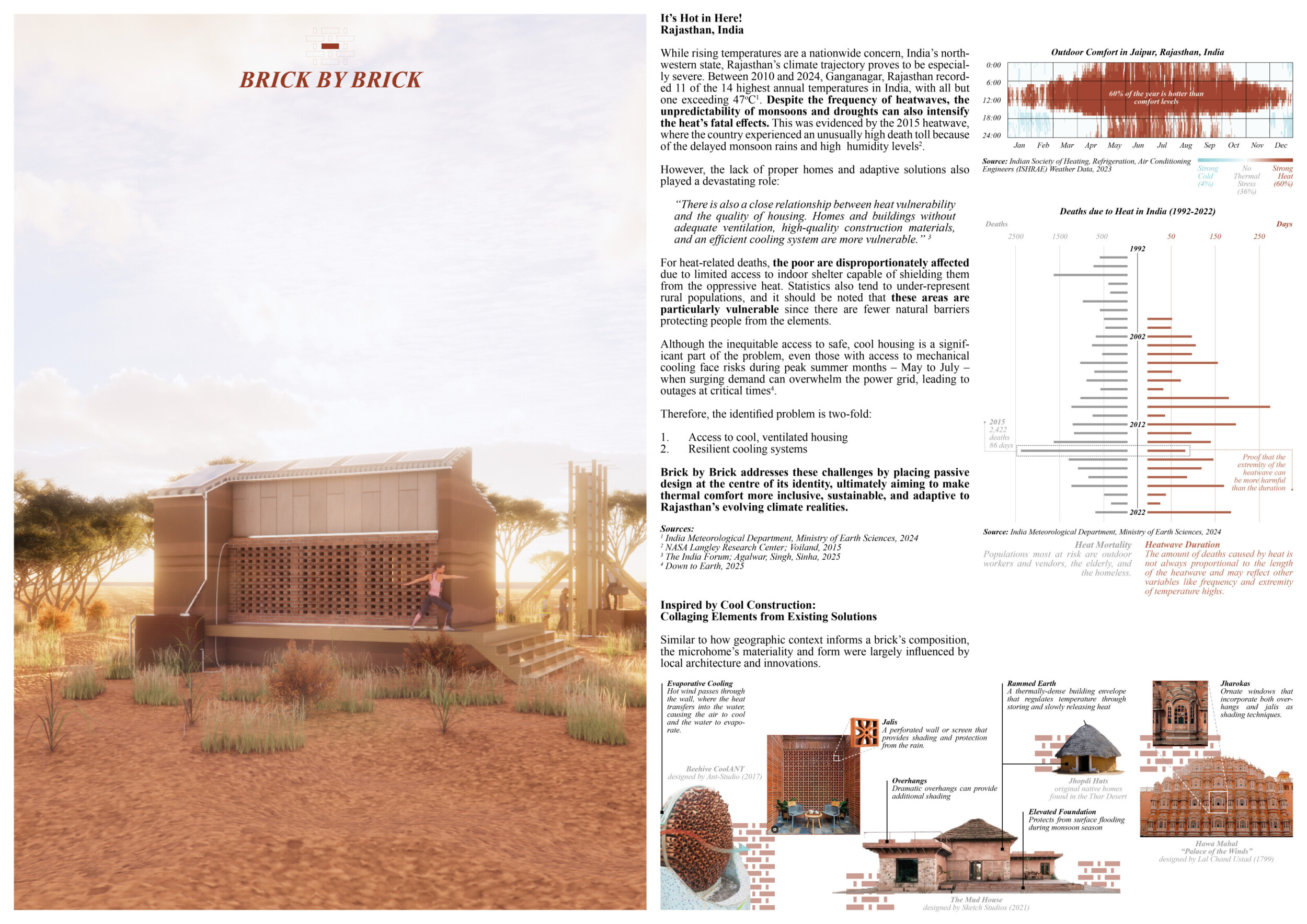
Brick by Brick
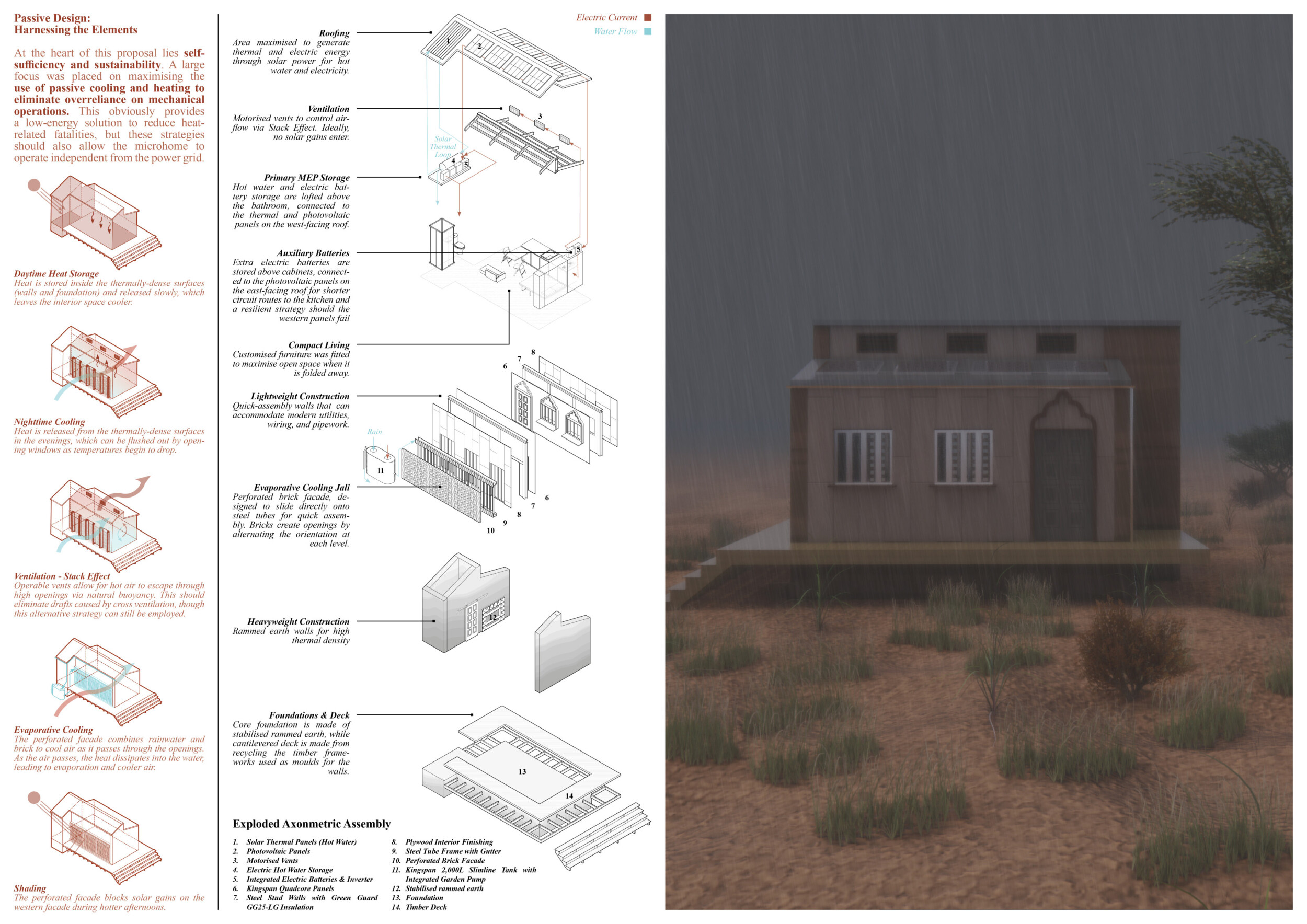
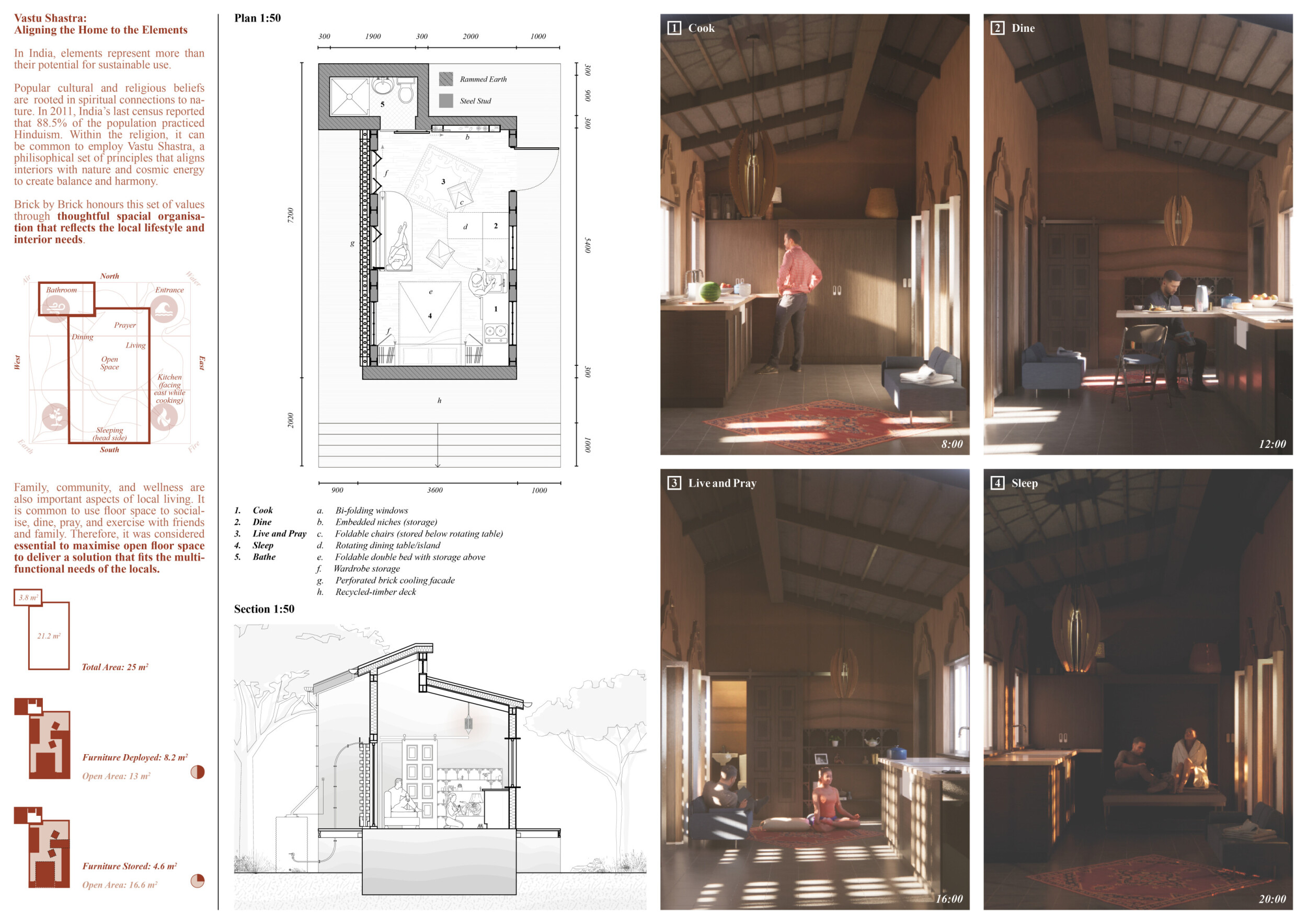
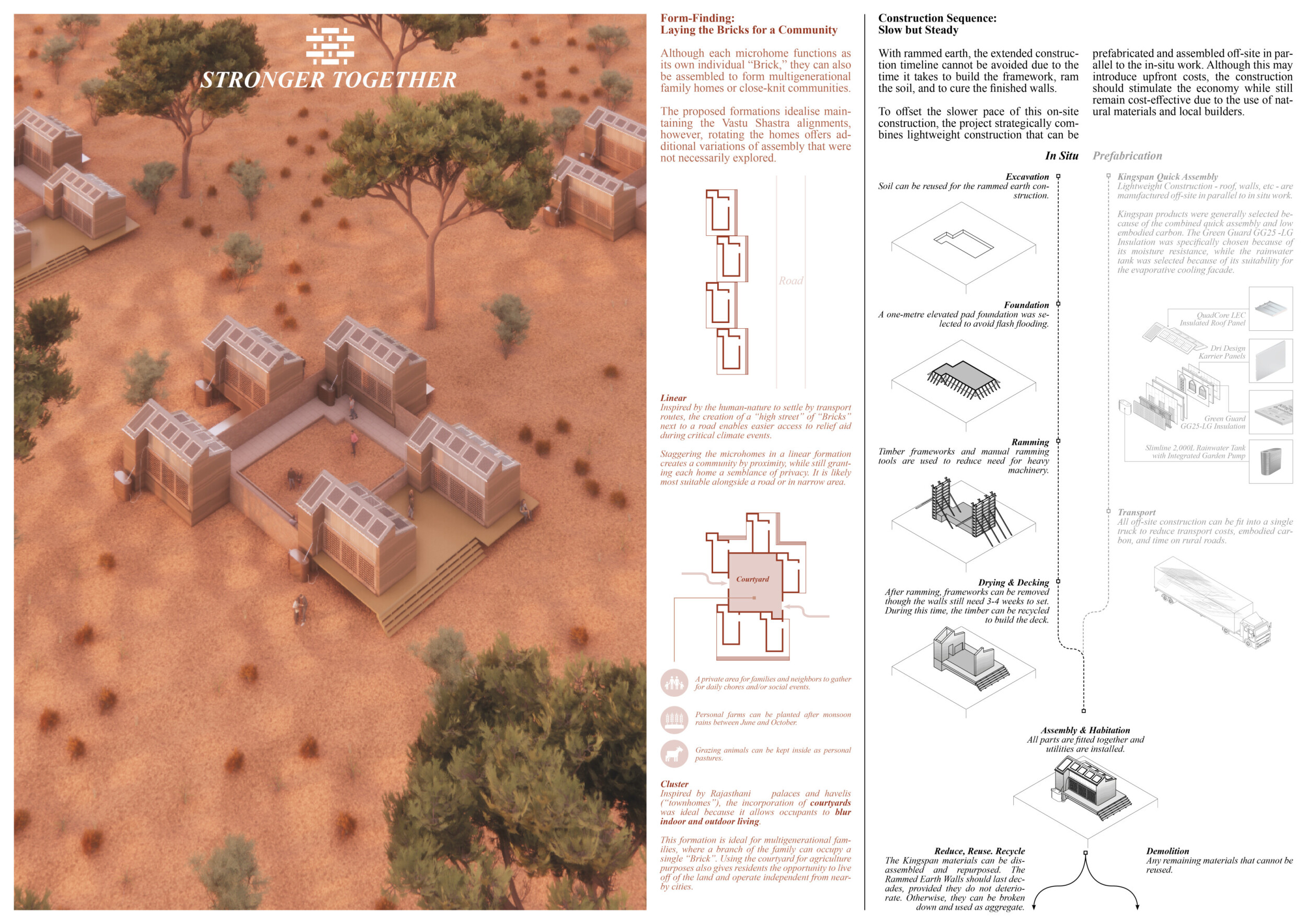
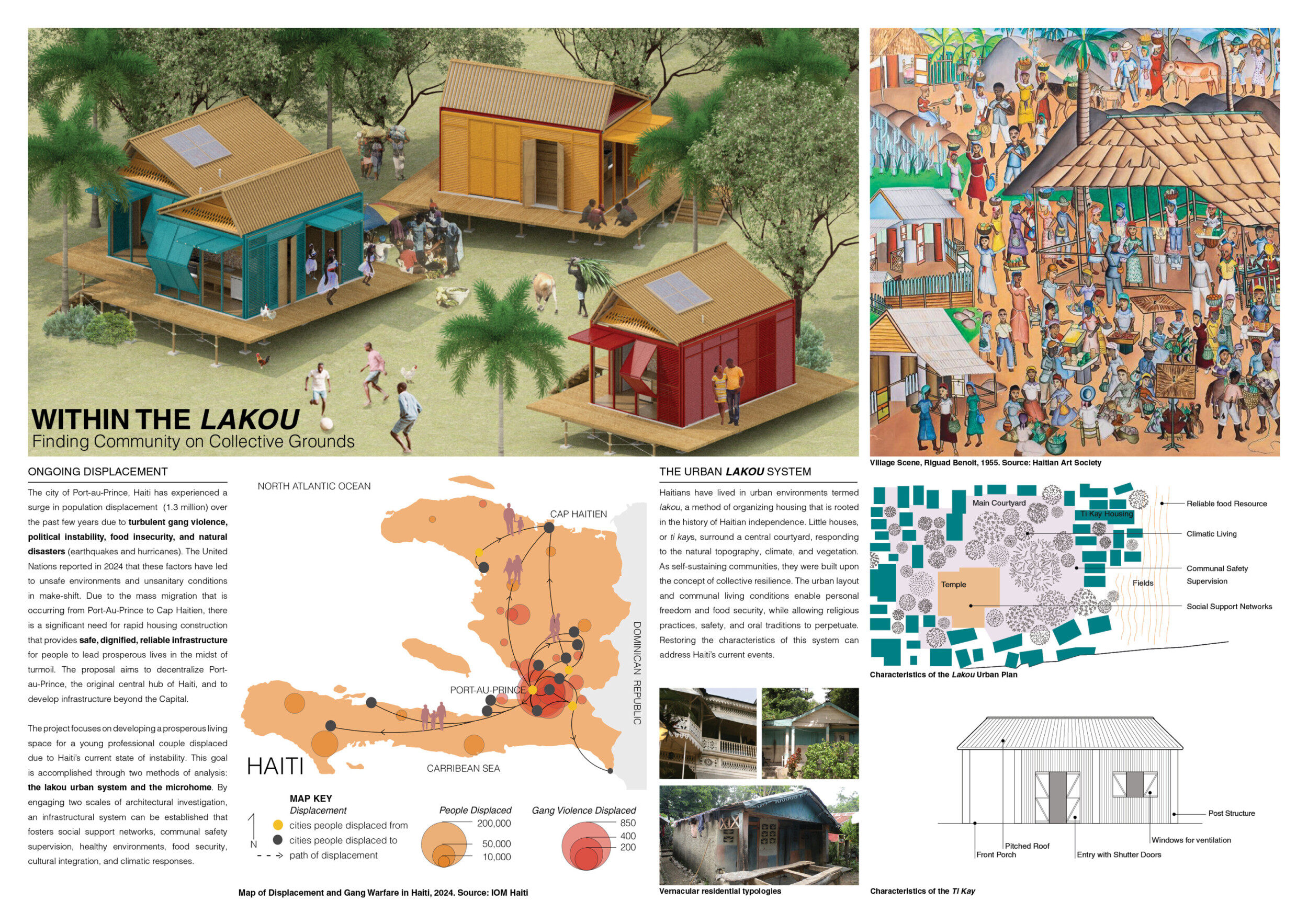
Within the Lakou
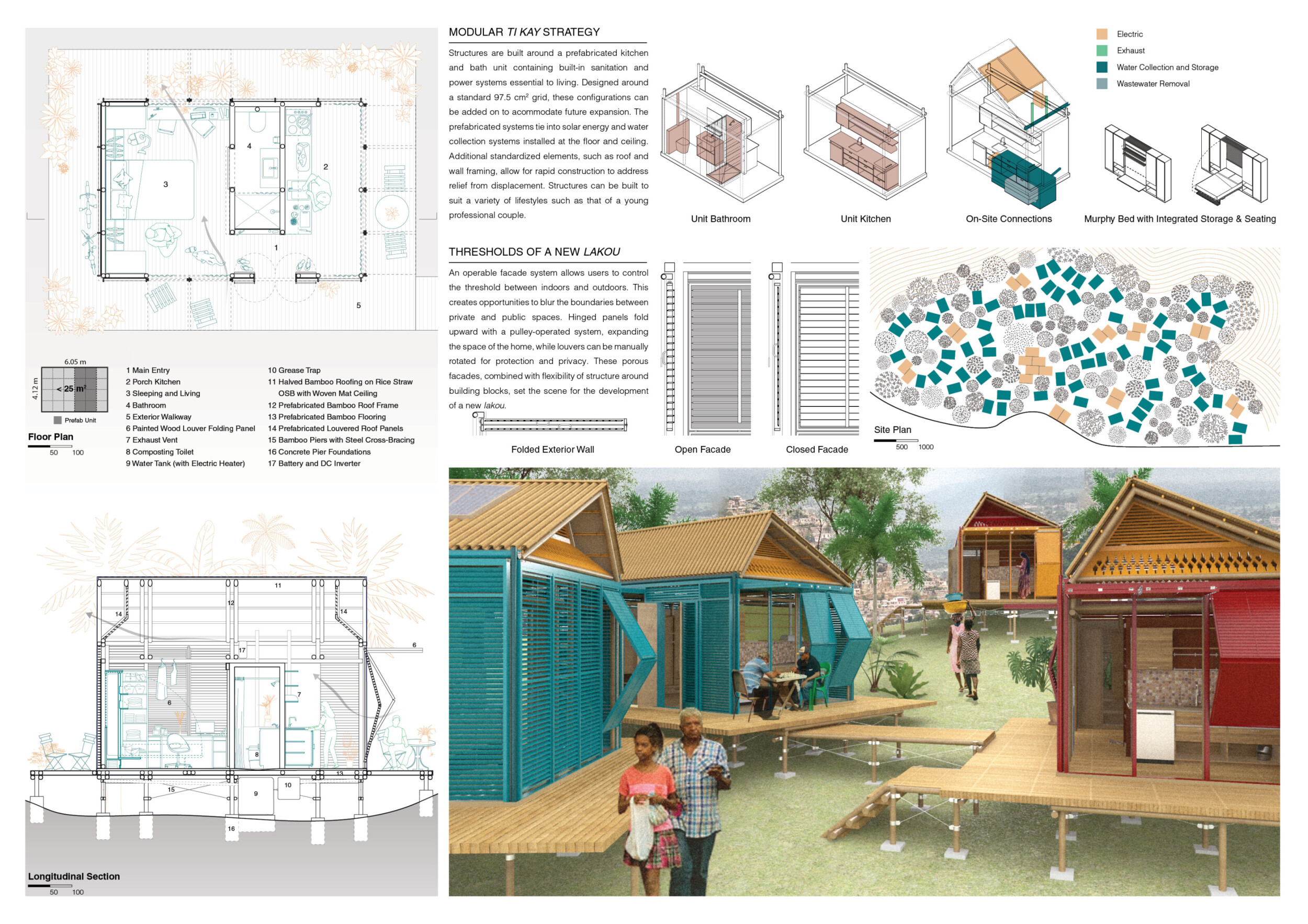
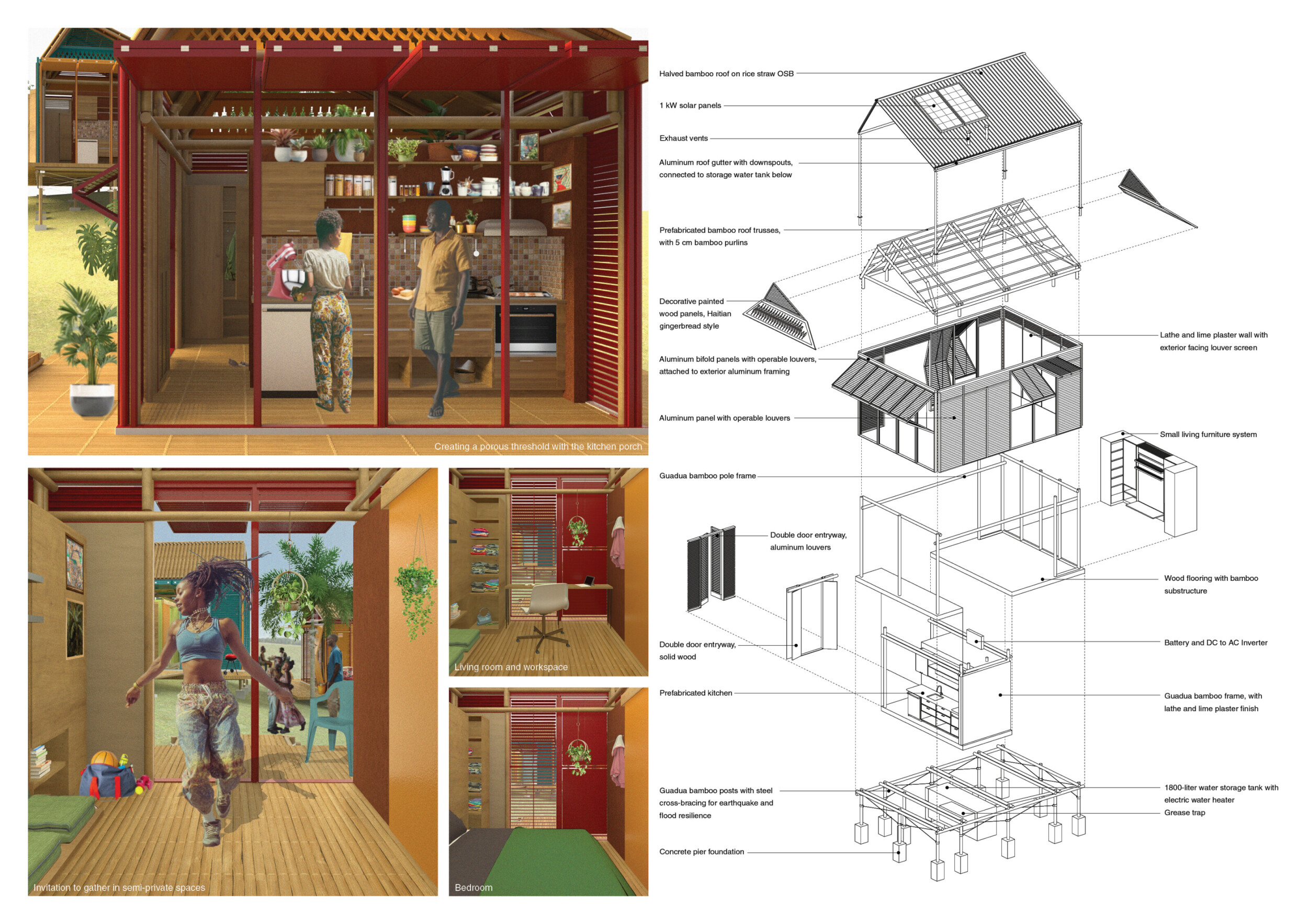
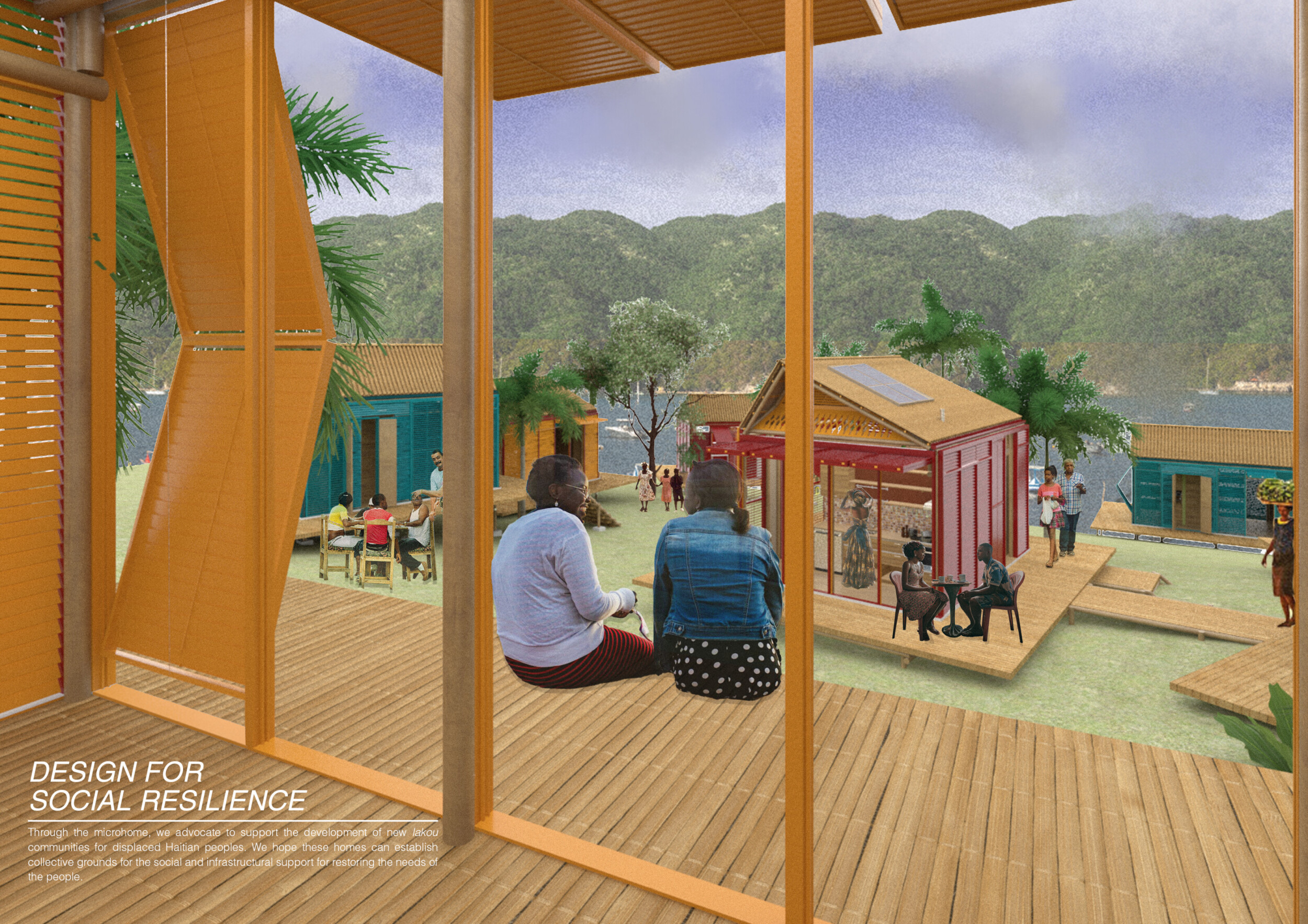
BAMBOTTLE
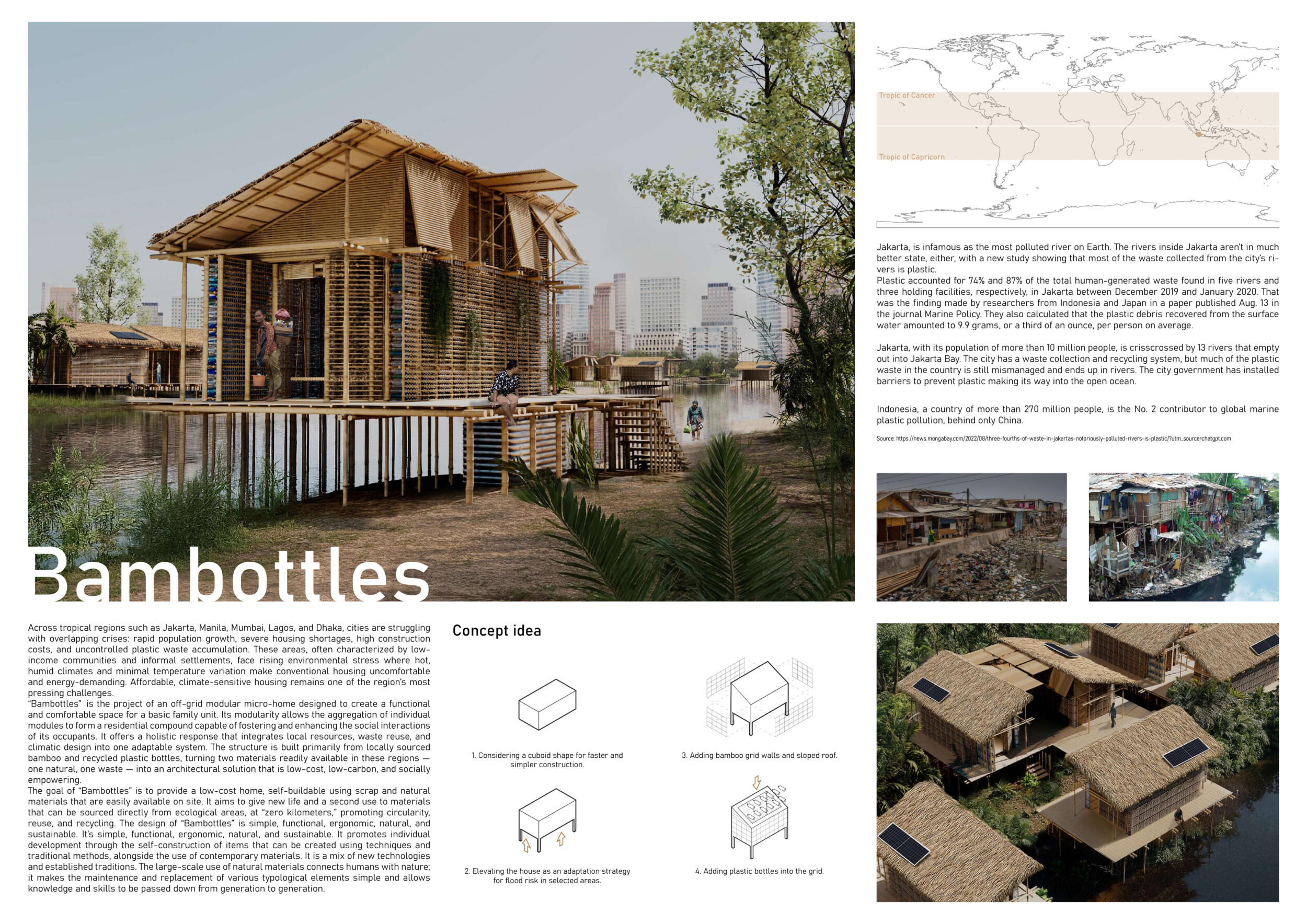
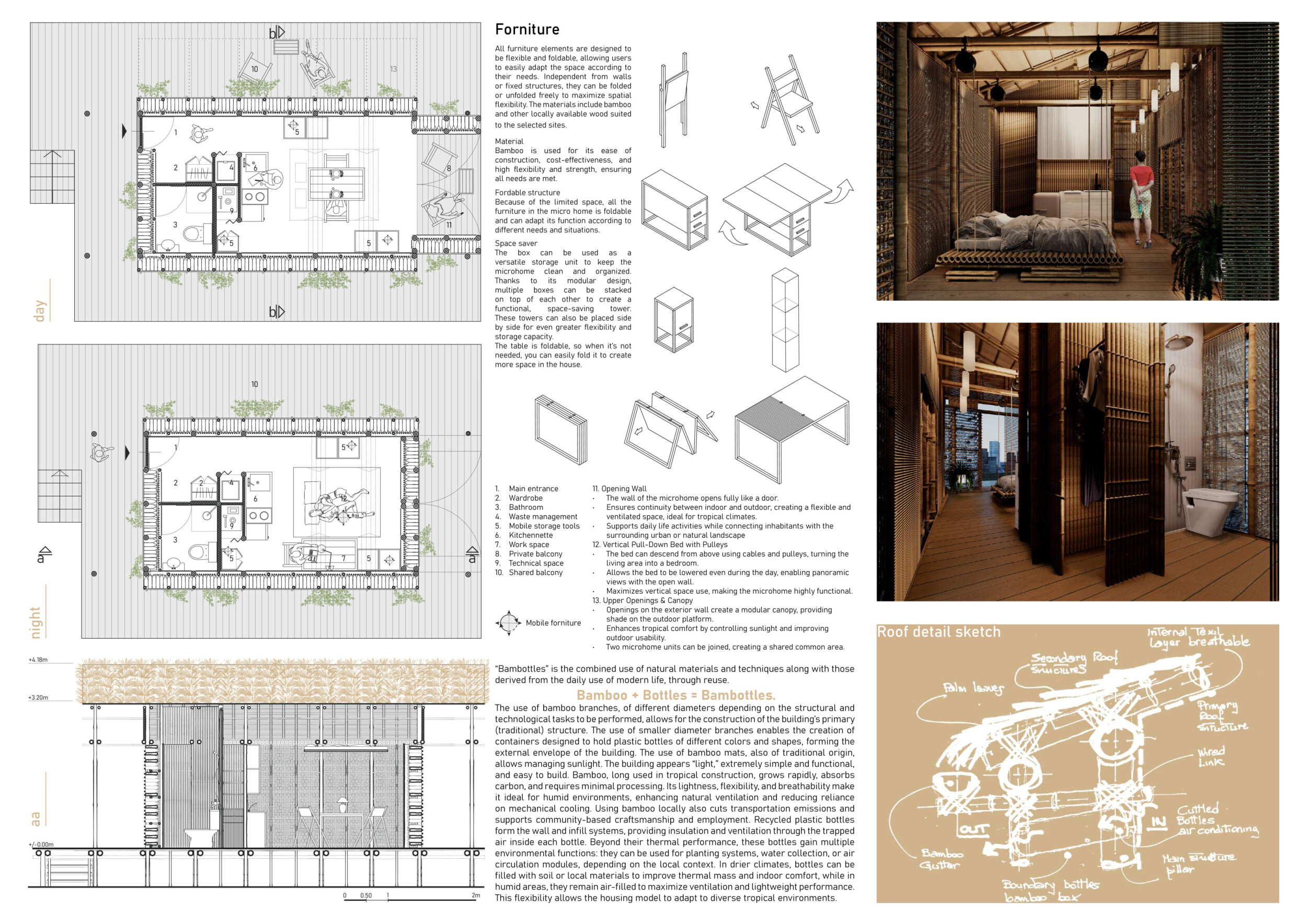
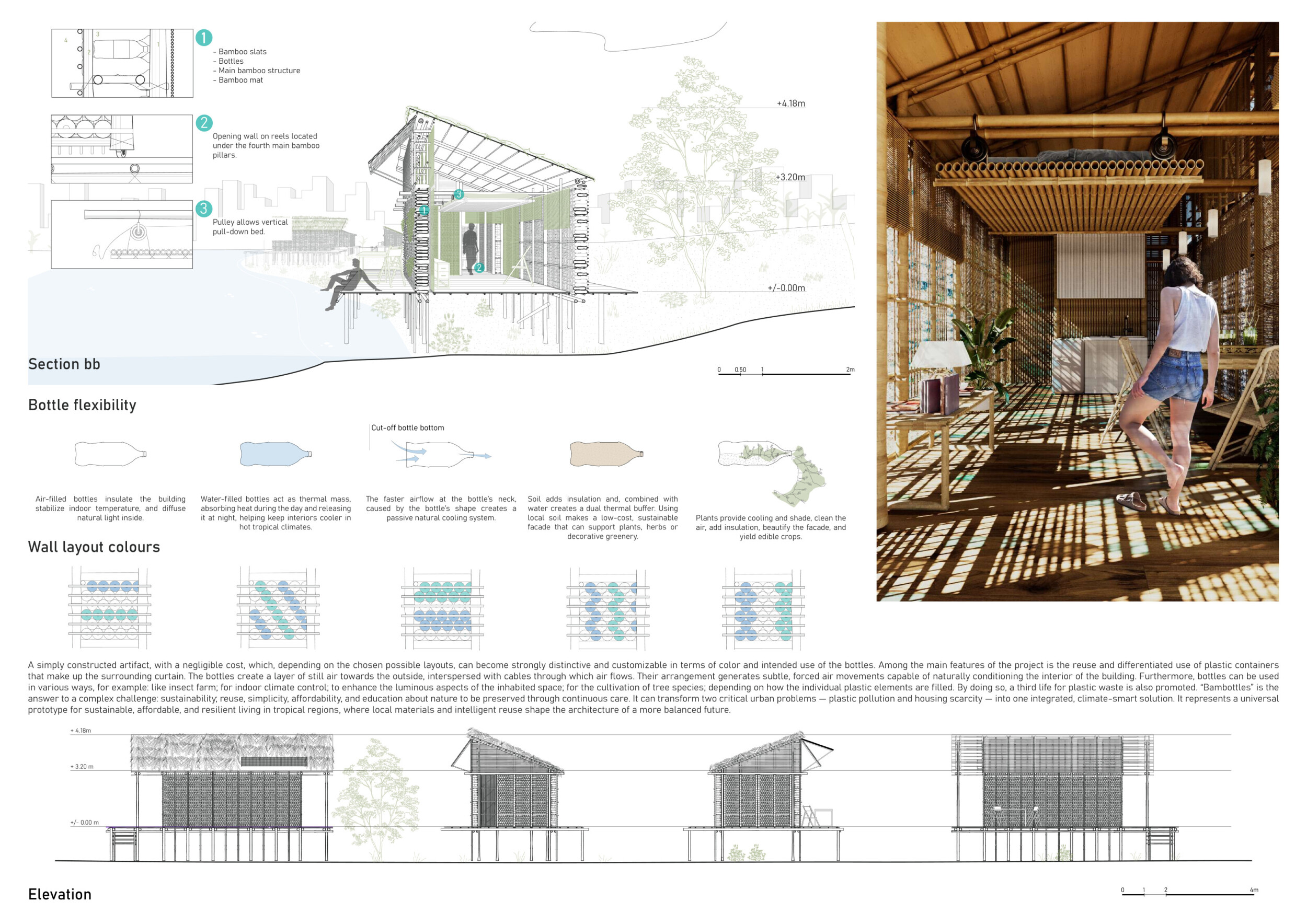
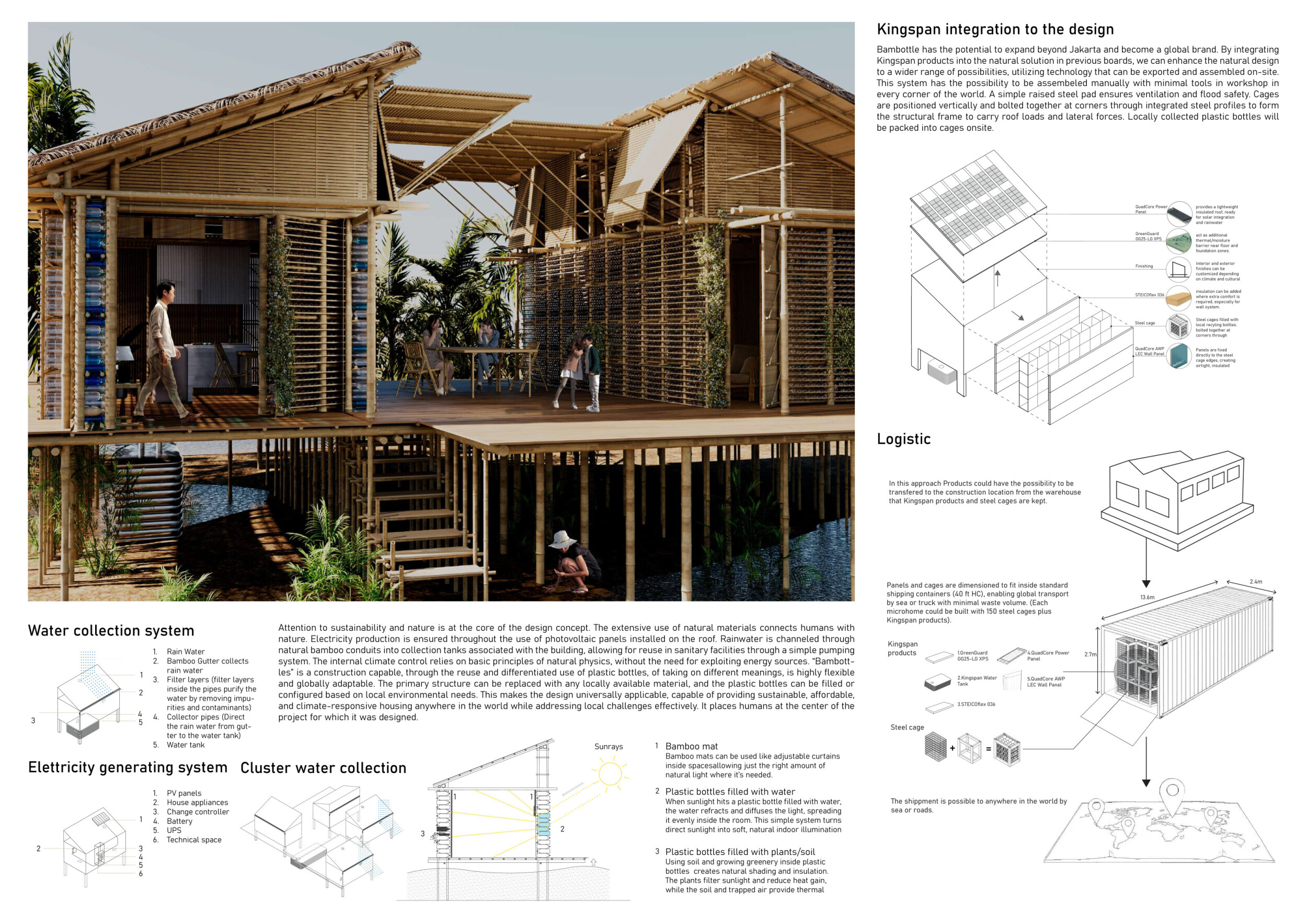
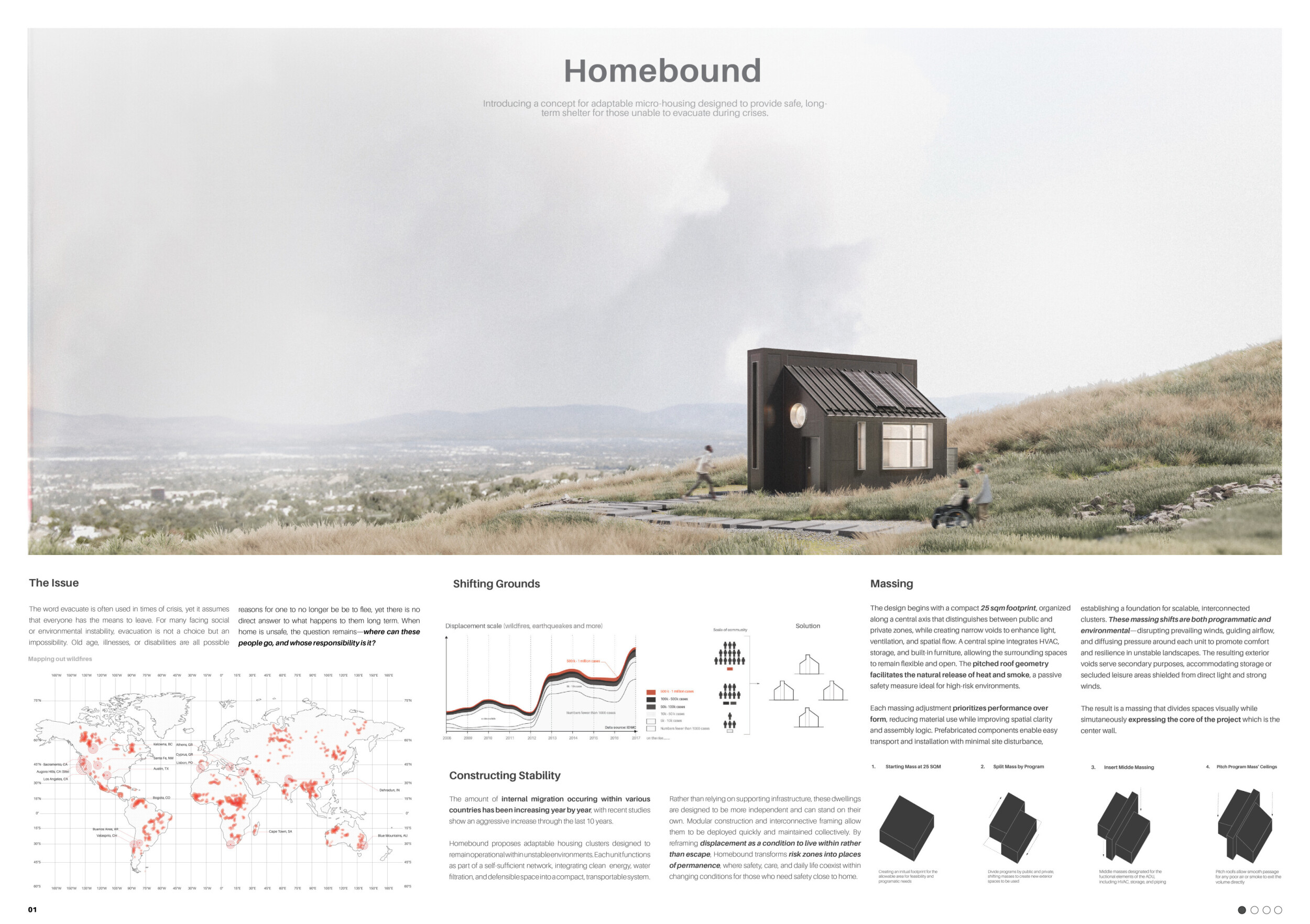
Homebound
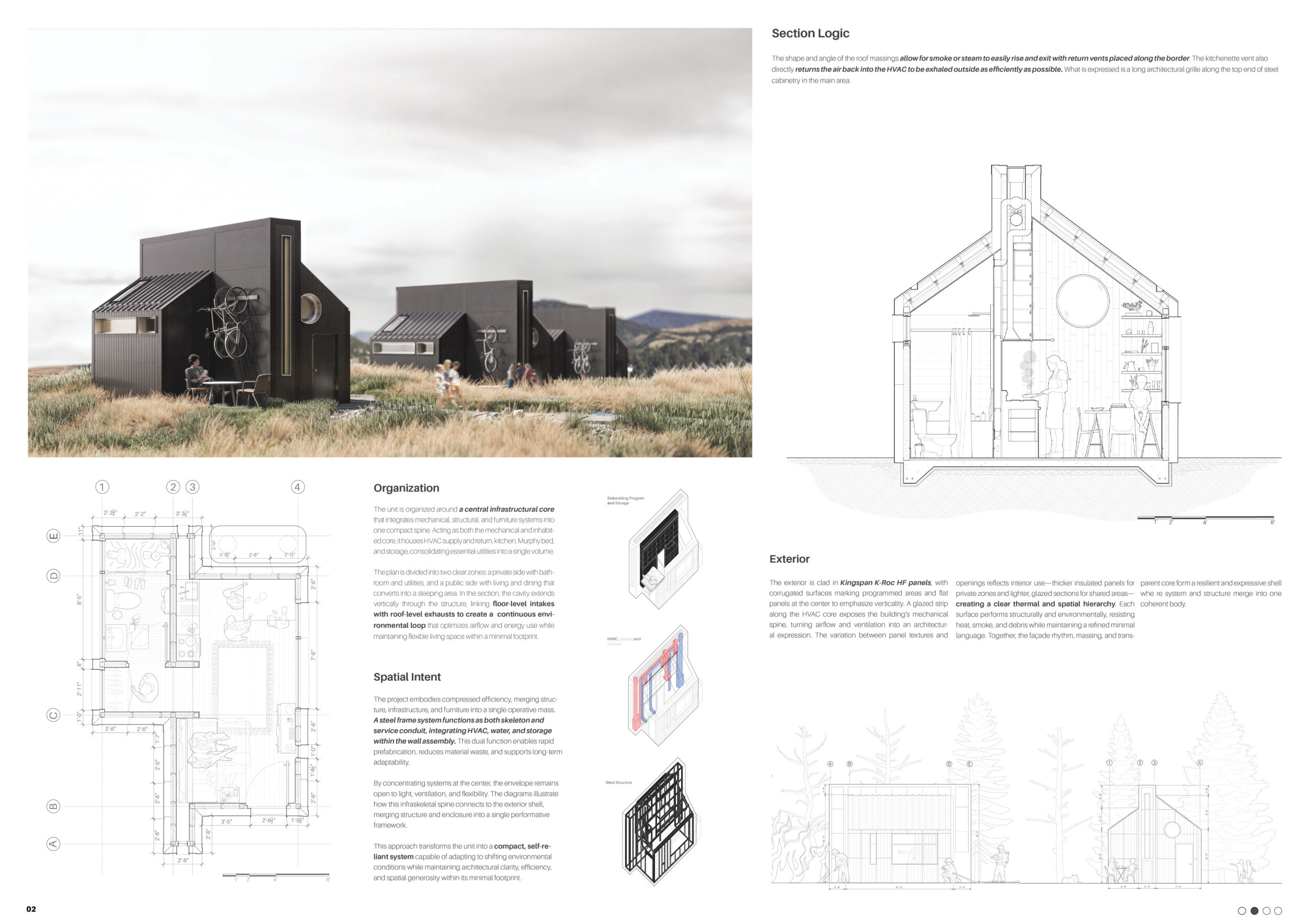
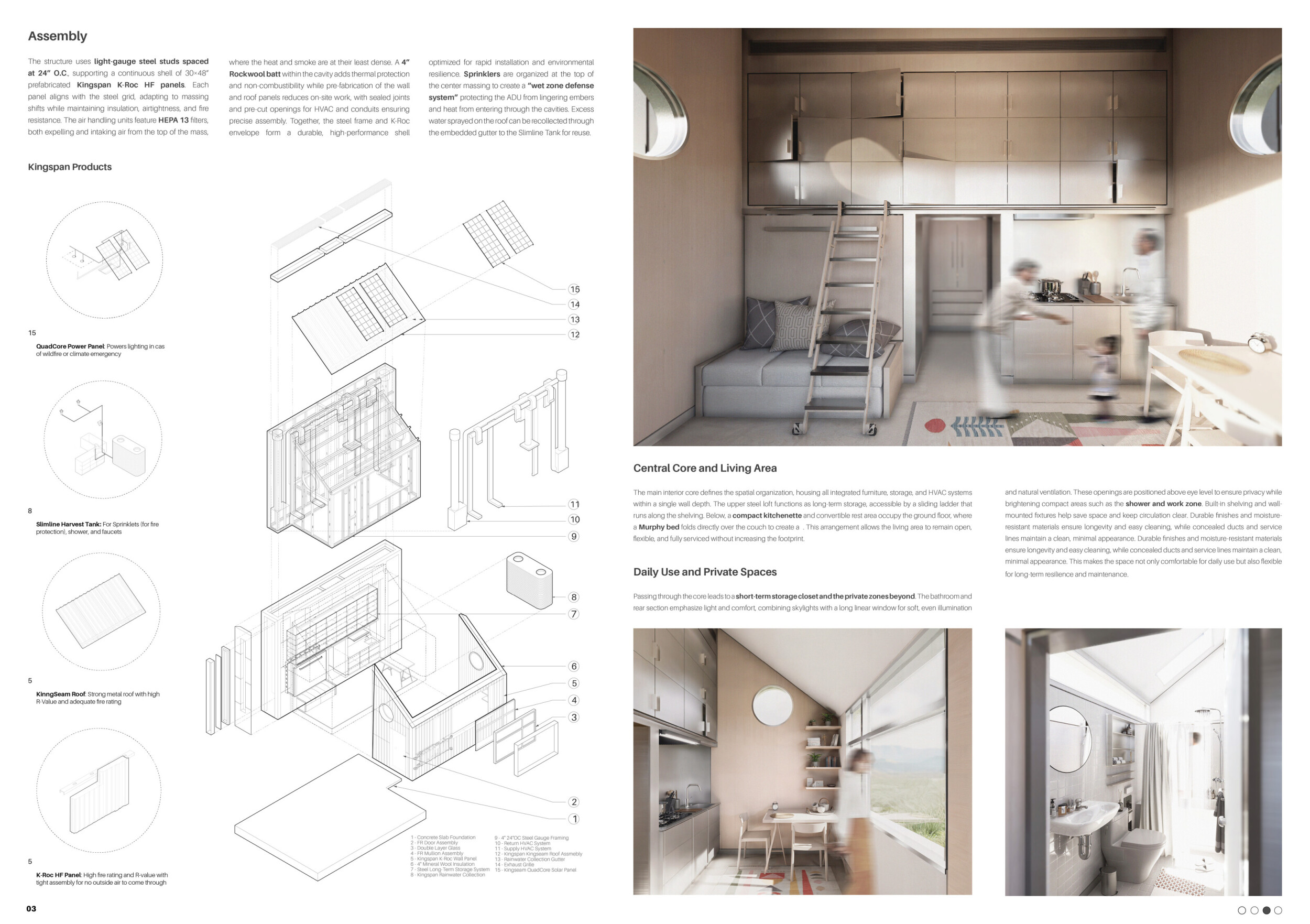
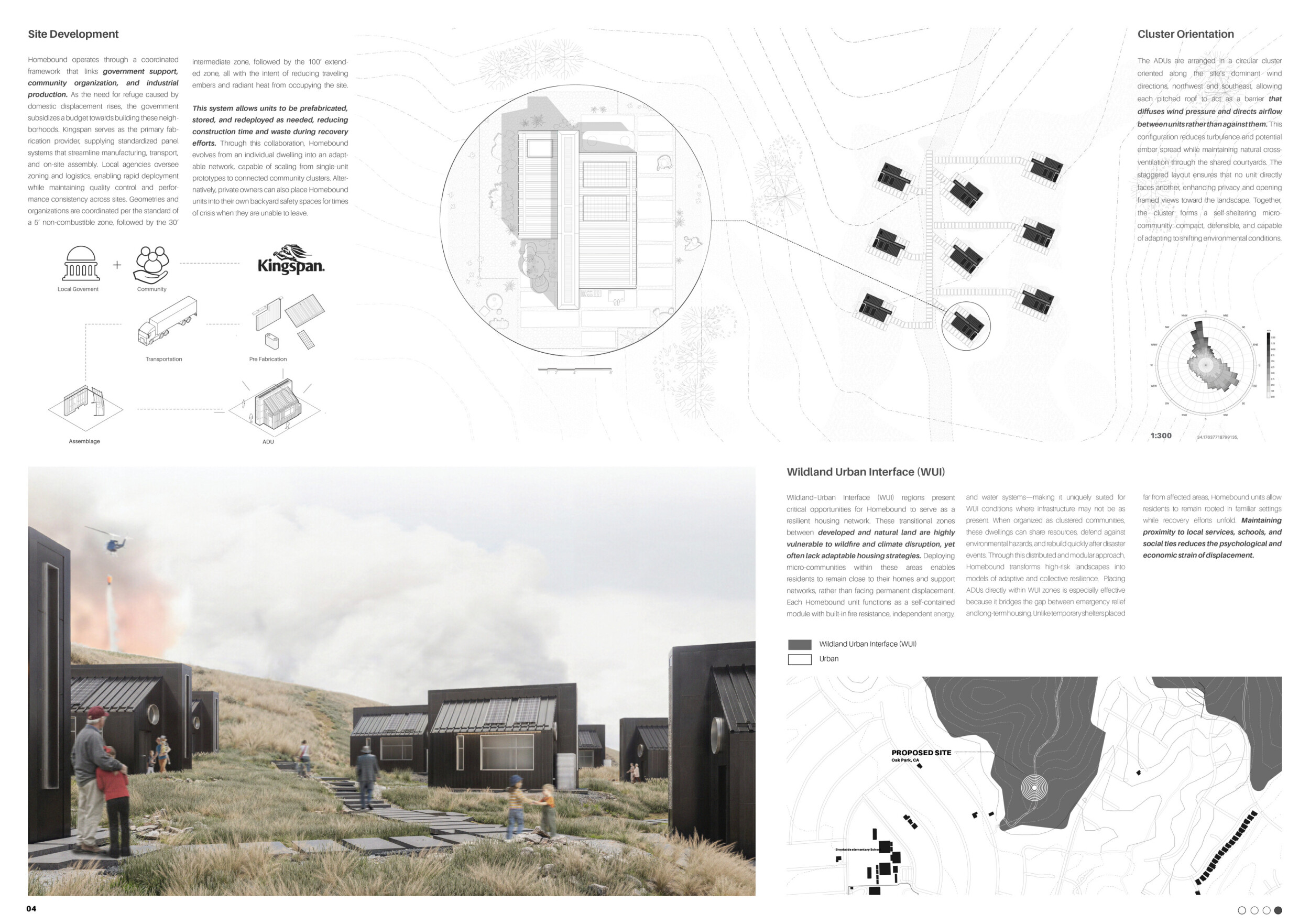
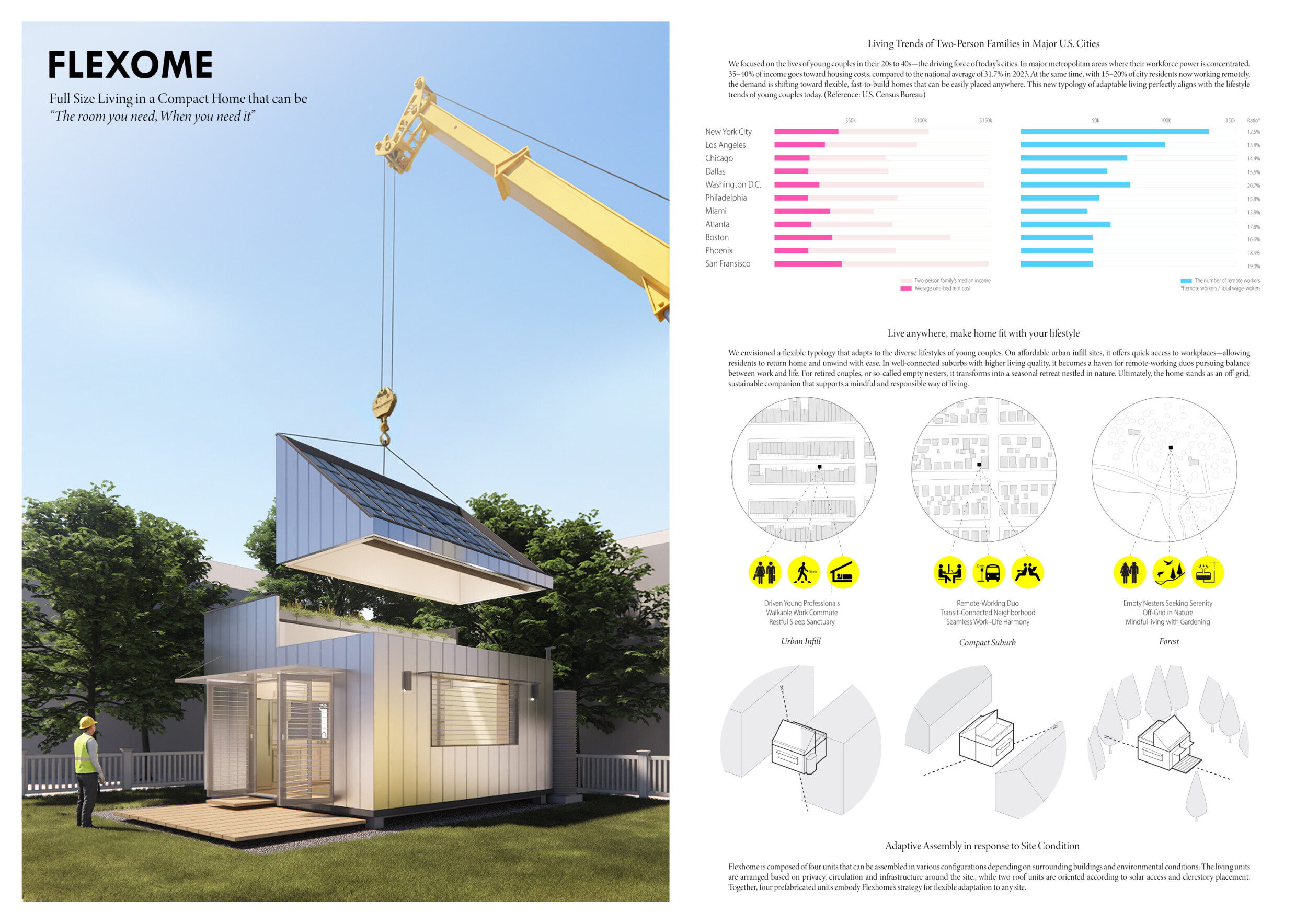
Flexome
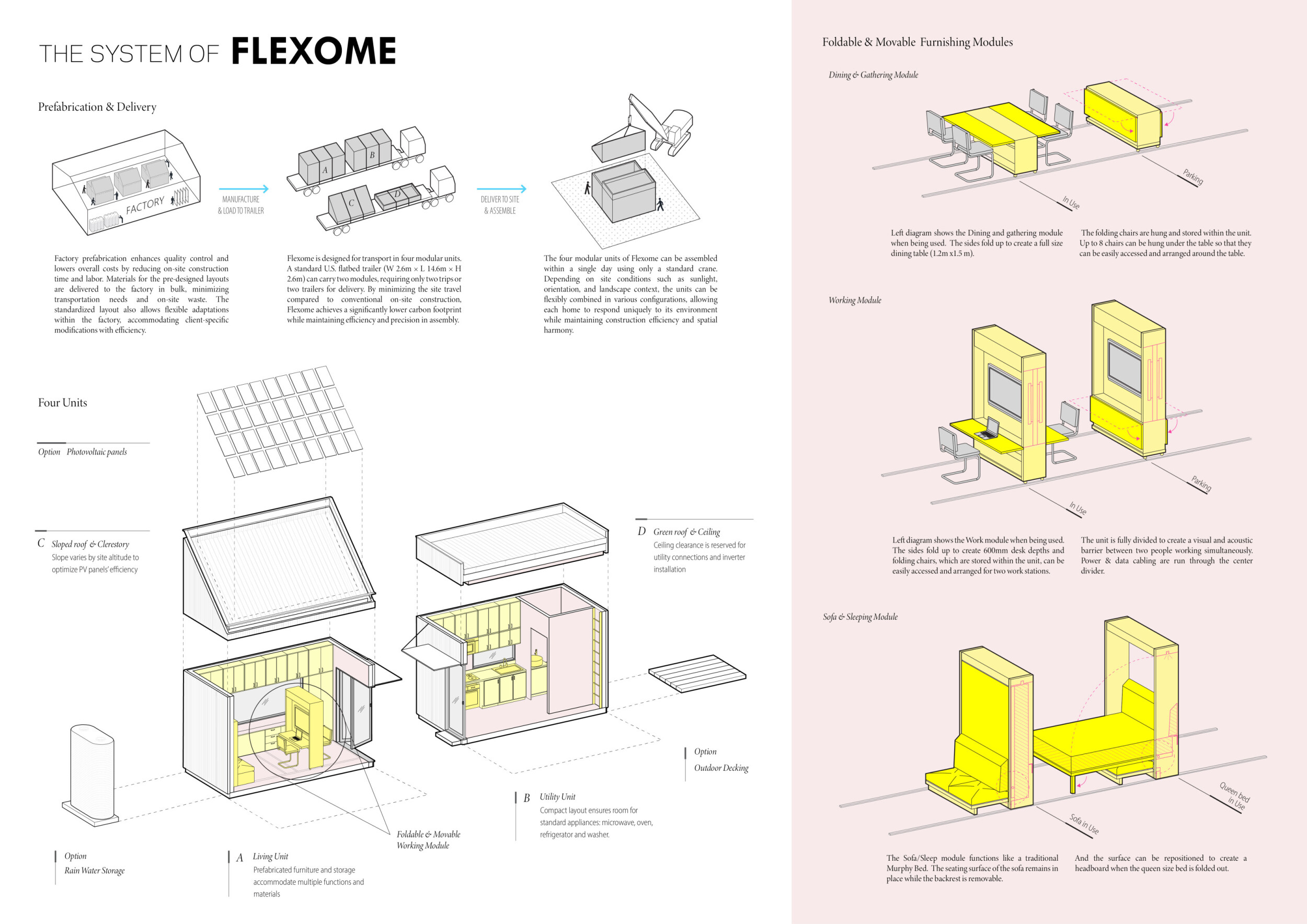
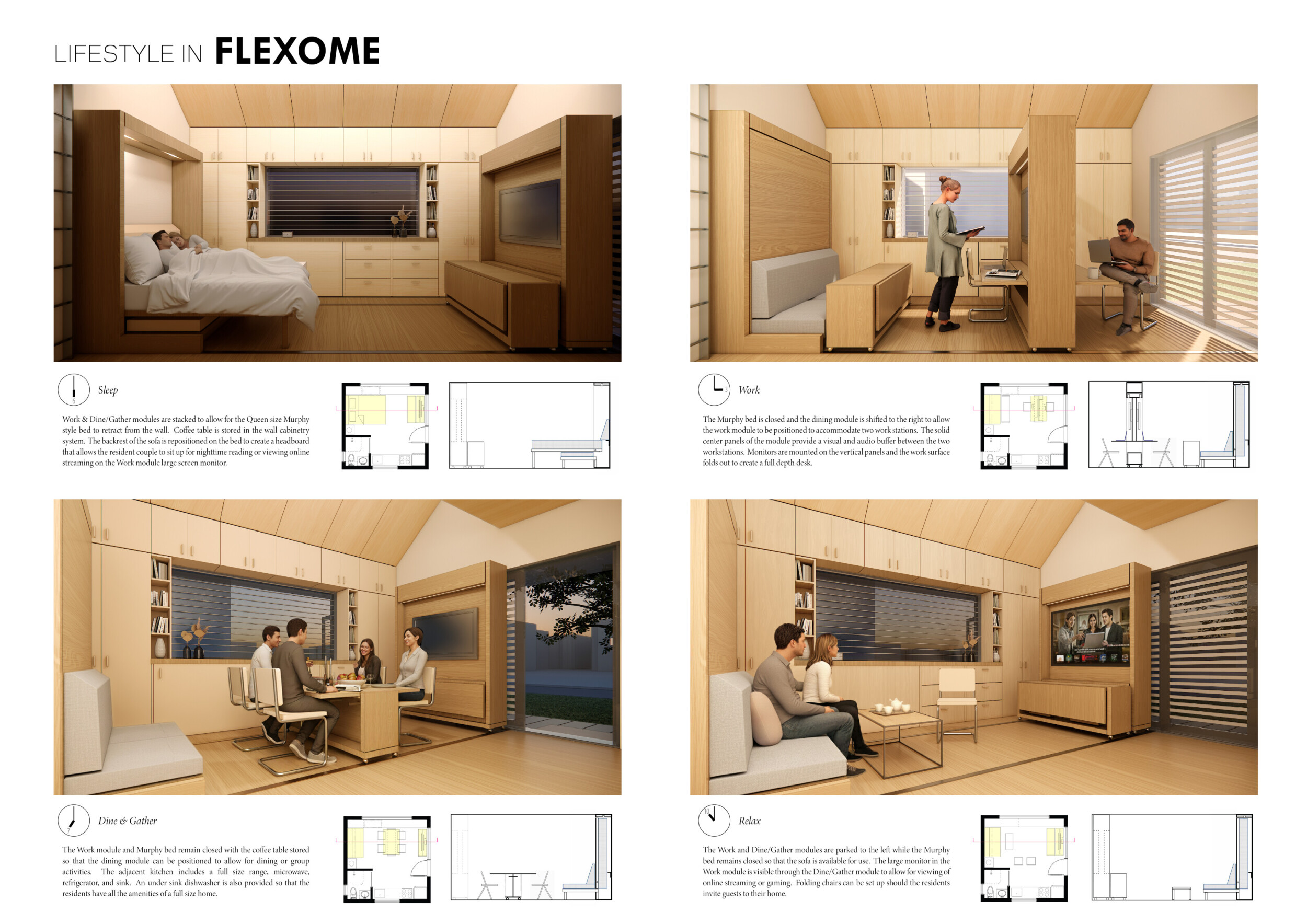
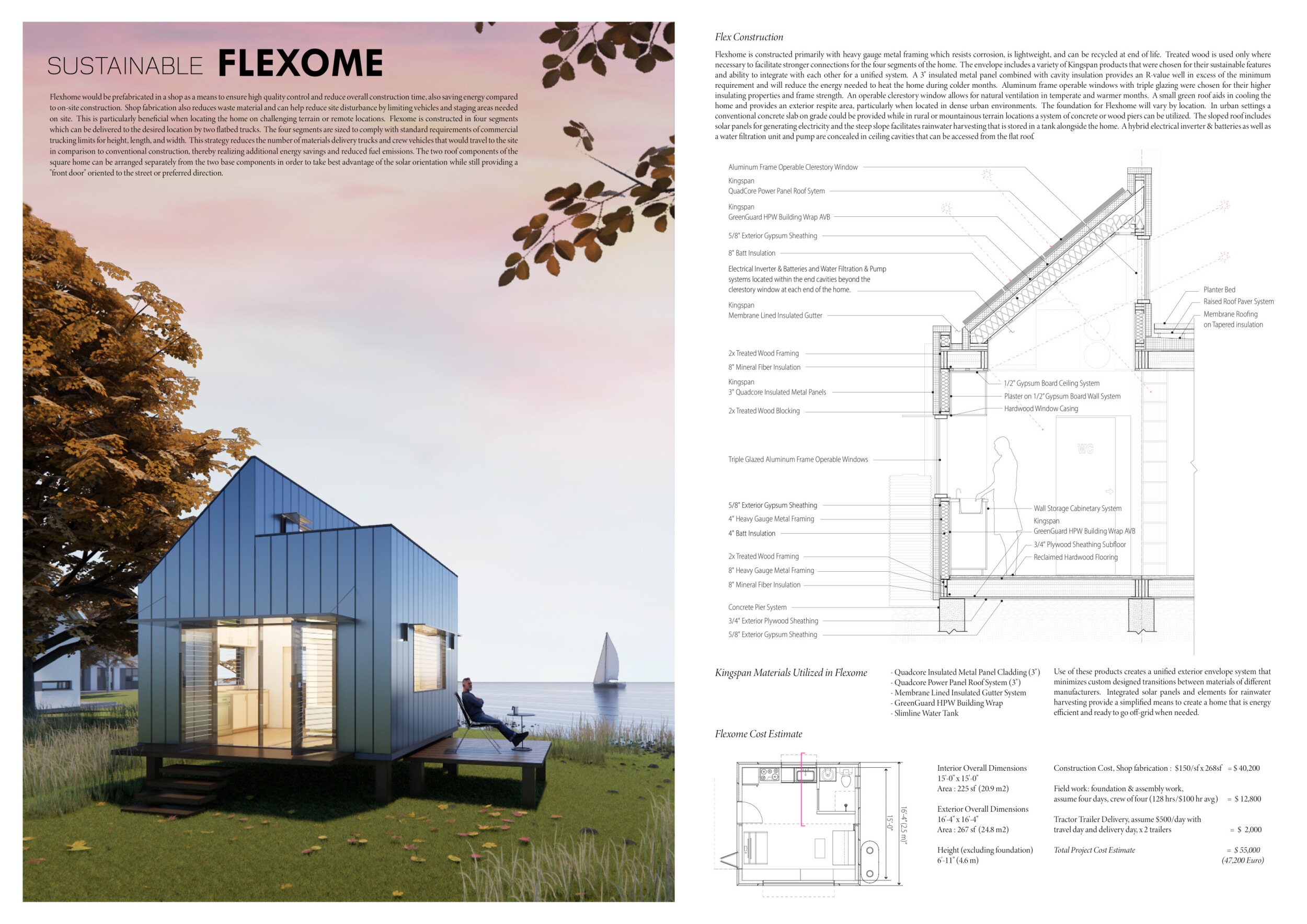
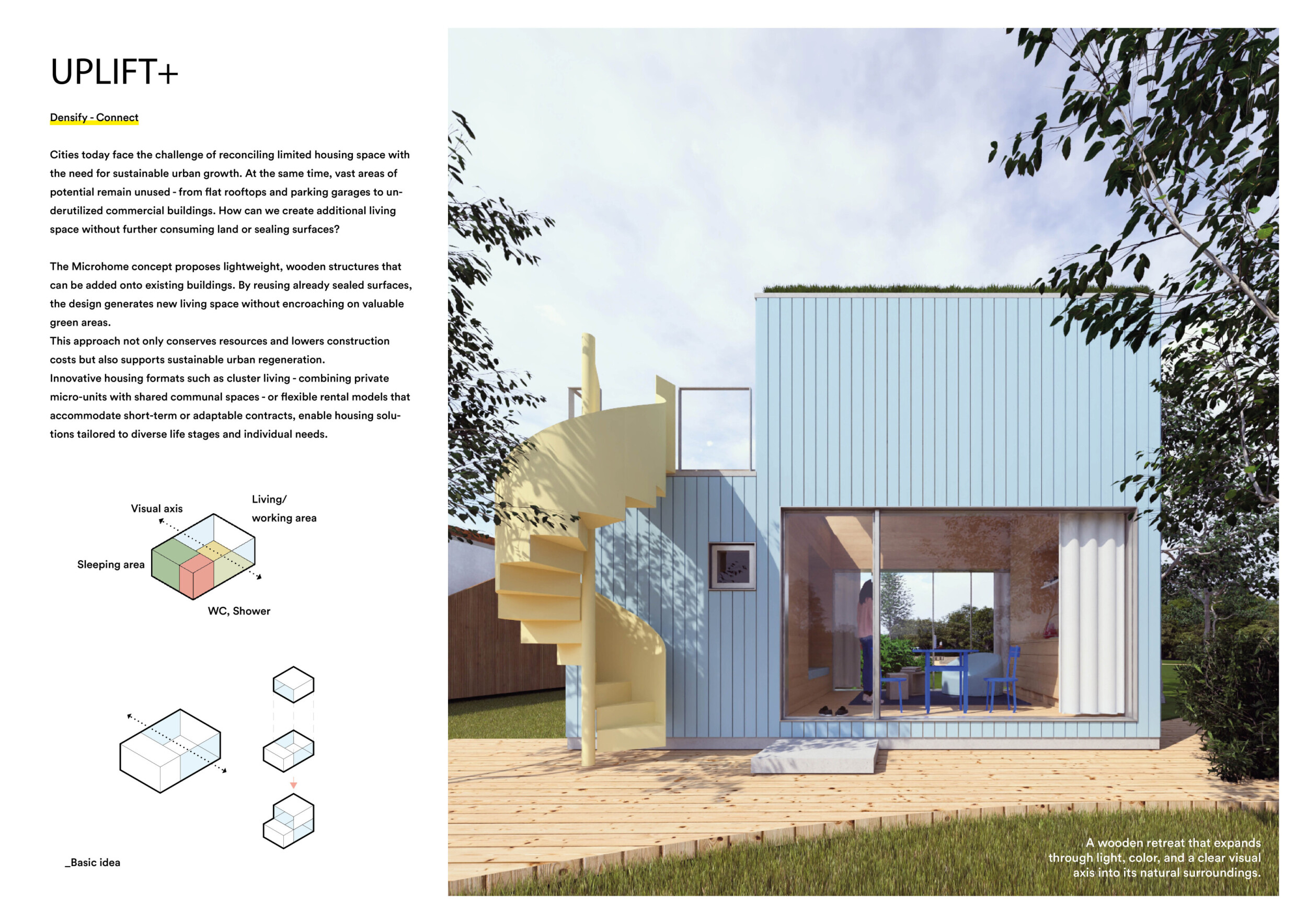
UPLIFT+
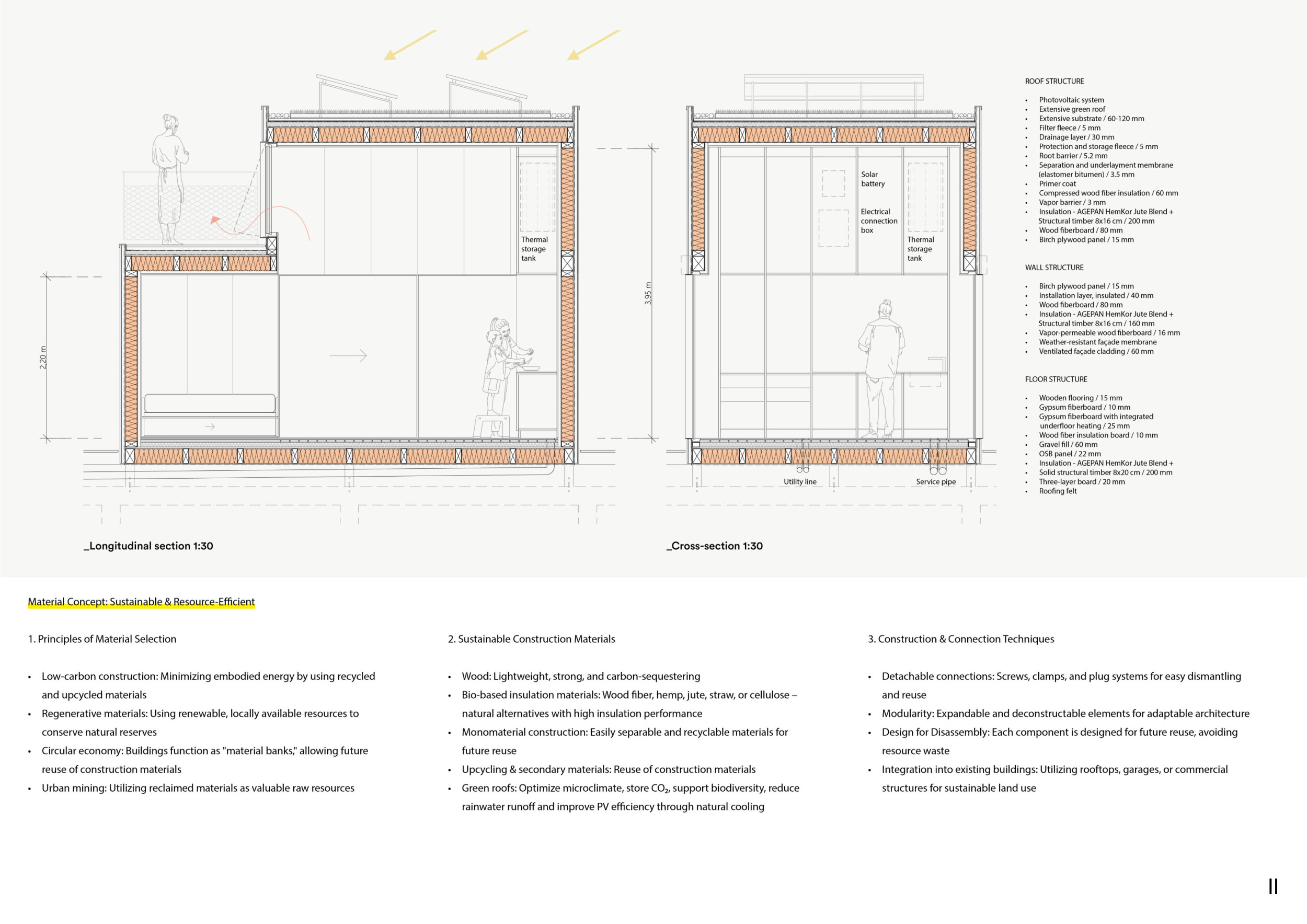
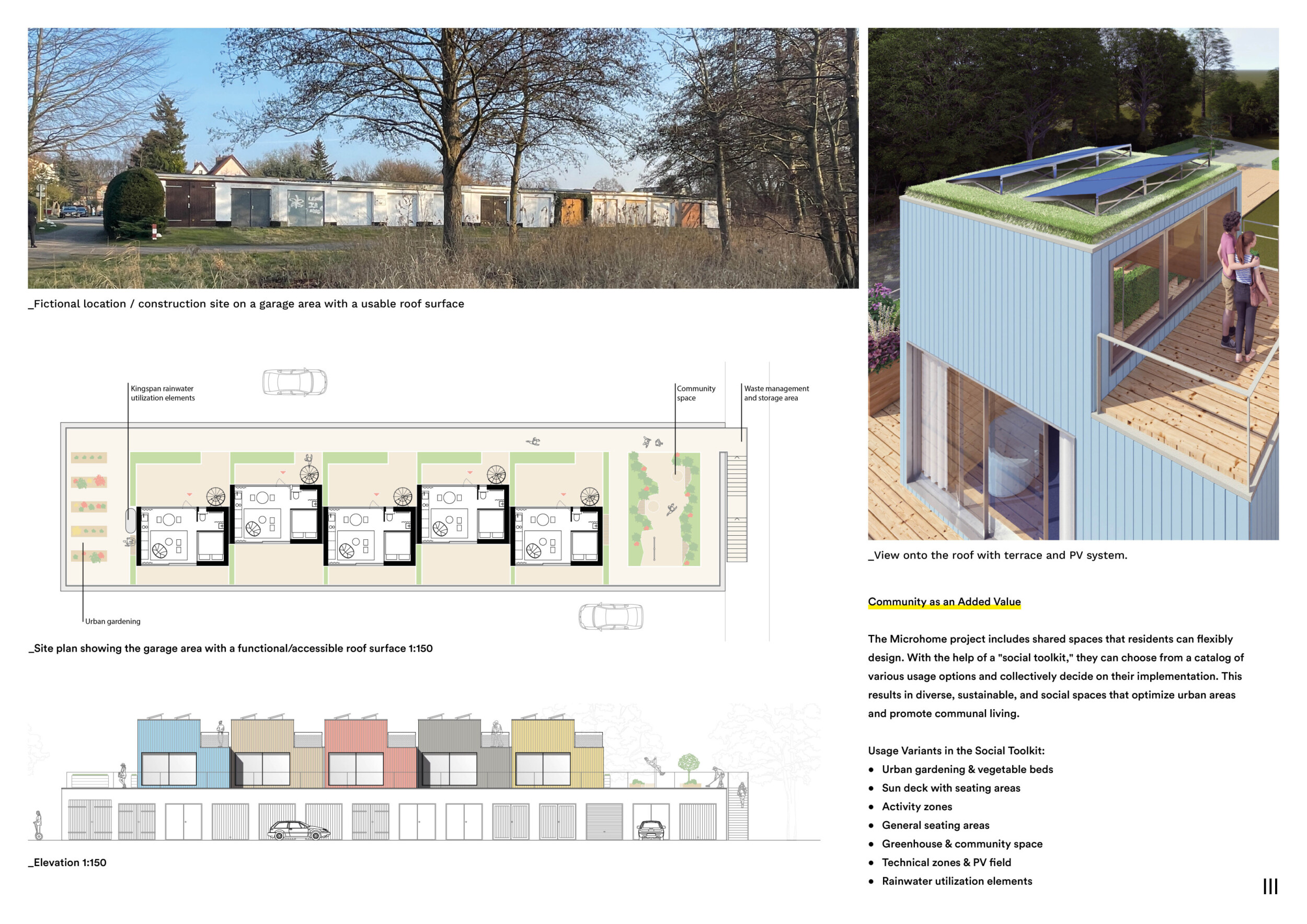
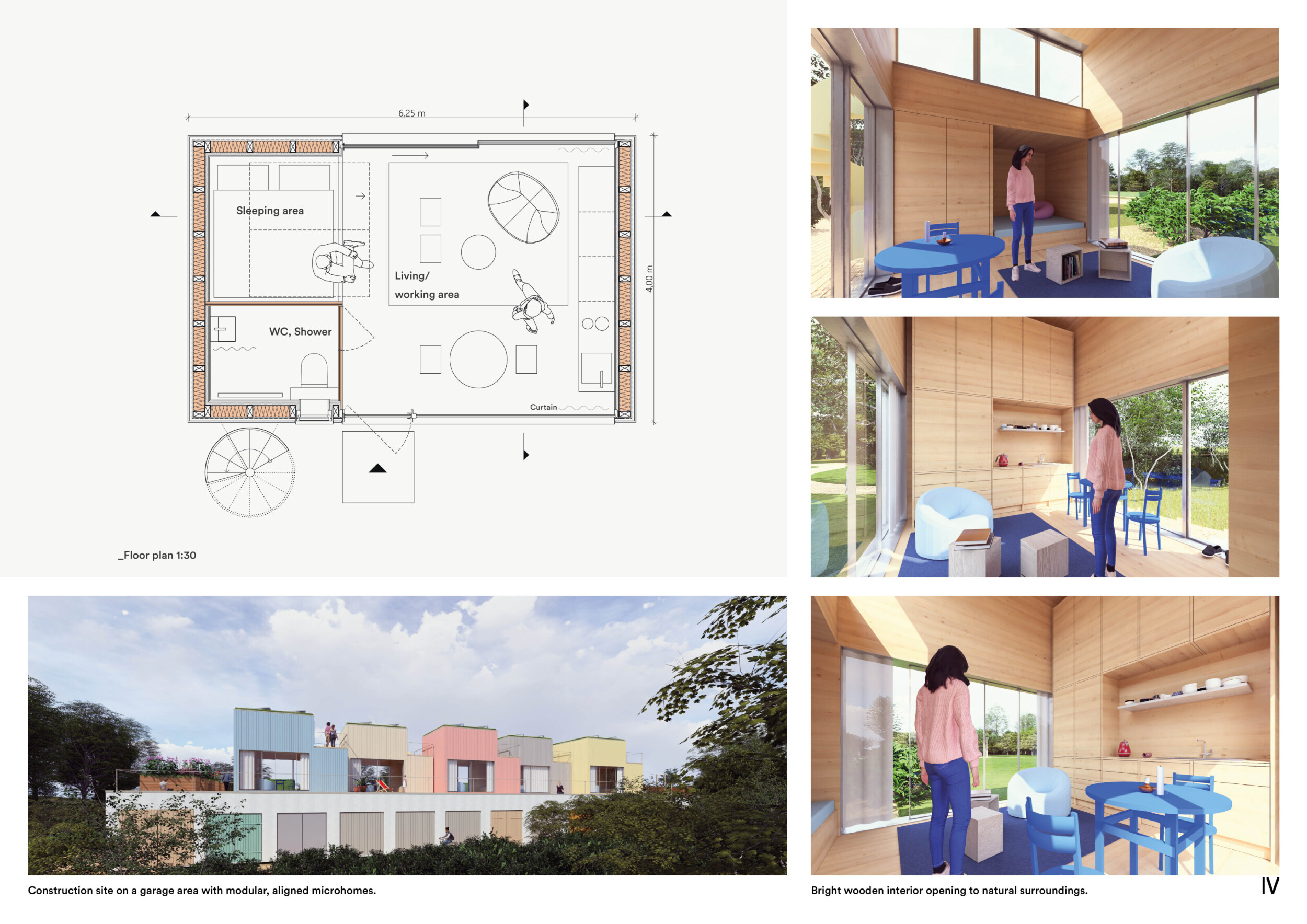

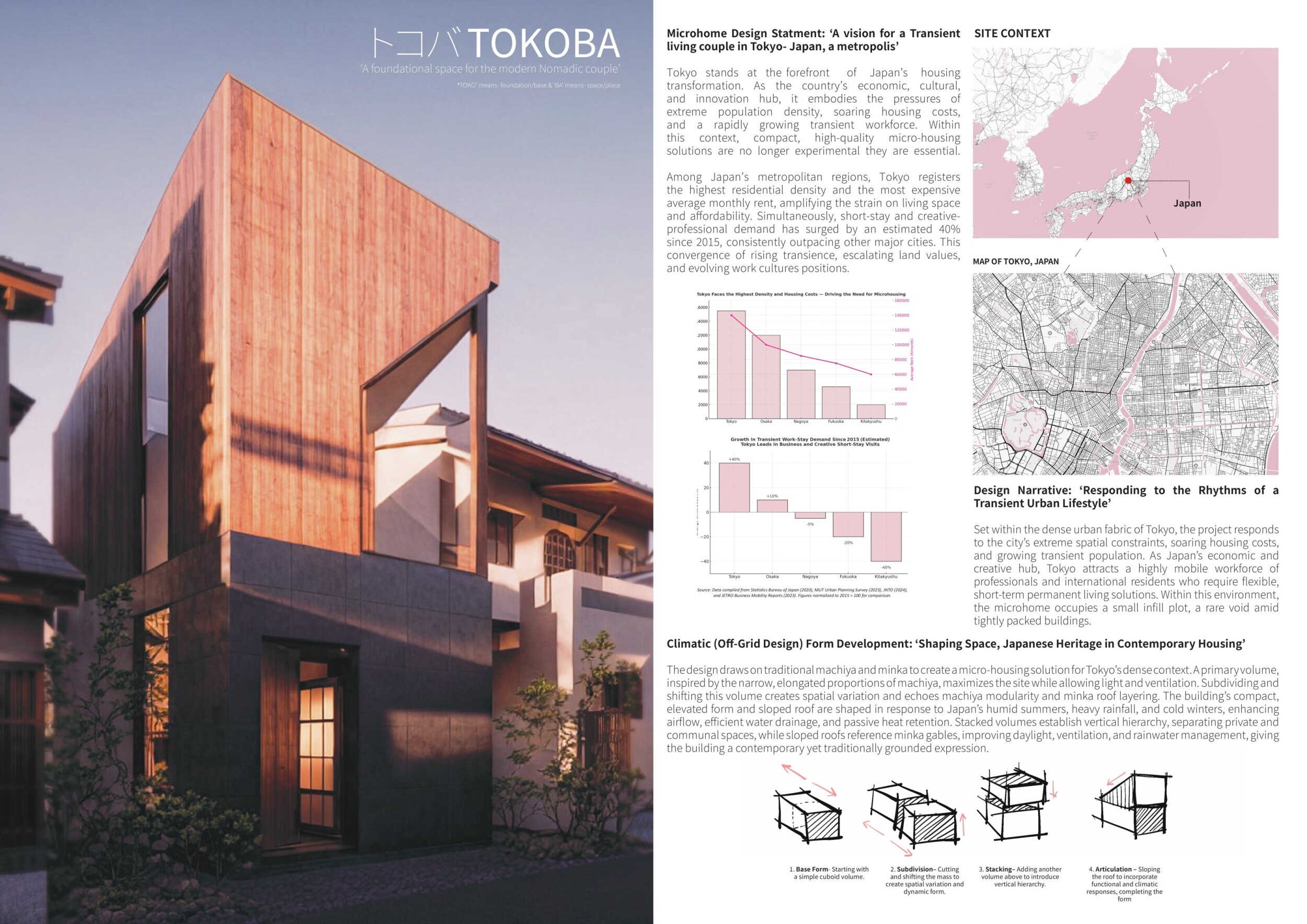
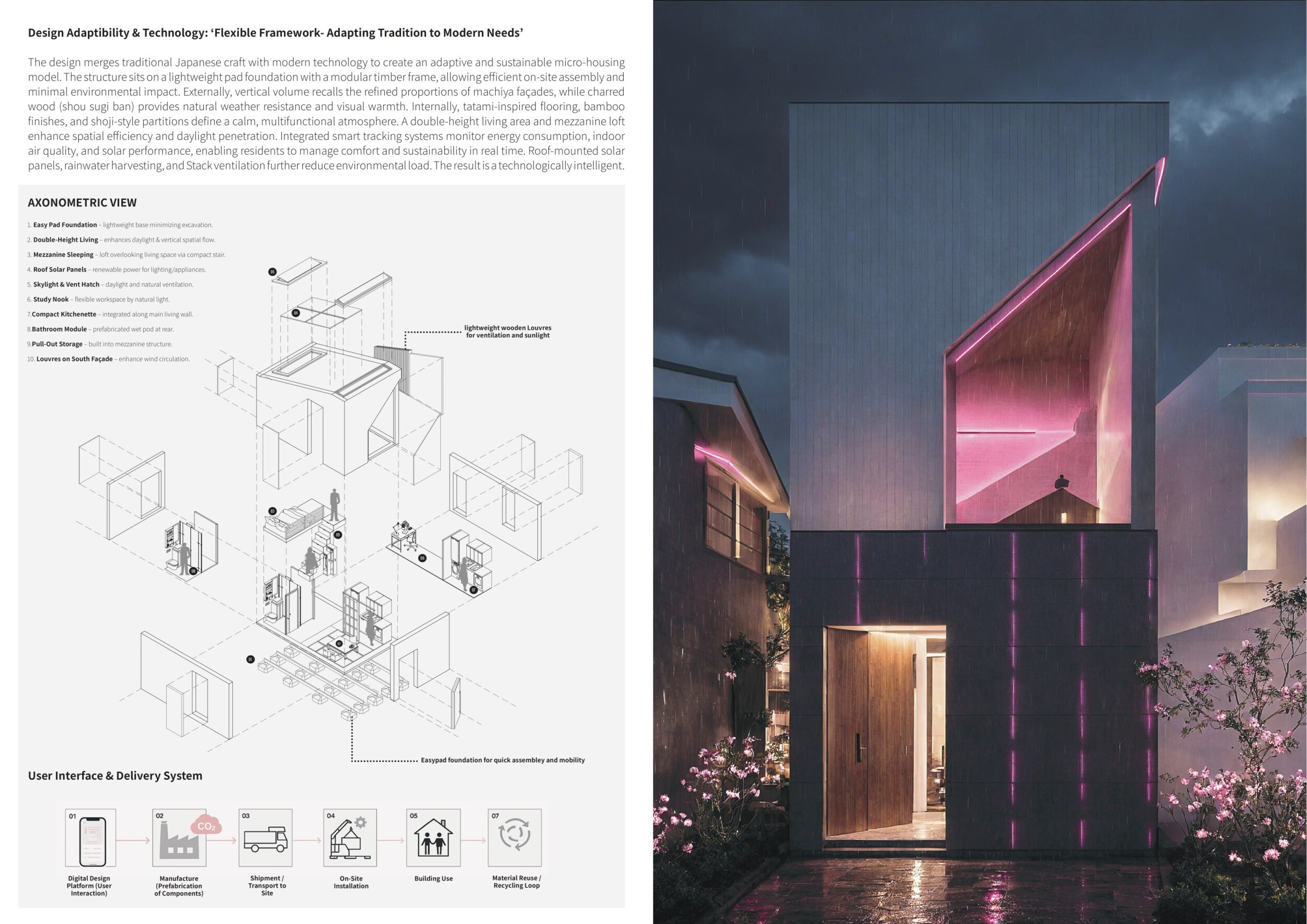
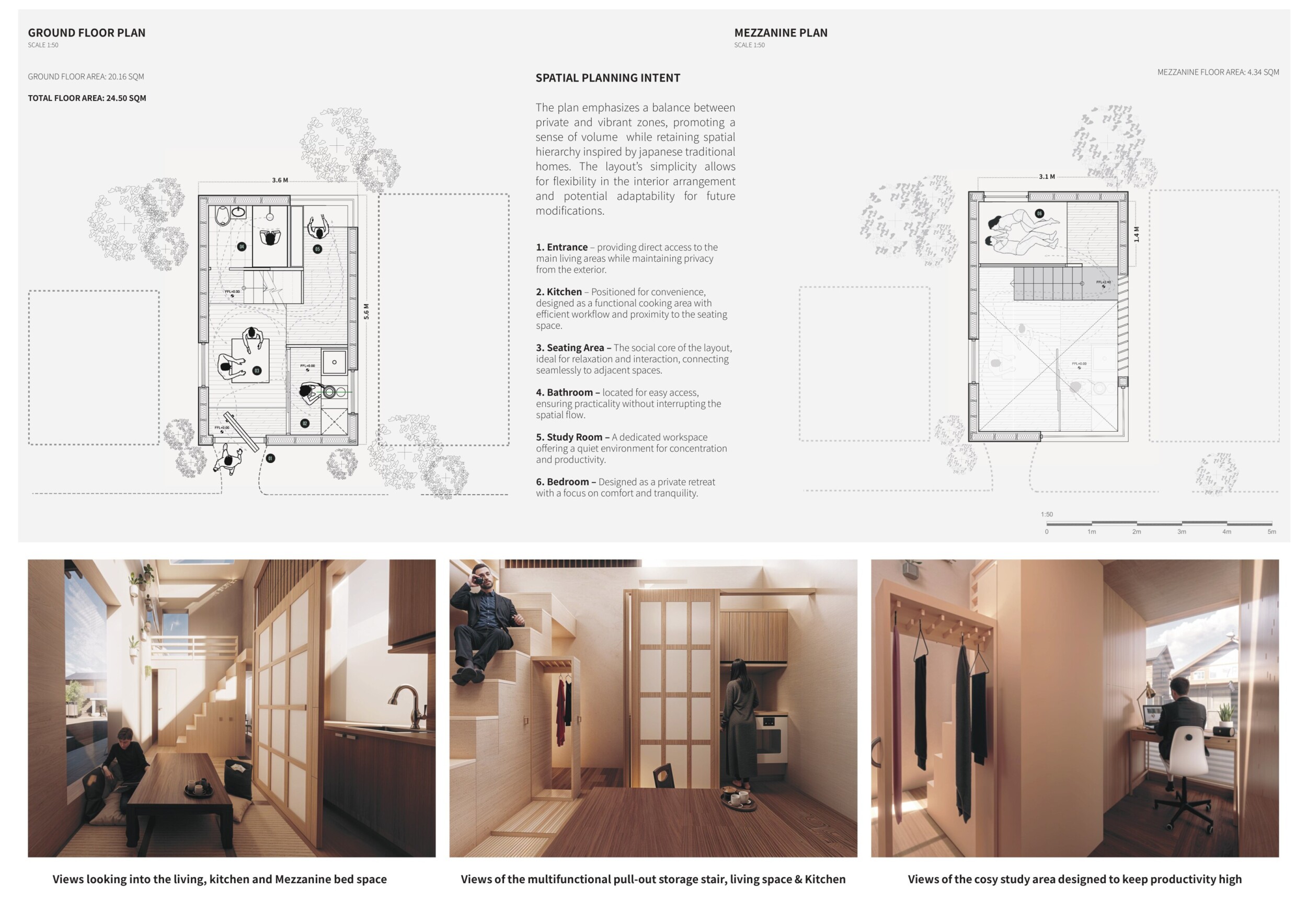
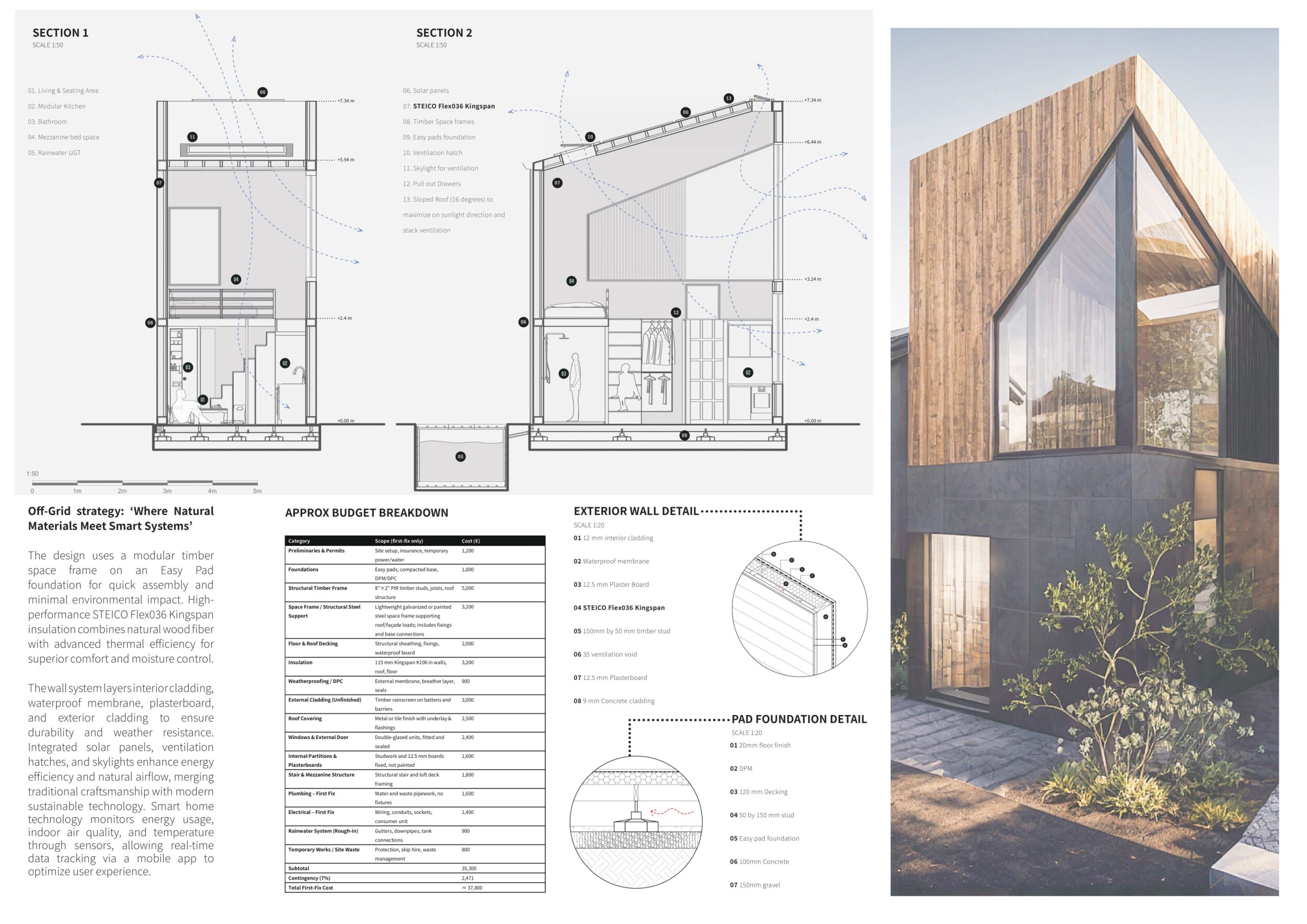
トコバ TOKOBA- ‘A foundational space for the modern Nomadic couple’
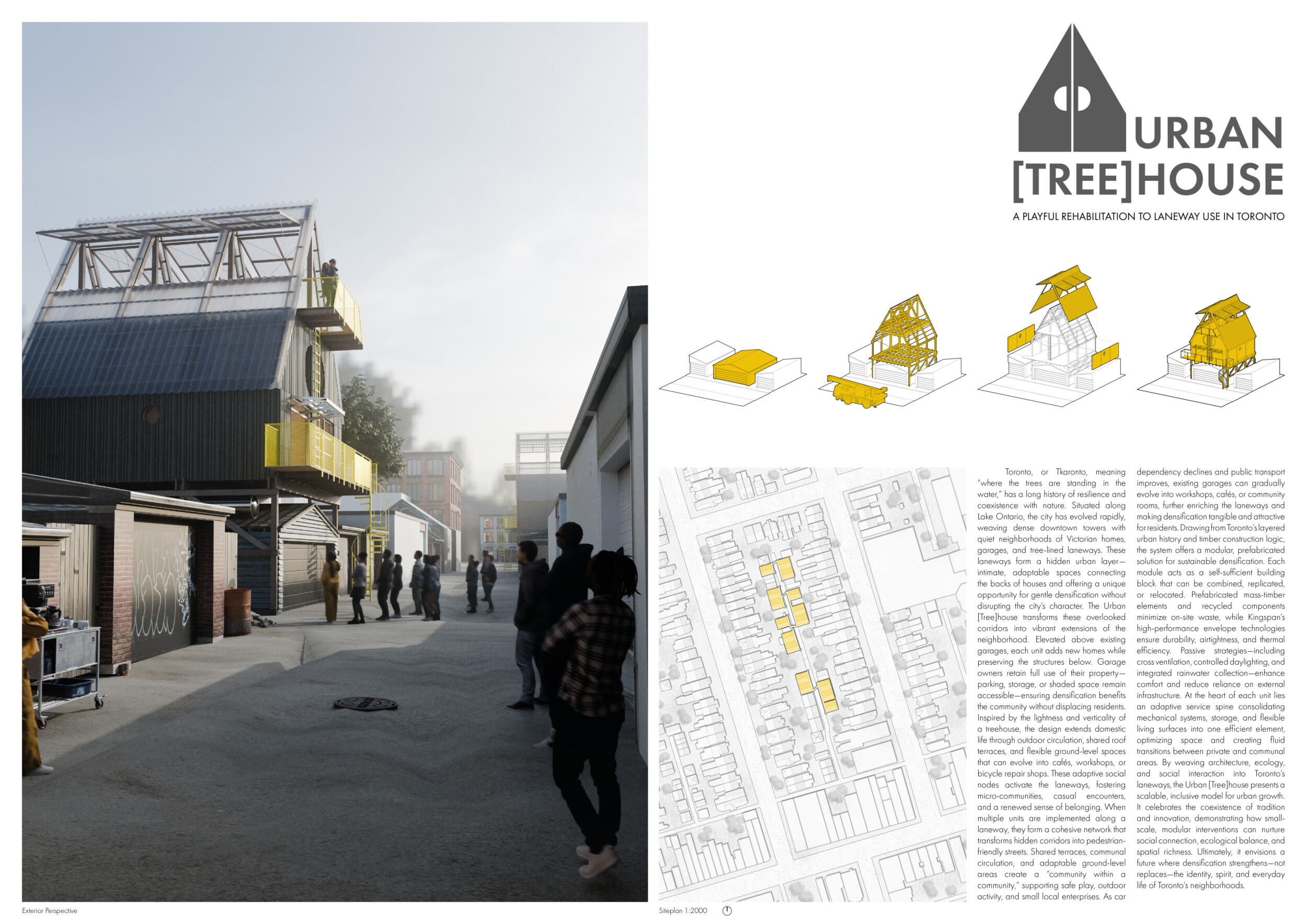
Urban [Tree]house
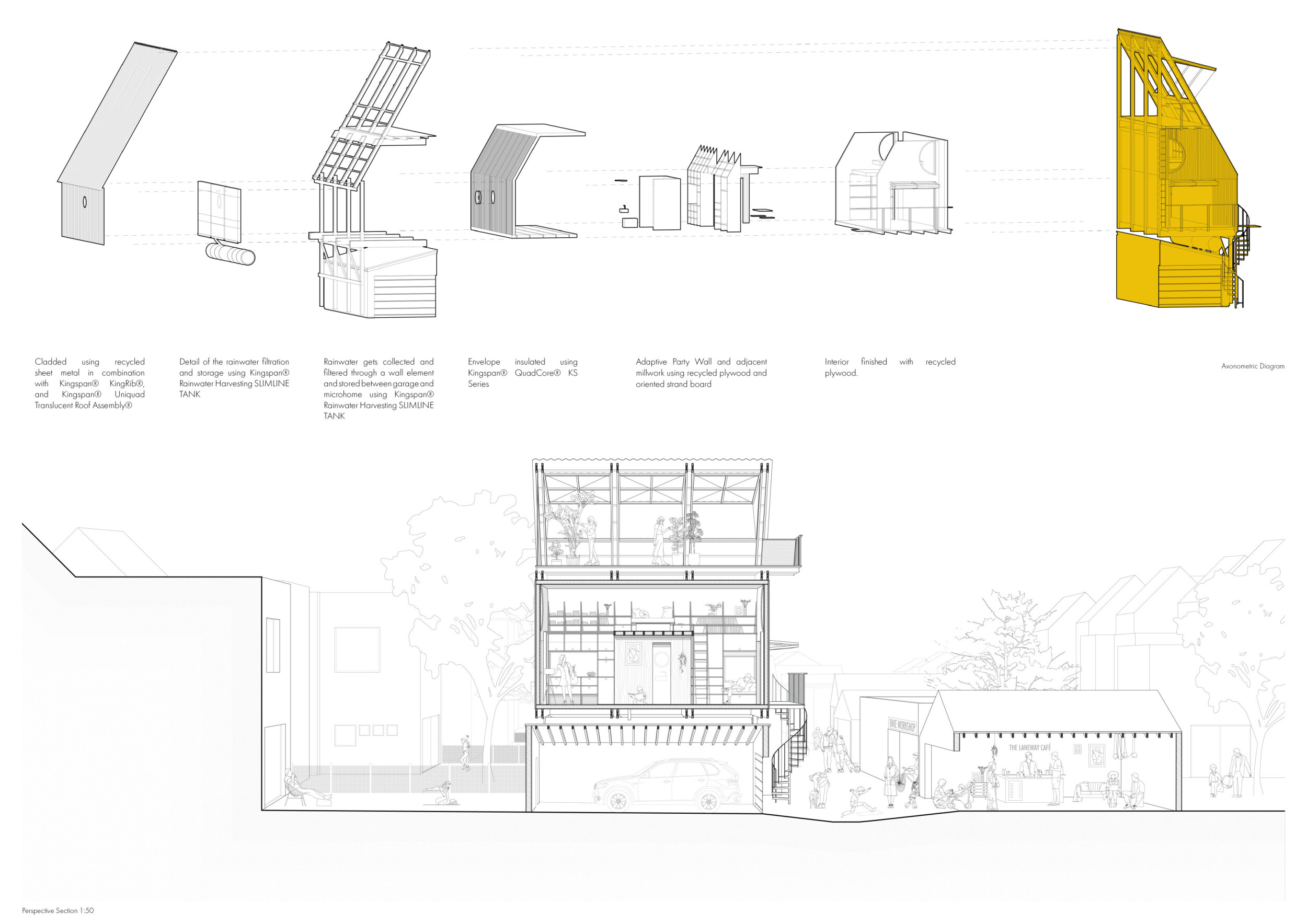
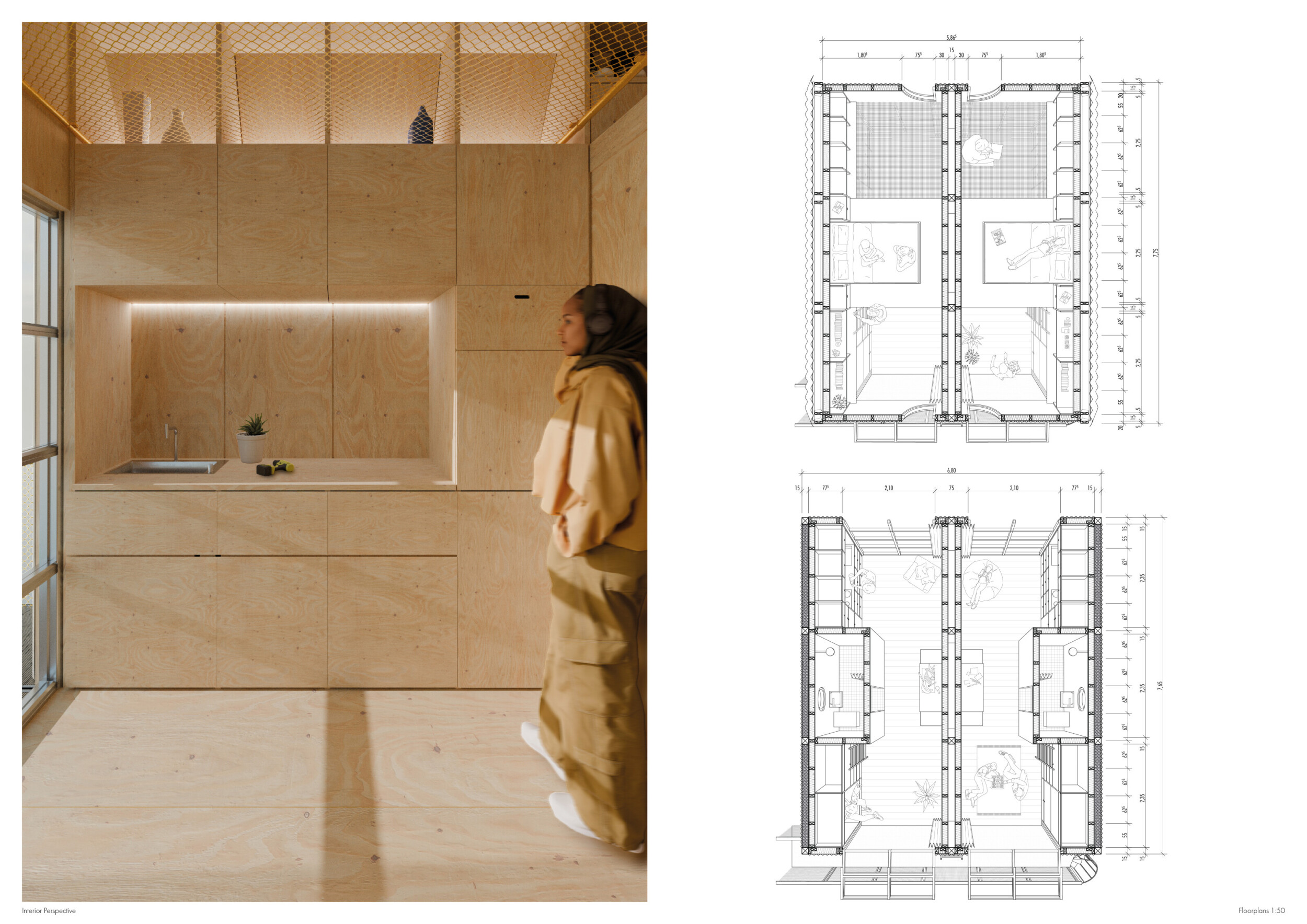
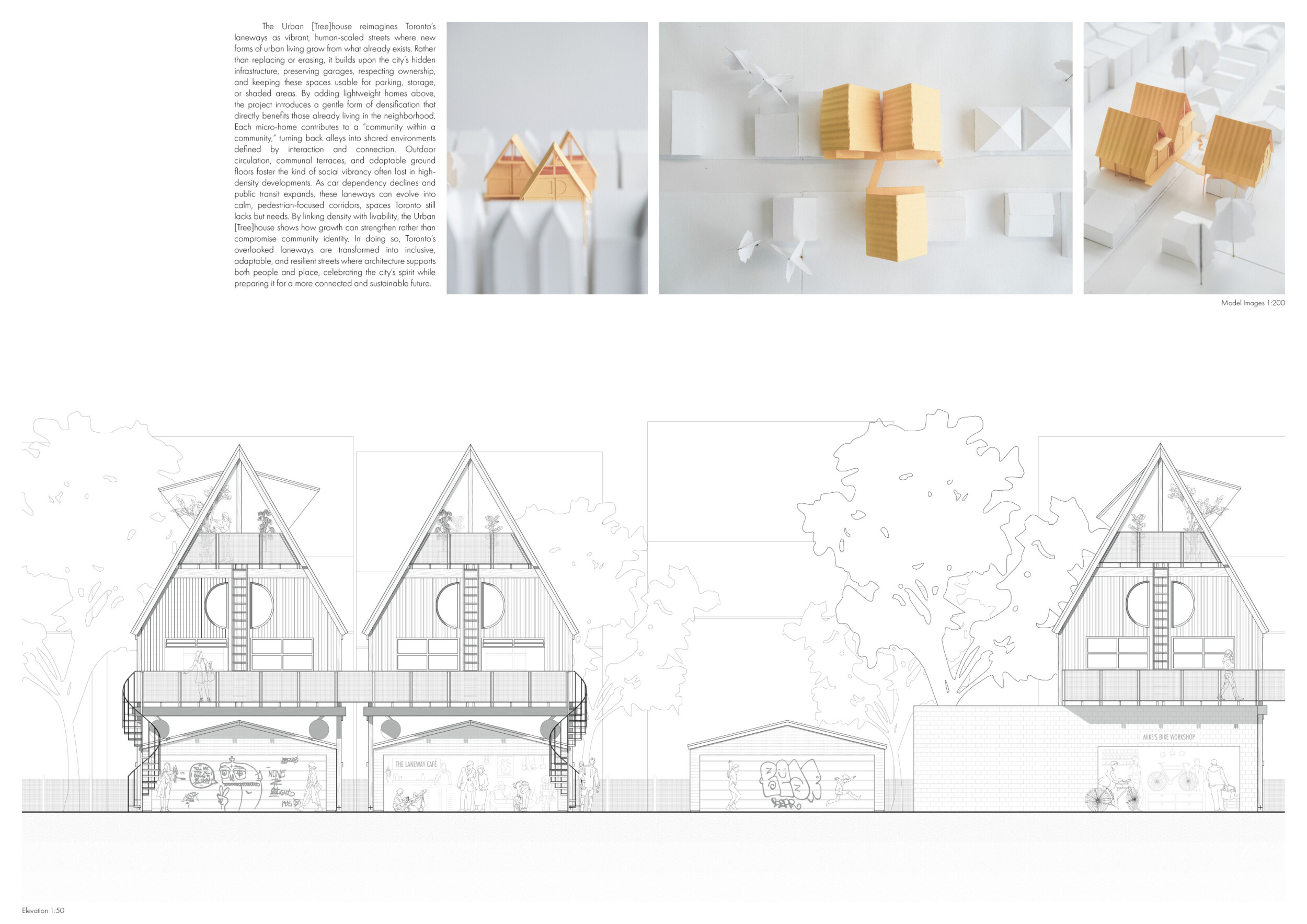

POLYBOX
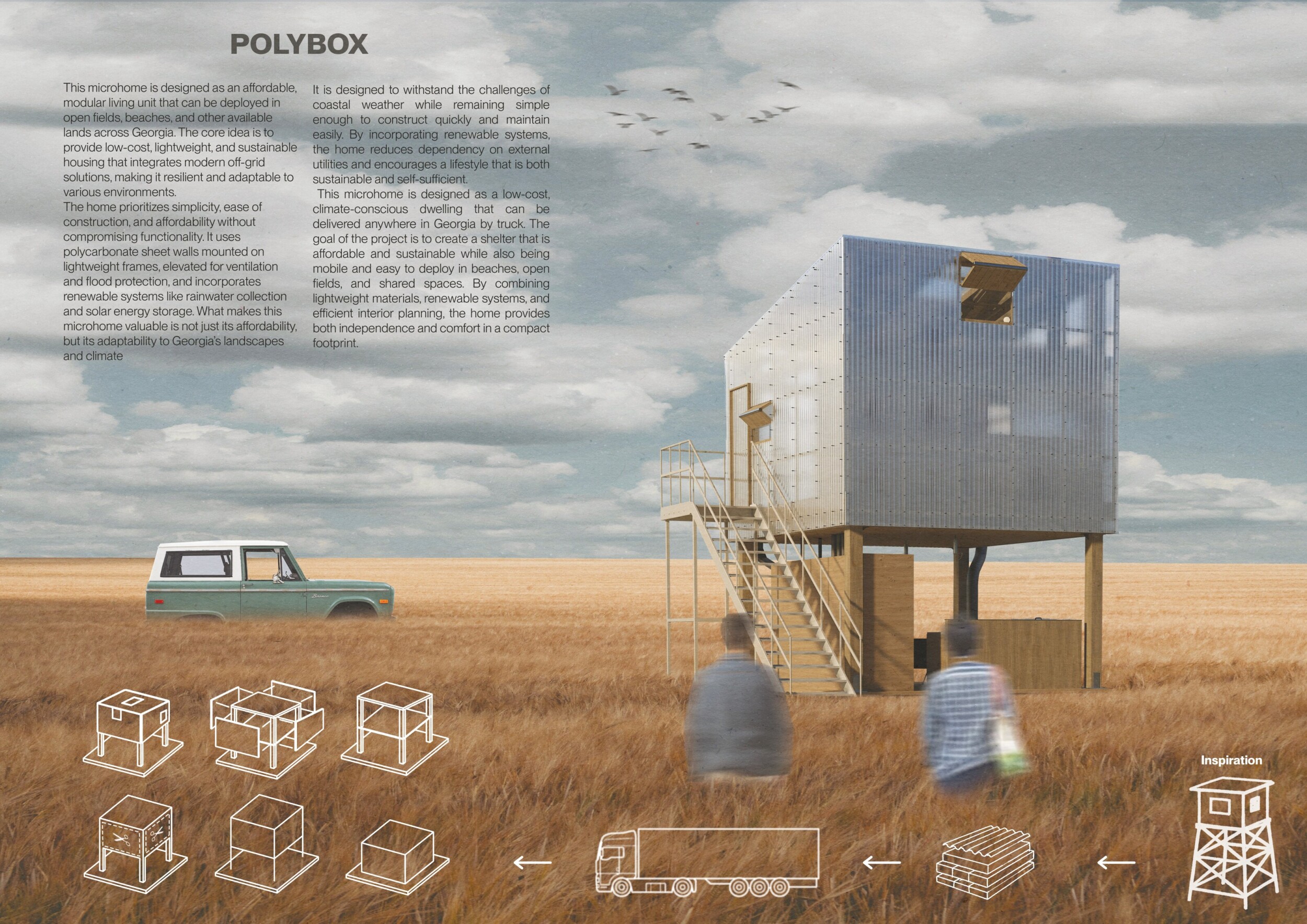
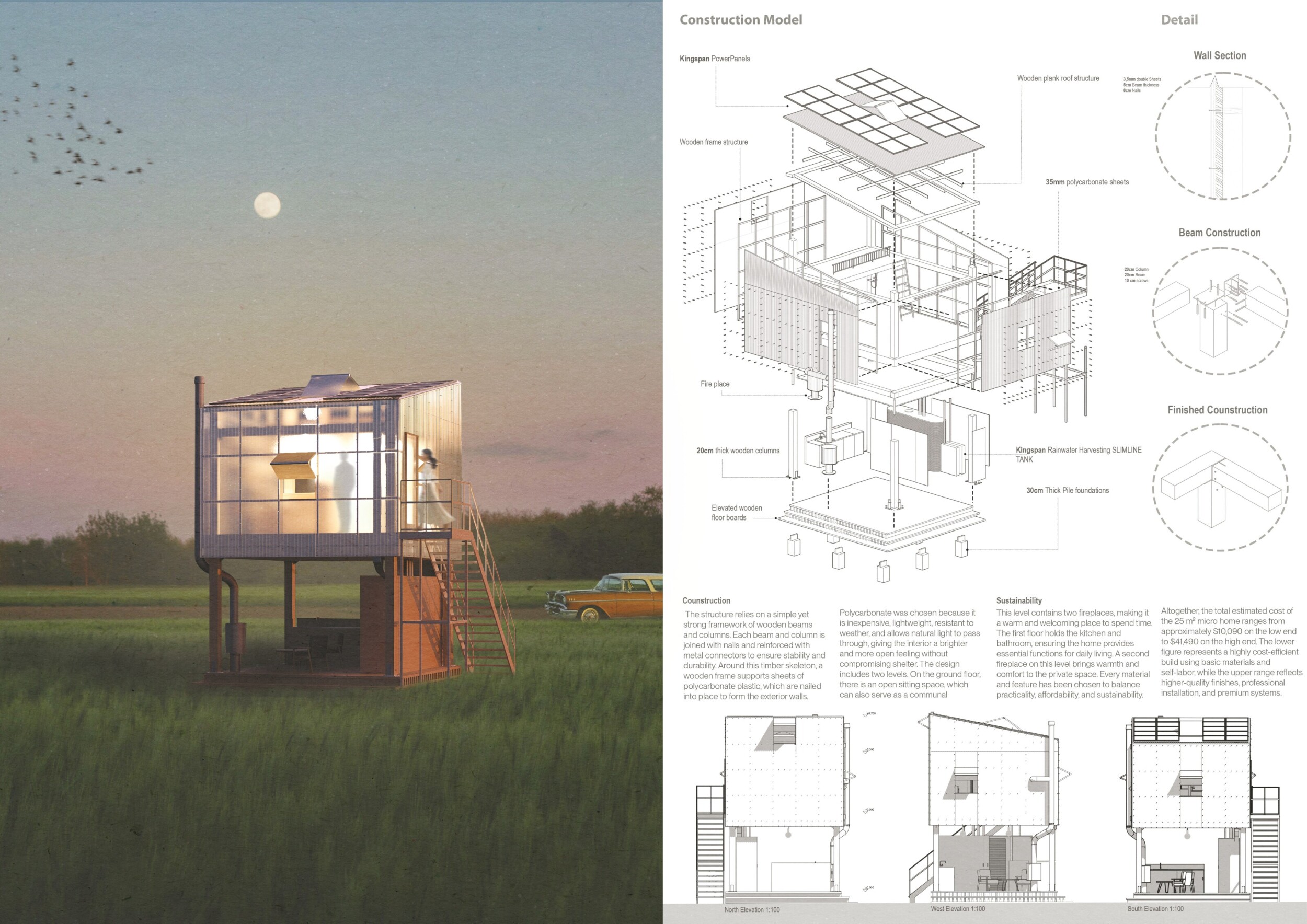
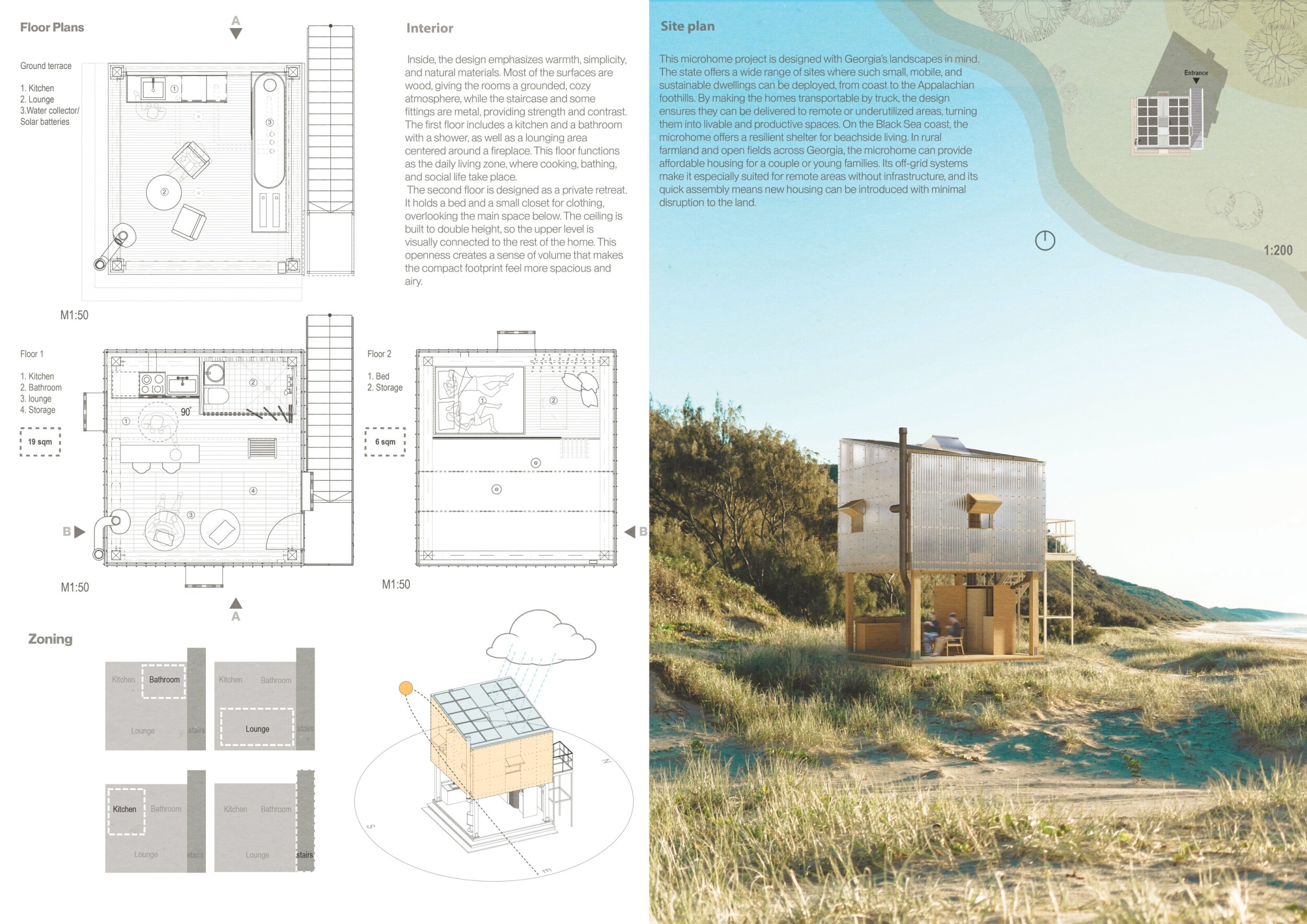
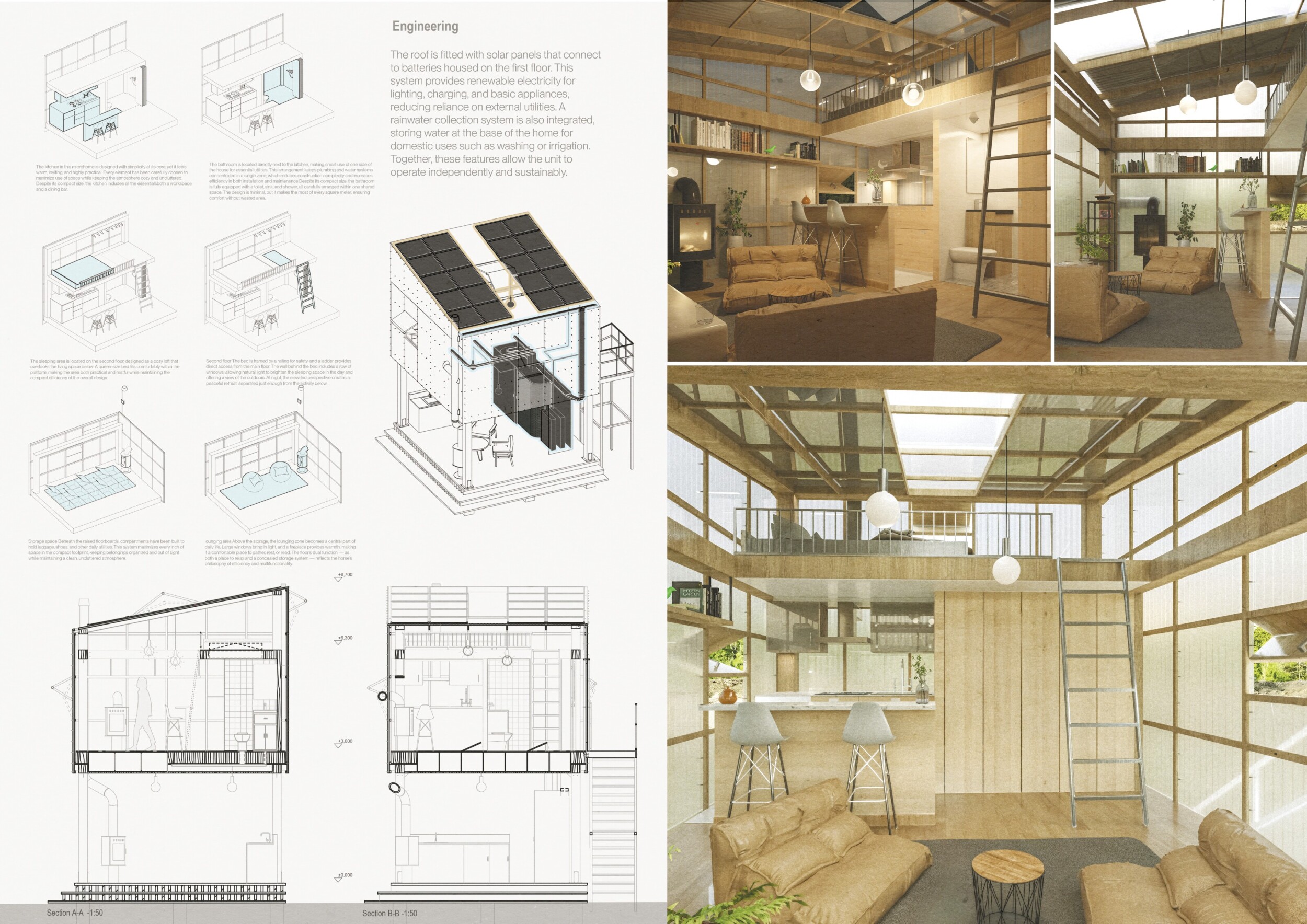

Road To Morocco 2030
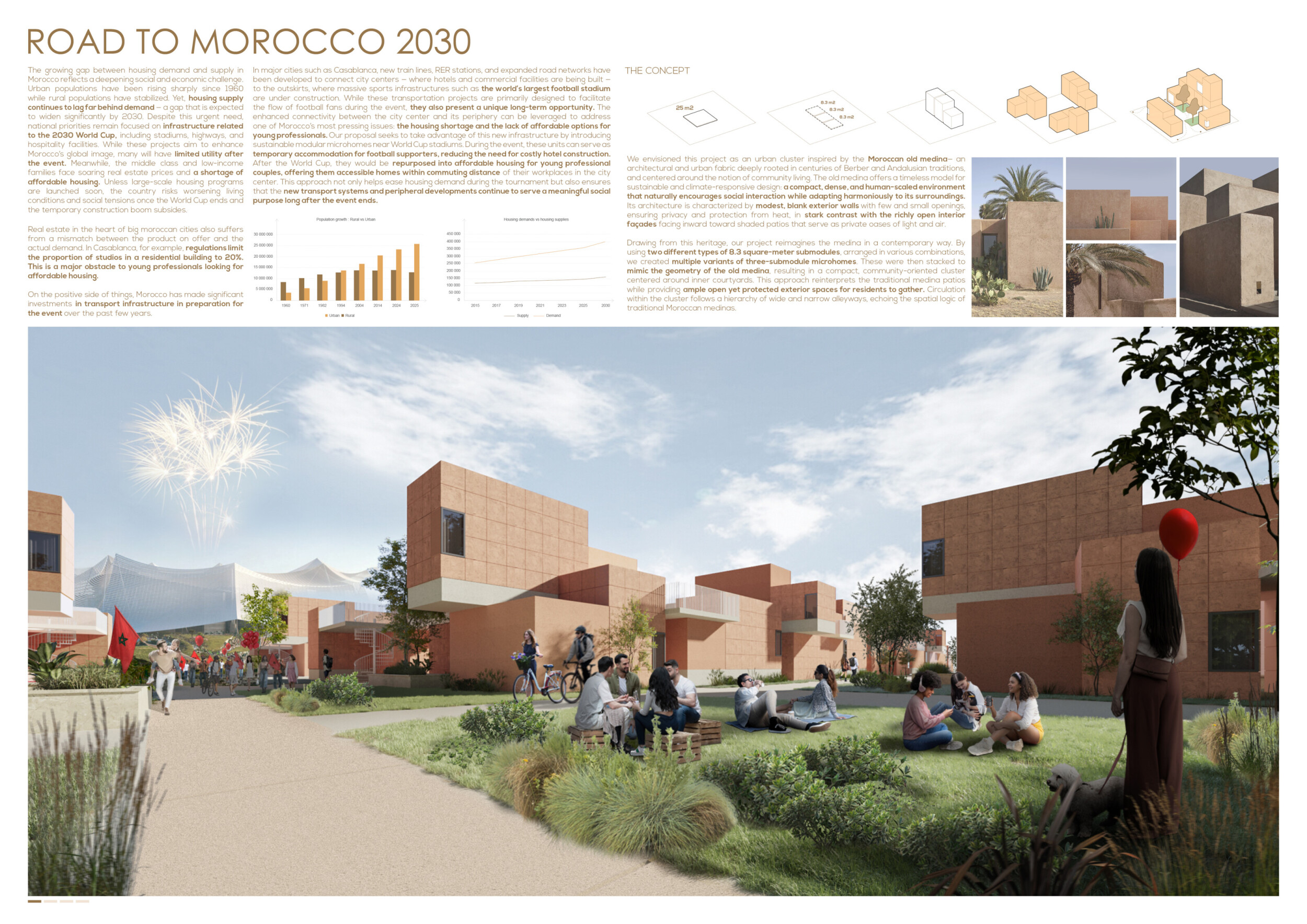
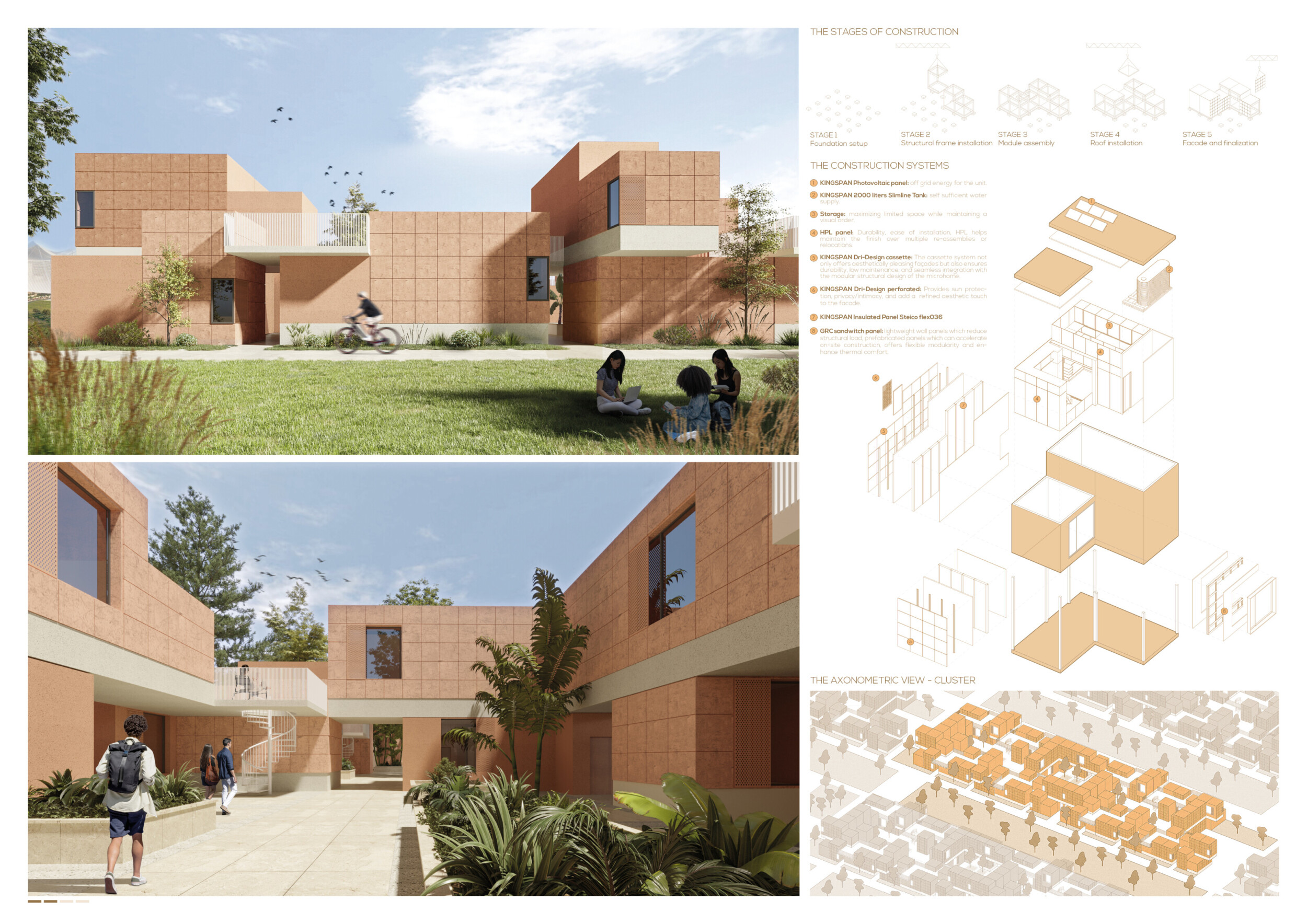
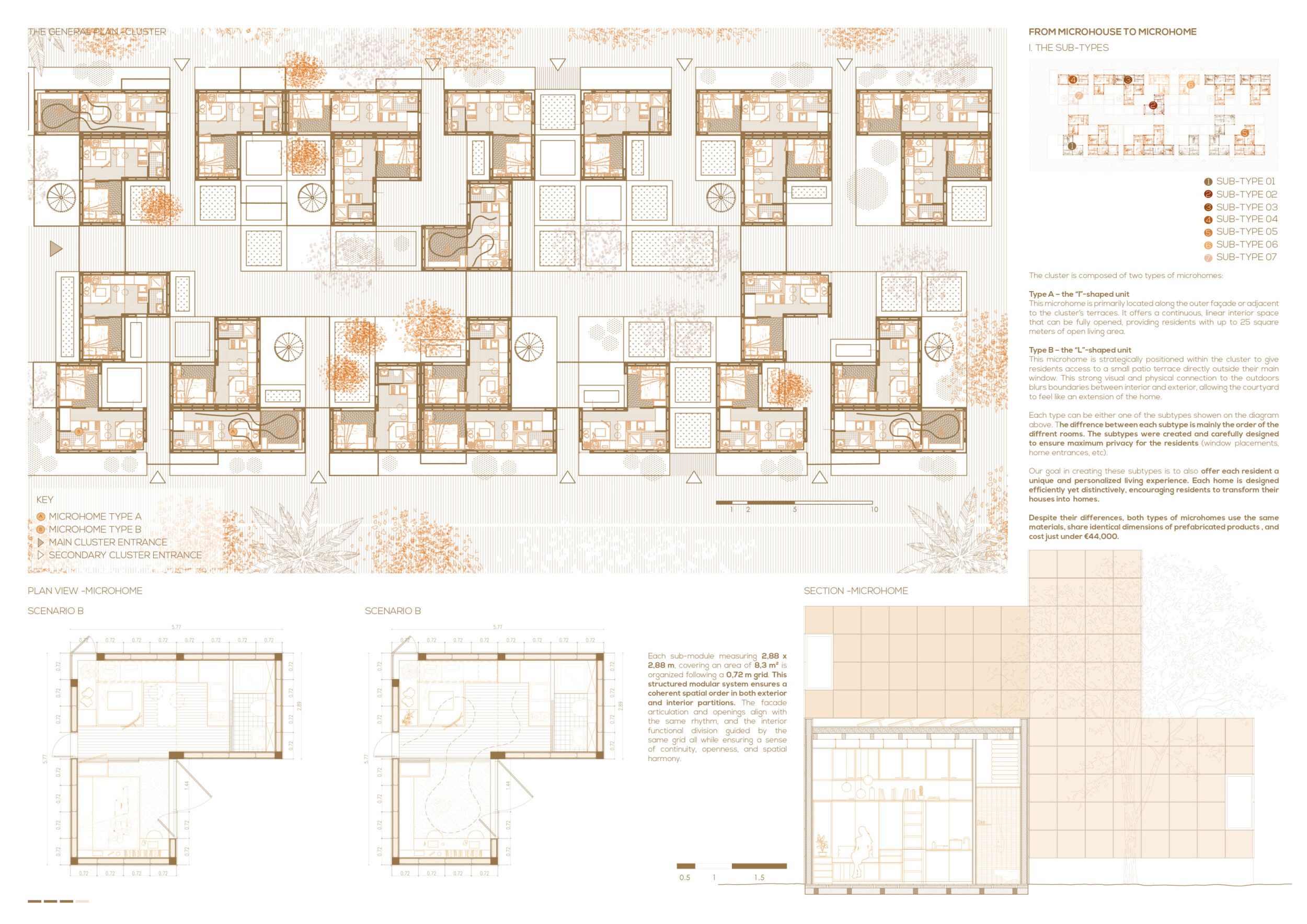
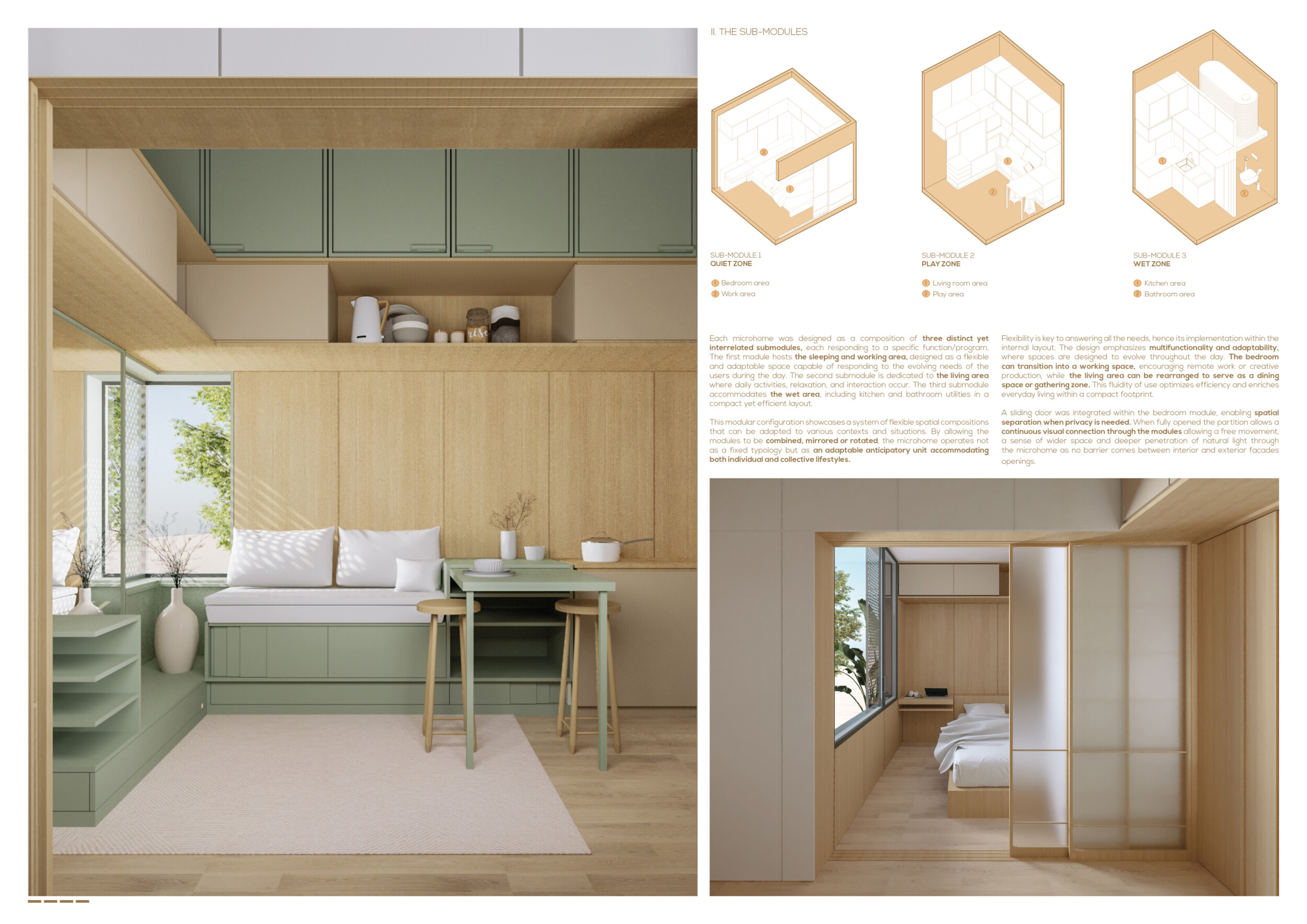
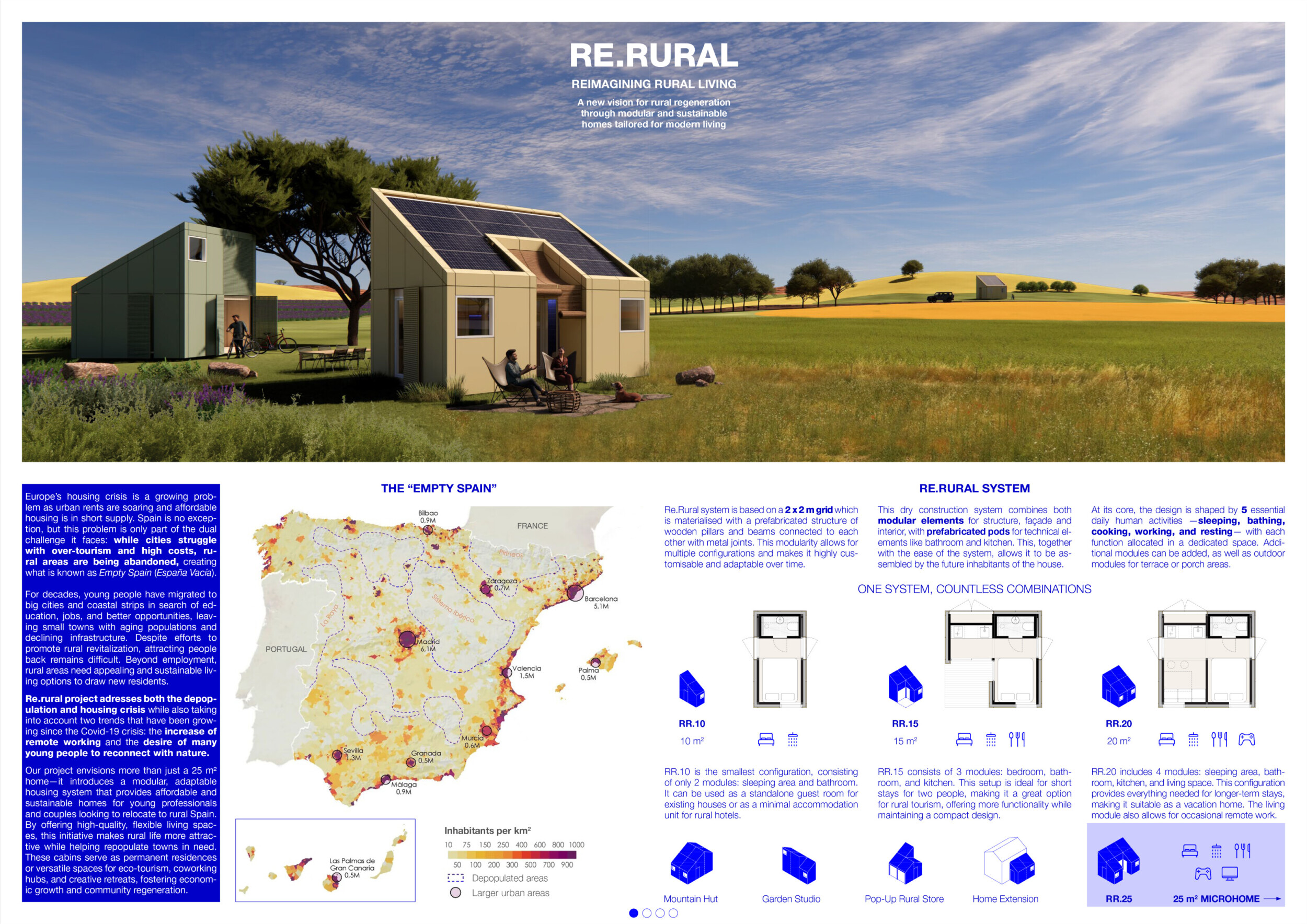
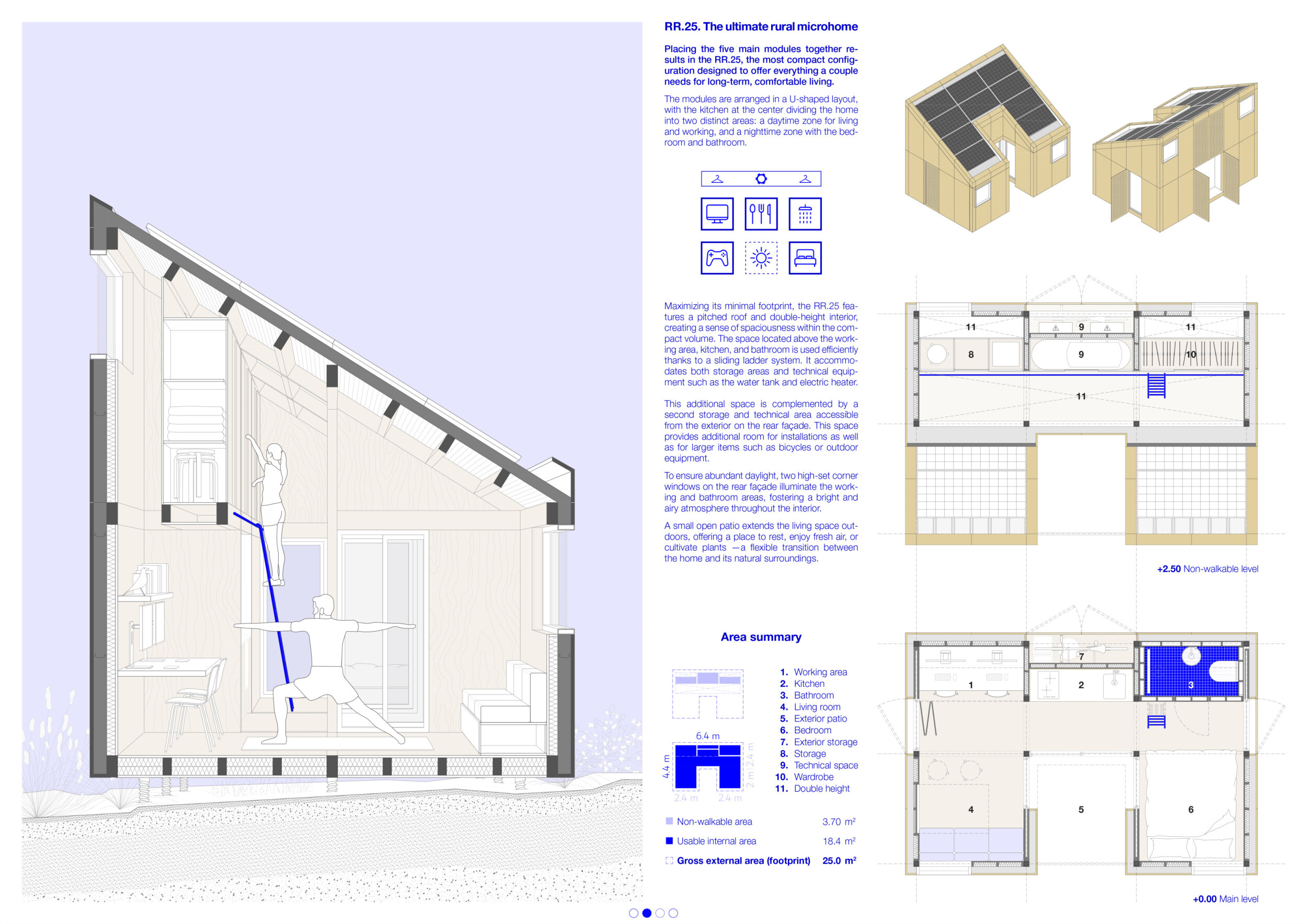
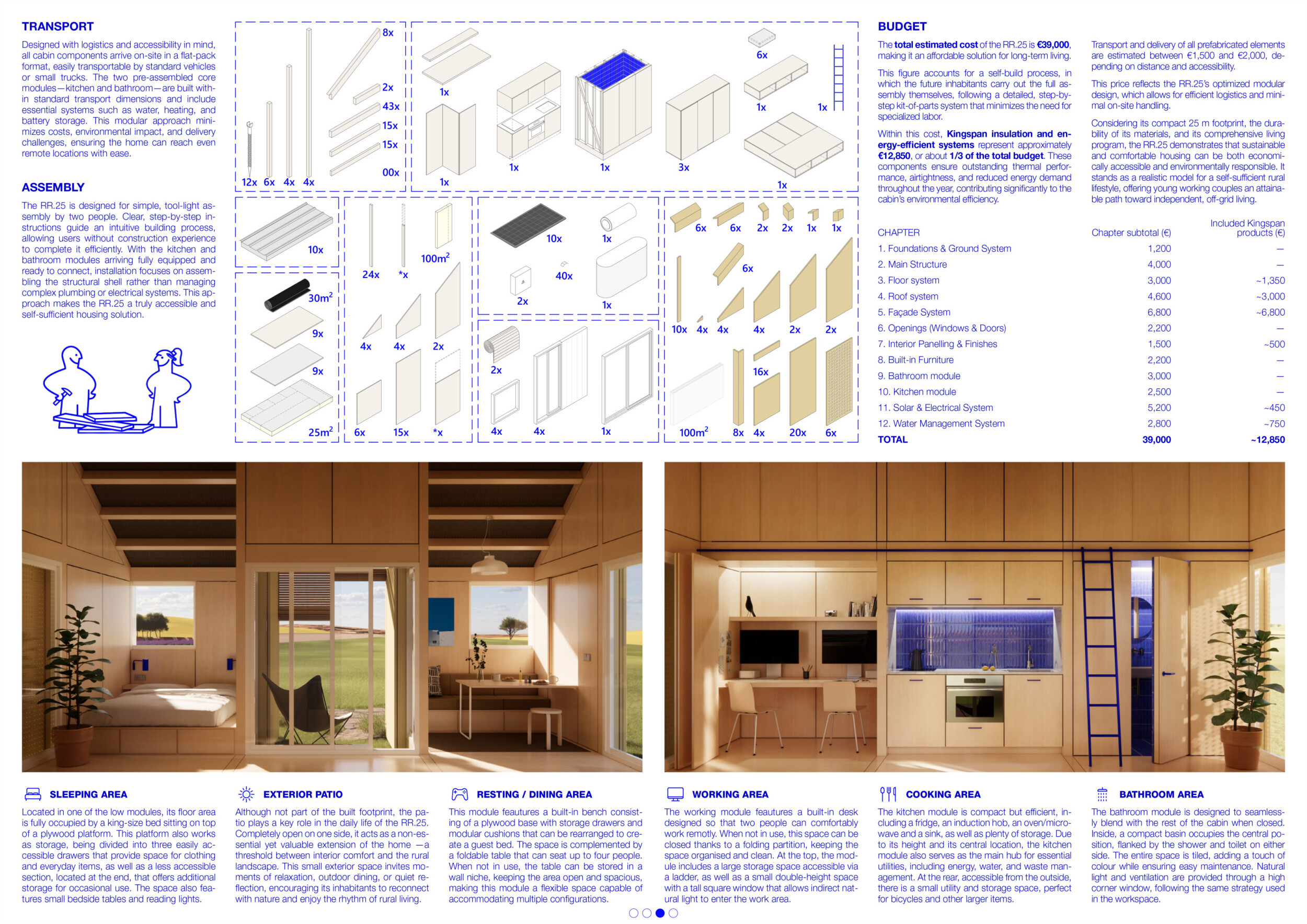
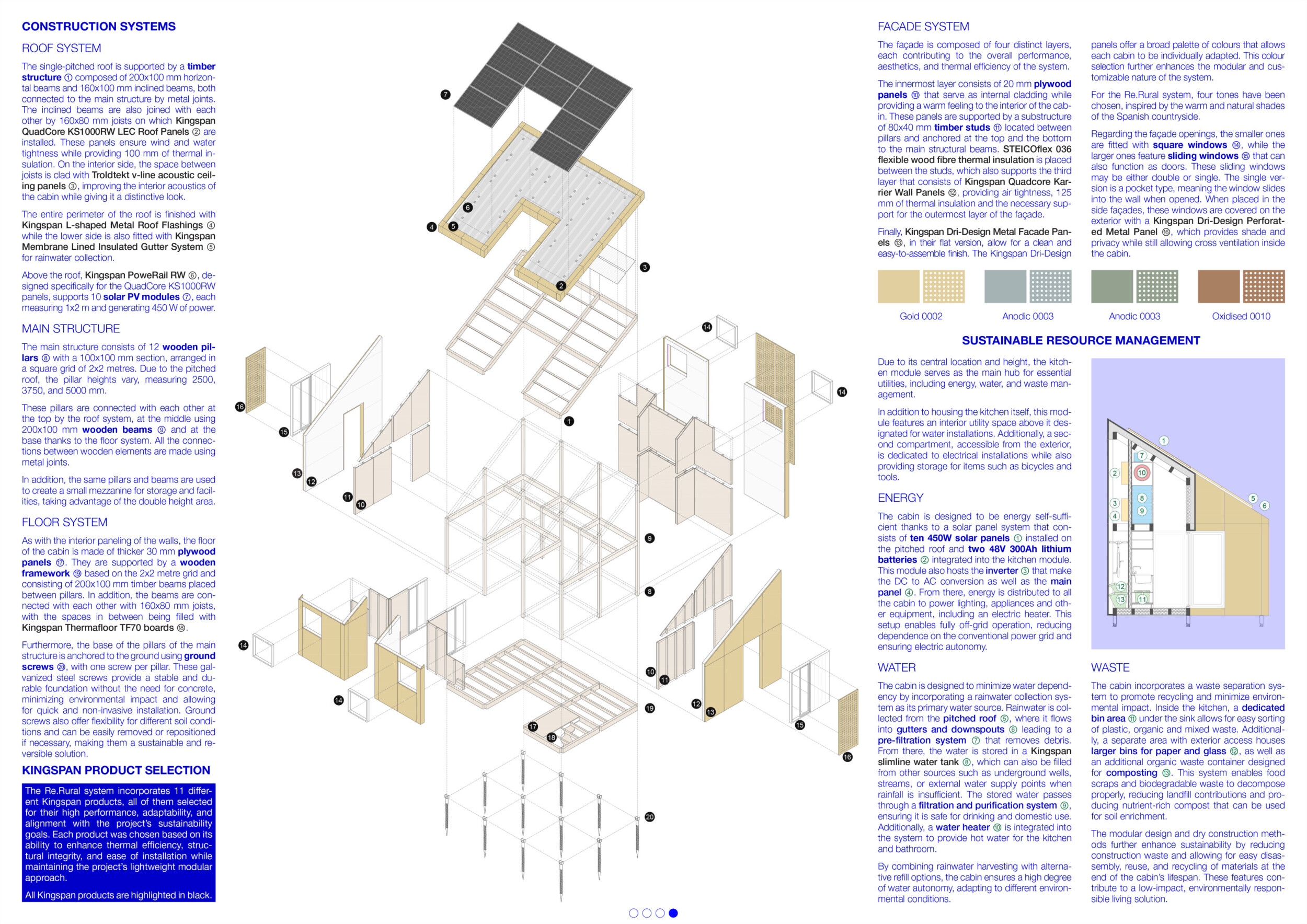
Re.Rural
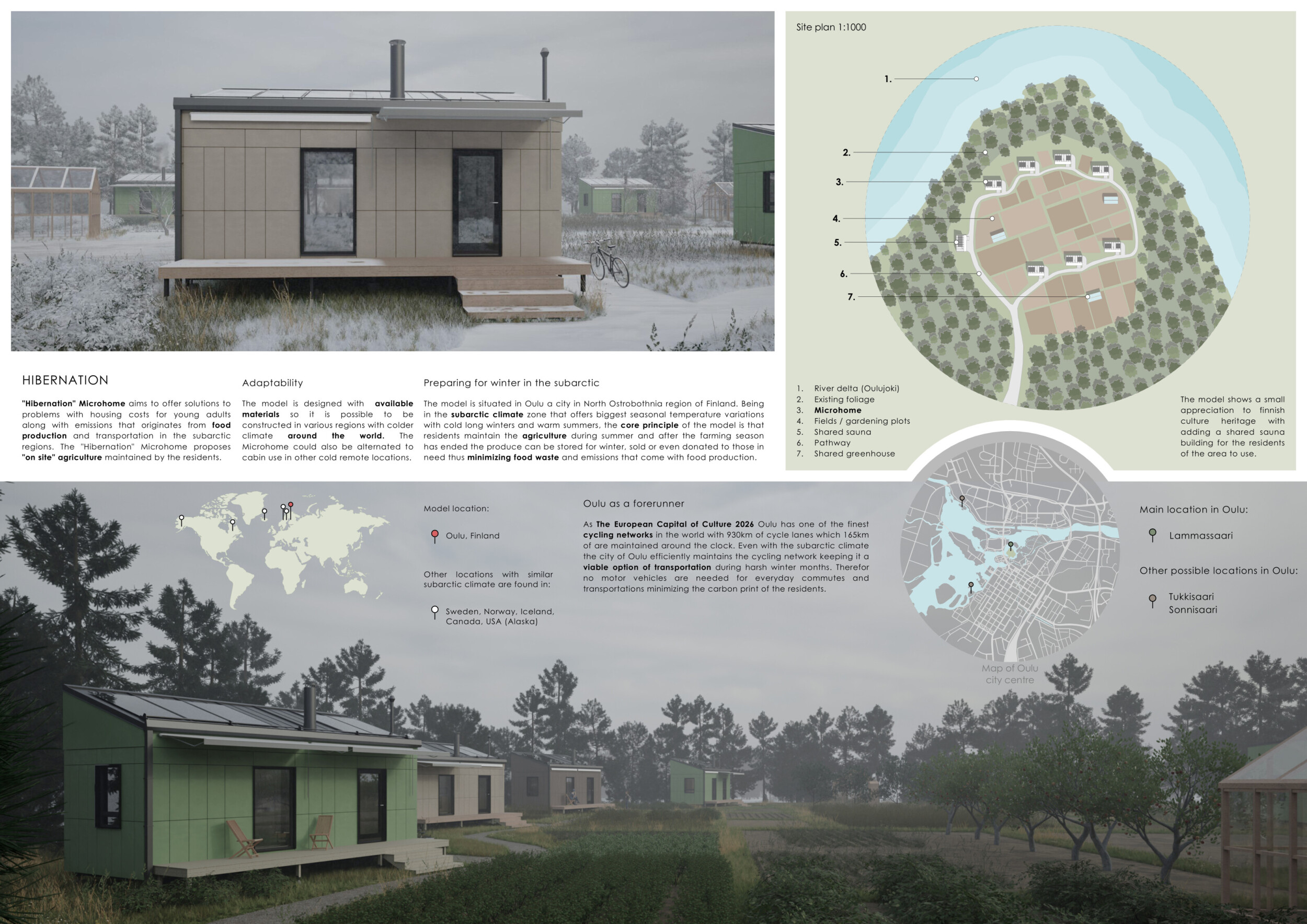
Hibernation
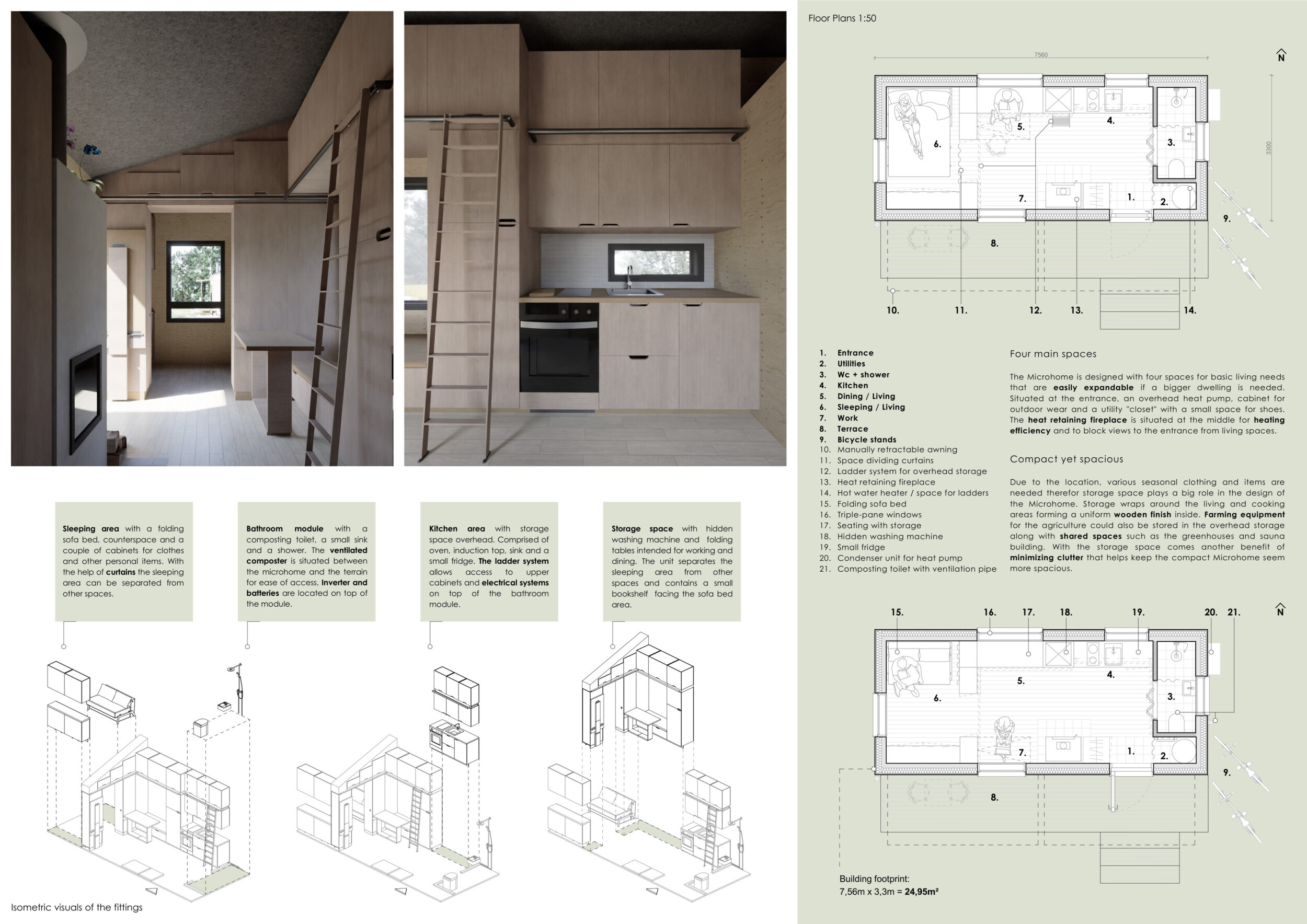
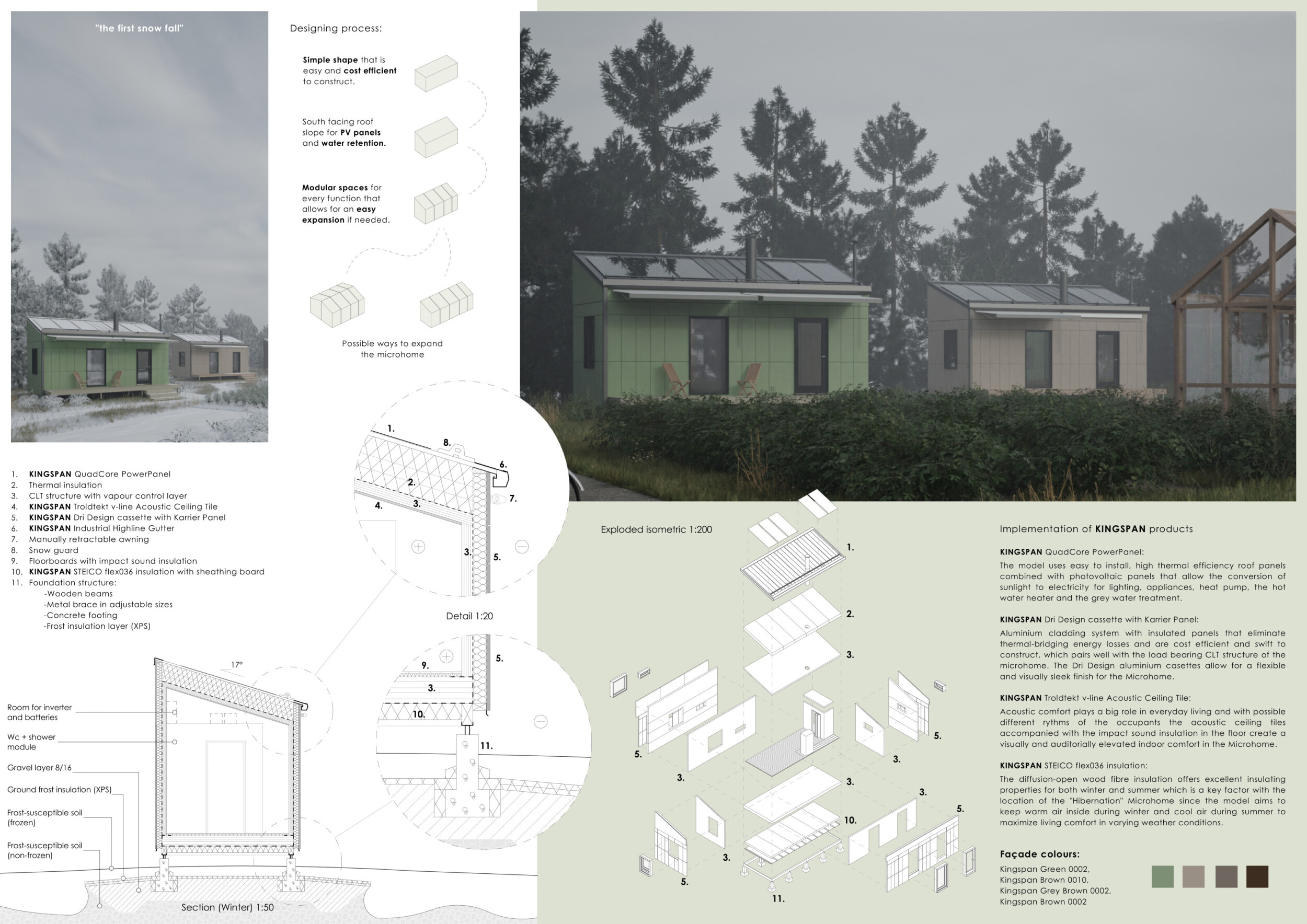
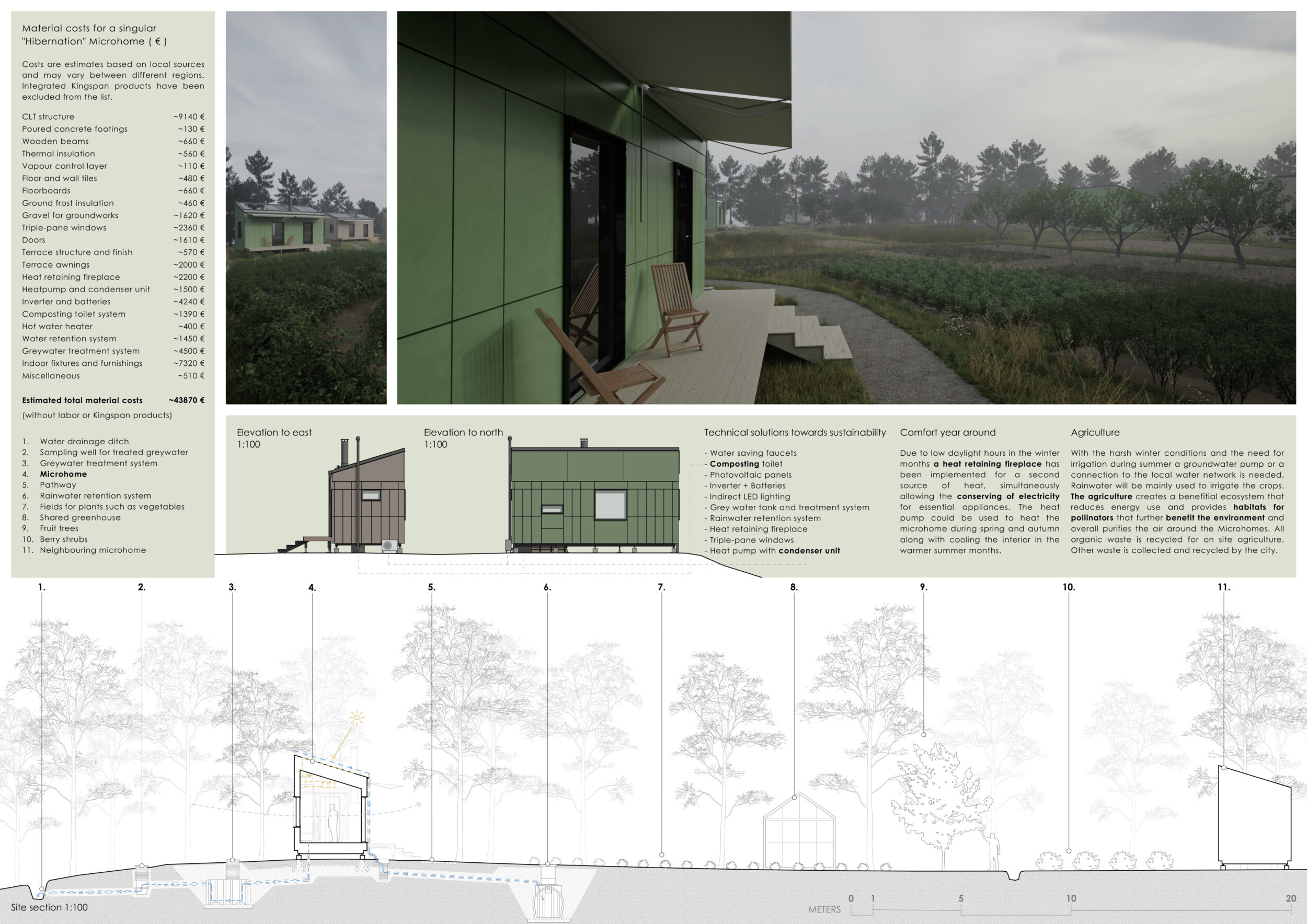

Sumak Wasi
NEST 25
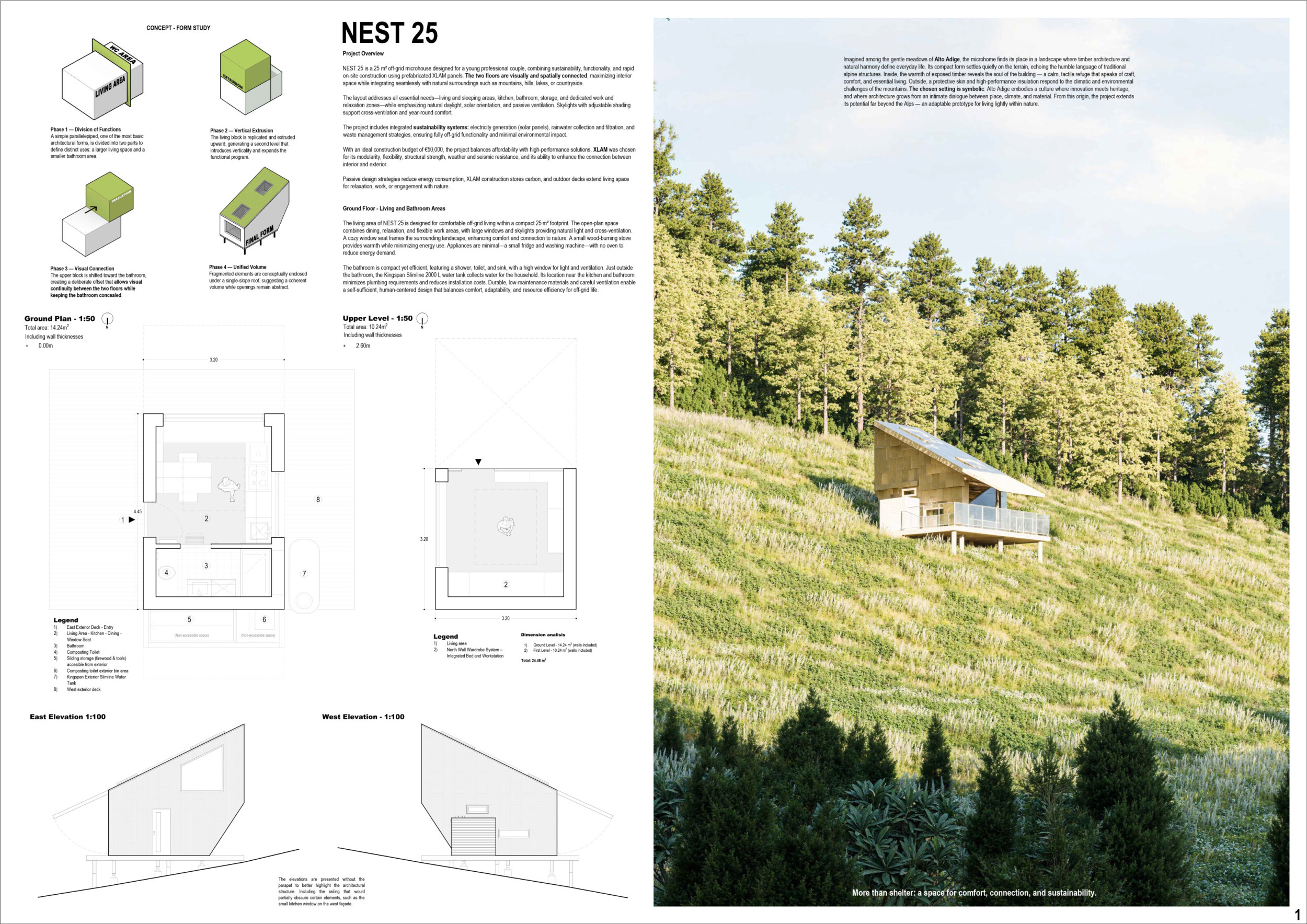
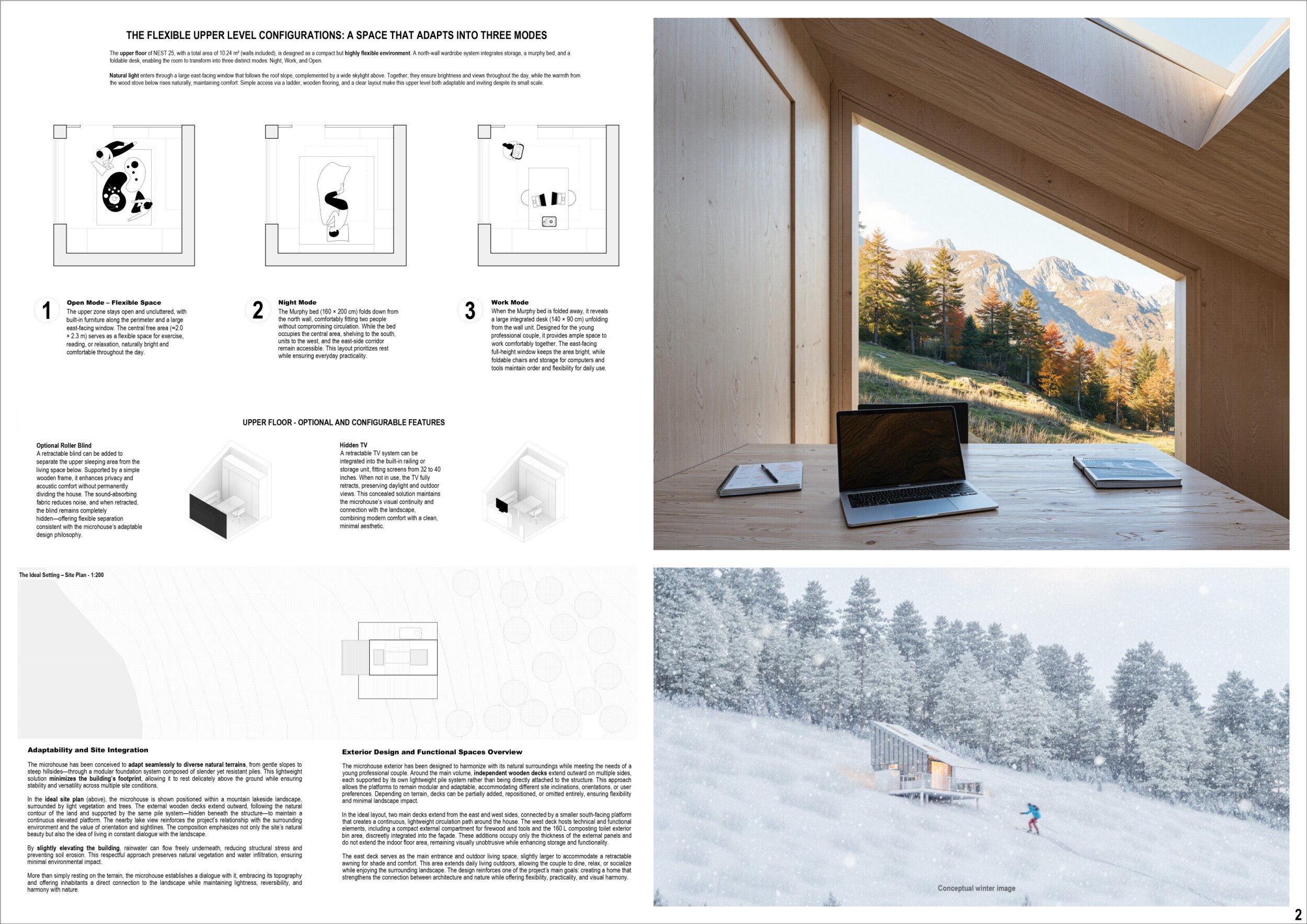
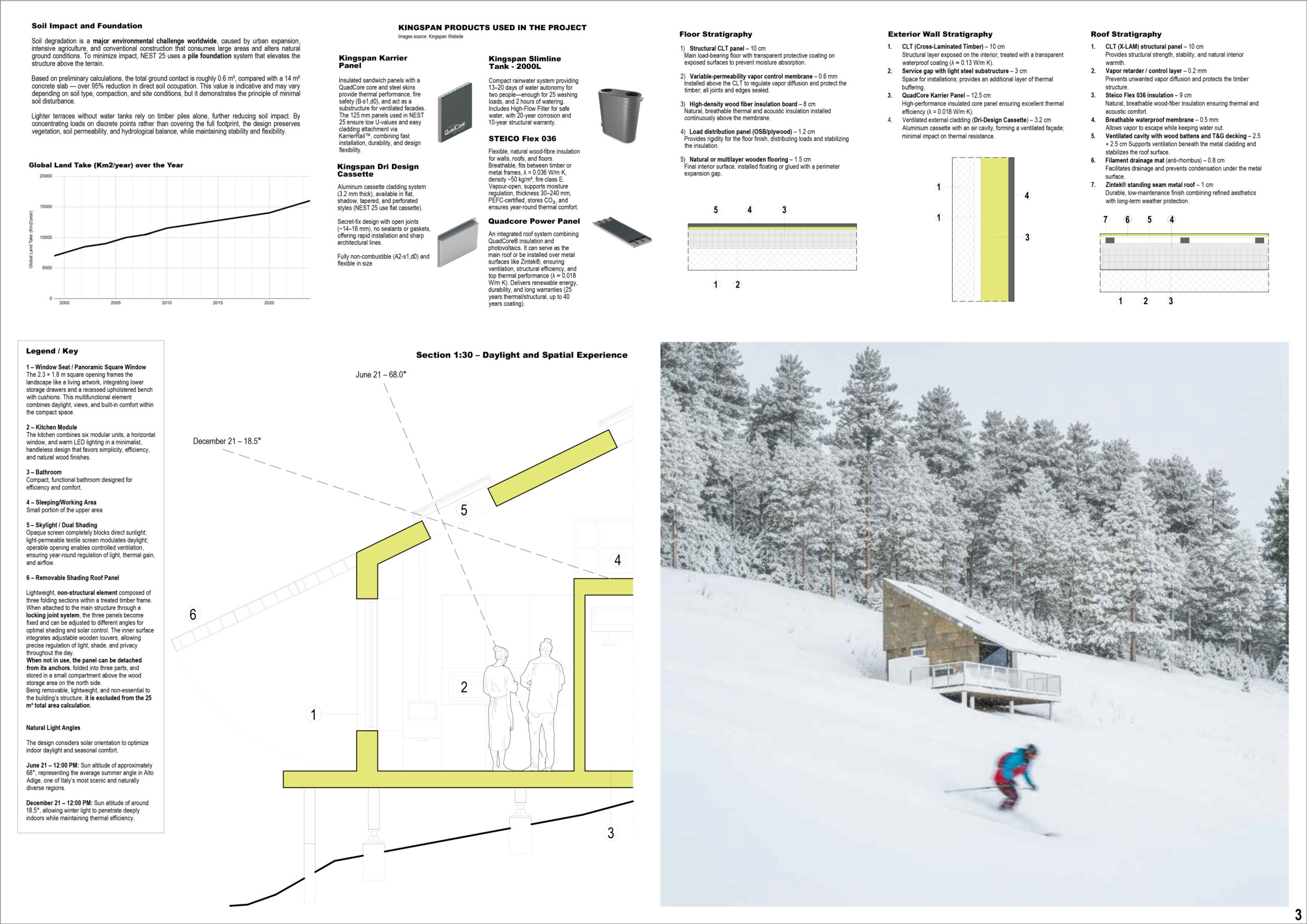
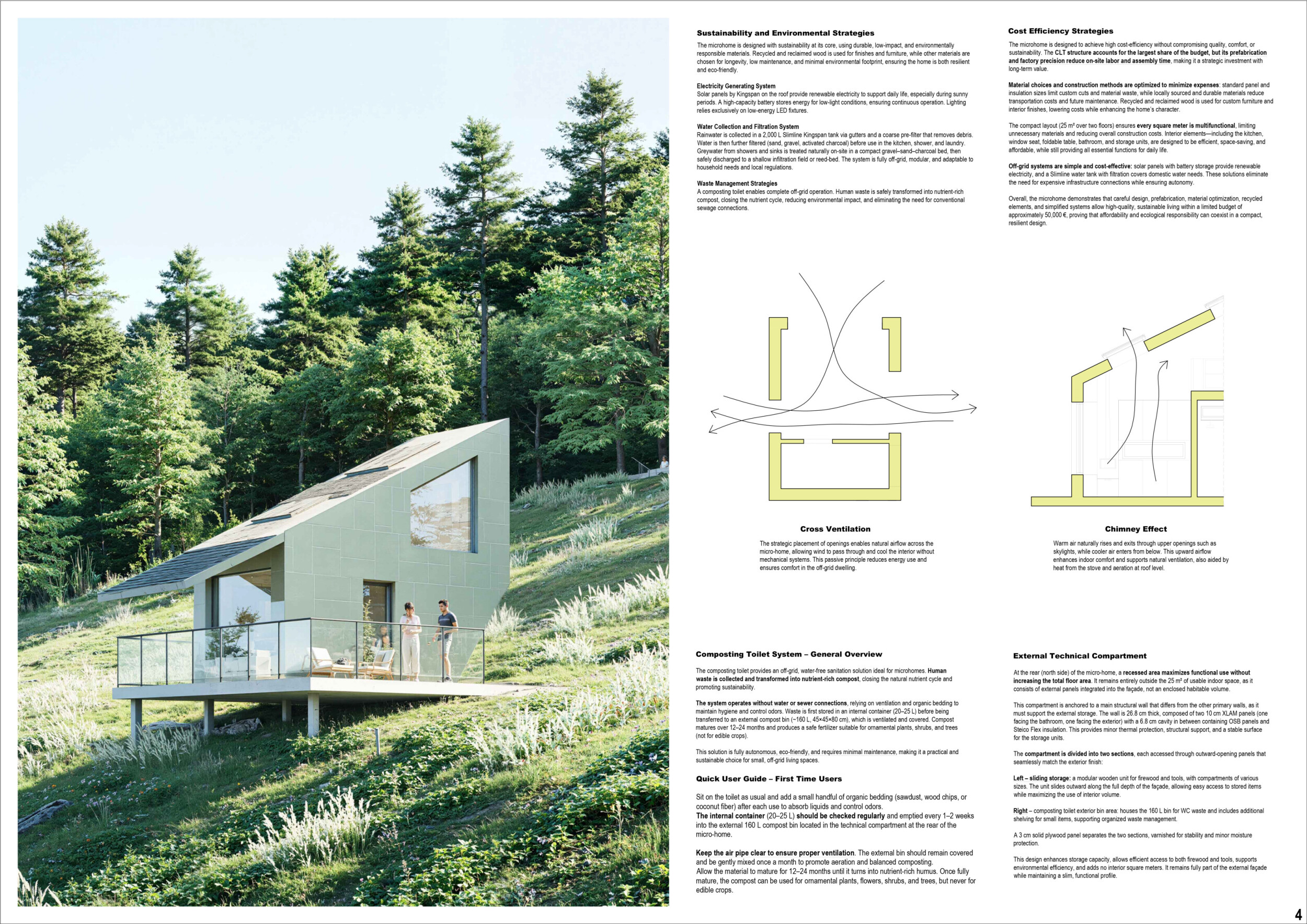
MicroWorld
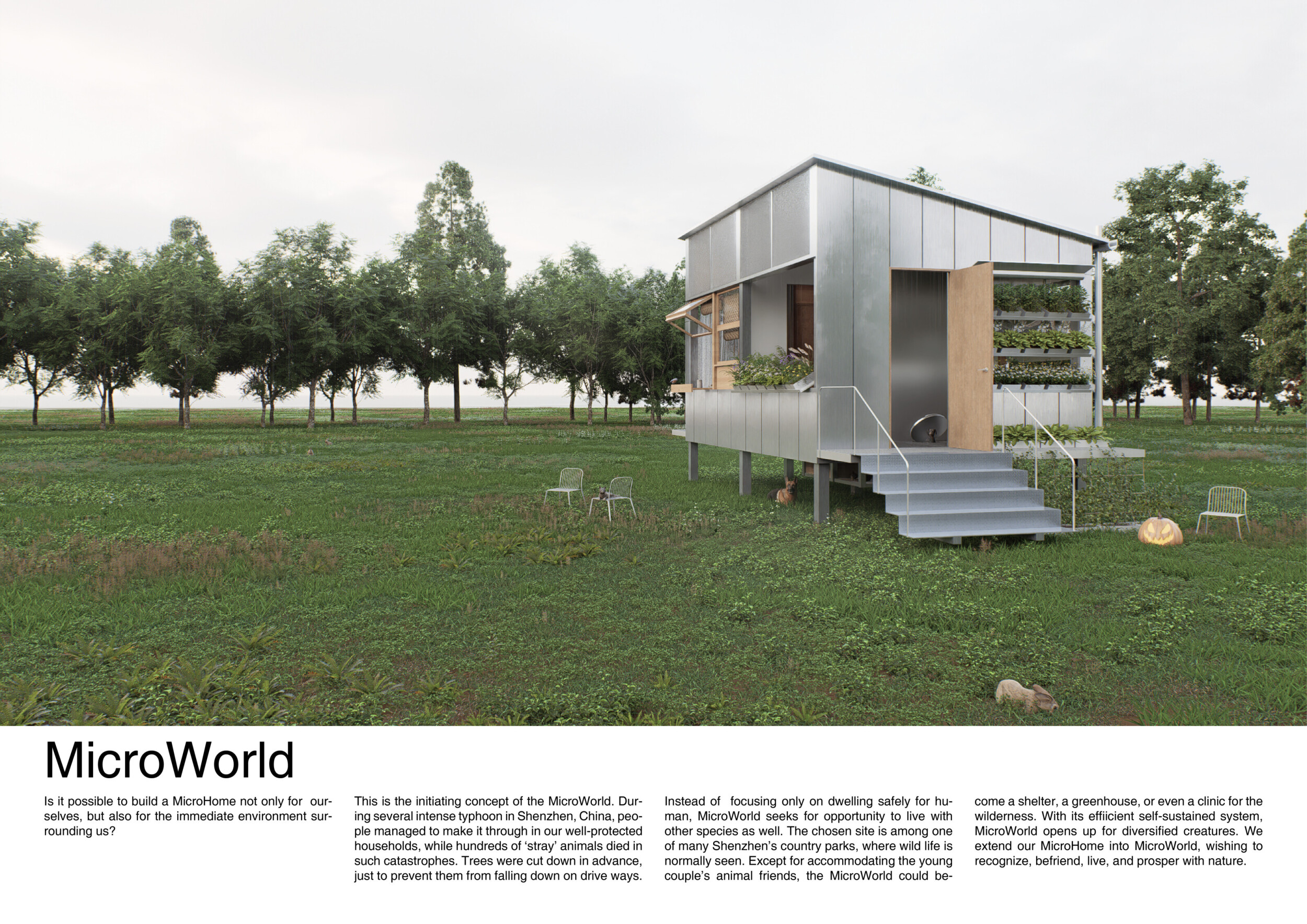
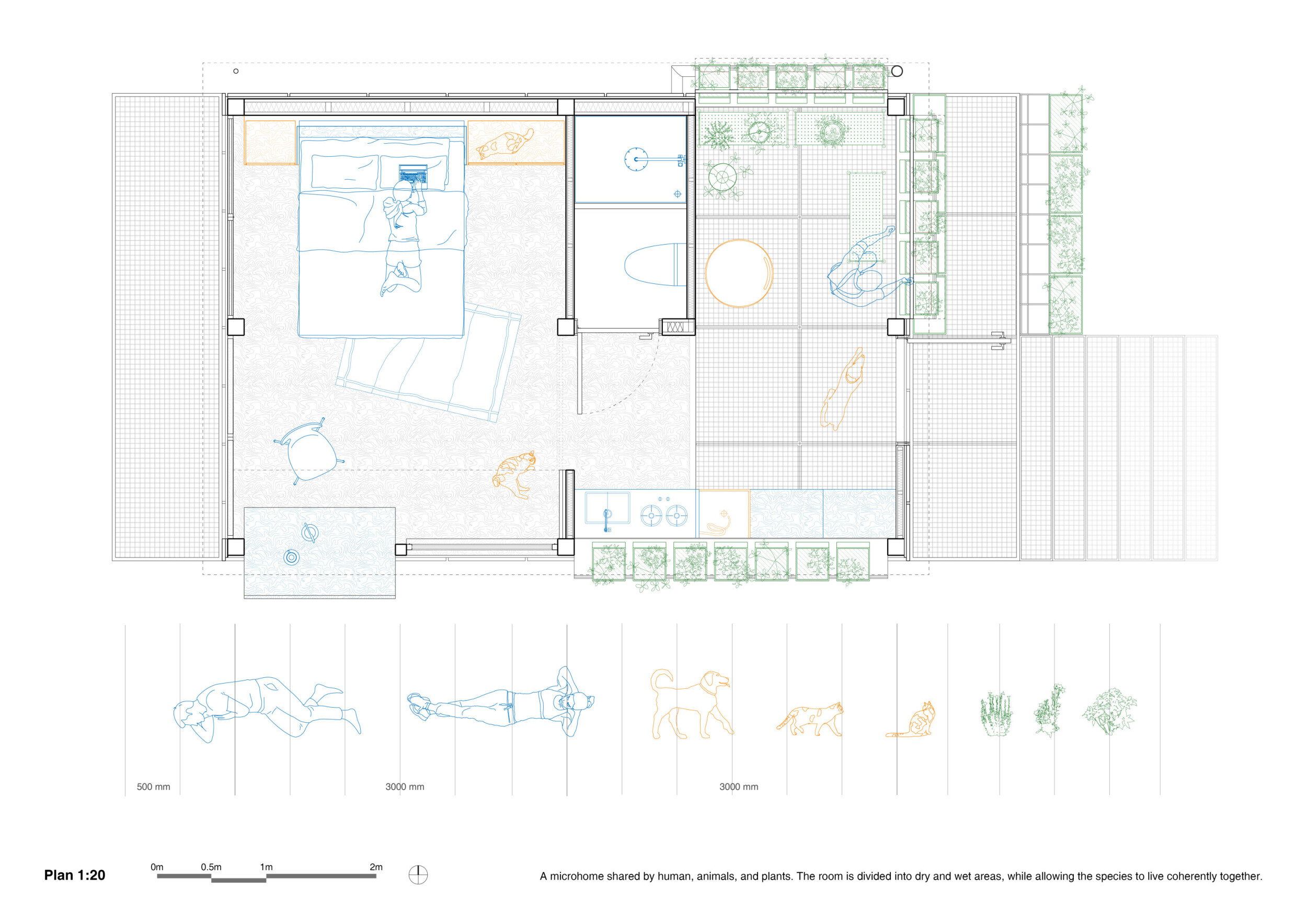
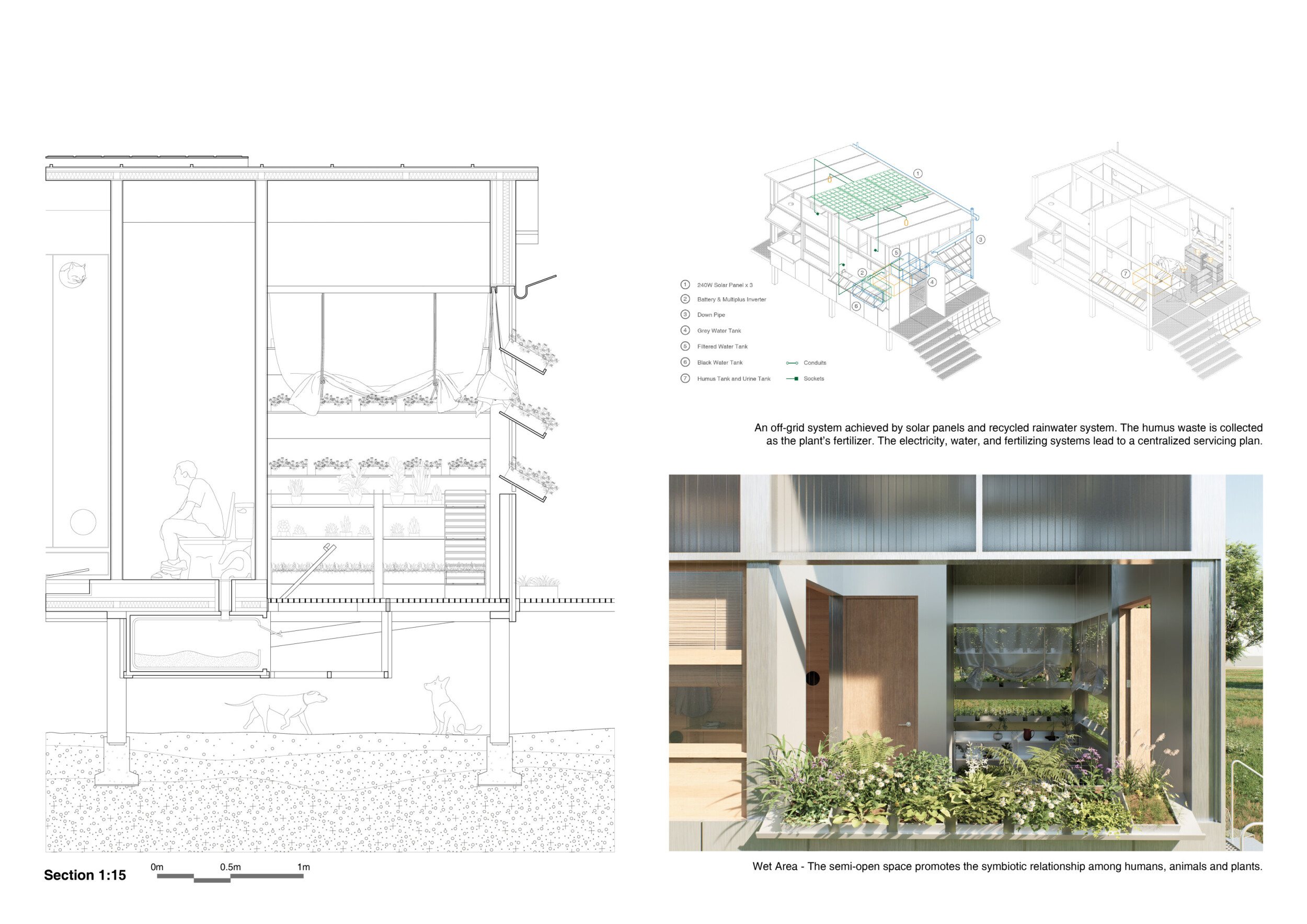
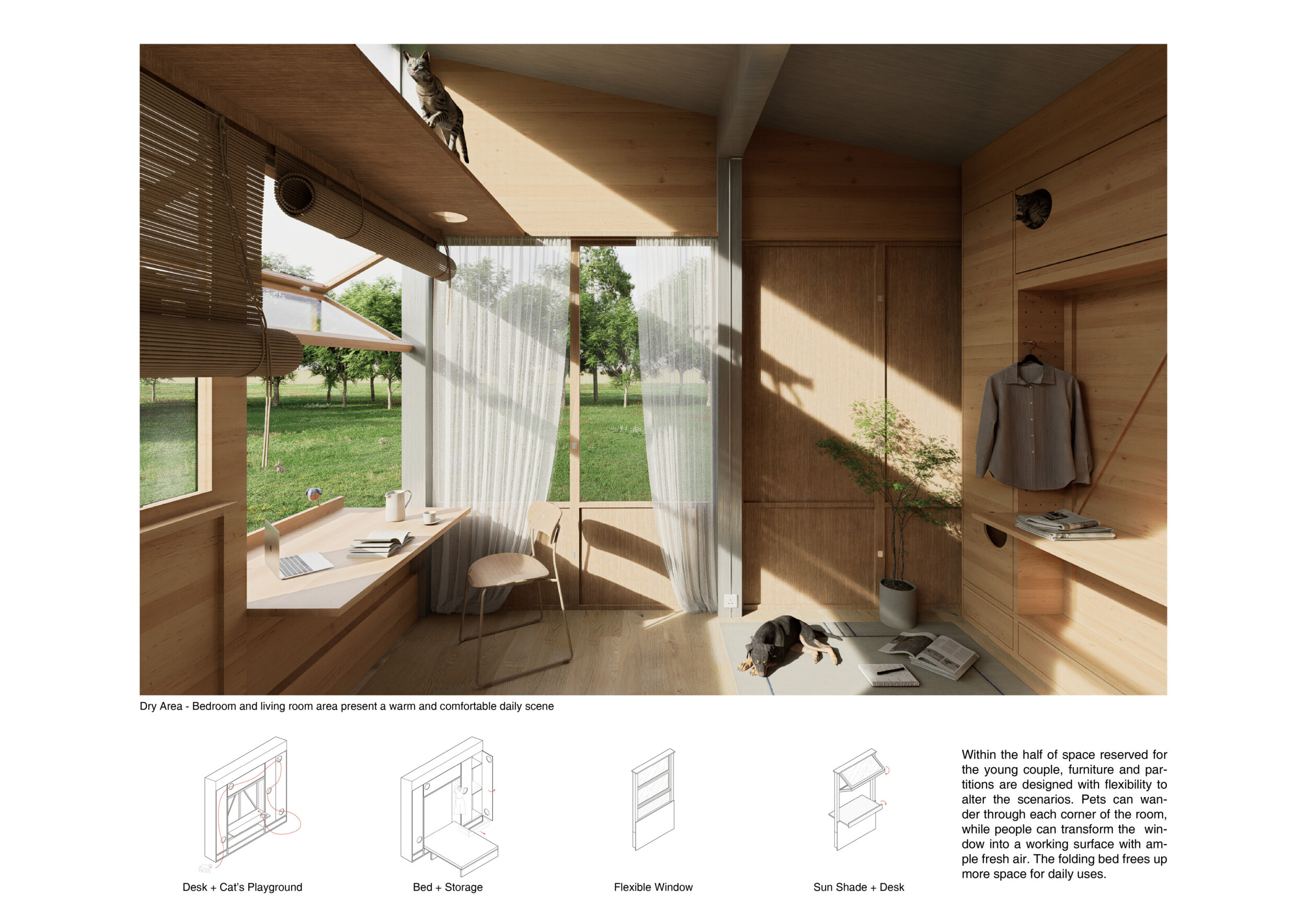

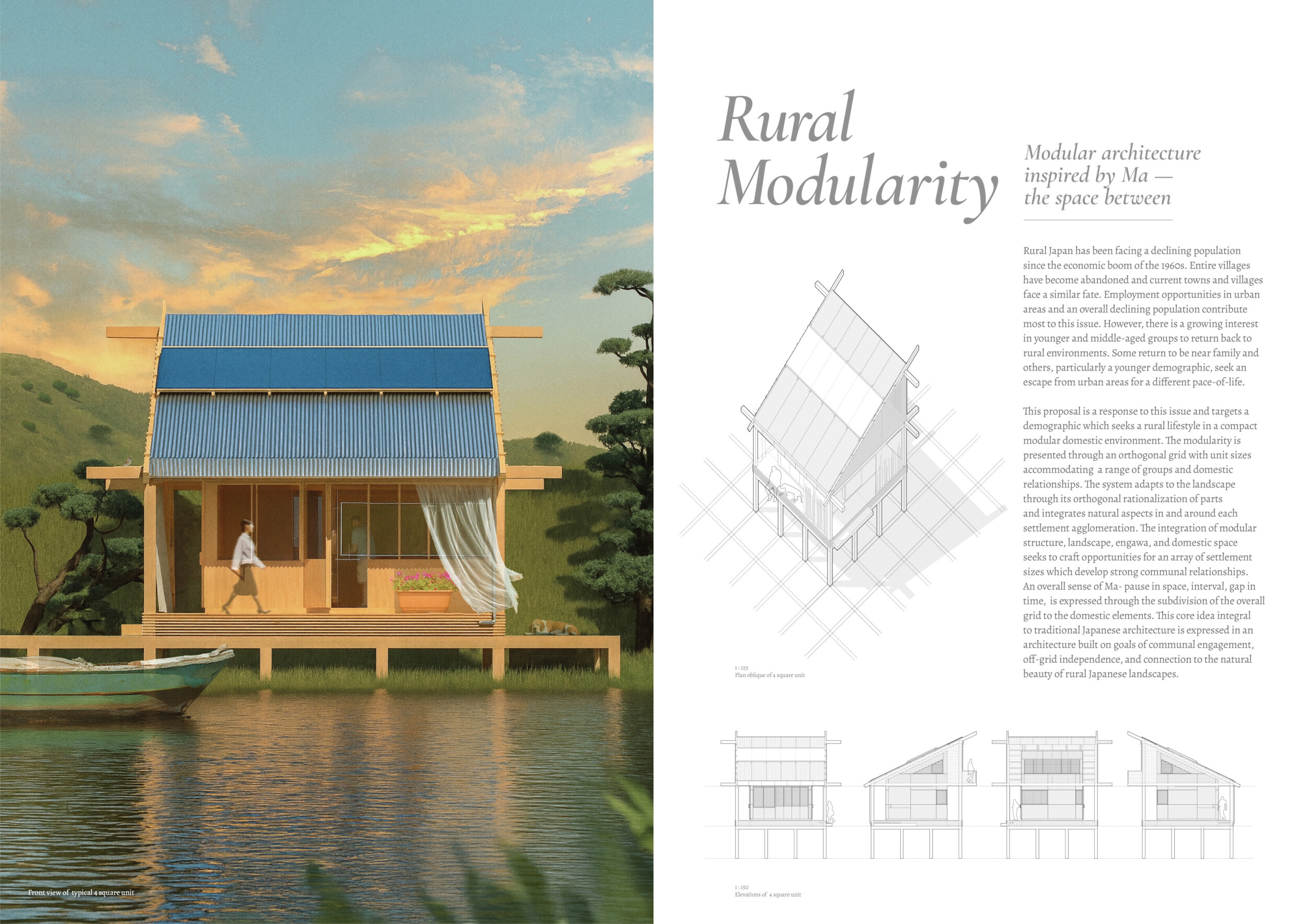
Rural Modularity
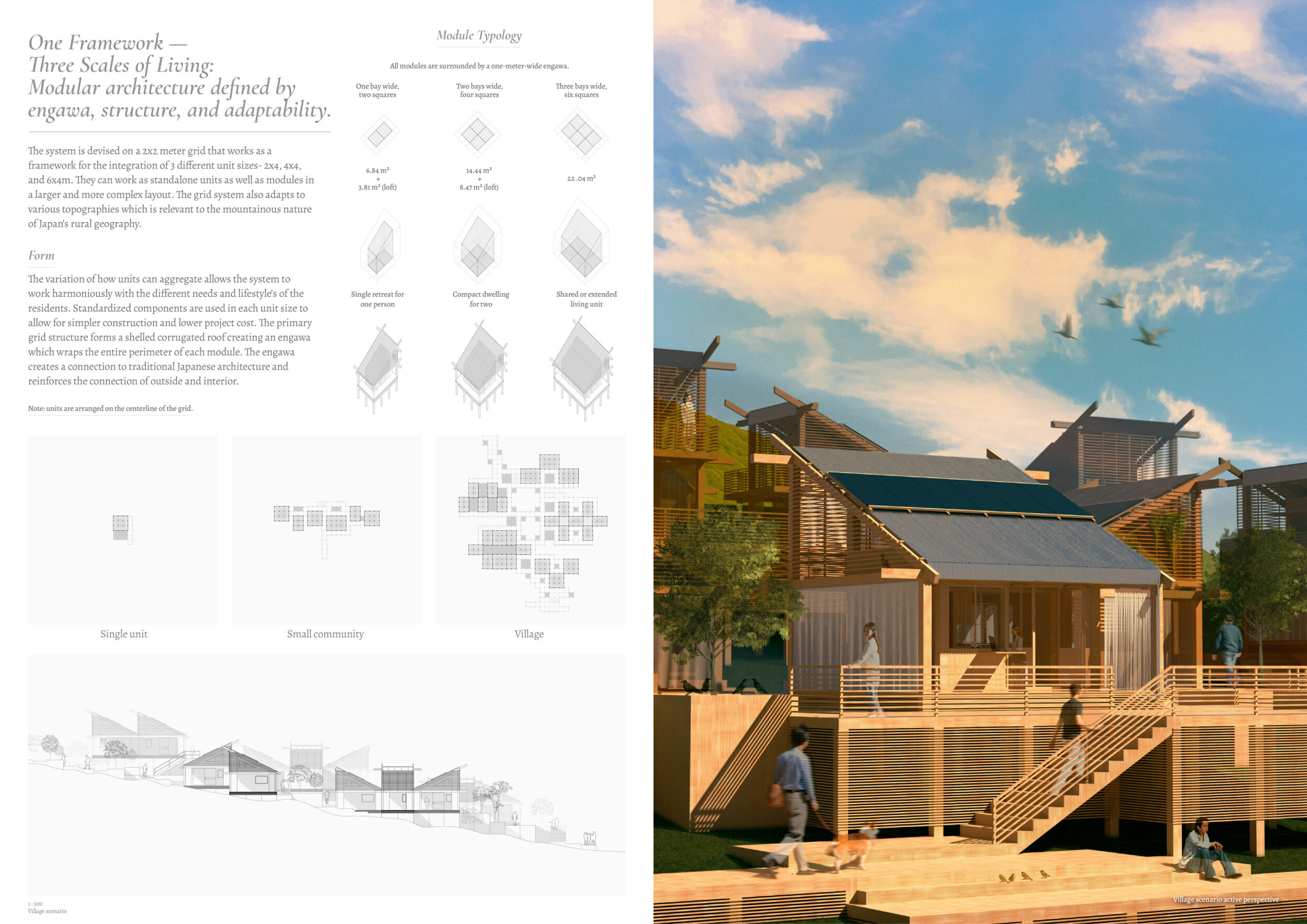
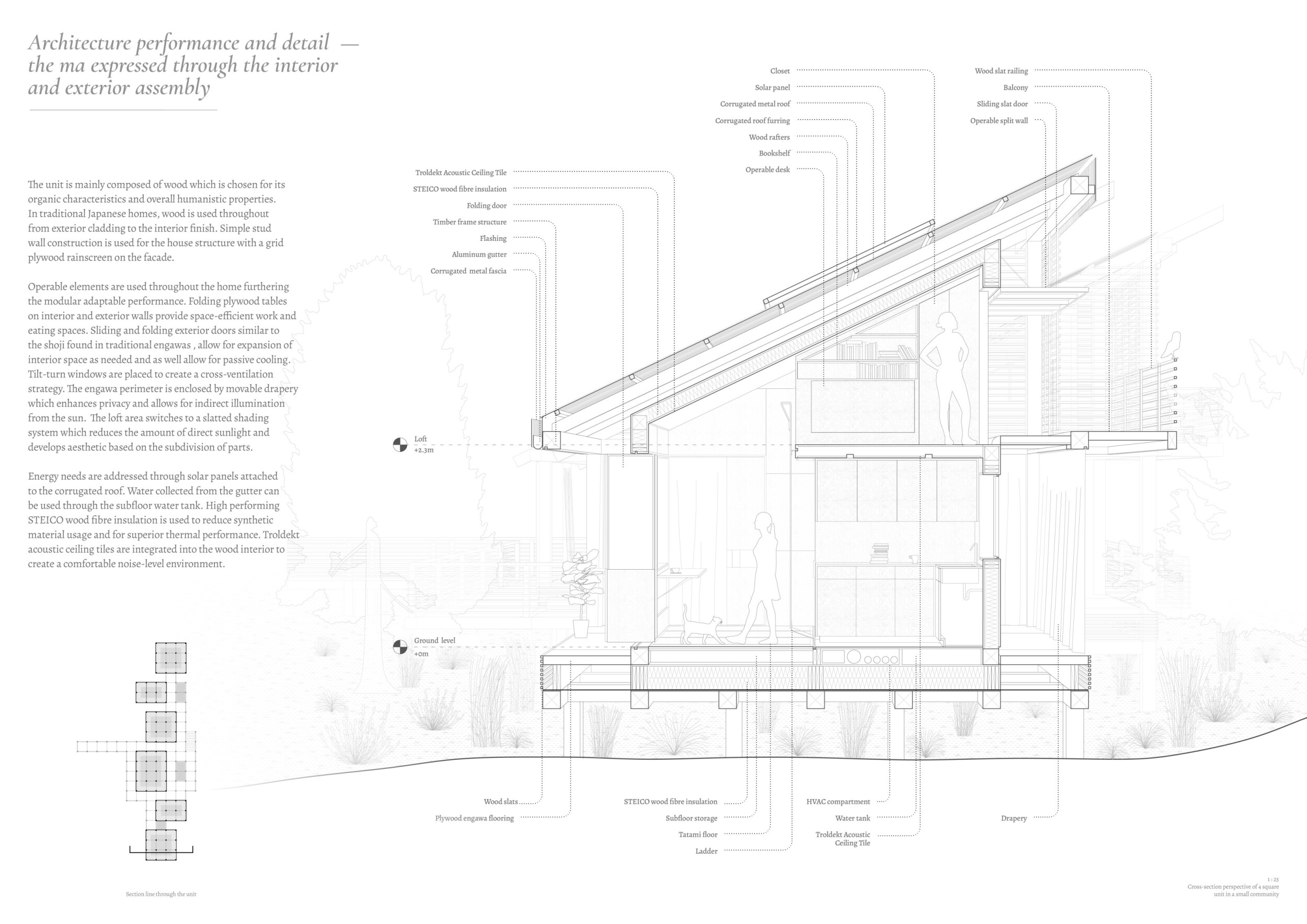
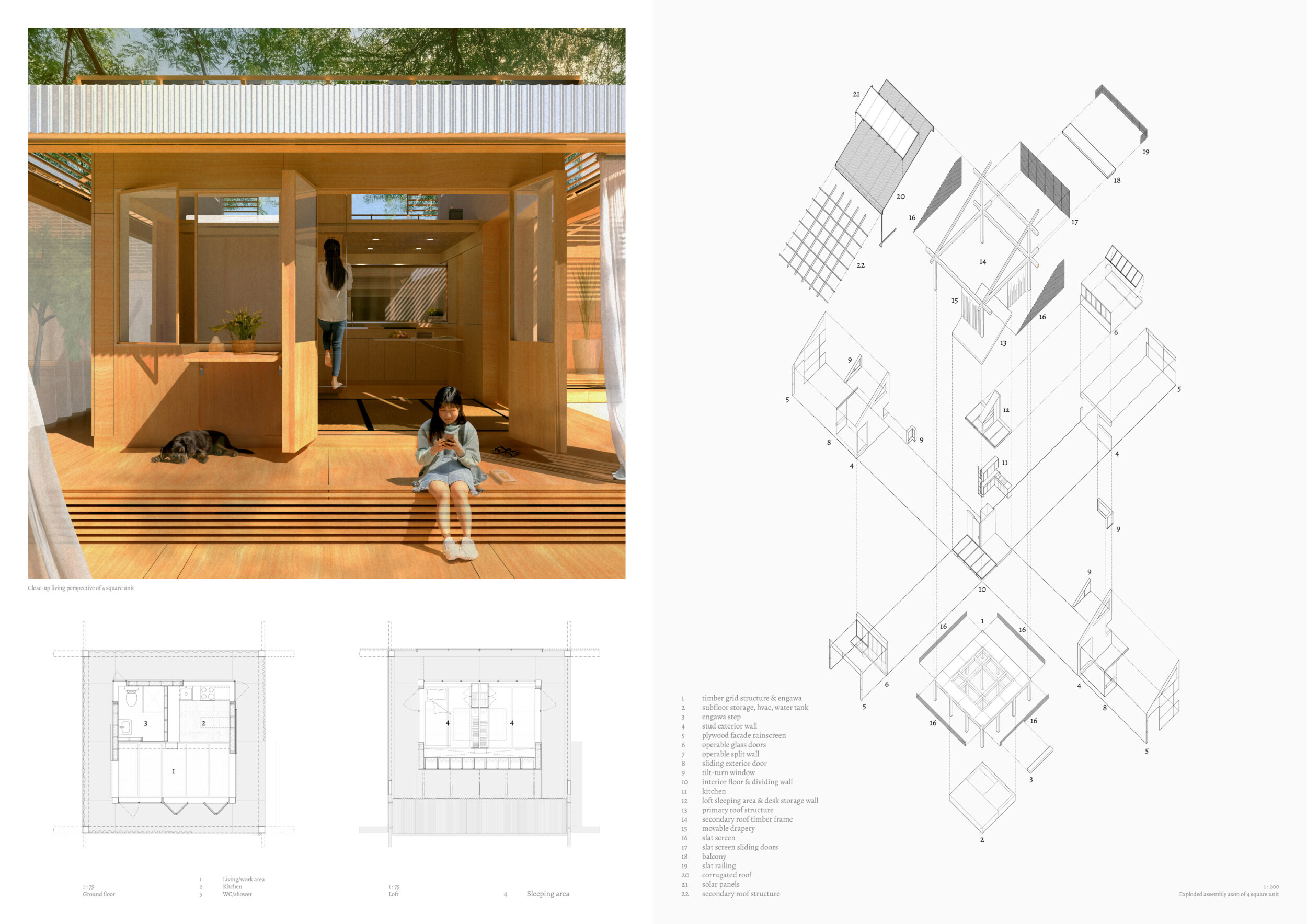
Resilience Is Politics
CAVO_ The Plug-in Façade Habitat
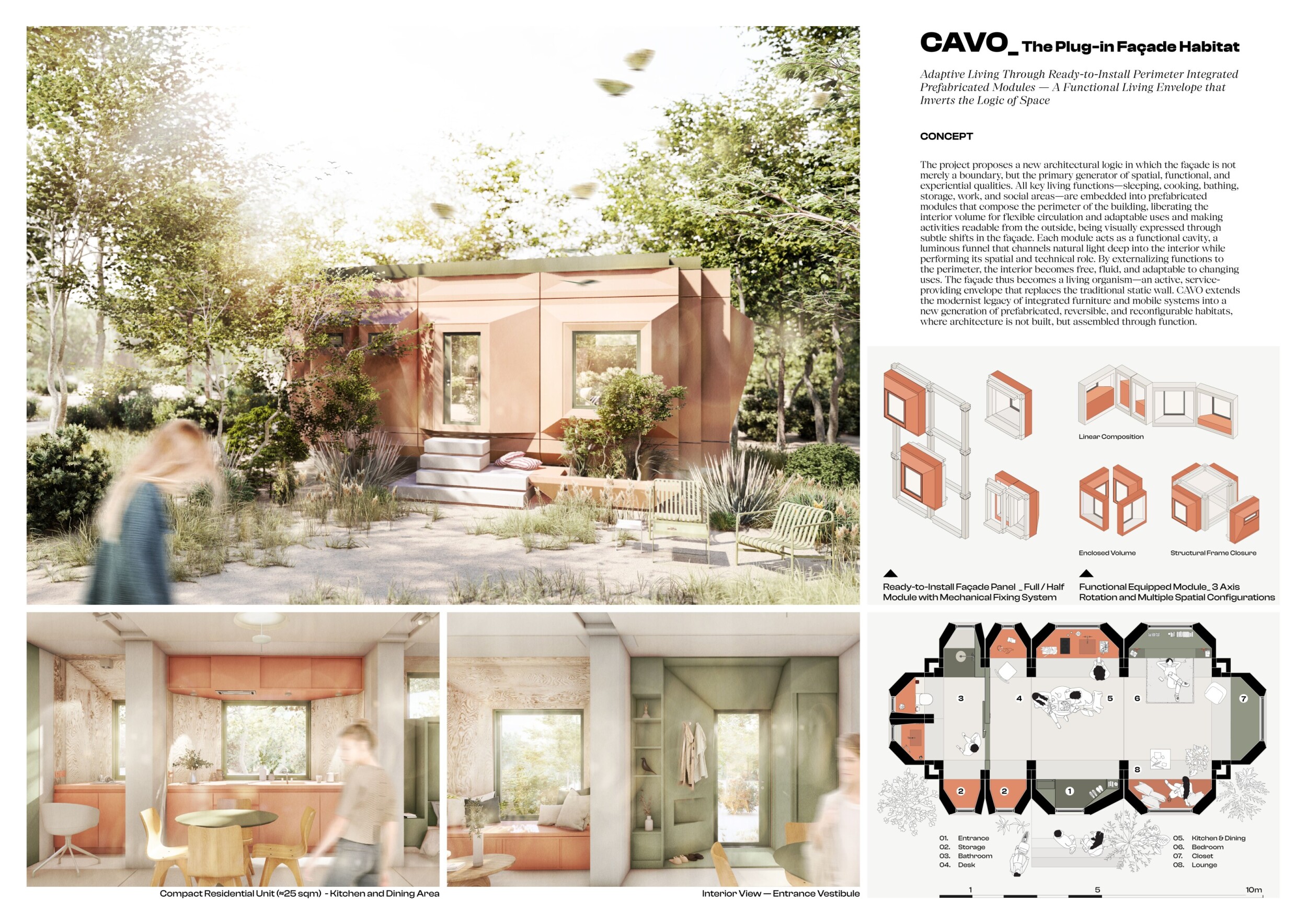
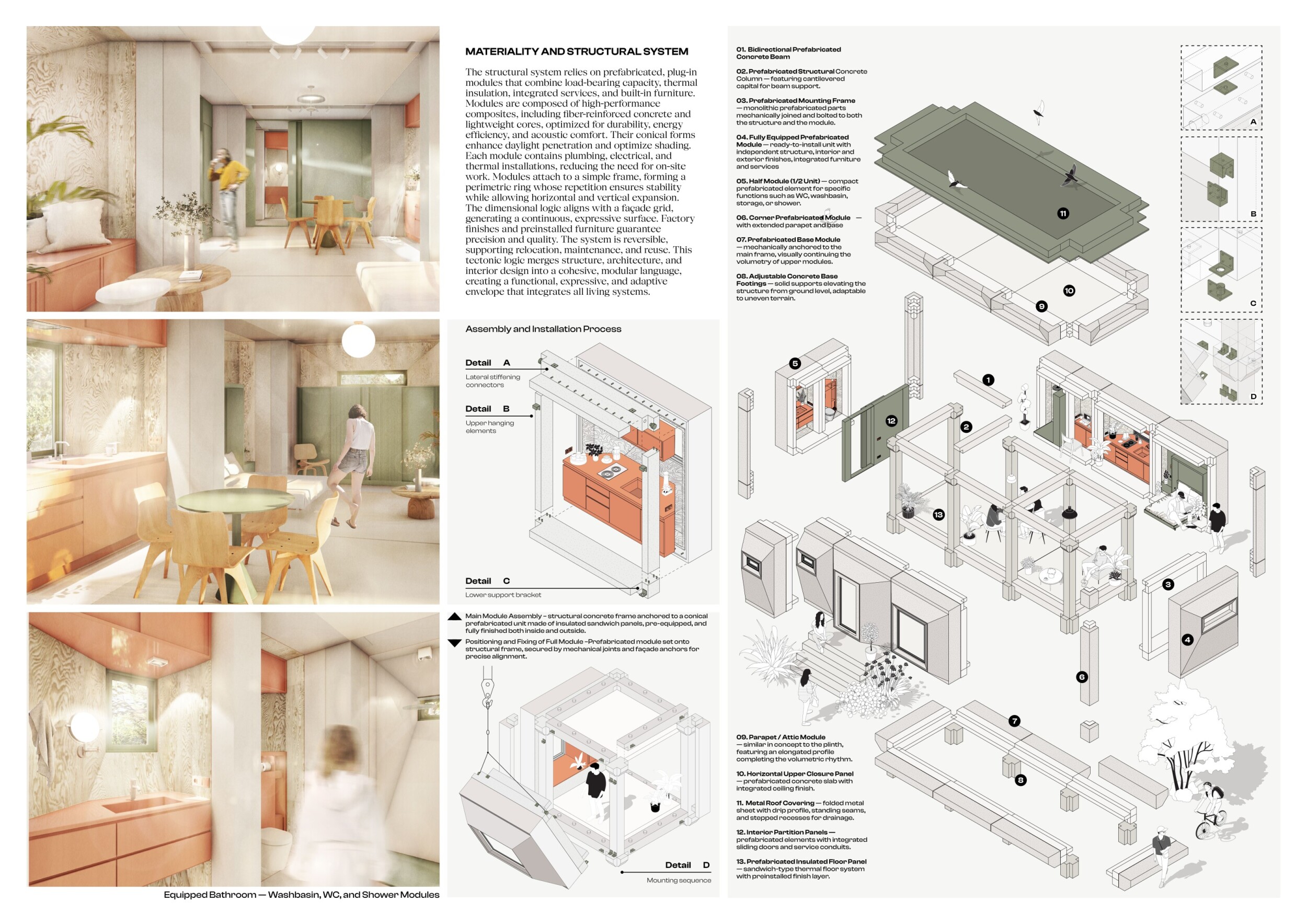
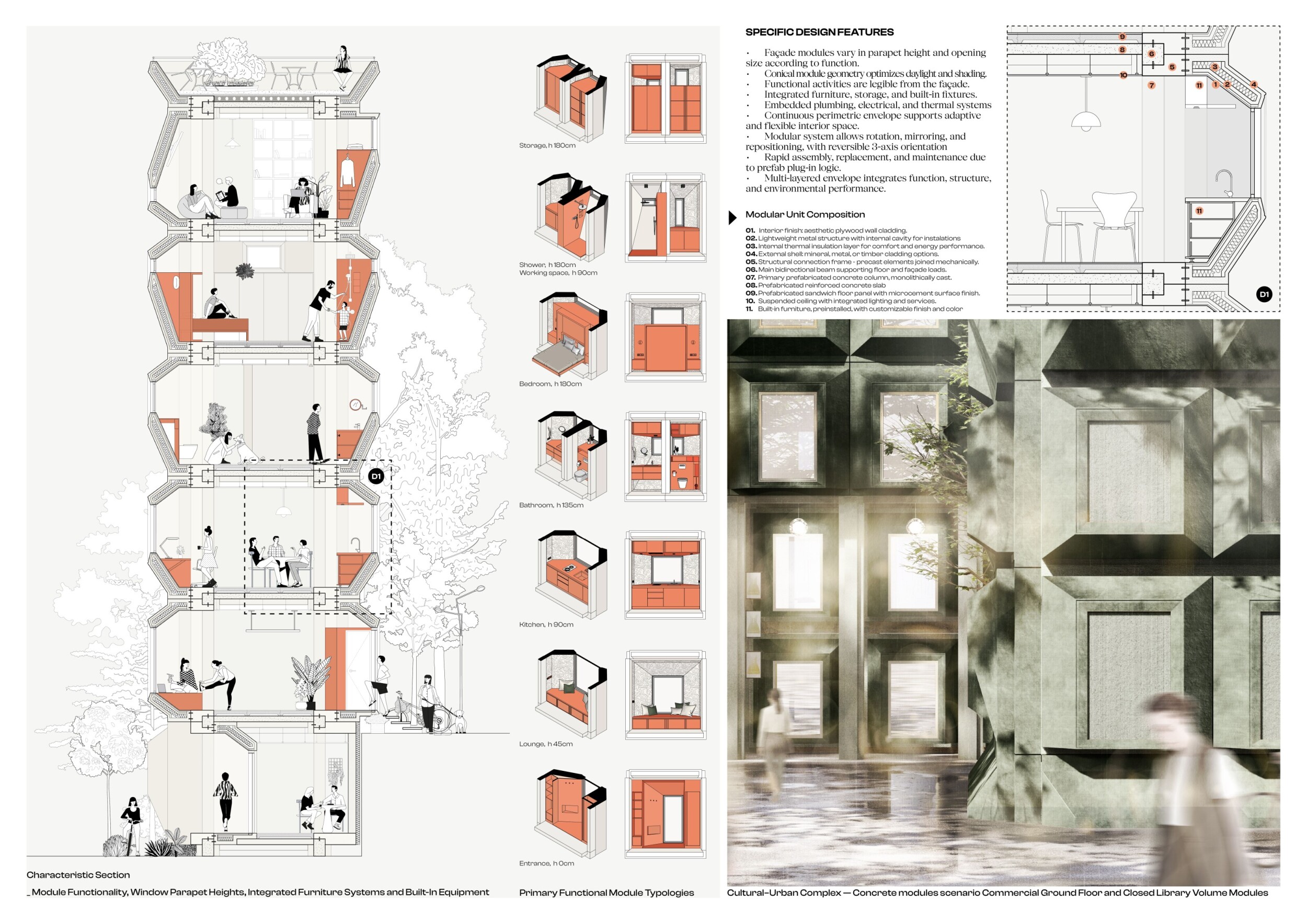
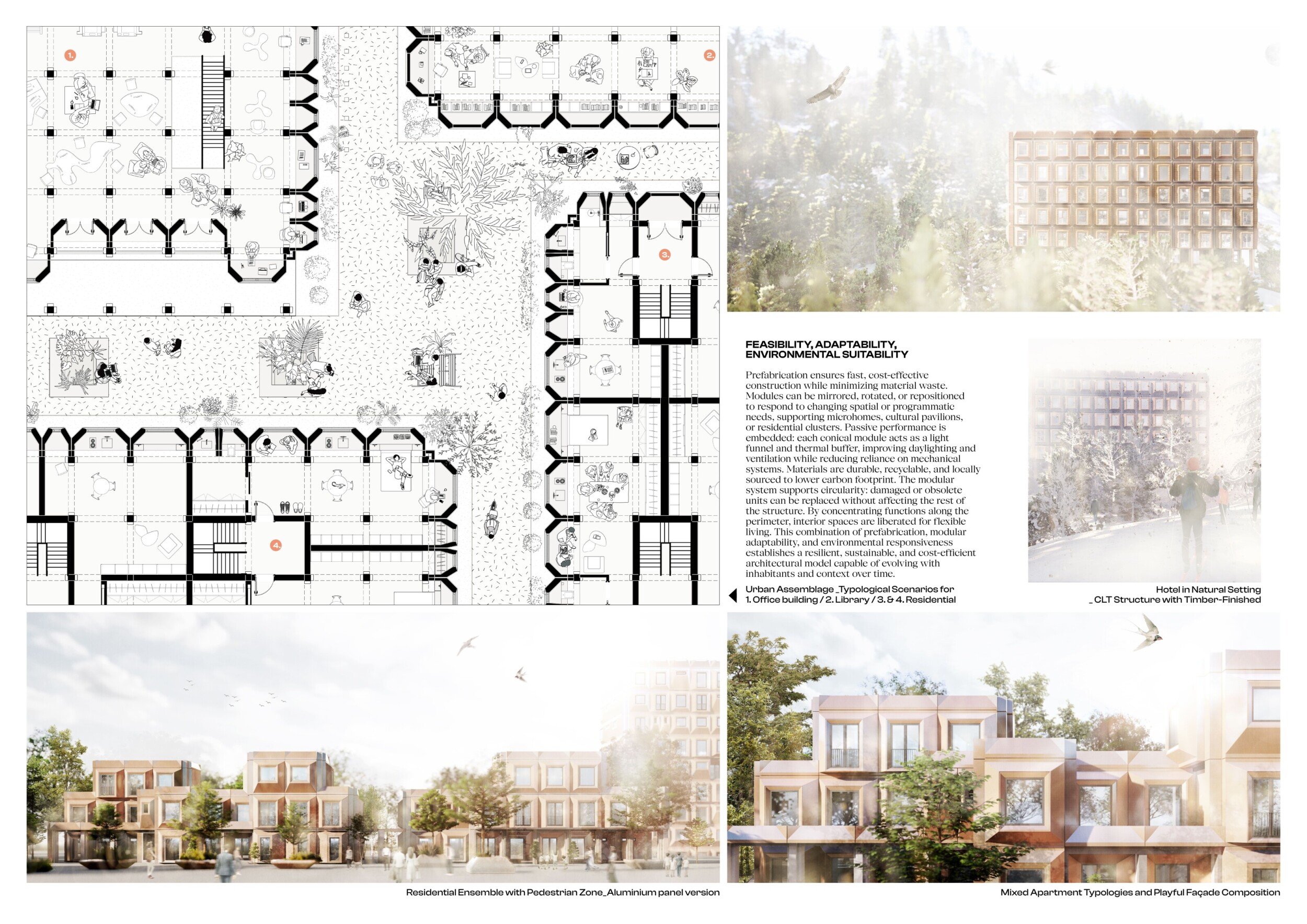
A HOME FOR BELEN
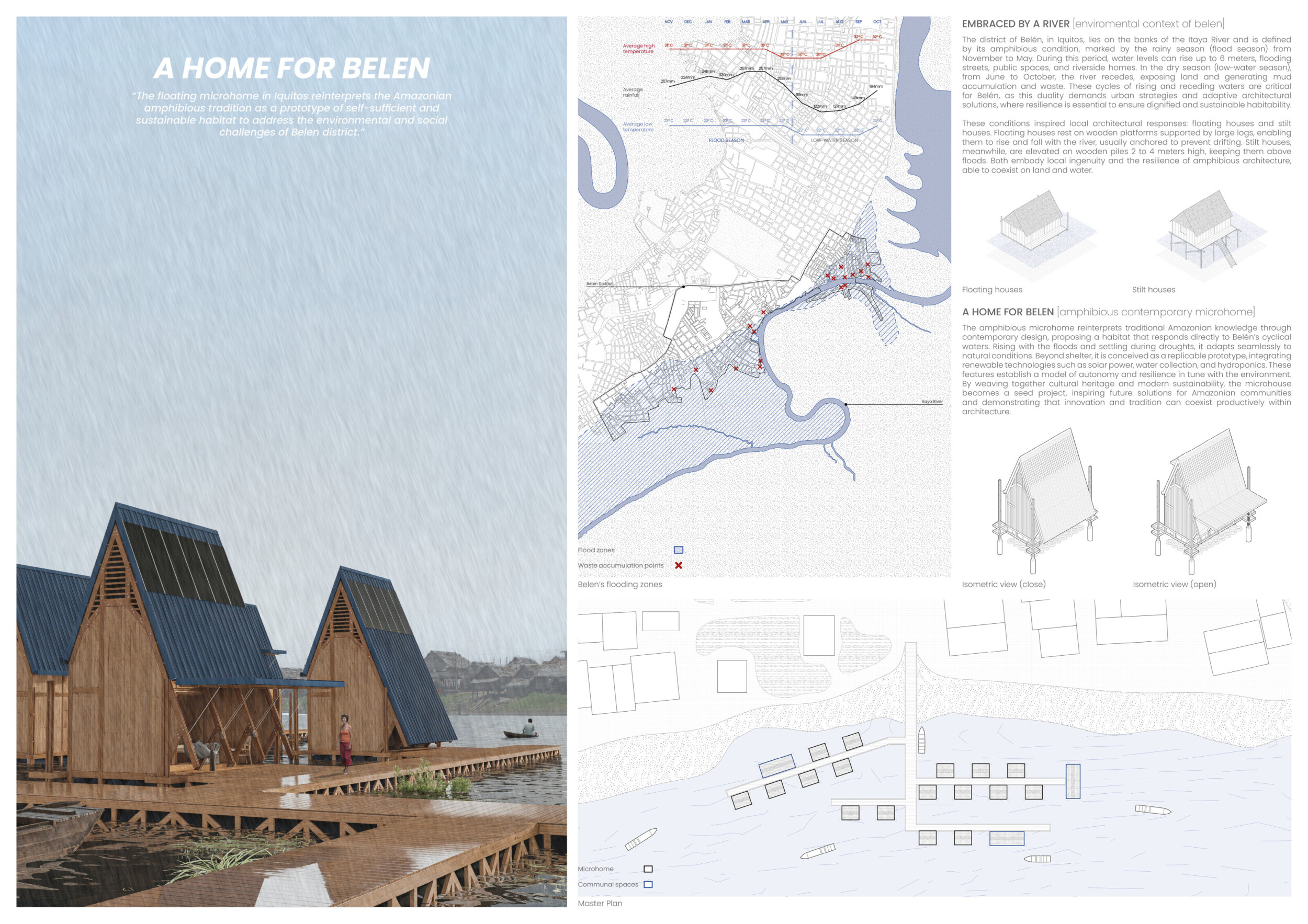
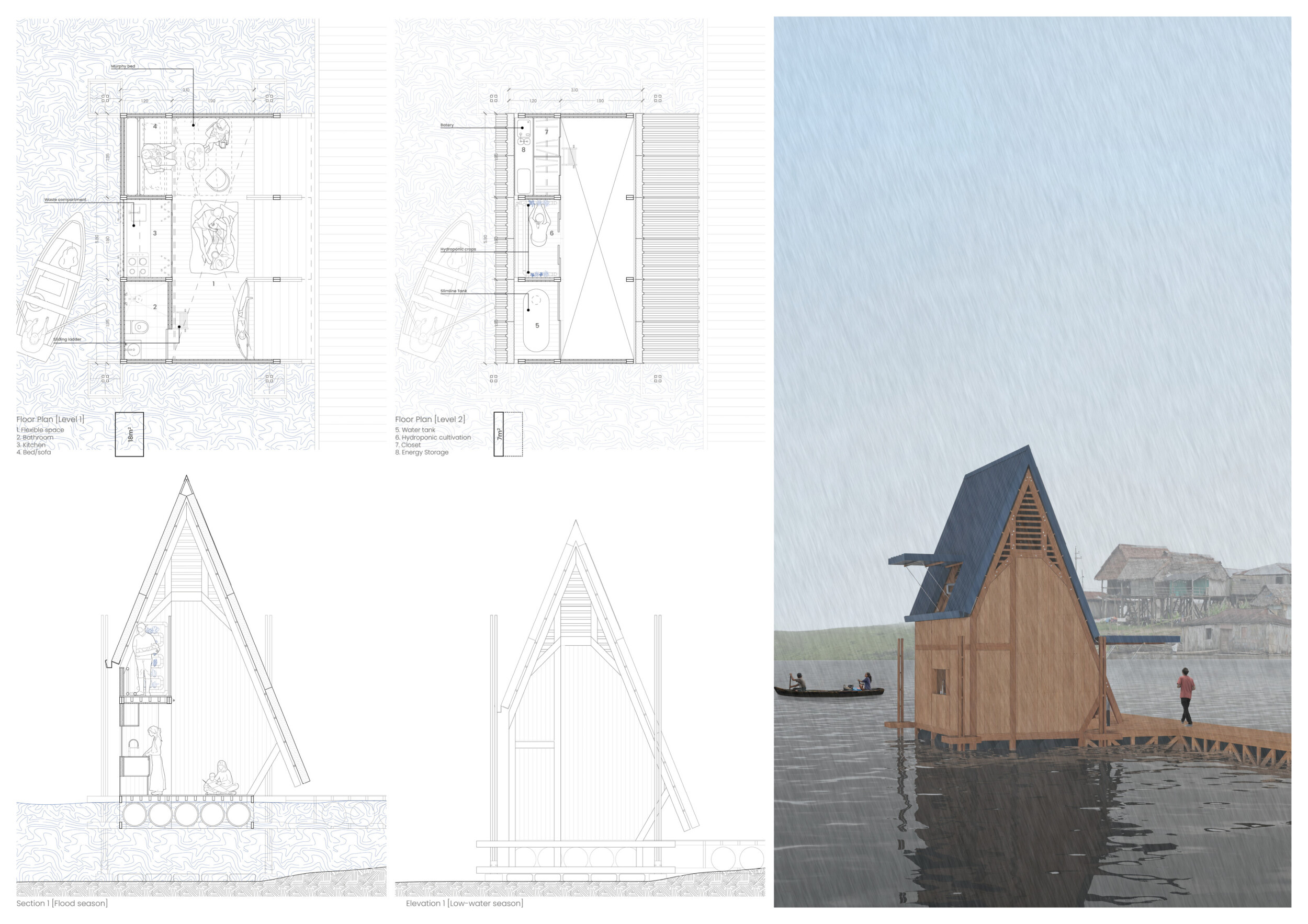
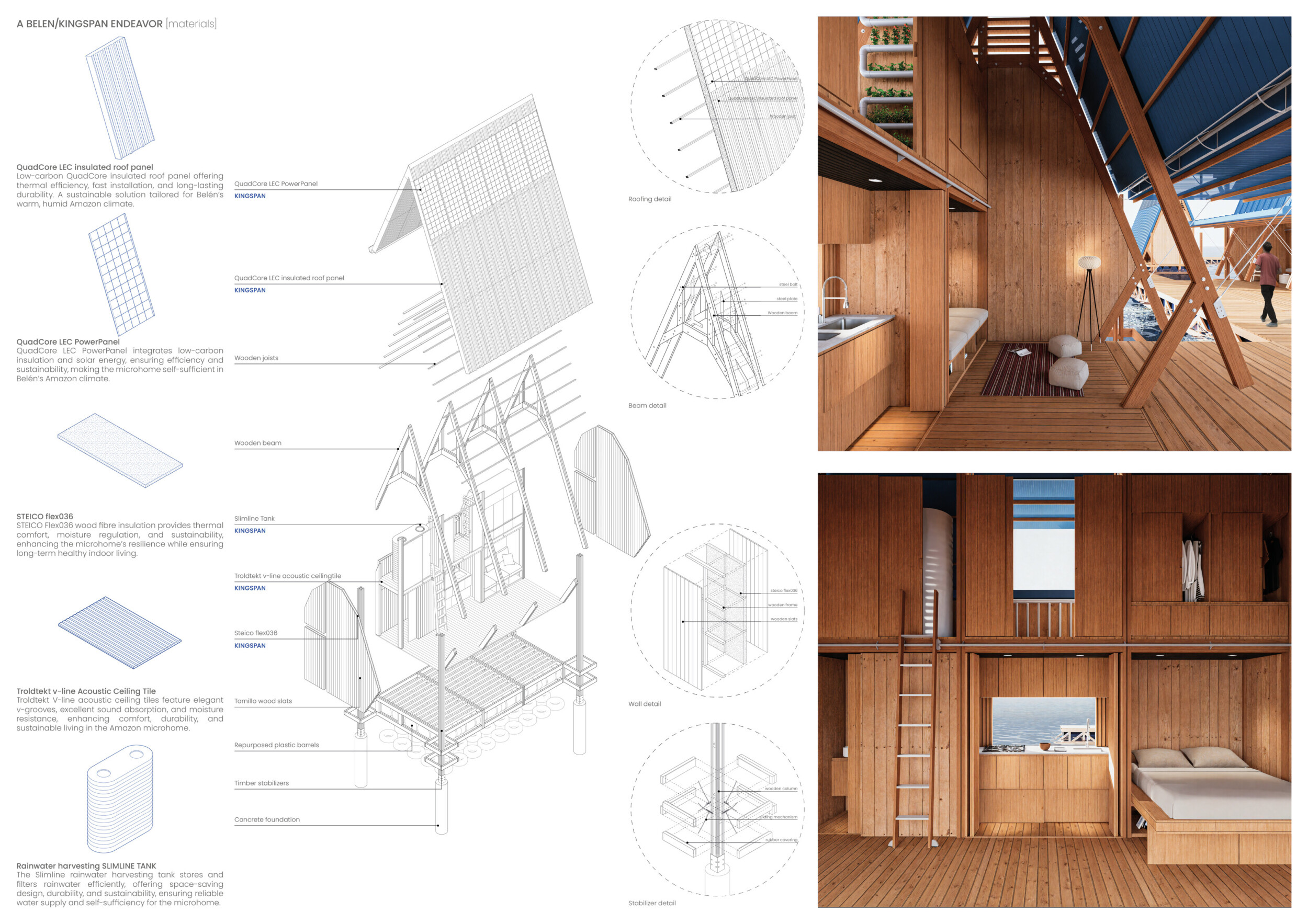
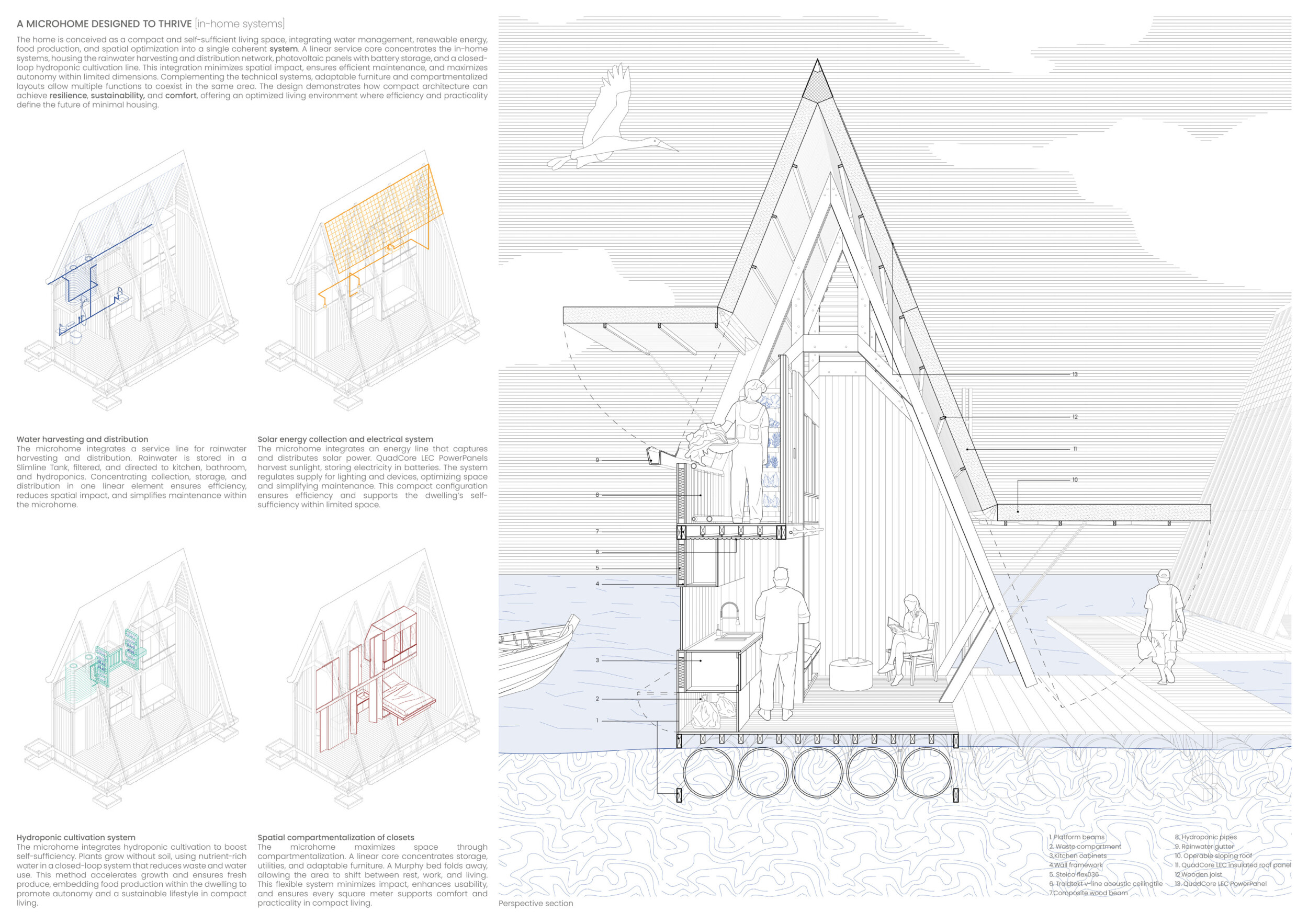

Route to Roots
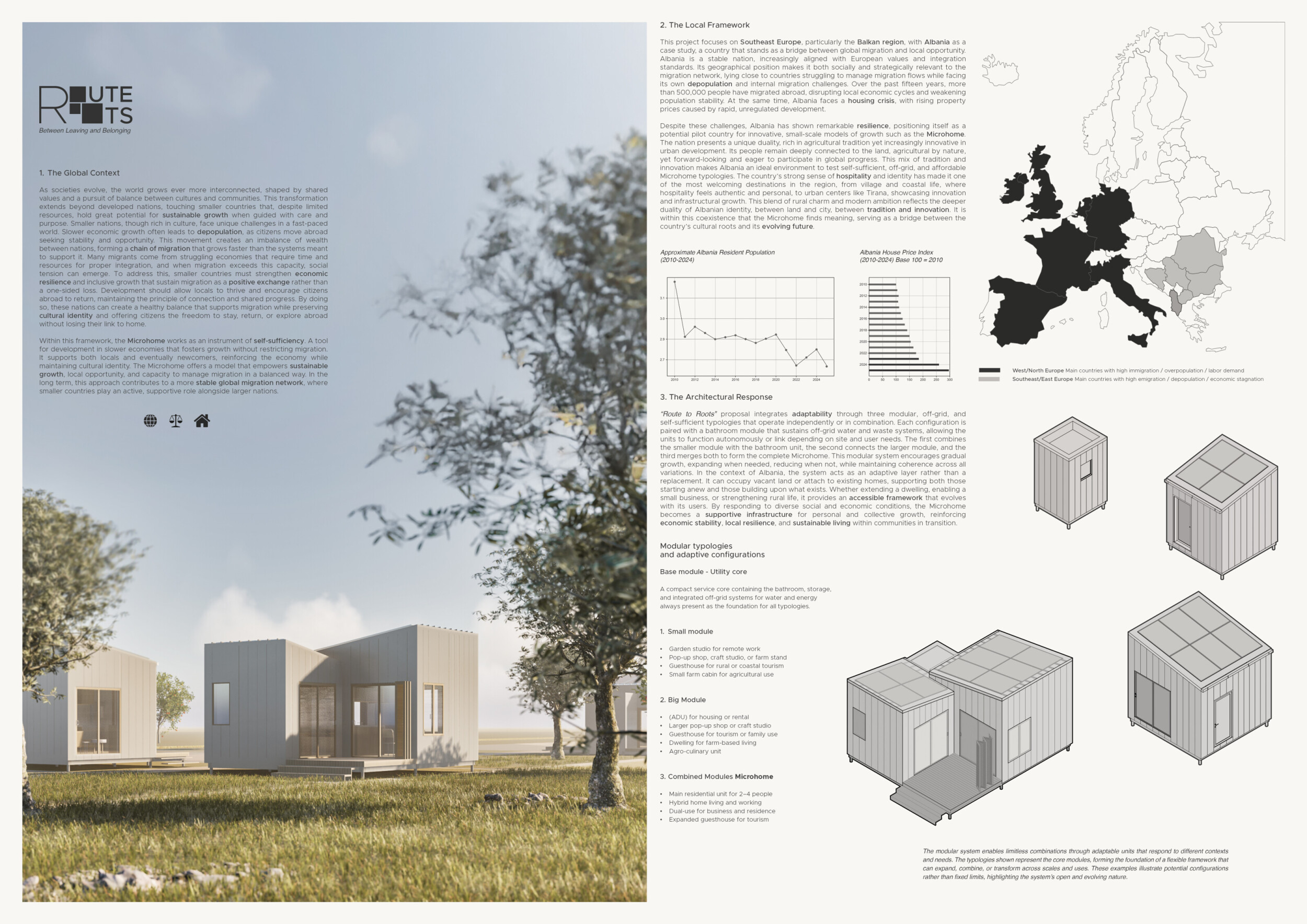
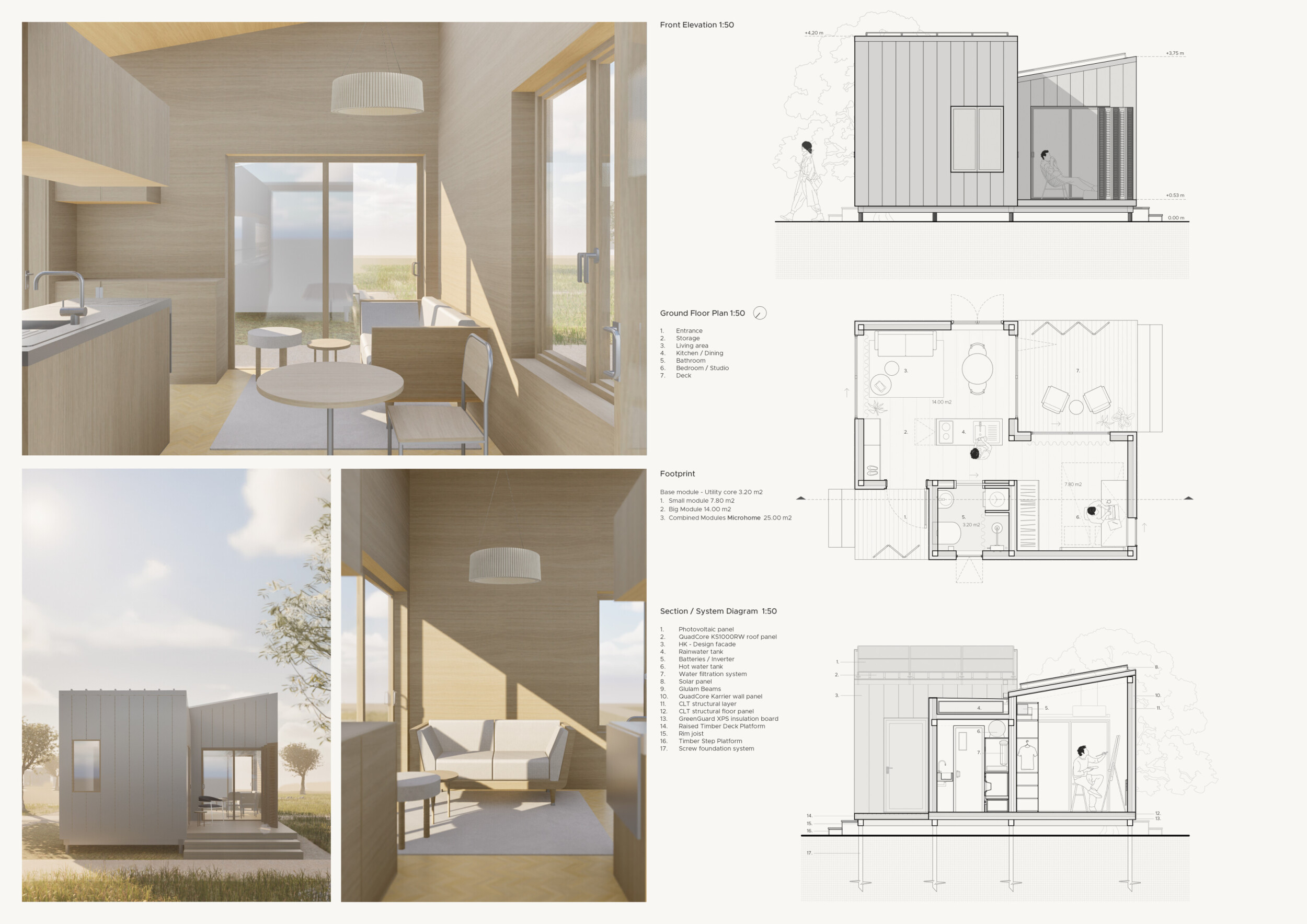
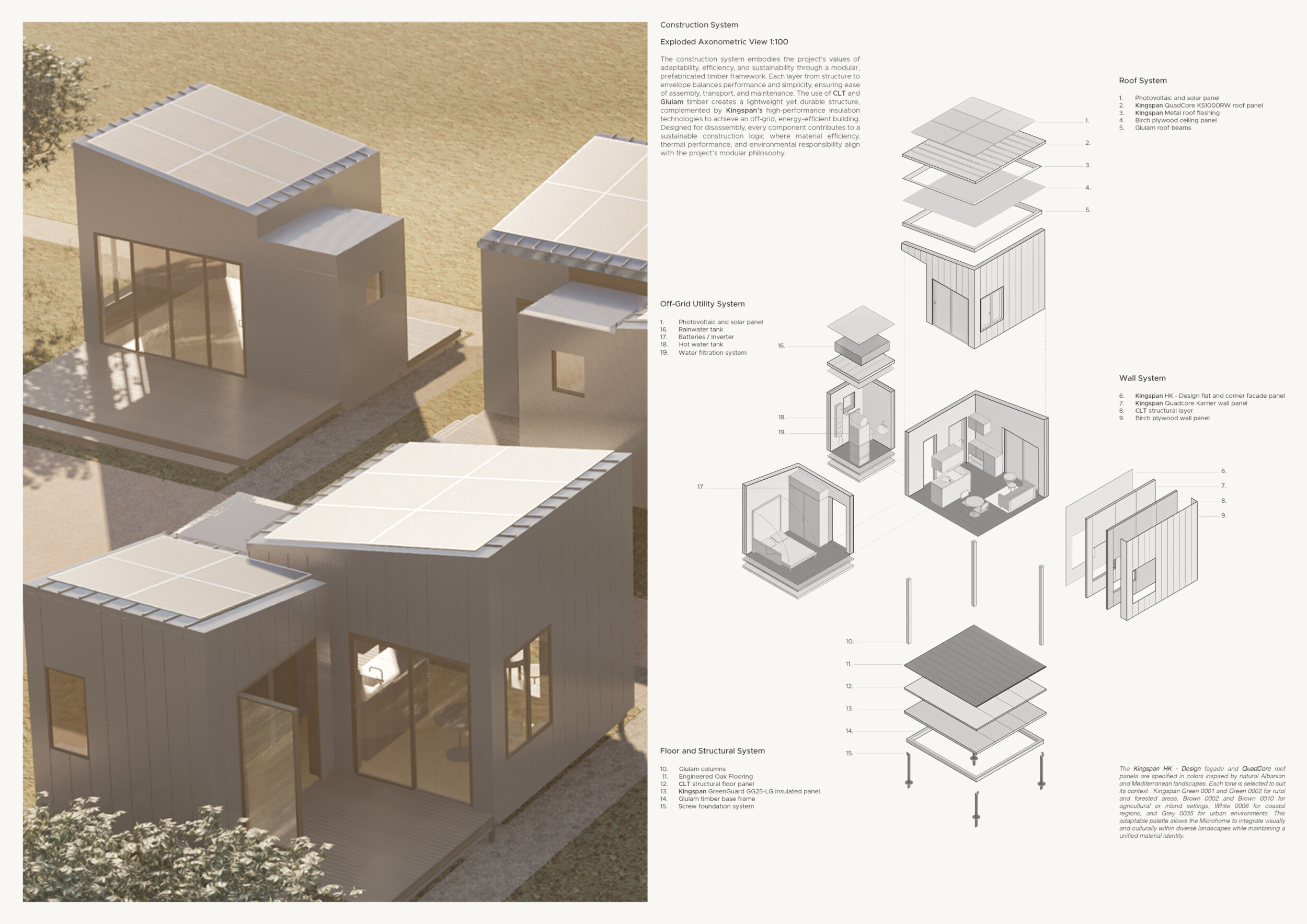
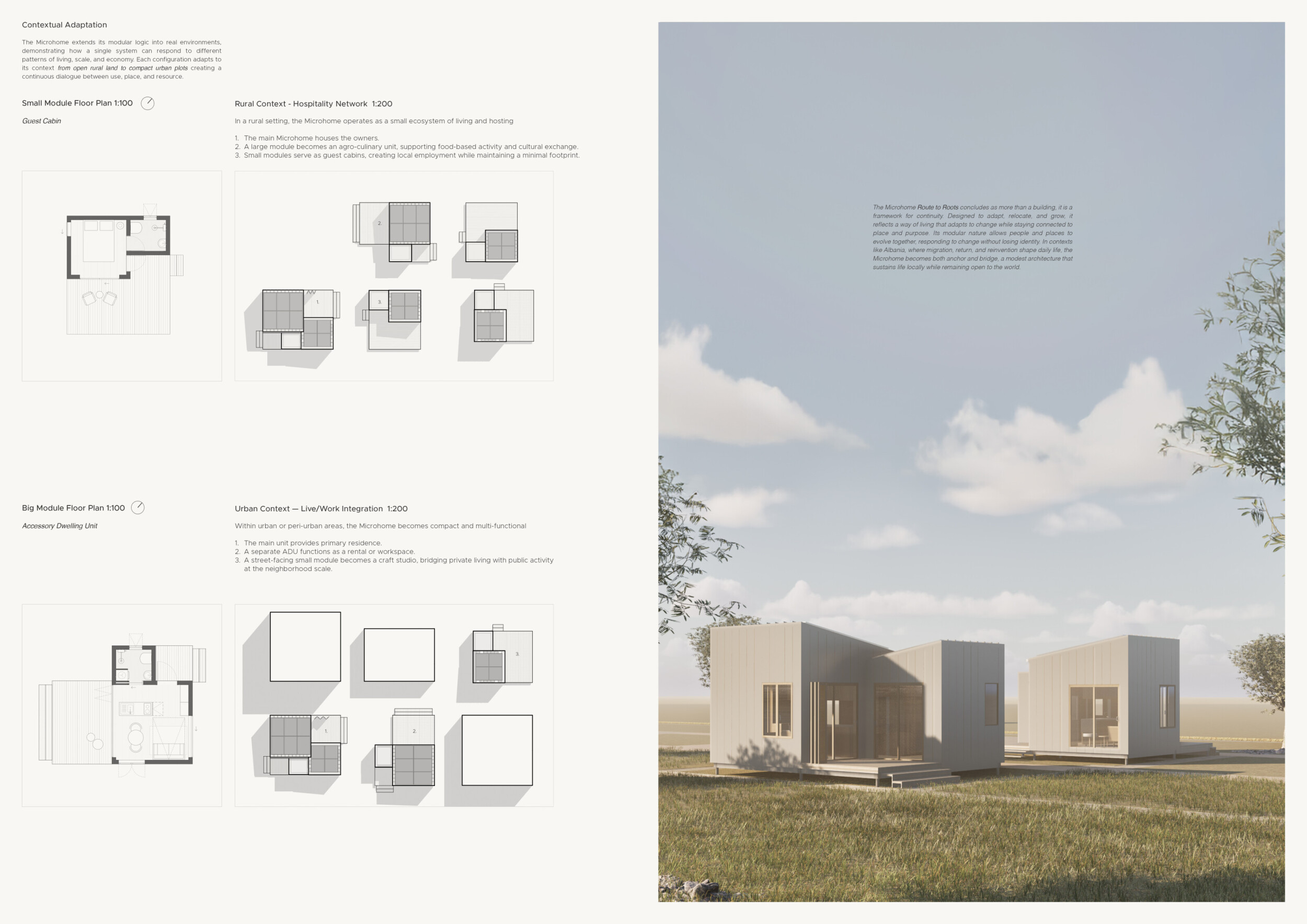

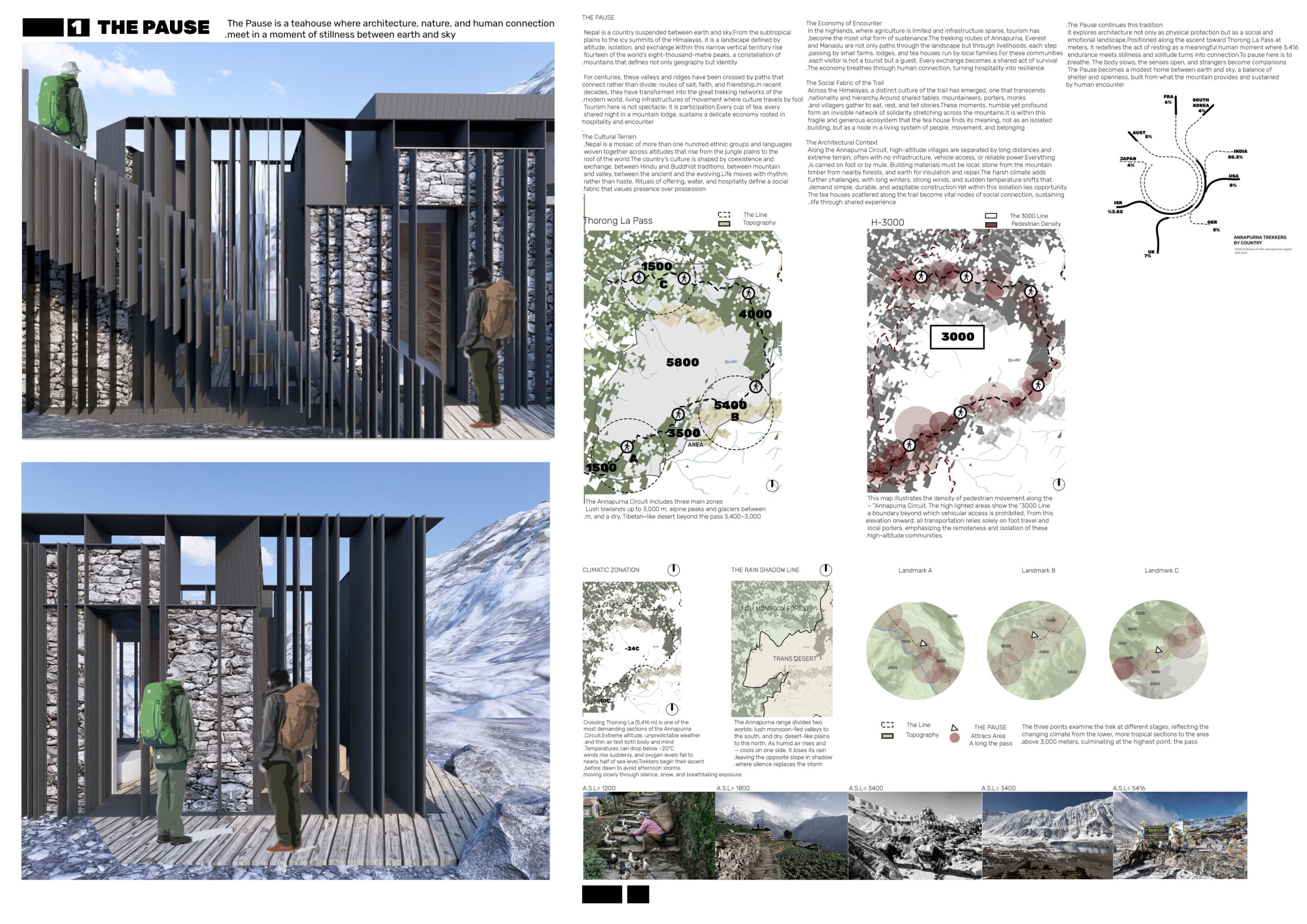
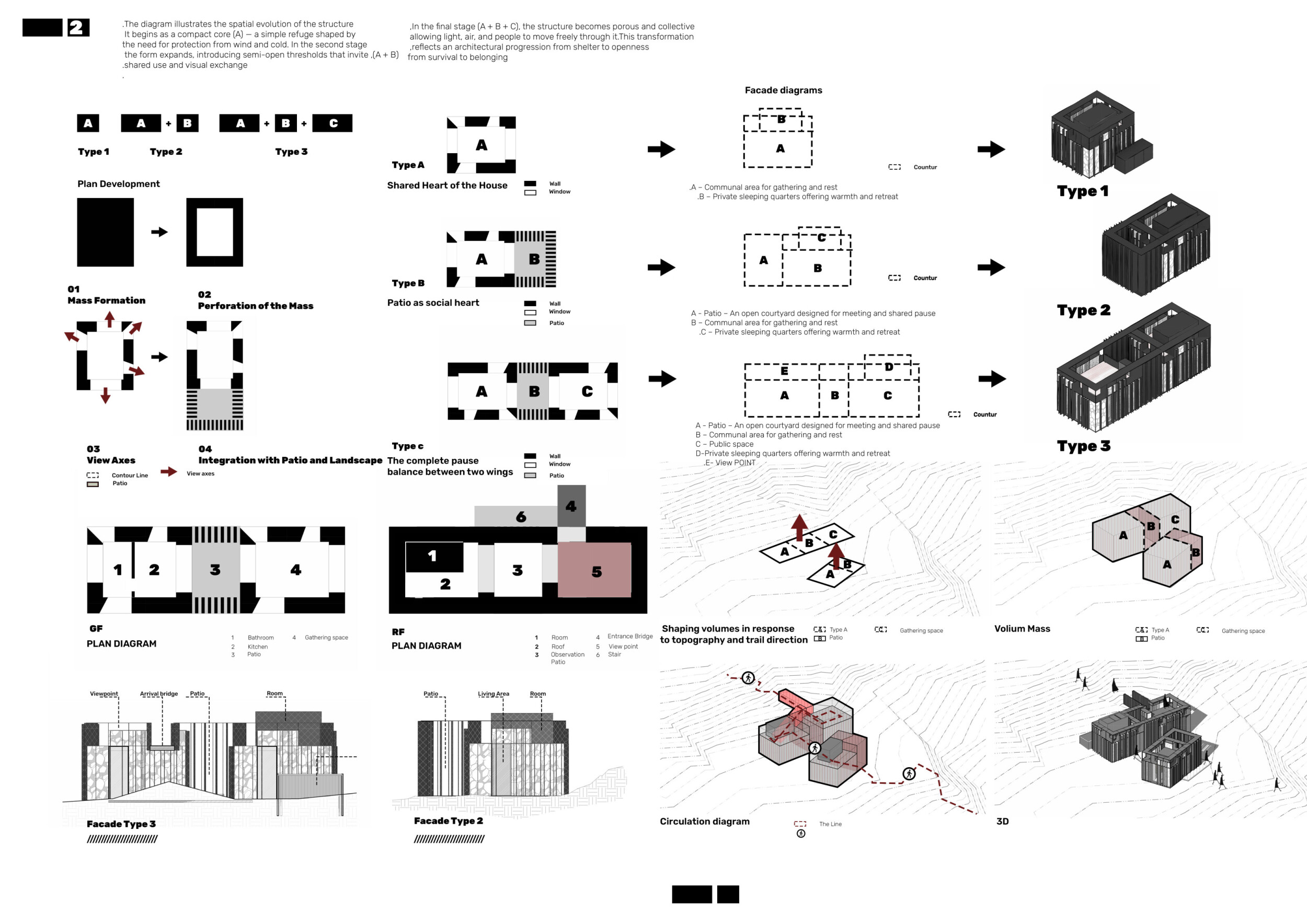
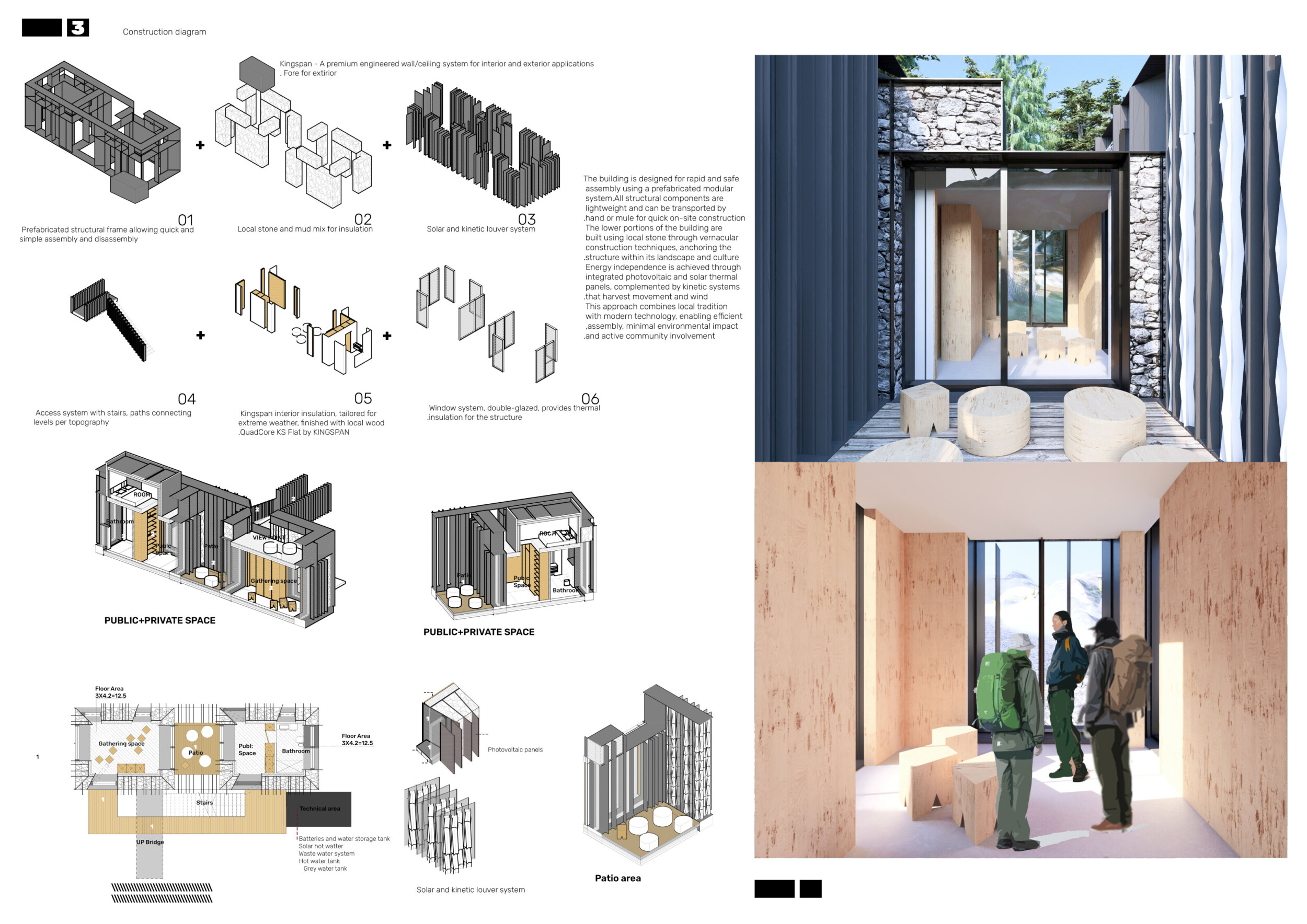
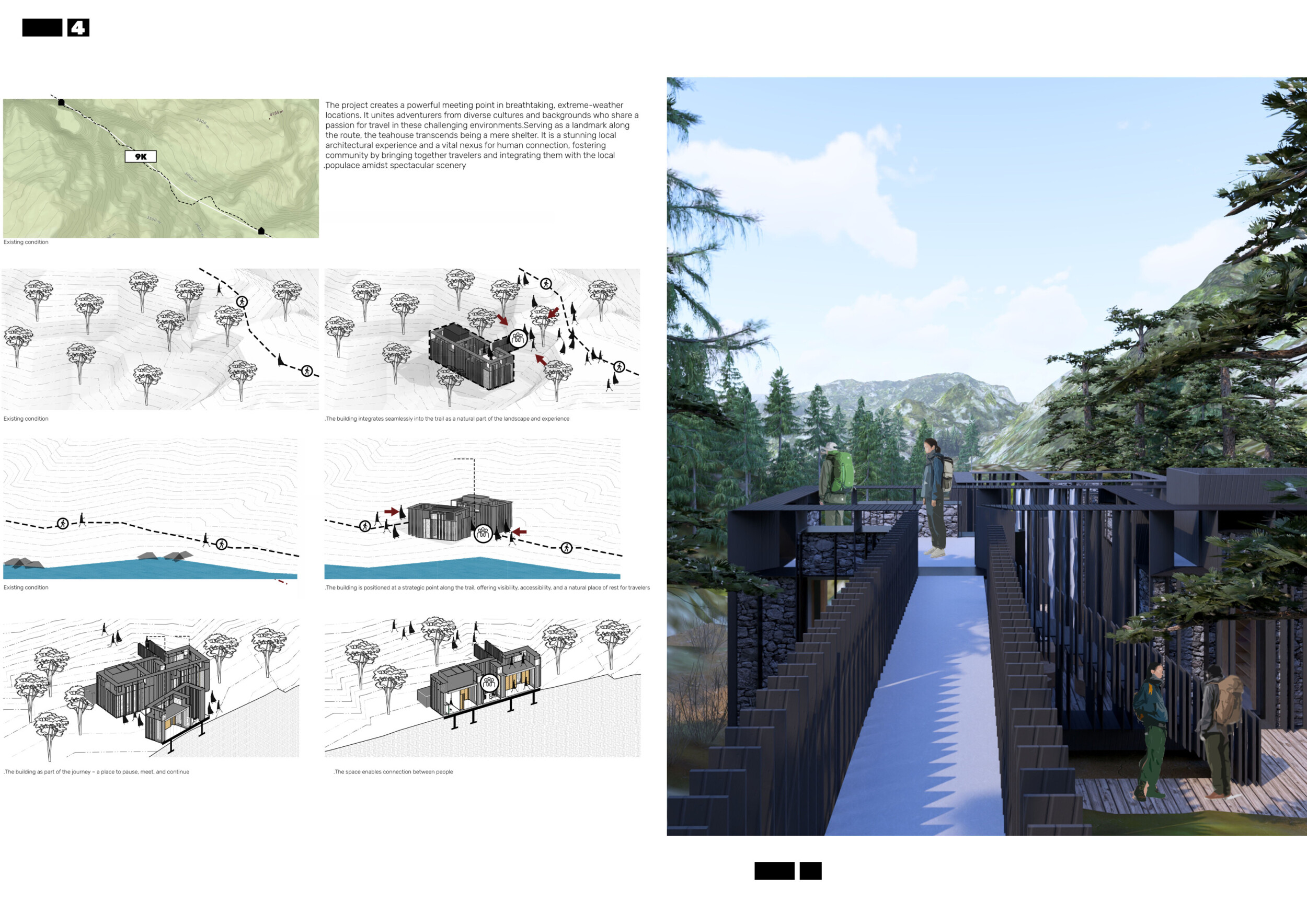

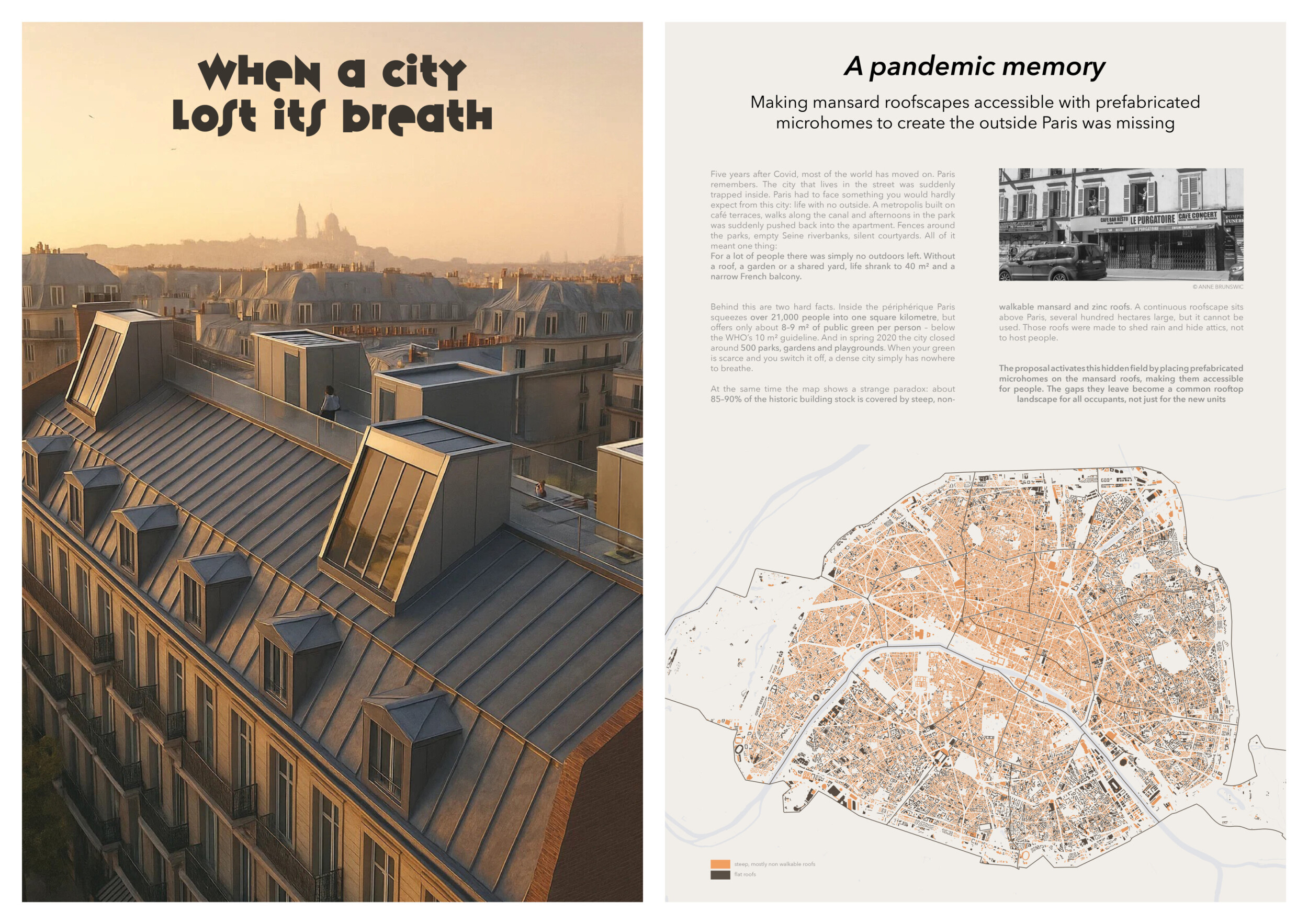
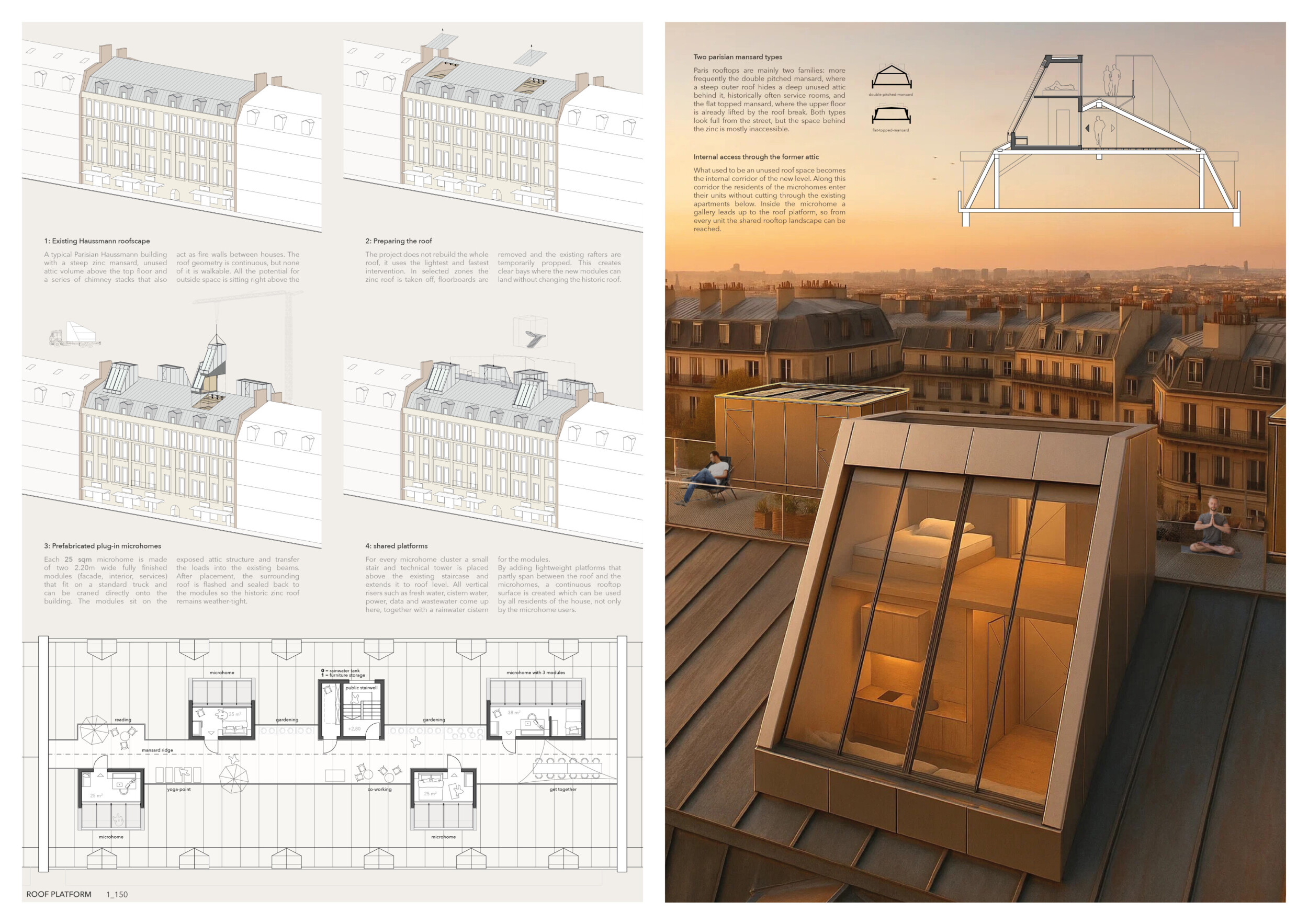
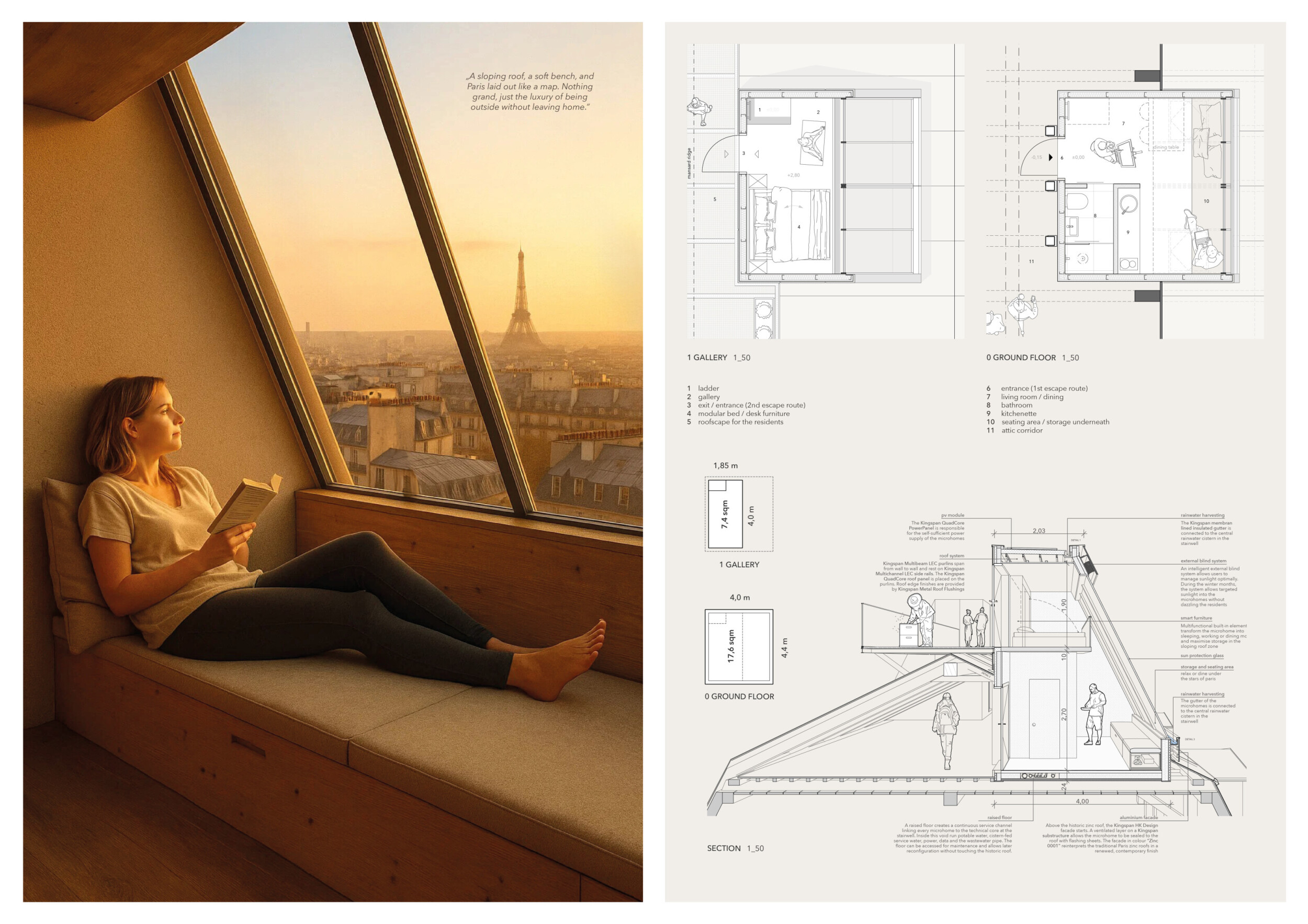
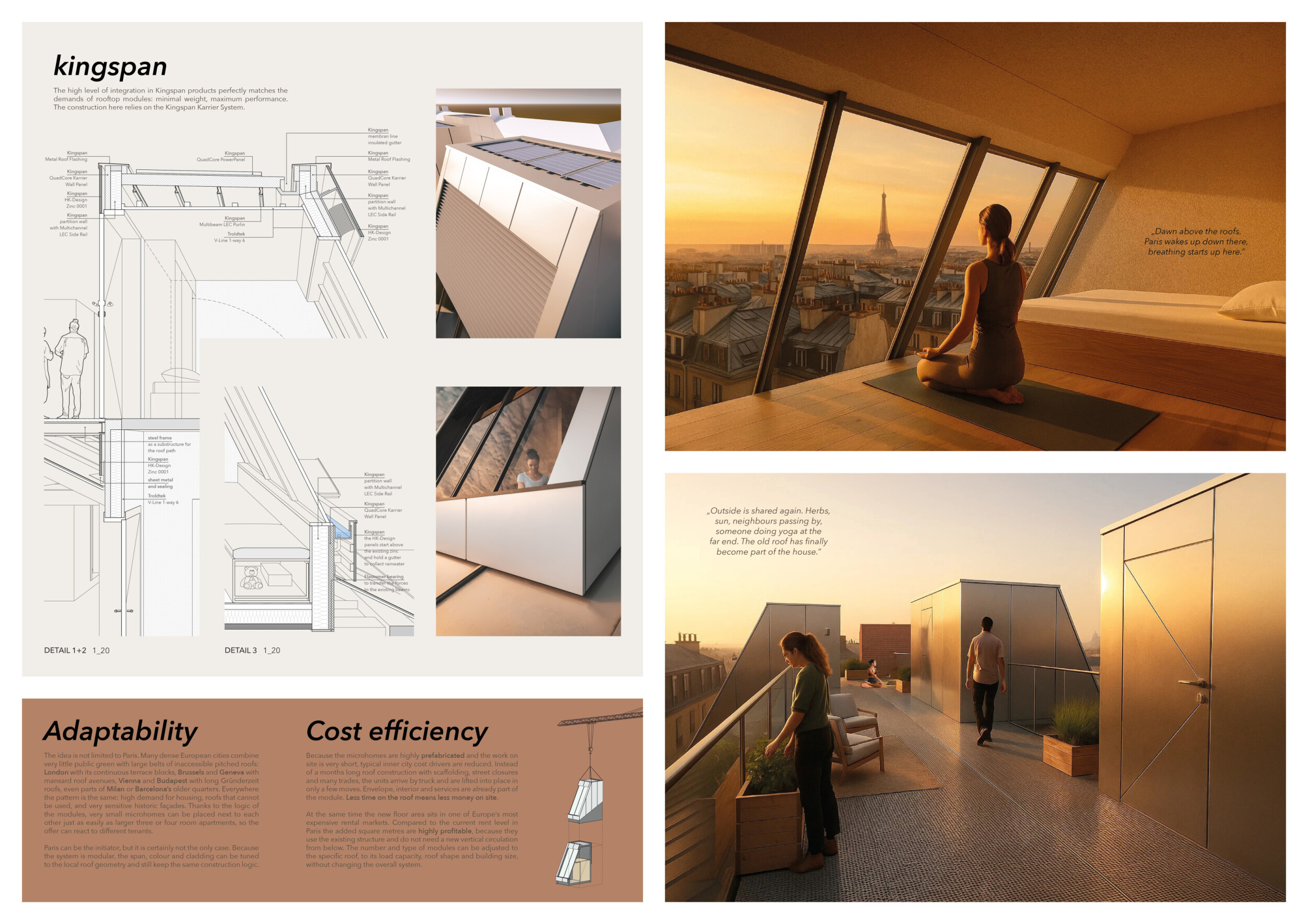


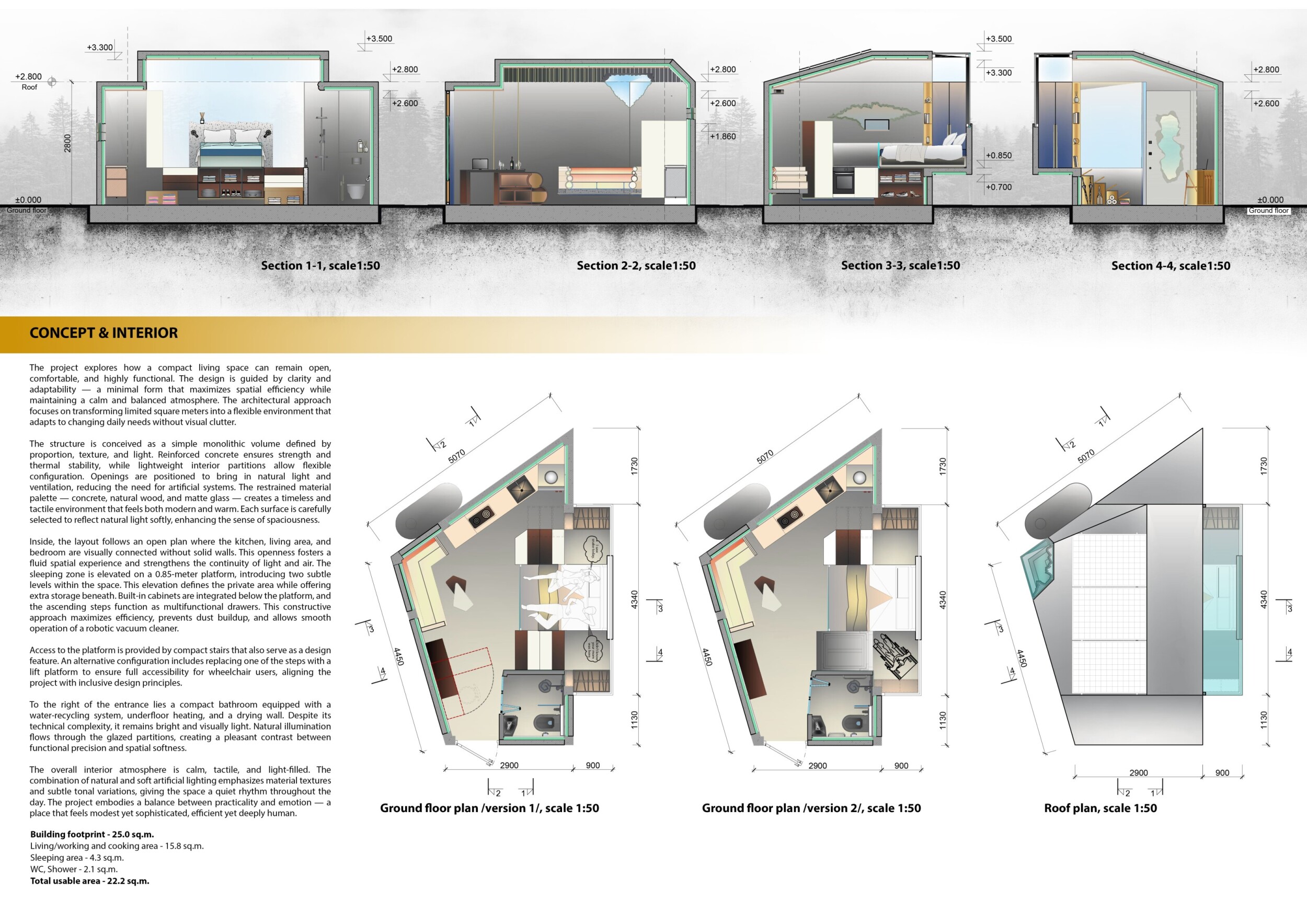
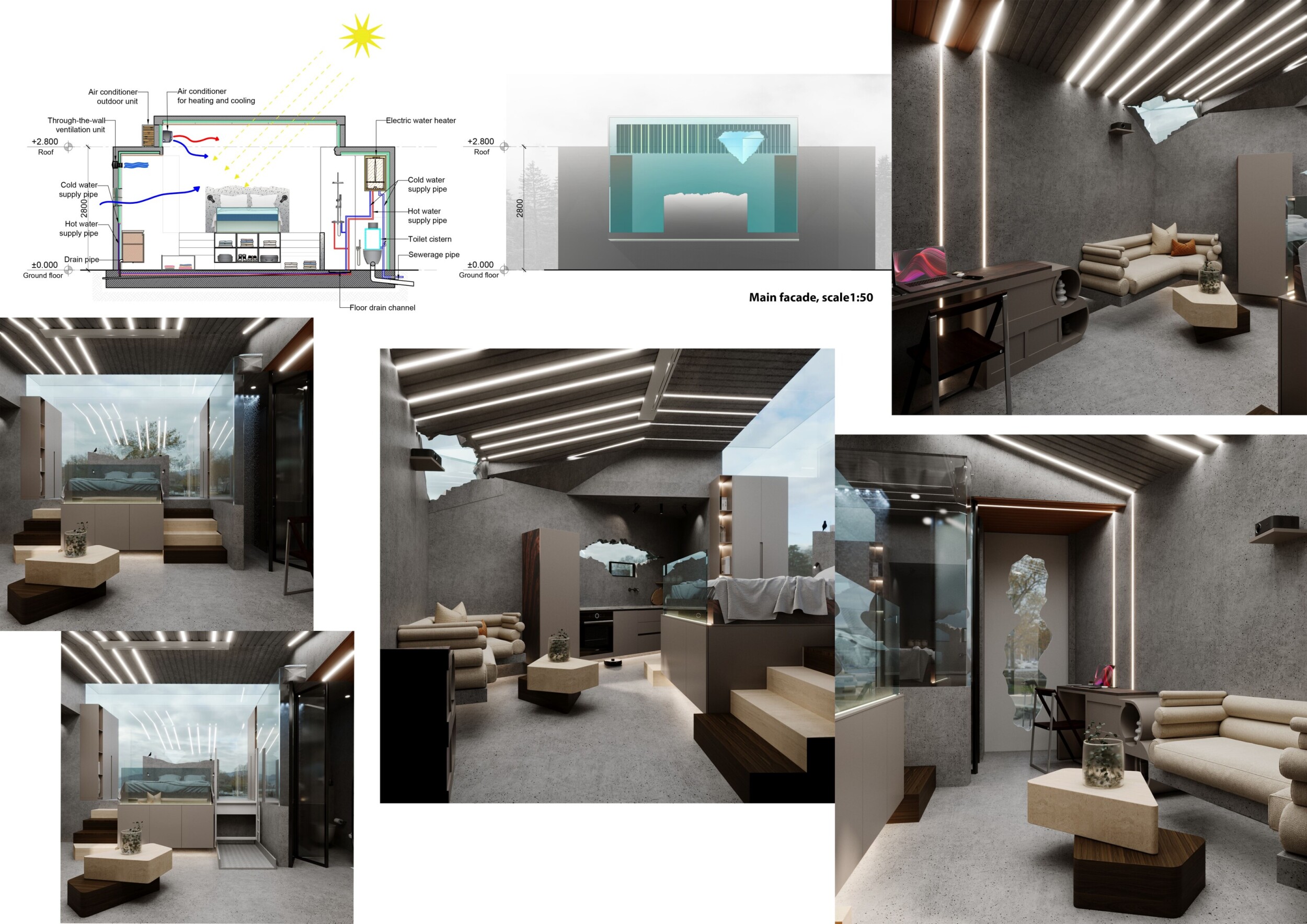
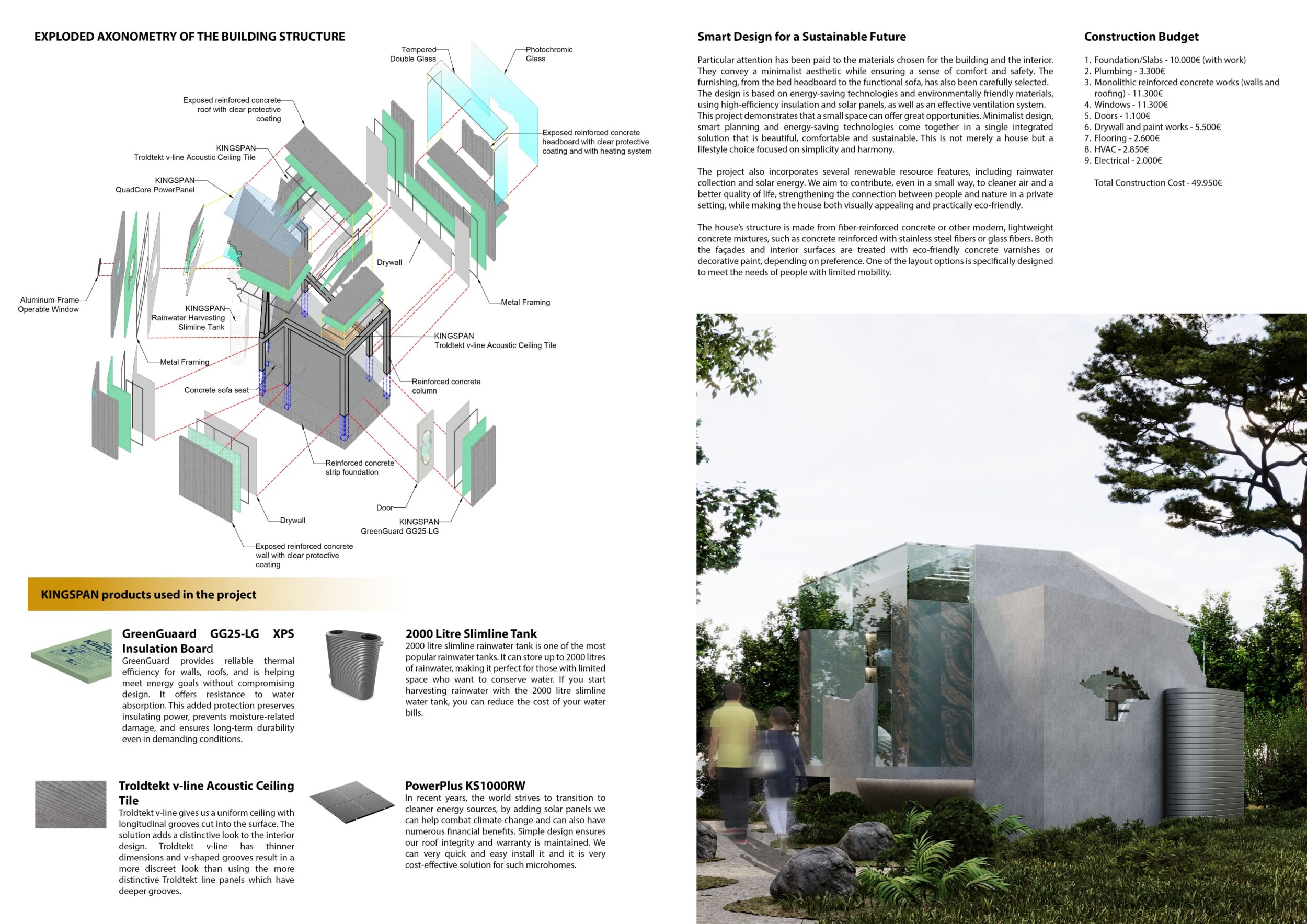



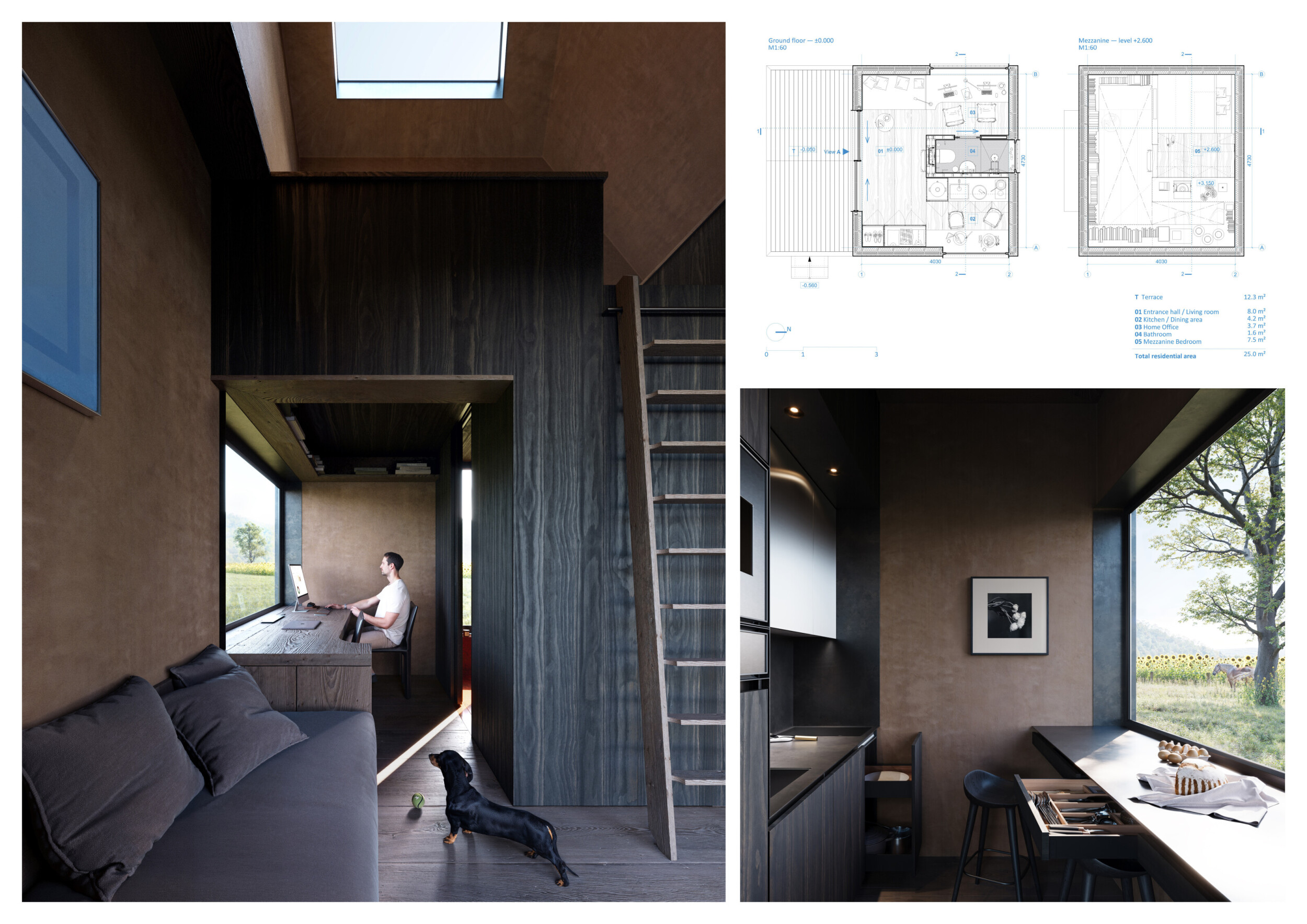
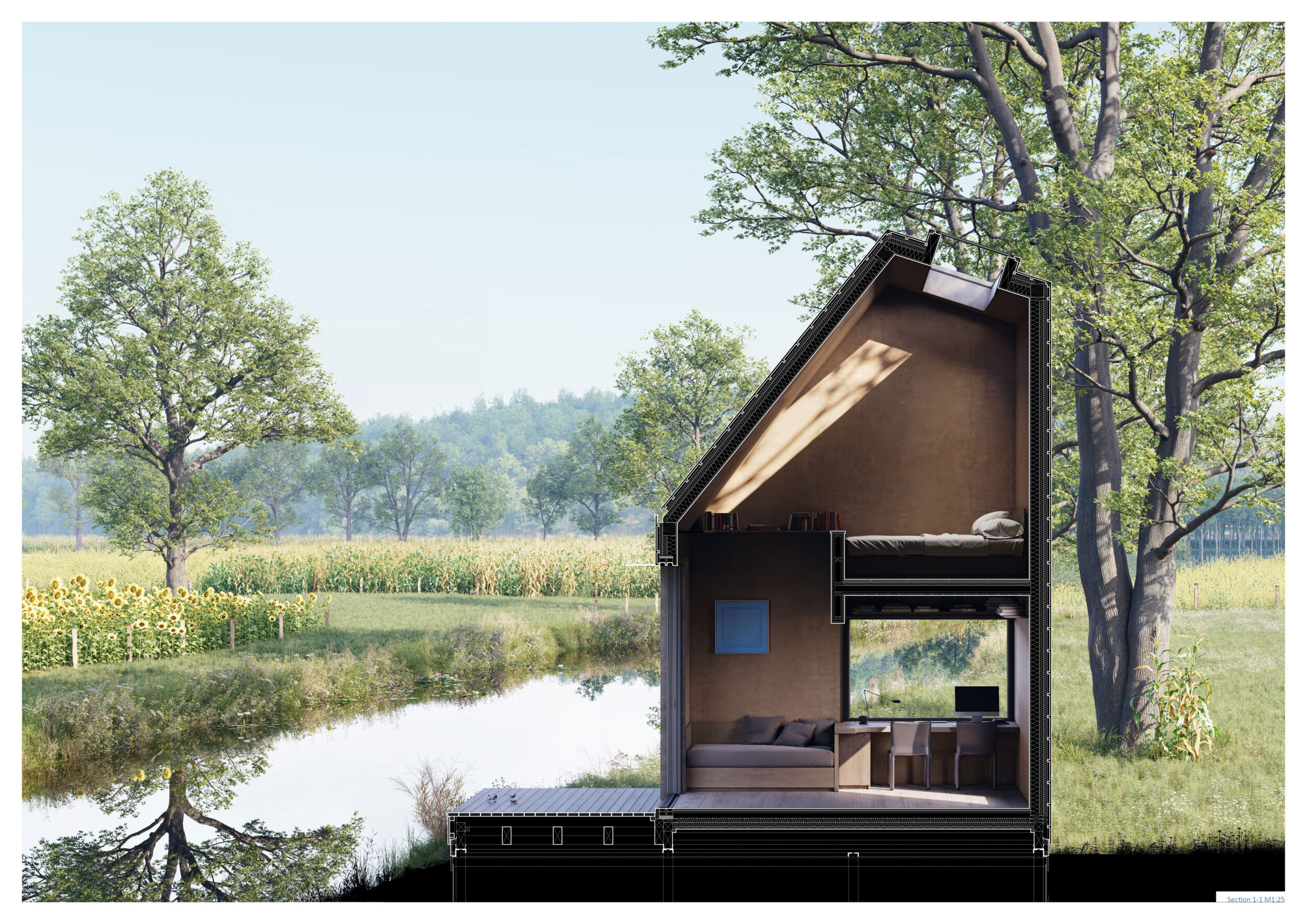
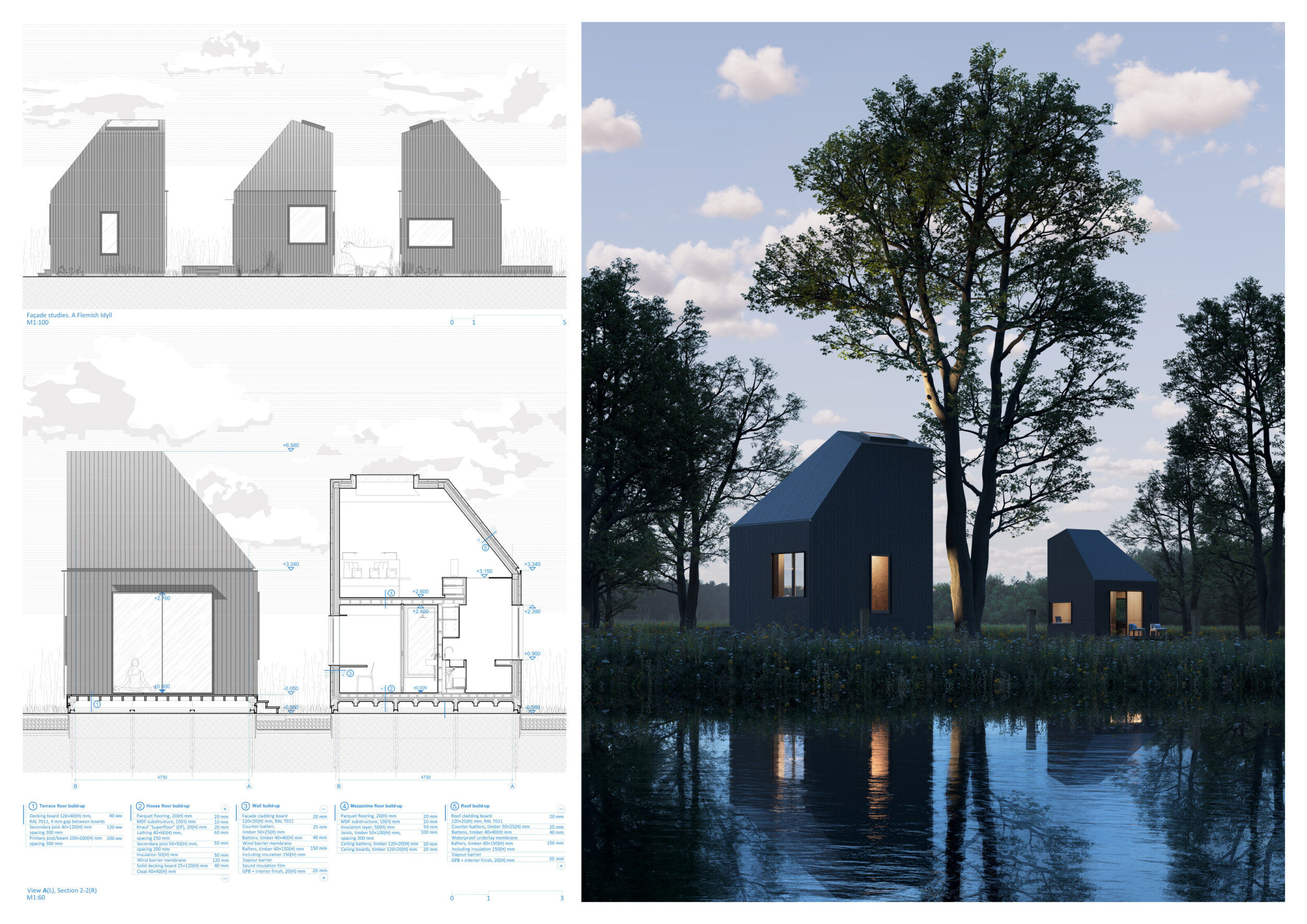
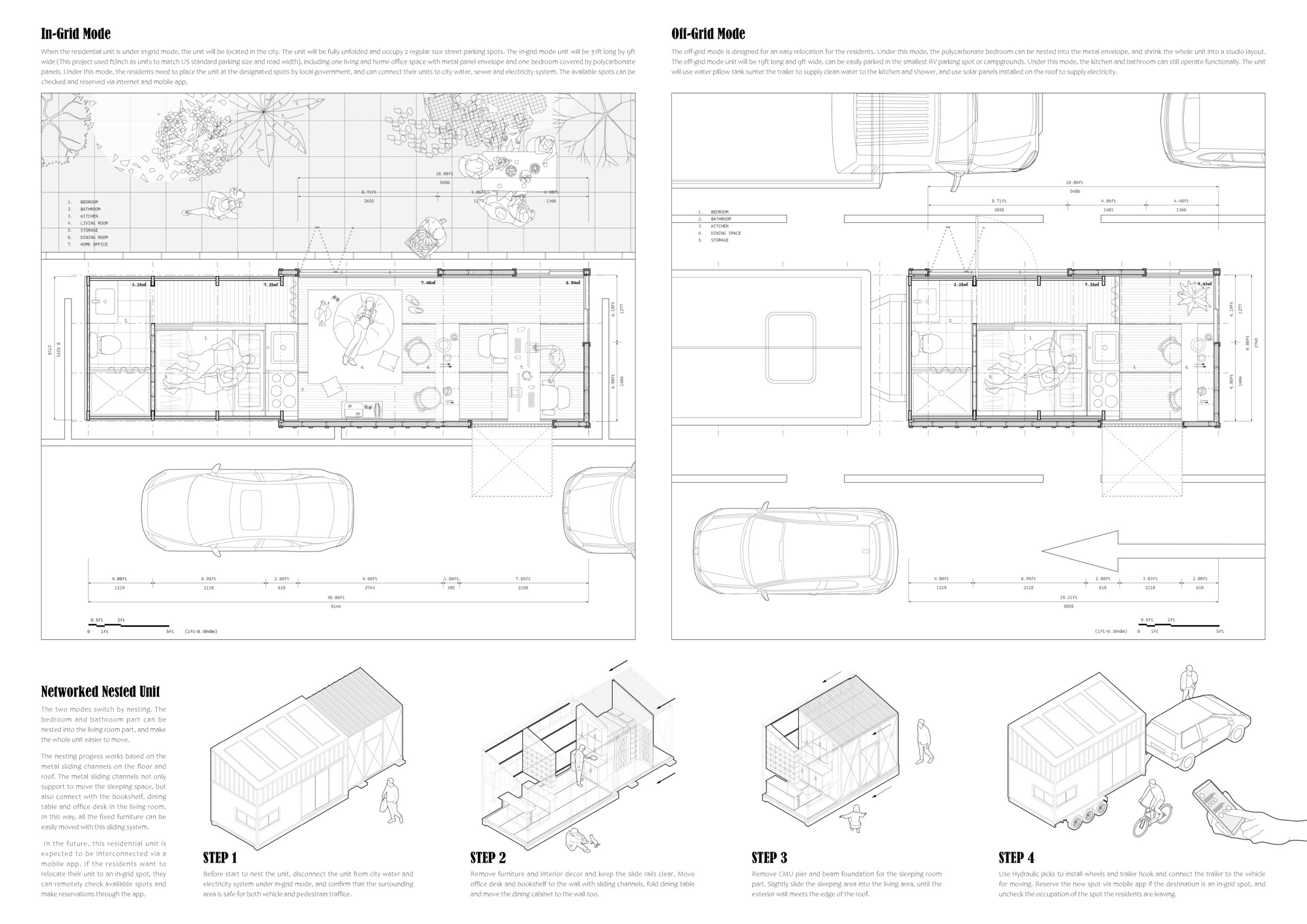
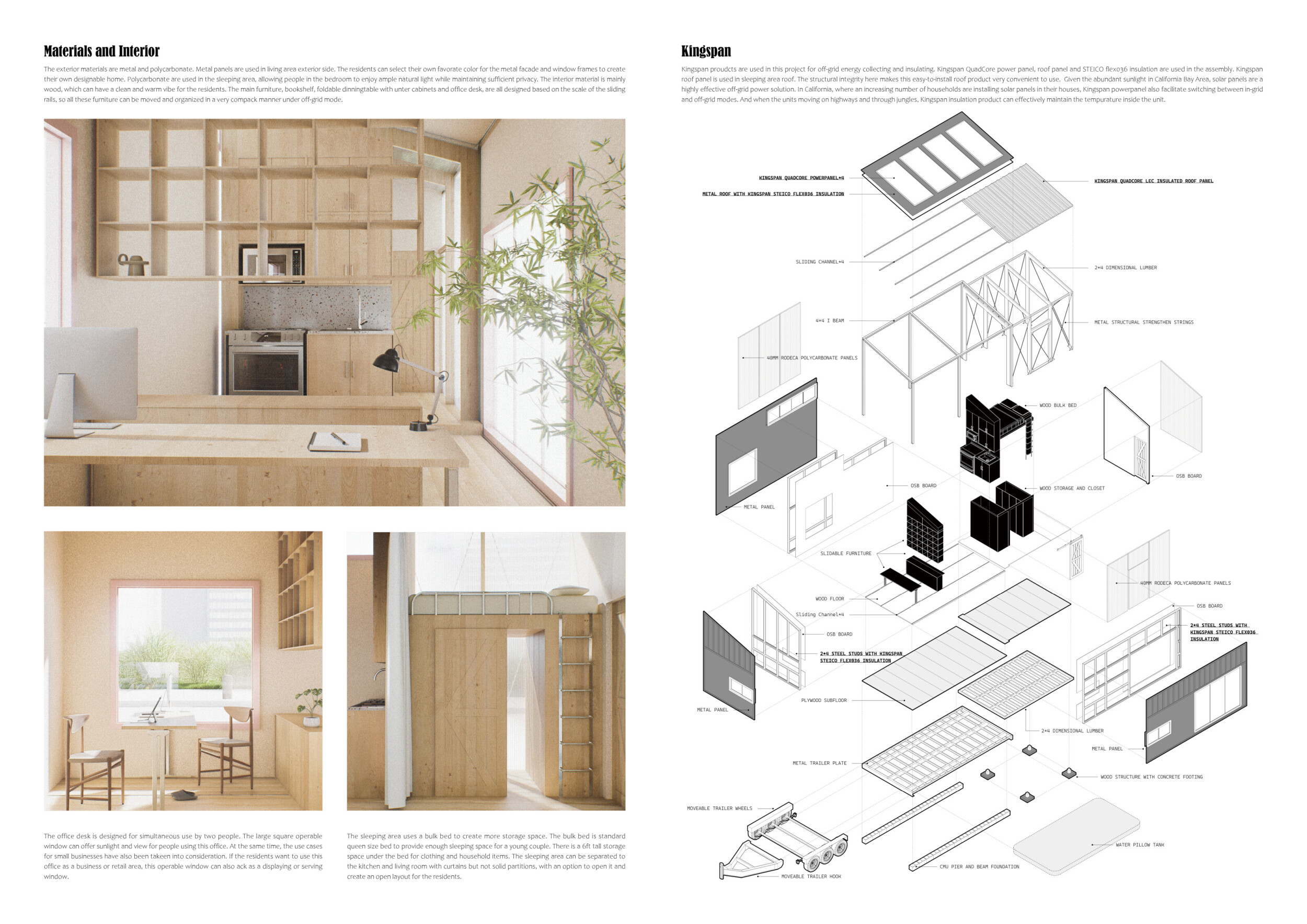
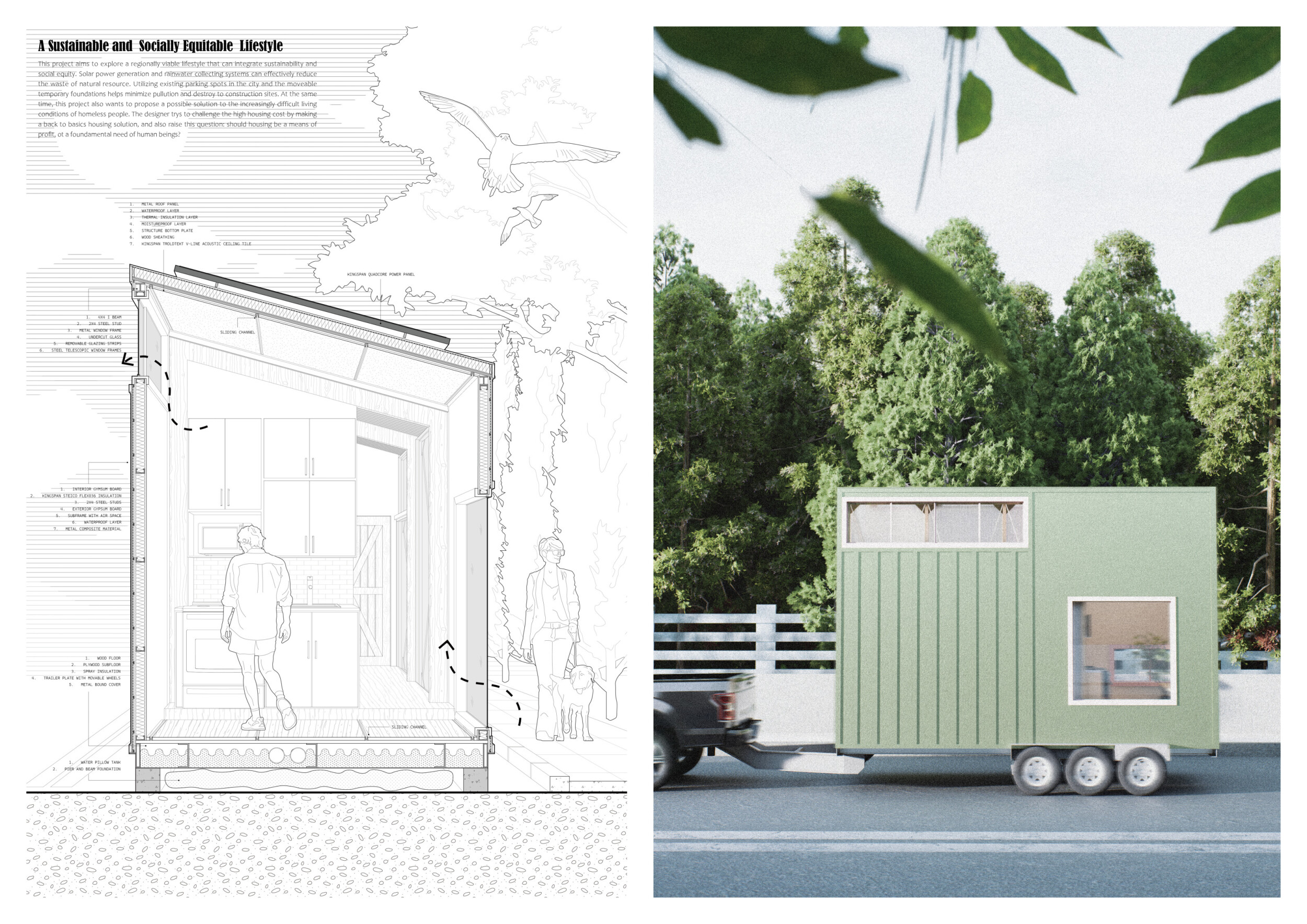
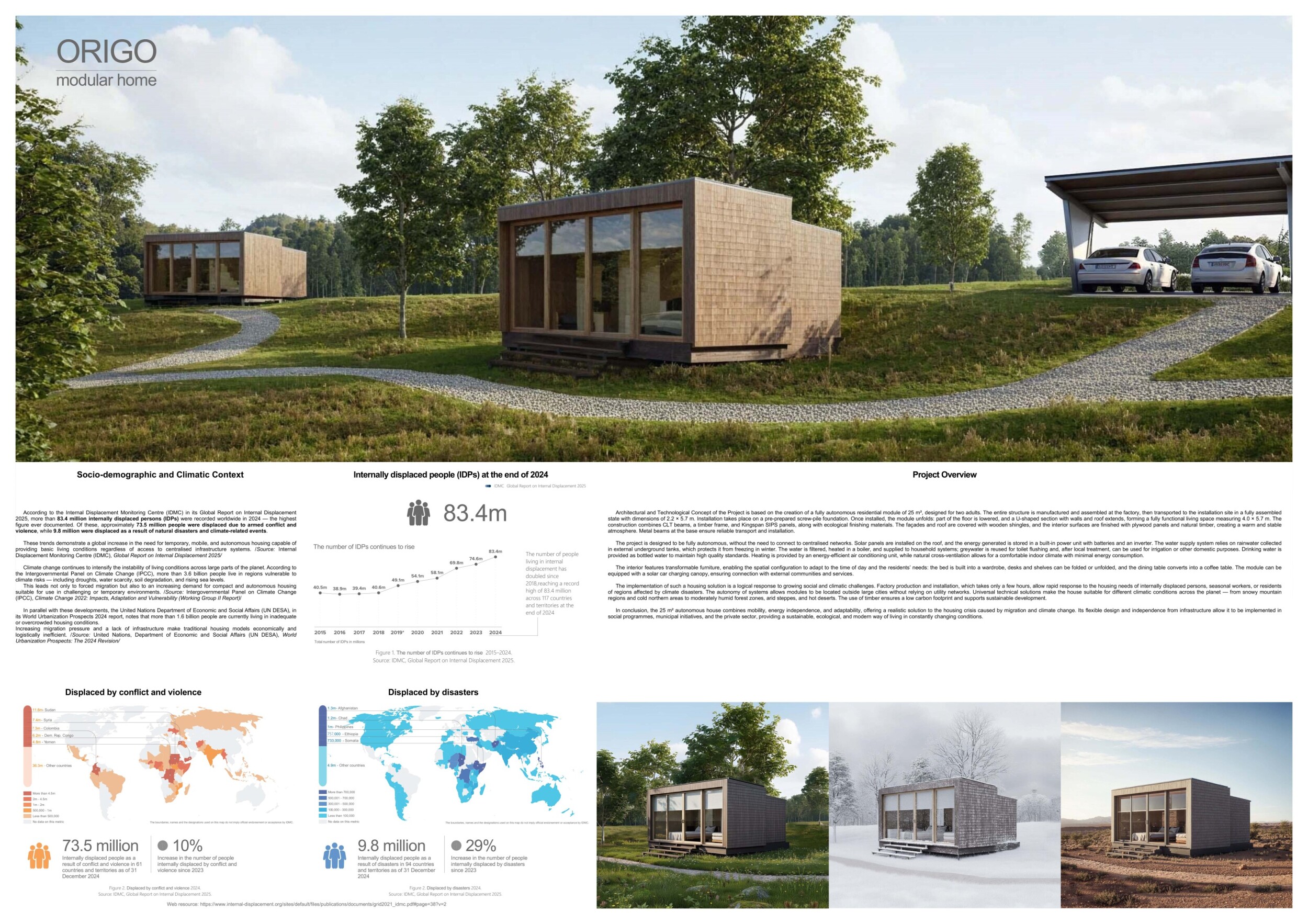
The presentation is strong and carefully composed, with clean linework and well-lit interior renderings that communicate warmth and inhabitation. The layout is coherent, yet some panels carry dense paragraph blocks whose visual weight competes with the drawings. Hierarchy could be sharpened by reducing text size or spacing to allow diagrams—particularly the multifunction joinery sequences—to register more immediately. Read more The axonometrics are clear but lightly rendered, and a slightly bolder line hierarchy would strengthen legibility at small scale. Colour balance is soft and consistent, though the uniformly warm palette of the renderings compresses tonal variety across the boards. Overall, the submission effectively communicates the architectural intent and spatial logic, with room for refinement in visual hierarchy and diagram clarity.