

Buildner is a global leader in organizing architecture competitions of all scales — from furniture, cottages, and guesthouses to full city rebranding. With prize budgets ranging from €5,000 to €500,000, Buildner brings proven global experience to every competition.
Launch a competitionLaunch a competition
Introduction

Buildner is delighted to reveal the results of the Manila Bay Central Park Challenge, an invitation-only architecture competition sponsored by leading Filipino property developer SM Prime, with a significant prize fund of 350,000 EUR.
Manila Bay Central Park
A Visionary Park for Manila
Set within a 360-hectare reclamation west of SM Mall of Asia along Seaside Boulevard, this ambitious project in Pasay City aims to redefine urban development in the Philippines. Five renowned international design firms were invited to envision a park that balances sustainability, connectivity, and cultural significance. The goal: to create a transformative urban space that serves as a visual and cultural landmark for Manila, drawing visitors citywide.
A Catalyst for Growth
Slated to anchor Manila's future Central Business District by mid-2028, the park is positioned as a landmark development comparable in scale and impact to Singapore’s Marina Bay. The project includes an 11-kilometer waterfront along Manila Bay, with the park itself envisioned as a 2.2-kilometer green corridor offering a sustainable and vibrant urban oasis.
Design Priorities
The competition set clear objectives for the park’s design:
- Sustainability & Innovation: A forward-thinking, environmentally responsible design that reflects Manila's cultural identity.
- Enhanced Urban Connectivity: A park that integrates seamlessly with its surroundings, fostering a cohesive urban experience.
- Inclusive & Vibrant Spaces: A design that caters to diverse users, blending green areas with retail and community spaces.
A Grand Yet Realistic Vision
Manila Central Park aspires to merge green spaces with retail and leisure areas, prioritizing pedestrian-friendly zones and offering panoramic views of Manila Bay. The park will become a vibrant centerpiece, fostering community interaction while redefining urban outdoor experiences in the city.
Sustainability and Community at Its Heart
At the core of the design is a commitment to sustainability and inclusivity. The park aims to set new benchmarks in environmental stewardship and urban design, creating a shared space where both international visitors and Filipinos can feel a sense of pride and ownership.
More Than Green Space
The park will be surrounded by retail, commercial, and residential developments, creating a dynamic ecosystem where business, leisure, and community life intersect. Designed to be accessible and inviting, it will offer something for everyone, encouraging outdoor activities and a stronger connection to nature within an urban setting.
This exciting challenge marks a significant step toward redefining Manila as a world-class urban hub while staying true to its cultural and environmental identity.
The Competition Process
The Manila Bay Central Park Challenge followed a rigorous selection process, beginning with a call for expressions of interest to an invited longlist of architecture and landscape architecture firms. From this, five internationally acclaimed design practices were shortlisted to participate in an intensive six-week design competition.
350,000 EUR Award
Each shortlisted firm, renowned for their expertise in urban and landscape design, received 50,000 EUR in funding to develop their proposals. The winning firm will be awarded an additional 100,000 EUR and invited to negotiate a contract with SM Prime to bring the vision to life through construction.
The Jury Panel and Deliberations Process
An esteemed international jury panel will evaluate the competition entries, ensuring the chosen design is sustainable, innovative, and culturally contextual. The panel brings diverse expertise across urban design, sustainability, and cultural relevance, comprising:
- Tony Chan: Associate Principal and Planning Business Leader, SE Asia, Arup (Singapore)
- Paul Finch: Director, World Architecture Festival (UK)
- Zenaida Galingan: Faculty, University of the Philippines College of Architecture (Philippines)
- Tim Kobe: Founder, Eight Inc. (Singapore)
- Ng San Son: Senior Associate Director, DP Architects (Singapore)
- Jessica Sy: Assistant Vice-President and Project Director, SM Prime (Philippines)
- Belinda Tato: Founding member, ecosistema urbano (Spain) and Associate Professor in Practice of Landscape Architecture, Harvard GSD (USA)
- Ken Yeang: Founder, Hamzah & Yeang (Malaysia)
On October 16, 2024 a live jury deliberation was held in Manila, attended by all eight jurors and the client team. This session provided an invaluable opportunity to carefully examine each entry and engage in constructive debate regarding the strengths and unique contributions of every proposal submitted. At a technical level, projects were evaluated for:
A) capacity to become a visual and cultural landmark for Manila
B) potential to become a global example for sustainable development,
C) performing as a connective element that enhances the urban experience,
D) the use of innovative new technologies or design creativity and
E) the ability to enhance the value of surrounding properties + businesses.
Awards ceremony
The award ceremony for the Manila Bay Central Park Design Competition took place during the World Architecture Festival in Singapore in November 2024. This prestigious event celebrated innovative urban design, with the winning project unveiled to an audience of global architectural leaders. The ceremony featured presentations from the five shortlisted firms—Sasaki, Snøhetta, SWA Group, Brearley Architects & Urbanists (BAU), and Turenscape—each sharing their visionary proposals for Manila’s future Central Business District. The event underscored the competition’s commitment to sustainable and iconic public spaces, setting a new benchmark for urban development in the Philippines.


Learn more about Buildner’s invitation-only architecture competitions
Launch an invitation-only competitionWe sincerely thank our jury panel
for their time and expertise
Paul Finch
World Architecture Festival
UK

Zenaida D. C. Galingan
UP College of Architecture
Philippines

Tim Kobe
Eight Inc
United States

Jessica Sy
SM Prime
Philippines

Ken Yeang
Hamzah & Yeang
Malaysia

Ng San Son
DPA Architects
Singapore

Belinda Tato
Ecosistema Urbano and Harvard GSD
Spain

Tony Chan
Arup
Singapore

Manila Bay Central Park Challenge Results
Competition winner


Jury feedback summary
Order your review here"Jungle Nilad" is a climate-resilient park that revives Manila's historic mangrove nilad ecosystem on a reclaimed island. At its heart lies the Sunken Valley, an innovative feature designed to collect stormwater, support native biodiversity, and create a dynamic brackish aquatic habitat.
The park prioritizes ecological restoration while fostering social connections, with pathways linking visitors to cultural landmarks, piers, and boardwalks. Buildings blend seamlessly into the landscape with green terraces and adaptive architecture. Designed for phased implementation, "Jungle Nilad" integrates environmental restoration, vibrant public spaces, and economic sustainability, positioning itself as a global model for urban resilience and sustainable design.
Shortlisted project


Jury feedback summary
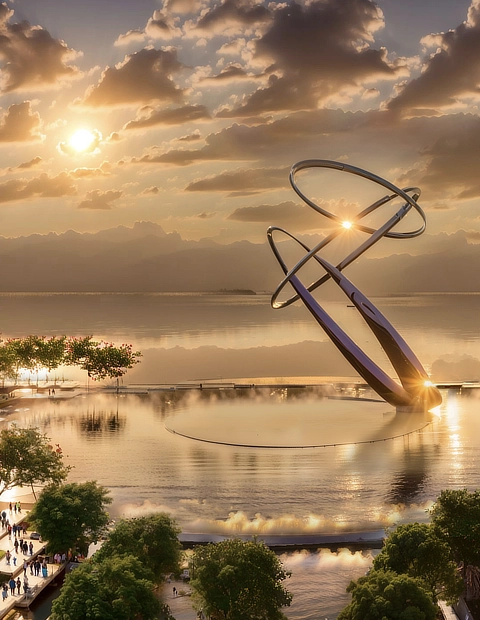
Order your review here"Follow the Sun" is a solar-inspired park that celebrates Manila Bay’s connection to light and energy. Divided into Sunrise, Sunshine, and Sunset zones, the design offers varied experiences, from serene sunrise walks to dynamic evening activities, emphasizing inclusivity and community engagement.
The park incorporates sustainable features like solar energy systems, rainwater harvesting, and native biodiversity. Inspired by local motifs, the design blends traditional and modern elements, integrating elevated bridges, shade structures, and lighting that reflect the Bay's dynamic hydrology.
This 2.2-kilometer linear park not only fosters environmental education and solar innovation but also unifies the larger 360-hectare district into a cohesive public realm, setting a new benchmark for sustainable urban development in Southeast Asia.
Shortlisted project


Jury feedback summary
Order your review hereInspired by the Philippines' natural archipelago, "Archipelago Park" celebrates coastal beauty and biodiversity within an urban context. The park employs sustainable features such as wetlands, green roofs, and mangroves to enhance climate resilience and ecological balance.
Key highlights include multi-layered landscapes, diverse viewpoints, and innovative features like a cable car system and underground parking, promoting urban connectivity. Adaptable and flood-resistant, "Archipelago Park" combines ecological restoration with urban vibrancy, serving as both a striking landmark and a model of coastal urban sustainability.
Shortlisted project
MANILA FLAIR
50,000 €


Jury feedback summary
Order your review here"Manila Flair" is a bold cultural and environmental centerpiece designed to reflect Filipino identity and the brilliance of Manila's sunsets. Structured around five thematic nodes, the park weaves lush landscapes with dynamic public spaces for social interaction, recreation, and cultural expression.
Green infrastructure such as bioswales and native vegetation enhance climate resilience, while inclusive design promotes a sense of community. Phased development ensures adaptability, creating a vibrant urban oasis where culture and sustainability thrive together.
Shortlisted project
MANILA CORAL GARDENS
50,000 €


Jury feedback summary
Order your review hereDrawing inspiration from the Philippines’ coral reefs, "Manila Coral Gardens" reimagines biodiversity and cultural richness through a flexible Voronoi cellular structure. This innovative design fosters adaptability and resilience, featuring eco-corridors, solar-powered systems, and iconic landmarks like the Manila Ring observatory and public swimming pool.
Art installations by Leeroy New merge mythology and sci-fi, offering a creative and inclusive space for Manila's community. This visionary park revitalizes biodiversity while promoting environmental sustainability and celebrating cultural diversity.